Few dates in Bulgaria’s history carry as much moral weight as February 18 — the day the Apostle of Freedom was executed in 1873, and the day a prime minister fell to street protest 140 years later.
February 18, 1873 — Vasil Levski Is Executed near Sofia
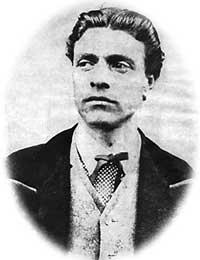
Vasil Levski was executed by hanging near Sofia after his trial by the Ottoman authorities. Known as the Apostle of Freedom, Levski had built an internal revolutionary organization across Bulgarian lands and imagined liberation not as a foreign gift but as the work of Bulgarians themselves — a democratic republic, equality before the law, a disciplined civic network capable of preparing freedom from within.
His death became one of the deepest wounds in Bulgarian national memory, but also one of its strongest moral foundations. Levski’s image has remained central because he represents integrity, self-sacrifice, and a demanding standard for public life that every subsequent generation has measured itself against.
February 18, 2013 — Prime Minister Boyko Borissov Announces the Government Will Resign
Amid mass protests over electricity prices, living standards, and public frustration with monopolies and institutions, Prime Minister Boyko Borissov announced that his government would resign. The protests had spread across Bulgaria and reflected broader social anger after years of economic pressure — a specific issue about energy bills had become a wider political crisis almost overnight.
The resignation showed both the sensitivity of Bulgarian society to questions of poverty and corporate influence in essential services, and the power of street protest to force political change. The government’s fall led to early elections and another period of instability in the country’s modern democratic history.
The days immediately around this one: February 17 and February 19. For something beyond history, our Bulgaria From Above series takes a different view of the country.