November 11, 1875 — The Giurgiu Revolutionary Committee Plans an Uprising
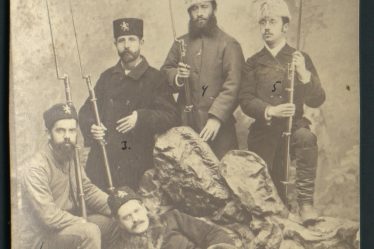
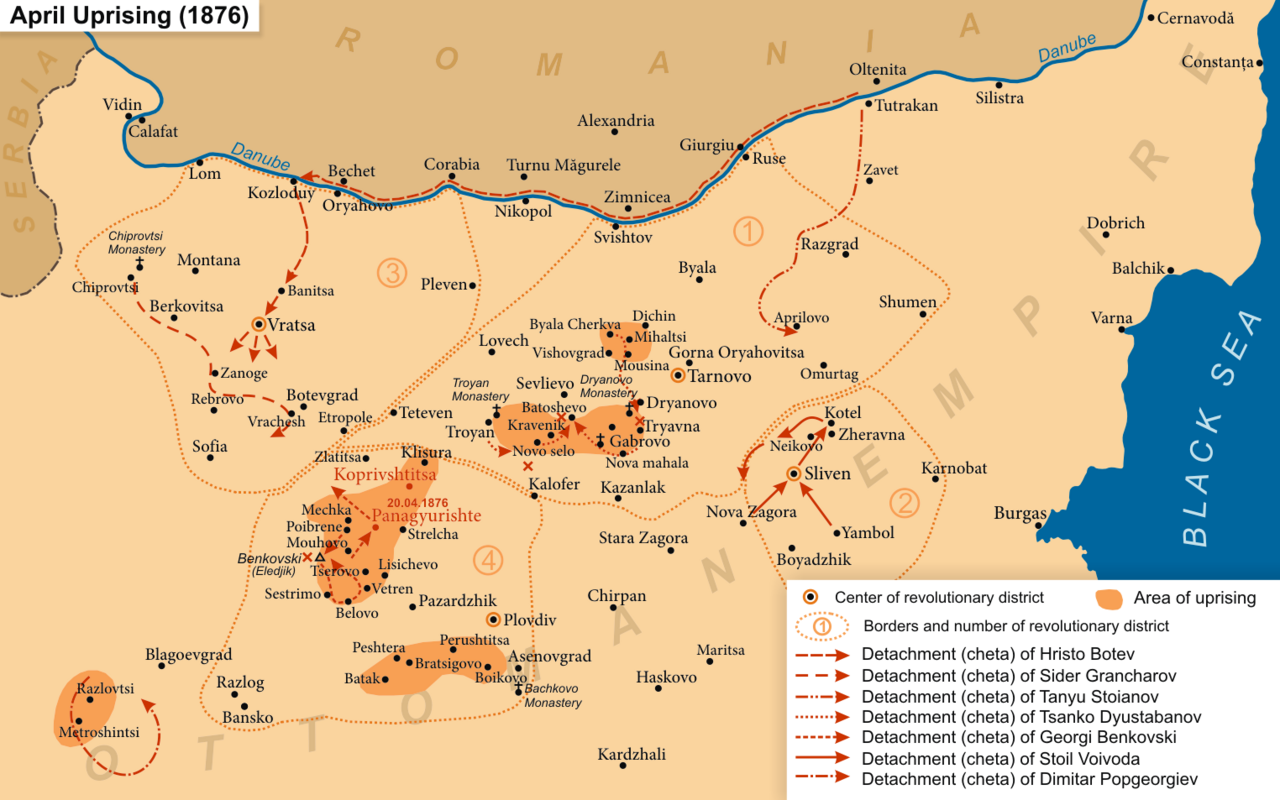
On November 11, 1875, Bulgarian revolutionaries in Giurgiu, Romania, decided to organize a new armed uprising against Ottoman rule. The committee included figures such as Stefan Stambolov, Panayot Volov, Stoyan Zaimov, Nikola Obretenov, and other activists from the émigré revolutionary circles. Their work divided the Bulgarian lands into revolutionary districts and assigned apostles to prepare local networks, weapons, couriers, and committees. The plan became the foundation for the April Uprising of 1876. Although the uprising was crushed, its brutality shocked European public opinion and helped turn the Bulgarian cause into an international issue. The decision in Giurgiu therefore stands as one of the key organizational steps toward Bulgaria’s liberation movement.
November 11, 1952 — Four Catholic Clergymen Are Executed in Sofia
On November 11, 1952, Bishop Eugene Bossilkov and Catholic priests Kamen Vitchev, Pavel Djidjov, and Josaphat Shishkov were executed at Sofia Central Prison after a communist show trial on fabricated espionage charges. Their deaths formed part of the regime’s wider campaign against religious institutions, independent communities, and links with the Vatican. The executions were kept in silence for years, but the memory of the four clergymen survived among Catholics in Bulgaria and abroad. They were later recognized by the Catholic Church as martyrs. The case reveals how the early communist state used political trials not only against parties and officials, but also against religious leaders whose loyalty to conscience and church authority challenged totalitarian control.
Continue with November 10 or November 12. For more stories and places, explore Bulgaria From Above and the guides in our Bulgaria category on Bronicable.