May 14 brings together two different markers of Bulgaria’s modernization and international alignment: a railway connection to the Black Sea and a military-political alliance formed during the Cold War.
May 14, 1890 — The Yambol–Burgas Railway Opens
On May 14, 1890, the 110-kilometre Yambol–Burgas railway line was opened. It connected inland southeastern Bulgaria with the Black Sea port of Burgas and made movement between the two areas easier.
For the young Bulgarian state, railways were an important part of economic modernization. Grain, other goods and passengers could travel faster than they had through the older road networks. The Yambol–Burgas line strengthened the role of rail transport as a link between inland production and maritime trade.
May 14, 1955 — Bulgaria Signs the Warsaw Pact
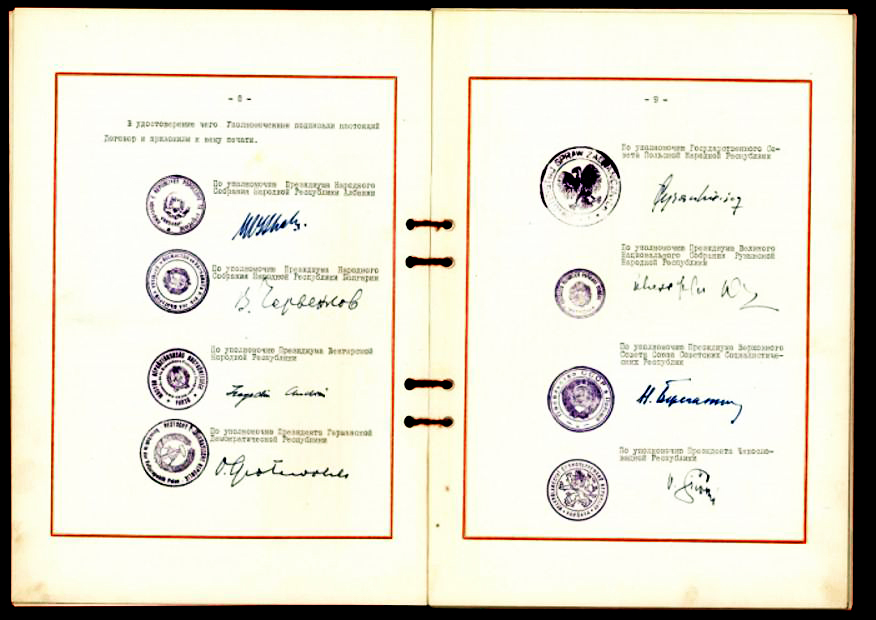
On May 14, 1955, Bulgaria, Albania, Czechoslovakia, the German Democratic Republic, Hungary, Poland, Romania and the Soviet Union signed the Treaty of Friendship, Cooperation and Mutual Assistance.
The treaty created the Warsaw Pact, the military alliance of the Eastern Bloc during the Cold War. For Bulgaria, membership formalized its alignment with the Soviet Union and shaped the country’s military planning and foreign policy for decades.
The two events reflect different dimensions of state development: one changed the movement of people and goods, while the other defined Bulgaria’s place in the international system of the Cold War.
To follow the neighboring dates, read about May 13 or continue with May 15. For more stories and places in Bulgaria, explore the Bulgaria From Above category.