June 16 gathers two hard lessons from Bulgaria’s history: the execution of a former revolutionary turned conspirator in 1890, and the opening shots of a war that would undo the country’s recent gains in 1913.
June 16, 1890 — Major Konstantin Panitsa is executed
Major Konstantin Panitsa was executed after a military court convicted him of organizing a plot against Prince Ferdinand I and Prime Minister Stefan Stambolov. Having once taken part in the national liberation movement and the unification struggles, his fall was all the more dramatic.
The case laid bare the fierce personal and political conflicts of post-Liberation Bulgaria. Stambolov’s government, beset by conspiracies and foreign pressure, answered its opponents with harsh methods — leaving Panitsa’s execution a lasting subject of controversy in a young, unstable constitutional state.
June 16, 1913 — The Second Balkan War begins
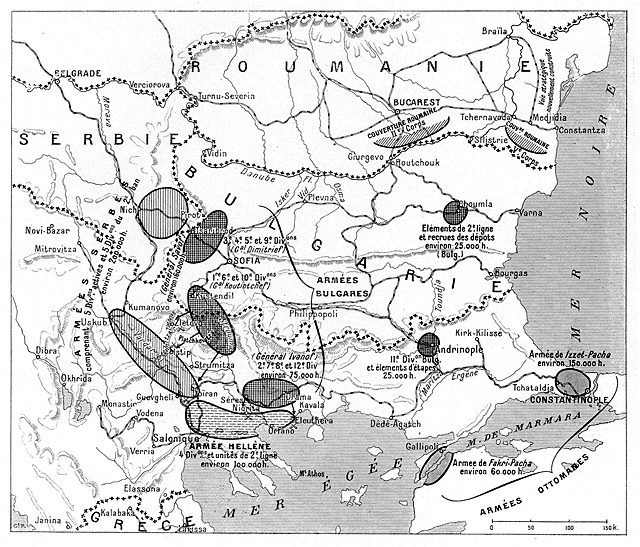
King Ferdinand ordered Bulgarian forces to attack Serbian and Greek positions, opening the Second Balkan War. The former allies had together defeated the Ottoman Empire in the First Balkan War, but could not agree on how to divide Macedonia and the other conquered territories.
The decision proved disastrous. Romania and the Ottoman Empire joined against Bulgaria, forcing it to seek peace and accept heavy territorial losses in the Treaty of Bucharest — a defeat that deepened regional rivalries and shaped the country’s later alignment in the First World War.