Two moments of national self-assertion — one aimed at reunifying a divided land, the other at steadying a throne in crisis — give August 16 its particular weight in Bulgaria’s history.
August 16, 1878 — The First “Unity” Committee
In Plovdiv, Bulgarian activists founded the first of the “Edinstvo” (Unity) committees, formed in direct response to the Treaty of Berlin, which had split the Bulgarian lands into a separate Principality and the semi-autonomous Eastern Rumelia. Similar committees soon appeared in Tarnovo, Sofia, and other towns.
Their purpose was to keep the goal of national reunification alive and to support Bulgarian resistance movements in Thrace and Macedonia. That groundwork helped pave the way for the union of Eastern Rumelia with the Principality seven years later.
August 16, 1886 — A New Government After the Coup
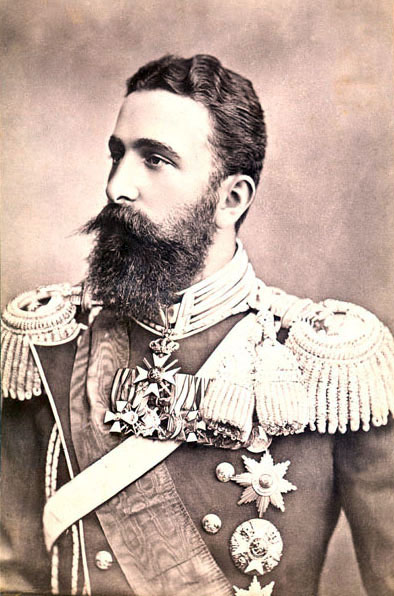
Following the failed coup and the brief, chaotic return of Prince Alexander of Battenberg, a new Bulgarian government took office under Vasil Radoslavov, appointed by proclamation to “the Bulgarian people.” It was formed by Russophobe political circles amid the deepening crisis over the succession.
The cabinet would govern for less than a year, caught between a hostile Russia, an uncertain search for a new prince, and rising unrest in the army. It finally gave way to Konstantin Stoilov’s government the following summer.
The series continues with August 17. For more, wander through our Bulgaria From Above aerial series.