August 9 reaches back to the very first written trace of Bulgaria’s history and forward to one of its darkest treaties — a priest naming the young state in 681, and the peace of 1920 that carved the country up after the First World War.
August 9, 681 — Bulgaria Named for the First Time
During the sixteenth session of the Sixth Ecumenical Council in Constantinople, a priest named Constantine spoke of “the war with Bulgaria” — the earliest known reference to the Bulgarian state by that name in any surviving historical record.
His words followed Khan Asparuh’s defeat of a Byzantine army and the empire’s forced recognition of the new state on the Danube. Sealed by treaty earlier that same year, that recognition is taken as the traditional founding of the First Bulgarian Empire, which lasted until 1018.
August 9, 1920 — The Treaty of Neuilly Takes Effect
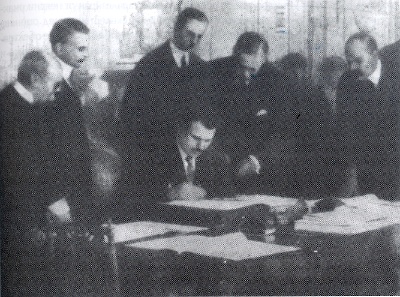
The Treaty of Neuilly-sur-Seine — the punishing settlement laid on Bulgaria after its defeat in the First World War — formally came into force. Prime Minister Aleksandar Stamboliyski had signed it the previous November.
Its terms were severe: Bulgaria lost more than 11,000 square kilometres of territory, including its Aegean coastline, saw its army capped at 33,000 men, and was burdened with reparations of 2.25 billion gold francs. It is still counted among the harshest peace terms the country has ever borne.
Keep exploring with August 8 and August 10, or leave the timeline behind and see modern Bulgaria from the air in Bulgaria From Above.