Two episodes from Bulgaria’s history fall on February 21 — one from the heart of the National Revival, one from the difficult first years of democratic transition.
February 21, 1864 — The Patriarchate Calls a Gathering on Bulgarian Church Autonomy
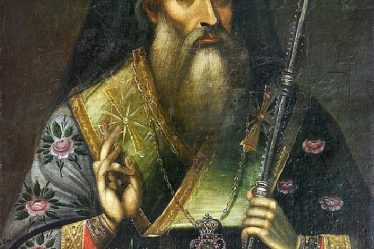
The Ecumenical Patriarchate called a gathering on the issue of Bulgarian Church autonomy, with the patriarchs of Alexandria, Jerusalem, and Antioch taking part. The meeting was part of the long Bulgarian church struggle, one of the central movements of the National Revival. Bulgarians demanded worship, schools, clergy, and administration in their own language rather than under Greek ecclesiastical dominance.
Church autonomy was not merely a religious dispute — it was tied to education, community identity, and the right to speak as a distinct people inside the Ottoman Empire. The debates of the 1860s helped prepare the establishment of the Bulgarian Exarchate in 1870, making February 21 a stage on the institutional road toward Bulgarian cultural self-recognition.
February 21, 1992 — Parliament Adopts a Restitution Act
The National Assembly adopted the Restitution Act concerning properties expropriated by the Council of Ministers between 1947 and 1962. Restitution became one of the most important and difficult questions of Bulgaria’s post-communist transition. The communist state had nationalized homes, businesses, and land, and democratic governments after 1989 faced the challenge of restoring justice without creating new instability.
The law affected families, municipalities, investors, tenants, courts, and local economies alike. It also revived memories of repression that had often remained private for decades — placing February 21, 1992 at the intersection of legal repair and moral reckoning in Bulgaria’s transition toward a market economy and rule of law.
For more dates in Bulgaria’s story, visit February 20 and February 22. You can also explore Bulgaria From Above and our guides to the best of Bulgaria.