Fourteen years separate two watershed moments on March 29 in Bulgaria’s history — one a painful economic emergency, the other the fulfilment of a new strategic ambition.
March 29, 1990 — Bulgaria Imposes a Moratorium on Foreign Commercial Debt
On March 29, 1990, Bulgaria imposed a moratorium on repayments to foreign commercial creditors. The decision came during the turbulent opening of the post-communist transition, when the country faced collapsing planning structures, severe shortages, and external financial obligations it could not meet under existing conditions. A debt moratorium was a signal of crisis, with real consequences for Bulgaria’s international financial standing and for later reform negotiations.
For ordinary Bulgarians, the early 1990s brought uncertainty, inflation, and rapid institutional upheaval. March 29 captures one of the hard economic realities behind the political language of transition: freedom arrived alongside a deep financial reckoning that took years to work through.
March 29, 2004 — Bulgaria Becomes a Full NATO Member
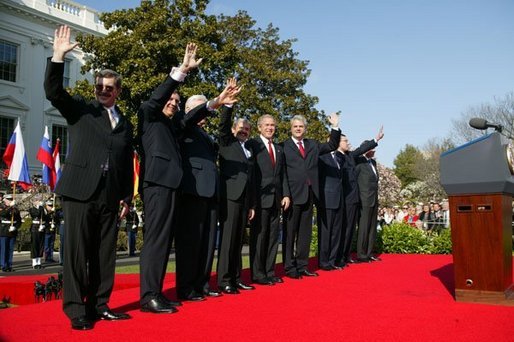
On March 29, 2004, Prime Minister Simeon Saxe-Coburg-Gotha presented Bulgaria’s NATO accession instrument to US Secretary of State Colin Powell in Washington, completing the country’s formal entry into the alliance. The achievement reflected years of military reform, diplomatic effort, and strategic reorientation after the Cold War — and placed Bulgaria inside a collective defence framework before its EU accession in 2007.
The contrast with 1990 is striking: within fourteen years, Bulgaria moved from financial emergency and political uncertainty to a new international security role. March 29 therefore holds both a low point and a milestone — a reminder that the arc of a country’s modern history can travel further than anyone at the start of a crisis imagines possible.
More from Bulgaria’s March: March 28 | March 30. Explore Bulgaria in our Bulgaria From Above photography and travel guides.