May 17 brings together an administrative reform from the beginning of the twentieth century with the diplomatic settlement of the First Balkan War—two moments when the state organized its territory and its place among its neighbours.
May 17, 1901 — Bulgaria Is Divided into 12 Provinces
On May 17, 1901, Bulgaria was divided into 12 provinces and 71 districts under the Law on Administrative-Territorial Division. Administrative geography was not simply the drawing of lines on a map. It shaped taxation, courts, policing, education and the relationship between local communities and central government.
At the beginning of the twentieth century, Bulgaria was still a young state expanding and refining its institutions after Liberation and the Unification. The division into provinces and districts showed a desire for a clearer governing structure. It defined how decisions from Sofia would reach different parts of the country and how local authorities would be included in a common administrative order.
May 17, 1913 — The Treaty of London Ends the First Balkan War
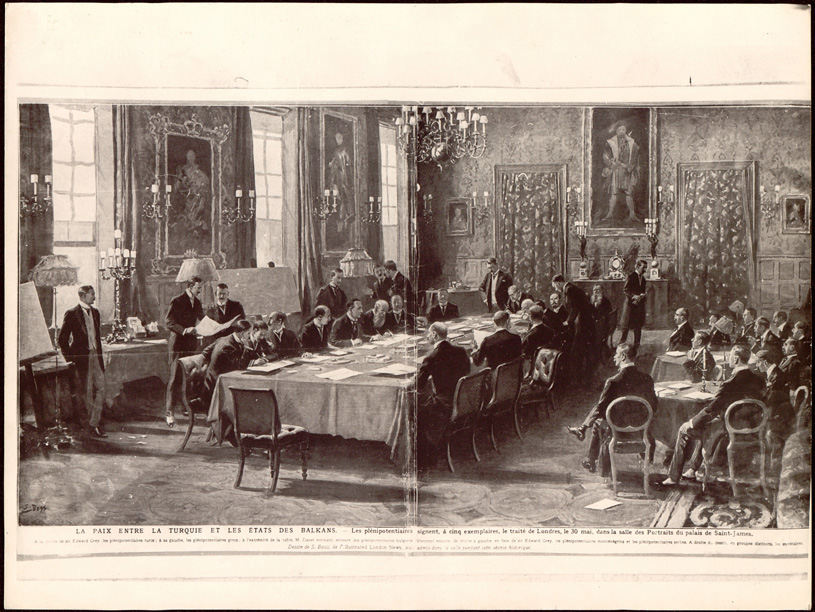
On May 17, 1913, Bulgaria, Serbia, Greece, Montenegro and the Ottoman Empire signed a treaty in London ending the First Balkan War. The treaty confirmed the loss of almost all Ottoman territories in Europe west of the Midia–Enos line.
It did not, however, resolve the disputes among the Balkan allies over Macedonia. For Bulgaria, the treaty was both a diplomatic success and a warning of disaster. Military results had not been turned into a lasting political settlement, and disagreements with the former allies soon developed into the Second Balkan War.
May 17 shows how administrative order within a state and diplomatic order between states can shape the direction of history.
The administrative reform and the Treaty of London represent two levels of state-building. Internal division made government more orderly, while the international agreement defined the limits of foreign policy. In both cases, the decisions had consequences that extended beyond the date itself and shaped the years that followed.