May 6 is both St George’s Day and Bulgaria’s Day of Valour and the Armed Forces, and it carries two very different memories in Bulgaria’s history: an early printed Bulgarian book, and a painful modern ordeal of Bulgarian citizens abroad.
1651 — Abagar Is Published in Rome
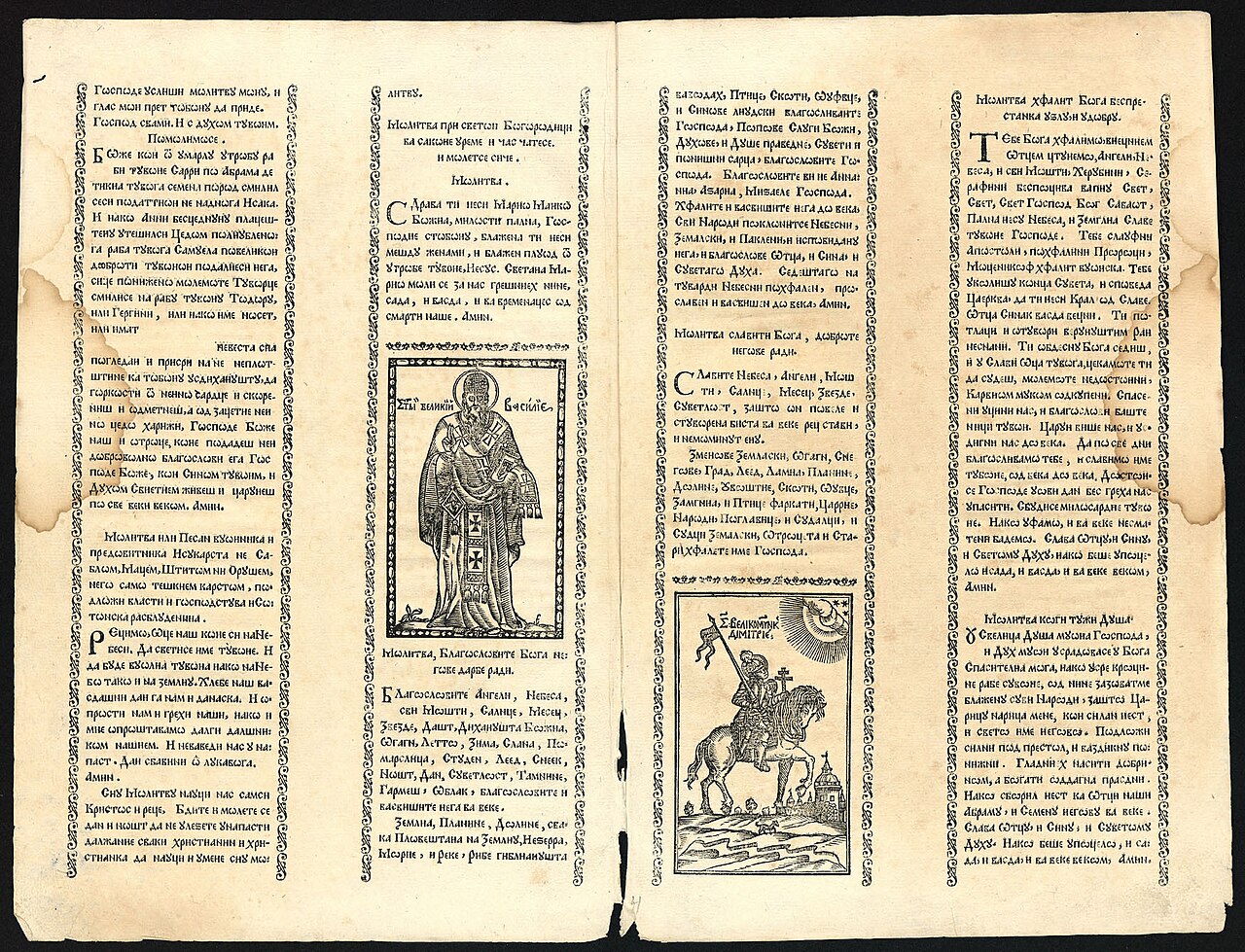
On May 6, 1651, Abagar, compiled by the Catholic bishop Filip Stanislavov, was published in Rome and is widely regarded as the first printed book in Modern Bulgarian. It was only a small Catholic prayer book, yet its importance reaches well beyond its modest size and genre.
Abagar shows that Bulgarian written culture survived and adapted through centuries of Ottoman rule, sustained by clergy, diaspora networks, and links with Catholic centres in Europe. Printing offered religious and educational texts a new way to circulate at a time when Bulgarian institutions were sharply limited. The book belongs to the long prehistory of the National Revival — evidence that language, faith, and literacy preserved continuity well before modern schools, newspapers, and political movements emerged.
2004 — Bulgarian Medics Are Sentenced in Libya
On May 6, 2004, a criminal court in Benghazi sentenced five Bulgarian nurses and a Palestinian doctor to death, convicting them of deliberately infecting Libyan children with HIV. Their ordeal had begun with arrest back in 1999, and the case grew into one of Bulgaria’s gravest foreign-policy and human-rights crises since 1989.
International scientific experts disputed the accusations, and the trial drew sharp criticism from governments, medical bodies, and human-rights advocates. For years the medics’ fate dominated Bulgarian public attention and diplomacy, until, in 2007, extended international negotiations secured their transfer to Bulgaria and effective release. The episode endures as a painful reminder of how ordinary citizens can be caught between an authoritarian legal system and the hard bargaining of geopolitics.