
Naples is not a quiet city, and that is part of its charm. Ancient ruins, volcanoes, museums, castles and narrow streets all compete for attention, while the smell of pizza seems to follow you around. This guide highlights five places that make Naples unforgettable. Our guide to Italian cities offers a wider route for the country.
Give Naples time. It may feel chaotic at first, but underneath the noise is a city with an extraordinary sense of character. Practical note before you plan: three of the five below are linked by the Circumvesuviana railway, which is cheap, frequent and the easiest way to reach Pompeii and Vesuvius without a car.
Before the list, watch the Naples video:
Full video on YouTube: Top 5 Places to Visit in Naples, Italy — the timecodes below jump straight to each place.
#5 — Pompeii ▶ 0:53
📍 25 km southeast, Circumvesuviana to Pompei Scavi · 🎟 ticketed, book online in season · ⏱ four hours minimum
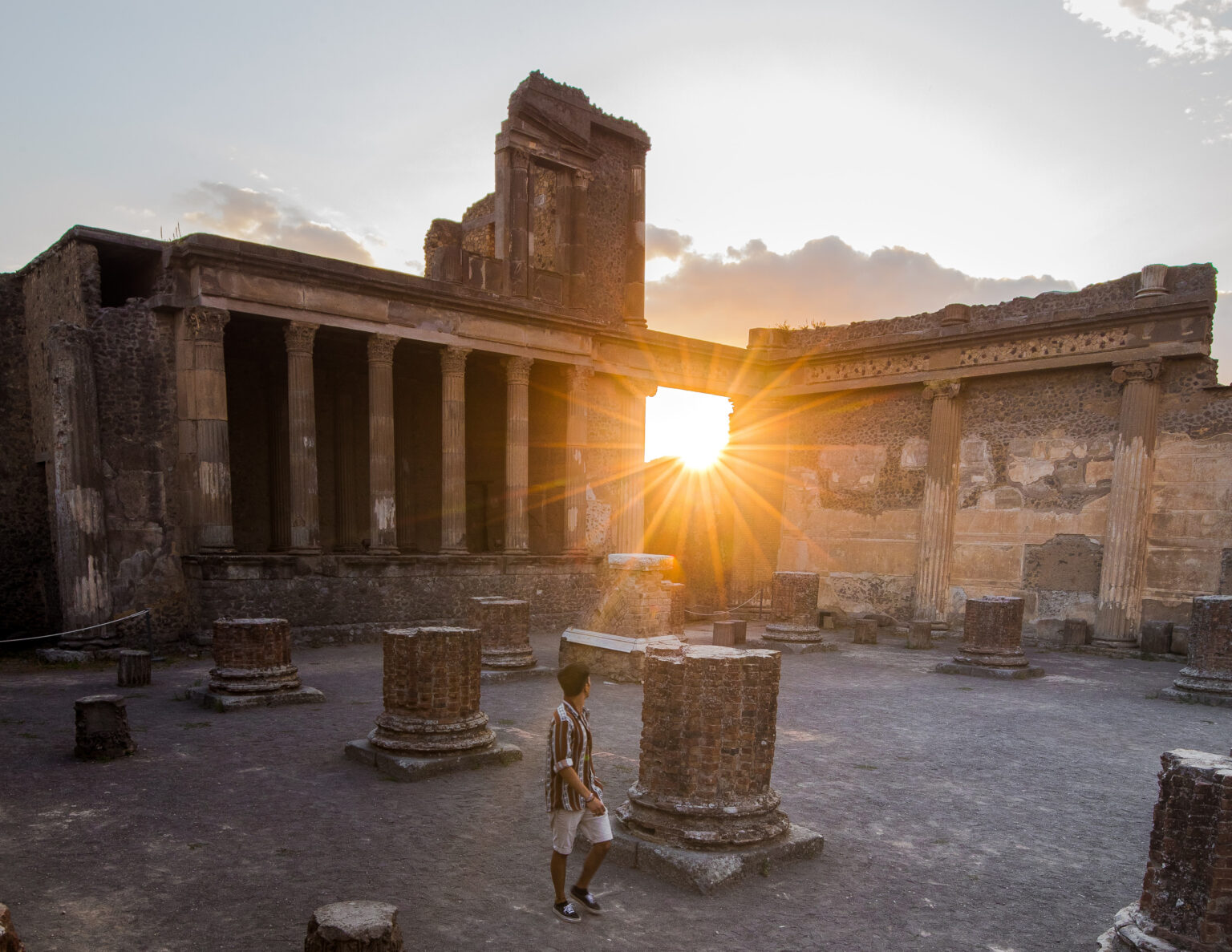
Pompeii was buried by the eruption of Vesuvius in 79 AD and preserved almost intact underneath: streets with wheel ruts, shops with their counters, painted walls, a forum, two theatres and an amphitheatre. Roughly a third of the city is still unexcavated and deliberately left that way.
The human casts are not bodies but plaster poured into the cavities the bodies left in the ash — a technique invented on site in the 1860s. Wear real shoes, bring water, and consider Herculaneum instead or as well: it is far smaller, much better preserved, with wooden beams and upper floors still standing, and a fraction of the crowds.
#4 — Mount Vesuvius ▶ 1:39
📍 above the bay, shuttle bus from Ercolano or Pompei · 🎟 timed ticket, must be booked in advance · ⏱ half a day
Vesuvius is the only active volcano on the European mainland, and its last eruption was in 1944 — within living memory, and filmed by Allied airmen stationed nearby. Around it, in what is officially the red zone, live hundreds of thousands of people.
The walk from the car park to the crater rim takes about half an hour on a gravel path with no shade, and the view back across the bay to Naples and Capri is the reward. Entry slots are limited and sell out; the mountain also closes at short notice in bad weather, so keep a spare day.
#3 — National Archaeological Museum ▶ 2:19
📍 central Naples, metro Museo · 🎟 ticketed · ⏱ three hours
Here is the thing most visitors work out too late: almost everything portable found at Pompeii and Herculaneum was moved here. The frescoes, the bronzes, the Alexander Mosaic from the House of the Faun — they are all in this building, which is why the sites themselves can feel bare. See the museum first and the ruins make far more sense.
The Farnese Collection fills the ground floor with monumental ancient sculpture, including the Farnese Bull, carved from a single block. The Secret Cabinet holds the erotic art from Pompeii that was locked away for two centuries and is now open, with a note at the door about accompanying minors.
#2 — Castel dell’Ovo ▶ 3:07
📍 the islet of Megaride, on the seafront · 🎟 free · ⏱ an hour
This is where Naples began. Greek settlers founded Parthenope on the islet of Megaride, and the castle that stands there now is the oldest fortification in the city. The name — Egg Castle — comes from a medieval legend that the poet Virgil, believed in Naples to have been a sorcerer, hid a magic egg in the foundations, and that the city would fall if it broke.
Entry is free and the ramparts give the classic view: the bay on one side, Vesuvius across the water, the city climbing the hills behind. Below the castle, Borgo Marinari is a small harbour of restaurants — pretty, and priced for the view.
#1 — The historic centre ▶ 3:48
📍 the old city, around Spaccanapoli · 🎟 free to walk, individual sites ticketed · ⏱ a full day
The centre is a UNESCO site and one of the largest historic centres in Europe, still laid out on the grid the Greeks drew — Spaccanapoli, the dead-straight lane that splits the old city, is a Greek street that never moved. Above it hang washing lines, shrines and football flags.
Three things to prioritise. The Duomo, where the dried blood of San Gennaro is displayed three times a year and the city watches to see whether it liquefies. The Sansevero Chapel, for the Veiled Christ, a marble figure under a marble veil that has to be seen to be believed. And Napoli Sotterranea, the Greek and Roman aqueduct beneath the streets, later used as air-raid shelters. Then eat pizza — the Neapolitan art of making it is itself on the UNESCO intangible heritage list.
If Naples has made you curious about ancient cities, our historical sites guide offers another journey through the past.