Two moments from Bulgaria’s history converge on July 6 — a revolutionary crossing that became legend, and a presidential resignation that exposed how badly the old order had miscalculated.
July 6, 1868 — Hadji Dimitar and Stefan Karadzha Cross the Danube
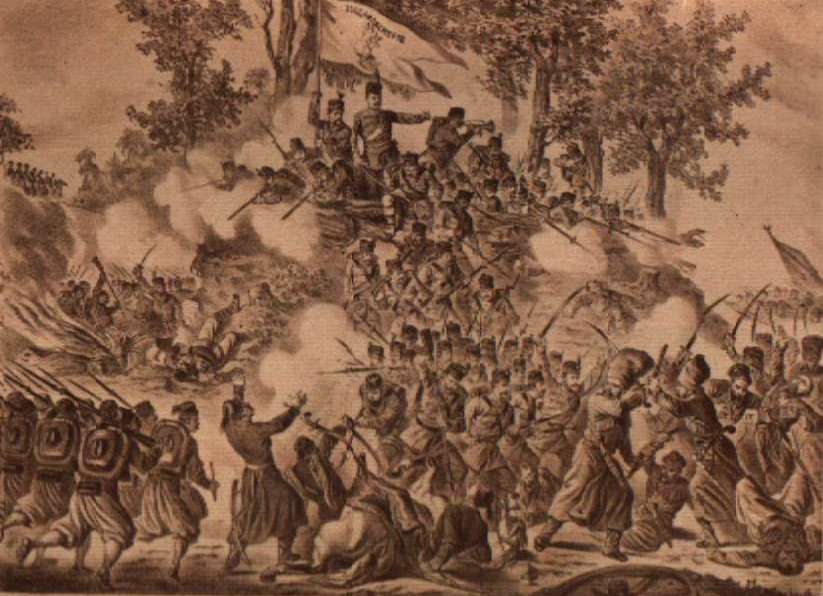
On this day, the revolutionary band led by Hadji Dimitar and Stefan Karadzha crossed the Danube River near the village of Vardim and entered Bulgarian territory, launching one of the most celebrated armed incursions against Ottoman rule in the years before the Liberation. The expedition was doomed militarily — both leaders were killed within weeks and the band was routed — but it was never meant to succeed alone. It was a provocation, a signal, and an act of defiance.
The memory of the crossing was transformed into enduring legend almost immediately, carried forward in poetry and song — most famously in Hristo Botev’s poem about Hadji Dimitar — and still recited by Bulgarian schoolchildren today. The two men became symbols of revolutionary sacrifice, their short campaign remembered far longer than the campaigns that actually achieved liberation nine years later.
July 6, 1990 — President Petar Mladenov Resigns
More than a century later, Bulgaria’s first post-communist head of state, Petar Mladenov, was forced from office after a recording surfaced of him suggesting, during the pro-democracy protests of December 1989, that tanks should be used against demonstrators. The leaked audio made his position untenable almost overnight and he resigned under intense public pressure.
The episode crystallized the fragility of the communist-era establishment’s attempts to manage Bulgaria’s transition to democracy, and it confirmed that the old guard’s grip on power was loosening faster than it had expected.
See what else happened in early July: July 5 and July 7. For more on Bulgaria, explore our Bulgaria From Above series and our travel guides.