August 2 marks two of the more consequential dates in Bulgaria’s history — a throne secured against Russian wishes and an uprising that outlived its own defeat.
August 2, 1887 — Ferdinand I Takes the Oath as Prince
Standing before the Third Grand National Assembly in Tarnovo, the young German prince Ferdinand of Saxe-Coburg and Gotha swore his oath as Prince of Bulgaria, formally filling the throne left vacant by Alexander of Battenberg’s abdication the previous year. Russia refused to recognise him, and several European powers followed for years, leaving Ferdinand to consolidate power in an atmosphere of diplomatic isolation.
He proved more resilient than his critics expected. Ferdinand ruled for three decades, overseeing Bulgaria’s industrial and military modernisation before proclaiming full independence from the Ottoman Empire in 1908 — a declaration he made in the medieval church at Tarnovo for maximum symbolic effect.
August 2, 1903 — The Ilinden Uprising Begins
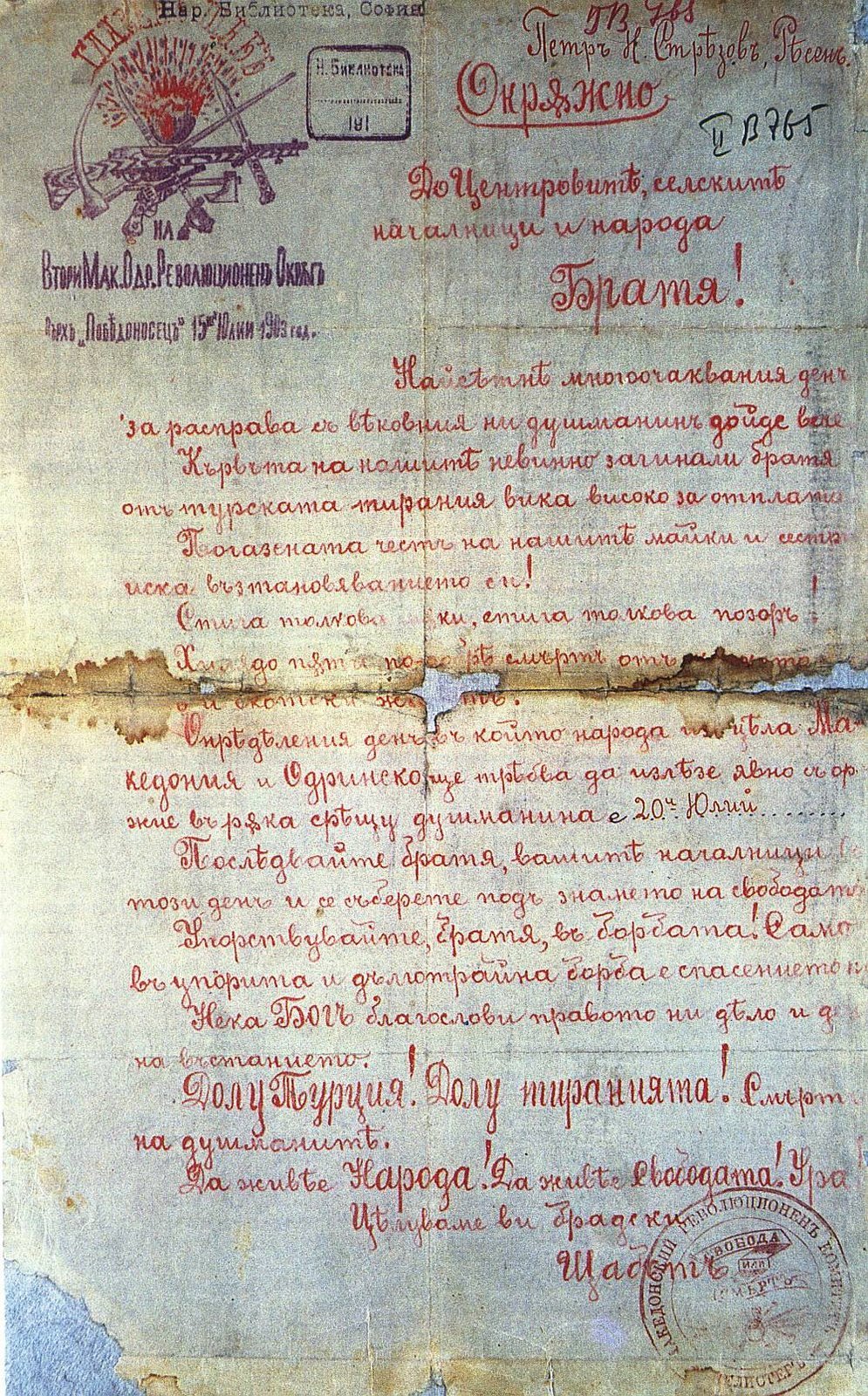
On the feast day of Saint Elijah — Ilinden — fighters of the Internal Macedonian Revolutionary Organisation launched a coordinated uprising against Ottoman rule across Macedonia. Within days, insurgents seized the town of Krushevo and declared a short-lived republic, one of the earliest such declarations in the Balkans.
Ottoman forces crushed the rebellion within weeks, but the Ilinden Uprising took on a life of its own in memory. It became a defining symbol of Bulgarian and Macedonian resistance to foreign rule and is still commemorated on both sides of that border today.
The August 1 and August 3 entries of this series have more from the same period. For a different perspective on Bulgaria, browse our travel guides or the Bulgaria From Above collection on Bronicable.