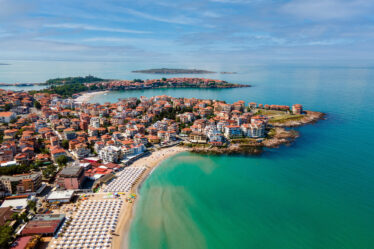
Bulgaria is the kind of country that keeps a few surprises in its pockets. You may arrive for the mountains or the food and leave thinking about alphabets, rose fields, ancient cities and people dancing over fire. In this guide, I am looking at 10 fascinating facts about Bulgaria, with a little more context where it matters. If you want to continue into the country’s past, our guide to Bulgaria’s historical sites is a good next stop.
Some facts are grand. Others are wonderfully specific. That is what I like about this list: it moves from language and culture to food, archaeology and traditions that are still alive today. A few of them are also repeated inaccurately online, so where the popular version is not quite right, I have said so.
Before the list, watch the memorable video:
#10 — The oldest written Slavic language ▶ 0:38
The claim is often shortened to “the oldest Slavic language”, which is not quite how languages work — all Slavic tongues descend from a common ancestor. The accurate version is more interesting anyway: Old Bulgarian, the language of the 9th-century translations, is the first Slavic language ever committed to writing, and the first to be used for literature, liturgy and law.
Modern Bulgarian is also the odd one out grammatically. It has lost the noun cases that Russian, Polish and Czech still use, and instead attaches the definite article to the end of the word — features it shares with Macedonian and with its non-Slavic Balkan neighbours rather than with the rest of the Slavic family.
#9 — Rose oil ▶ 0:54
Bulgaria is one of the world’s leading producers of rose oil, grown in the Rose Valley between Karlovo and Kazanlak, in the shelter of the Balkan range. The variety is Rosa damascena, and the yield is famously poor: it takes tonnes of blossom to distil a single kilogram of oil, which is why the price is measured against gold.
The picking happens over a few weeks from late May, and always at dawn — as soon as the sun is up, the oil content in the petals starts to fall. The Rose Festival in Kazanlak at the beginning of June is built around that harvest, and the fields are at their best in exactly those weeks.
#8 — The Cyrillic alphabet ▶ 1:11
This is the fact most often told wrong, including in Bulgaria. Cyril and Methodius, brothers from Thessaloniki, created the Glagolitic alphabet in the 860s — a completely different-looking script. Cyrillic was developed afterwards by their disciples, who came to Bulgaria after being expelled from Great Moravia, and it took shape at the Preslav Literary School around the turn of the 10th century. It was named in honour of Cyril, not written by him.
That makes Bulgaria the place where the script now used from Sofia to Vladivostok was actually assembled. It is celebrated every 24 May, the country’s most popular public holiday, and when Bulgaria joined the European Union in 2007 Cyrillic became the EU’s third official alphabet after Latin and Greek.
#7 — Thracian heritage ▶ 1:28
The Thracians were not late arrivals — they were living in these lands from the Bronze Age, and Homer already mentions them. What did emerge later, in the 5th century BC, was the Odrysian kingdom, the first large Thracian state, which is probably where the “6th century BC” figure repeated online comes from.
They left no written literature, so everything we know comes out of the ground: the gold of Panagyurishte, Valchitran and Rogozen, and the painted tombs at Kazanlak and Sveshtari, both on the UNESCO list. Bulgaria has thousands of burial mounds still unexcavated, which is why Thracian finds keep making the news.
#6 — Bulgarian yogurt ▶ 1:50
The bacterium responsible carries the country’s name for a reason. In 1905 Stamen Grigorov, a Bulgarian student in Geneva, identified the rod-shaped bacterium behind Bulgarian yogurt; it was later named Lactobacillus bulgaricus. Ilya Mechnikov, a Nobel laureate, then popularised the theory that it explained the longevity of Bulgarian villagers, and the idea travelled worldwide.
What matters on the table is that the culture is still live and the taste is sharper and thicker than most Western yogurt. It appears in everything — in tarator, the cold cucumber soup of every Bulgarian summer, next to patatnik and mekitsi, and diluted with water and salt as ayran.
#5 — Traditional crafts ▶ 2:07
Bulgarian crafts survive in specific places rather than in general. Troyan gives its name to a distinctive style of pottery with dripped, marbled glaze. Tryavna produced a woodcarving school whose iconostases and ceilings are still in the churches and houses there. Chiprovtsi in the northwest has been weaving flat kilim carpets for centuries, and the craft is on the UNESCO intangible heritage list.
The best single place to see them at work is the Etar open-air museum near Gabrovo, where the workshops are powered by water and the craftsmen actually produce. Buying directly there or in the towns themselves means the money reaches the person who made the thing.
#4 — Ten UNESCO World Heritage Sites ▶ 2:34
The figure of seven refers to the cultural sites: Boyana Church, the Madara Rider, the Thracian tomb of Kazanlak, the rock-hewn churches of Ivanovo, Rila Monastery, the old town of Nessebar and the Thracian tomb of Sveshtari. Add the three natural ones — Srebarna nature reserve, Pirin National Park and Bulgaria’s share of the transnational primeval beech forests — and the country’s total is ten.
They are scattered rather than clustered, from the Danube to the Black Sea to the Pirin peaks, so seeing them all is a project rather than a weekend. For a more focused introduction to that past, I would begin with our historical sites guide.
#3 — Nestinarstvo ▶ 2:53
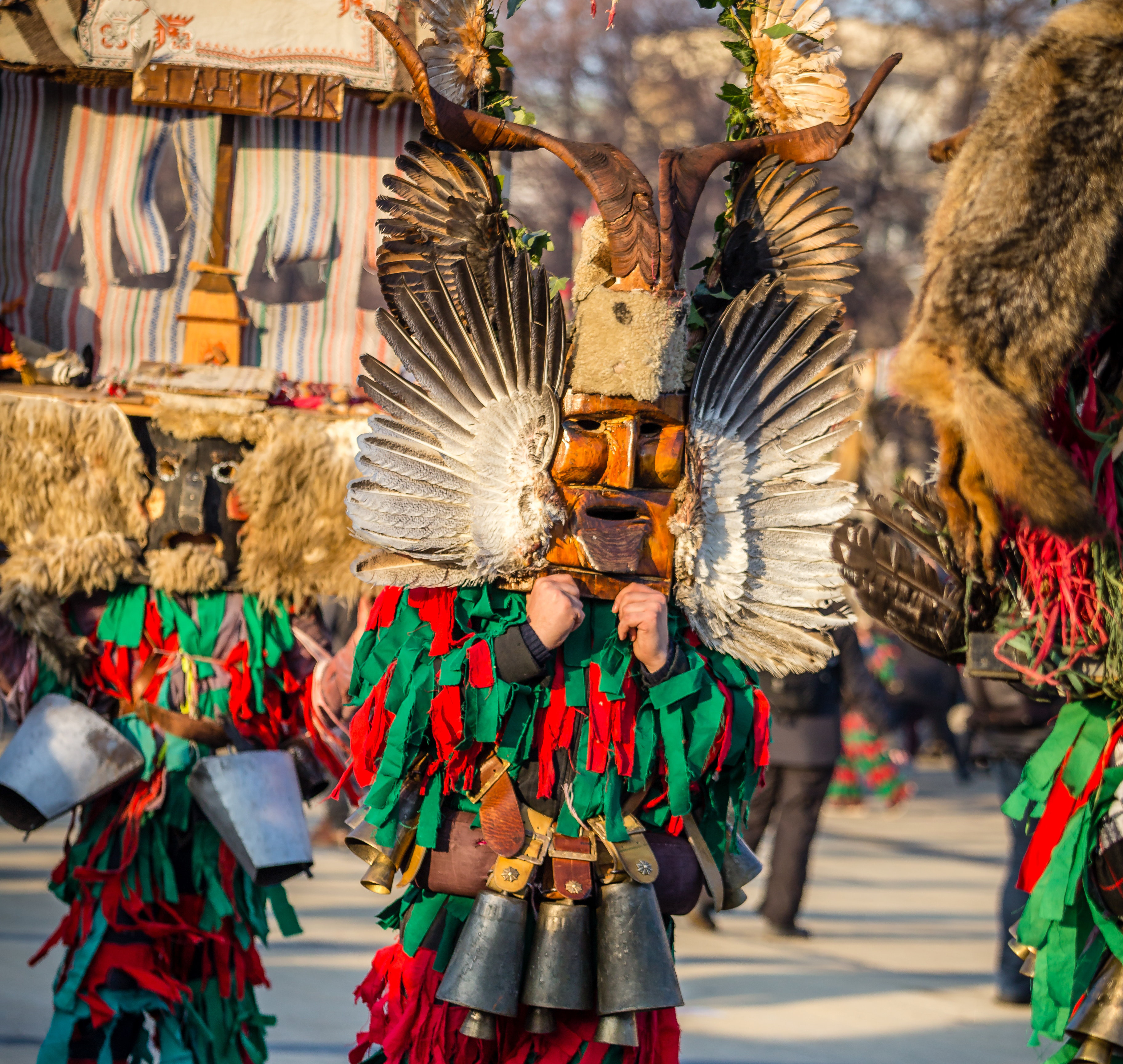
Fire dancing is not a show put on for tourists — at least not in its authentic form. The genuine ritual survives in the Strandzha mountains, above all in the village of Bulgari, and takes place on 3 June, the feast of Saints Constantine and Helena, whose icons the dancers carry across the embers.
It is a striking mixture of Orthodox feast day and something considerably older, which is why it is often linked to pre-Christian Thracian practice. UNESCO added it to the list of intangible cultural heritage in 2009. Hotel versions performed on the coast in July are entertainment, not the tradition.
#2 — Plovdiv ▶ 3:15
Plovdiv is among the oldest continuously inhabited cities in Europe, with settlement traces on its hills going back to the Neolithic. Its list of names is the shortest way to tell its history: Eumolpia to the Thracians, Philippopolis after Philip II of Macedon took it in the 4th century BC, Trimontium under Rome, Filibe under the Ottomans.
It was European Capital of Culture in 2019, which paid for a lot of restoration in the Old Town and the Kapana creative district. If Plovdiv has caught your attention, our guide to the city’s best places to visit is the next article I would open.
#1 — One of Europe’s oldest states ▶ 3:34
Bulgaria was founded in 681, when Byzantium was forced to recognise the state established by Khan Asparuh south of the Danube. It is frequently pointed out that the country has kept the same name ever since — one of very few in Europe that can say so.
The history after that is not a straight line: a first empire that Christianised in 864 and built the literary schools, two centuries under Byzantine rule, a second empire centred on Tarnovo, then nearly five centuries within the Ottoman Empire before the liberation of 1878. Every layer is still visible somewhere in the landscape, which is really the point of the whole list.