April 9 brings together, across ninety years of Bulgarian history, the international recognition of the country’s independence and a concrete humanitarian response during the Kosovo crisis.
April 9, 1909 — Britain, France and Italy Recognize Bulgaria’s Independence
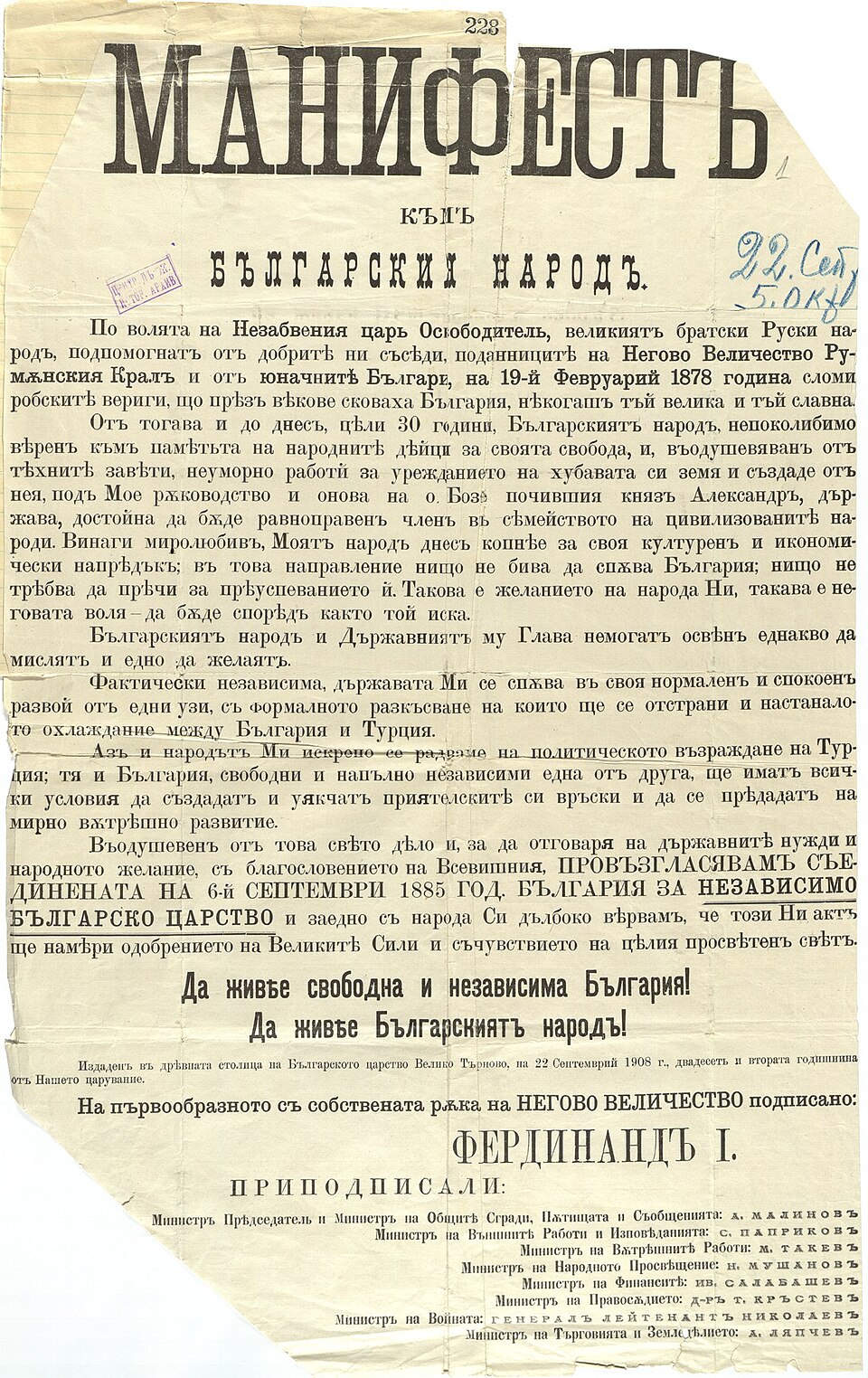
On April 9, 1909, Britain, France, and Italy recognized Bulgaria’s independence, which had been declared the previous September. The backing of three major European powers confirmed the country’s new international status well beyond the Balkan region, where it had long been shaped by the diplomatic balance among the Great Powers.
Recognition was more than a symbolic gesture. It gave Bulgaria greater freedom in foreign policy, but it also placed heavier demands on its institutions, finances, army, and diplomacy. A full place among European states called for a maturity the young country had yet to prove.
April 9, 1999 — Bulgaria Launches an Airlift for Kosovo Refugees
On April 9, 1999, the Bulgarian government began an air operation to transport Kosovo refugees from Macedonia to Bulgaria. The Kosovo crisis and NATO’s campaign against Yugoslavia had created a severe humanitarian emergency across the region.
Bulgaria was then still outside NATO and the European Union, yet it chose to help people who had been forced from their homes. For a country still finding its footing after the upheavals of the 1990s, that choice carried real weight. The date shows that foreign policy can be measured in acts of practical solidarity, and not only in declarations and treaties.