Devin is tucked deep in the Western Rhodopes — among pine-covered slopes, rocky ridges and clear mountain rivers. The town is known throughout Bulgaria for its mineral springs, but water is only part of its character. Devin is also a gateway to deep gorges, forest roads and high mountain villages, where the day still follows the season, not the clock.
| Where | Western Rhodopes, Smolyan Province, in a basin where the Devinska River meets the Vacha, at 710 m elevation; about 90 km from Plovdiv and 220 km from Sofia |
| Getting there | by car or bus only, via Plovdiv and Krichim; the town has no direct rail link |
| How long | half a day covers the centre; most visitors stay longer for the baths and the eco-trails nearby |
| Mineral baths | the springs in town run at 37–45°C; they are mainly accessed through hotel spa centres, and hours and prices vary by hotel. Check current details on the official Devin municipality site (Bulgarian only). |
| Struilitsa eco-trail | about 3 km from the centre, free access; leads to several open-air mineral springs along the Devinska River |
| When to go | year-round; Devin’s mineral water festival is held in early August |
| Parking | free on the streets in and around the centre |
A town among the Rhodopes
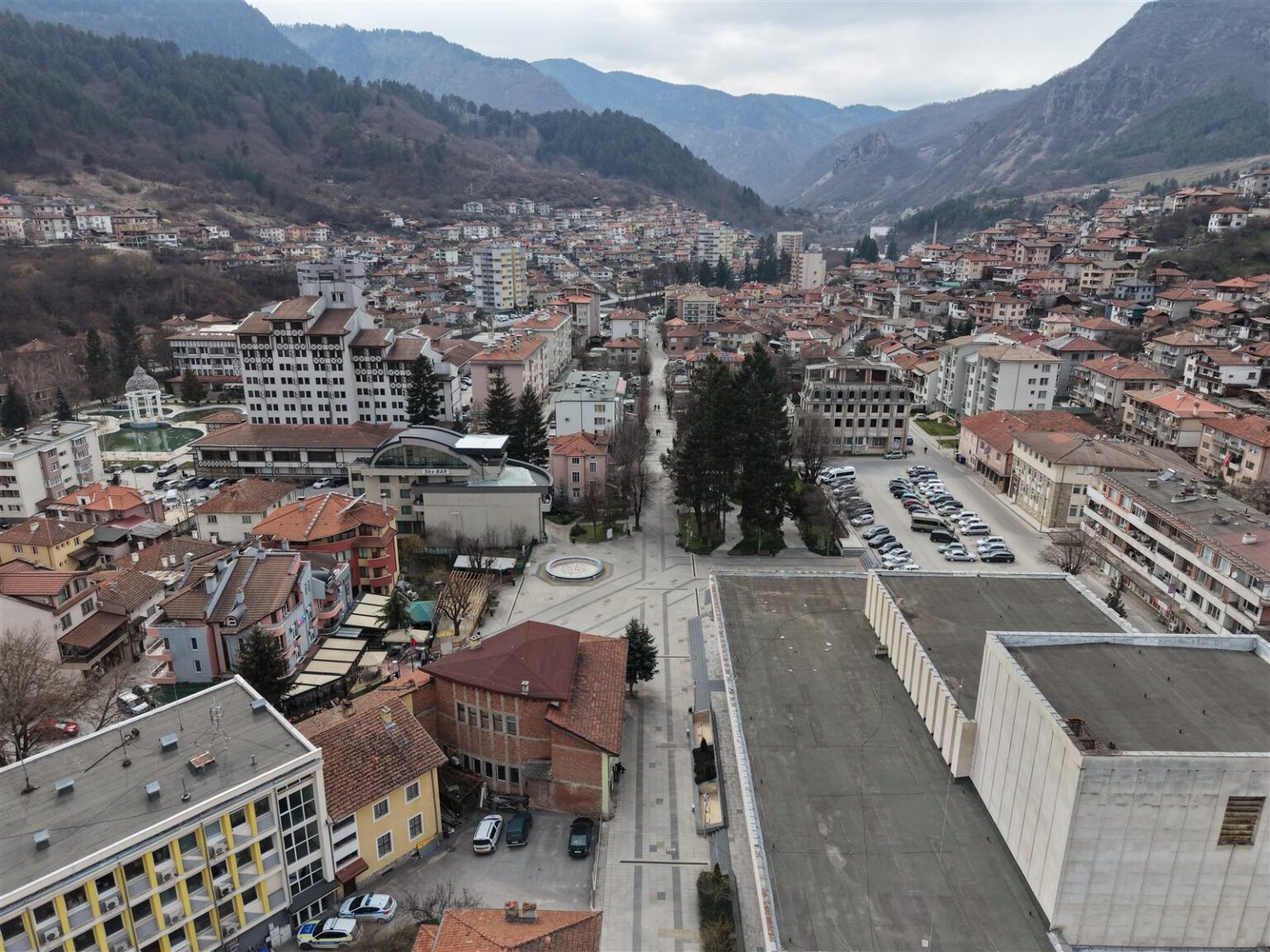
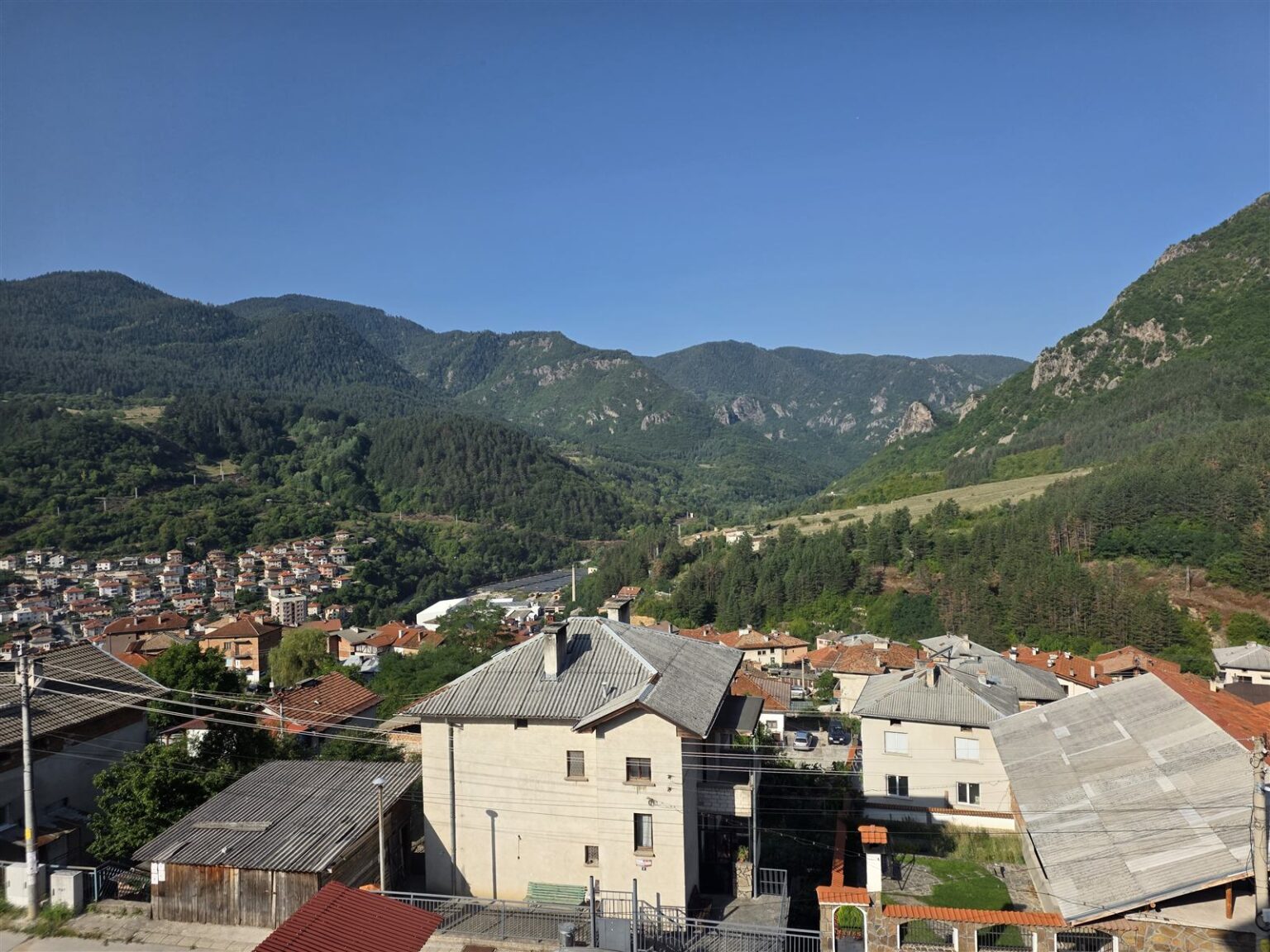
Devin sits in a basin formed by the confluence of the Devinska River and the Vacha, bordered by the Devin mountain to the south and the slopes of Chernatitsa to the east. Seen from above, the town looks small against an immense green expanse of pine forest and rocky ridges — that sense of scale is exactly why the area works so well on aerial footage. Roofs, roads and riverbeds form a quiet pattern beneath the mountain ridges.
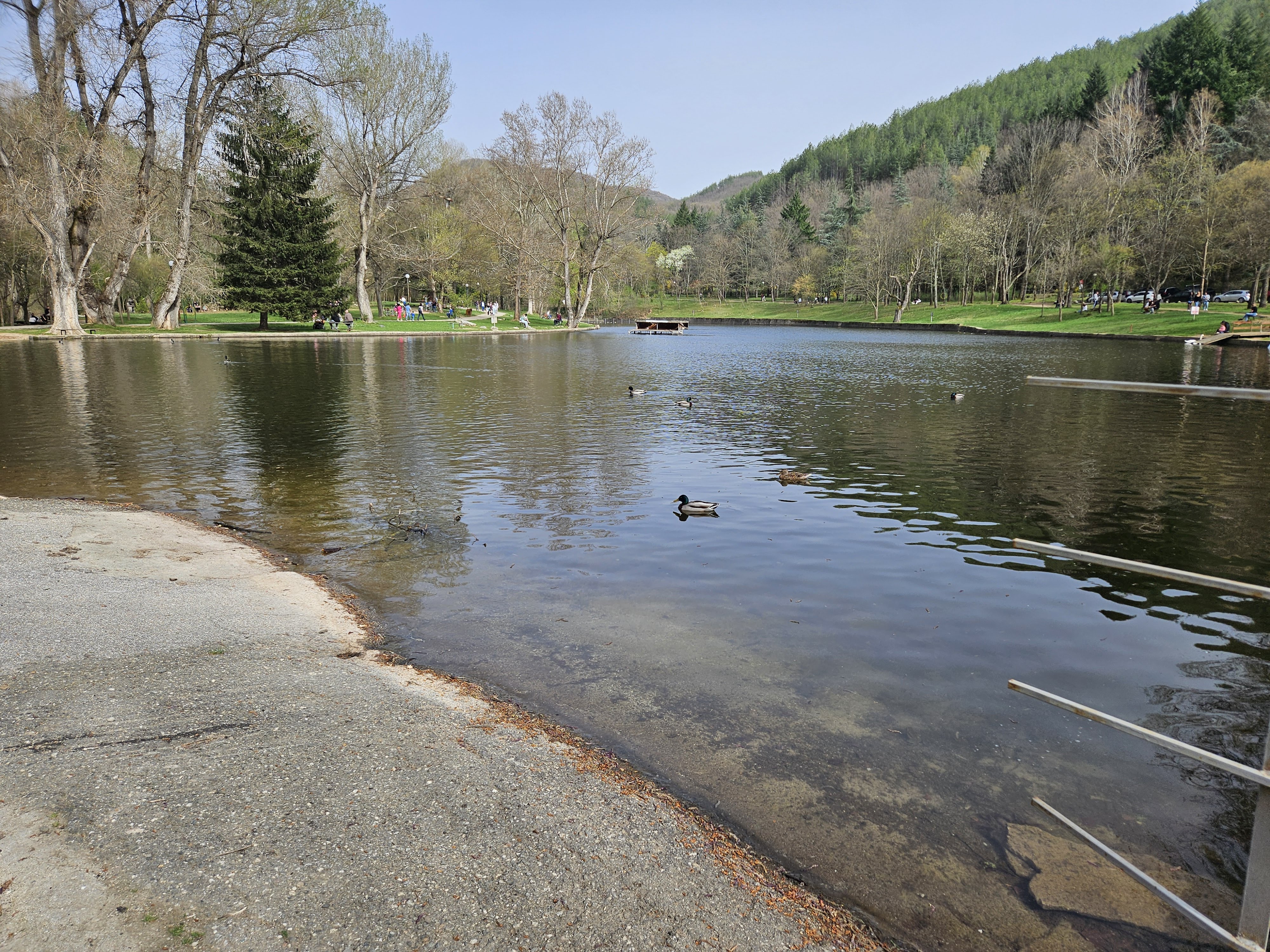
The terrain around it is varied — wooded ridges, narrow valleys, open meadows and the sound of running water. Traces of old roads, chapels and traditional hamlets can still be found on the slopes, away from the main streets.
Mineral springs and the spa tradition
Mineral water has drawn people to the region since deep antiquity. Today it underpins Devin’s spa tradition and is a significant part of the local economy — visible not only in the hotels and pools, but in the whole character of the town, as a symbol of health, movement and connection to the mountain. Besides the spring in the town itself, nearby is Bedenski Bani, where the water reaches 73–76°C — one of the hottest sources in the country.
The centre at night
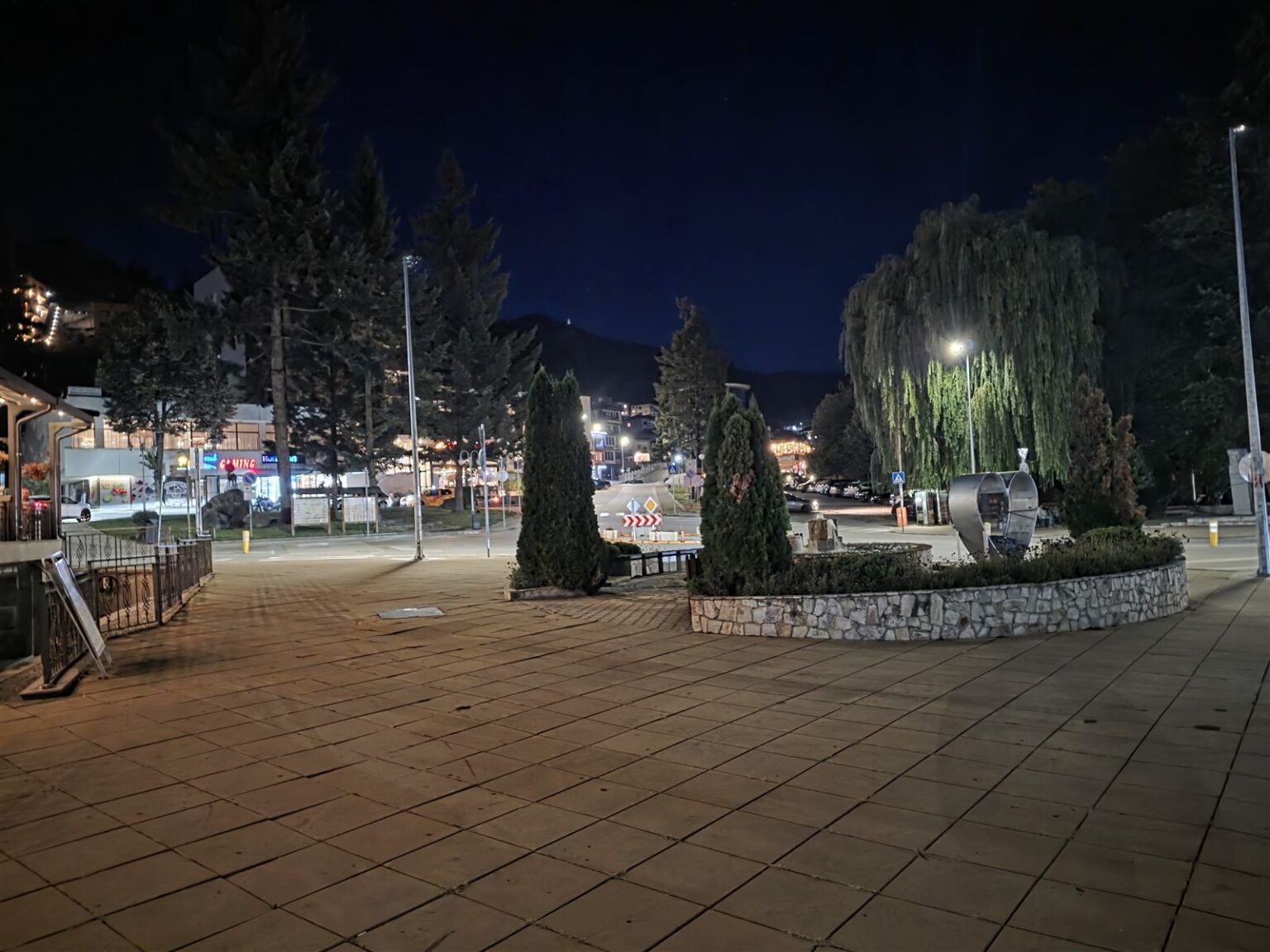
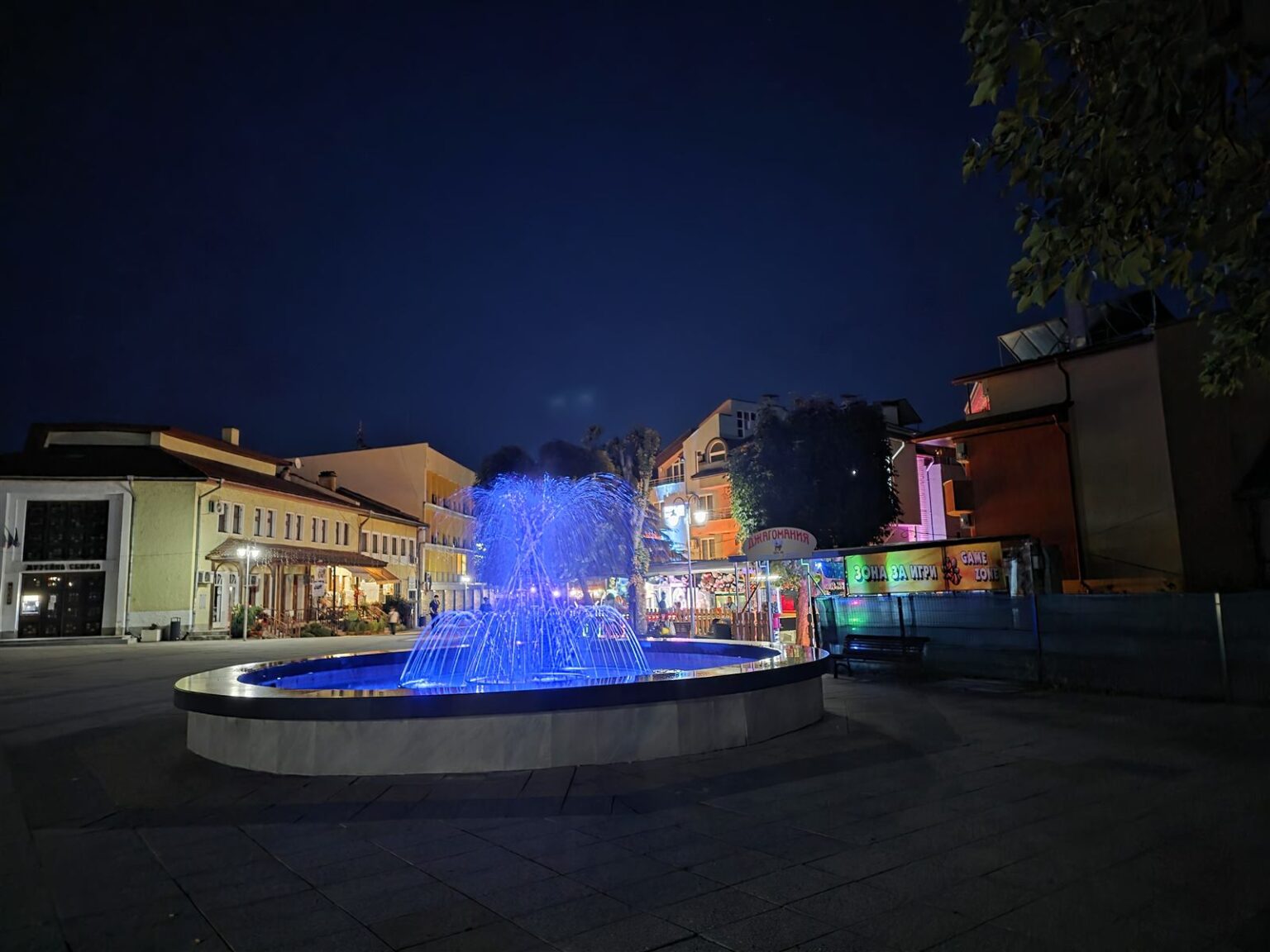
In the evening, Devin’s centre changes character. Mountain silhouettes frame the low residential and commercial buildings, and the illuminated fountain on the square becomes a natural focal point for an after-dark stroll. Here it is easy to see why the town works so well on film — the mountain begins right past the last houses.
The pedestrian zone and the book market
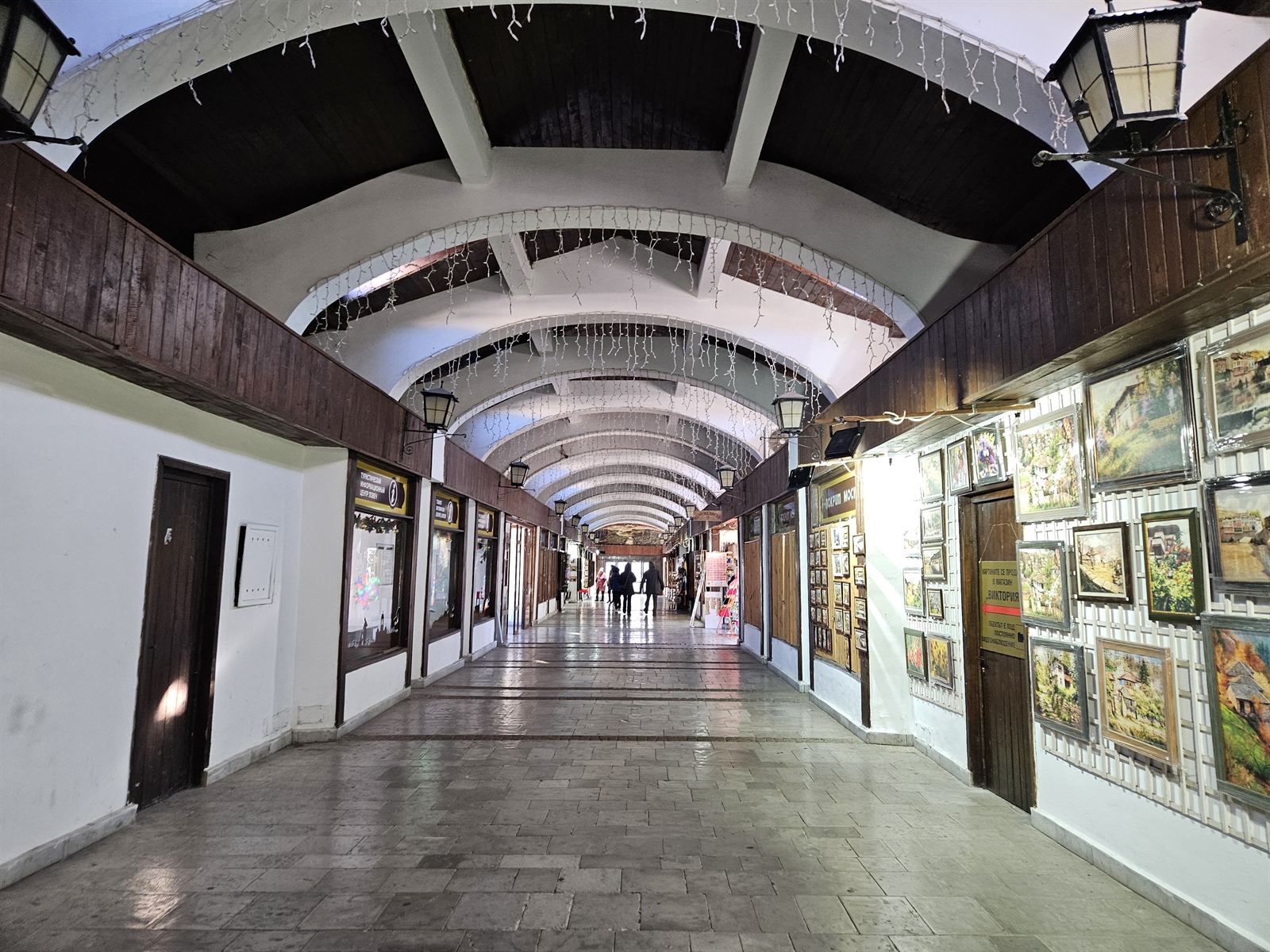
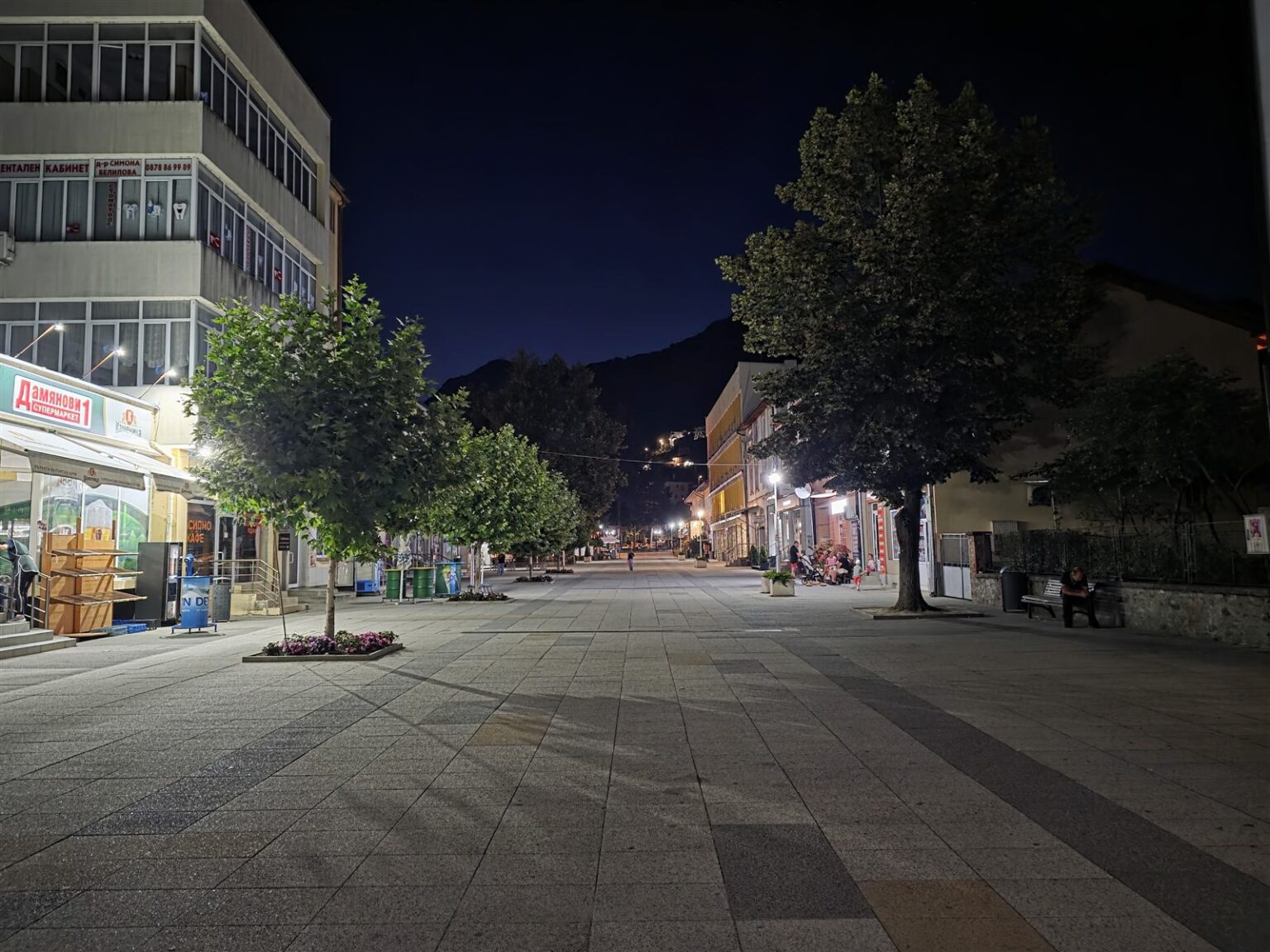
The pedestrian zone is the heart of evening Devin. Tables at a local book market are stacked with books to browse, while lit shopfronts along the street invite a slow walk after sunset. This mix of calm and accessibility is the town’s strongest feature — here you’re not rushing from one attraction to the next.

A good base for exploring the western Rhodopes
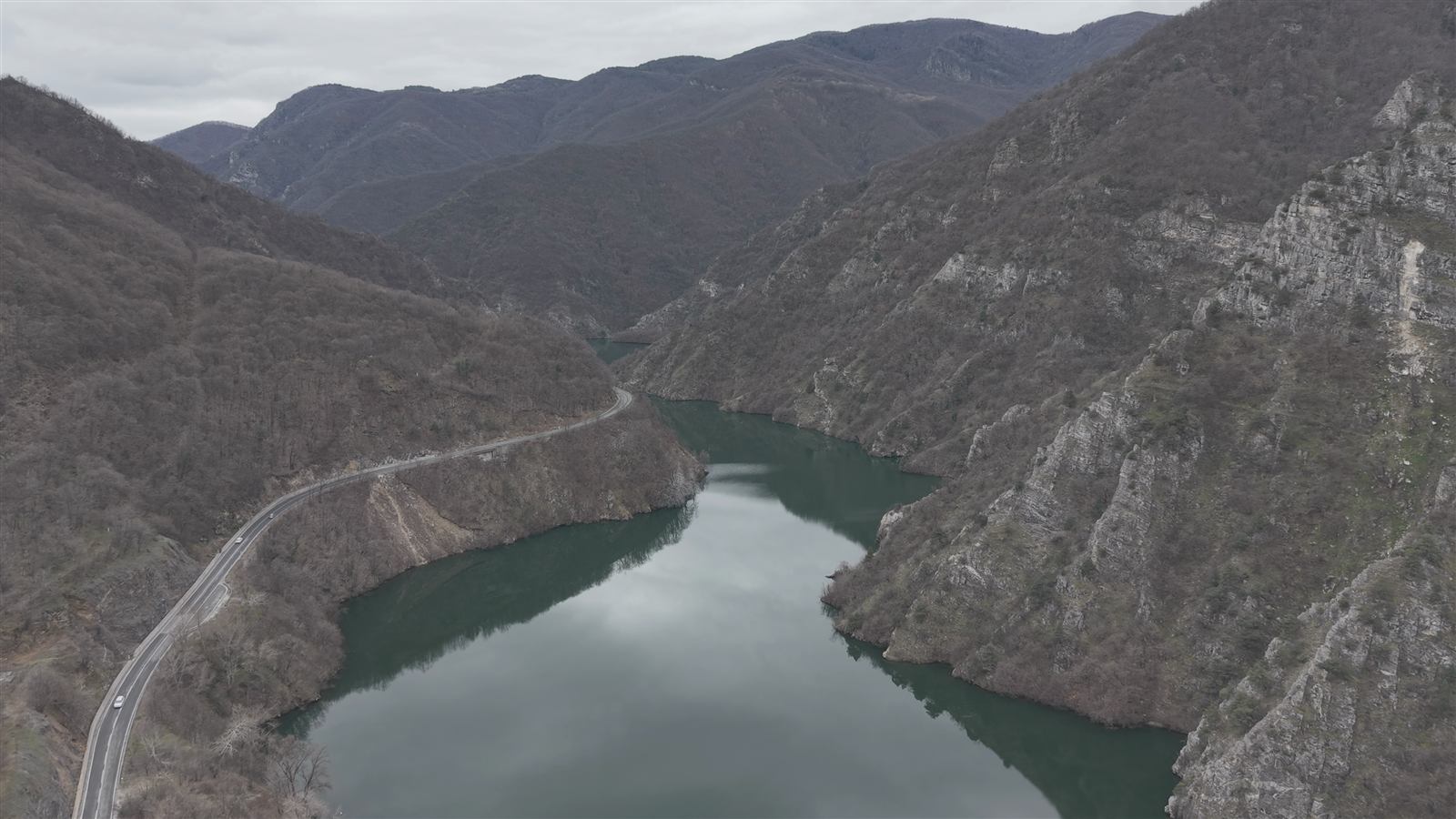
Dozens of routes lead out from Devin toward different faces of the Rhodopes — some through shaded forest, others follow river valleys into wilder parts of the mountain. A trip doesn’t have to be long to be memorable. Downstream along the Vacha, the river opens into a reservoir, and further on lies the quiet town of Krichim. To the west, in a similar Rhodope basin beside a reservoir, is Sarnitsa.
Follow the road up from Devin through Teshel and Gyovren and you reach Devil’s Throat Cave in the Trigrad Gorge, home to the tallest underground waterfall in the Balkans.
Related video: the town, the Vacha River and Krichim are best seen from the air in the episode Bulgaria From Above: Devin, Vacha & Krichim, part of the Bulgaria From Above series.