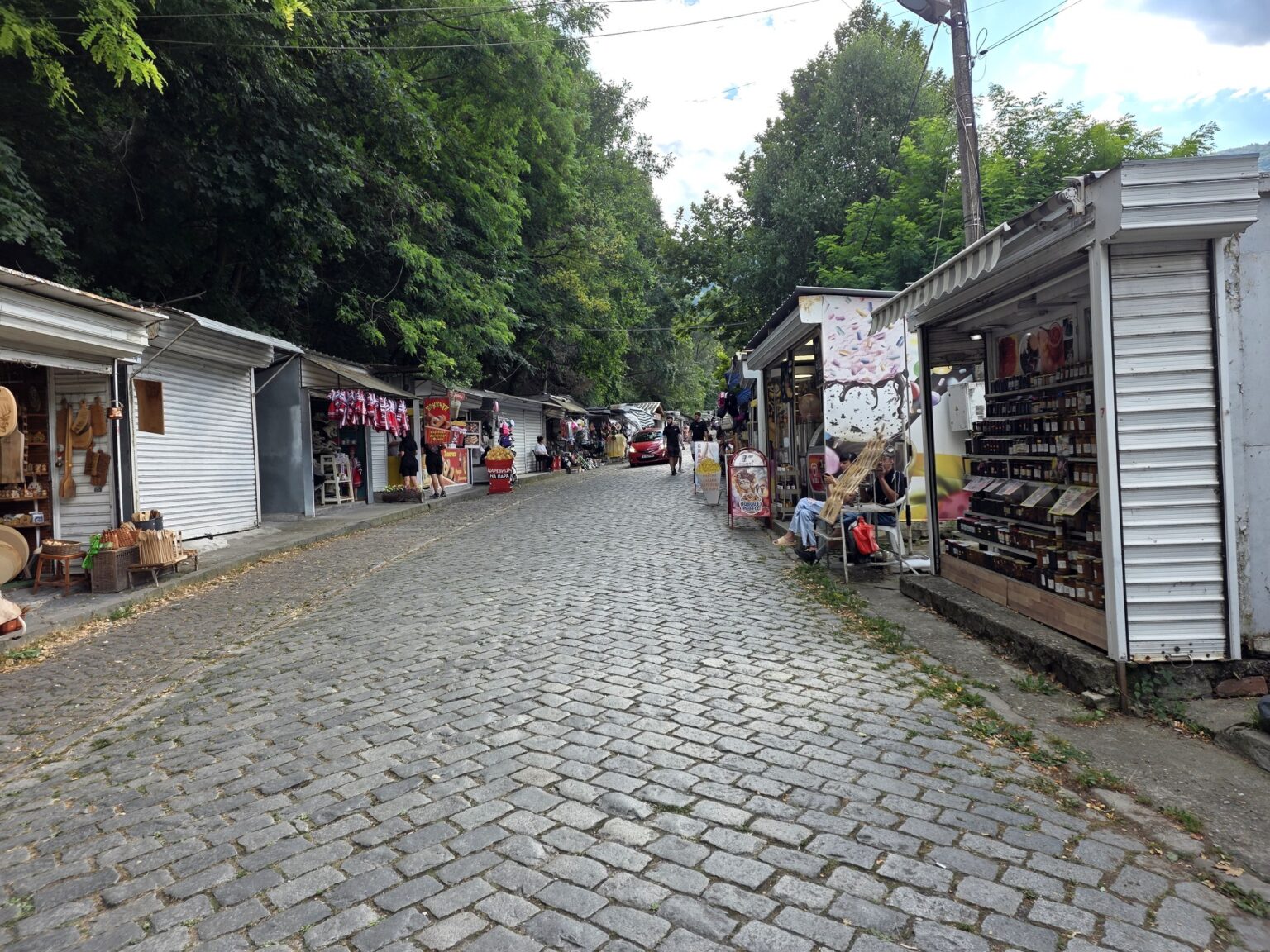
You do not have to hunt for Bachkovo Monastery. It sits directly on the road south towards Smolyan, 10 km past Asenovgrad and 30 km from Plovdiv, and you can see it from the turn-off. You stop, pay for parking, and everything after that is on foot. Between the car and the gate runs a lane of market stalls selling herbs, homemade fruit preserves and Rhodope wool blankets — and we liked it far more than expected. It has the feel of a seaside promenade, and we are suckers for those.
We have been twice — once on an April afternoon, once on a July evening — and the two visits barely feel like the same place. In April the courtyards are empty and cool; in July the lane is packed. Allow an hour and a half for the monastery, the museum and the walk up to the waterfall, or under an hour if you stay inside the walls. 🙂
| Where it is | the Rhodope mountains, beside the village of Bachkovo, in the valley of the Chepelarska river; 10 km from Asenovgrad, 30 km from Plovdiv; Google Maps |
| Getting there | by car on the Asenovgrad – Smolyan road, turning right at Bachkovo village; the monastery is on the main road and hard to miss. Buses from Plovdiv towards Smolyan pass the turn-off |
| How long | an hour and a half for everything — courtyards, church, museum and the waterfall loop; under an hour for the monastery alone |
| Opening hours | in August we found it open until 19:00. The Bulgarian Tourist Union lists 07:00 – 19:00 in winter and 07:00 – 20:00 in summer; the monastery’s own site publishes only its services — 7:00 in the morning and 17:00 in the evening (18:00 in summer). Check the current times on the official monastery site. |
| Admission | the courtyards and the church are free to enter. The museum is separate — €3.60 (pleasingly, the price is still quoted as €3 excluding VAT on the museum page 😀). The ossuary outside the walls is charged separately again and is not permanently open. |
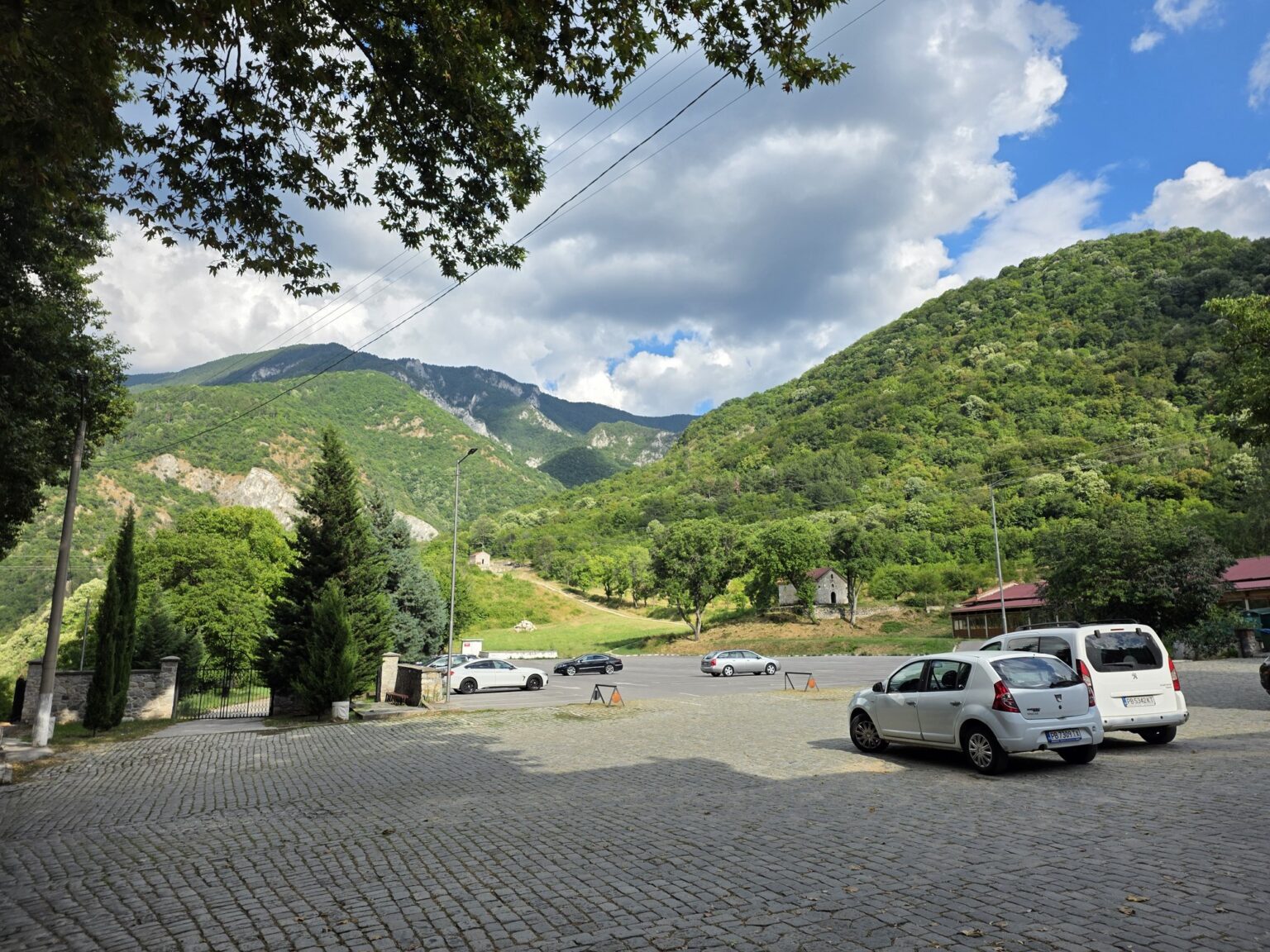
| Parking | €2.50 at the car park by the south entrance. There are two of them, same price, and the attendants compete loudly for your car — one has shade, and that is the whole difference. Along the main road nearby, no-parking signs are almost everywhere; only two side streets near the monastery are free. Signage changes, so read it on the spot before you leave the car. |
| The waterfall | the path starts from the waymarking east of the car park; a loop of about half an hour, easy underfoot but poorly signposted |
| 100 National Sites | one of the hundred national tourist sites of the Bulgarian Tourist Union — a long-running scheme where walkers collect a stamp at each site in a booklet |
The icon that kept flying back to the rocks
A little history first, for atmosphere. The monastery was founded in 1083 by Grigorii Bakuriani, a Byzantine commander of Georgian origin, together with his brother Abasii — so its earliest history is Georgian rather than Bulgarian. Today it is the second largest monastery in the country after Rila.
Its great treasure is a miracle-working icon of the Virgin, and the icon comes with the best local legend. In the recorded version it runs roughly like this:
The icon flew here from a Georgian monastery and came to rest at a spot in the rocks called Kluviyata. A fire broke out there that burned nothing. Two shepherds, a brother and a sister, watched the flames for three nights before telling the monks. They carried the icon down to the church — and several times it escaped back to the rocks.
The monastery’s own account is more down to earth: during the hard early years of Ottoman rule the icon was hidden at Kluviyata and found again in the early 17th century. To mark its return, a procession on Easter Monday was established back then and still walks today. Two versions of the same events, and both beat a signboard.
The car park, the stalls and the gate
There are two car parks side by side, identical prices, and attendants who wave you in at the same moment. If you back yourself, there is legal free parking nearby too — but the no-parking signs are densely planted along the main road, and the mood can deteriorate quickly. We paid and did not regret it.
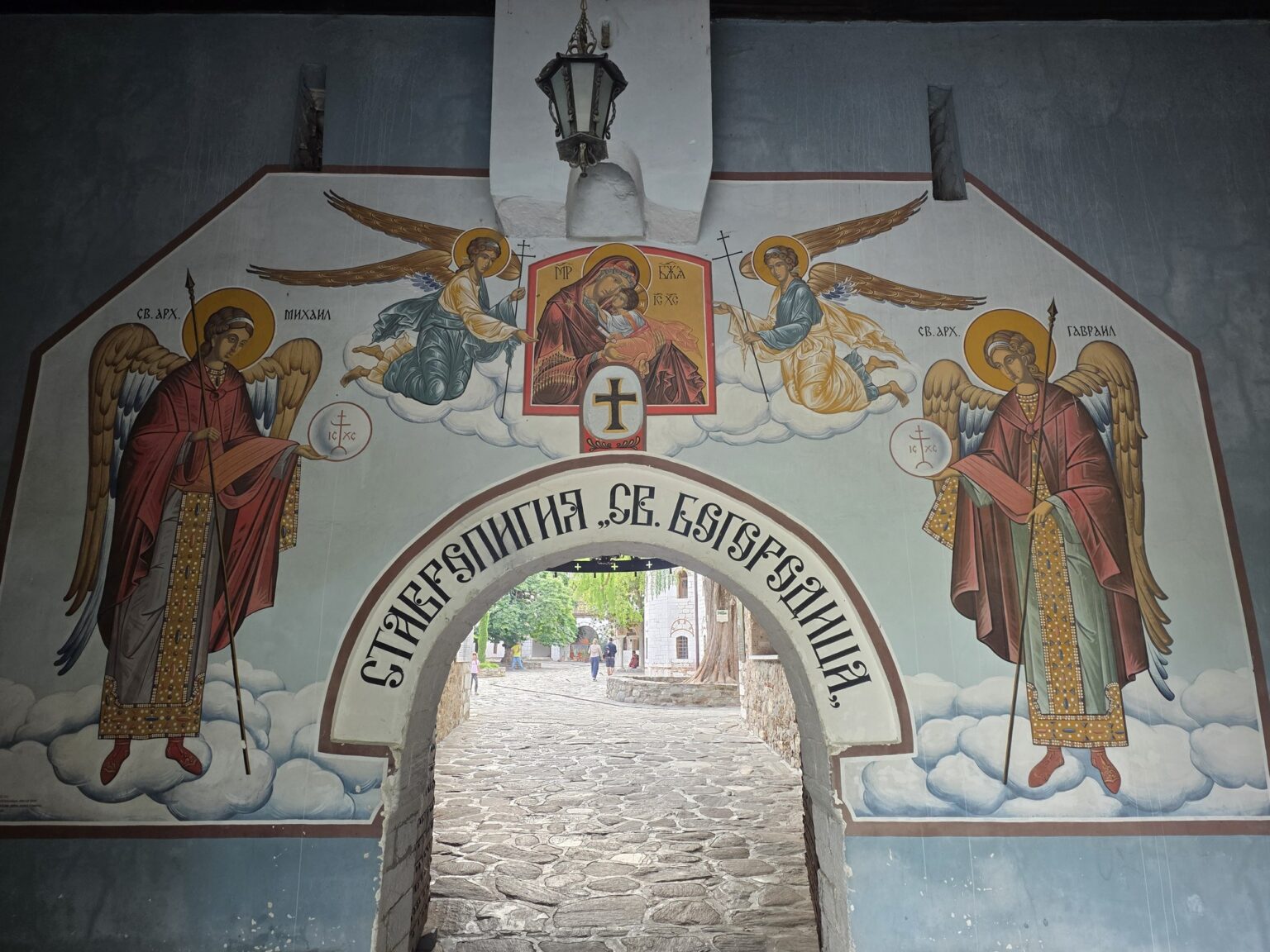
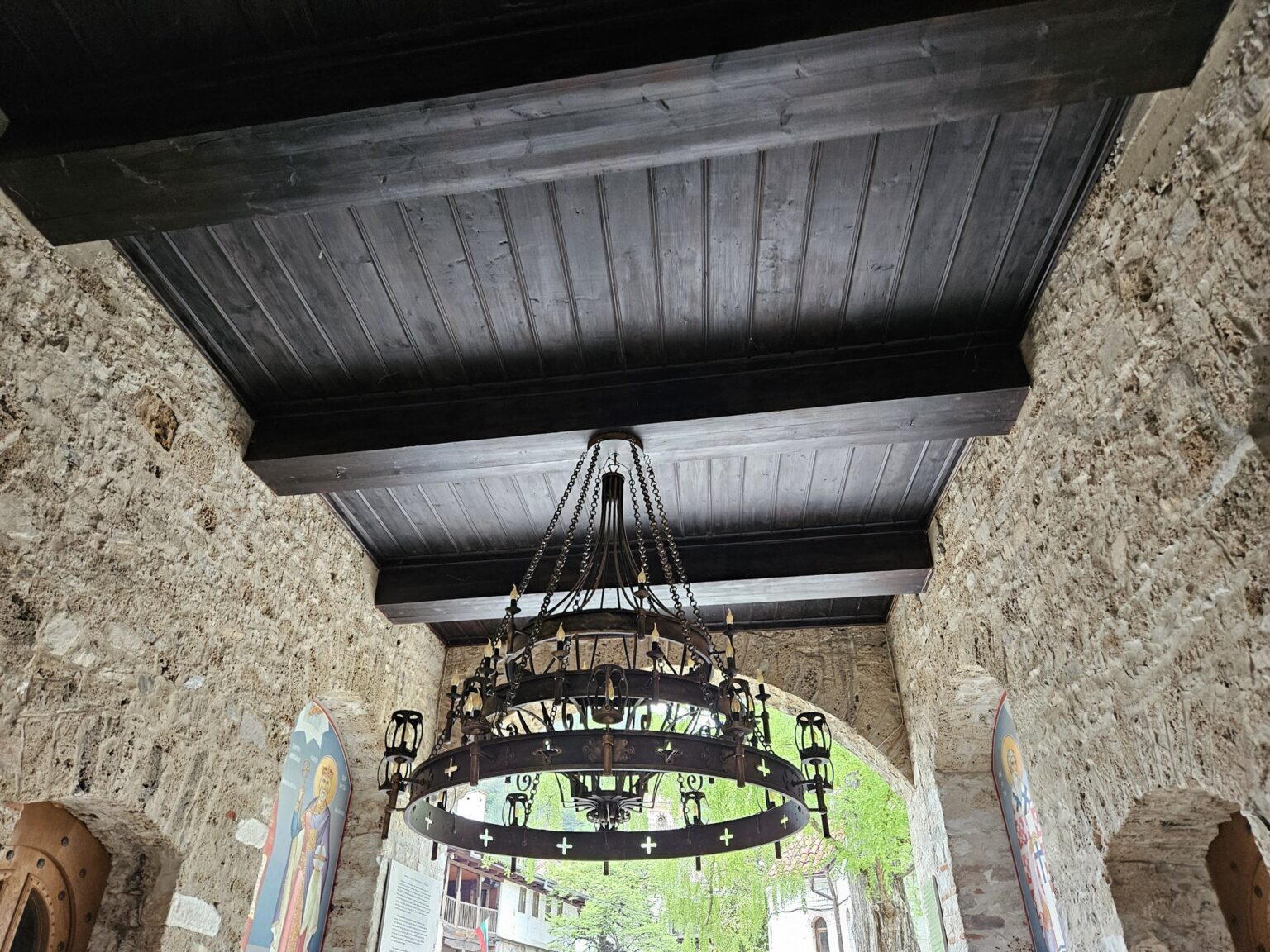
From there a cobbled lane runs to the gate, squeezed on both sides by stalls and small shops selling more or less everything that grows in the Rhodopes. At the end comes the stone gateway with saints painted above it — the best single frame on the site, and the point where the noise stops dead.
Courtyards, arcades and cats
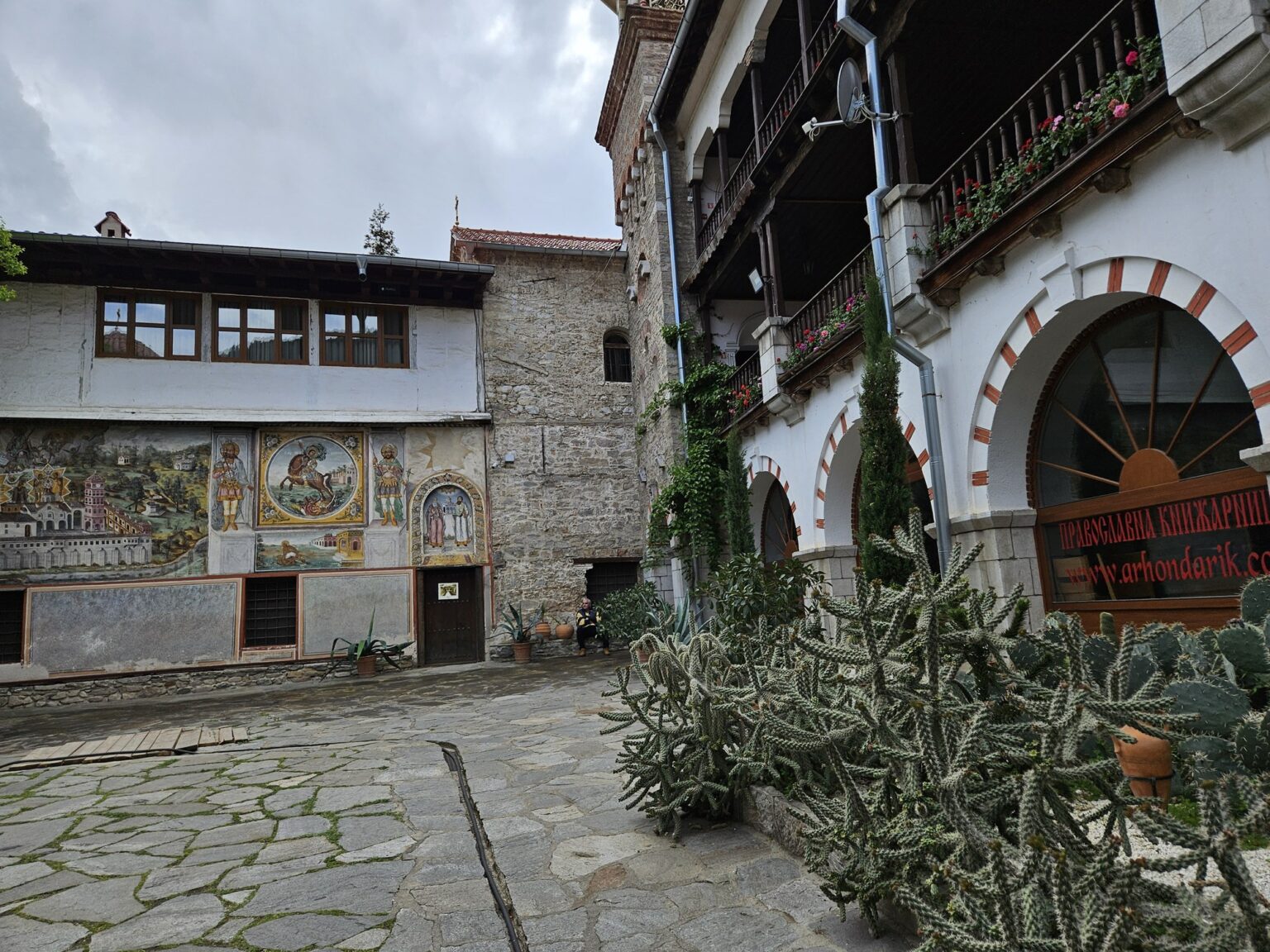
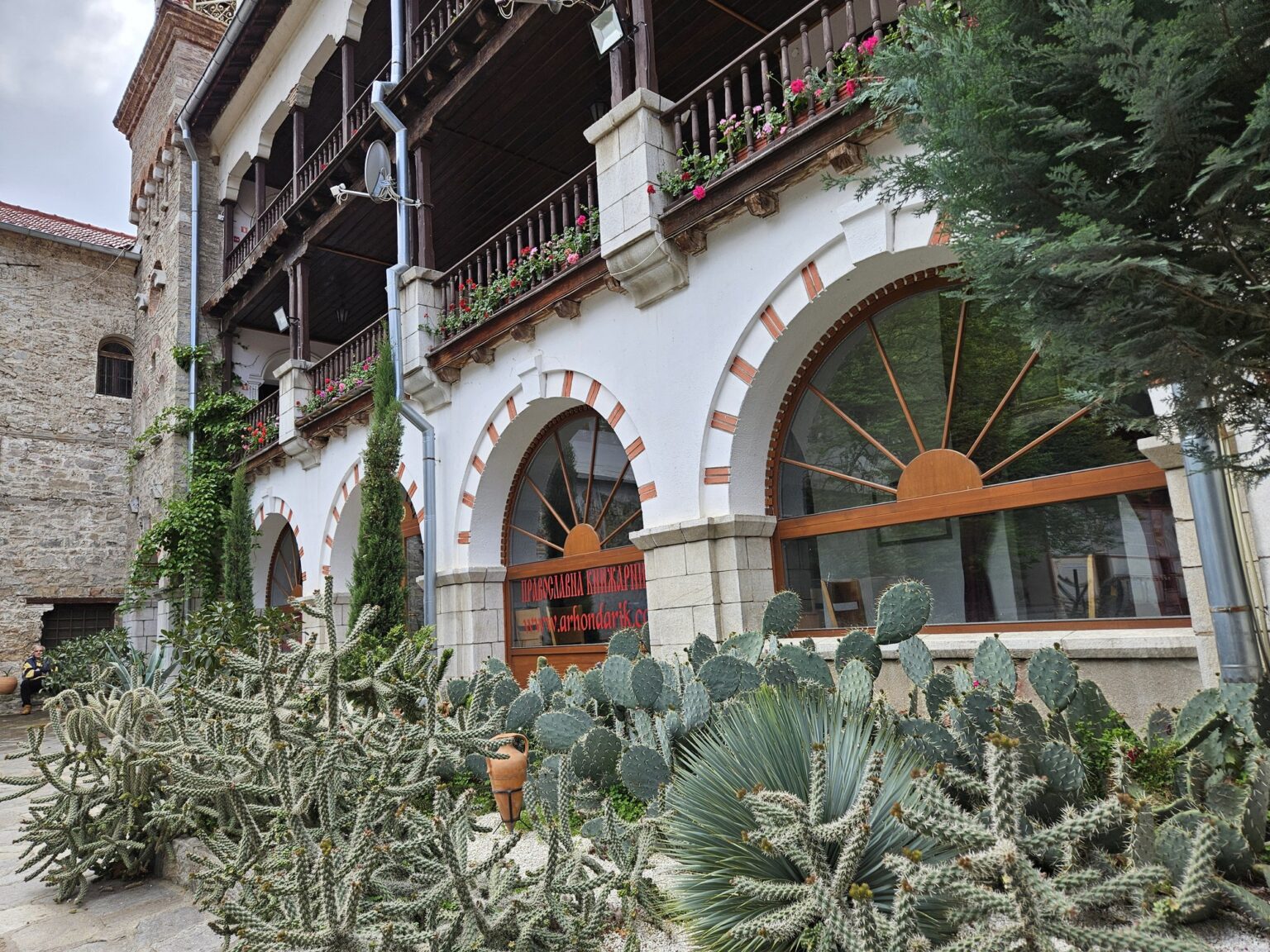
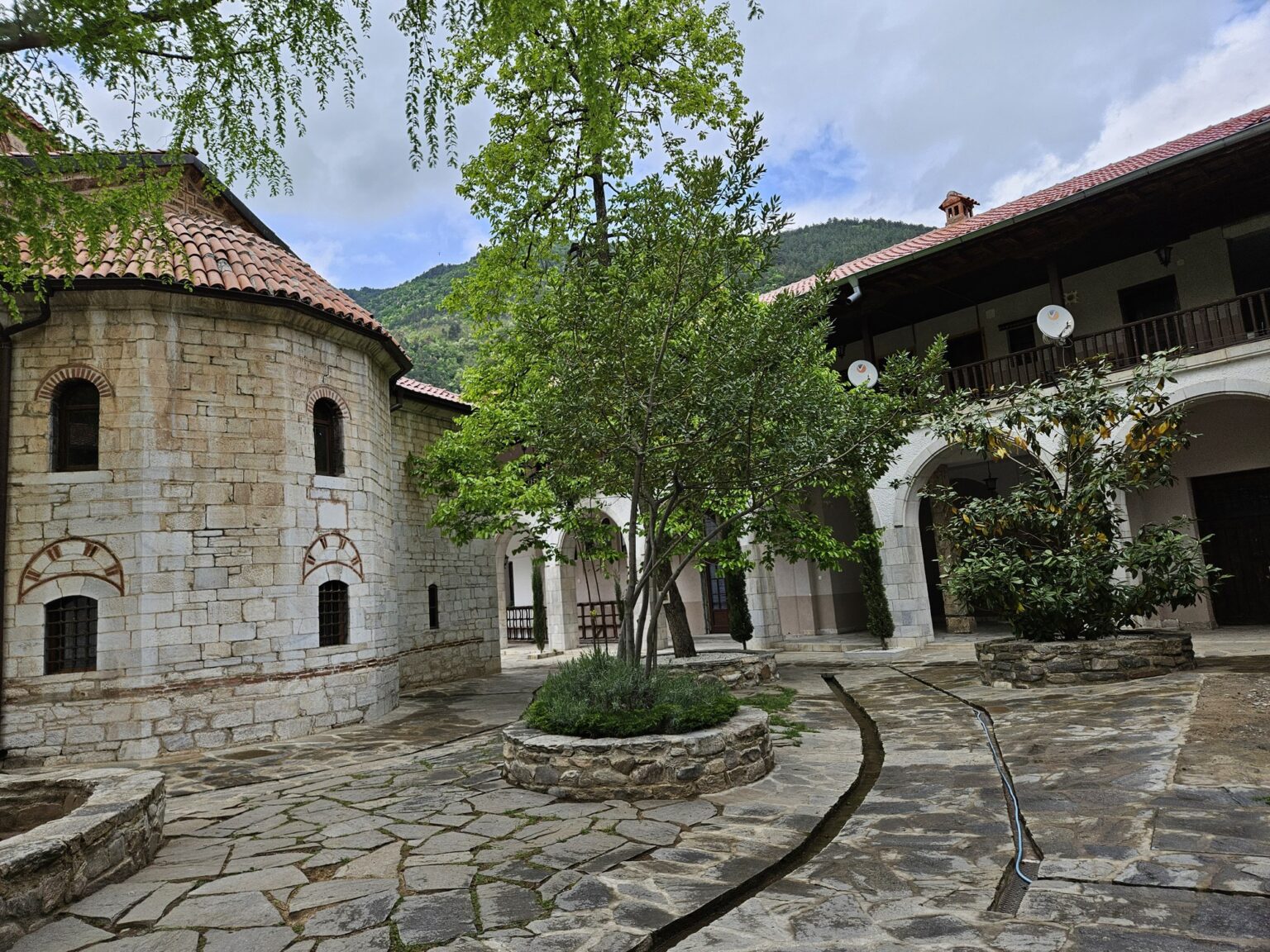
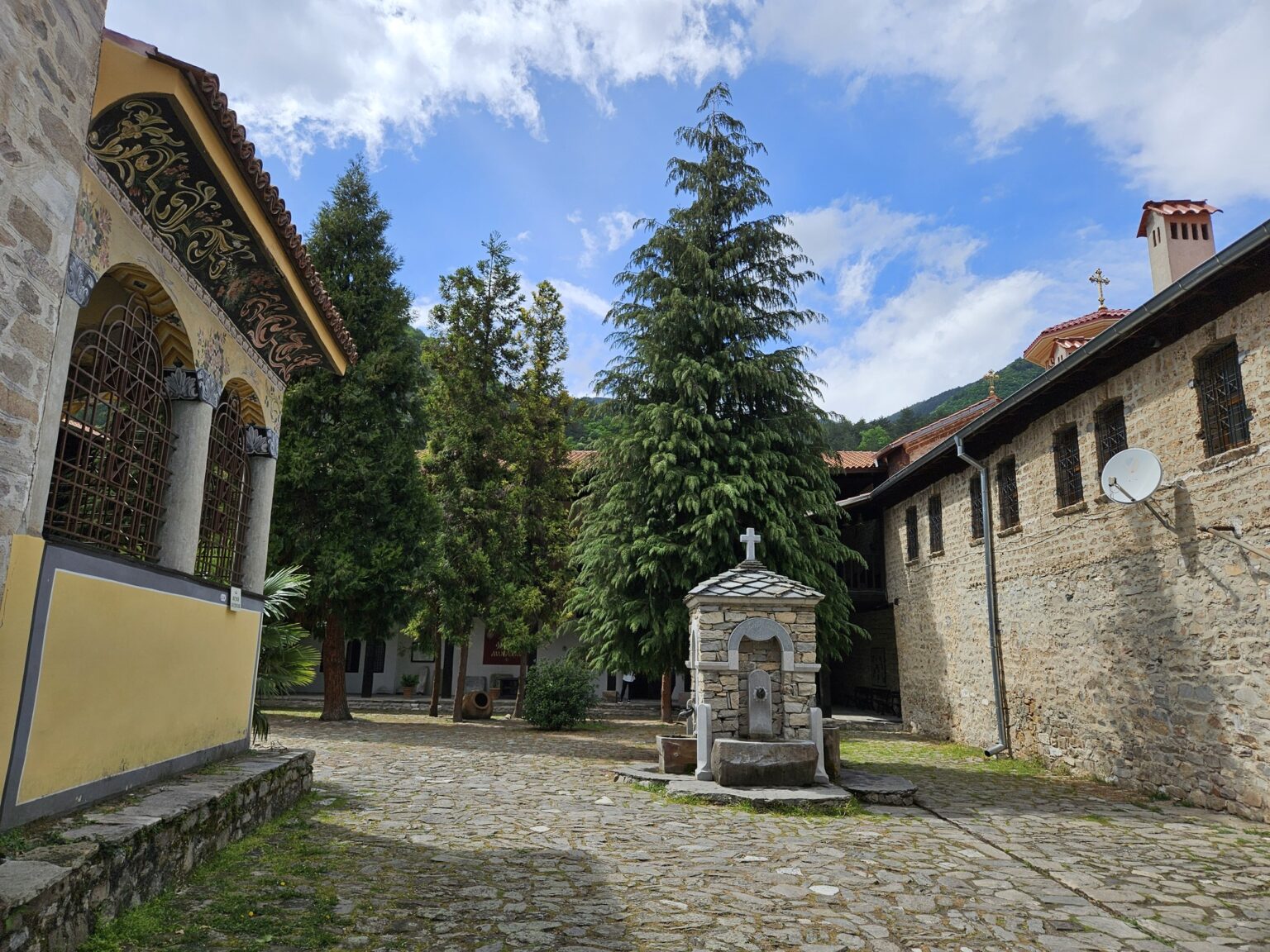
Inside, the complex opens into several courtyards with stone paving and two storeys of wooden arcaded galleries. Greenery is everywhere — old trees, pots of cactus, a flowerbed cut in the shape of a cross. There are several stone fountains and all of them run.
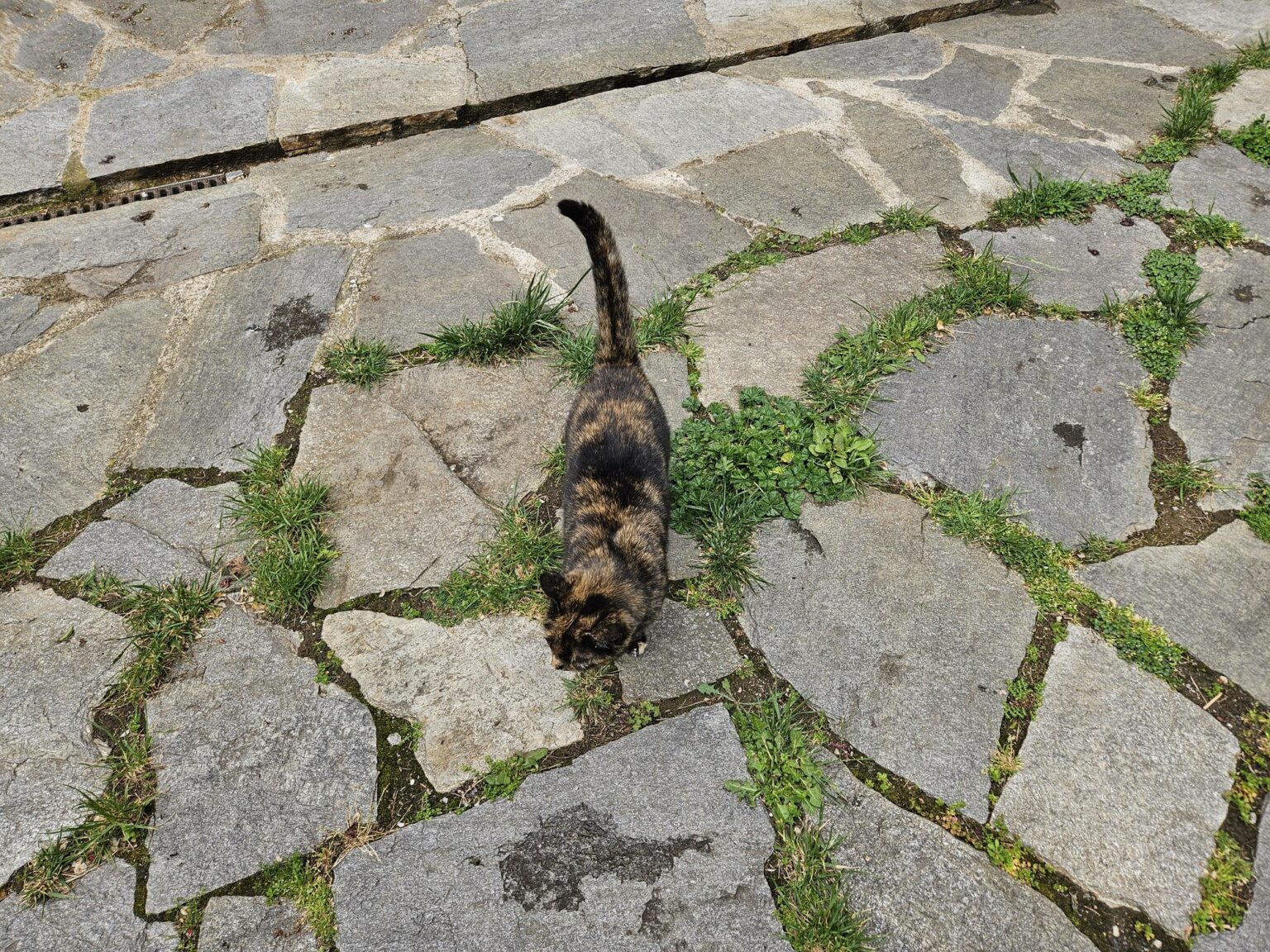
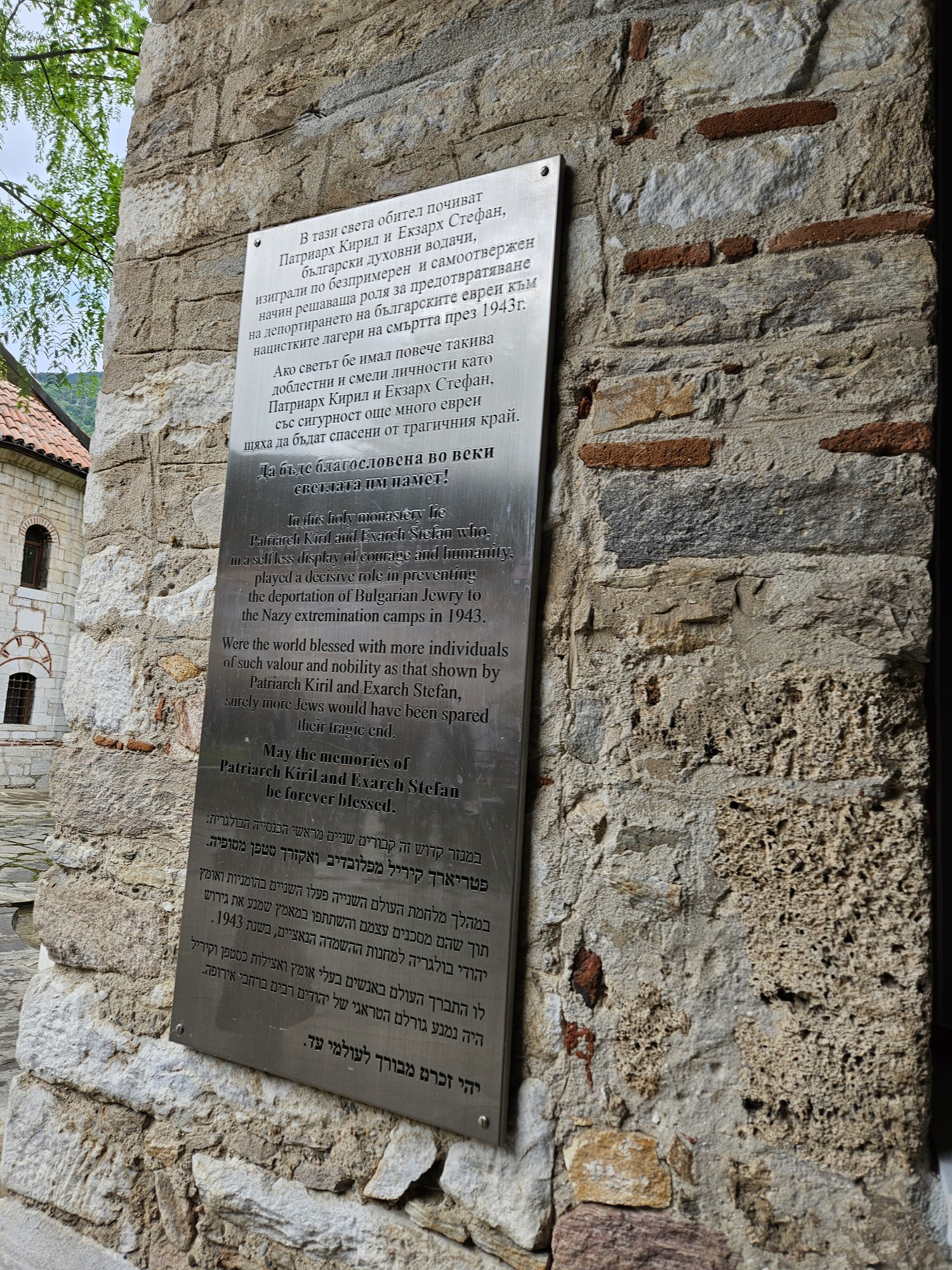
On one wall hangs a memorial plaque most people walk straight past. It records that in 1943, during the rescue of Bulgaria’s Jews from deportation, dozens of persecuted people were sheltered here. Worth the two minutes it takes to read. The cats, for the record, are numerous and move for nobody. 😀
Painted vaults, the church and the museum
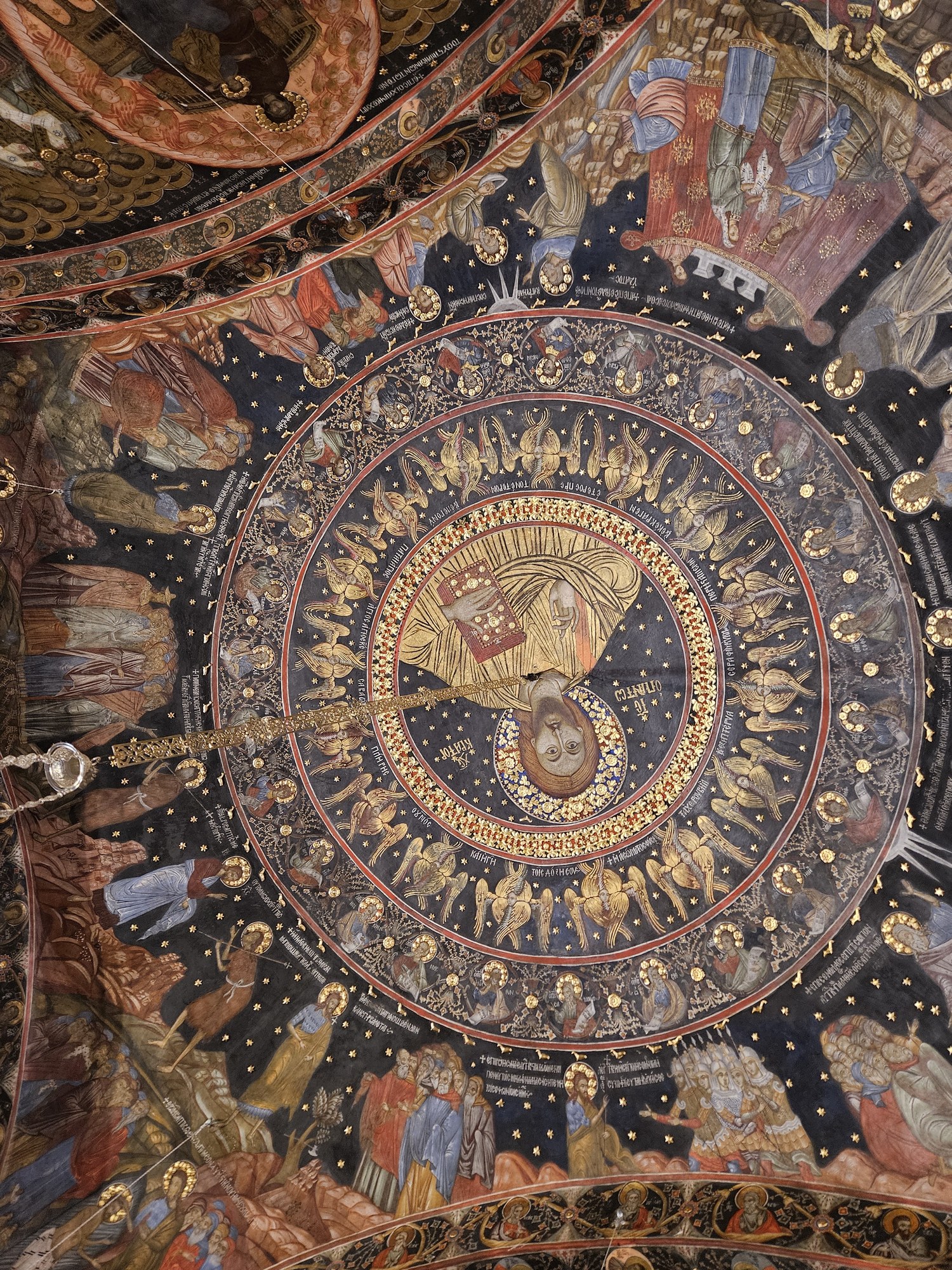
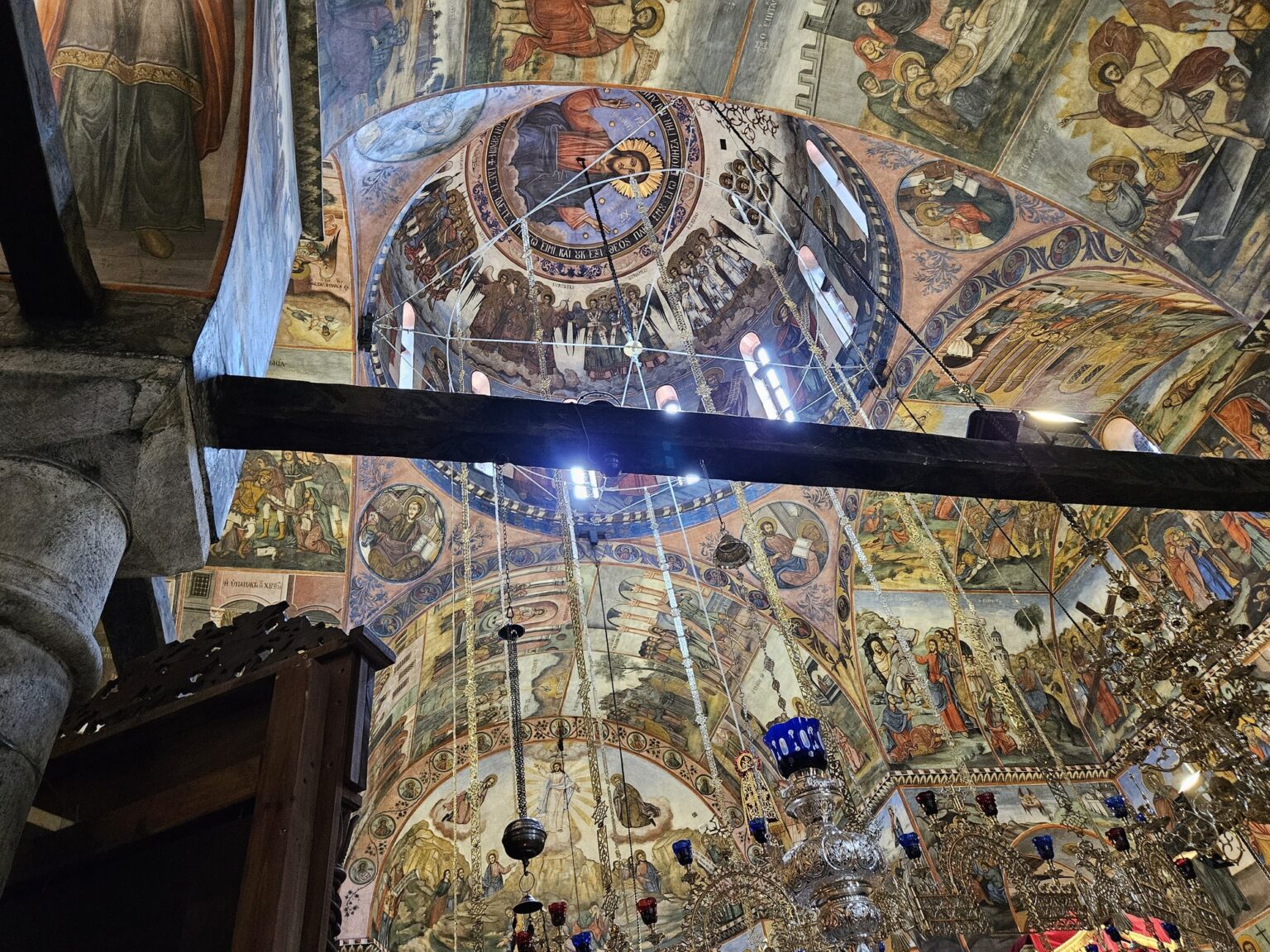
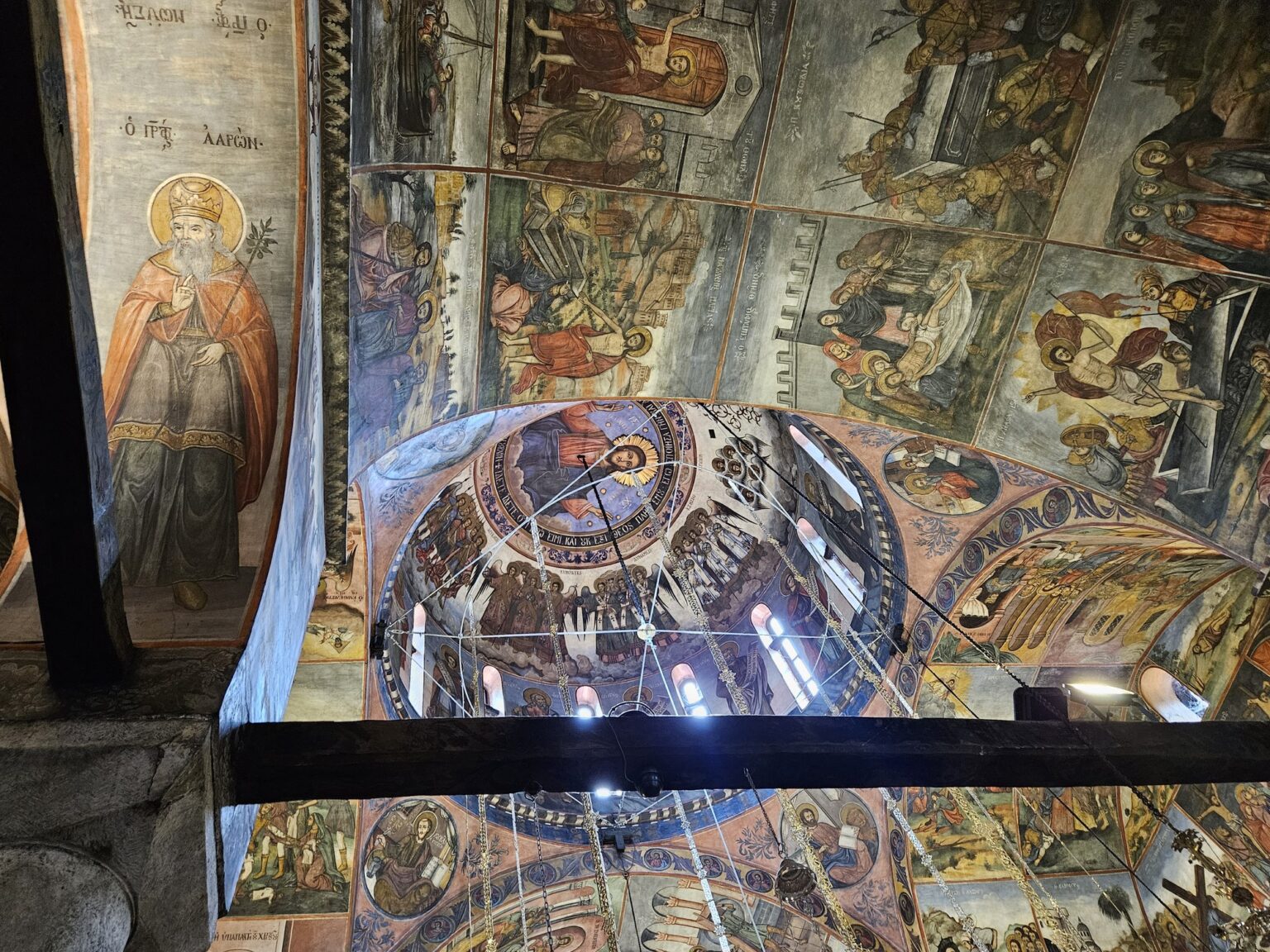
Inside the church it is dark, quiet and noticeably cooler. Ceilings and domes are painted end to end, oil lamps hang low, and the big chandeliers catch whatever light gets through the small windows. The murals are not confined indoors either — they run along outside walls, above doorways and under the vaults of the galleries.
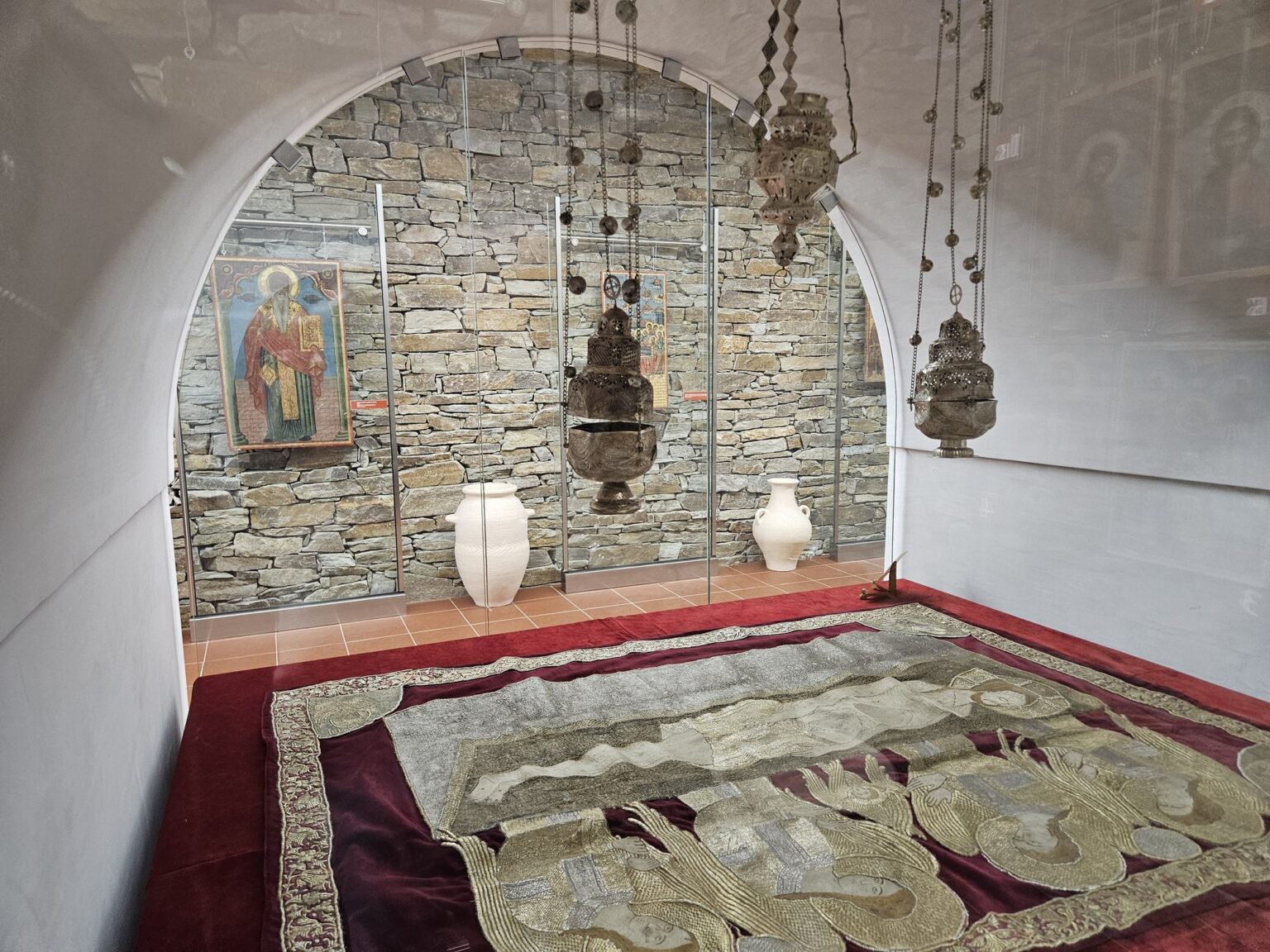
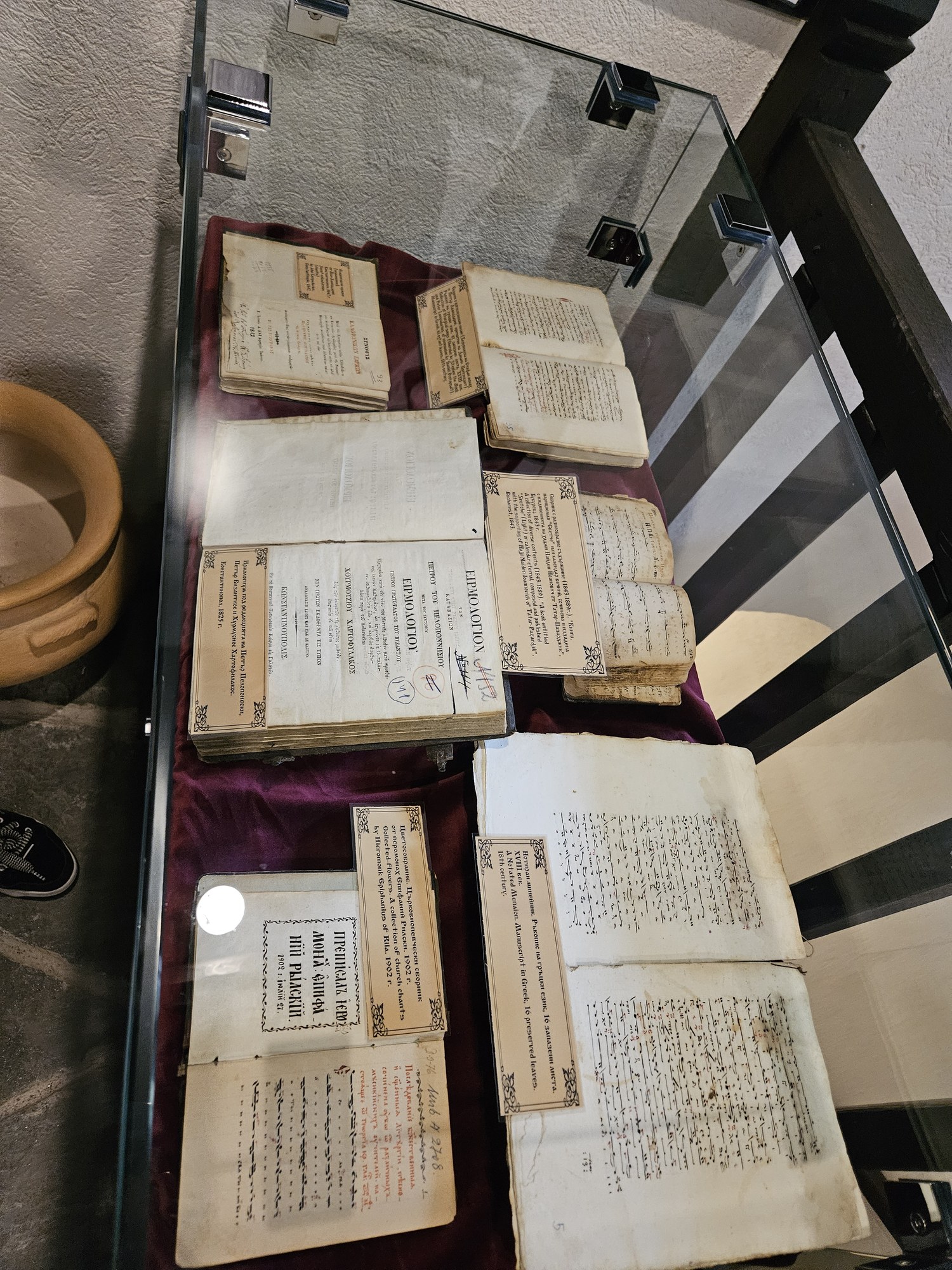
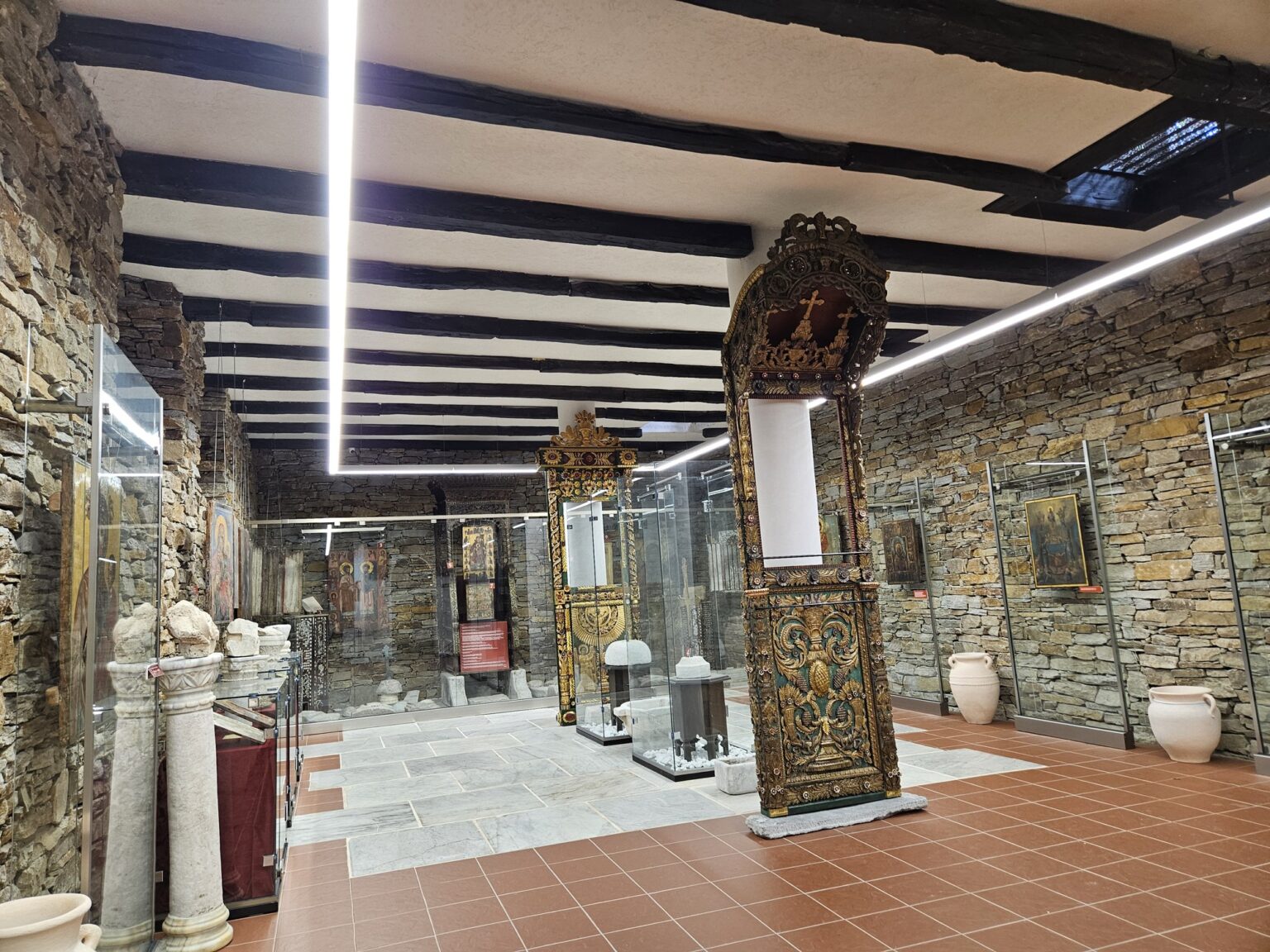
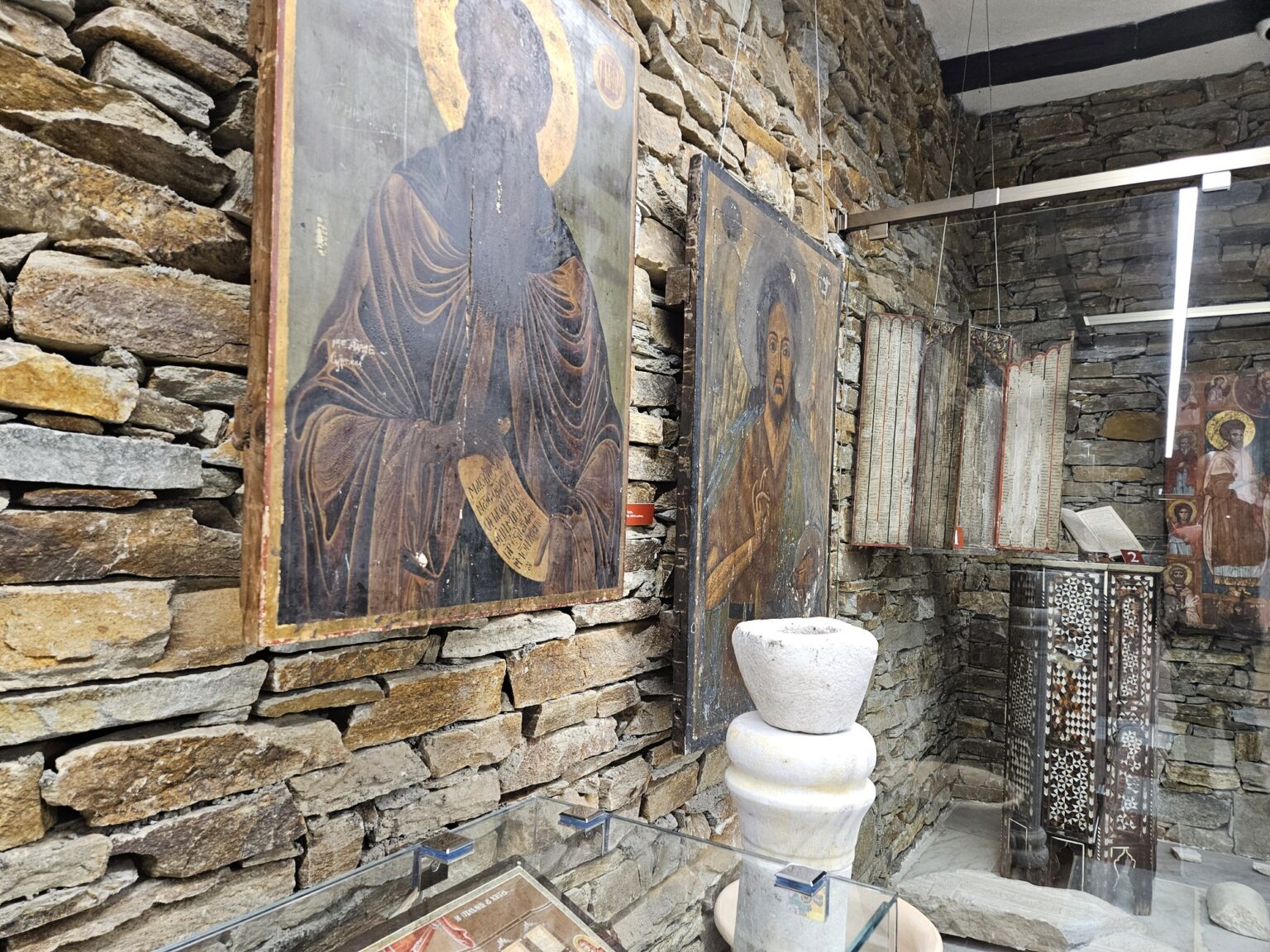
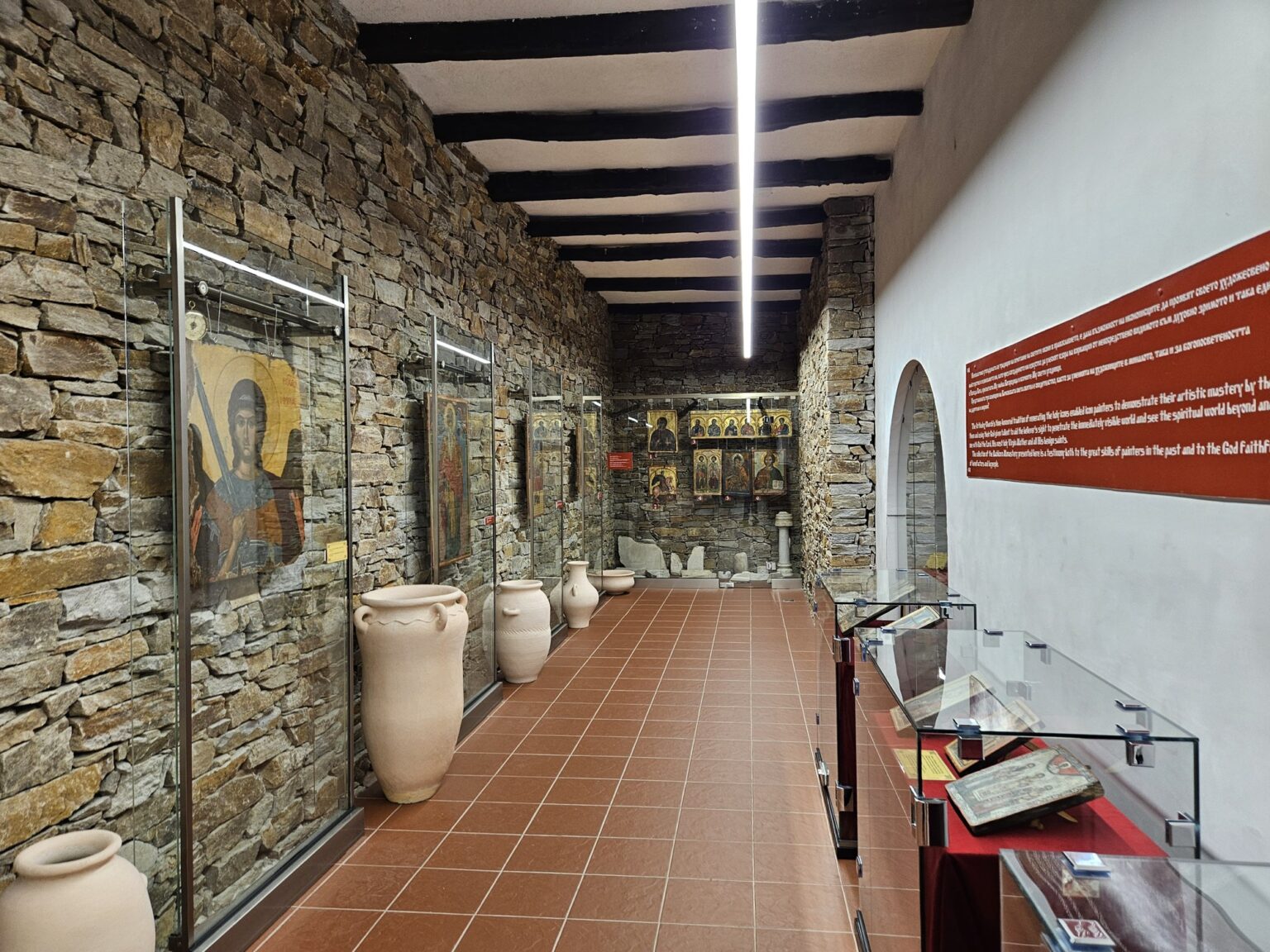
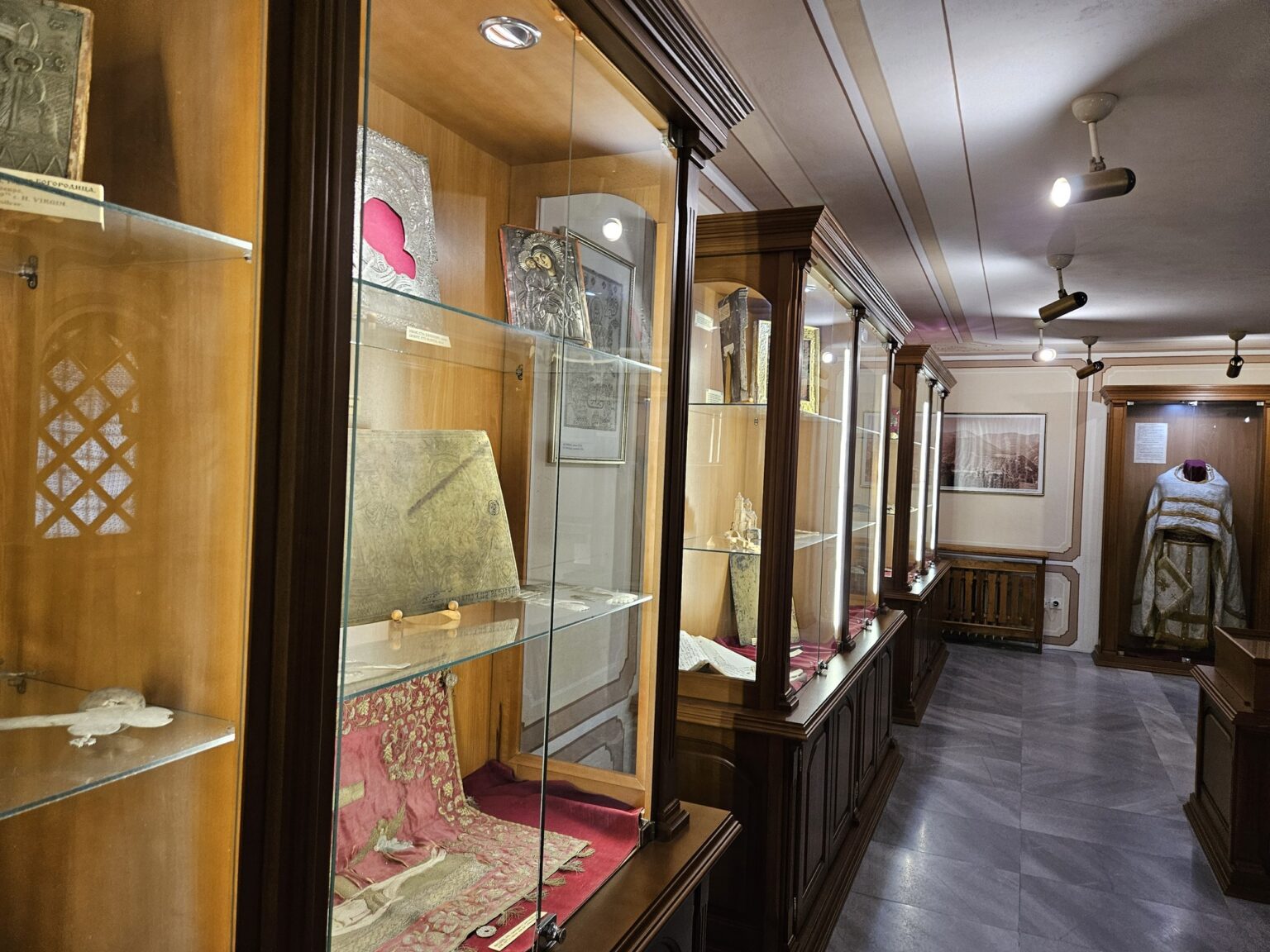
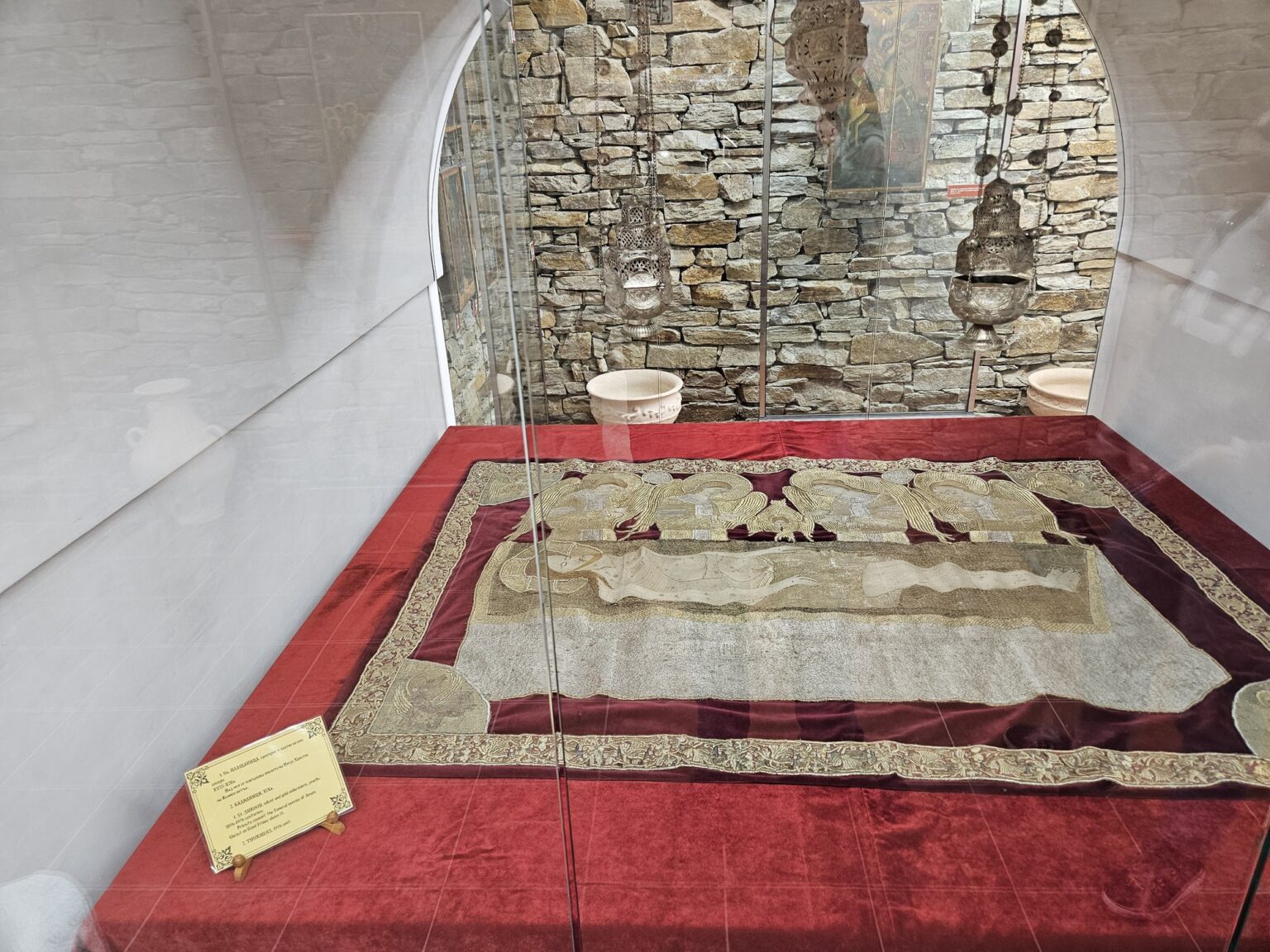
The museum is ticketed separately and sits in the south courtyard. The collection goes back to the 1930s, was rehoused in purpose-built rooms in 2007, and gained a refurbished icon hall in 2022 holding icons from the 13th to the 19th century. The cases hold crosses carved in miniature, old manuscripts, church plate and a scale model of the church. For €3.60 it is more than we expected.
The oldest building of the complex is not in here. The ossuary stands about 300 m east of the monastery, built in 1083 as a resting place for Bakuriani’s bones — two storeys, with 14 graves on the lower floor, and described by the monastery’s site as the oldest surviving building of its kind in the Orthodox East. It is not permanently open — ask at the museum rather than assuming.
The loop up to the waterfall
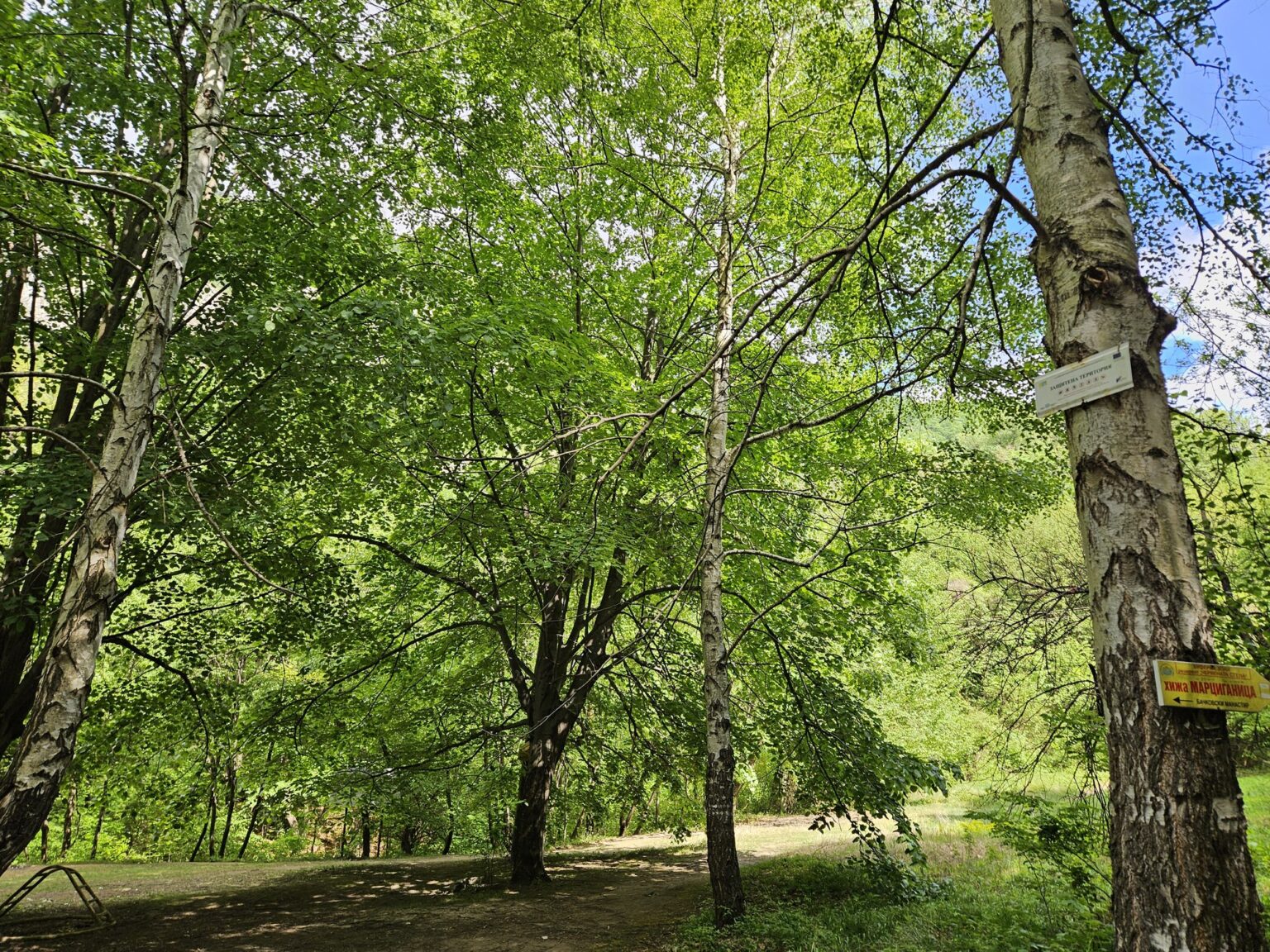
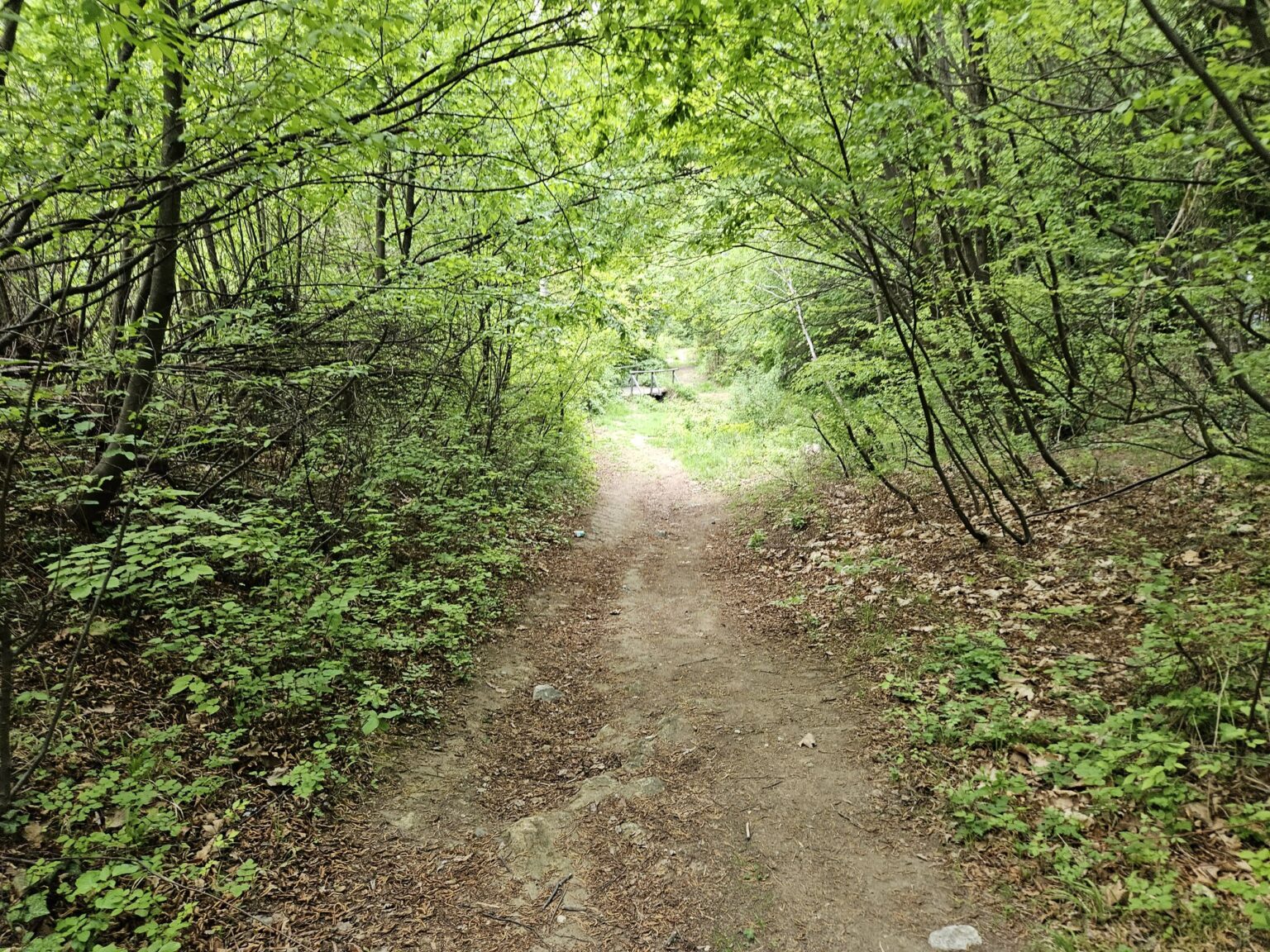
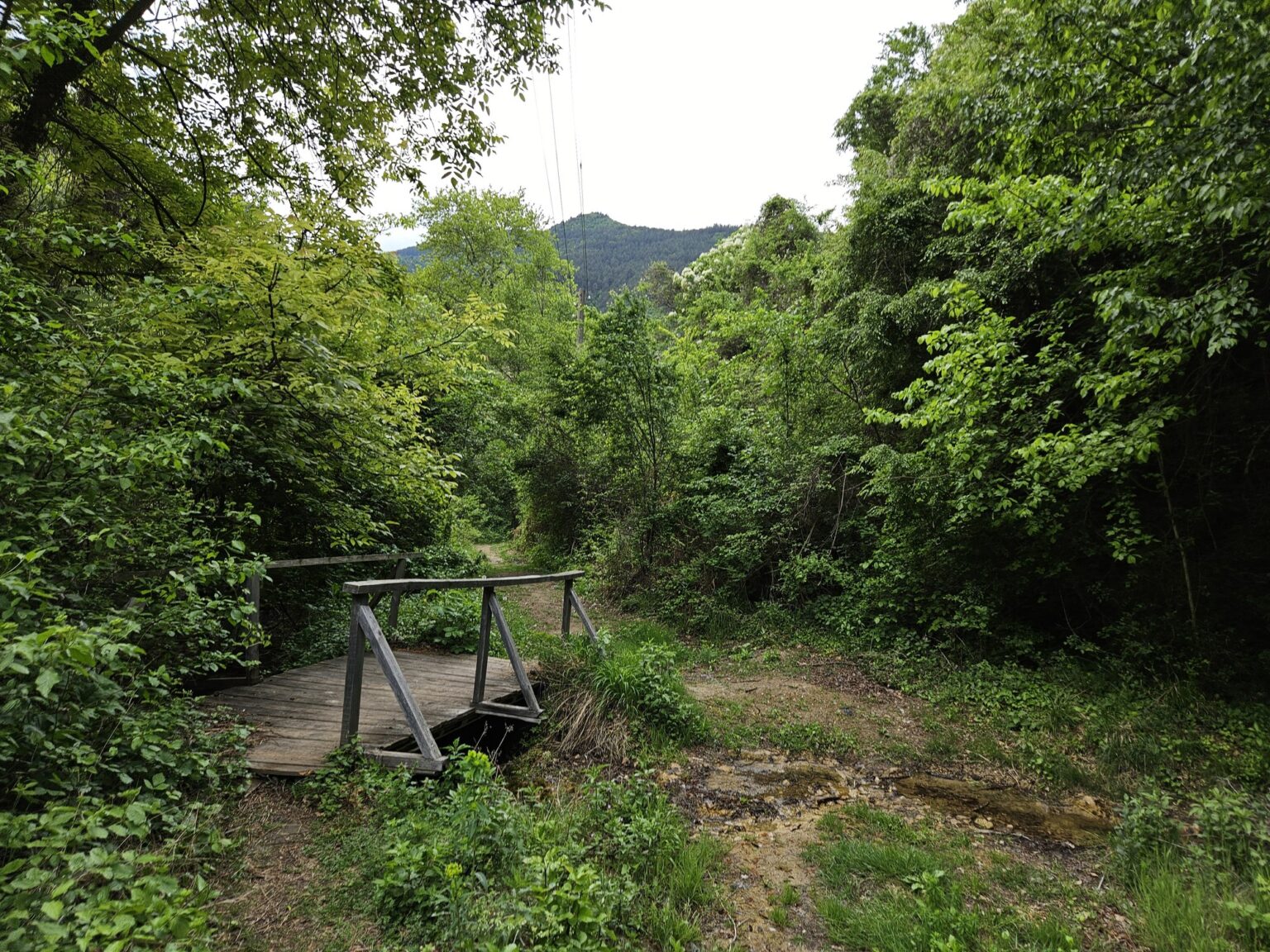
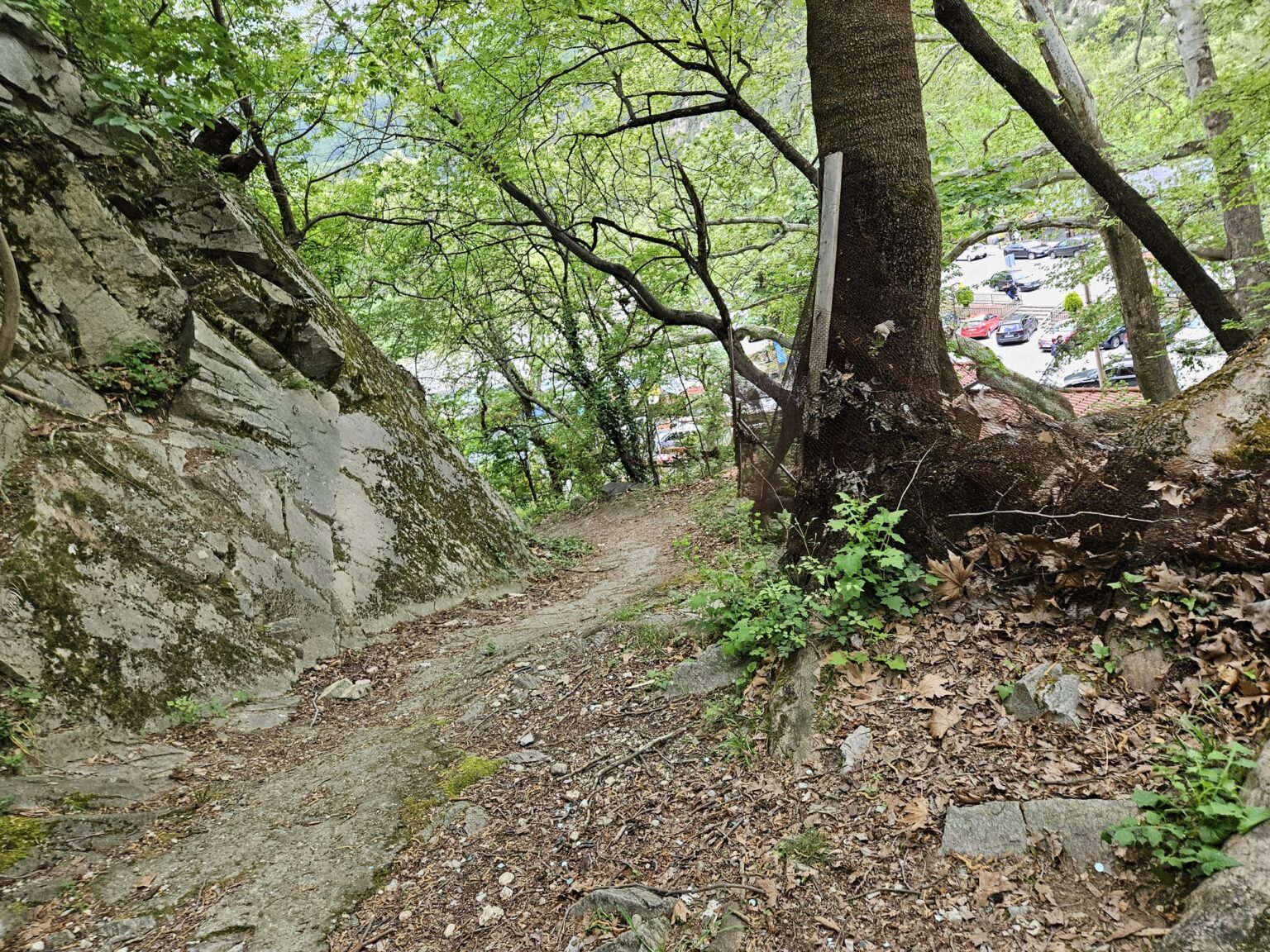
A forest path climbs from the car park towards the waterfall and a couple of small chapels. The waymarking is red paint on trees, alternating with wooden signs, but signposting is not this place’s strong suit — expect to stop and think at two or three junctions. The going is easy, mostly under trees and alongside a stream, and the route closes as a loop: up one side of the gully, back down the other.
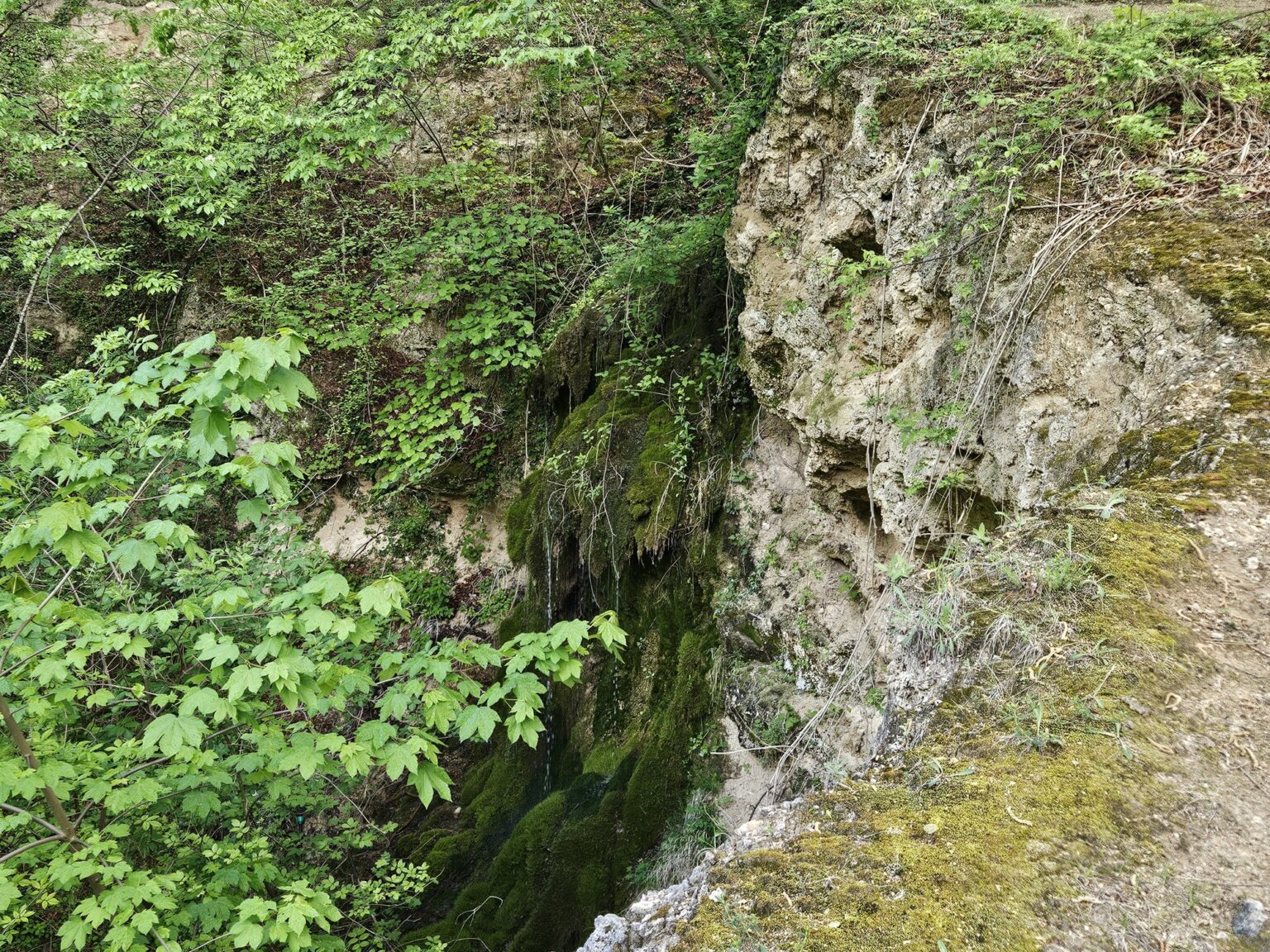
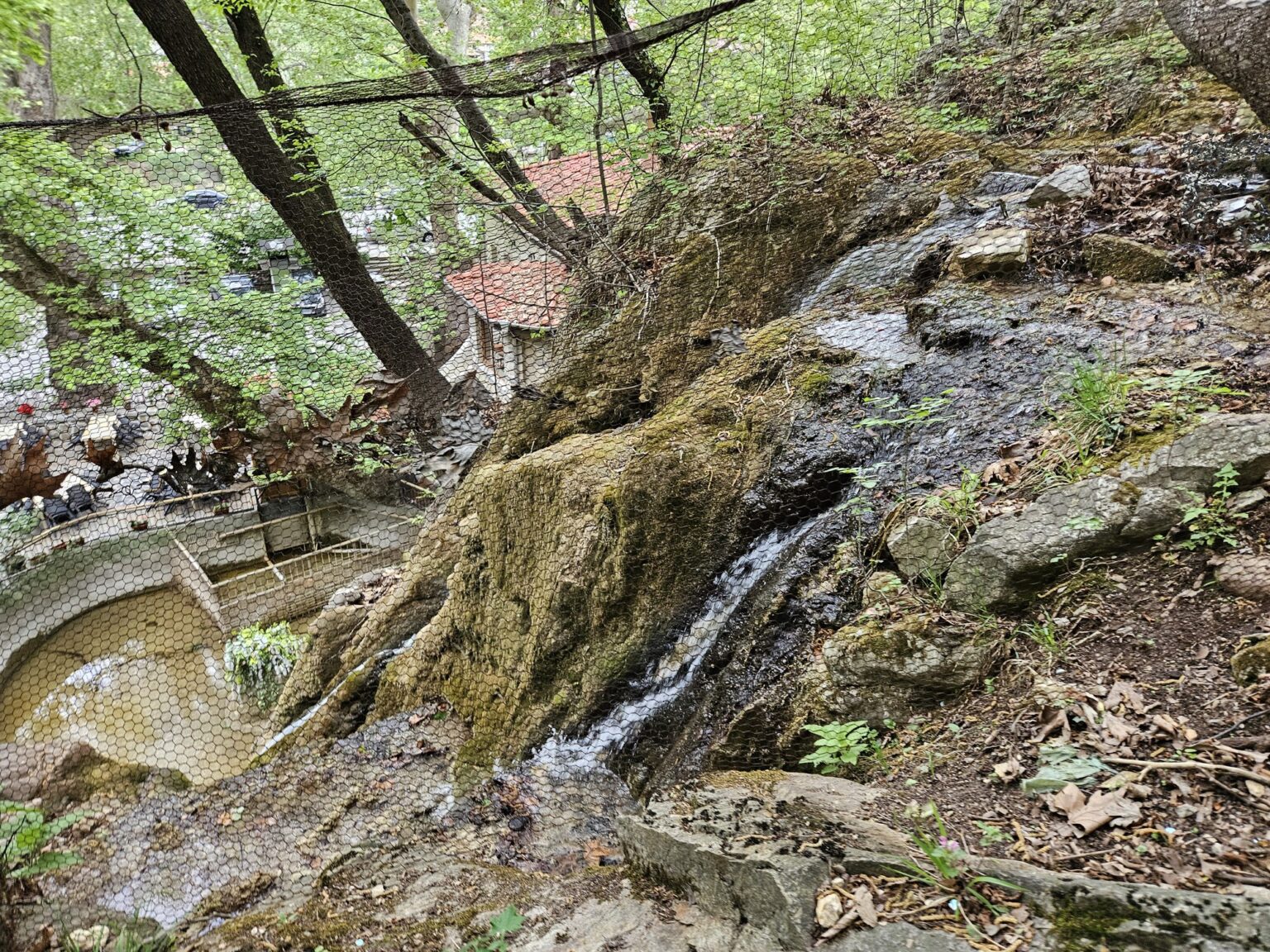
The waterfall itself is modest — a narrow rock chute breaking into several strands. It is not the reason to come, but it rounds off the walk nicely and the whole circuit takes about half an hour if you keep moving. Wear something with grip: the stones by the stream stay wet. 🙂
Worth it — not for any single building, but because everything sits in one place and nearly all of it is free. The courtyards, the church and the murals cost nothing, the museum is €3.60, and the waterfall path adds half an hour of forest to a site that otherwise feels surprisingly urban. We would come back, and in April rather than August. Asen’s Fortress stands on its rock 10 km back down the same road, above Asenovgrad, and the two make an unhurried day together. If you are making a wider Rhodope circuit, Krichim sits at the other end of the same foothills and fits into the same day.
Related video: Bachkovo Monastery opens the ranking in Top 10 historical sites in Bulgaria, alongside Tsarevets, Plovdiv Old Town and Nicopolis ad Istrum.