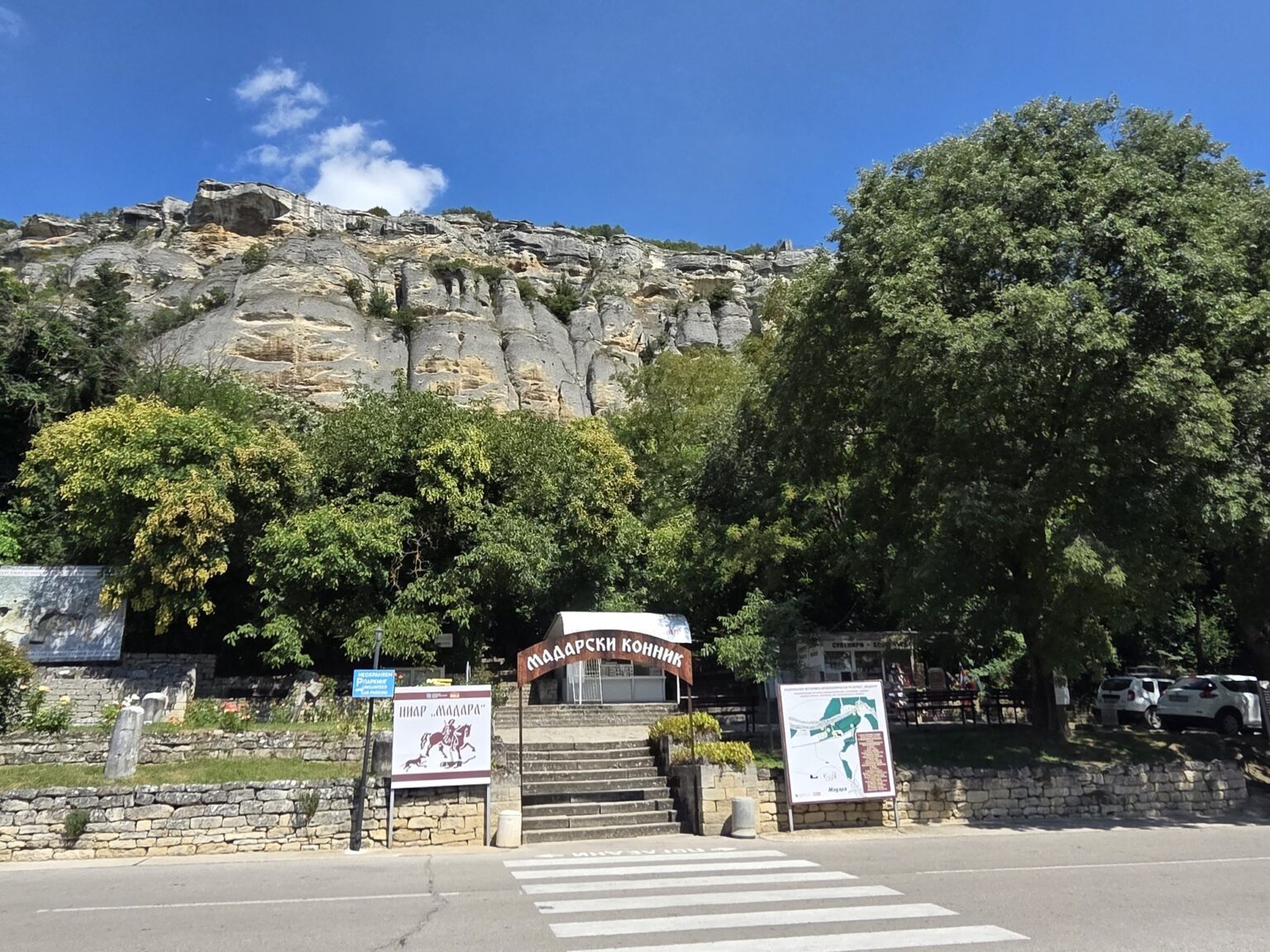
Getting to the Madara Rider is easy. Everything after the ticket desk you pay for with your legs. The turn-off is from the Shumen – Varna road, 20 km east of Shumen in northeastern Bulgaria, the car park is free and it sits right at the gate. From there it is up — stone steps, and signposts pointing three ways at once, all three of them worth taking.
We go in the afternoon, late July, which helps — but only up to a point. Most of the trail sits under trees; the stairs up to the fortress do not. That is 10 to 15 minutes of climbing in full sun, scanning for a patch of dappled shade to stop in. The full loop — sanctuary, fortress, rider, caves — takes us an hour and a half; read the information boards properly and it is comfortably two hours. The only living thing that greets us on the climb is a wasp. It signs the back of a hand and leaves on other business. 😀
| Where it is | Northeastern Bulgaria, village of Madara, Shumen province, 20 km east of Shumen, under the southern rim of the Madara plateau; Google Maps |
| Getting there | by car on the Shumen – Varna road, then the turn-off for Madara village; the asphalt ends at the reserve car park. There is no practical public-transport option — hire a car or come on a day trip from Varna or Shumen |
| How long | an hour and a half to two hours for the full loop — sanctuary, plateau fortress, rider and caves; the rider alone and straight back is under an hour |
| Opening hours | 1 April – 31 October: 8:30 – 19:00, open every day. Winter hours are not published on the museum site — call ahead if you are coming off-season. Check the current times on the Shumen Regional History Museum page. |
| Entry | €3.58 standard, €2.56 pensioners, €1.53 pupils and students, free under 7. Family ticket €5.11 (one adult, two children) or €6.14 (two adults, one child). A guided tour is charged separately — €7.67 in Bulgarian, €10.23 in a foreign language; the audio/video tour with a film is also €7.67. A three-day pass covering every site of the Shumen museum is €12.78. Check the current rates on the museum price list. |
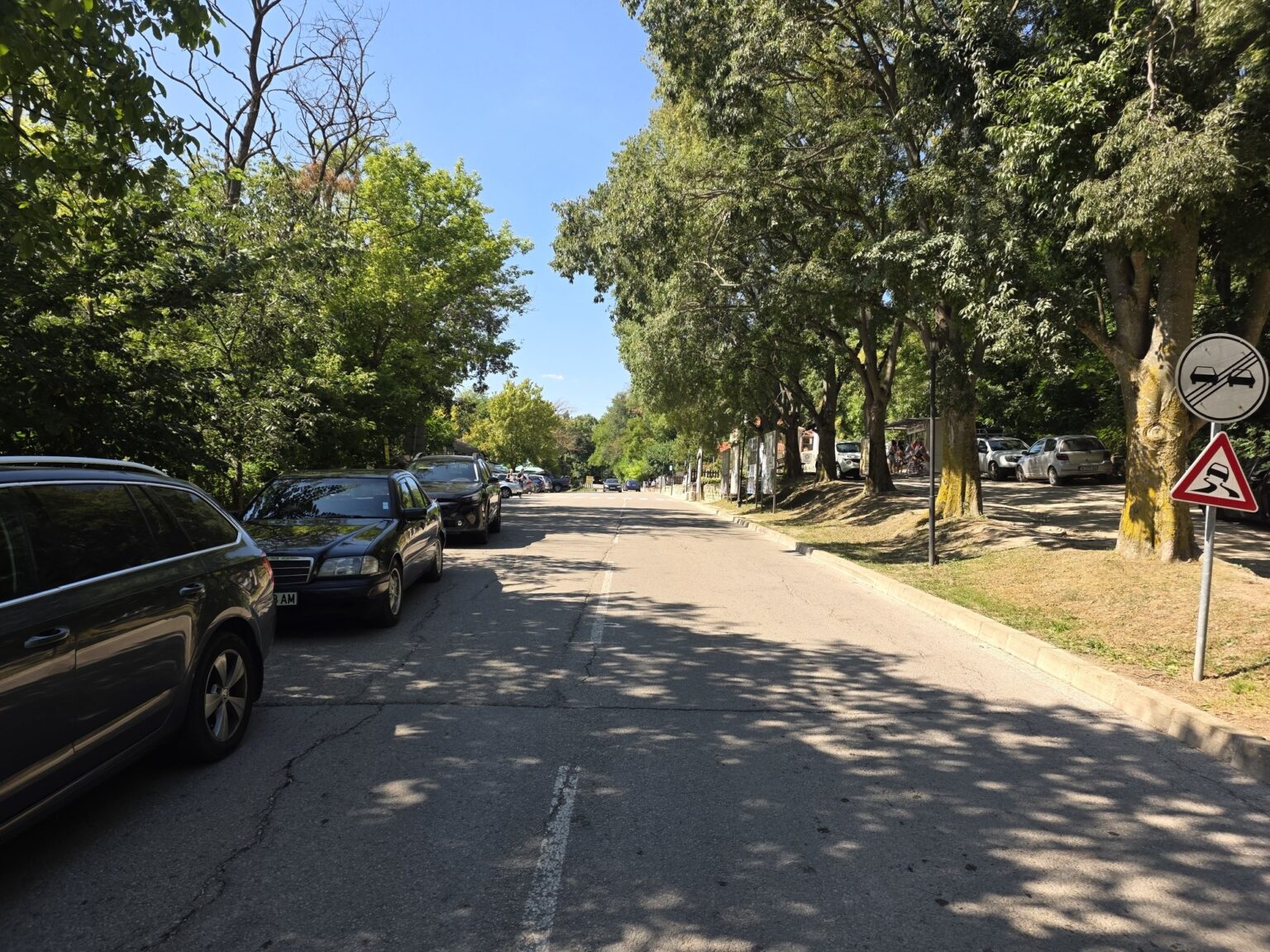
| Parking | on the apron in front of the gate, free, about thirty metres from the ticket desk |
| When to go | spring and early autumn; in summer go in the afternoon. The lower trail is shaded, but the stairs to the fortress and the plateau itself are fully exposed — 10 to 15 minutes of climbing in direct sun, with almost nowhere to sit out of it |
| Phone | +359 5323 20 12 (Madara National Historical and Archaeological Reserve) |
The name, and the tears of Khan Krum
Nobody agrees on where „Madara“ comes from, and the argument has been running in Bulgarian scholarship for a hundred years. The most common explanation traces it to the Greek adjective madaros — bare, bald — which fits the stripped limestone plateau above the village suspiciously well. Other readings reach for Thracian, Bulgar or eastern roots. None of them has won.
The local legend, though, is not about the name and not about the rider. It is about the water that drips from the roof of the Great Cave. A note of context: Khan Krum ruled the First Bulgarian Empire in the early ninth century, and Pliska, its capital, lay on the plain below.
In 811 the Byzantine emperor Nikephoros marched on Pliska with an enormous army. Krum left the capital and took shelter in the fortress on the Madara rocks, from where he could see the whole plain. From up there he watched Pliska burn. He wept, and his tears ran down the cliff — and they are still running today.
Behind the legend sits a much older story. The Thracians turned the Great Cave into a shrine long before any of this: votive tablets to the Three Nymphs, to the mother goddess Bendis and to Asclepius, the god of healing, have all been found here. That is where the belief in the healing water of the Cave of the Nymphs starts. The later stories only swapped the names of the gods.
Up from the gate, then left to the sanctuary
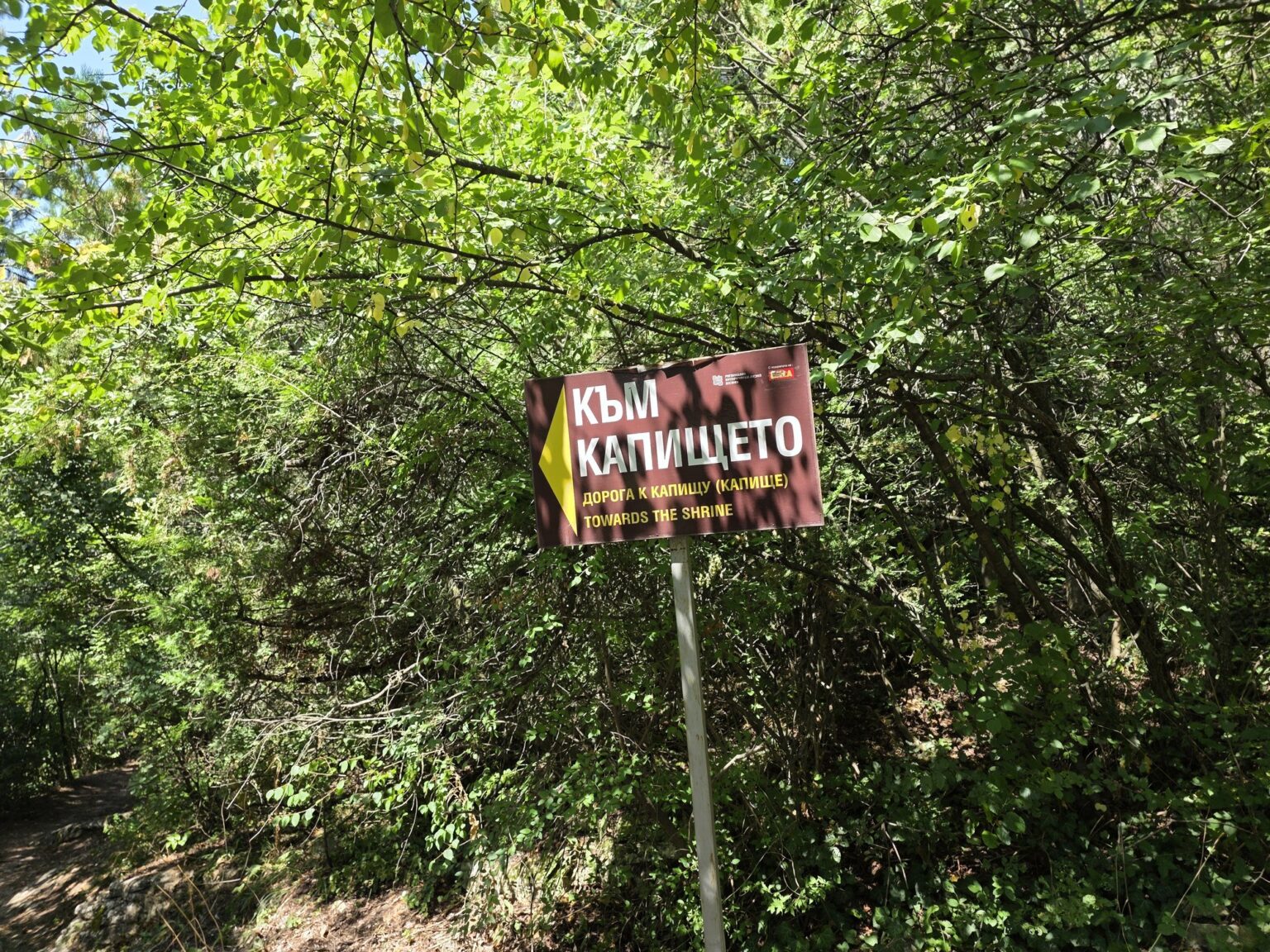
Steps start immediately behind the ticket desk. A few flights up there is a junction and a whole crop of brown signposts — to the rider, to the caves, to the rock tomb, to the sanctuary. We go left, because the loop closes more neatly that way.
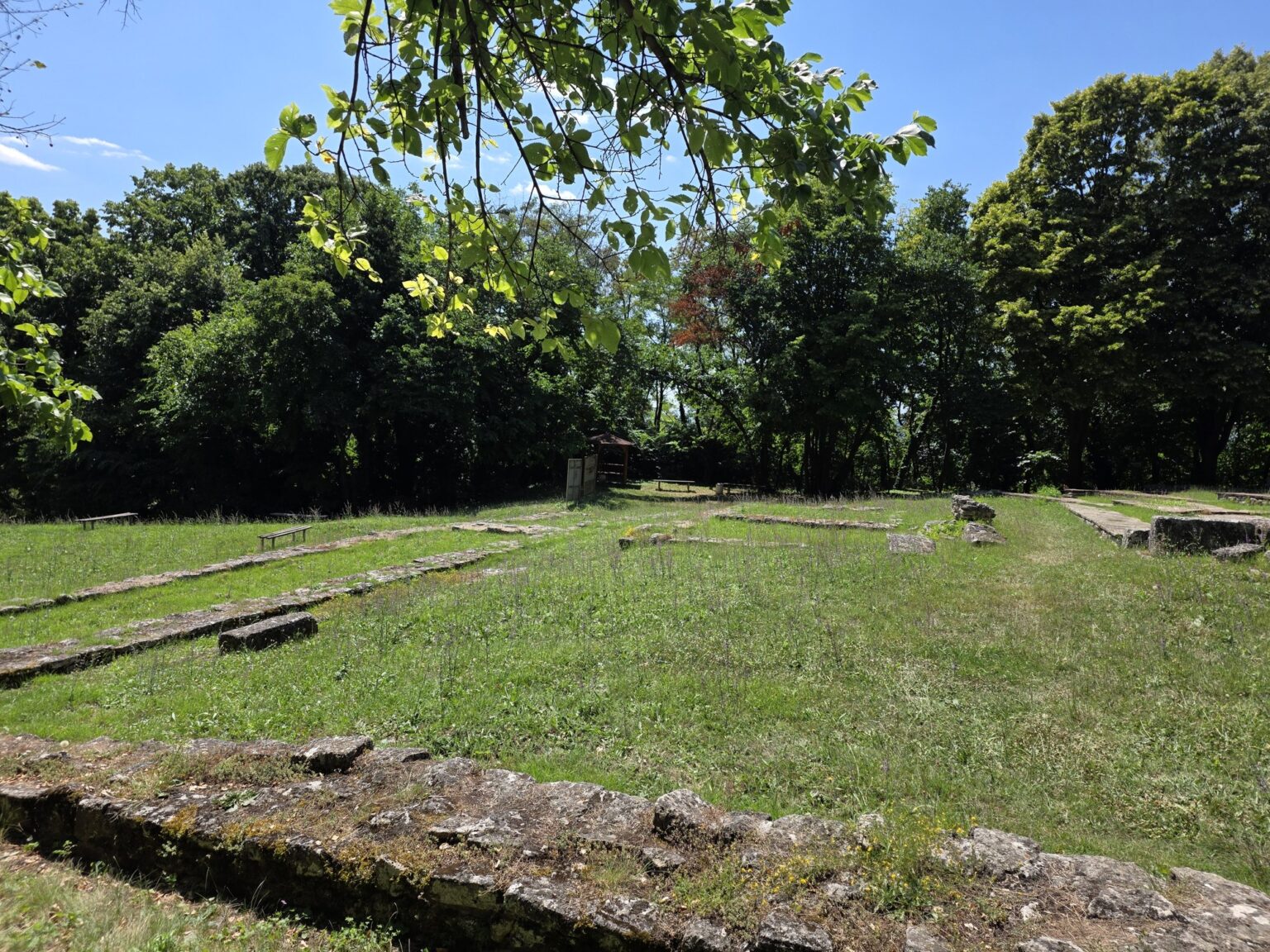
The trail opens onto a grassy clearing full of stone foundations — low walls, rectangular outlines, nothing restored and nothing roped off. That is the appeal. Under these cliffs sit the layered remains of dwellings, sanctuaries, palaces and later churches; the reserve holds traces of human presence running from the fifth millennium BC to the fifteenth century AD.
Past the clearing the path turns uphill and stops being polite about it.
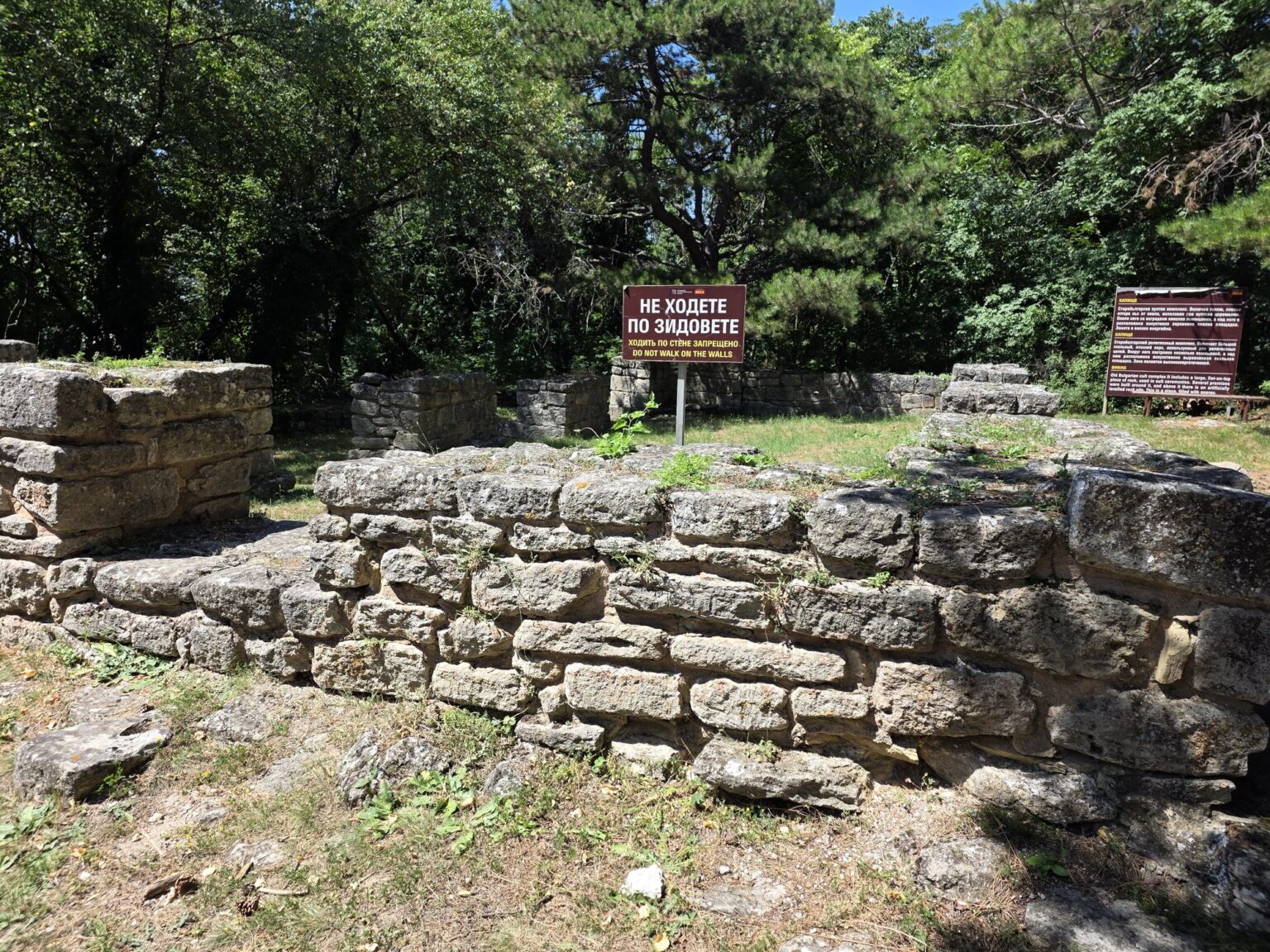
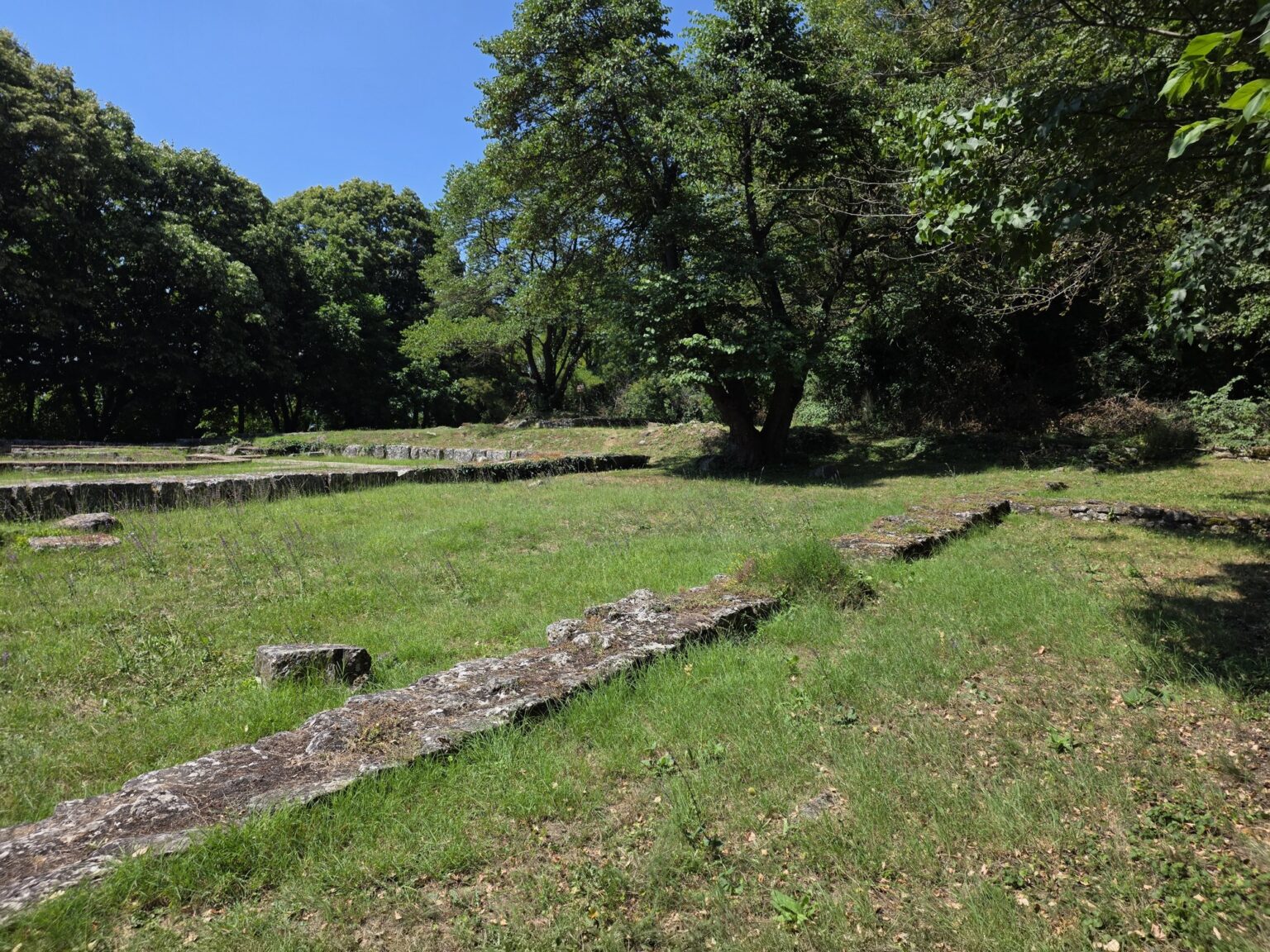
The fortress on the plateau, and the 386 steps
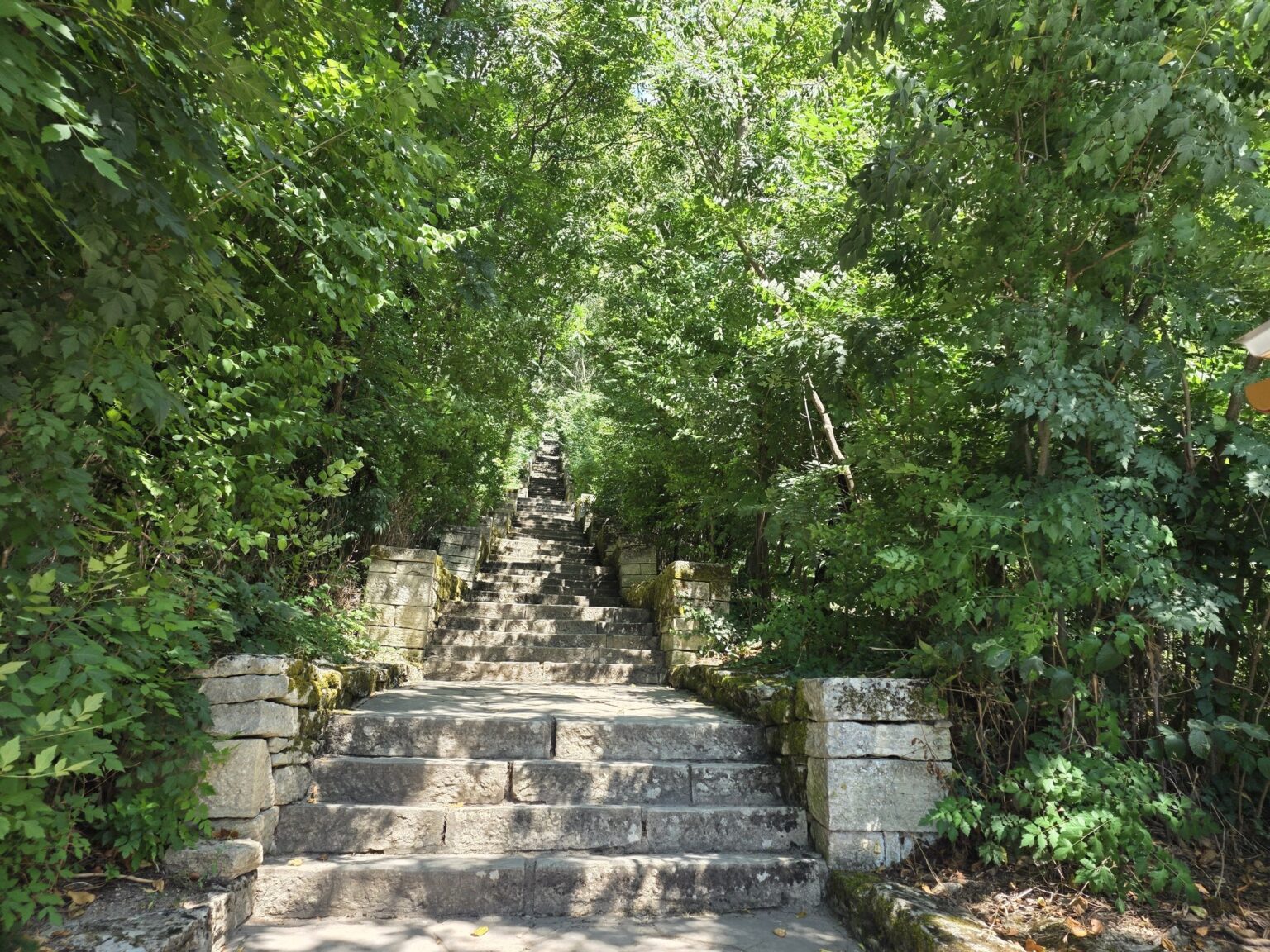
The rock staircase up to the Madara plateau is usually given as 386 steps. We do not count them — somewhere around the third switchback arithmetic stops being interesting. There is a handrail, the stairs hug the vertical wall, and in places they are wet even in July. They are also in full sun — the forest shade stops at the bottom step, and above it you get the odd dappled patch, just about enough to catch your breath in.
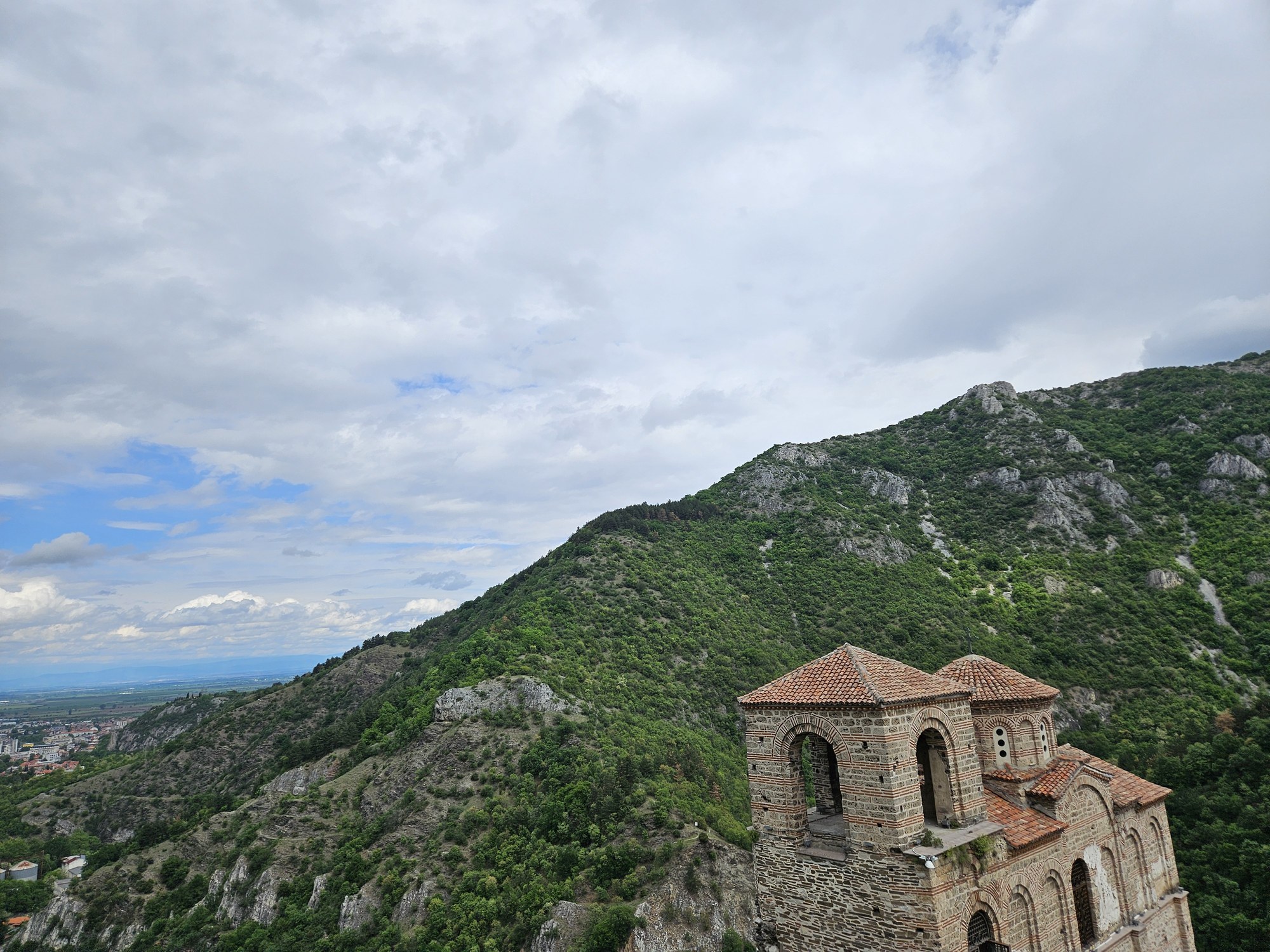
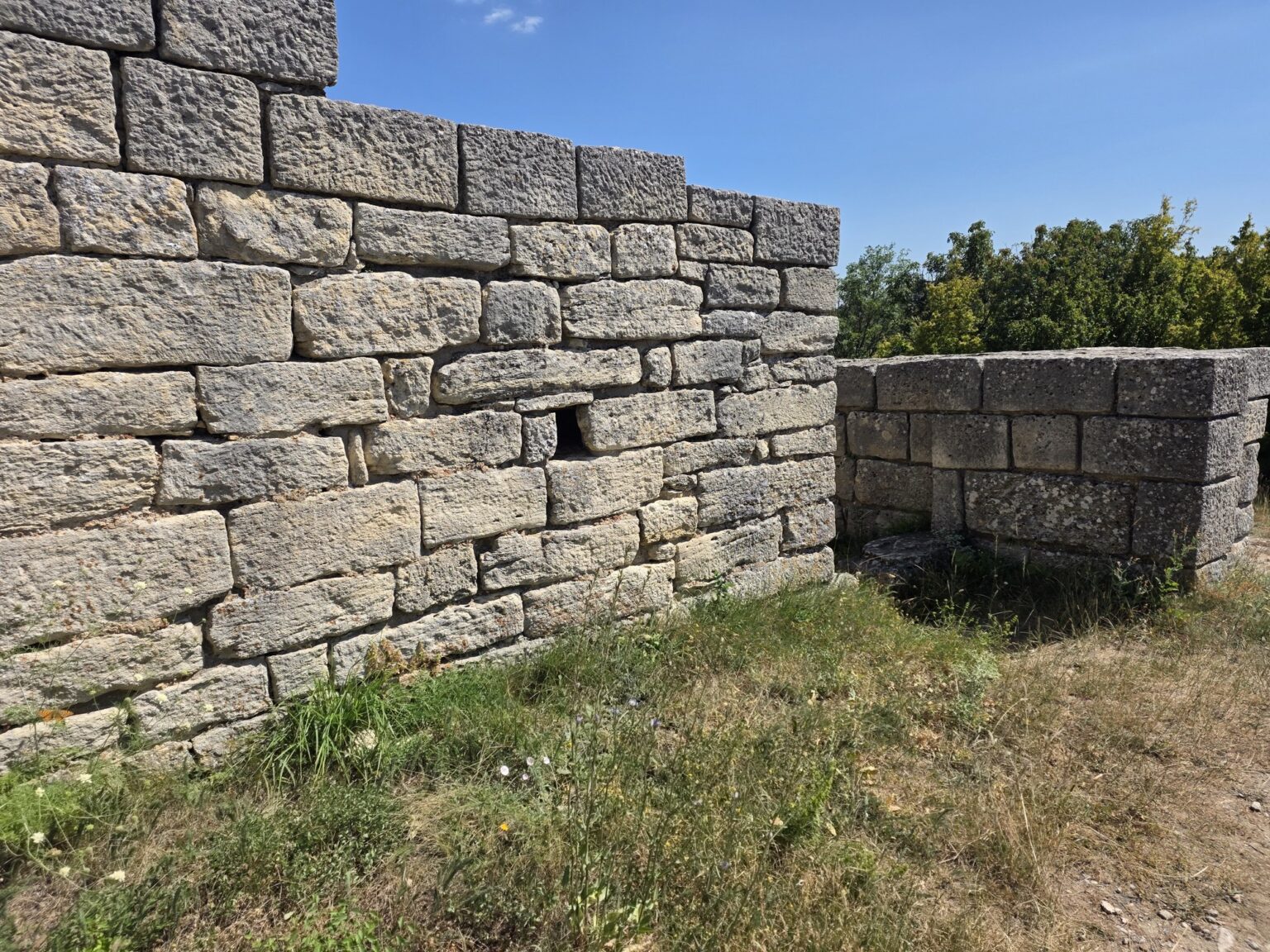
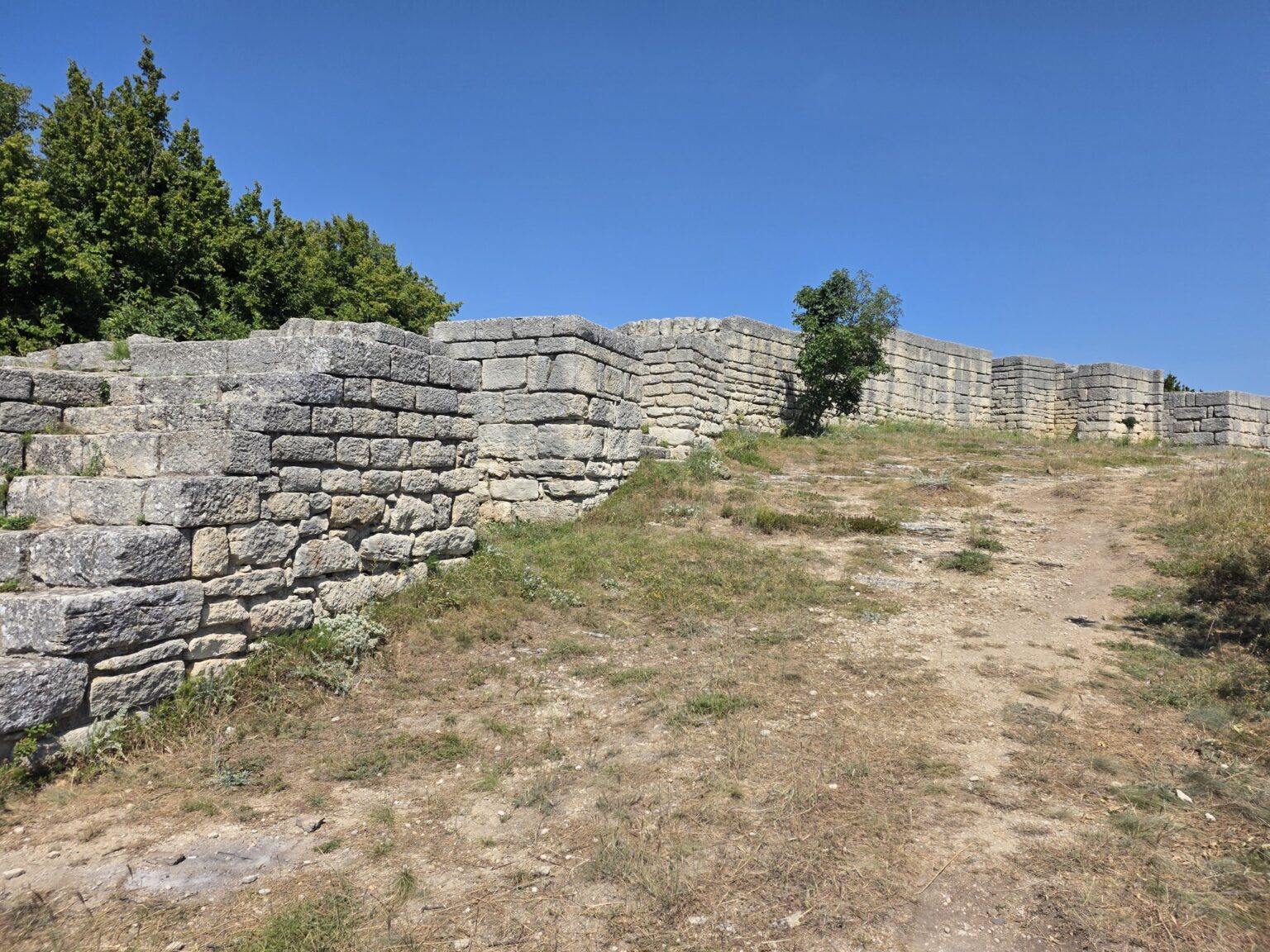
The top is empty. The fortress survives only as foundations, but the walls are built from massive dressed blocks of wildly different sizes — raised, knocked down and rebuilt in turn by Thracians, Romans, Bulgarians and Byzantines. Its job was to guard the approaches to Pliska.
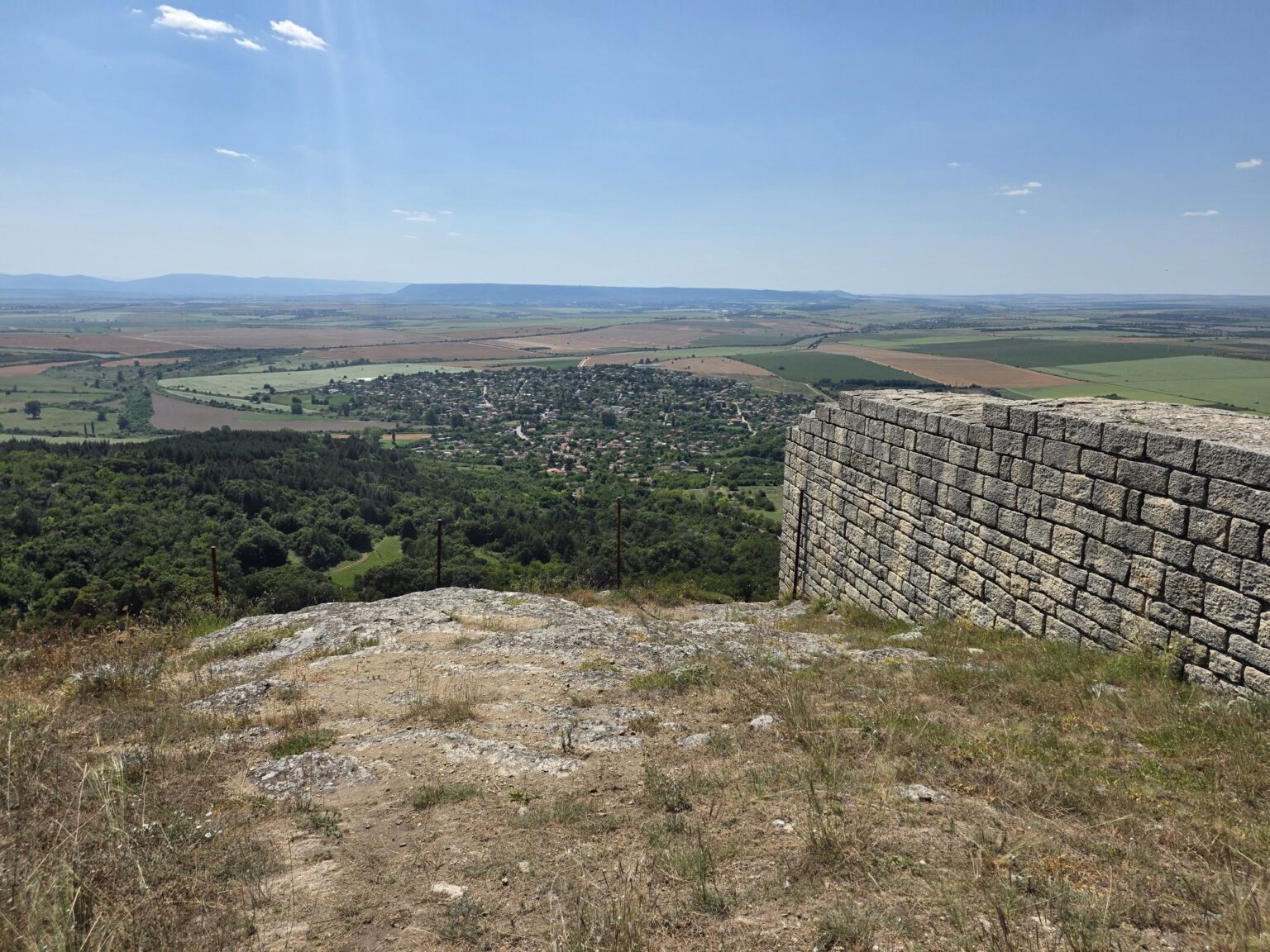
The panorama is the reason to climb: fields to the horizon, the village directly below, wooded ridges all around. The same view from a drone is in our episode Bulgaria From Above: Stone Wonders. You go back down the same stairs, and your knees will have opinions.
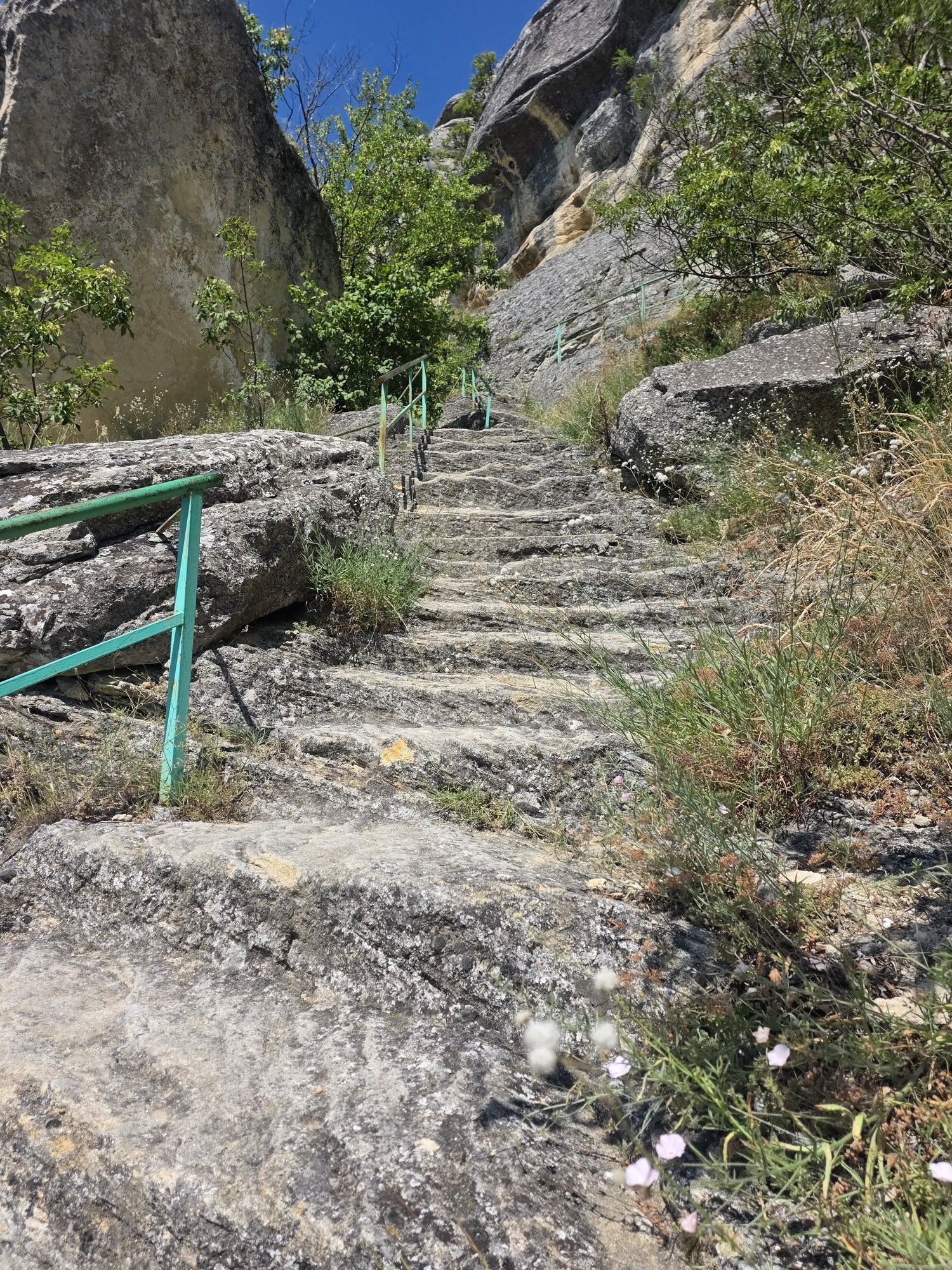
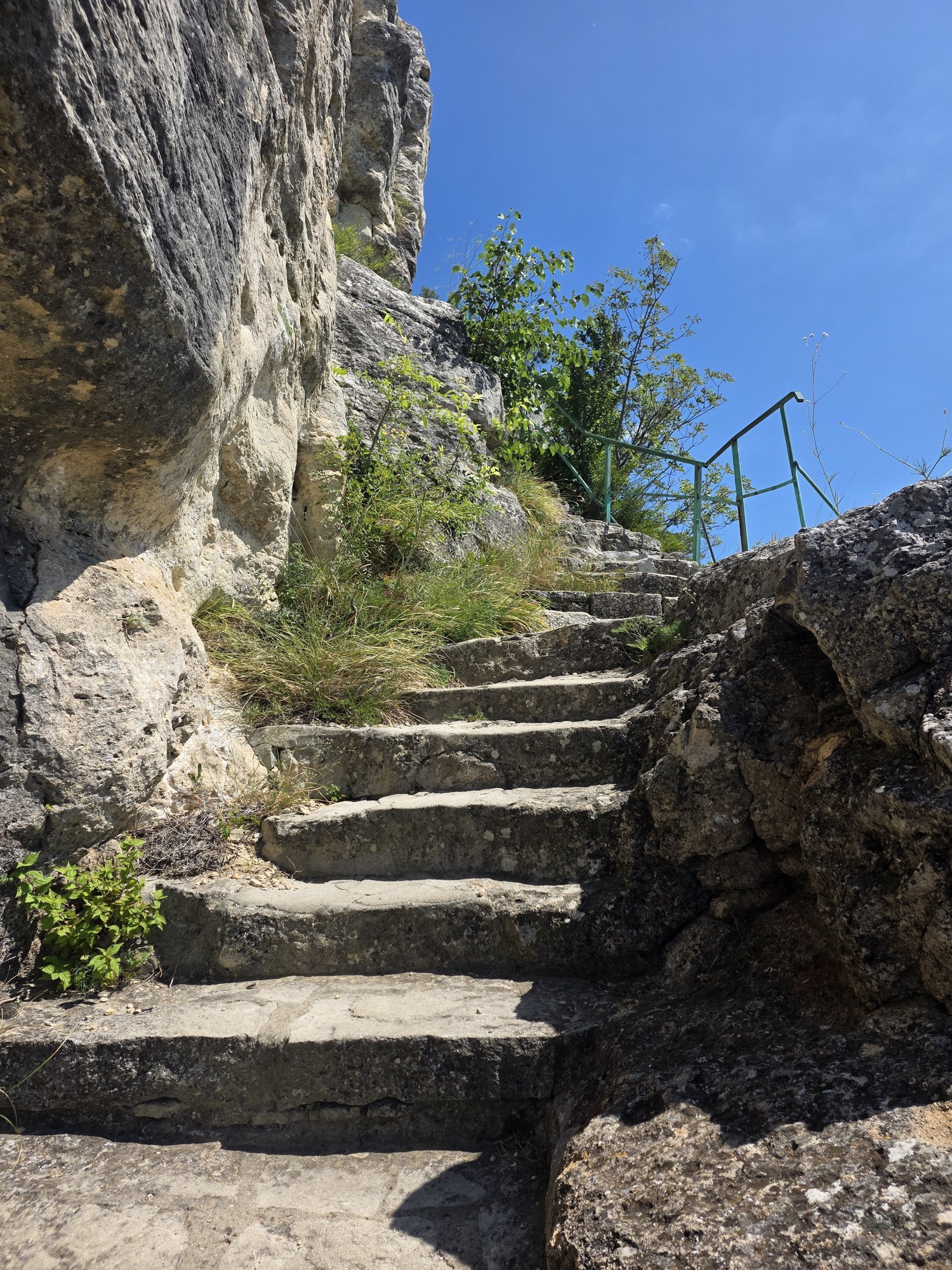
The rider — 23 metres above the ground
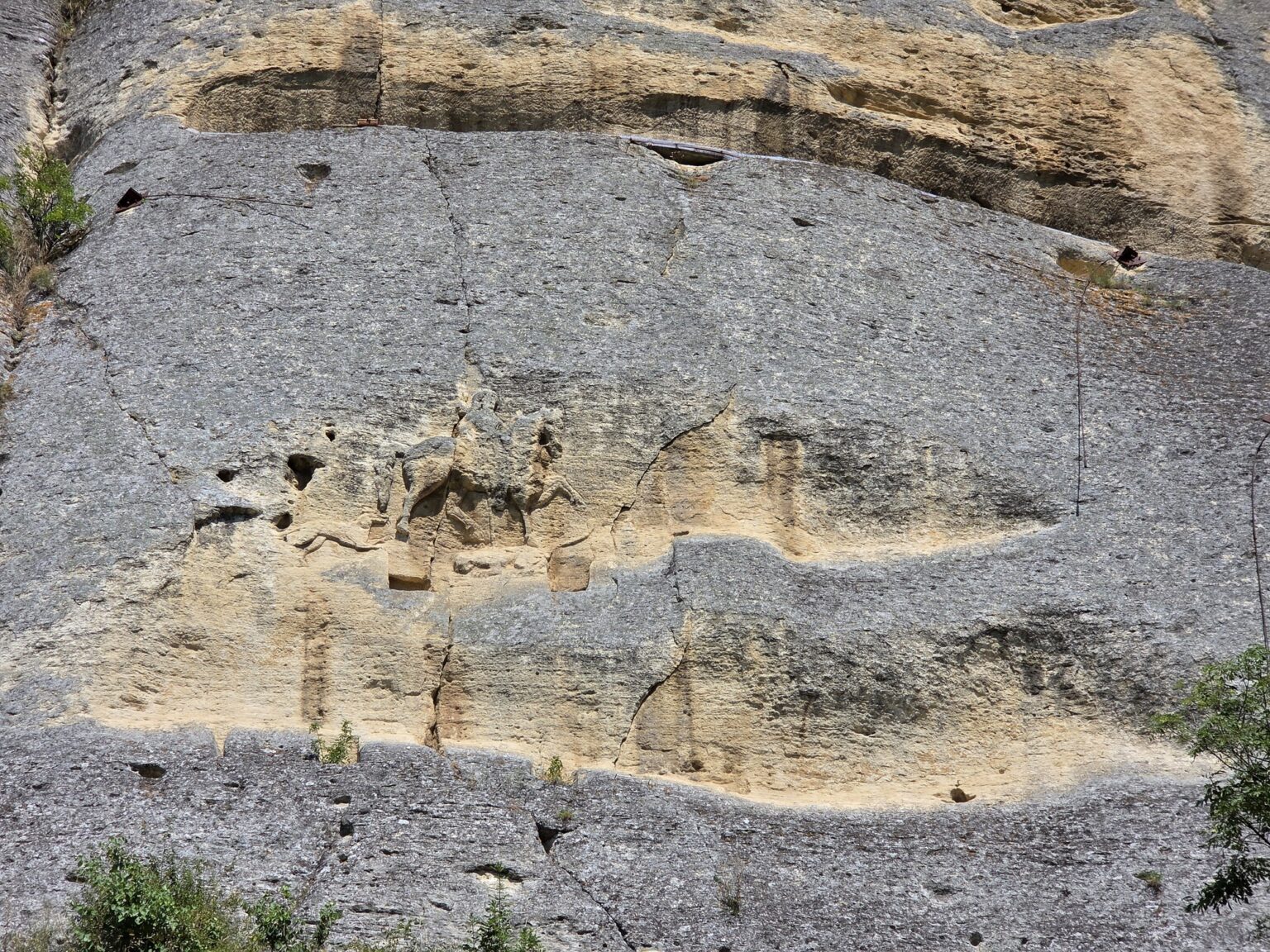
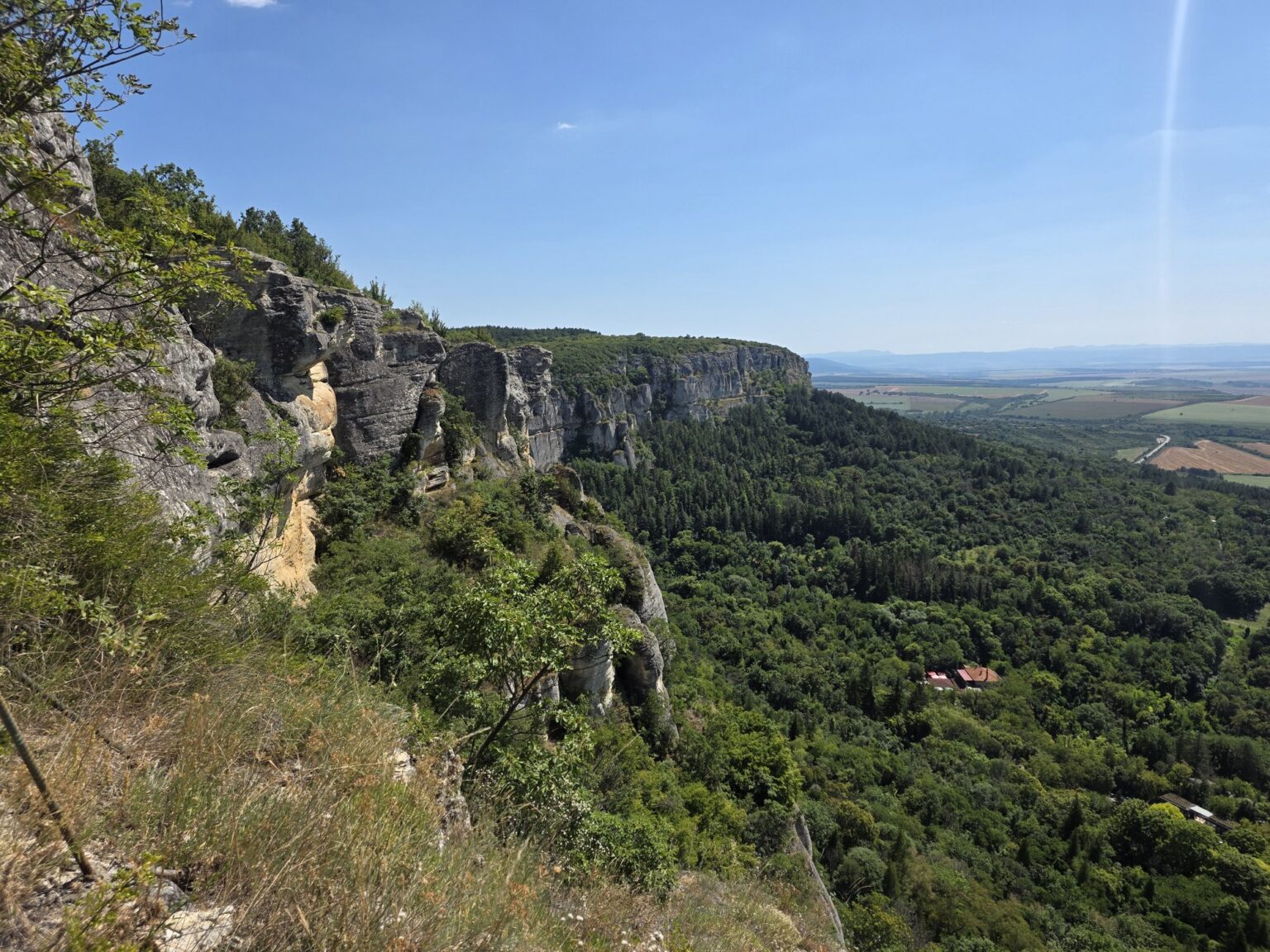
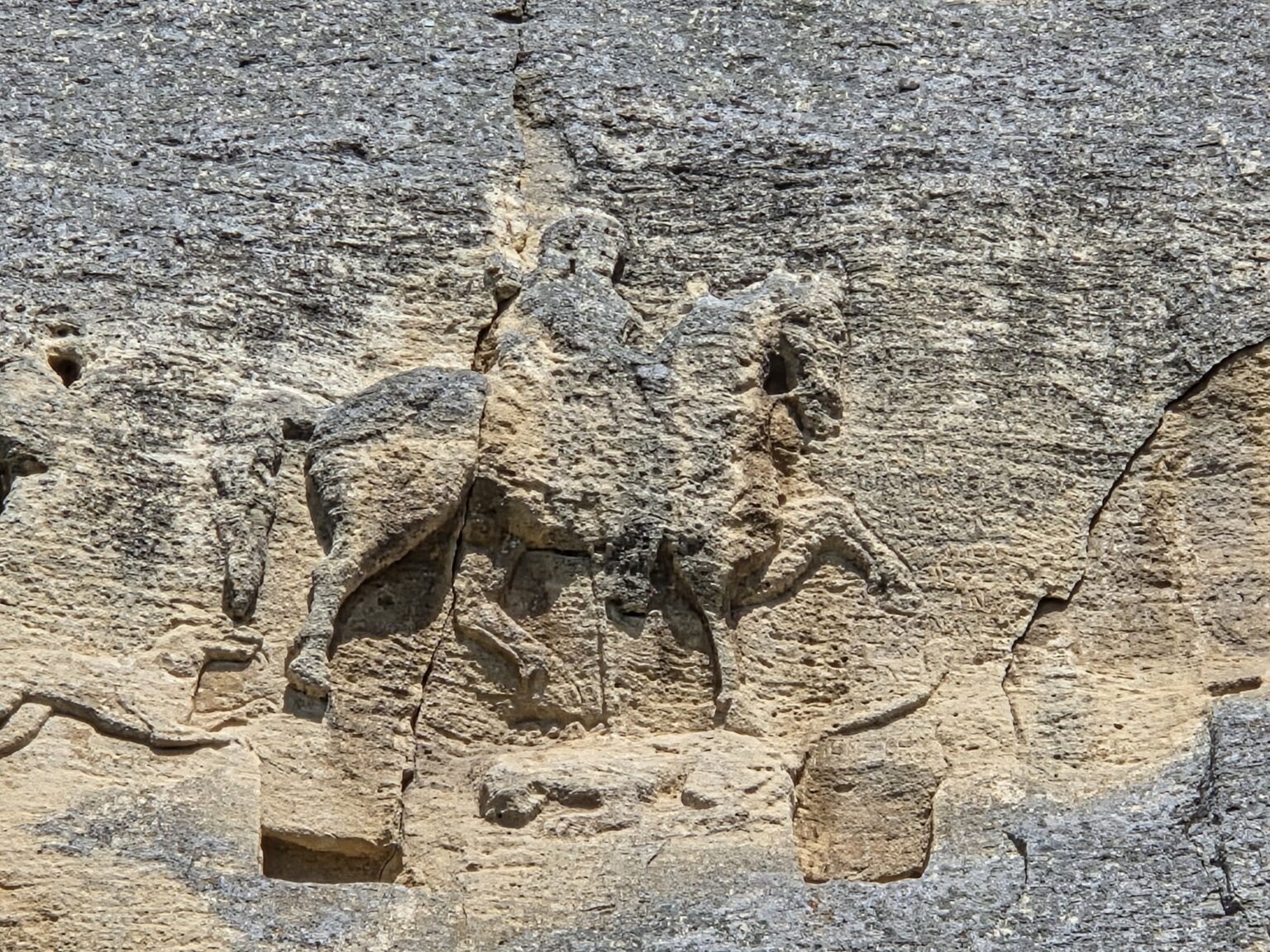
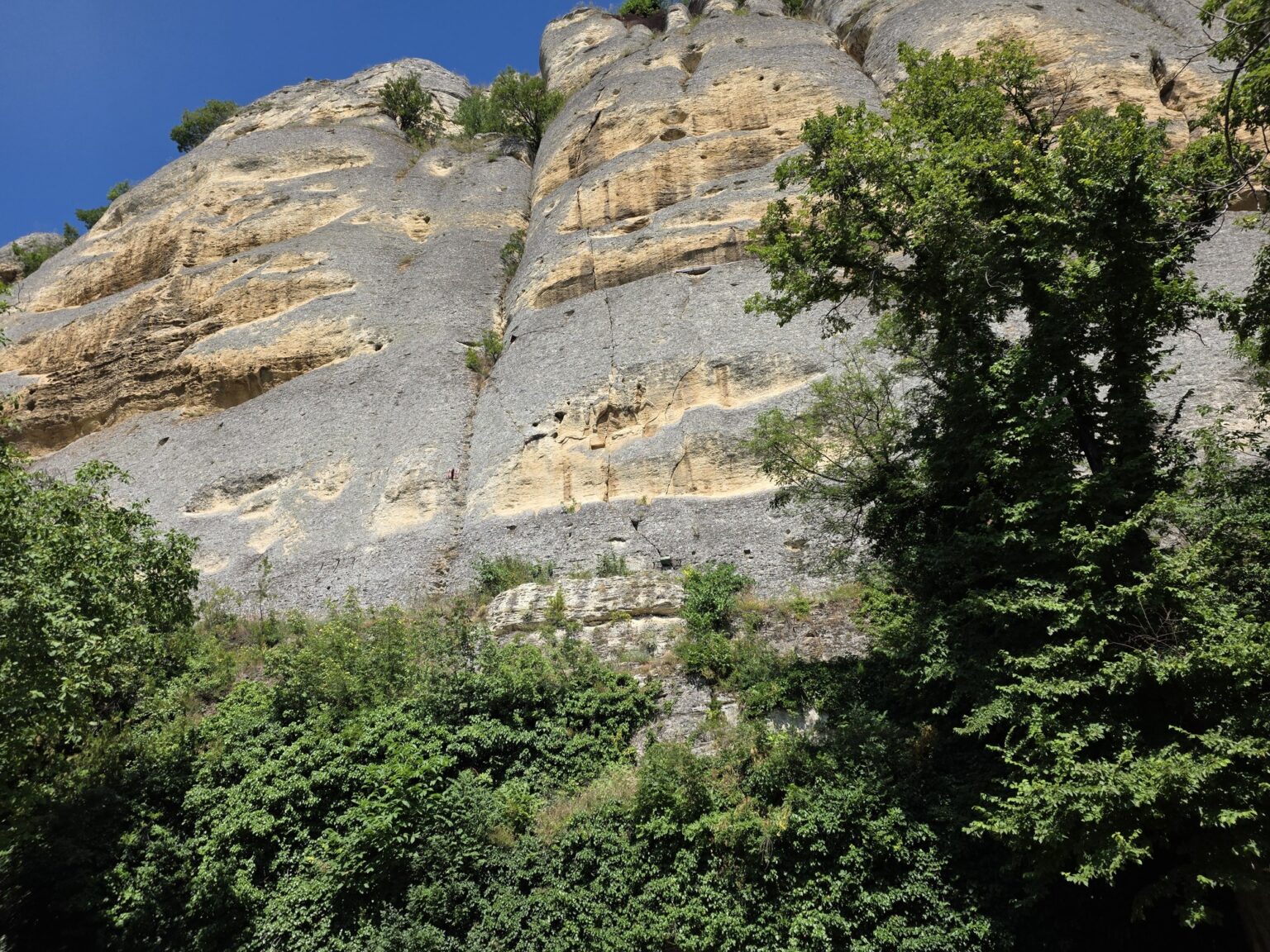
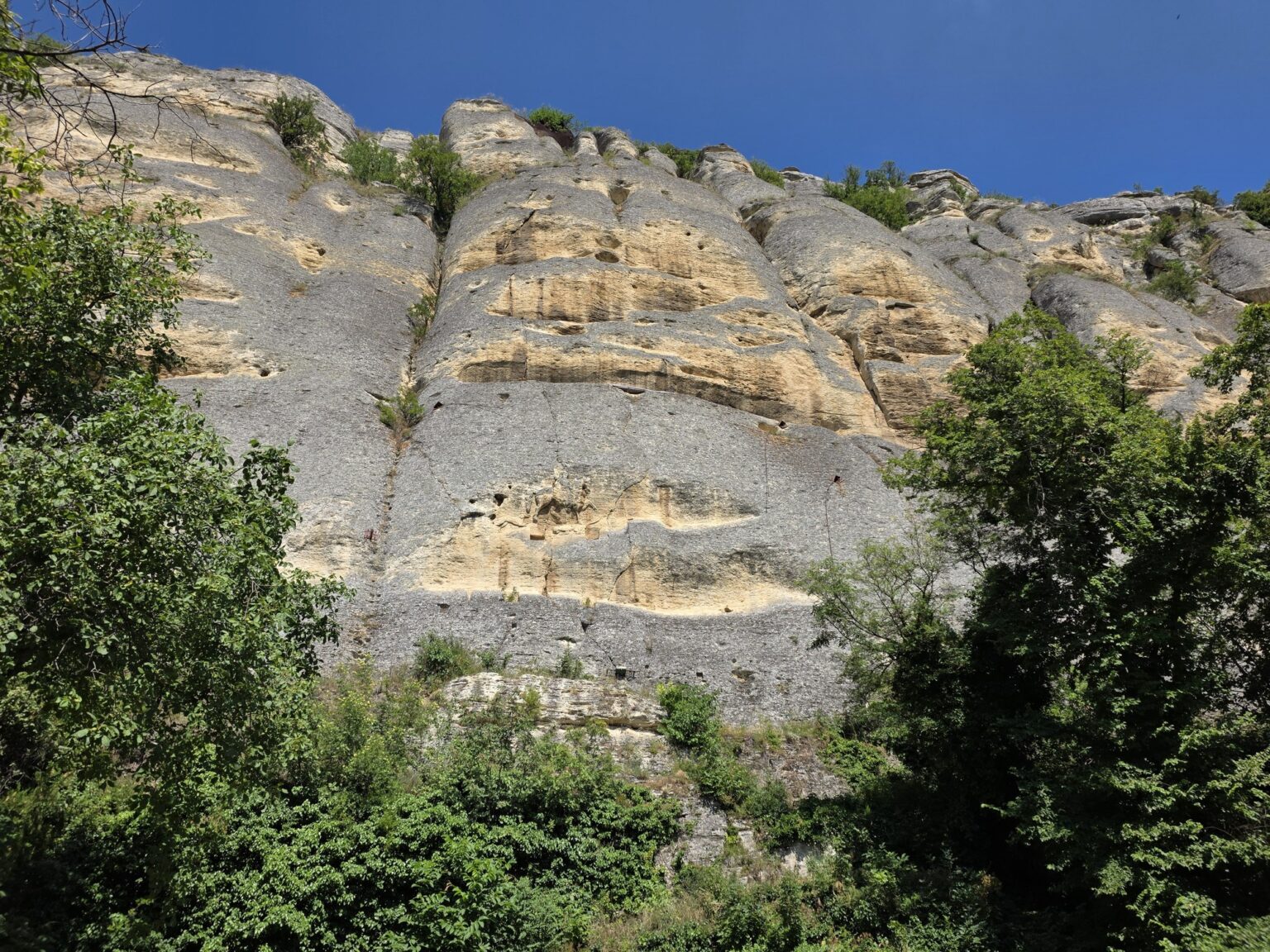
Coming back down, the path runs past the relief itself. The Madara Rider is cut 23 metres up a sheer limestone face. The composition is 3.10 m wide and 2.60 m high: a horseman at life size, a dog running ahead, a lion speared under the hooves, an eagle. Around the figures are three Greek inscriptions, the earliest from 705 AD.
The dating is still argued over, but the widest support goes to a link with Khan Tervel (701 – 721), an early ruler of the First Bulgarian Empire. The inscriptions name Tervel, the Byzantine emperor Justinian II, and the later rulers Kormisosh and Omurtag — meaning this cliff served as an official noticeboard for roughly a century and a half. The relief was brought to scholarly attention by the Austro-Hungarian traveller Felix Kanitz in 1872, joined the UNESCO World Heritage list in 1979, and in 2008 was voted the global symbol of Bulgaria.
From below it looks smaller than you expect, and considerably blurrier. Erosion has done its work — horse, rider and lion read clearly, the rest takes imagination. Bring binoculars, or at least a zoom. We are serious.
The caves, the chapel and a free concert
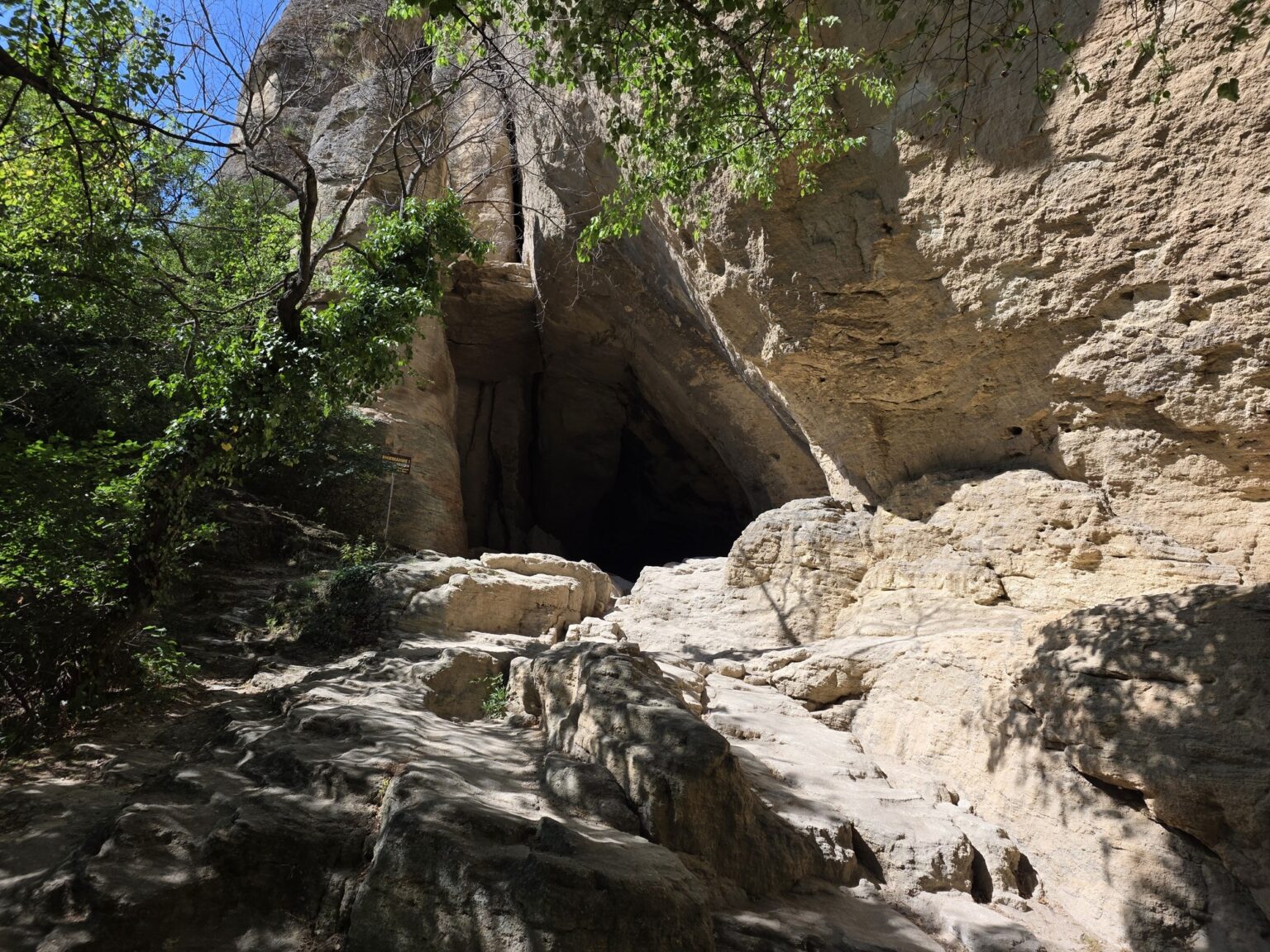
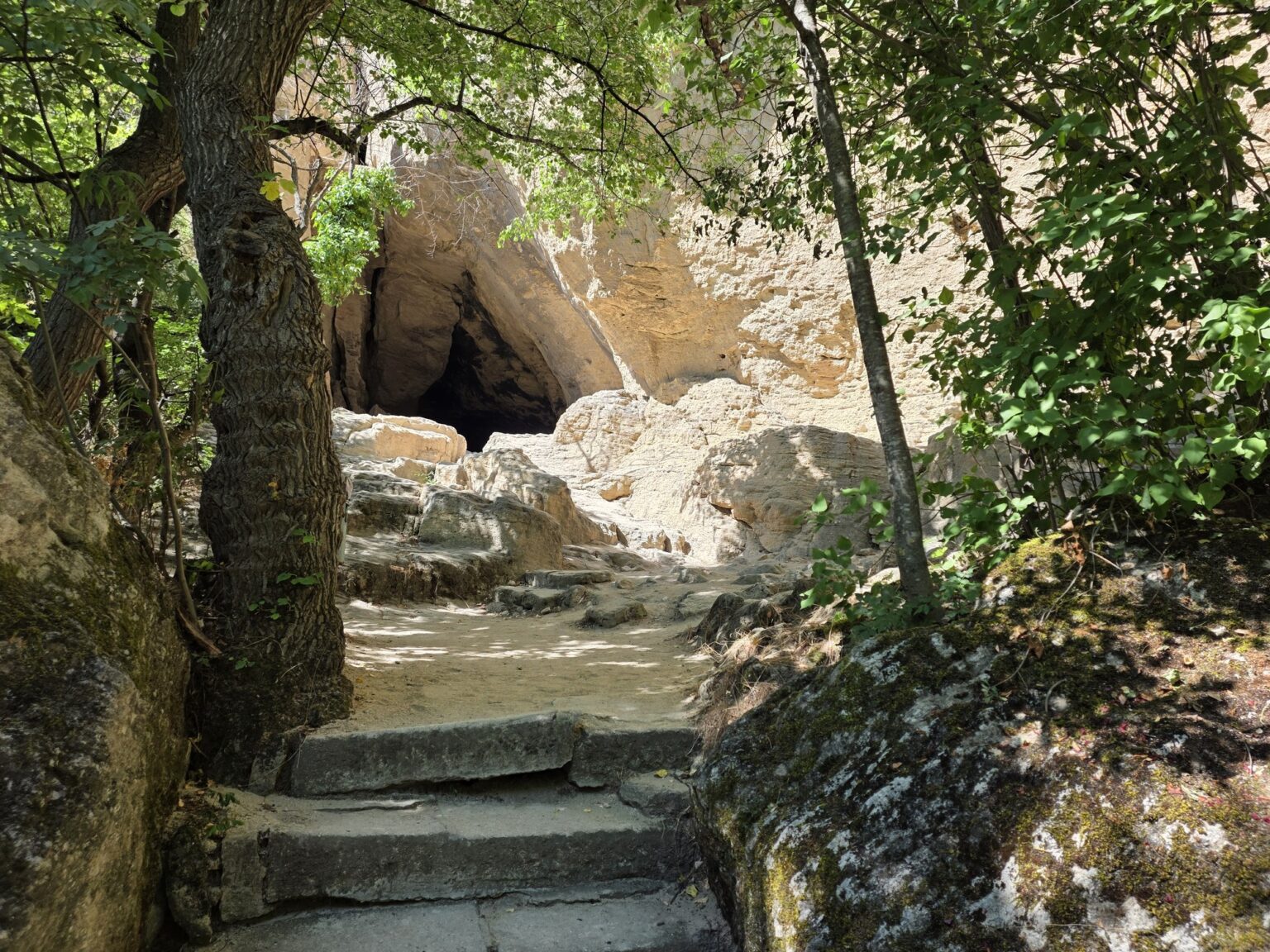
From here the route closes into a loop. The path runs along the base of the cliff band and reaches the caves — first a narrow opening in the rock with a board in front of it, then a short flight of steps up to the big overhang.
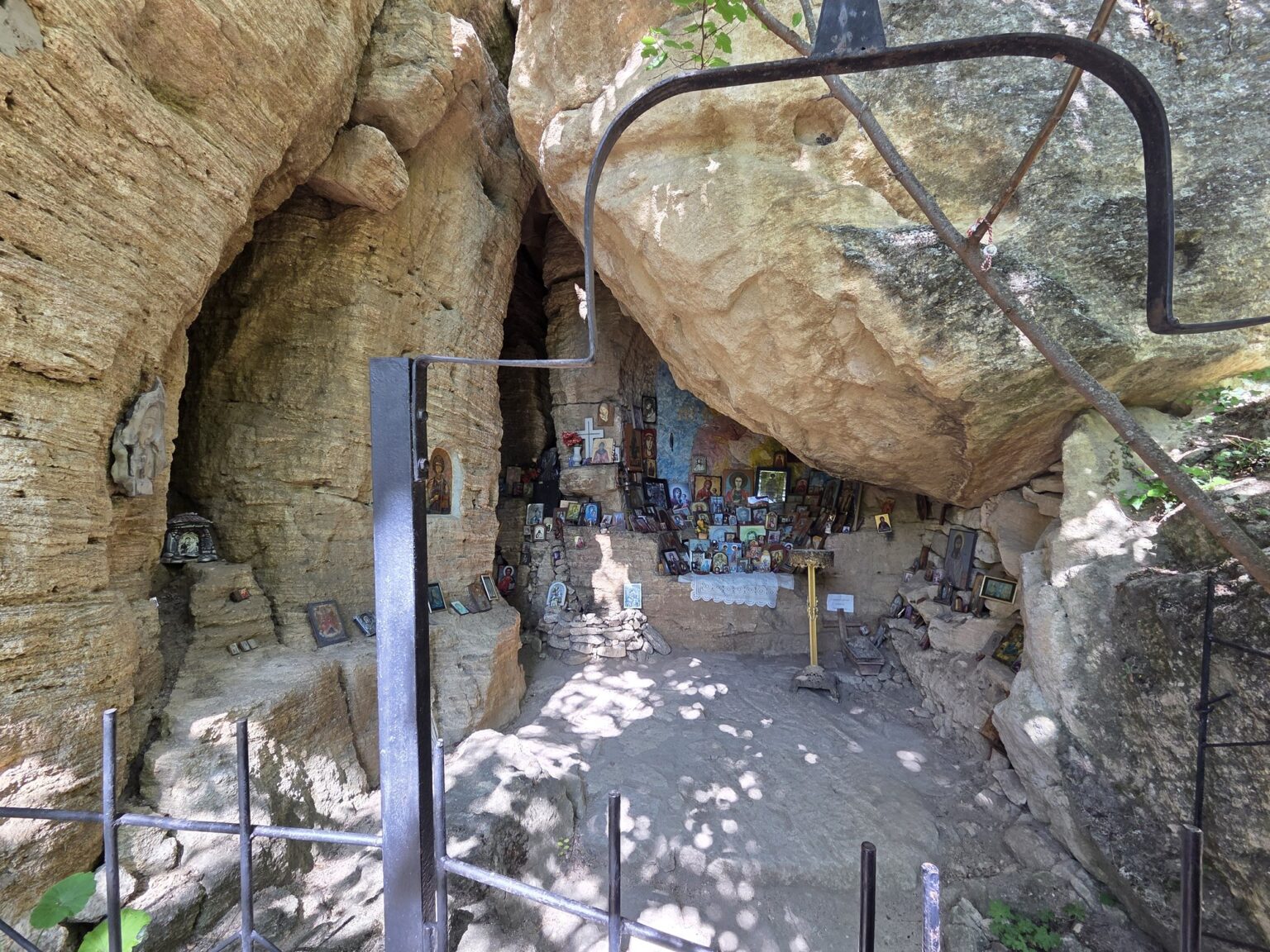
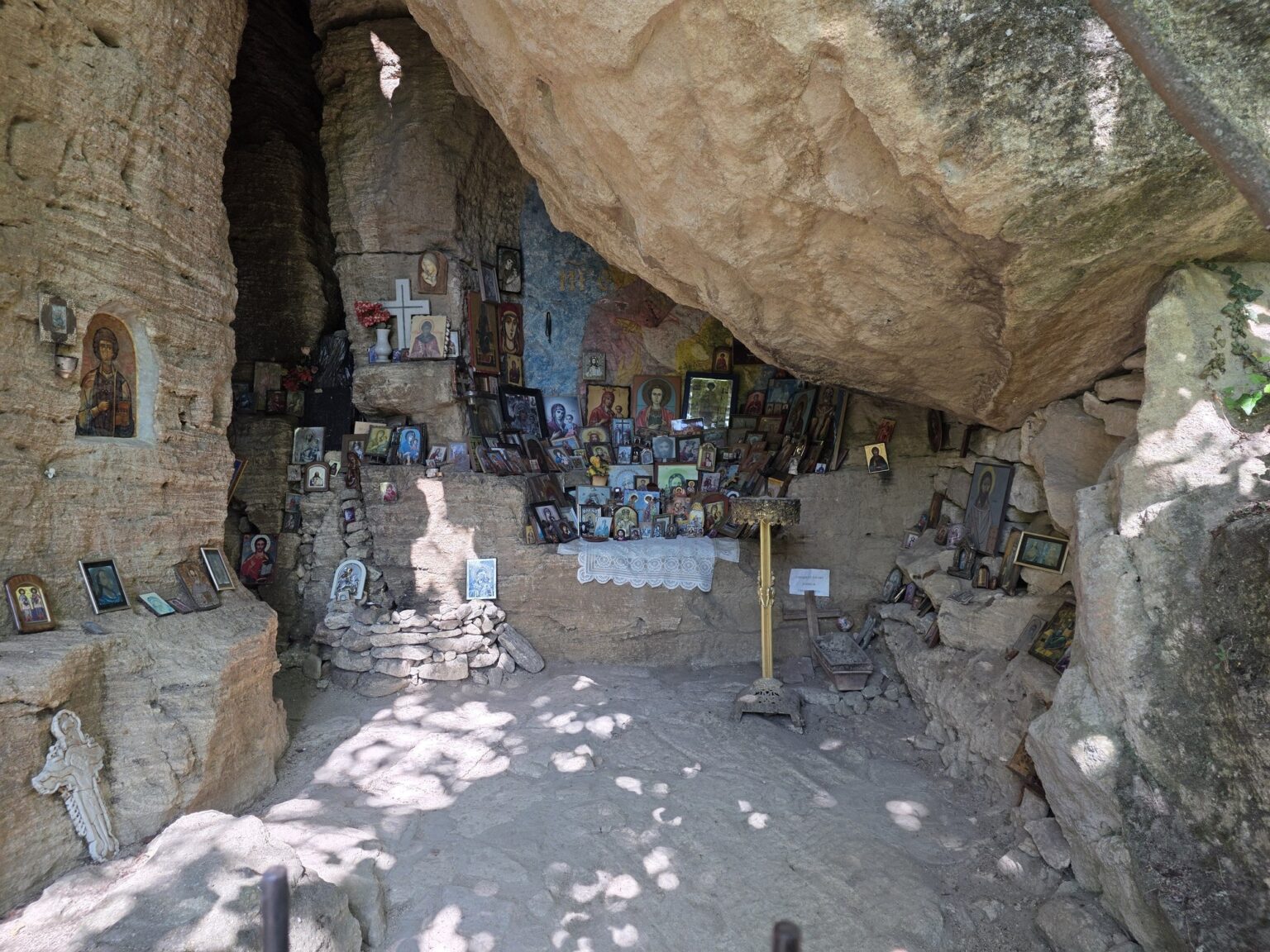
Inside there is a rock chapel: icons propped against the stone, candles, small offerings left along the ledge. Outside, water drips. Krum’s tears or Asclepius’s spring, depending on who you ask and which story you like better.
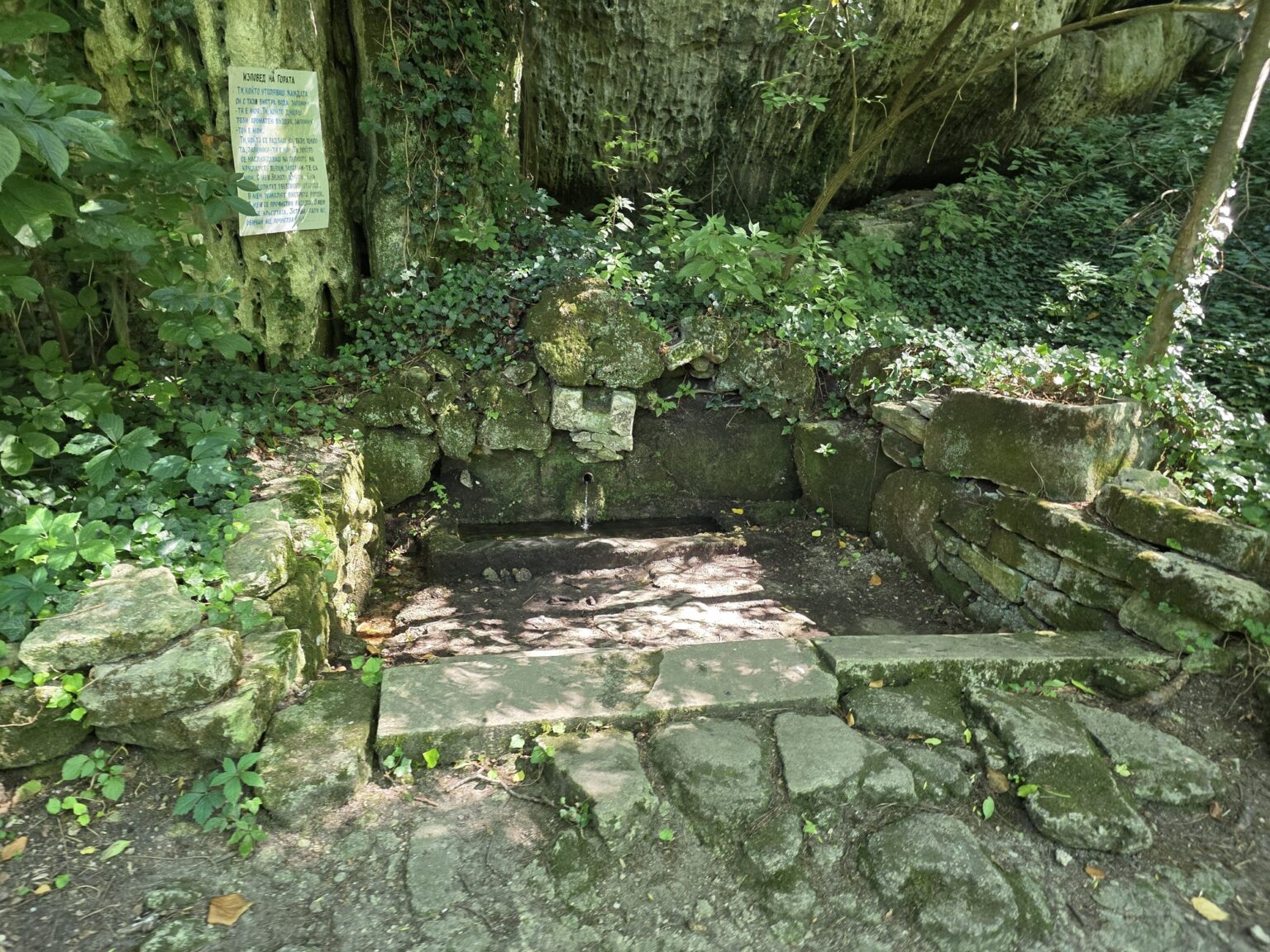
Just before the car park there is a stone spring trough with an inscribed slab. And that is where we hear bagpipes. A boy of about ten is playing the gaida, the Bulgarian bagpipe, at the foot of the stairs, and he is surprisingly good at it. You might get lucky and catch the free concert too. 🙂
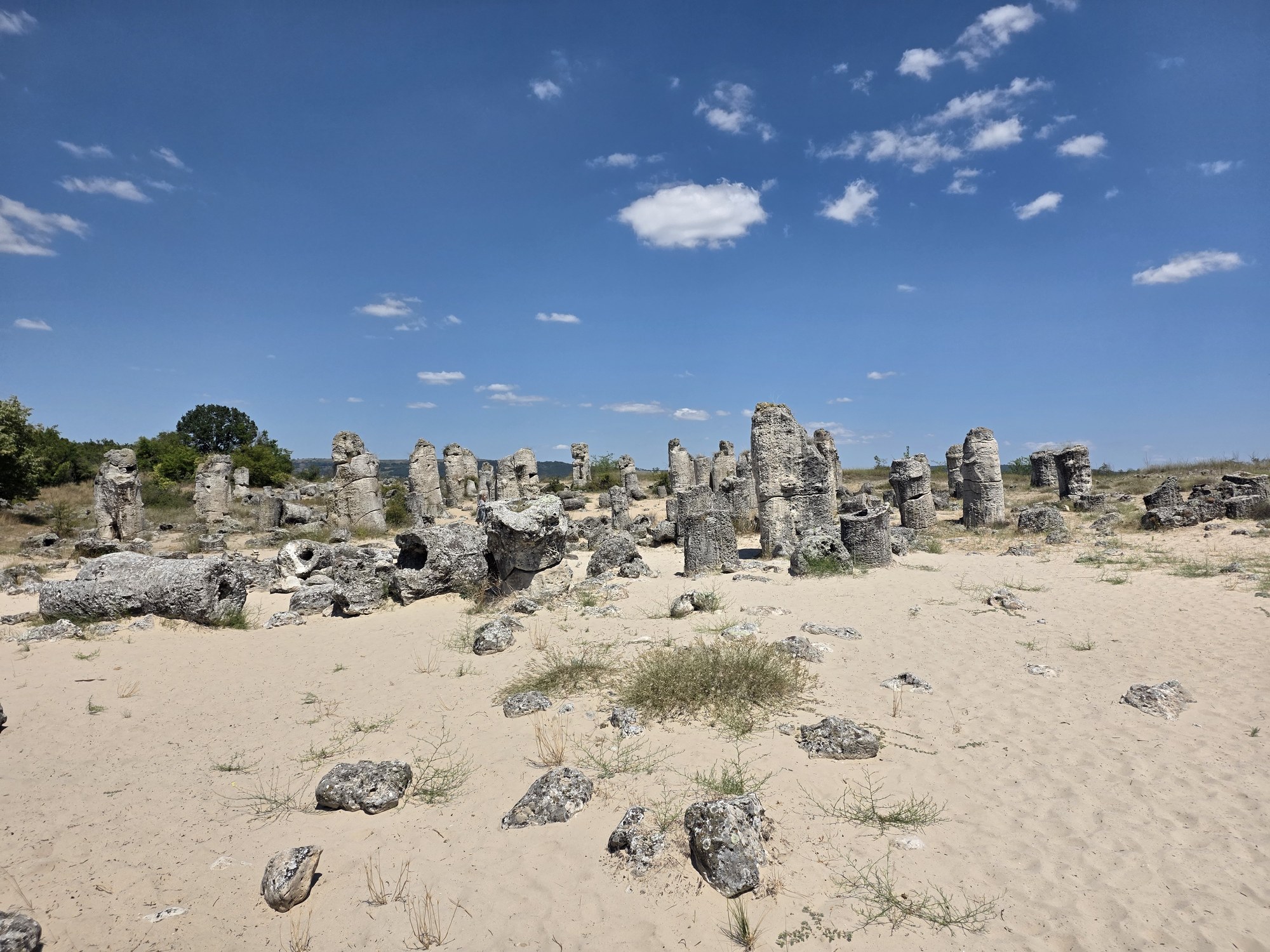
Worth it — though not for the relief on its own, which is small and a long way up. It is worth it for everything around it: a fortress on the lip of a plateau, a sanctuary, caves, a spring and close to four hundred steps that put thirteen hundred years in the right order. If you are in the region, the obvious neighbours are Pobiti Kamani and Aladzha Monastery. Just do not take on those stairs at midday in August. 😀
Related video: the Madara Rider is one of the three sites in the episode Bulgaria From Above: Stone Wonders — alongside Pobiti Kamani and Aladzha Monastery, filmed by drone in 4K.