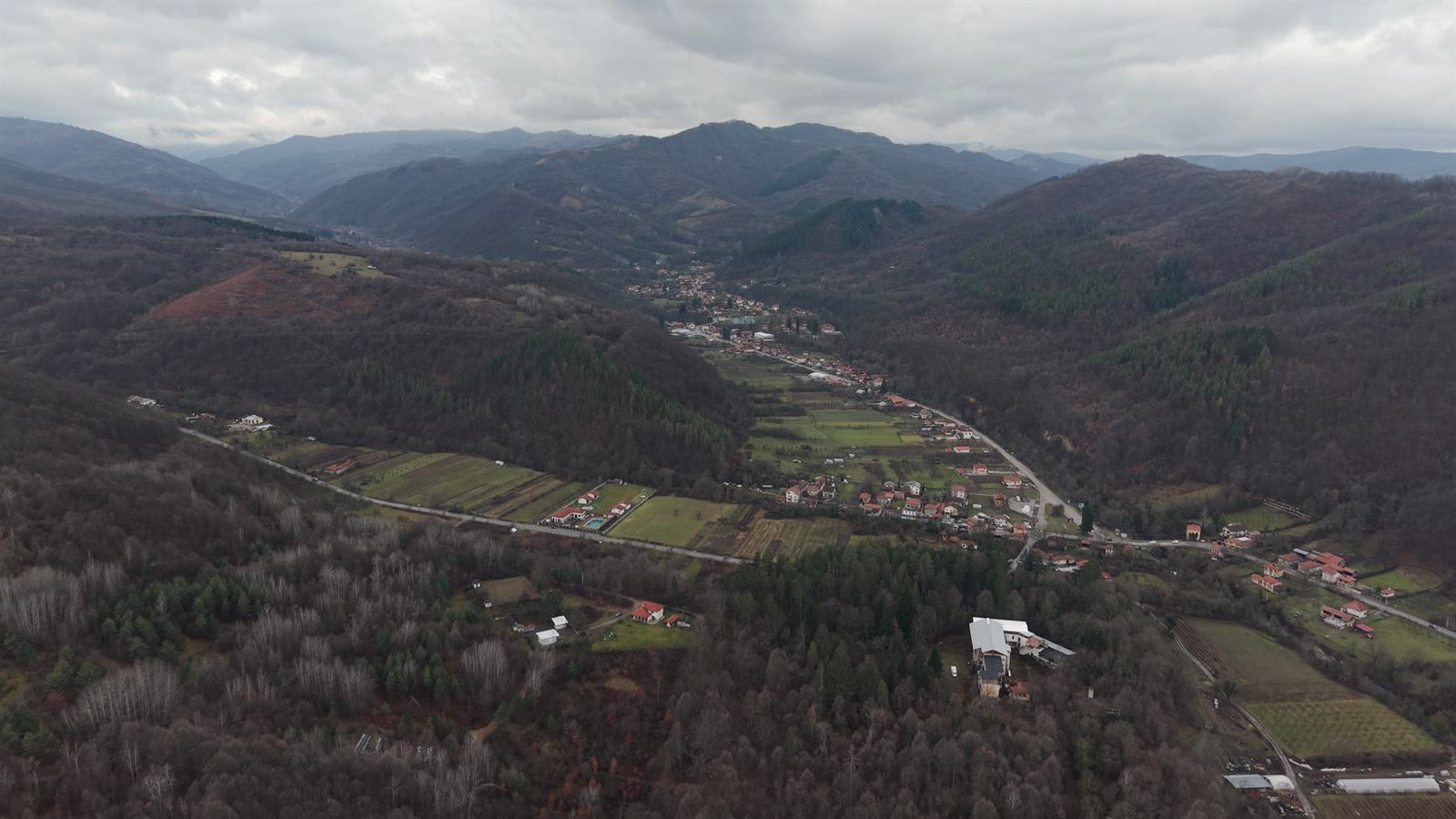
Kyustendil lies in a broad valley in southwestern Bulgaria, close to the borders with Serbia and North Macedonia. The town is known for mineral springs, orchards and a long history that reaches back to antiquity. Its setting is gentler than the high mountains nearby: low hills, cultivated land and the distant outline of Osogovo give the valley a calm, open character.
Quick reference
| Where it is | Southwestern Bulgaria, in a valley below the Osogovo mountains, close to the borders with Serbia and North Macedonia |
| Getting there | by car – via the Struma motorway, then road II‑62 past Dupnitsa, about 100 km from Sofia (≈1 h 15 min); by bus from Sofia’s West Bus Station/Serdika; by train from Sofia Central Station |
| Time needed | 2–3 hours for the centre and museum; half a day if you add the baths and the park |
| History museum | Regional History Museum “Acad. Yordan Ivanov” – one exhibition: €2.56 adults, €1.53 students and pensioners; three or more exhibitions €6.14 / €2.56. Opening hours: Monday–Sunday, April–September 9:30–12:00 and 12:30–18:00, October–March 8:30–12:00 and 12:30–17:00. Free entry on the last Thursday of every month. Guided tour: €5.11 in Bulgarian and €10.23 in a foreign language; €30.68 for a full-day route around the town. Check the official museum page. |
| Mineral baths | Chifte Banya is run by a municipal company; there is no official page listing prices or hours – check on site |
| When to go | spring – the orchard blossom; summer – concerts and events on the square; before Christmas – the decorations and the tree in the centre |
| Parking | on the streets around the centre; a blue (paid) zone covers the central area |
A spa town with an ancient past
The mineral springs made the area important long before modern tourism. The Romans developed the settlement of Pautalia, building baths and public structures around the warm water. Later centuries added medieval and Ottoman layers, while the modern town grew into a regional centre with a recognisable cultural life.
Kyustendil’s history is visible in fragments rather than one single monument. The fortress hill, churches, old public buildings and archaeological remains each tell part of the story. Together they show a place that has repeatedly adapted to changing political and economic worlds — an accumulation rather than a single picture.
The town centre today
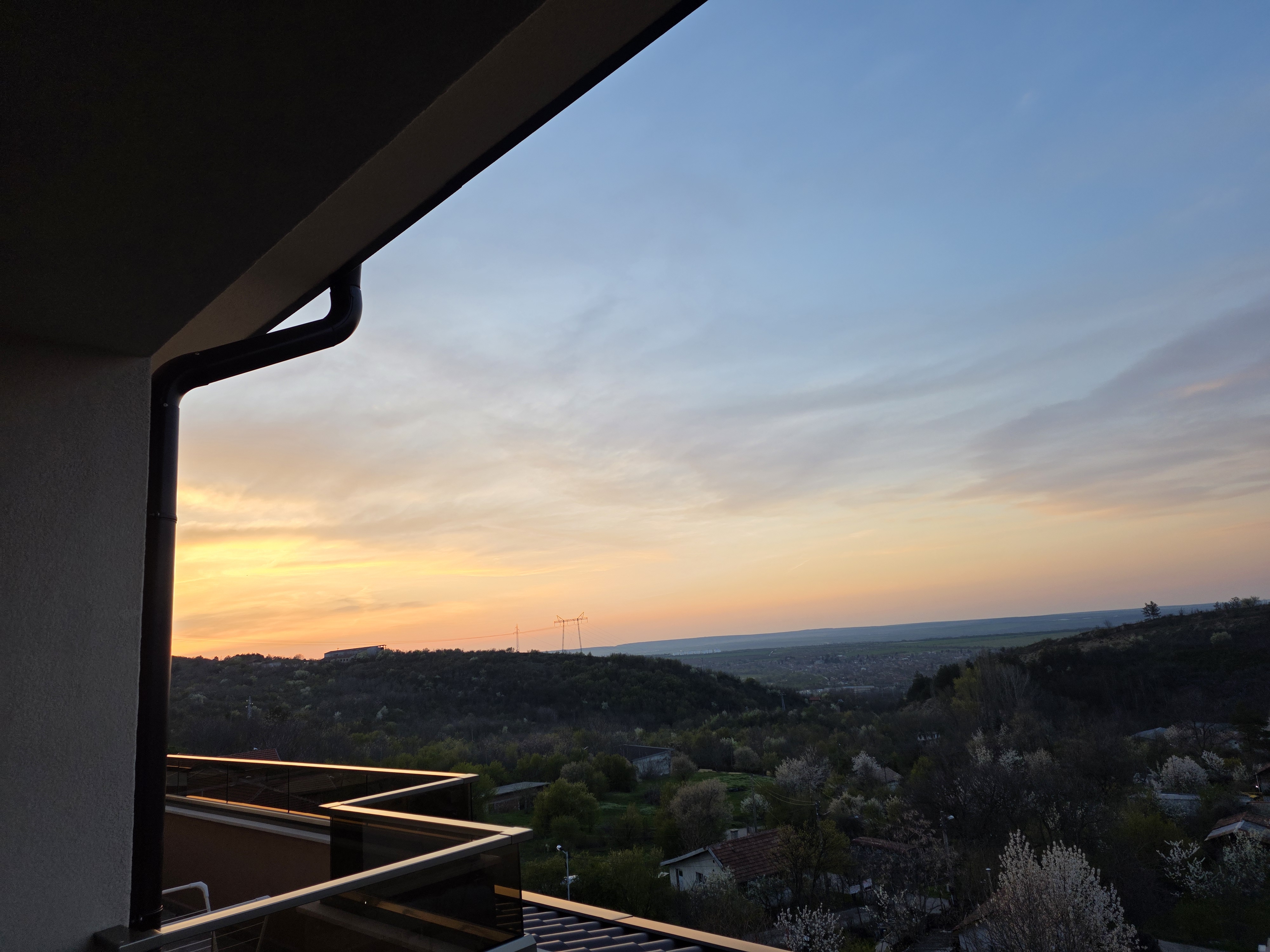
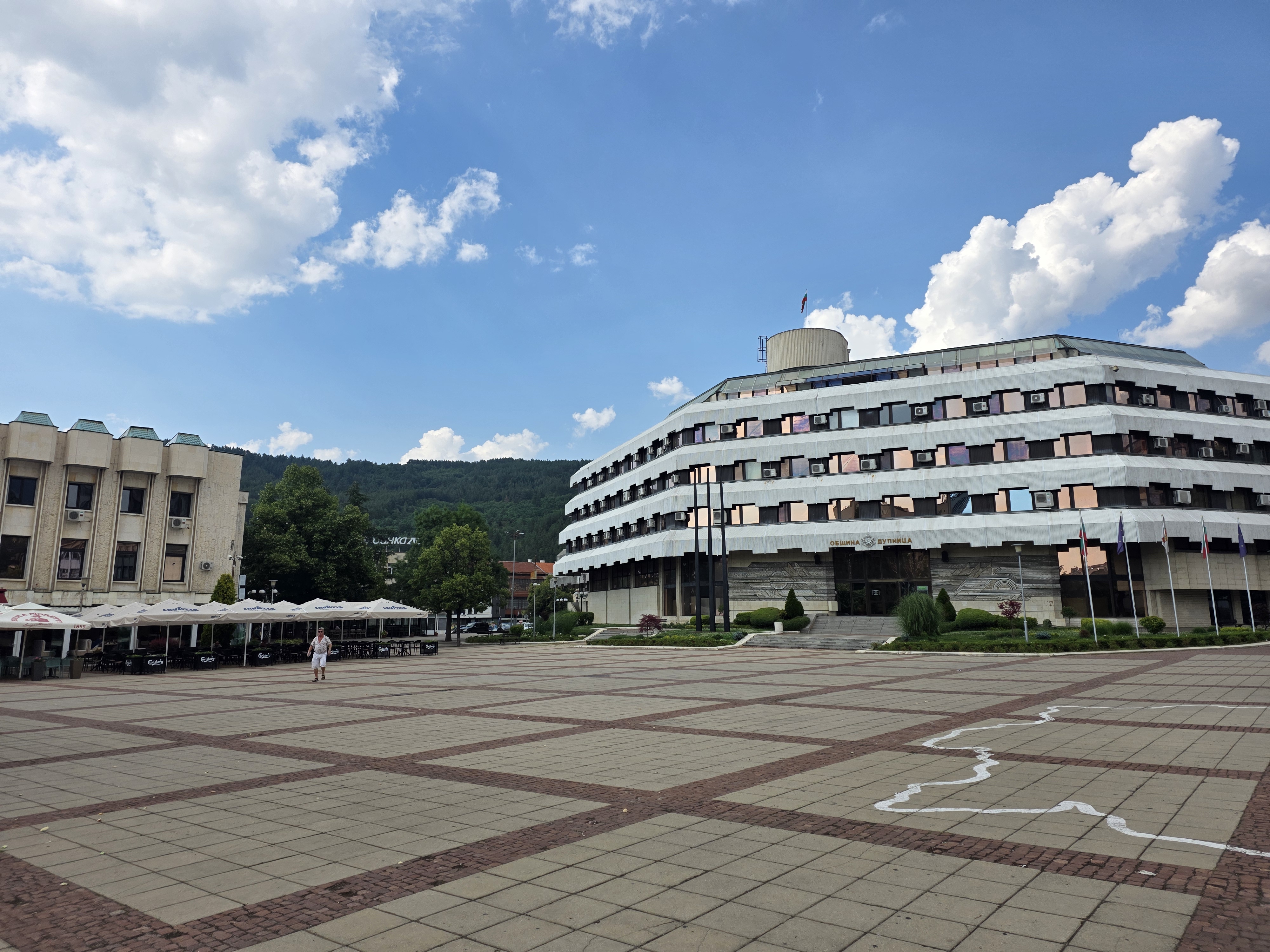
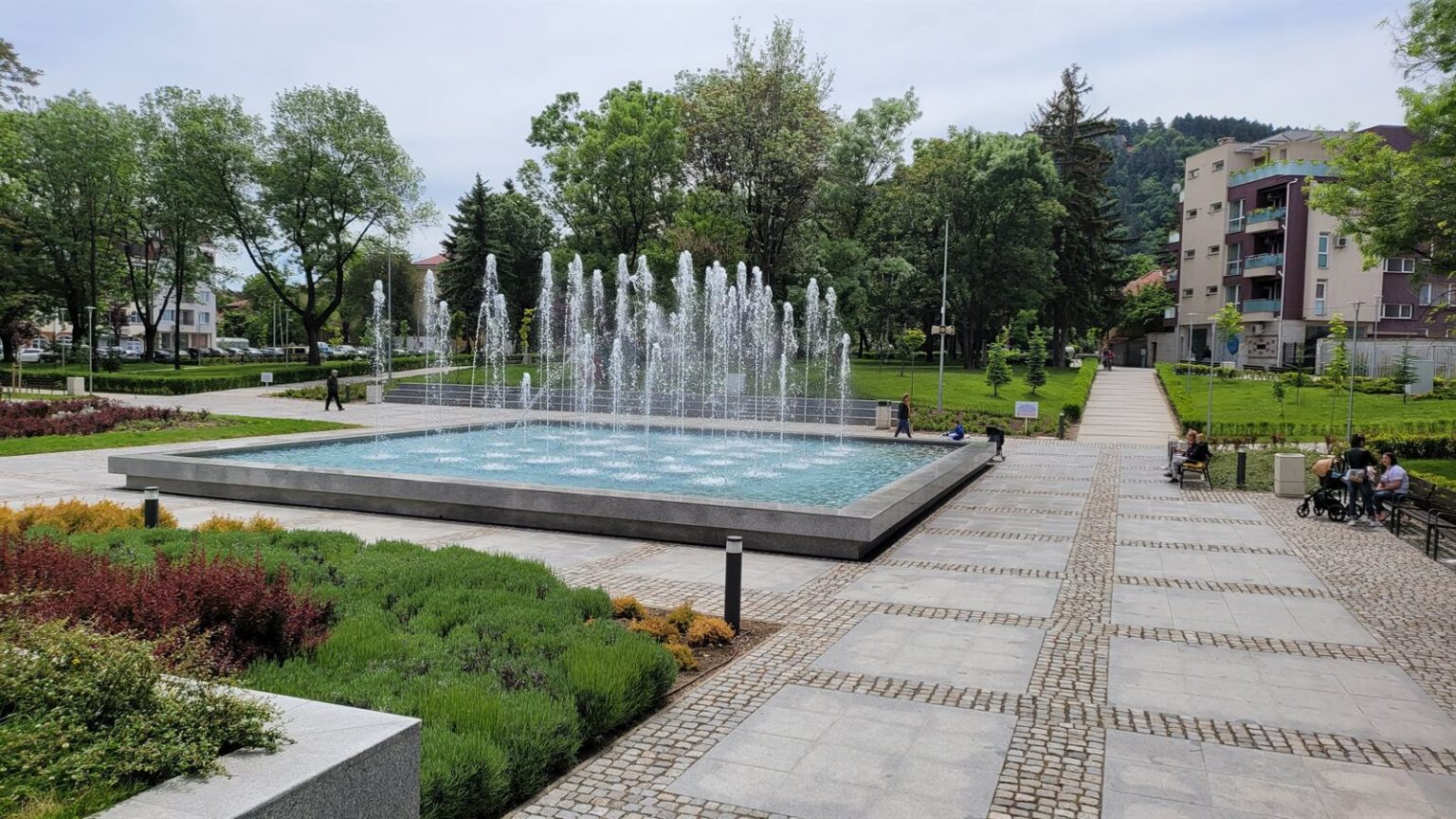
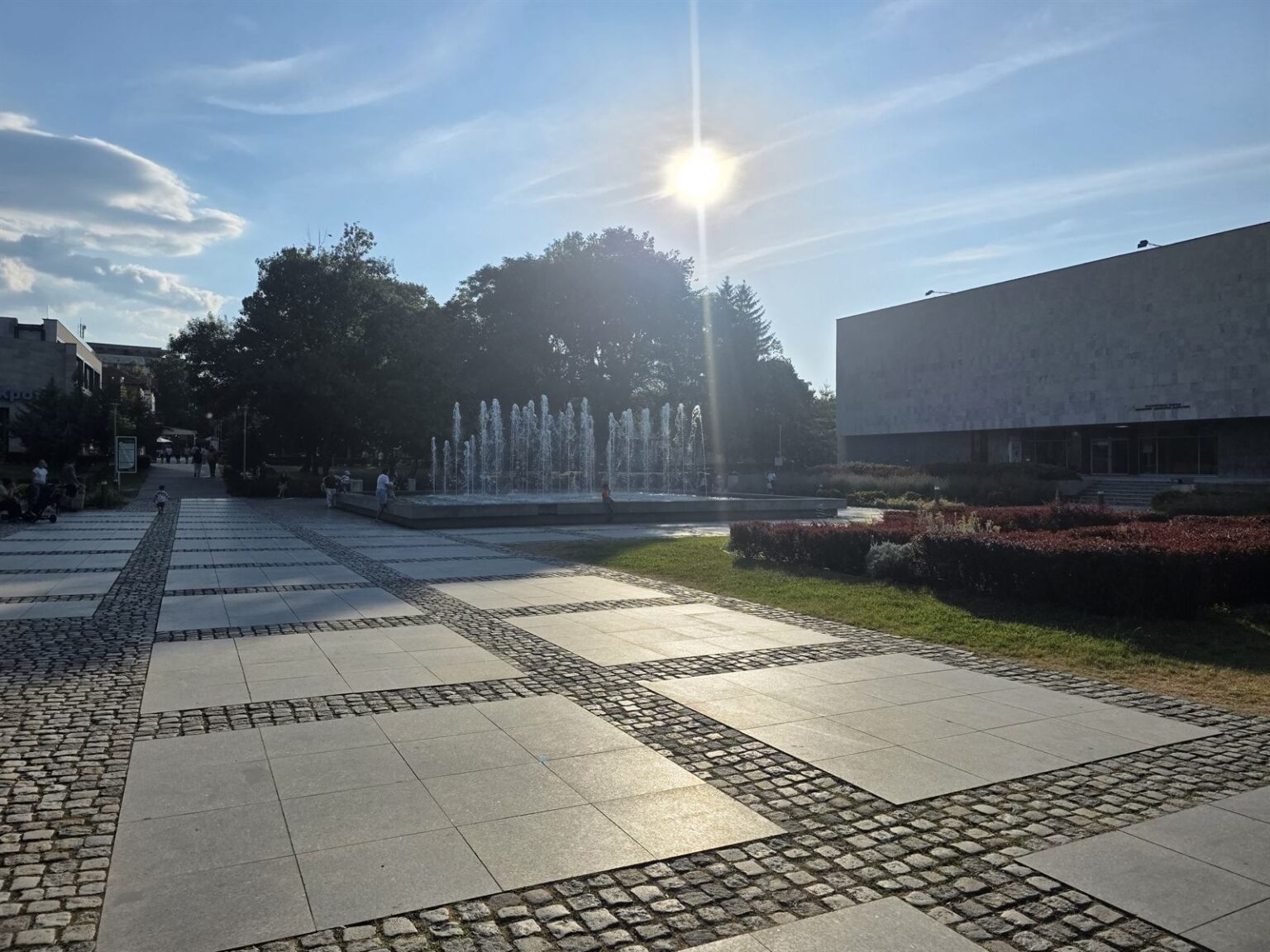
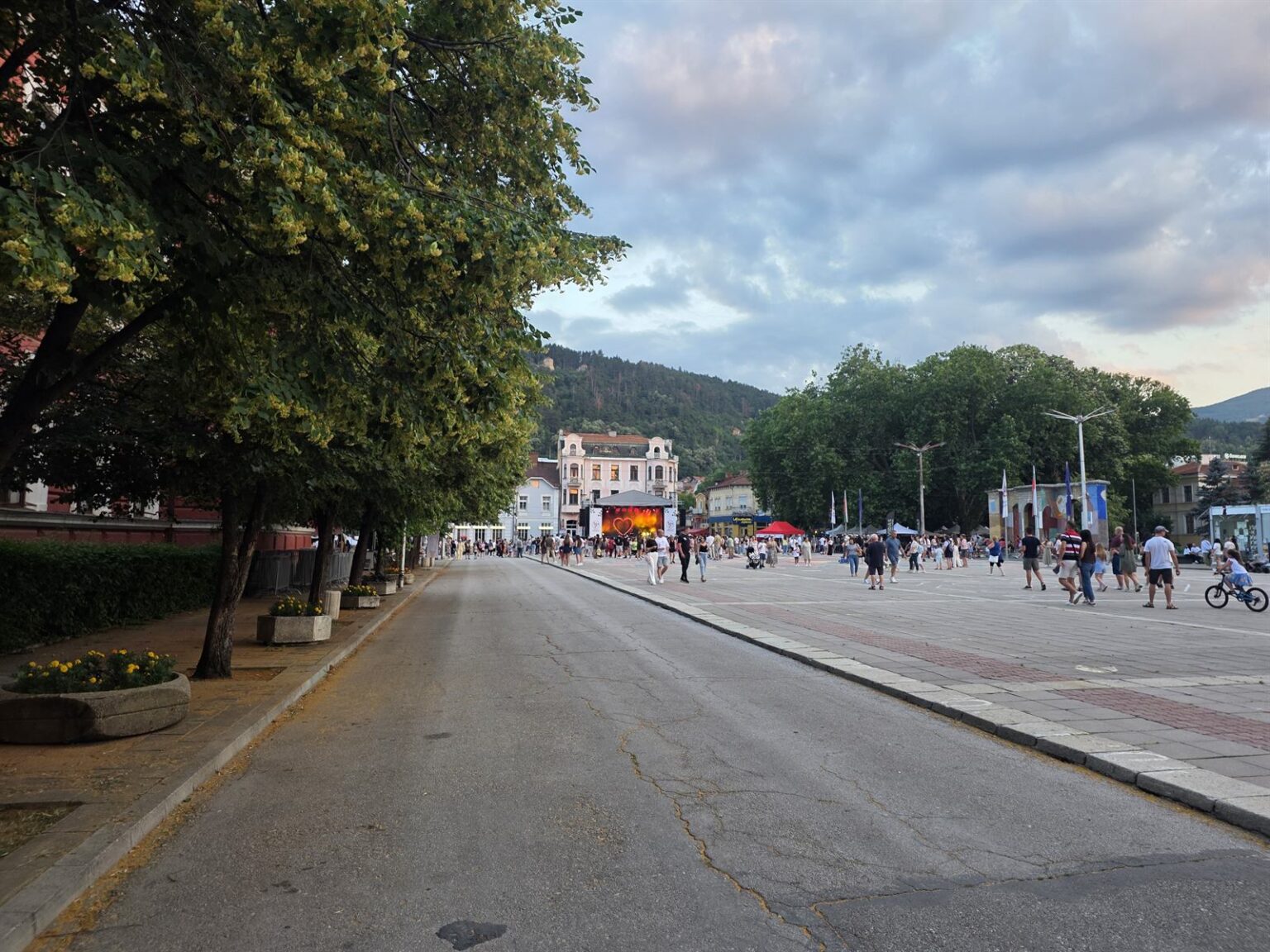
The centre is organised around water and greenery. The fountain in the landscaped park is where the town is quietest during the day, while at sunset the same water and the paving of the main square change character entirely, the warm light bringing out the scale of the open space.
Orchards and the cherry festival
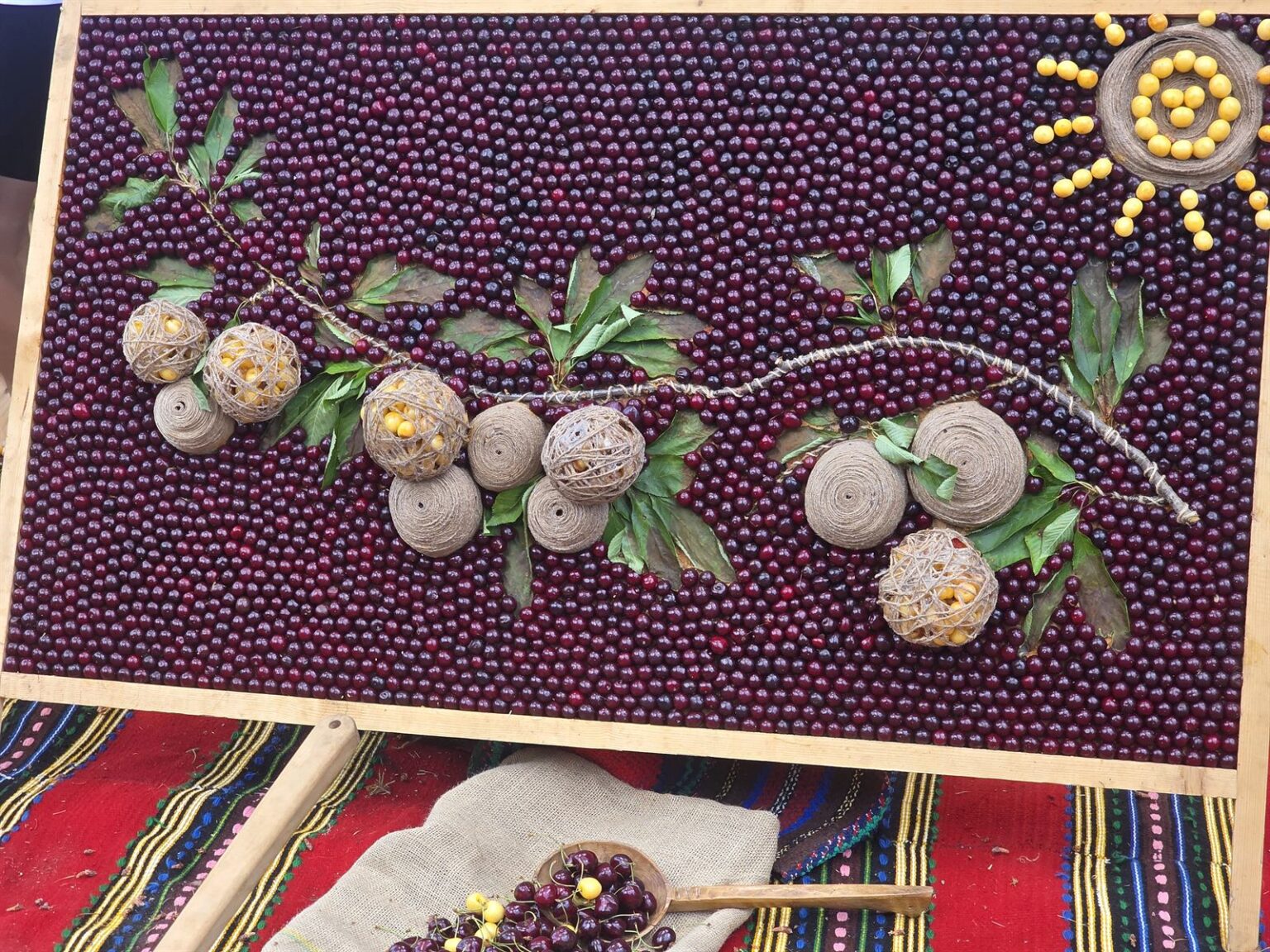
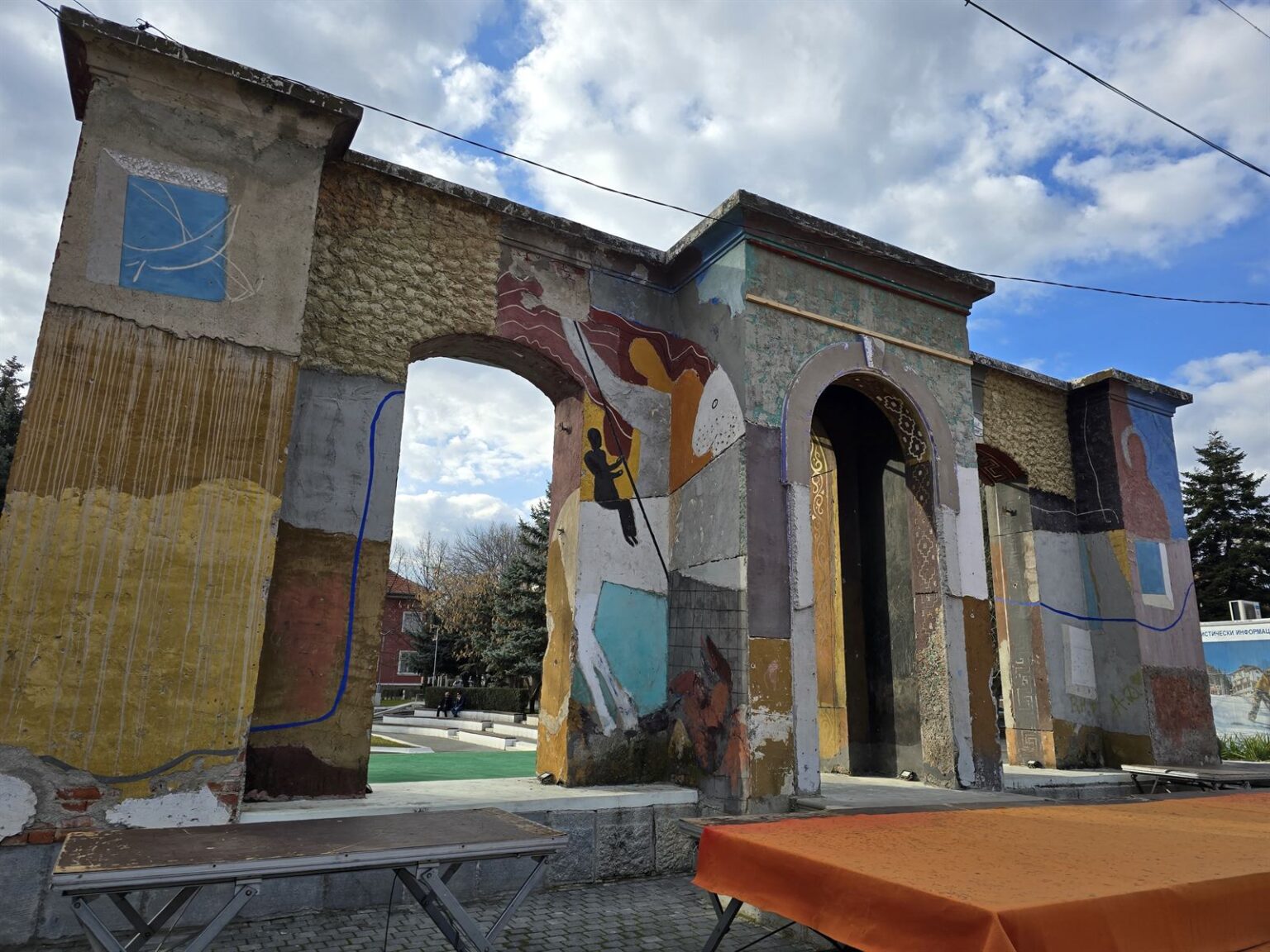
Fruit-growing is another part of Kyustendil’s identity. Orchards and gardens soften the edges of the urban area, especially in spring when the valley fills with blossom. The cherry has reached the town itself: themed artwork and textile decorations appear on the square during cultural events, alongside the colourful painted arches that stay up all year.
Seasons of Kyustendil
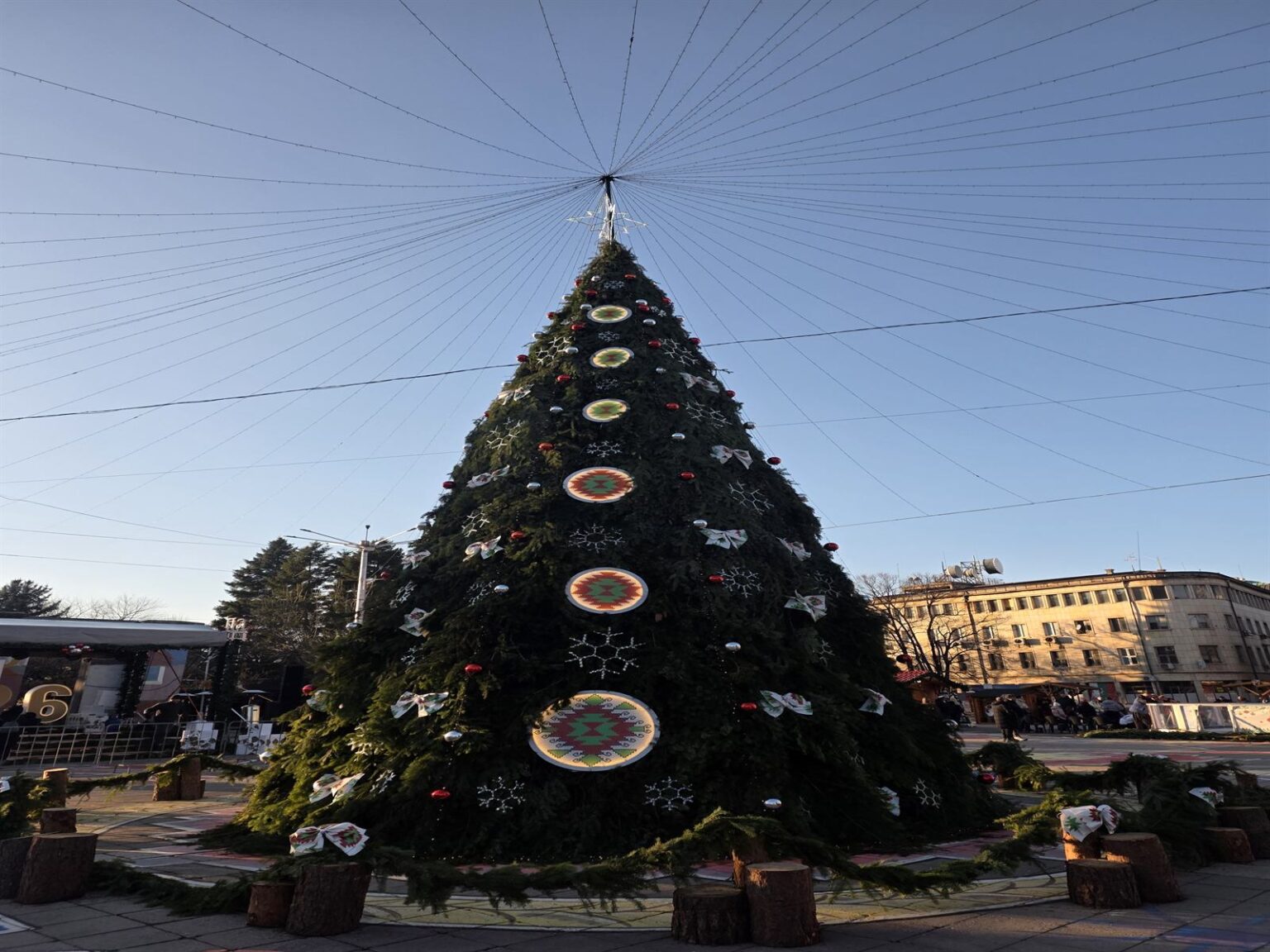
Each season brings a different reason to visit. Spring belongs to the orchards and the blossom, summer draws people onto the square for concerts, markets and open-air events. Winter turns attention back to the spa tradition, and the Christmas tree on the central square changes the scale of the same space that looks wide and open in summer. The nearby mountain shifts the light from day to day and keeps the landscape from feeling static.
Kyustendil is at its best when approached as a cultural and natural destination together. The baths, historic remains, gardens and surrounding countryside are parts of one valley that has attracted people for its water, fertile land and position for thousands of years.
Related video: watch the flight over Kyustendil from the Bulgaria From Above series. Kyustendil is also the opening stop in The Struma Valley From Above, which continues on to Blagoevgrad and Dupnitsa. More of the region in Places in Bulgaria.