Dupnitsa is a town most people know only through a car window. The Struma motorway runs past it and the signs point onward — to the Rila Monastery, to Bansko, to Greece. The town itself stays out of that flow, and that is exactly why it has kept its quiet scale: a compact centre, Rila rising immediately behind it, and a river coming down off the mountain straight through its eastern edge.
| Where it is | Southwestern Bulgaria, at the foot of Rila, about 50 km from Sofia |
| Getting there | by car on the A3 Struma motorway – about 50 min from Sofia; by train on the Sofia–Kulata line, which stops in Dupnitsa; by bus from Sofia’s West Bus Station/Serdika |
| Time needed | about an hour for the old centre; half a day if you add Rila Park |
| Rila Park | free entry, open year-round; cars are not allowed inside, paid parking at the entrance. Check current details on the official site of Dupnitsa Municipality. |
| When to go | late spring, when the Bistritsa runs high, or October for the autumn colours in the park |
| Parking | paid parking at the entrance of Rila Park; free spots around the town centre |
A town between Rila and the Struma valley
Dupnitsa stands where its own basin opens into the Struma valley, with Rila to the east and Verila to the north. That position shaped it for centuries: the road from Sofia towards Macedonia and the Aegean passed through here. Later the town lived off tobacco and pharmaceuticals, and the granite quarried in the Bistritsa gorge above it was cut into the cobblestones of Sofia’s streets.
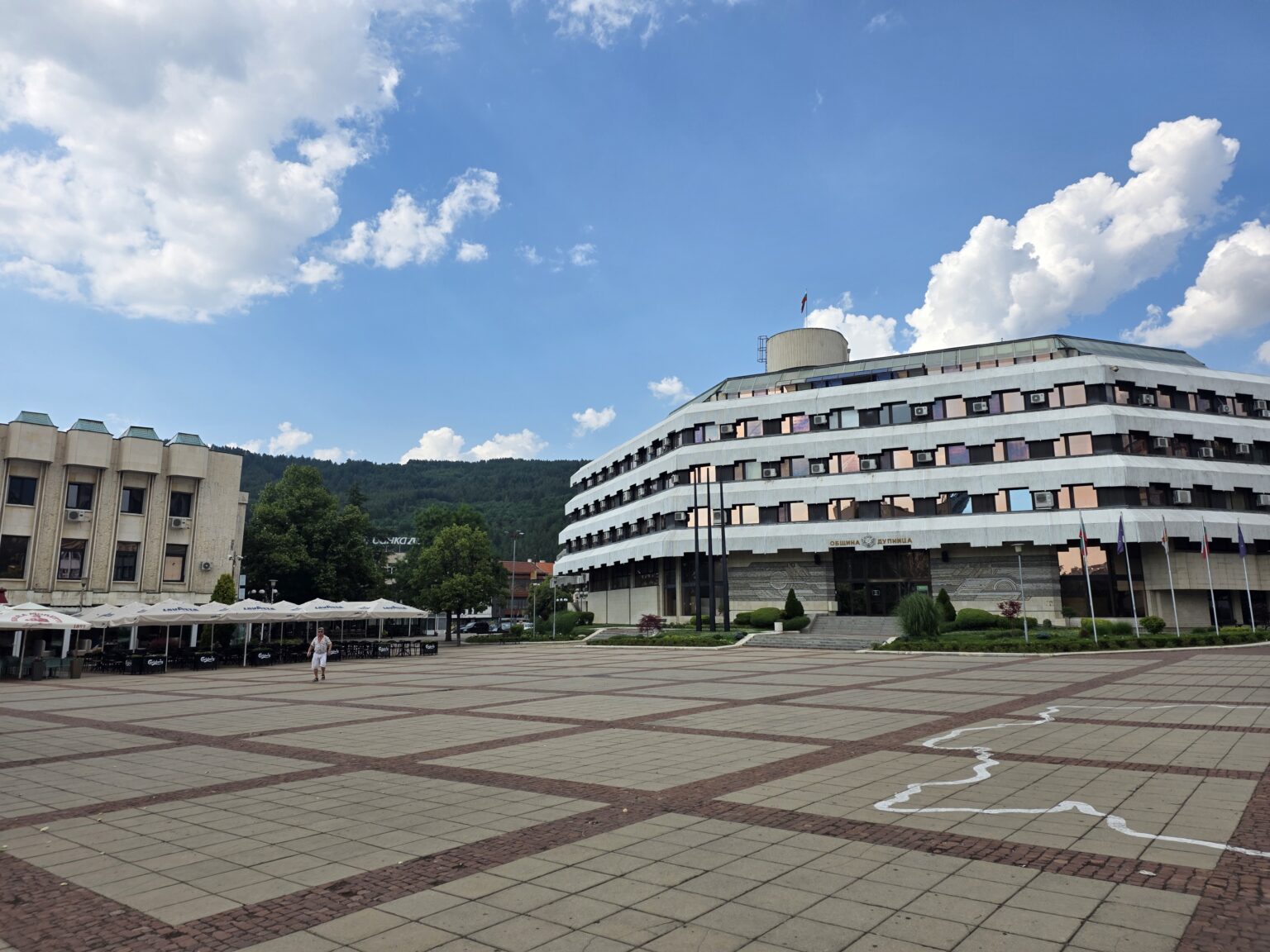
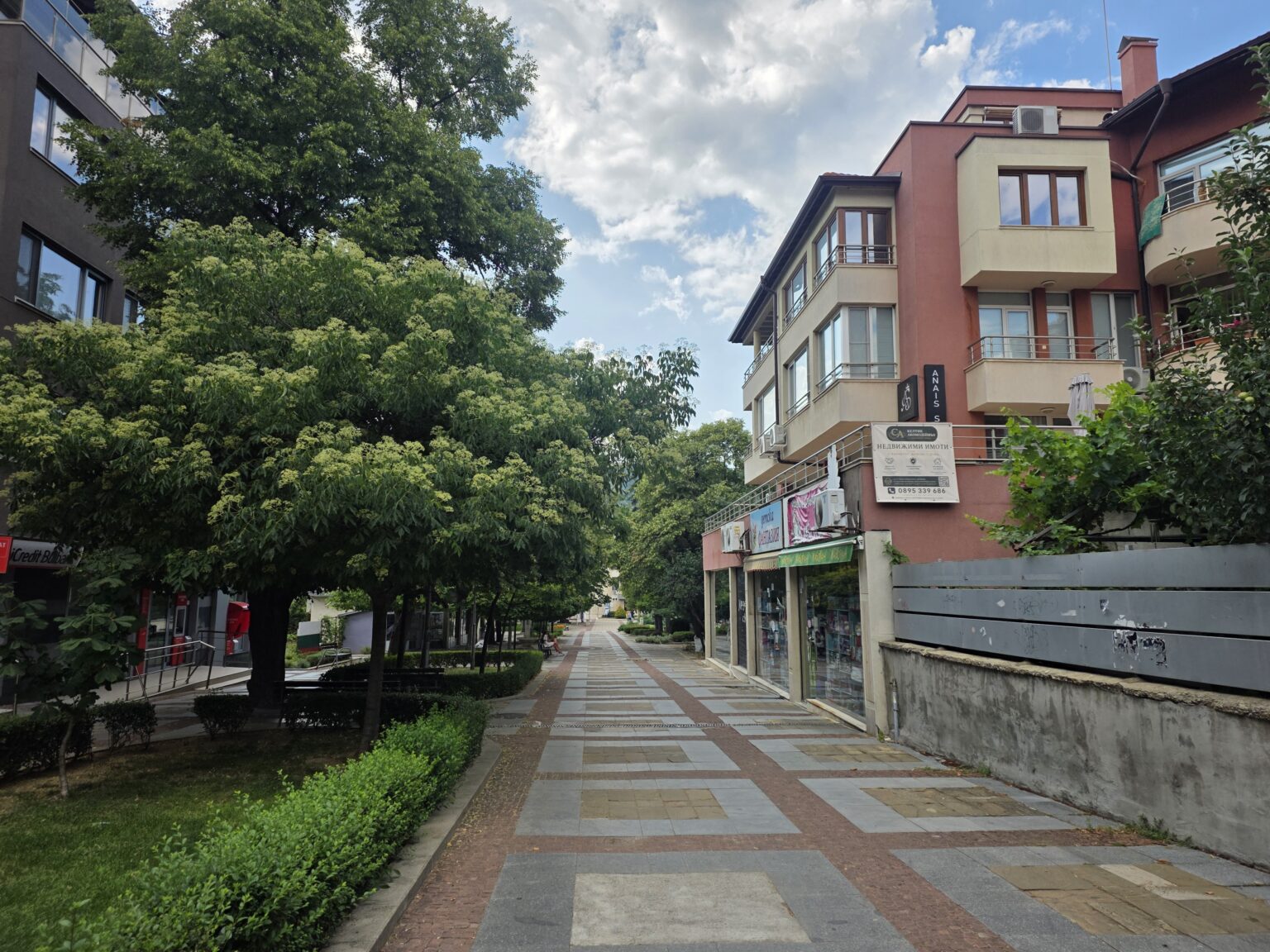
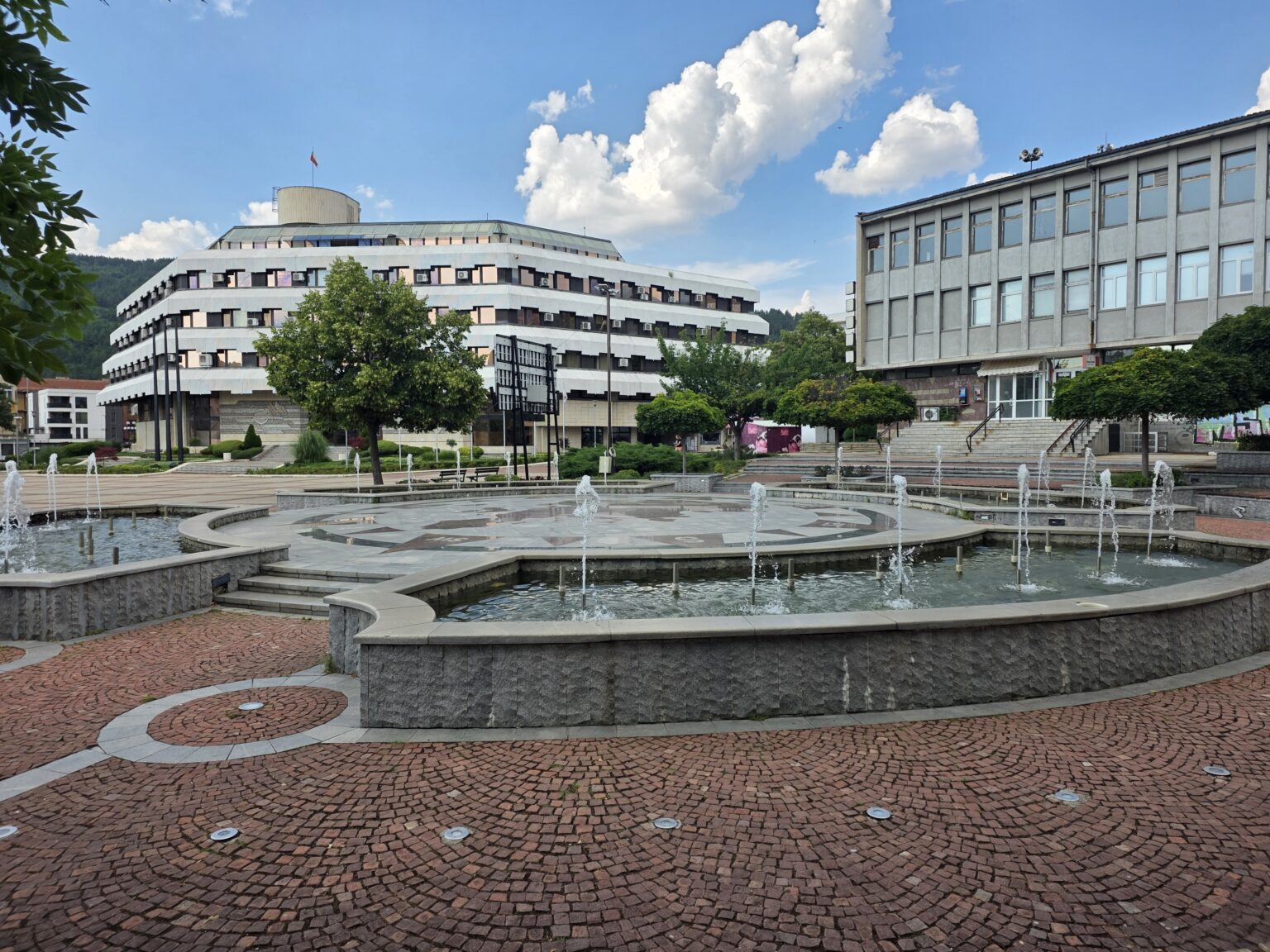
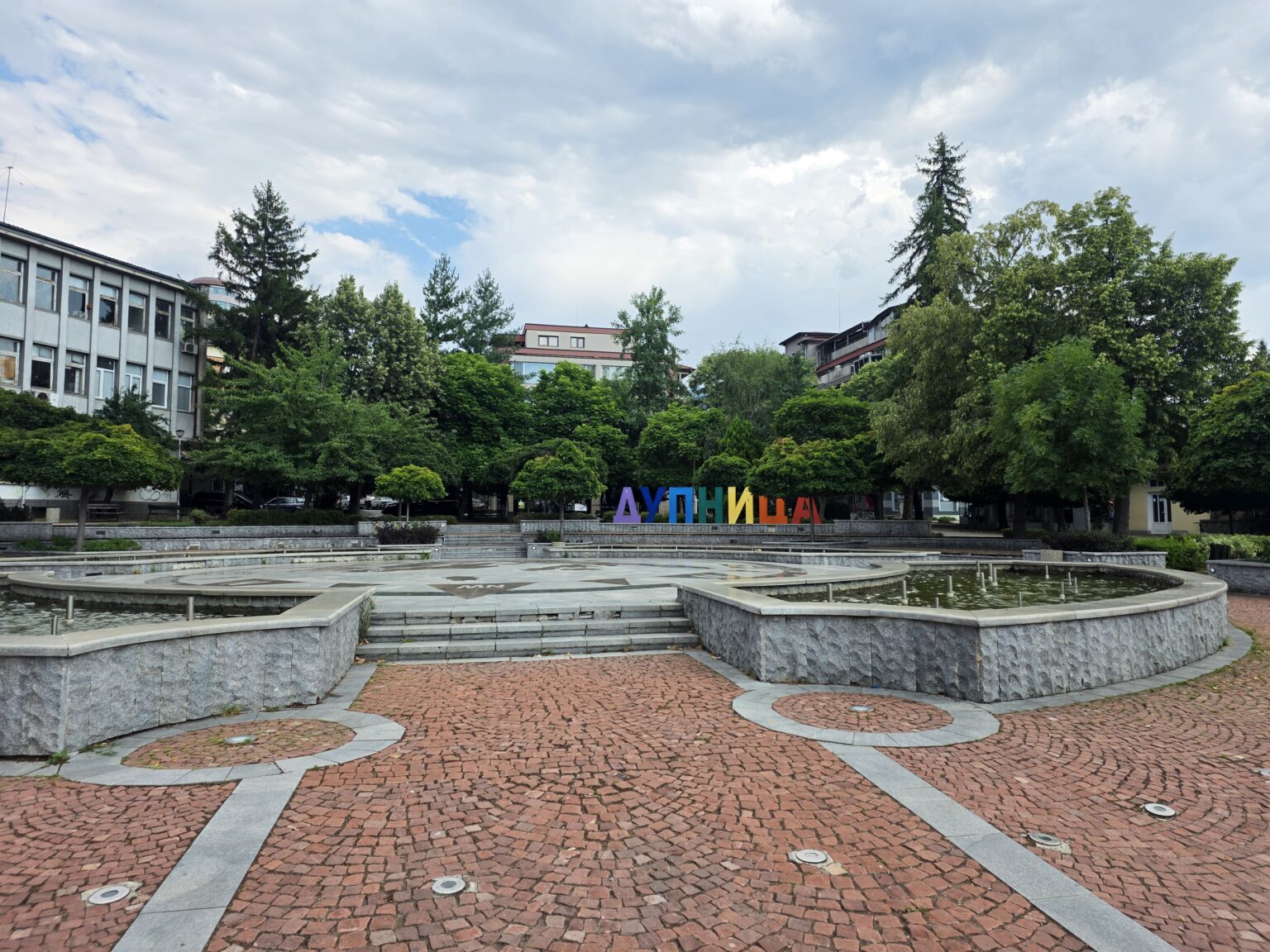
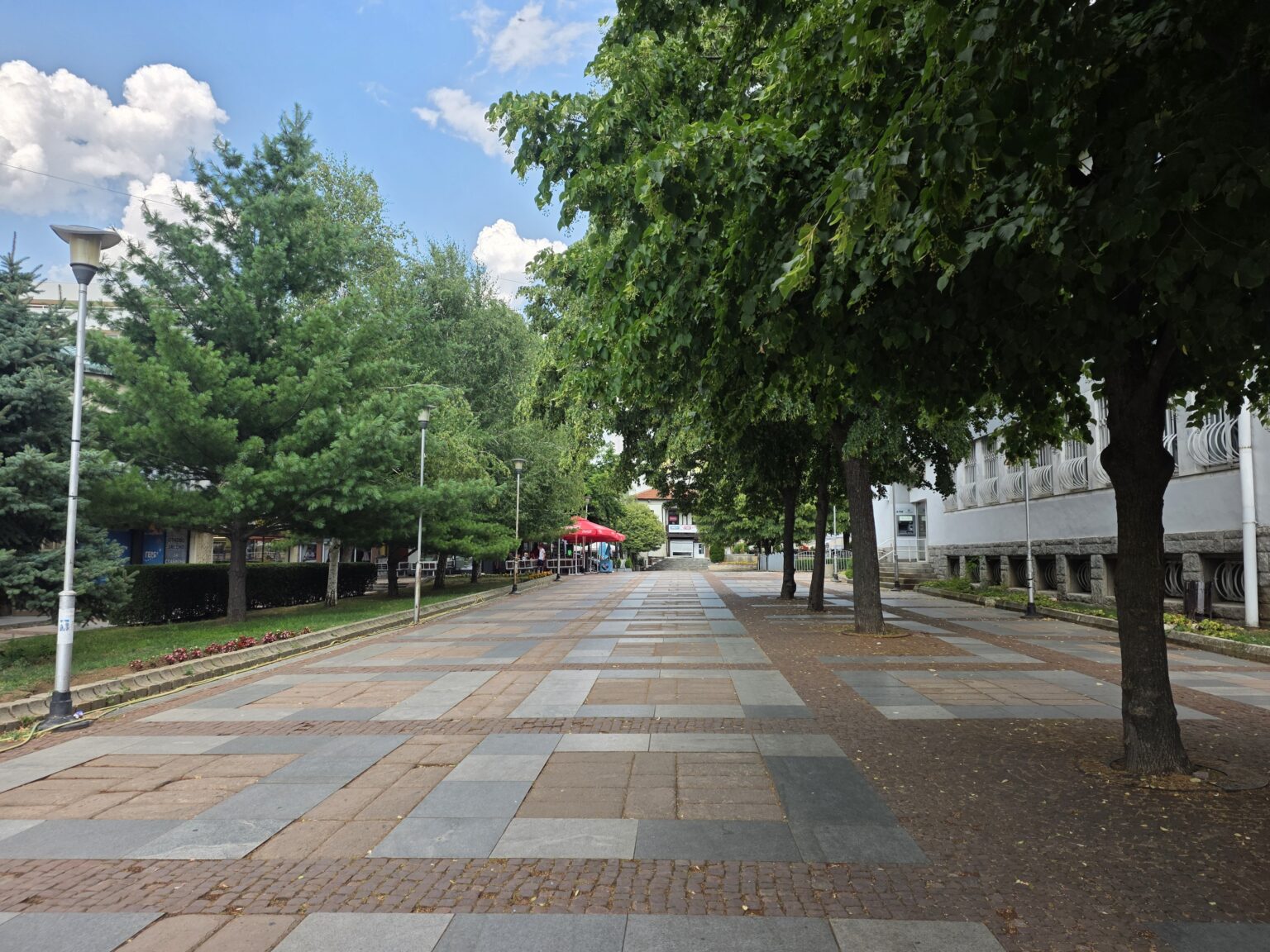
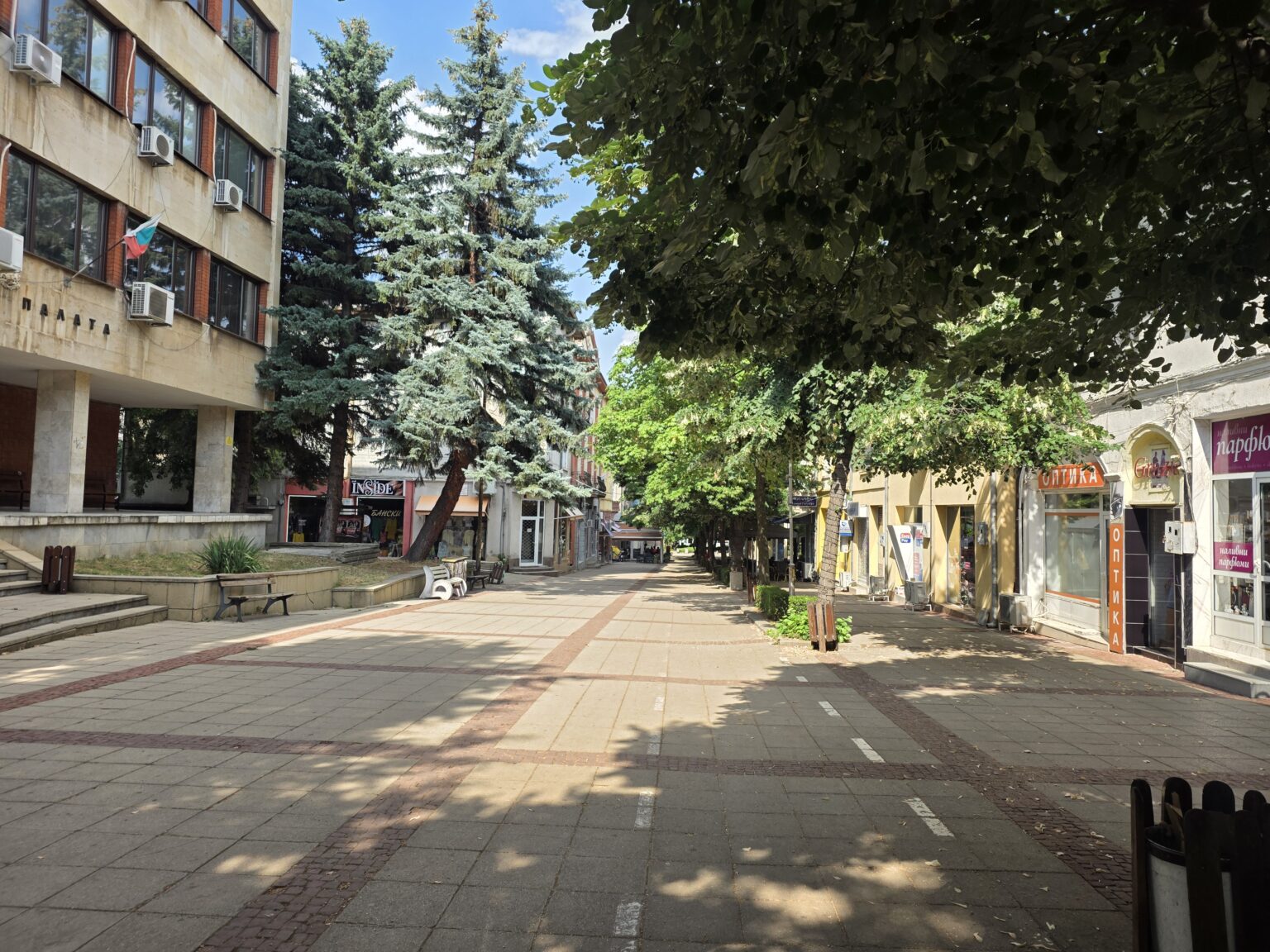
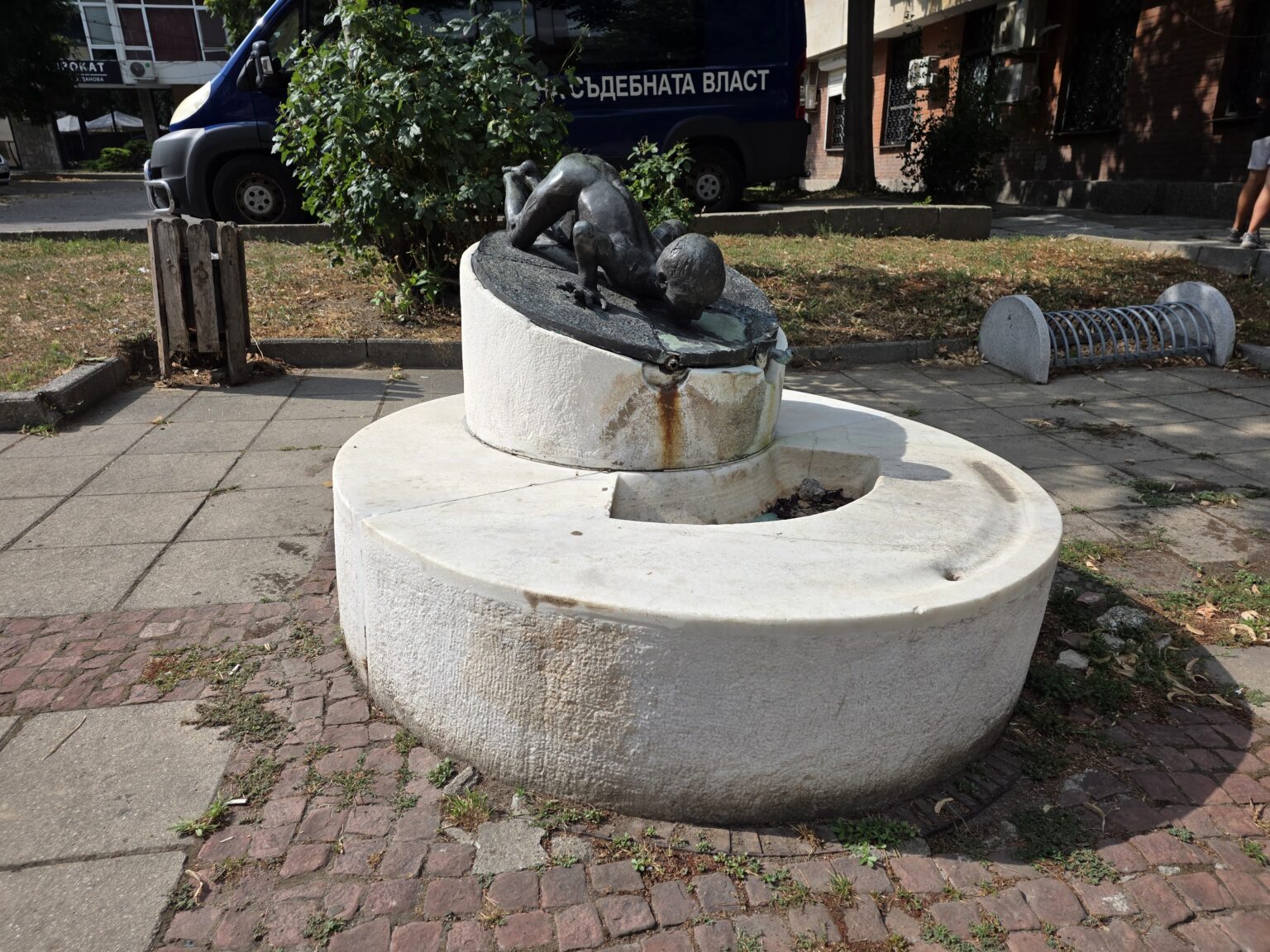
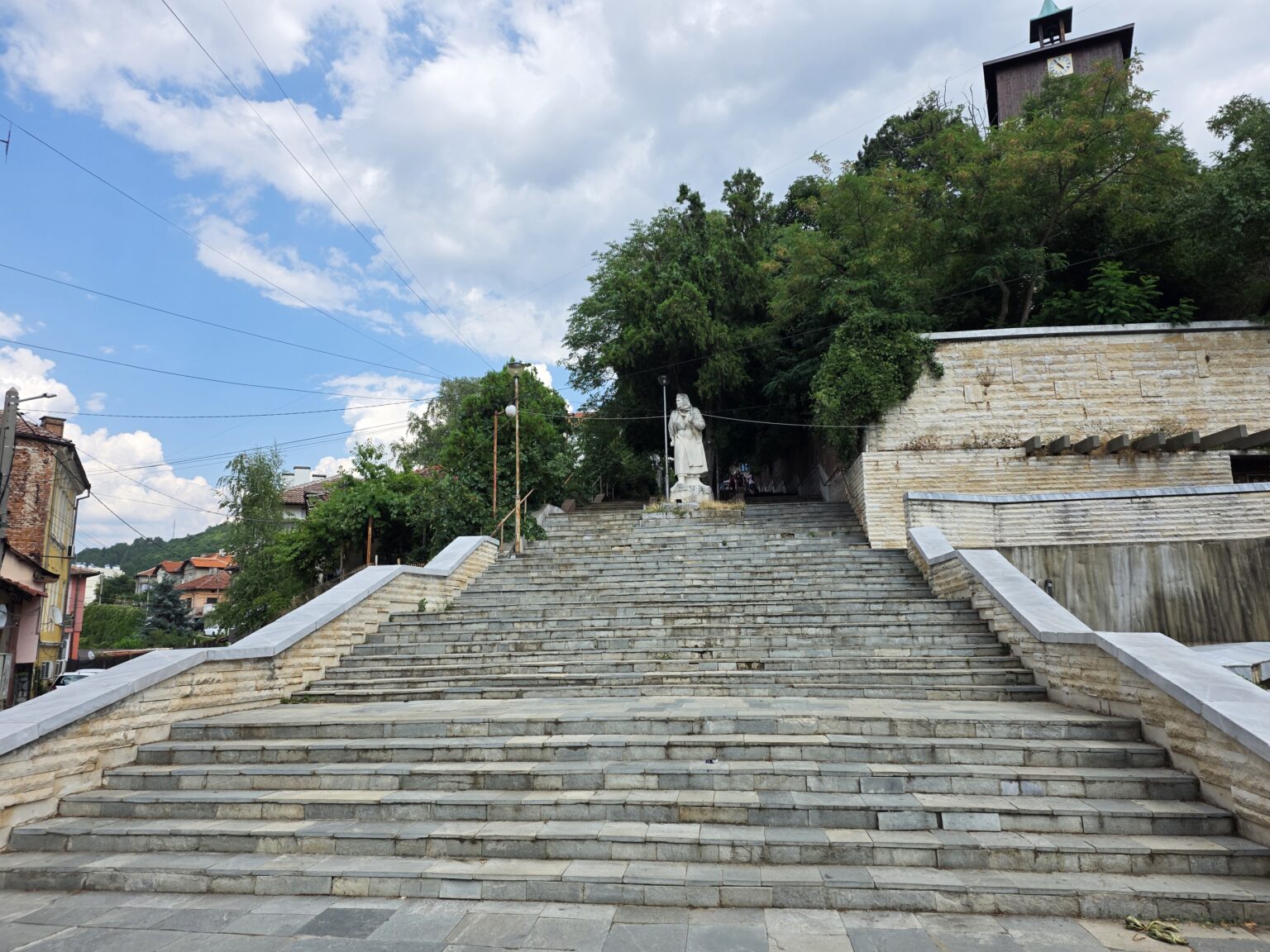
At its centre Dupnitsa is a working town rather than a tourist one, and it does not pretend otherwise. The restored Mosque and Okoliyska House ensemble and the old core around it can be walked in an hour. The real reason to stop, though, lies east of the centre in the park, and further up along the river.
Rila Park and its thirty-eight bridges
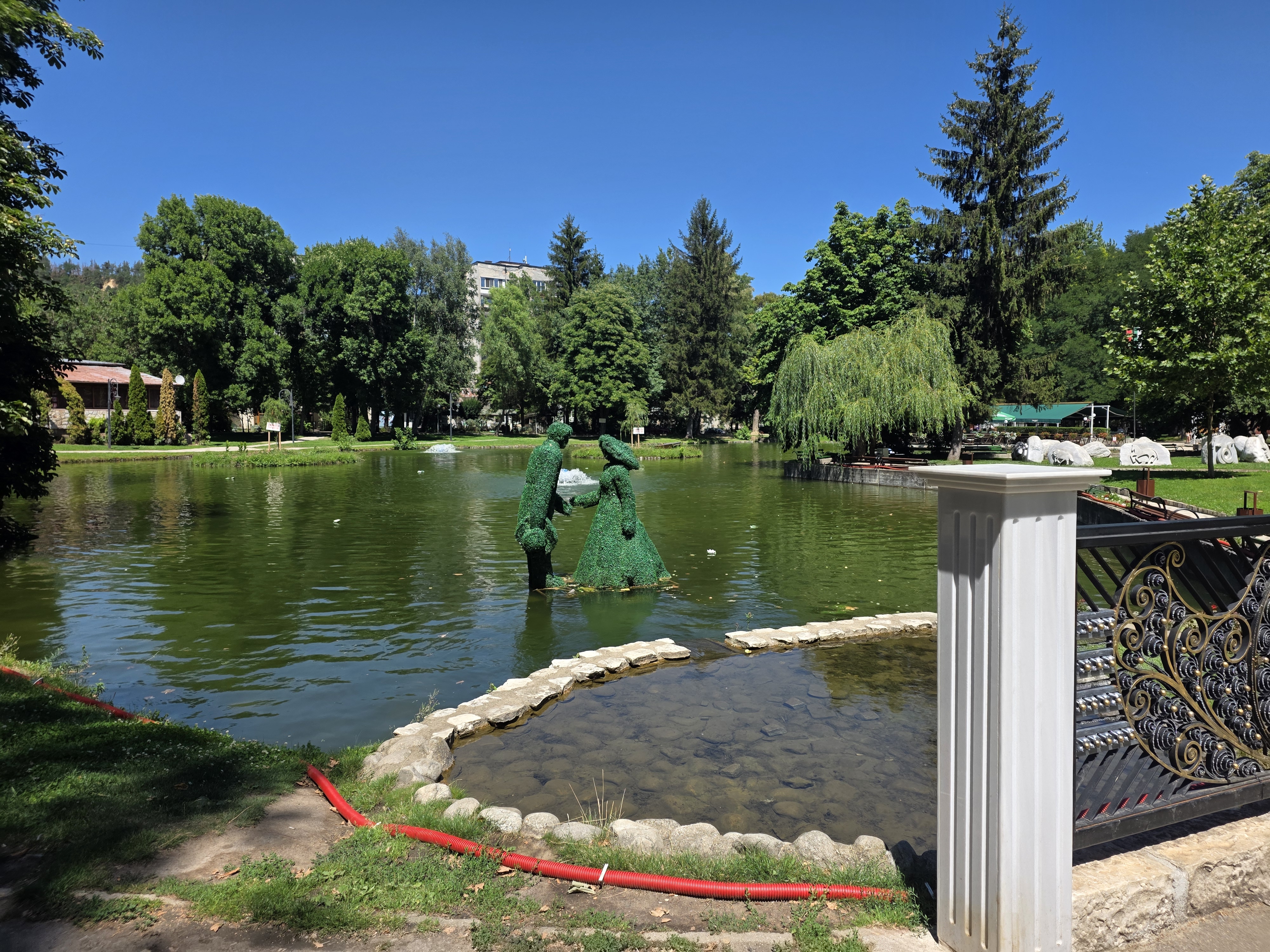
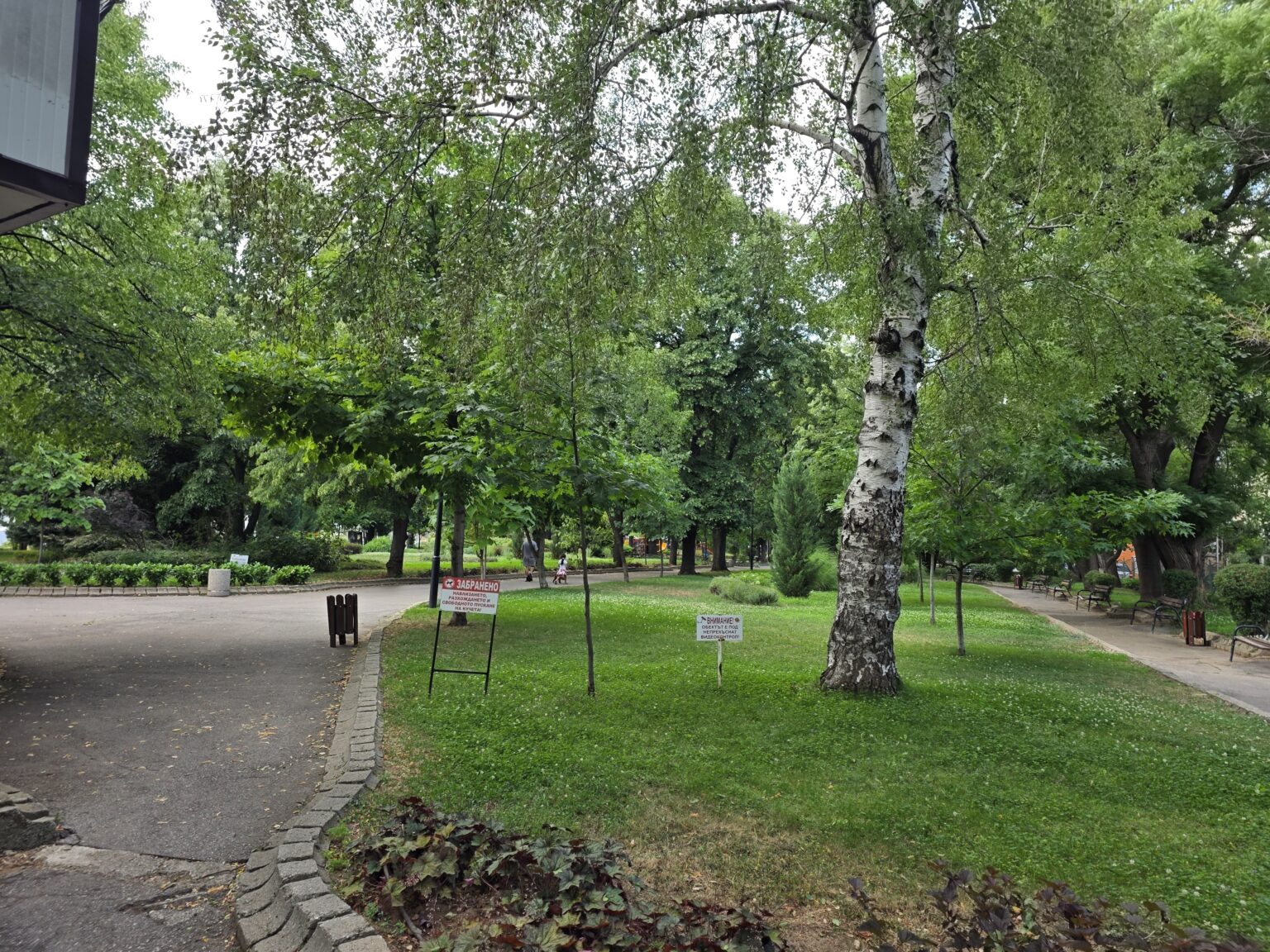
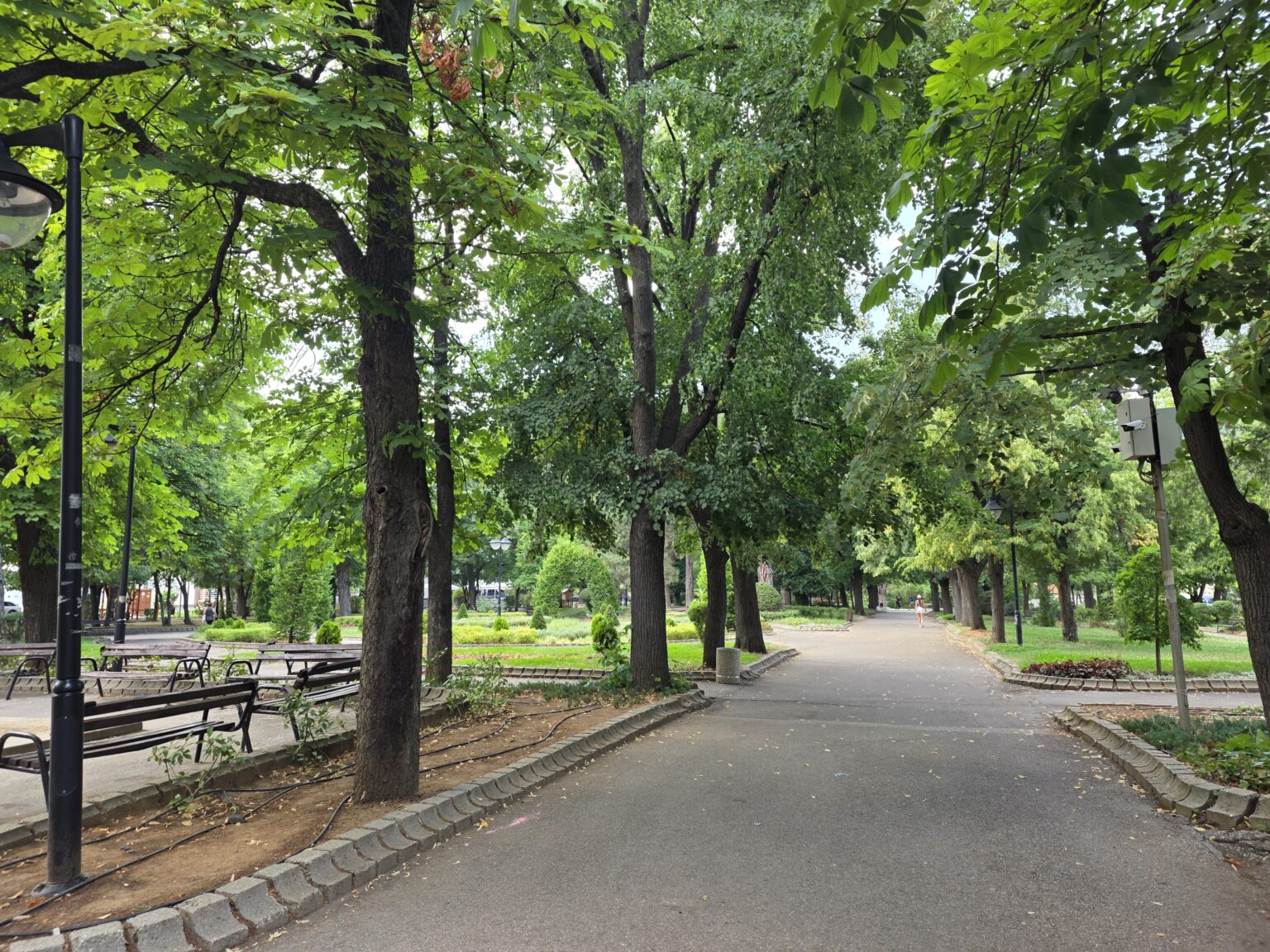
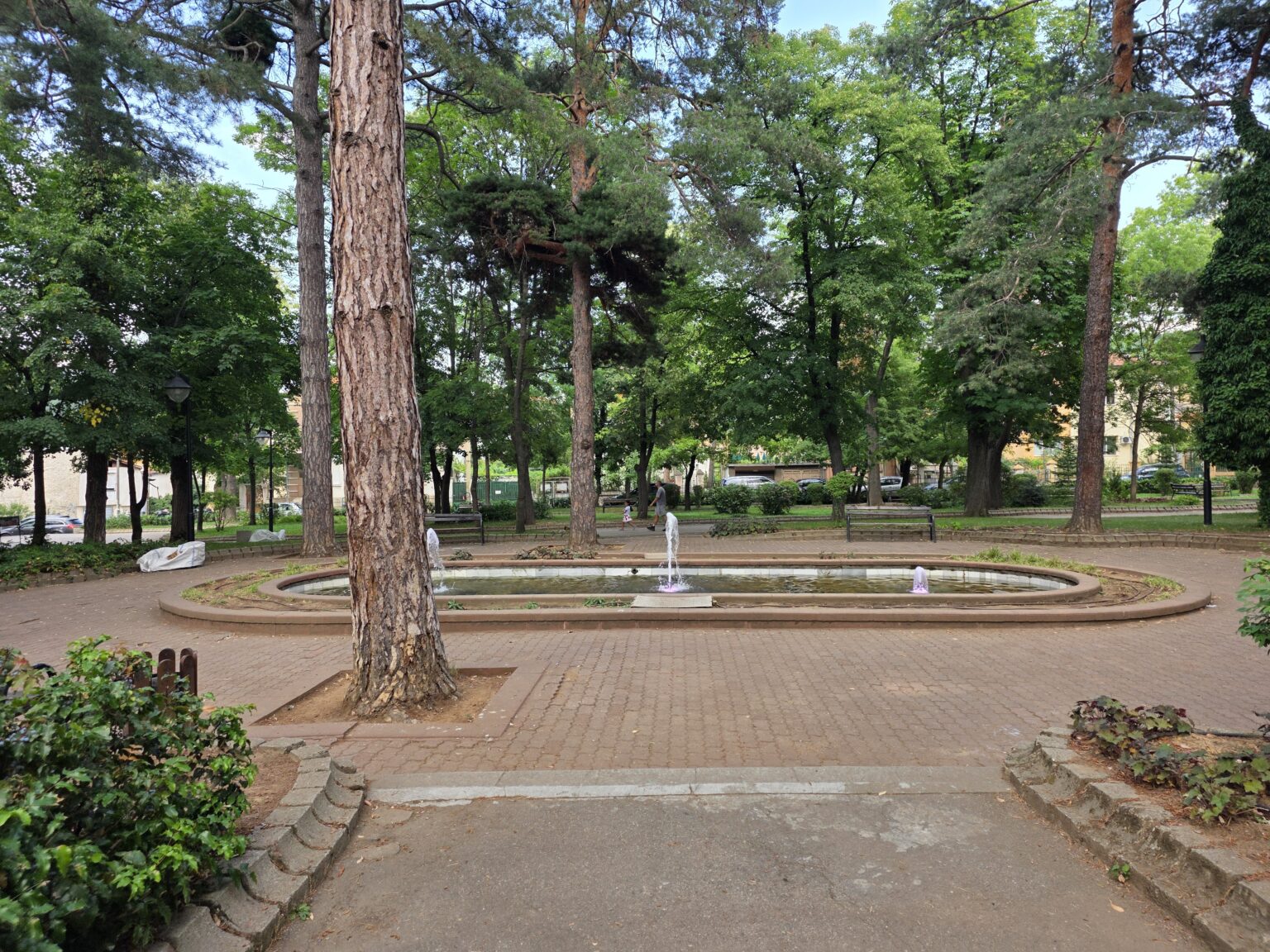
On the eastern edge of town, between the ZhK and Bistritsa neighbourhoods, lies Rila Park — renovated and reopened in 2010. It covers 280 decares, about 28 hectares, runs two kilometres end to end, and holds eight kilometres of stone-paved alleys plus a dedicated cycle track. Cars are not allowed inside; there is a car park at the entrance and everything beyond it is on foot or by bike. From the town centre it is roughly 1.5 km, a twenty-minute walk.
The Bistritsa river runs through the middle of the park and the alleys cross it thirty-eight times. That is the detail that makes the place unusual: thirty-eight bridges over a single mountain river inside one park. On the ground it feels like a sequence of small crossings; from above the layout reads as a long green ribbon stitched across the water. The river is fast and cold even in mid-August, fed directly by snowmelt from Rila.
Upstream: the village of Bistritsa
A few kilometres above the town, on the north-western slopes of Rila, is the village of Bistritsa — exactly where the asphalt gives way to forest track. The Samokovishte eco-trail starts in the village centre, by the Ascension church. Half an hour up, a wooden shelter at a spot called Sofradzhik opens a panorama back over the village and Dupnitsa; another hour brings you to the Bistritsa waterfall, and higher still the path passes moss-covered moraine boulders left behind by glaciers. The same village is the start of the long classic crossing over the mountain via the Ivan Vazov hut to the Rila Monastery.
One clarification saves confusion here. The river in Rila Park and the river in Bachinovo Park near Blagoevgrad carry the same name but are not the same water: the Dupnitsa Bistritsa and the Blagoevgrad Bistritsa come down opposite sides of Rila and never meet. The village stands on the first of them.
Beyond the town itself
Dupnitsa works both as a base and as a stop in its own right. The Rila Monastery is under an hour’s drive east, Sapareva Banya with its geyser and the Seven Rila Lakes lift are a similar distance north-east, and Kyustendil lies about 35 kilometres west — the town of mineral springs and orchards is the natural continuation of this route.
The best months are late spring, when the Bistritsa runs high, and October, when the woodland in the park turns. Summer in the valley is hot and haze softens the views towards Rila; the park itself stays cool under the tree cover and beside the water.
Related video: watch The Struma Valley From Above from the Bulgaria From Above series — Kyustendil, Blagoevgrad and Dupnitsa in 4K 60FPS.