
A souvenir is at its best when it is more than something bought in a hurry. It carries a smell, a texture or a small story from the trip. These five Bulgarian souvenirs are useful, beautiful or delicious — and each offers a little piece of local culture. If you want to taste more of Bulgaria, our guide to traditional foods and drinks is a good companion.
Choose something you will actually use or share. The best souvenir is the one that brings the journey back for a moment. A general rule that will save you money: almost everything on this list is cheaper and better outside the airport and outside the main tourist streets, and two of the five have convincing fakes on the shelves.
Before the list, watch the video:
Full video on YouTube: Top 5 Bulgarian Souvenirs to Bring Home — the timecodes below jump straight to each one.
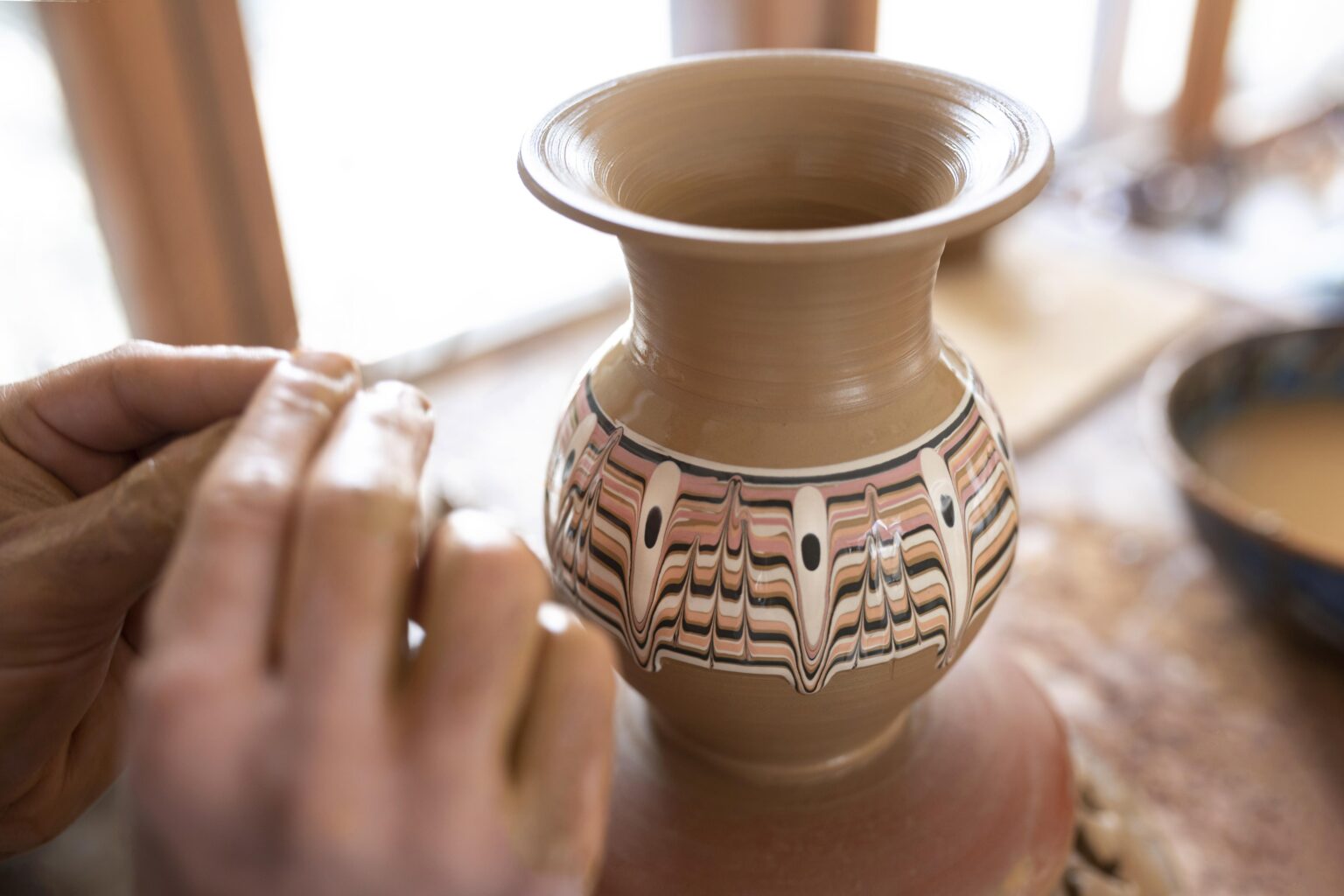
#5 — Traditional pottery ▶ 0:40
📍 Troyan, the Etar complex, craft fairs · ✈️ heavy and fragile — checked luggage, wrapped properly · 💡 buy from the workshop, not the airport
The style most people recognise is Troyan ceramics: earthenware with a dripped, marbled glaze in which the colours run into one another, so no two pieces come out the same. The tradition is centuries old and the technique is still done by hand on the wheel.
Buy something you will use — a coffee cup, a bowl, a small jug — rather than a decorative plate that will end up in a cupboard. The best prices and the widest choice are in the workshops themselves in Troyan or at the Etar open-air museum near Gabrovo, where you can watch the piece being thrown before you buy it.
#4 — Bulgarian spices ▶ 1:16
📍 any market or grocery shop · ✈️ light, cheap, no restrictions · 💡 the best-value souvenir on this list
Two things to bring back. Chubritsa is summer savory, the dominant herb in Bulgarian cooking — it goes into beans, stews, grilled meat and anything else that needs a savoury edge. The Rhodope variety, called merudiya locally, is stronger and more aromatic.
The other is sharena sol, literally “colourful salt”: a blend of salt, chubritsa, fenugreek and paprika that Bulgarians sprinkle on buttered bread, on tomatoes and on almost everything else. Buy both from a market stall rather than a souvenir shop — the same bag costs a fraction of the price and is fresher.
#3 — Traditional textiles ▶ 1:41
📍 Chiprovtsi, Rhodope villages, craft markets · ✈️ light and unbreakable, easy to pack · 💡 check whether it is handwoven or printed
The flat-woven kilims of Chiprovtsi, in the northwest, are the most significant textile tradition in the country — the craft is on the UNESCO list of intangible cultural heritage, and the geometric patterns each carry names and meanings. A full carpet is a serious purchase; a small runner or cushion cover is not.
Embroidery, or shevitsi, is the other option, with patterns that differ from region to region and were once read like a signature. Be aware that much of what is sold on tourist streets is machine-printed imitation. Ask, look at the reverse side, and buy at a craft fair or directly in a weaving village if you want the real thing.
#2 — Rakia ▶ 2:24
📍 any shop; distilleries for the good stuff · ✈️ checked luggage only, and mind the customs limits · 💡 homemade in an unlabelled bottle can cause trouble at the border
Rakia is the national spirit, distilled from grapes, plums, apricots, pears or quince, and it is what appears on the table when guests arrive. A bottle brings home the hospitality as much as the drink.
Practical warnings. It cannot go in hand luggage, so pack it wrapped in the middle of a case. Customs allowances differ sharply — generous within the EU for personal use, usually one litre of spirits above 22% when flying outside it. And however good the homemade rakia your host gave you is, an unlabelled bottle of unknown strength is exactly what a customs officer will want to discuss. Muscat and plum are the usual recommendations for a first bottle.
#1 — Rose-oil products ▶ 2:59
📍 the Rose Valley — Kazanlak, Karlovo · ✈️ small and light; liquids over 100 ml go in the hold · 💡 real rose oil is sold in grams, not millilitres
Bulgaria is one of the world’s main producers of rose oil, distilled from Rosa damascena grown in the valley between Karlovo and Kazanlak. Genuine oil is one of the most expensive substances in cosmetics — it takes tonnes of petals to make a kilogram — and it is traditionally sold in tiny quantities in a carved wooden muskal.
That price gap is why the label matters. A cheap bottle marked “rose” is almost always rose water or a fragranced cosmetic, not oil; look for Rosa damascena oil named as such rather than “parfum”. Rose water, though, is genuinely useful, affordable and honest about what it is — and rose jam and rose liqueur travel well too.
For more context about the traditions behind these objects, read our fascinating facts about Bulgaria.