Mid-February. That nothing kind of weather that makes planning anything further afield a gamble. It can be -10, it can be +20, nobody really knows. Forecasters are still powerless against the mood swings of a Balkan winter, so the decision to go somewhere gets made in real time. And so, on a morning with perfectly civilised above-zero temperatures, an idea jumped straight off the bucket list. A hundred kilometres. An hour and a half each way, according to the navigation. The ideal spontaneous destination from Sofia. We are off to Bozhenishki Urvich, which sits in the Botevgrad and Pravets area — and Pravets happens to contain a long-standing favourite restaurant, which means there is no way to get this day wrong, whatever we find up there. Off we go!
Quick facts
| Location | Fortress above the village of Bozhenitsa, Botevgrad Municipality |
| From Sofia | ~100 km · about 1 h 30 min by car |
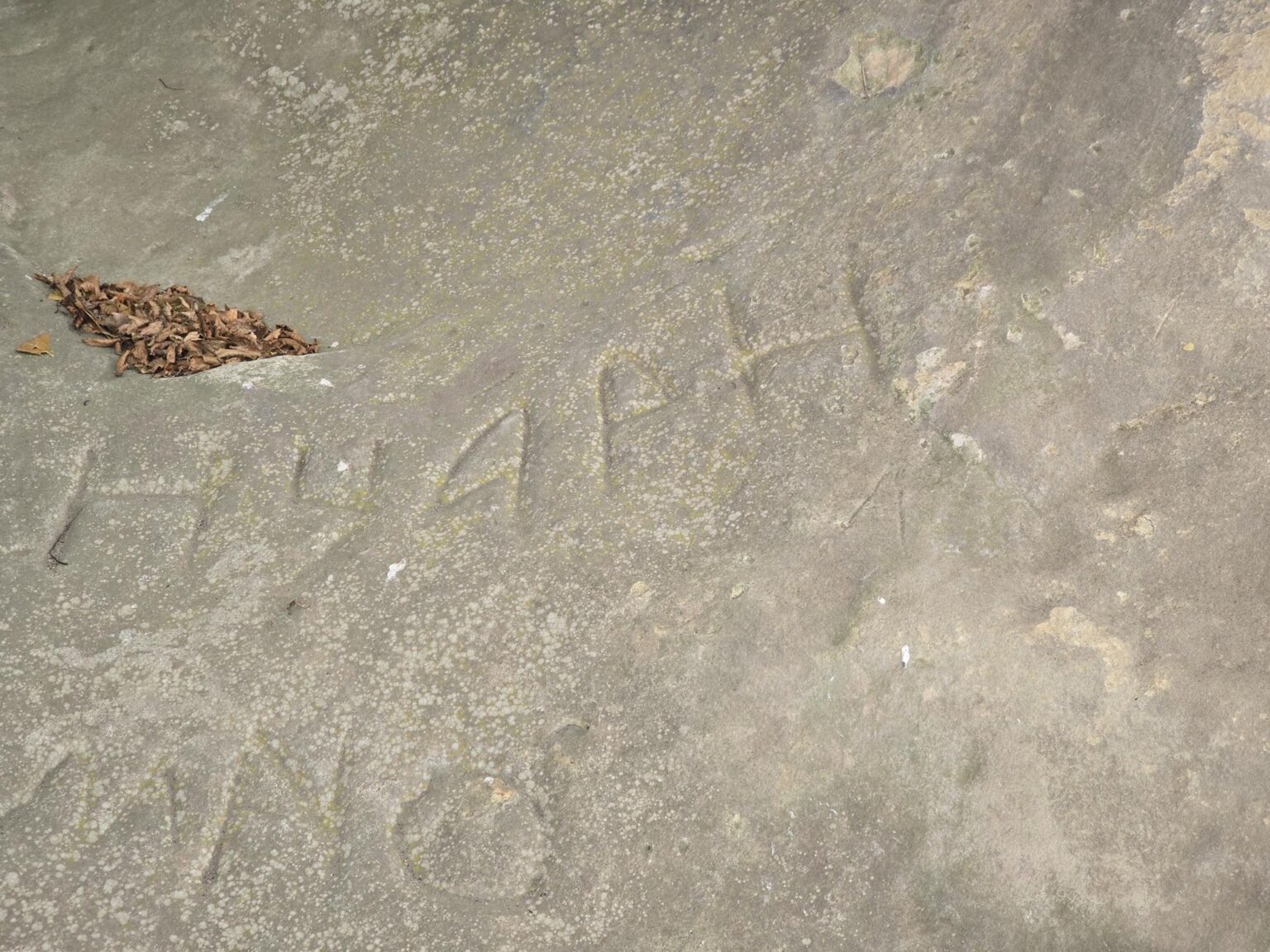
| Climb | ~150 m of ascent packed into ~750 m of trail · no rest stops on the way |
| Time needed | Climb 20–30 min · looking around 30–40 min |
| Total from Sofia | ~2 h 30 min (drive + climb + walk around + descent) |
| Difficulty | Short, but steep · a younger child may find it tiring |
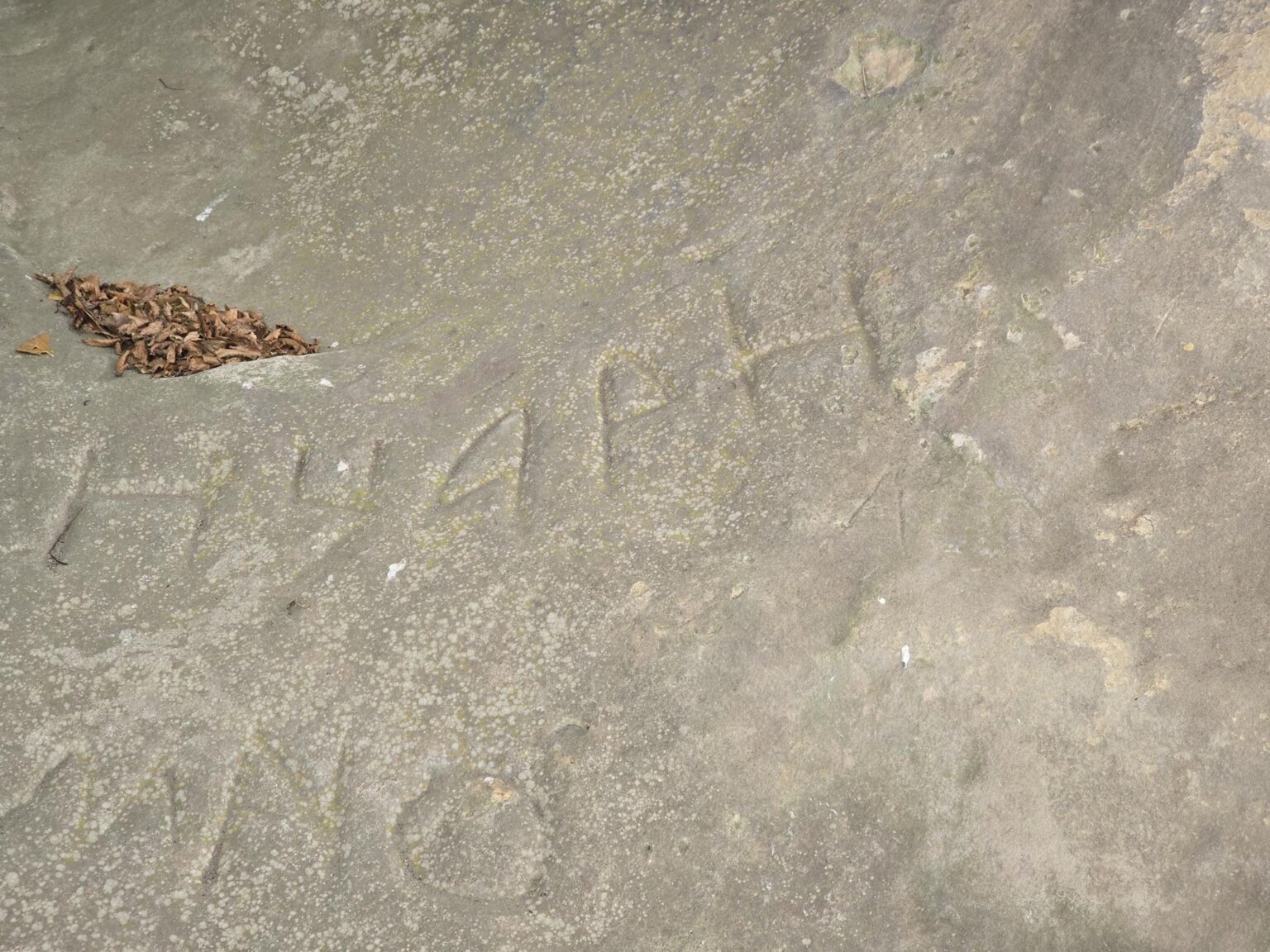
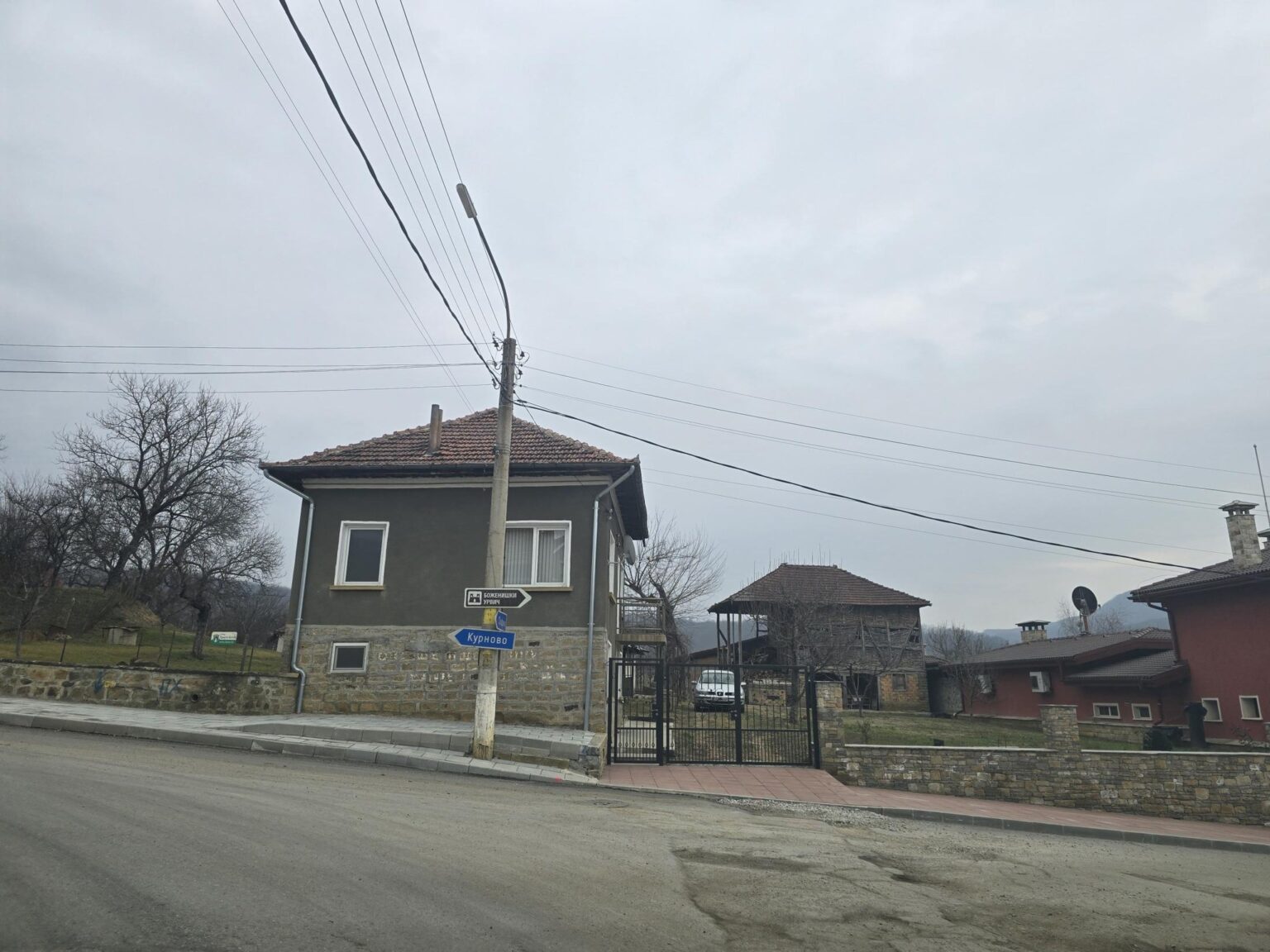
| Highlight | The rock inscription of sevast Ognyan — one of the few surviving Bulgarian inscriptions from the 14th century |
| Entry | Free, open access · no ticket office |
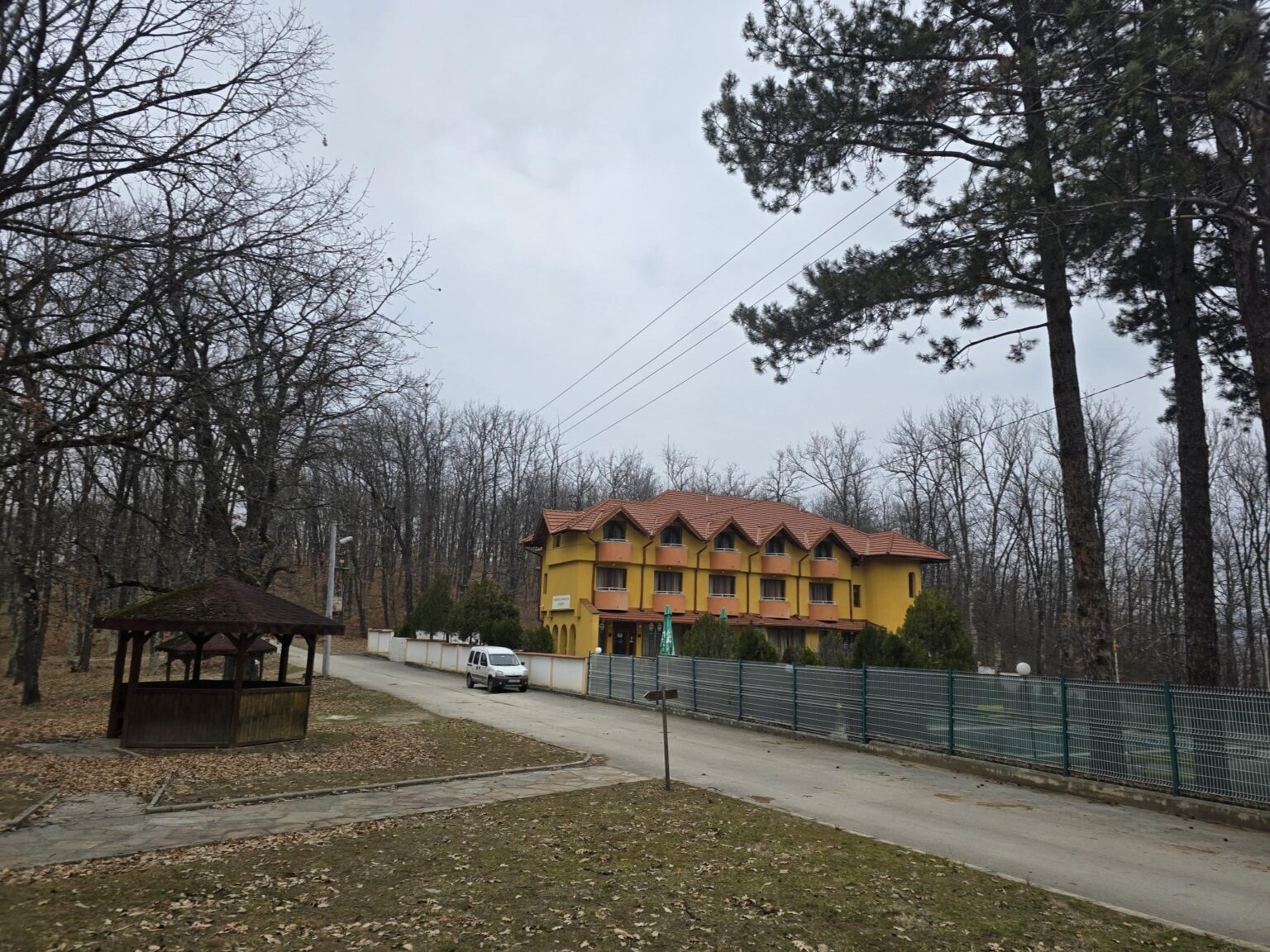
| Parking | At the Urvich municipal holiday base, above the centre of Bozhenitsa |
| Worth knowing | The last ~8 km of road are in poor shape — take it slowly · there is no shelter from the wind at the top |
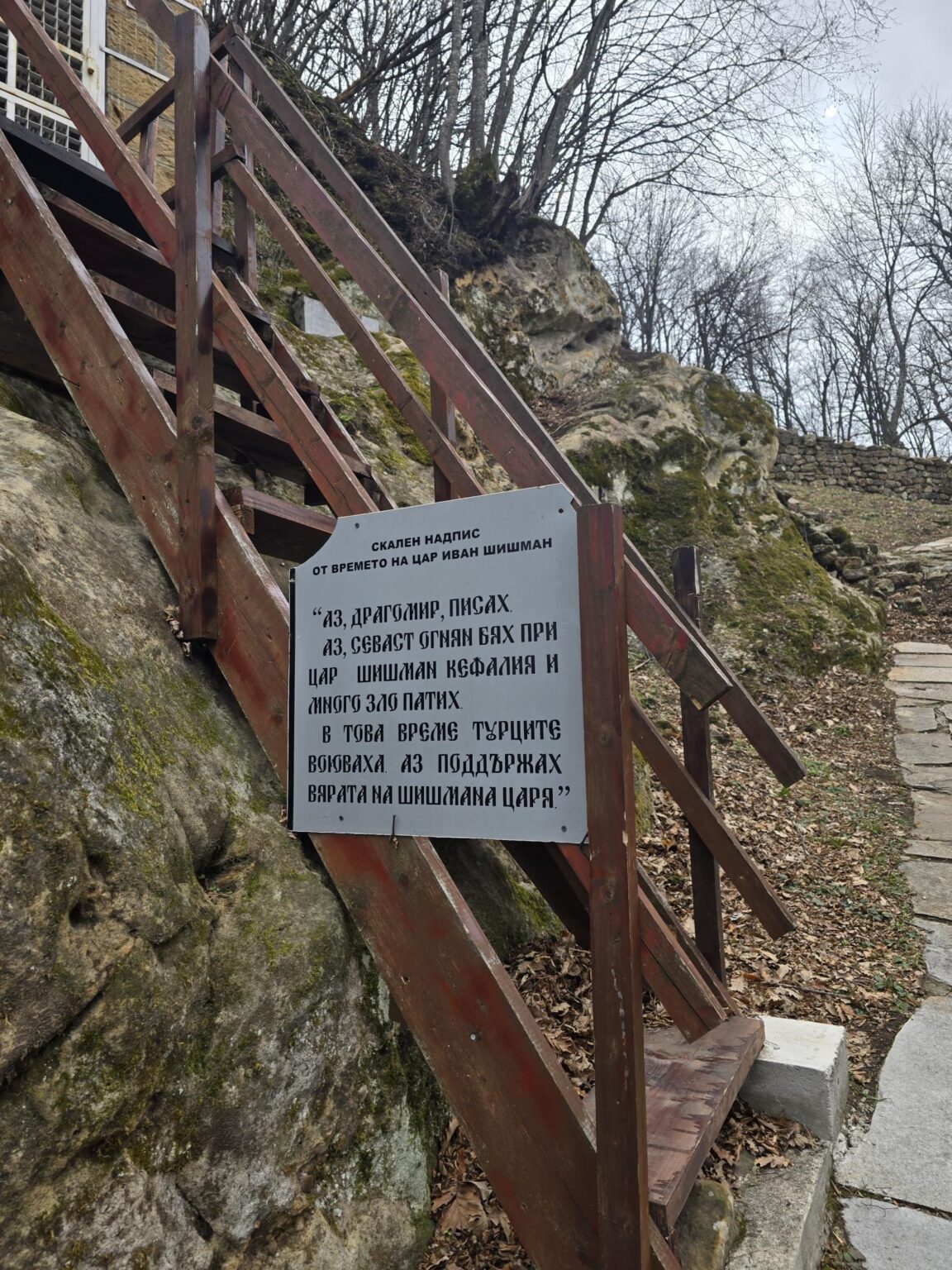
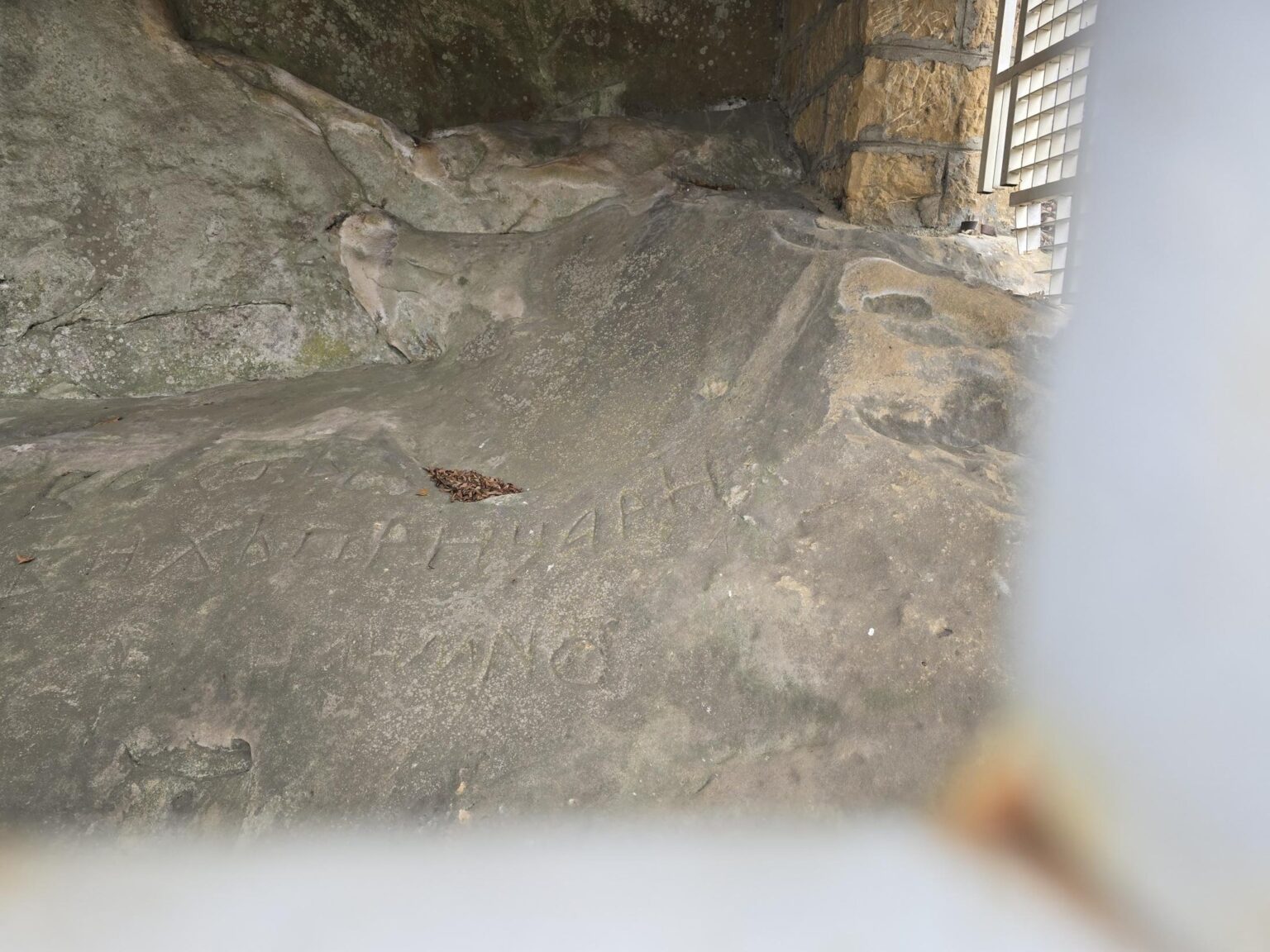
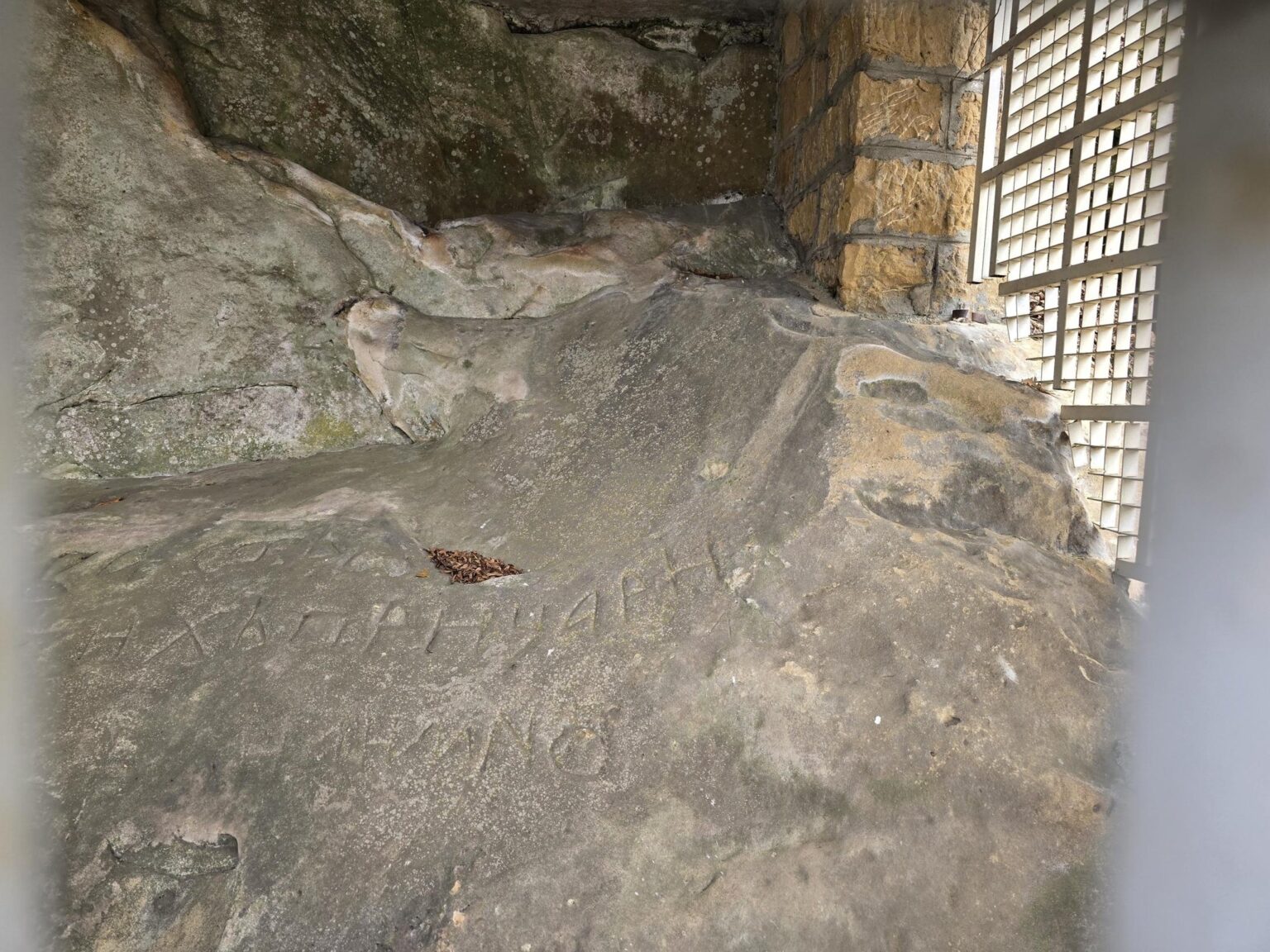
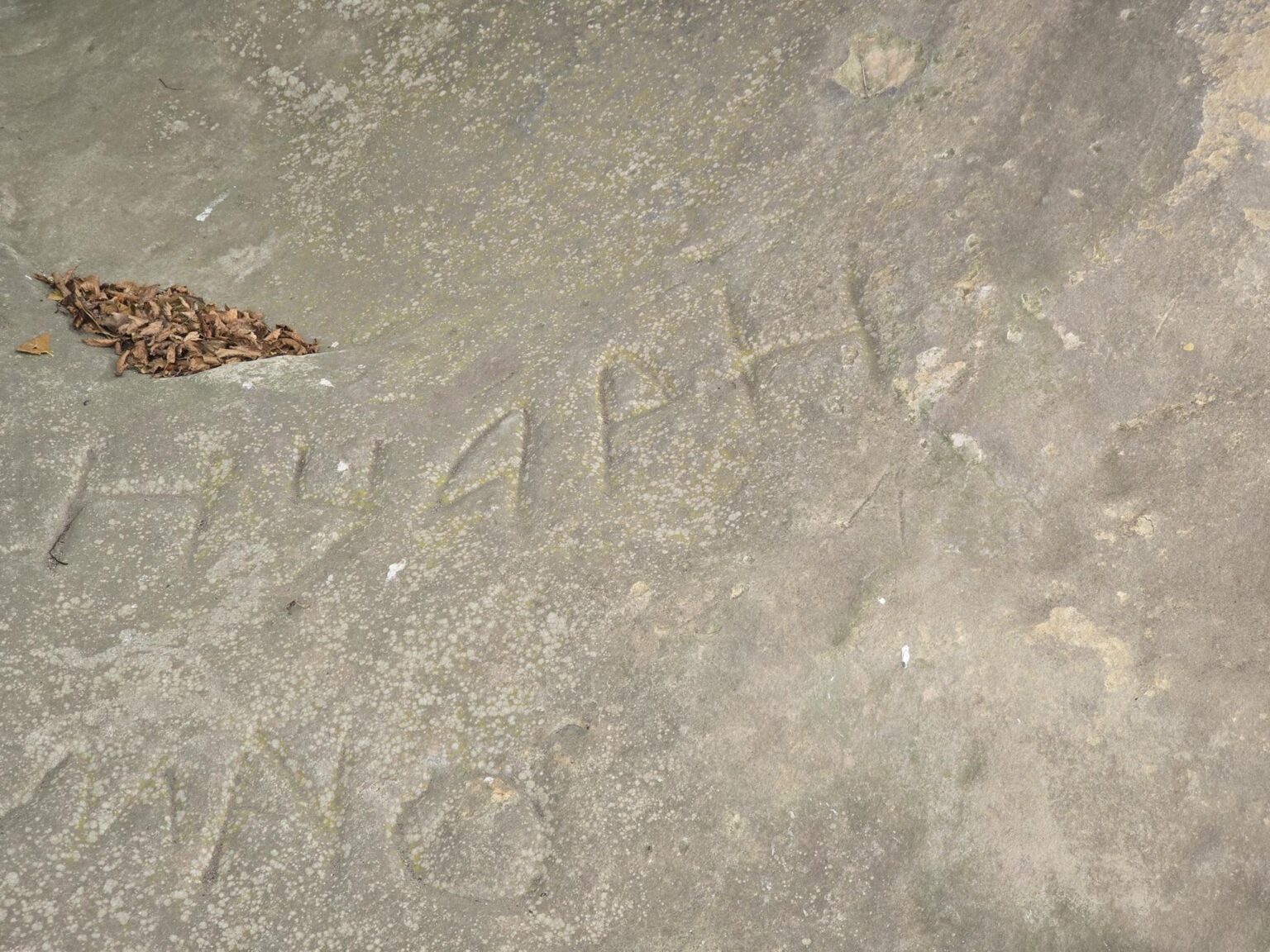
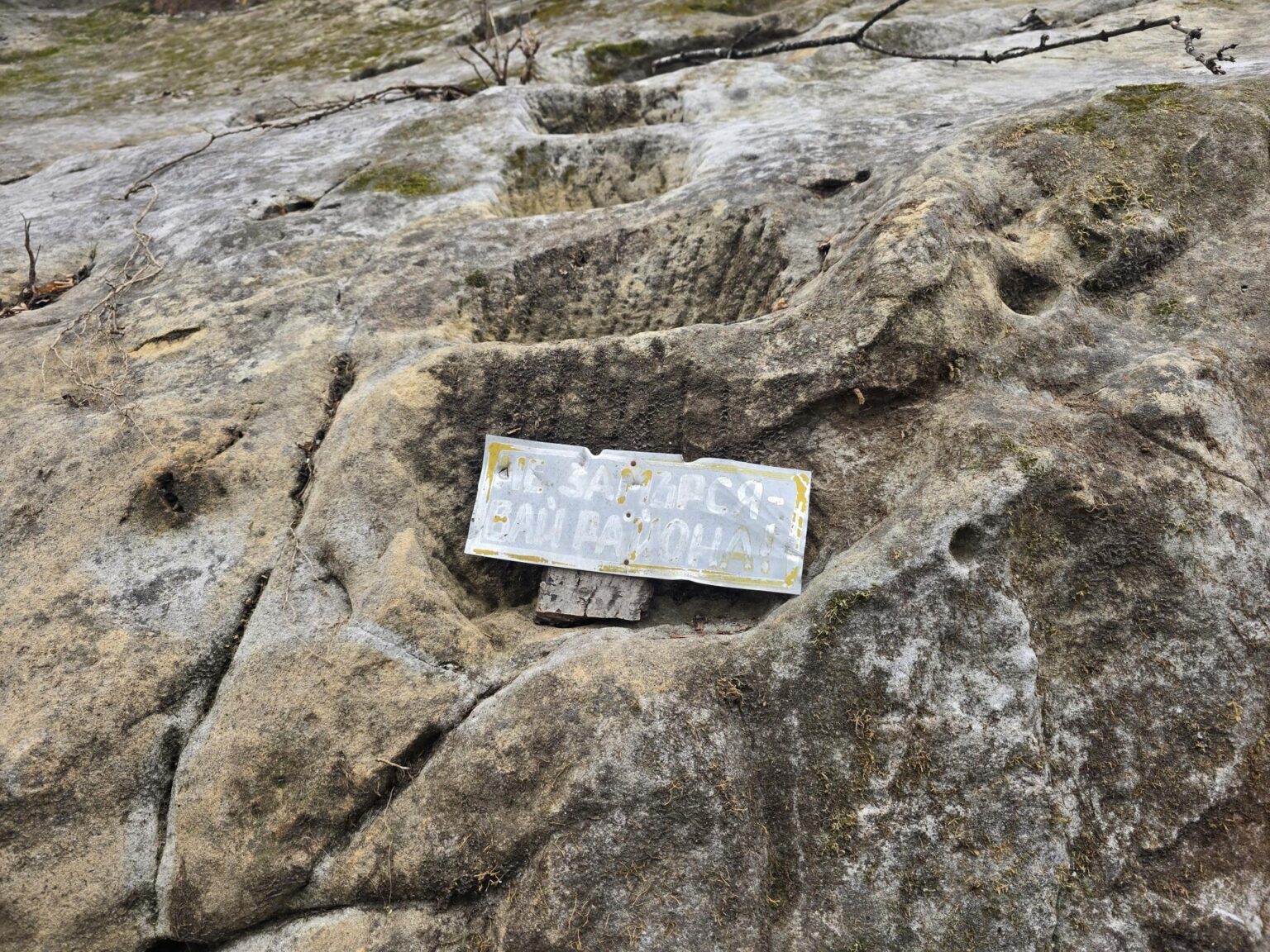
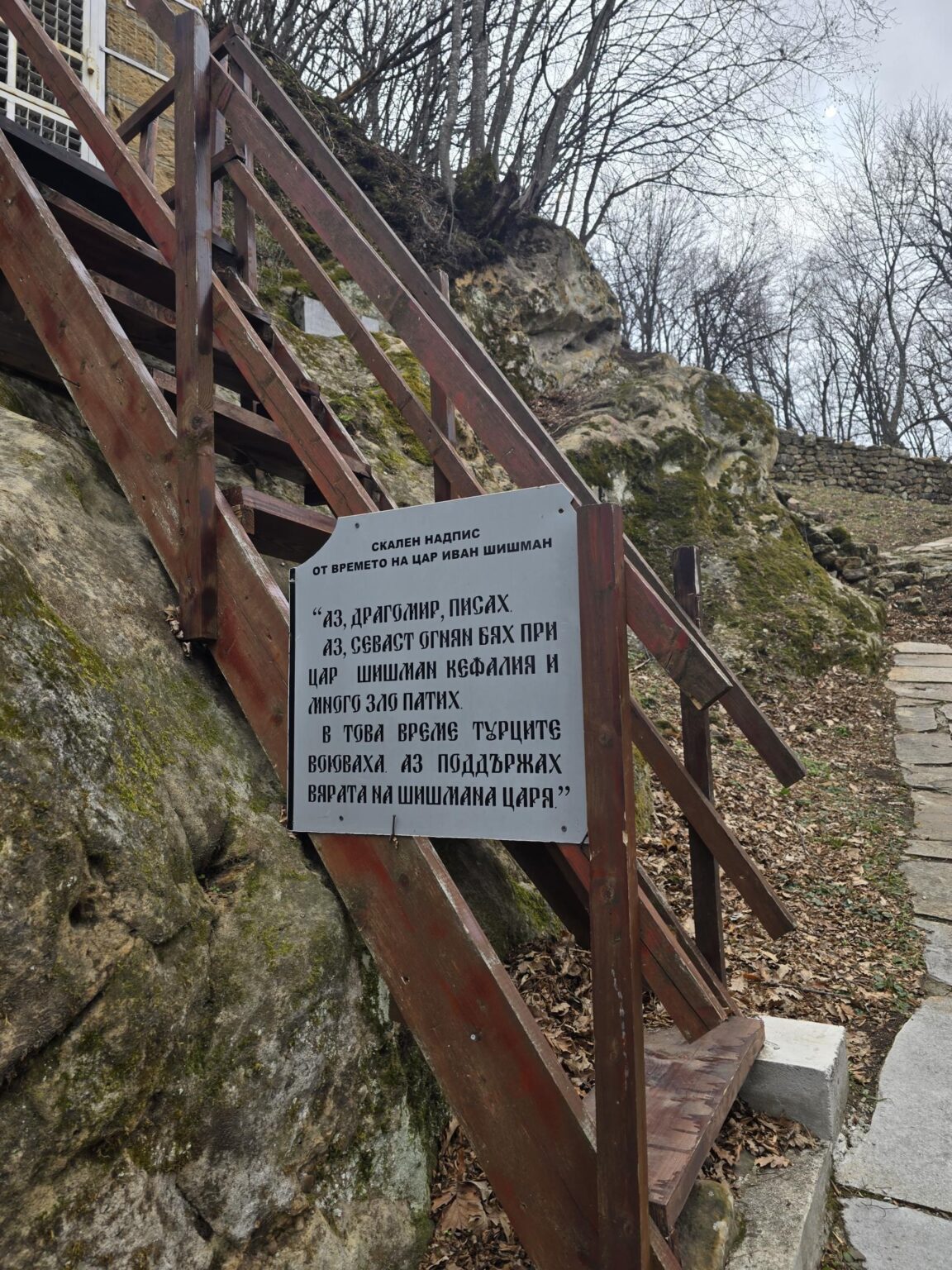
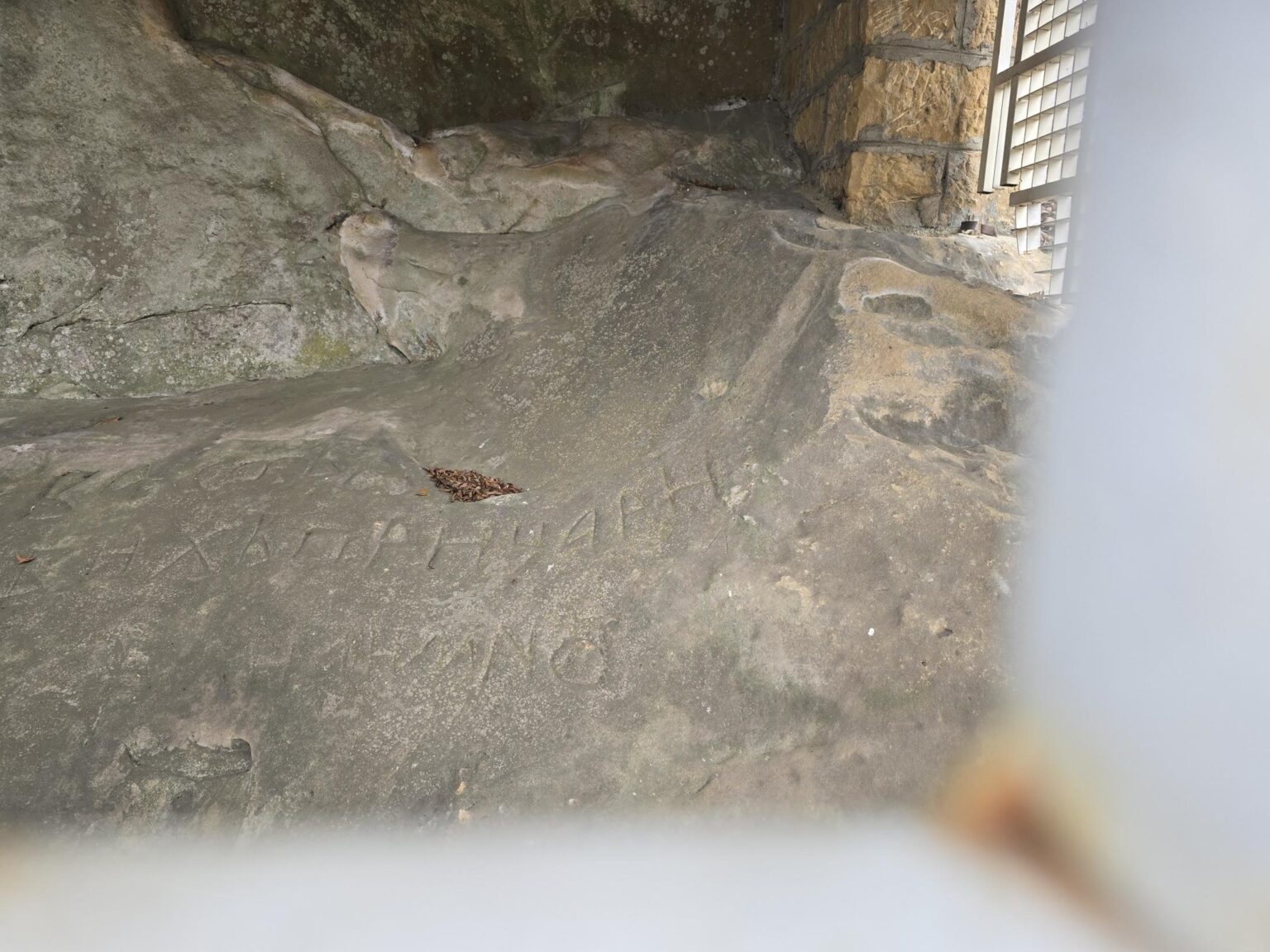
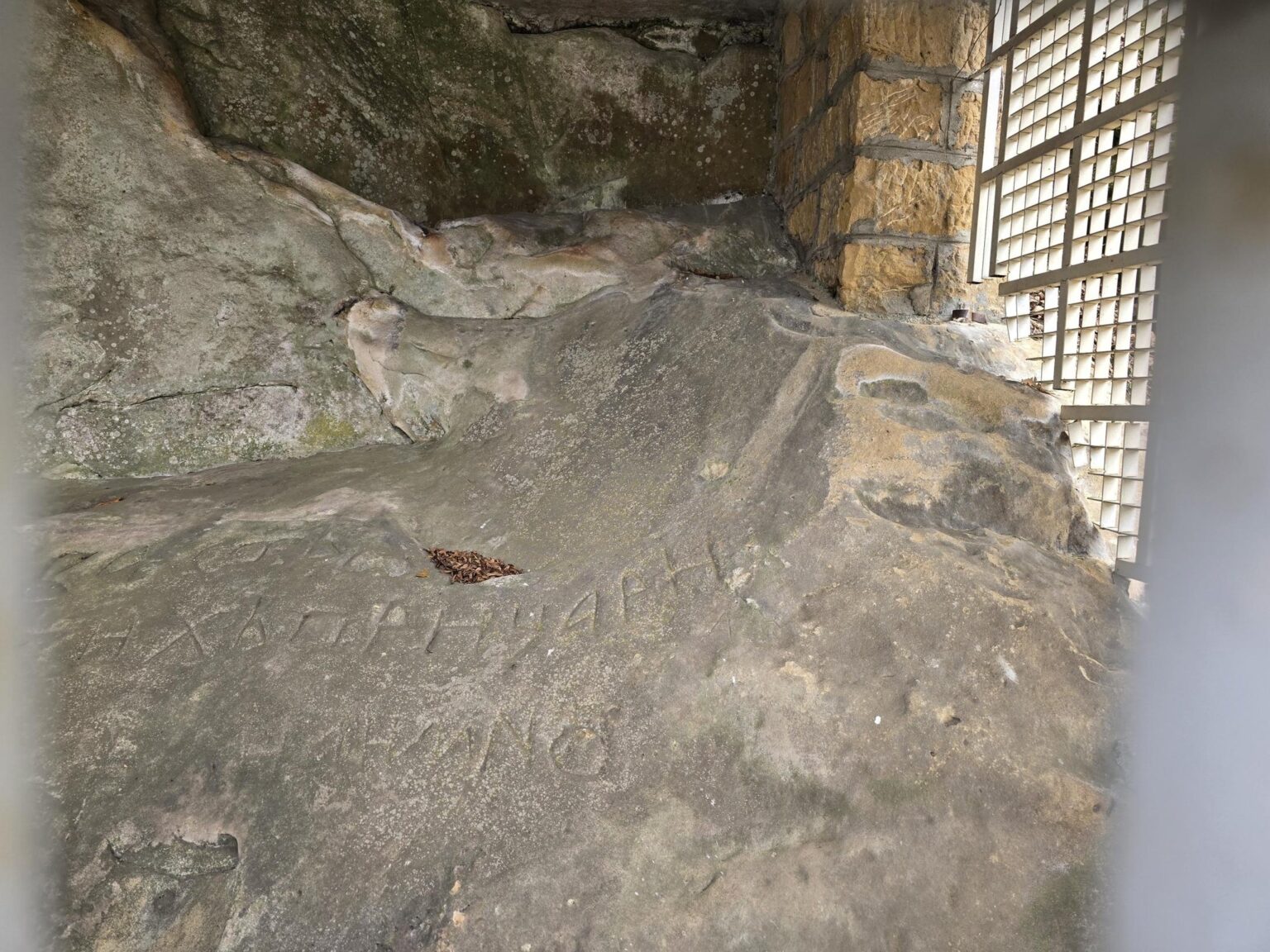
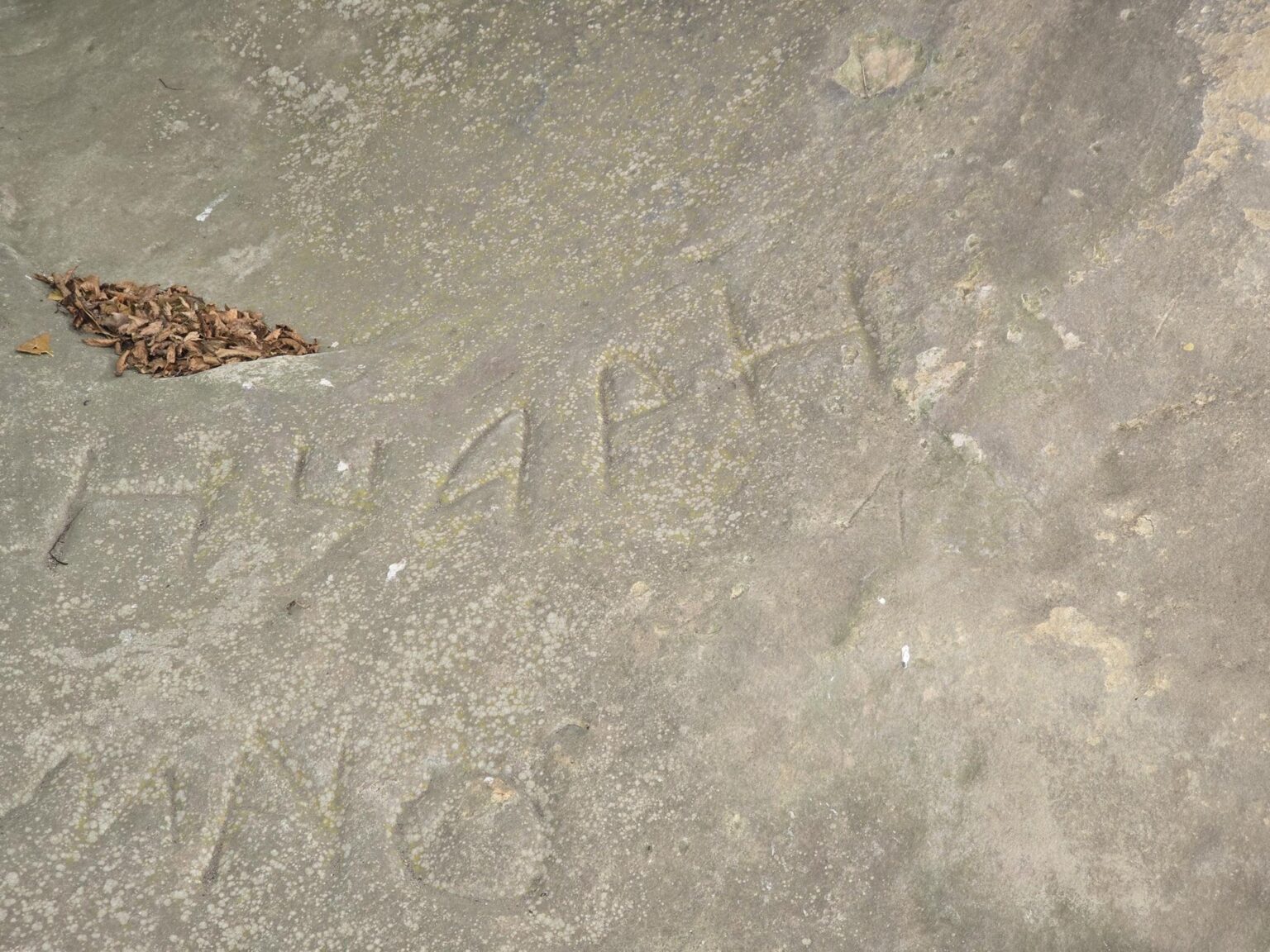
We arrive and find out on the spot that there is more history here than expected, going back as far as the 6th century. The best known artefact is the rock inscription of sevast Ognyan — a local boyar who most likely defended the fortress against the Ottomans. It is one of very few Bulgarian inscriptions from the 14th century that have survived at all. There is not much written about the place online, and there is not much written about it on site either. Wikipedia remains the most useful single source, and it is worth knowing that the inscription only came to light in 1918, discovered among the roots of an old tree brought down by a storm. If you enjoy this sort of thing, the fortress fits neatly alongside the top historical sites in Bulgaria.
In translation, the inscription reads:
I, Dragomir, wrote this. I, sevast Ognyan, was kephale under Tsar Shishman and suffered much evil. In that time the Turks were at war. I kept the faith of Shishman the tsar.
The Bozhenitsa inscription
The road
You set off from Sofia. The final target is here on Google Maps — the Urvich municipal holiday base. Now, the road. The Hemus motorway is, as ever, under repair. What is there left to joke about, really. We all know the running gag by now: humanity will have settled Mars and one lane at Vitinya will still be coned off. It stopped being funny a while ago, so I will just leave that hanging there. The motorway gets repaired, you drive along it more or less, and you reach Botevgrad.
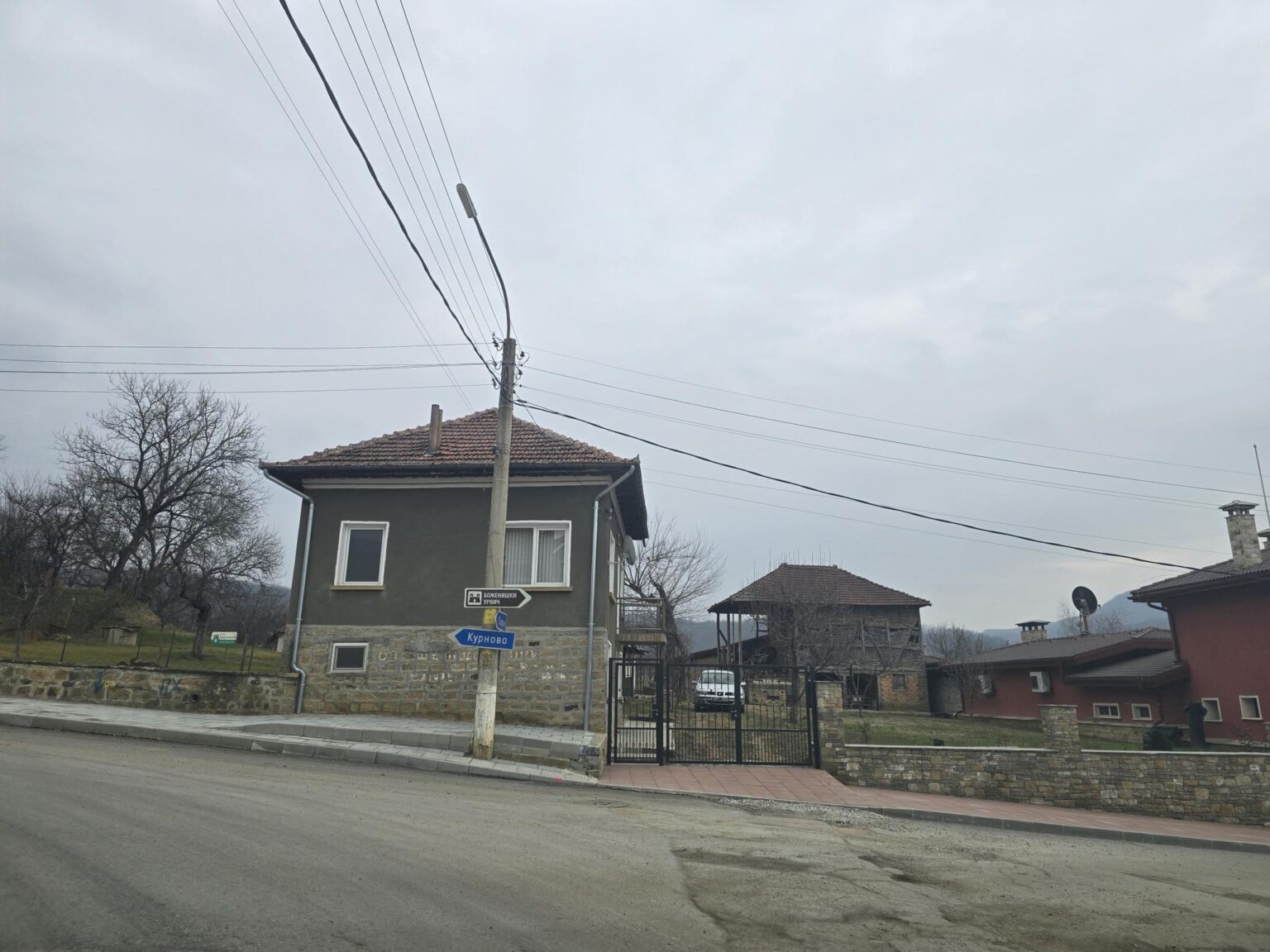
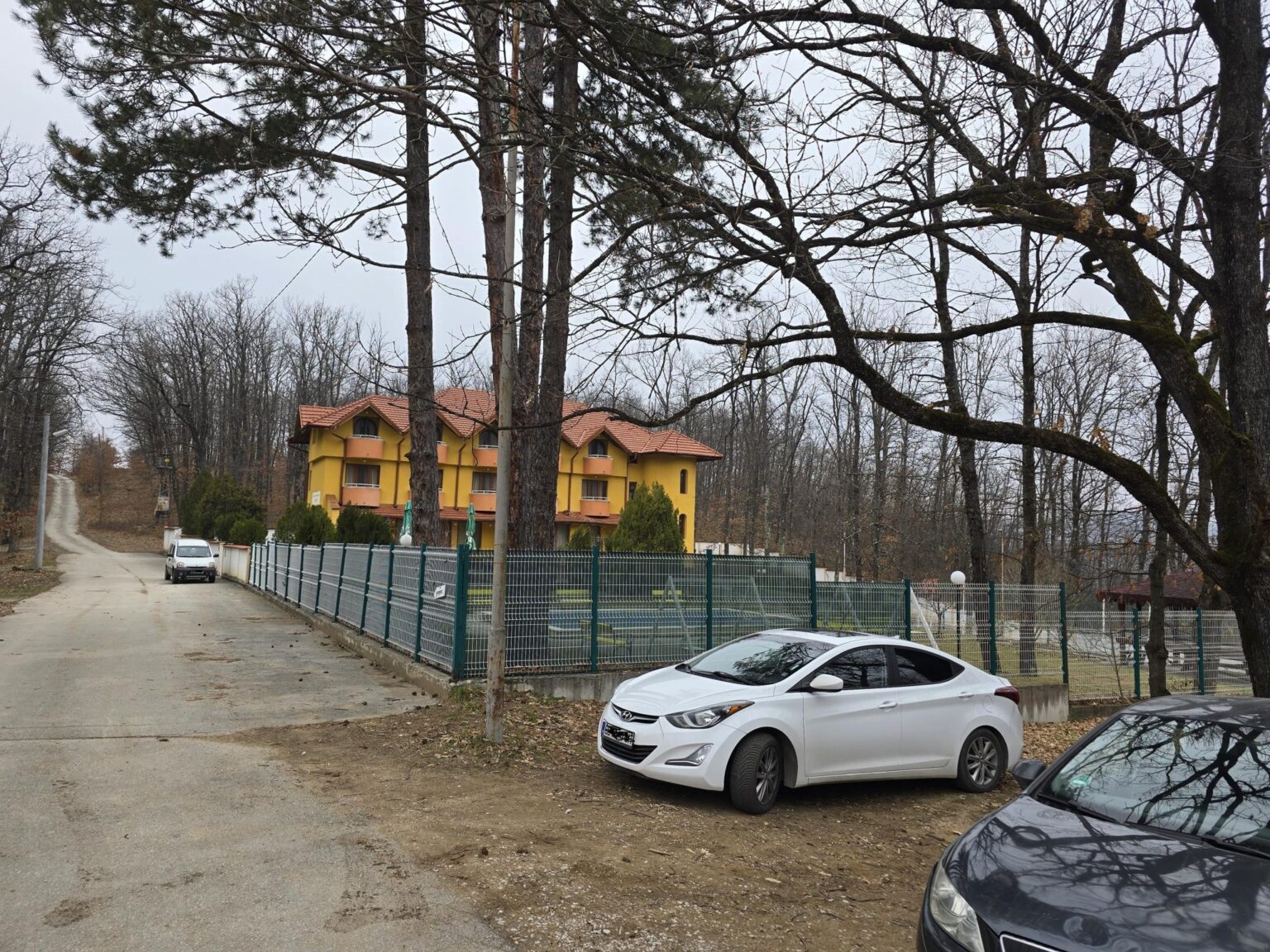
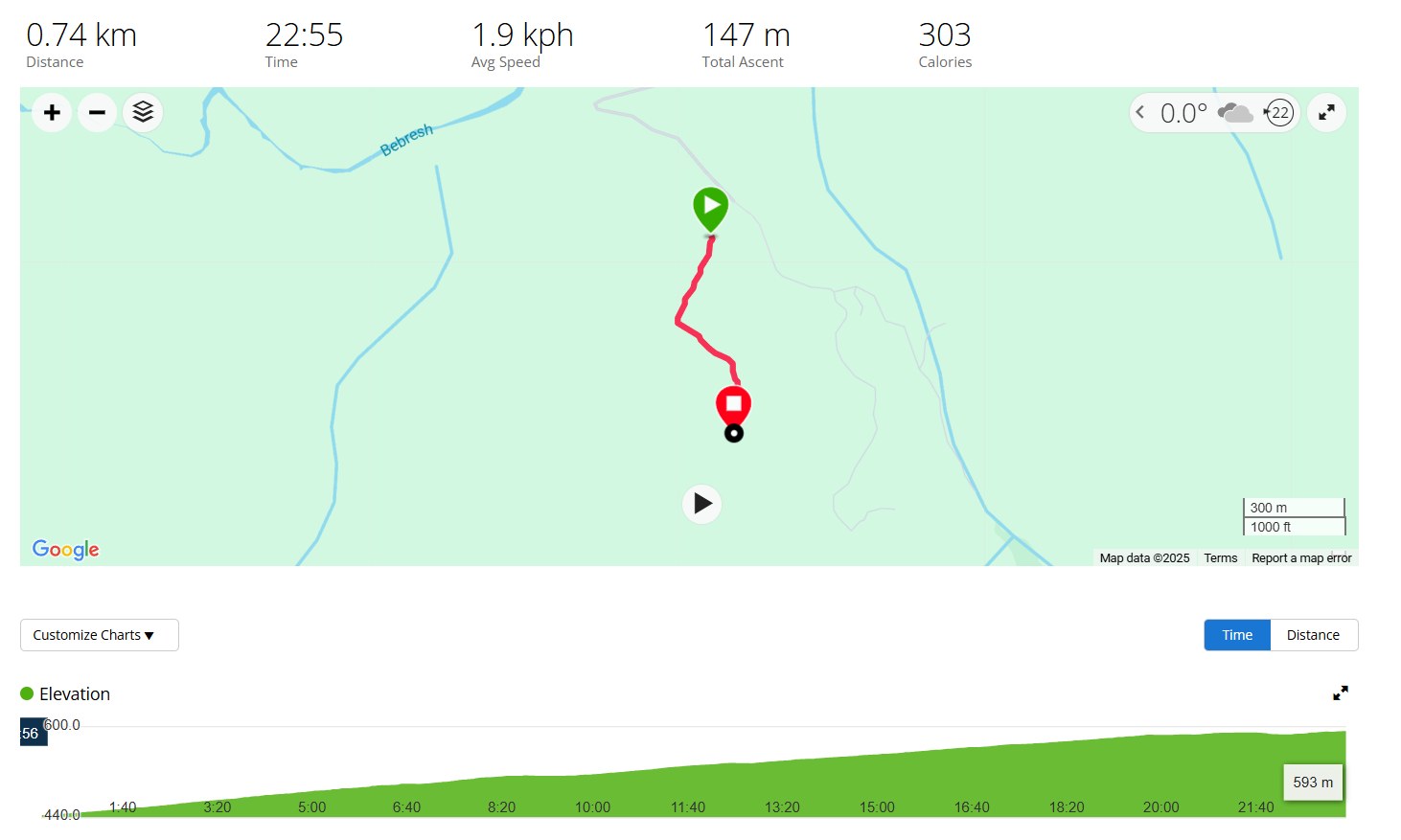
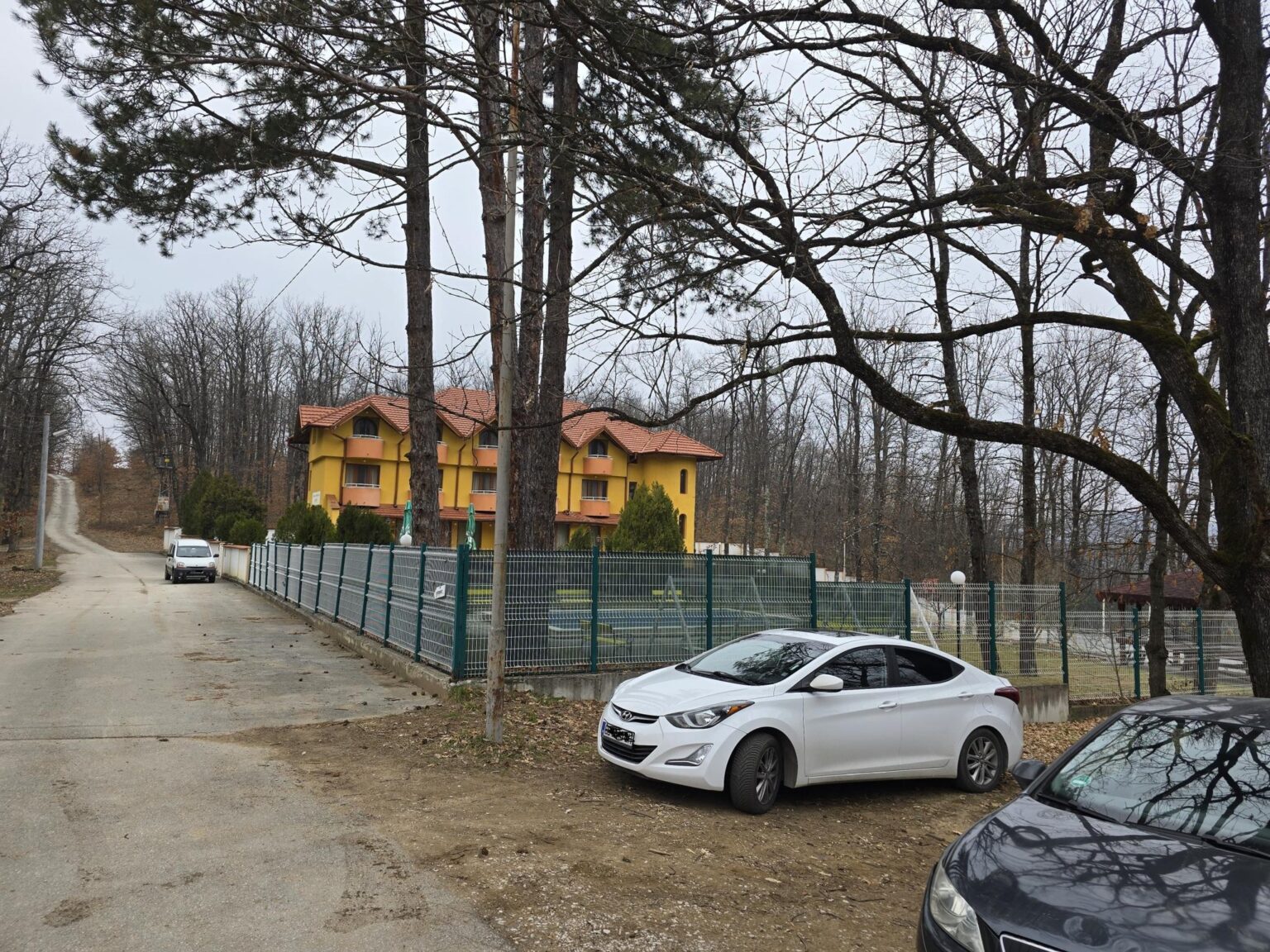
And there, a new twist. As of February 2025 the navigation apps still had no idea about the connection to the new stretch towards Mezdra and Vratsa. Since then more of that road has opened and the maps have largely caught up, but it is still a work in progress, so do not be surprised by temporary traffic arrangements. Slowly, calmly, slightly confusing signage, and you are up on the new road. You pick up a nice bit of speed — within the posted limits, obviously, what were you thinking. Then the navigation says: right turn towards Bozhenitsa. And, by pure momentum, you keep driving normally until the road quite simply ends. Well — there is a road, it is just closer in character to the aforementioned Mars, holes like Swiss cheese. It is a stretch of roughly 8 kilometres that asks for slow, careful driving. You pass through the centre of Bozhenitsa, where there is a small shop for coffee and water top-ups. Another five minutes and you are at the holiday base, which has plenty of parking.
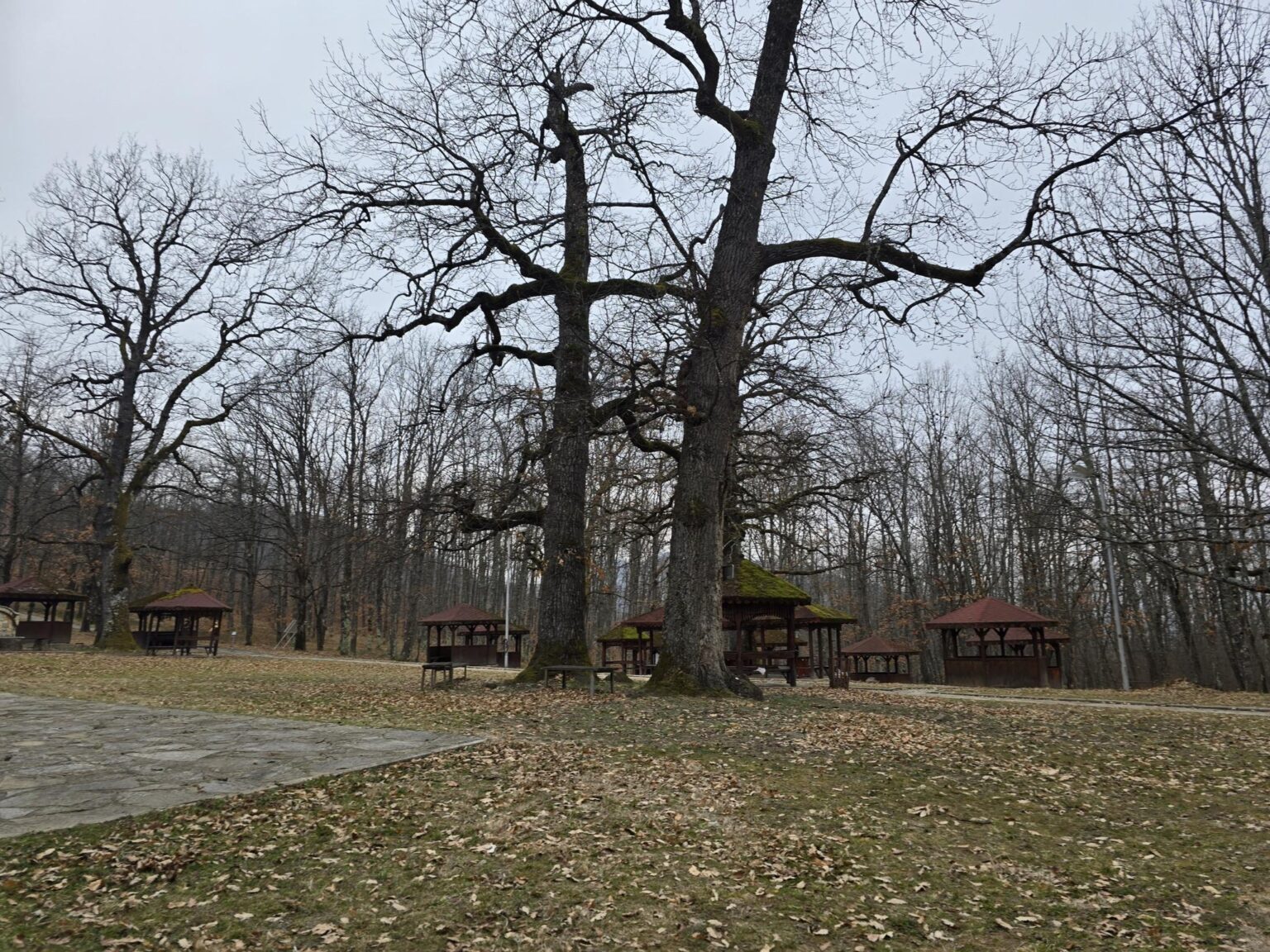
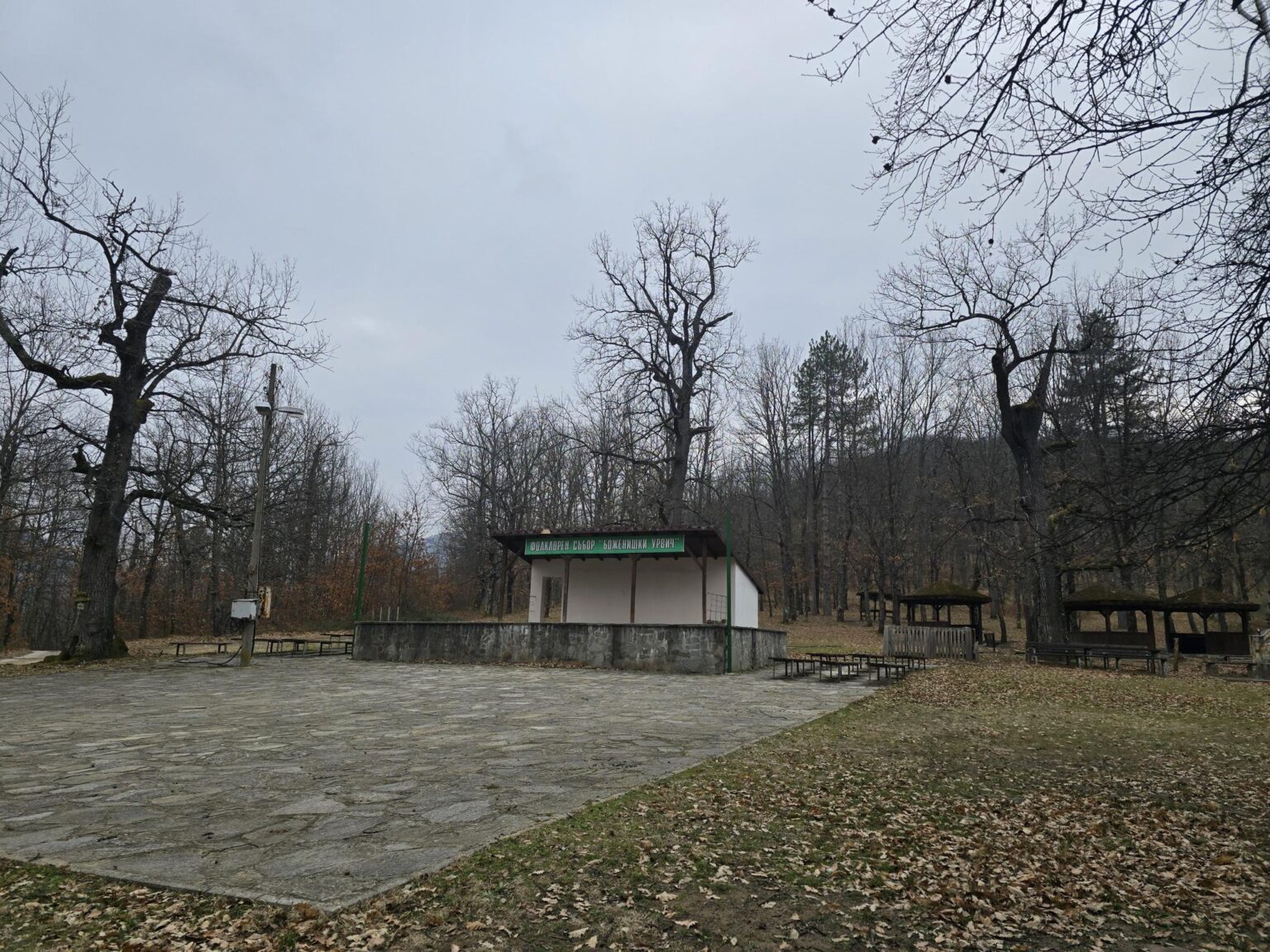
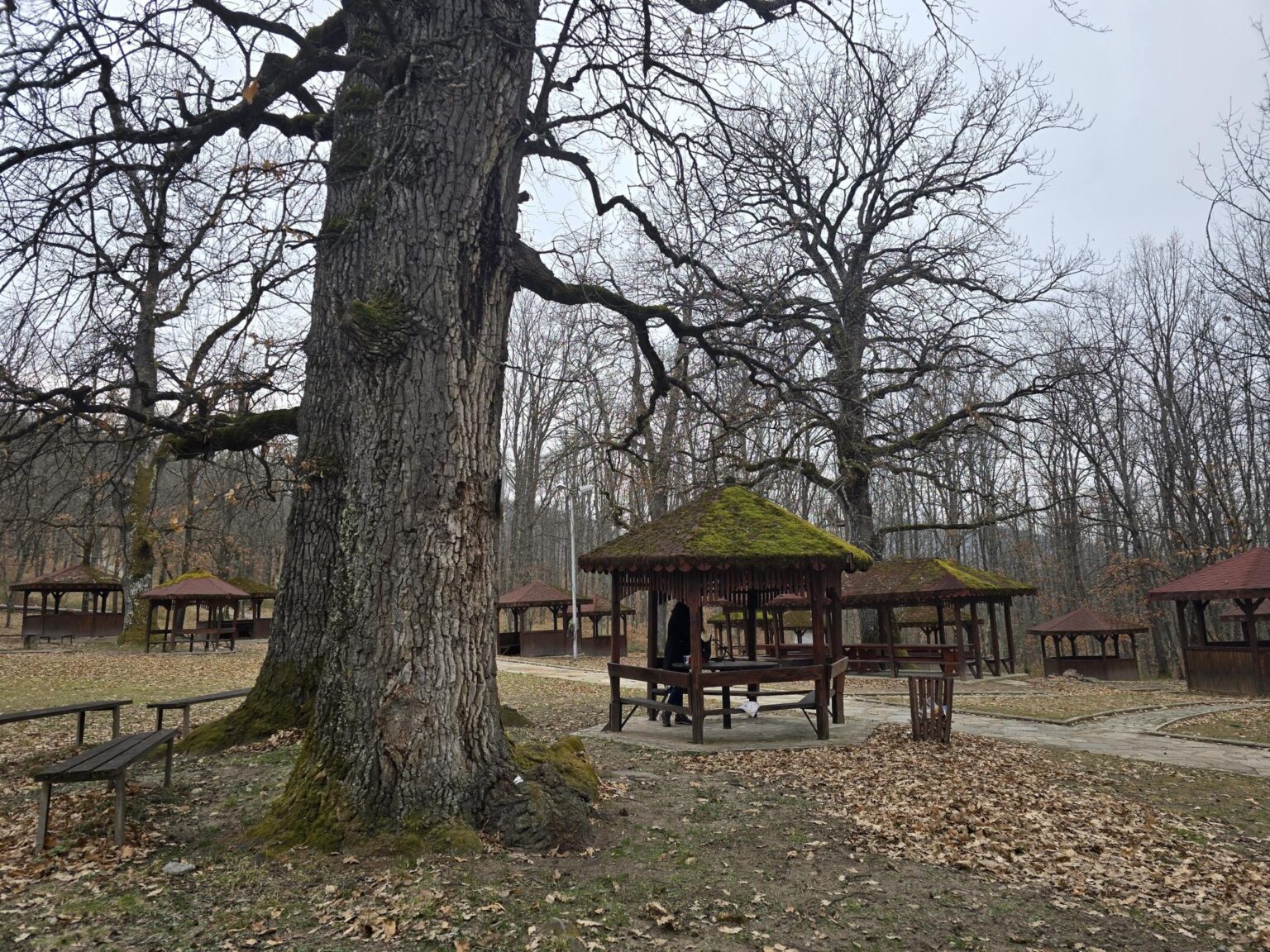
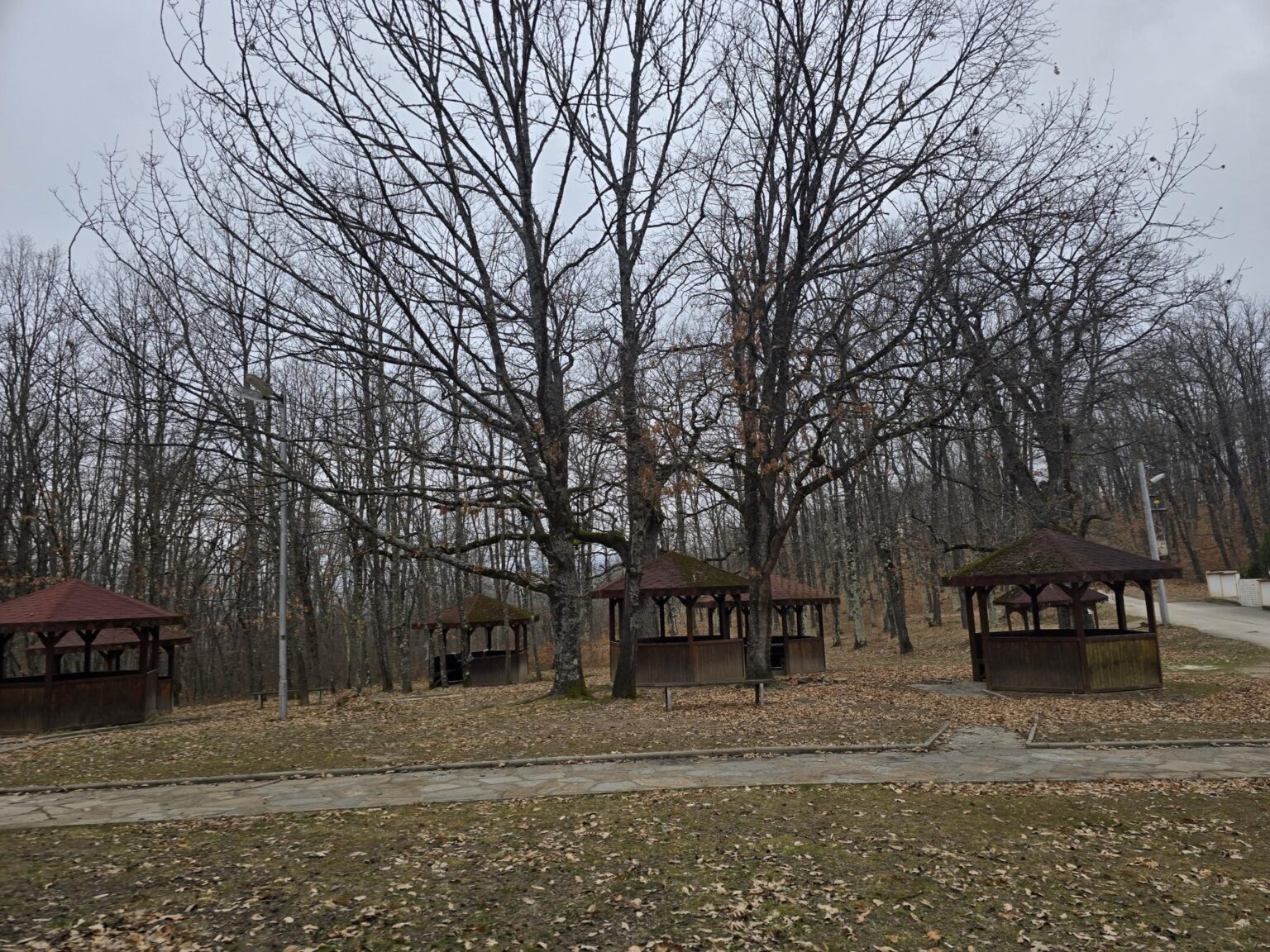
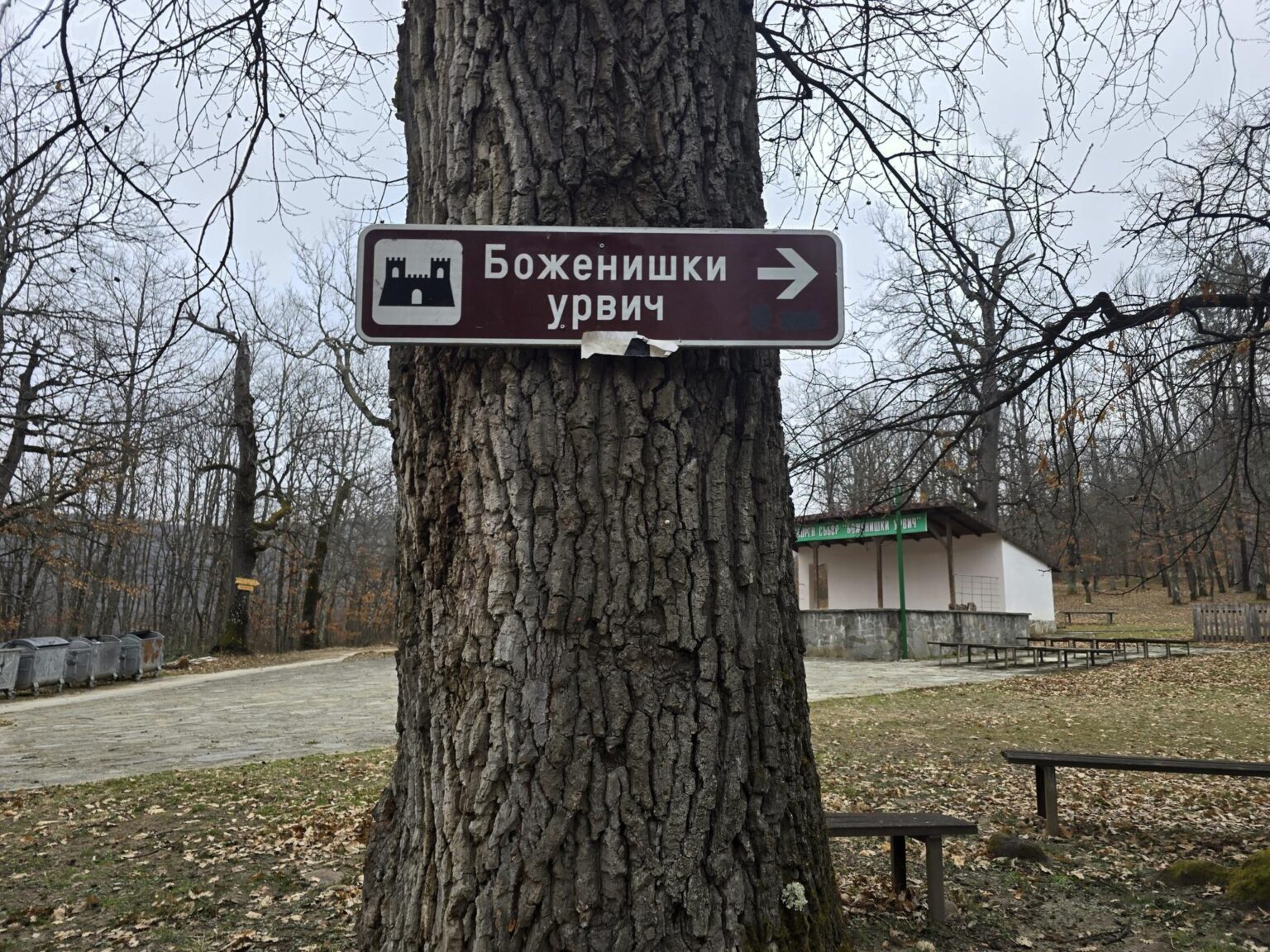
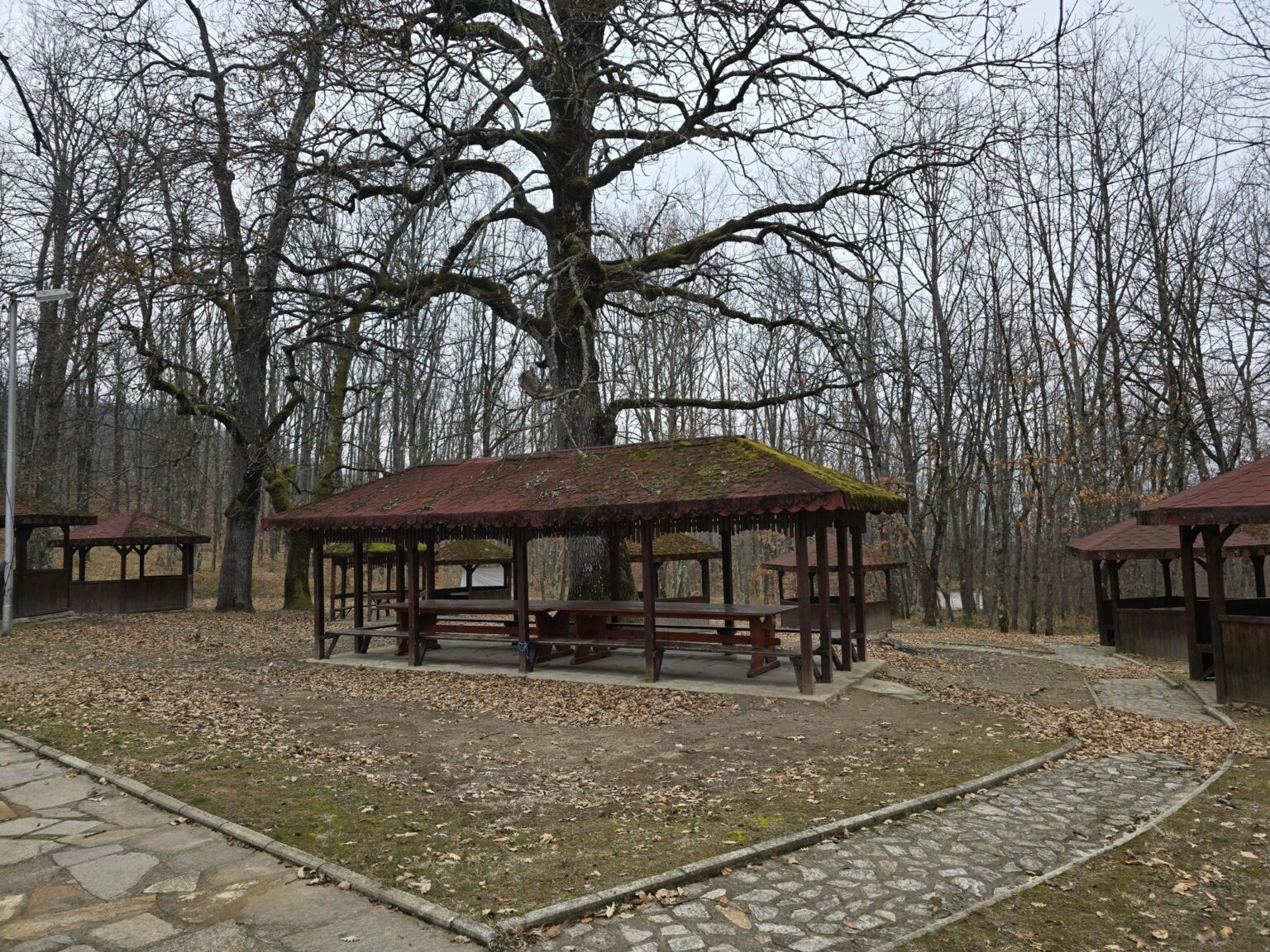
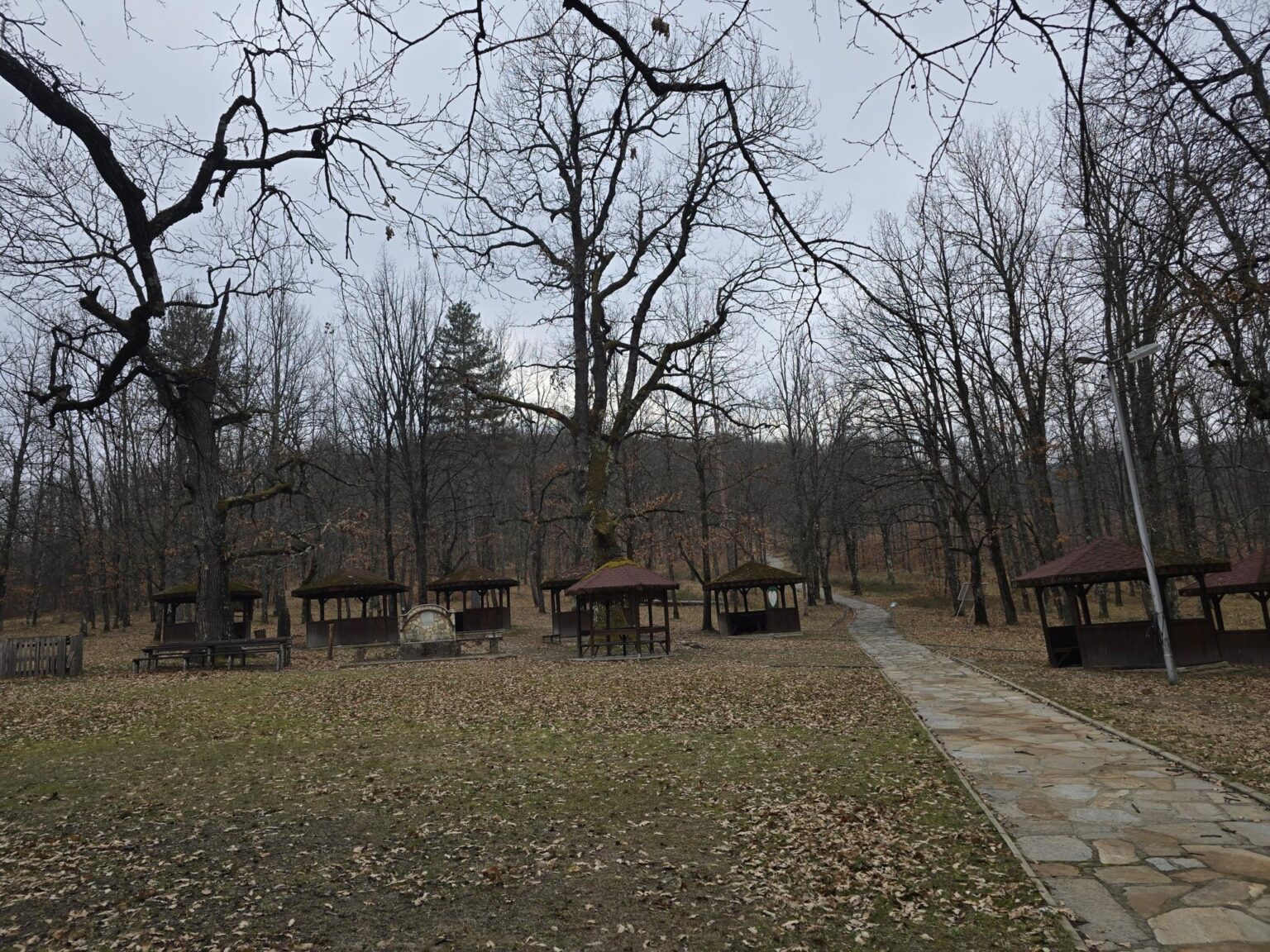
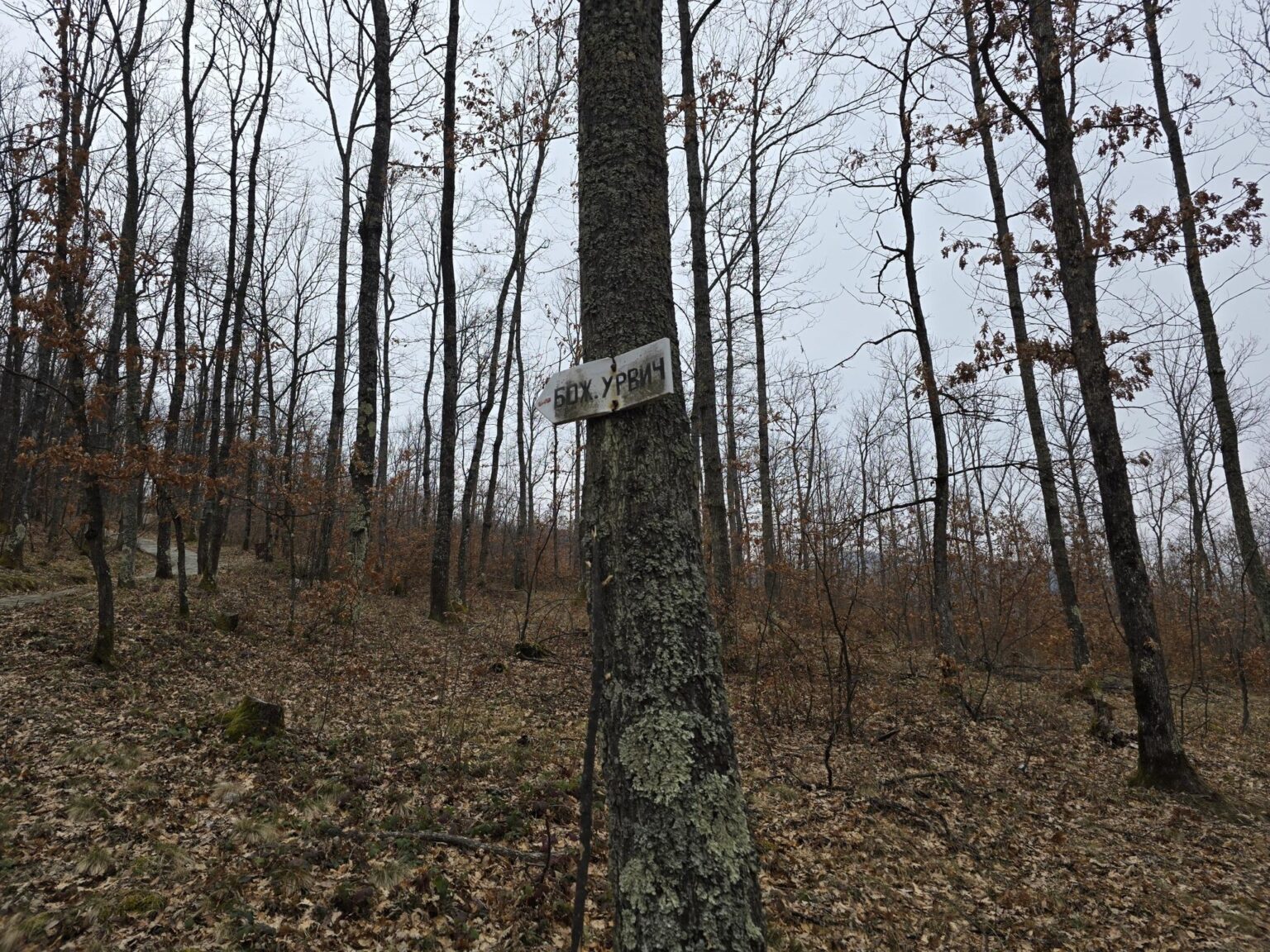
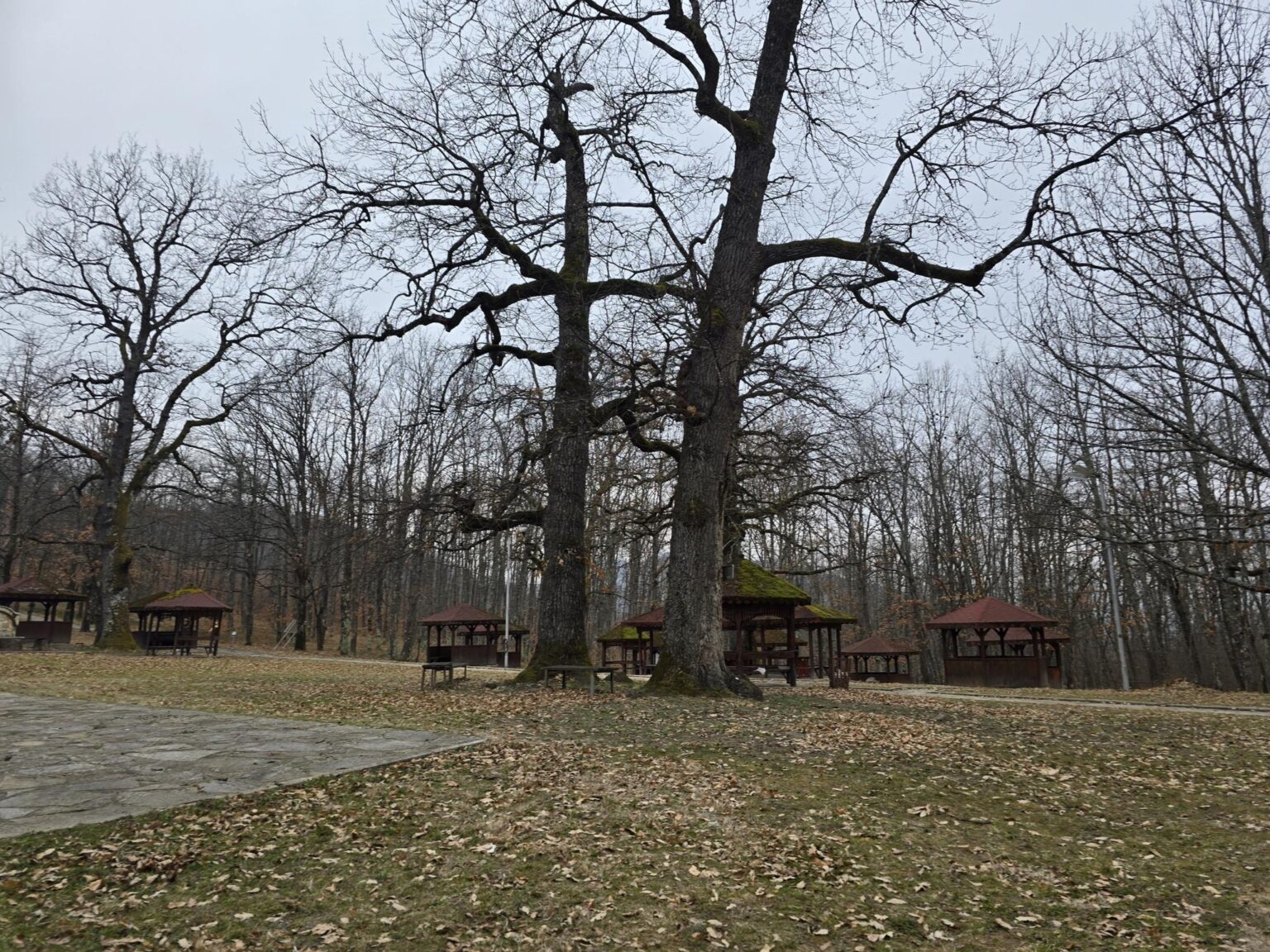
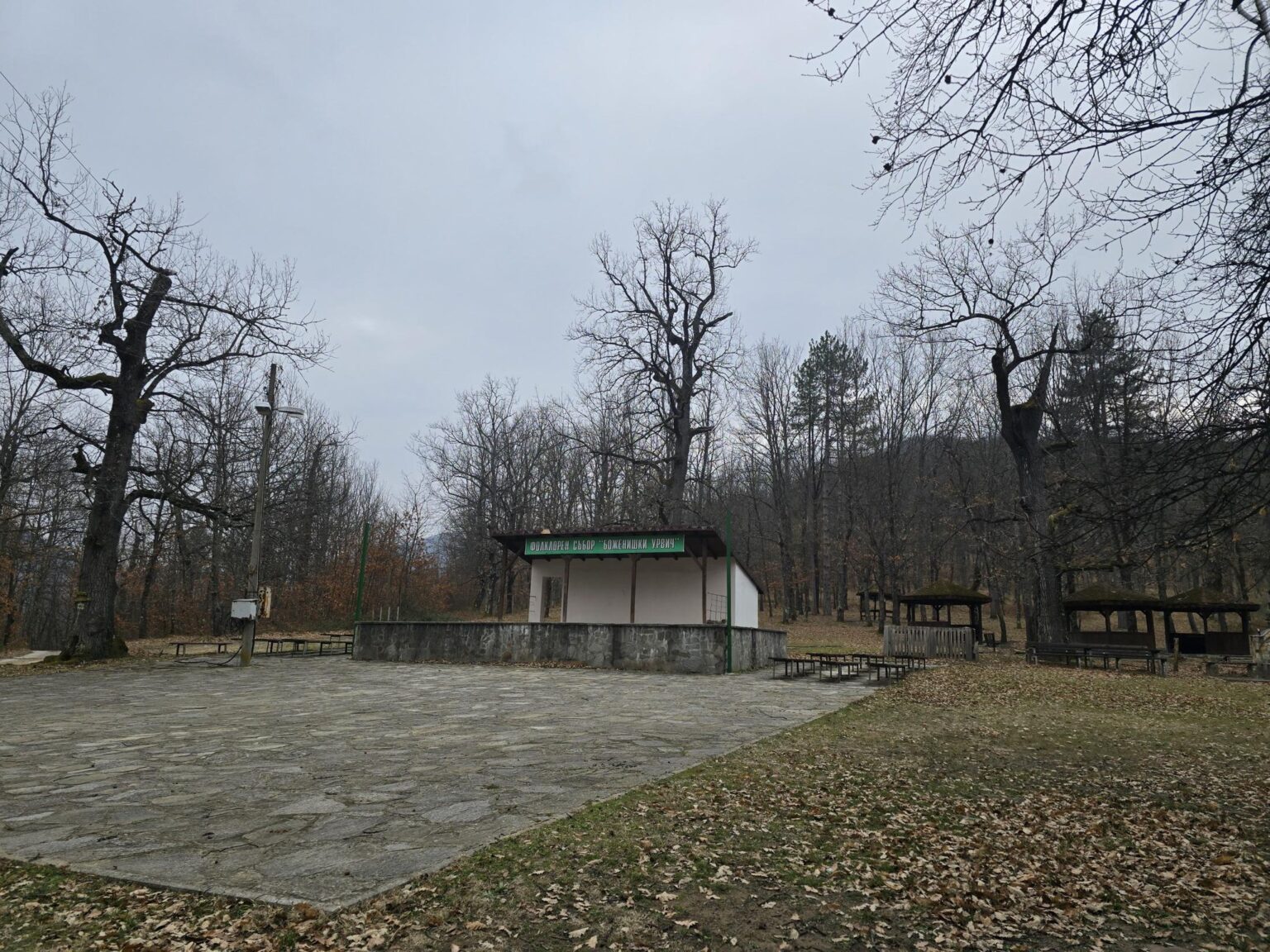
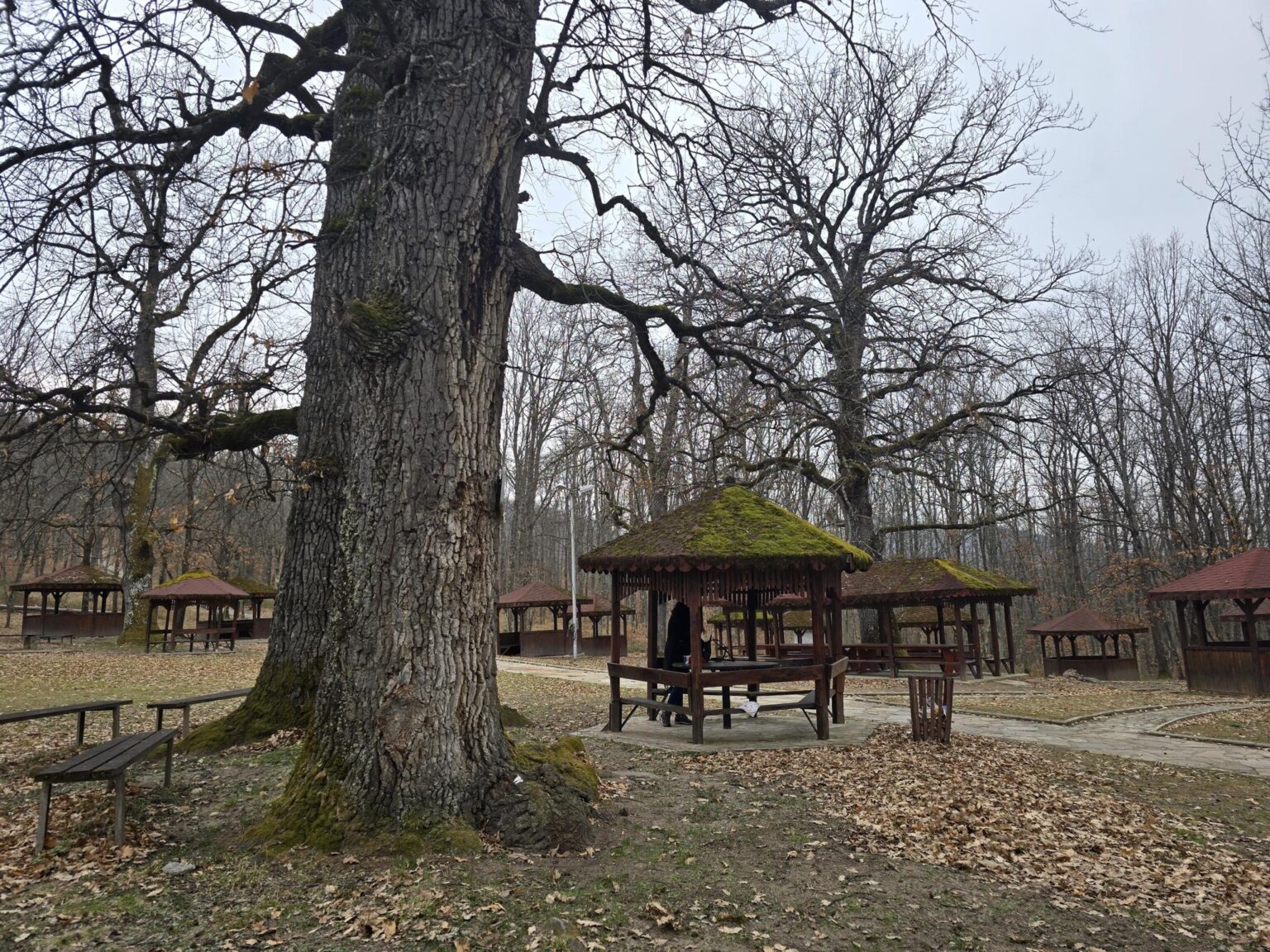
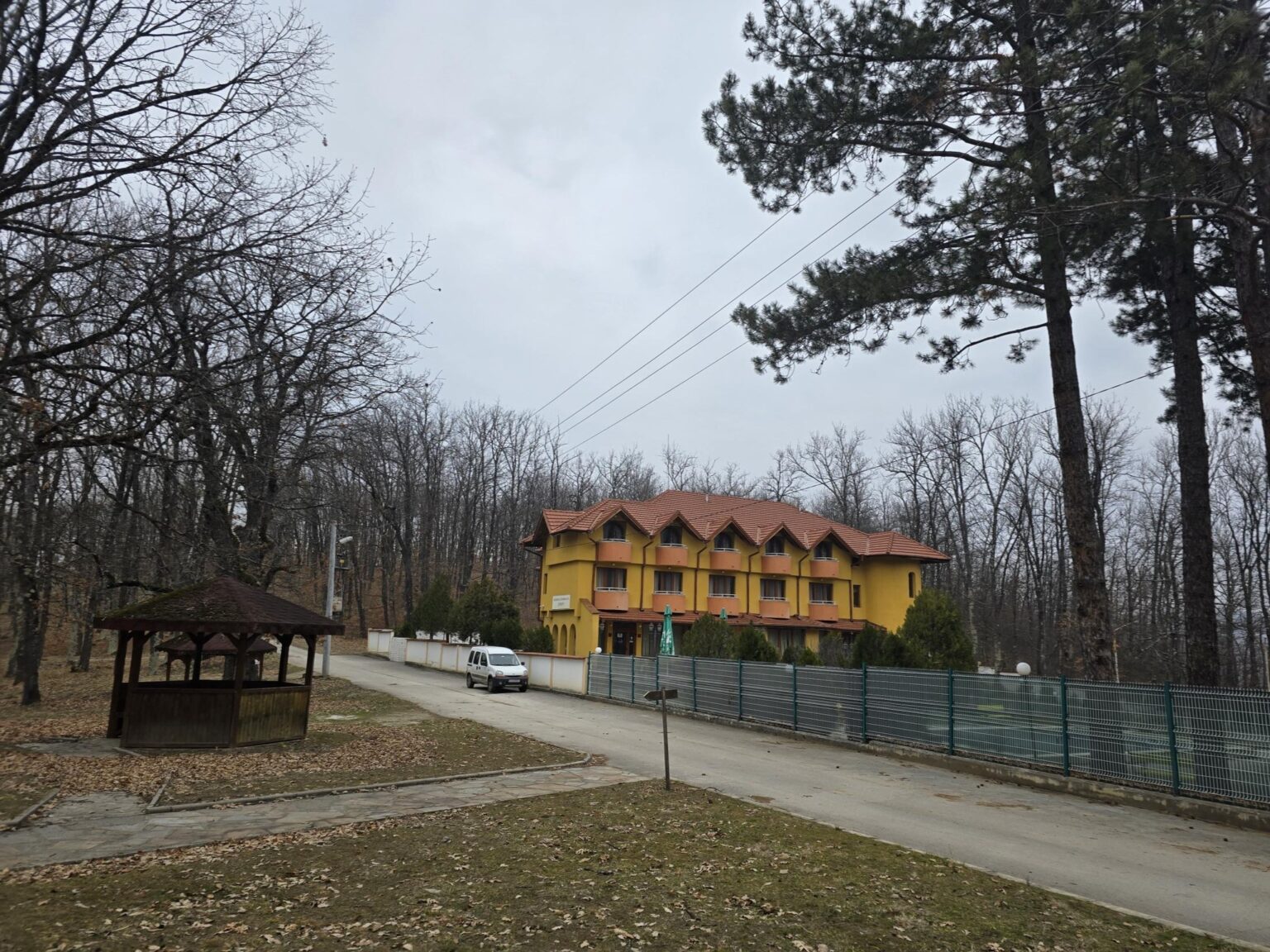
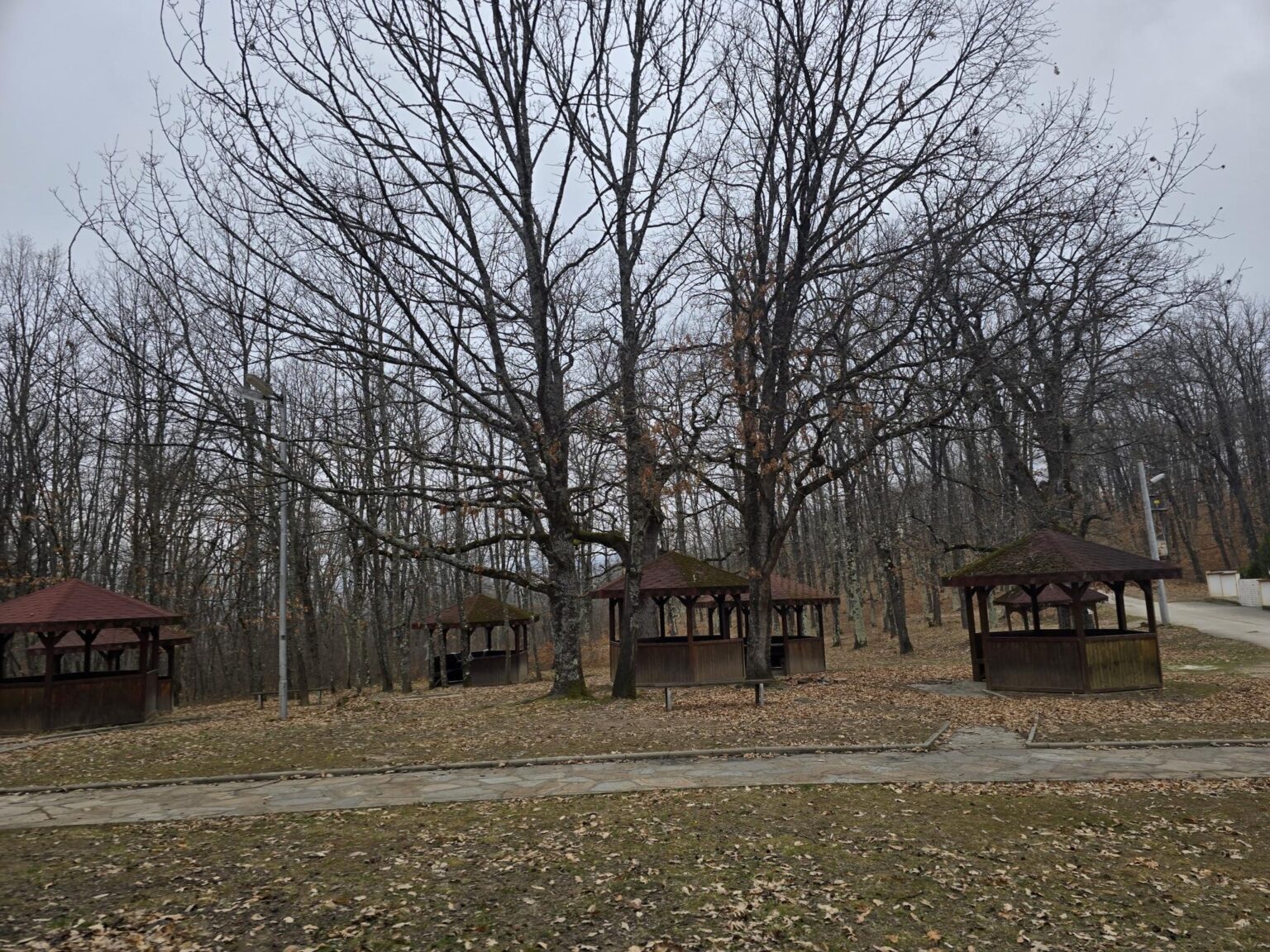
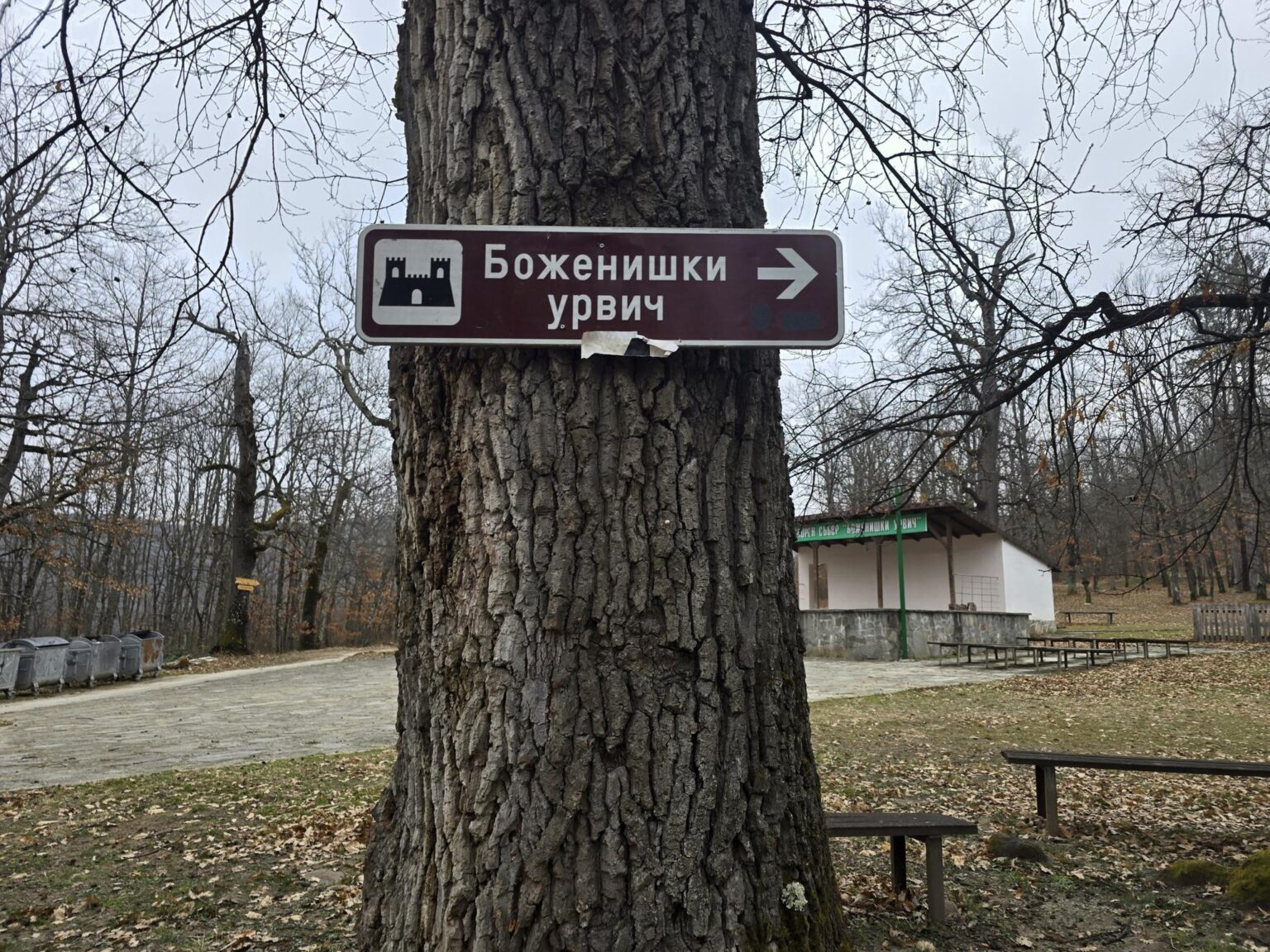
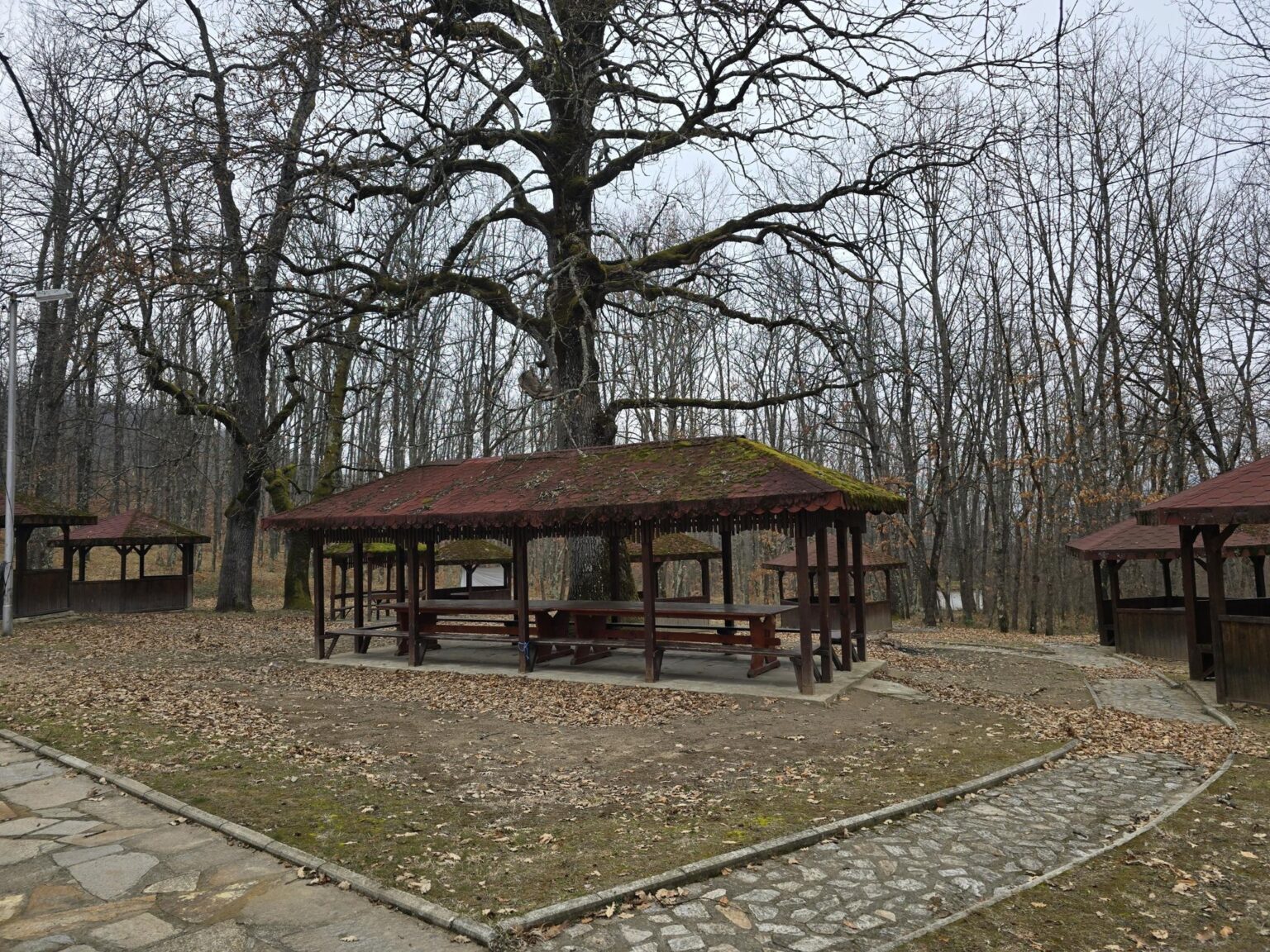
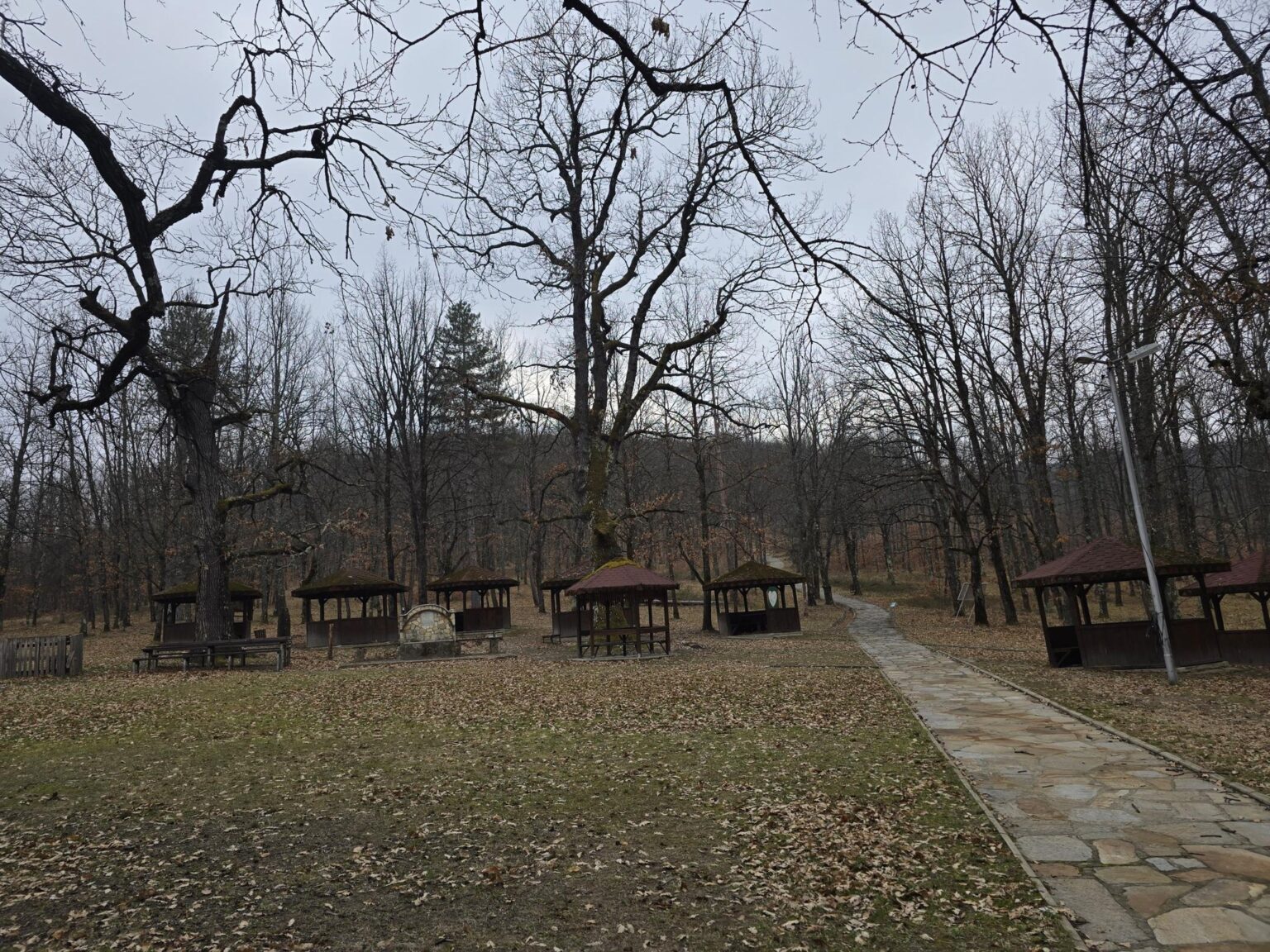
You park, and the sound system is playing old Bulgarian pop hits, which does wonders for the mood. There is a small stage and a good number of gazebos, so clearly an annual folk fair happens here. Worth noting: on the way in I also spotted a sign for another eco-trail nearby, which will have to wait for another day. Another one in the same region that I have already walked is the “Bell Ringing” eco-trail near Etropole. If you are looking to fill the day out, there is certainly another hour or two of things to do around here. The start of the trail is signposted from the parking area.
On site and the climb
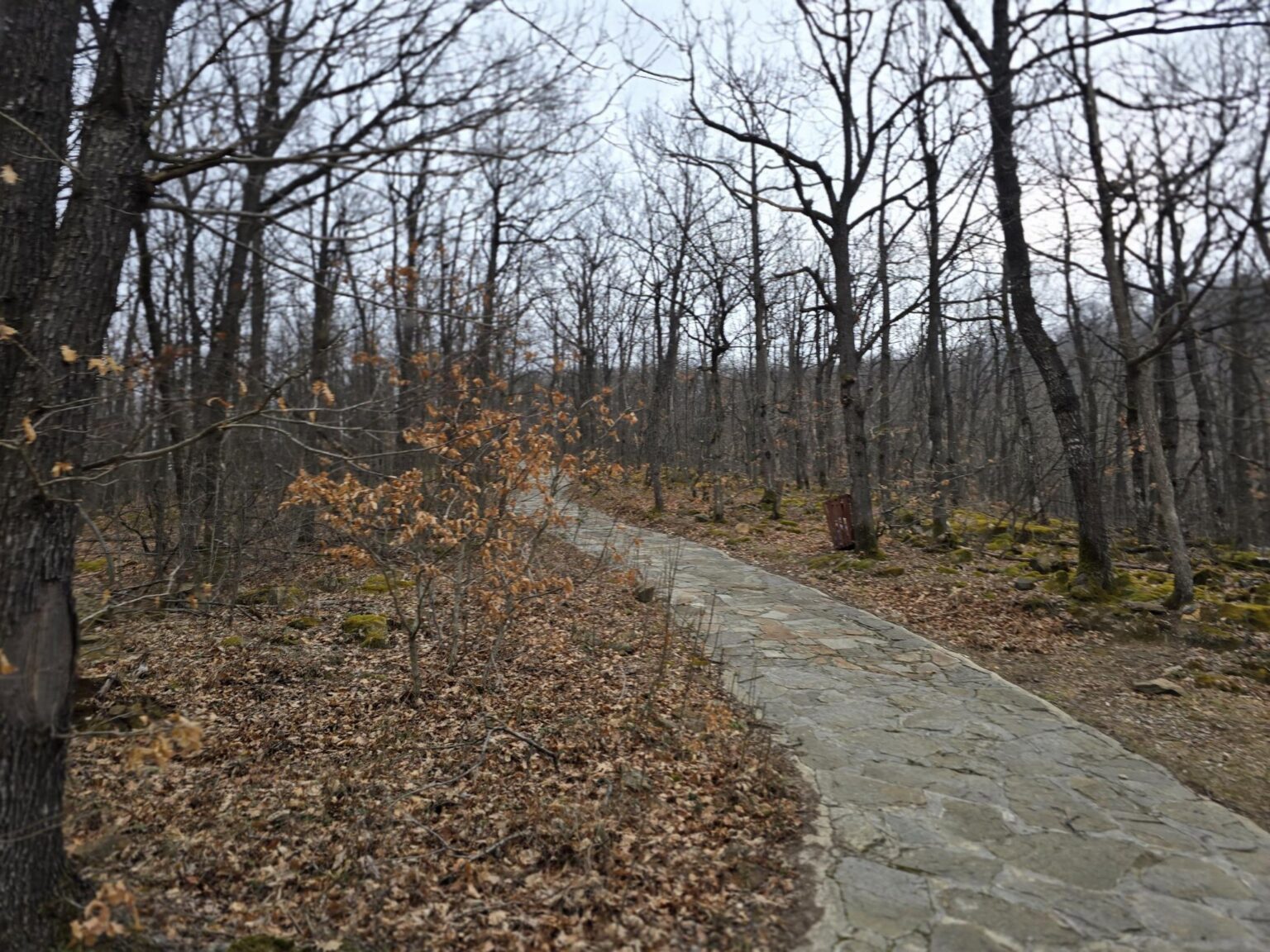
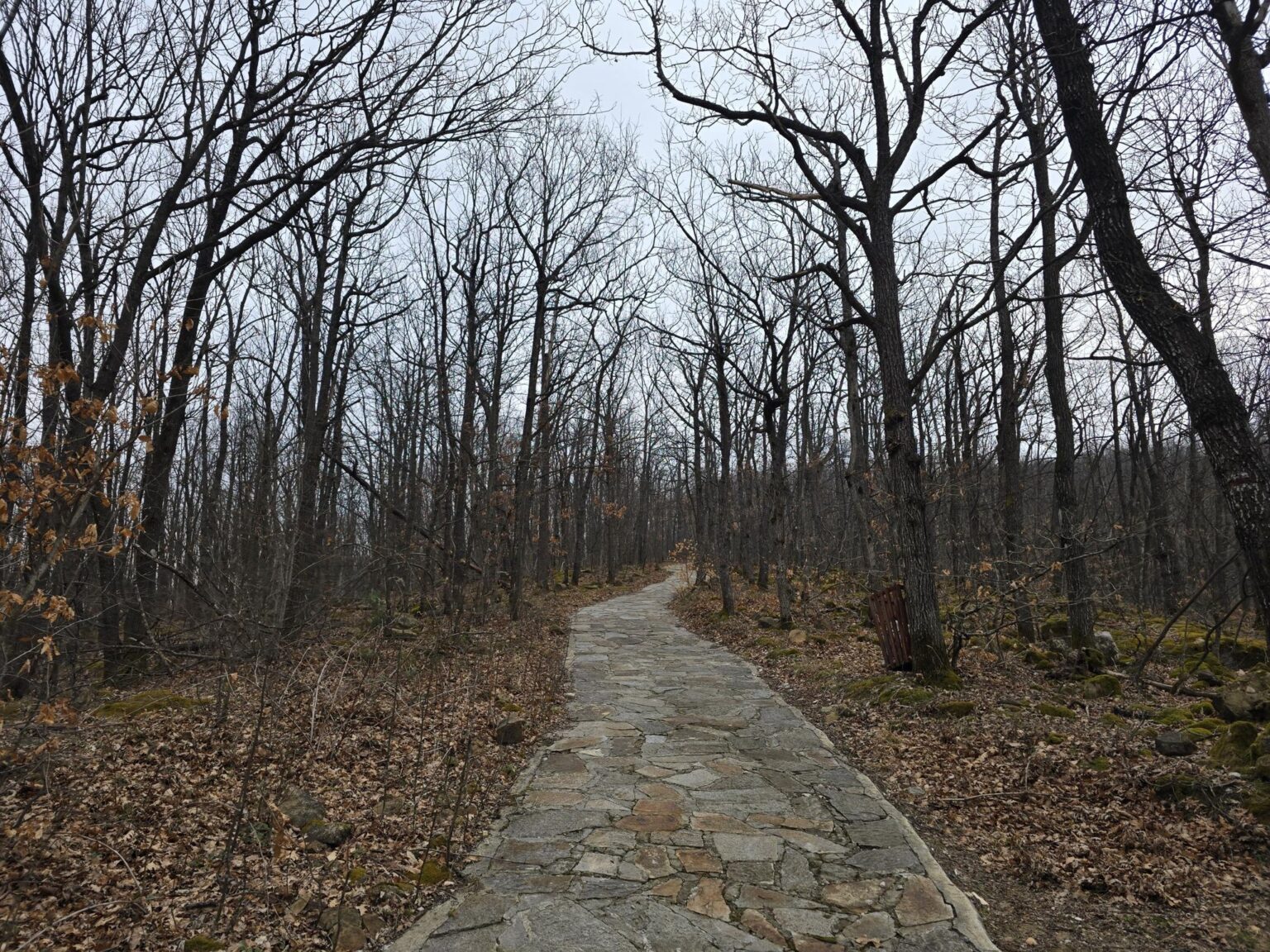
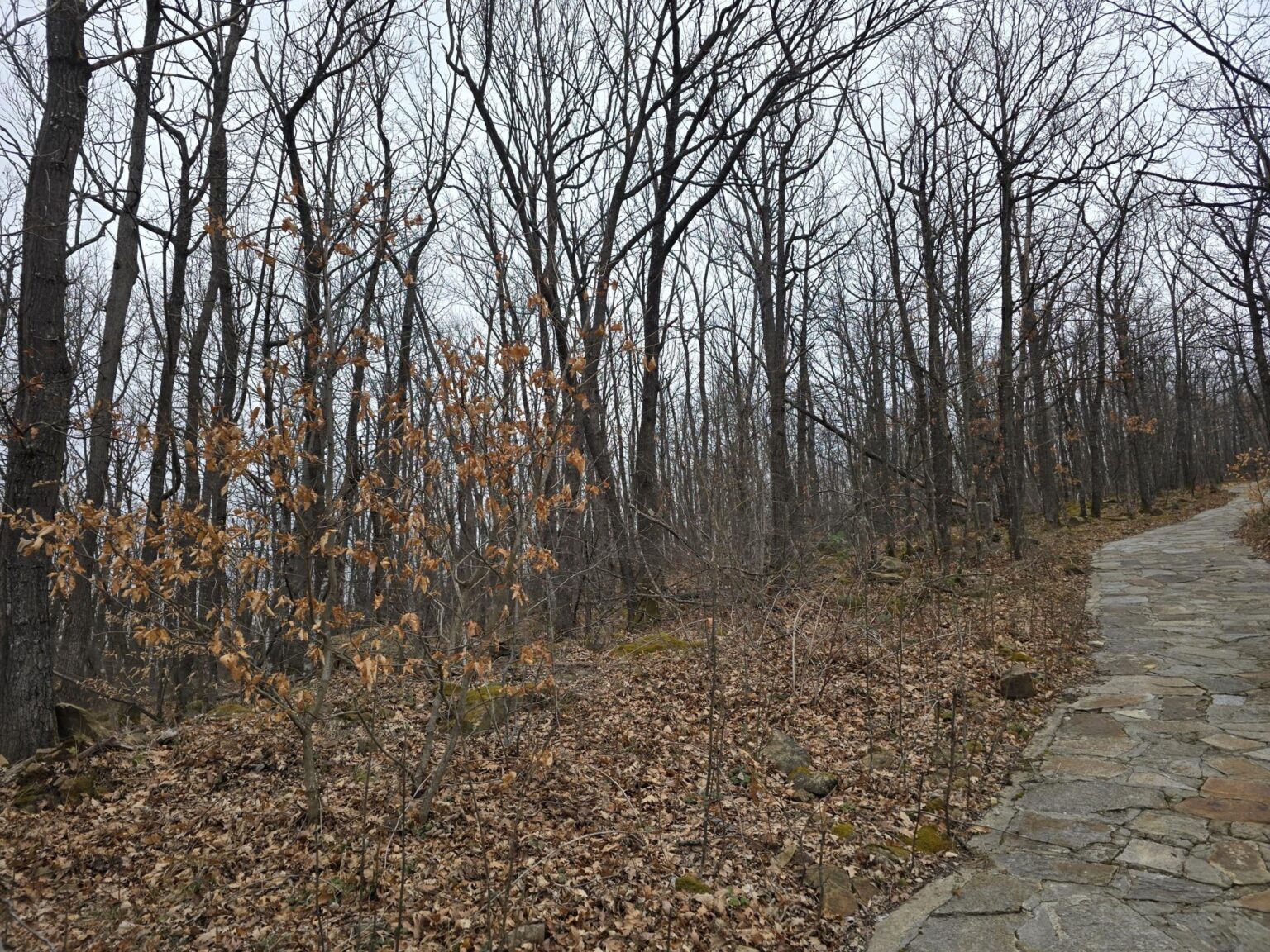
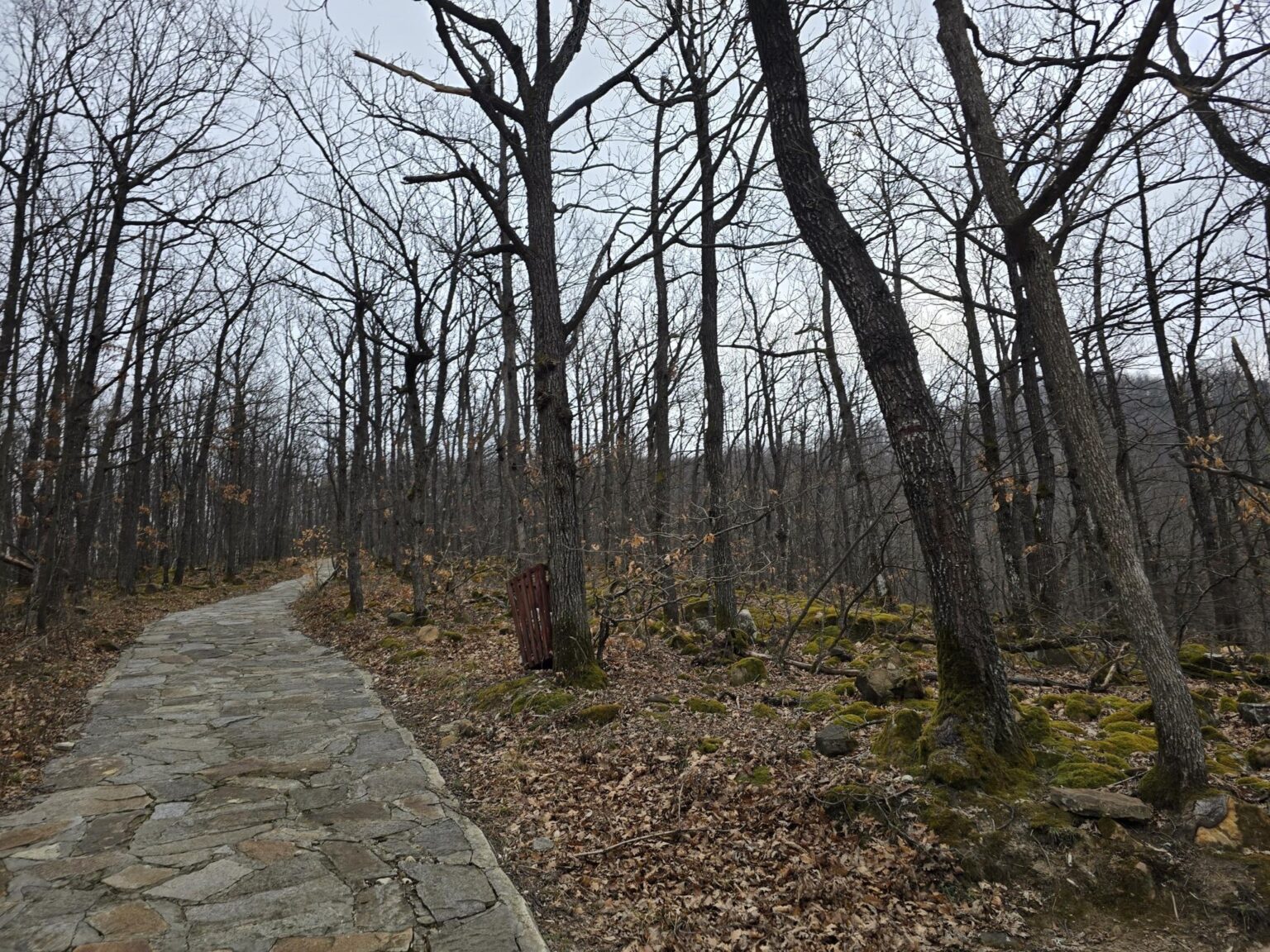
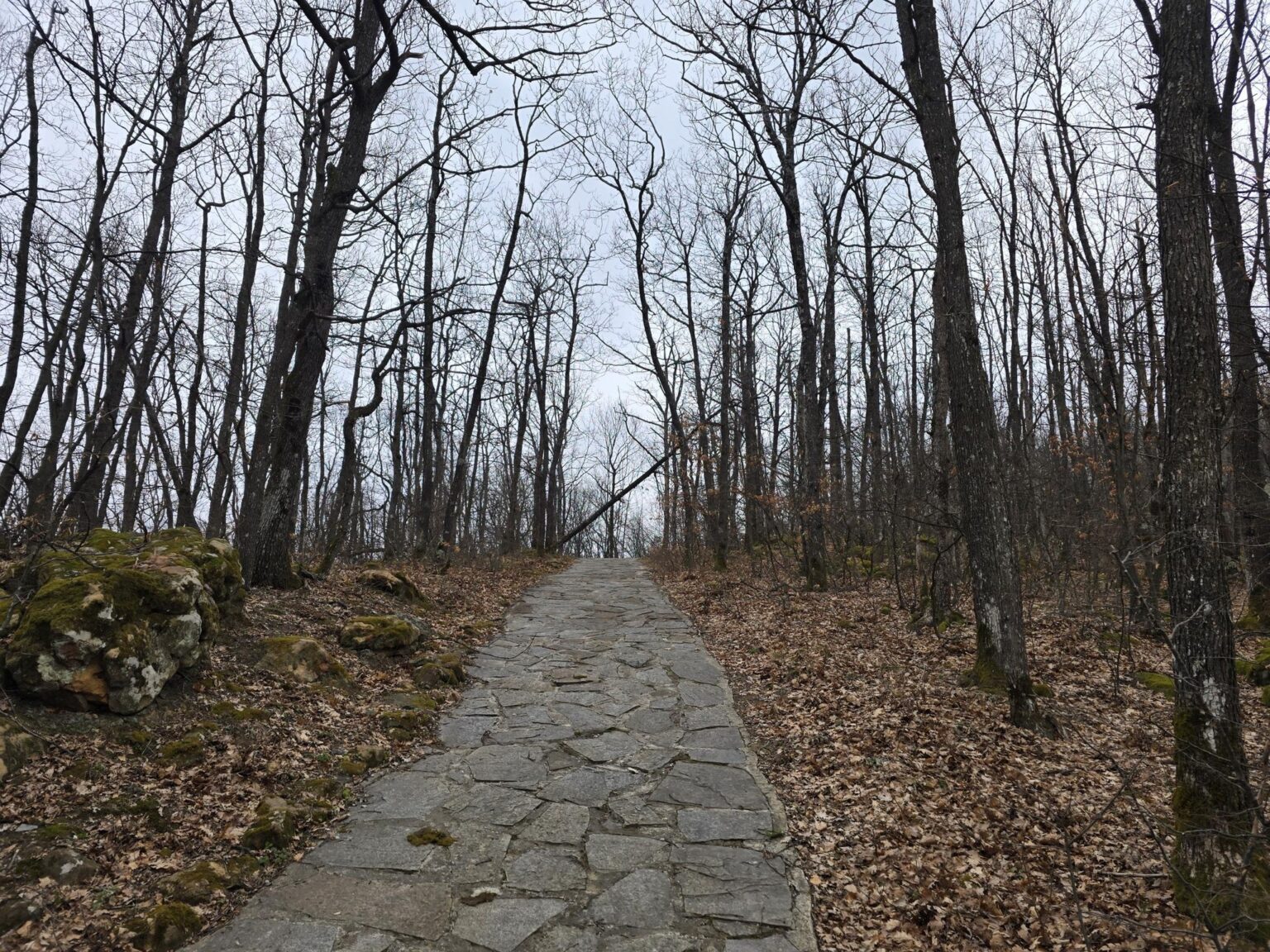
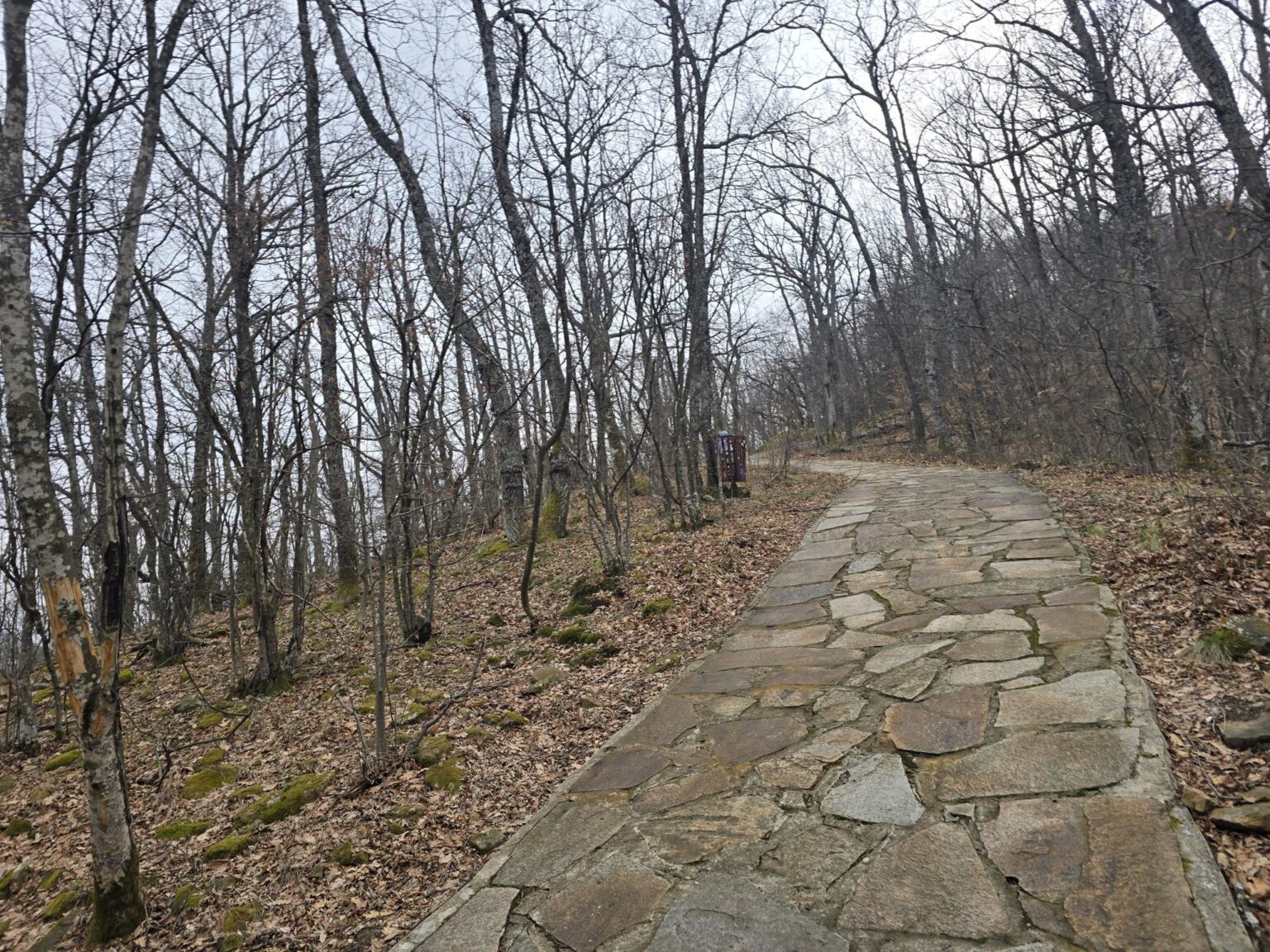
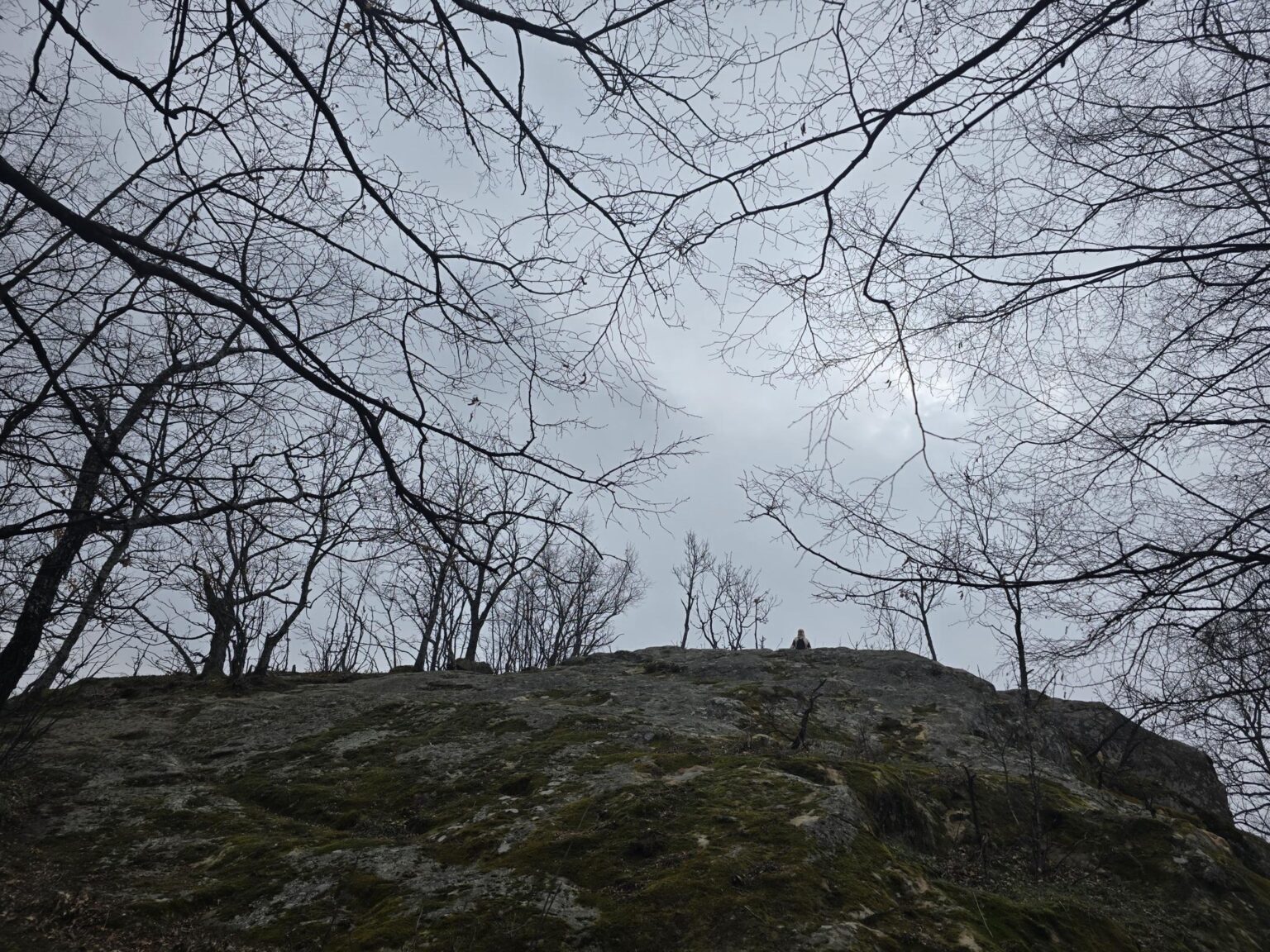
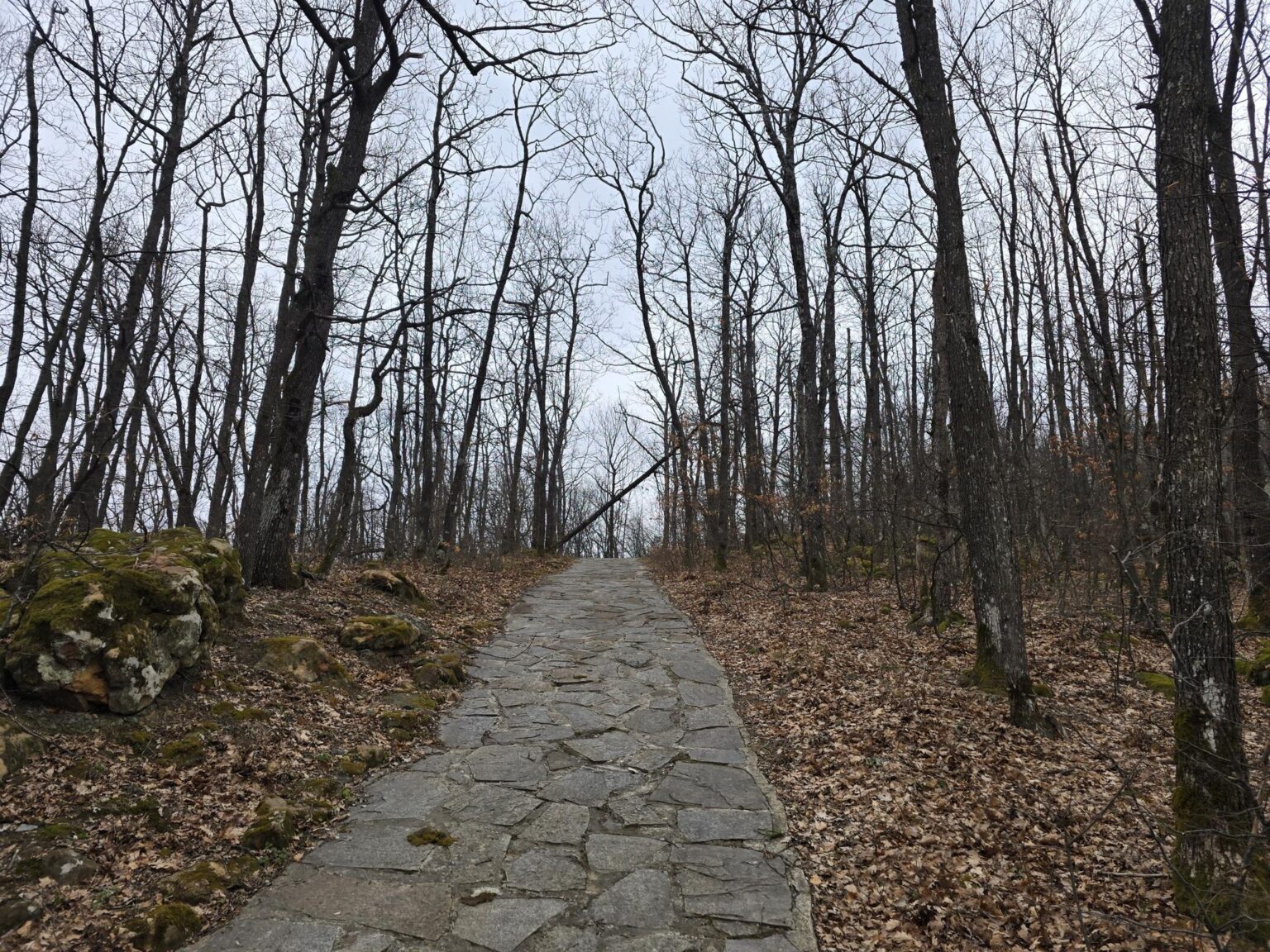
There are not many articles about this fortress. I had a quick look at the “competition” beforehand — there is information out there, but nobody warns you about the pleasant surprise waiting for you. You set off calmly from a nice flat little meadow with gazebos, and absolutely nothing about it suggests that what follows is a 150-metre climb with no break in it and nowhere to sit down. It is not much, and yet it is a quarter of the Seven Rila Lakes, if you want to be cheeky about it. So yes, it takes 20–30 minutes depending on pace and enthusiasm, but it is a climb. And here is the thing: February, temperatures nothing to write home about — and I still managed to boil myself alive.
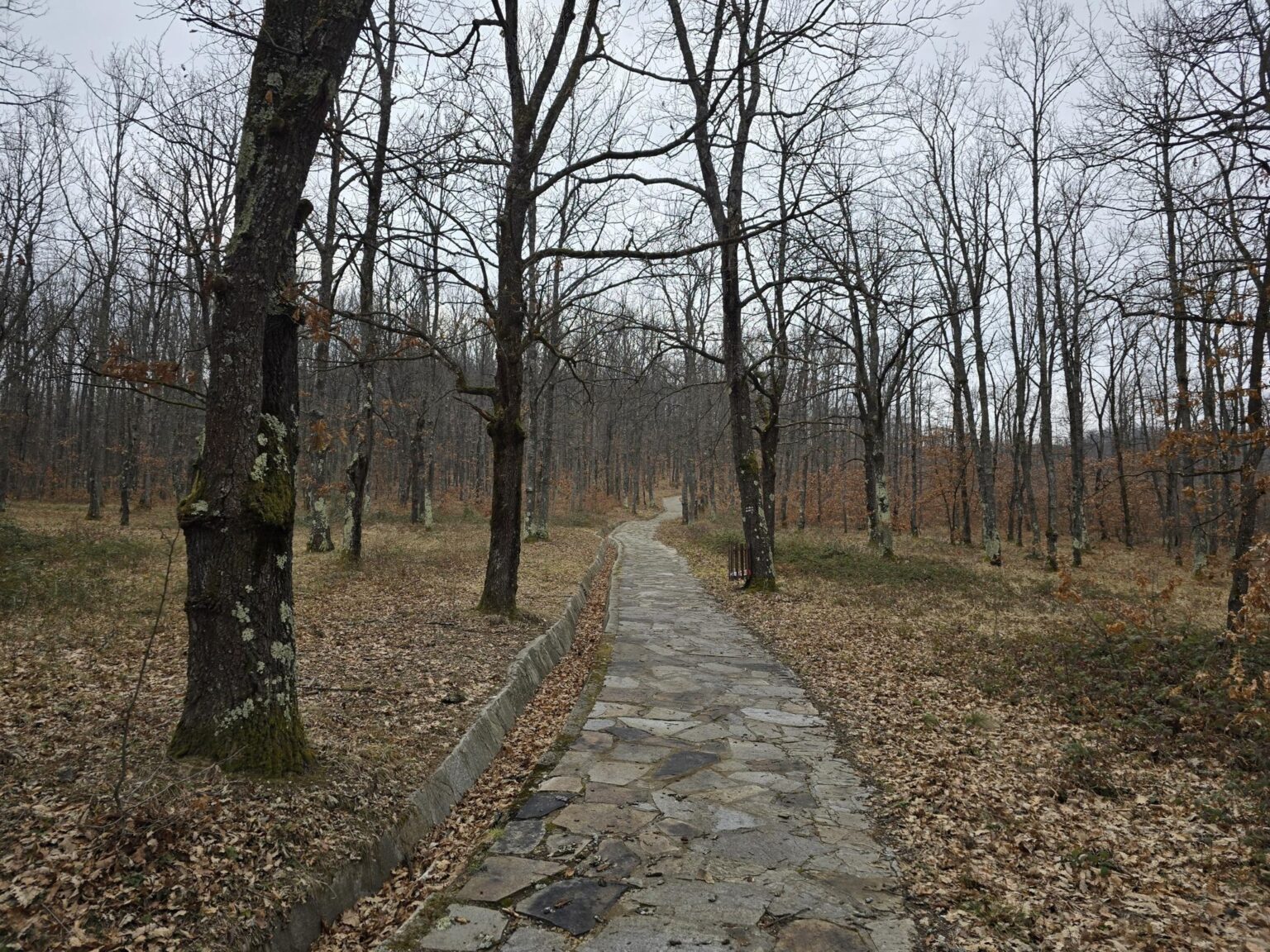
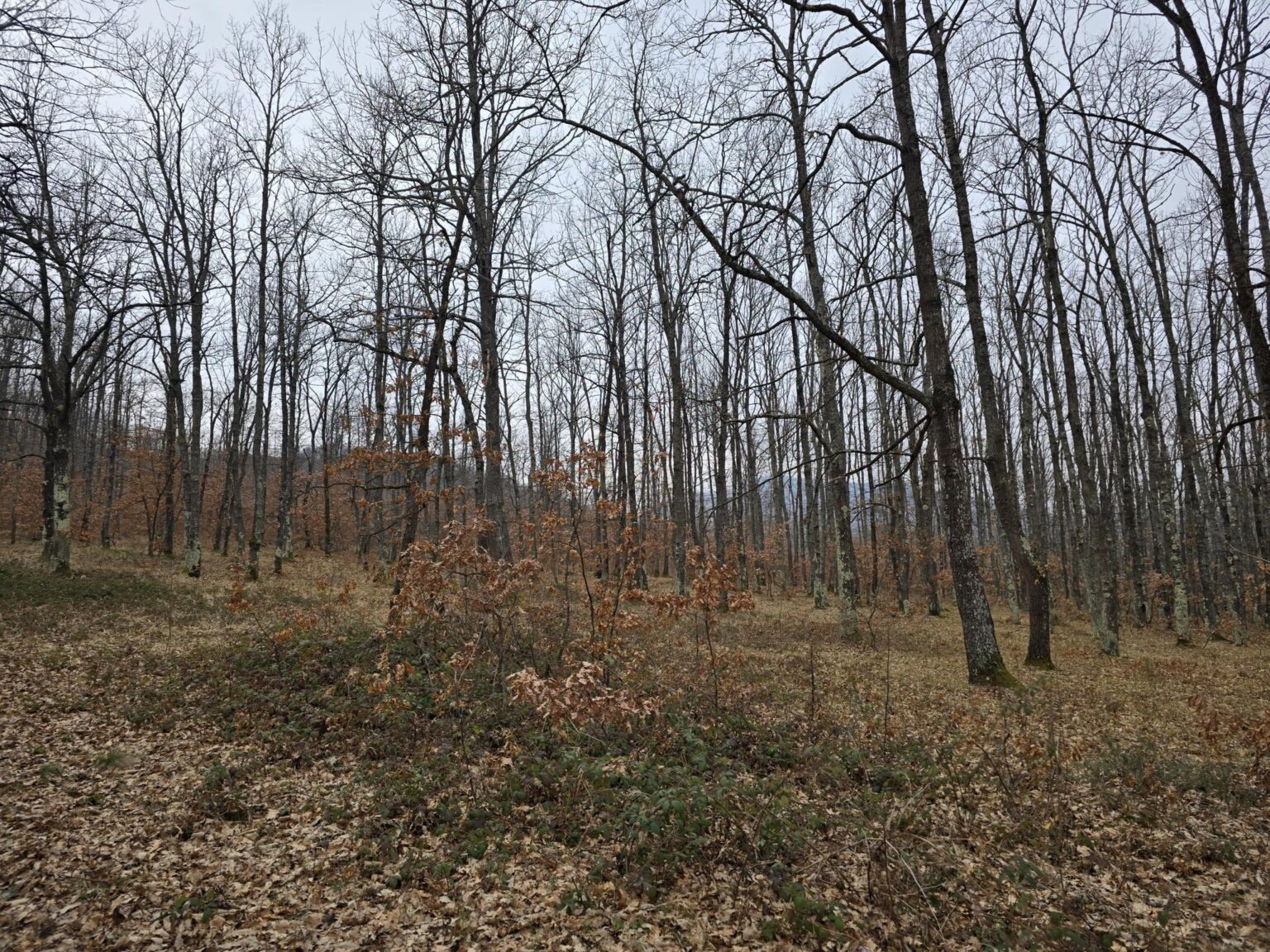
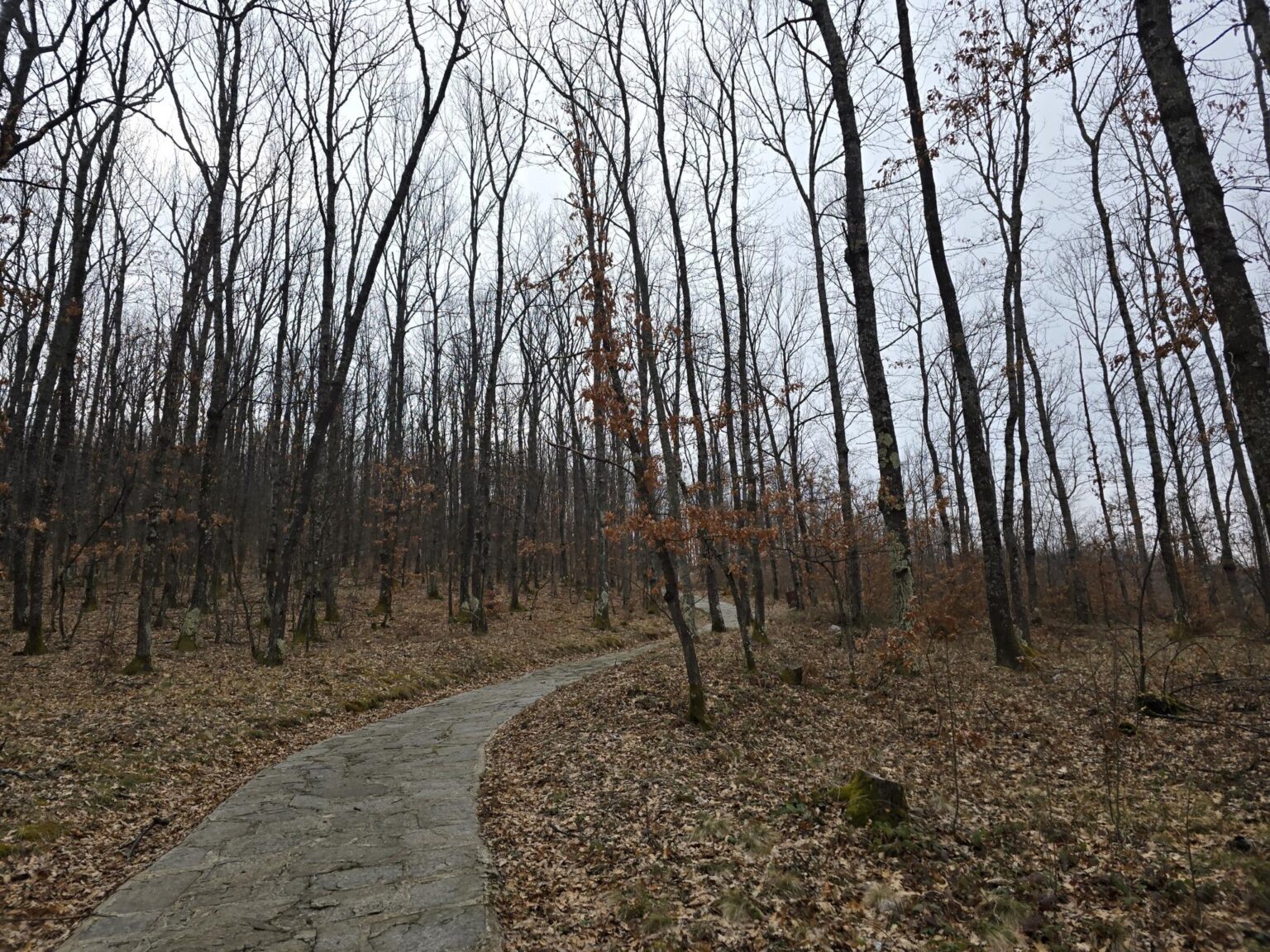
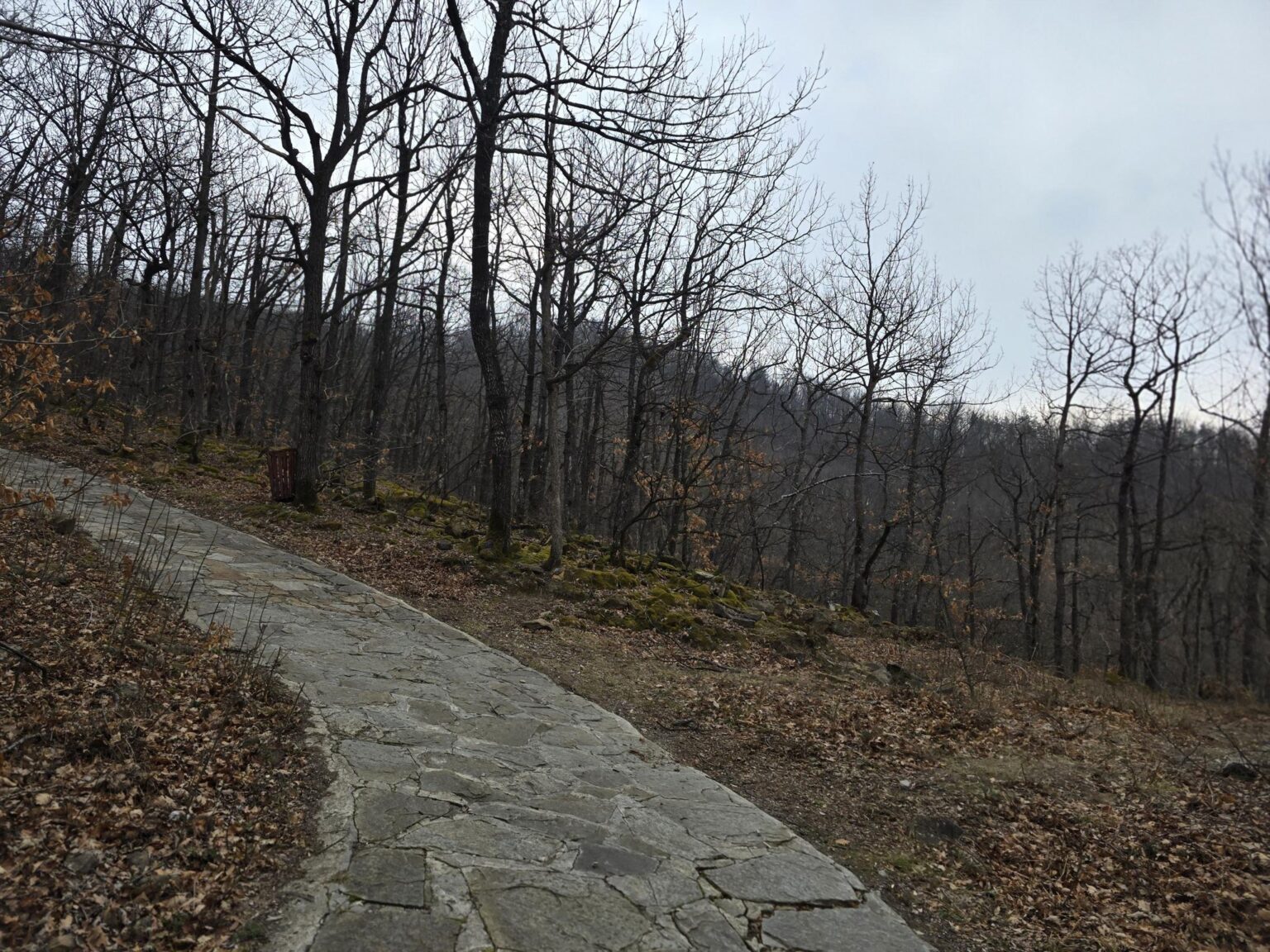
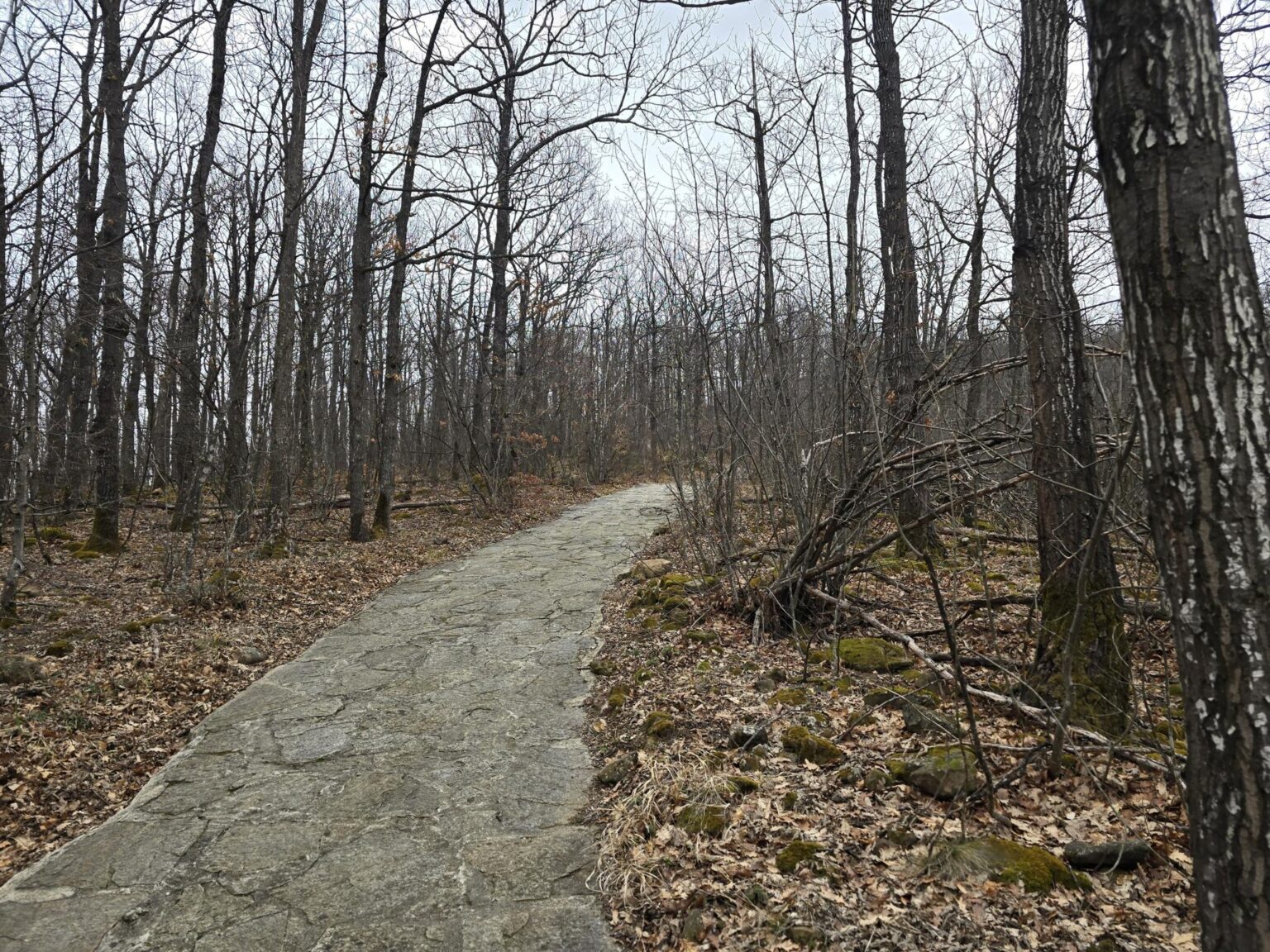
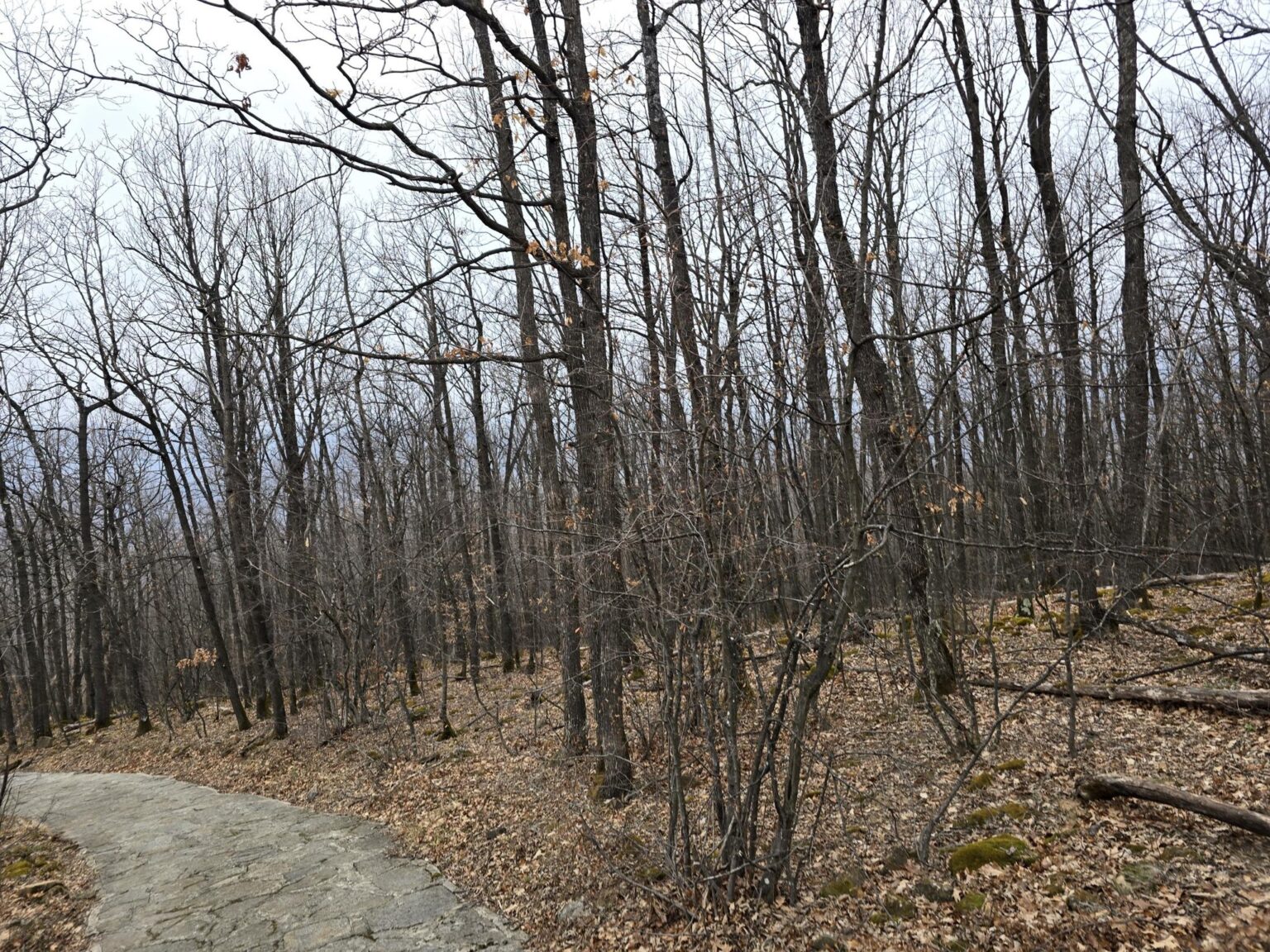
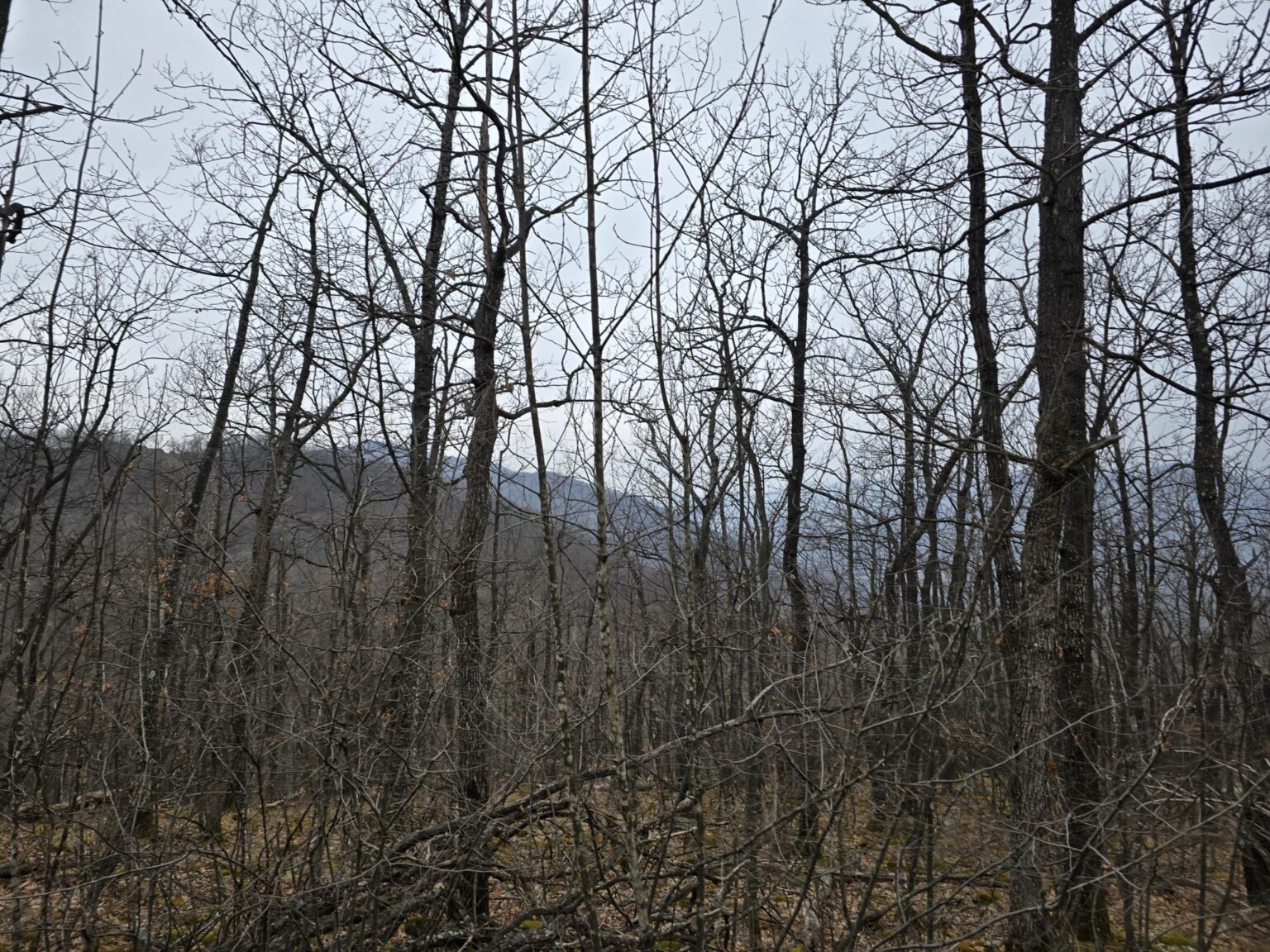
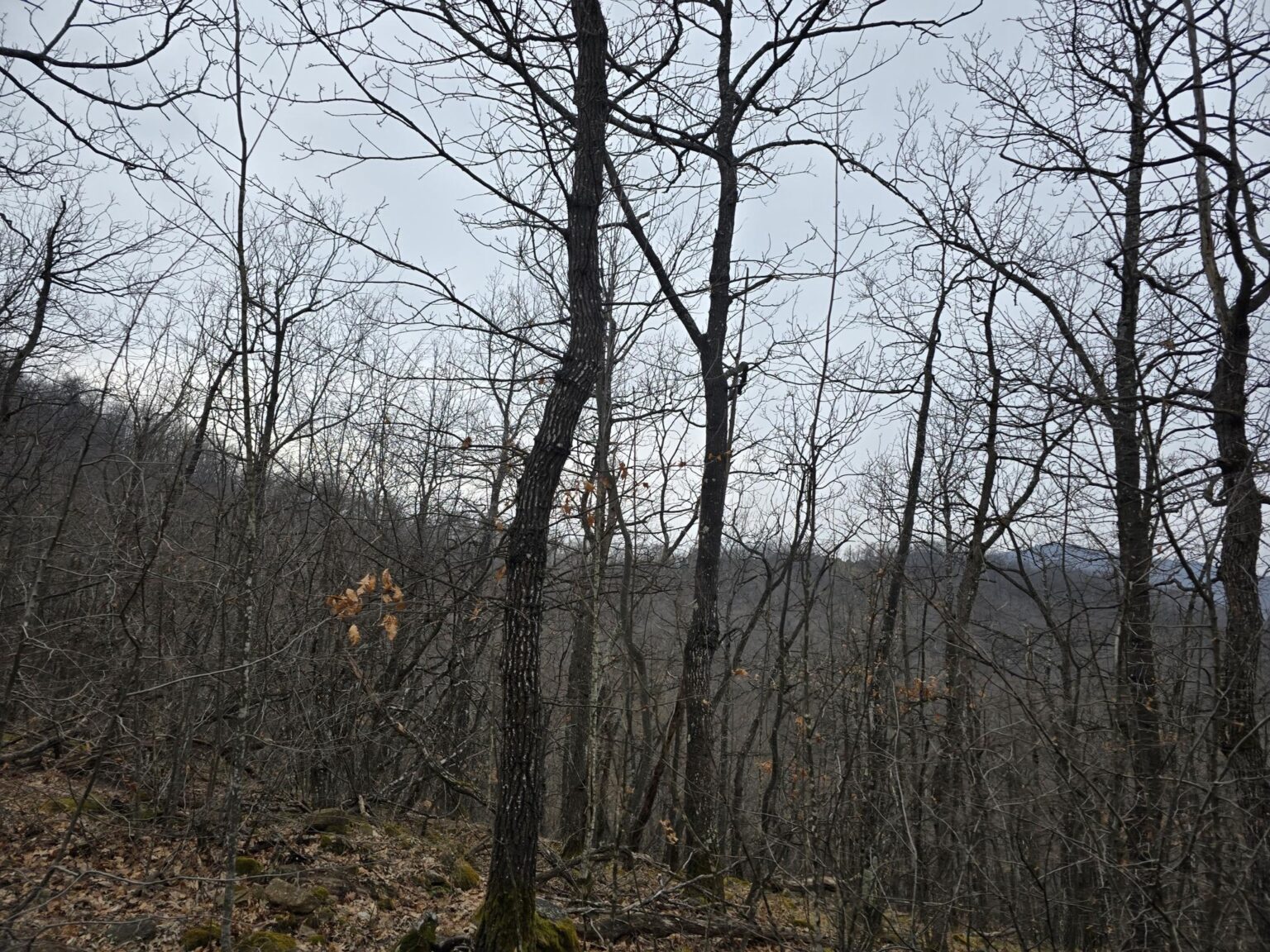
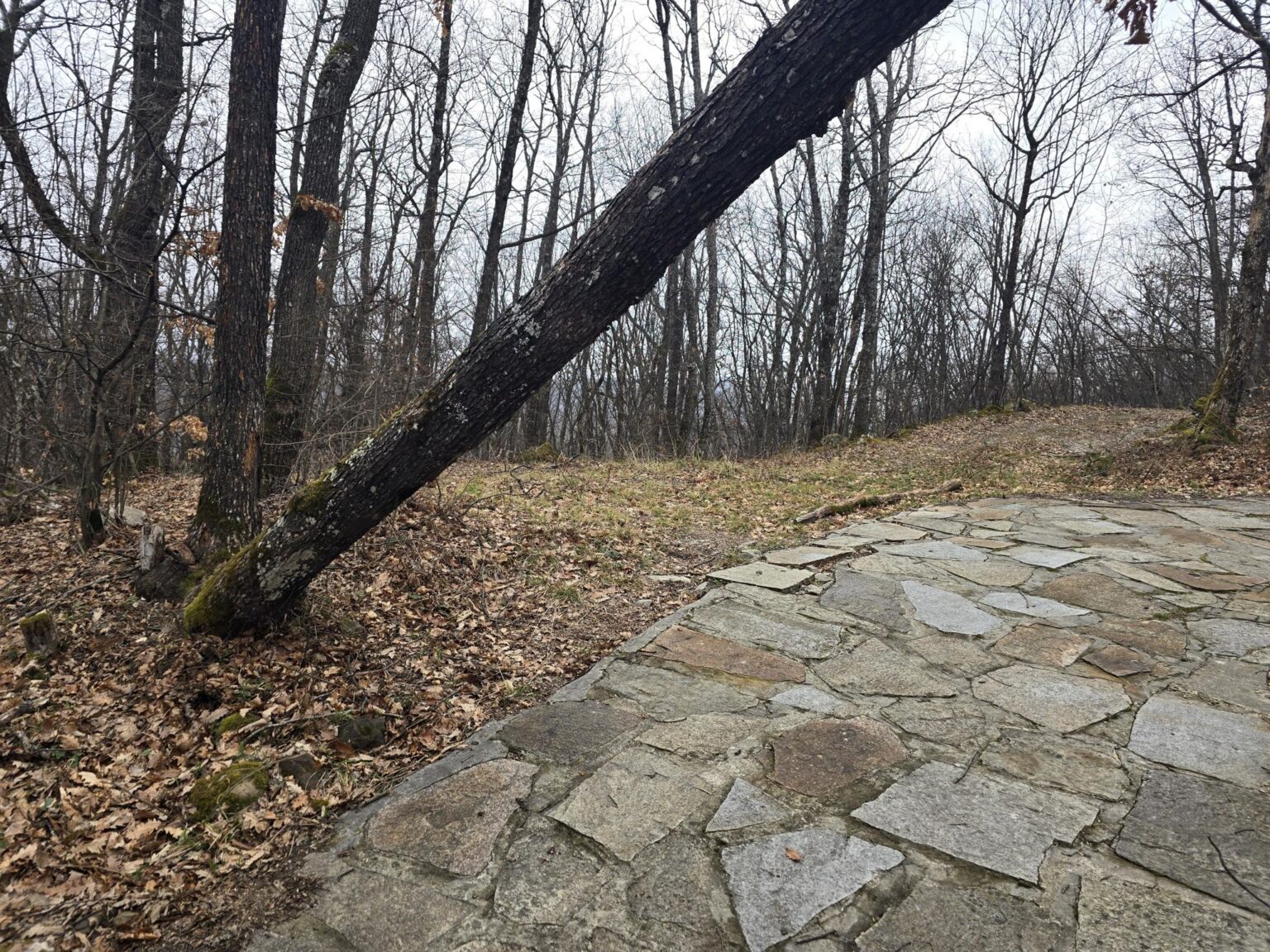
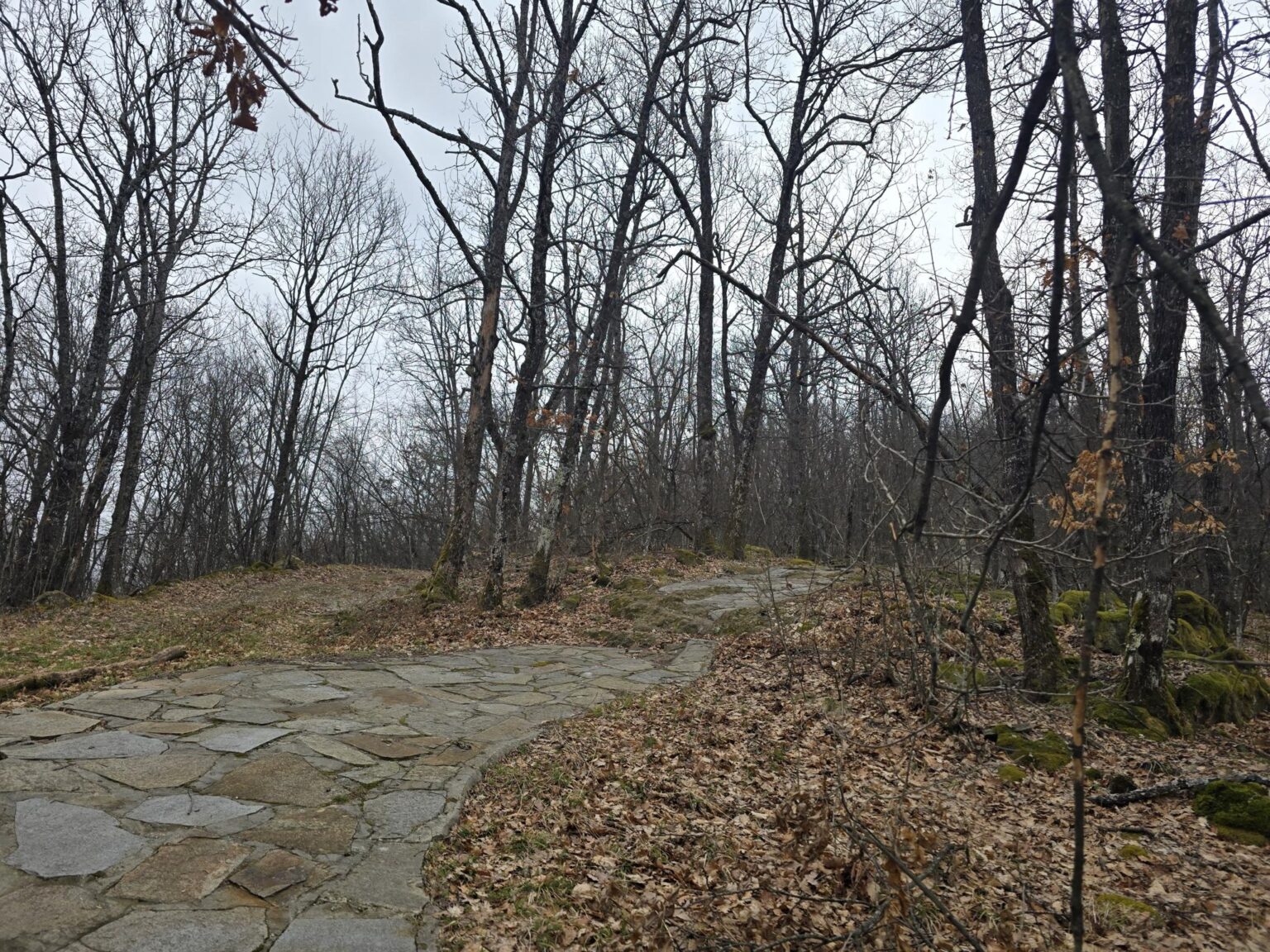
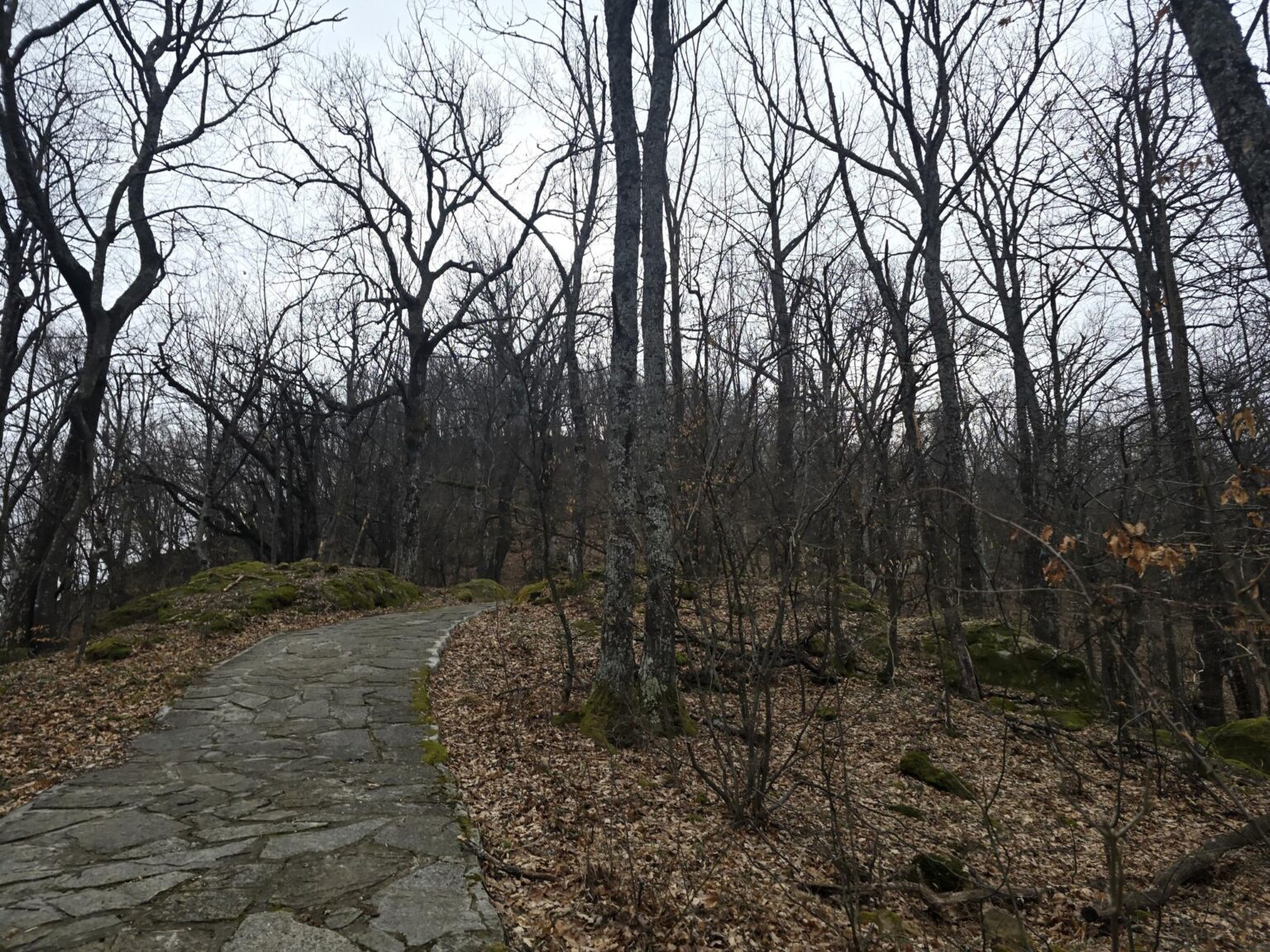
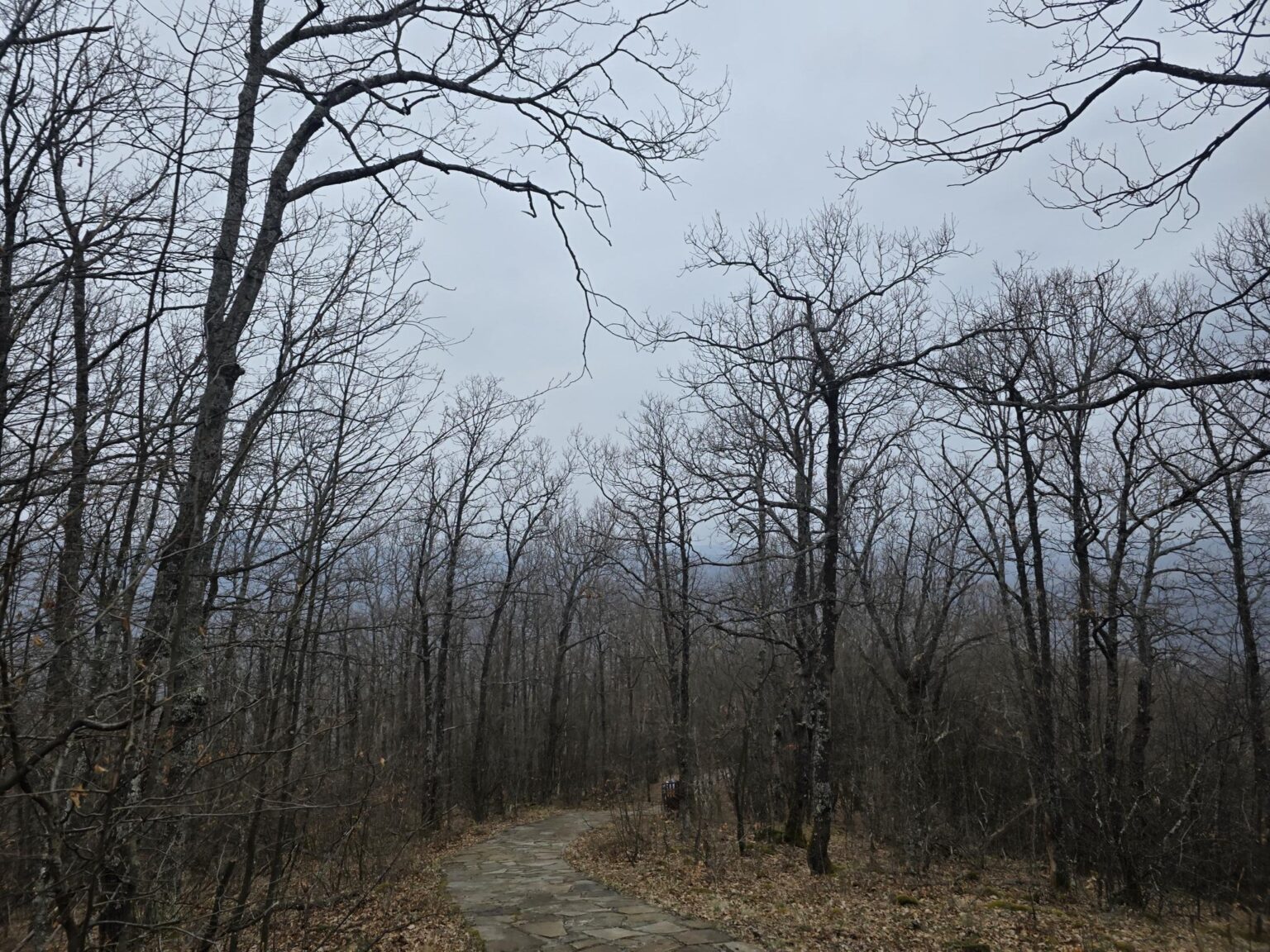
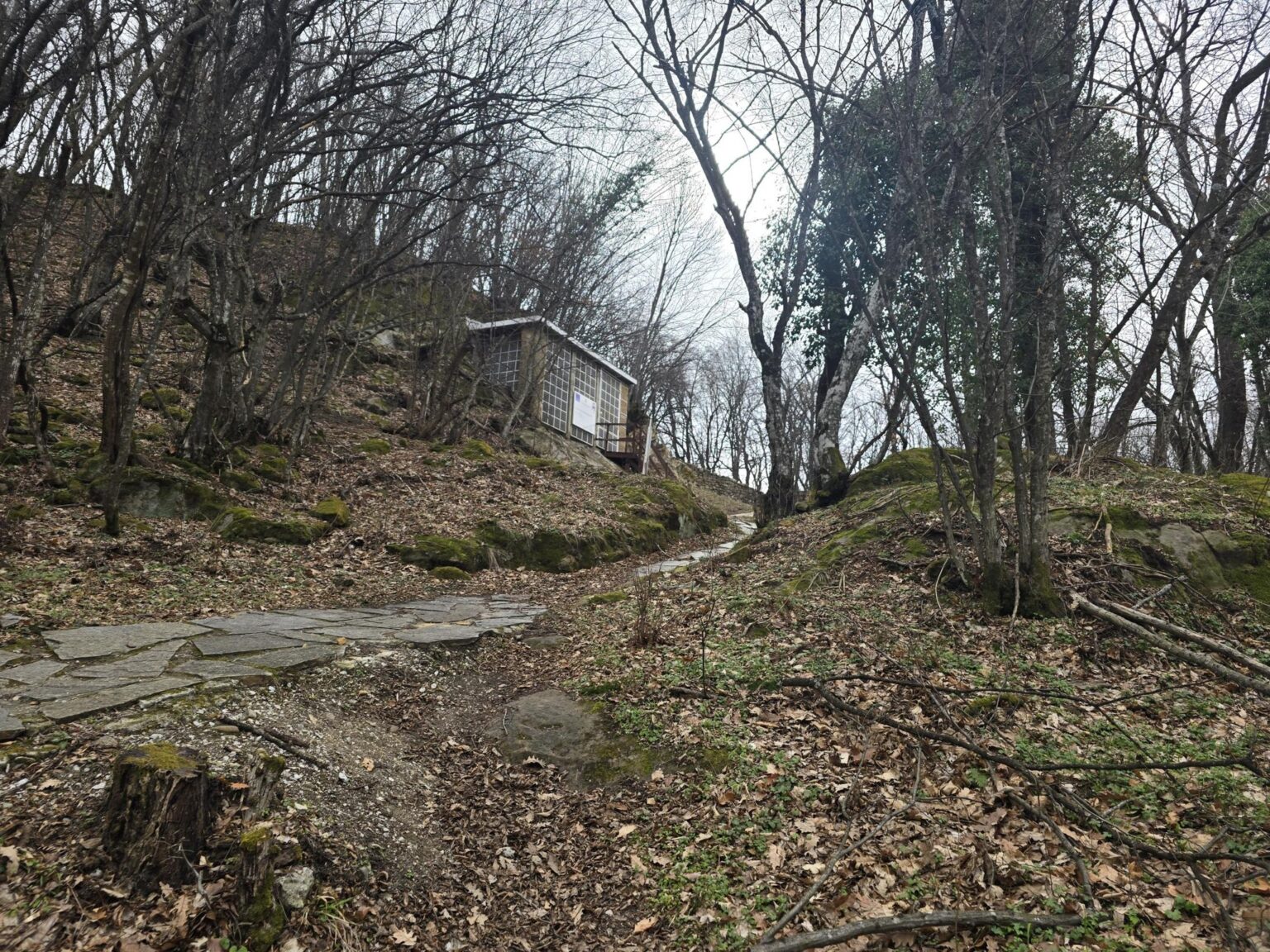
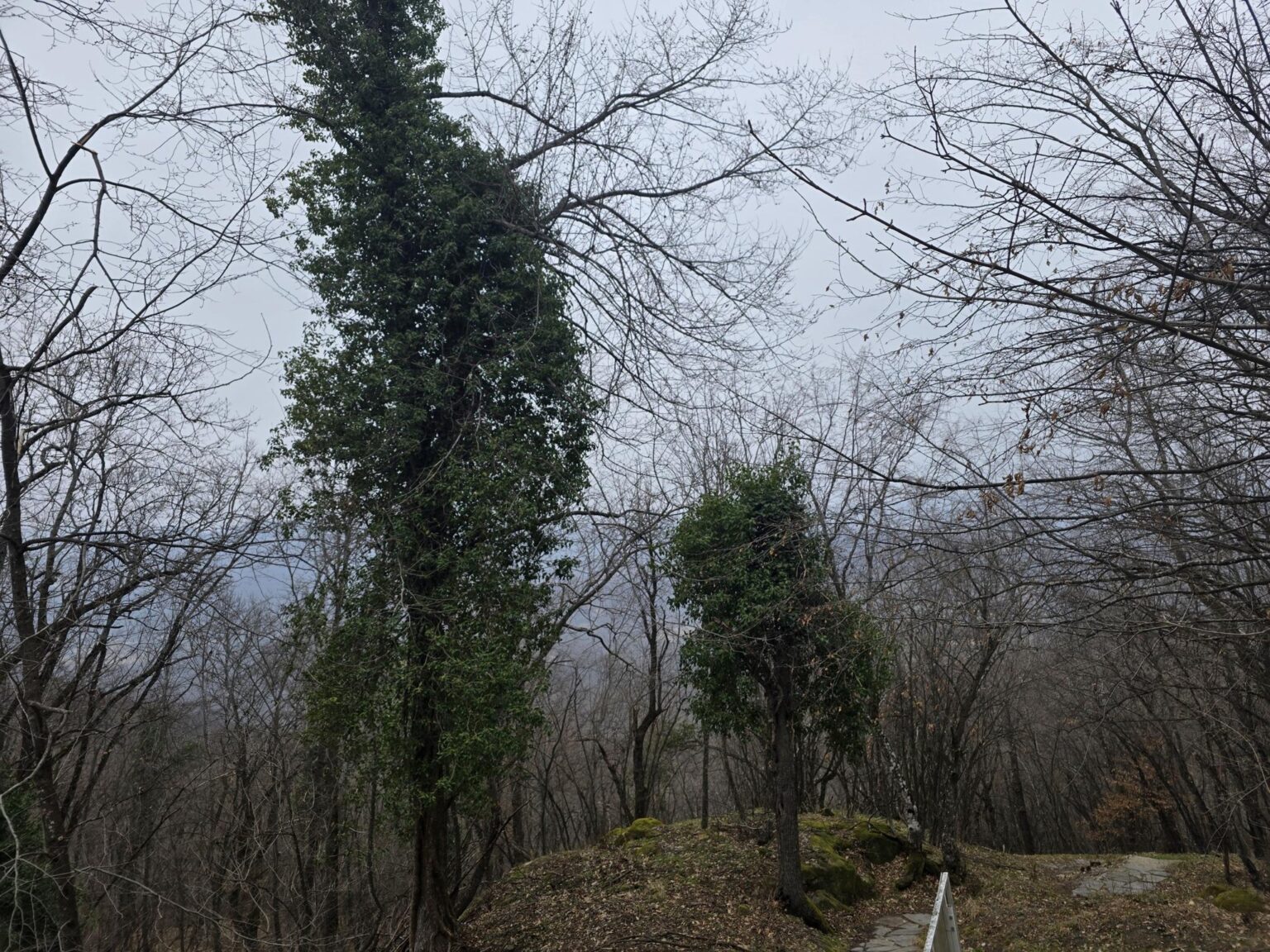
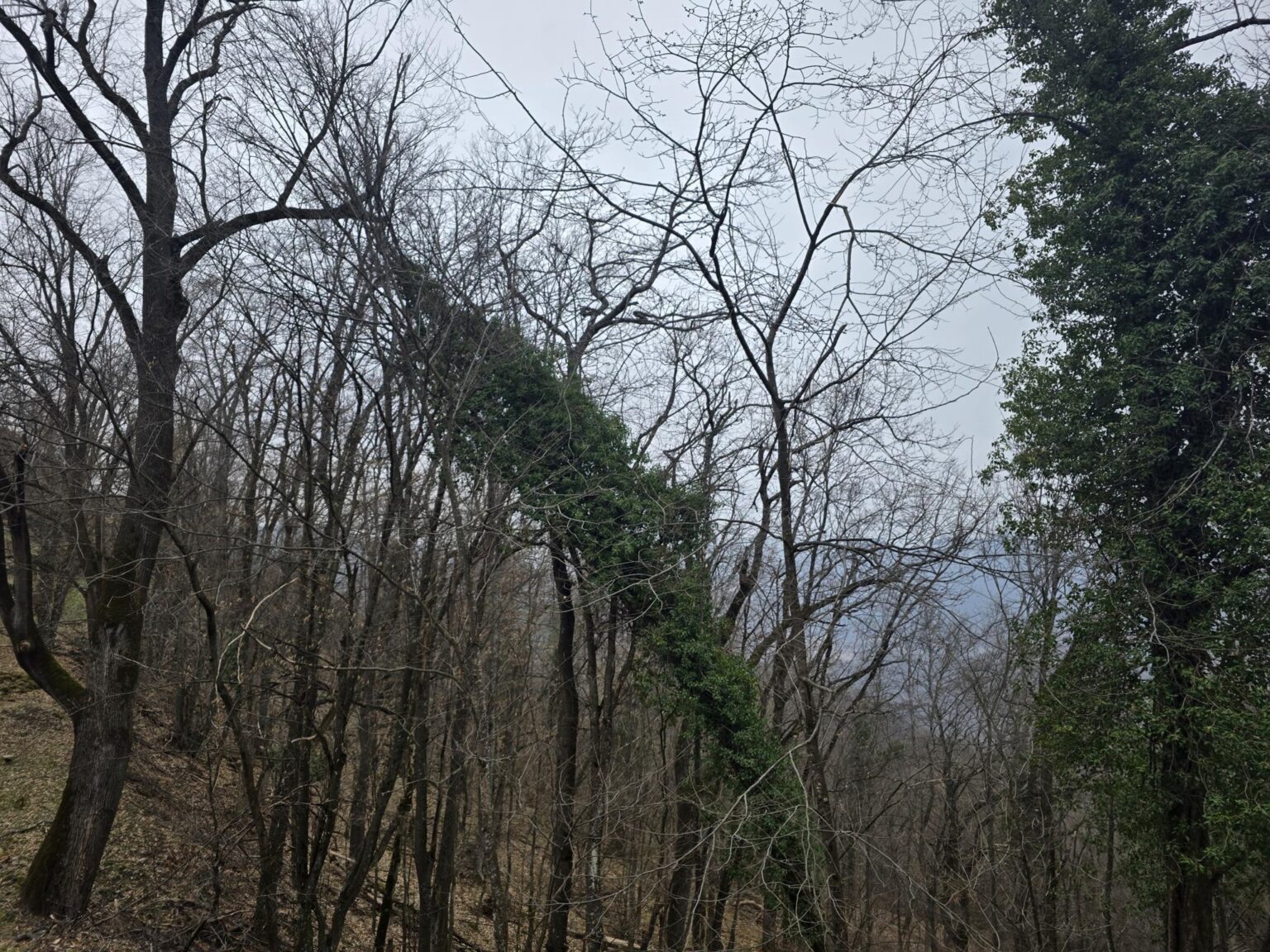
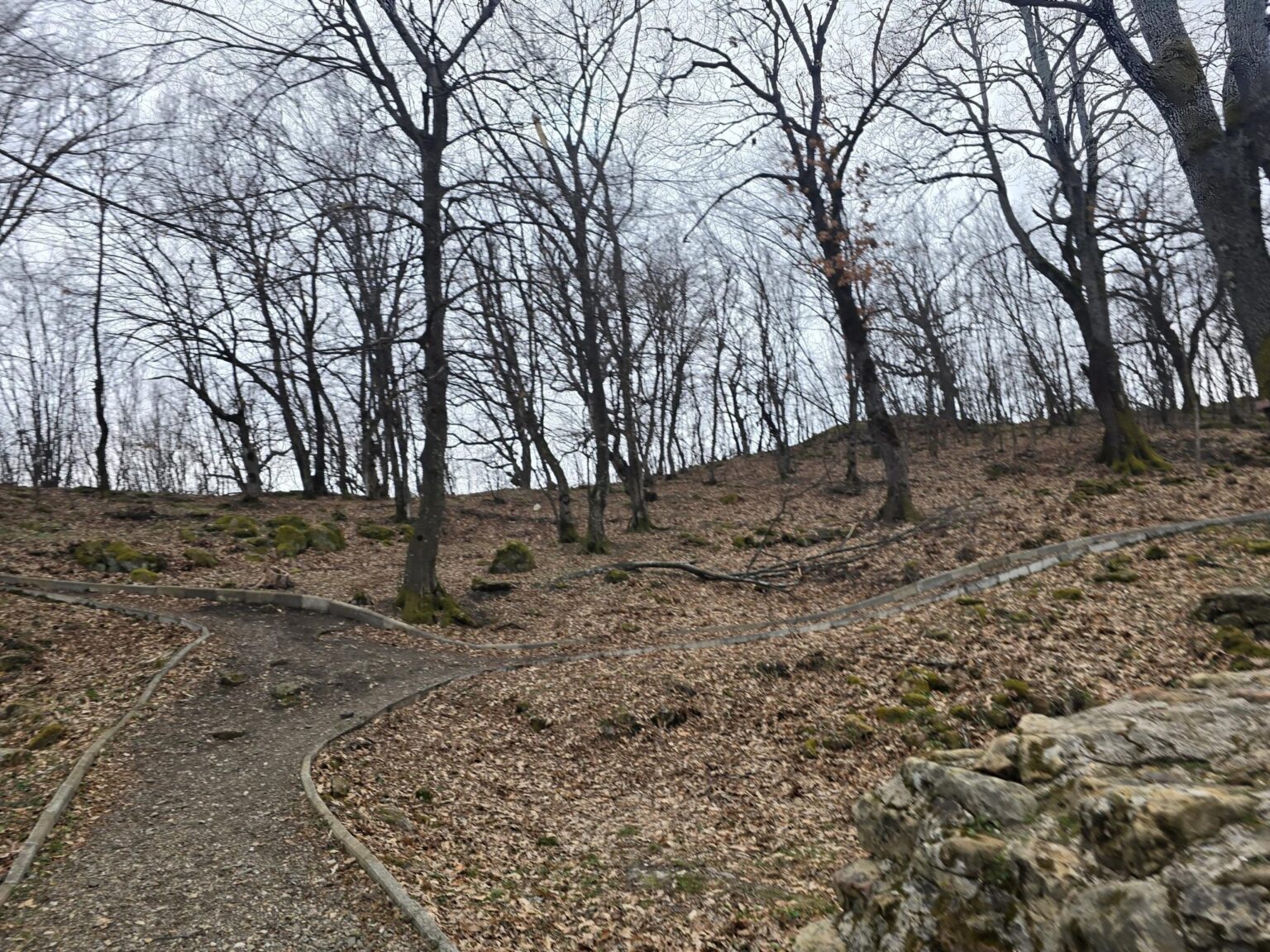
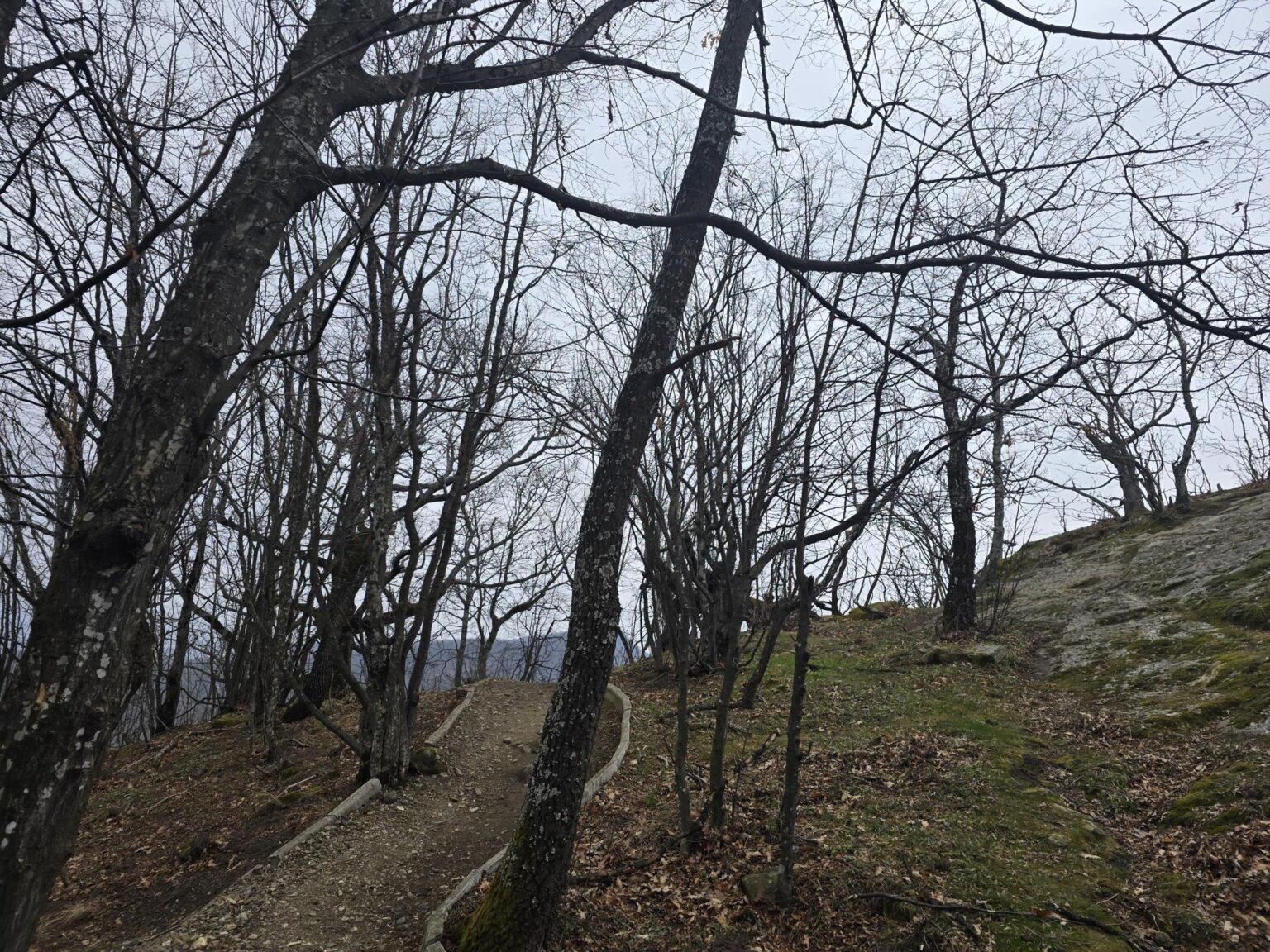
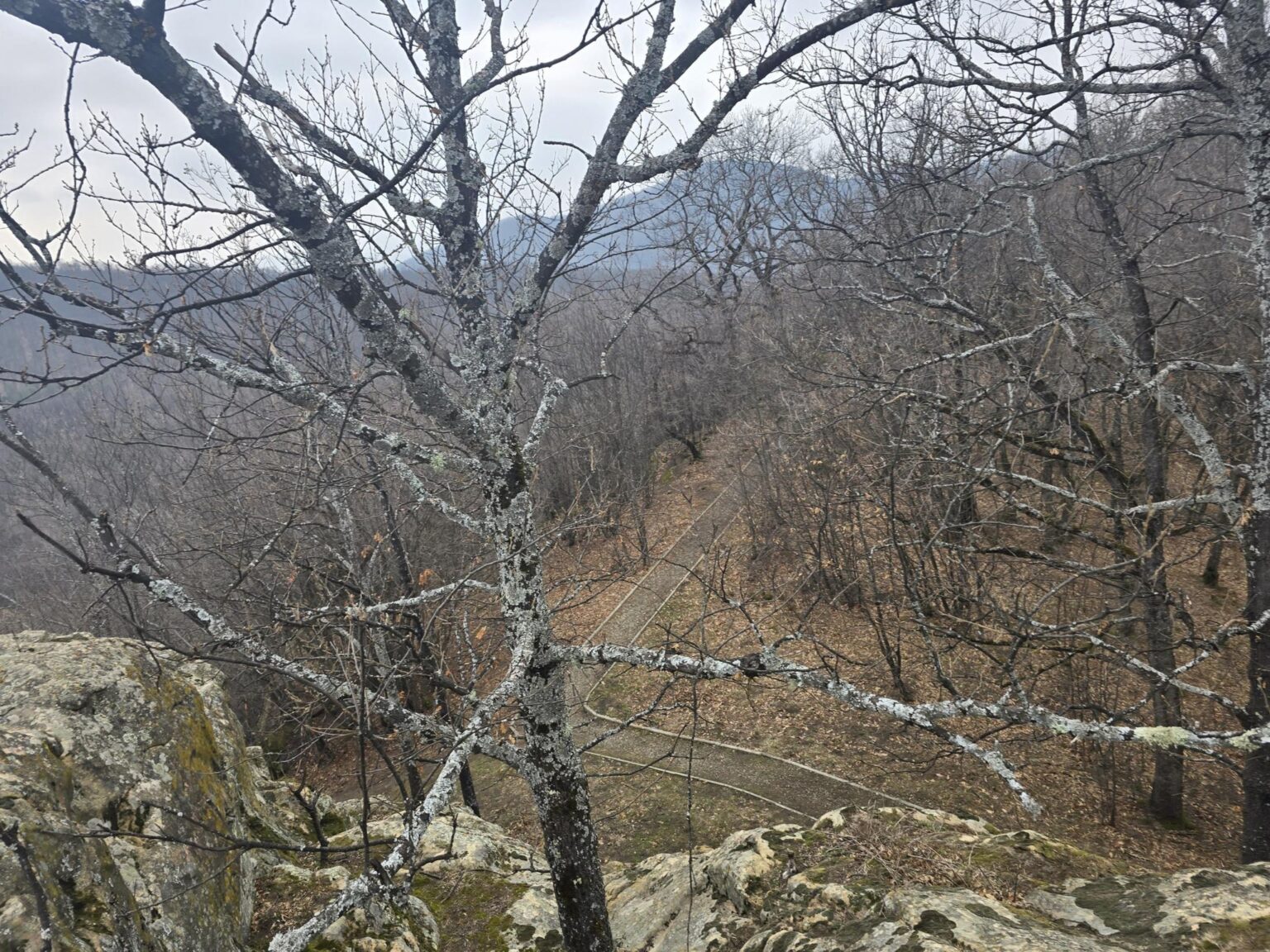
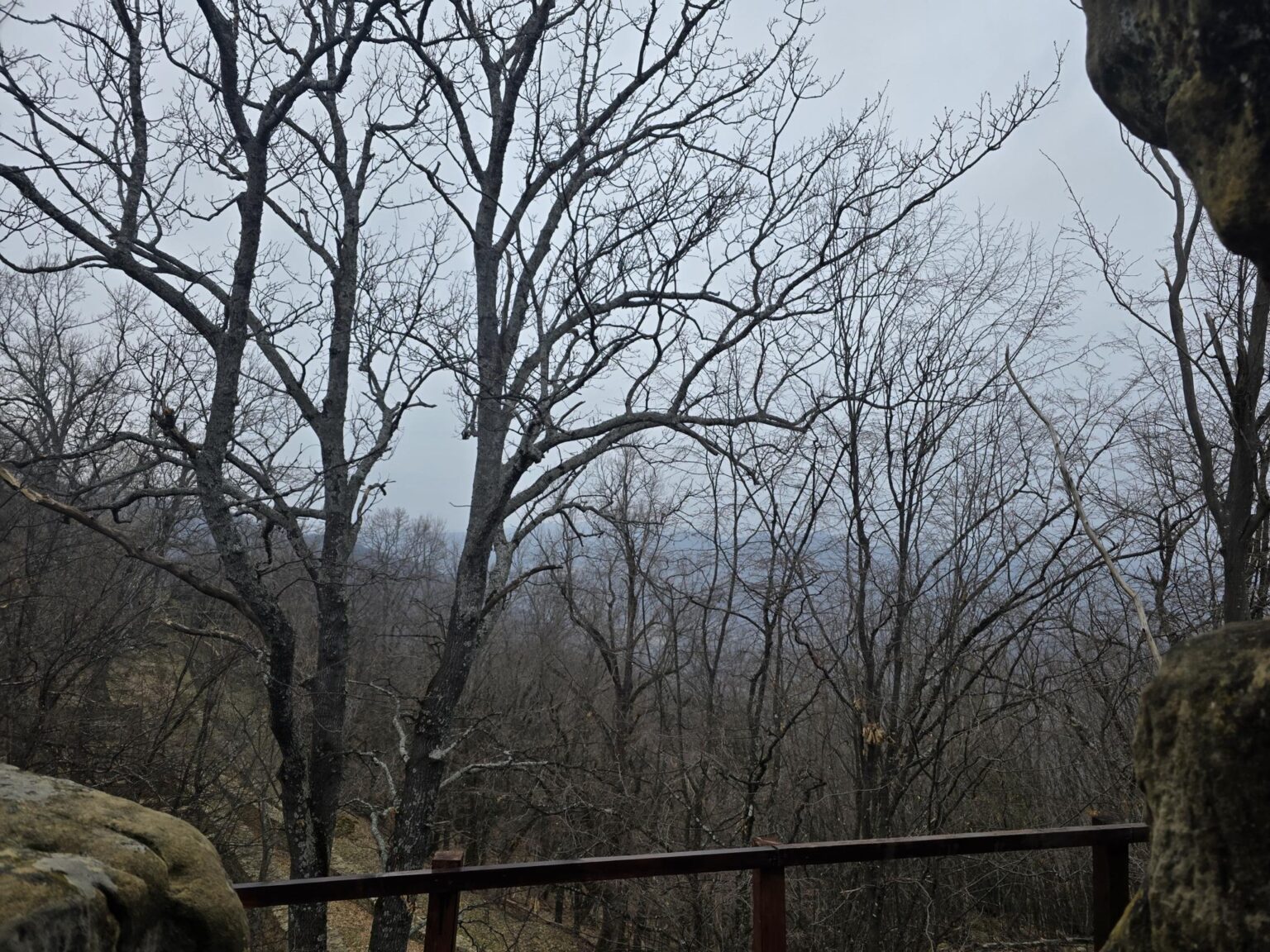
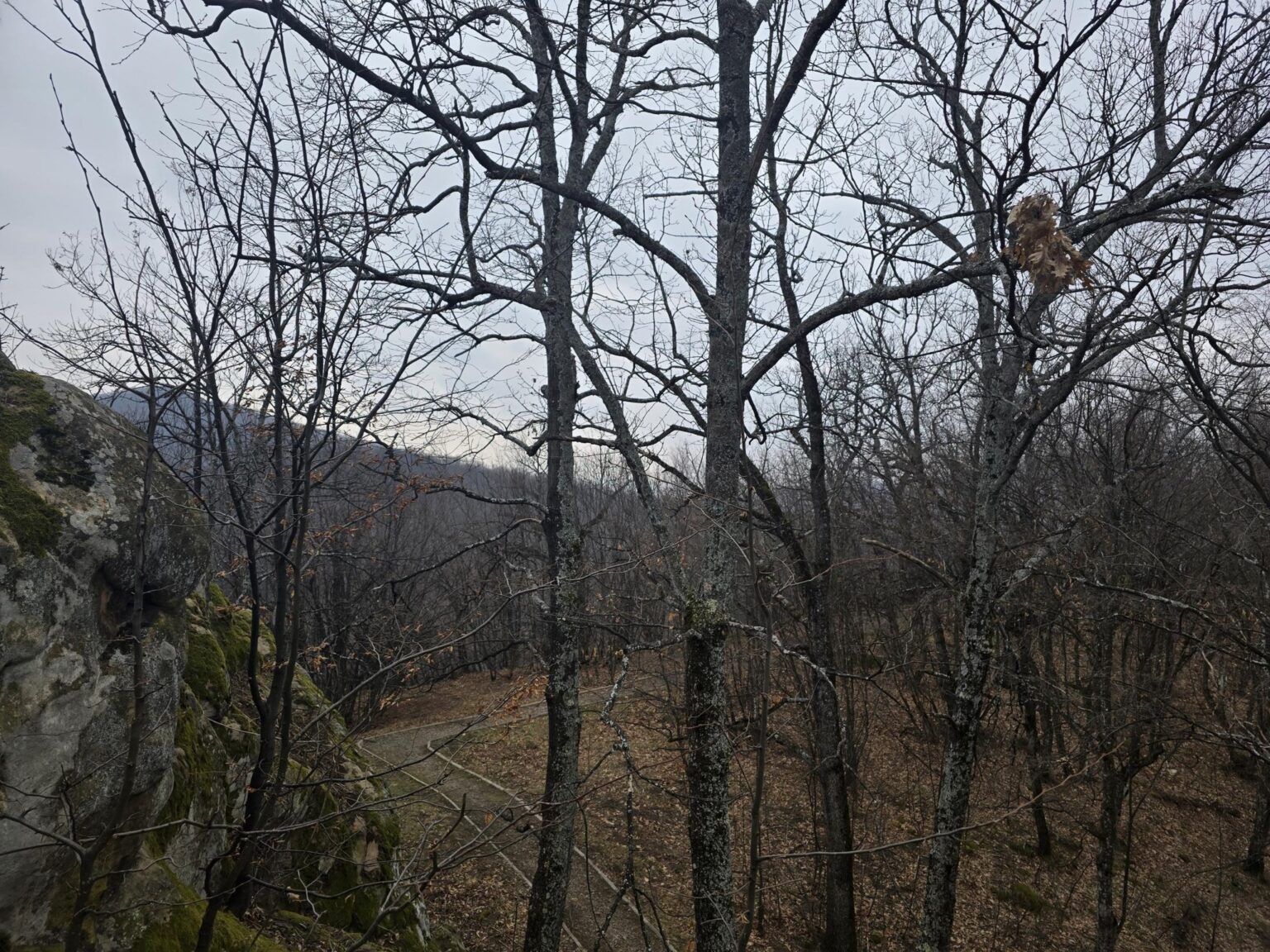
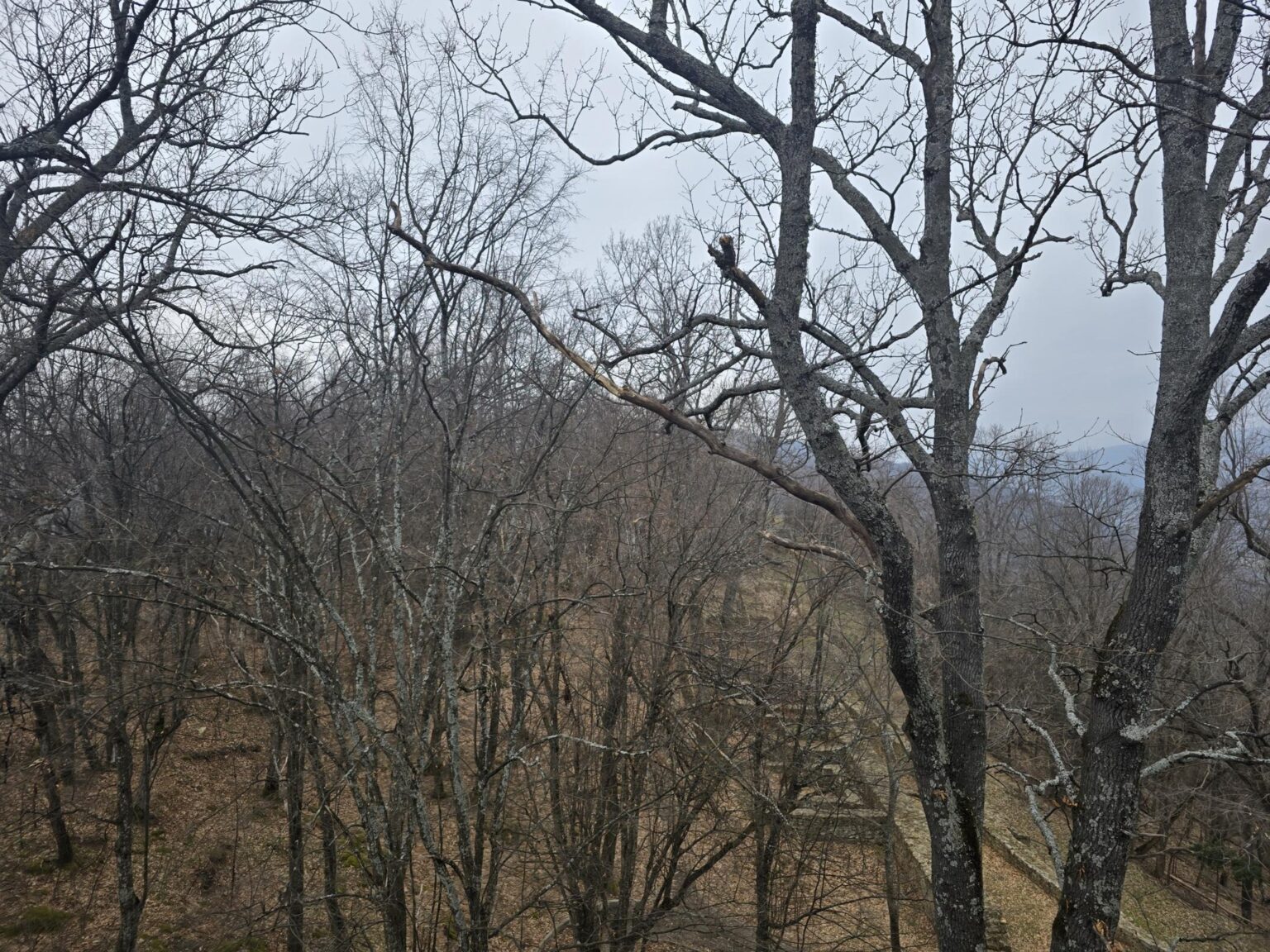
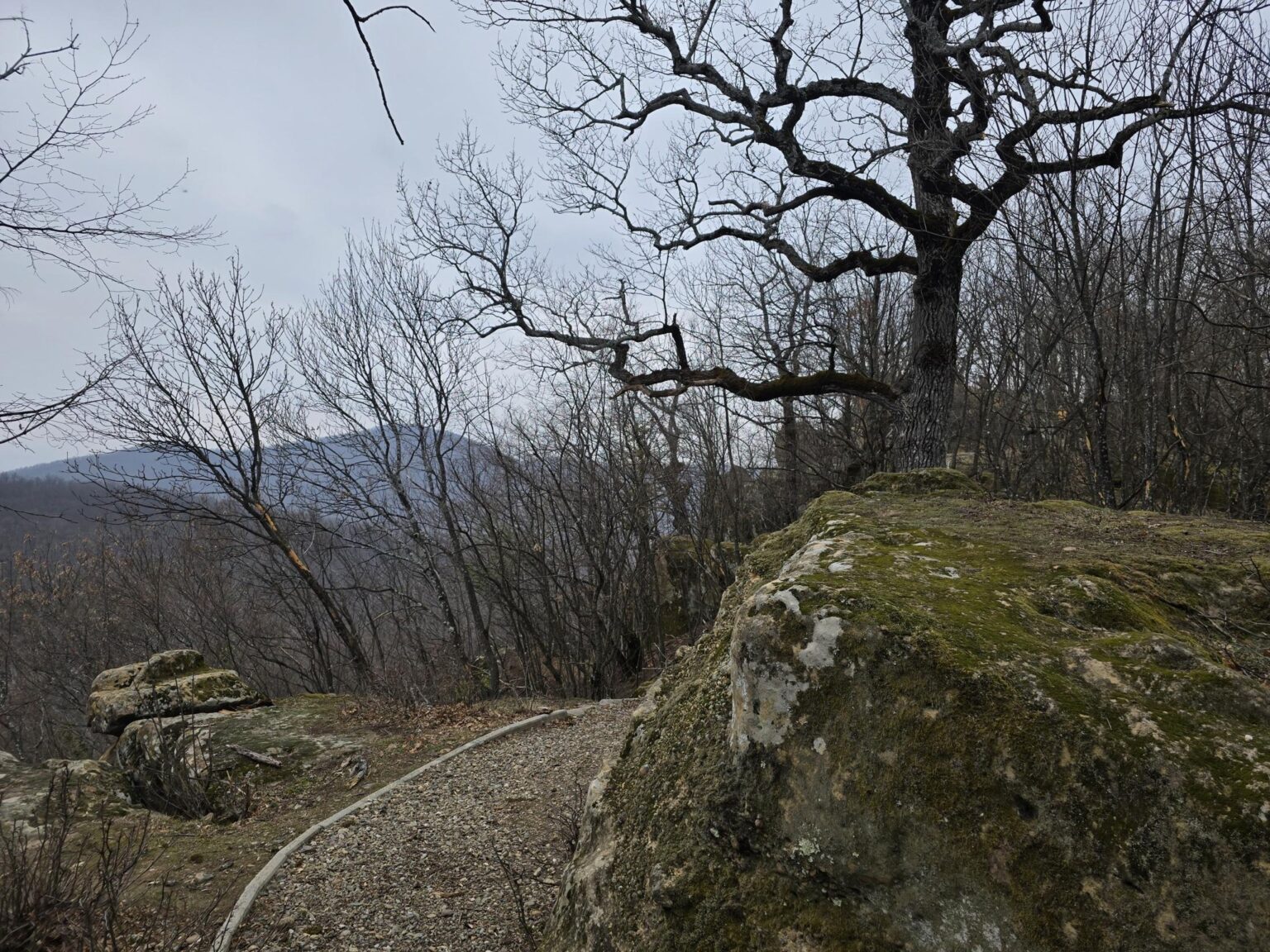
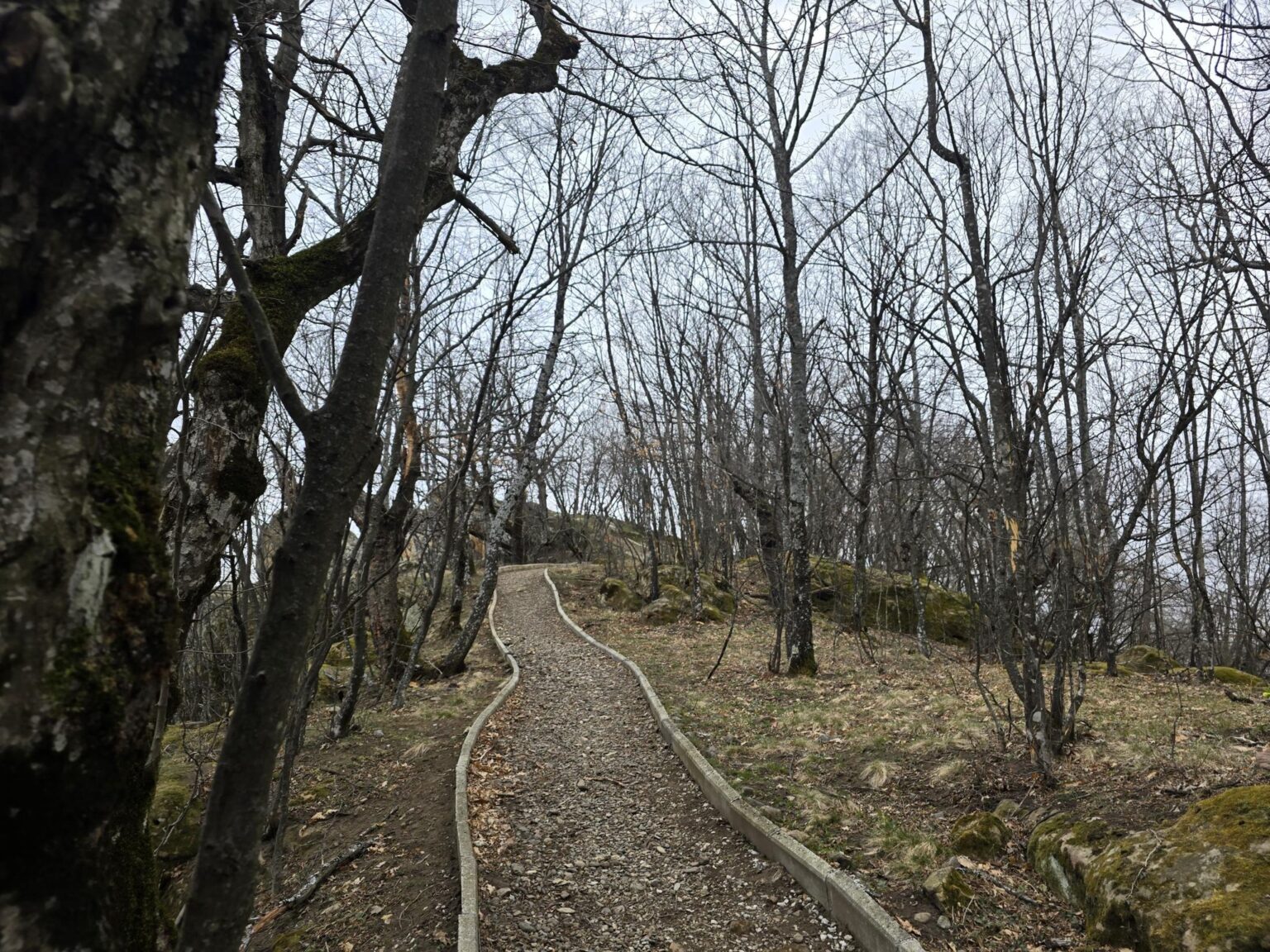
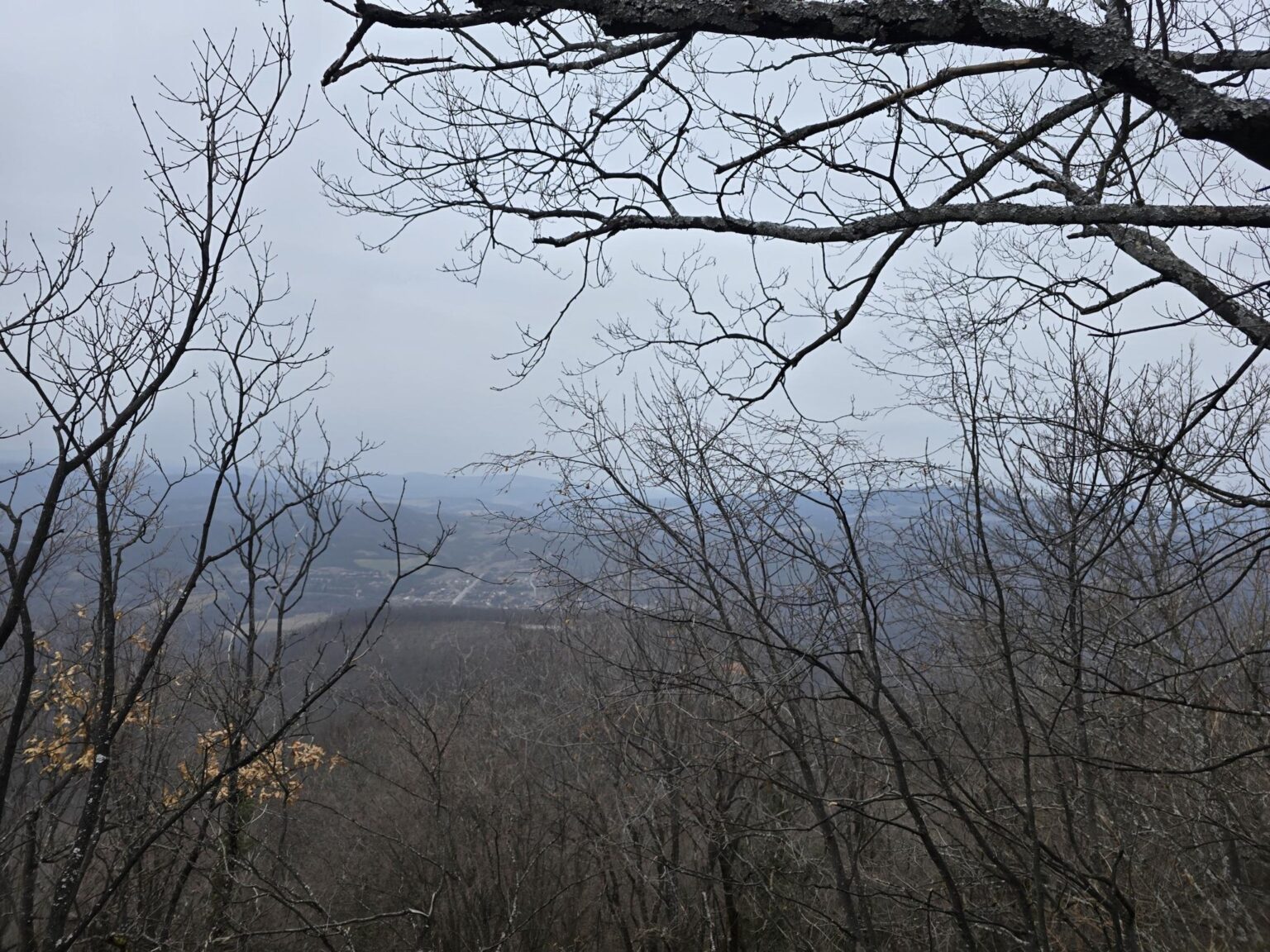
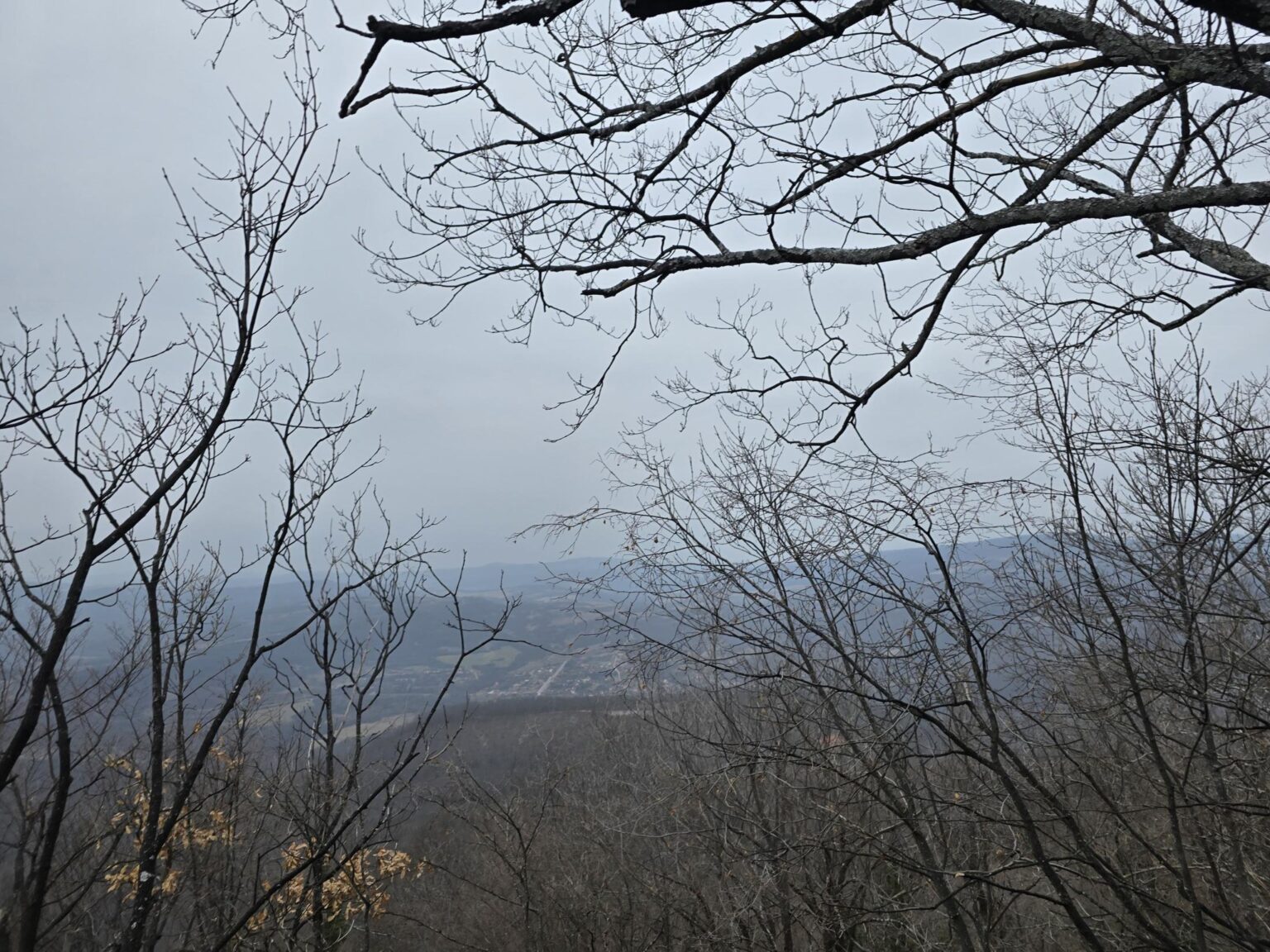
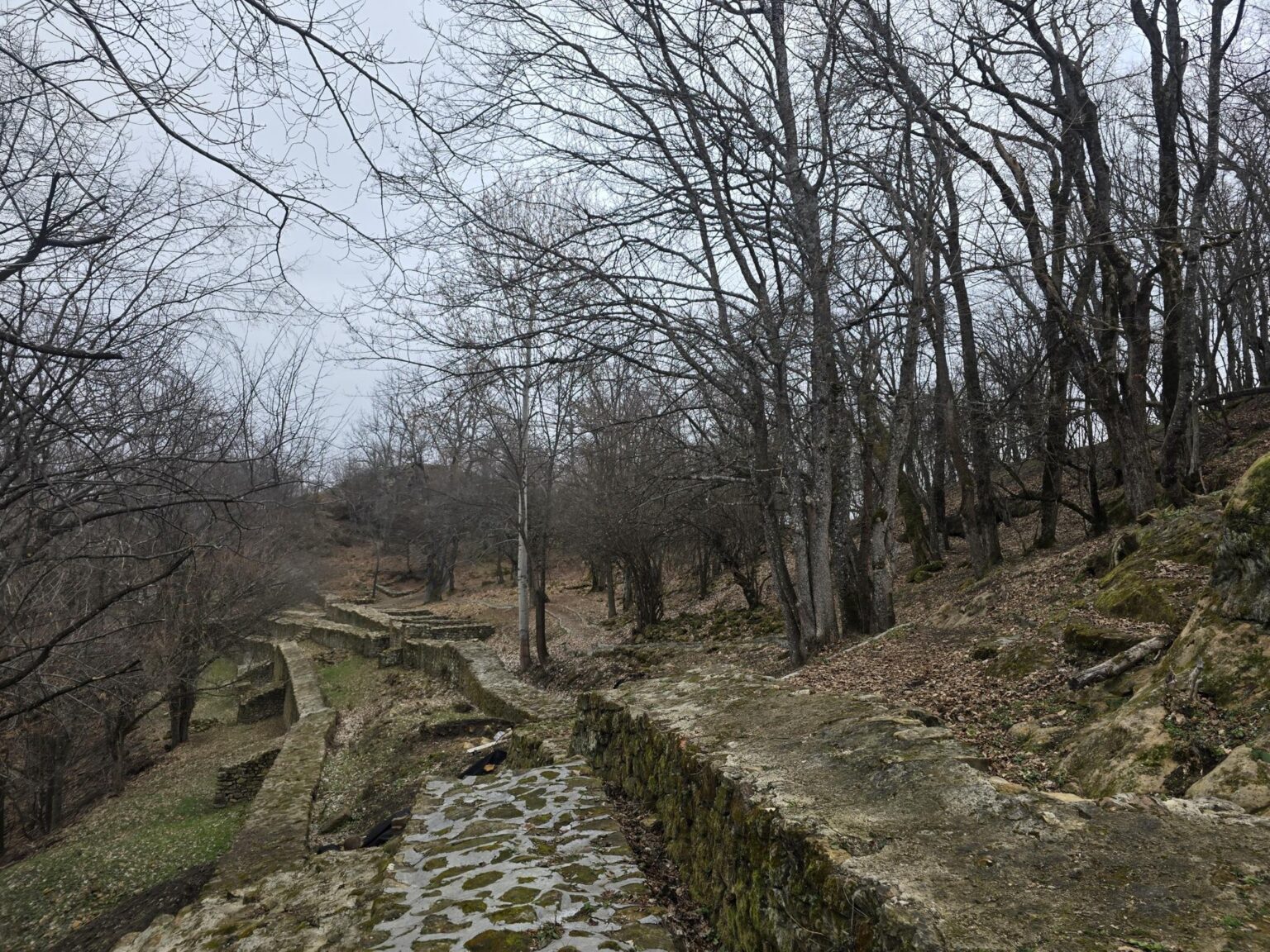
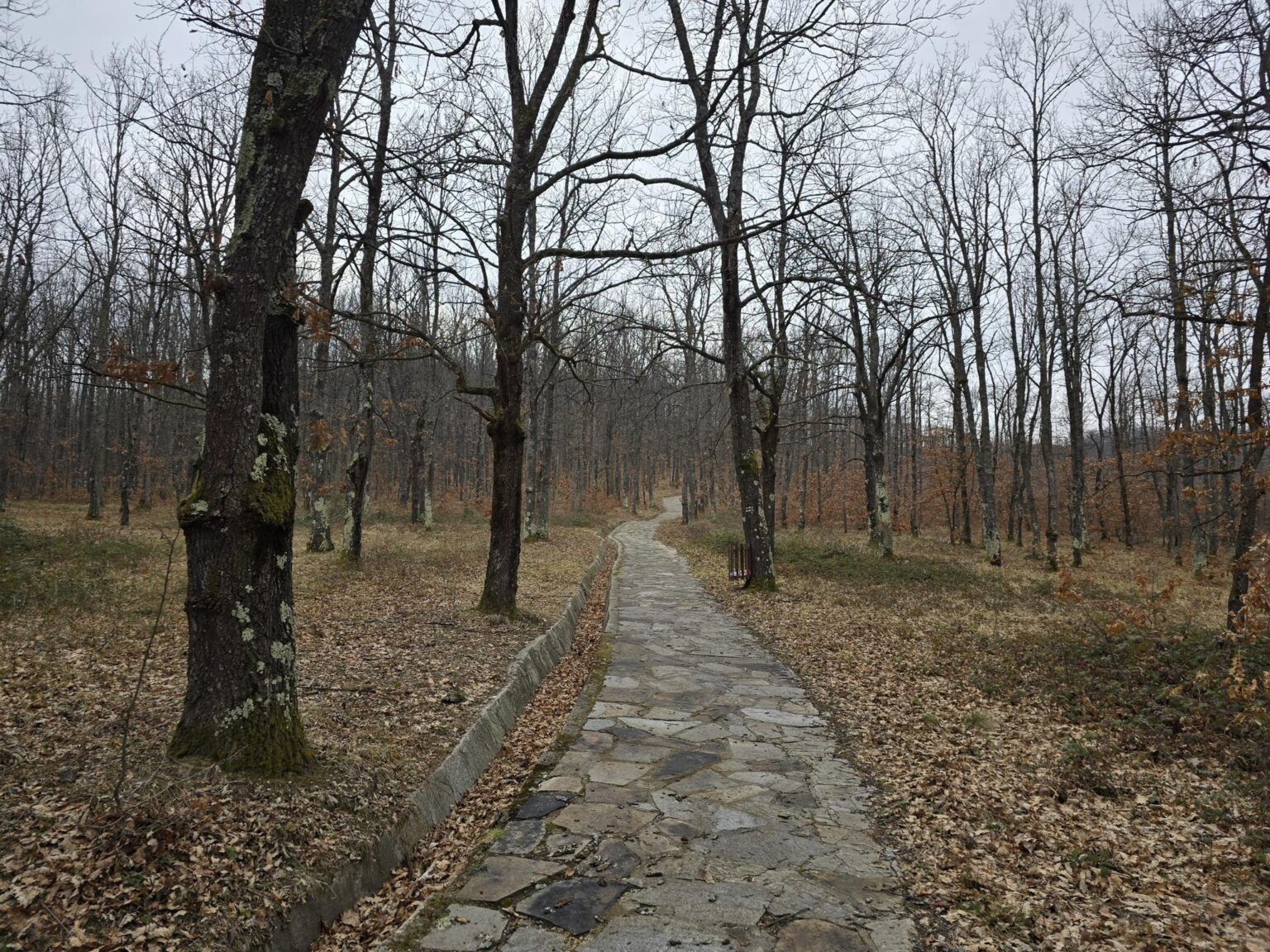
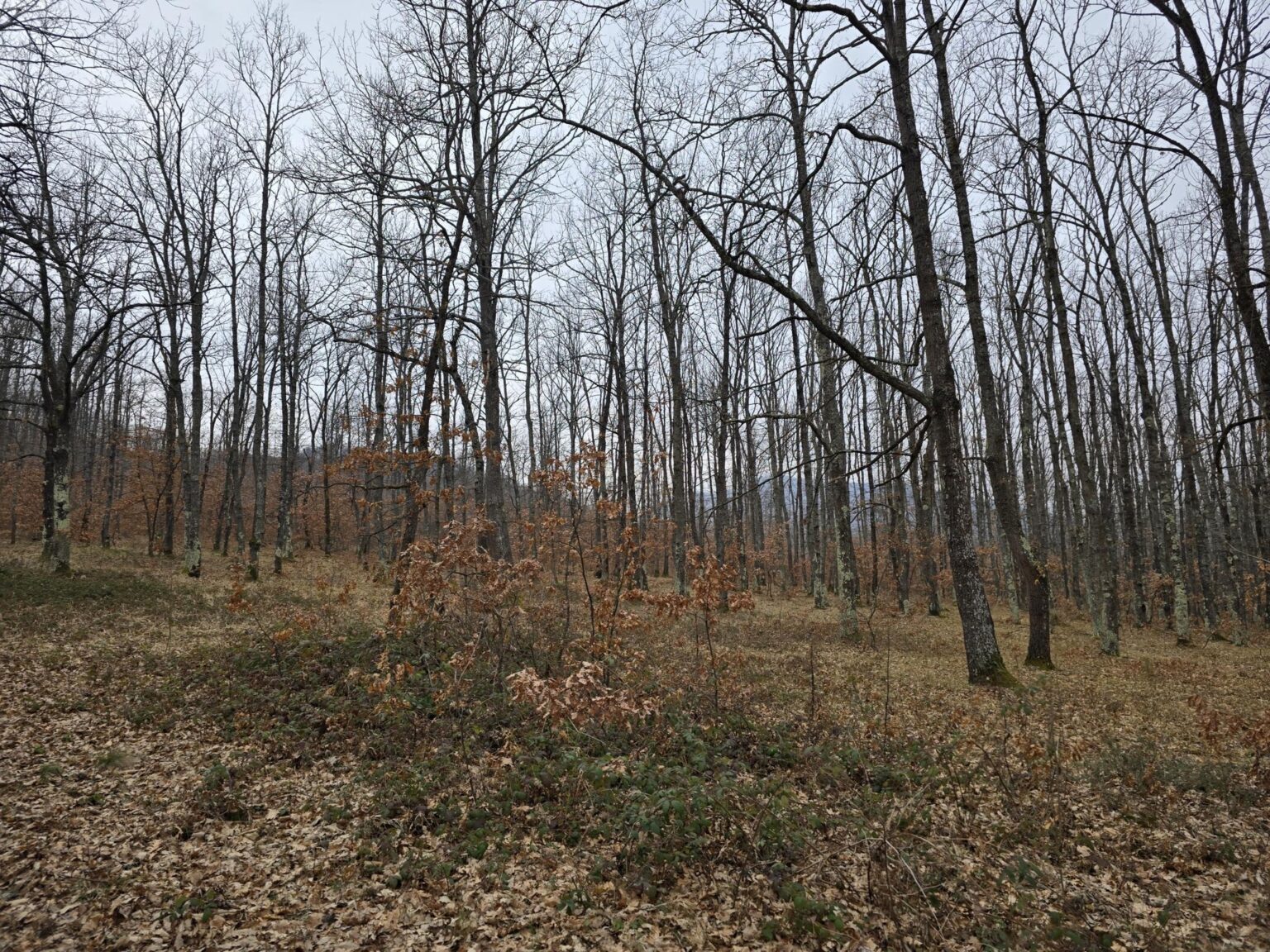
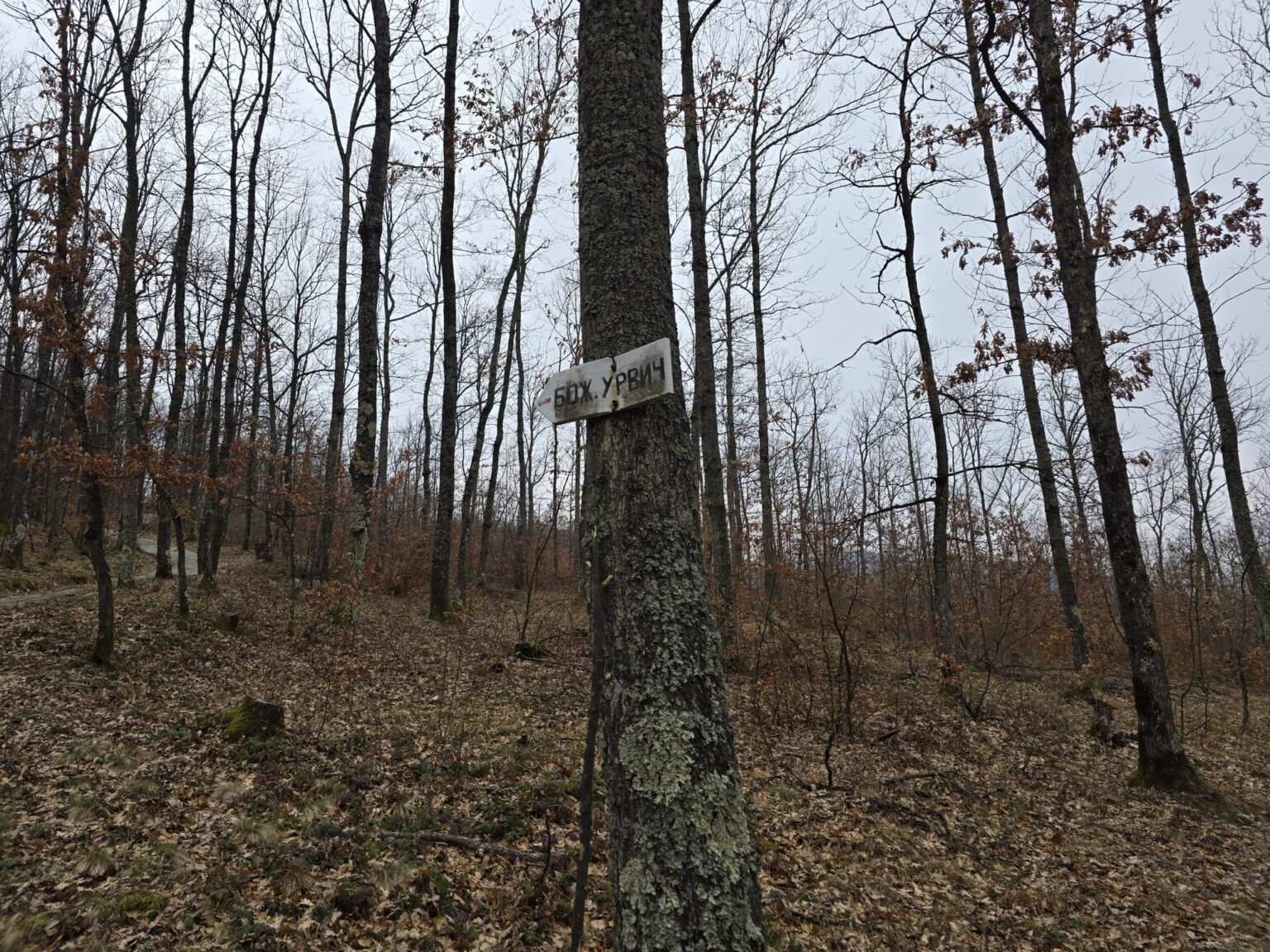
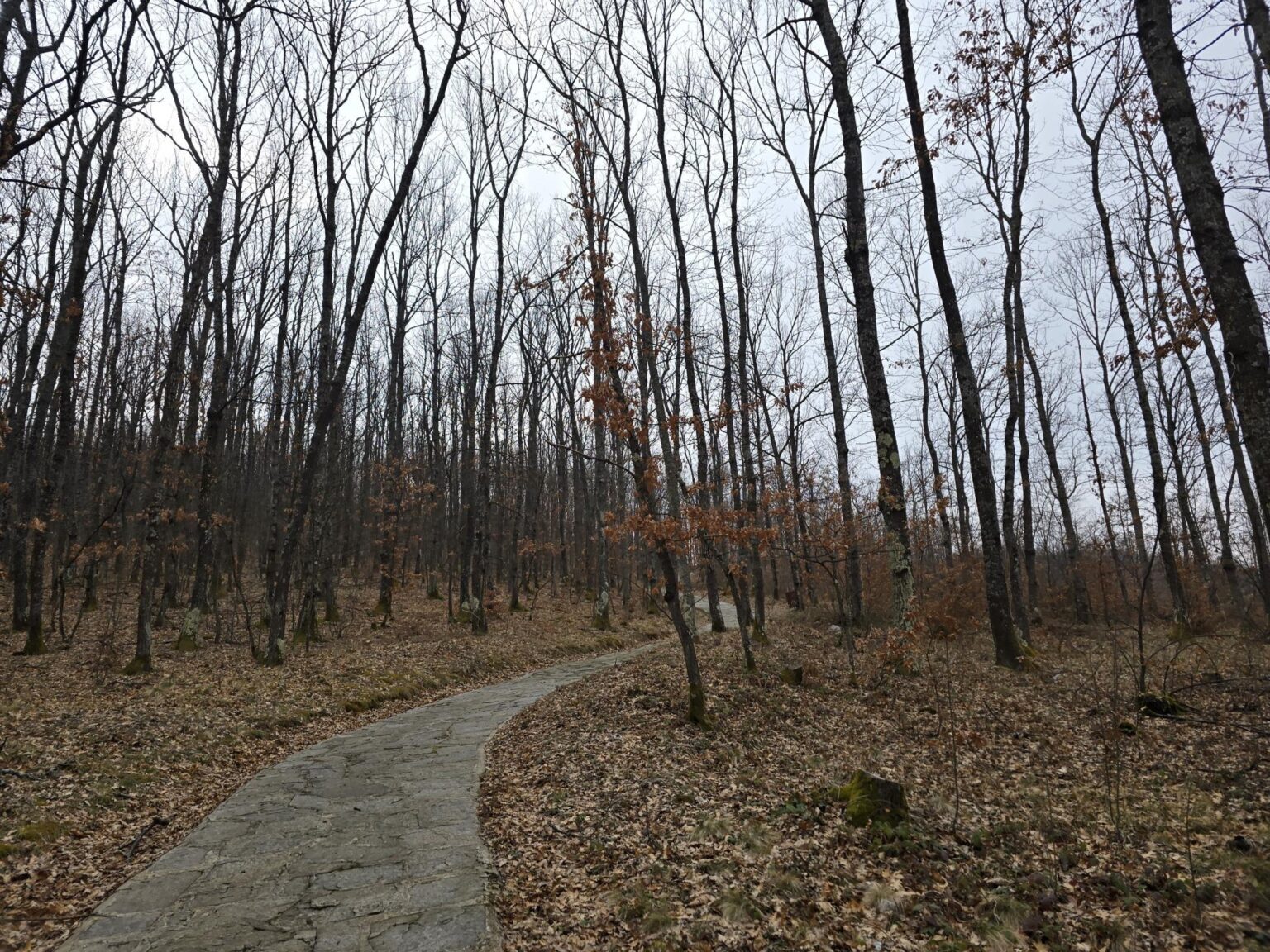
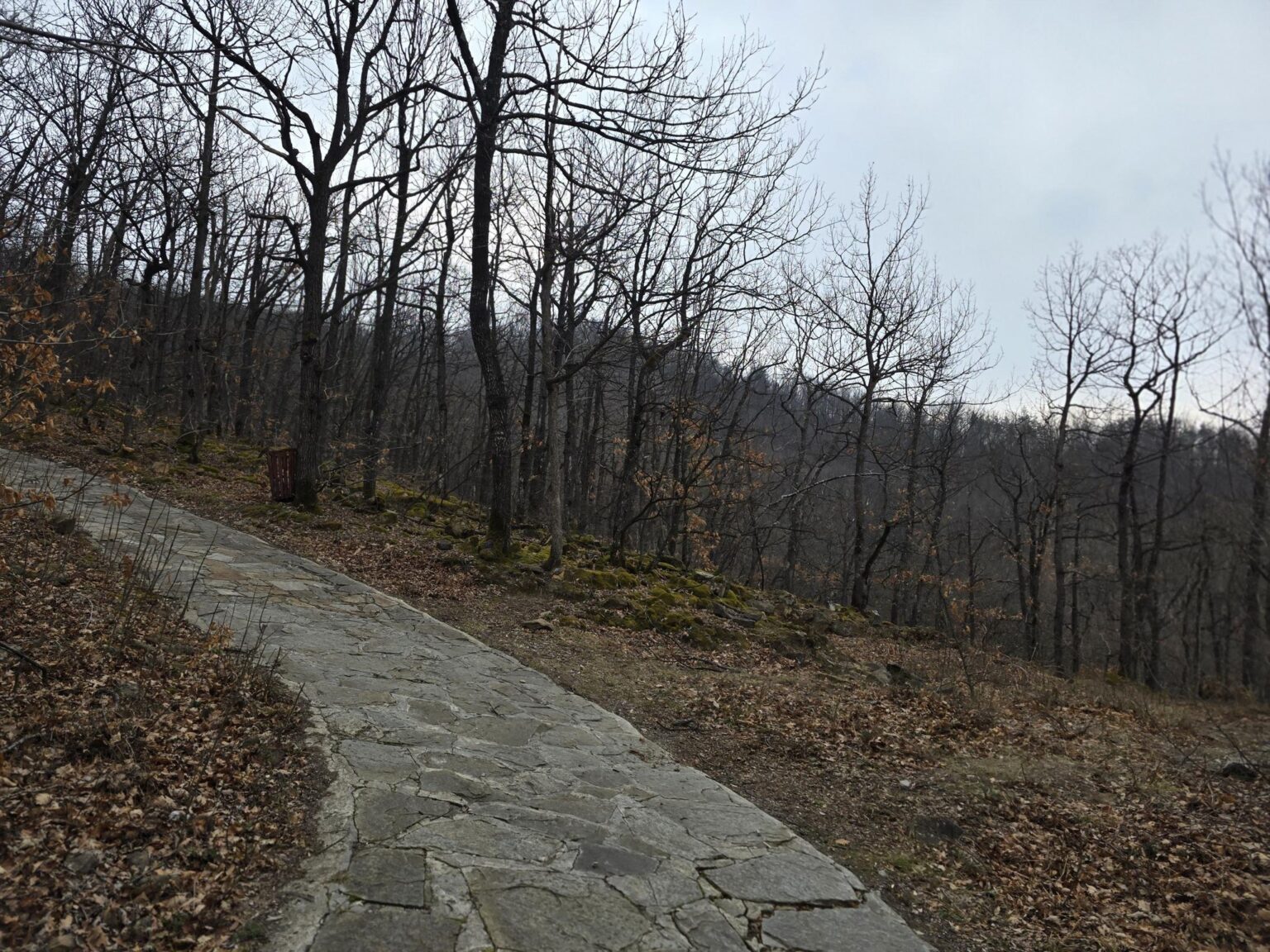
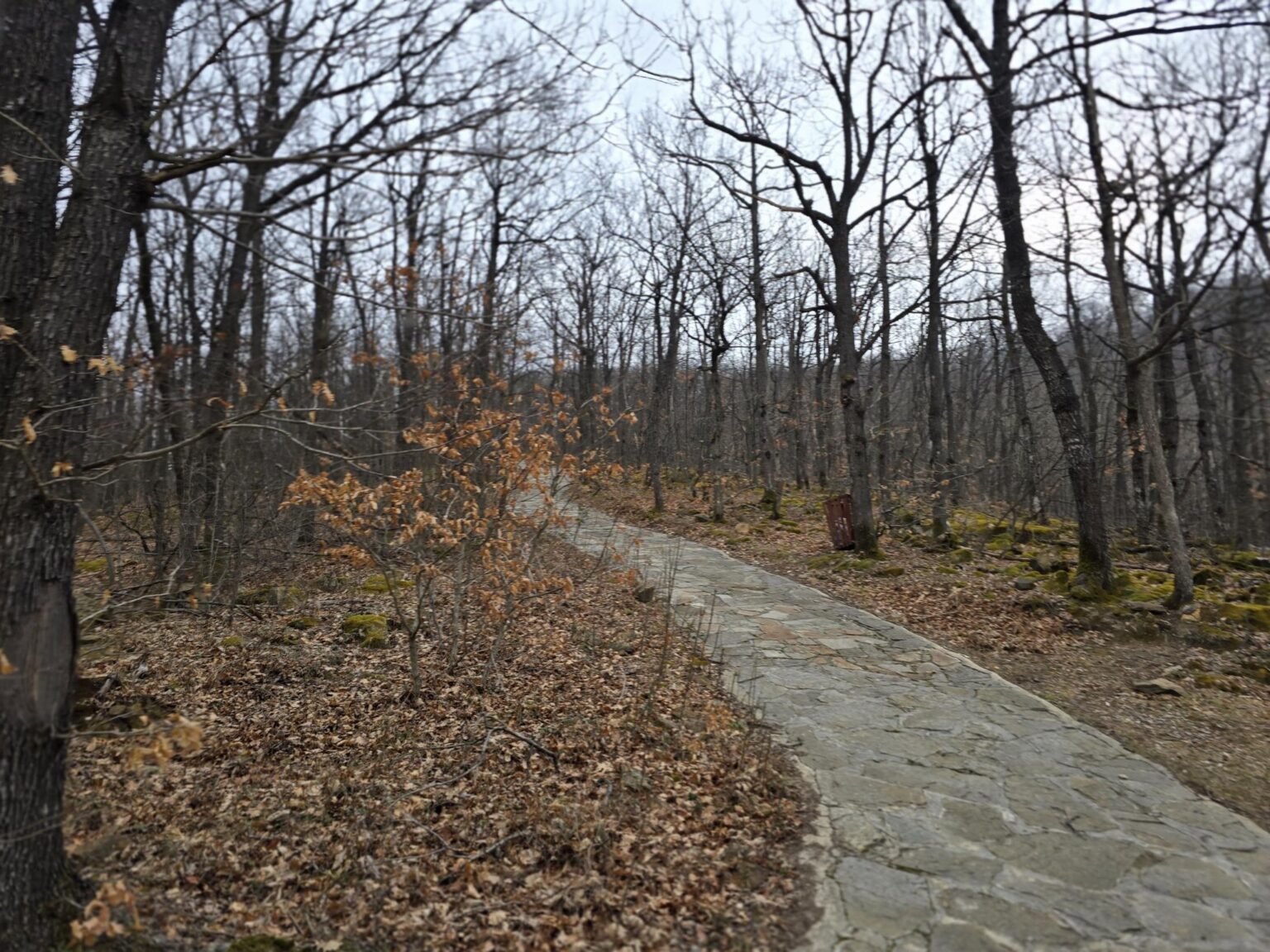
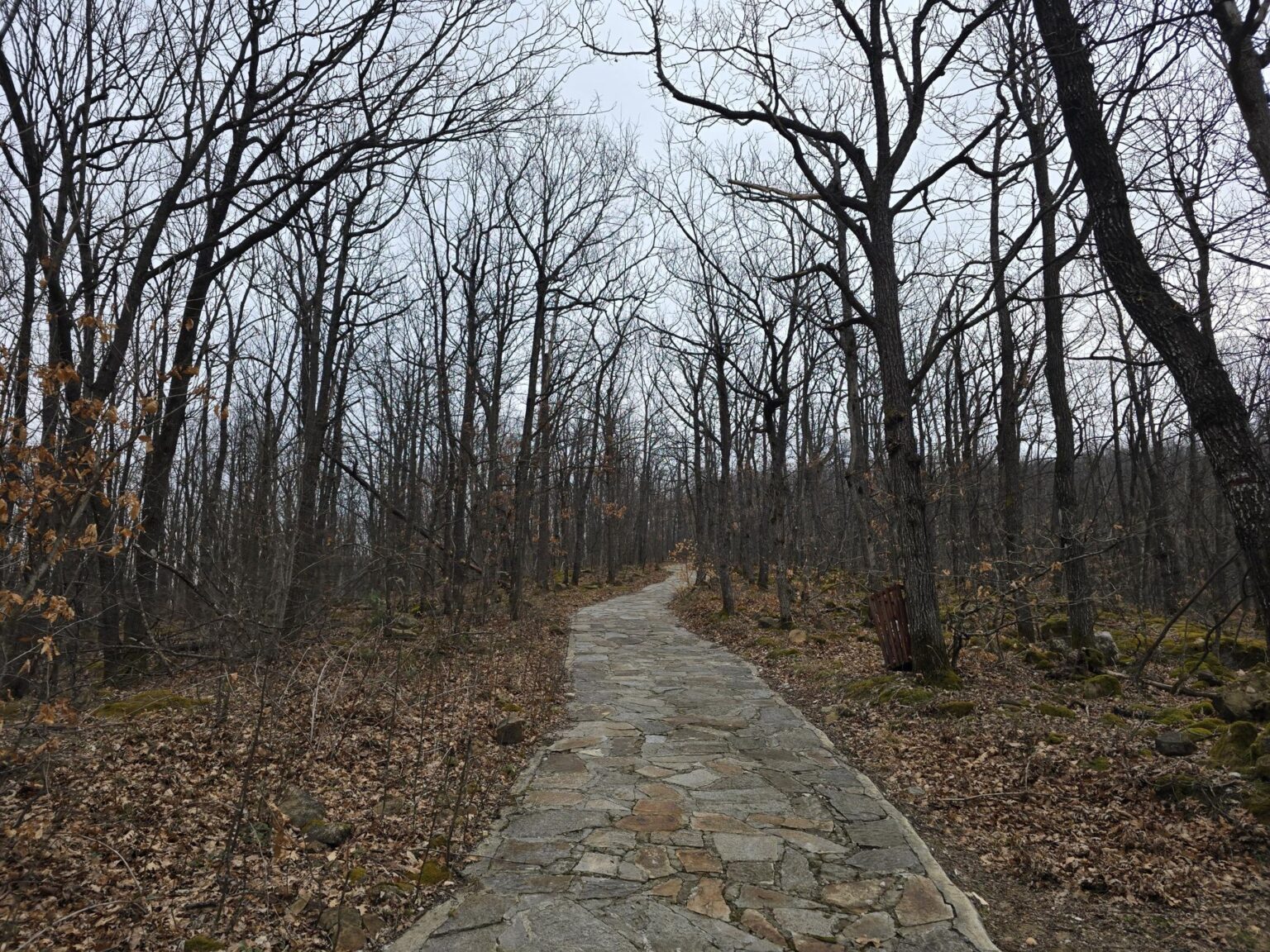
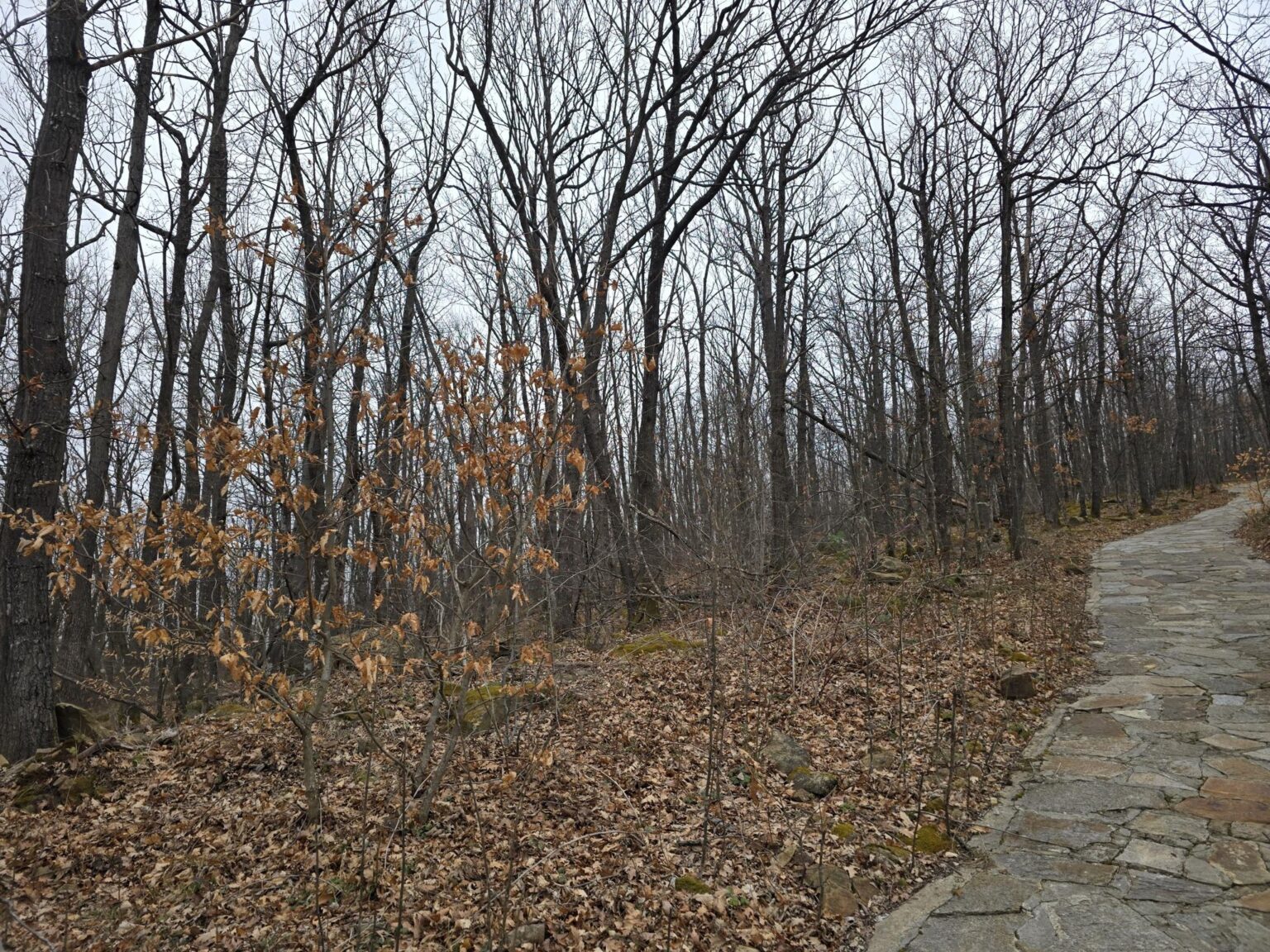
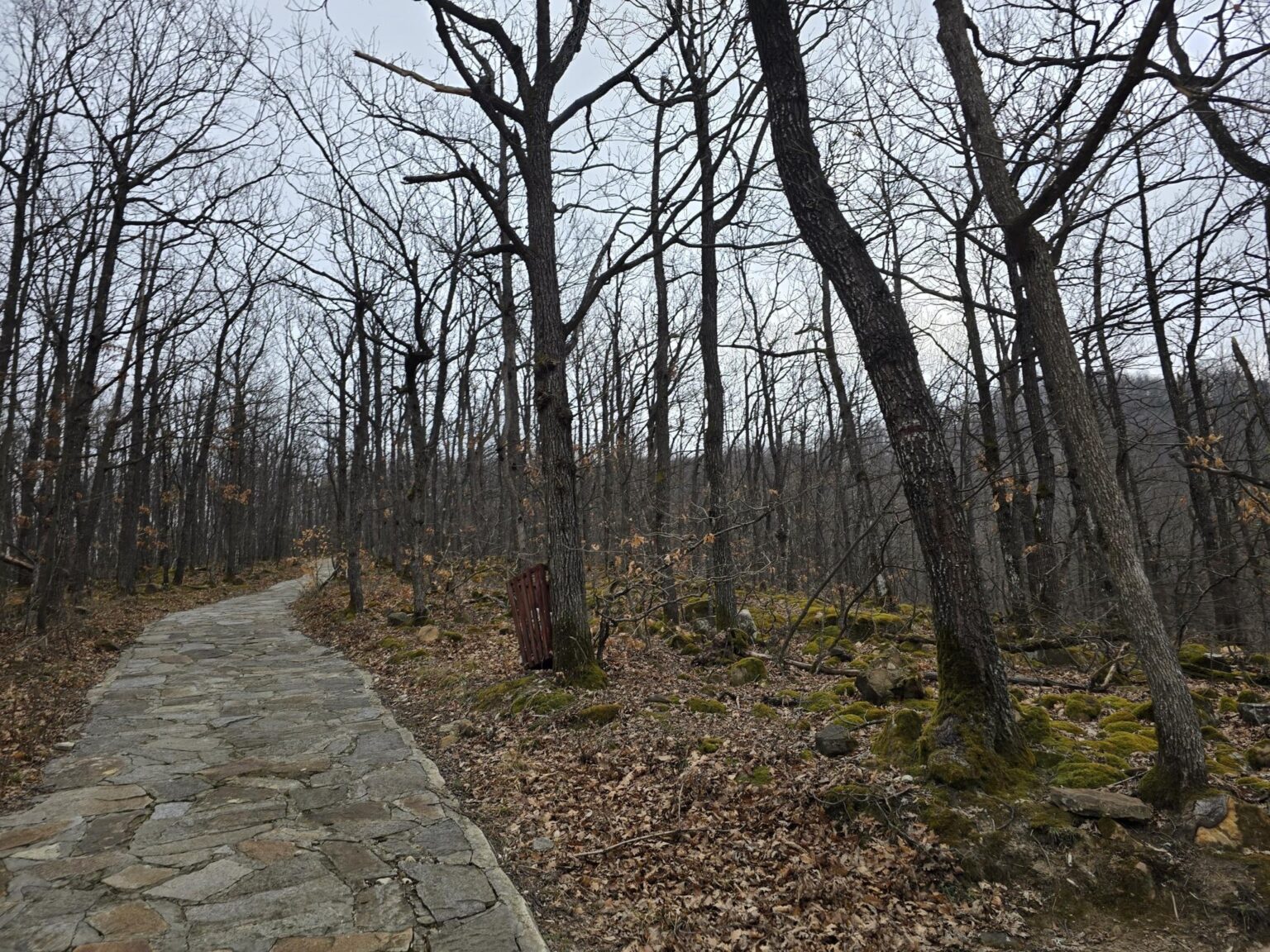
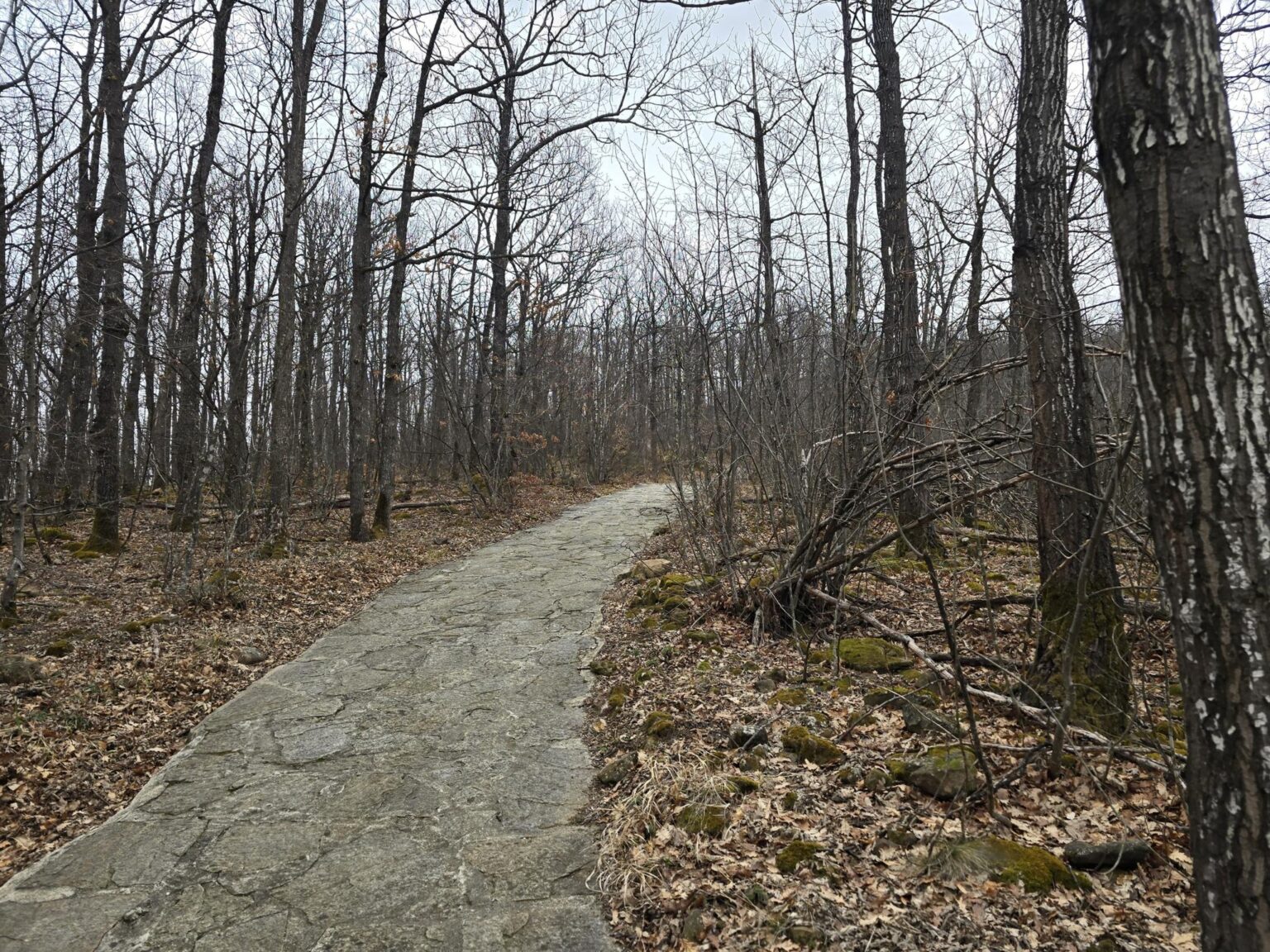
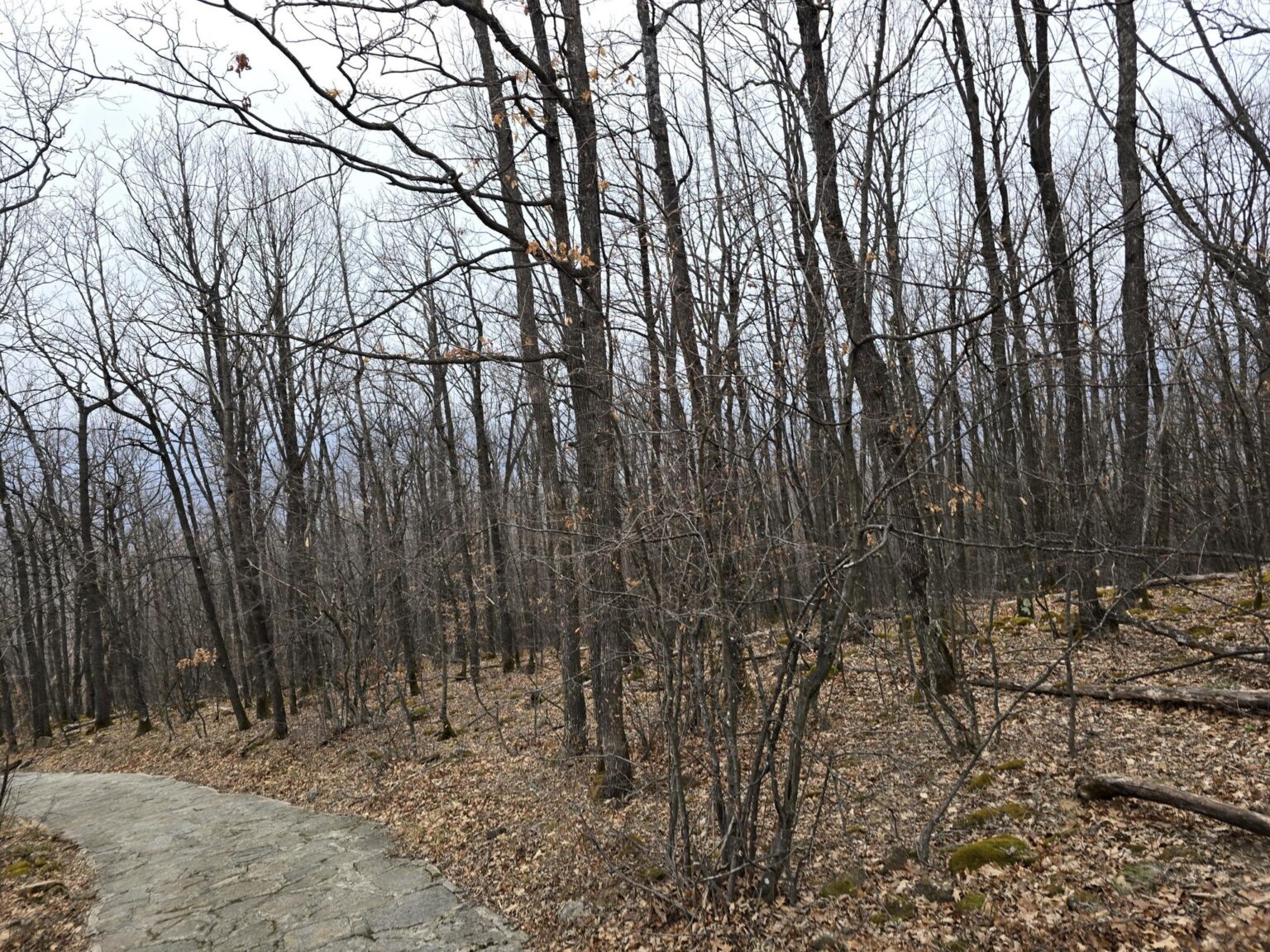
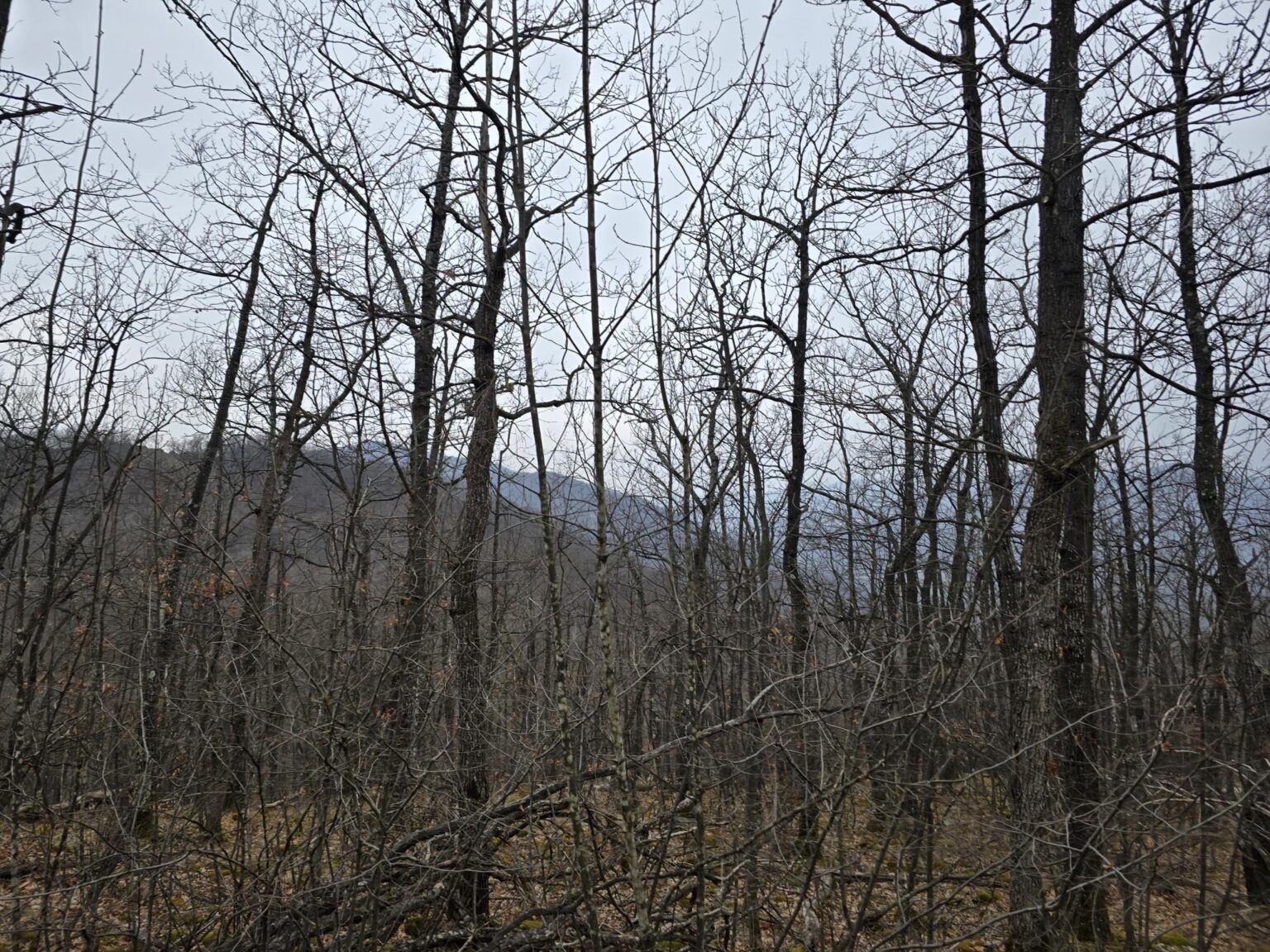
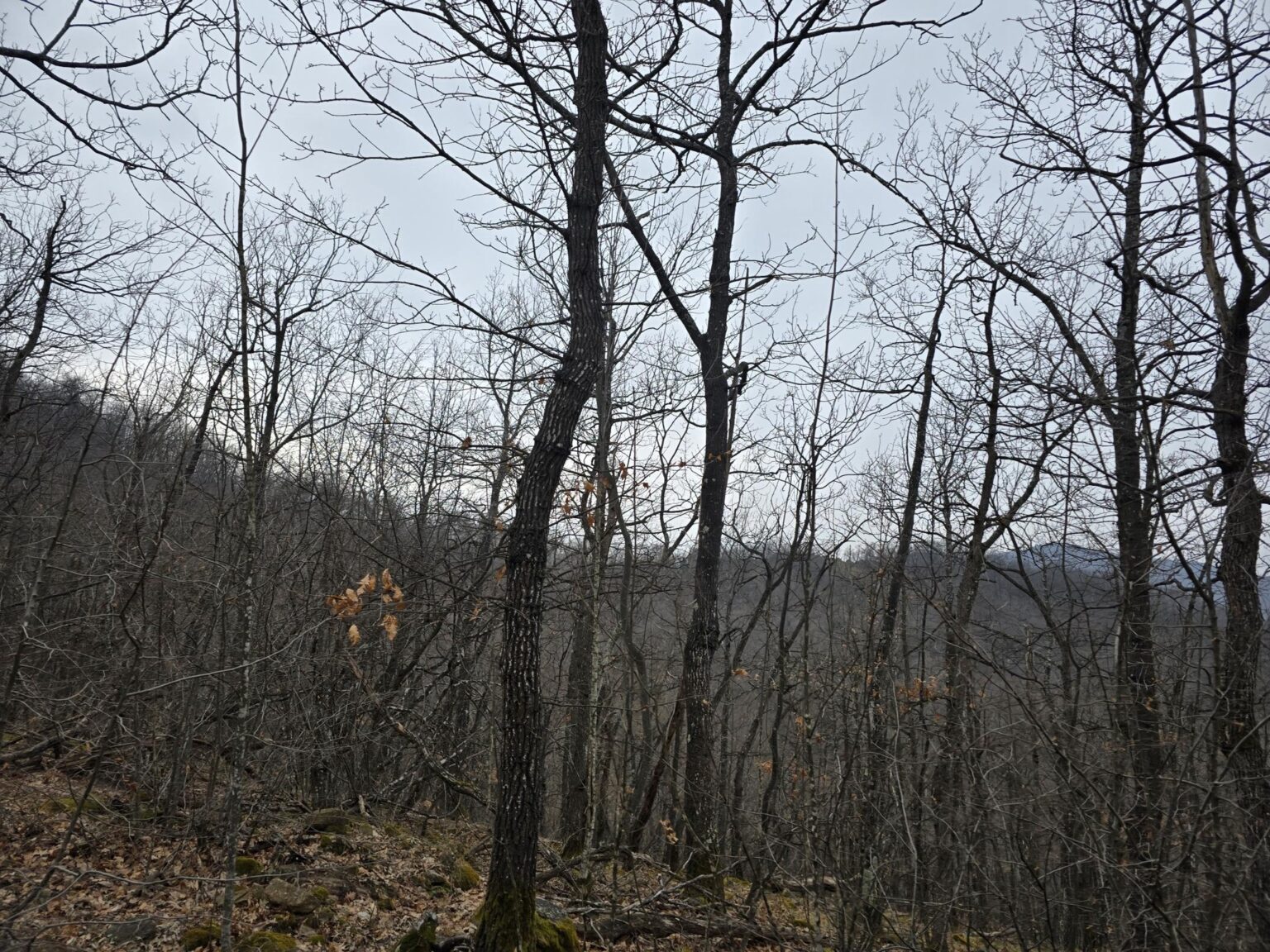
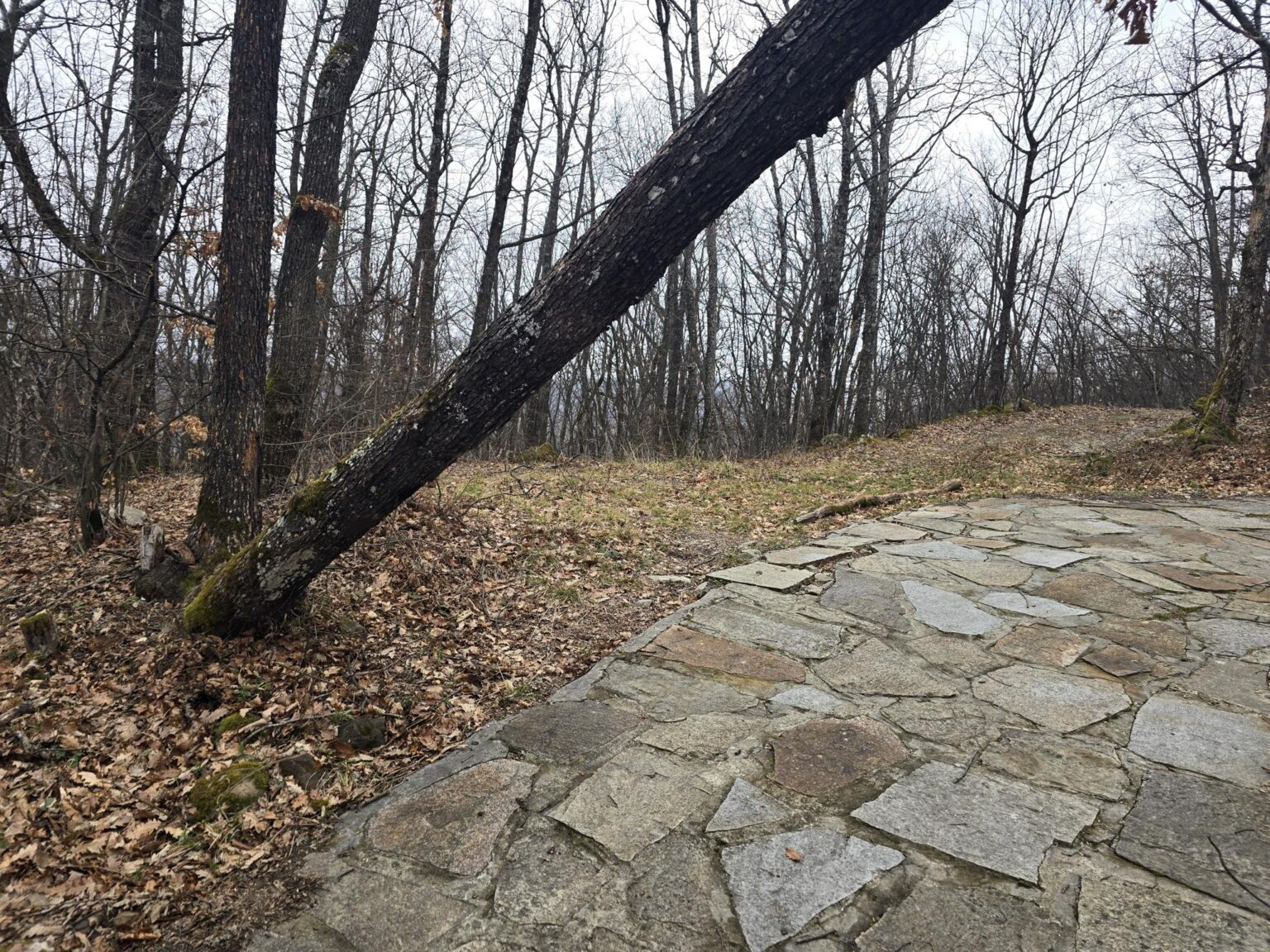
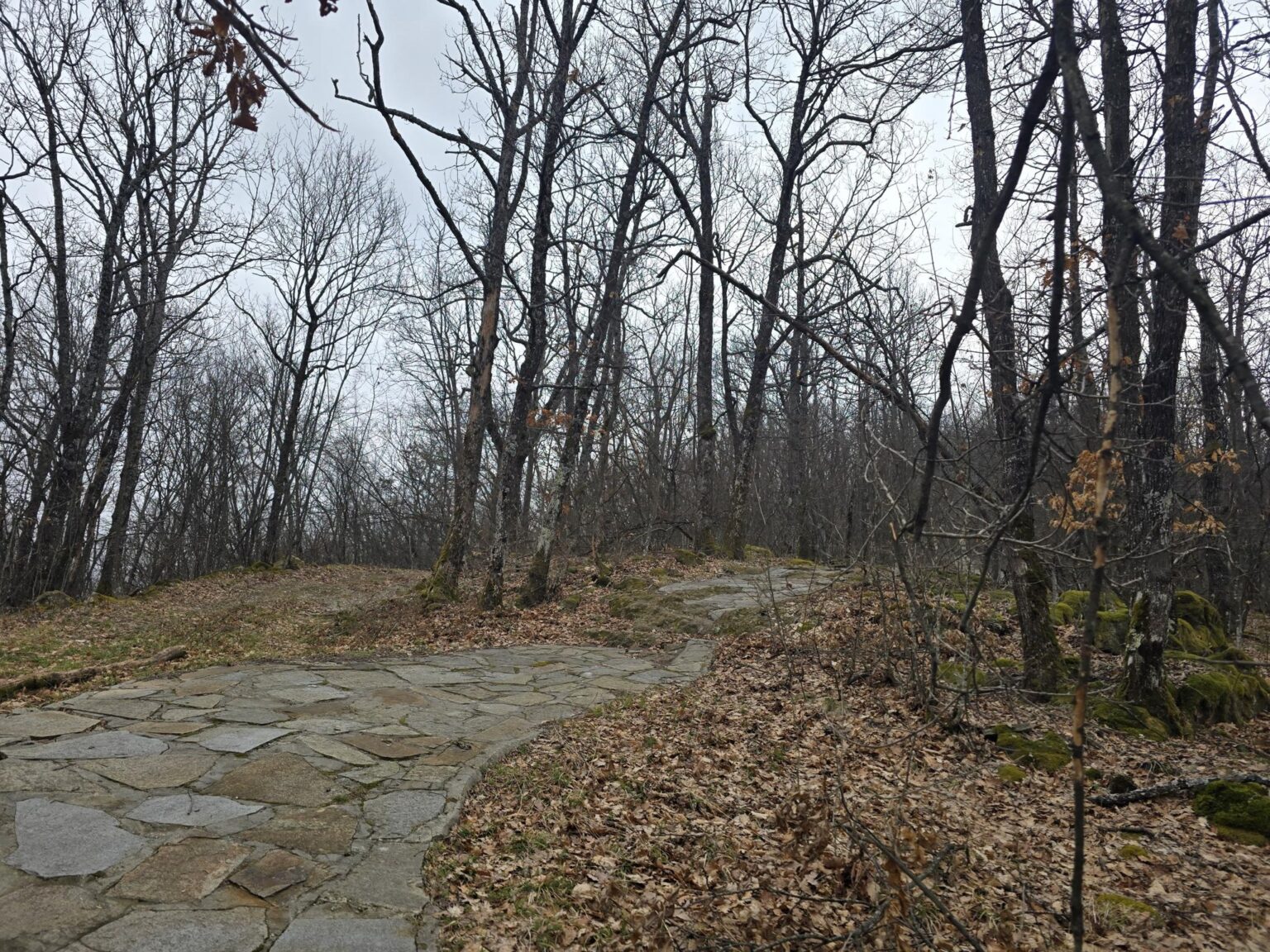
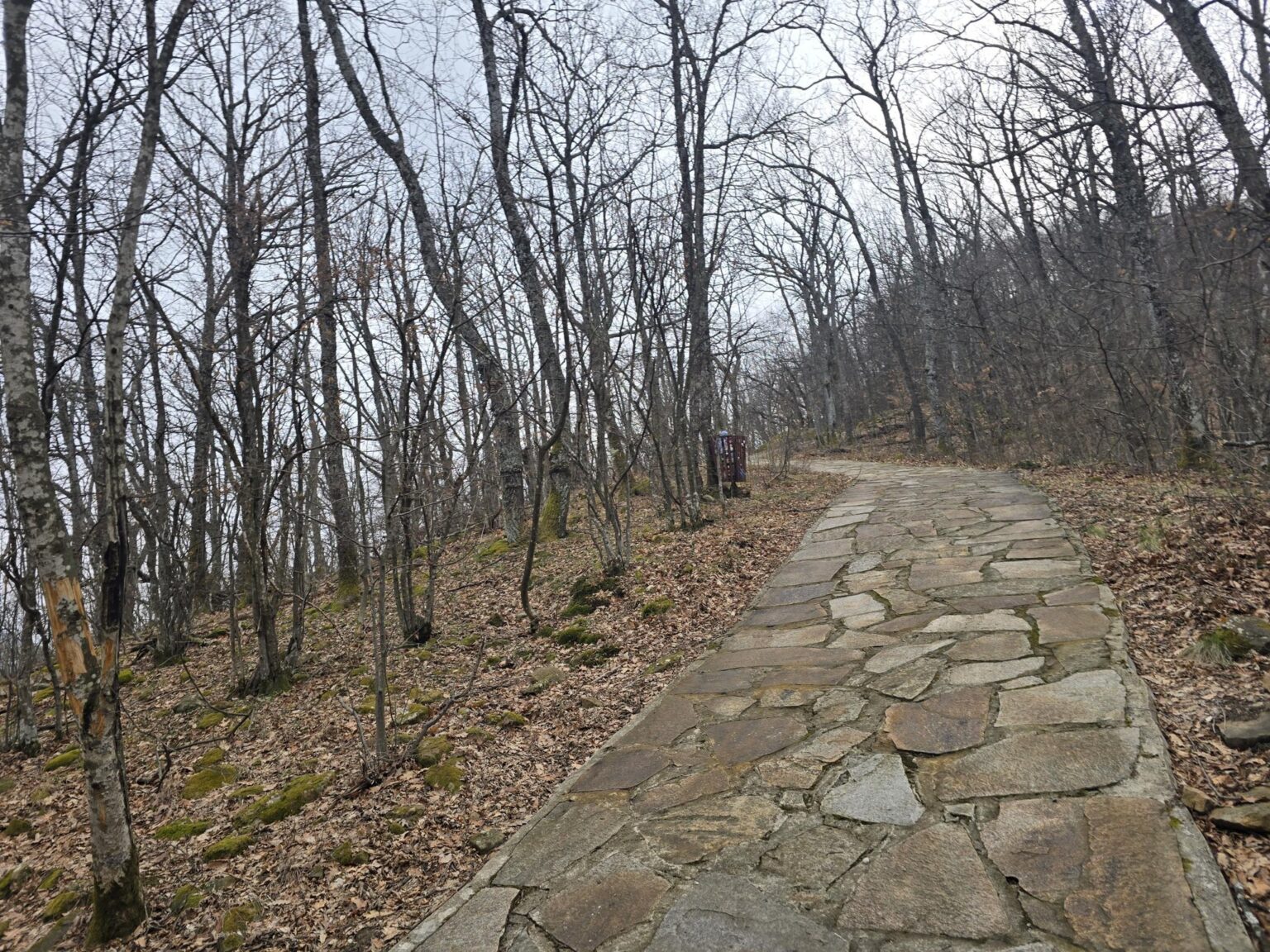
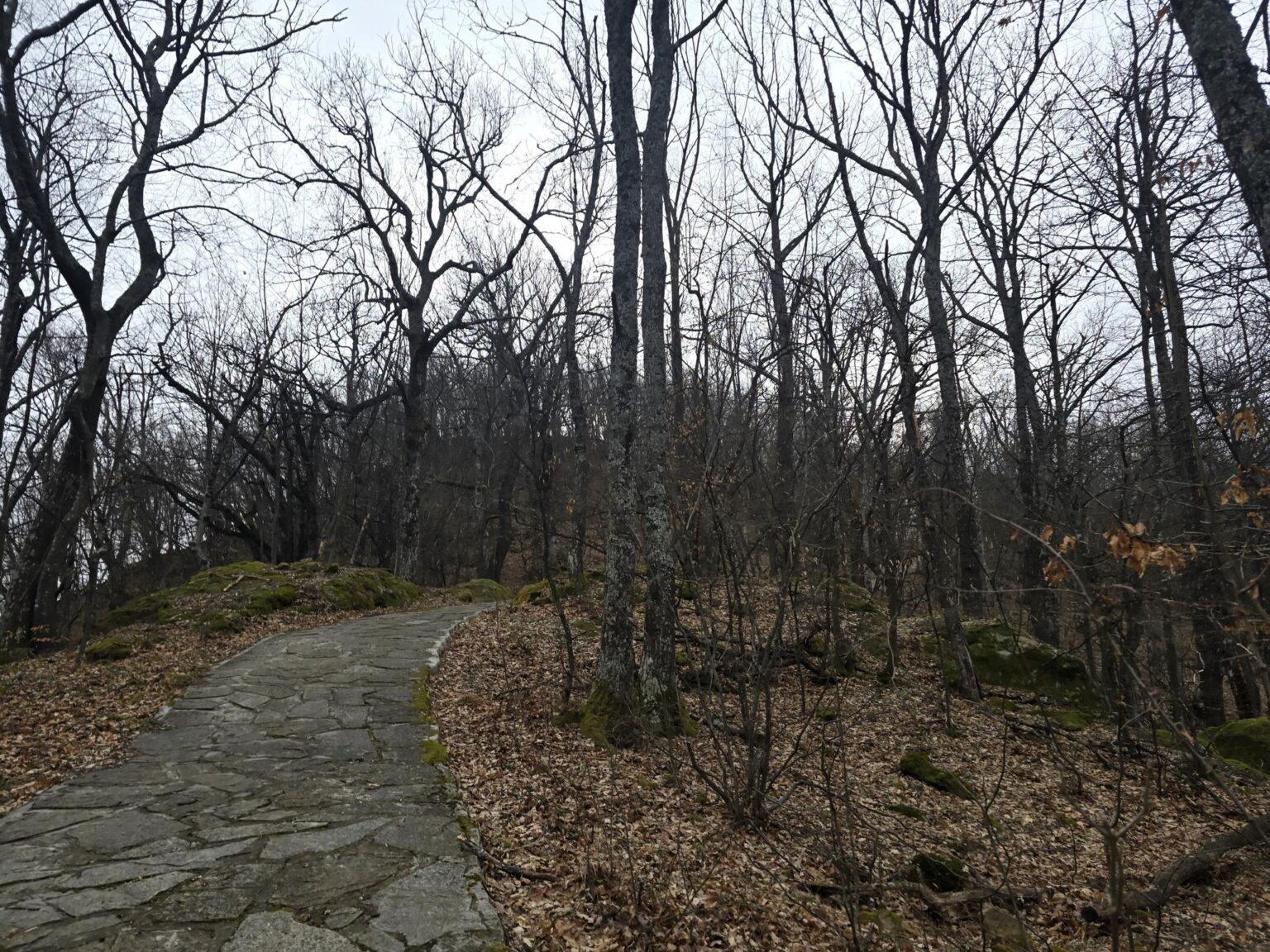
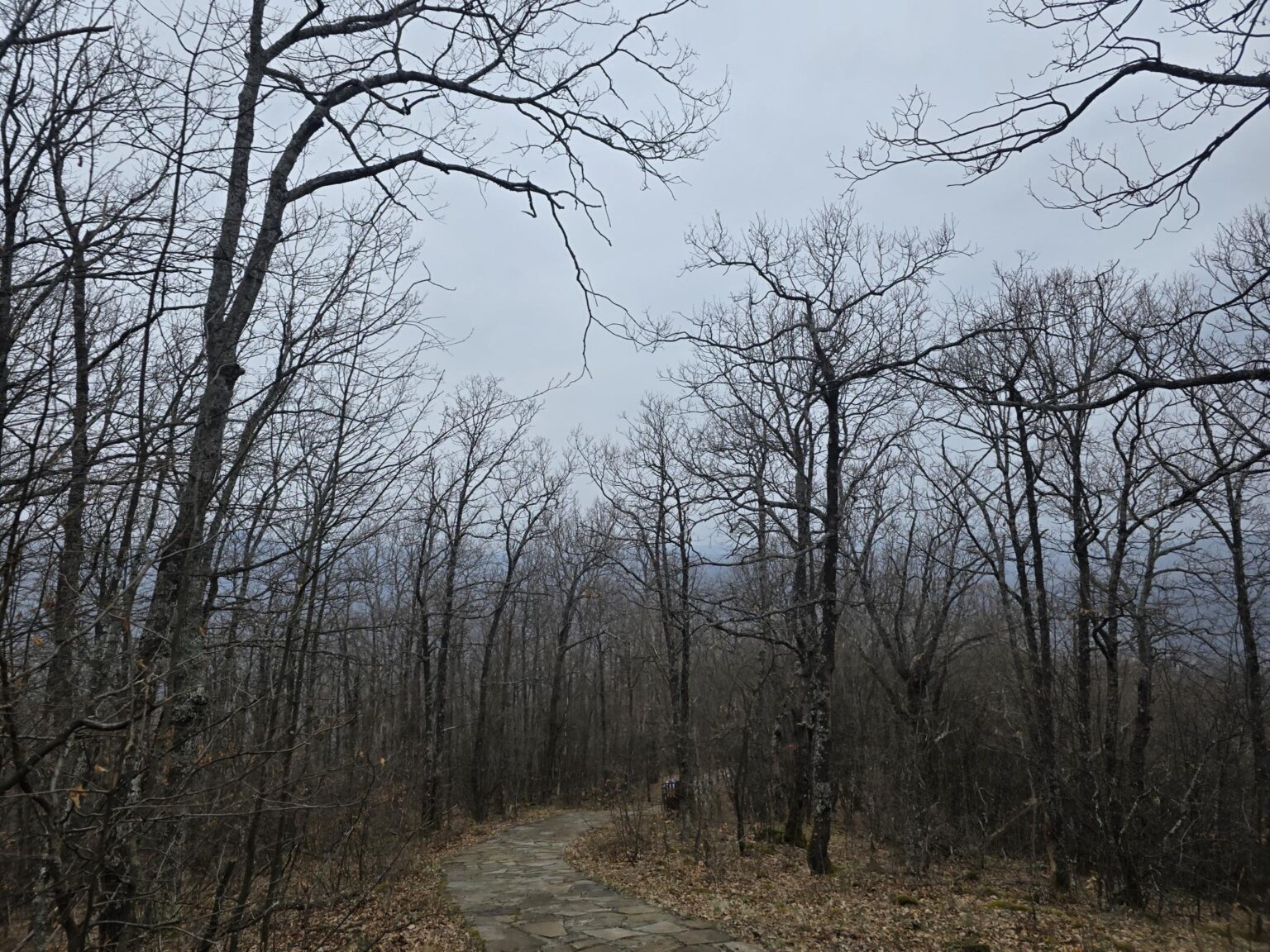
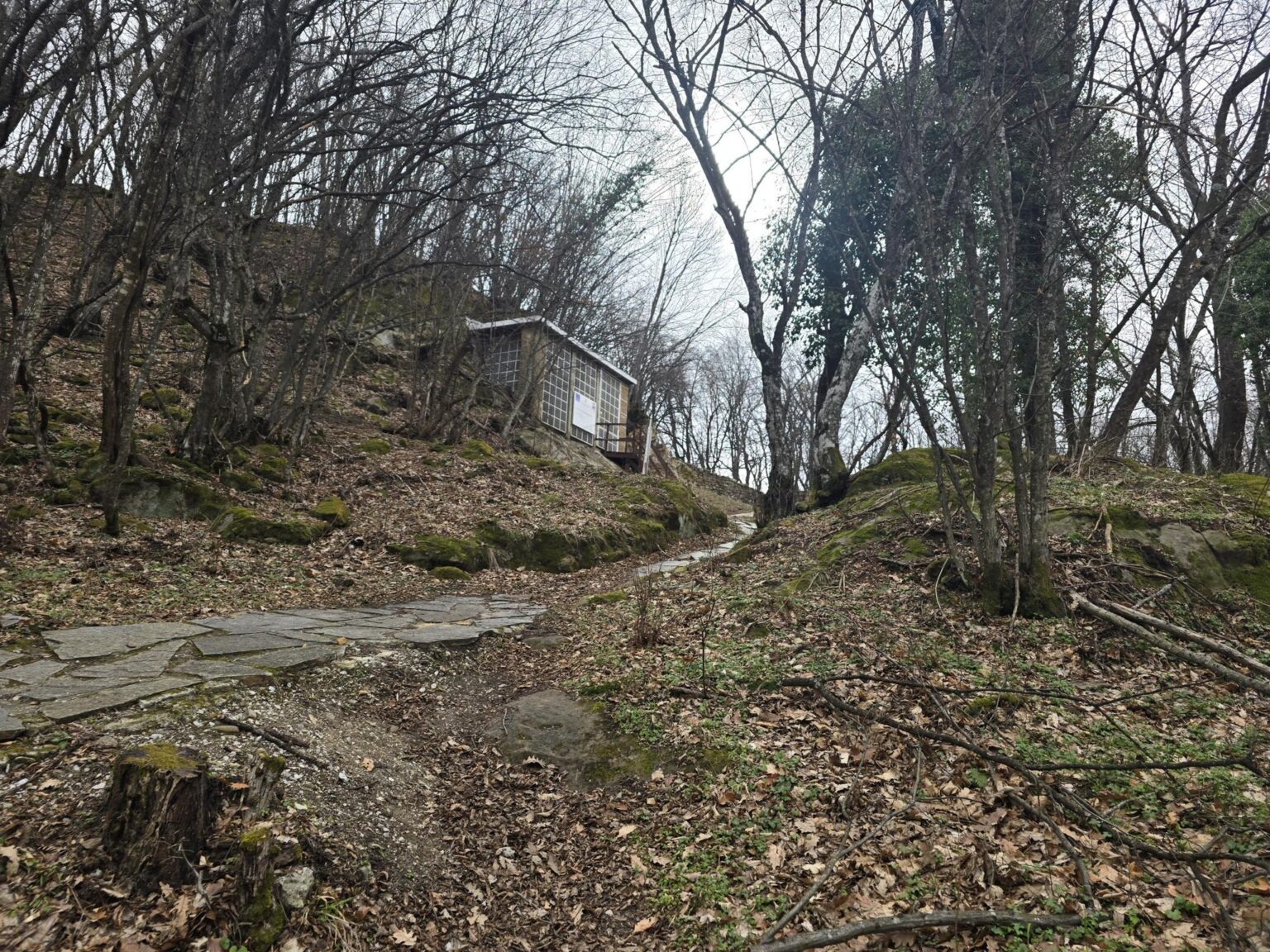
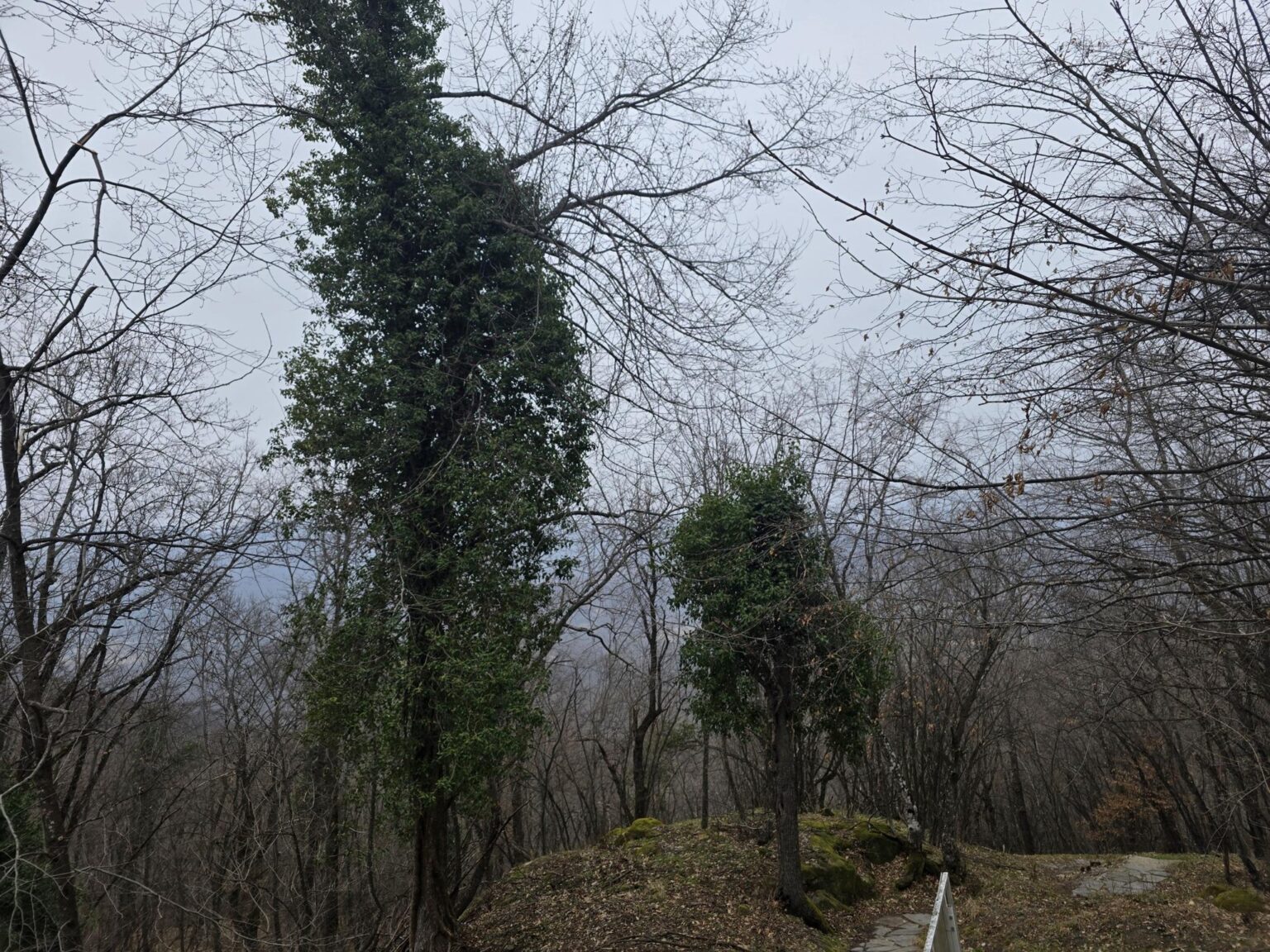
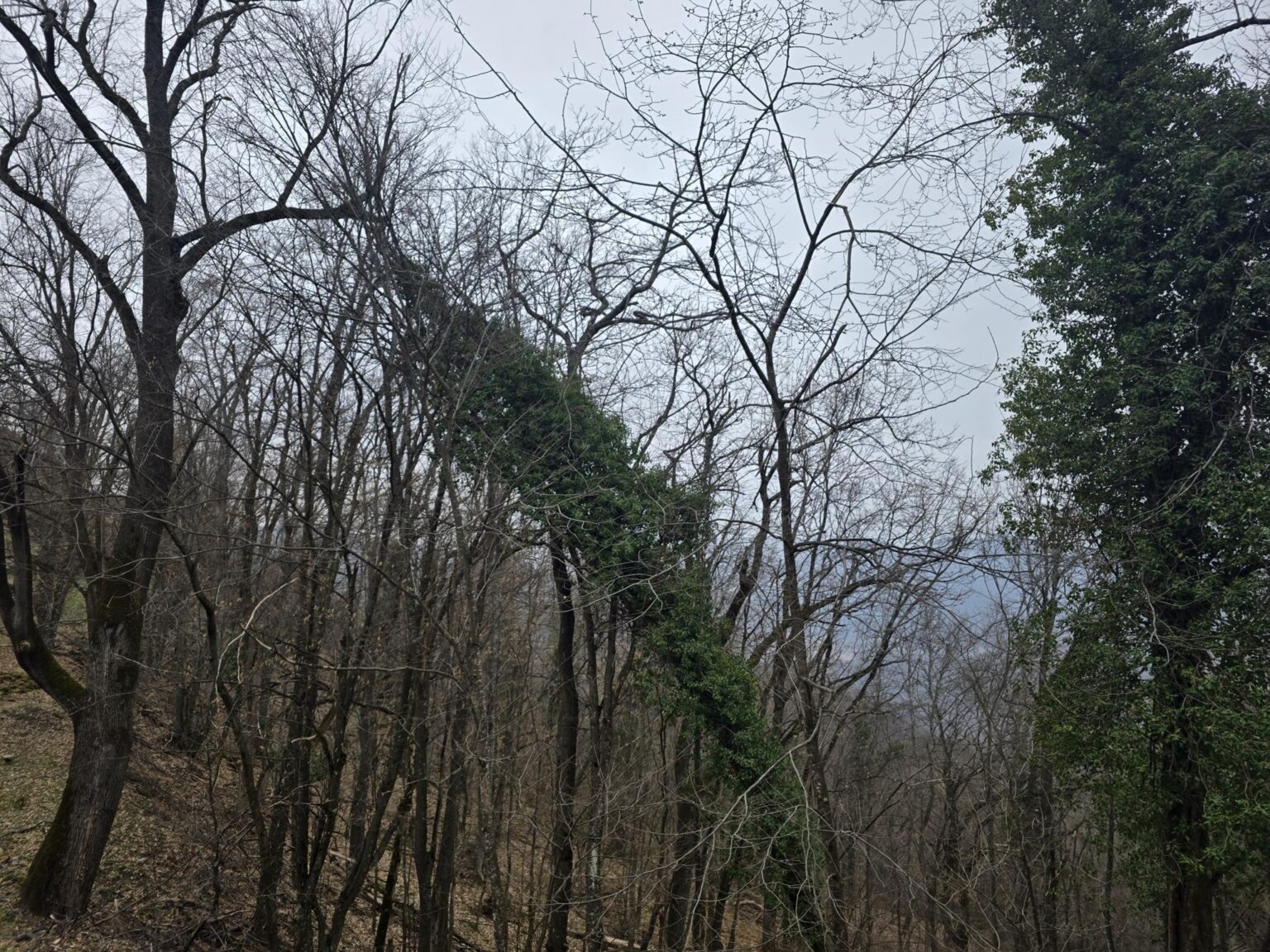
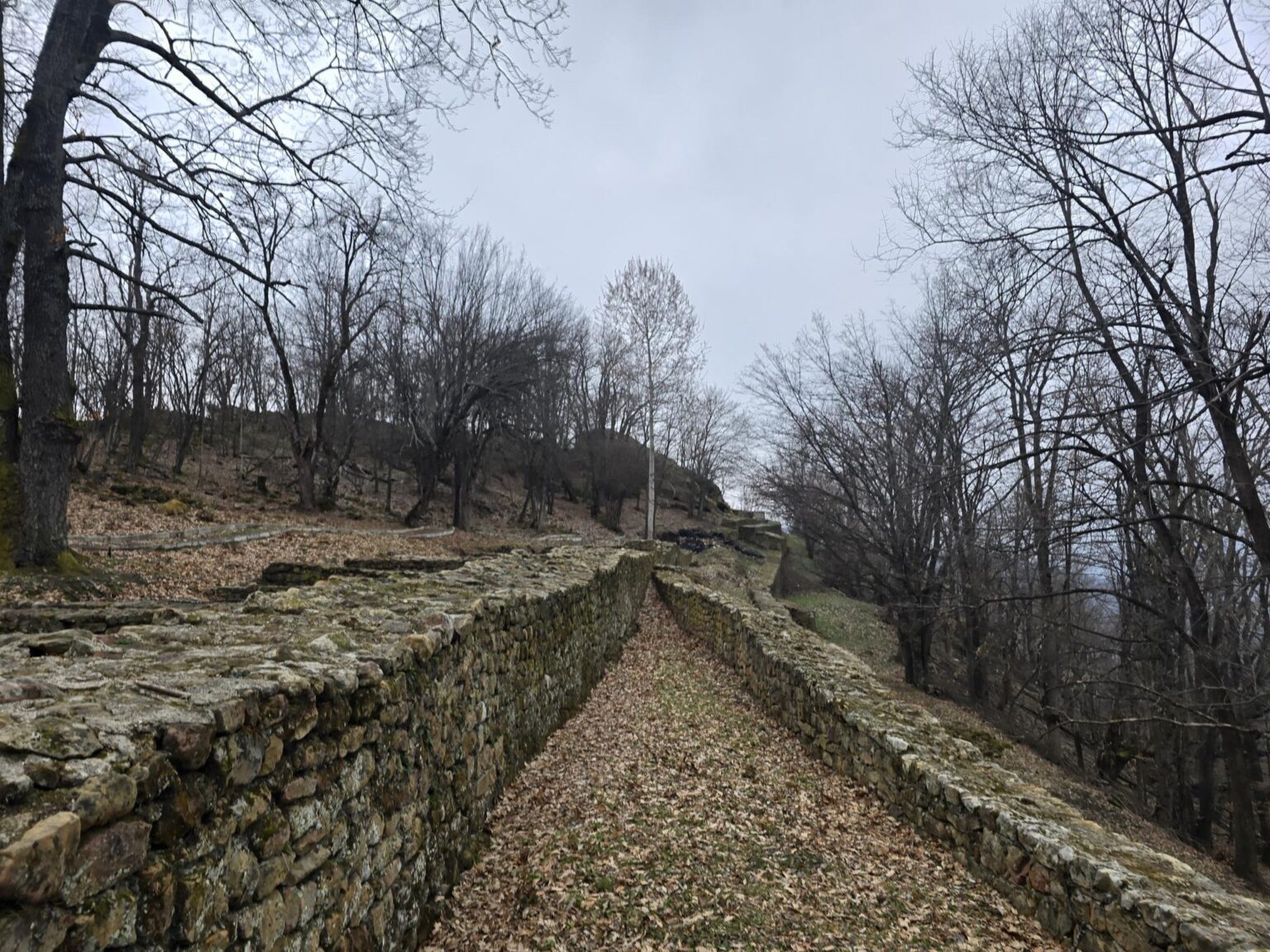
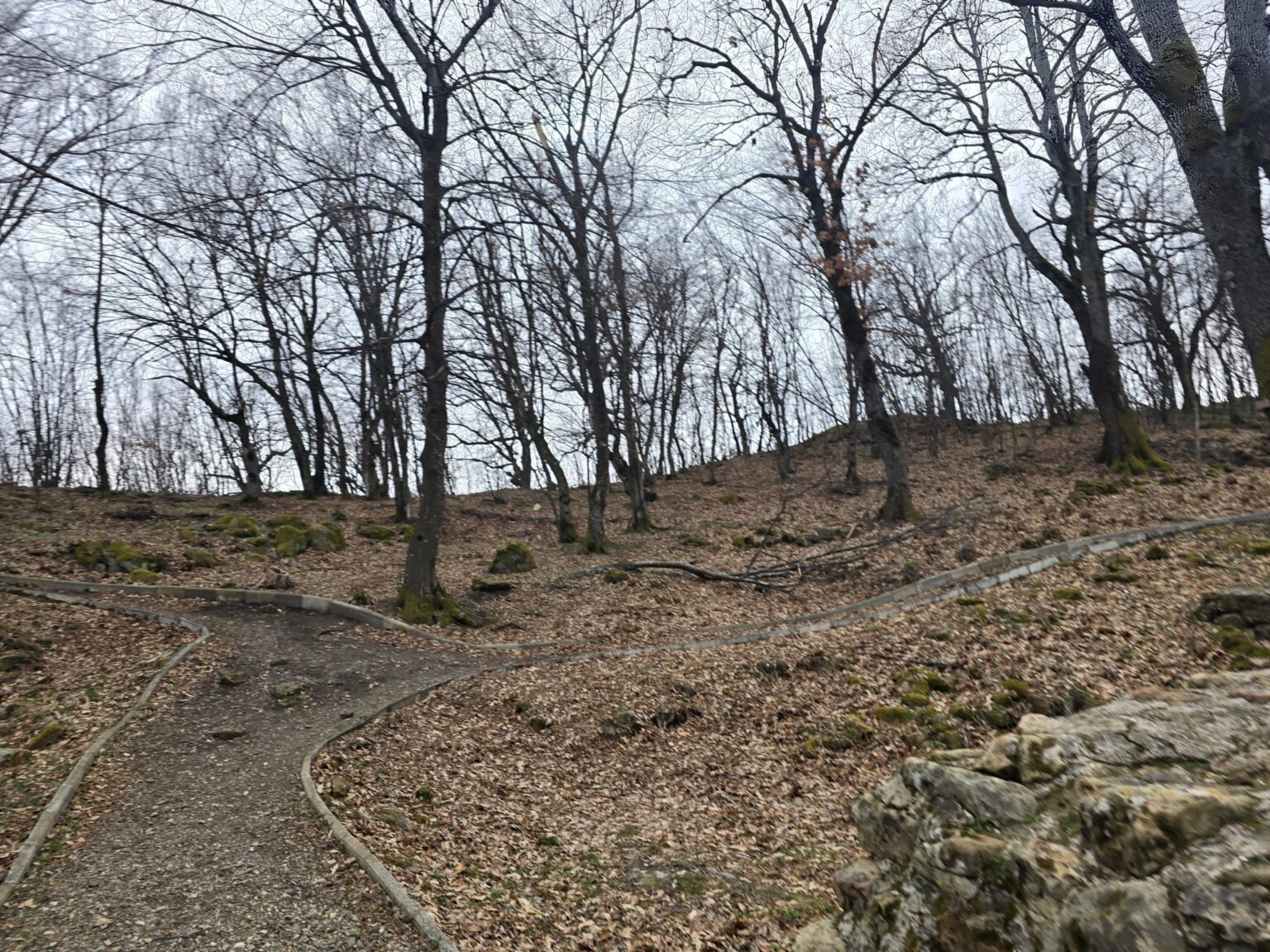
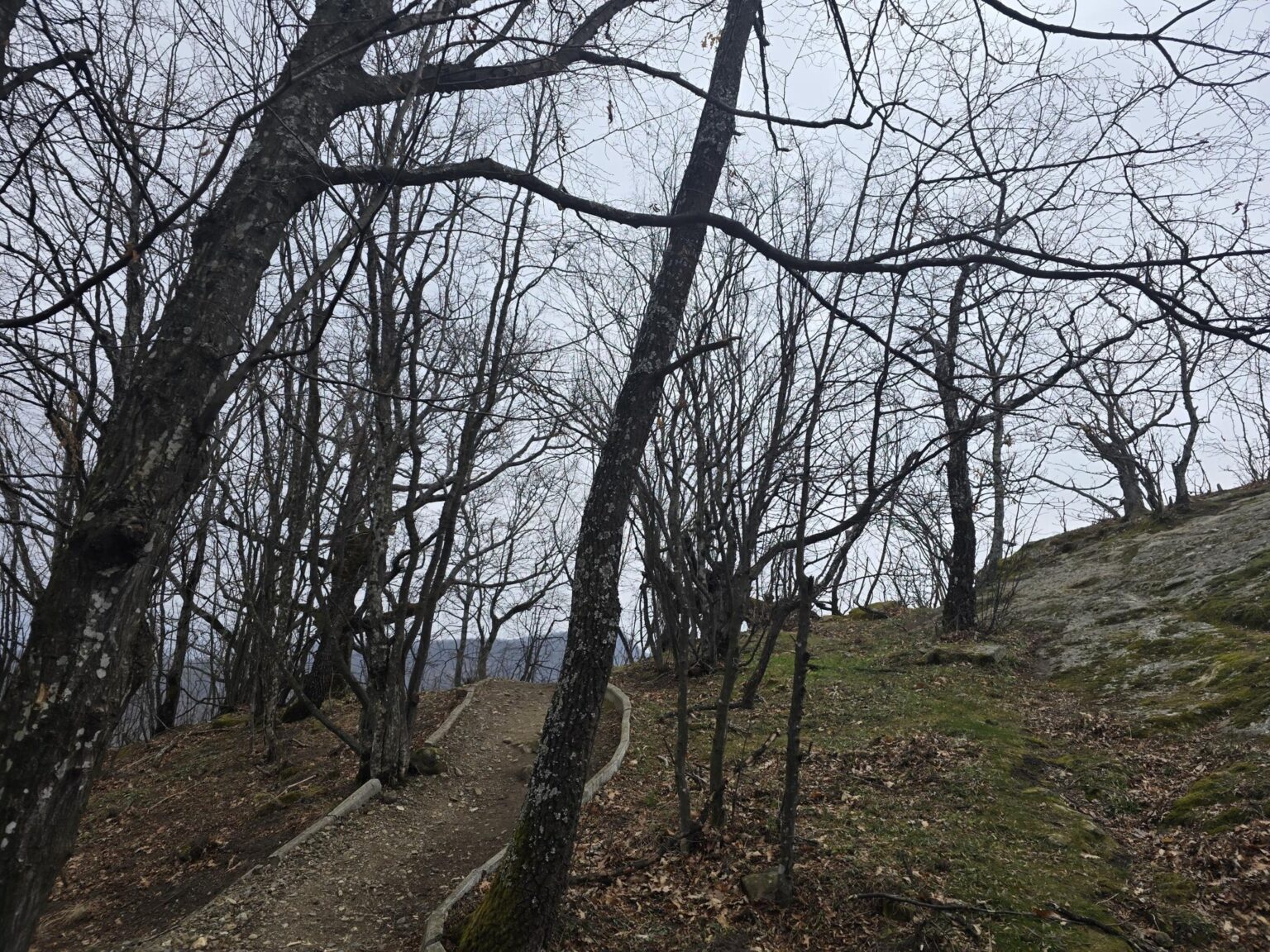
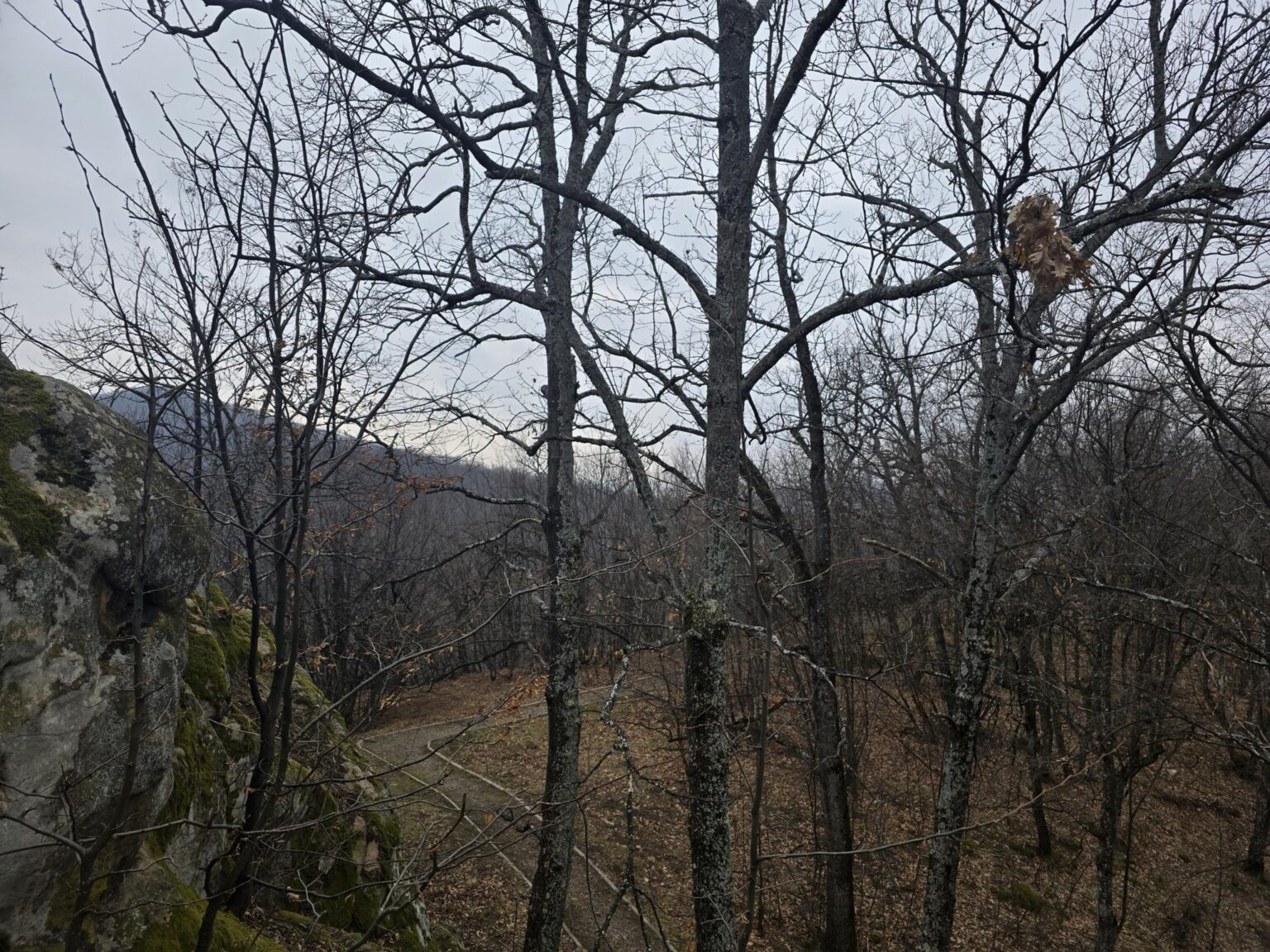
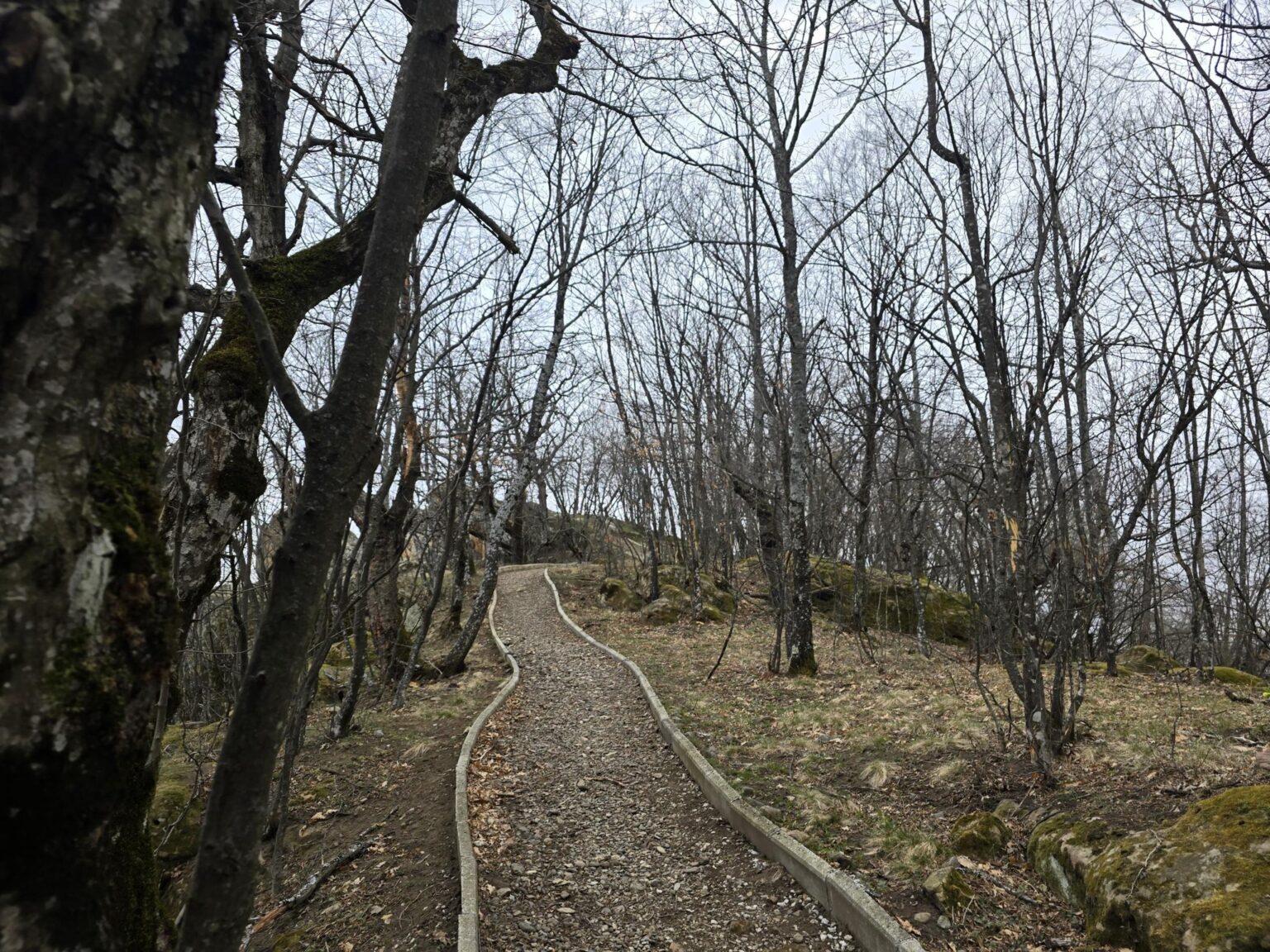
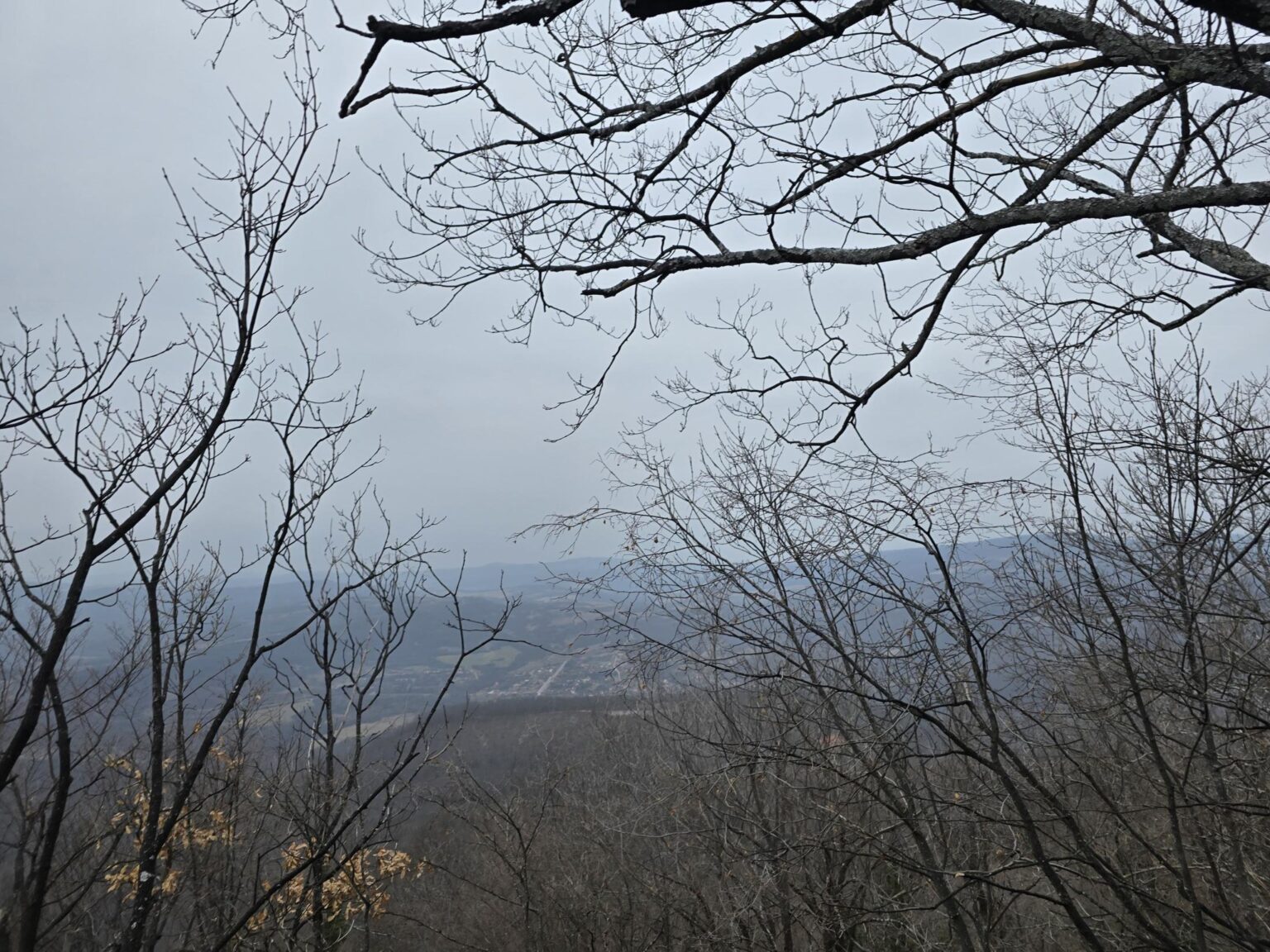
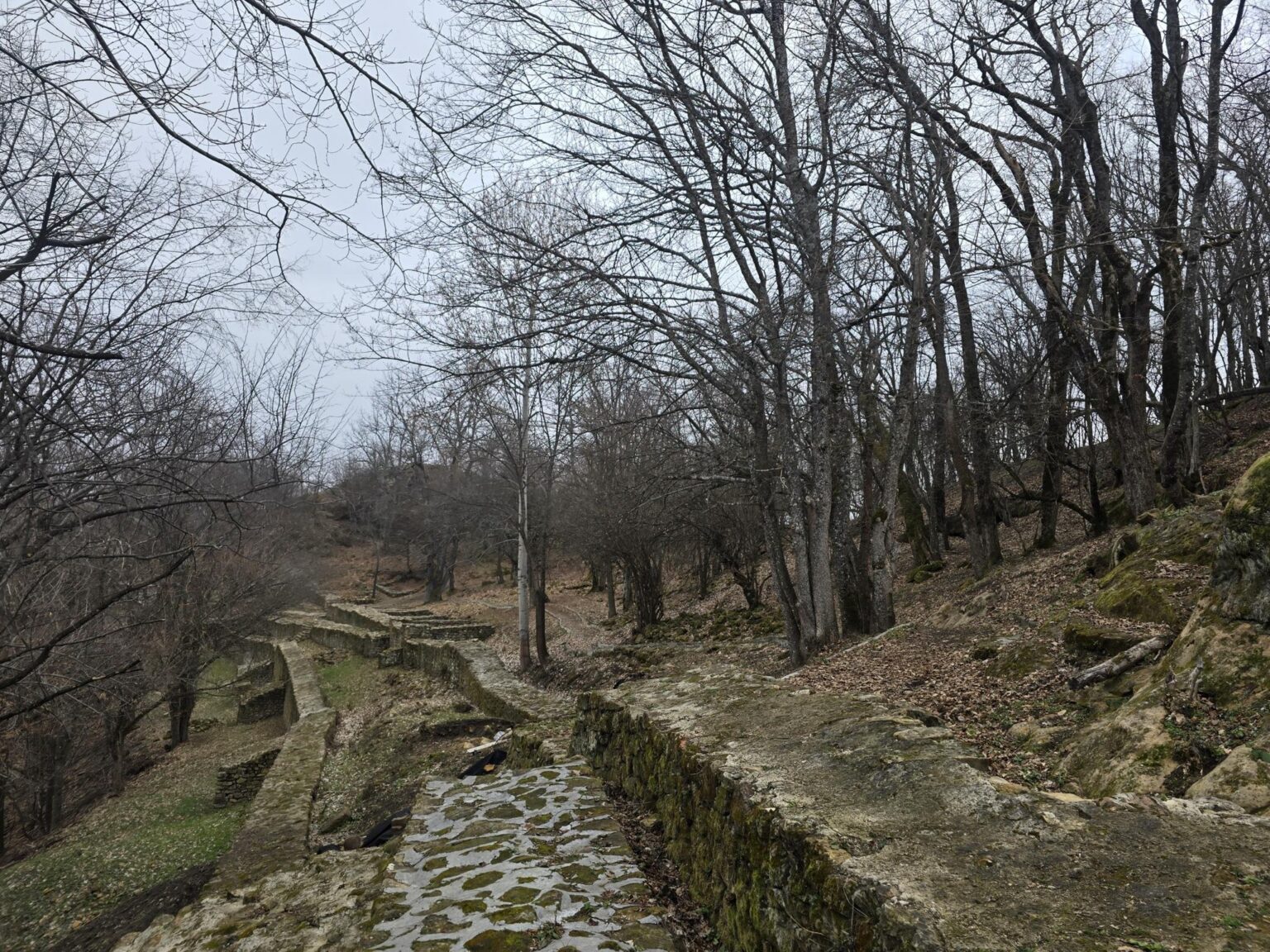
The path itself does not deliver any incredible panoramas or life-changing landscapes, but it is pleasant enough. This destination never claimed to be colossal. As the gallery shows, the walk up is fairly unremarkable. The nice surprise is that it has been renovated, the surface is good, and there are even bins along the way.
Inside the fortress
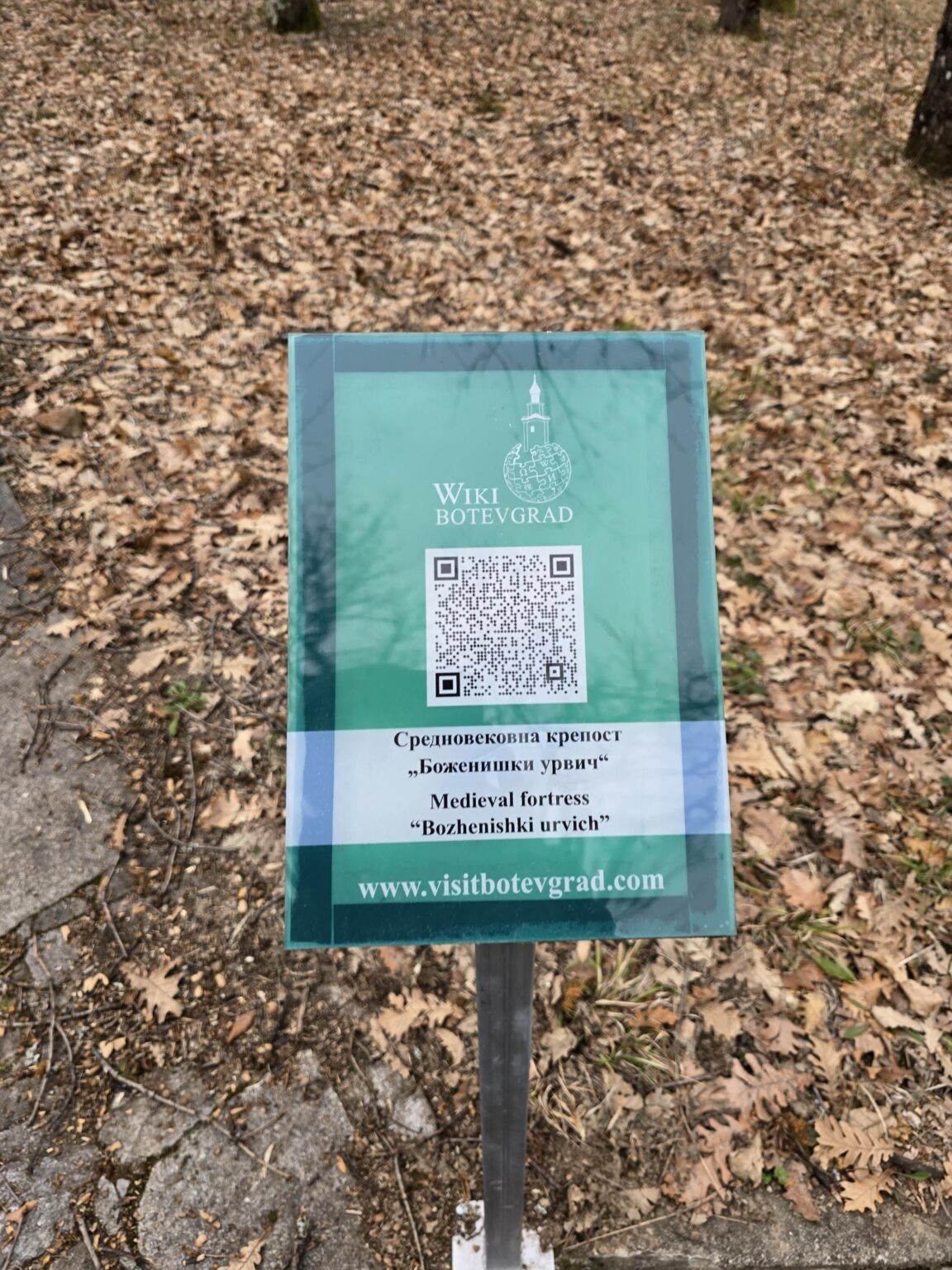
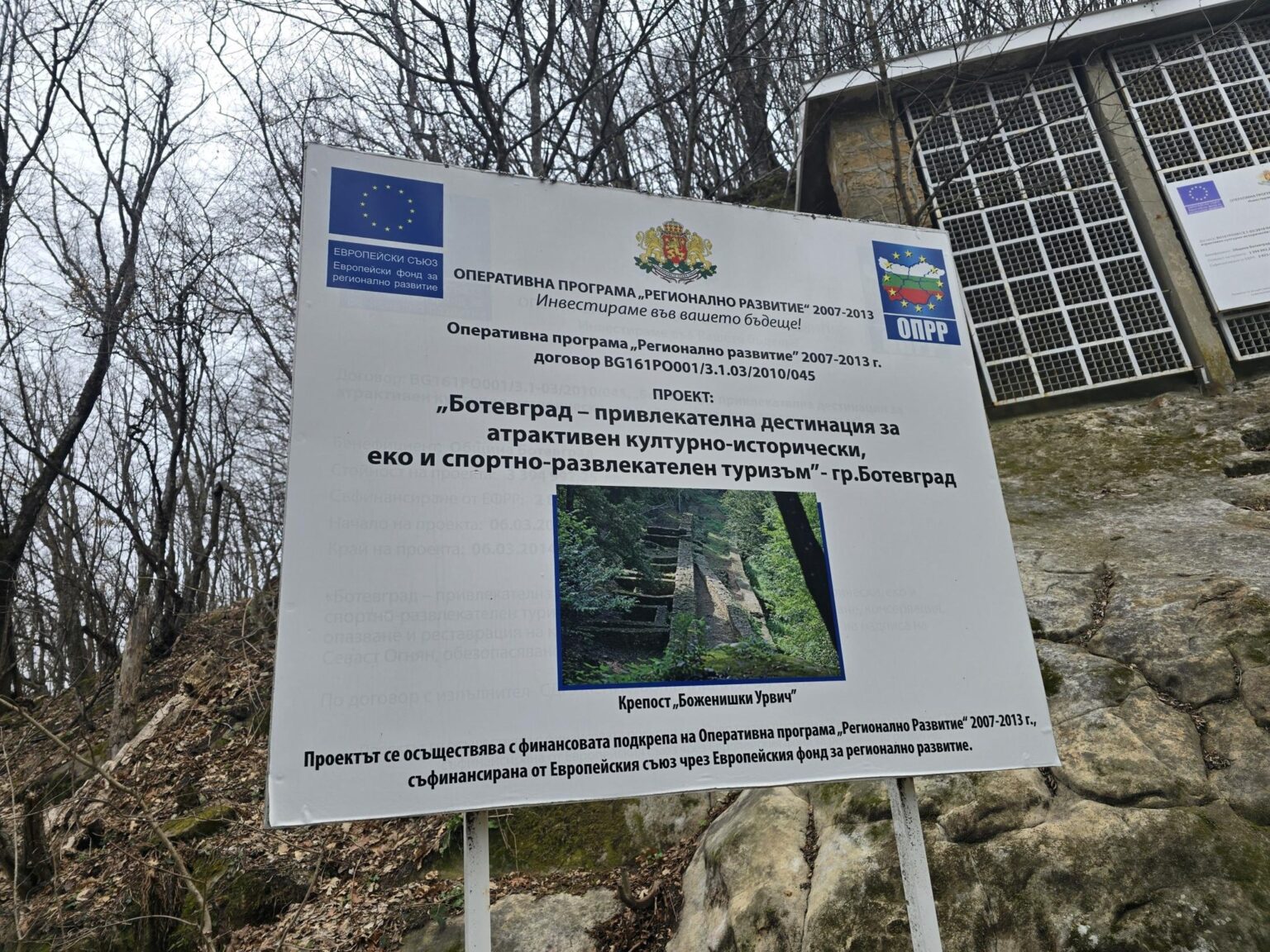
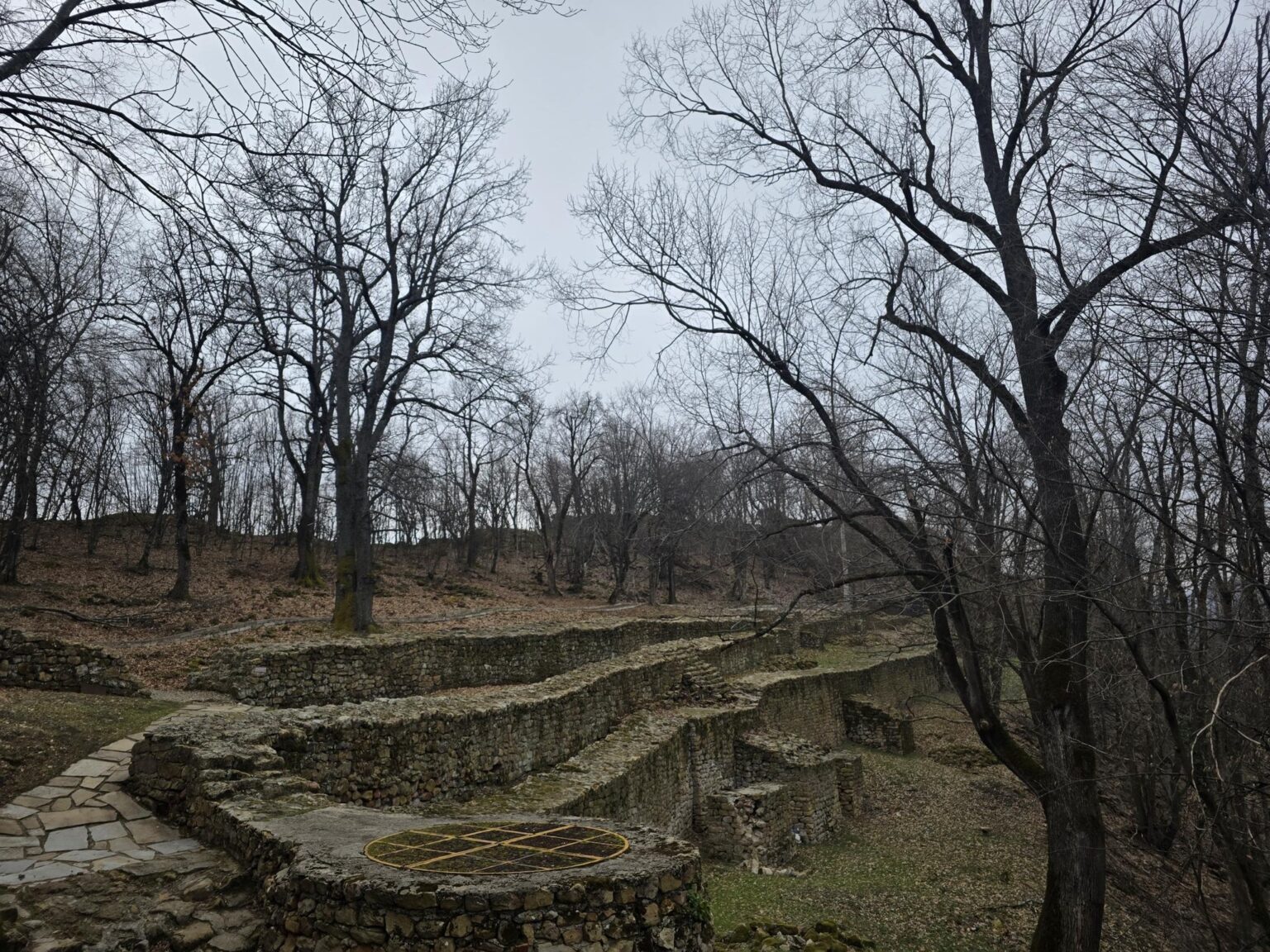
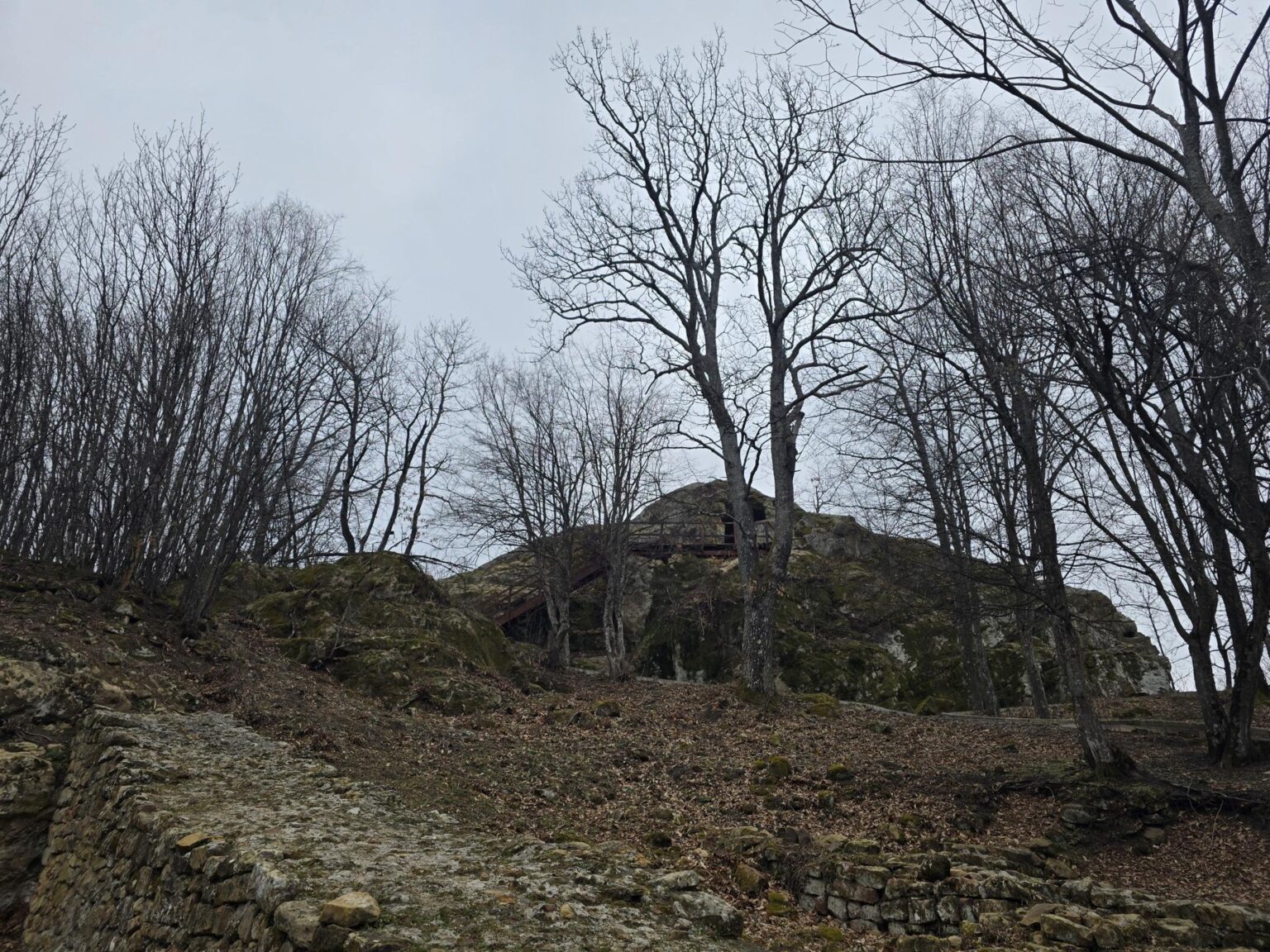
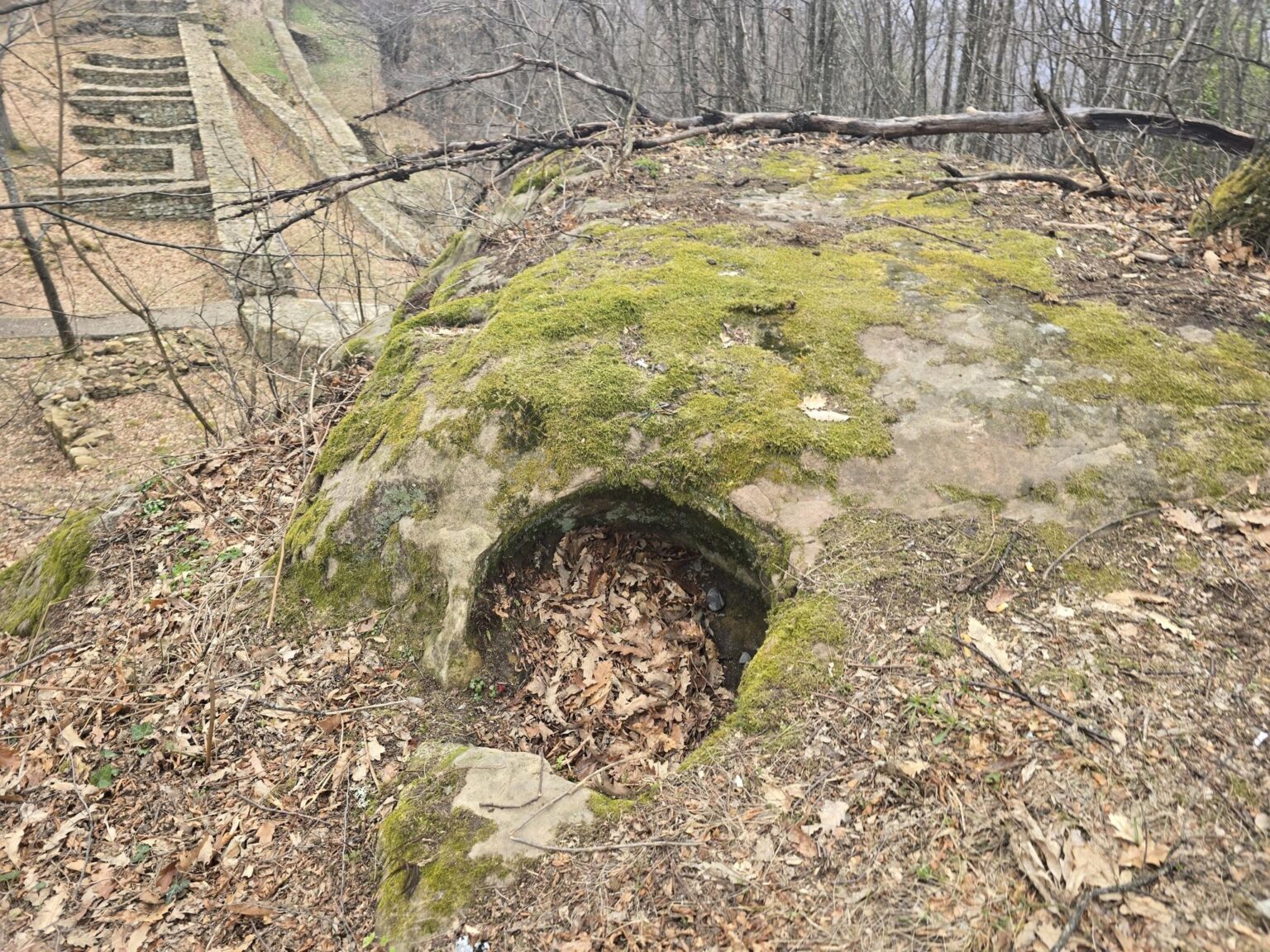
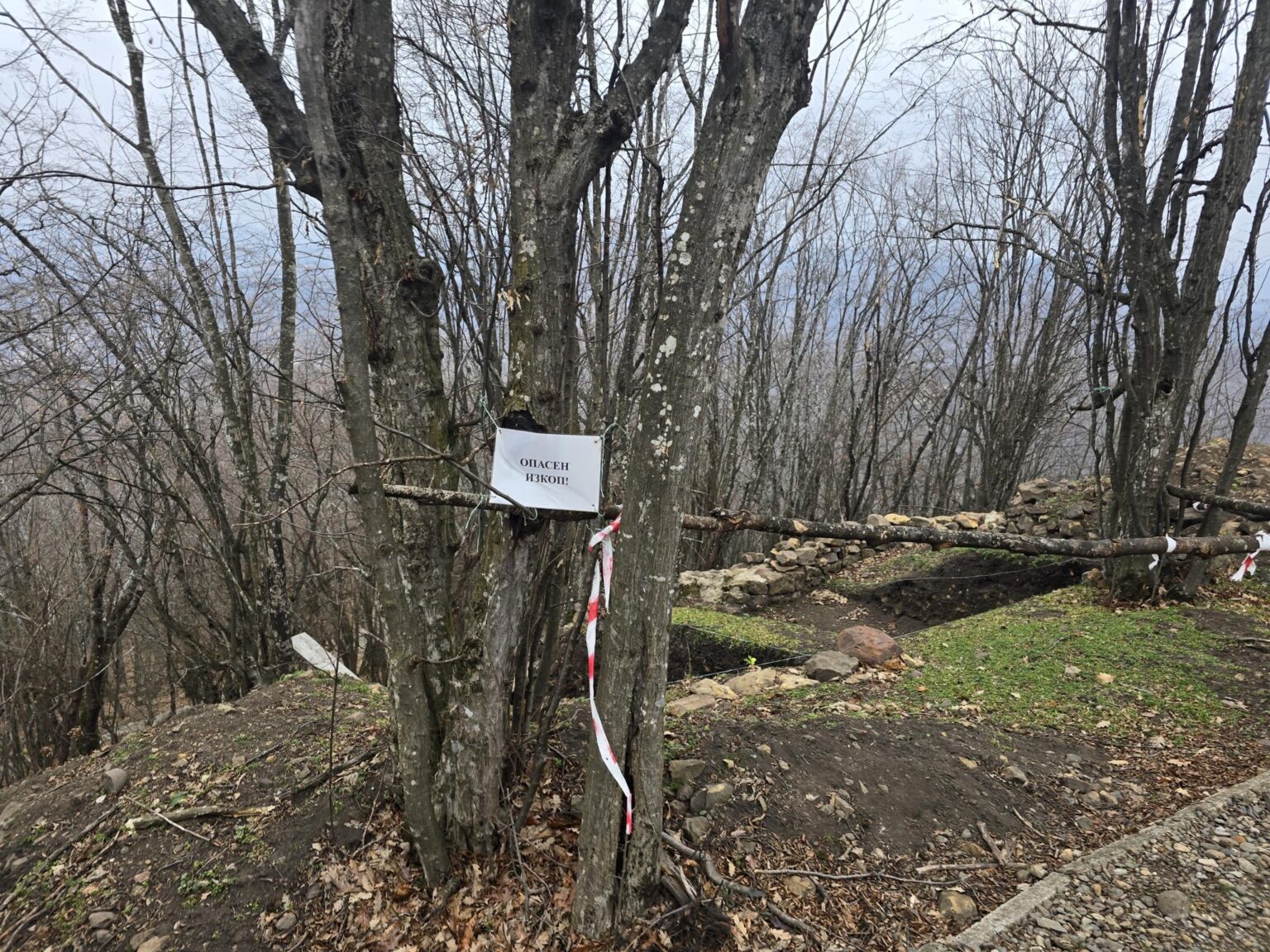
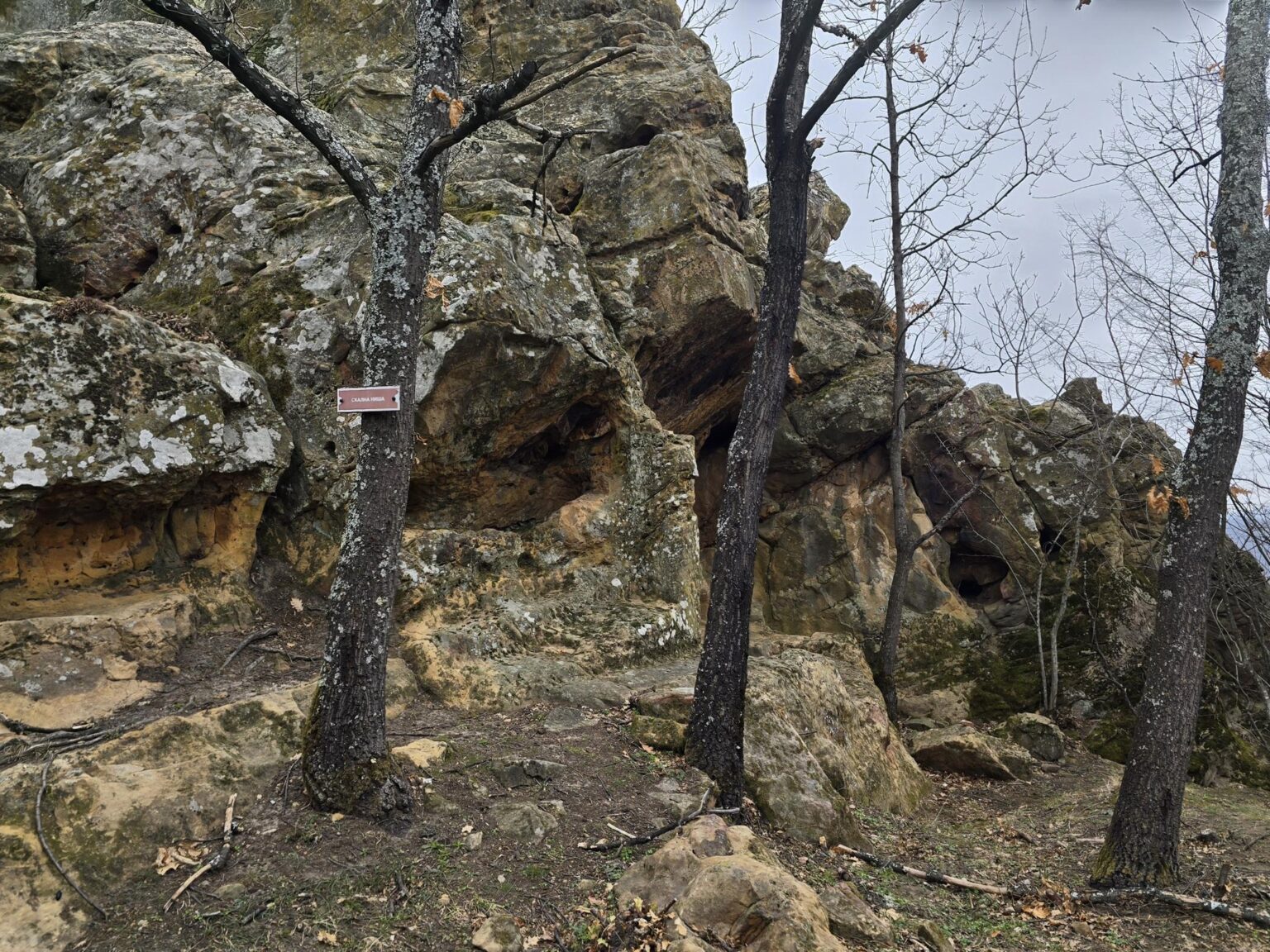
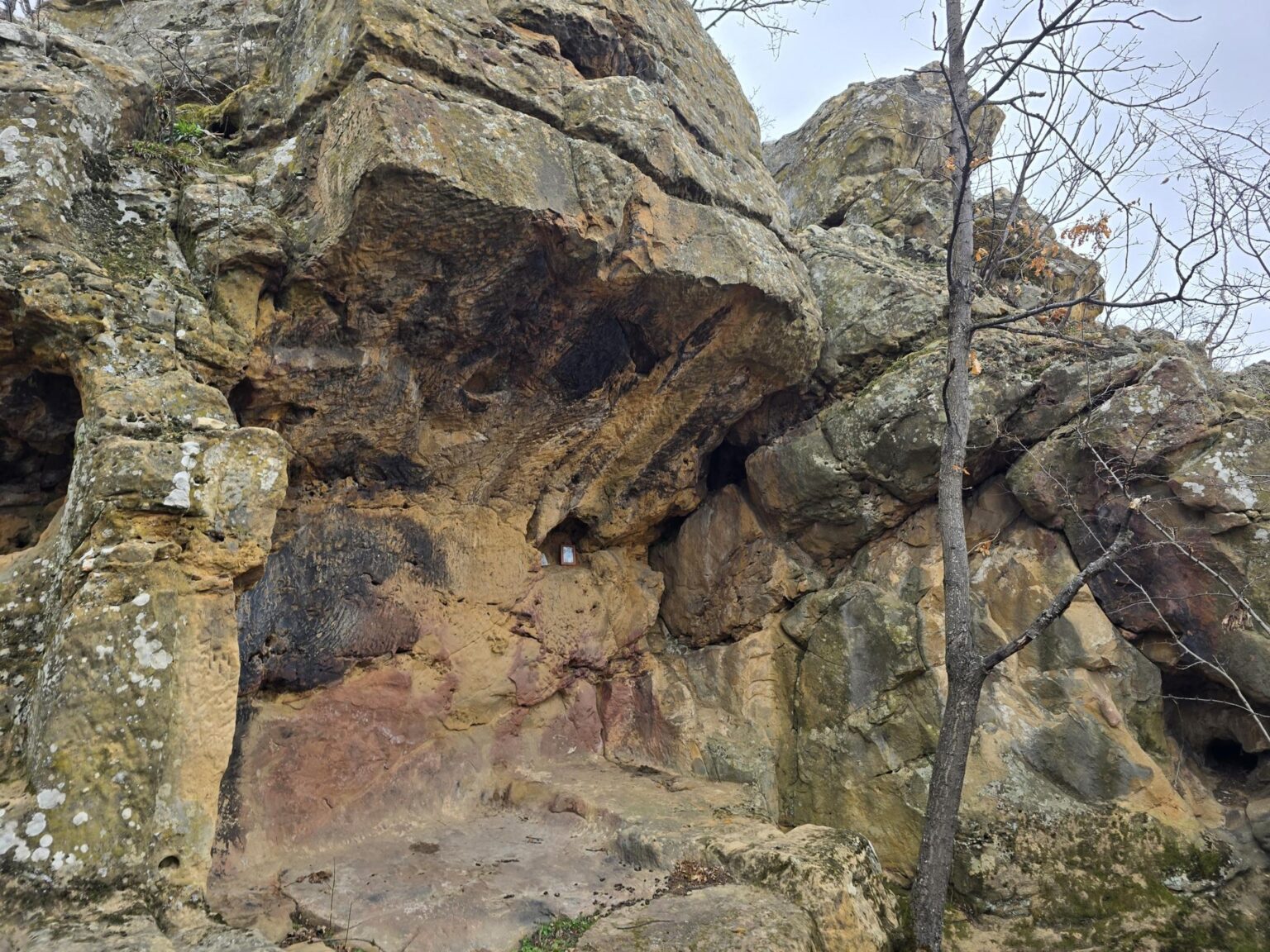
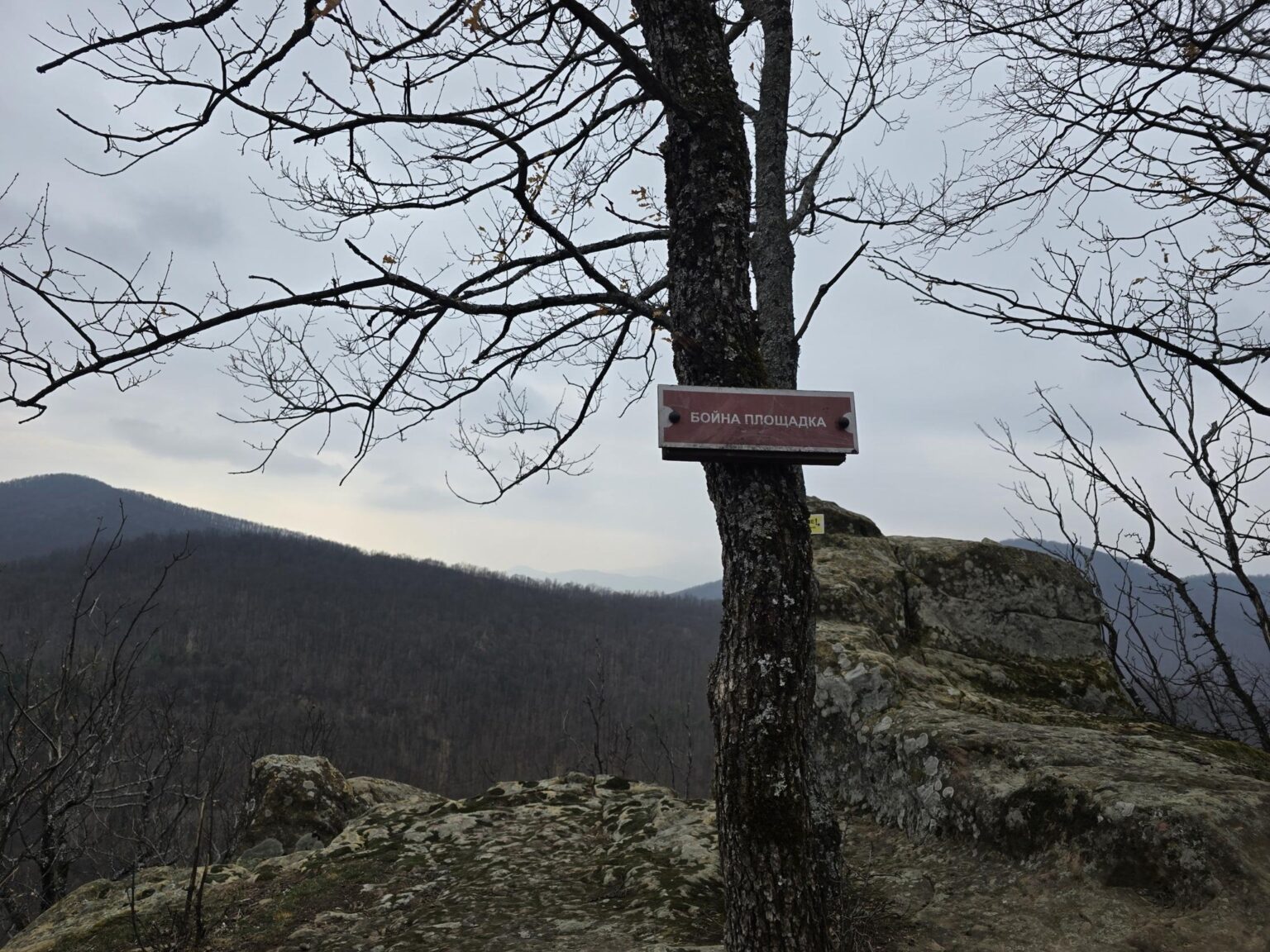
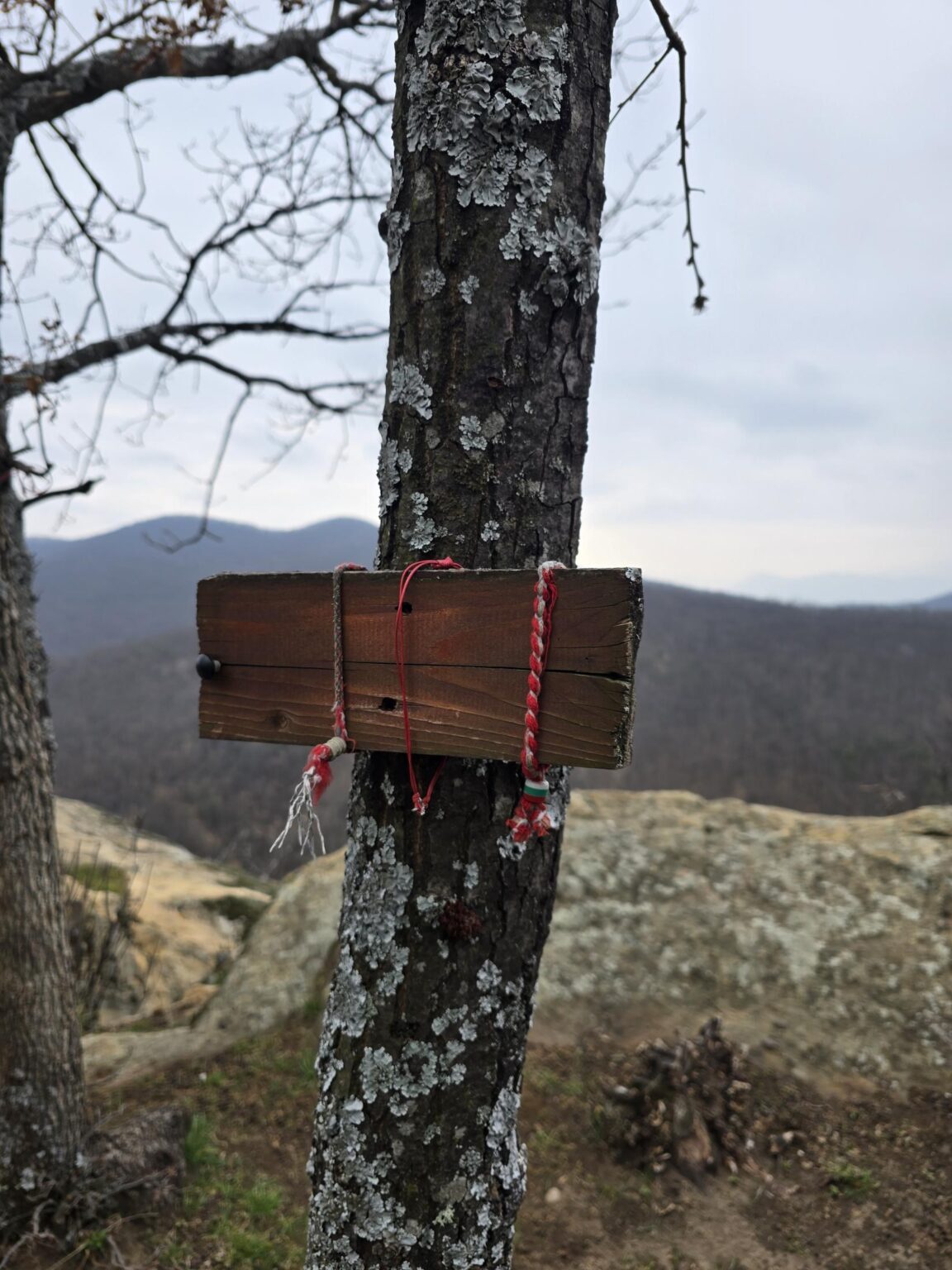
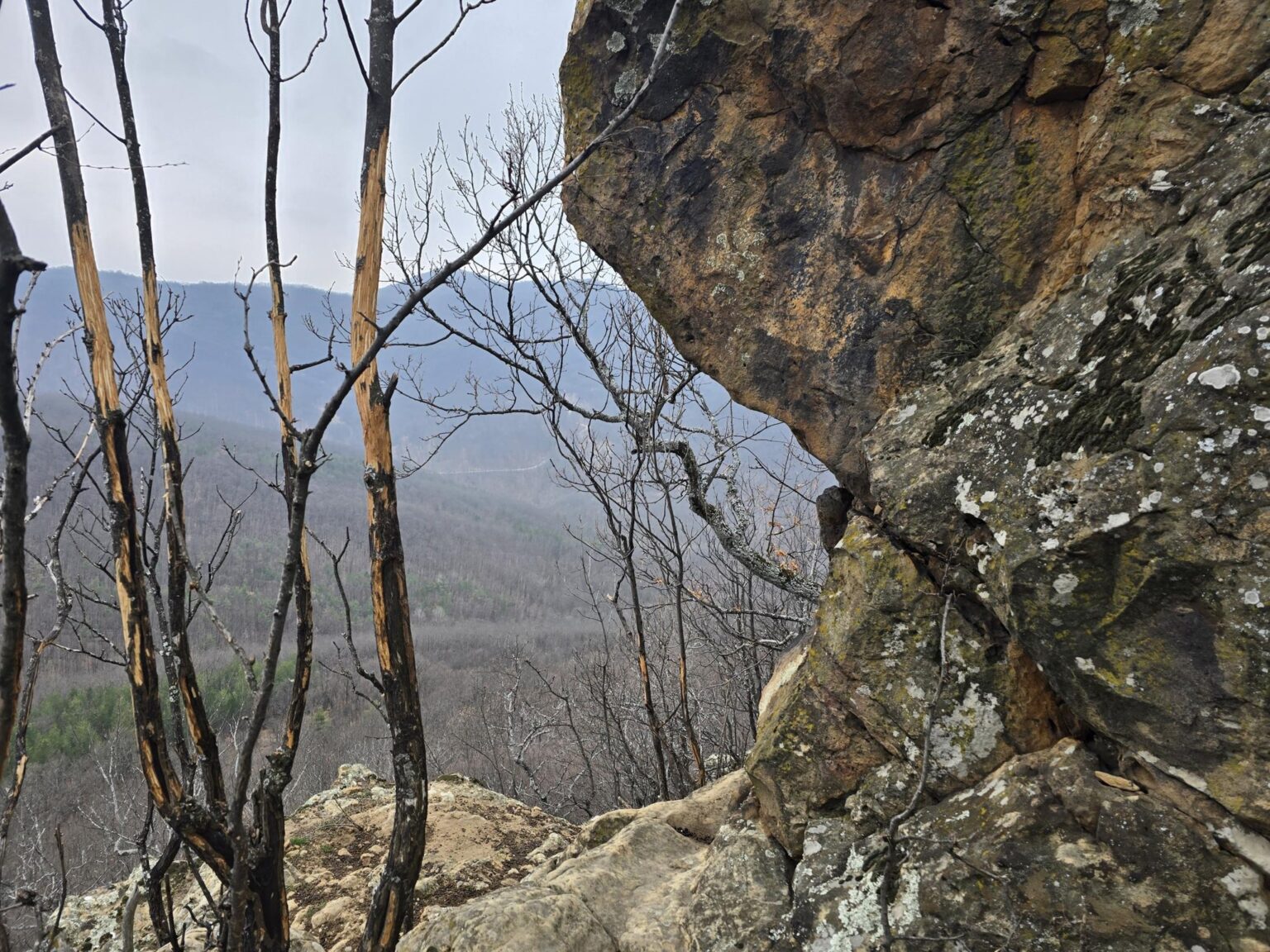
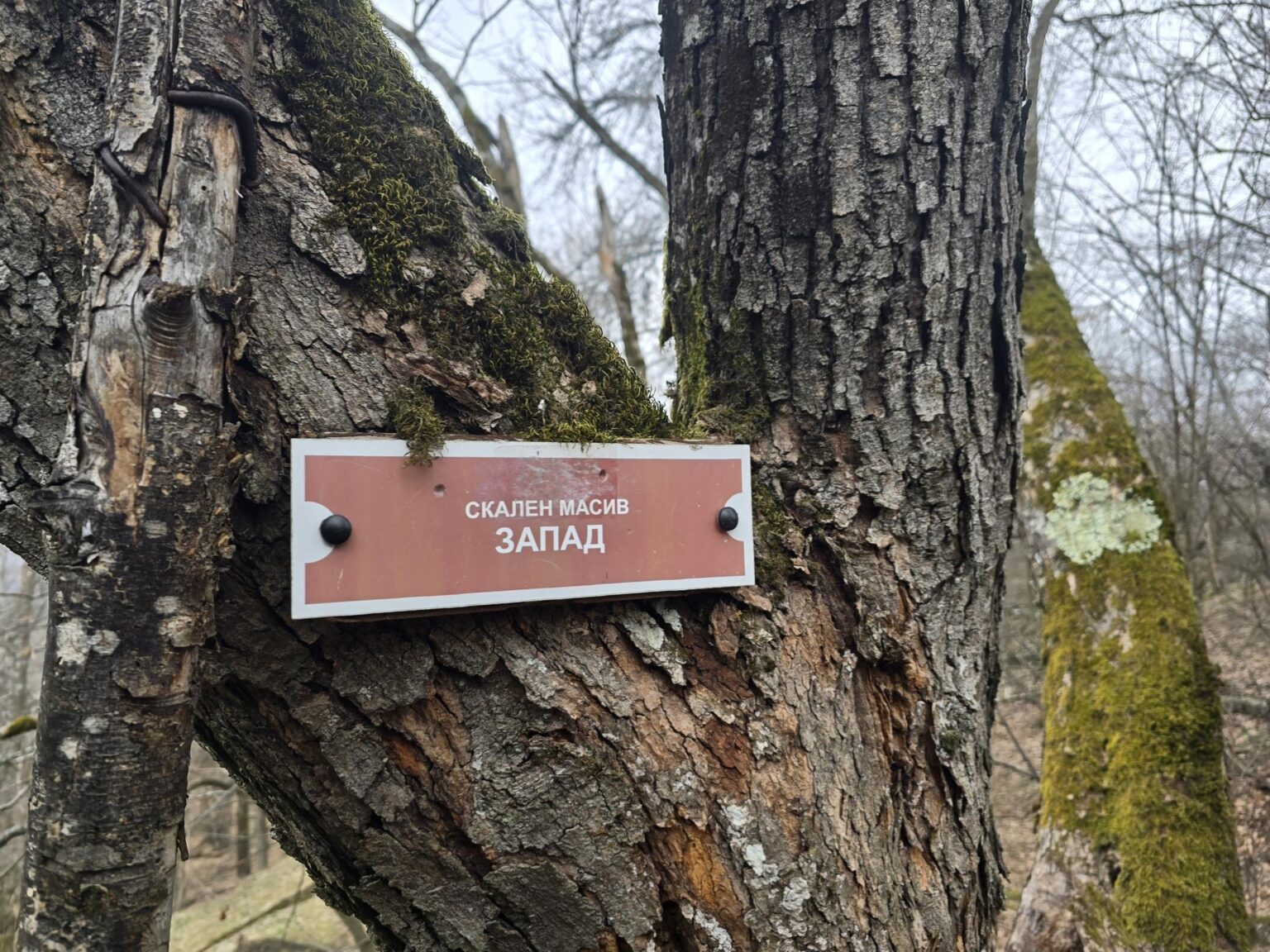
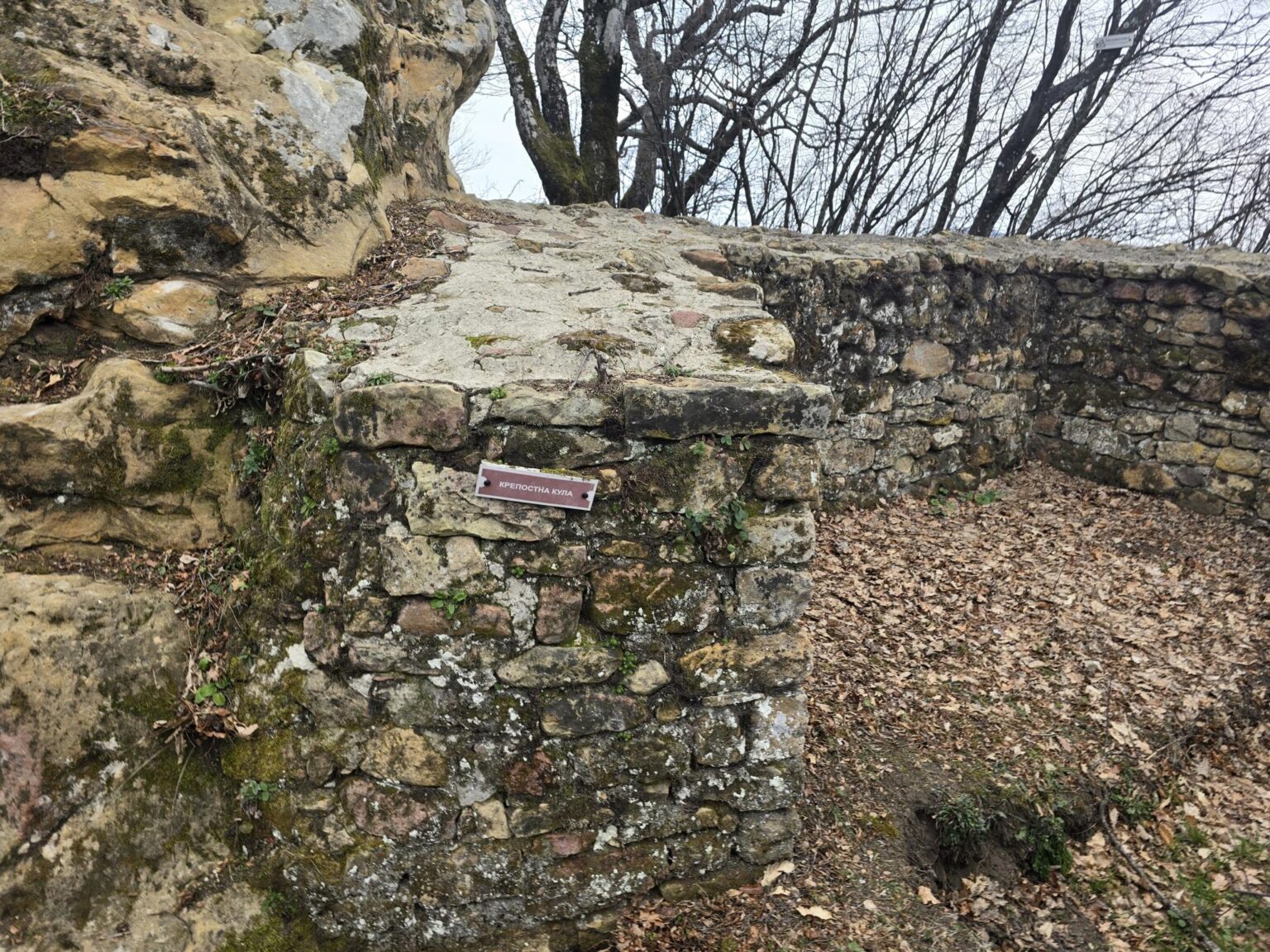
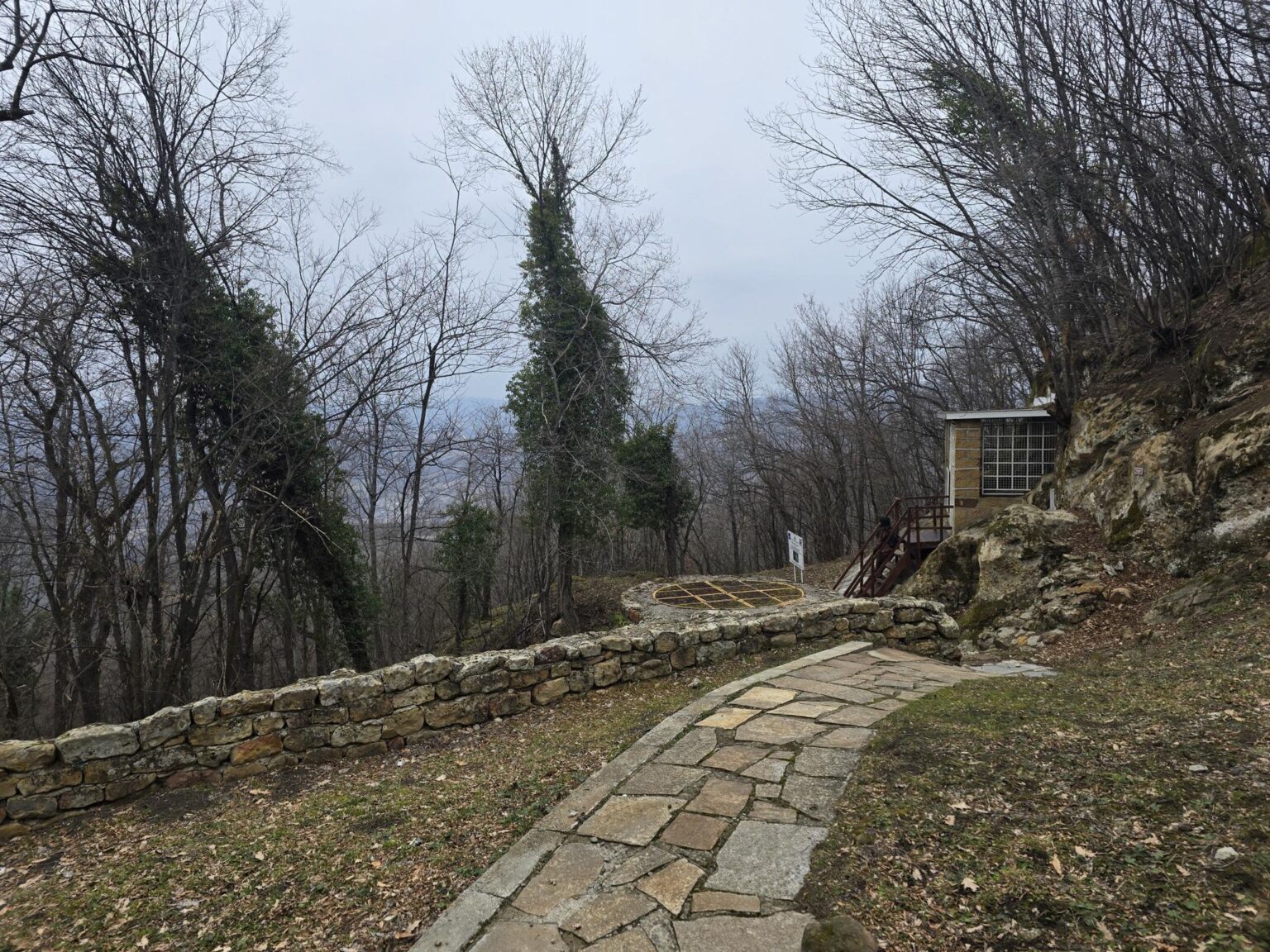
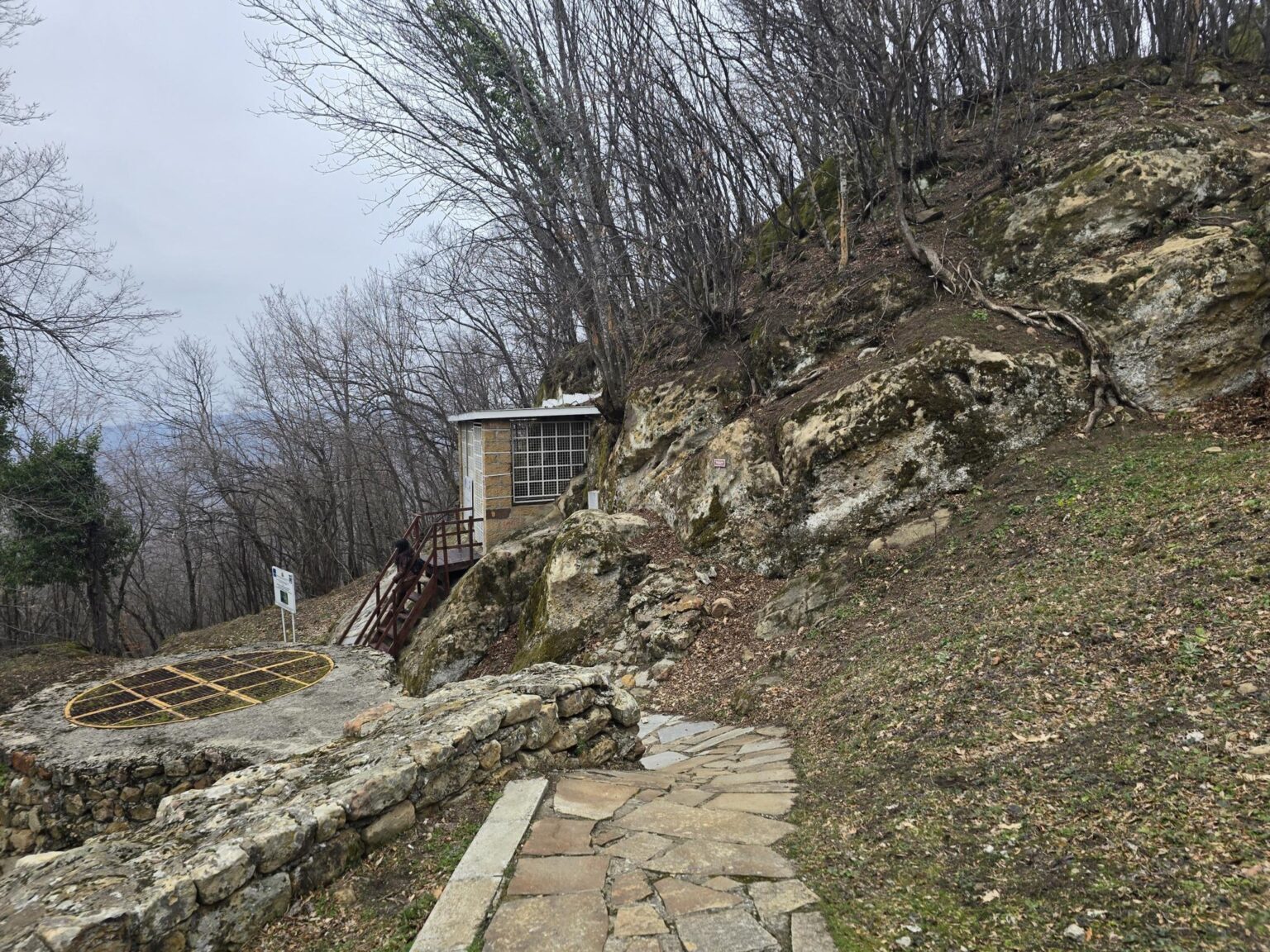
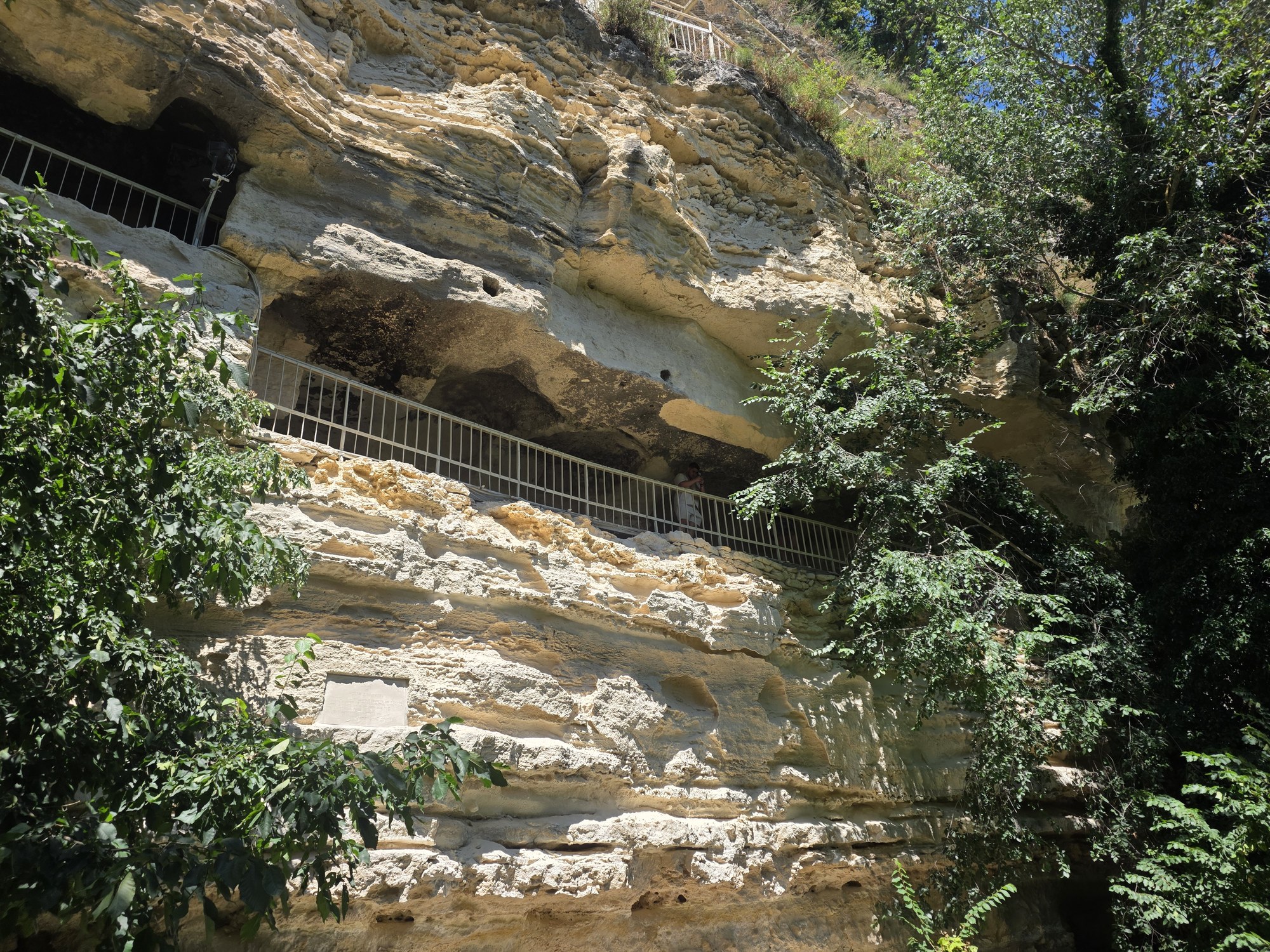
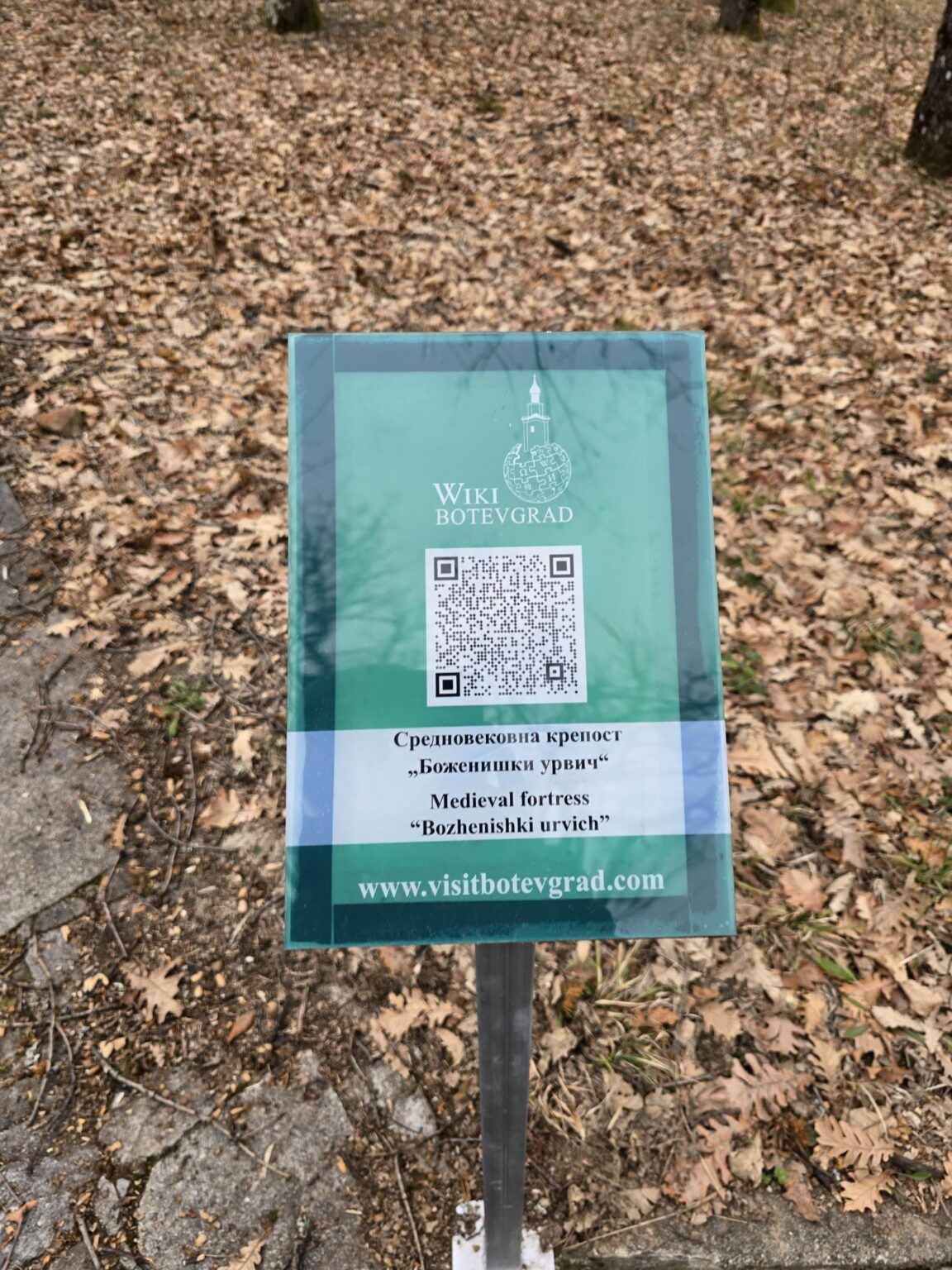
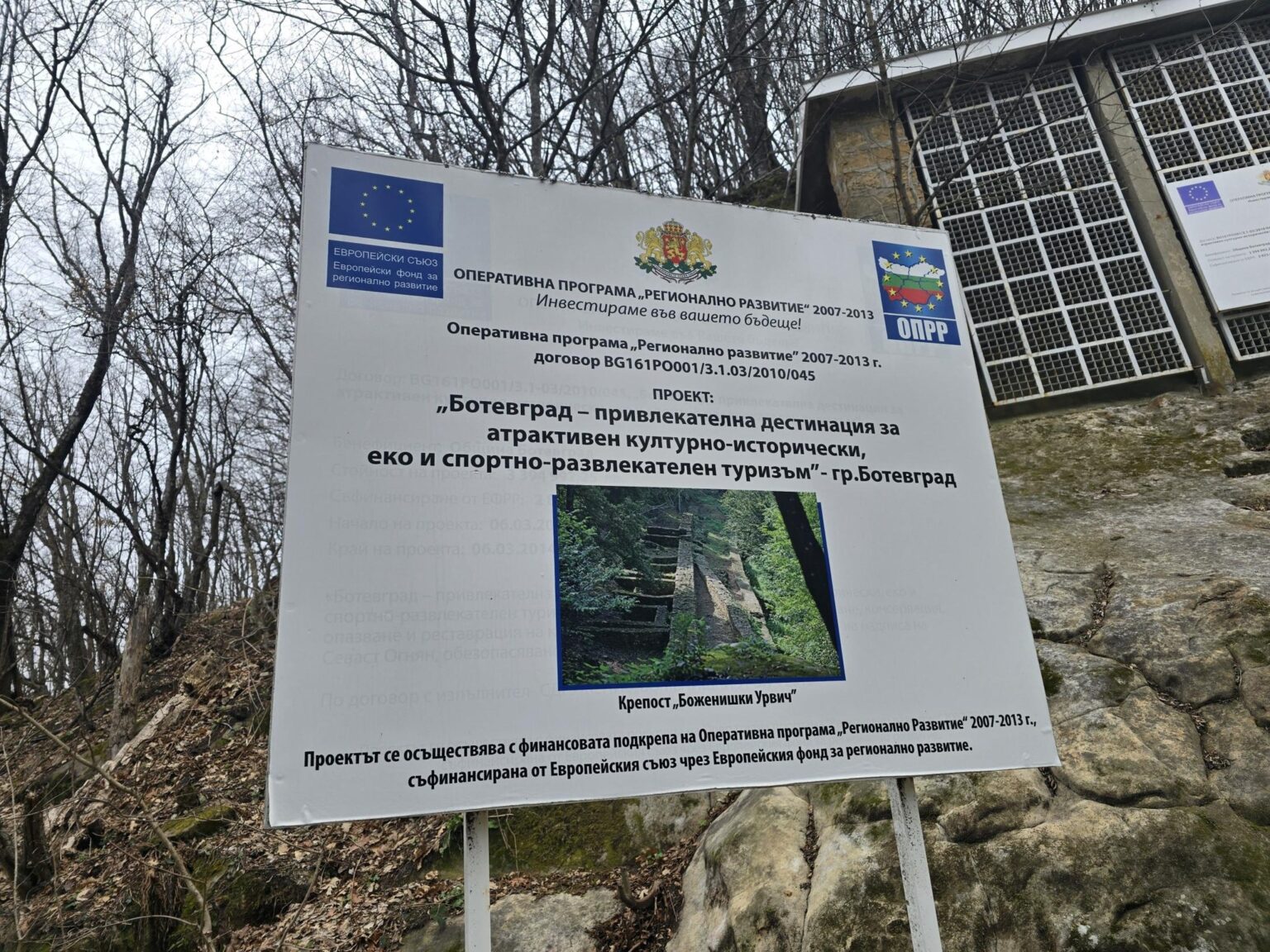
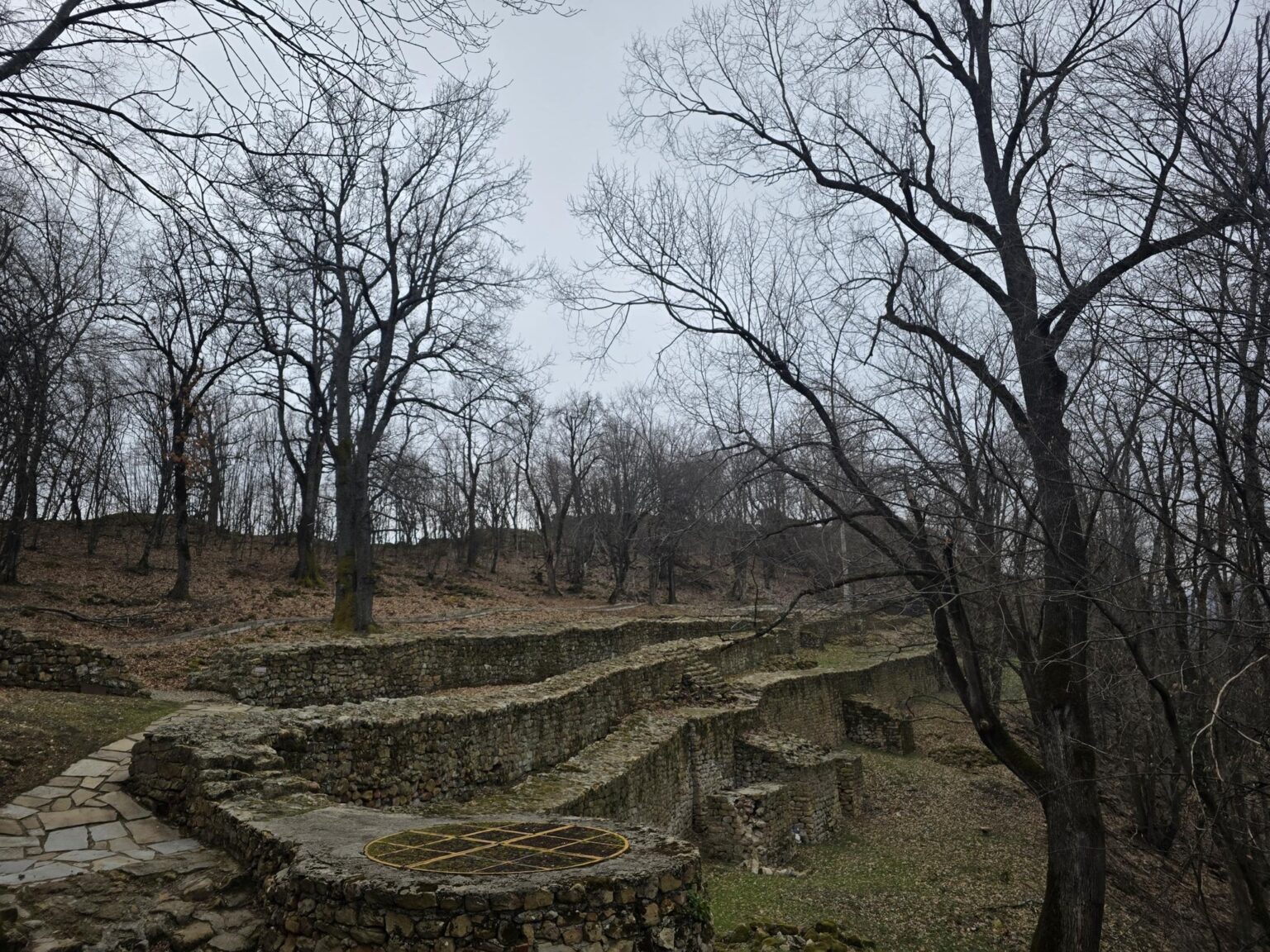
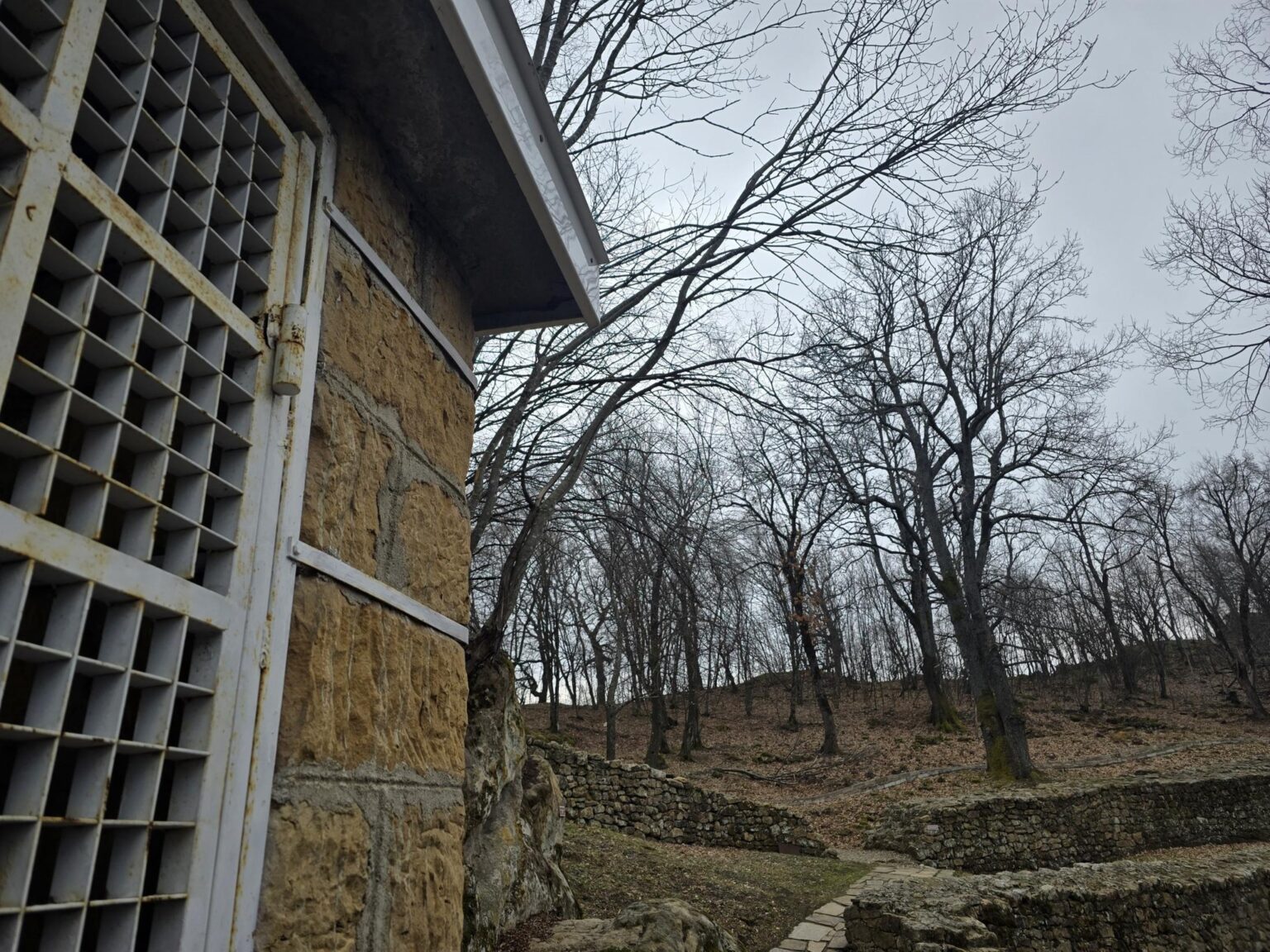
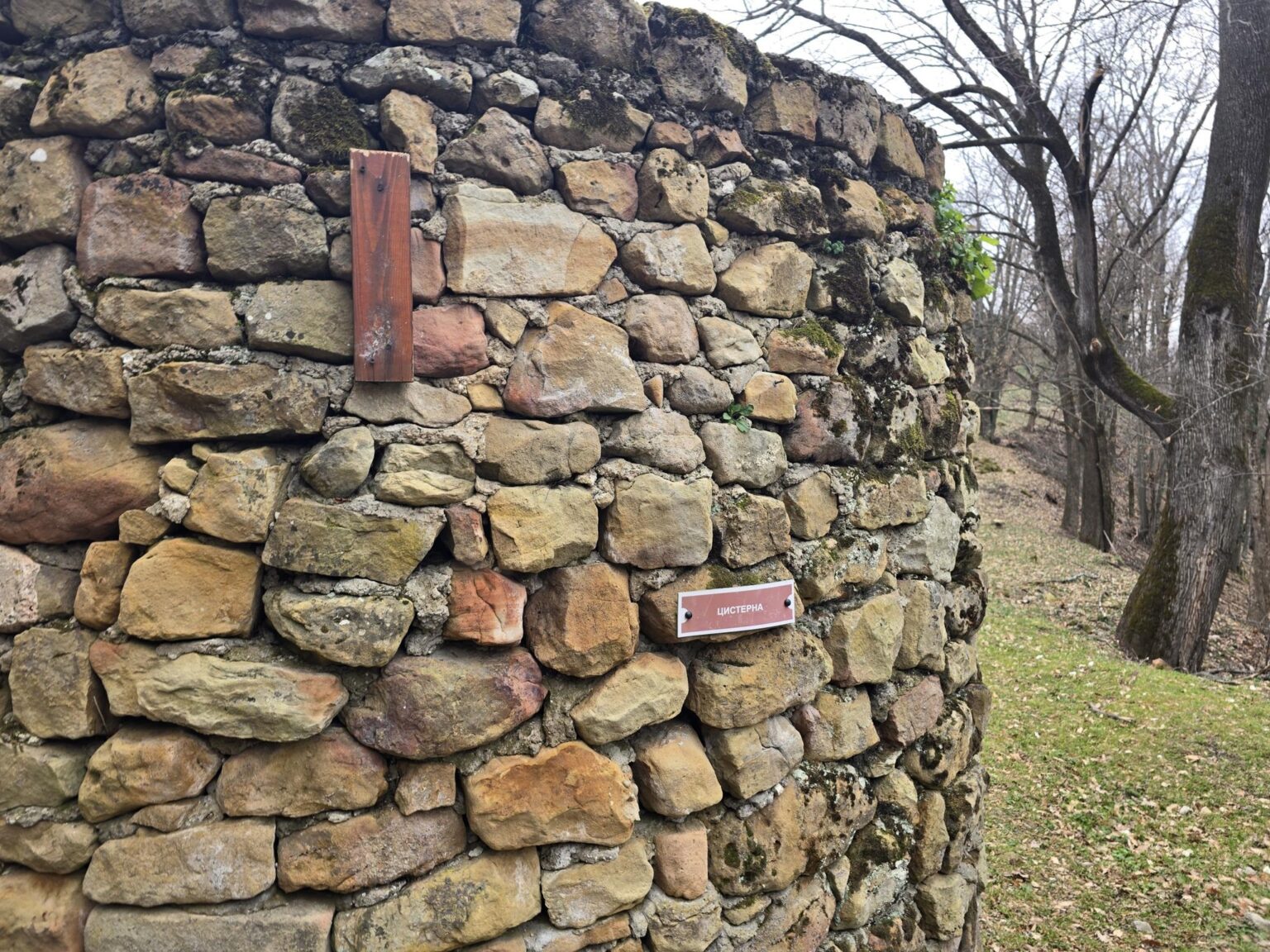
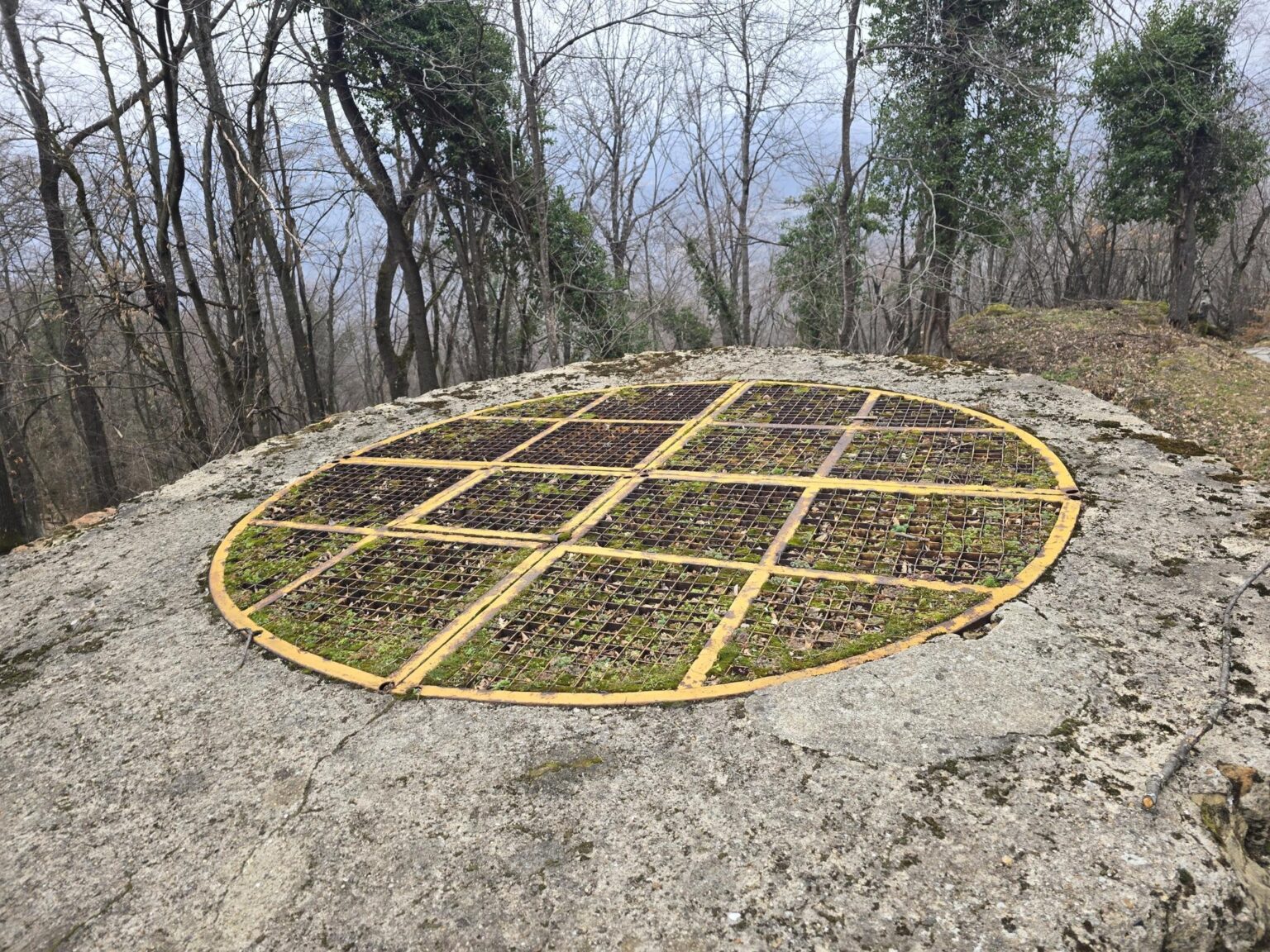
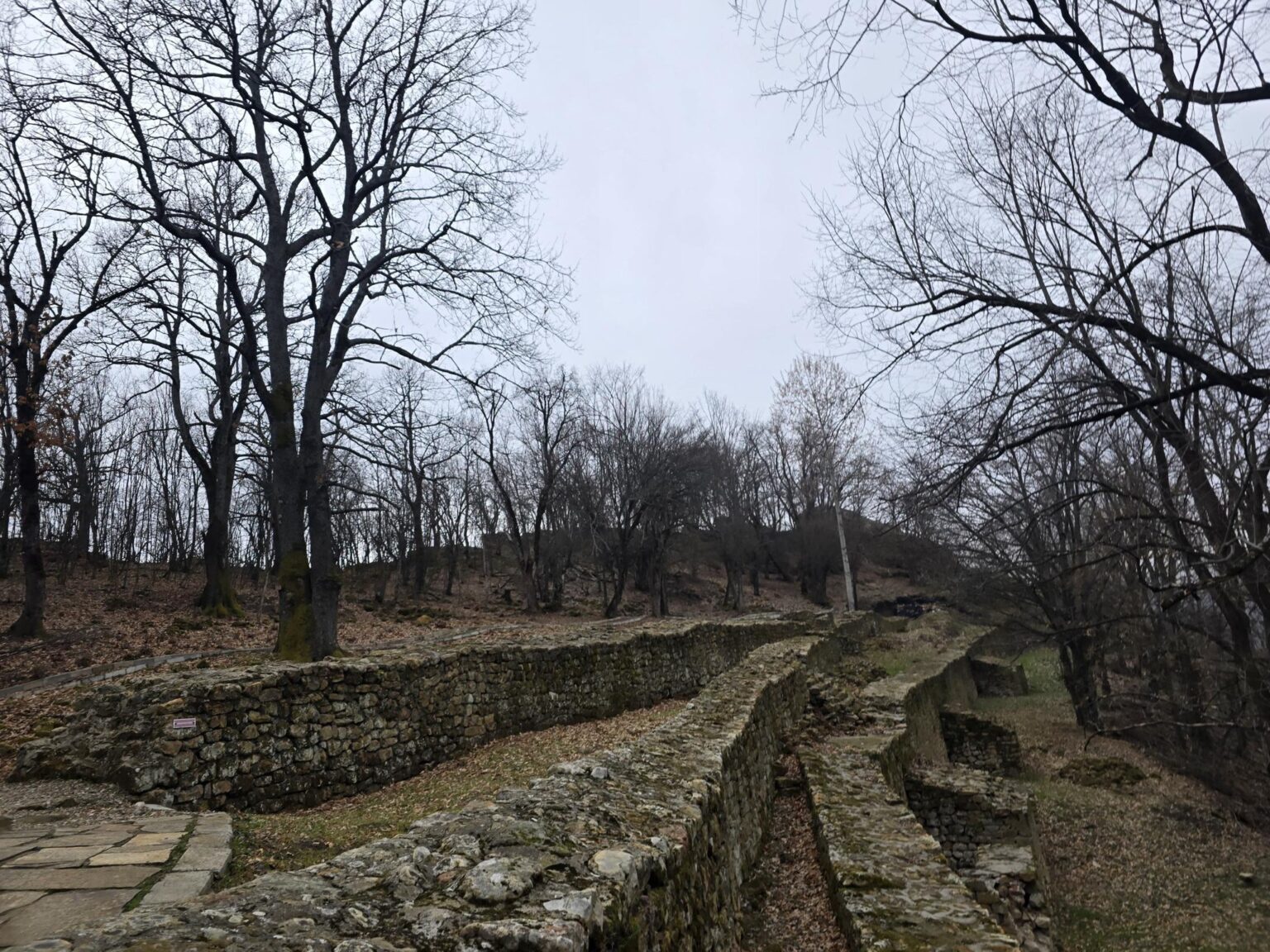
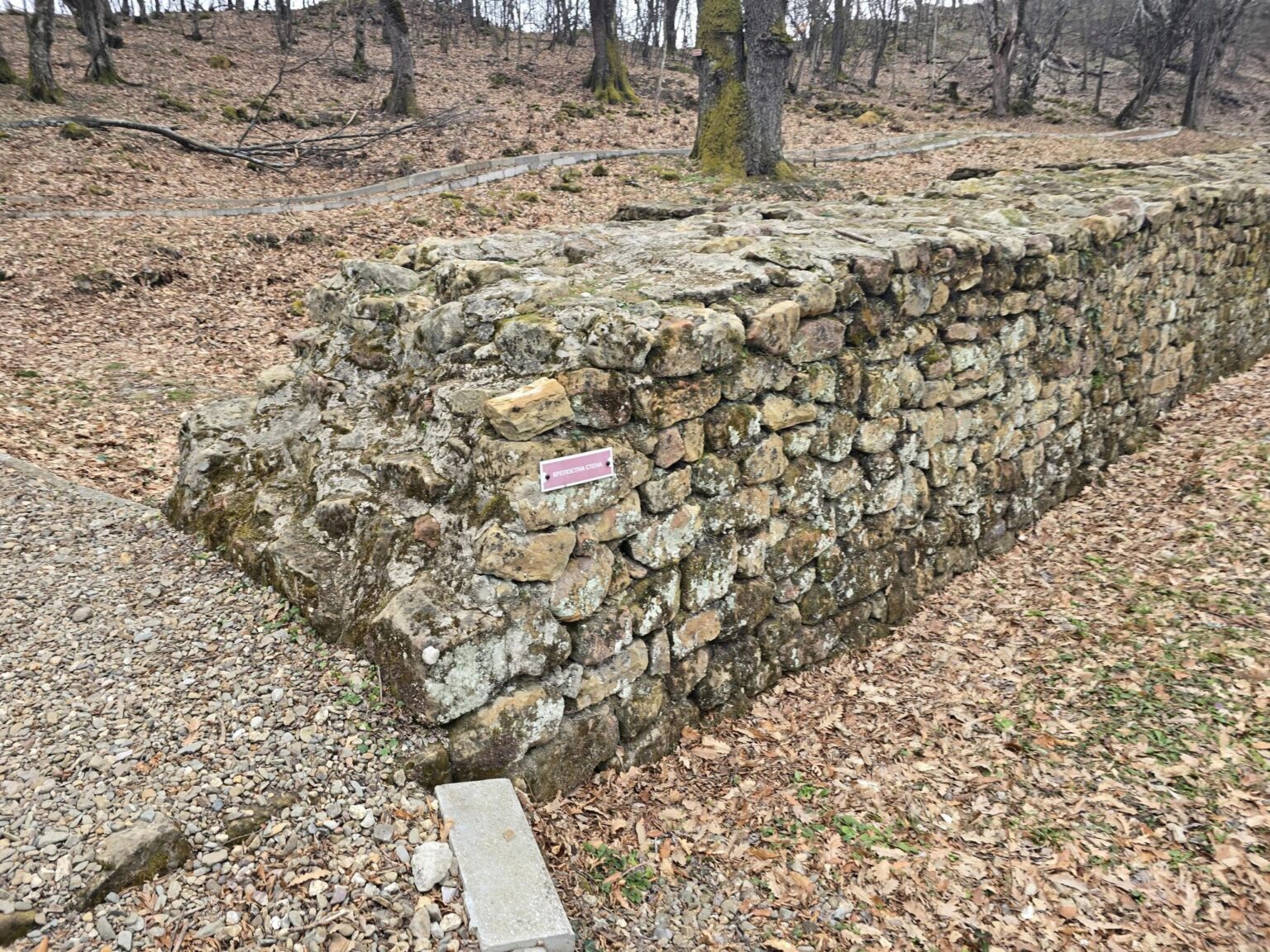
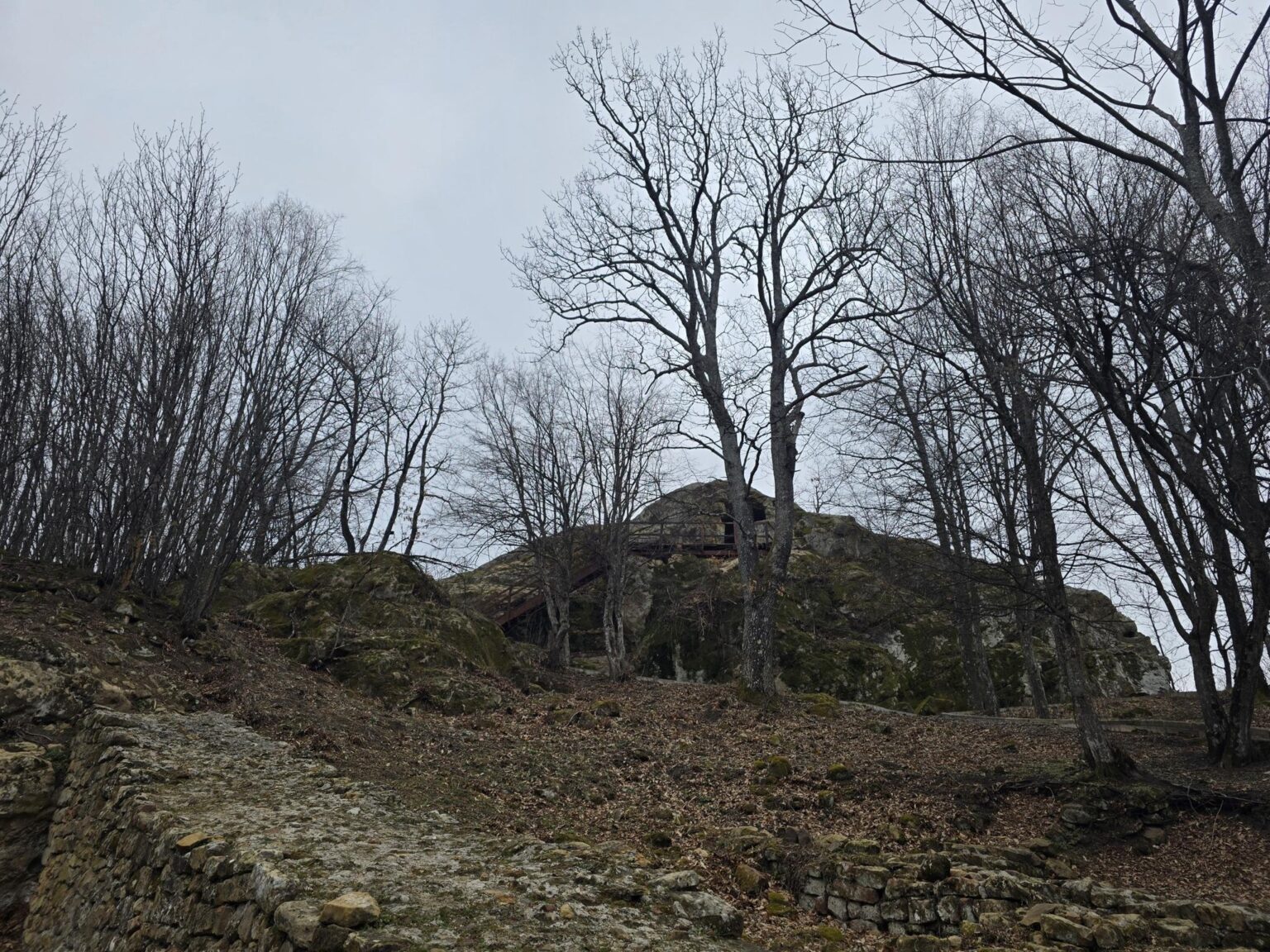
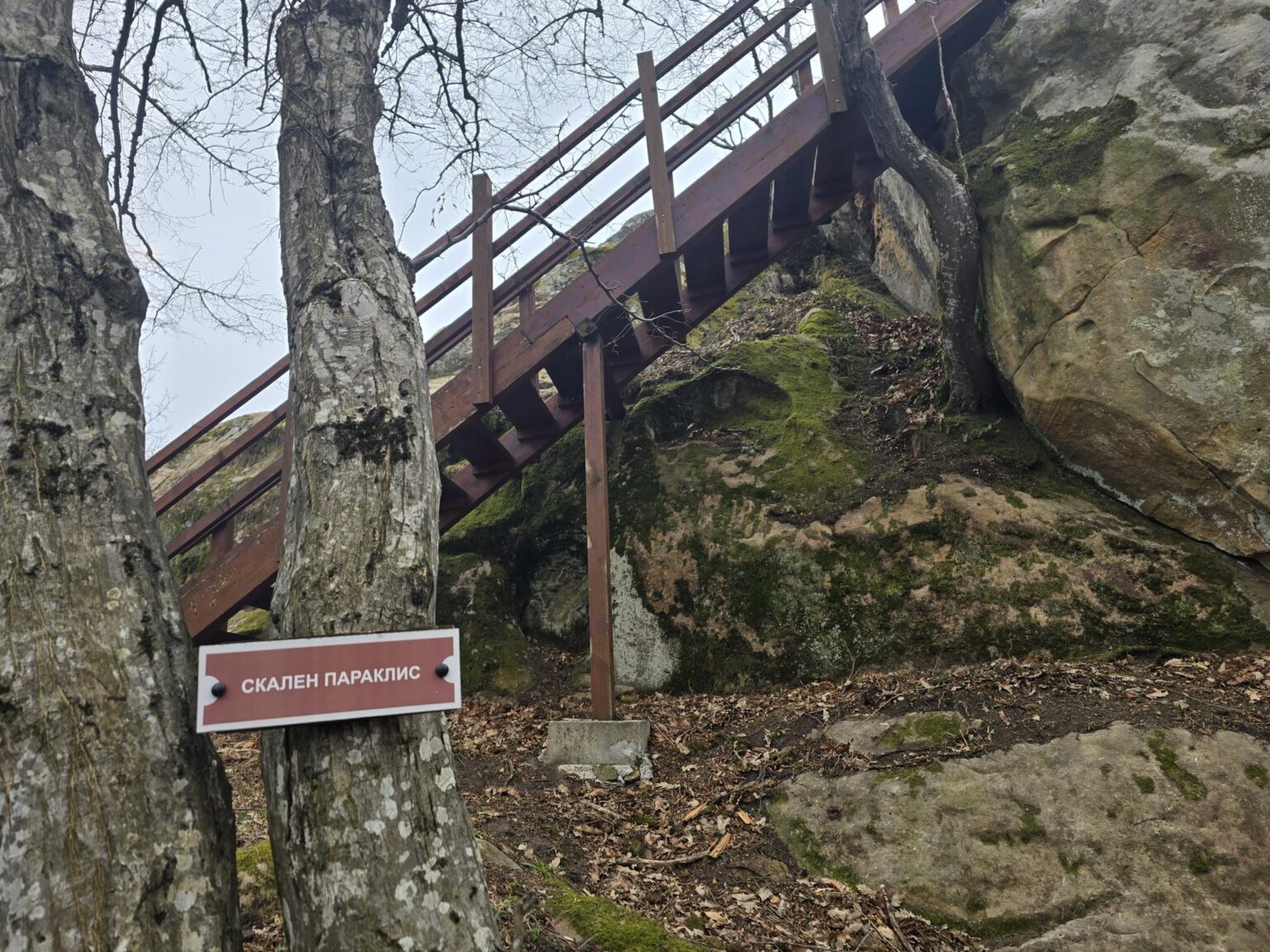
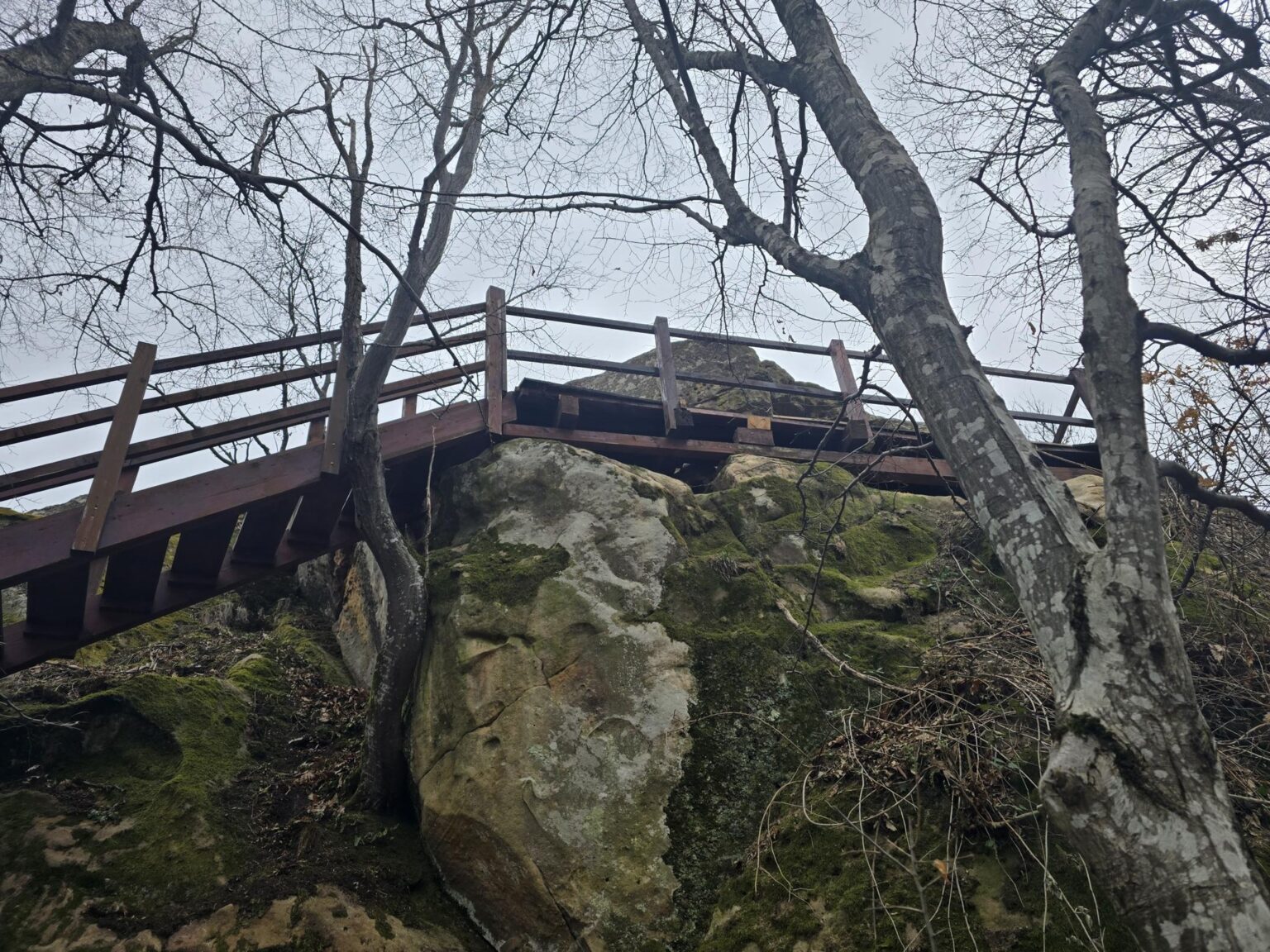
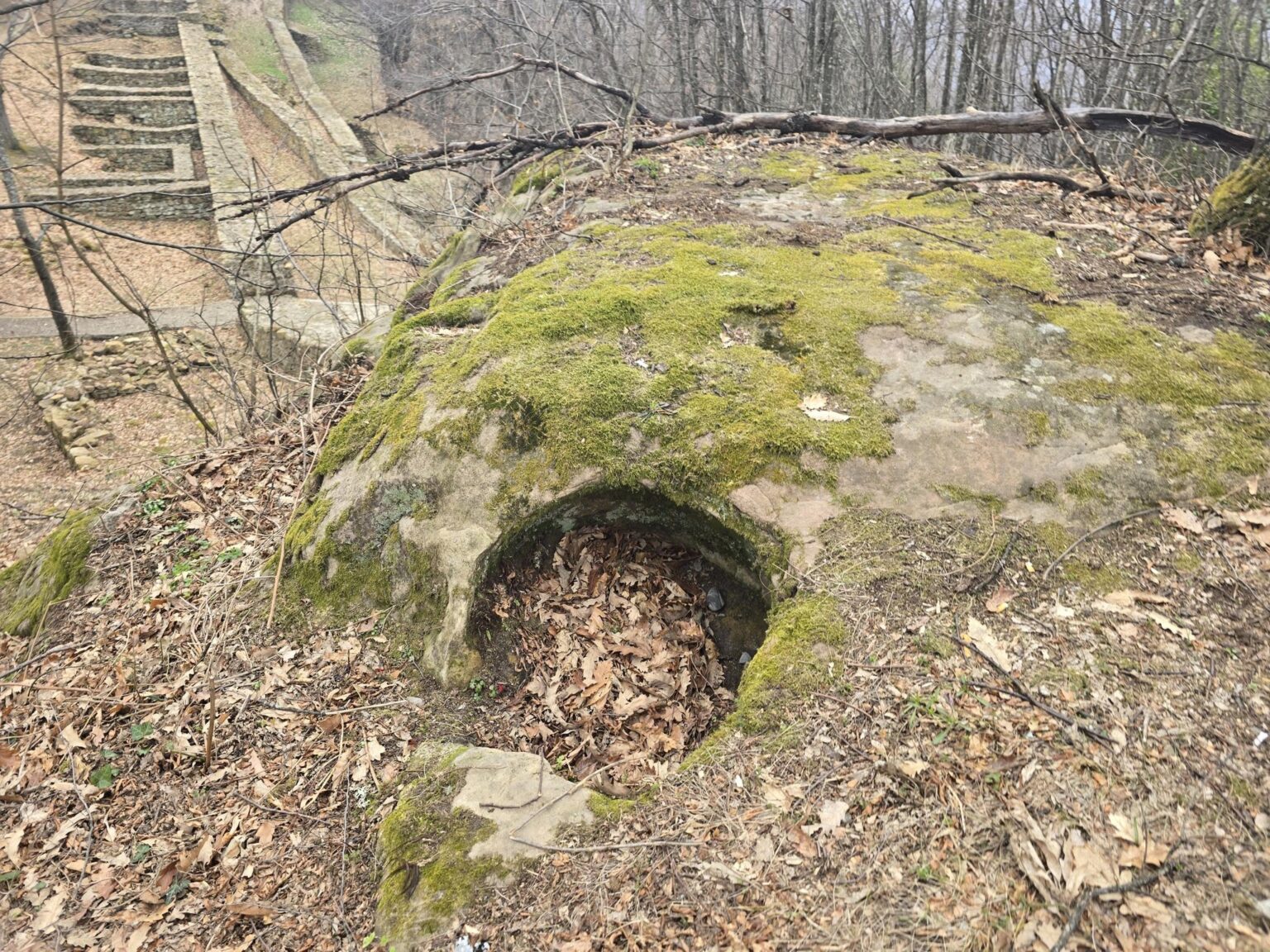
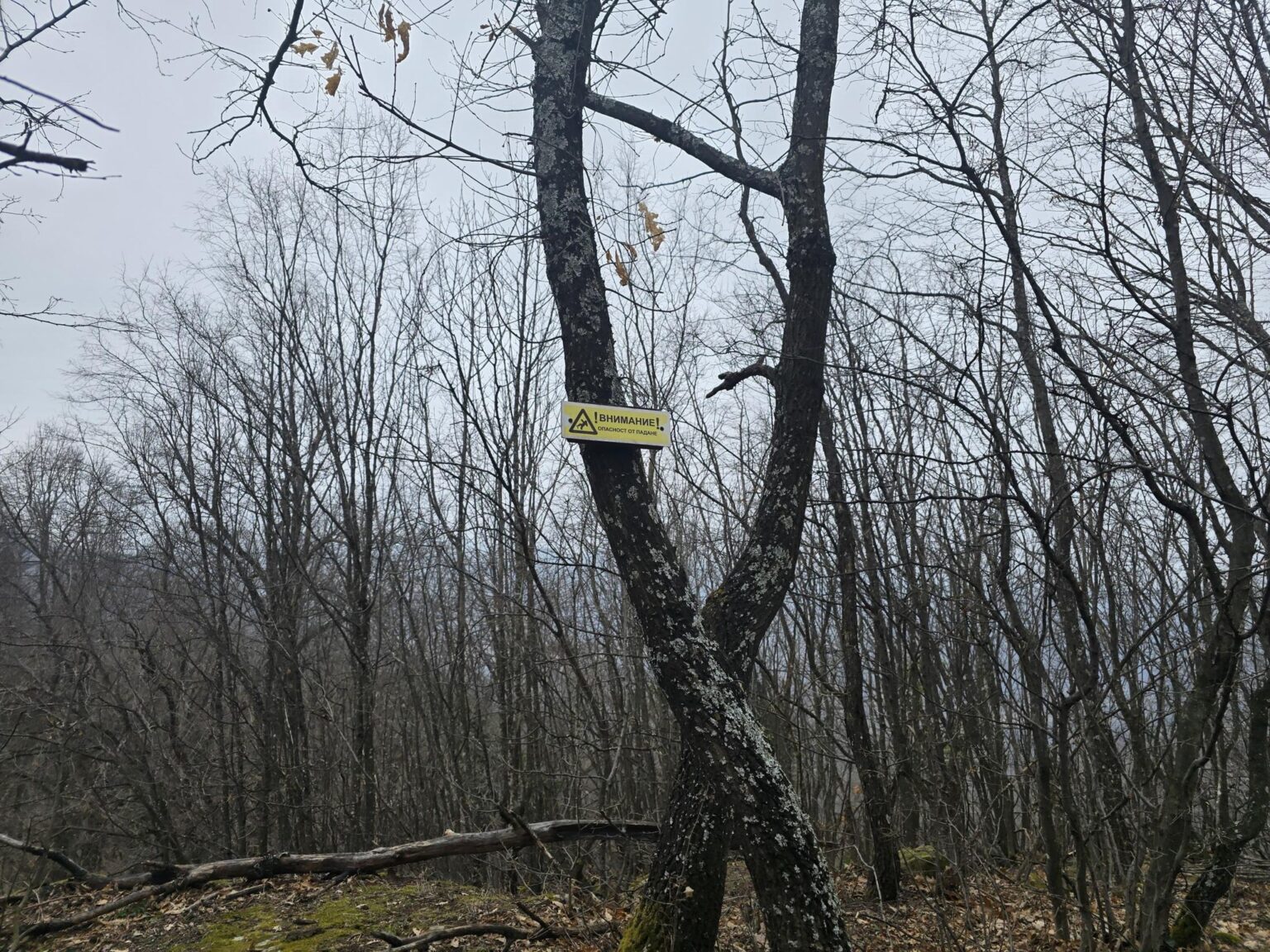
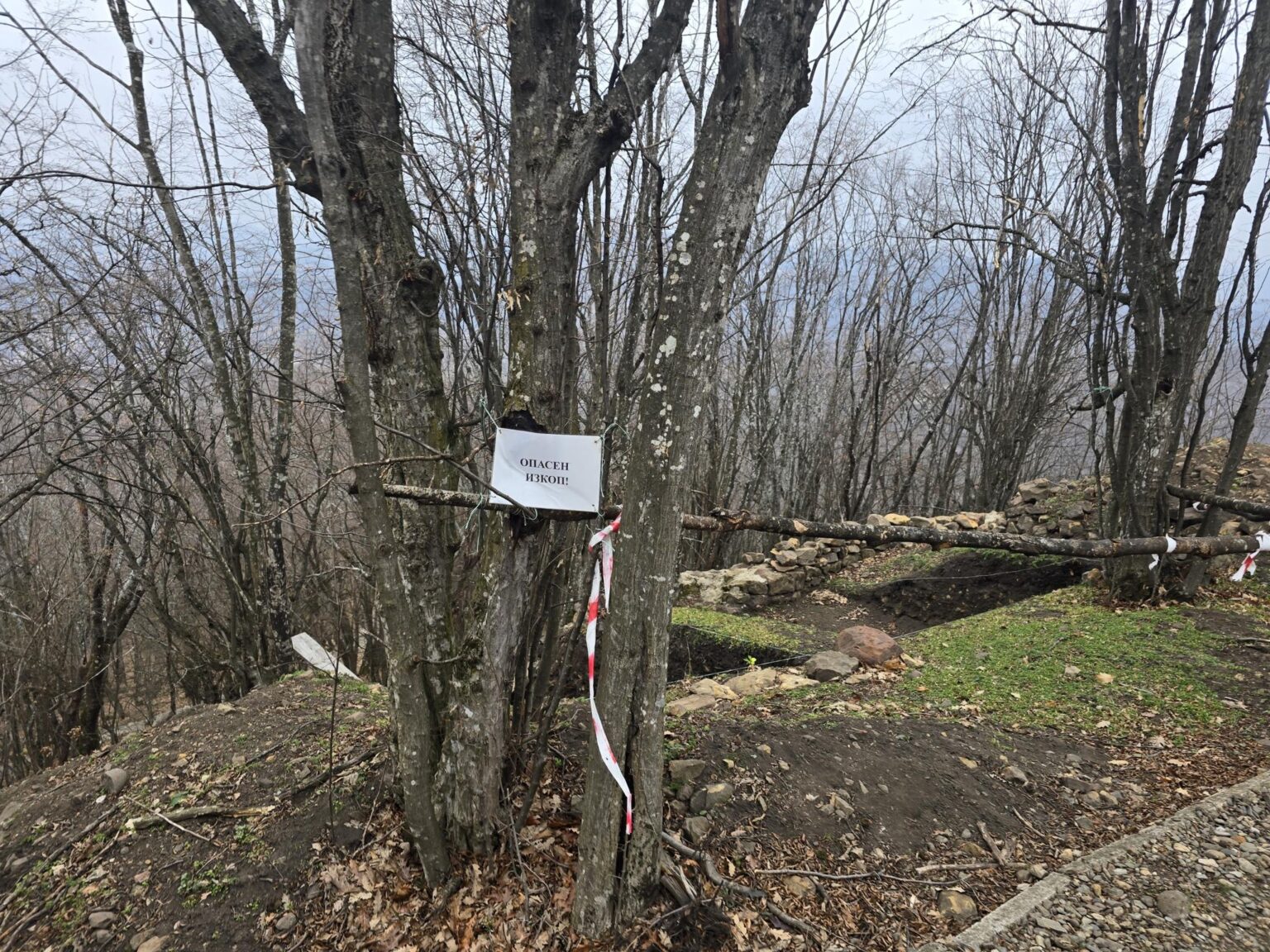
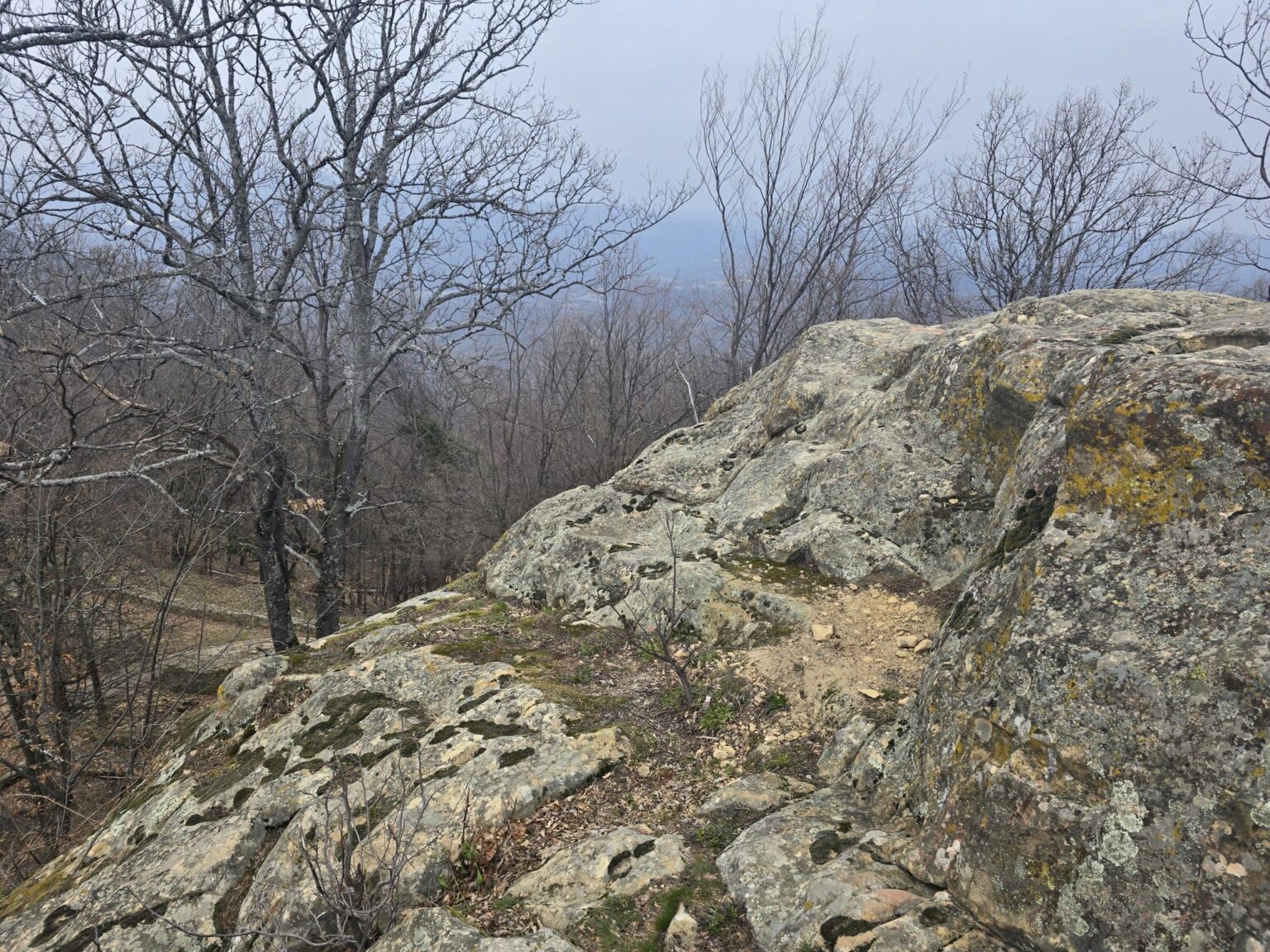
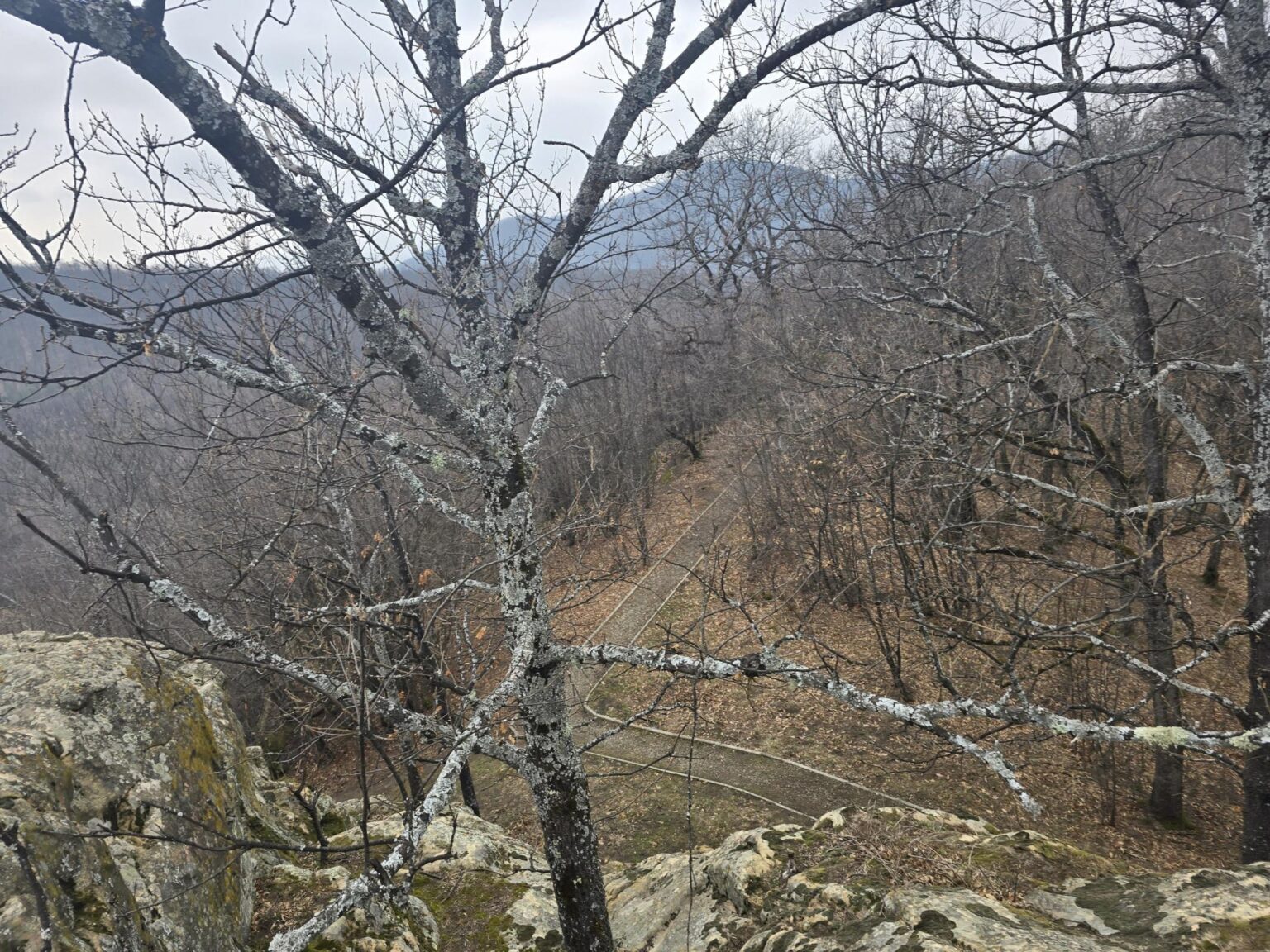
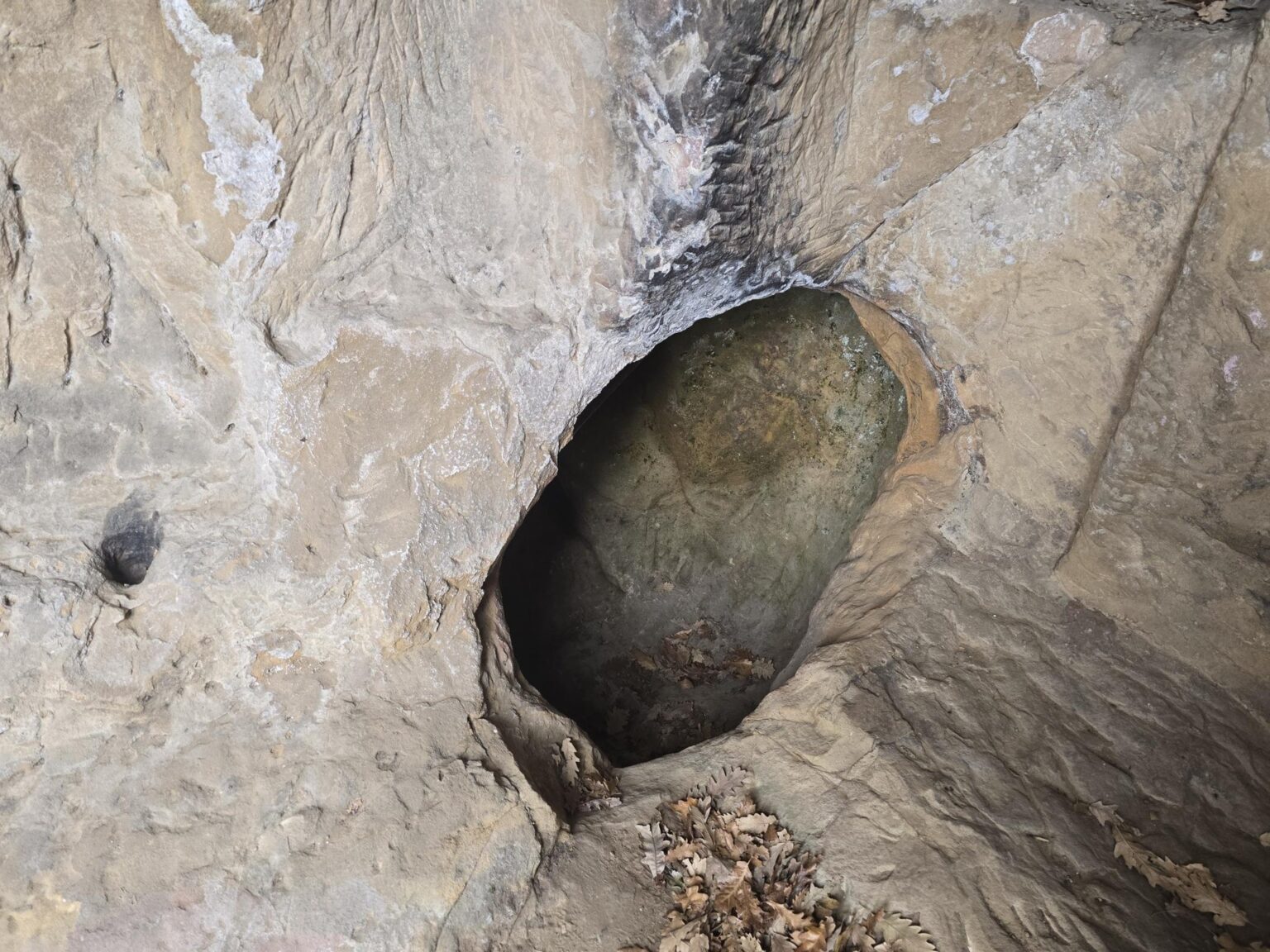
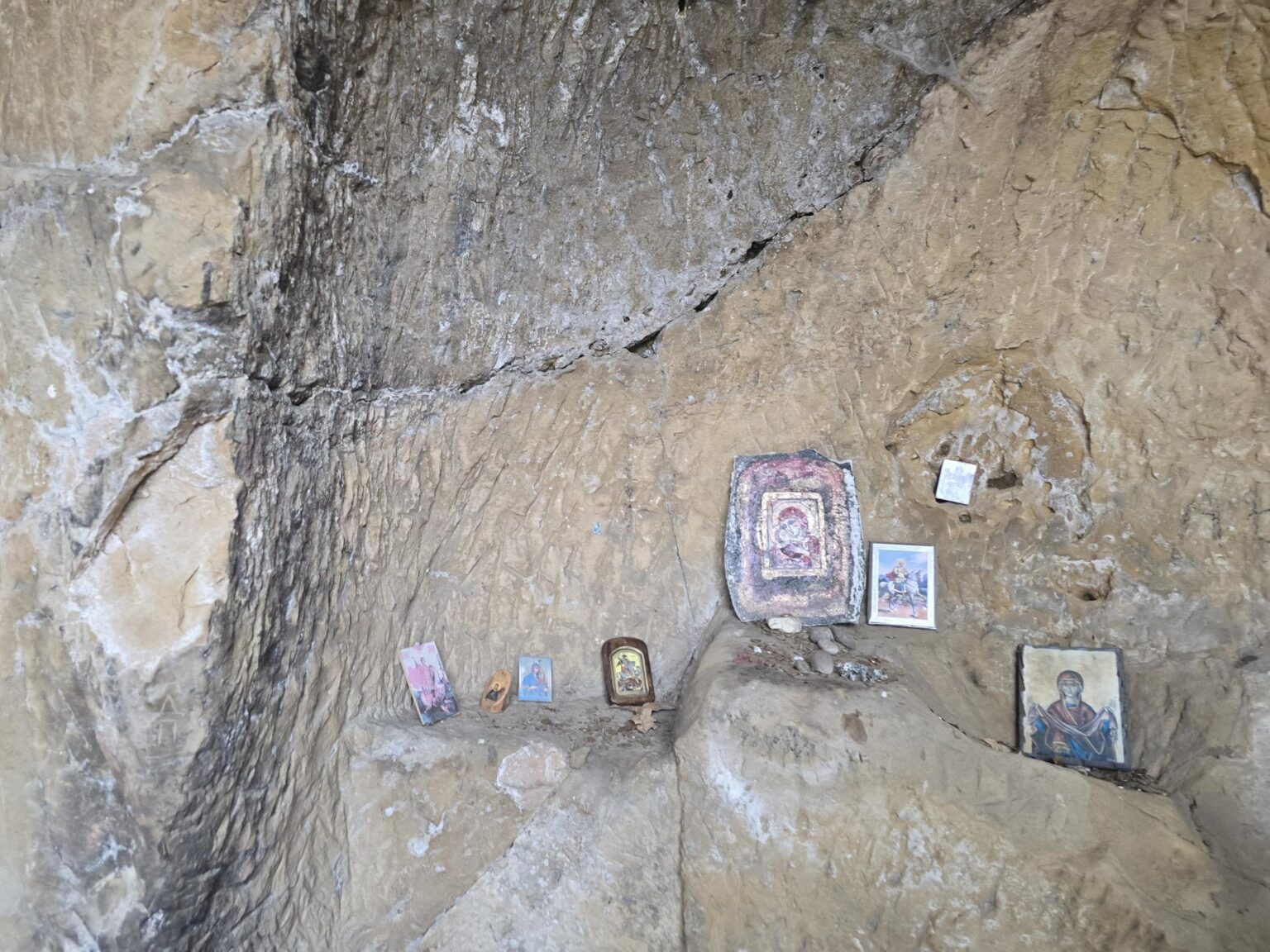
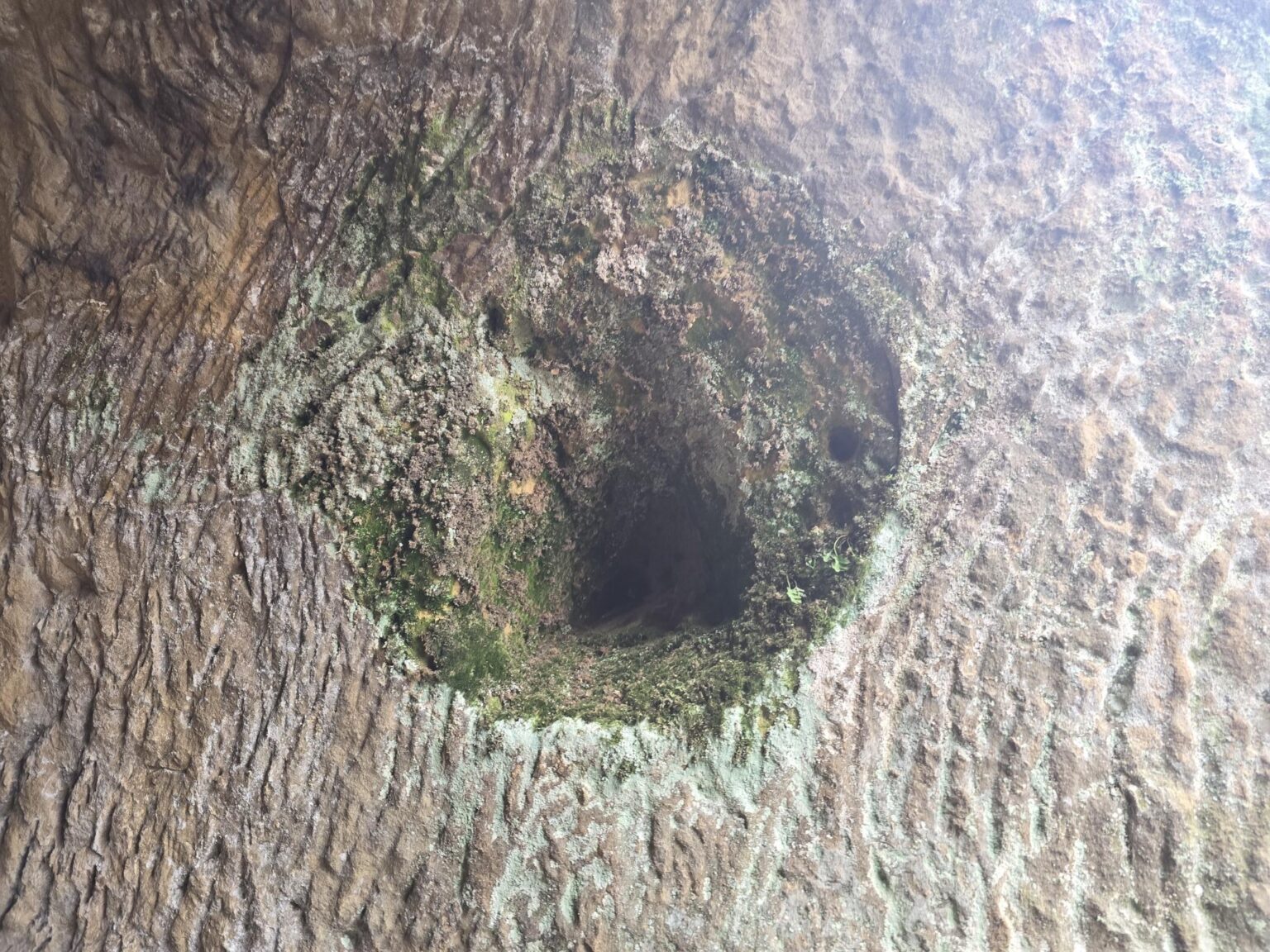
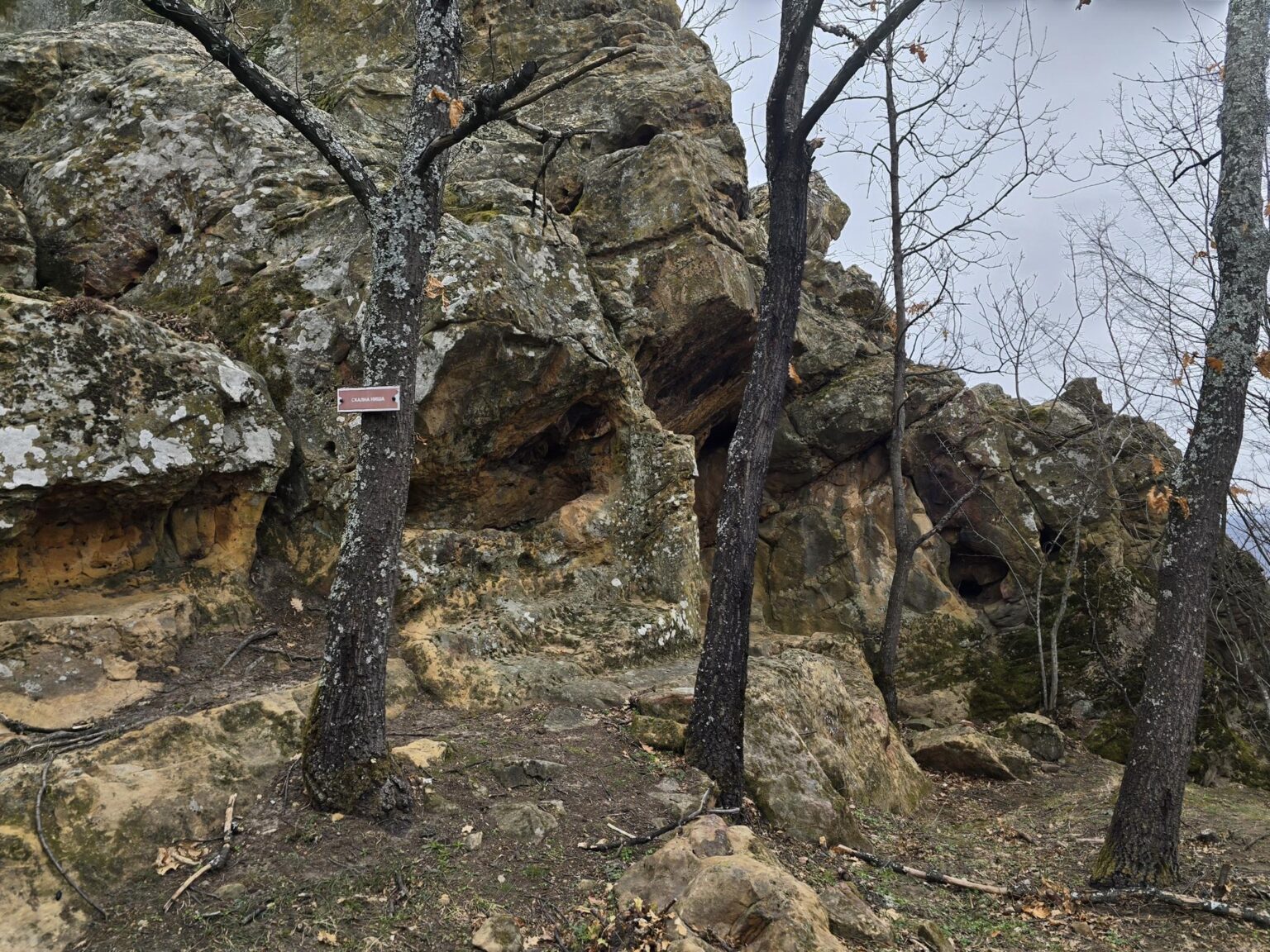
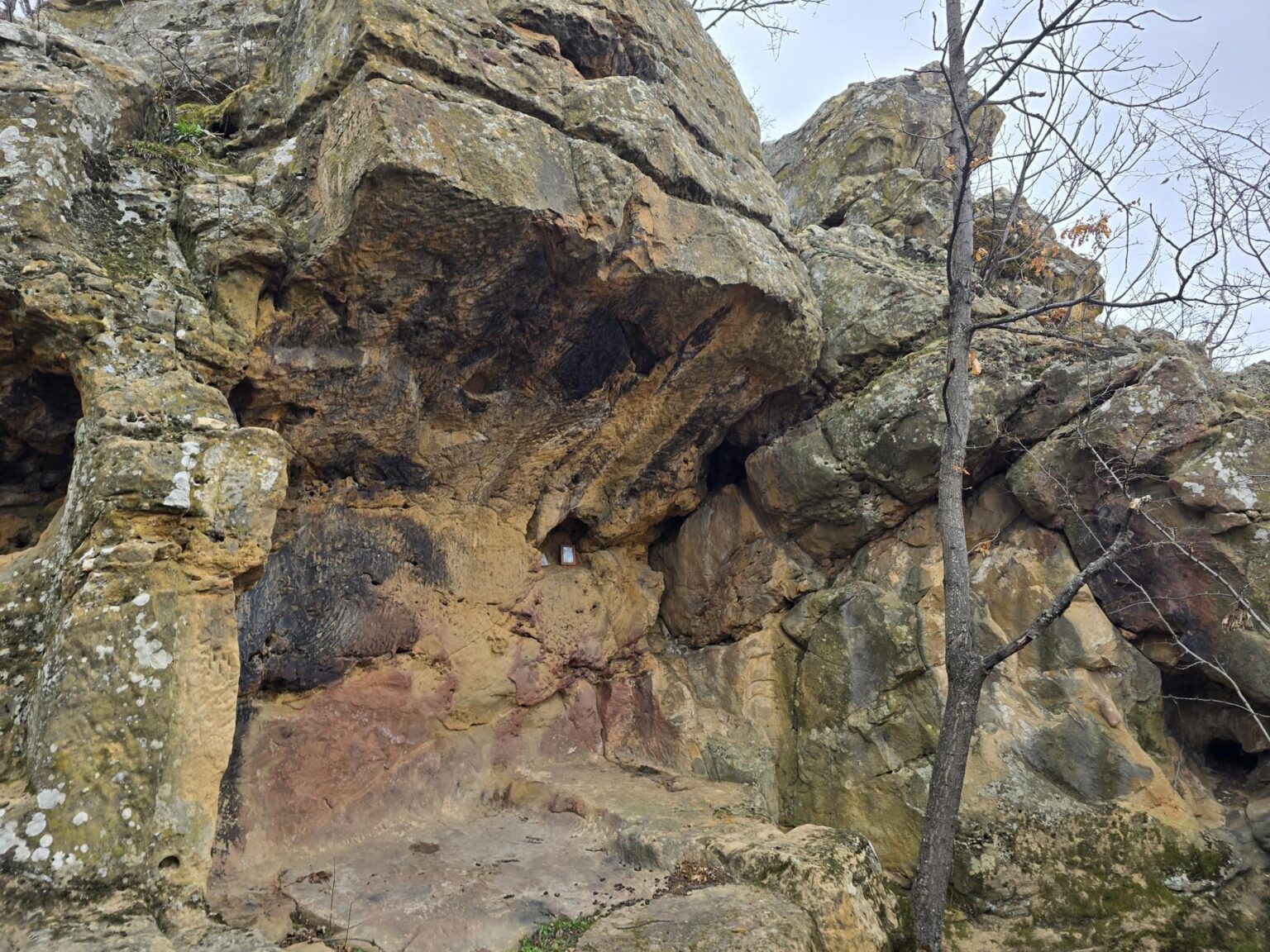
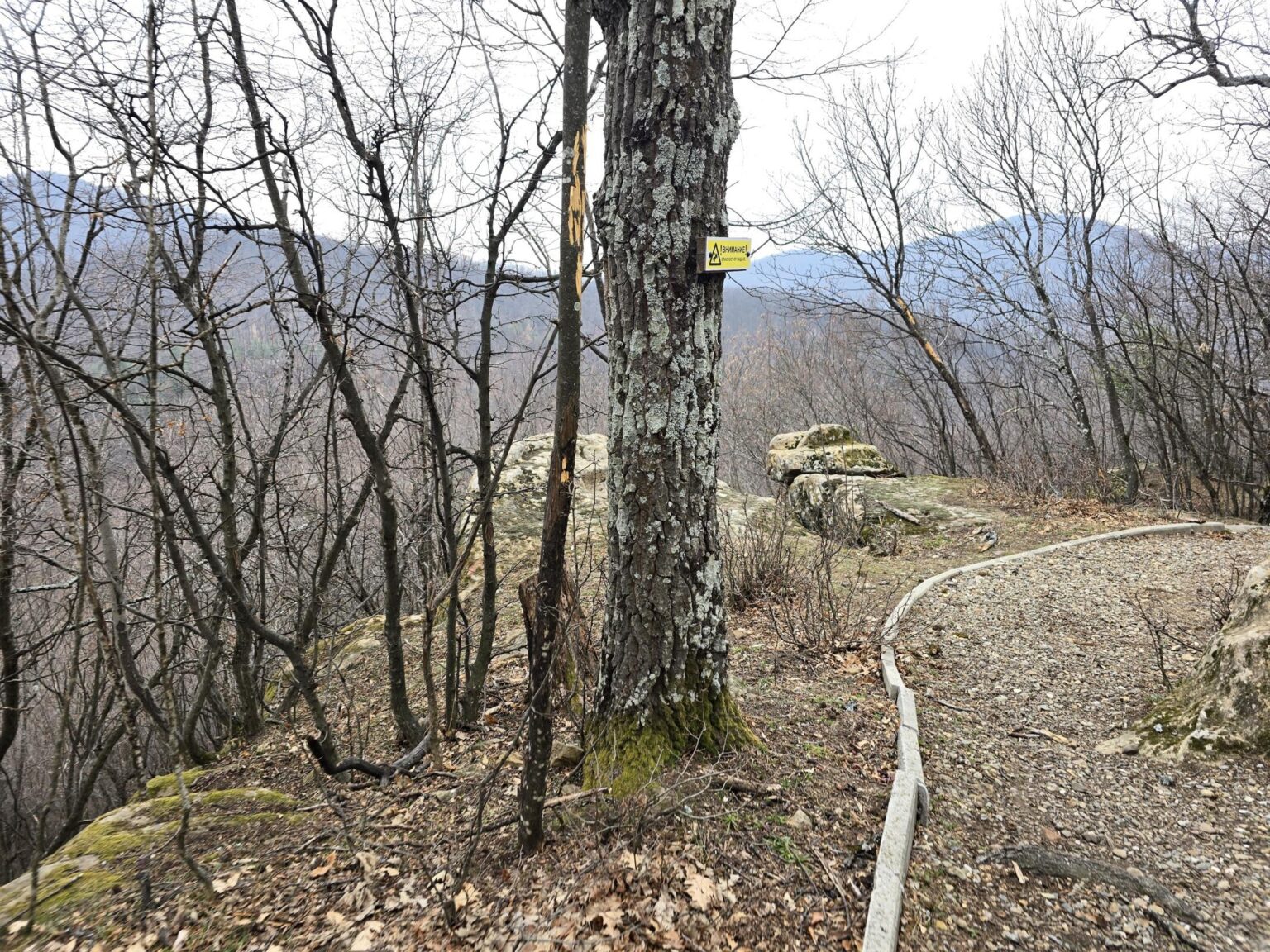
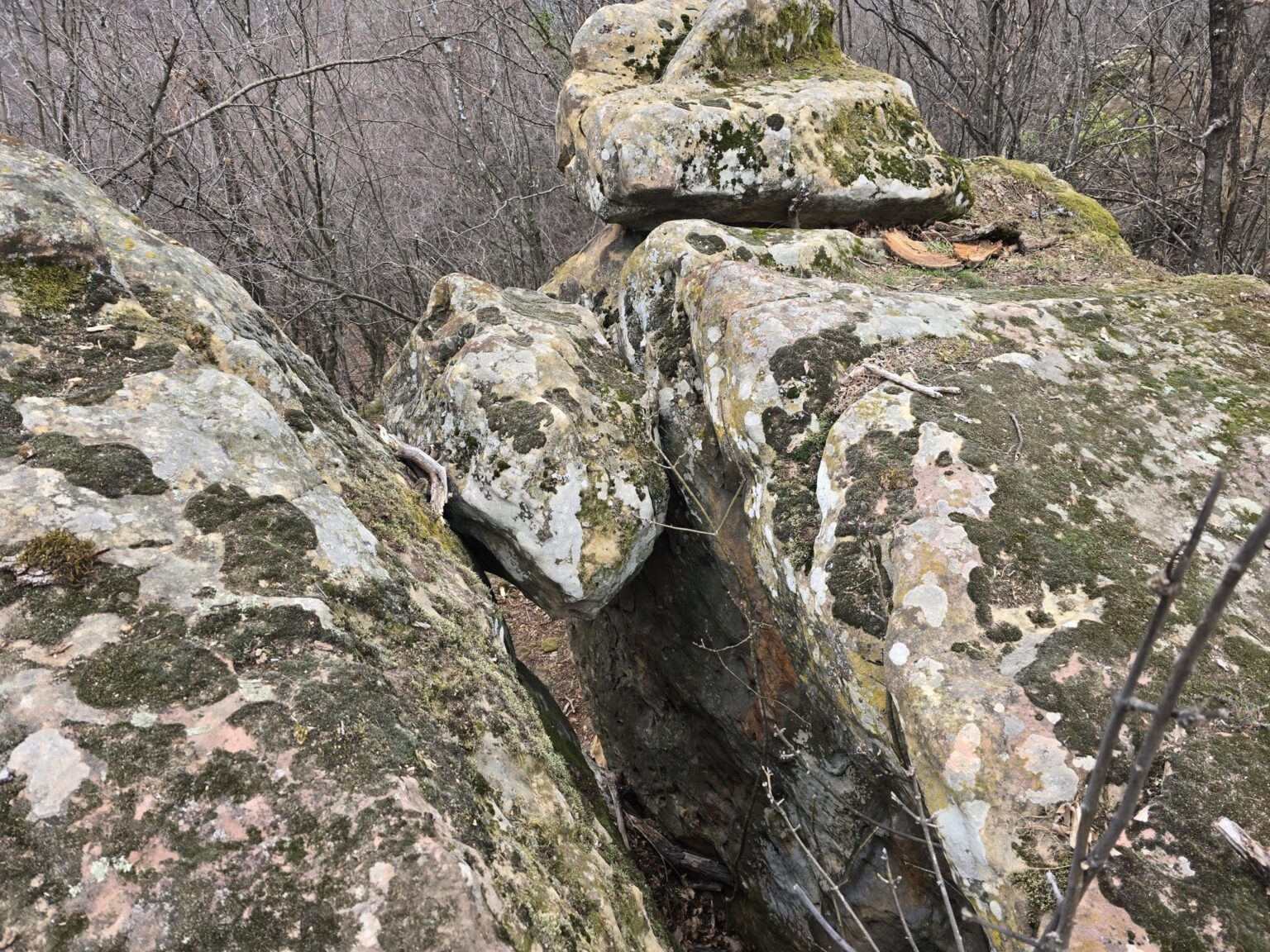
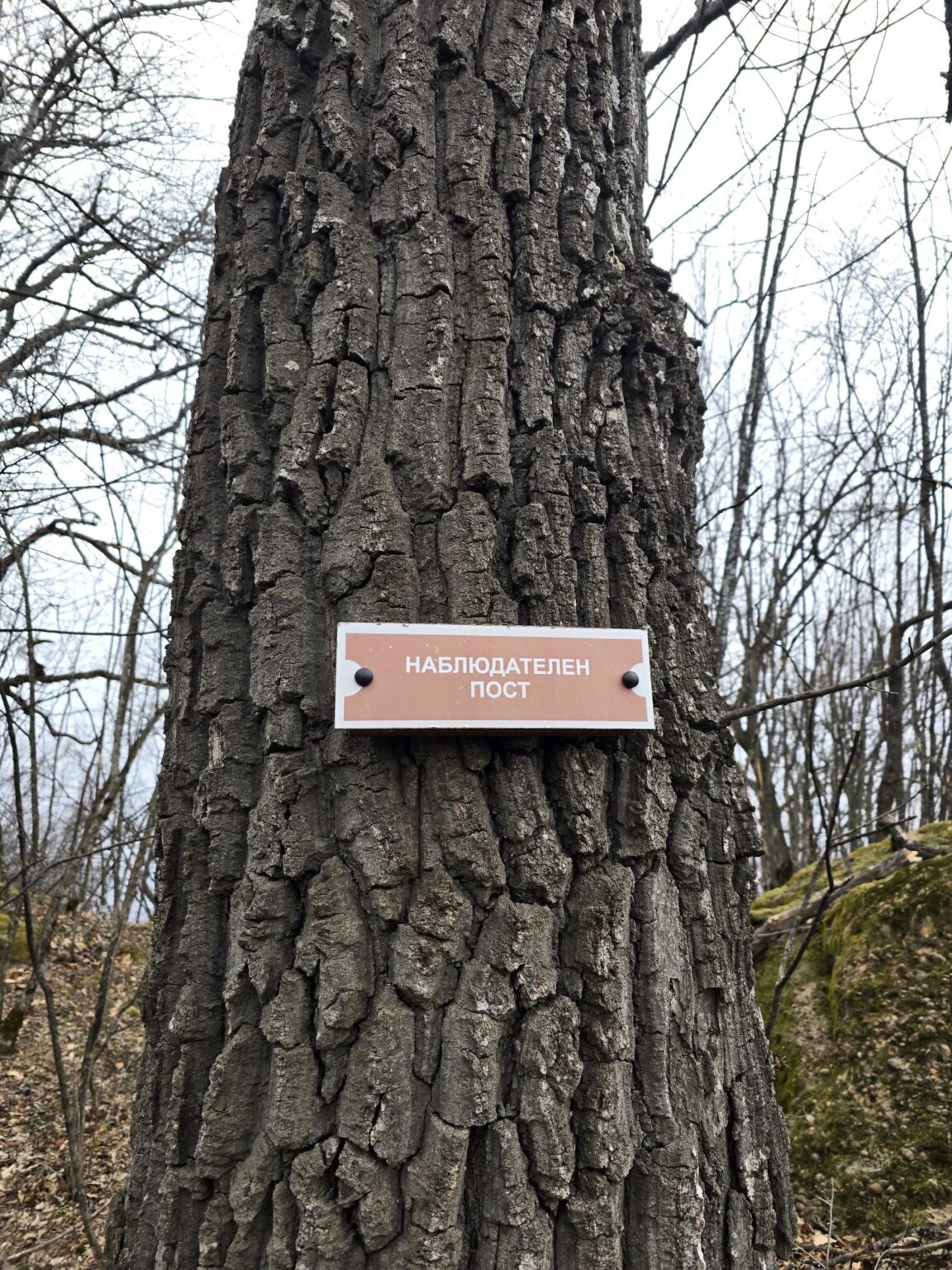
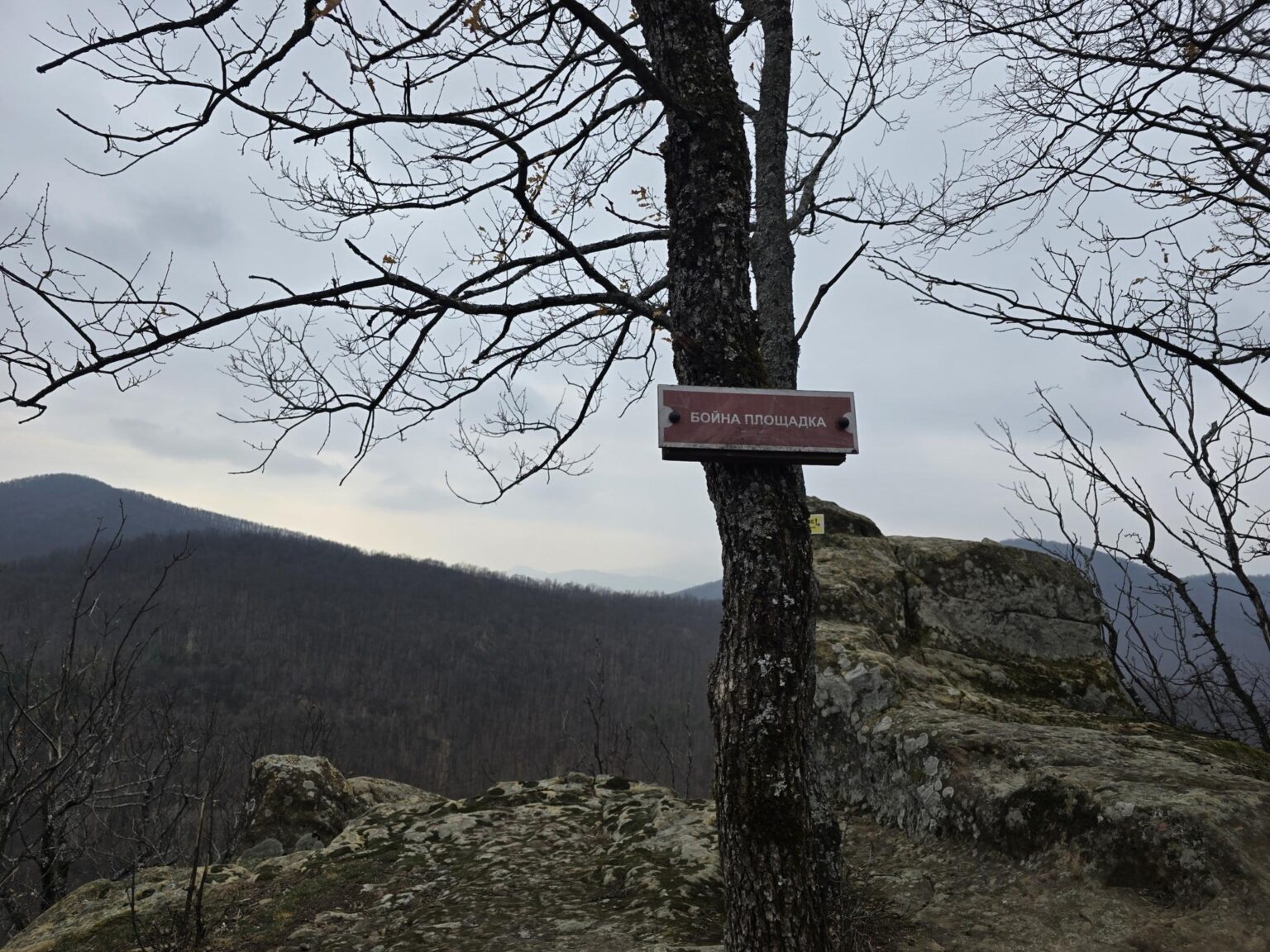
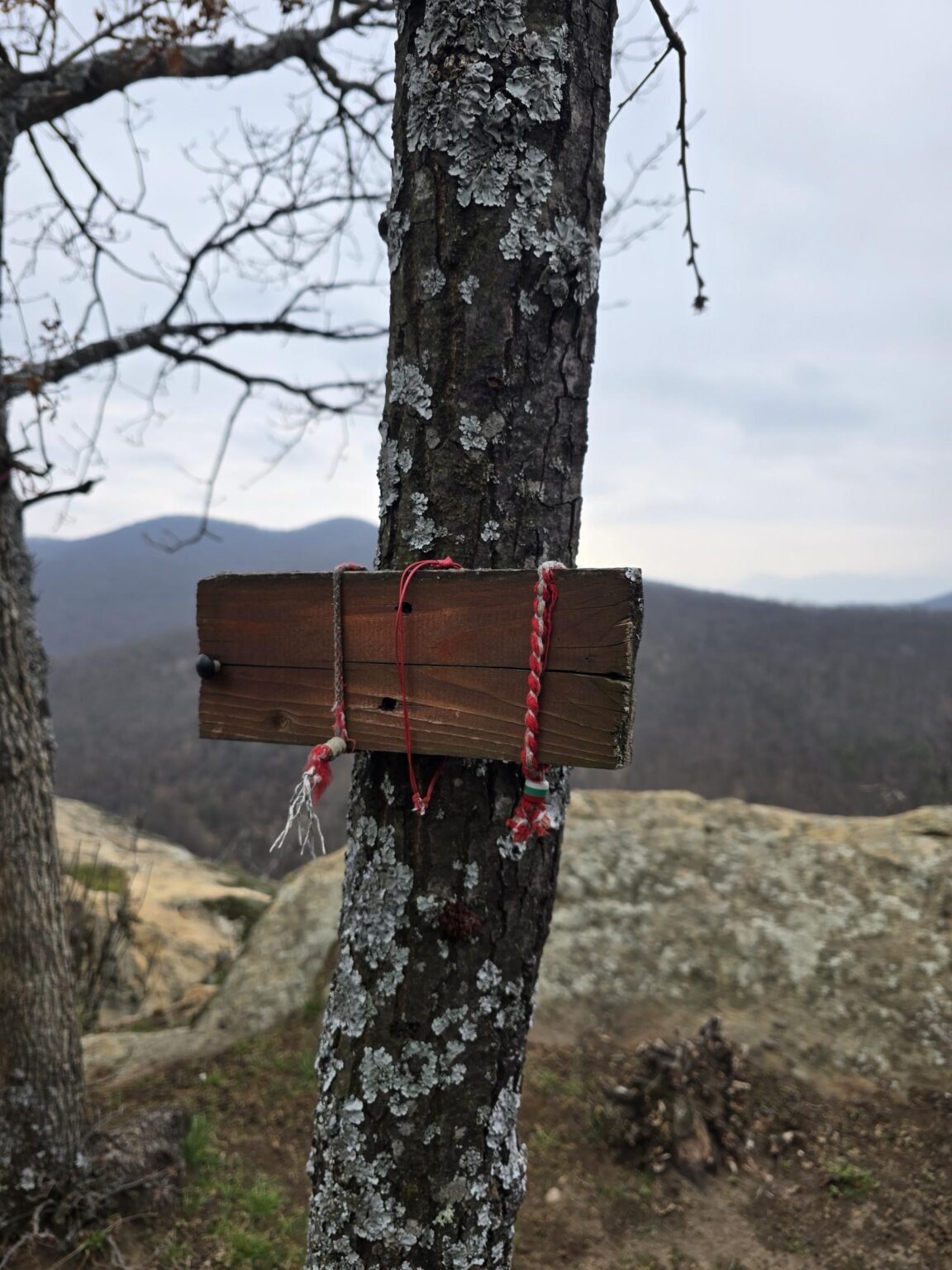
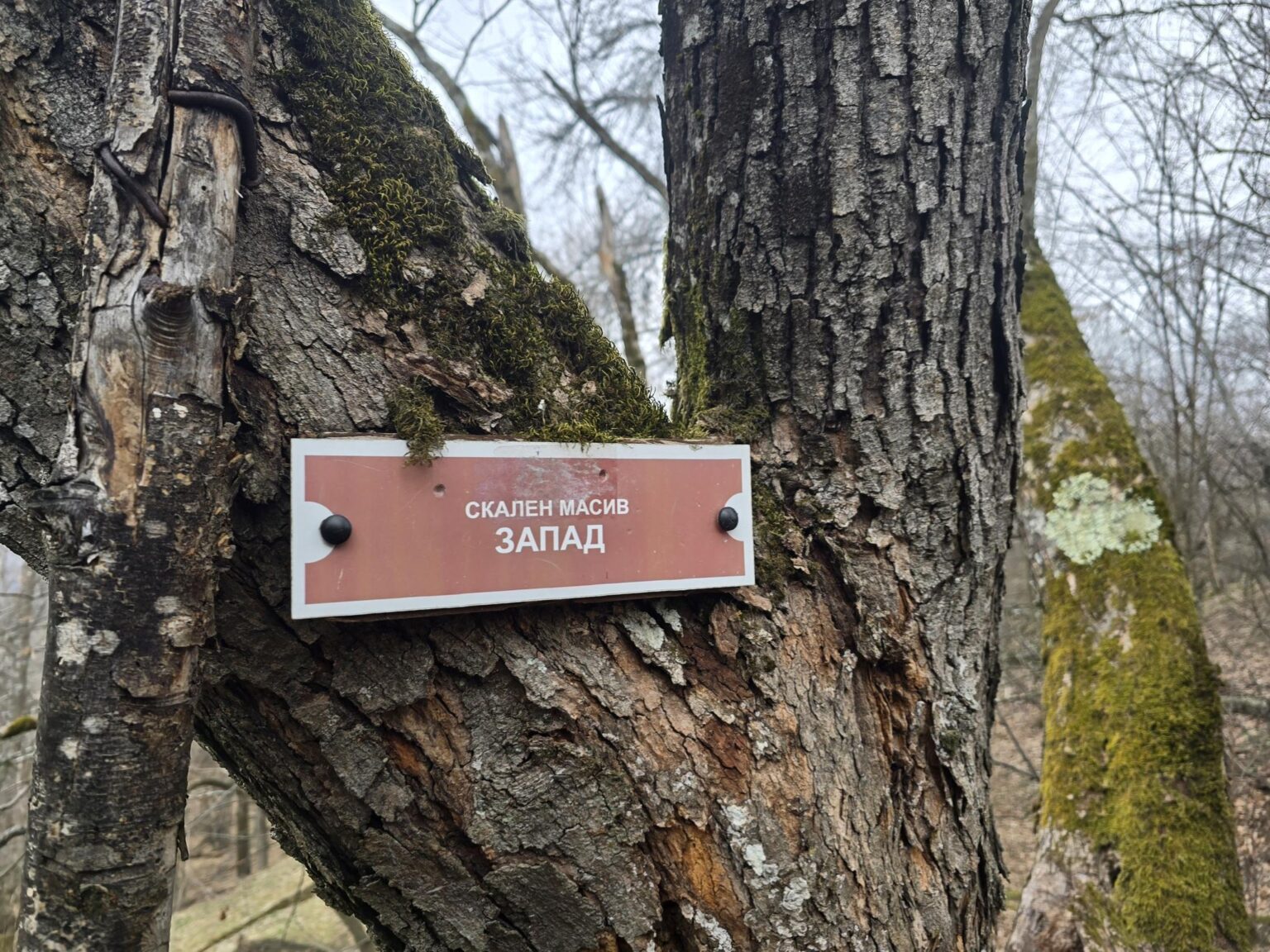
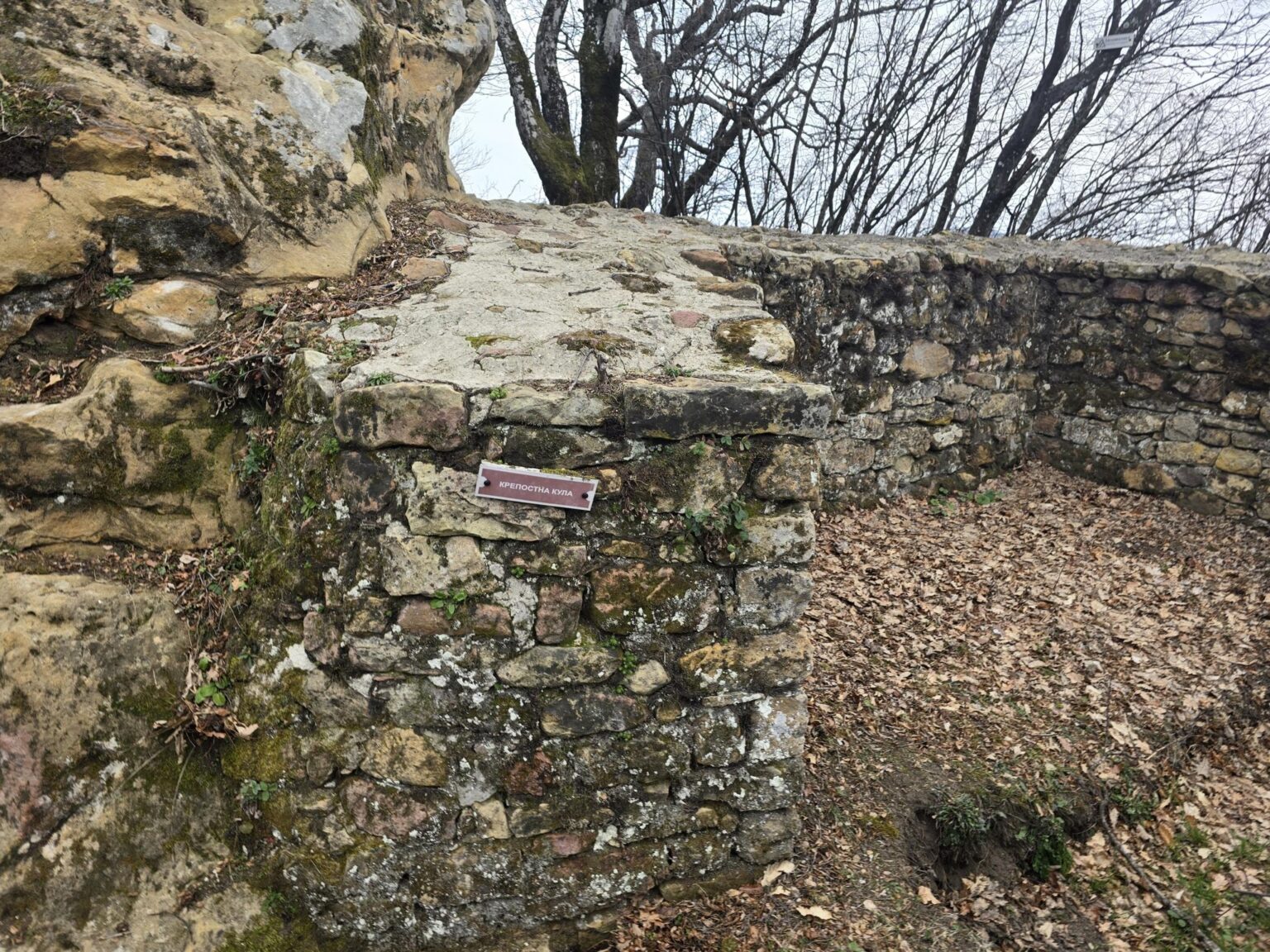
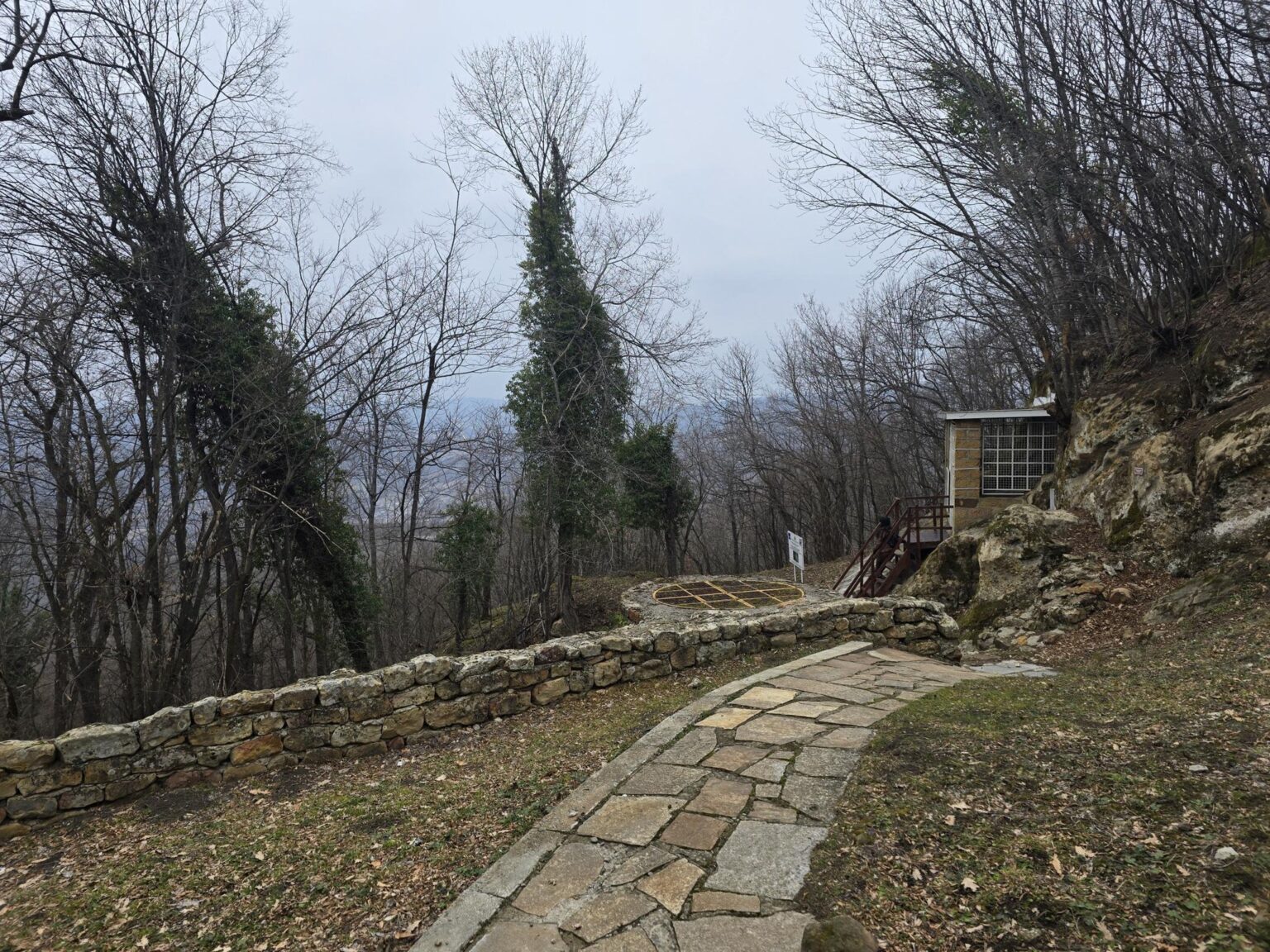
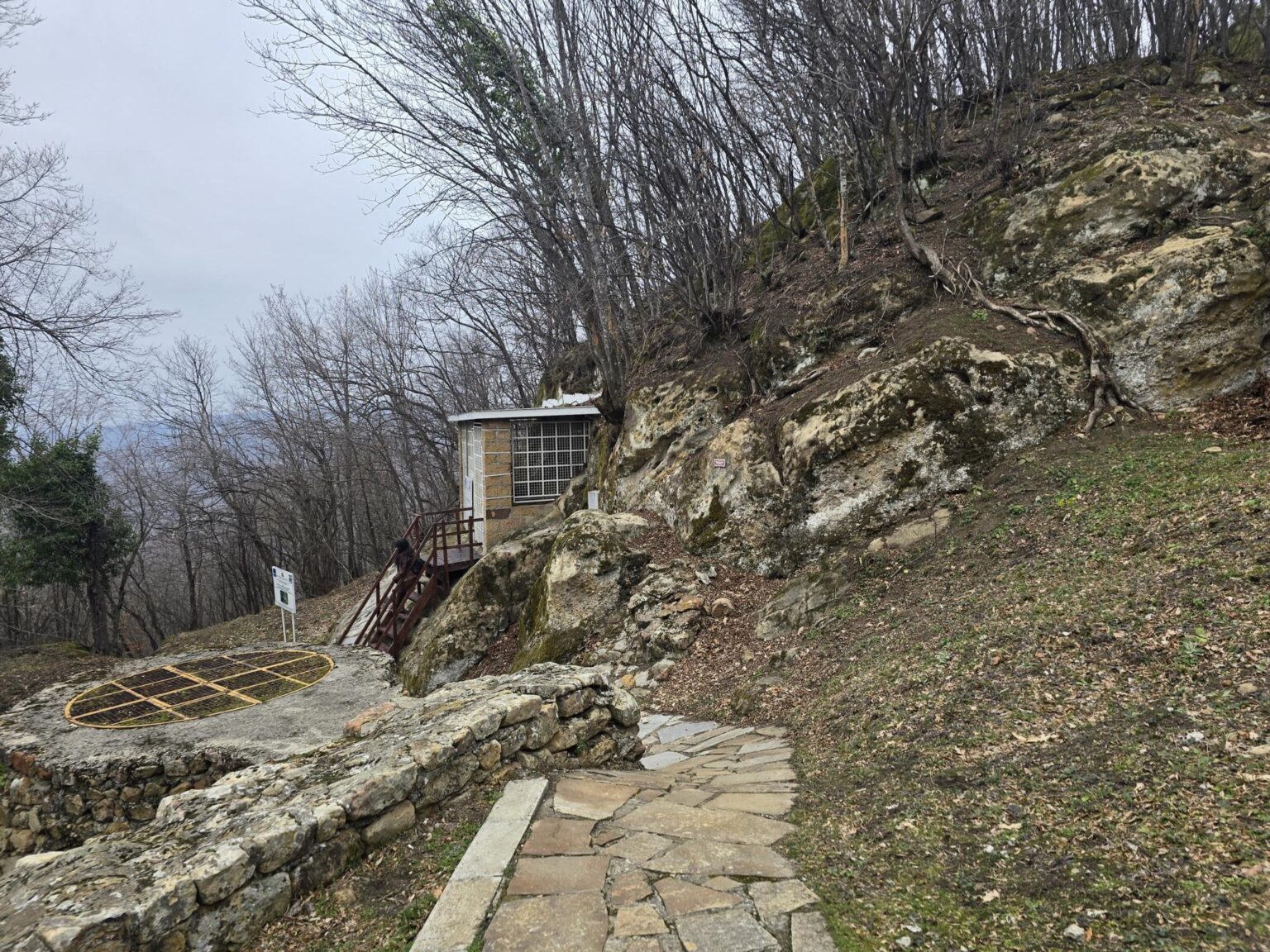
There is no entrance fee here. There was an EU-funded project at some point, which produced railings here and there and a handful of information boards, but you will not be overwhelmed by the amount of information. The things that stand out are:
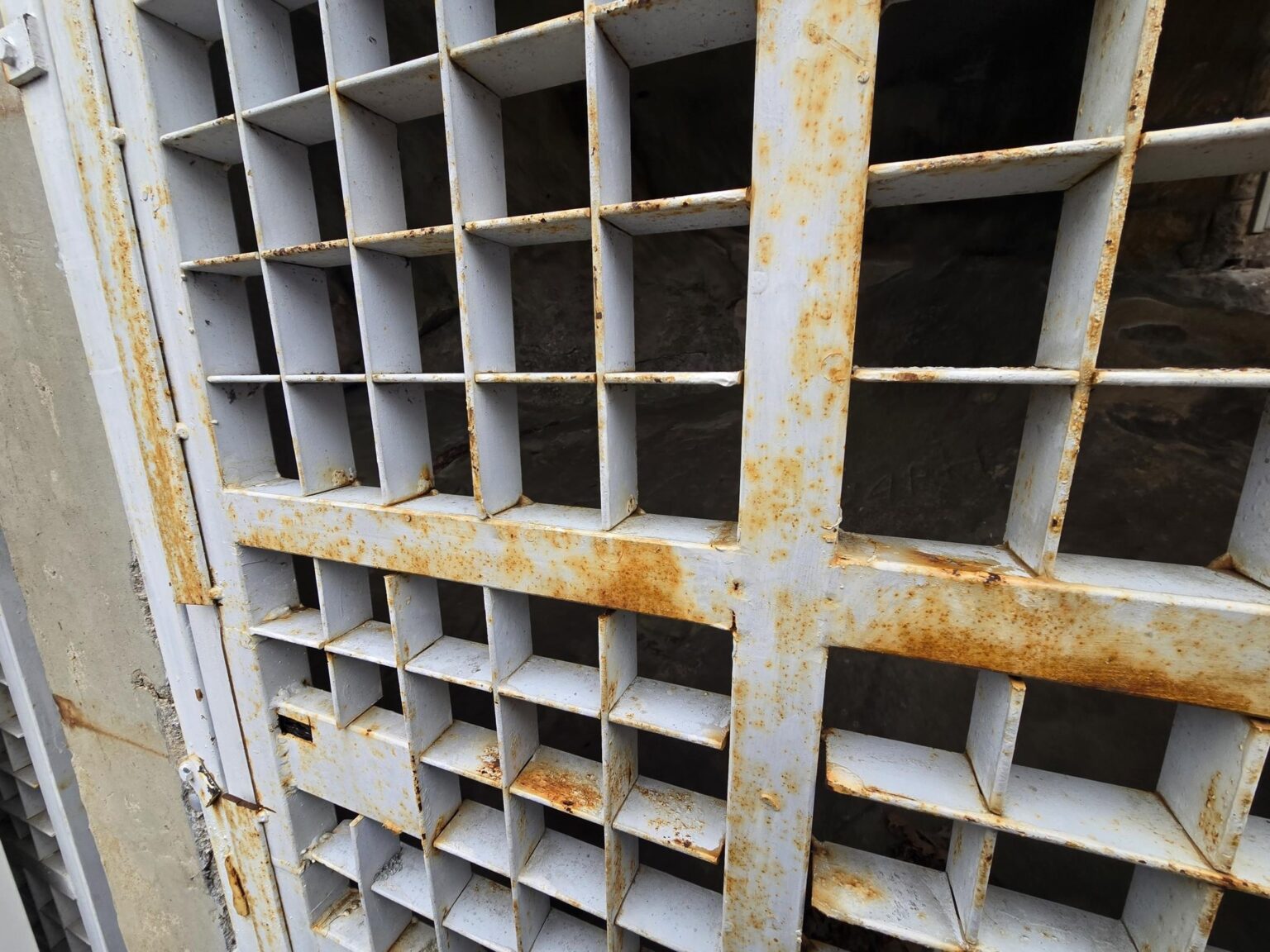
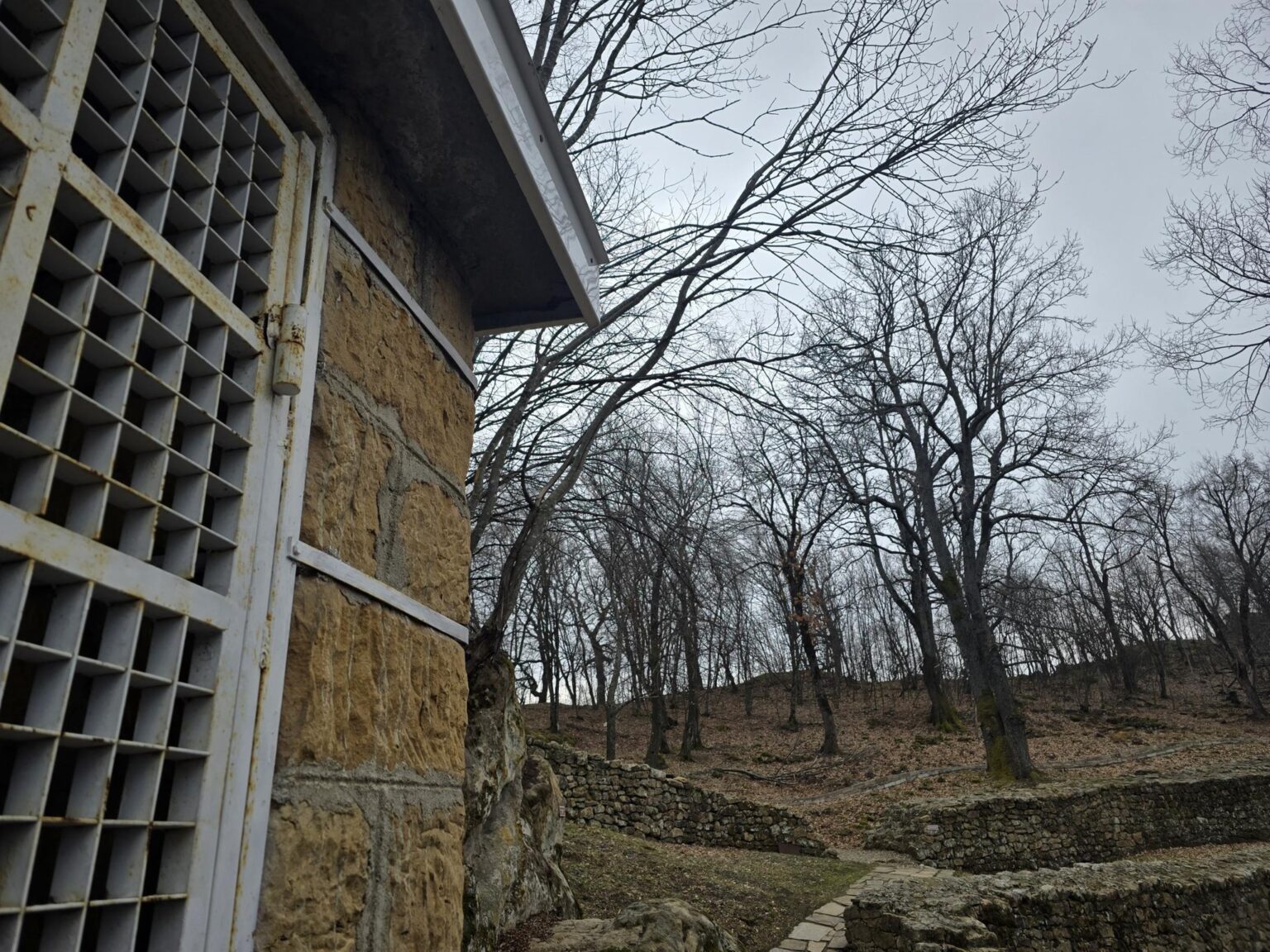
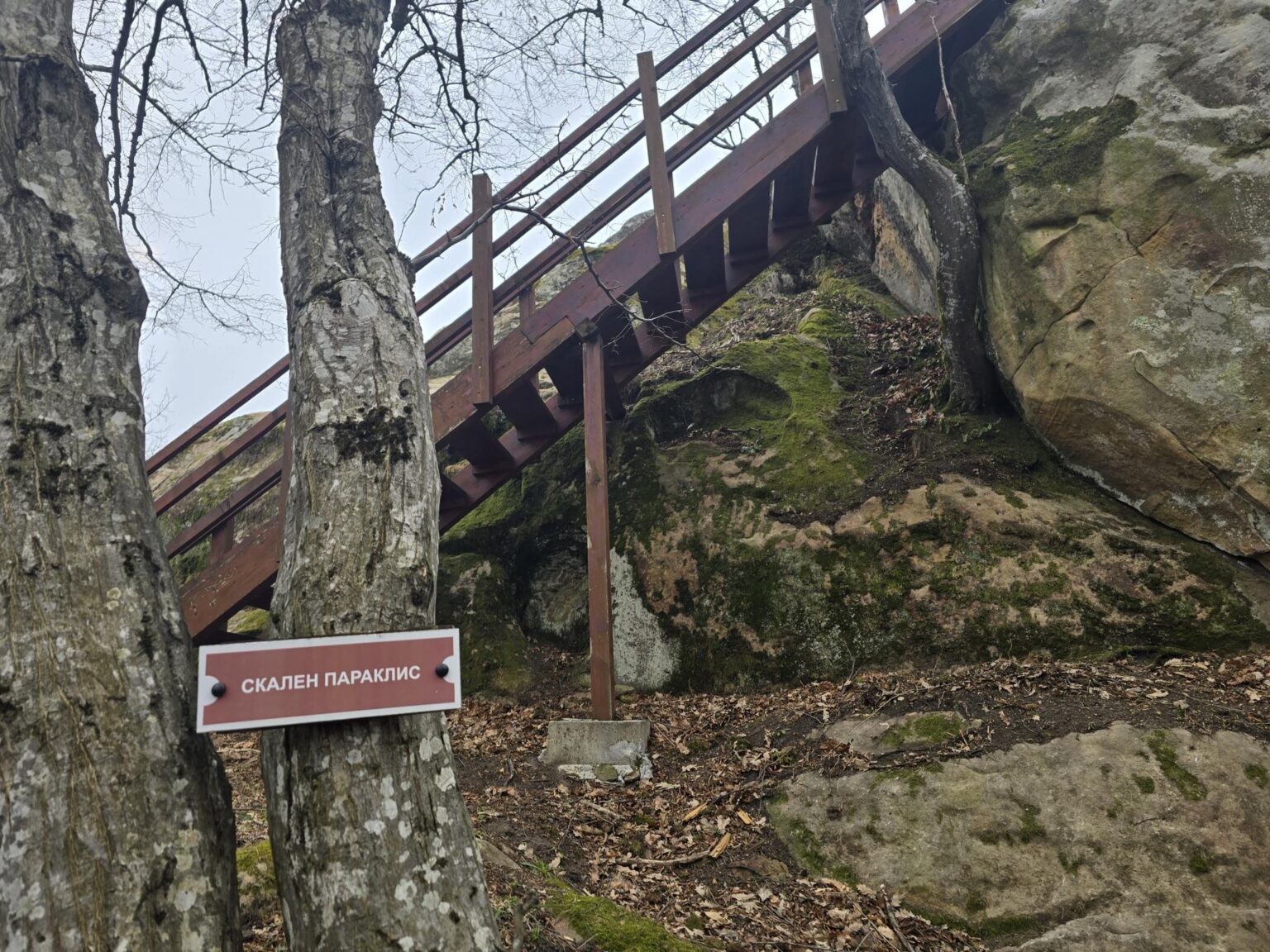
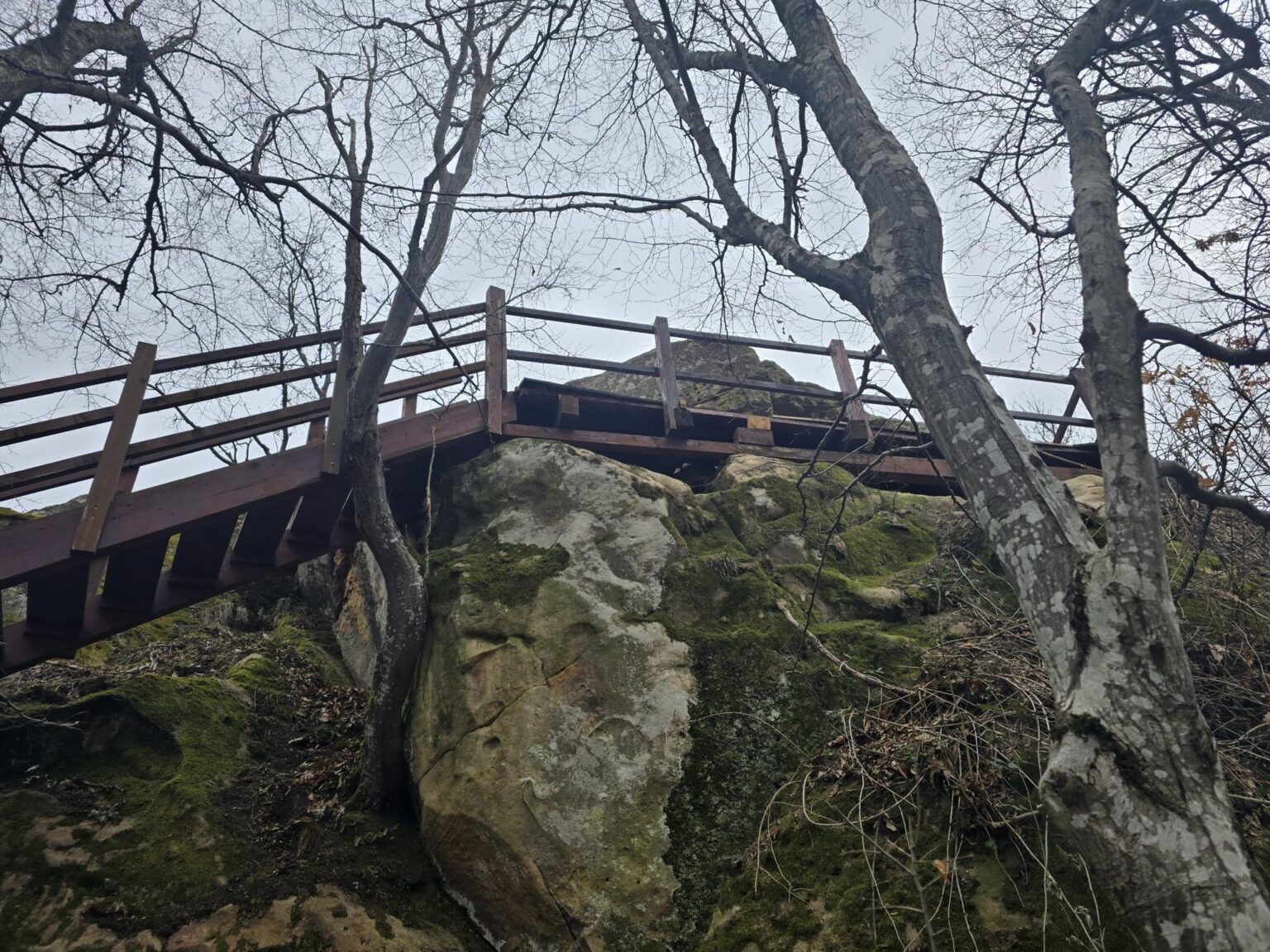
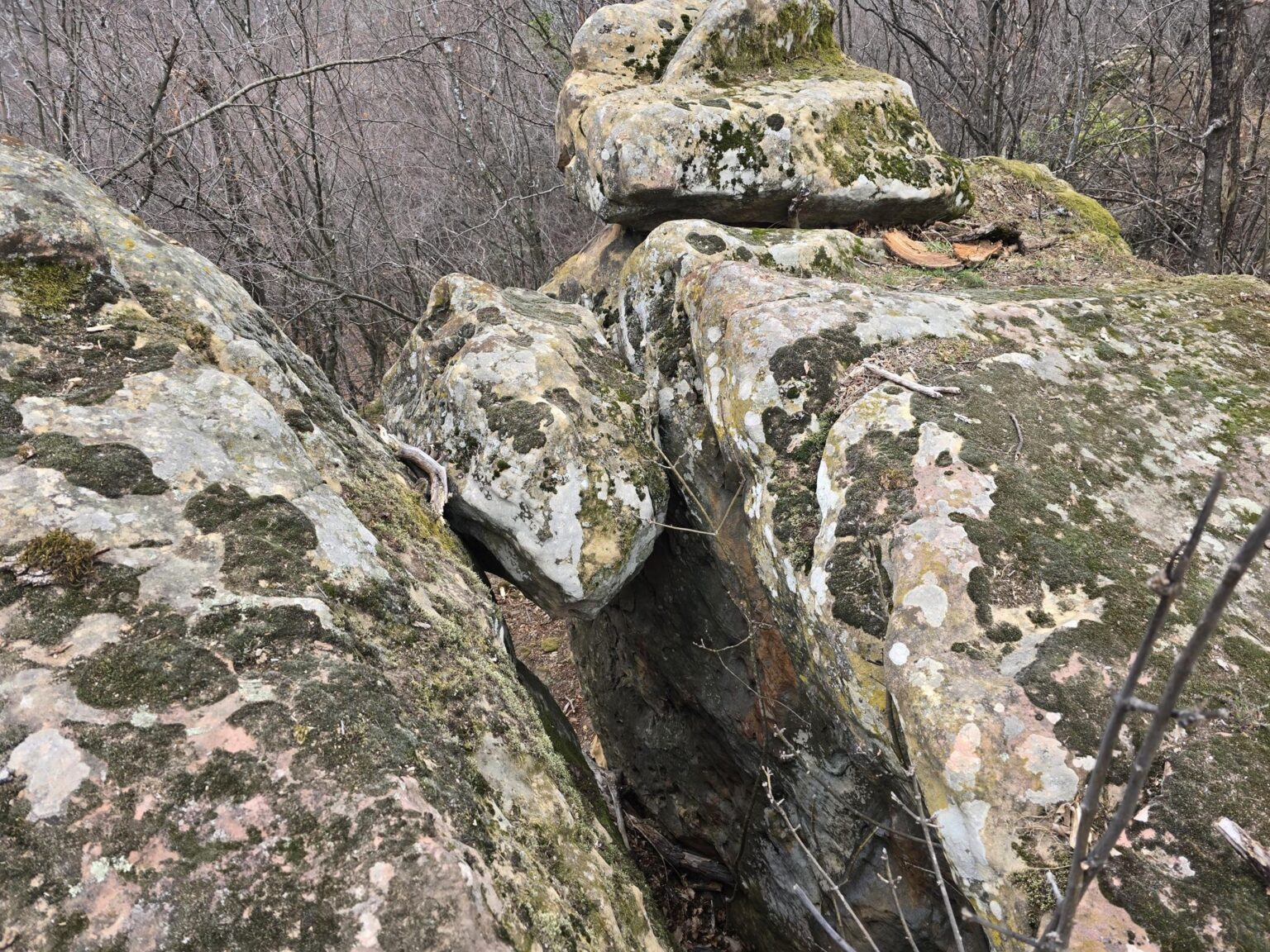
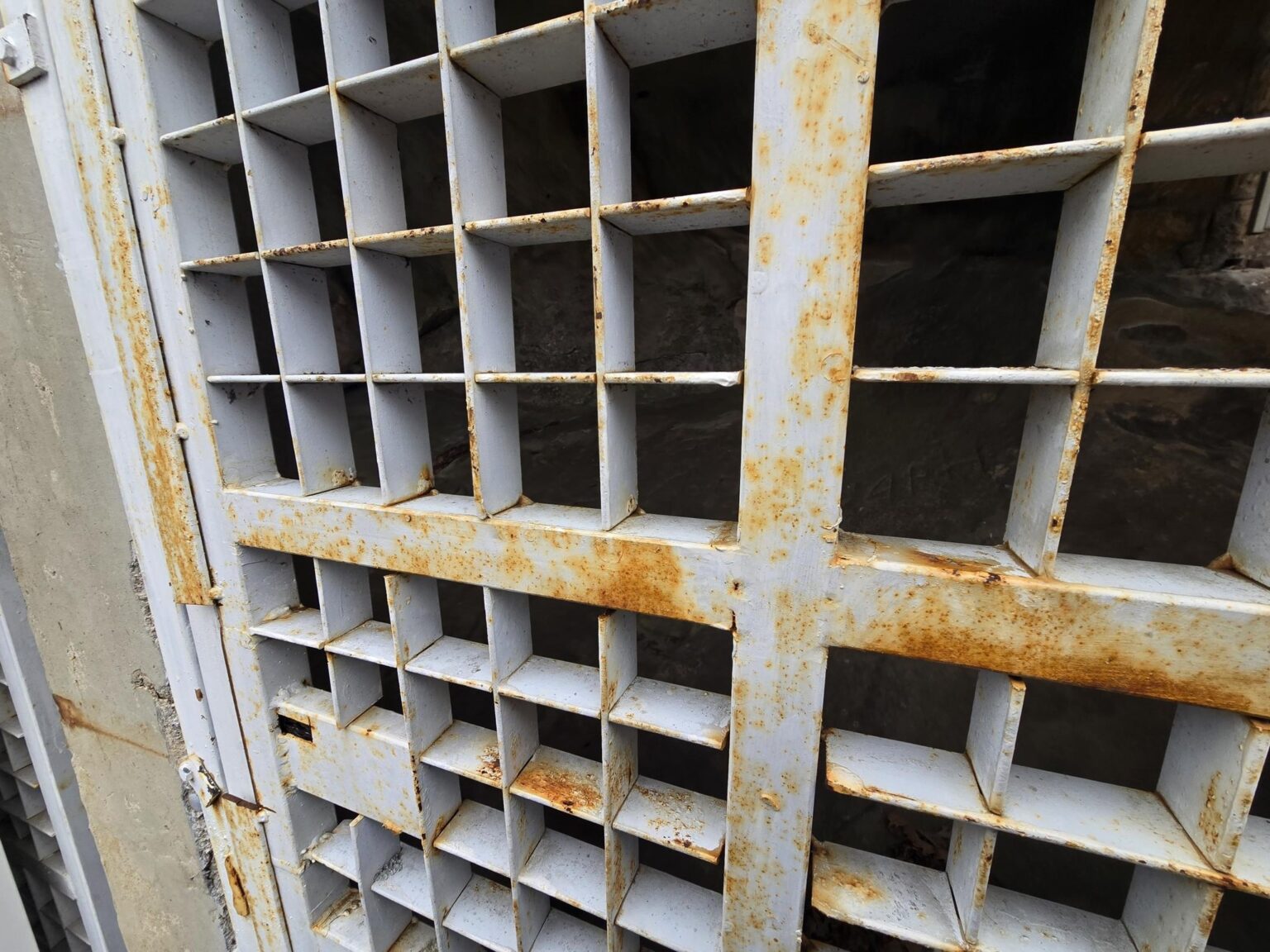
- Broken steps leading to a grille, through which you can see the inscription the site is known for
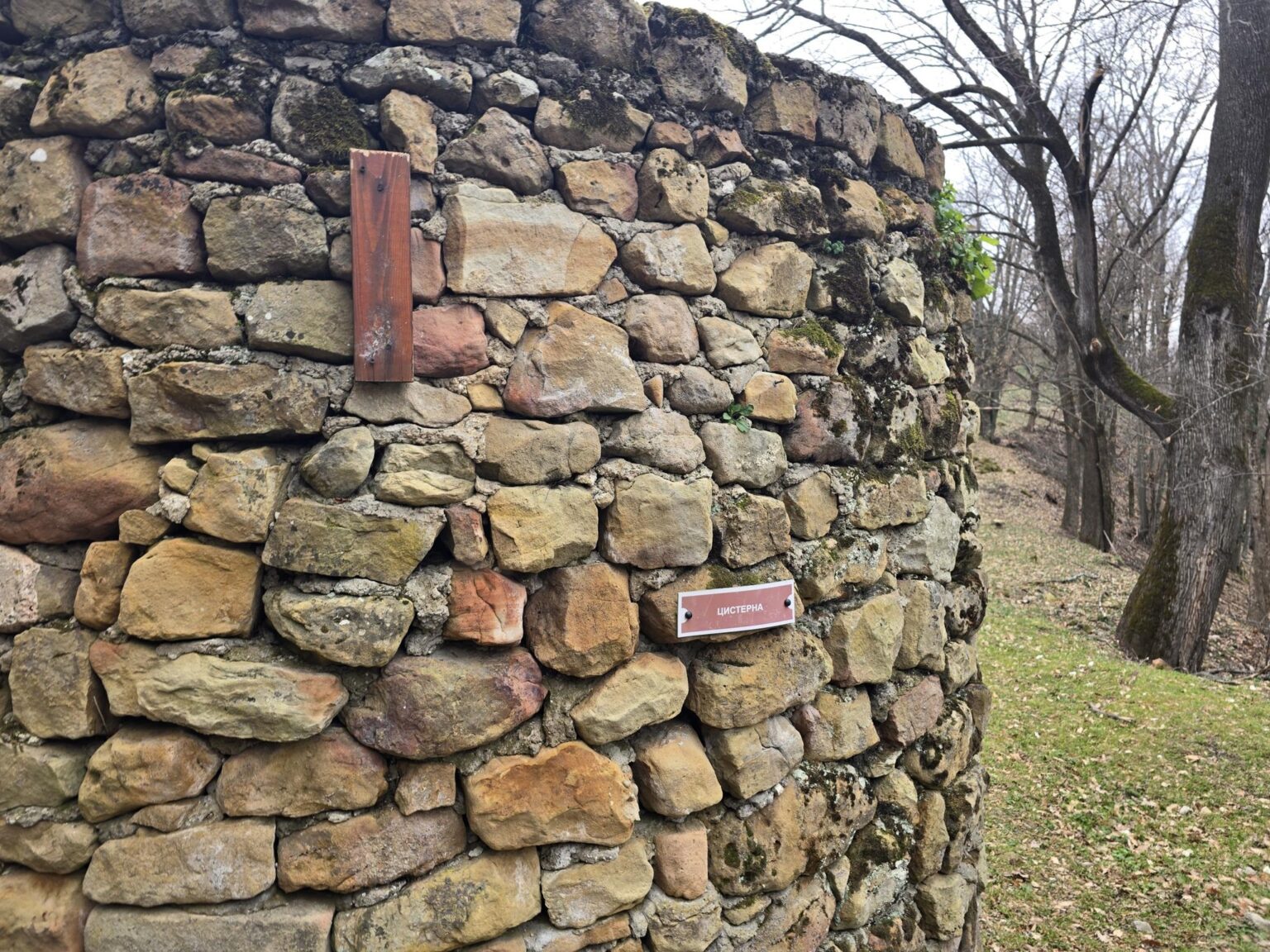
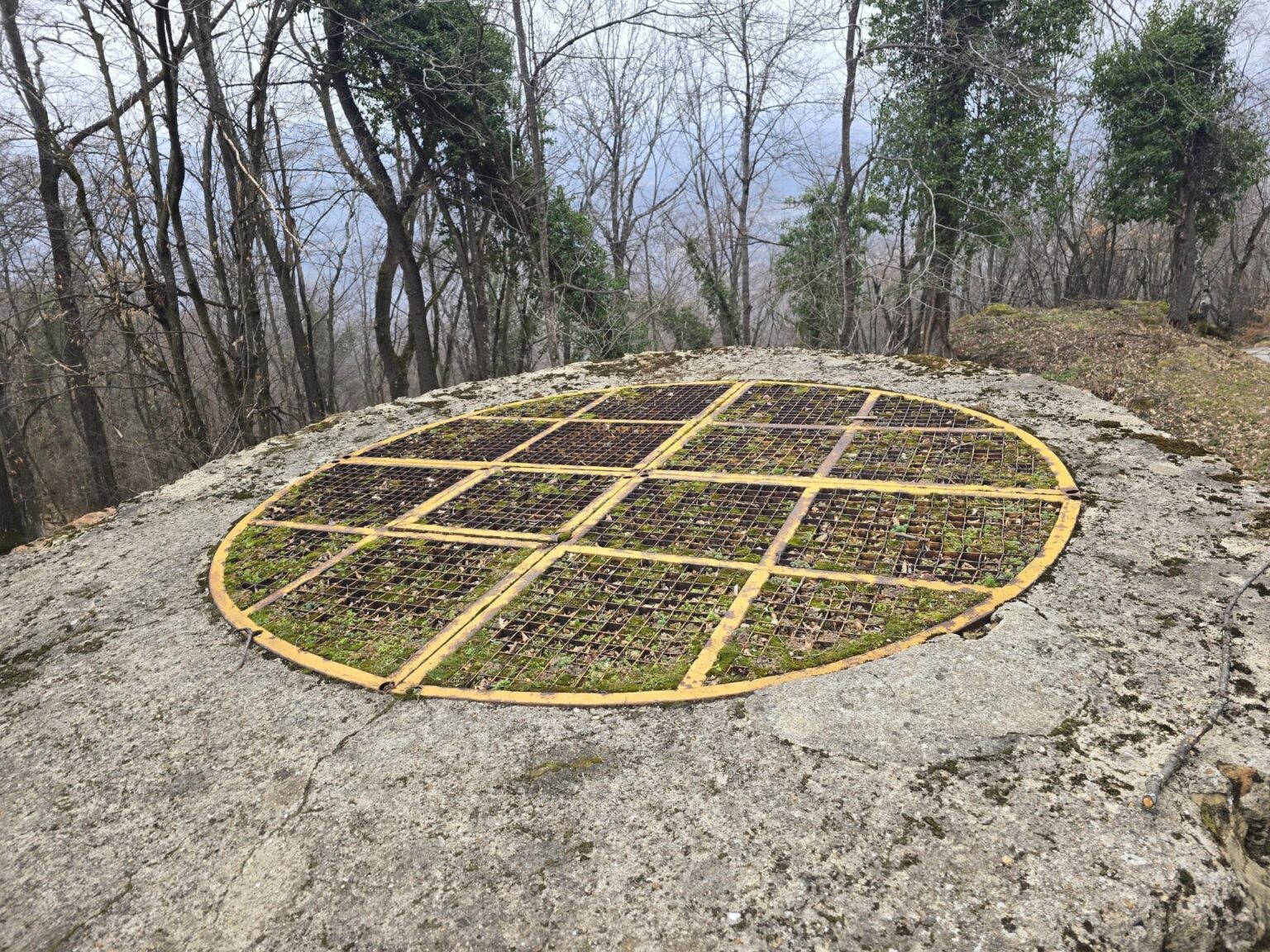
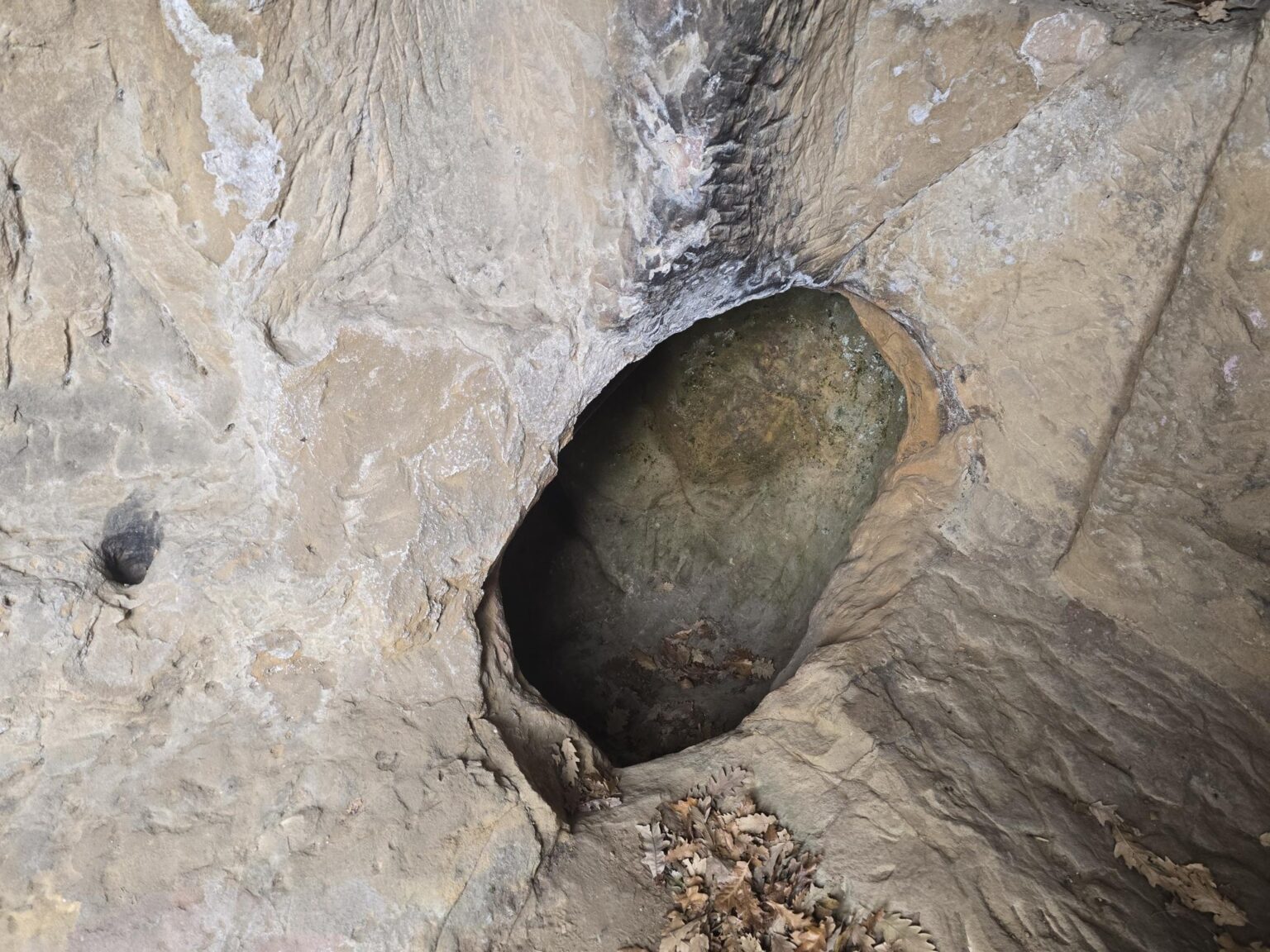
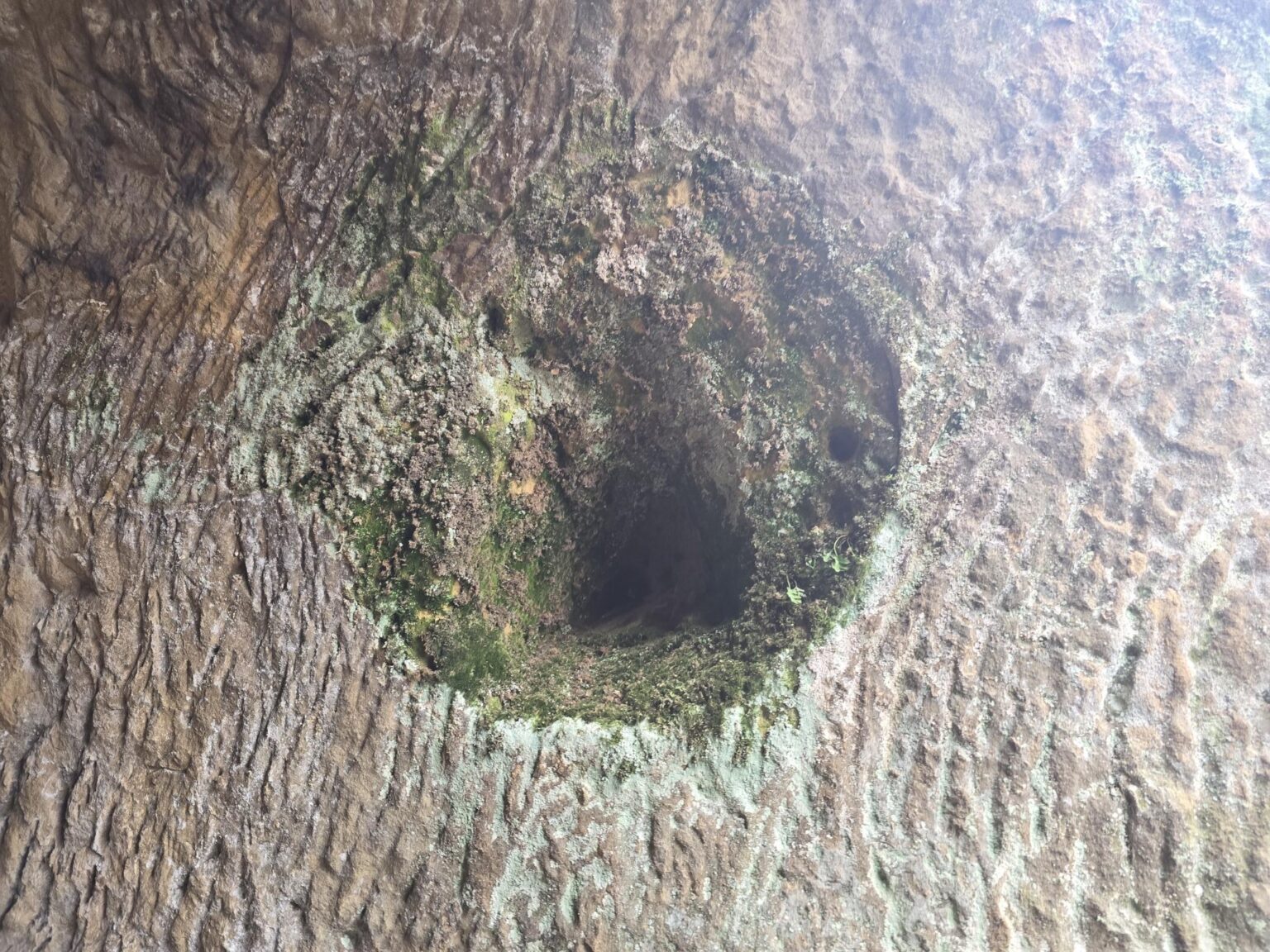
- A grille labelled as a cistern
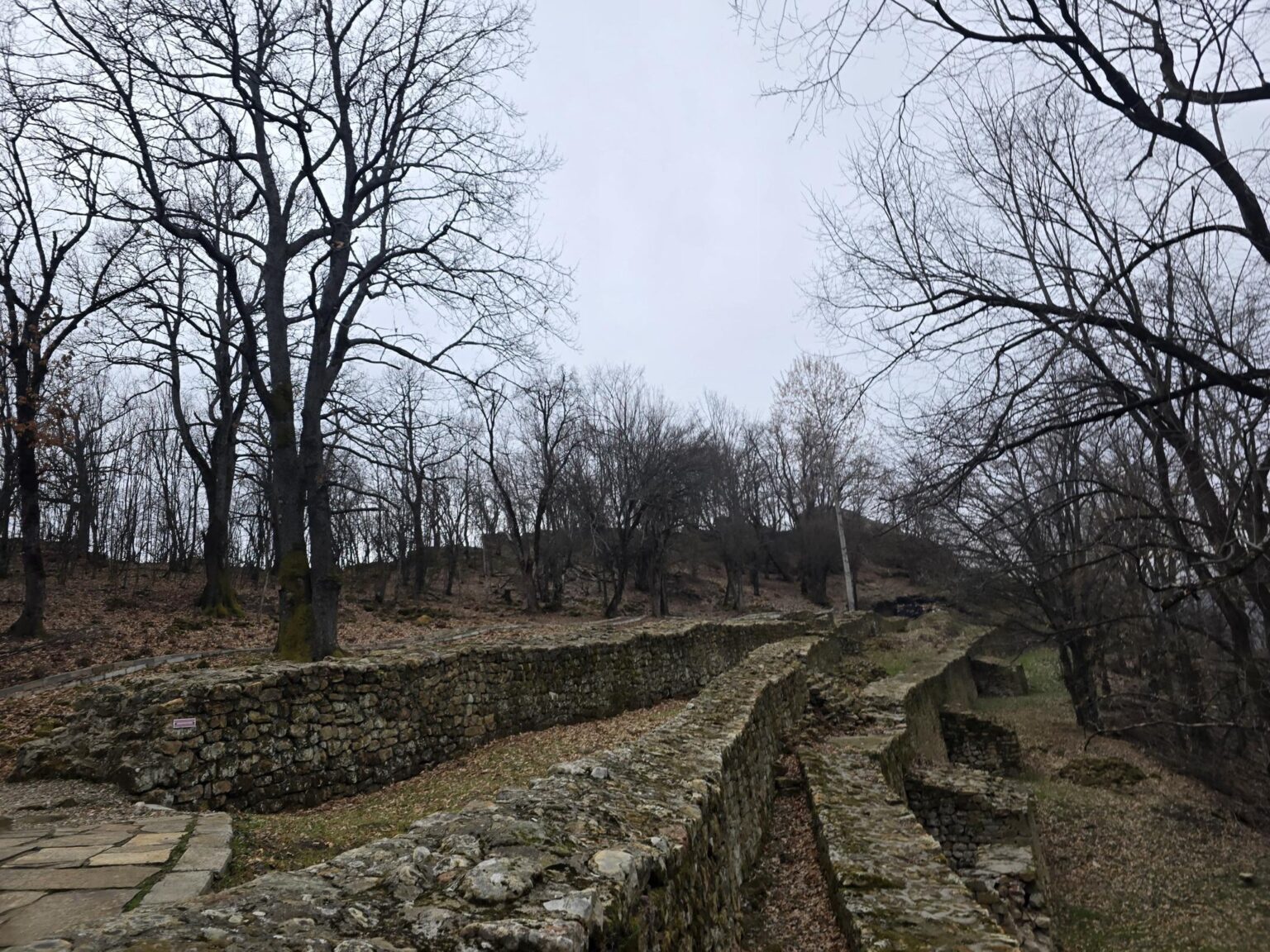
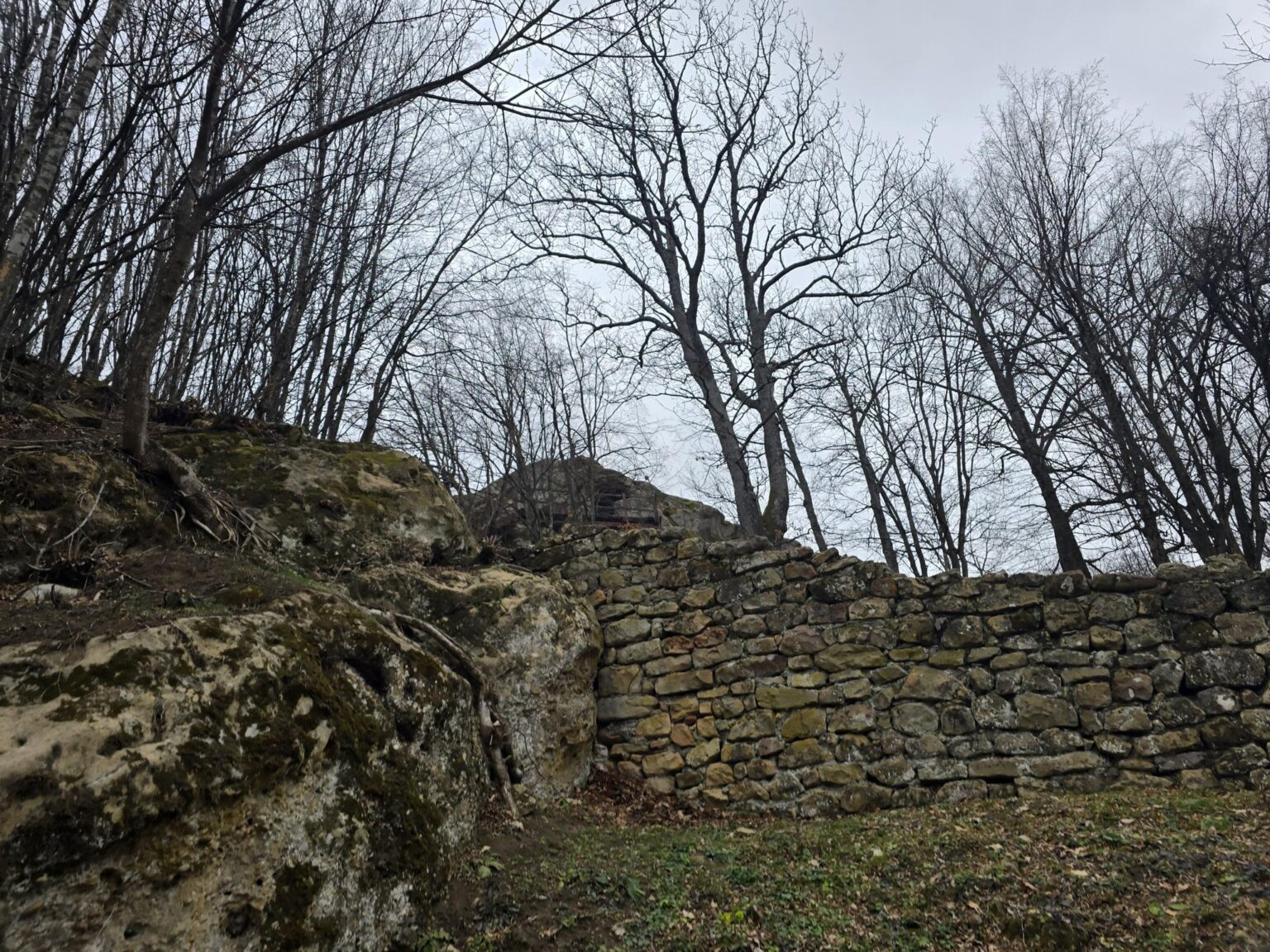
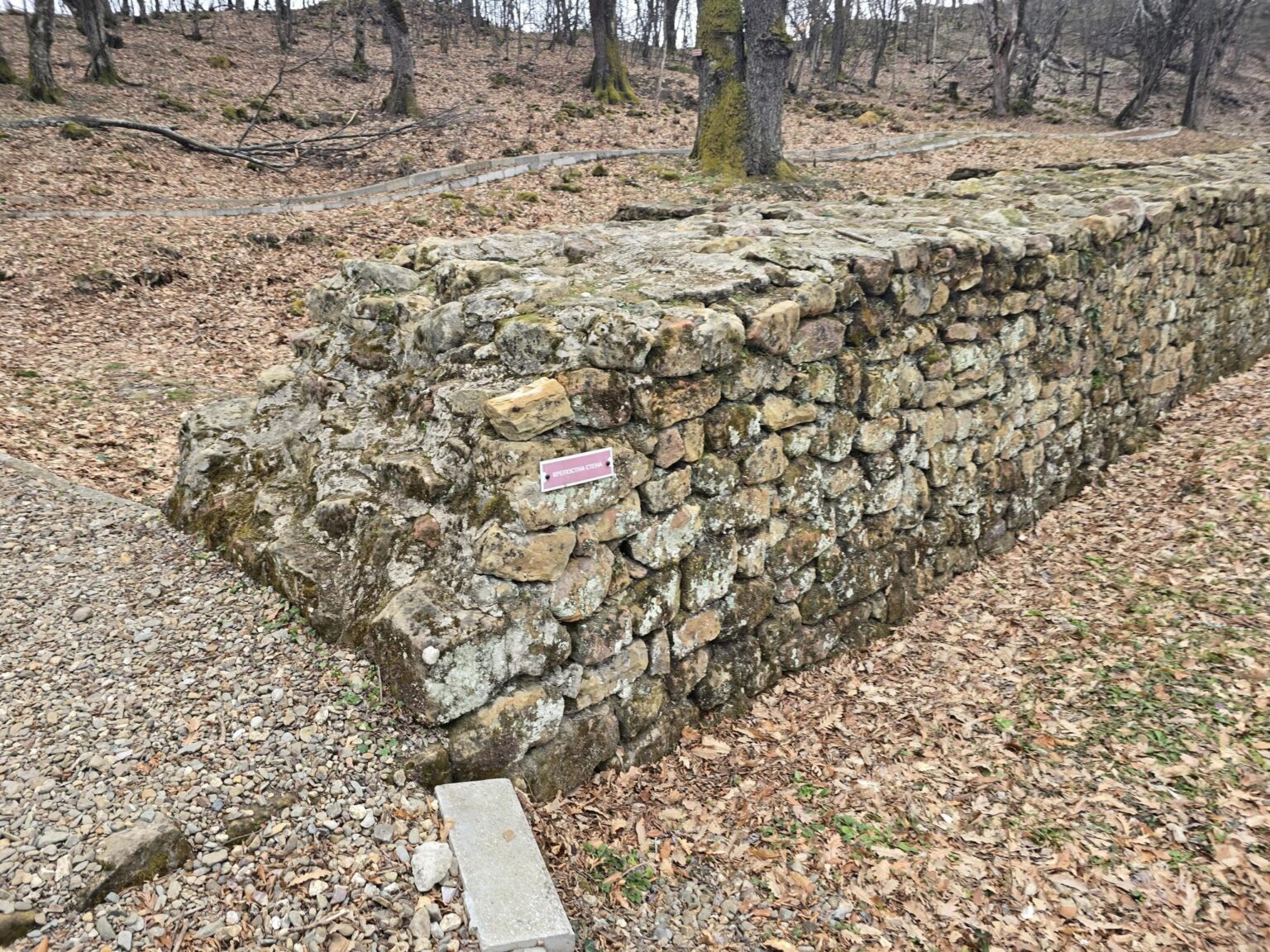
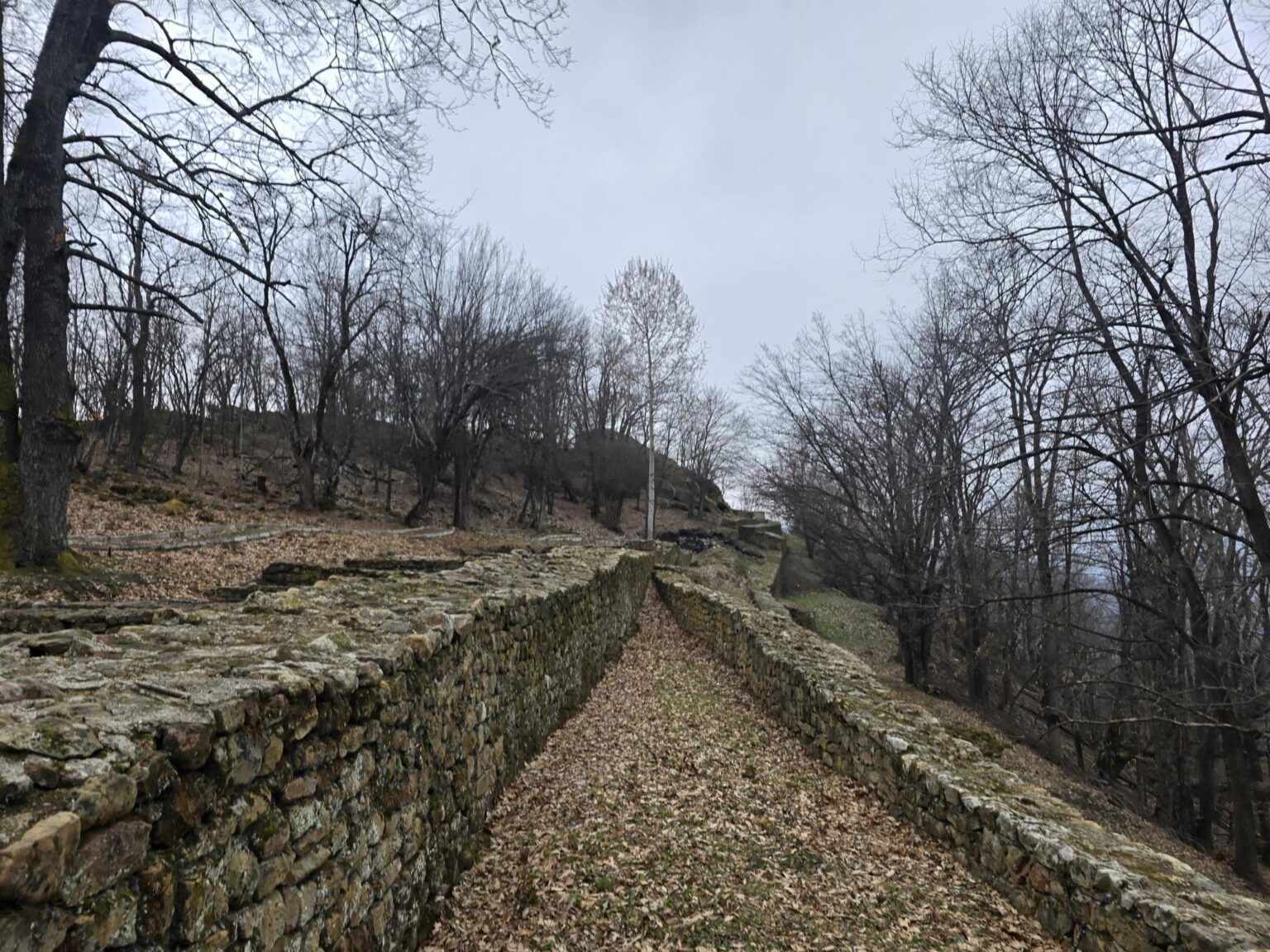
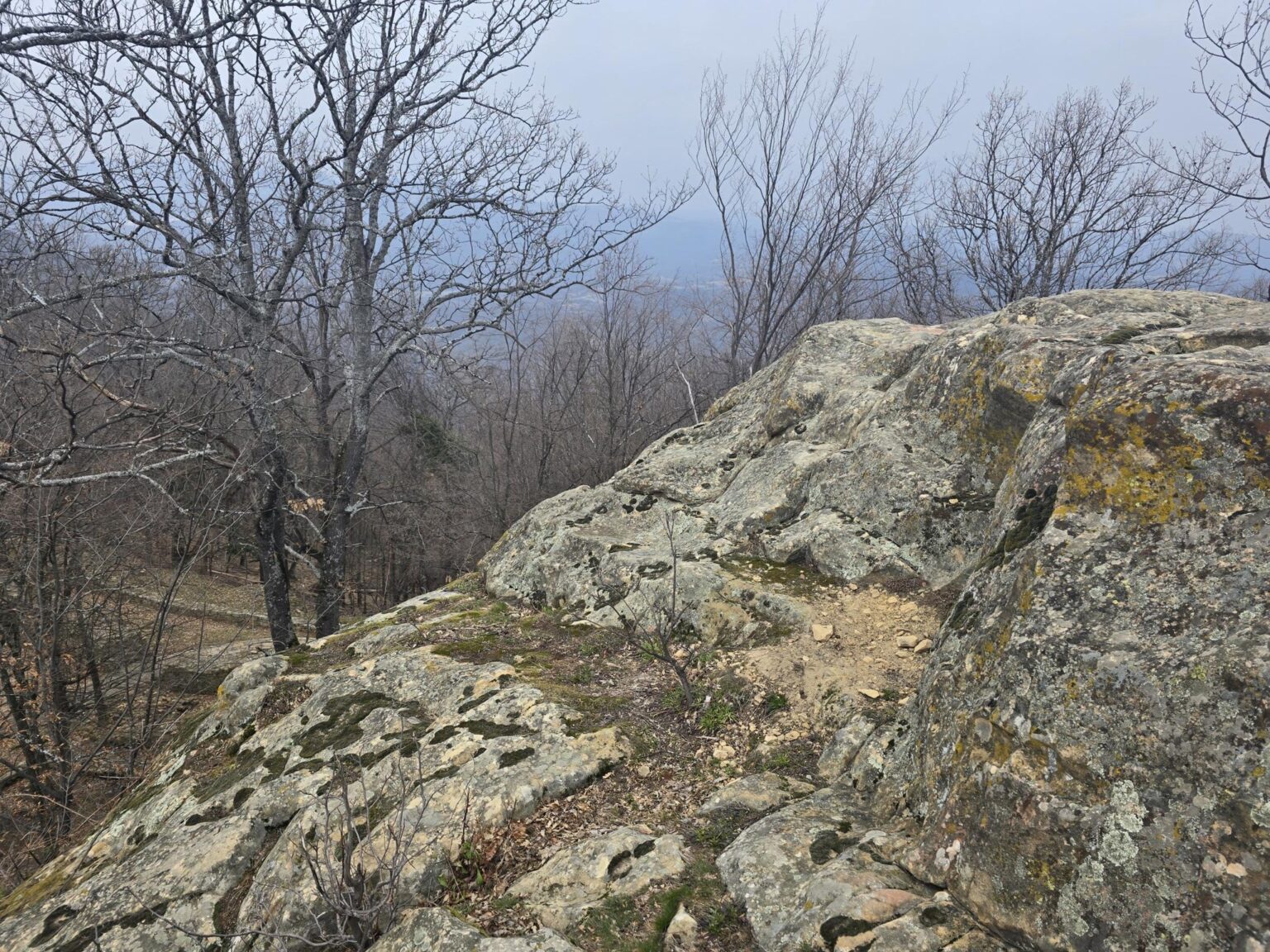
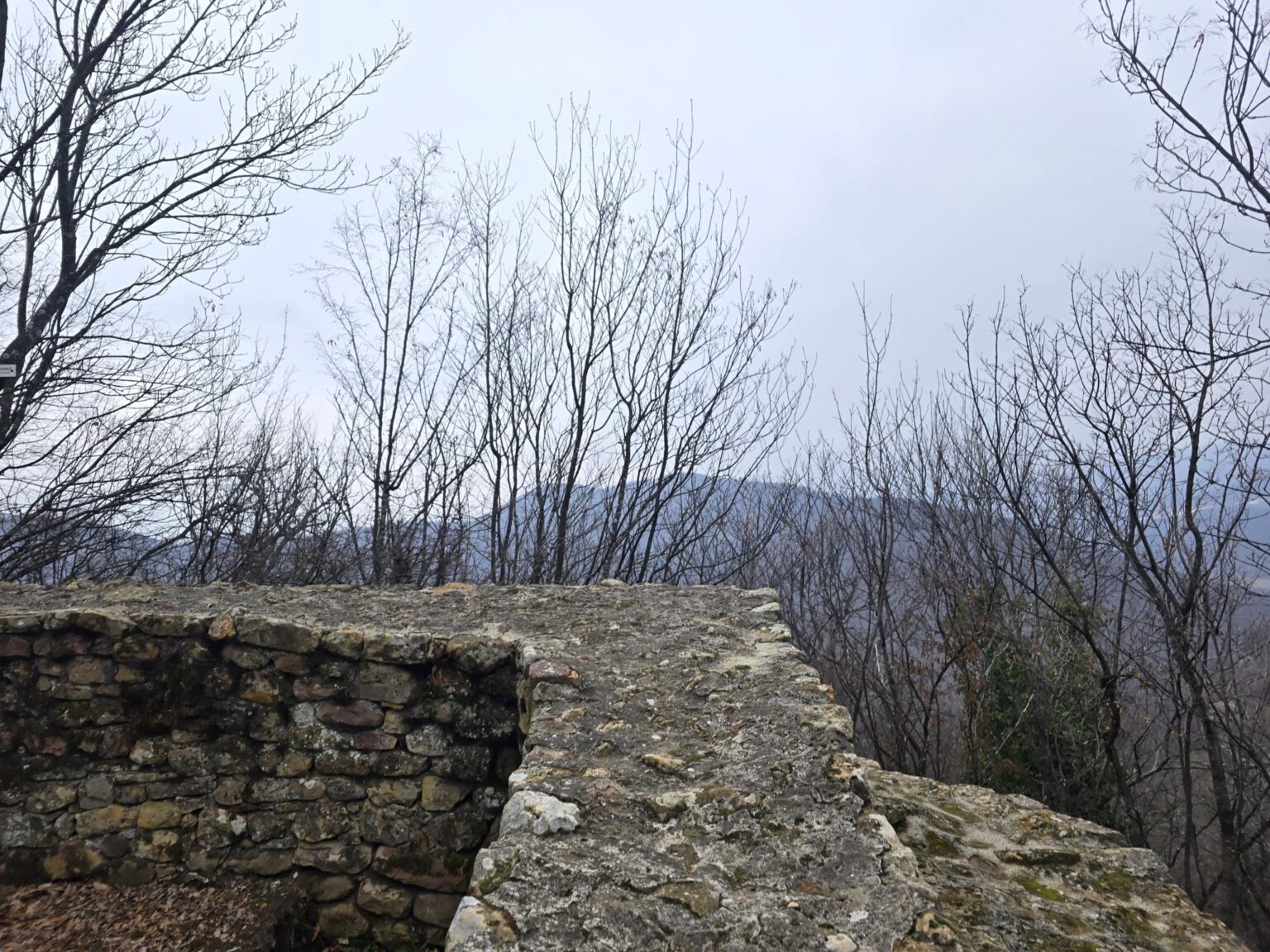
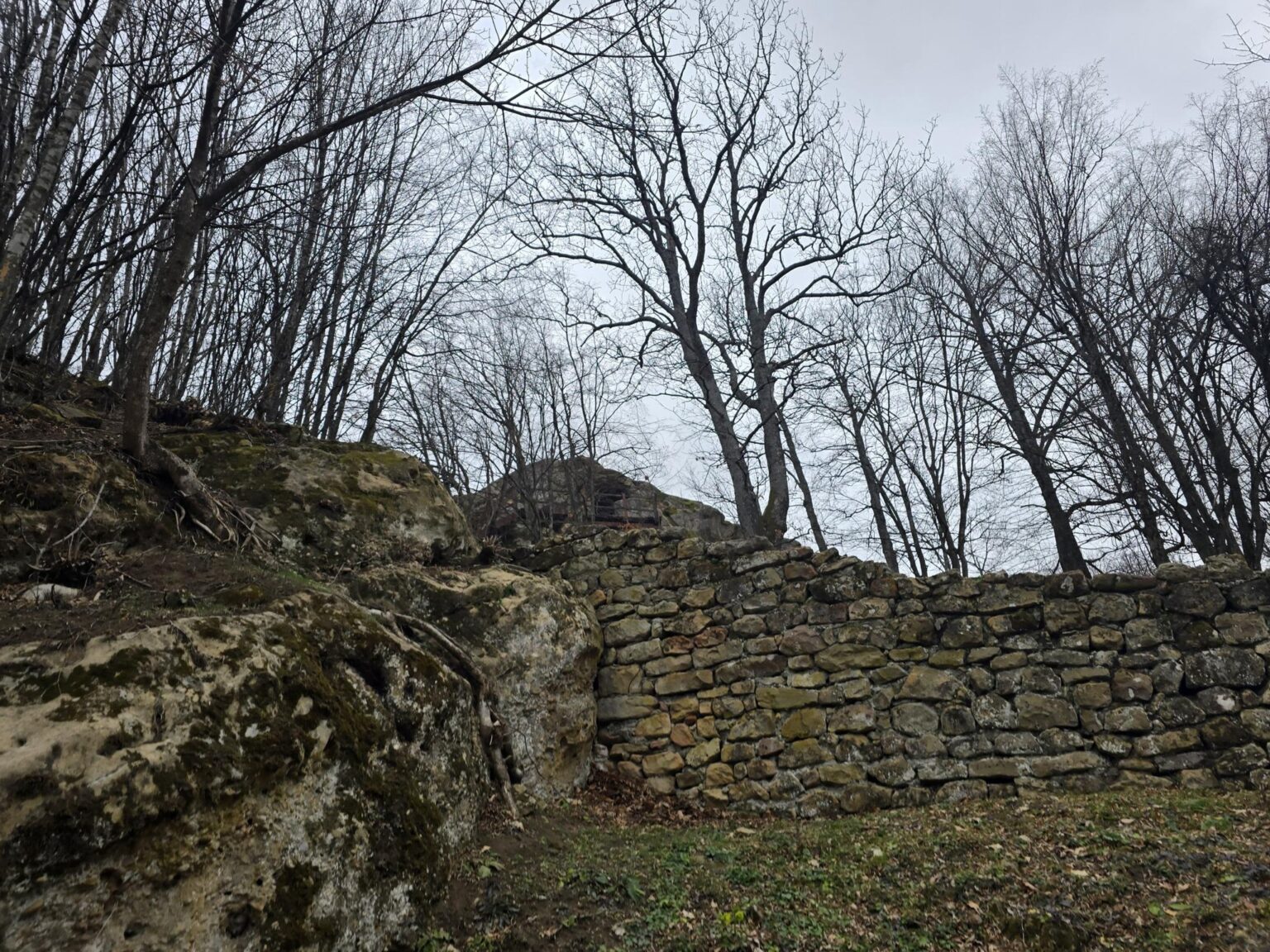
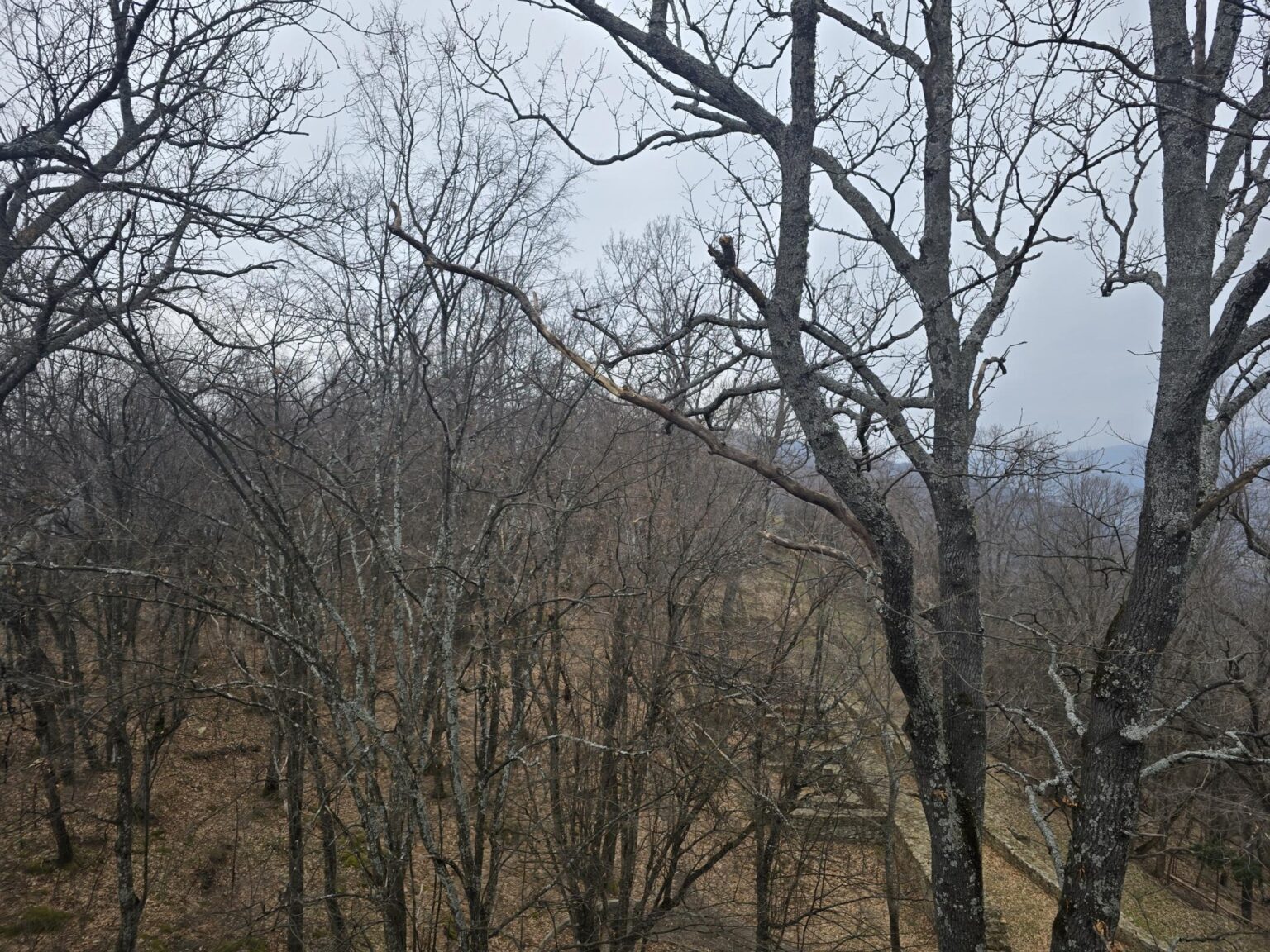
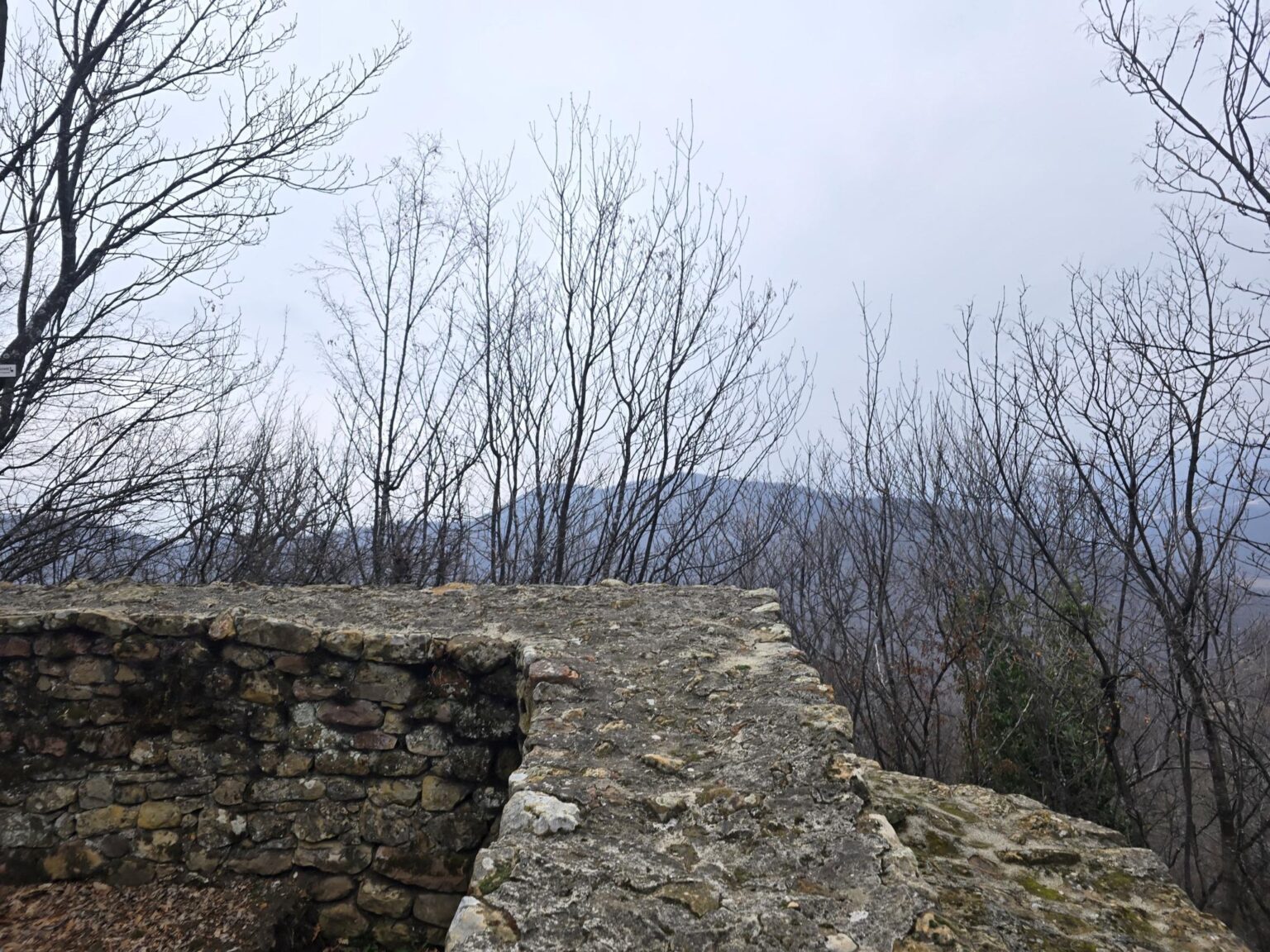
- The fortress walls
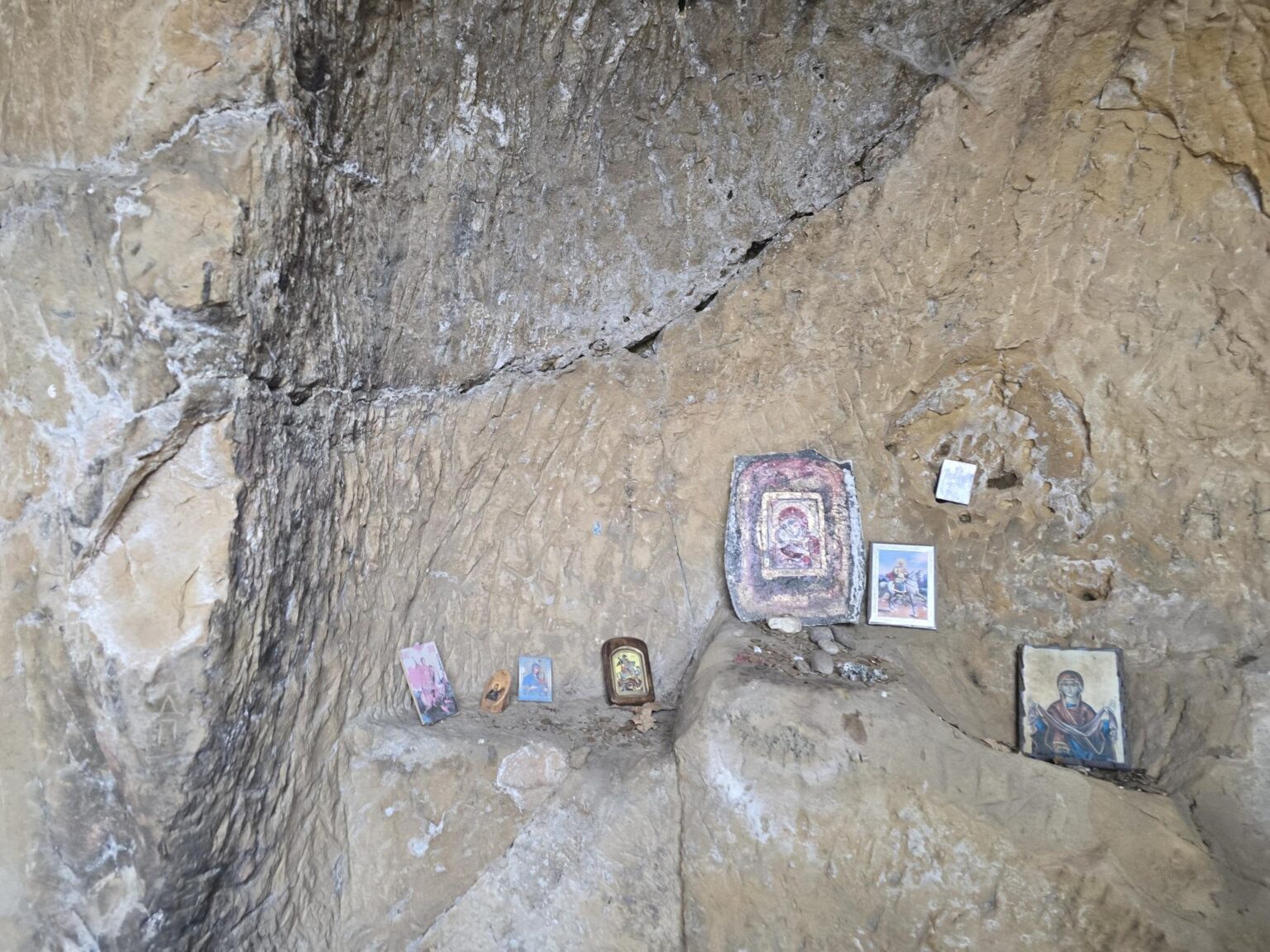
- A rock chapel
- A rock niche
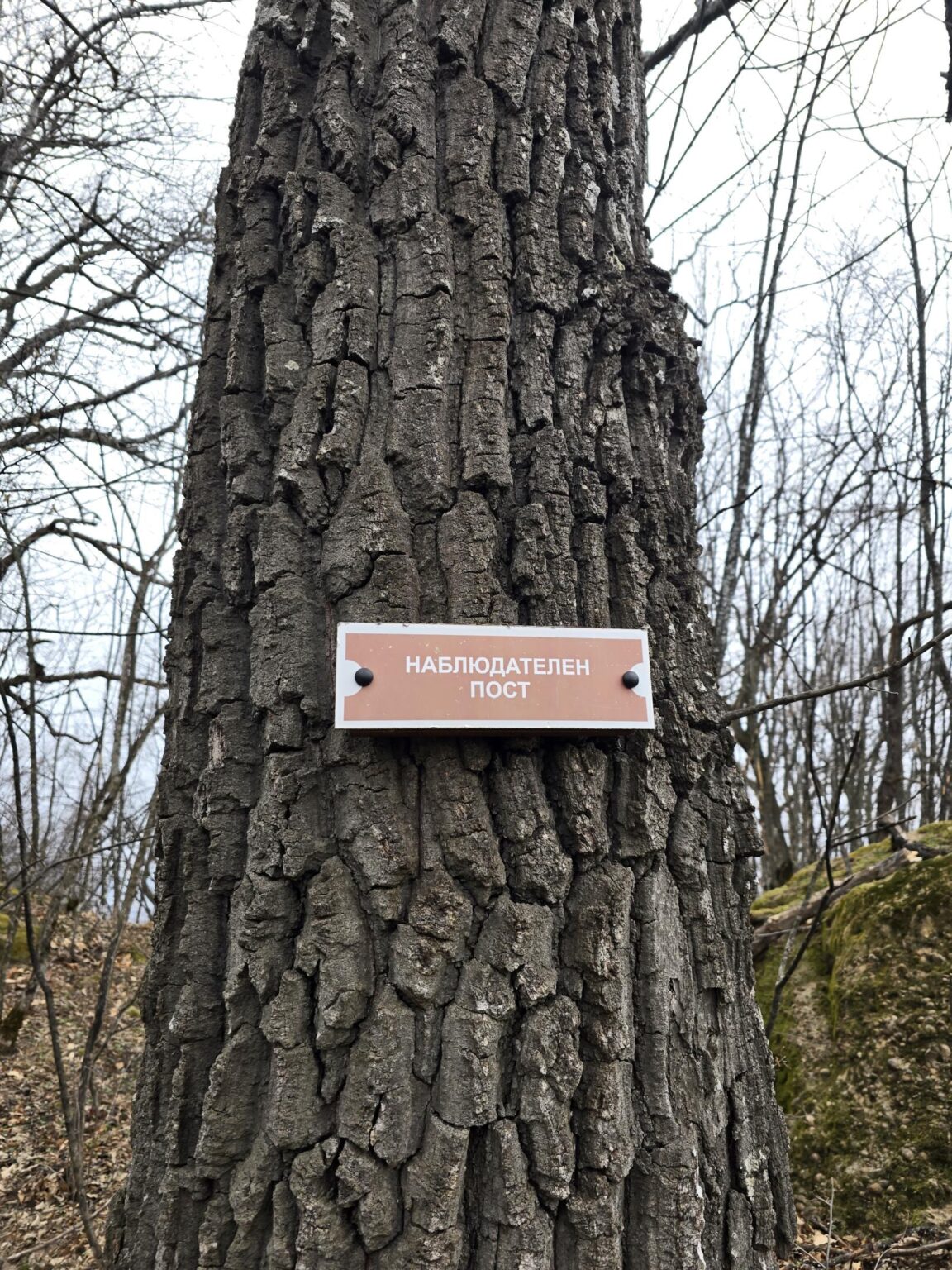
- An observation post
- A battle platform
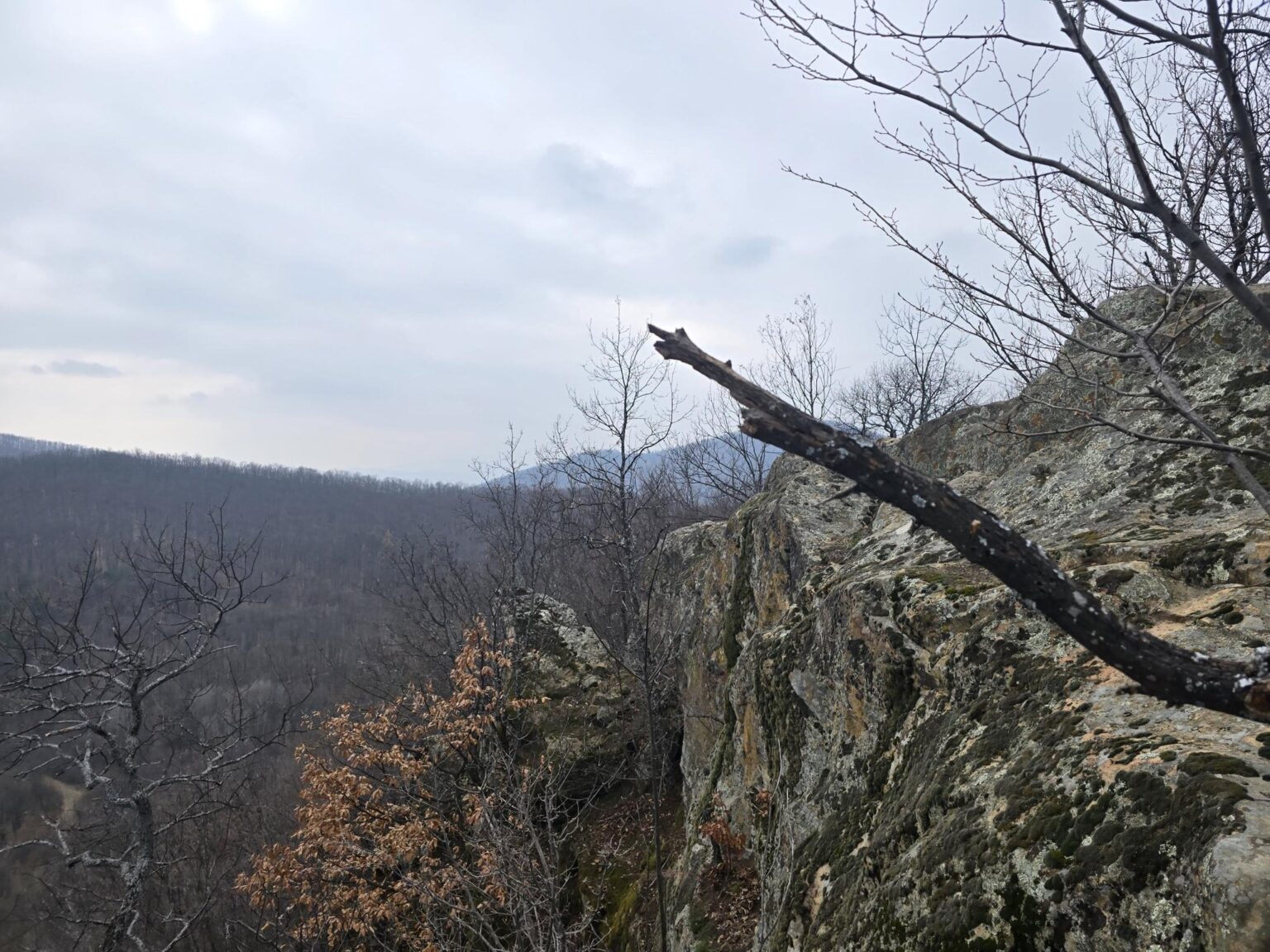
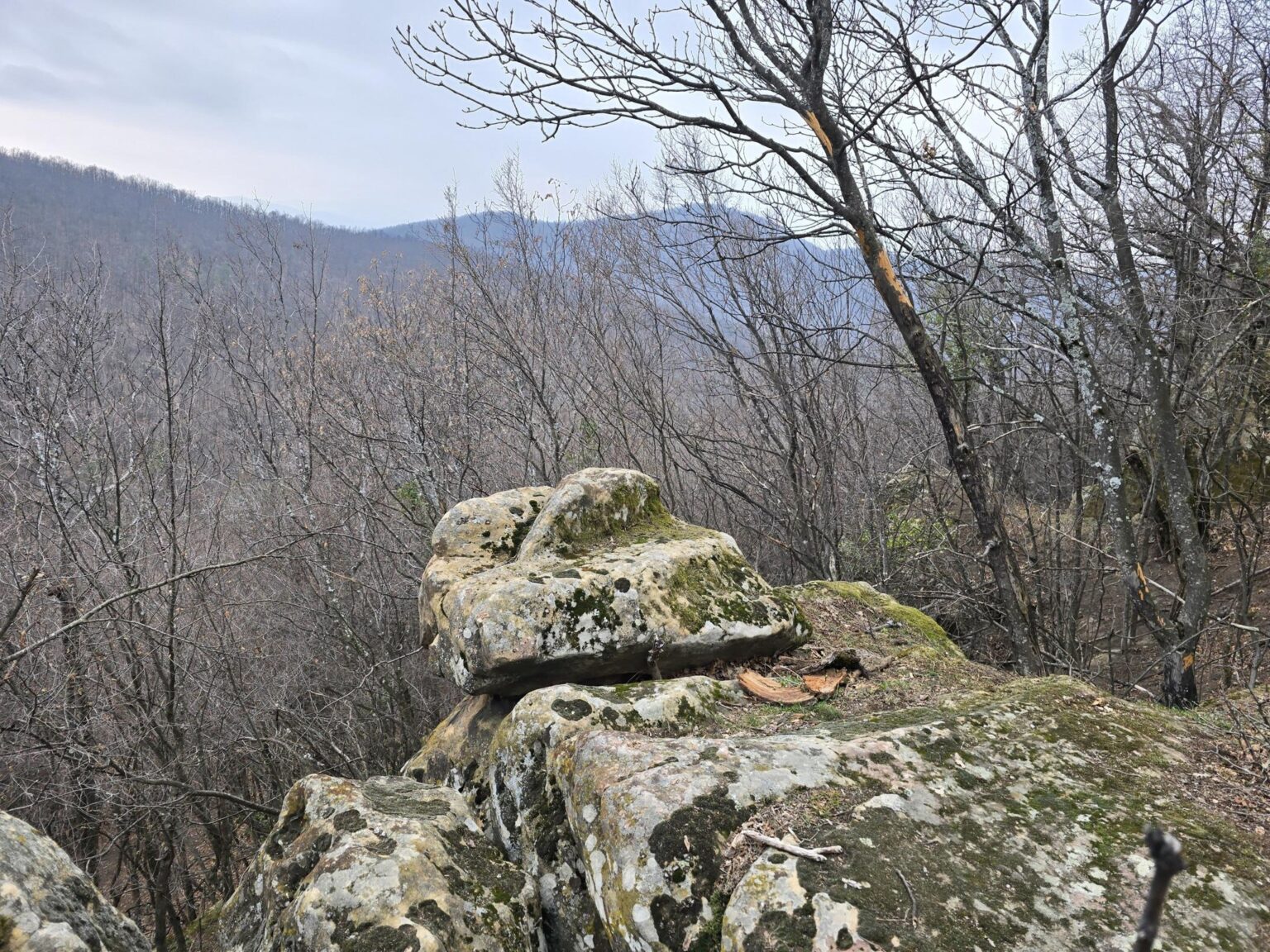
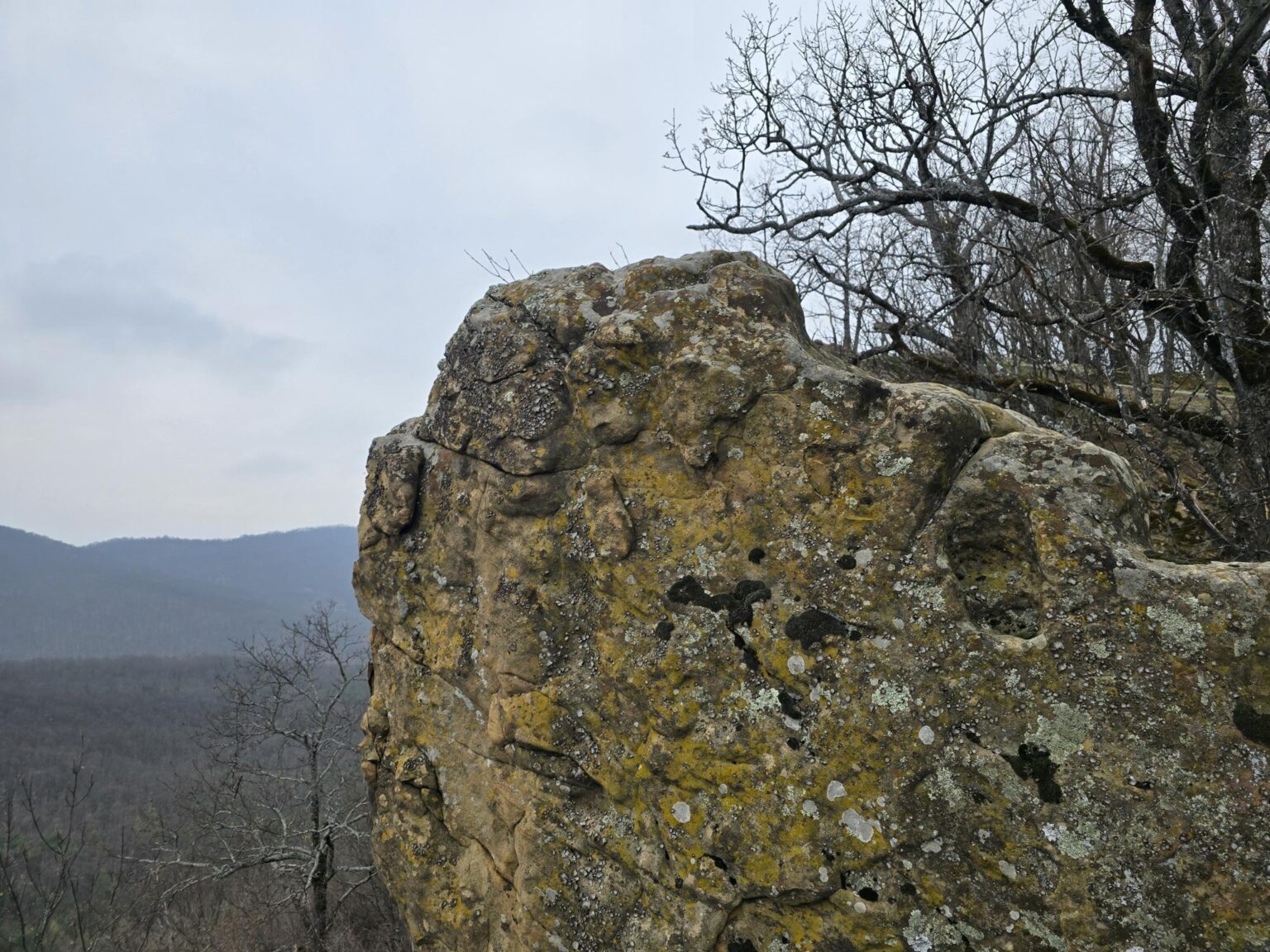
- The western rock massif
Those eight boards (they are in the photos) came out of a project worth somewhere around €187,000 excluding VAT, according to the public procurement file — though the sum does not appear anywhere on the project sign itself.
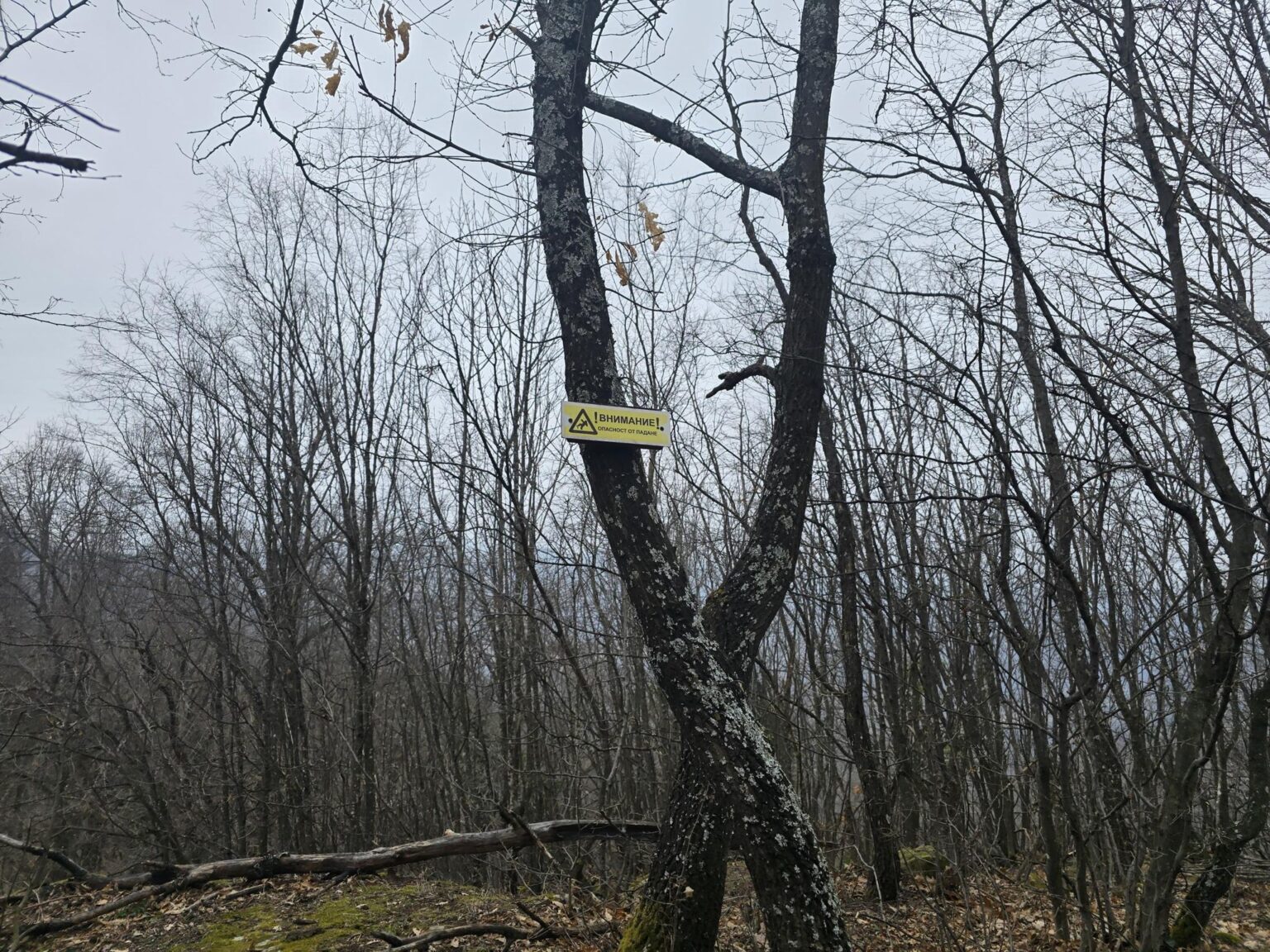
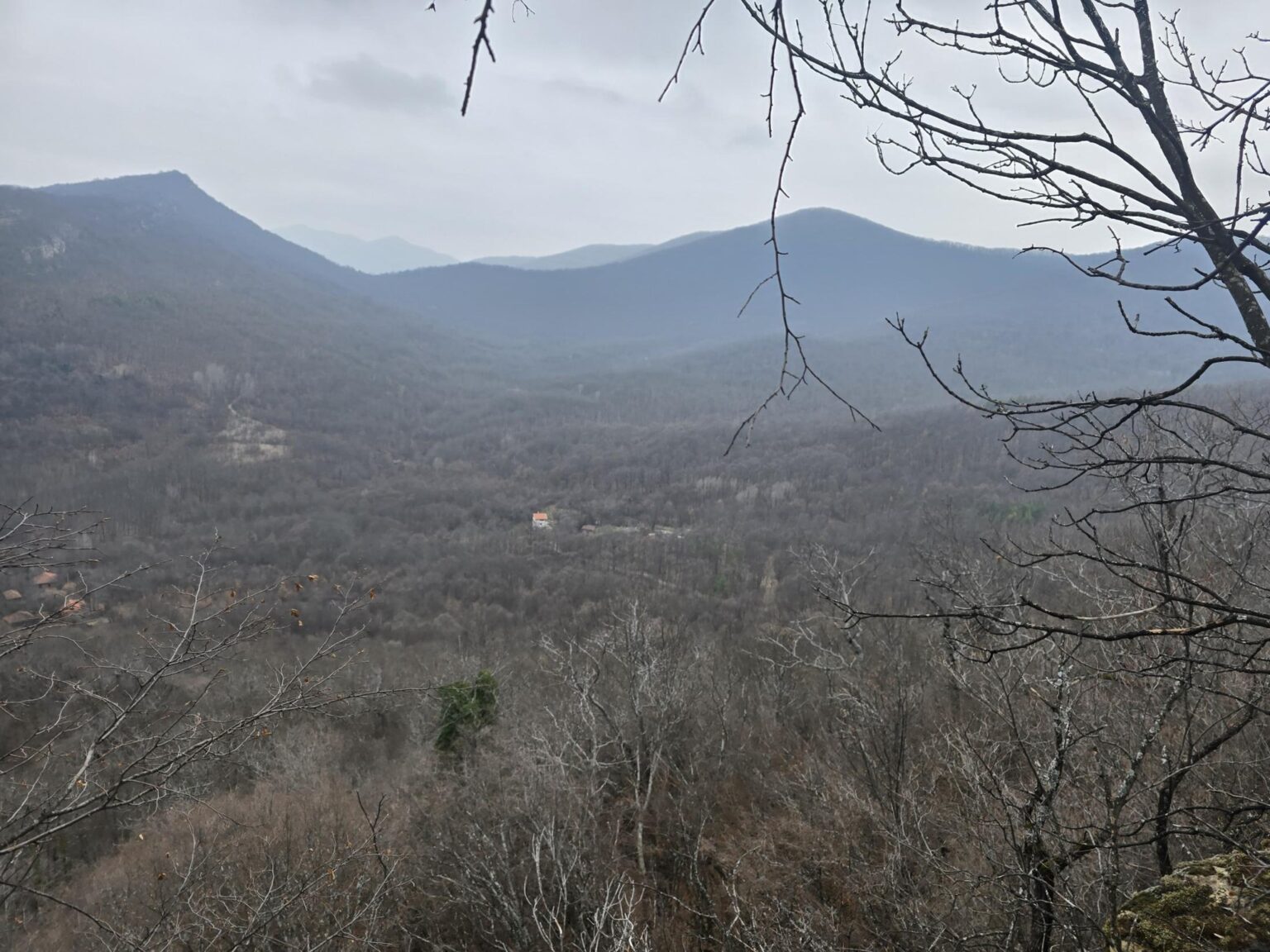
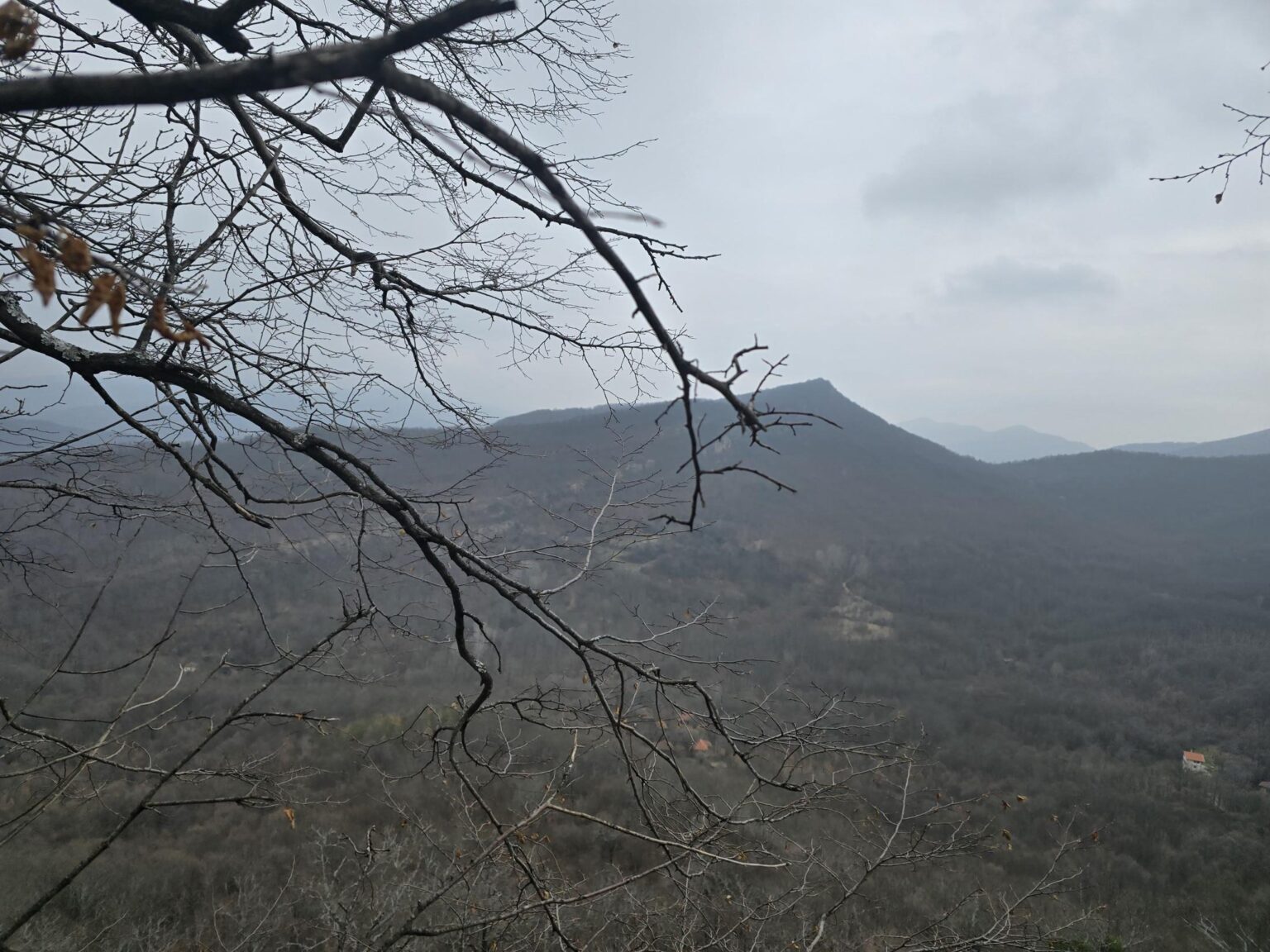
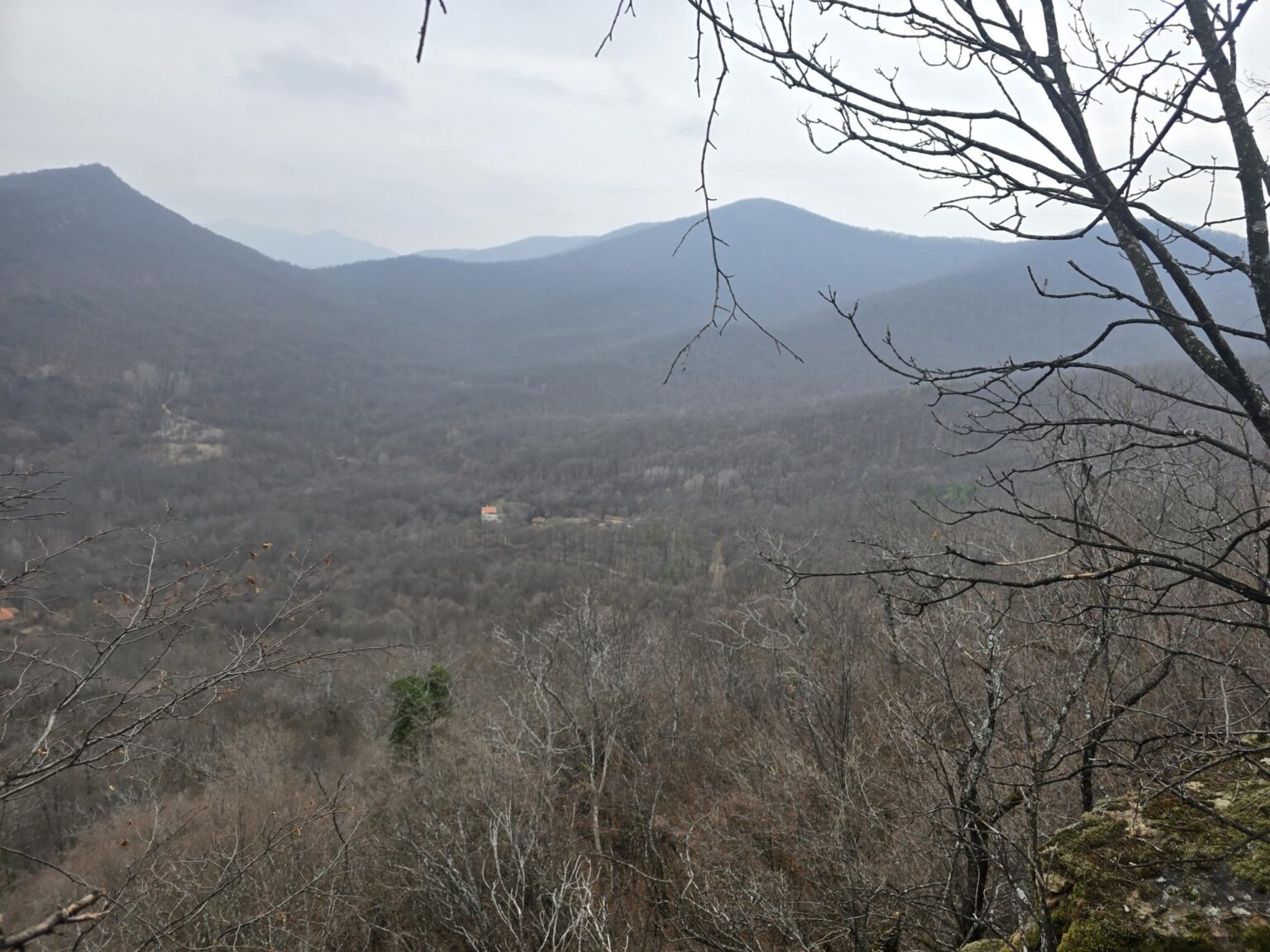
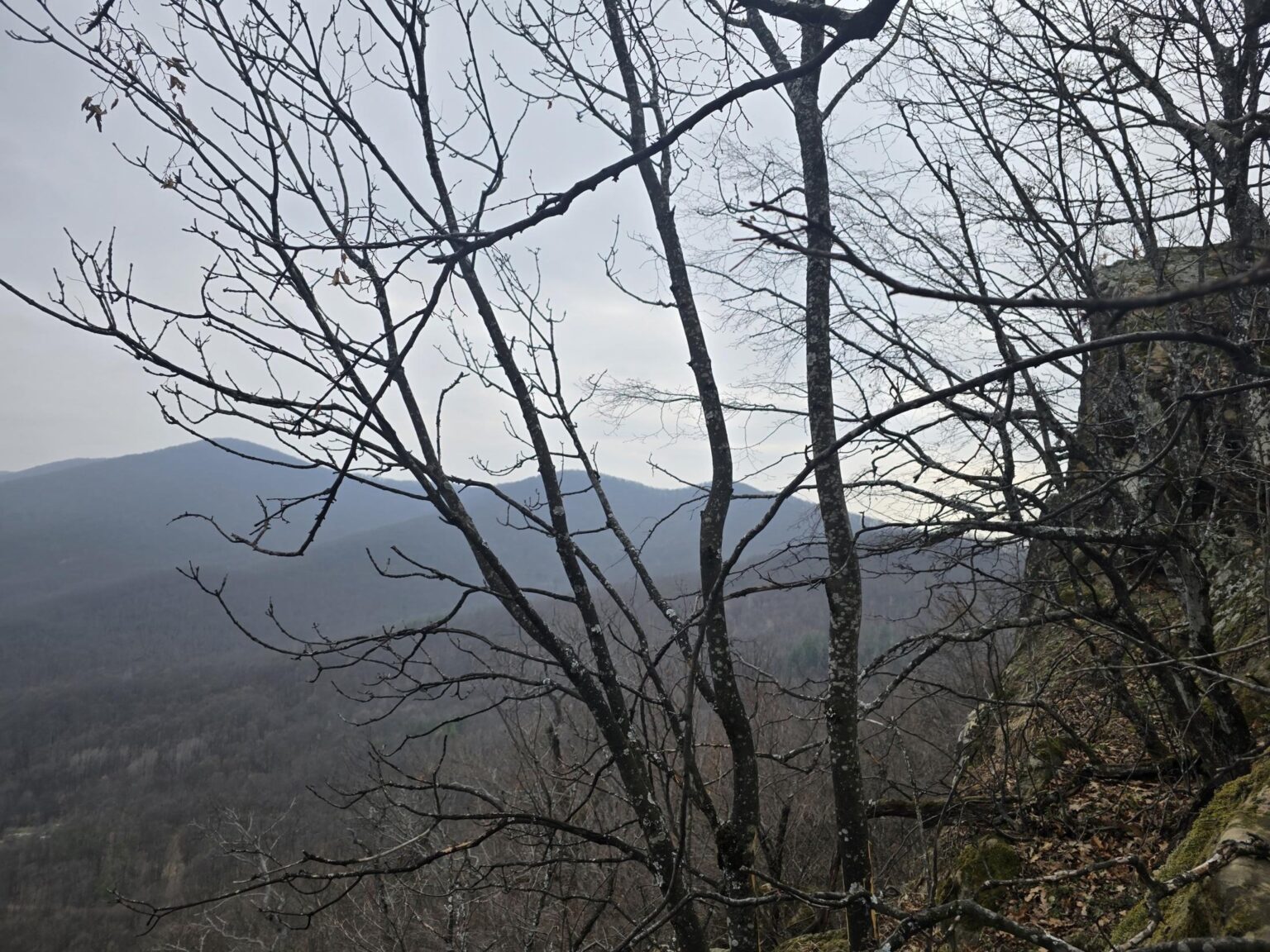
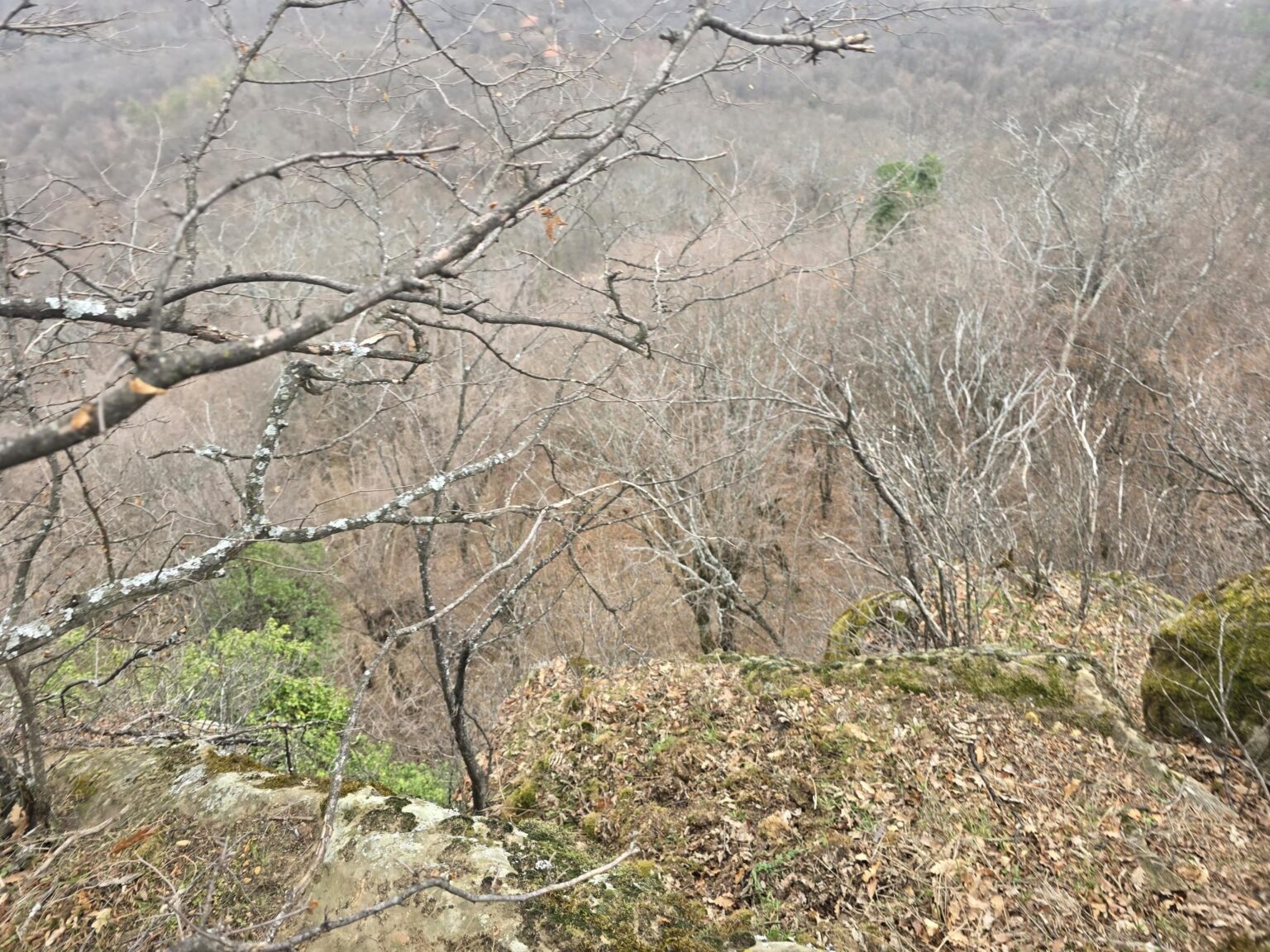
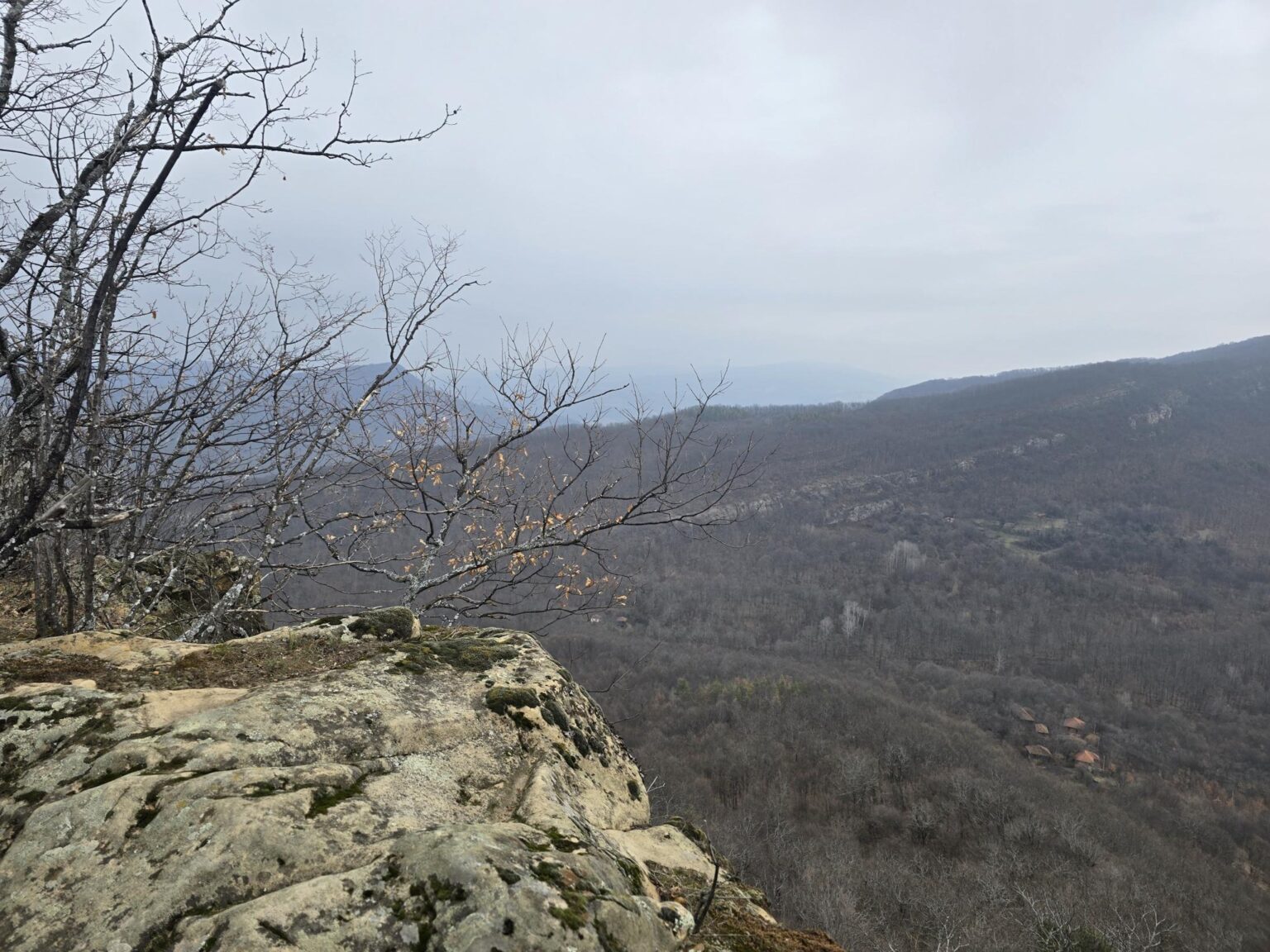
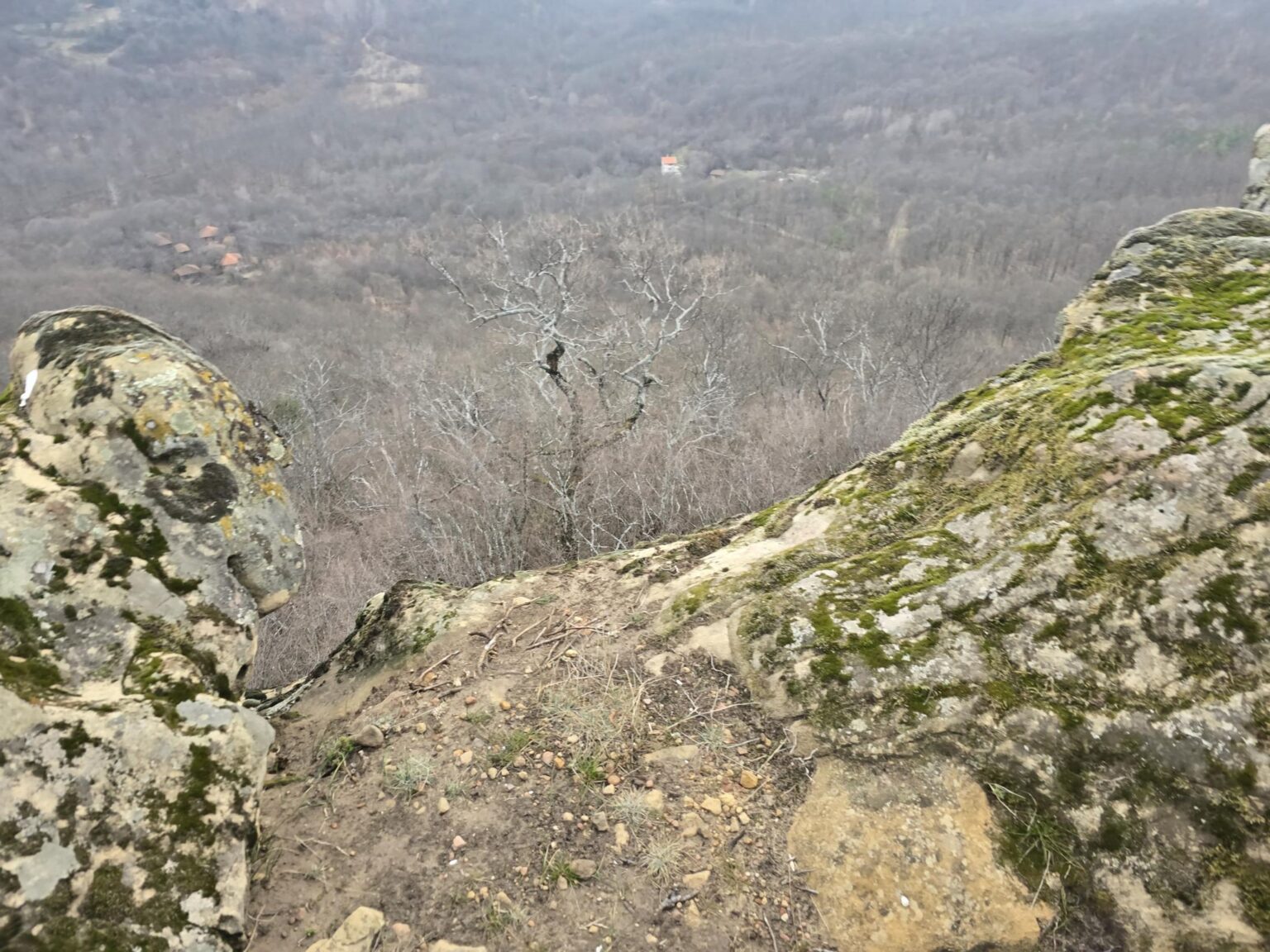
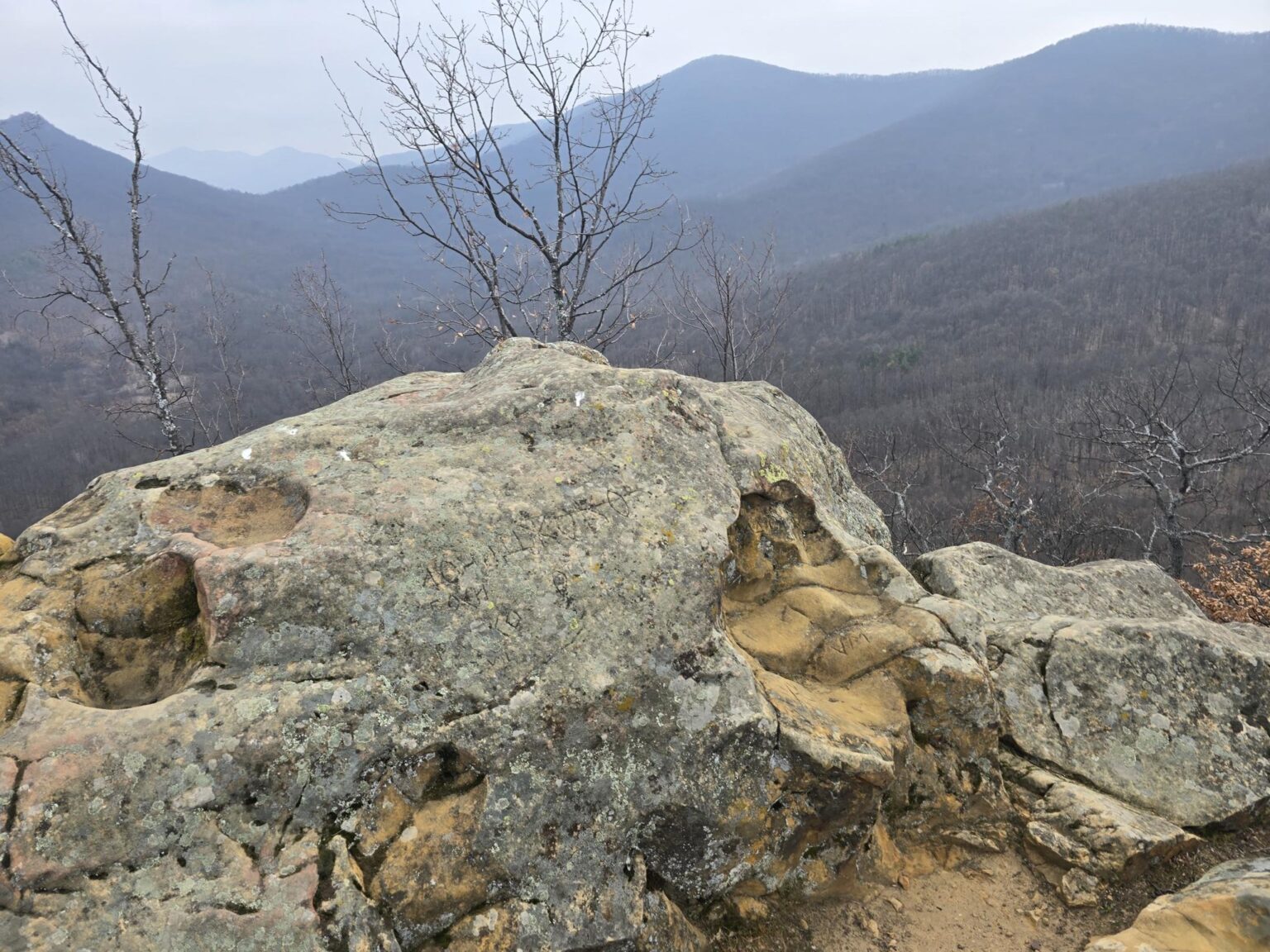
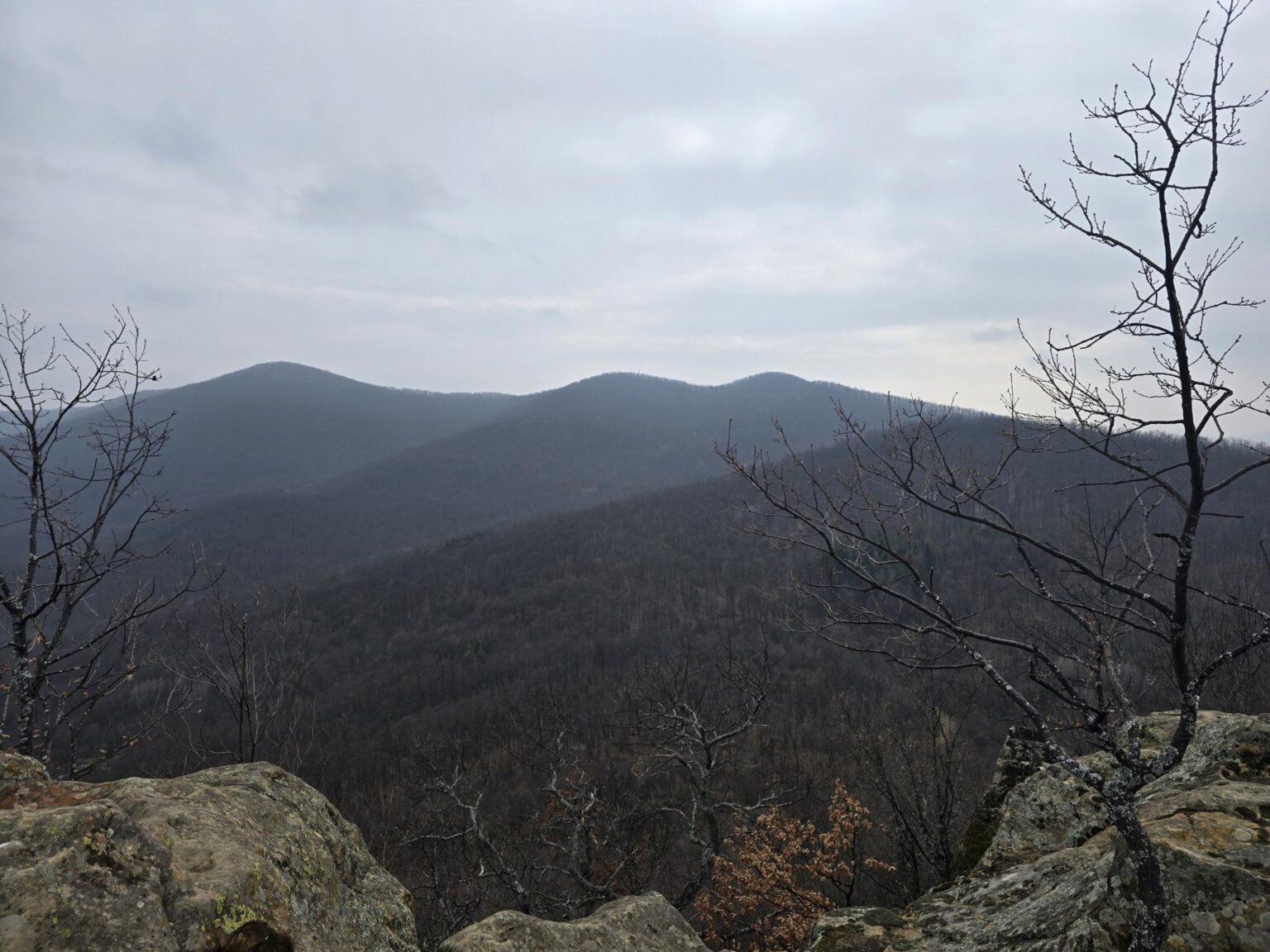
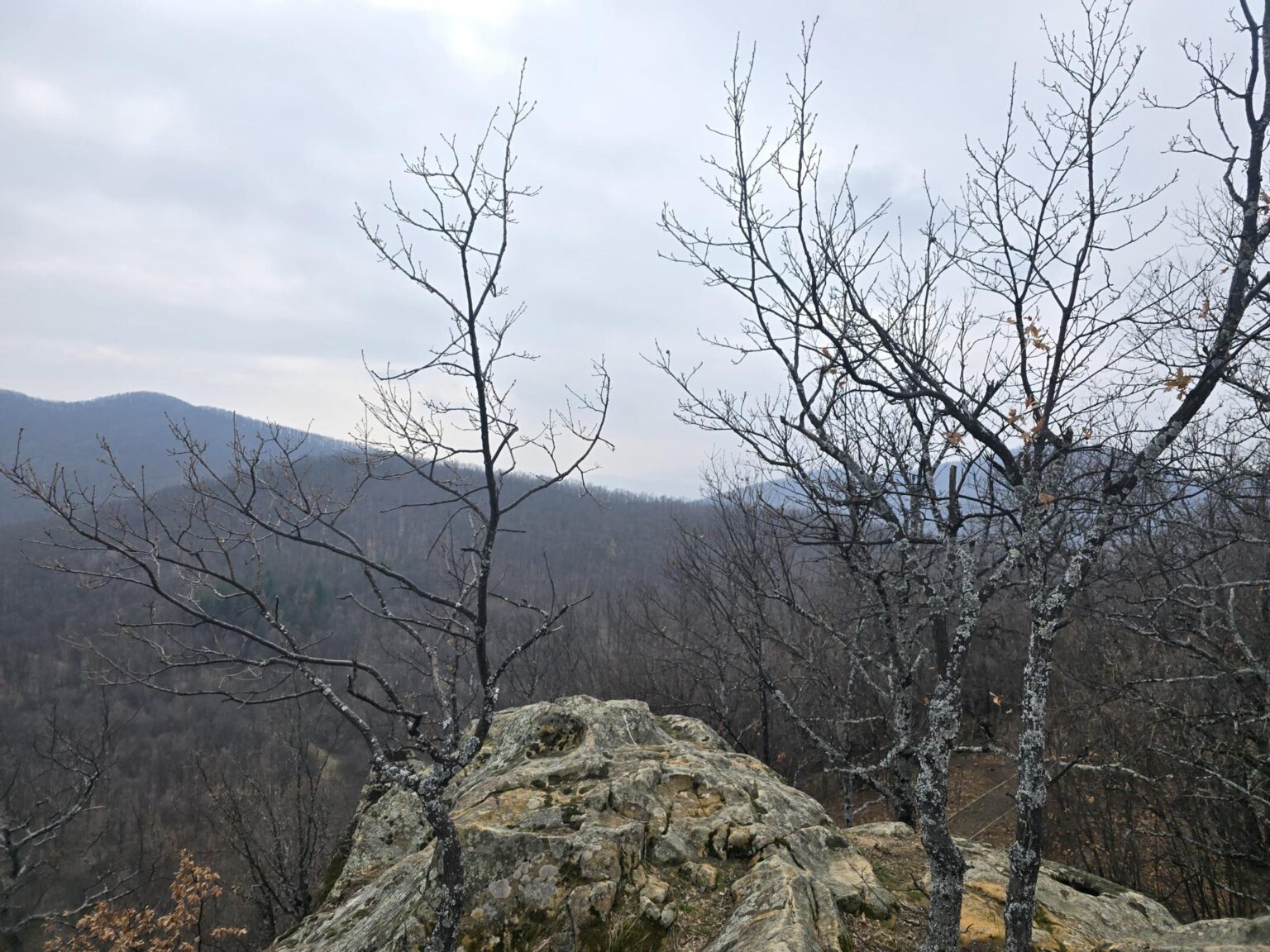
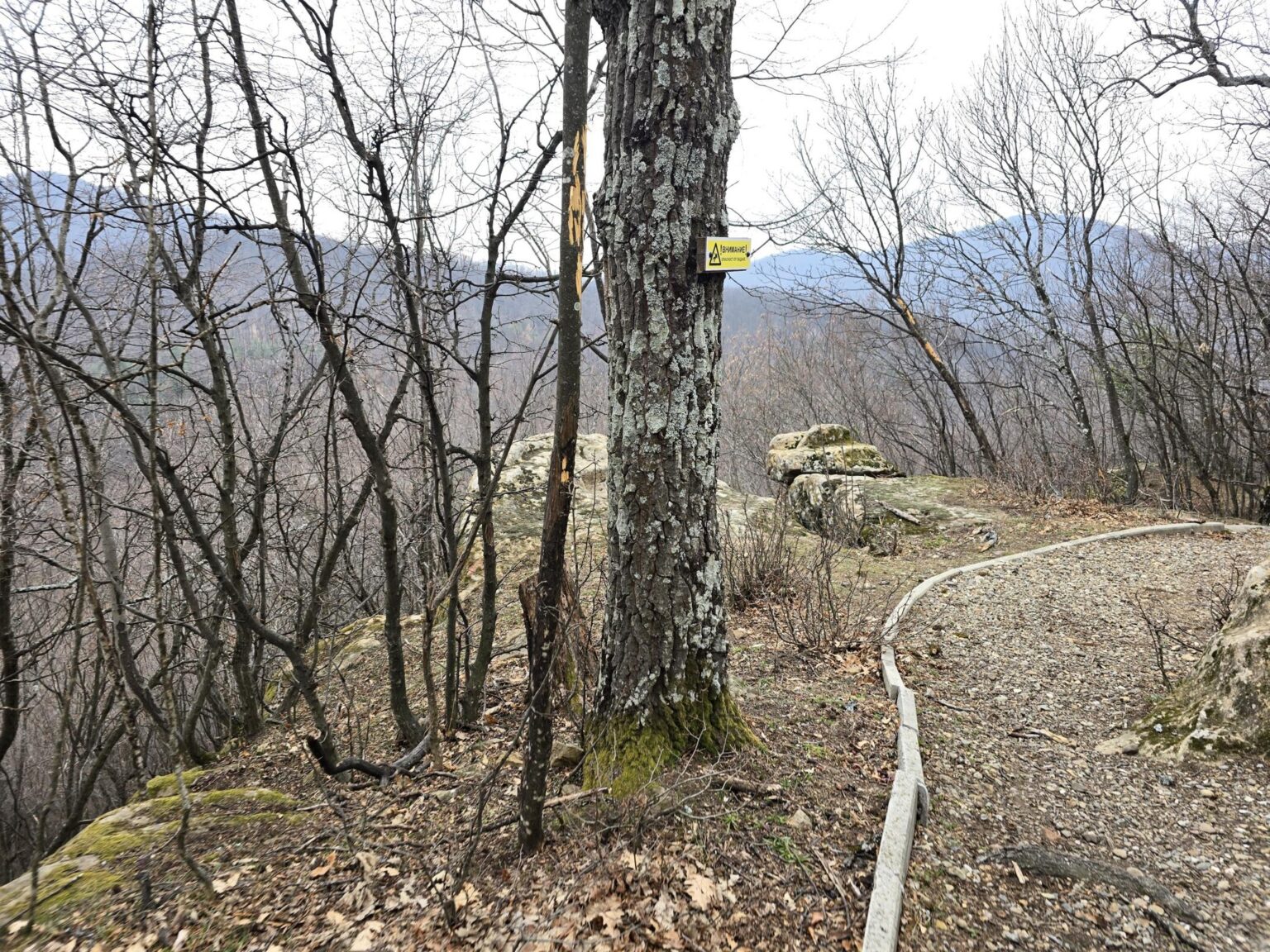
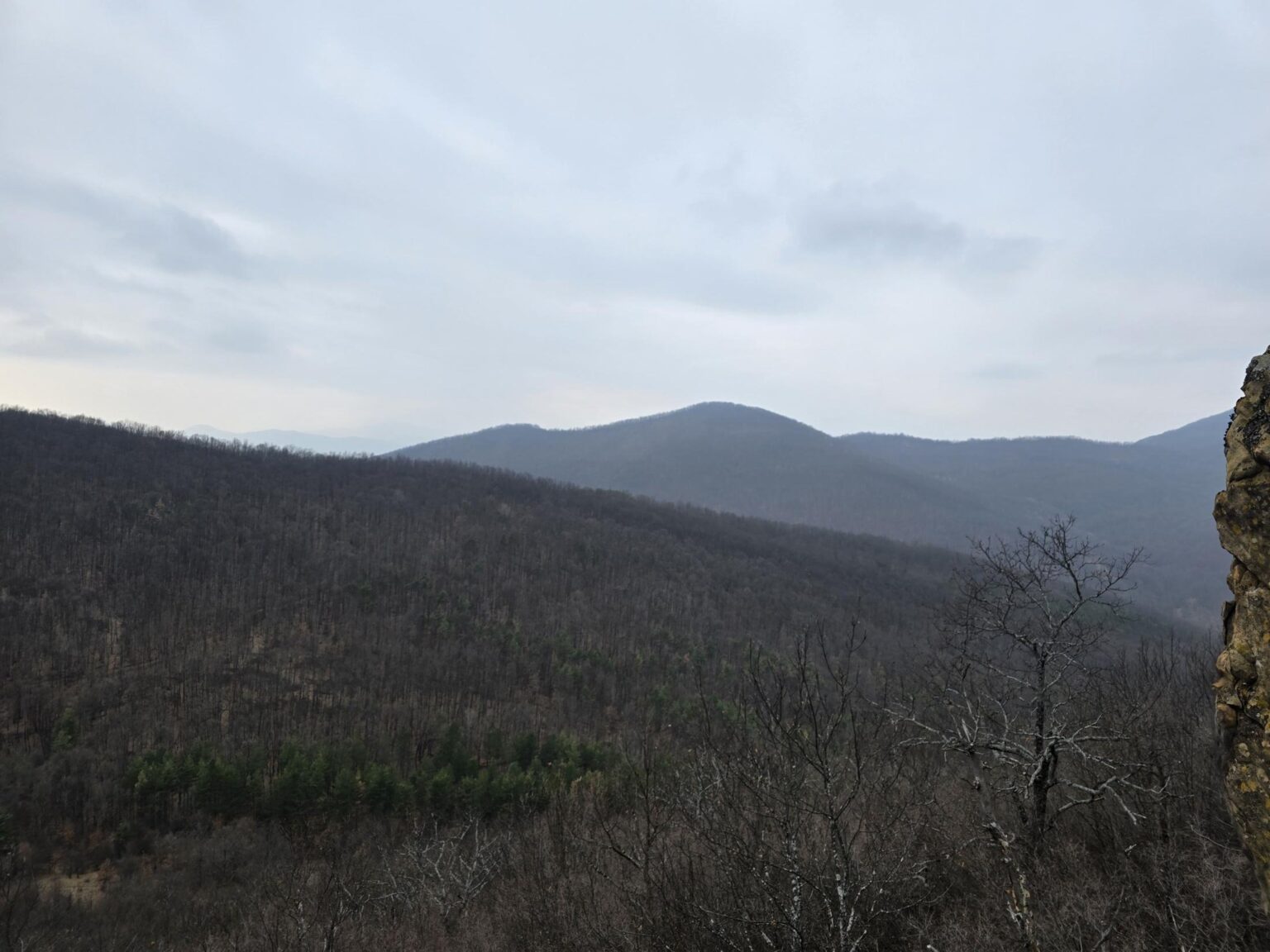
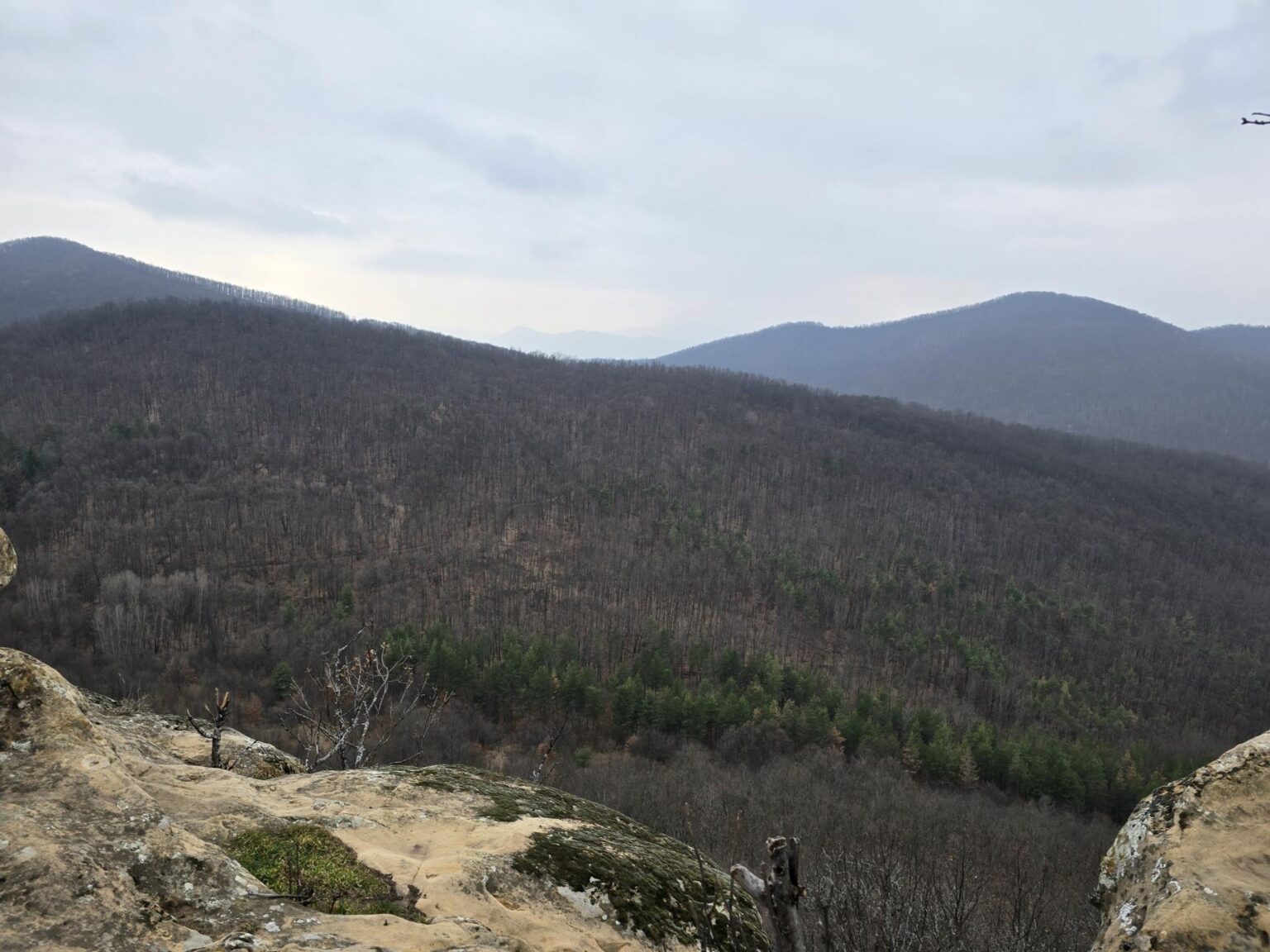
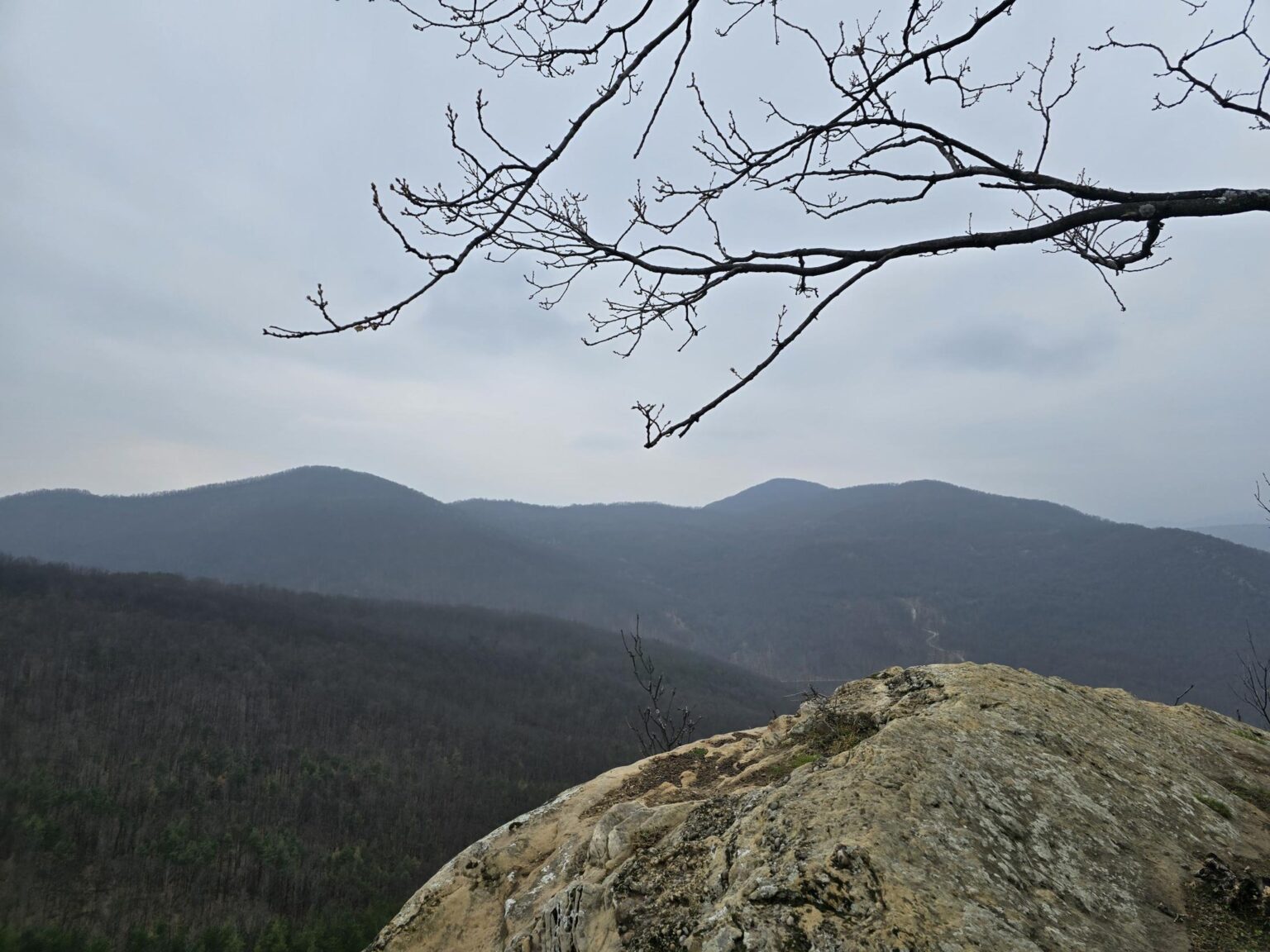
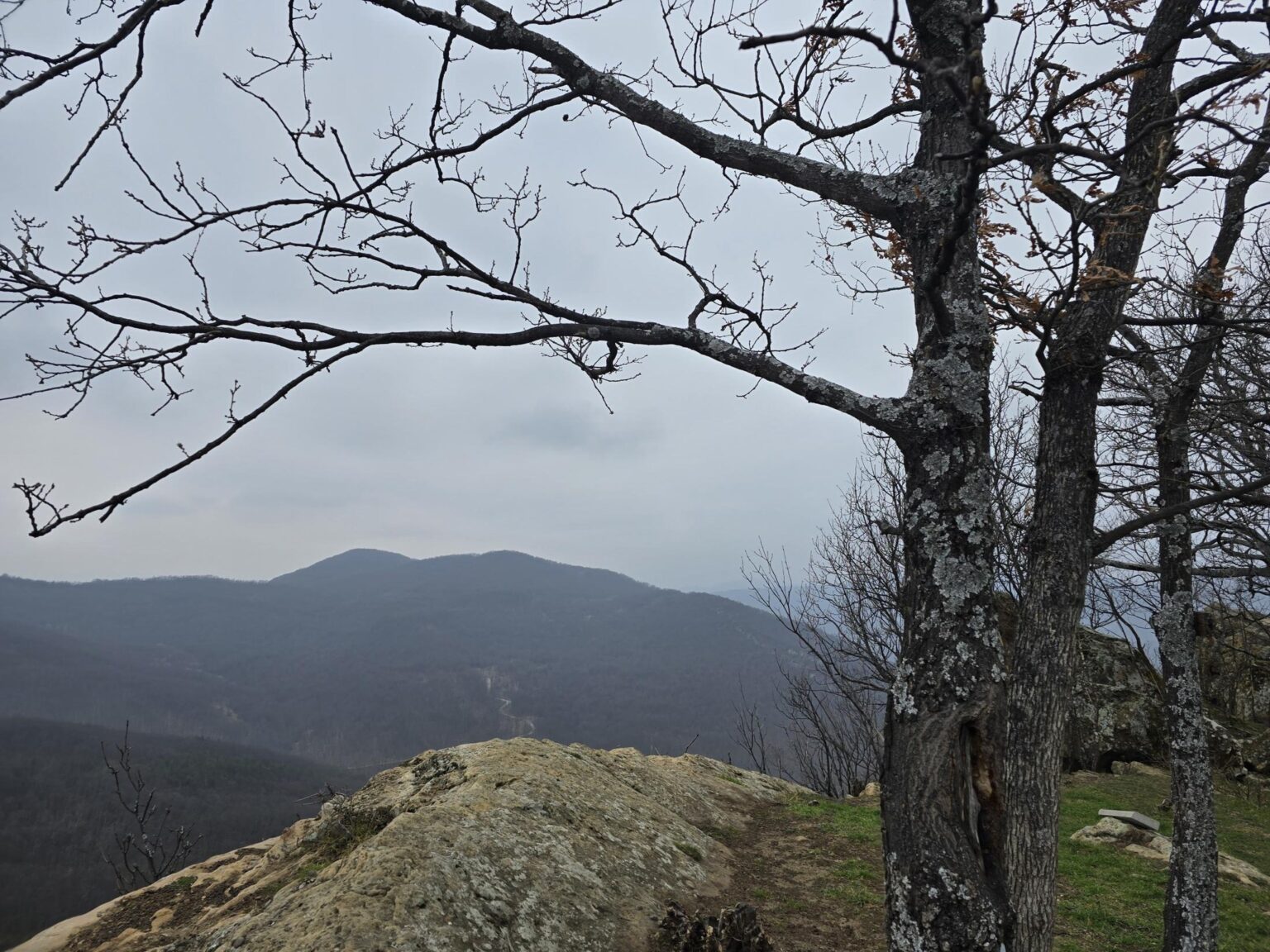
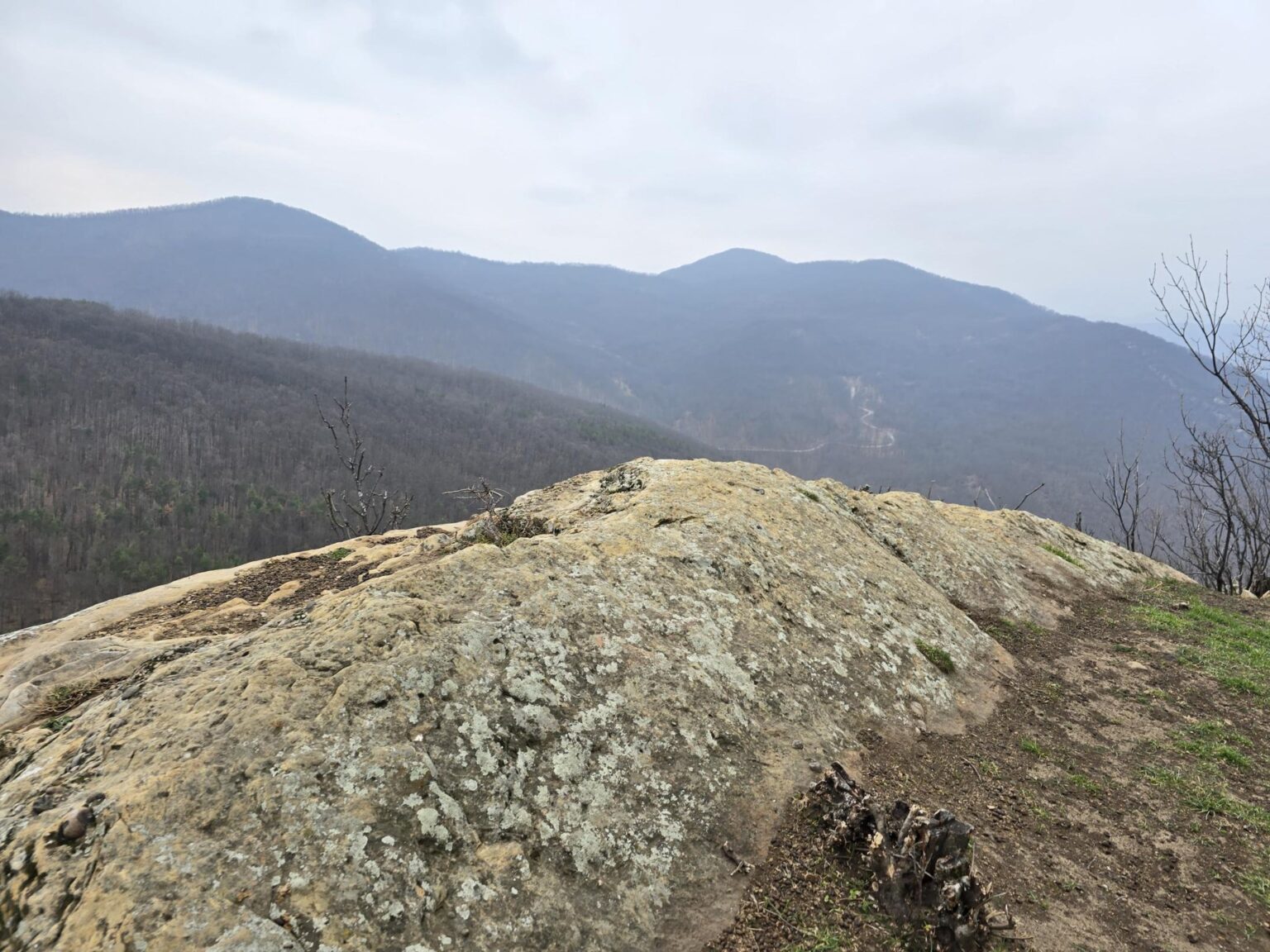
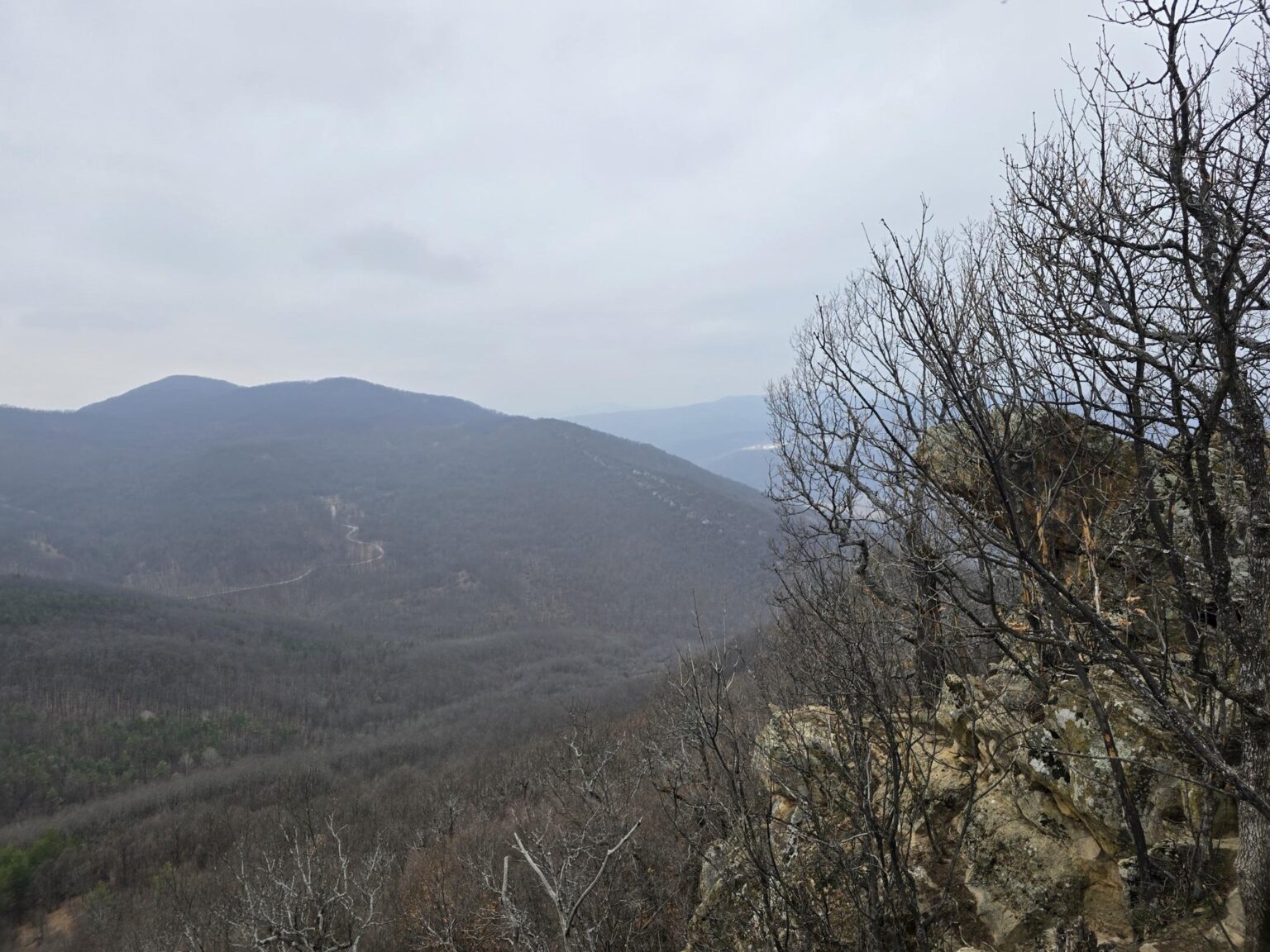
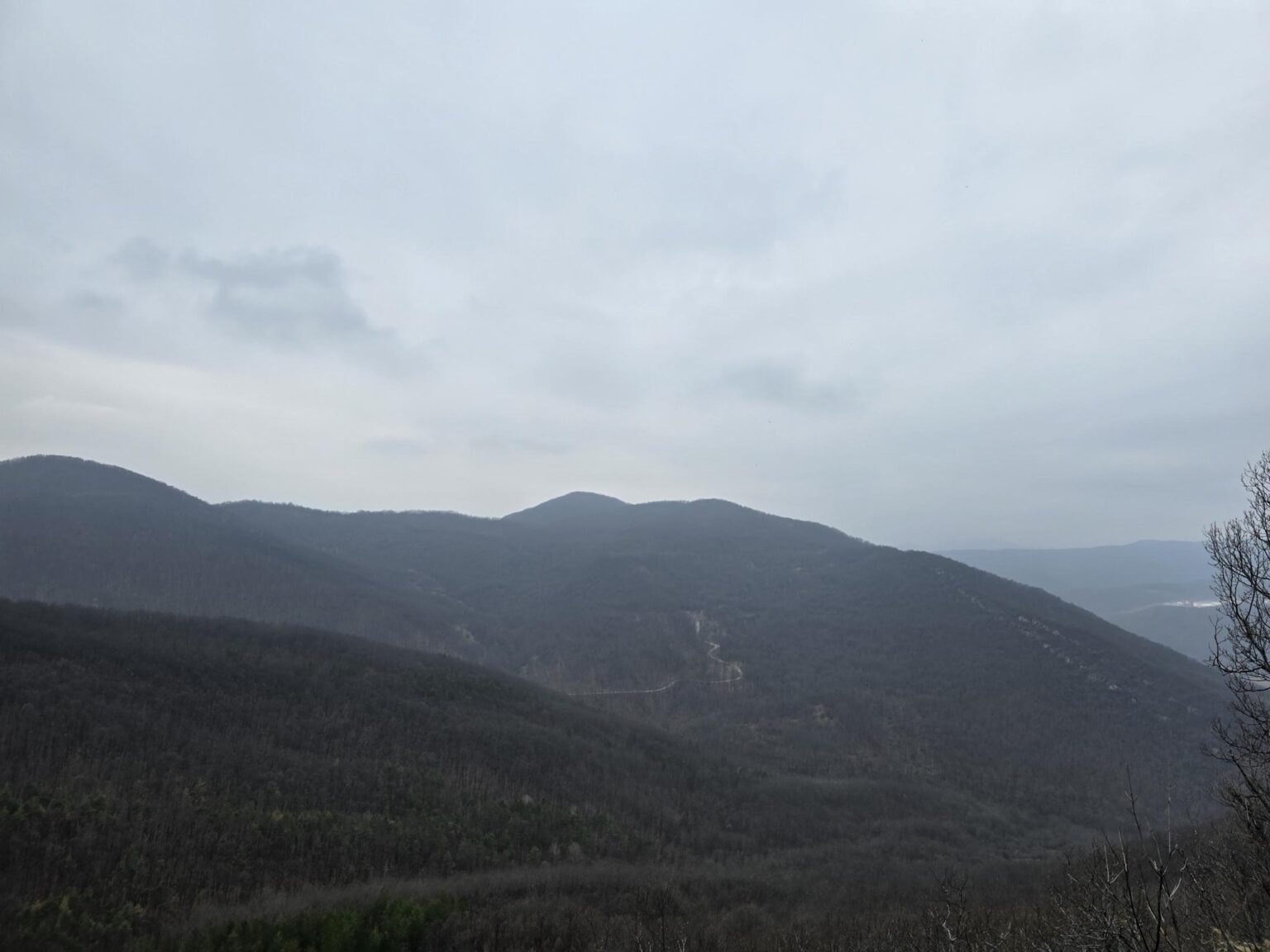
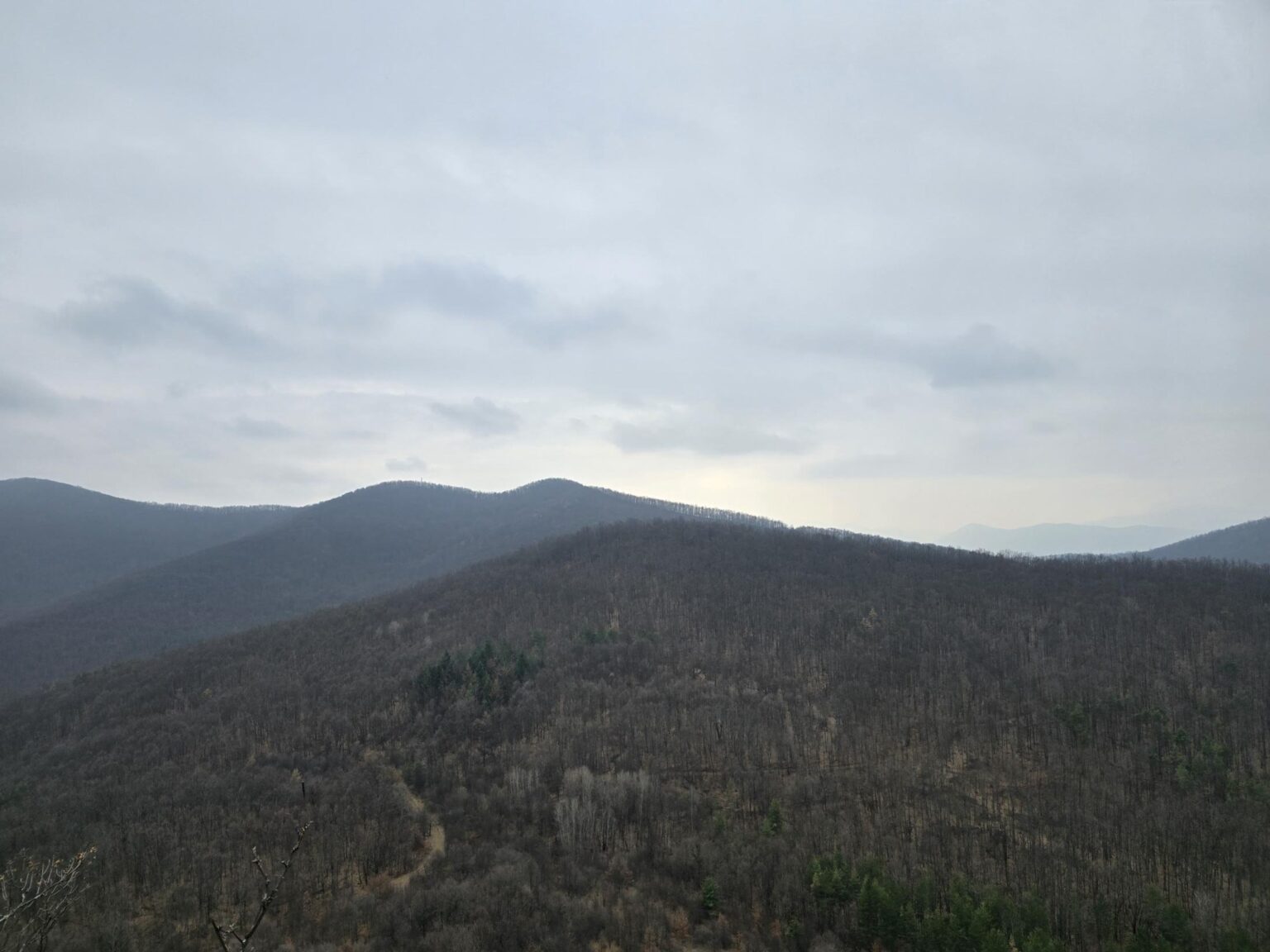
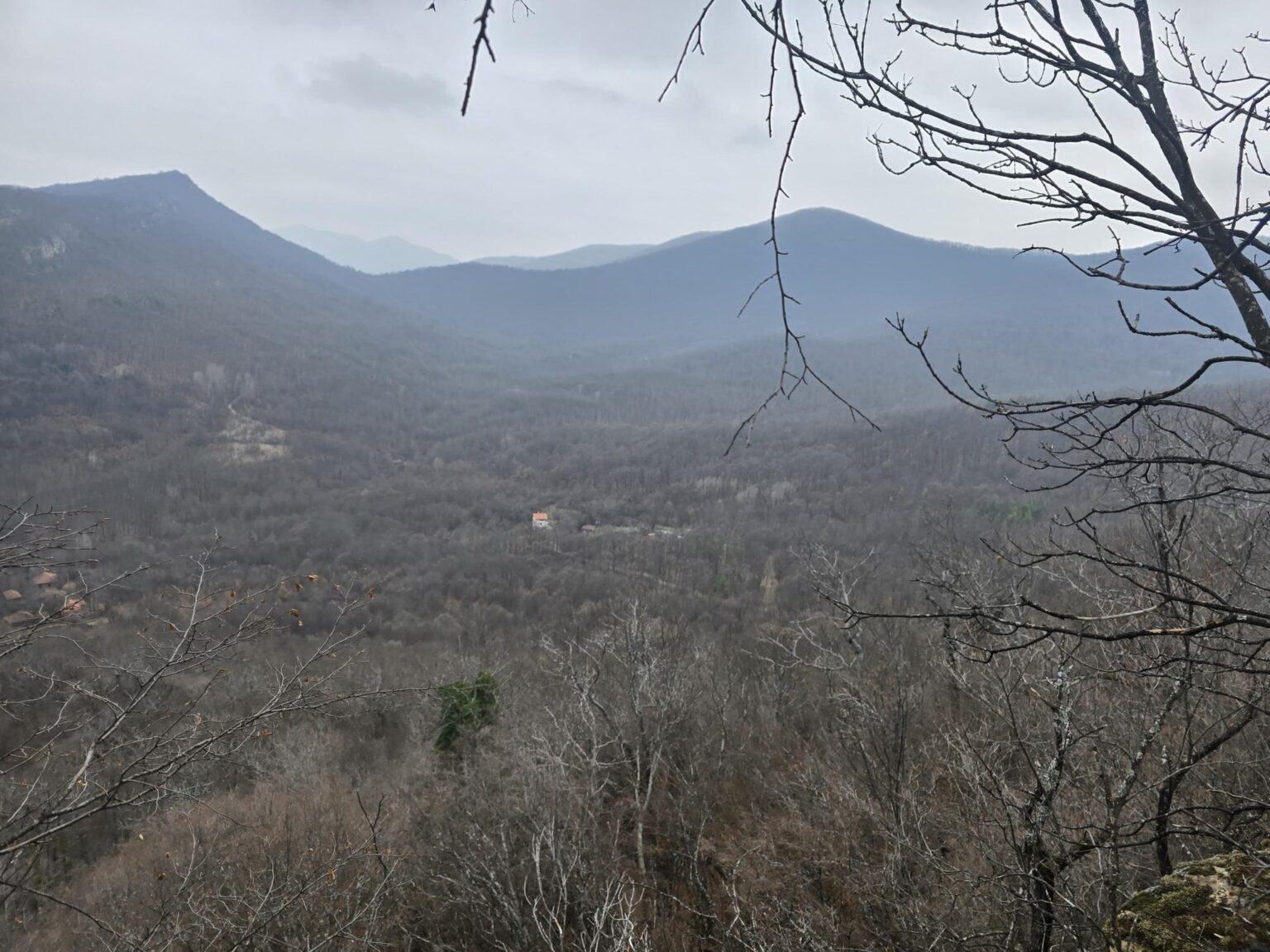
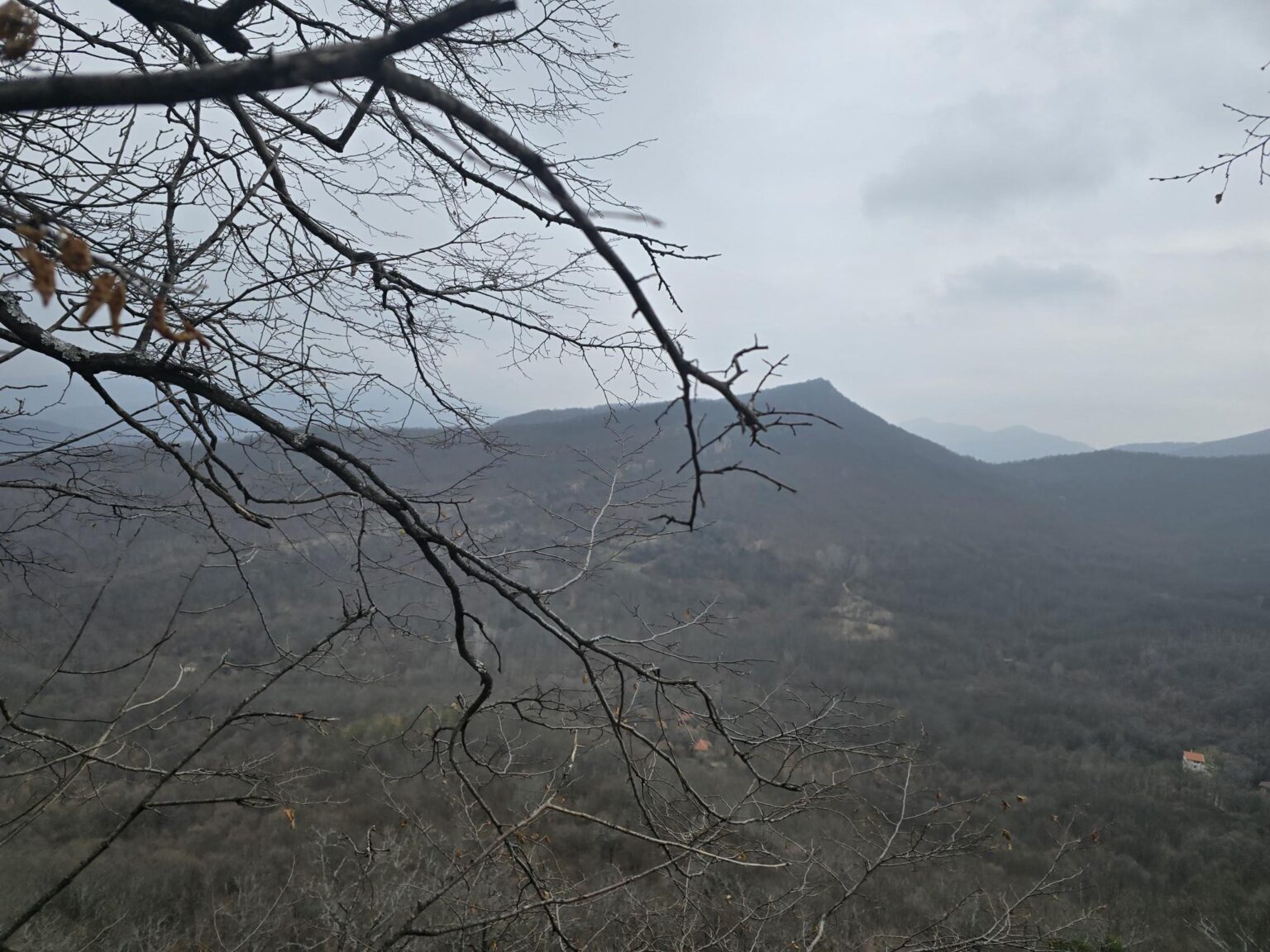
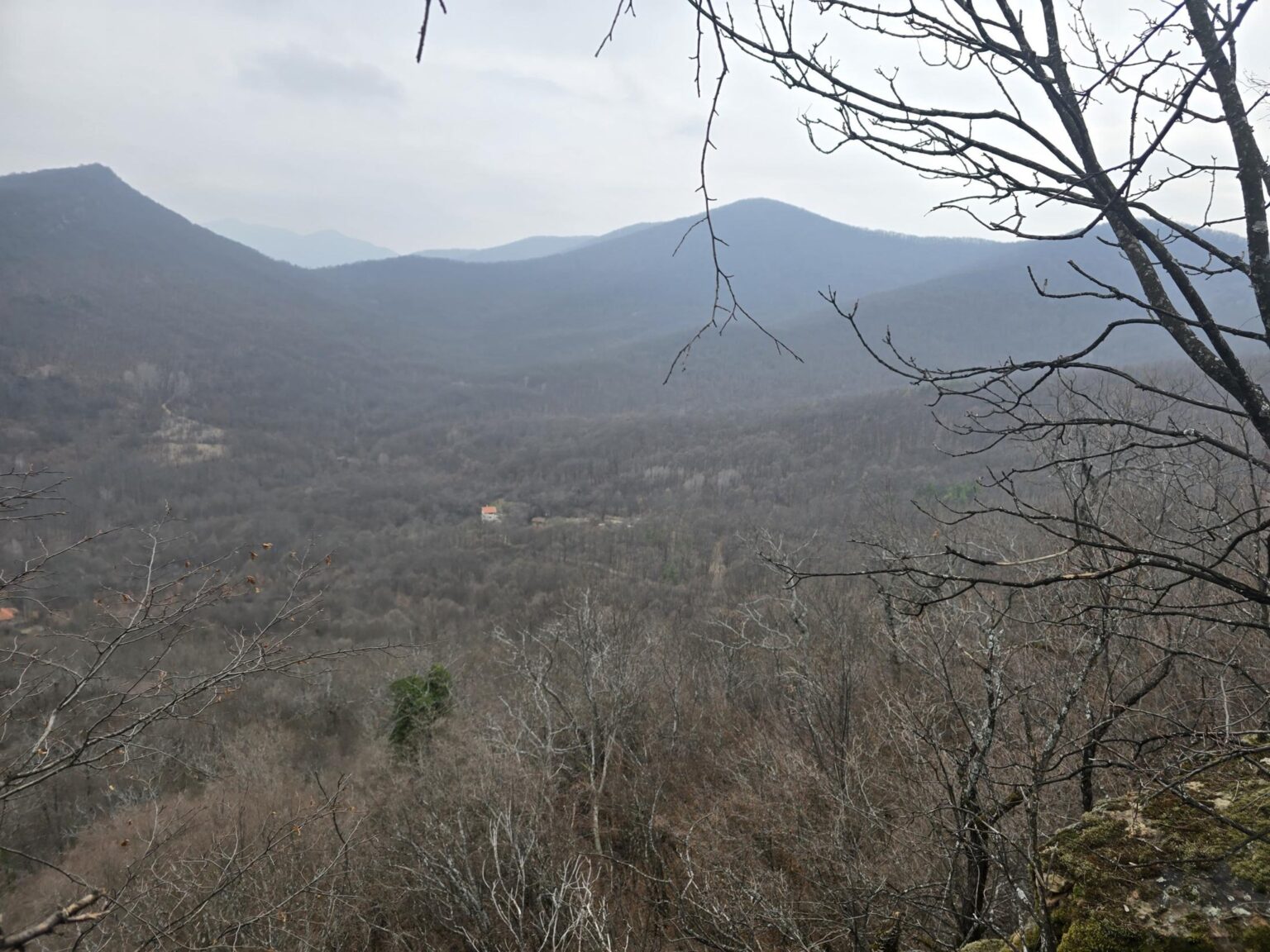
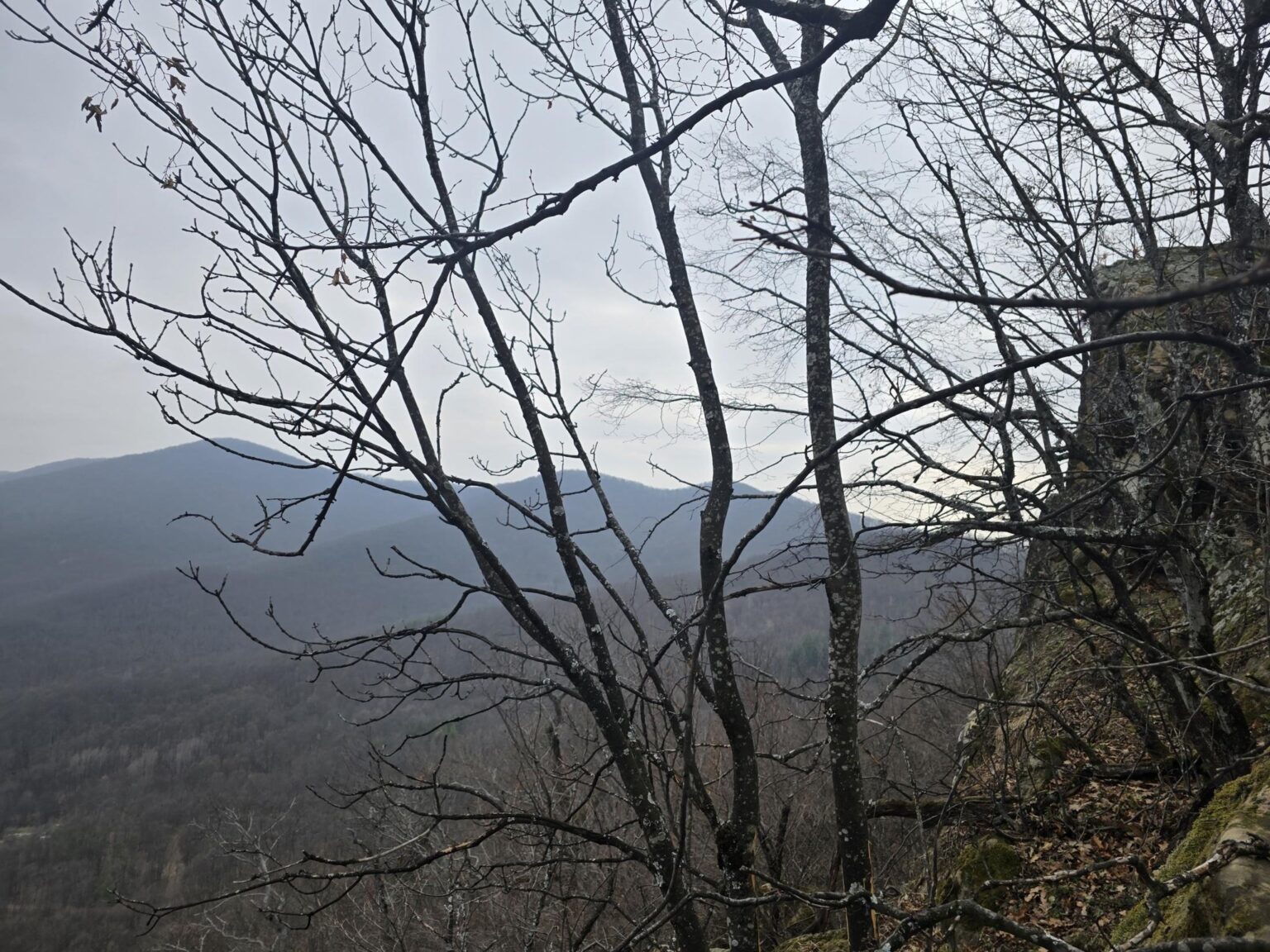
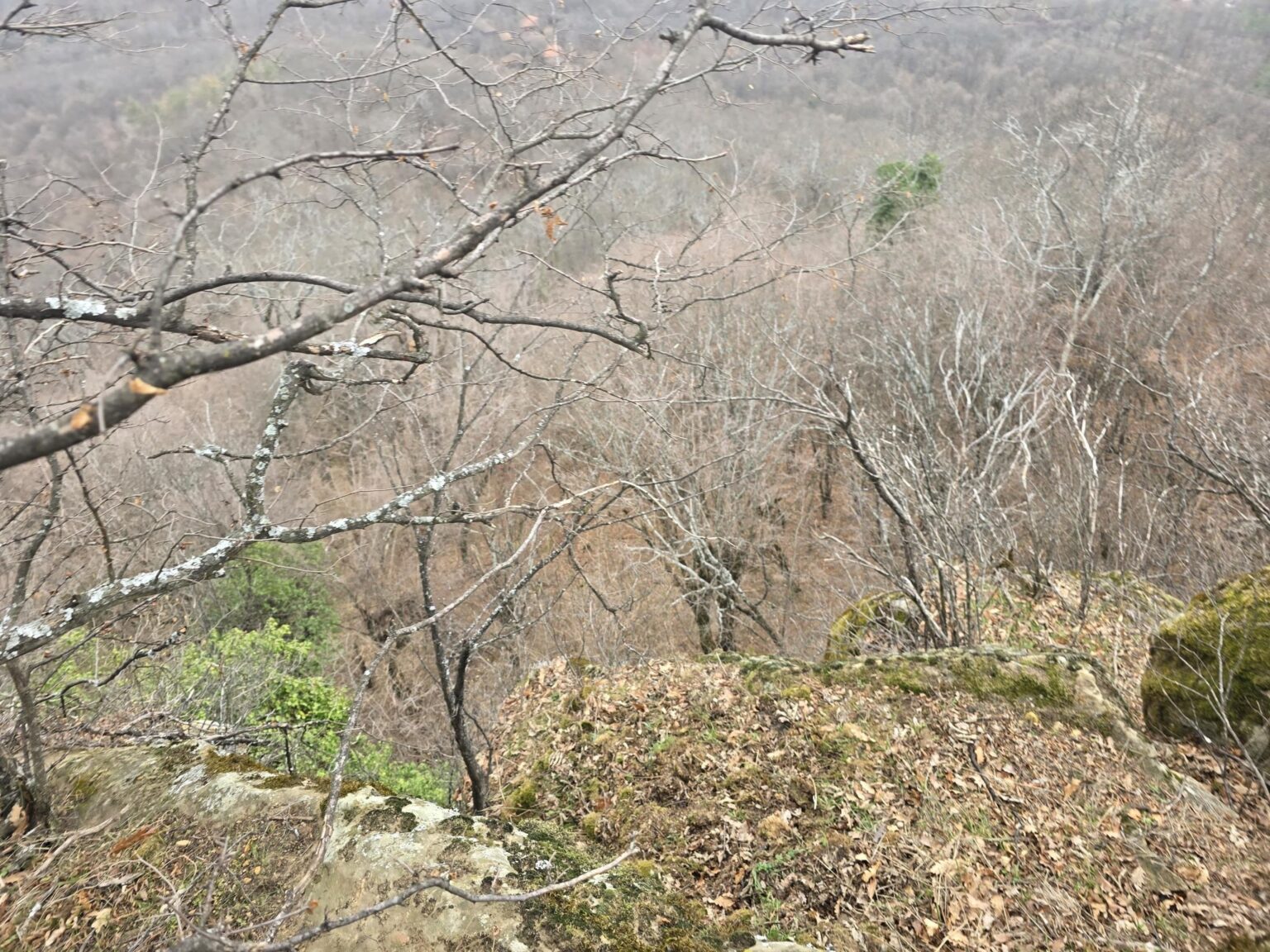
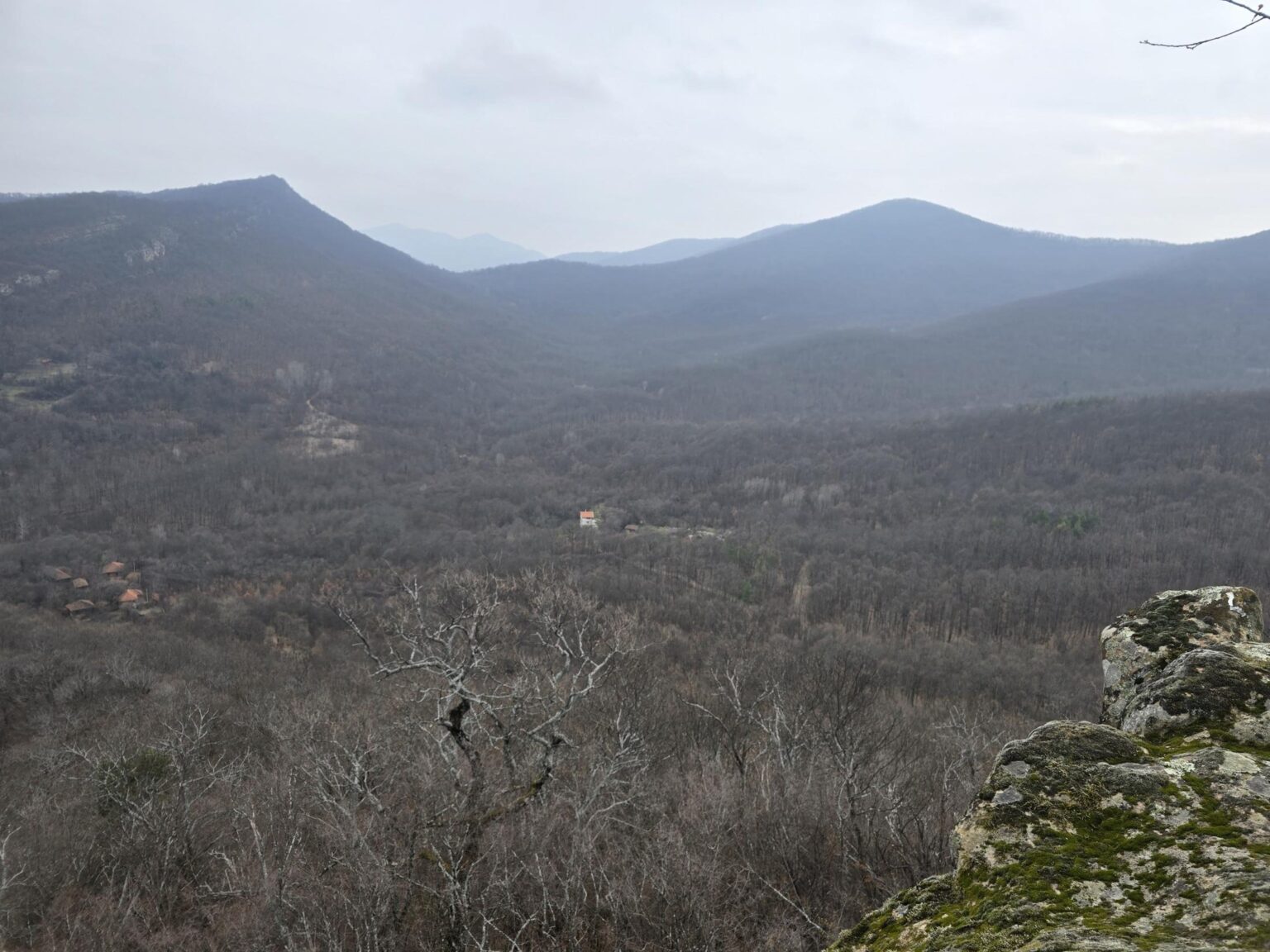
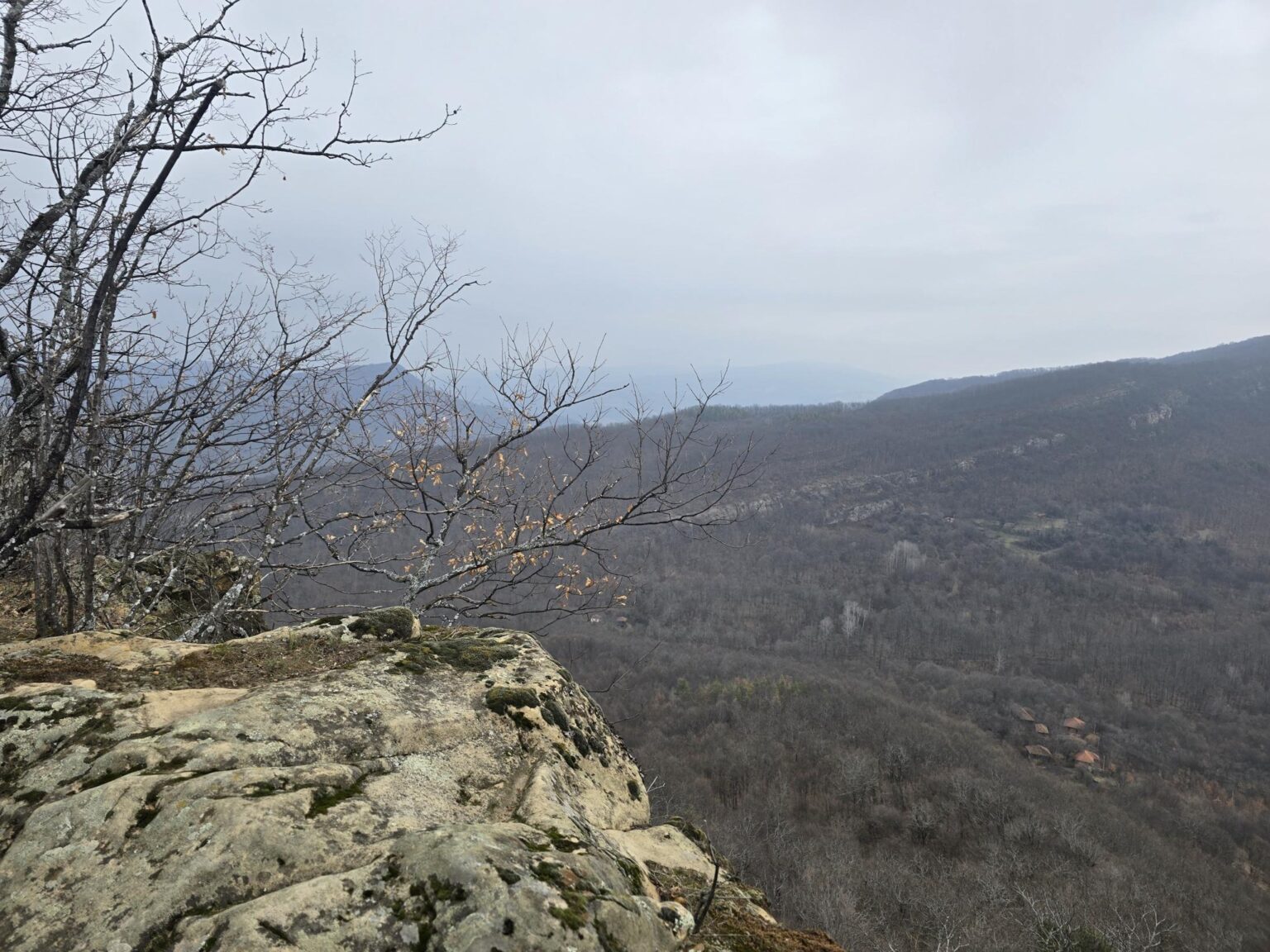
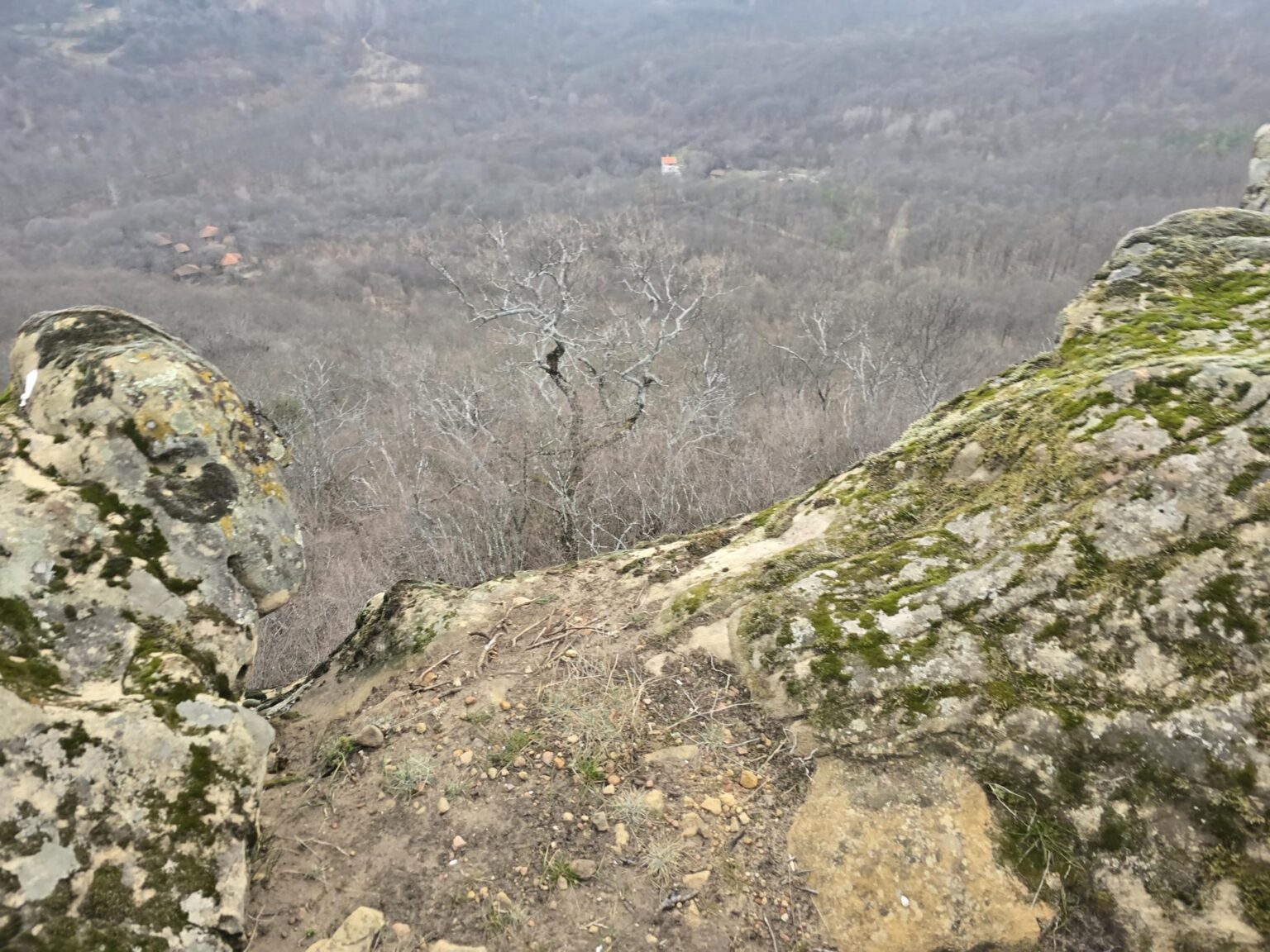
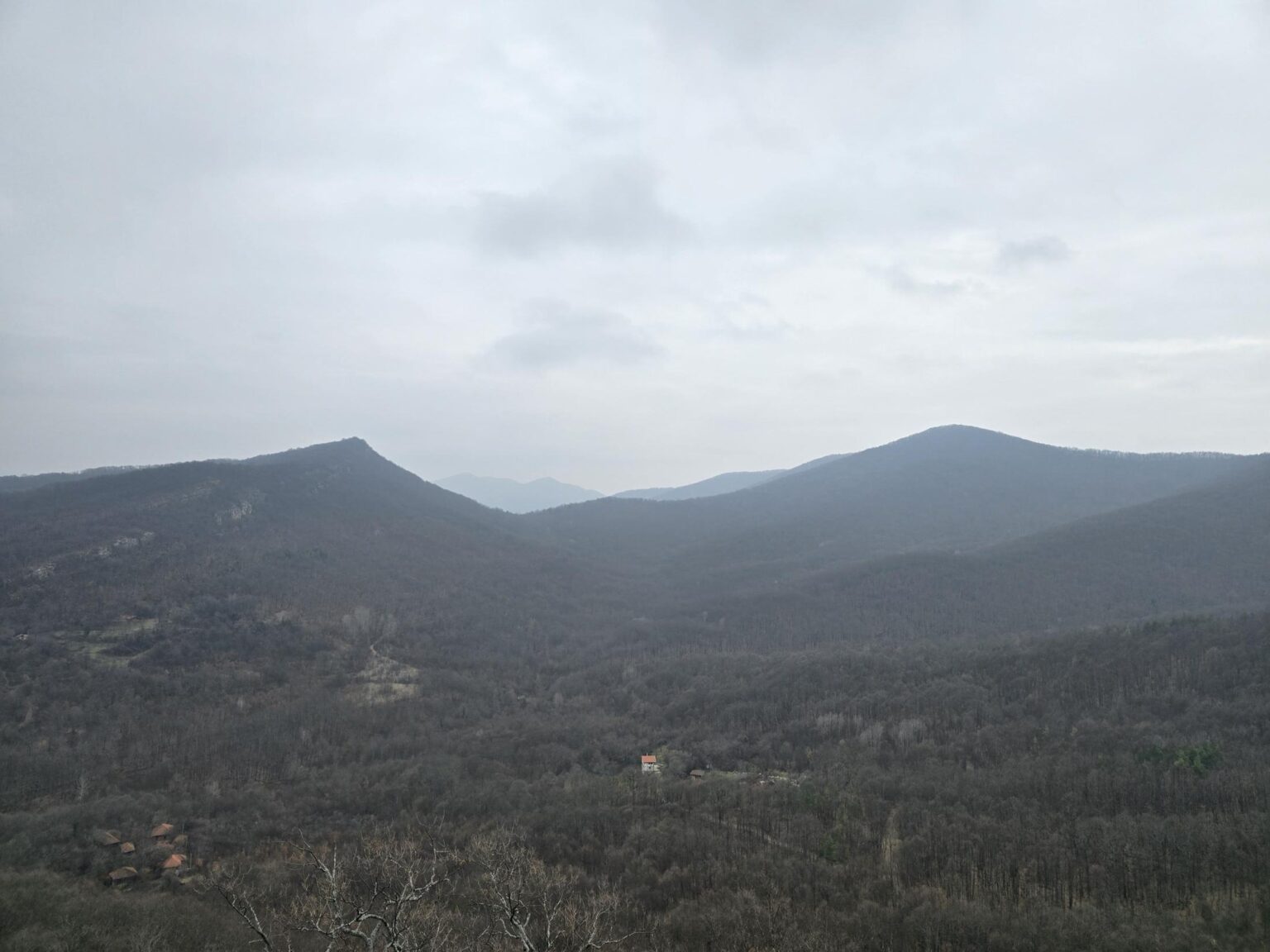
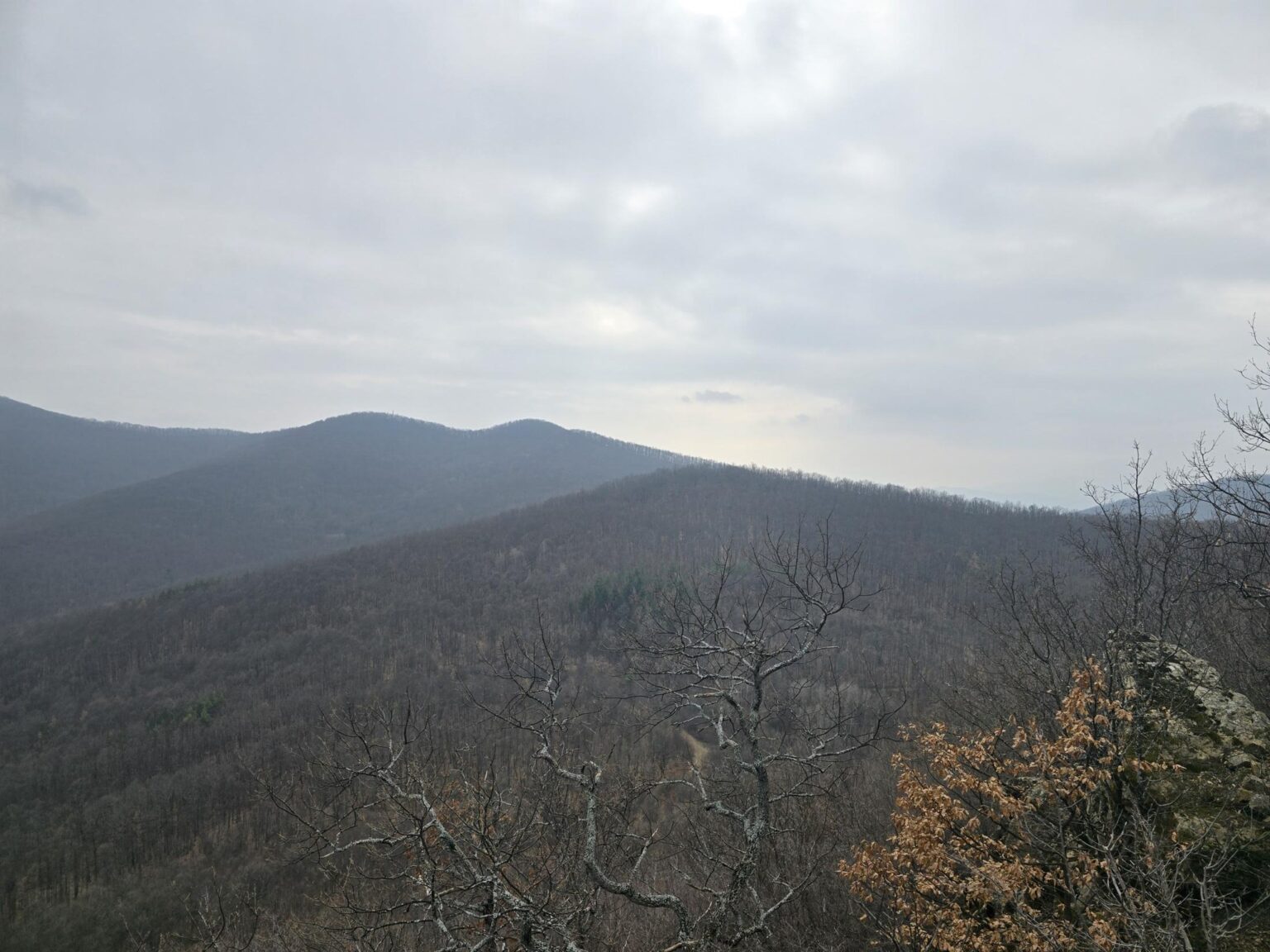
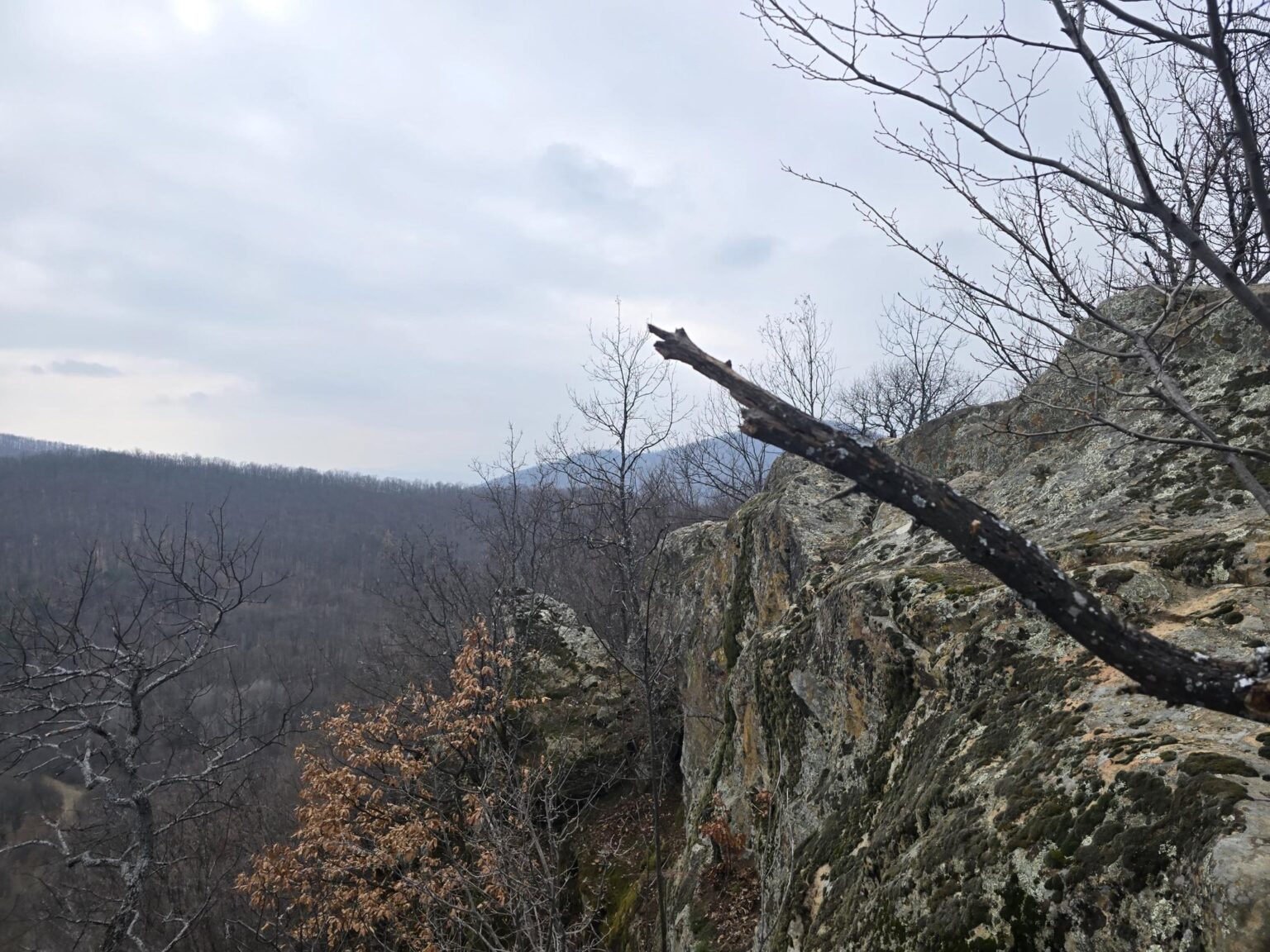
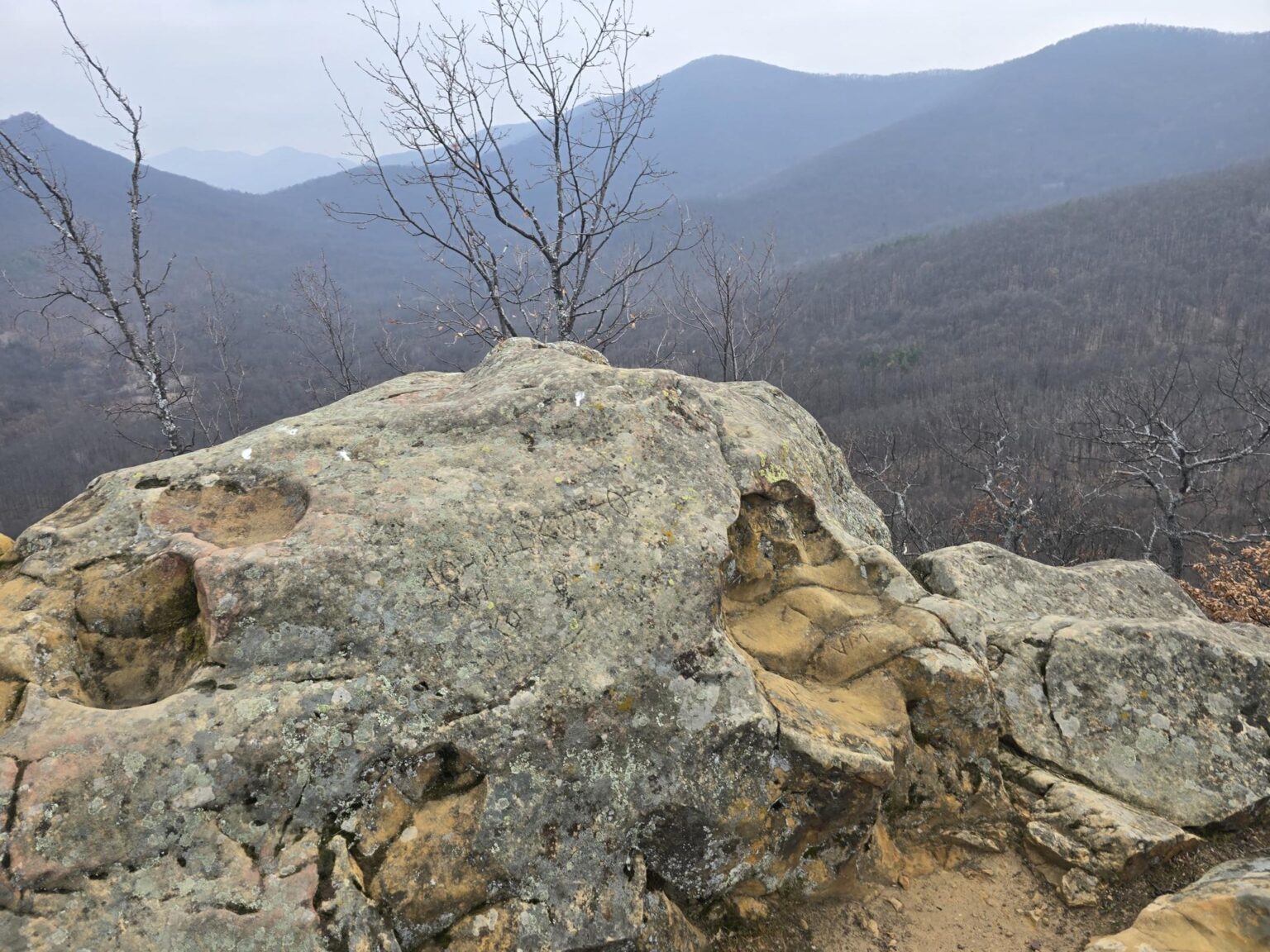
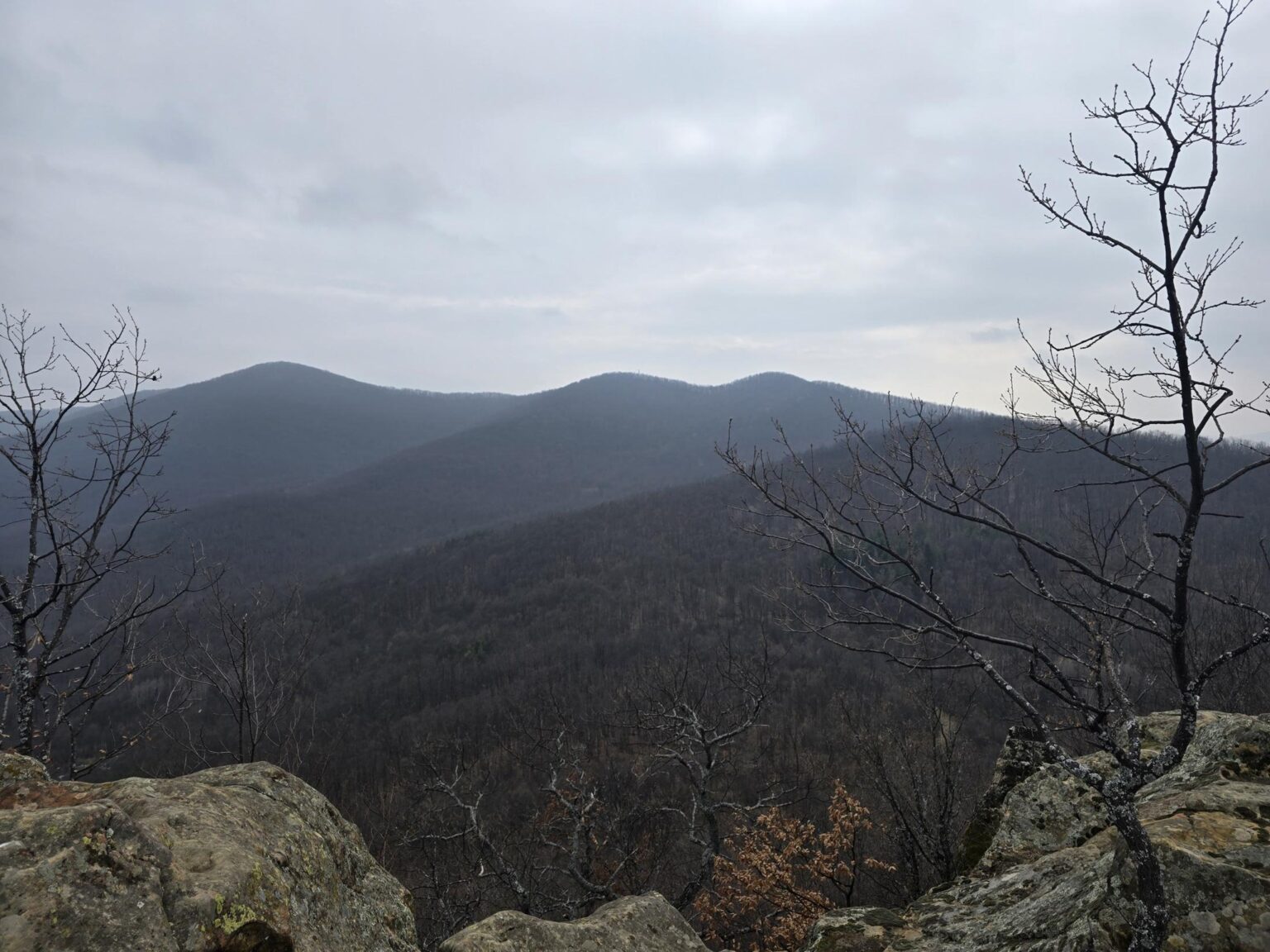
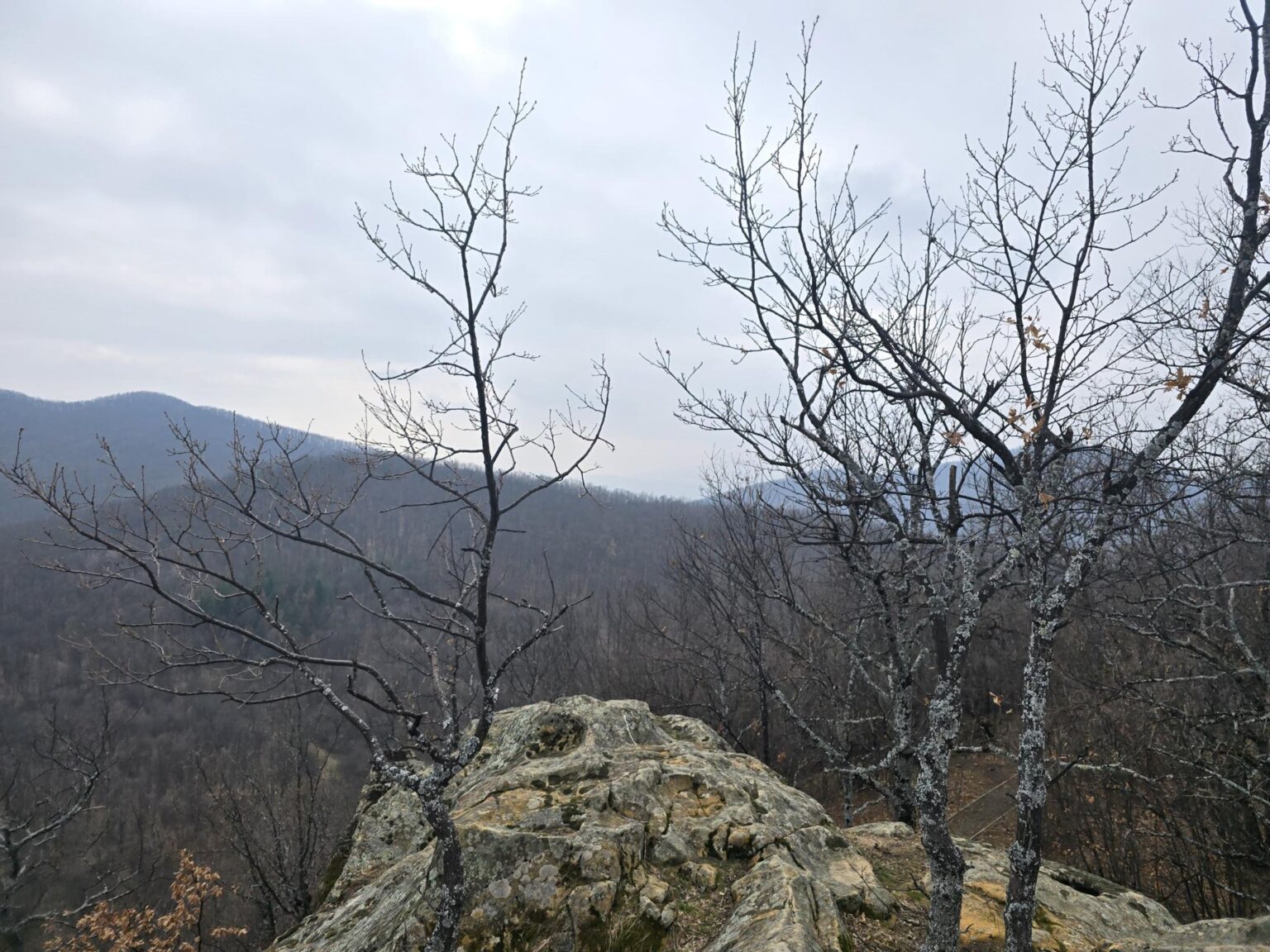
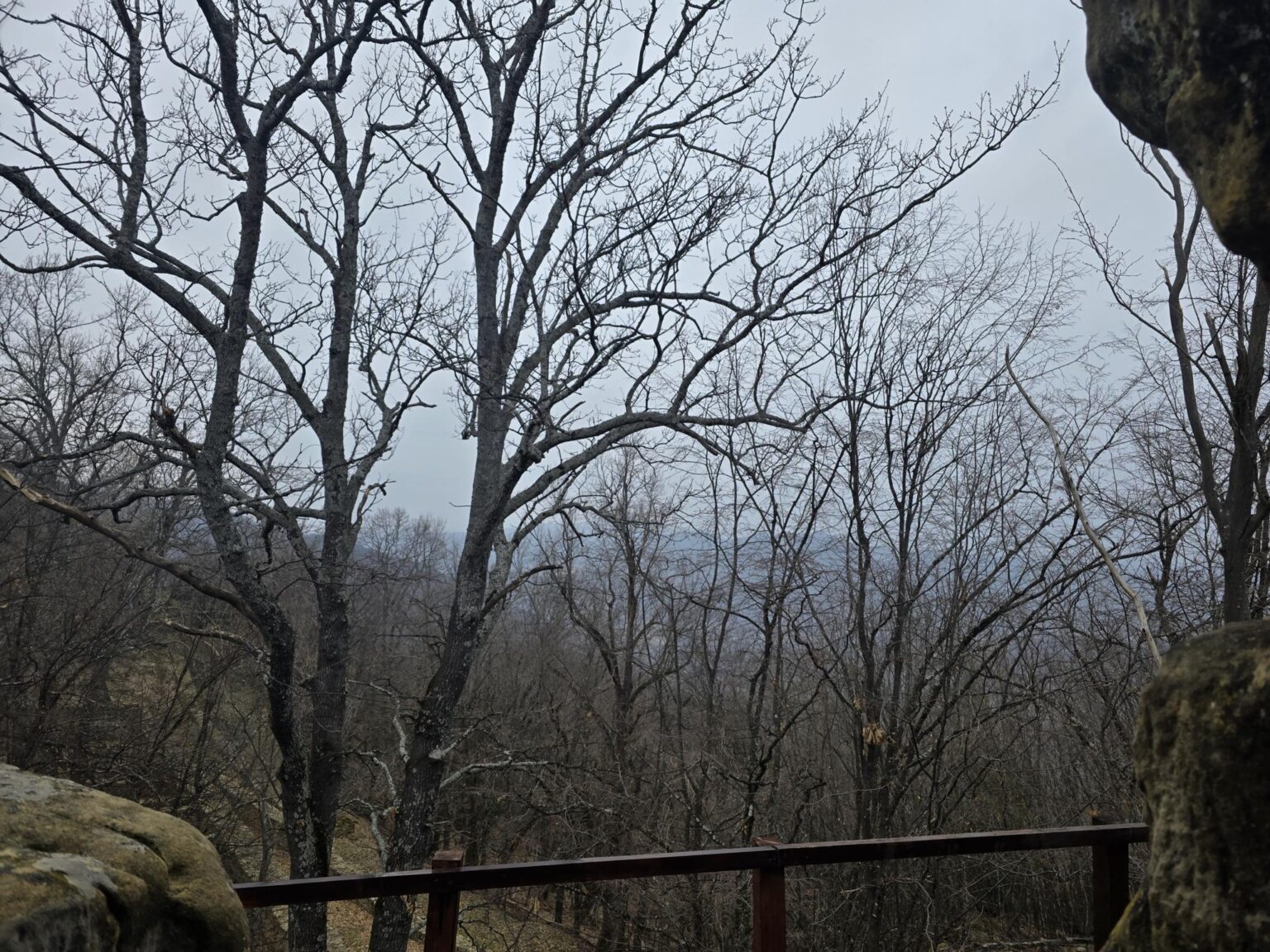
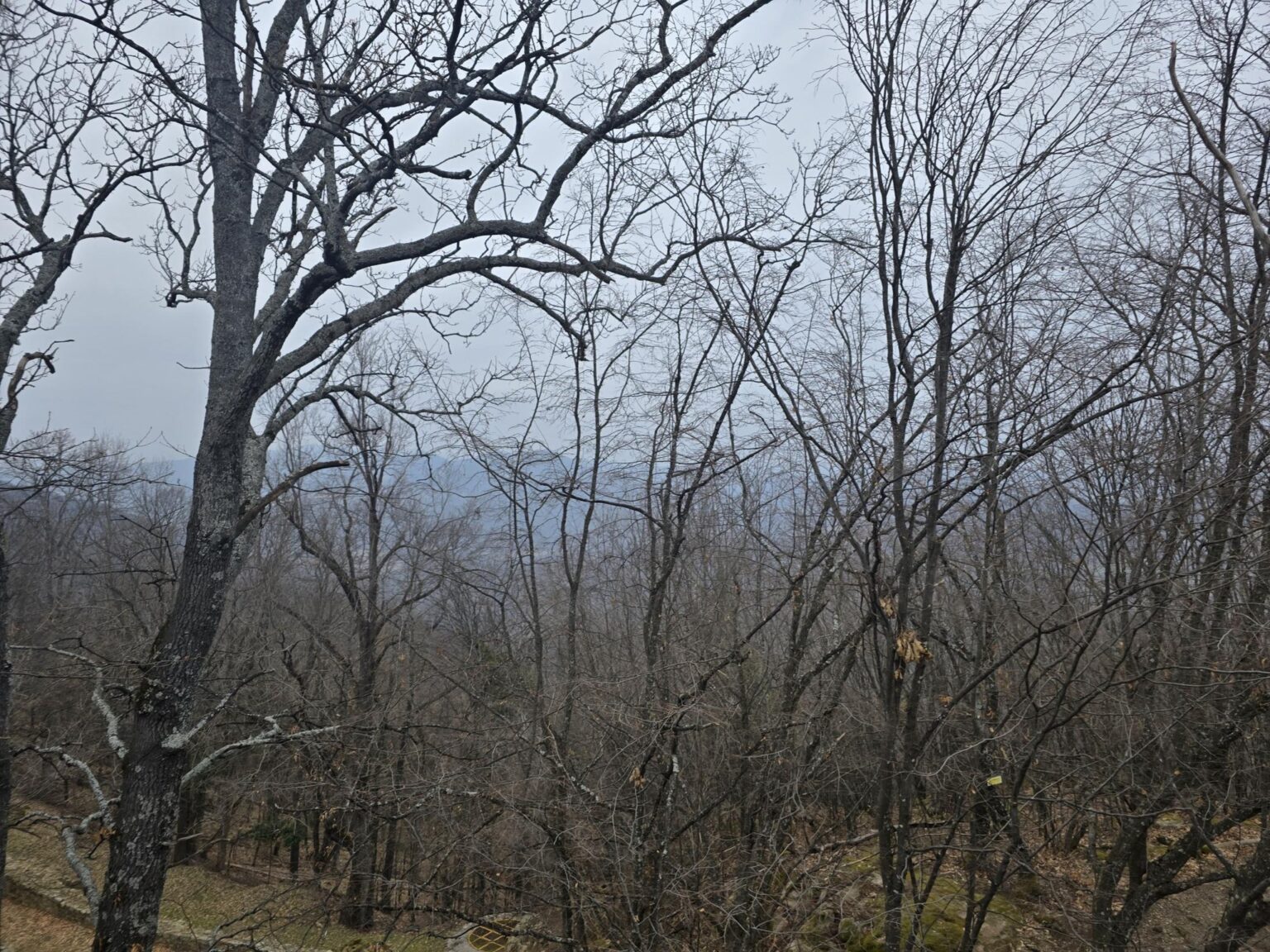
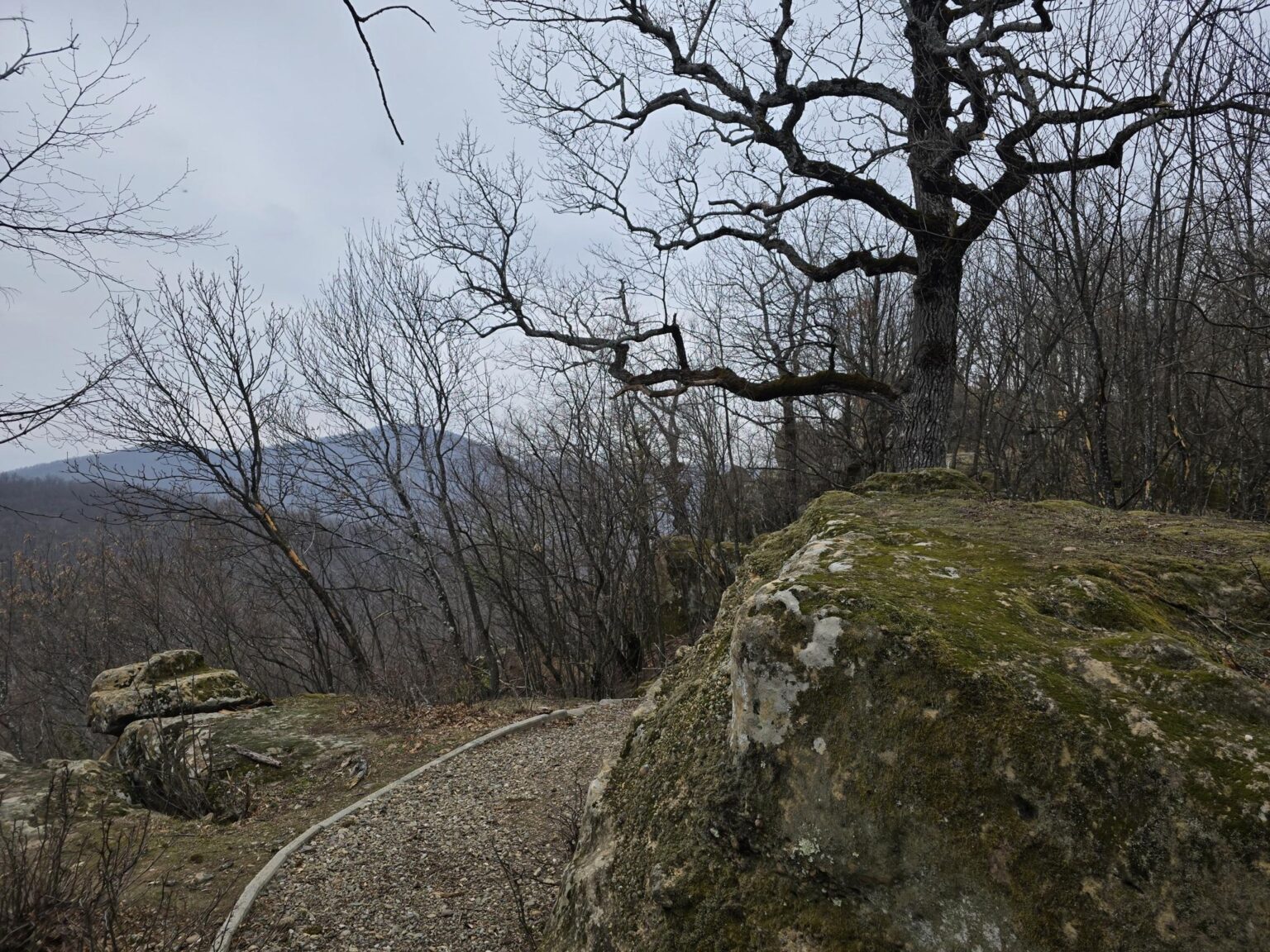
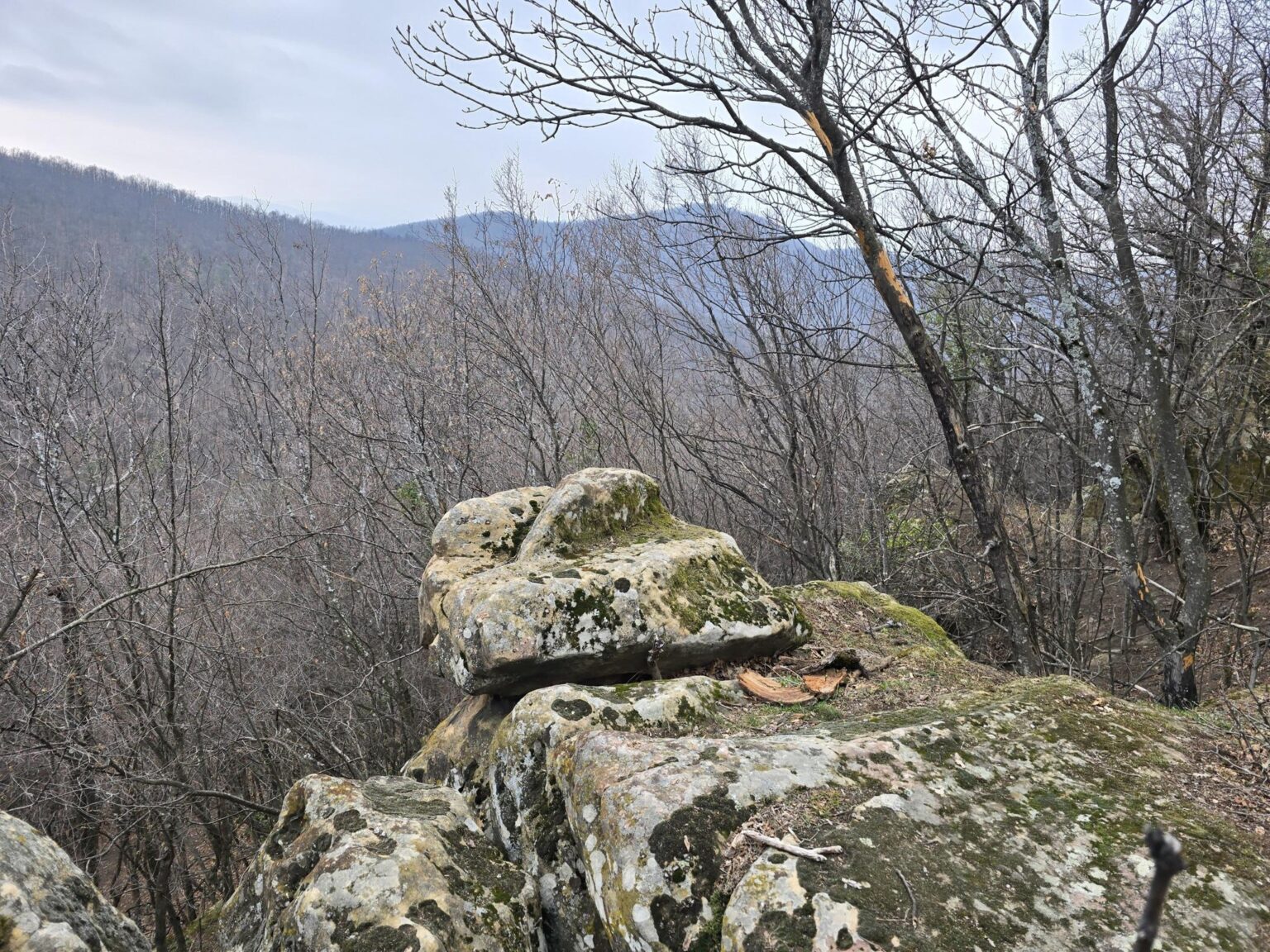
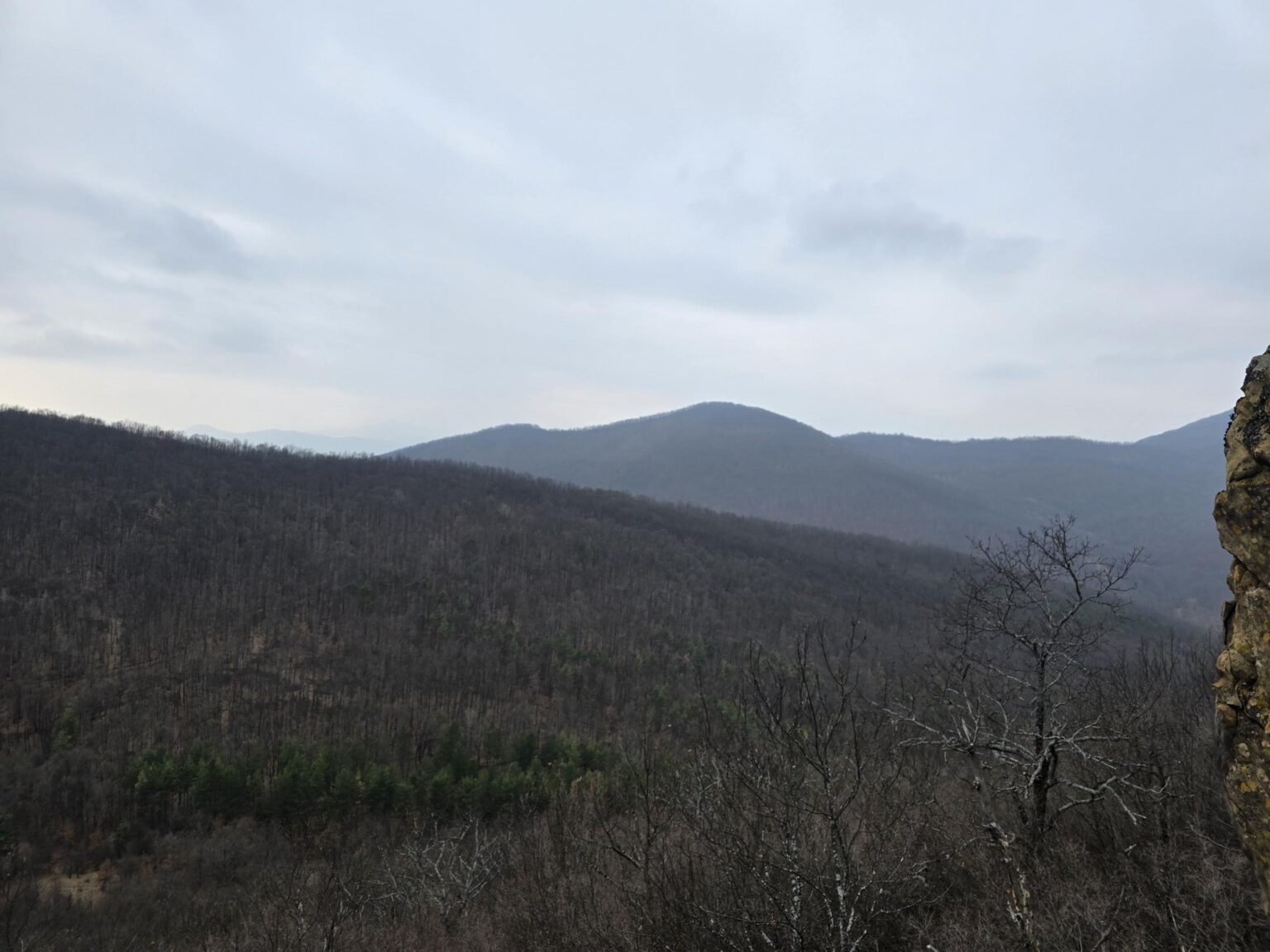
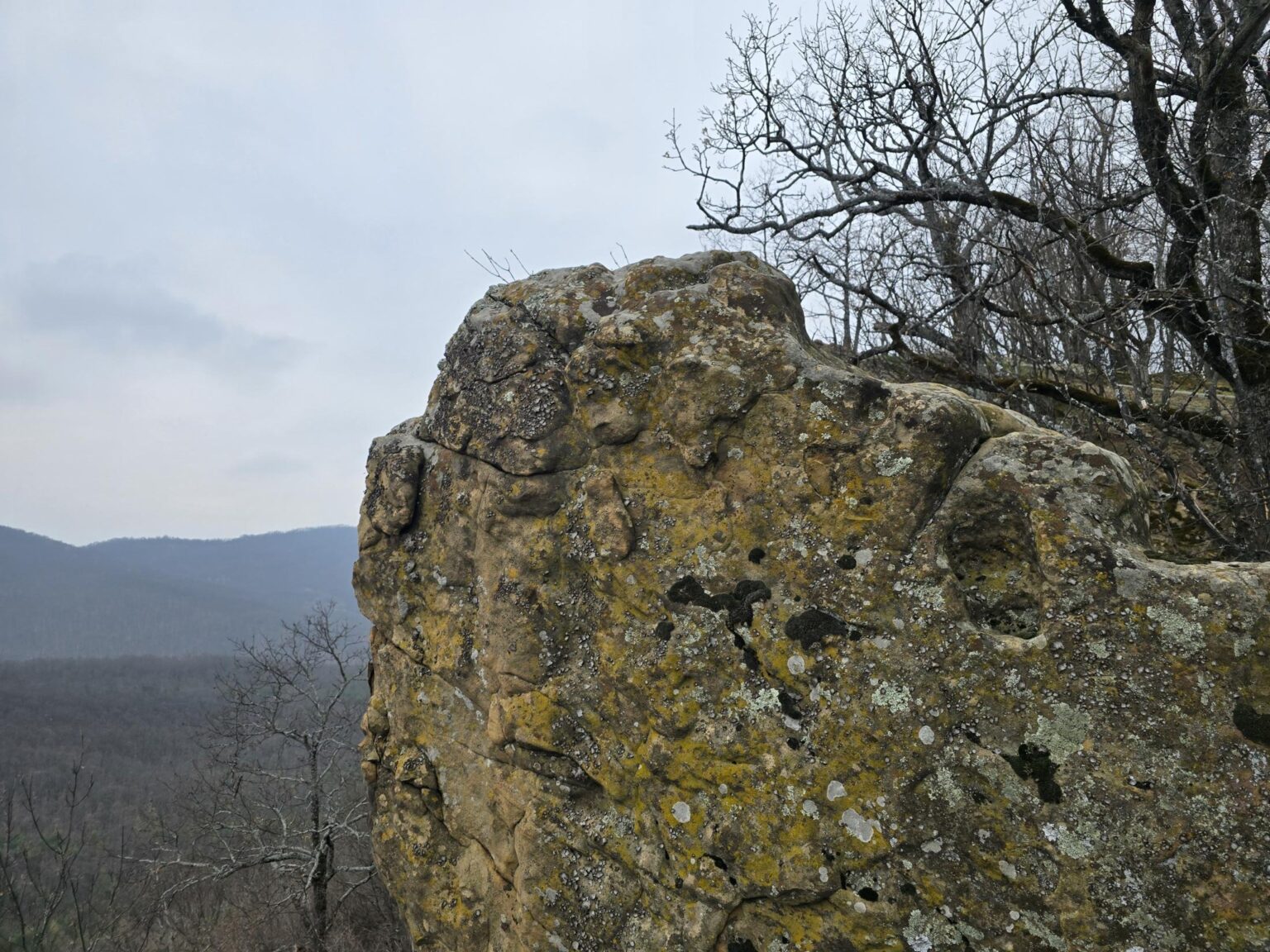
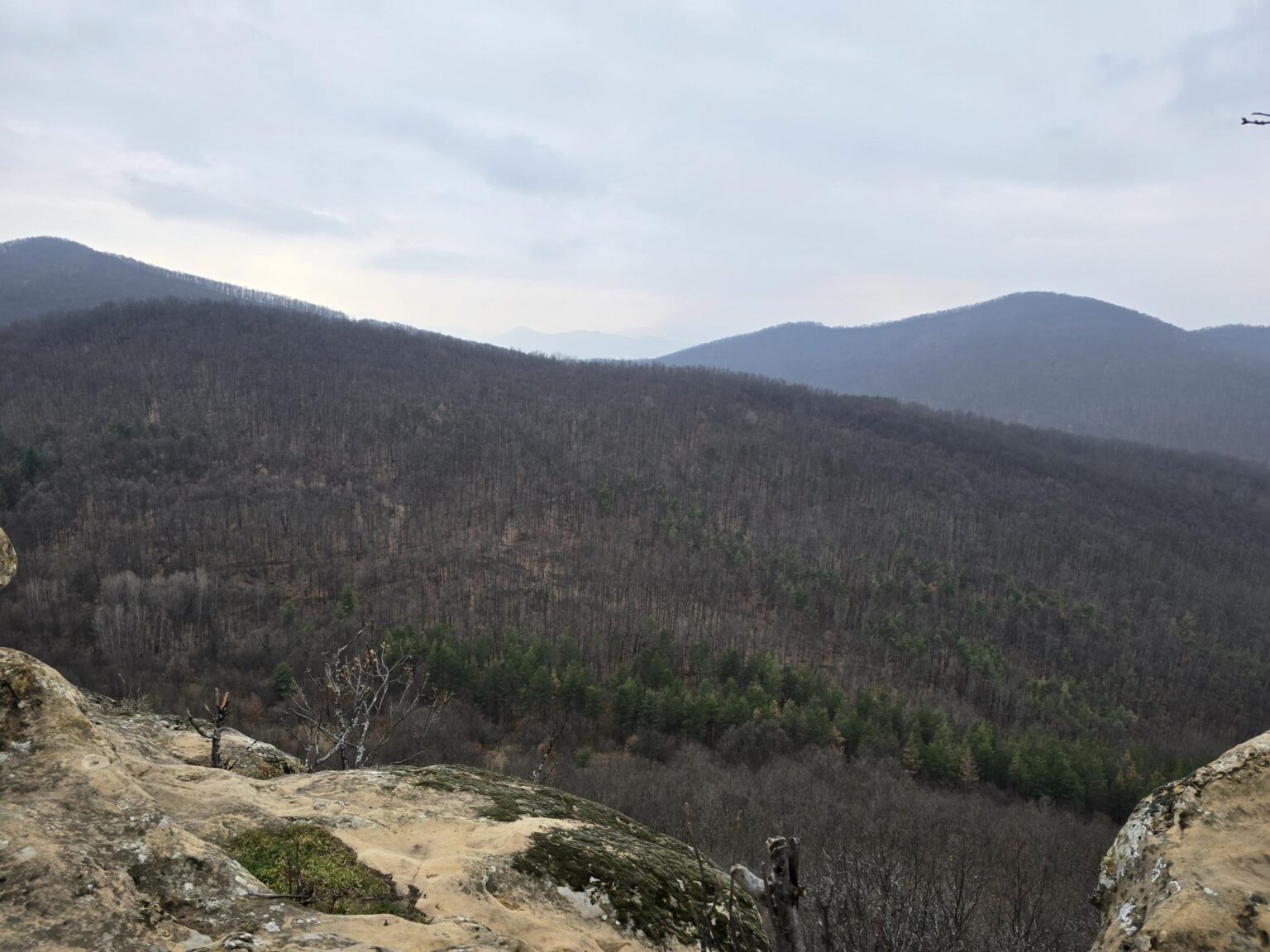
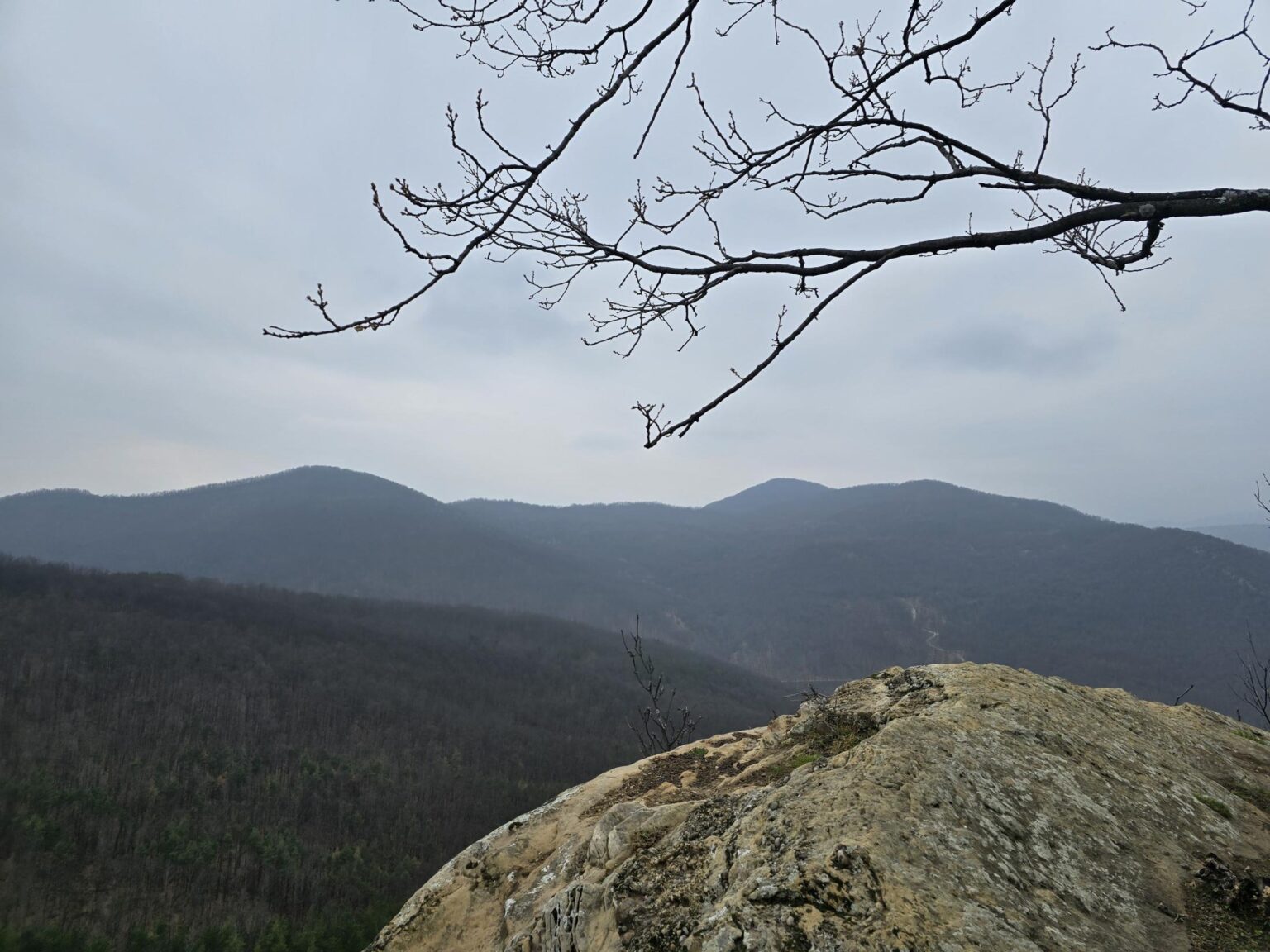
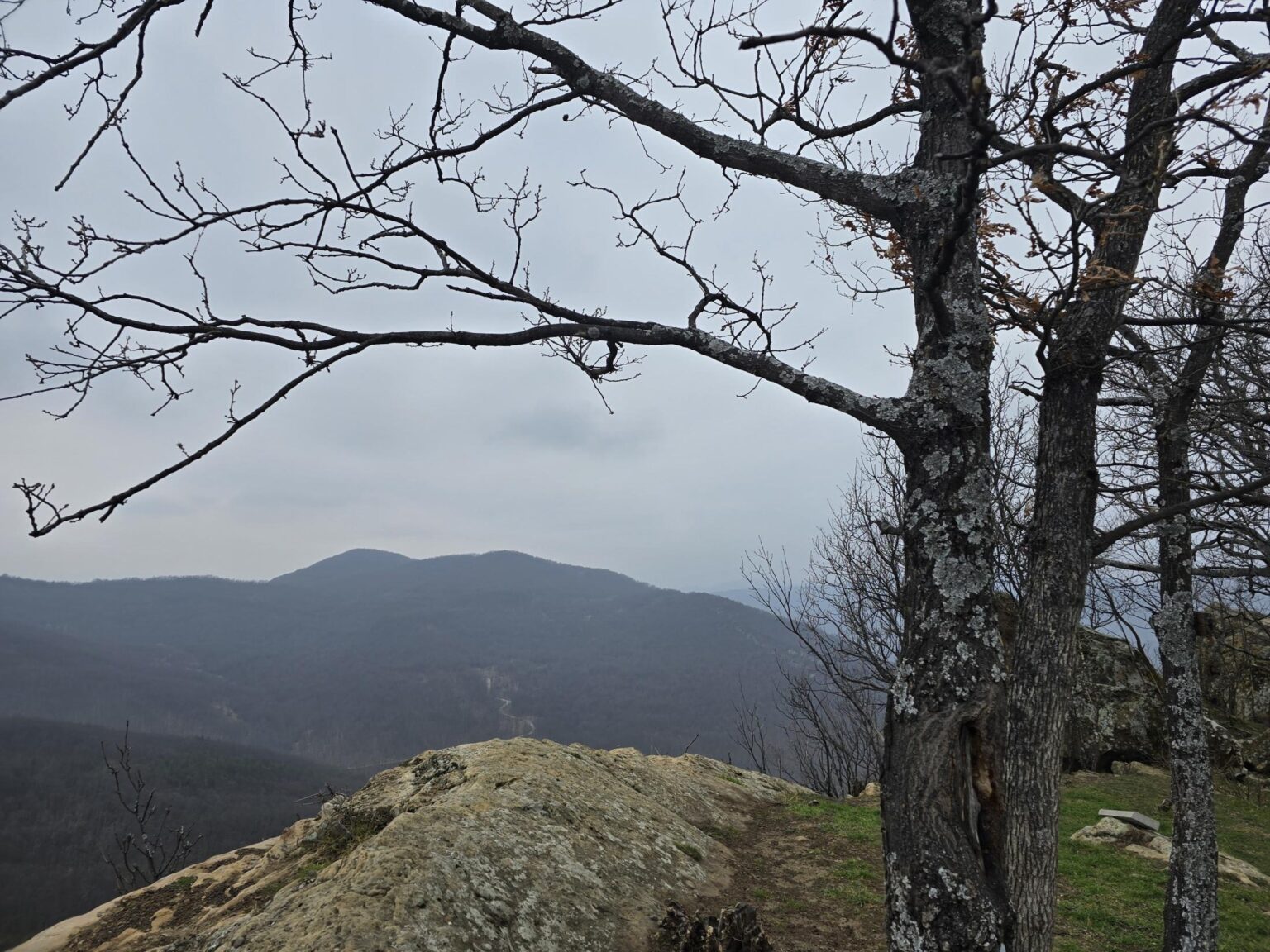
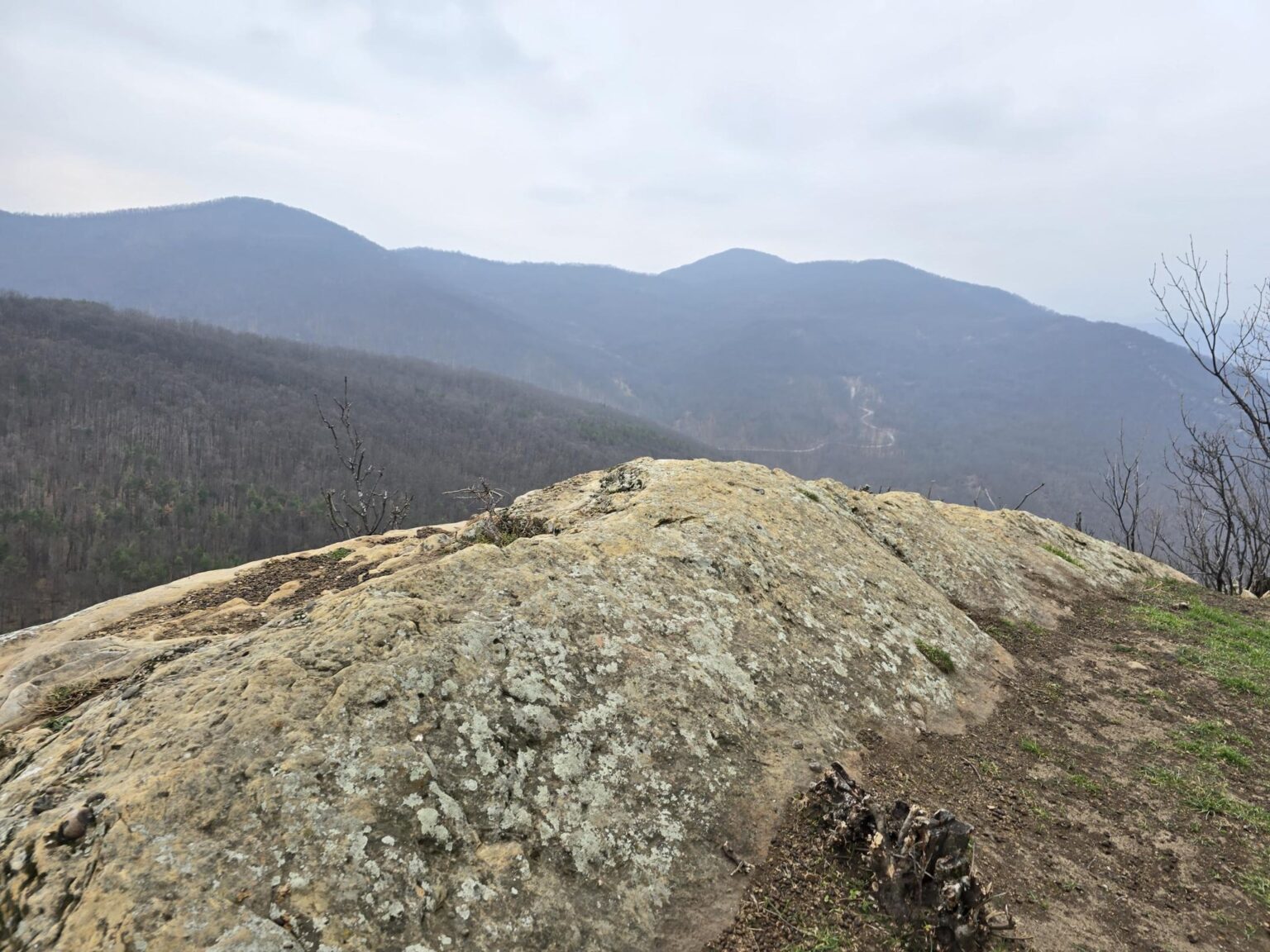
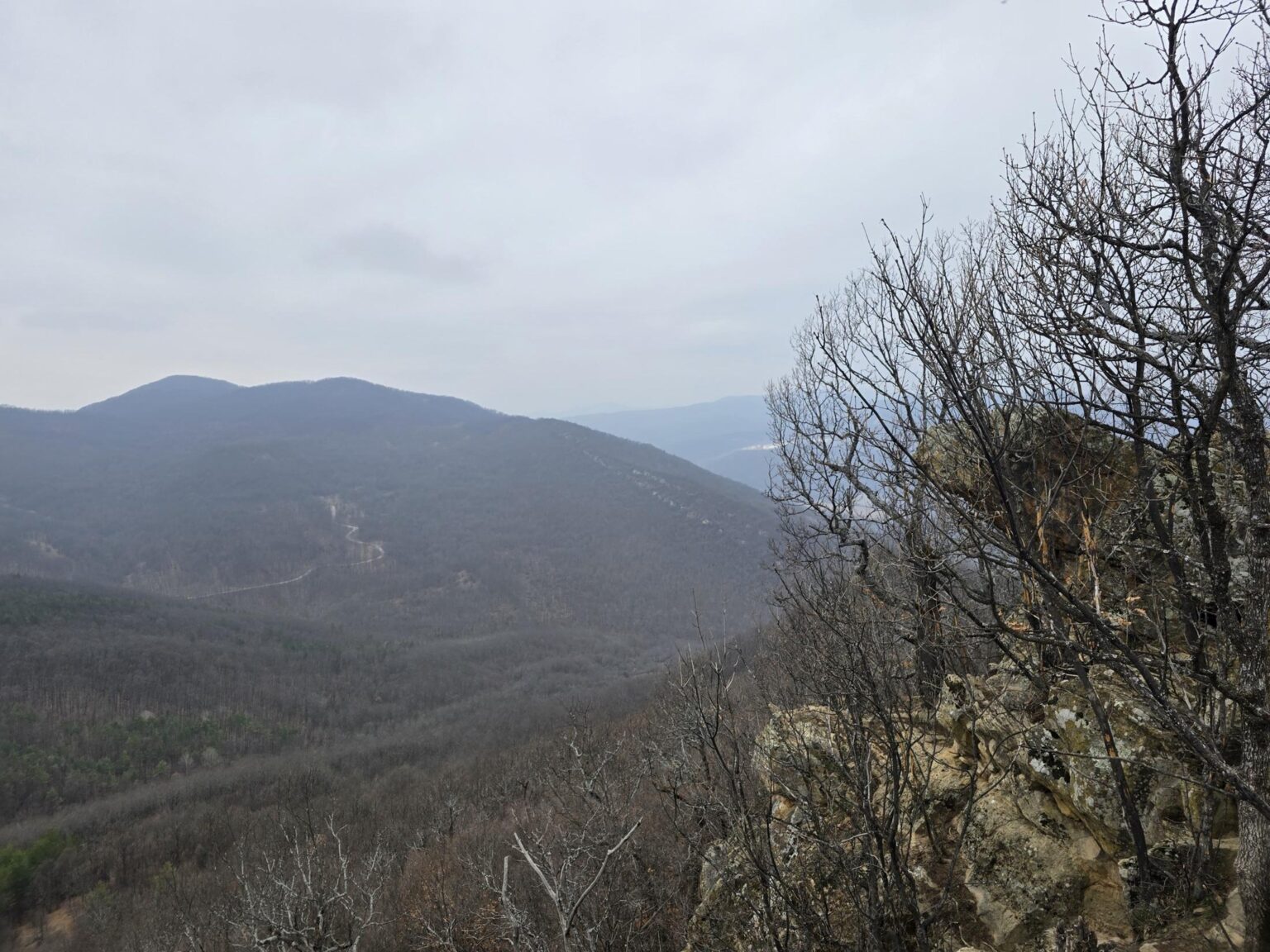
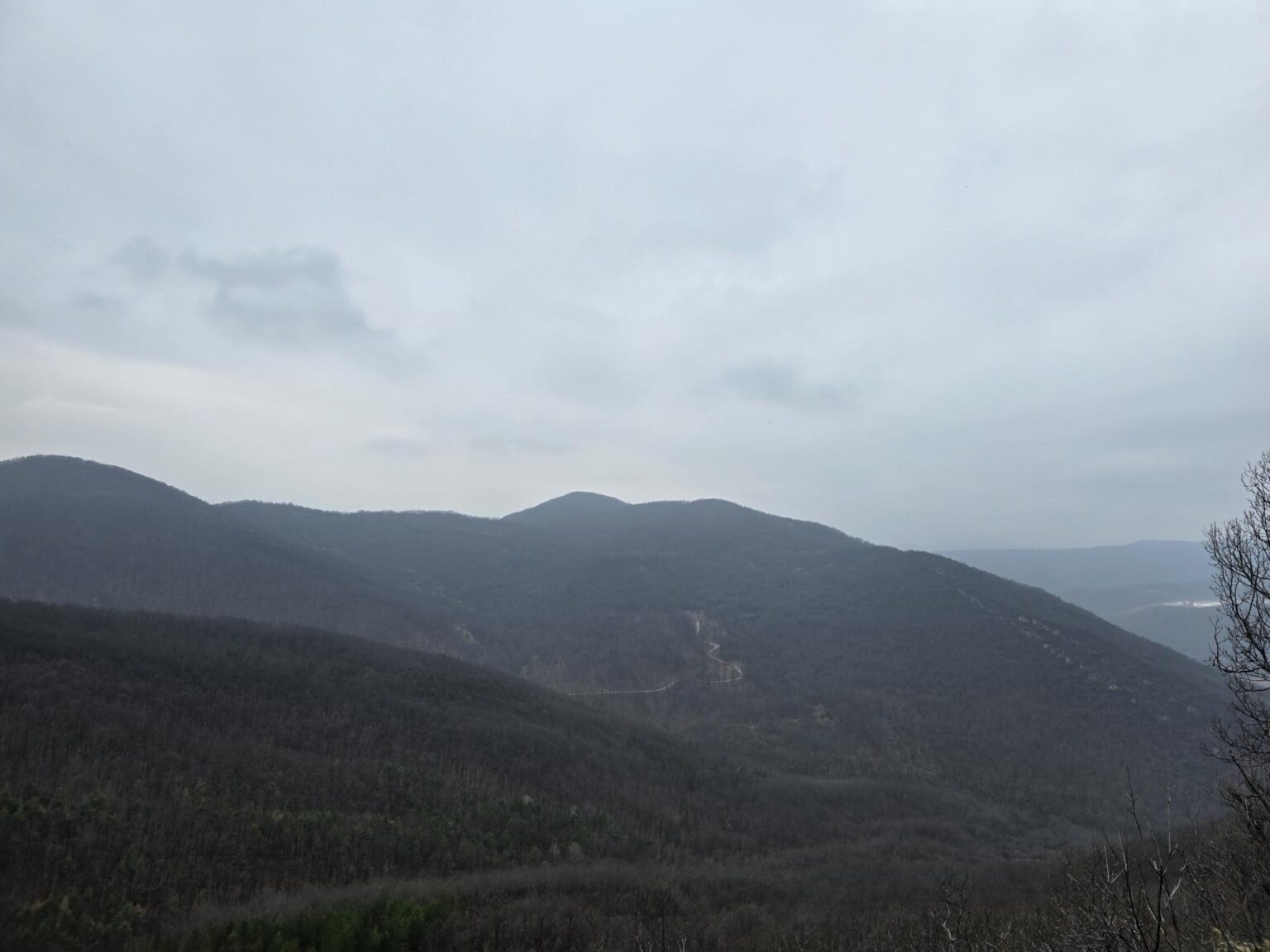
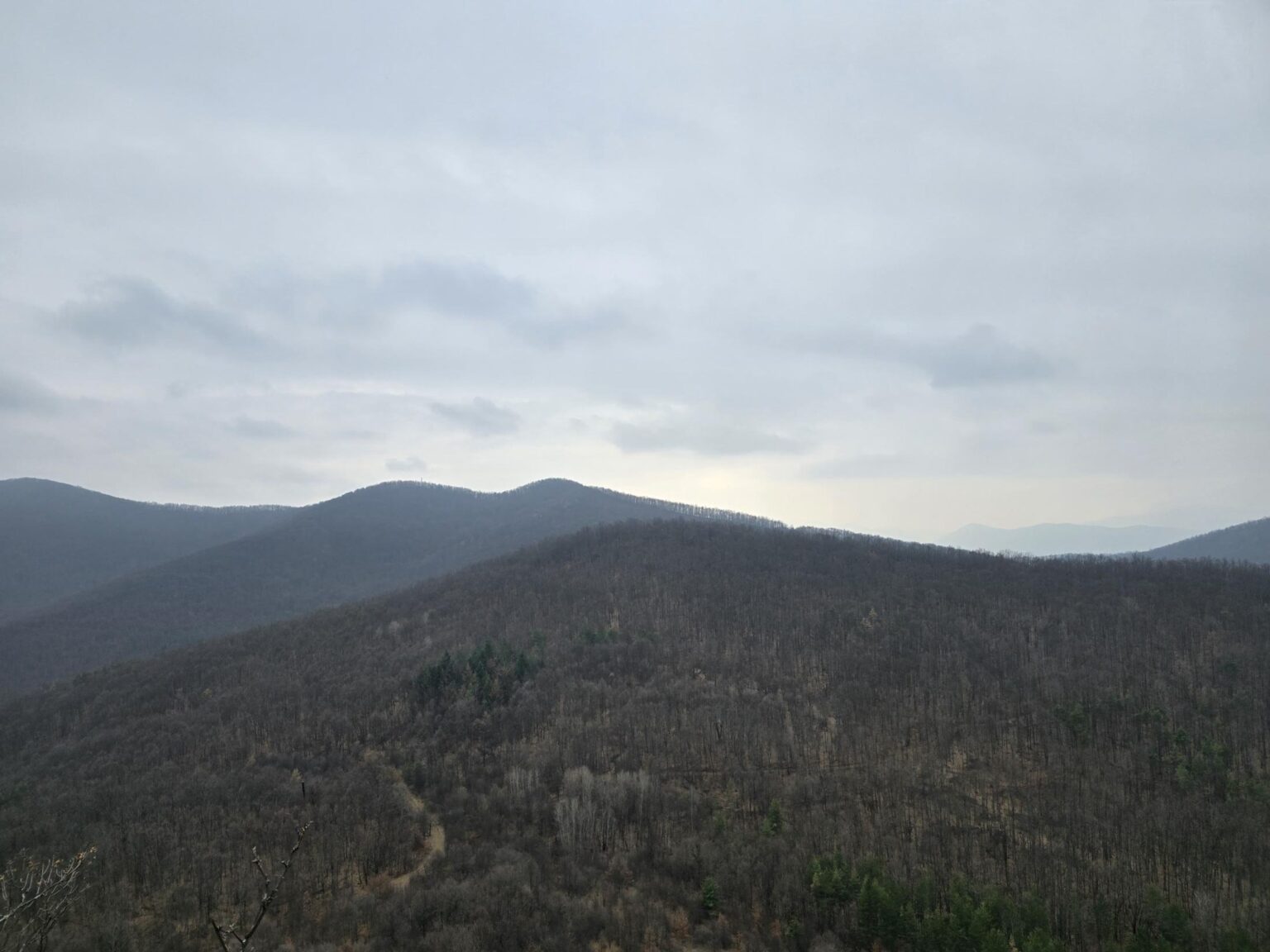
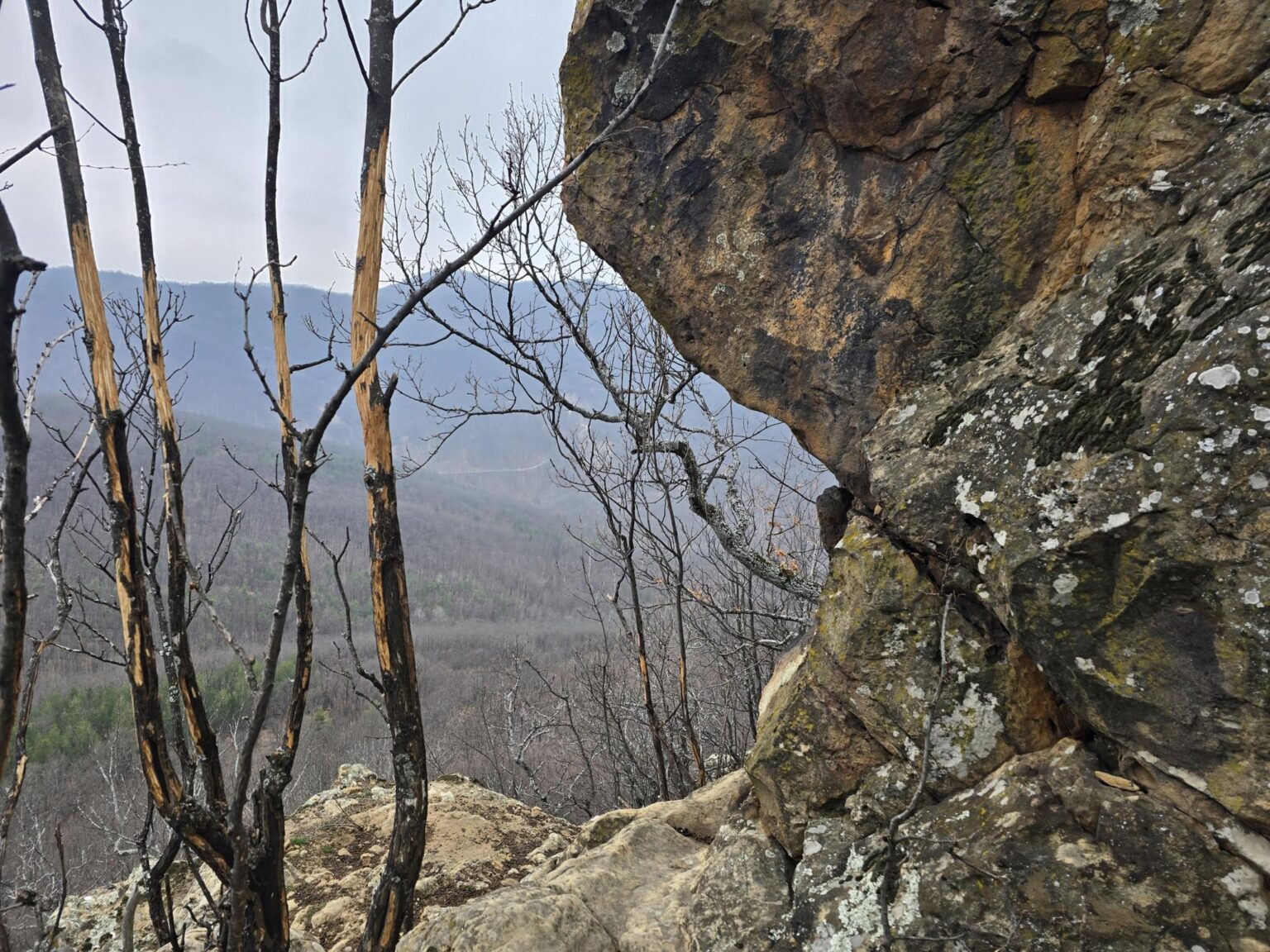
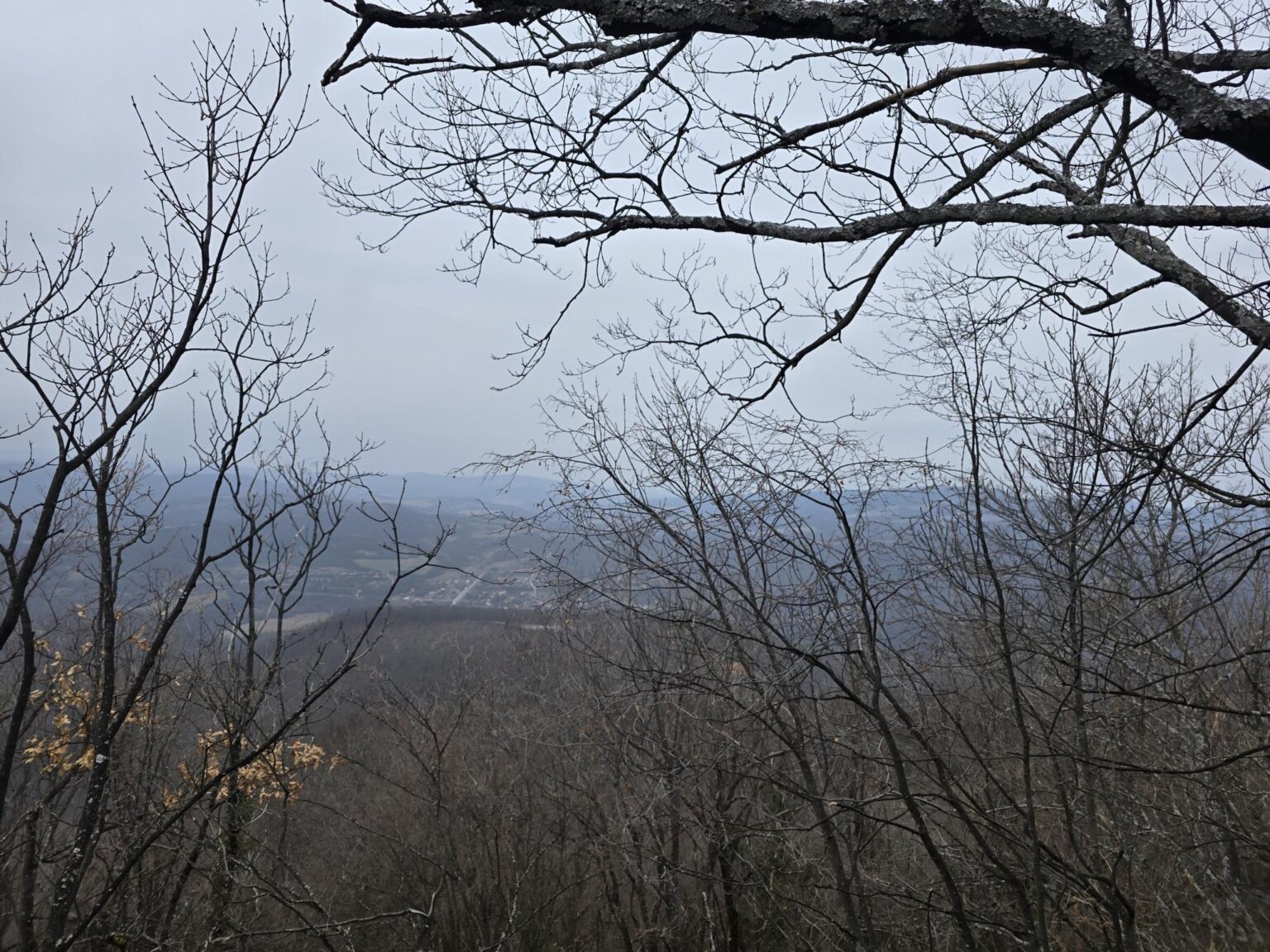
To keep my conscience clear: it was still winter when I visited, but there are several spots where the ground effectively drops away vertically and the view is genuinely spectacular. It literally feels like standing on the edge of a bungee platform. Walking the fortress does not take long. If you have not brought picnic supplies — and there is not much in the way of comfortable seating anyway — I would say 30–40 minutes is plenty. If fortresses are your thing, this one pairs well with the top 5 castles and fortresses in Bulgaria.
Pravets and Botevgrad
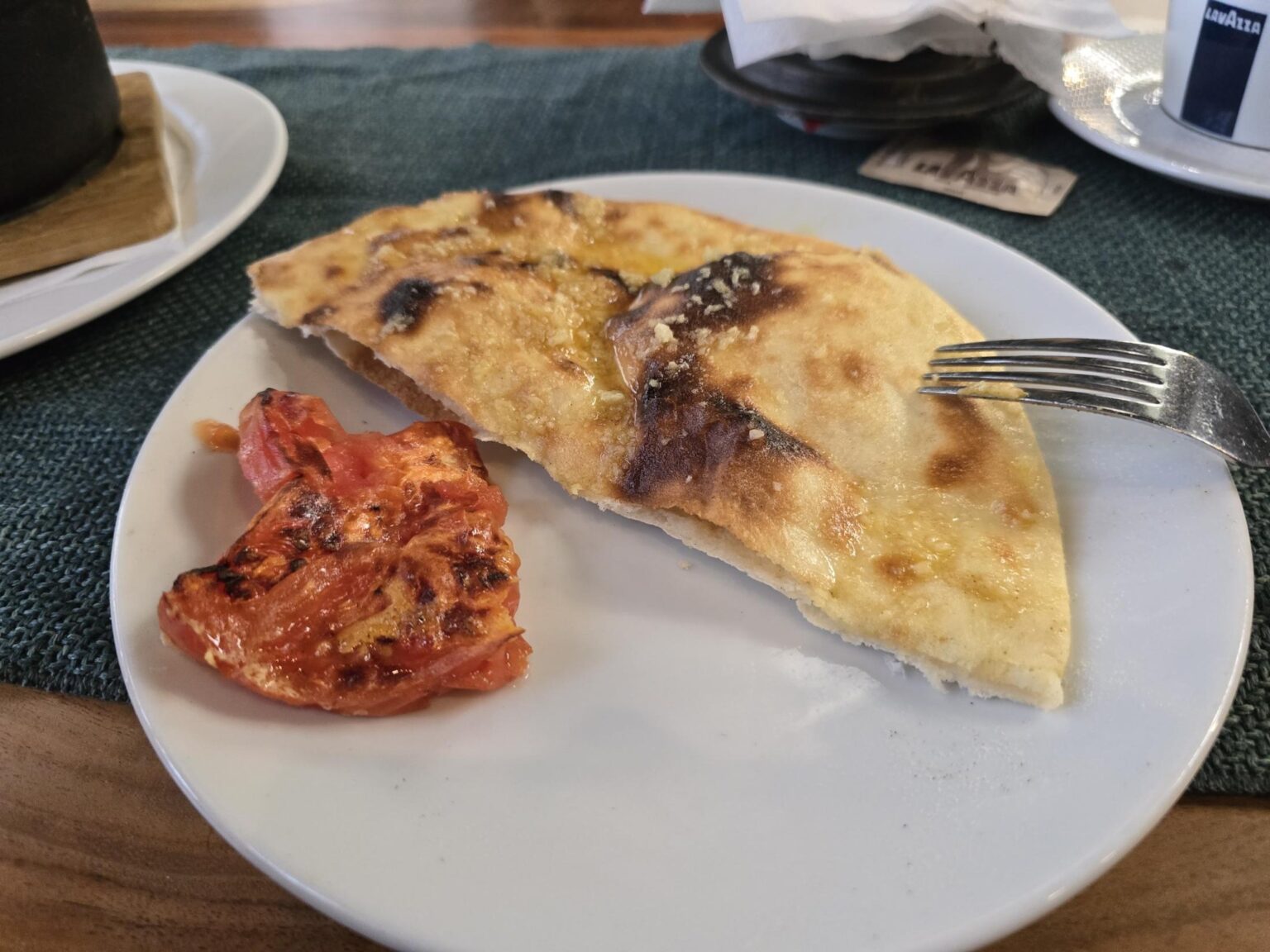
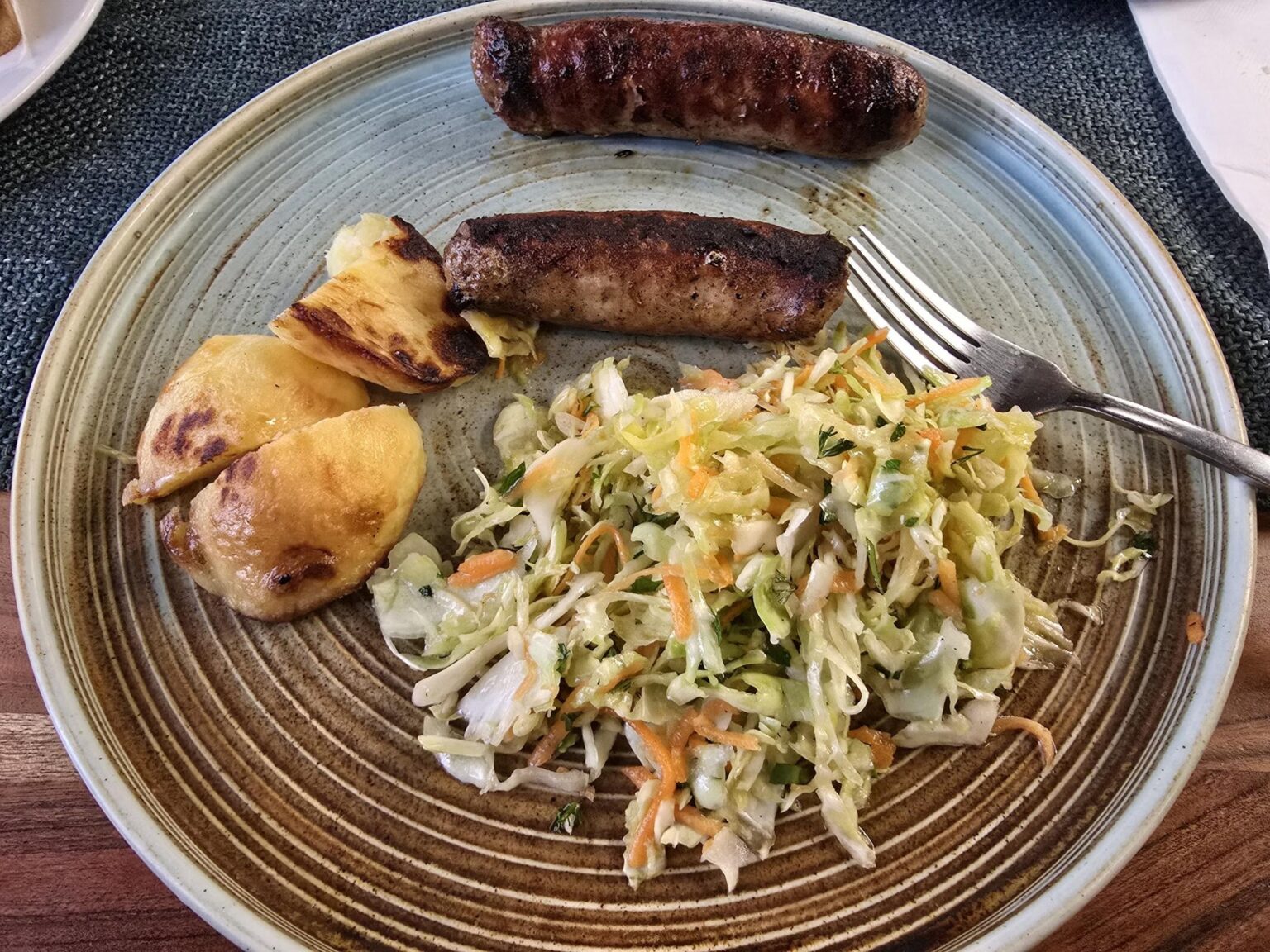
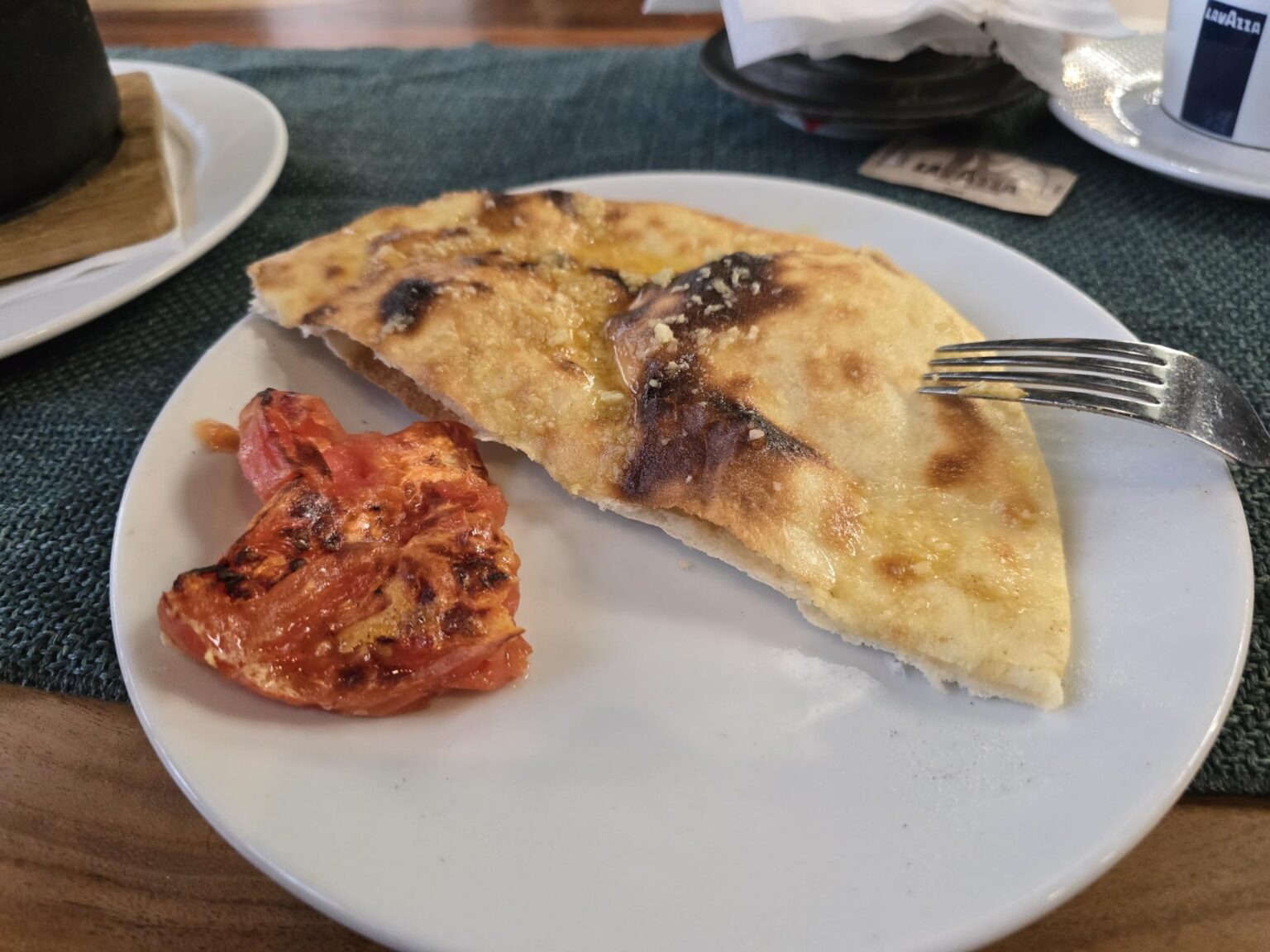
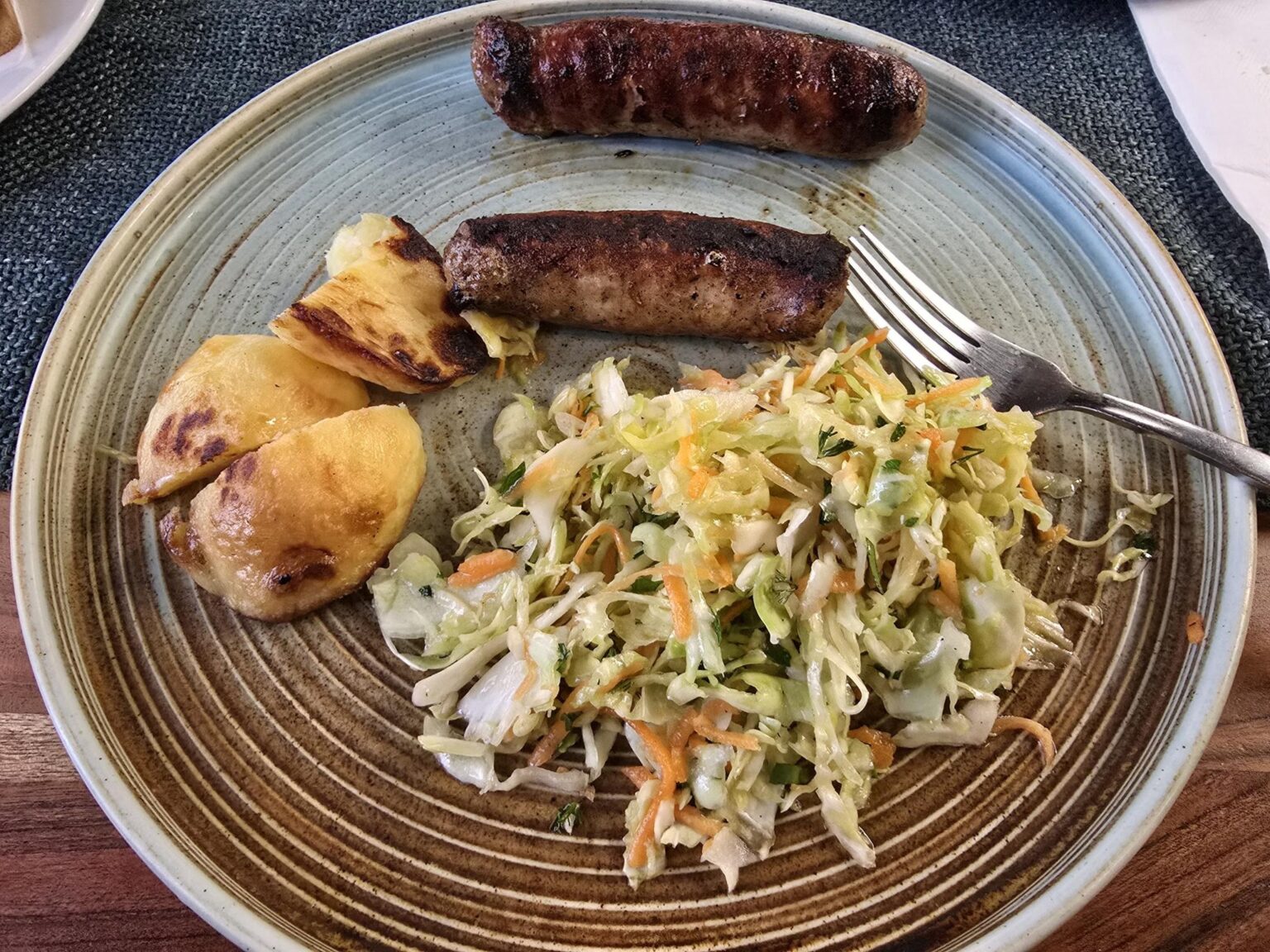
After that “pleasant” surprise of a climb, and roughly two and a half hours all in from Sofia (drive plus climb plus looking around plus descent), it is time for a well-earned reward — a visit to a favourite restaurant in the centre of Pravets. I suspect plenty of people know the one. It was very entertaining: sitting by the door, I got to overhear several conversations from arriving guests. At least twice I heard “we’ve driven up from Sofia just to eat here, you’ll find us a table, won’t you” and “oh, I’ve been coming to this restaurant for years”. I belong firmly in the second category.
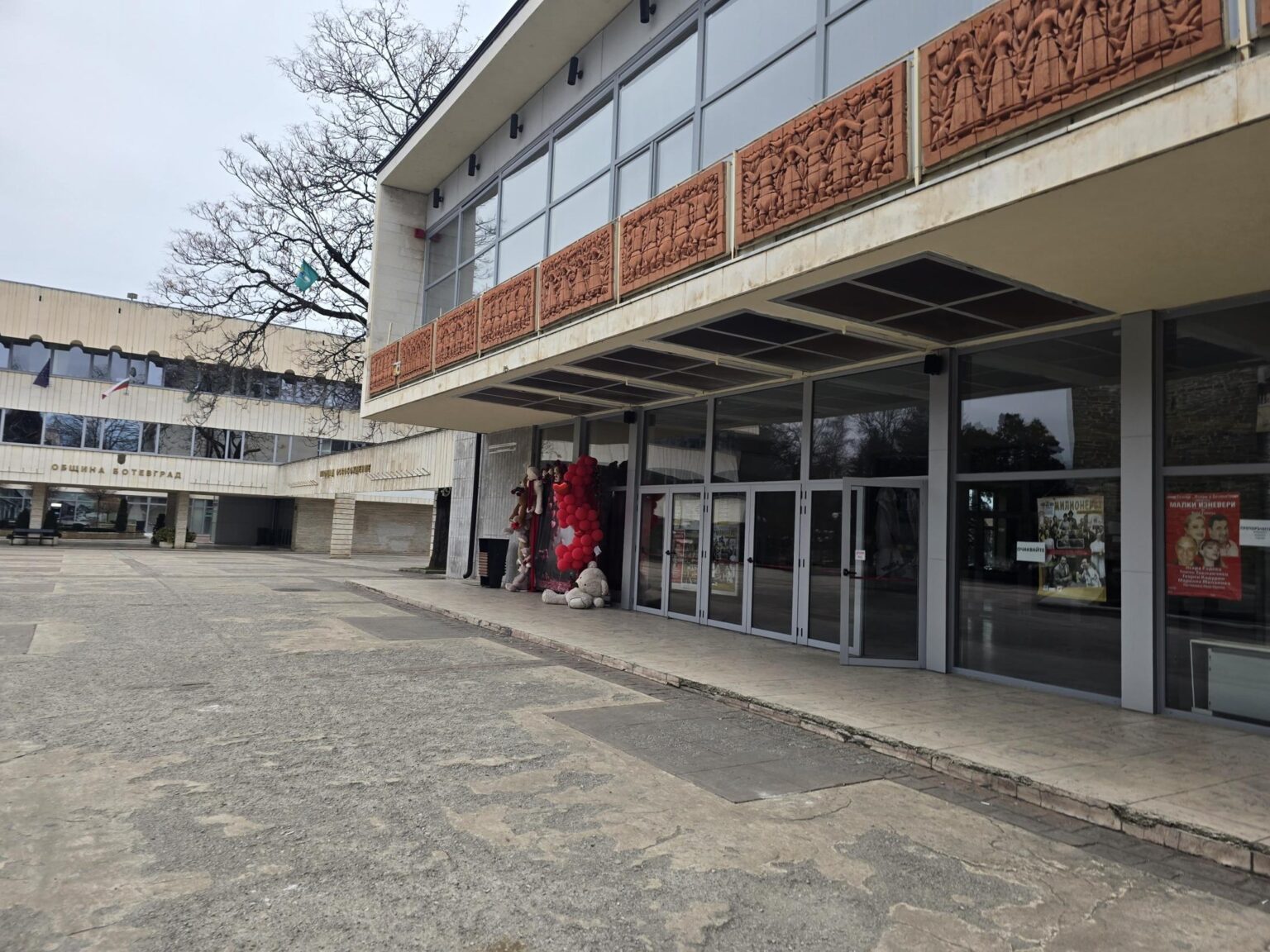
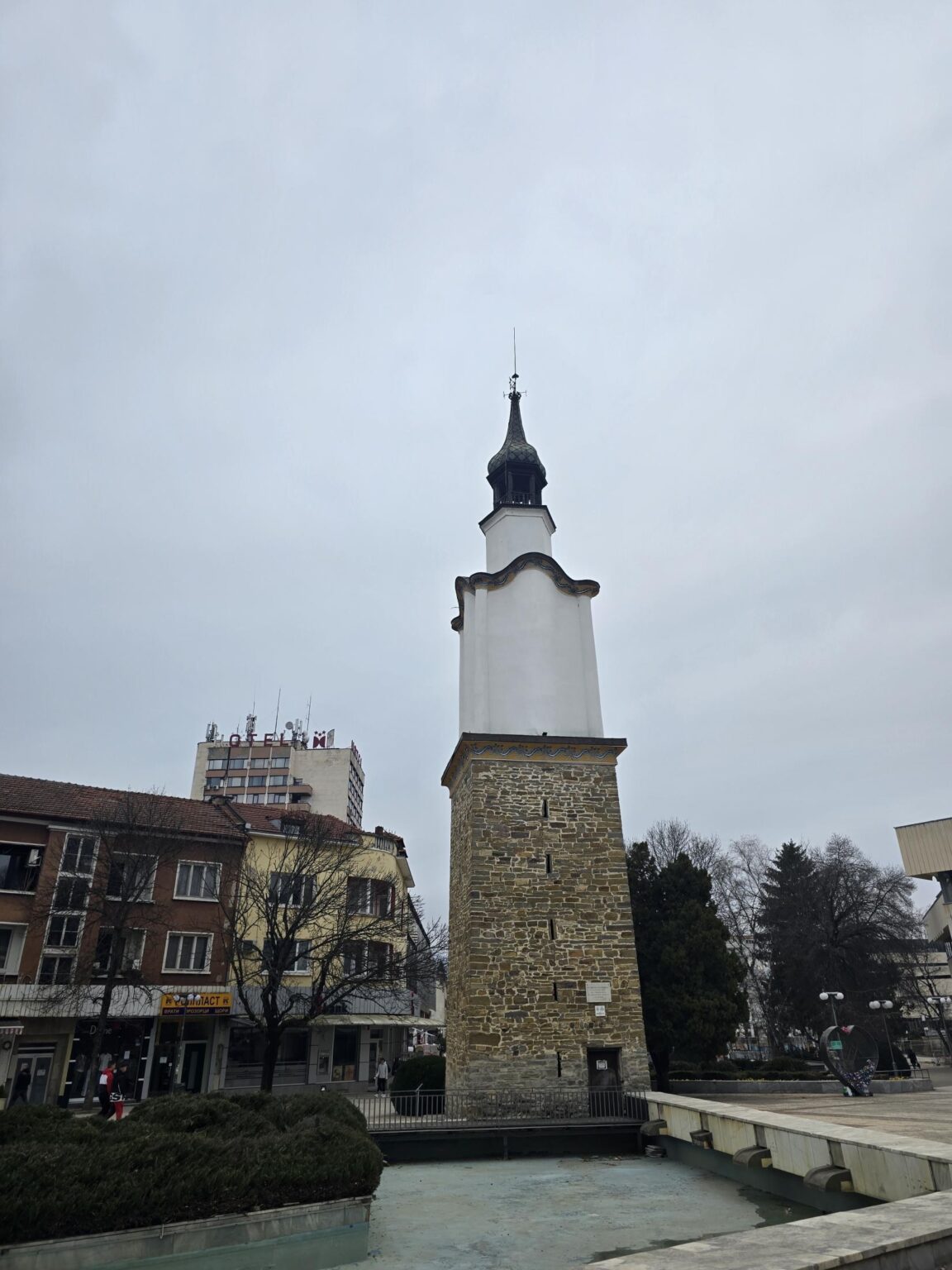
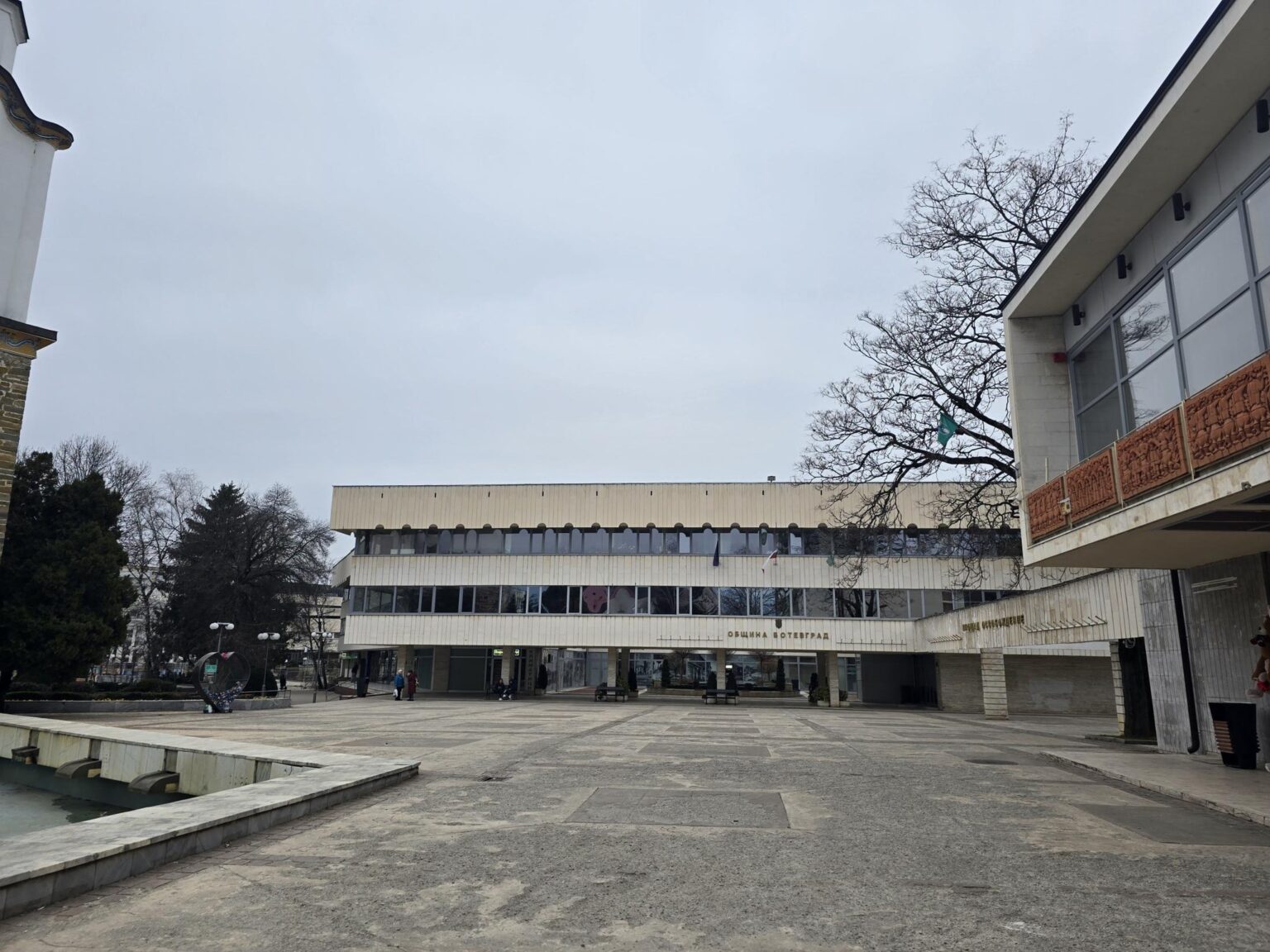
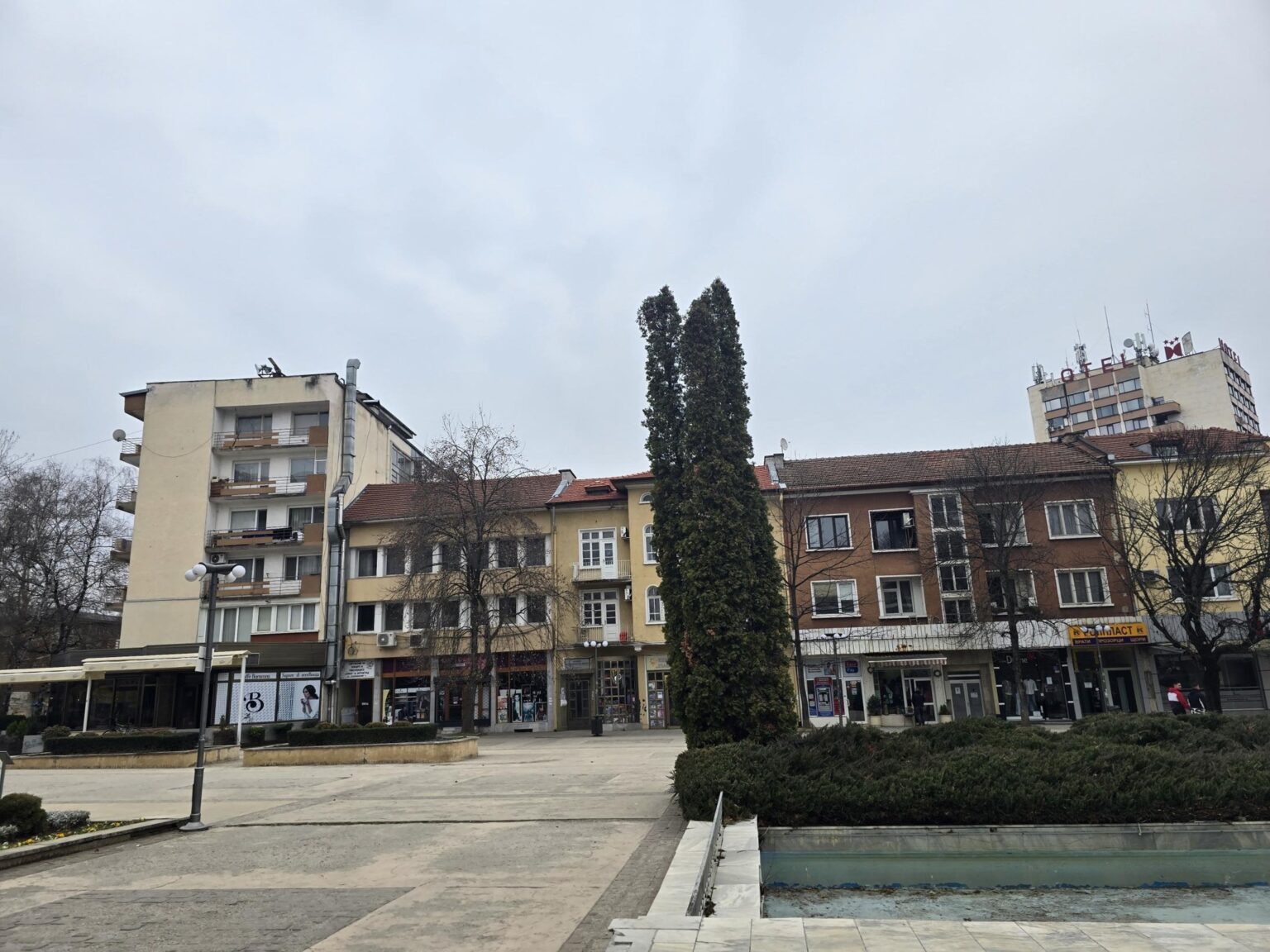
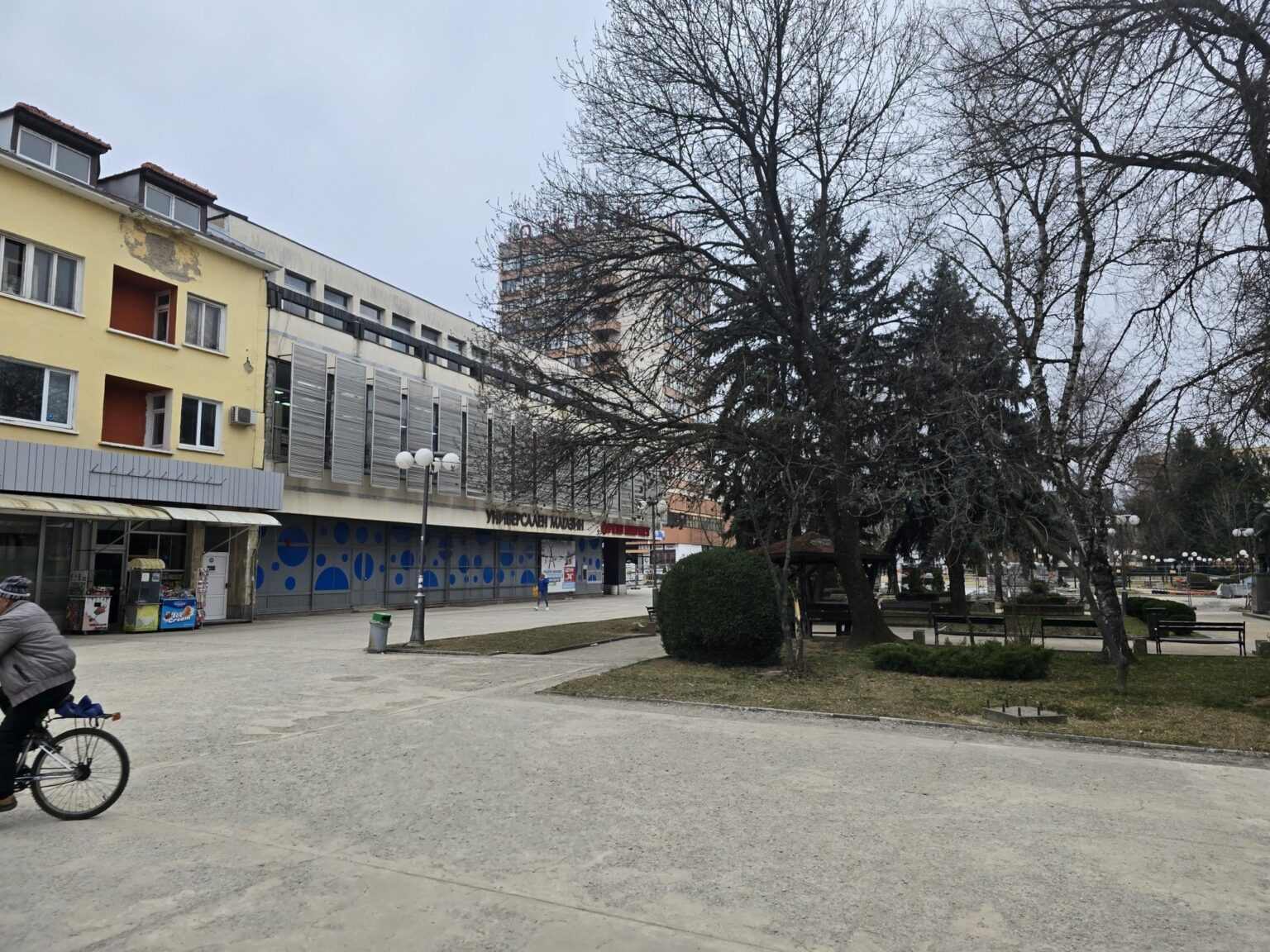
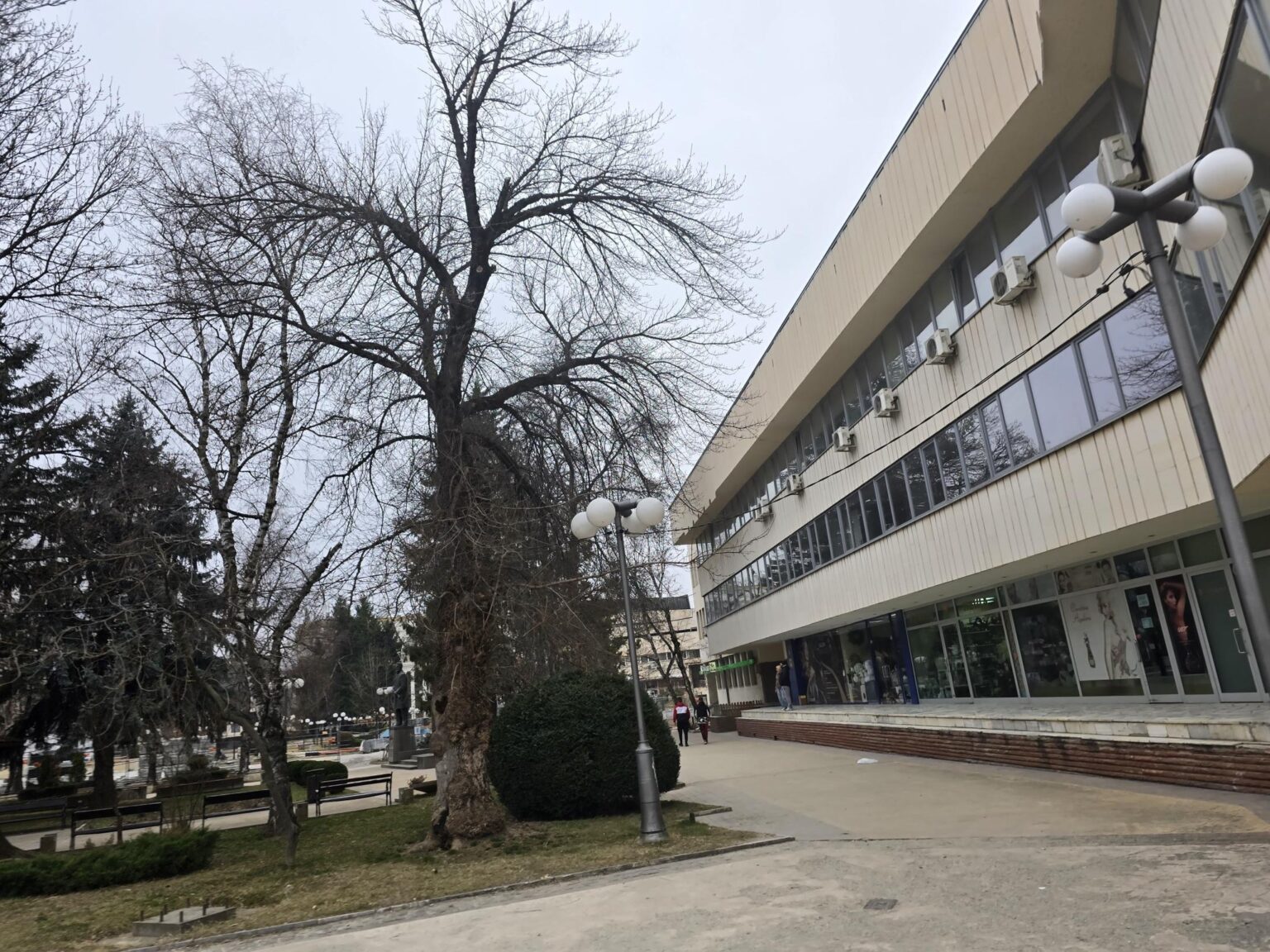
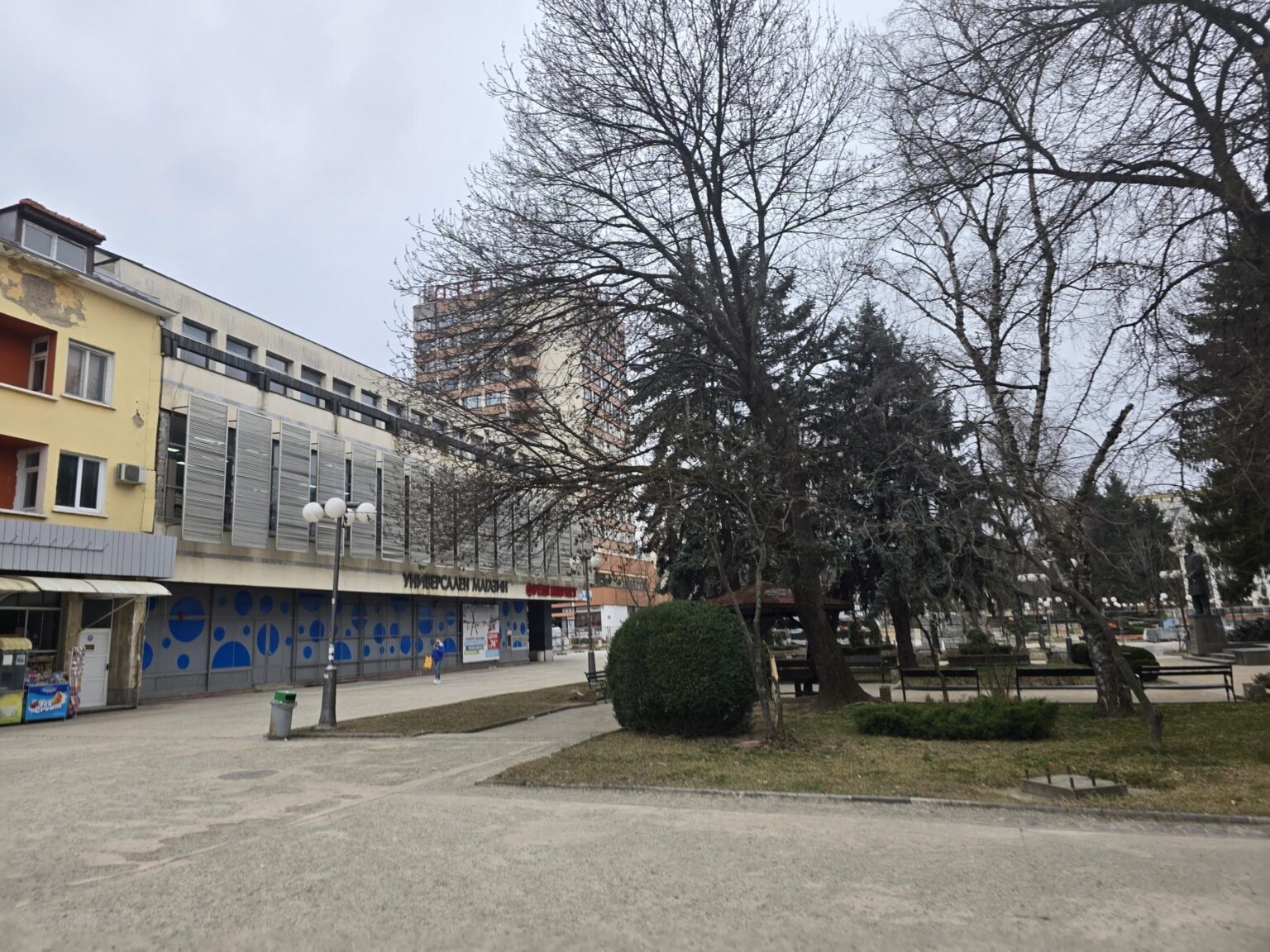
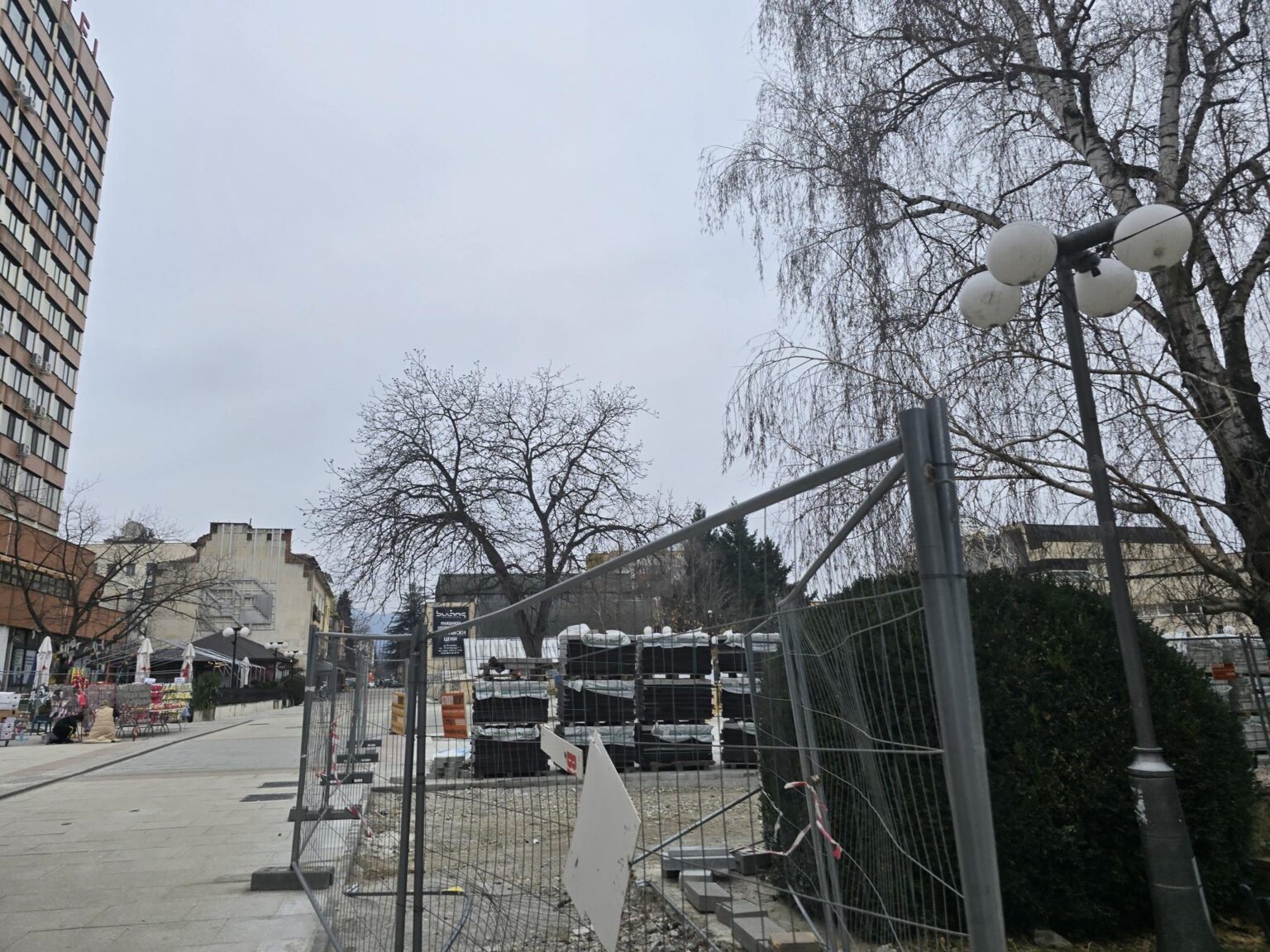
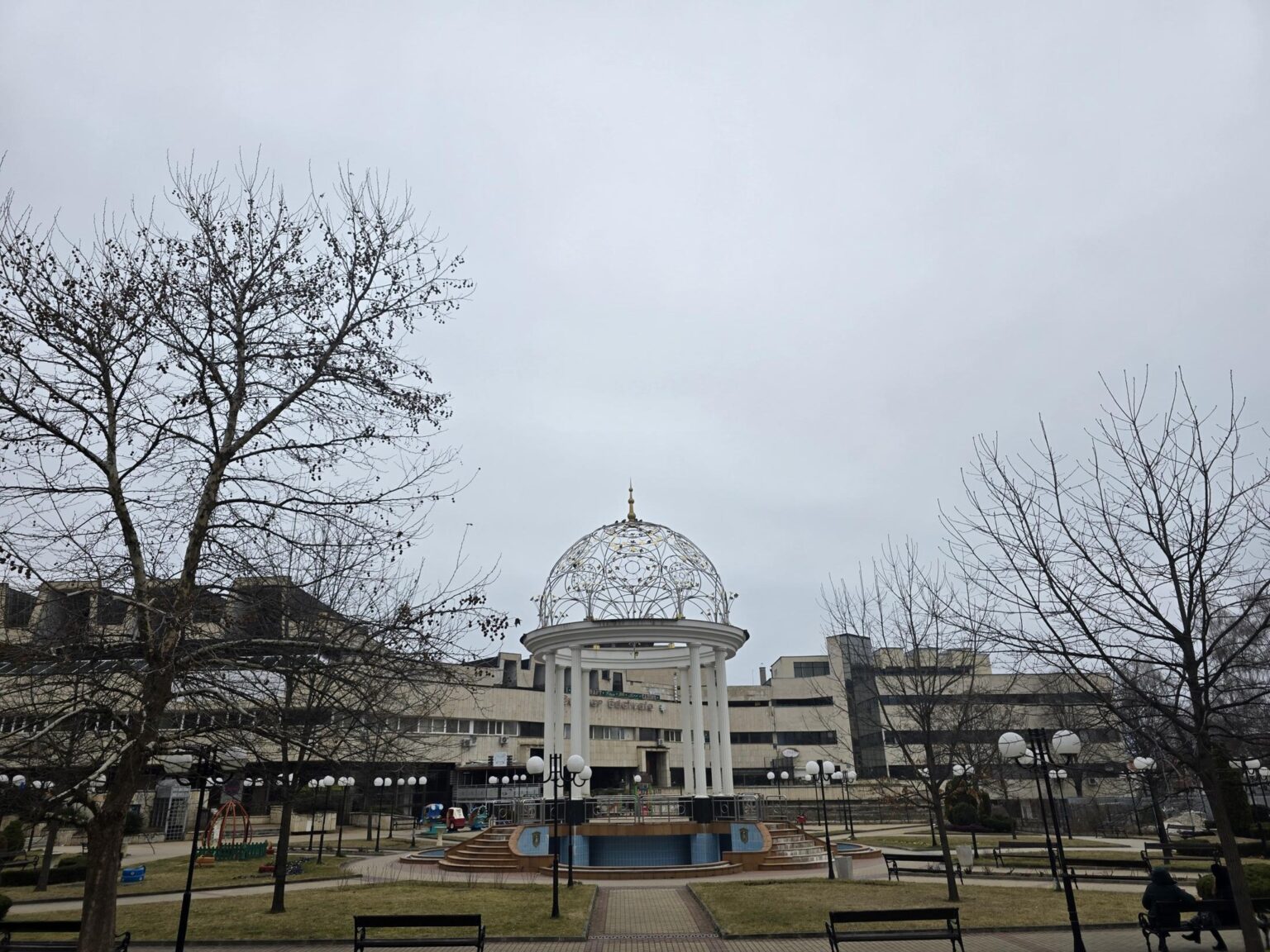
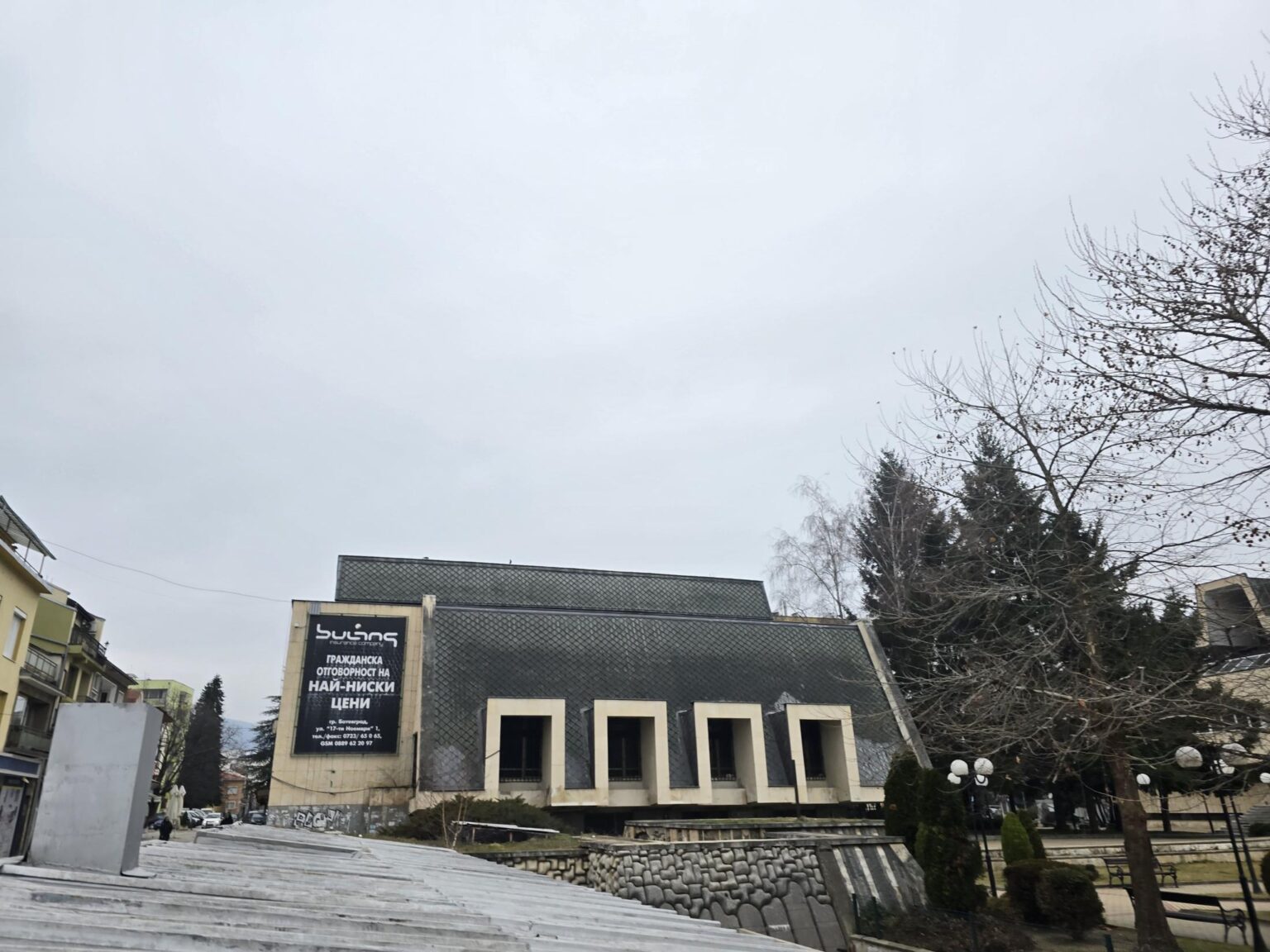
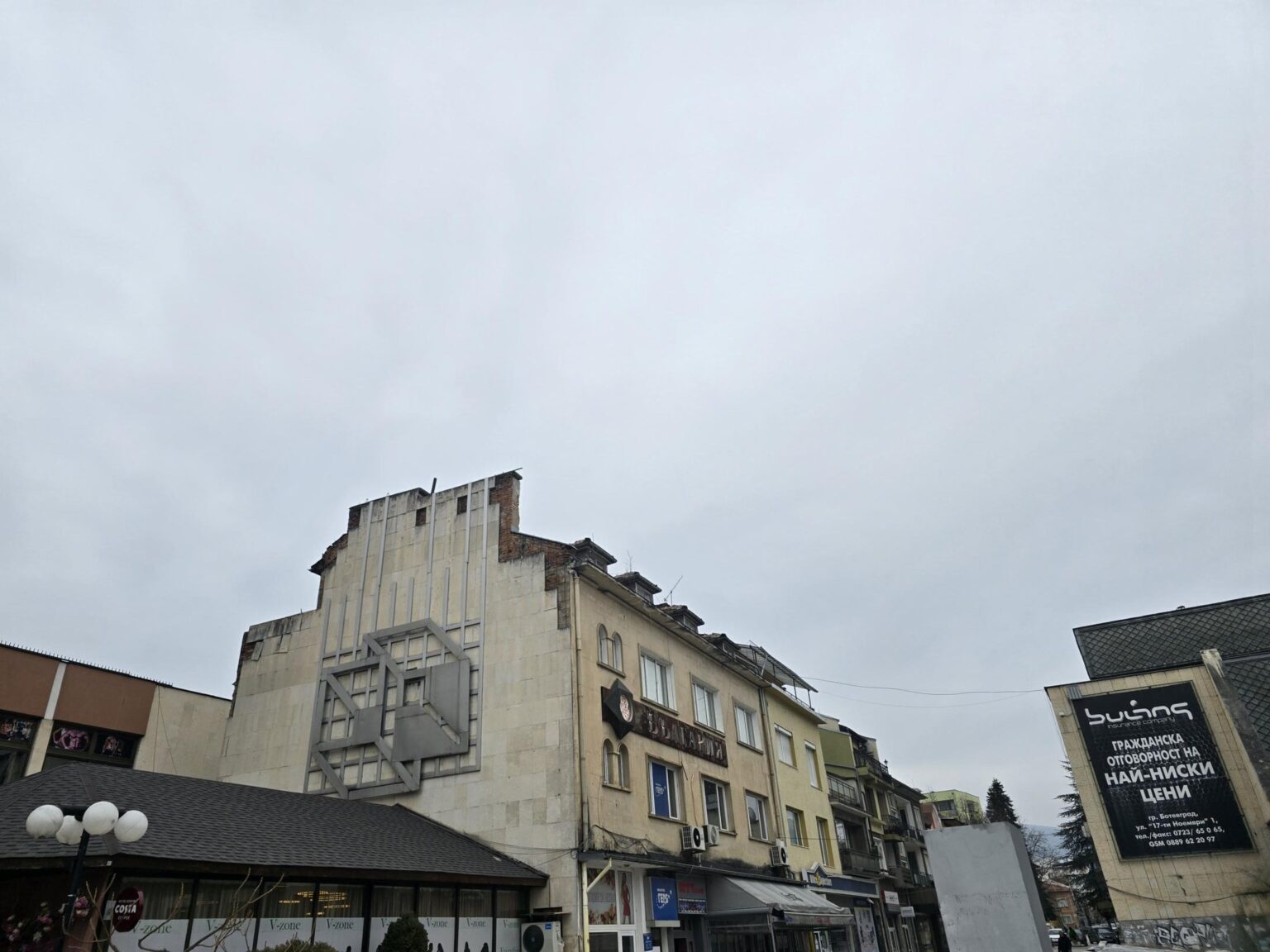
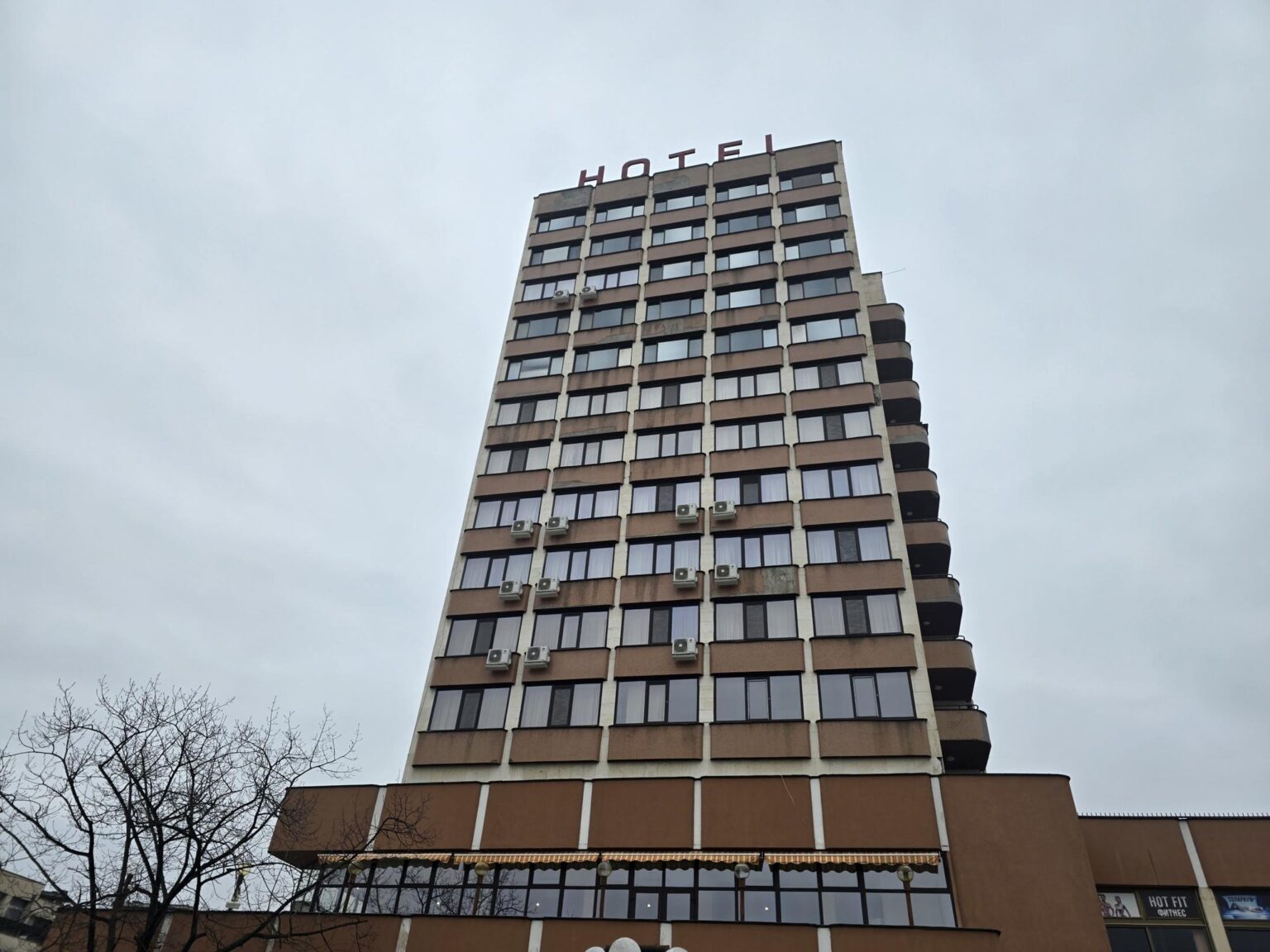
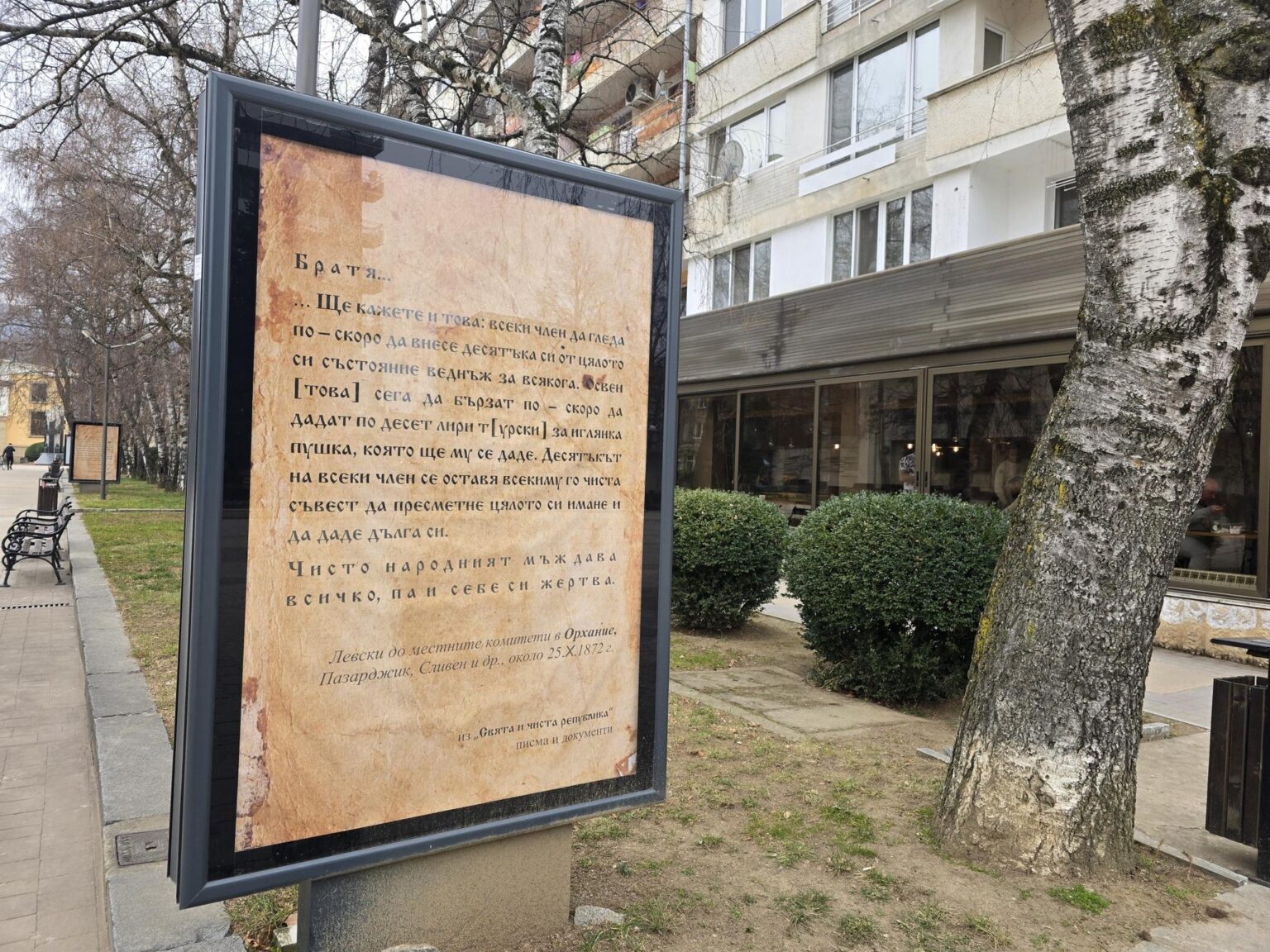
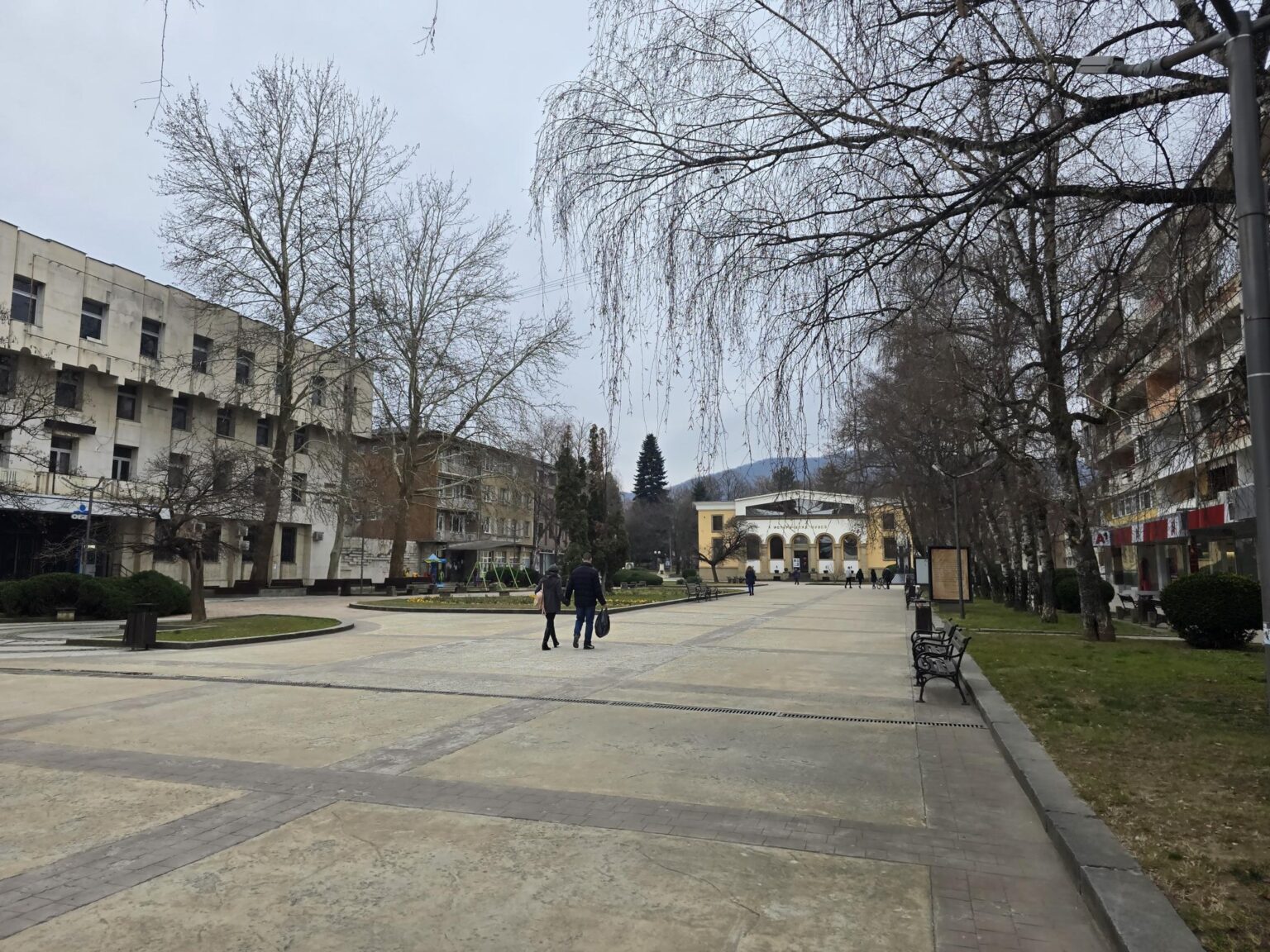
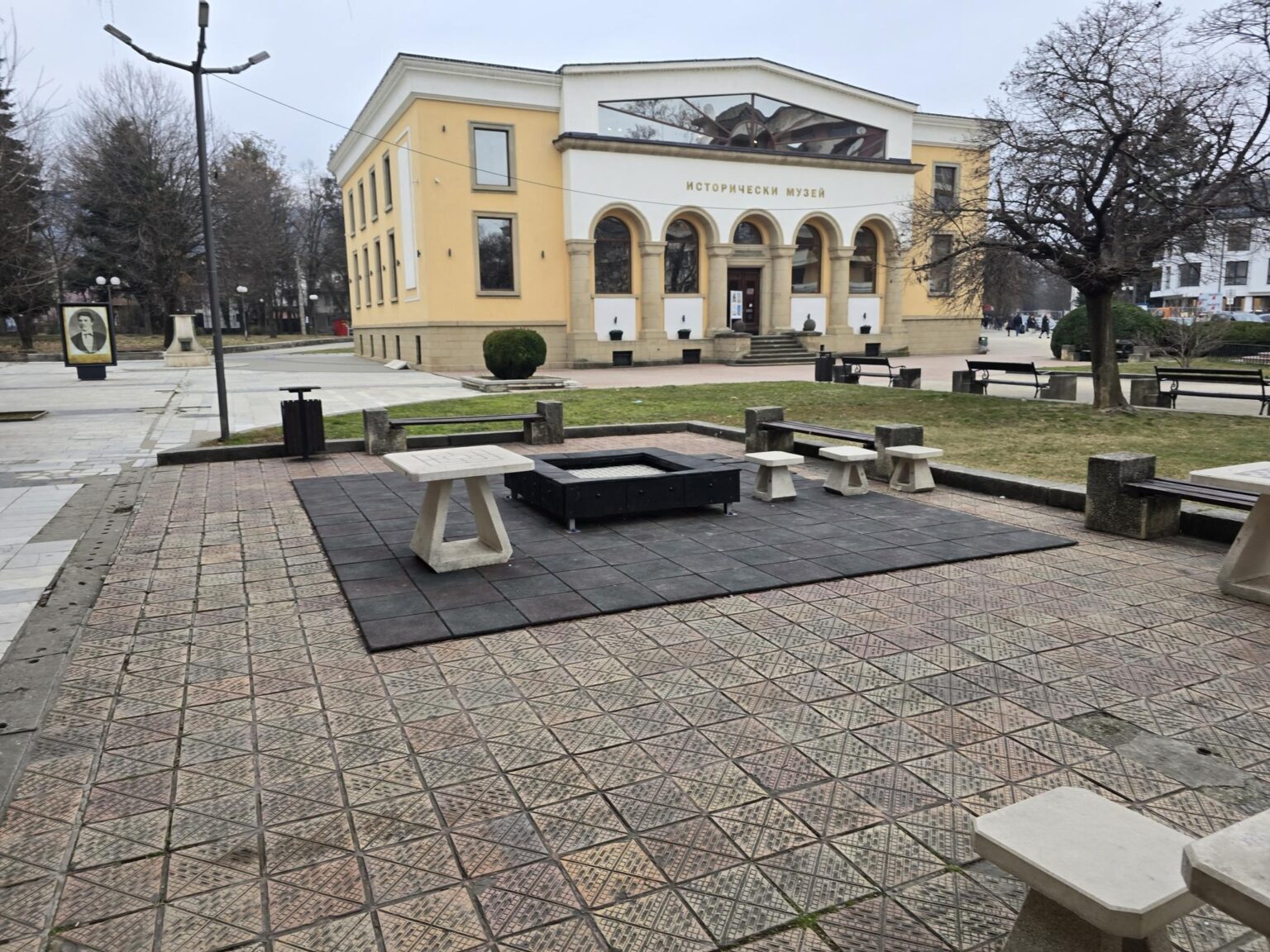
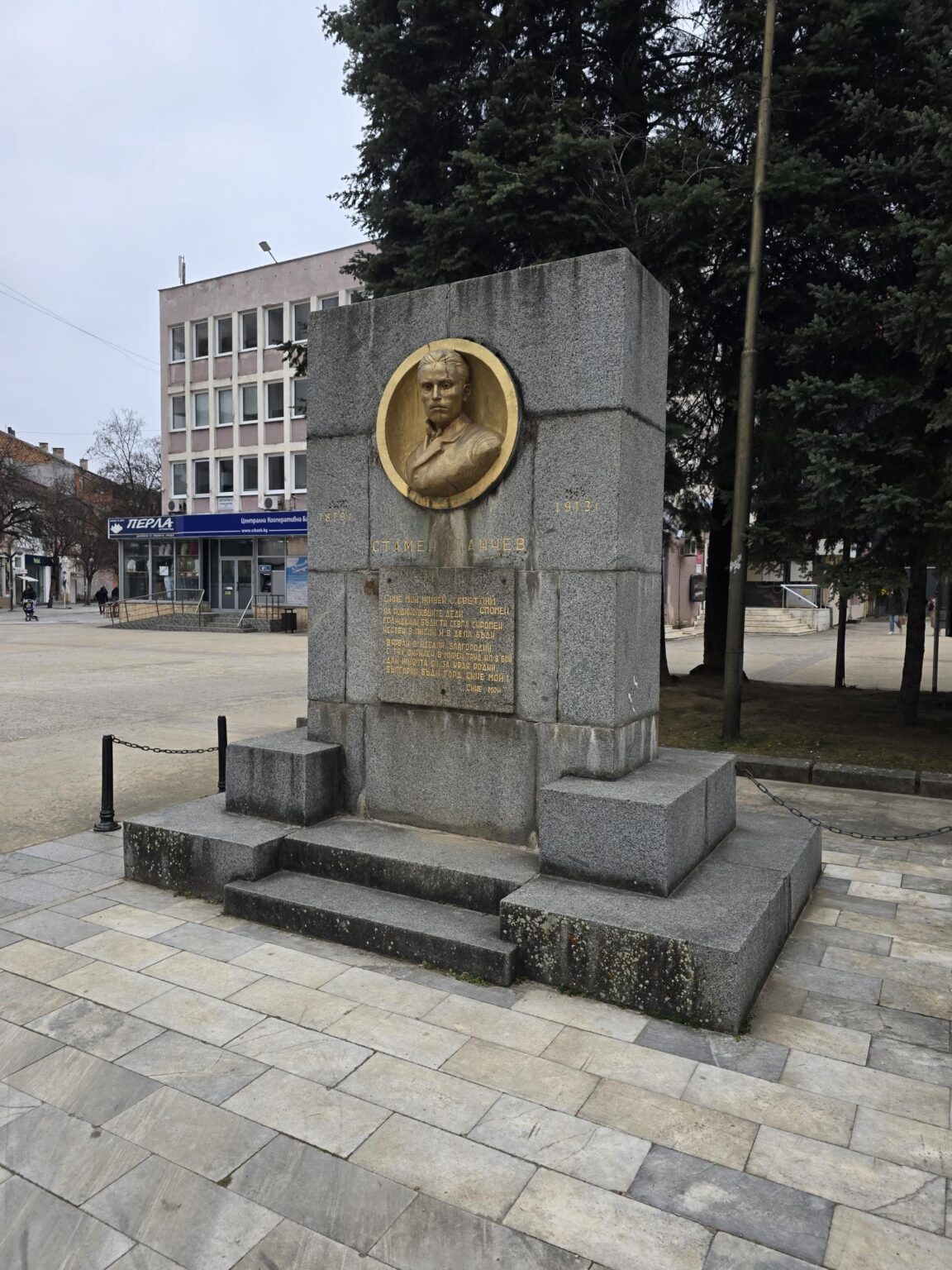
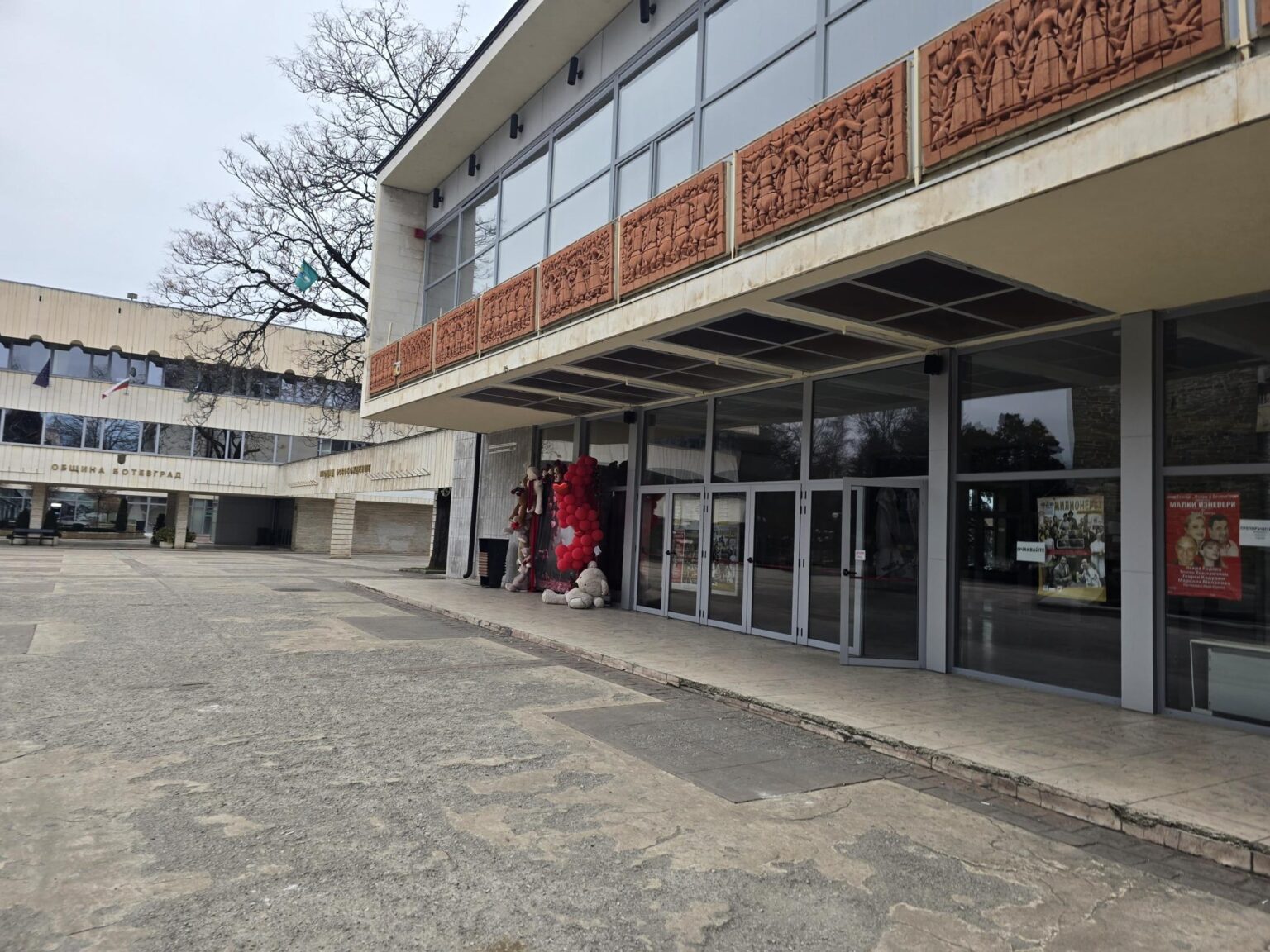
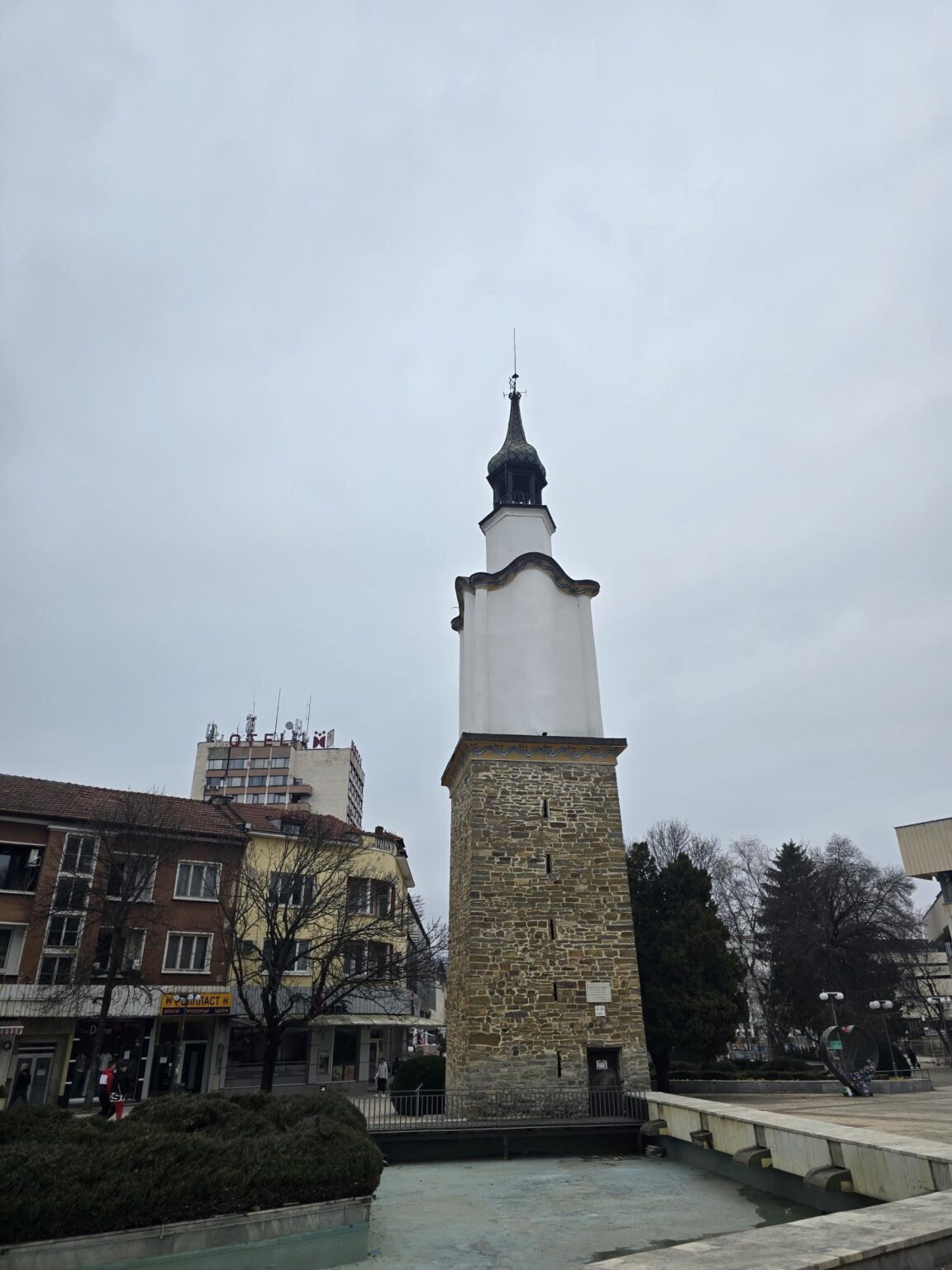
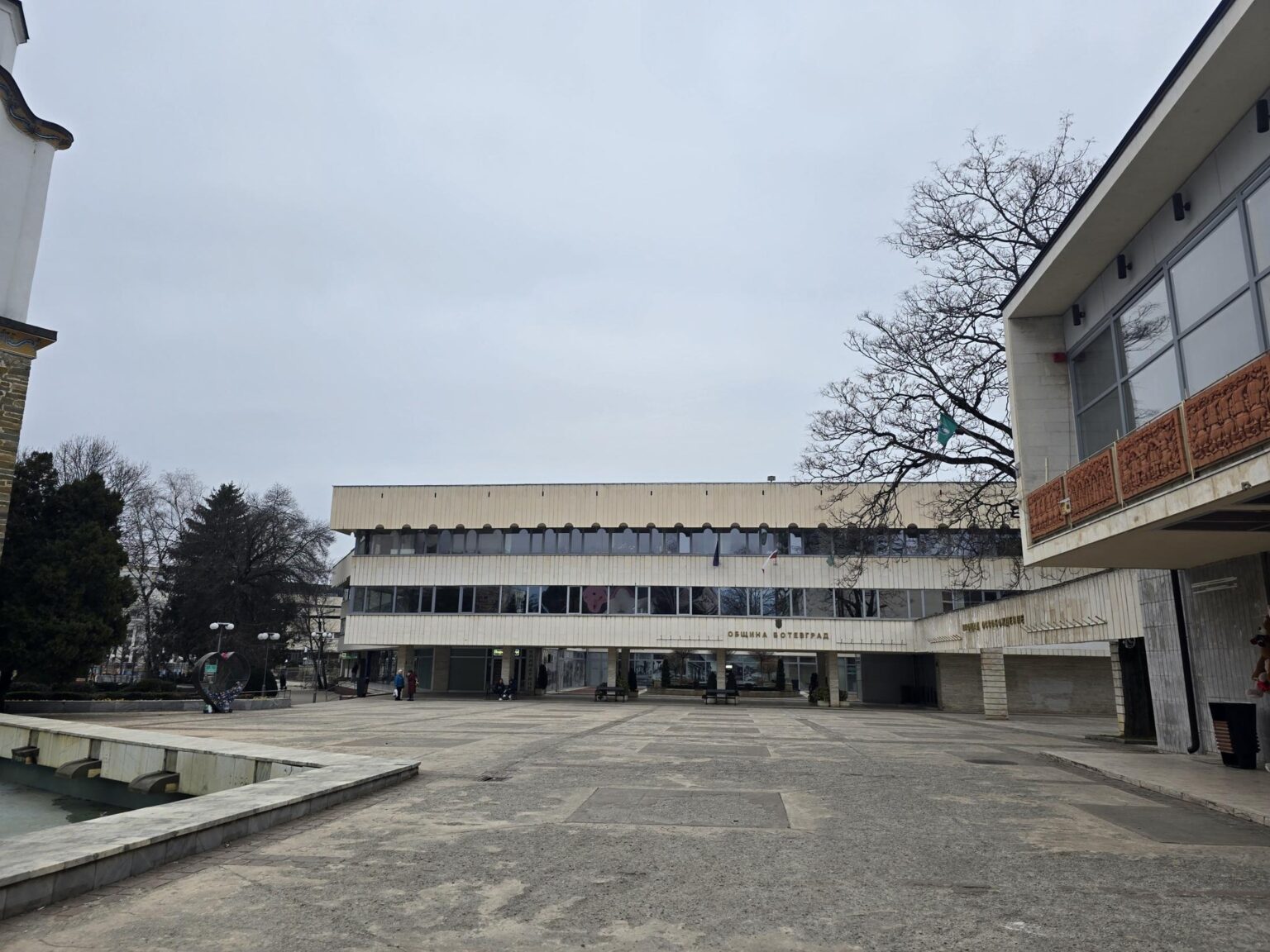
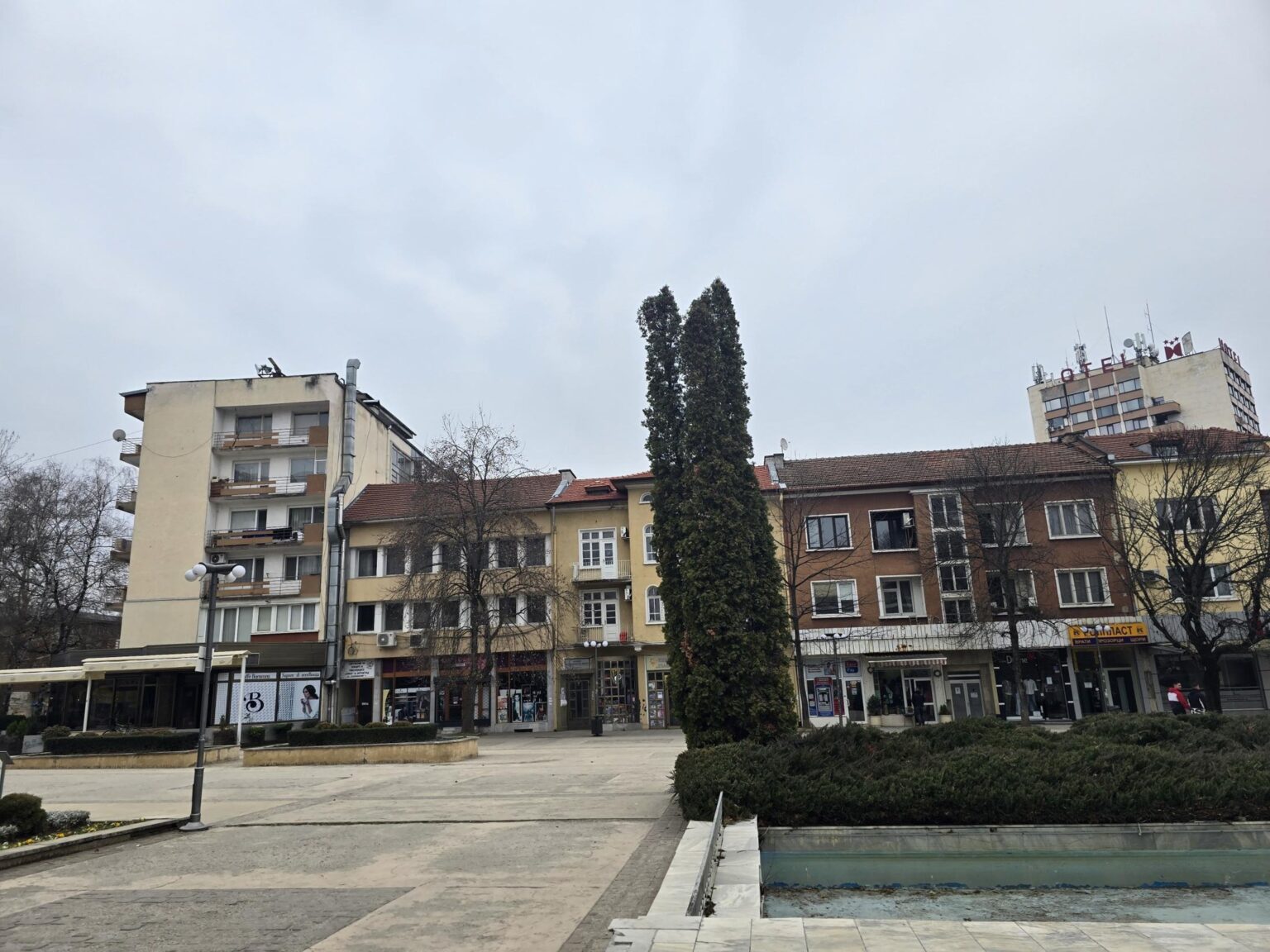
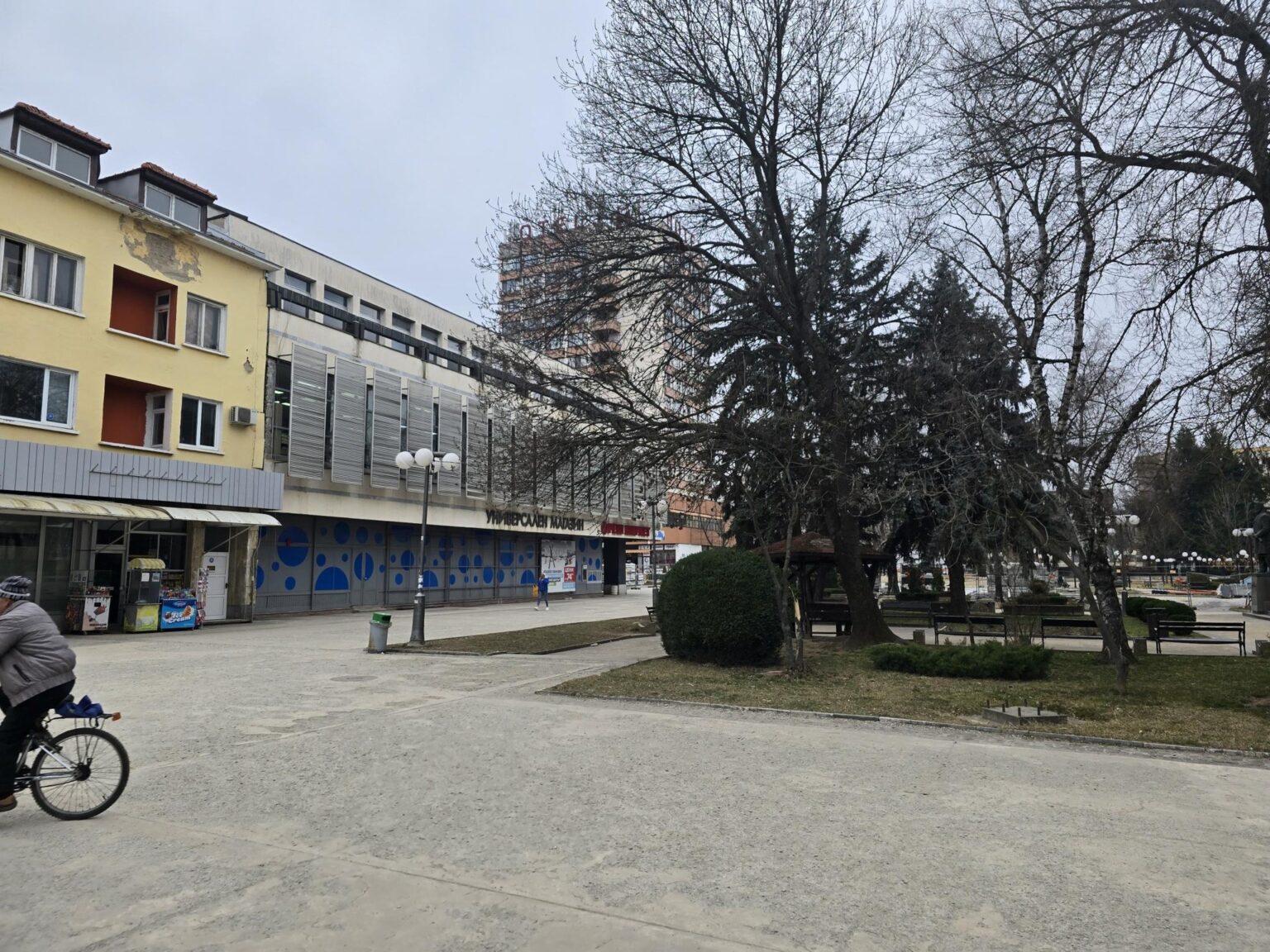
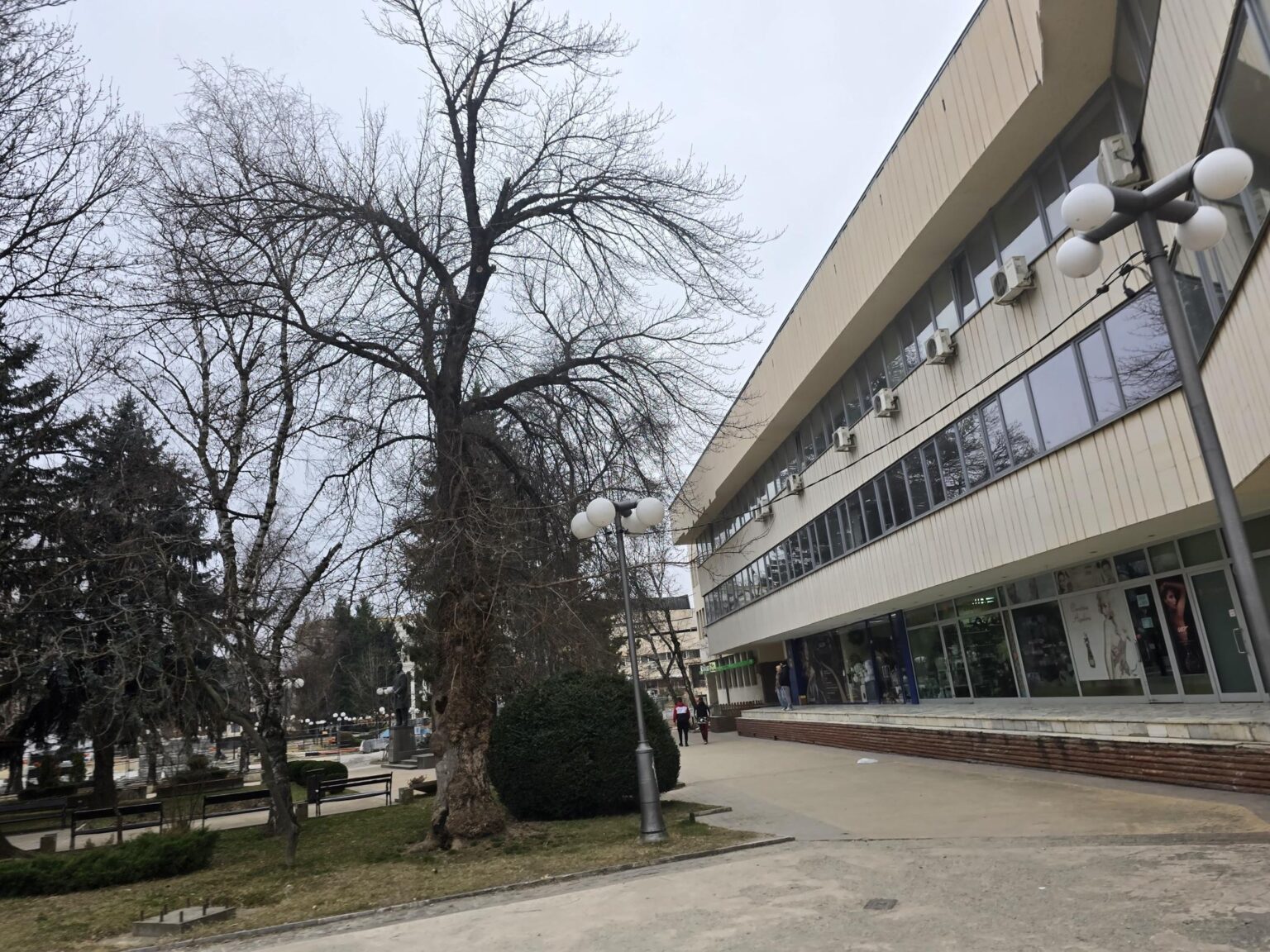
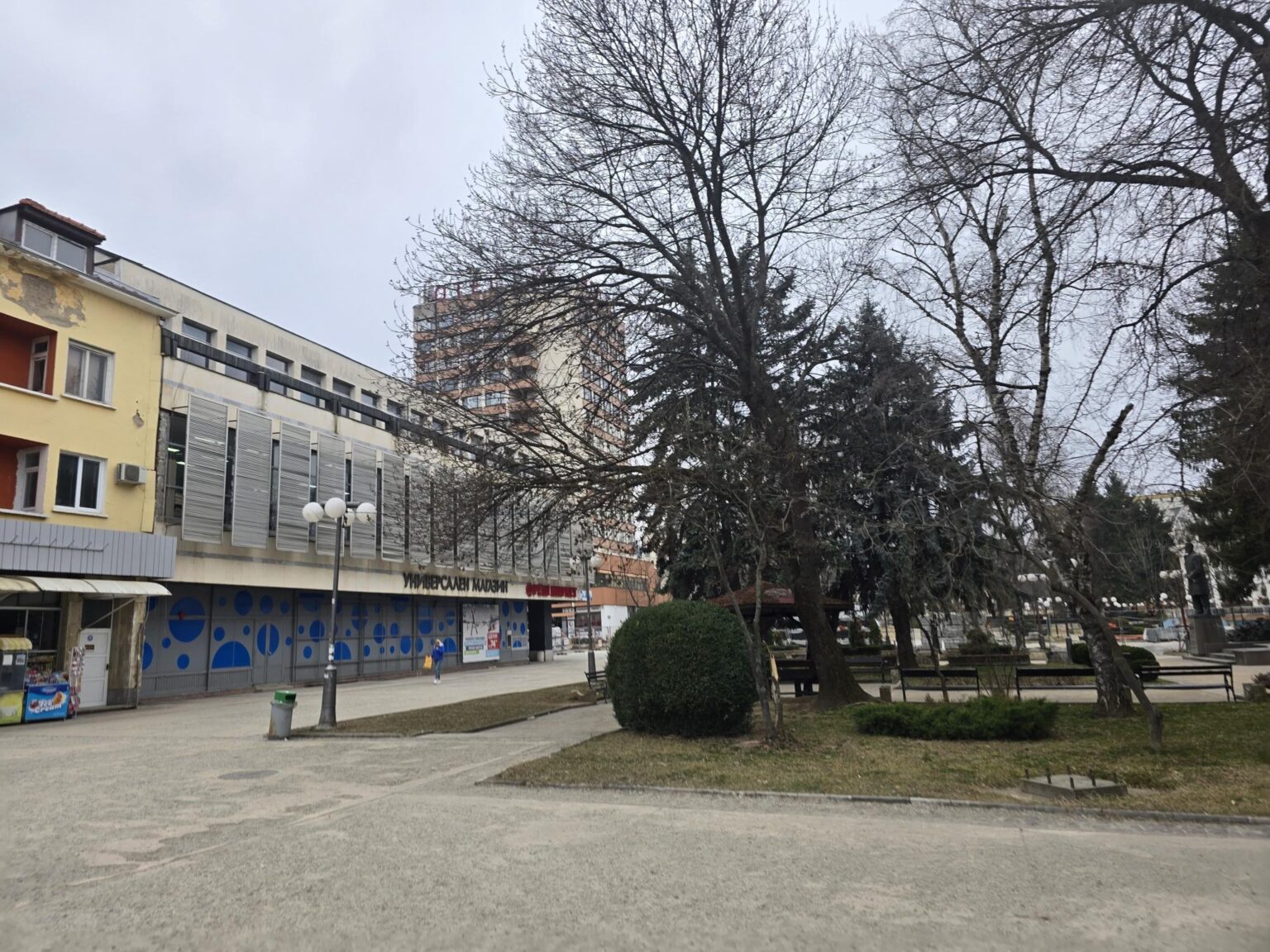
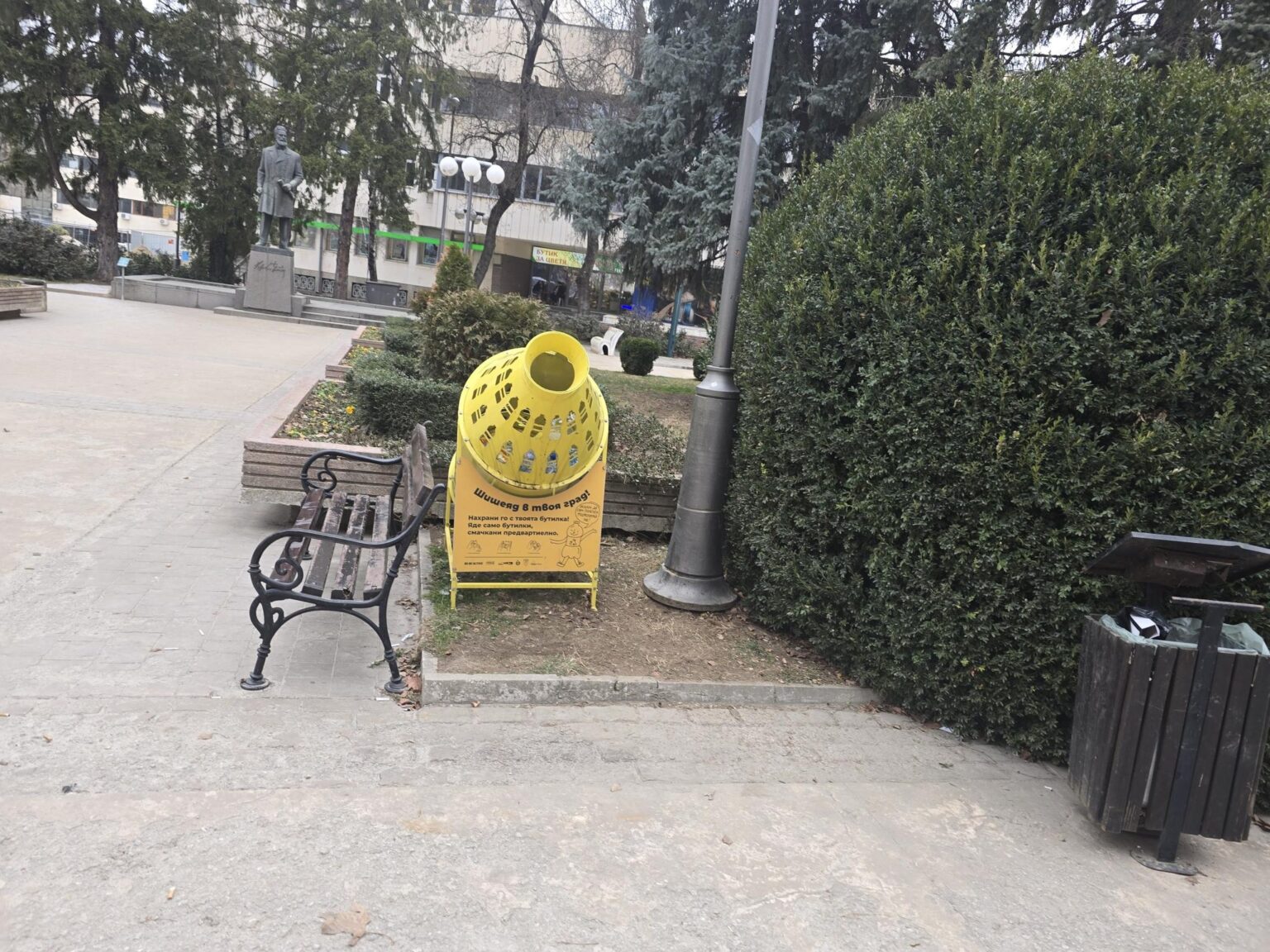
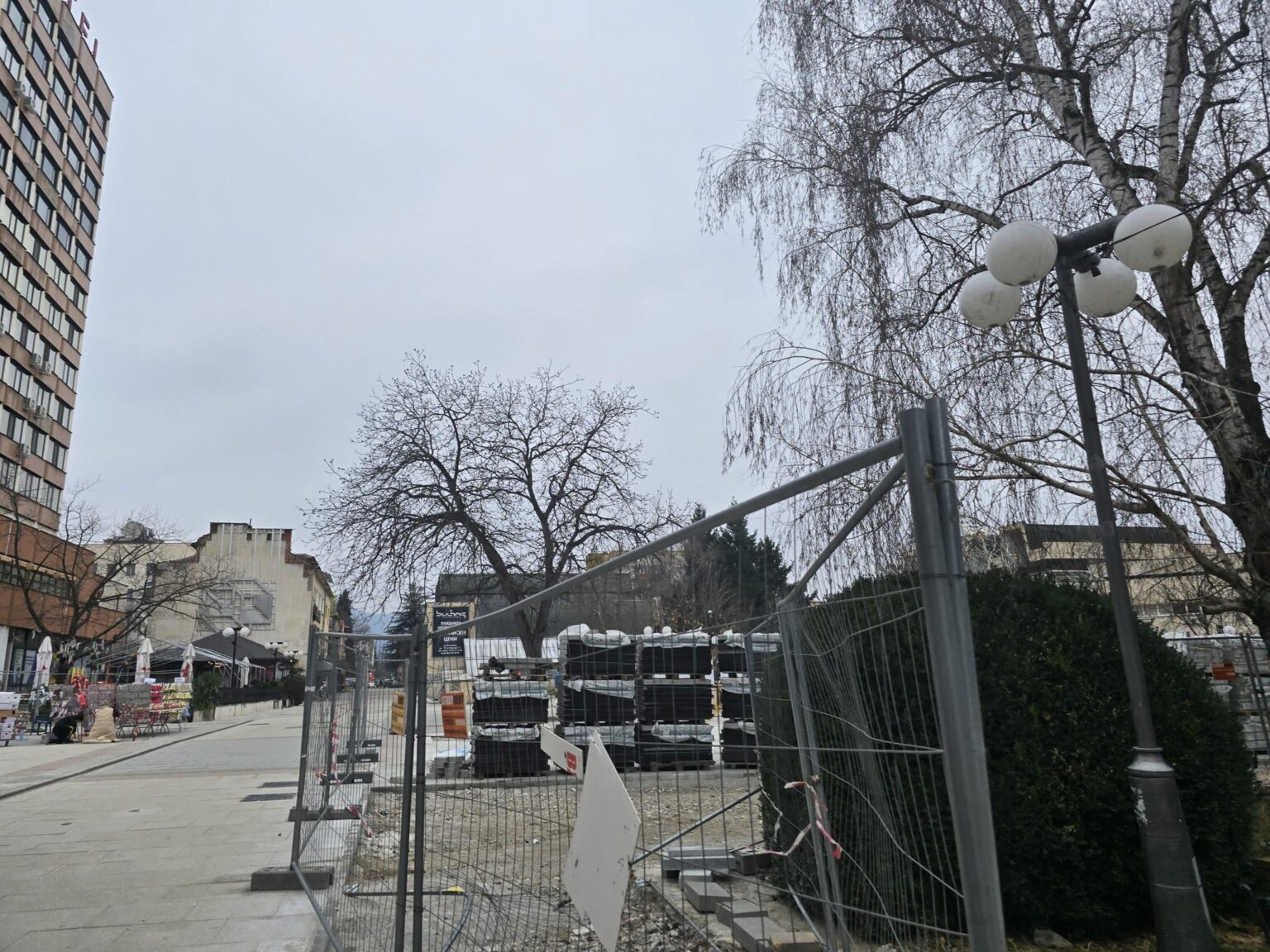
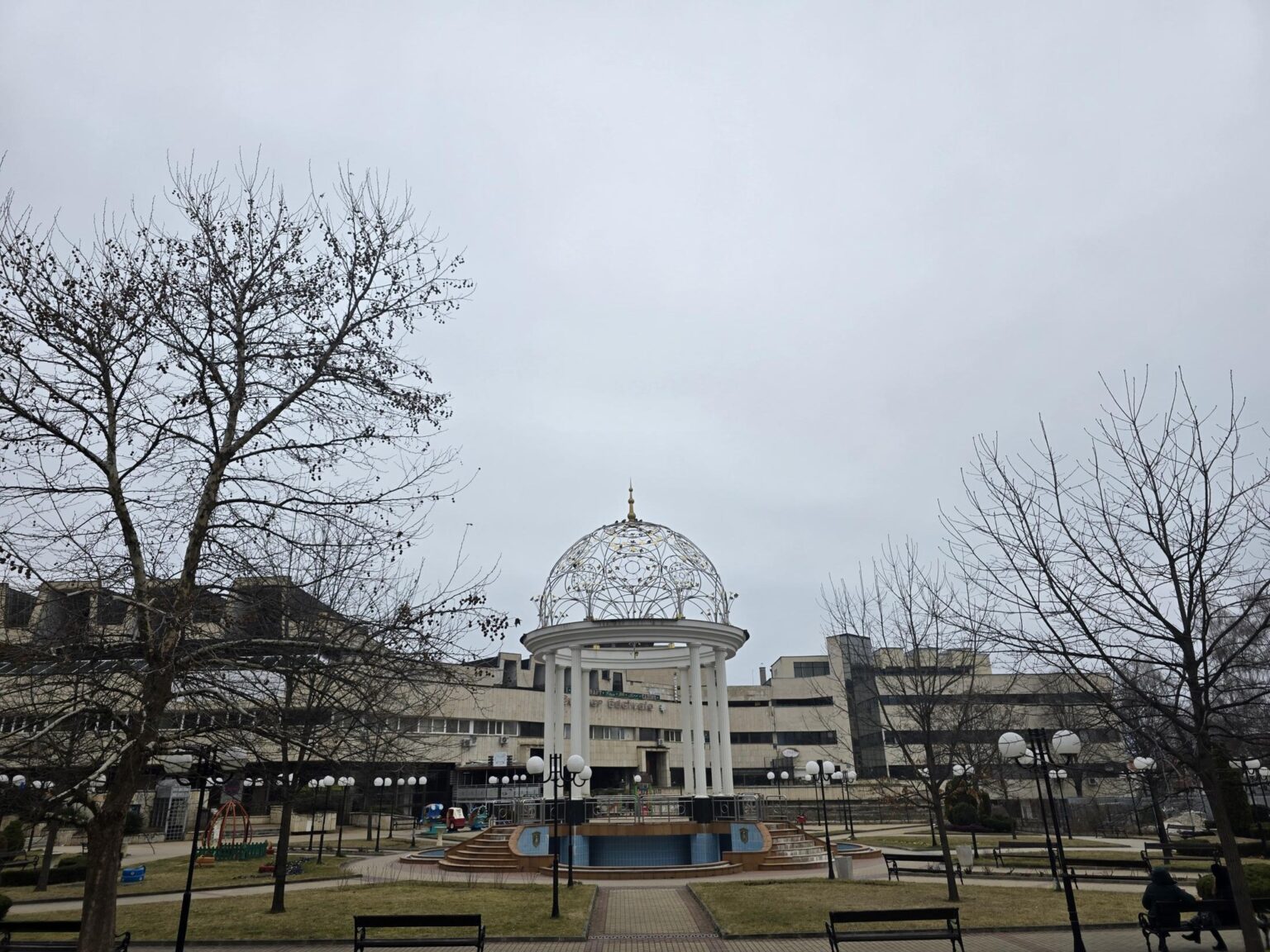
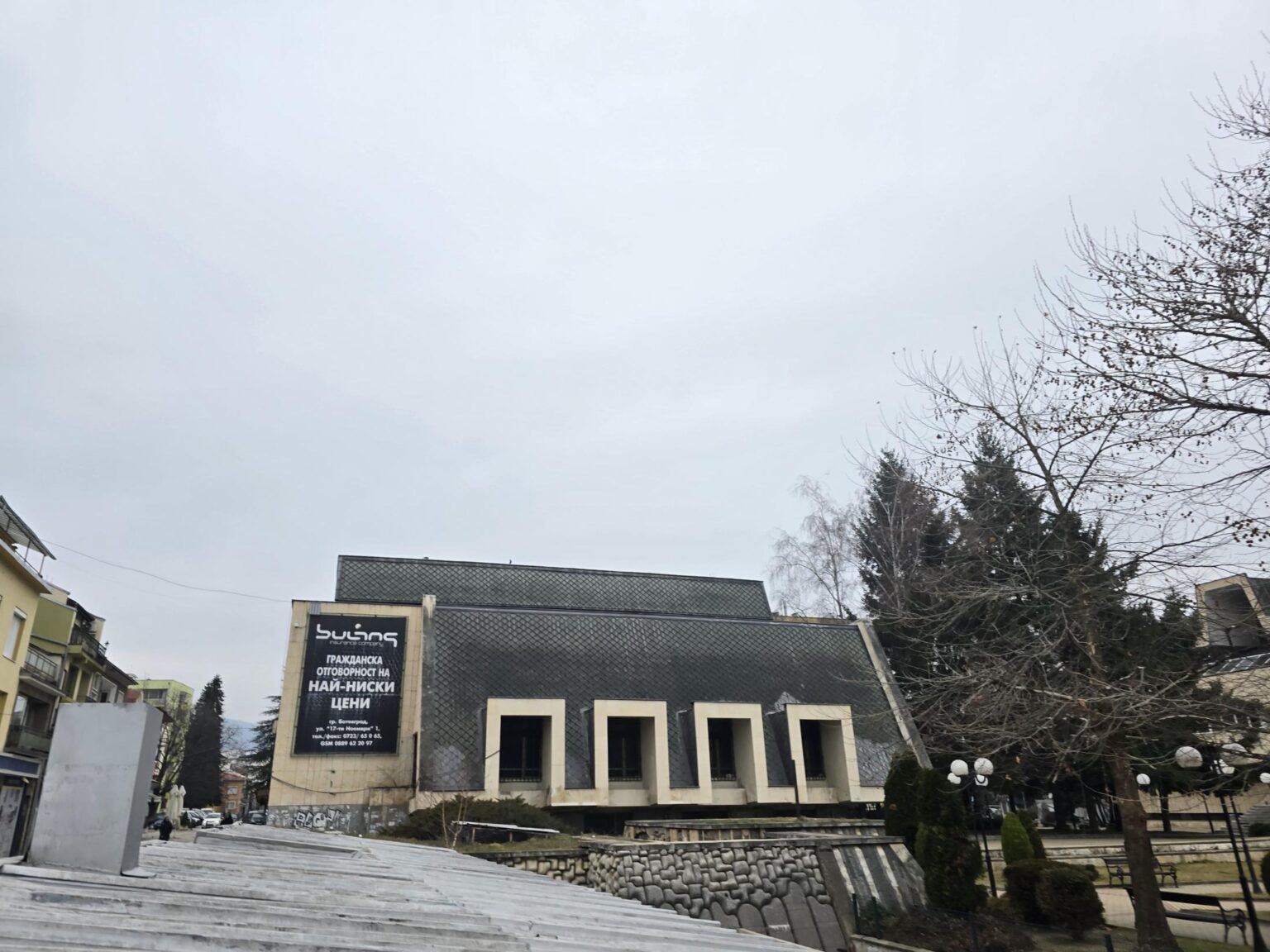
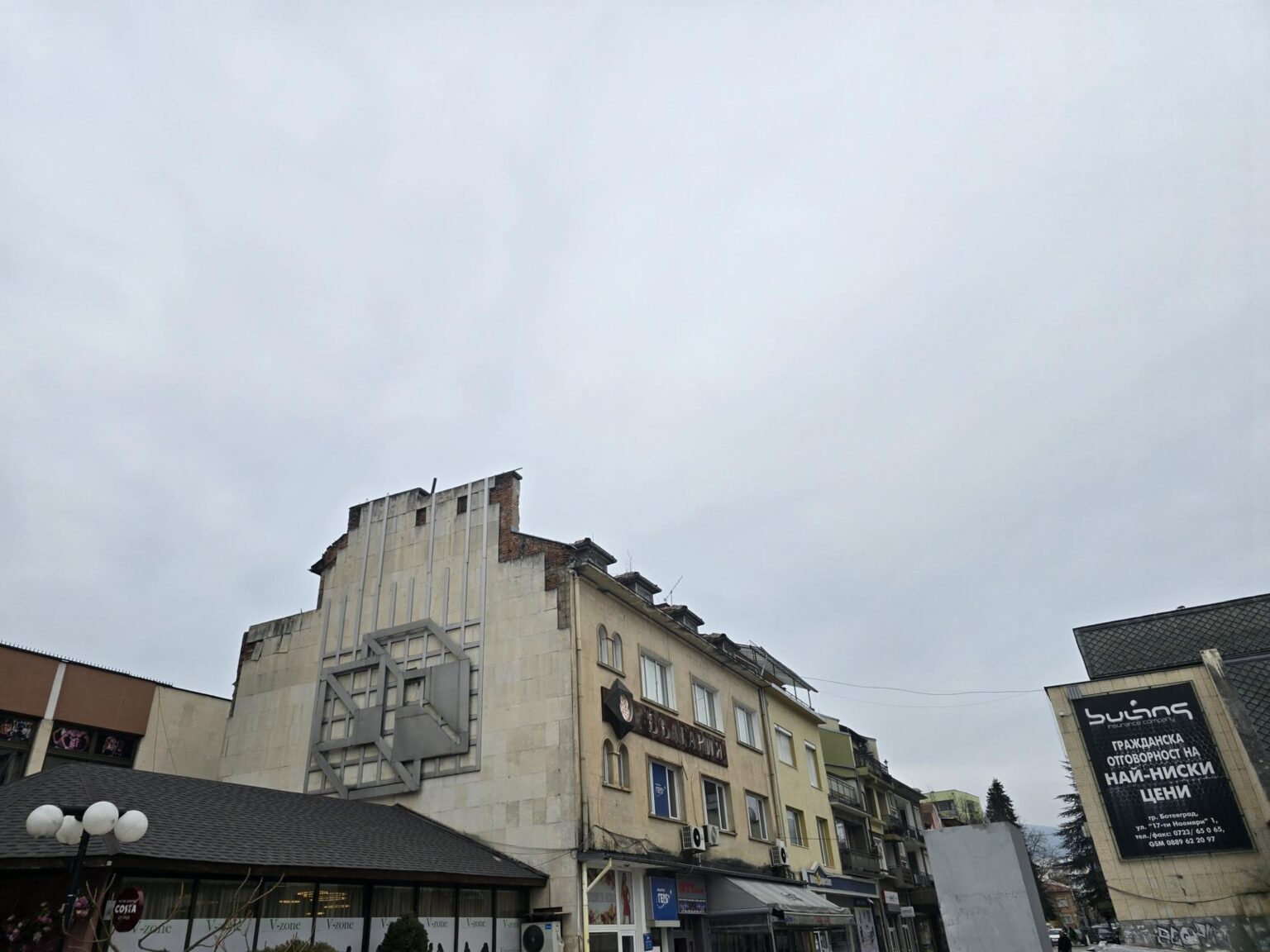
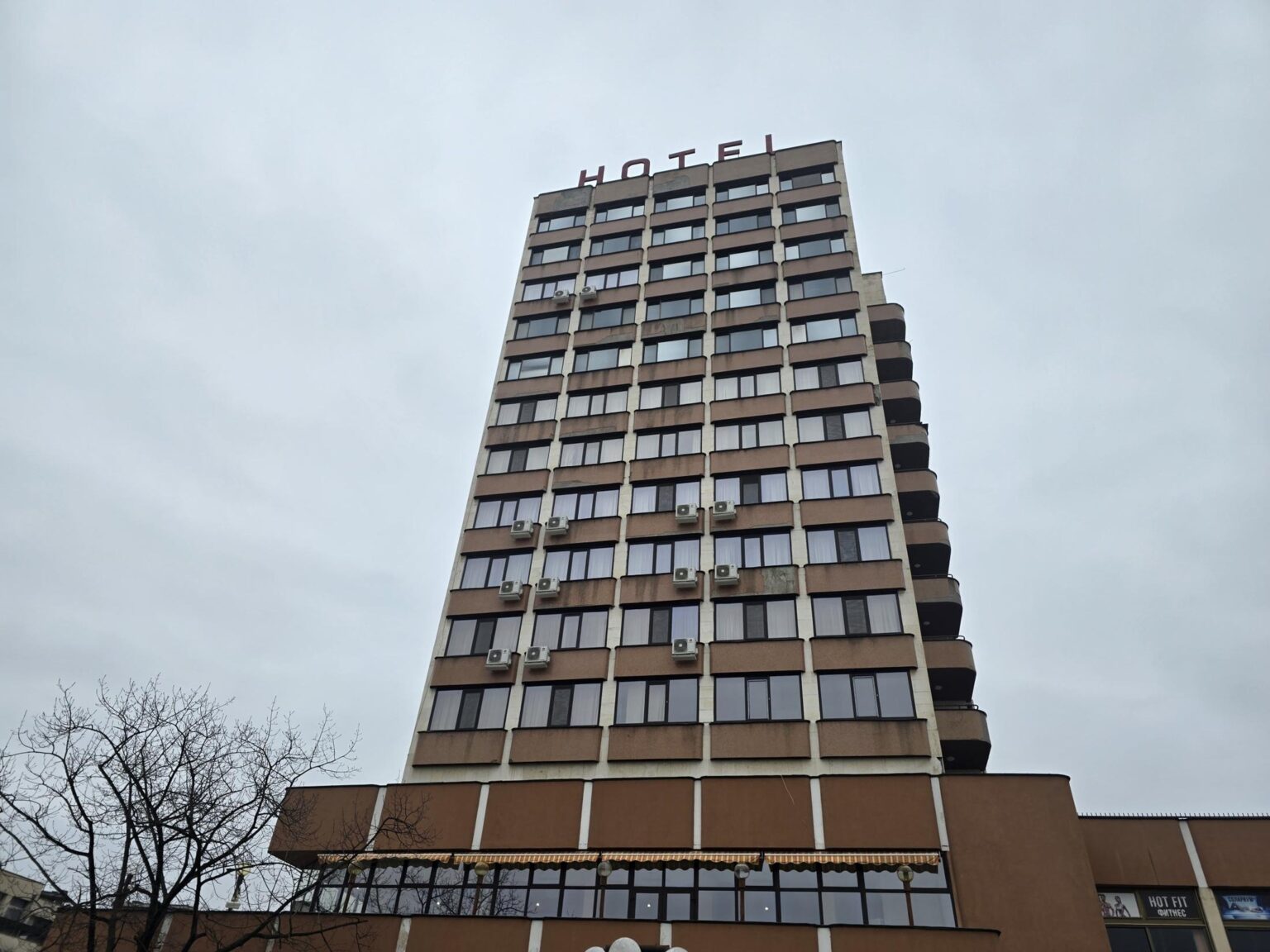
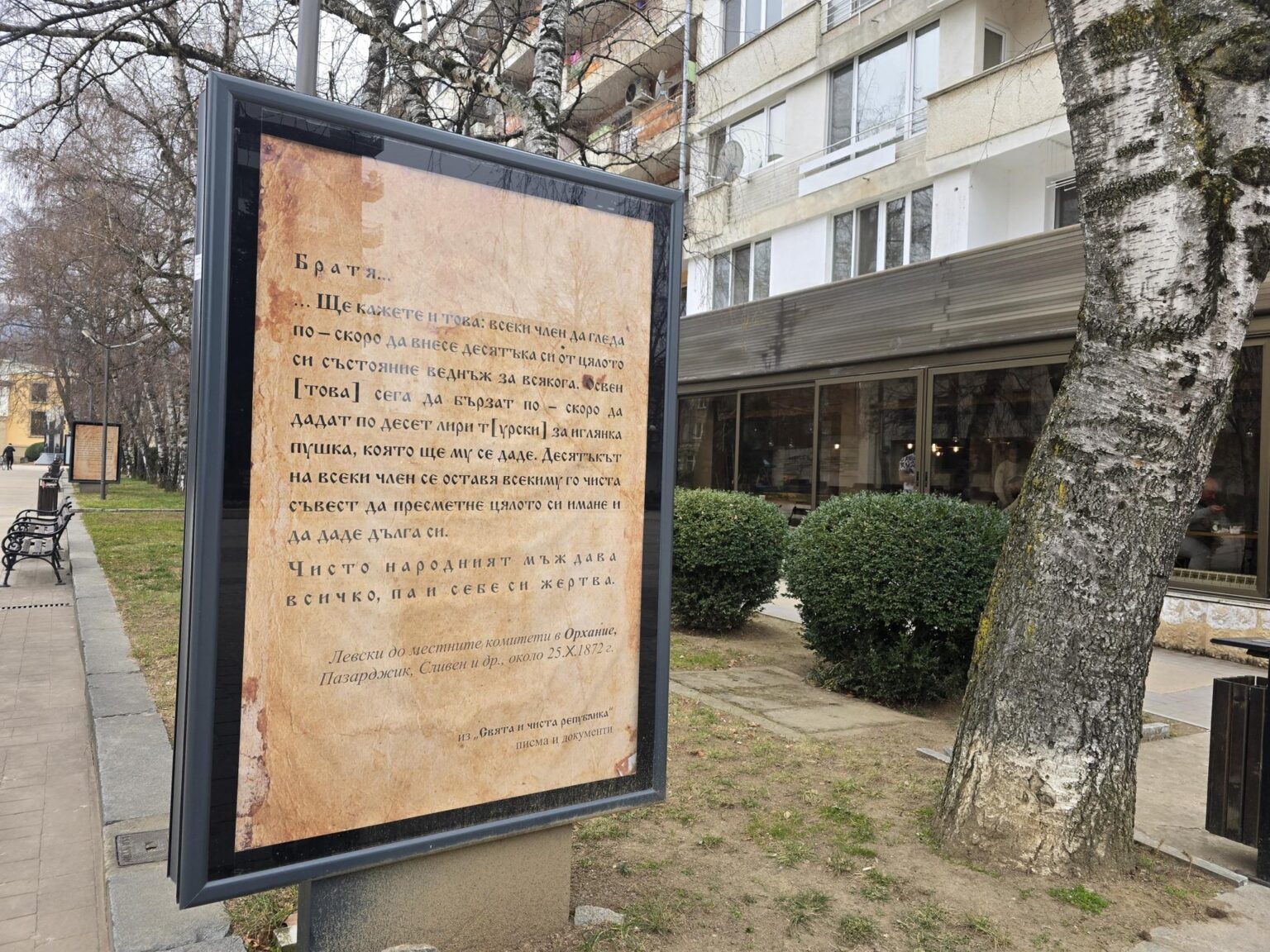
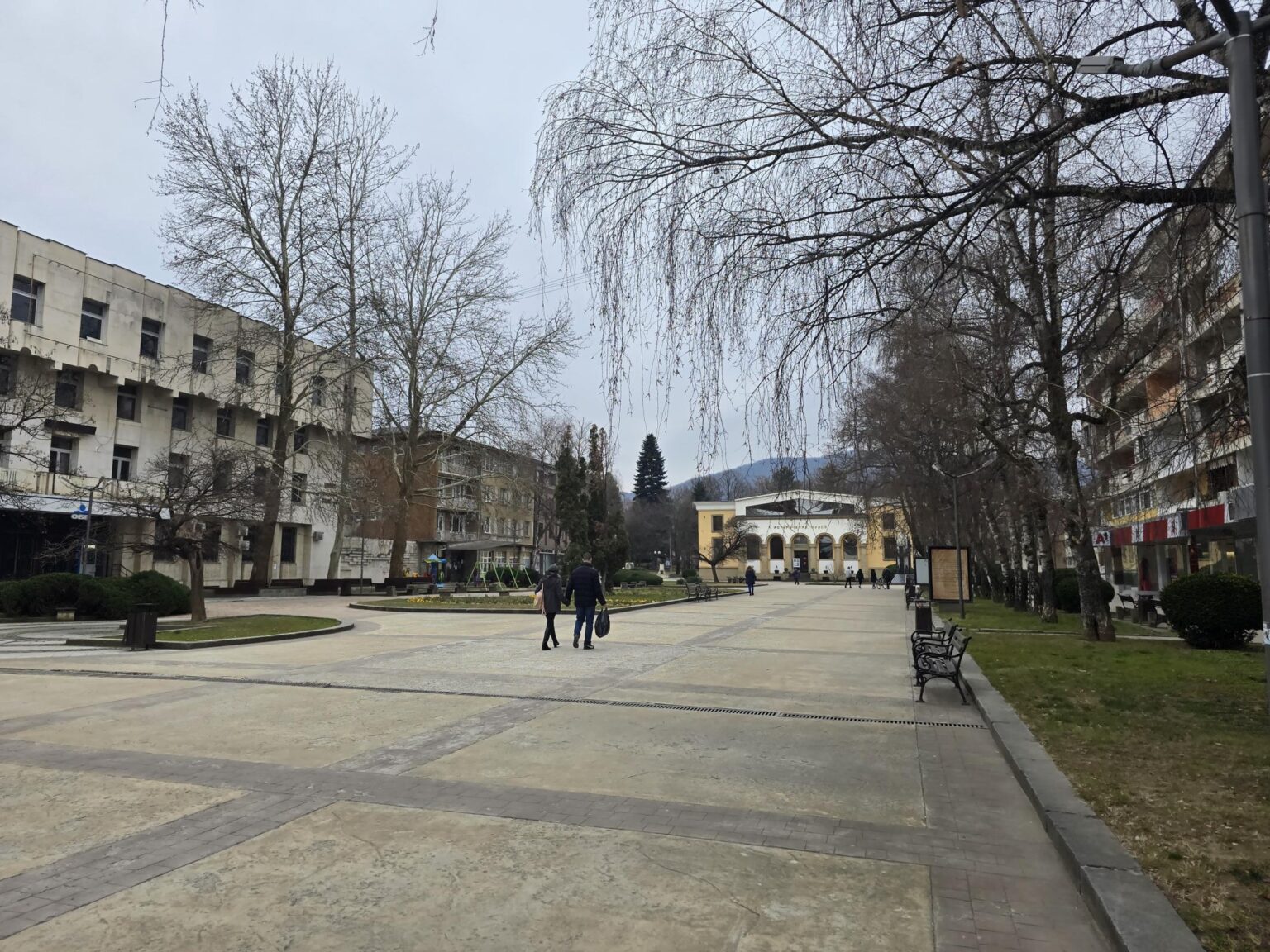
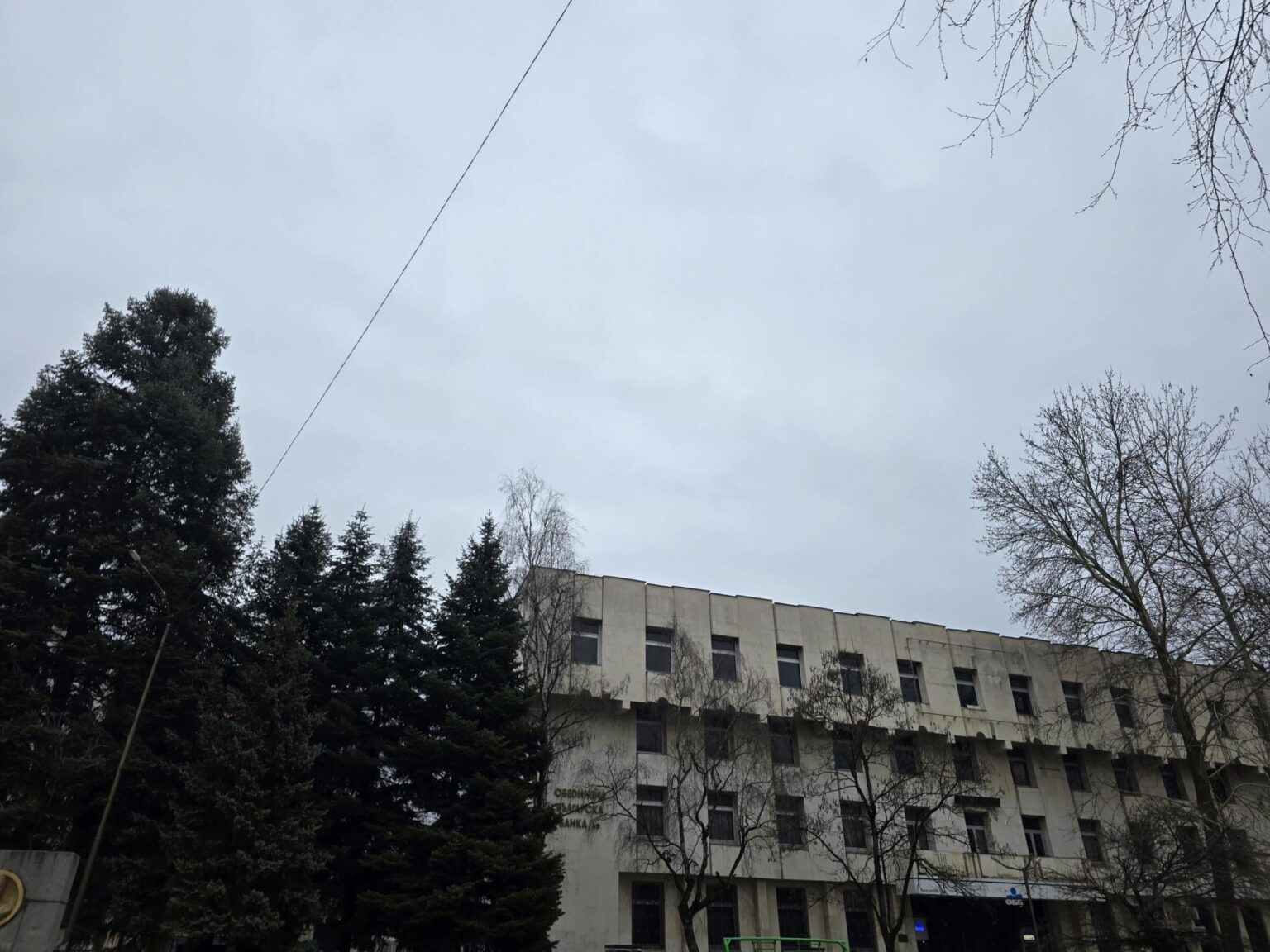
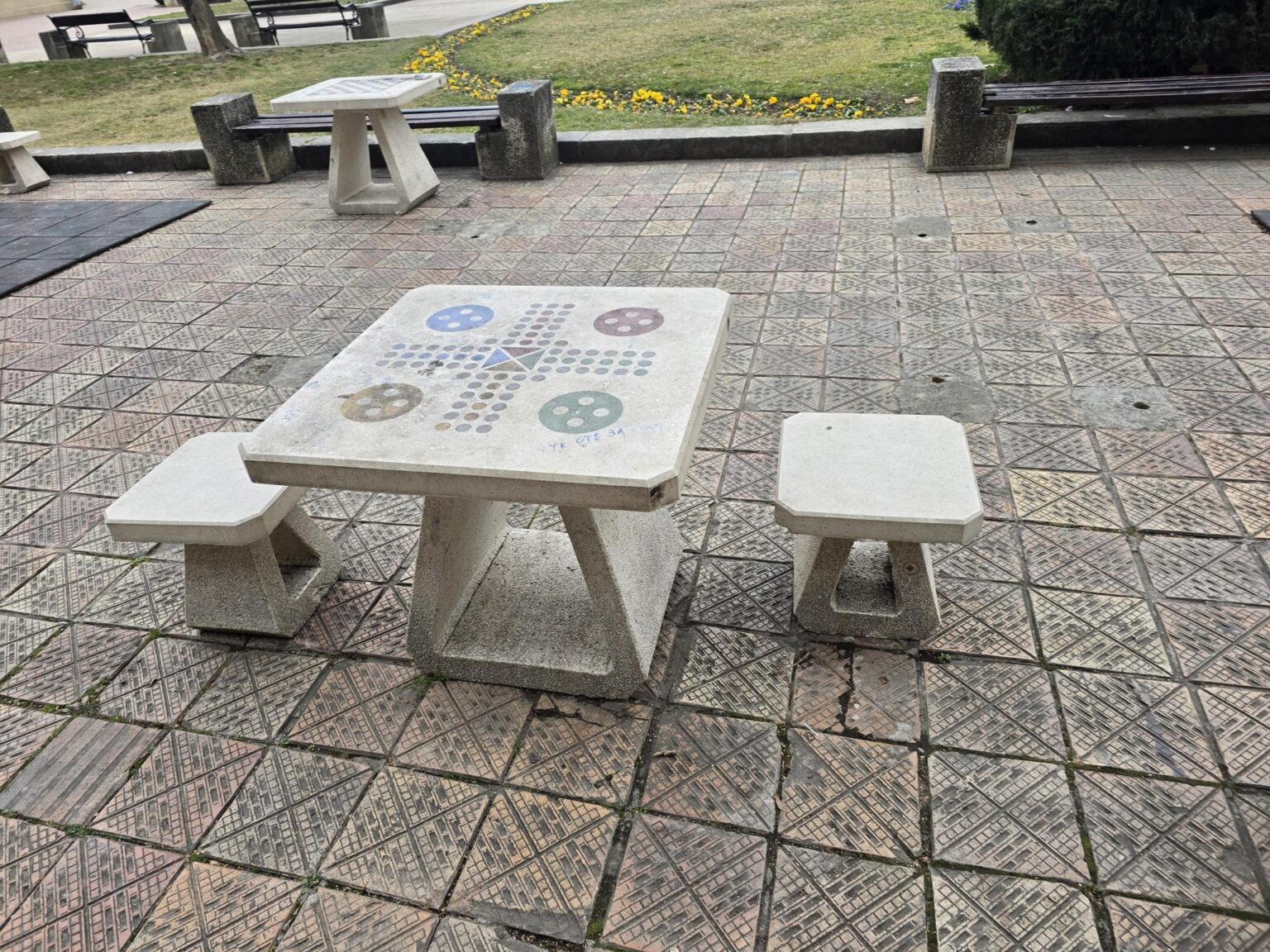
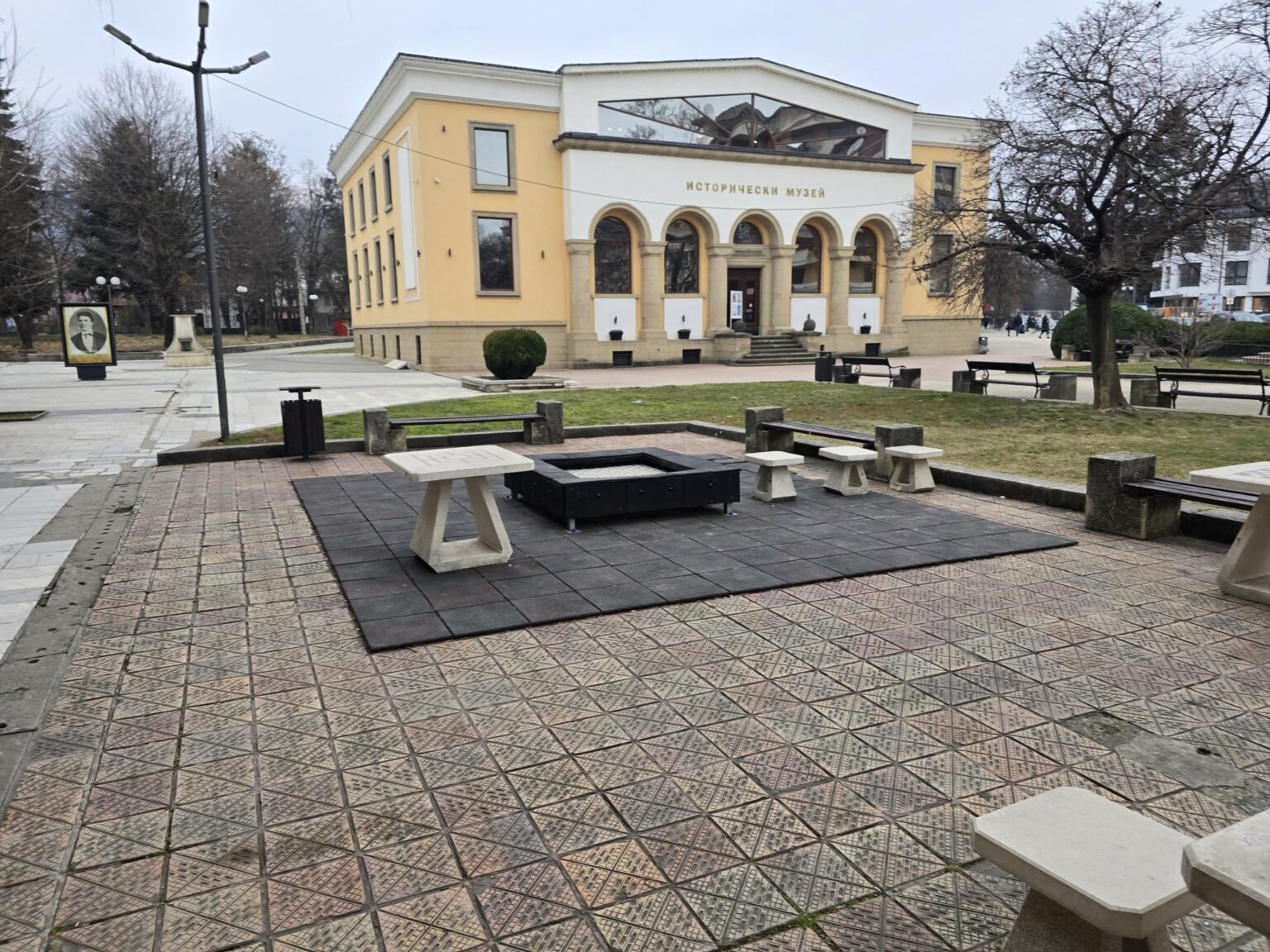
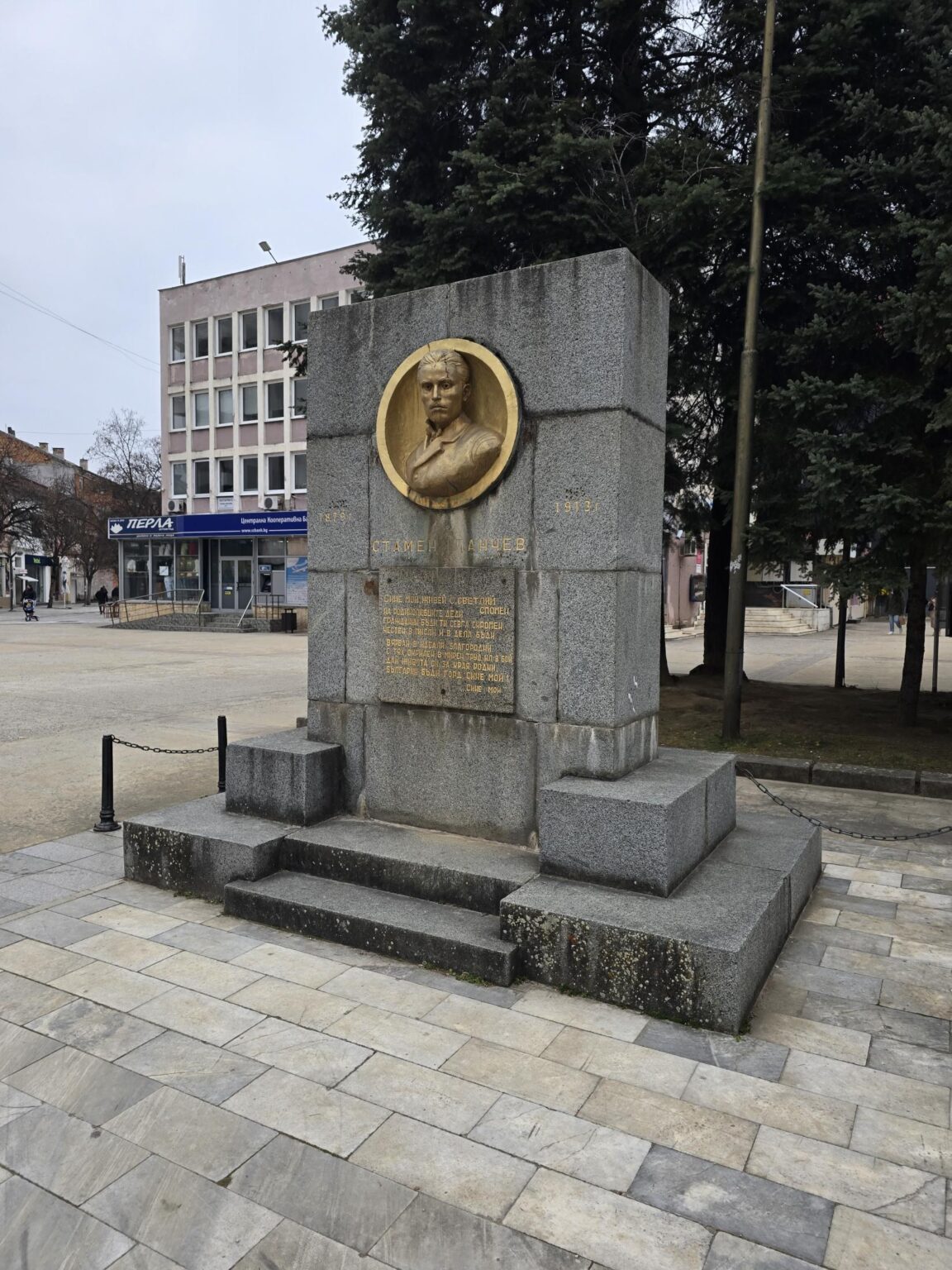
To round the day out and kill another hour, a quick walk through the centre of Botevgrad — a place that is half run-down and half in the middle of being renovated. Summed up in a gallery, those extra two hours of lunch and wandering look like this:
Difficulty
150 metres of ascent concentrated into 750 metres of trail. Not a lot in absolute terms, but not nothing either. A younger child will probably get tired. Decent shoes help, especially if it has rained, and there is no shade or wind shelter at the top.
Budget
None, effectively. Access to the fortress is free and there is nothing to pay for on site — no ticket office, no parking fee. Your only real costs are fuel and whatever you decide to spend on lunch nearby.
Conclusion
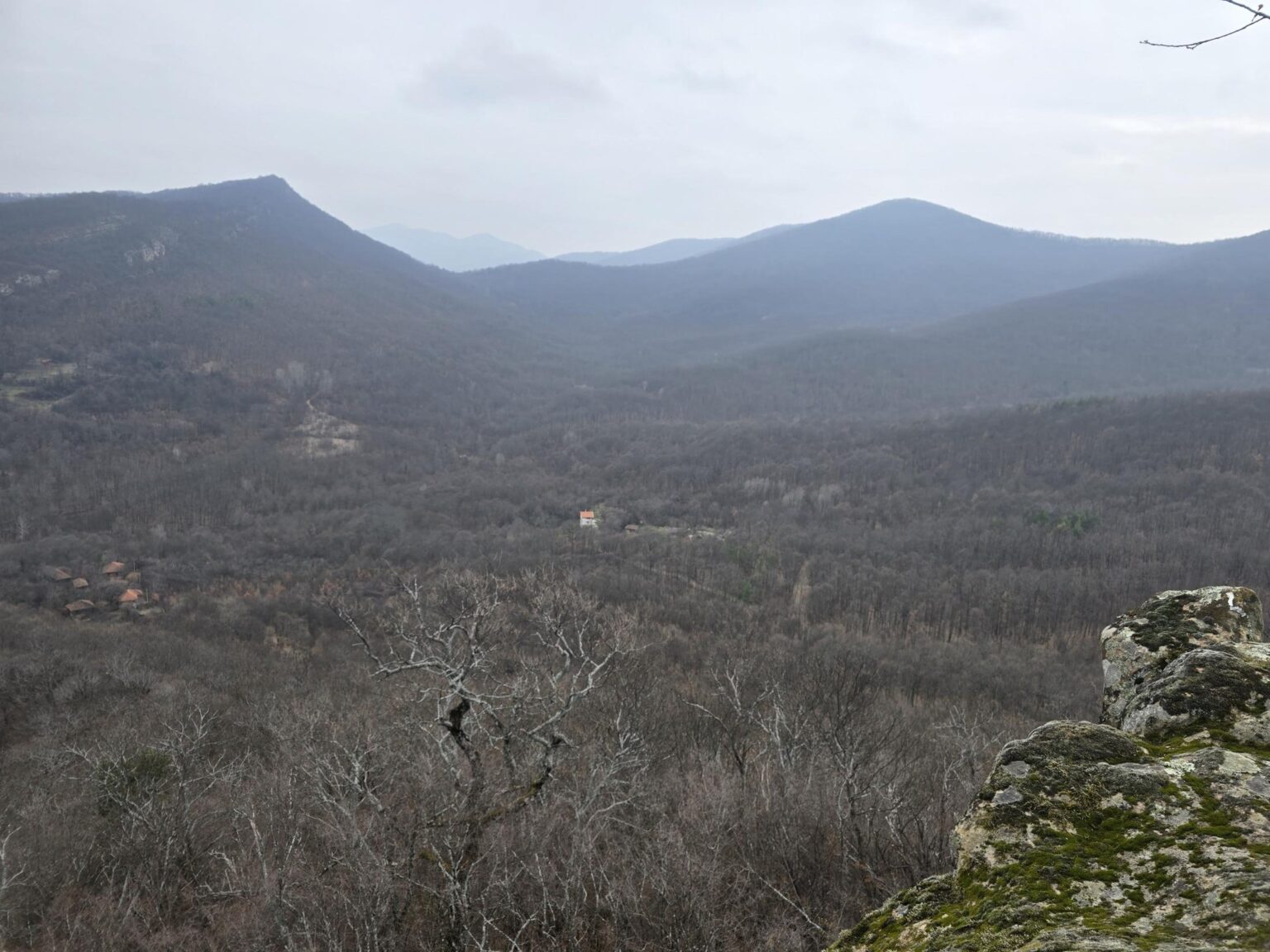
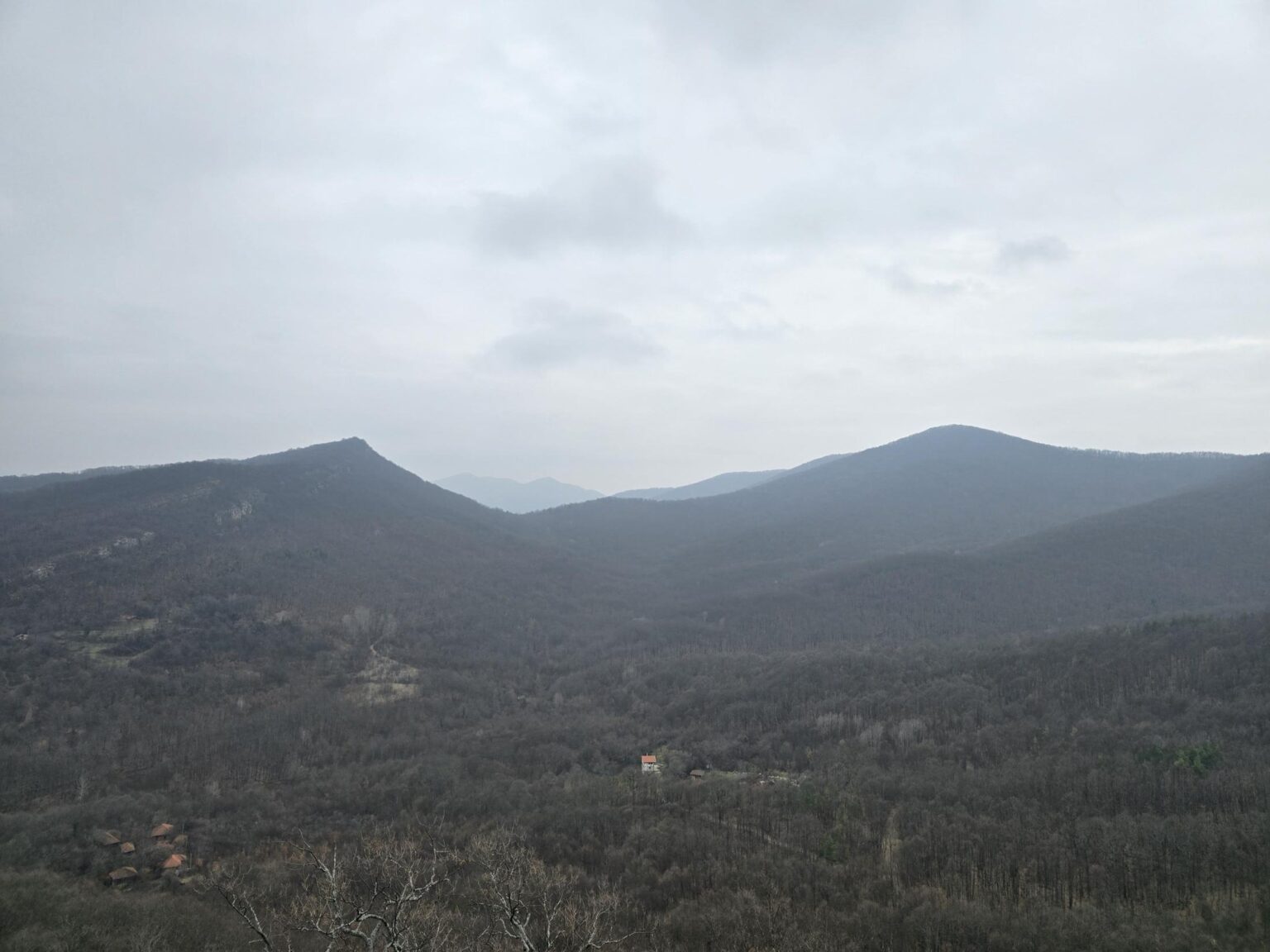
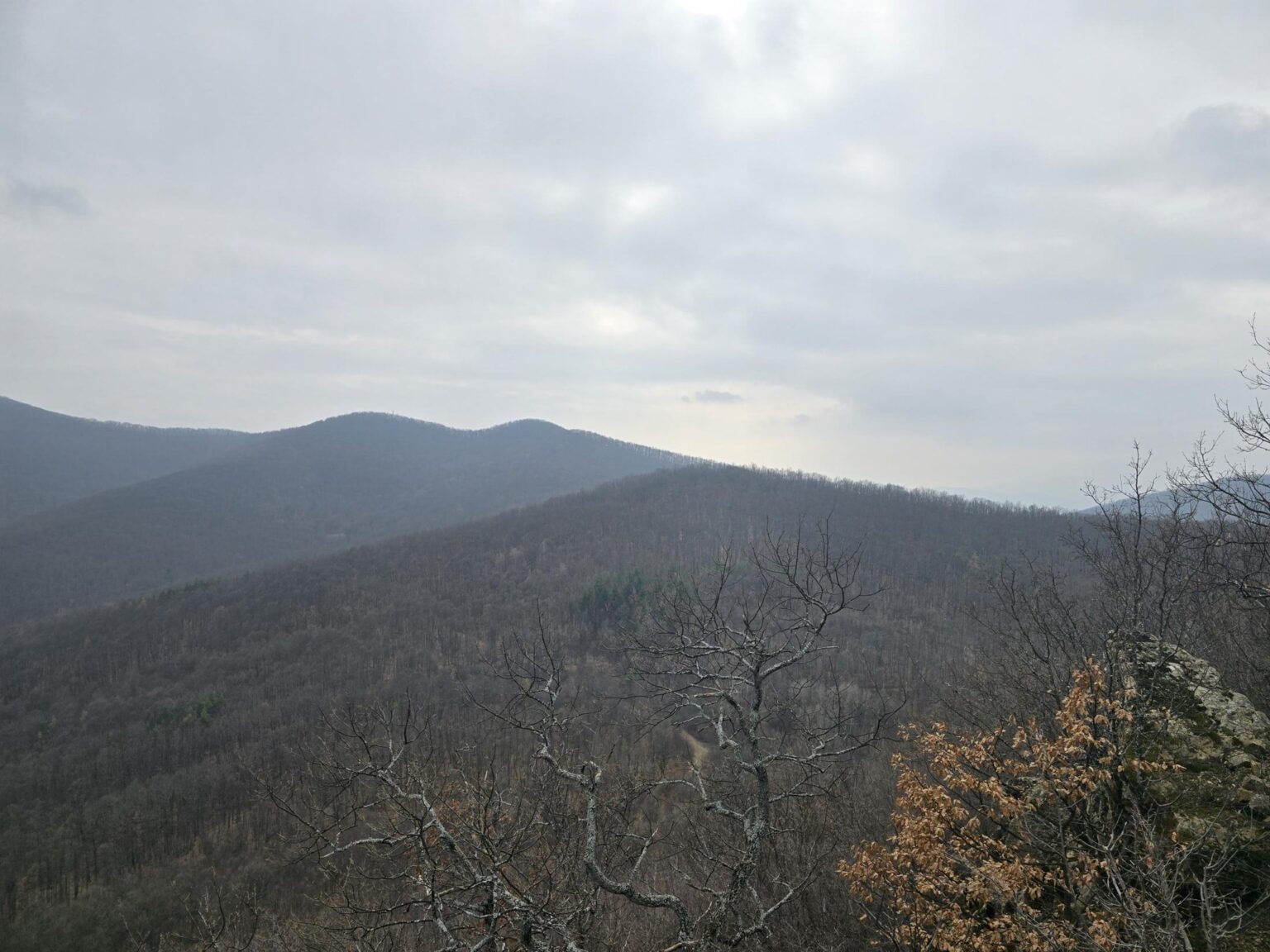
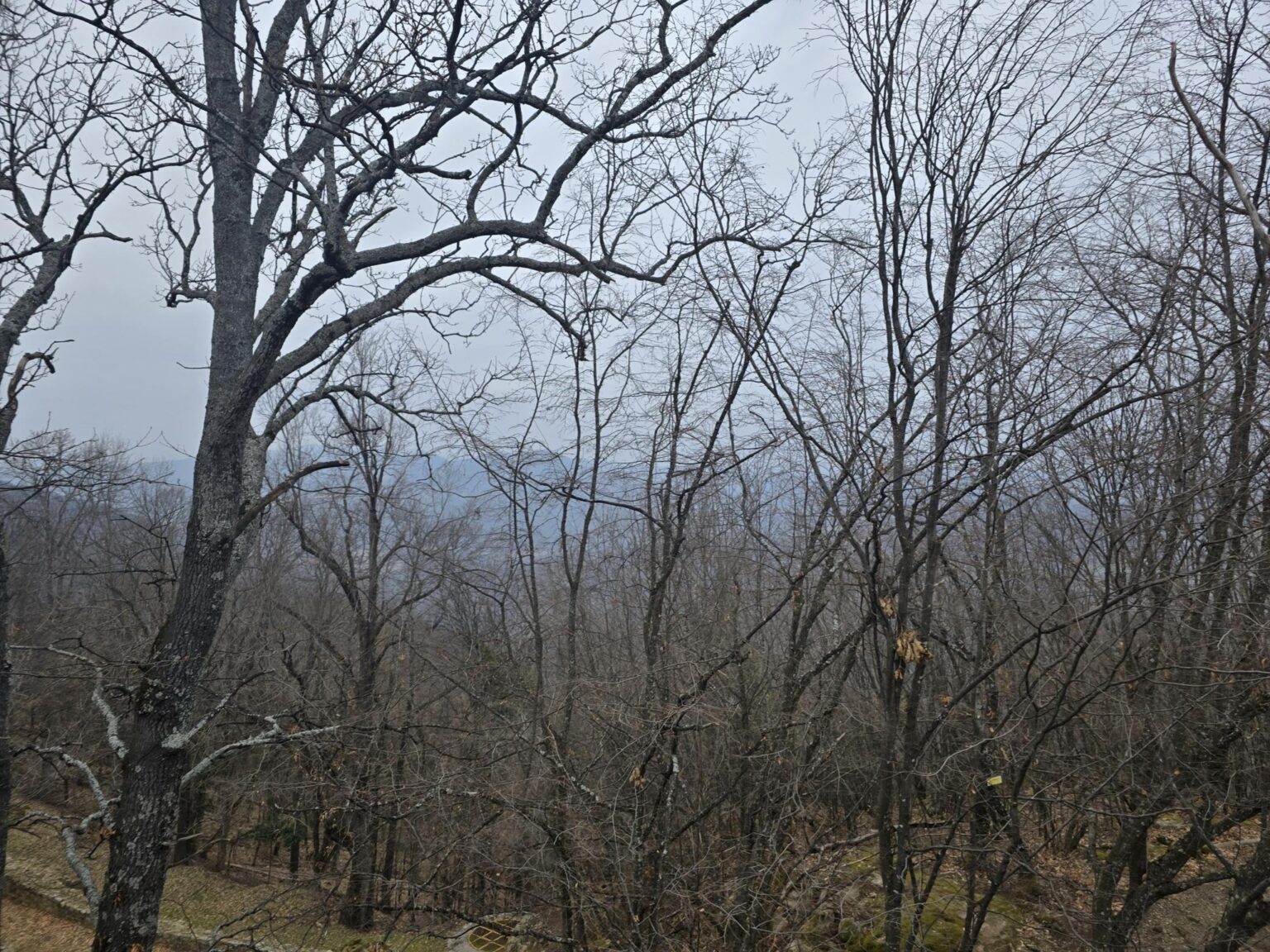
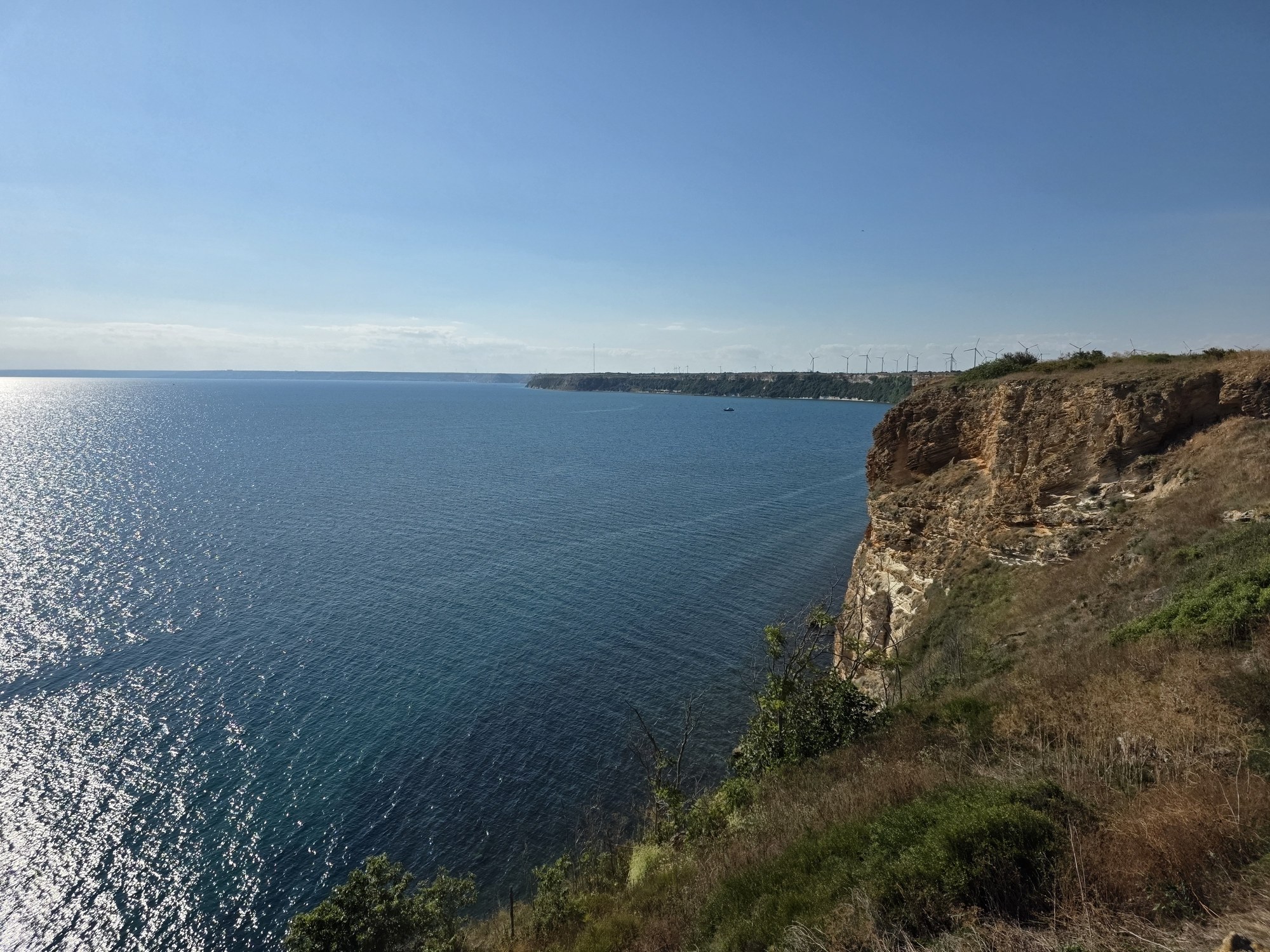
An ideal short outing from Sofia that takes a minimum of about four hours and can comfortably stretch to six, seven or eight with a walk around Botevgrad and a sit-down for coffee or lunch. If you are collecting ideas in this format, we have plenty more day trips from Sofia. And here is the view from above:
Gallery
The full gallery: