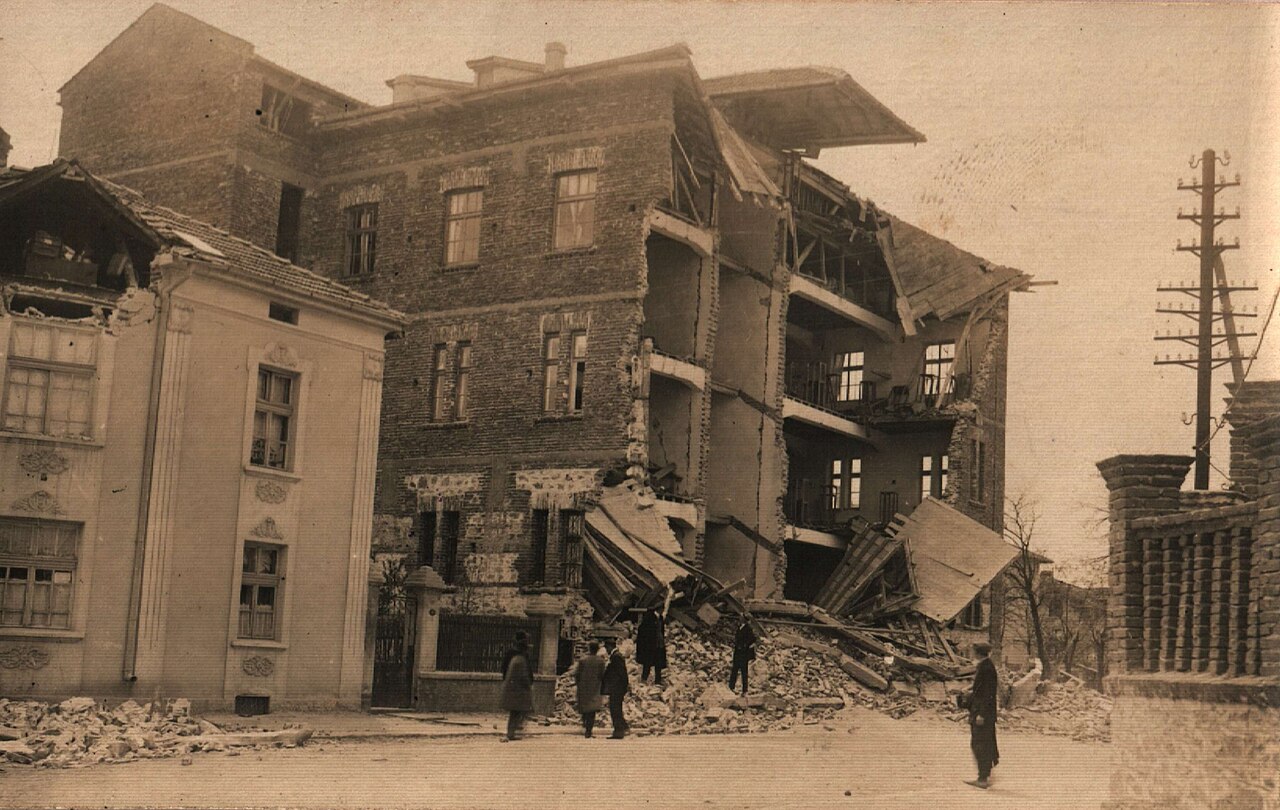
April 18 brings together disaster and preservation: one date shows the destructive power of nature, the other the need to protect cultural memory.
April 18, 1928 — The Popovitsa Earthquake Devastates Southern Bulgaria
On April 18, 1928, a powerful earthquake with its epicentre near Popovitsa struck southern Bulgaria. It destroyed a large part of Plovdiv, killed around 120 people, and injured more than 1,000. The disaster was part of a destructive seismic sequence that affected the Plovdiv and Stara Zagora regions. Earthquakes leave more than physical damage: they reshape communities, test emergency response, and remain in family memory for generations. The 1928 events became central to Bulgarian disaster history and influenced later awareness of seismic risk. April 18 therefore marks a tragic reminder that cities and villages live with the forces of the land beneath them.
April 18, 1957 — The Cultural Monuments Institute Is Established
On April 18, 1957, the Cultural Monuments Institute was established. Its creation reflected the growing need to study, document, restore, and protect Bulgaria’s architectural, archaeological, and artistic heritage. Cultural monuments are vulnerable to time, neglect, ideology, construction, and natural disaster. An institution devoted to them helped organize expertise and preservation policy. Bulgaria’s heritage ranges from Thracian tombs and medieval churches to Revival houses, urban ensembles, and modern monuments. Protecting that inheritance requires trained specialists and long-term public responsibility. April 18 therefore pairs fittingly with the memory of earthquake damage: it reminds us that heritage survives only when societies actively care for it.
Read about April 17 or continue with April 19. For more stories, explore Bulgaria From Above.