April 19 sets a buried masterpiece of ancient Thrace beside an election held in the wreckage of a modern crisis — two very different kinds of inheritance in Bulgaria’s history.
April 19, 1944 — The Thracian Tomb of Kazanlak Is Discovered
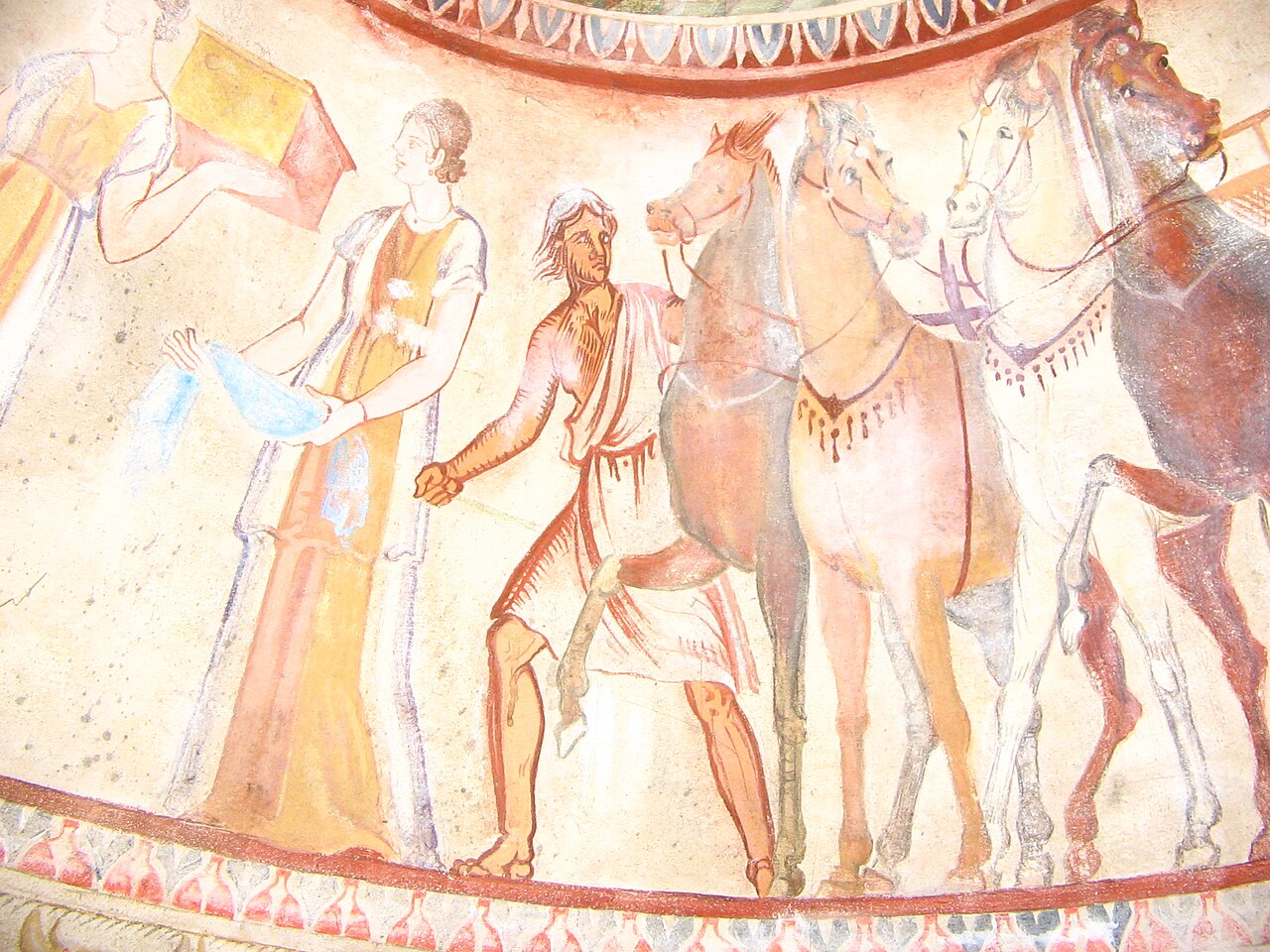
On April 19, 1944, the Thracian Tomb of Kazanlak was discovered, revealing some of the finest murals to survive from ancient Thrace. Their painted scenes rank among the masterpieces of Hellenistic-period art, and they are far more than decoration for a burial chamber.
Through their images the murals speak of power, memory, and the world beyond death as the Thracian elite imagined it, opening a rare view onto the ritual, belief, and artistic life of that society. The tomb’s importance was soon recognised well beyond Bulgaria: in 1979 UNESCO placed it on the World Heritage List, making the site near Kazanlak at once a landmark of Bulgarian archaeology and a monument of universal cultural value.
April 19, 1997 — Early Elections for the 38th National Assembly
On April 19, 1997, Bulgarians went to the polls in early elections for the 38th National Assembly. The vote came after a punishing stretch of hyperinflation, mass protests, and collapsing public trust in government, when the country’s economy and politics alike seemed to be coming apart.
Voters were plainly after more than a reshuffle of familiar faces; they wanted order and predictability restored. The result opened the way to a period of reform, including the introduction of the currency board arrangement and Bulgaria’s first real steps toward Euro-Atlantic integration. For many people, 1997 became the line that separated collapse from the slow, uncertain return of stability.