September 5, 1885 — Goliamo Konare and the Road to Unification
On September 5, 1885, armed volunteers in Goliamo Konare, led by Prodan Tishkov, known as Chardafon, rose up and arrested the local governor. Their action became the official catalyst for the movement for the Unification.
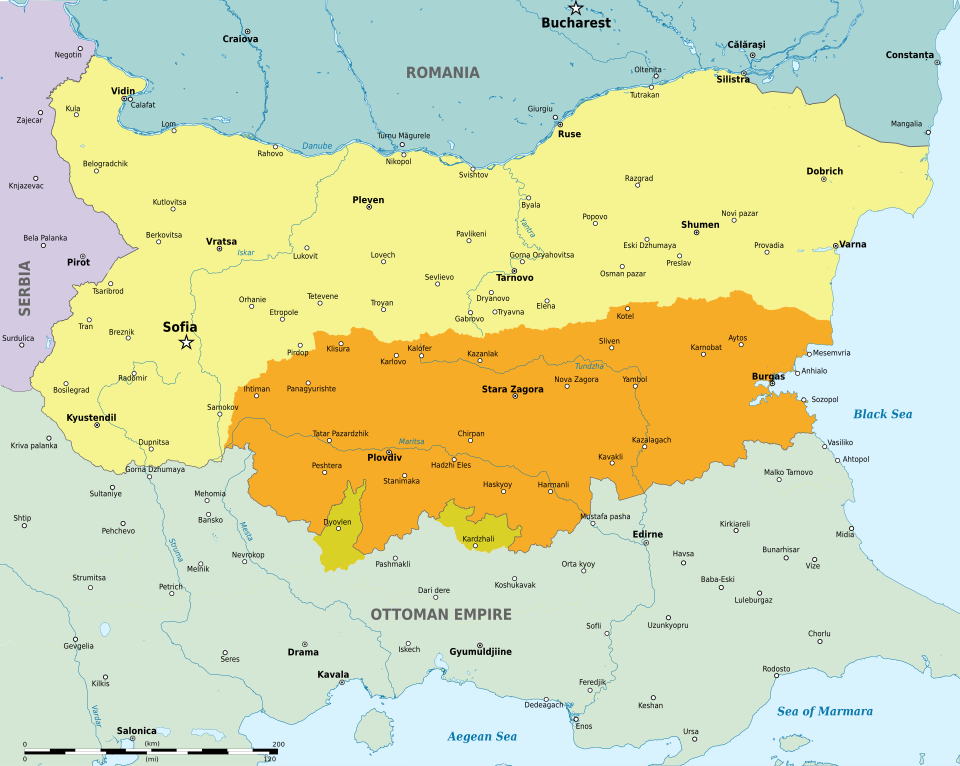
The news and the example set in Goliamo Konare encouraged other towns to rise as well. Military units marched towards Plovdiv, and events developed quickly in Eastern Rumelia. A local act of resistance thus became part of a broader movement aimed at uniting the Principality of Bulgaria and Eastern Rumelia.
That connection between a local action and a wider political movement is what makes September 5 an important stage in the history of the Unification.
September 5, 1944 — The Soviet Union Declares War on Bulgaria
On the same date in 1944, the Soviet Union officially declared war on the Kingdom of Bulgaria. This came despite Bulgaria’s declared neutrality and its attempts to negotiate an armistice.
The declaration opened the way for the Red Army to enter Bulgarian territory. Its consequences were profound: the monarchy collapsed, and the political change that followed led to the establishment of the communist regime. September 5 therefore brings together two different moments in Bulgarian history—the preparations for national unification in 1885 and the beginning of a decisive political turn in 1944.
The date thus recalls both the struggle for national unity and the political rupture that changed Bulgaria’s system of government.
To follow the events around this date, continue with September 4 or September 6. For more stories and places in Bulgaria, explore the Bulgaria From Above category.