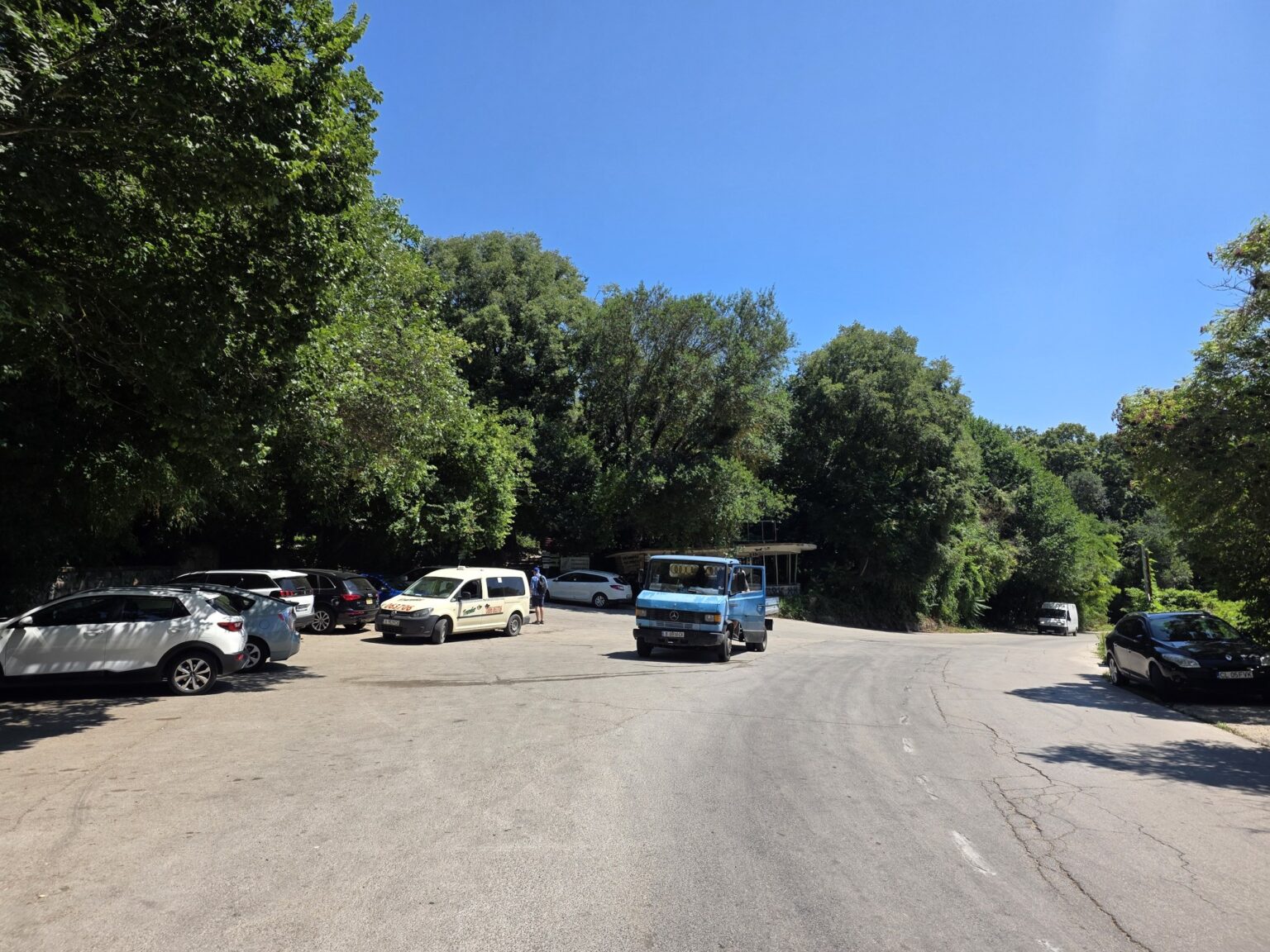
You don’t see Aladzha Monastery from the road. From the Golden Sands resort a side road climbs into the forest of the nature park, and the monastery’s free car park sits right beside it, impossible to miss. The road carries on past it; you stop here. From there it’s steps — two or three minutes up — and only at the top does the limestone wall appear, with everything carved into it. The whole complex, with the museum, the Catacombs and the rock monastery itself, takes us an hour and a half to two hours.
We go just before noon in late July. As a general rule, walking around anything at midday in August is a moderately wise idea, but the sacrifice is made for the dear reader. It works out better than expected: most of the route runs under trees, the rock chambers are noticeably cooler, and the forest path to the Catacombs is shaded from end to end. The sun only really lands on the open steps and the cliff face. 🙂
| Where it is | Northern Black Sea coast, in the middle of Golden Sands Nature Park, about 3 km from the resort and 15 km from Varna; Google Maps |
| Getting there | by car on the turn-off uphill from the Golden Sands road; by public transport, city bus 29 to the “Aladzha manastir” stop (only two services a day, morning and evening) or 109 and 409 to “Chayka” and a walk from there |
| How long | an hour and a half to two hours for the whole site including the Catacombs, with a coffee stop and time for the cats that live around it; under an hour if you stay at the monastery and the museum |
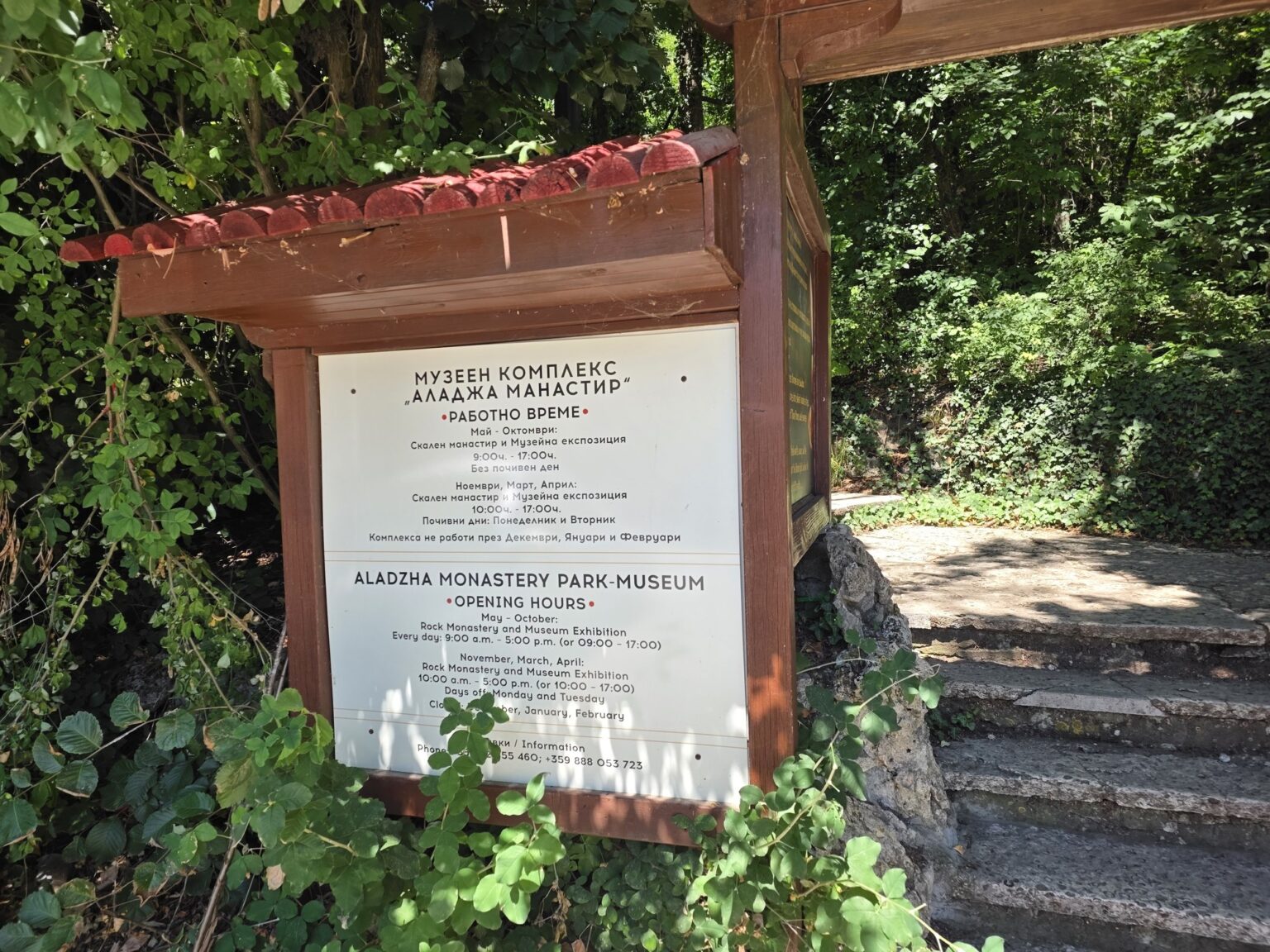
| Opening hours | May – October 9:00 – 17:00, open daily; November and March – April 10:00 – 17:00, closed Monday and Tuesday; closed entirely December – February. Check the current times on the official Varna Municipality page. |
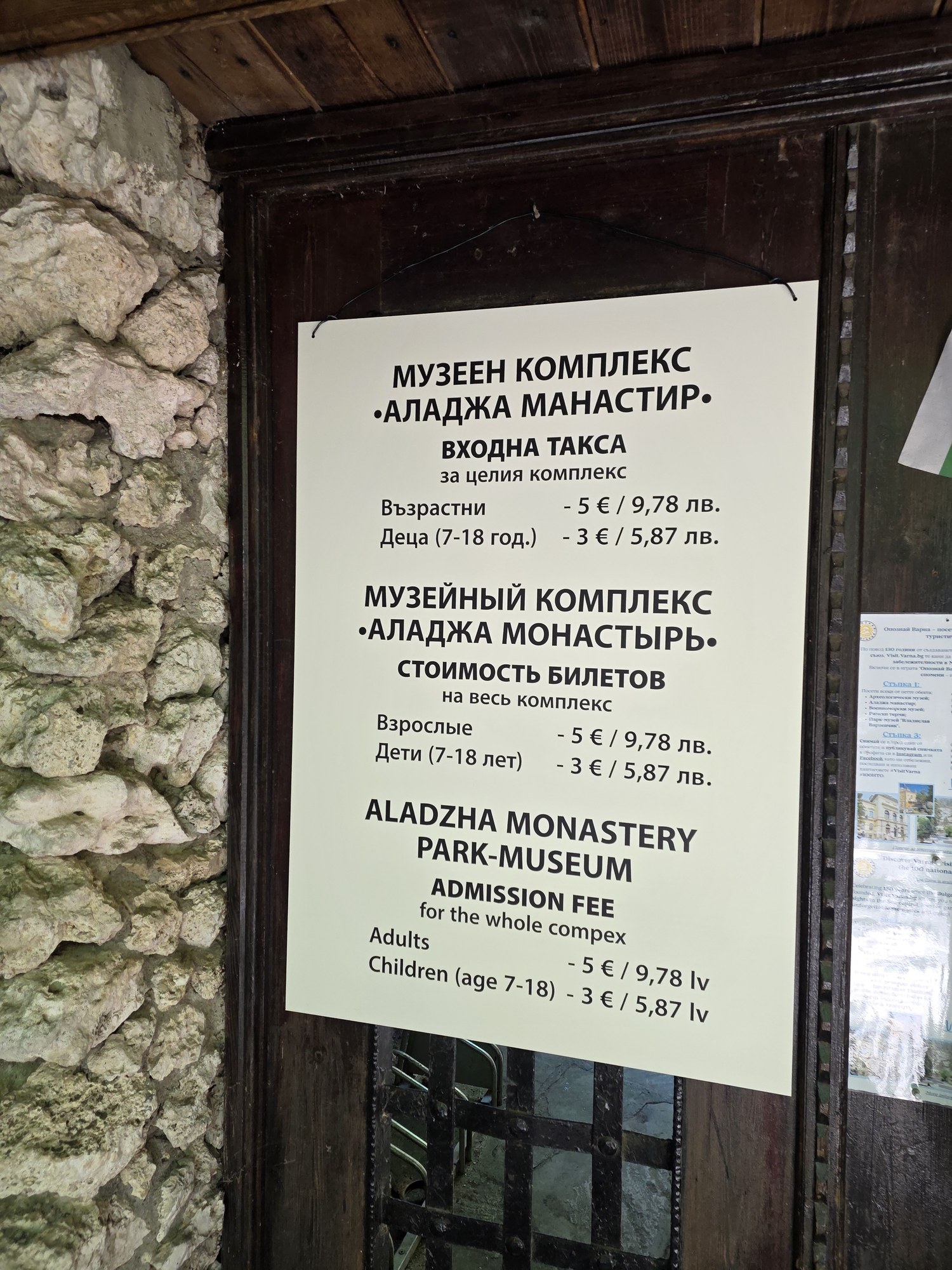
| Entry | €5 adults, €3 for children aged 7 to 18 (the official page lists the same price for students), free under 7. The sign at the ticket desk is explicit: the fee covers the entire complex — rock monastery, Catacombs and museum exhibition. A guided talk costs €15 extra. Check the current prices on the official page. |
| The Catacombs | 600 – 700 m to the west, about 15 minutes each way on a forest path; included in the same ticket; the spot on the map |
| Parking | a large, free car park at the entrance, with a drinking fountain; impossible to miss from the road; on a summer weekday around midday there are spaces |
| When to go | the first hours after opening if you’re sensitive to sun — most of the route is under trees, but the steps and the cliff face are open; after rain the path to the Catacombs turns slippery and is better skipped |
| Phone | +359 52 355 460 (Regional History Museum – Varna) |
“Aladzha”, St Spas and the ghosts of the monks
A little history first, for atmosphere. The name is Turkish, of Persian-Arabic origin, and means “variegated, motley” — the painted one. The monastery’s Christian name is simply unknown. In the early 1900s the archaeologist Karel Škorpil recorded a local tradition that its patron was St Spas, from Christ the Saviour. Since 1960 Bulgarian Christians have called it “Holy Trinity”, but that is a later addition rather than the original.
The legends here aren’t one story but a whole layer of them. The wording used by the museum and by the Bulgarian Tourist Union is restrained but clear enough:
They tell of treasure hidden somewhere in the rock before the Ottomans arrived, and of the ghosts of monks who still wander among the ruins.
Two items for the strange-facts drawer. First: the monastery only enters print in 1832, in “Letters from Bulgaria” by the Russian writer Viktor Teplyakov. Second: in 1997 a new species of harvestman was described here — Nelima aladjensis — and named after the place. Not many monasteries come with their own arachnid. 😀 For Bulgarian hikers it’s also site no. 9c on the national list of 100 Tourist Sites, which means a rubber stamp in a little booklet — a very Bulgarian form of collecting.
From the car park to the ticket desk
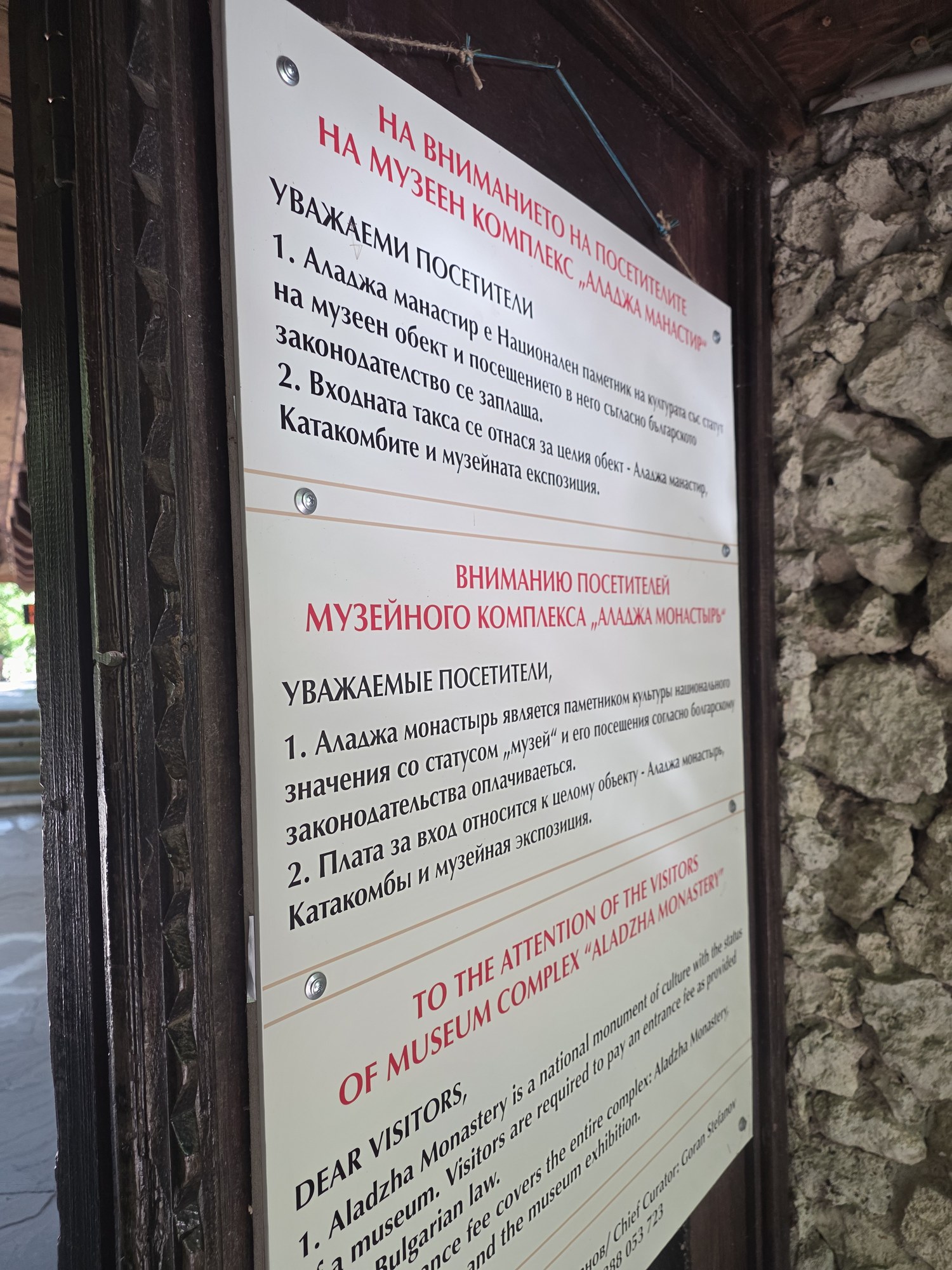
You start at the car park, through a wooden gateway and up an alley of steps. Two or three minutes, no more, but long enough to understand that this place sits on a slope. At the top the ticket desk is immediately on the right, and the museum building is on the left. The price board is new and refreshingly specific: it states in writing that the entry fee covers the whole complex, not just the cliff.
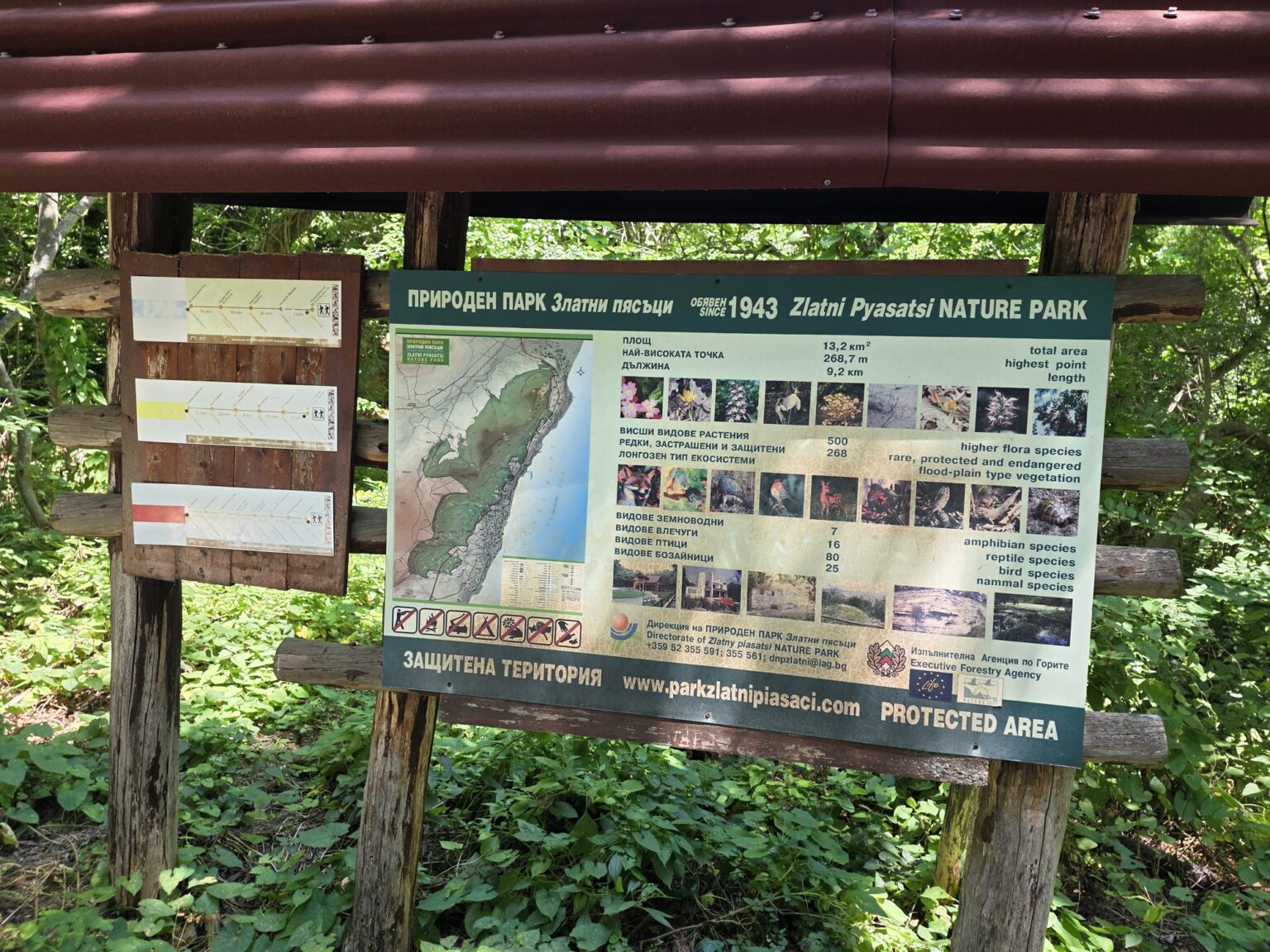
Next to it stands a second sign with the rules and a third for Golden Sands Nature Park, in the middle of which the monastery sits. Three signs within five metres, each in a different typeface and from a different decade. Classic.
The museum, and the funnel that won’t let go of your coin
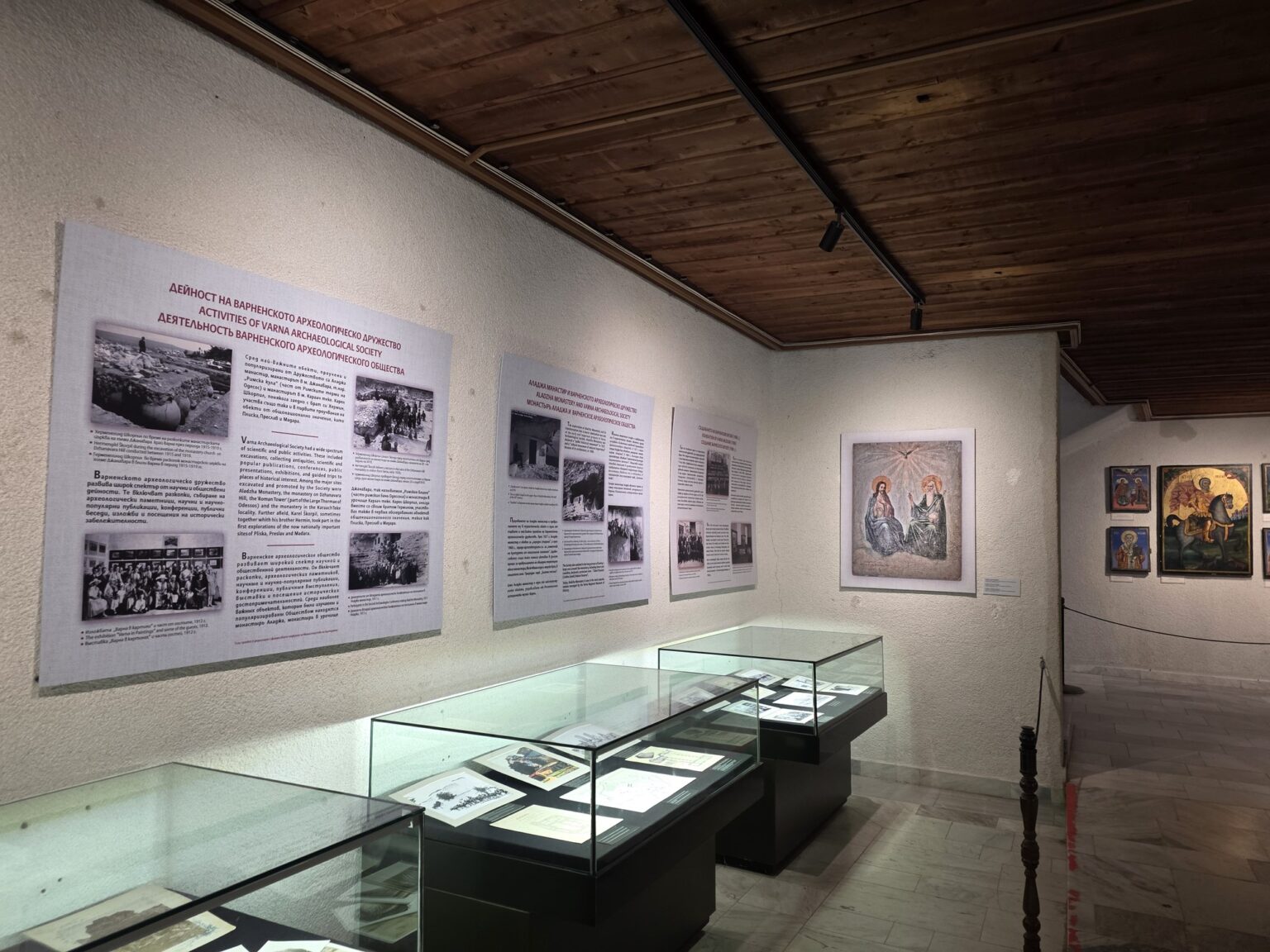
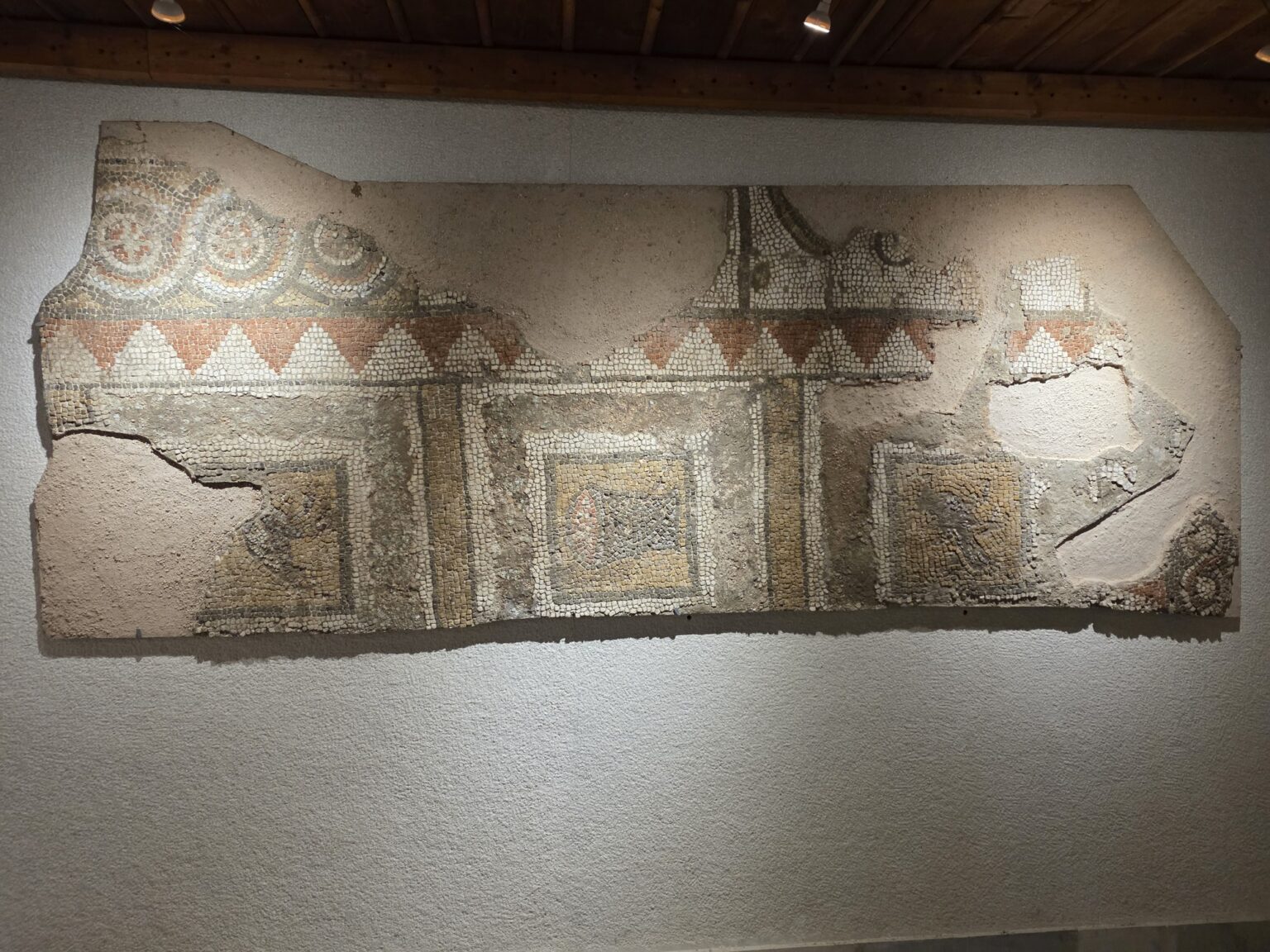
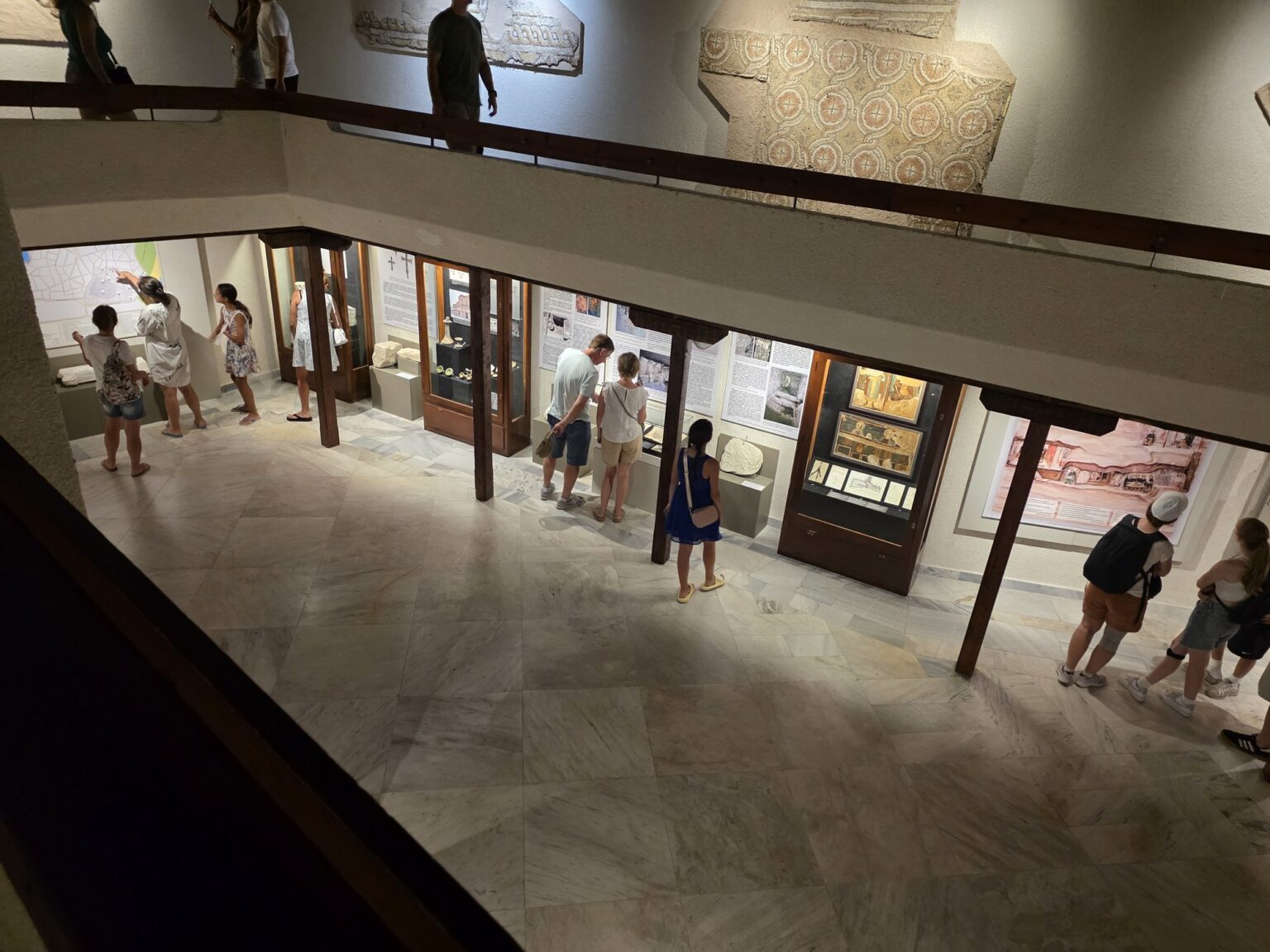
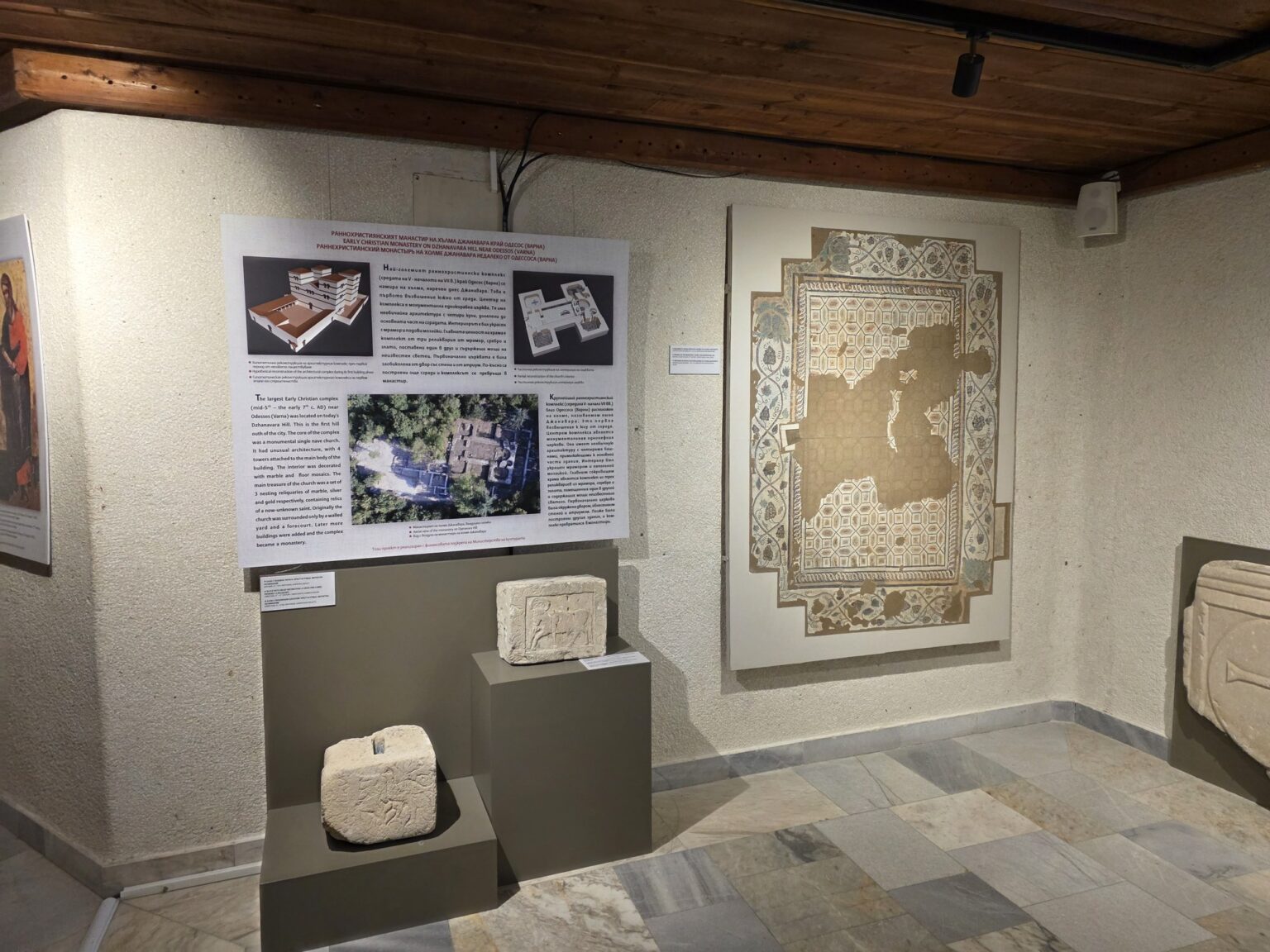
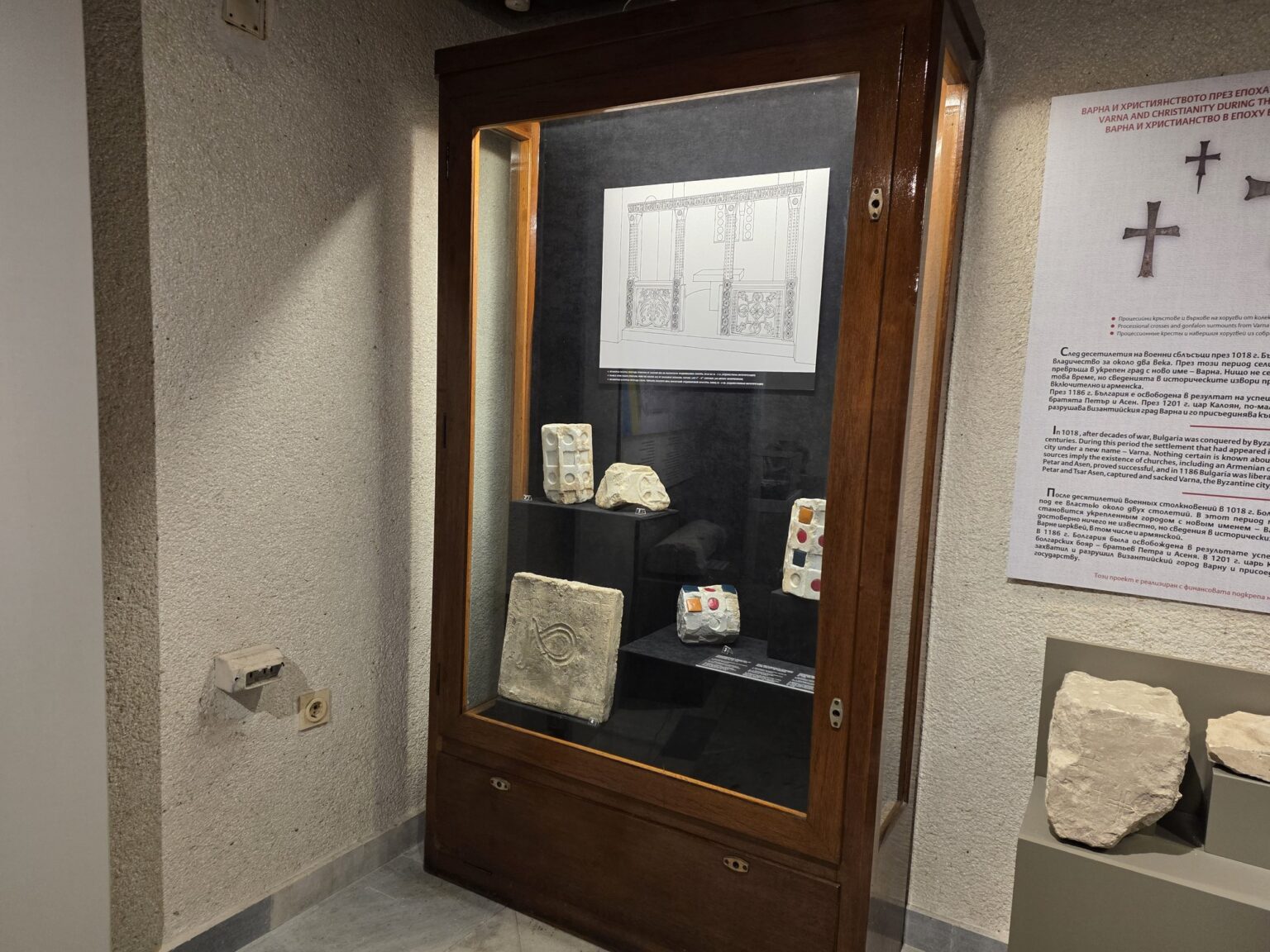
The museum building dates from the 1970s and is better inside than that decade usually promises: a two-storey hall with a walkway around the upper level, so you look down onto the display cases. Below there are scale models of the monastic complex, inscribed stone slabs, icons, mosaics and finds from the excavations. Walking it at an unhurried pace takes about ten minutes.
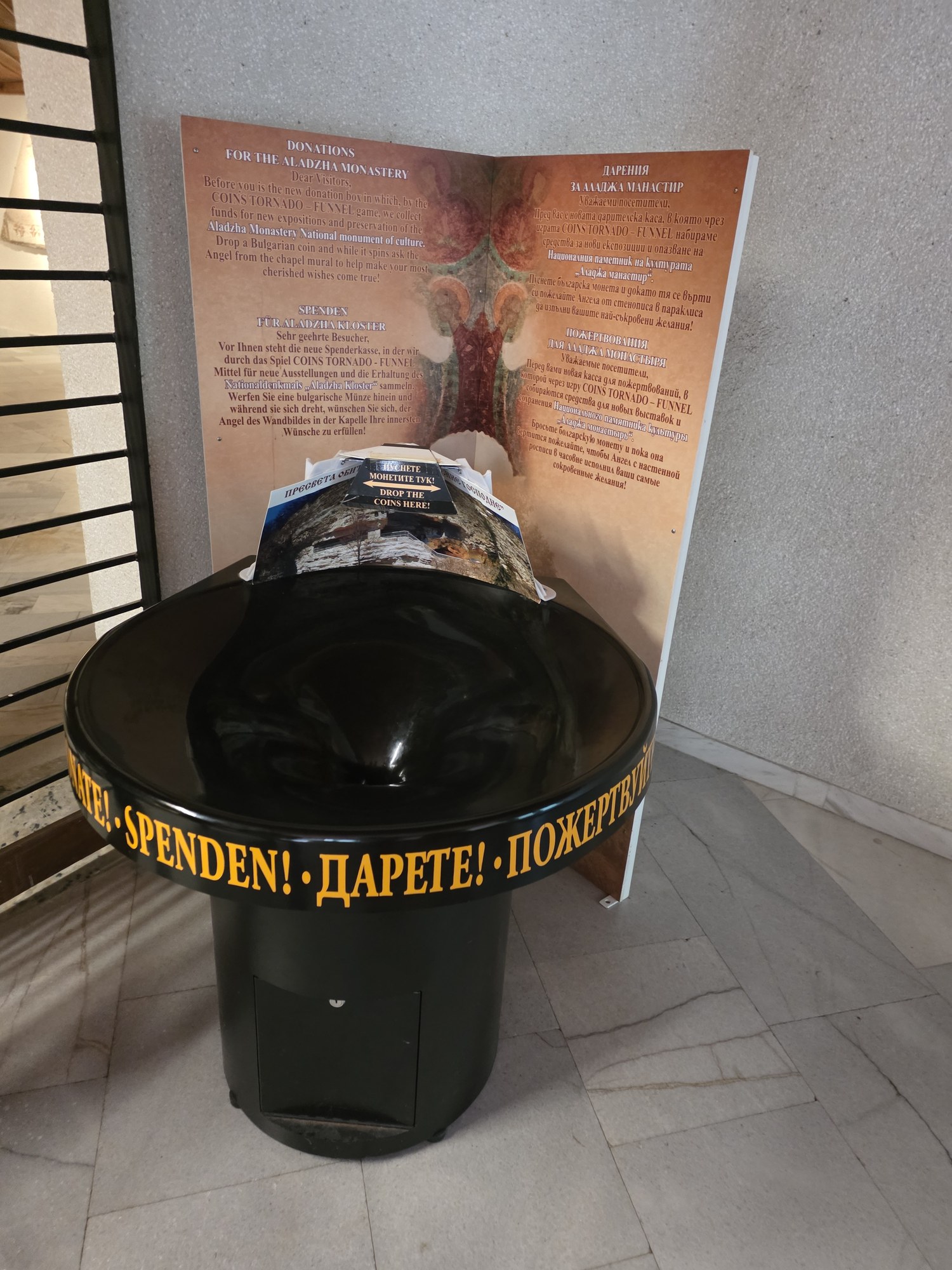
The real attraction, though, is a black donation funnel labelled in four languages. You drop a coin at the top, it sets off around the spiral, picks up speed and keeps accelerating until it vanishes into the hole at the bottom. It is genuinely mesmerising. We watch for far longer than we are willing to admit, then put in a second coin “to verify”. 🙂
The forest path and the Catacombs
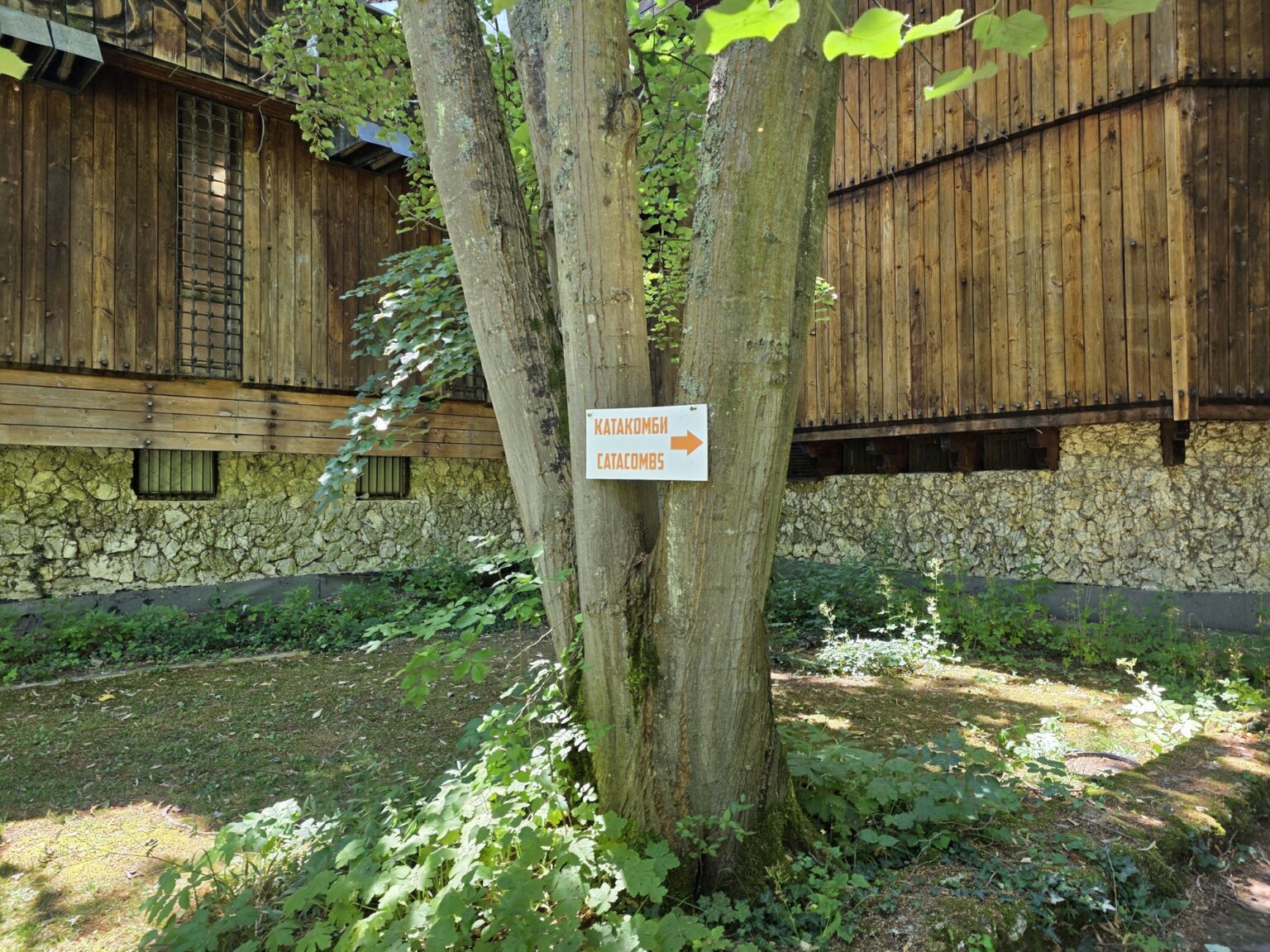
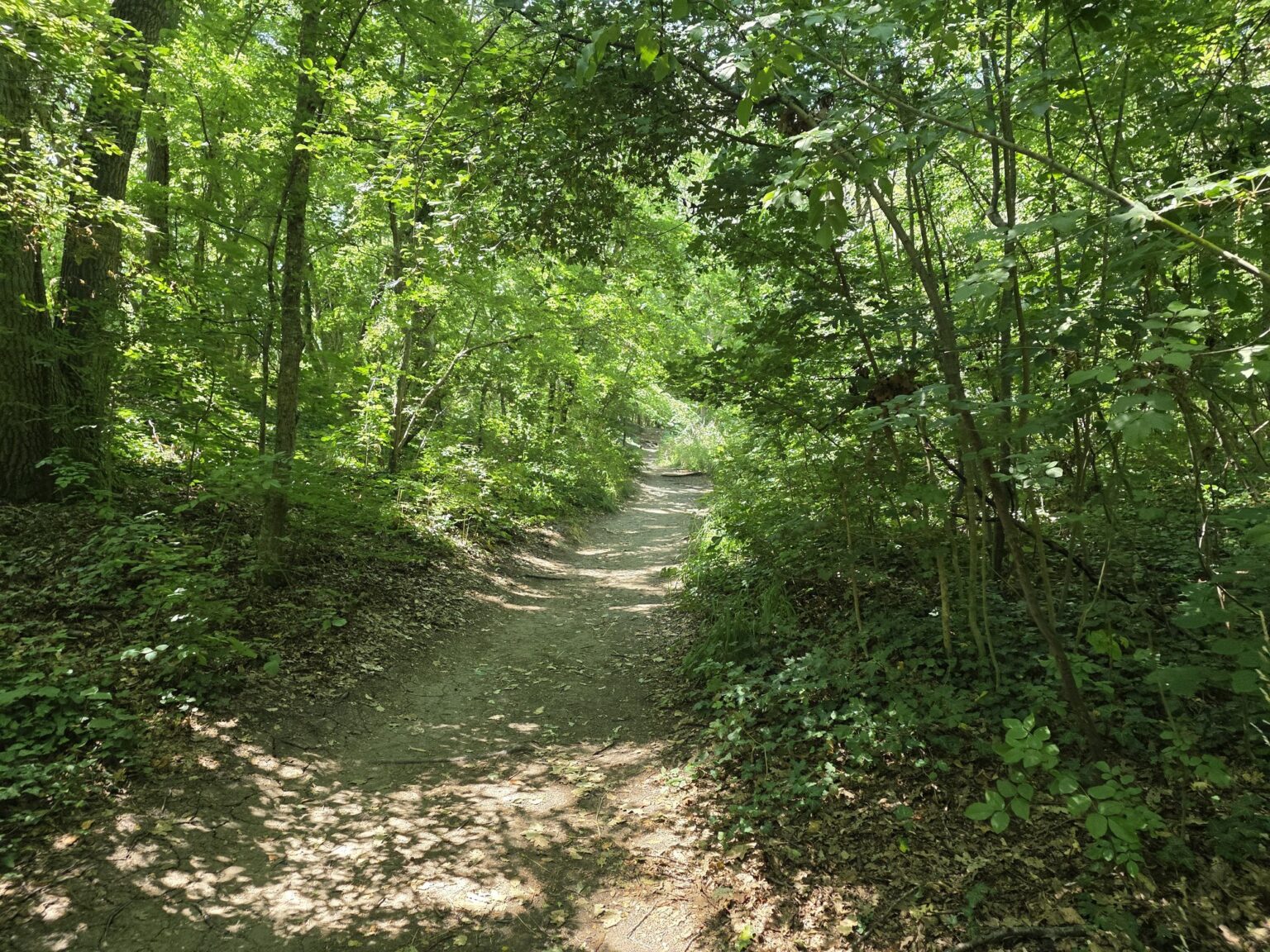
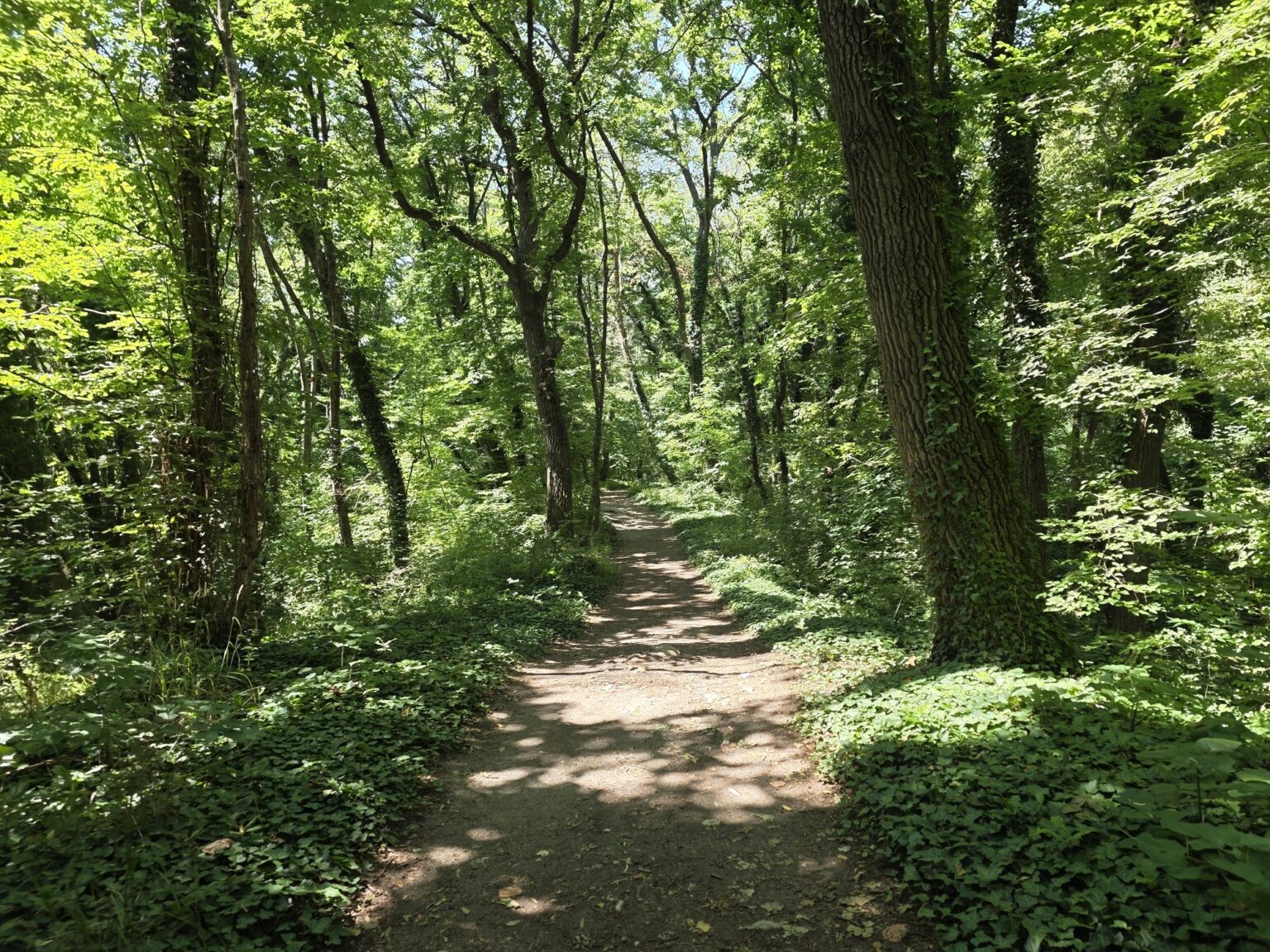
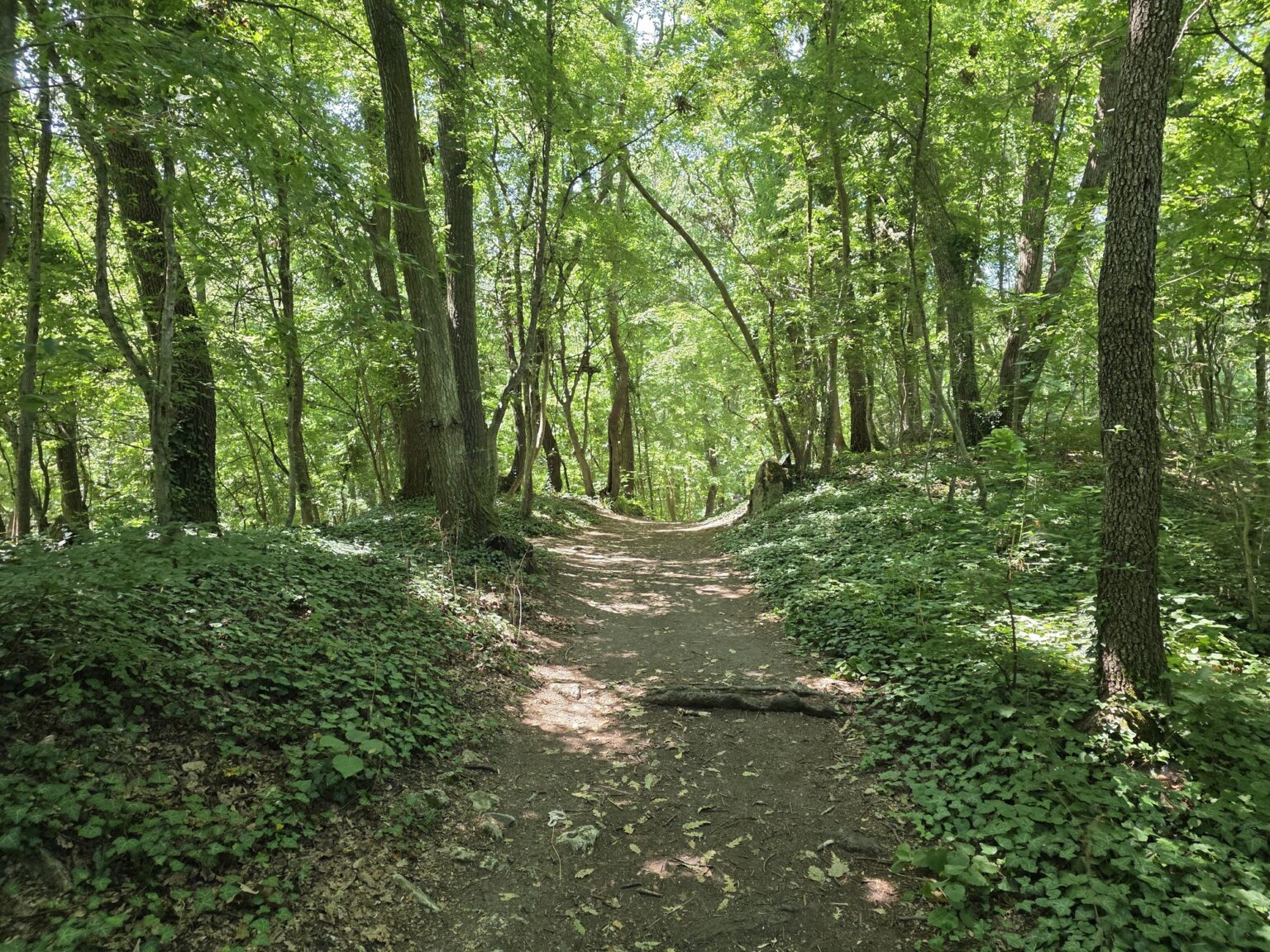
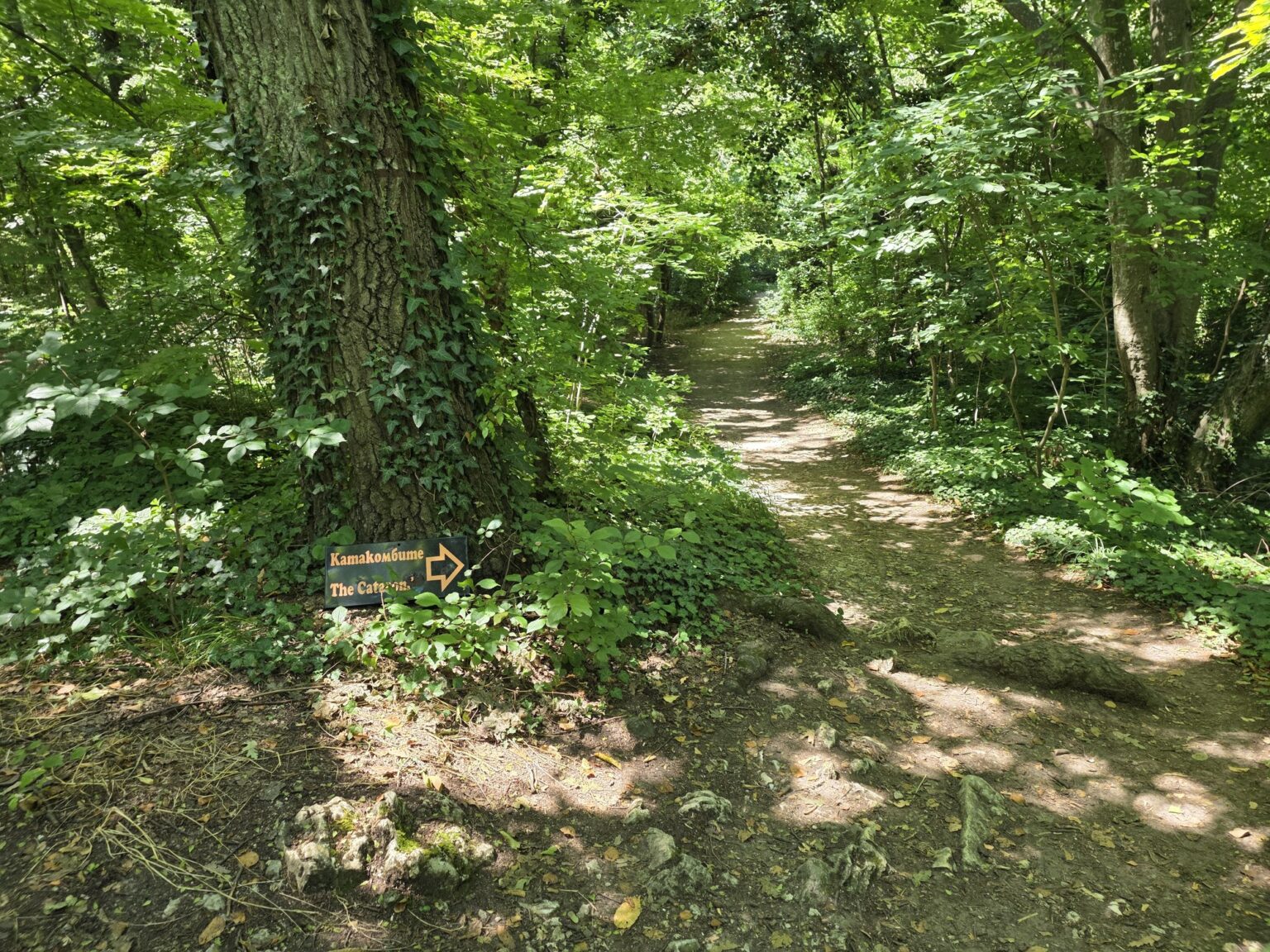
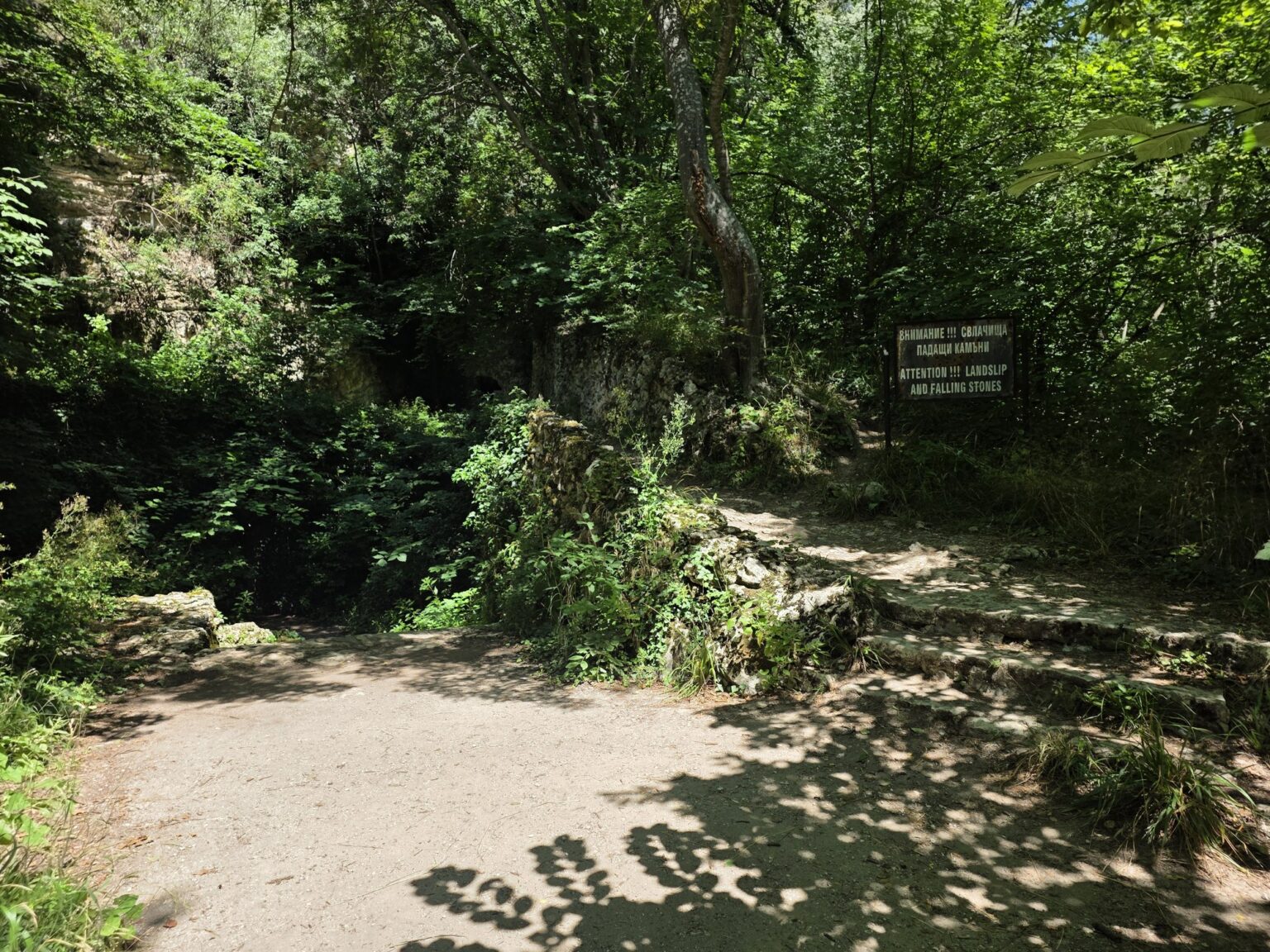
Leaving the museum, a forest path heads off to the left. A wooden plaque nailed to a tree reads “CATACOMBS”, and that is the entire signage you get. It’s 600 – 700 metres west, under tree cover the whole way, with a couple of junctions and rather more gradient than photographs suggest. About 15 minutes one way; you come back the same way.
If it has been raining, skip it. The path is soil and tree roots, and near the end it passes under rock faces where a sign warns of falling stones and steep cliffs in two languages. Along the way small green plaques name the tree species — common hazel, hop hornbeam, field ash. The park is a protected area with rare species and it shows.
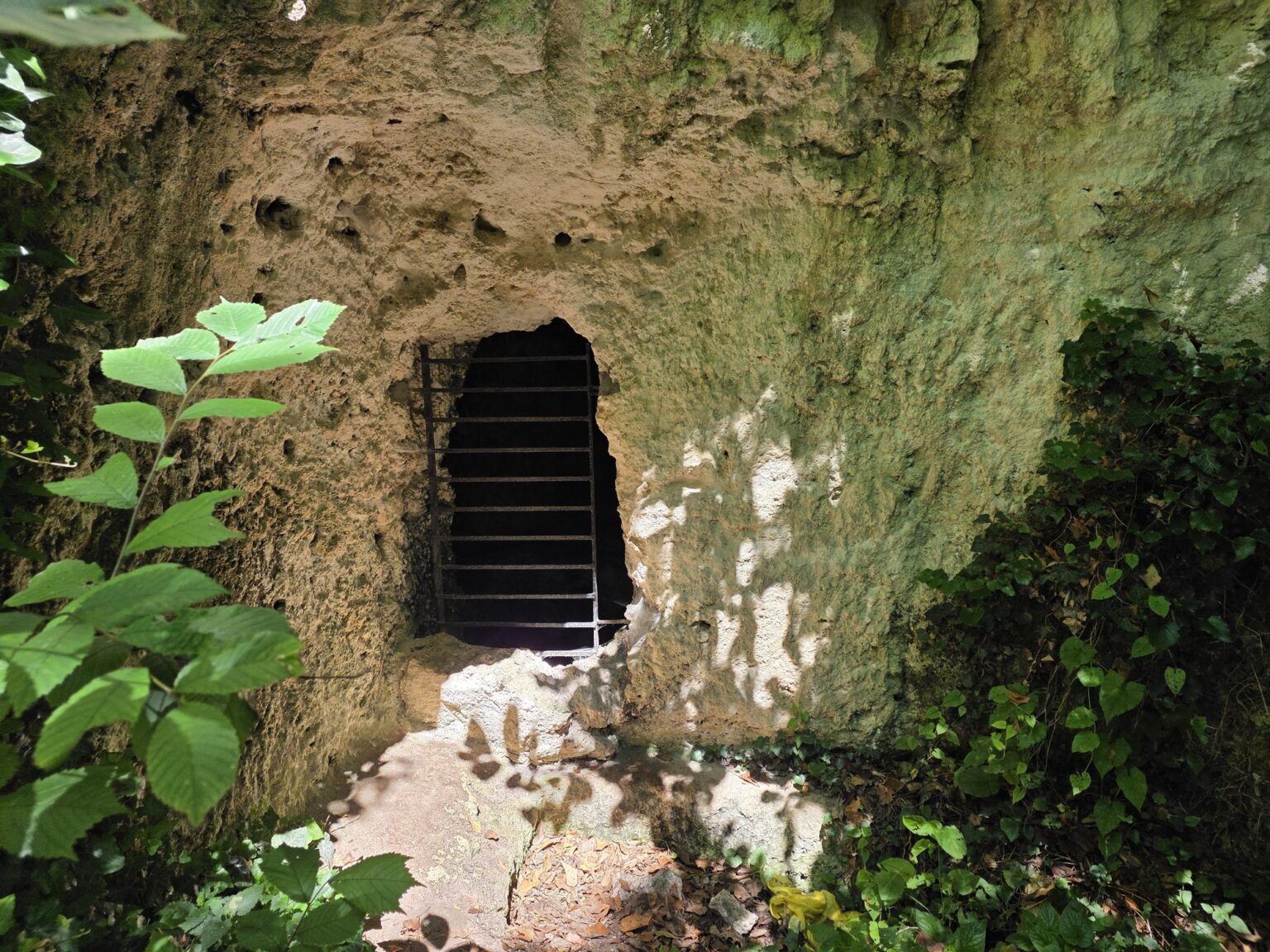
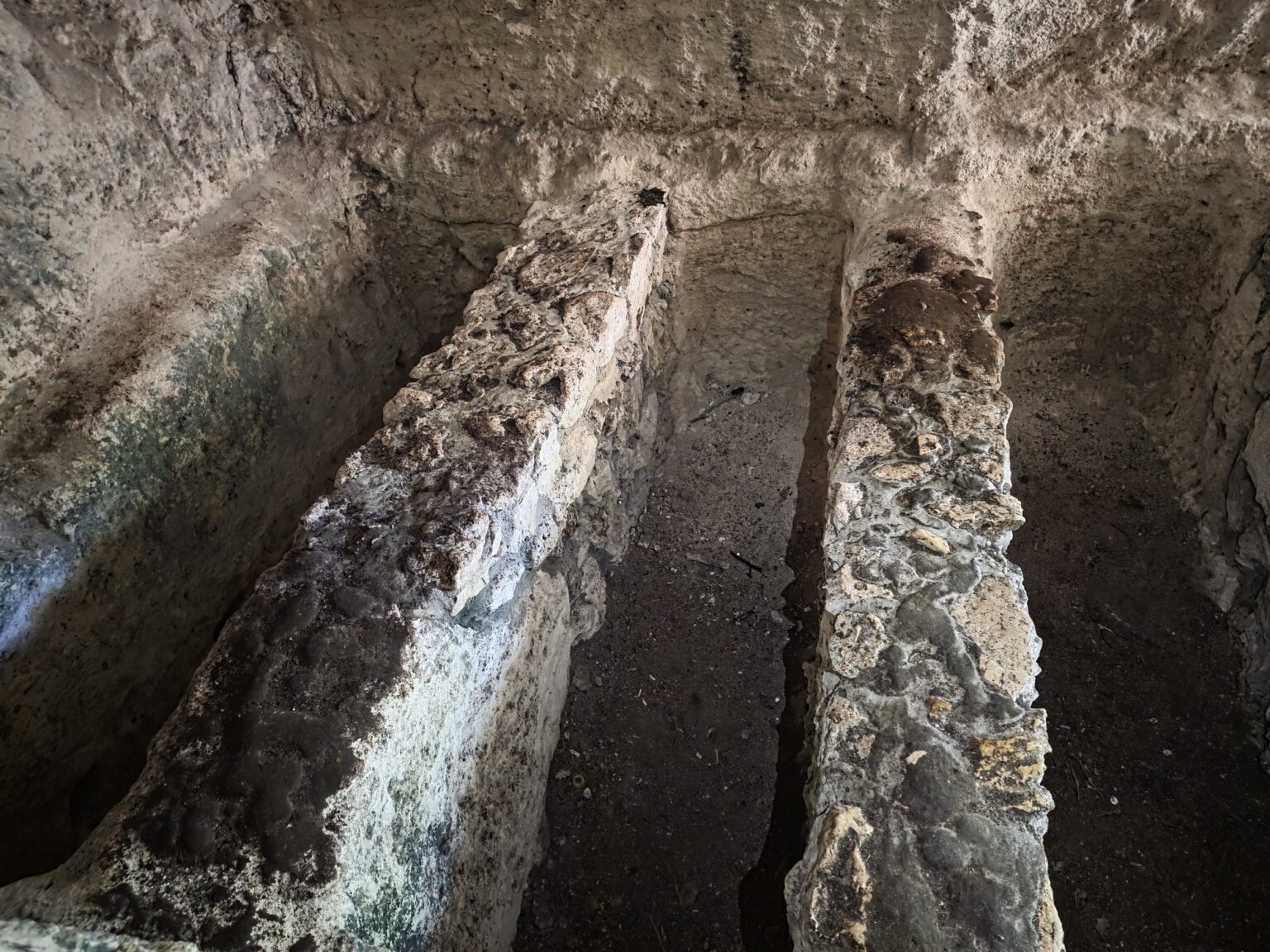
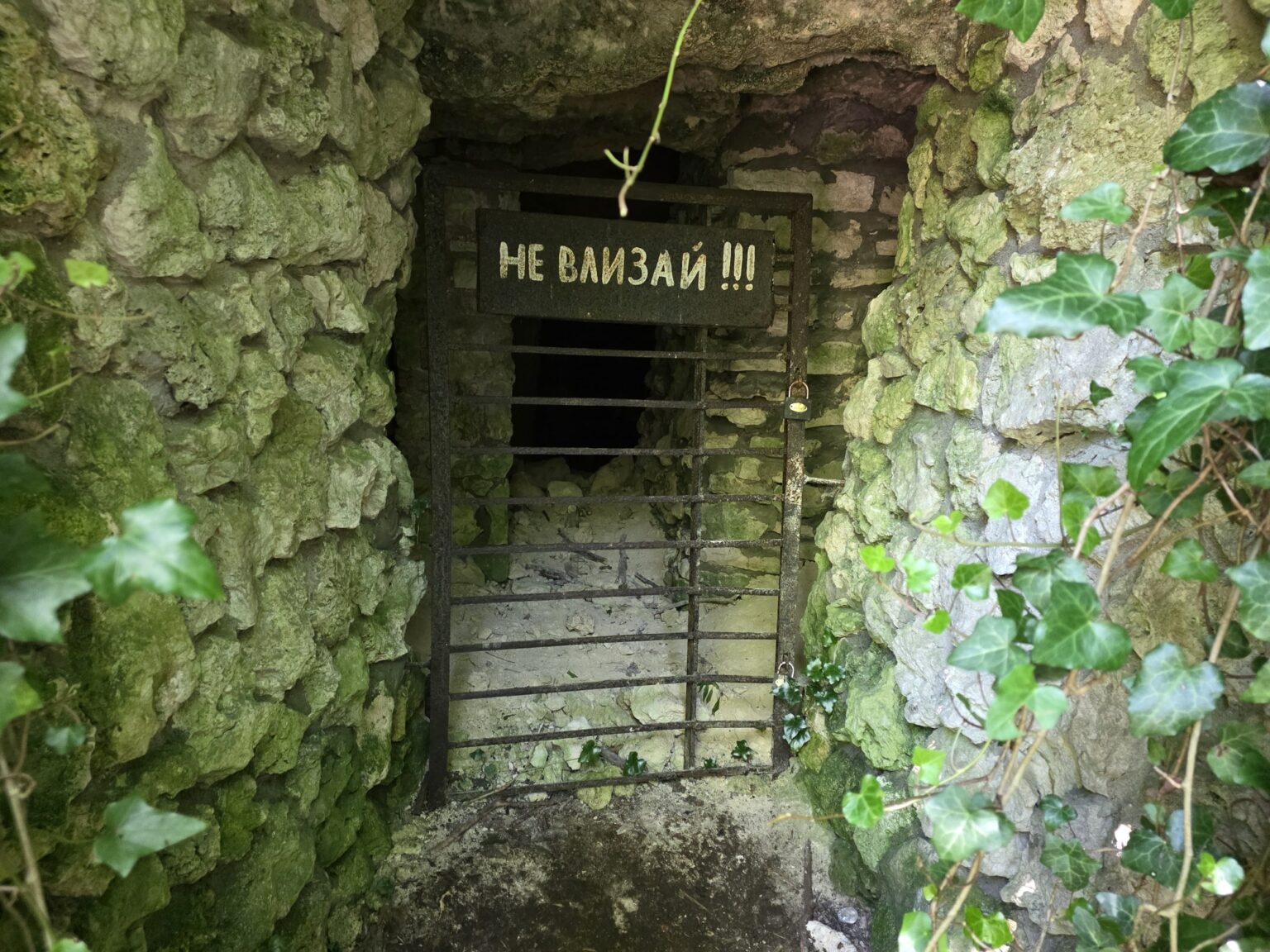
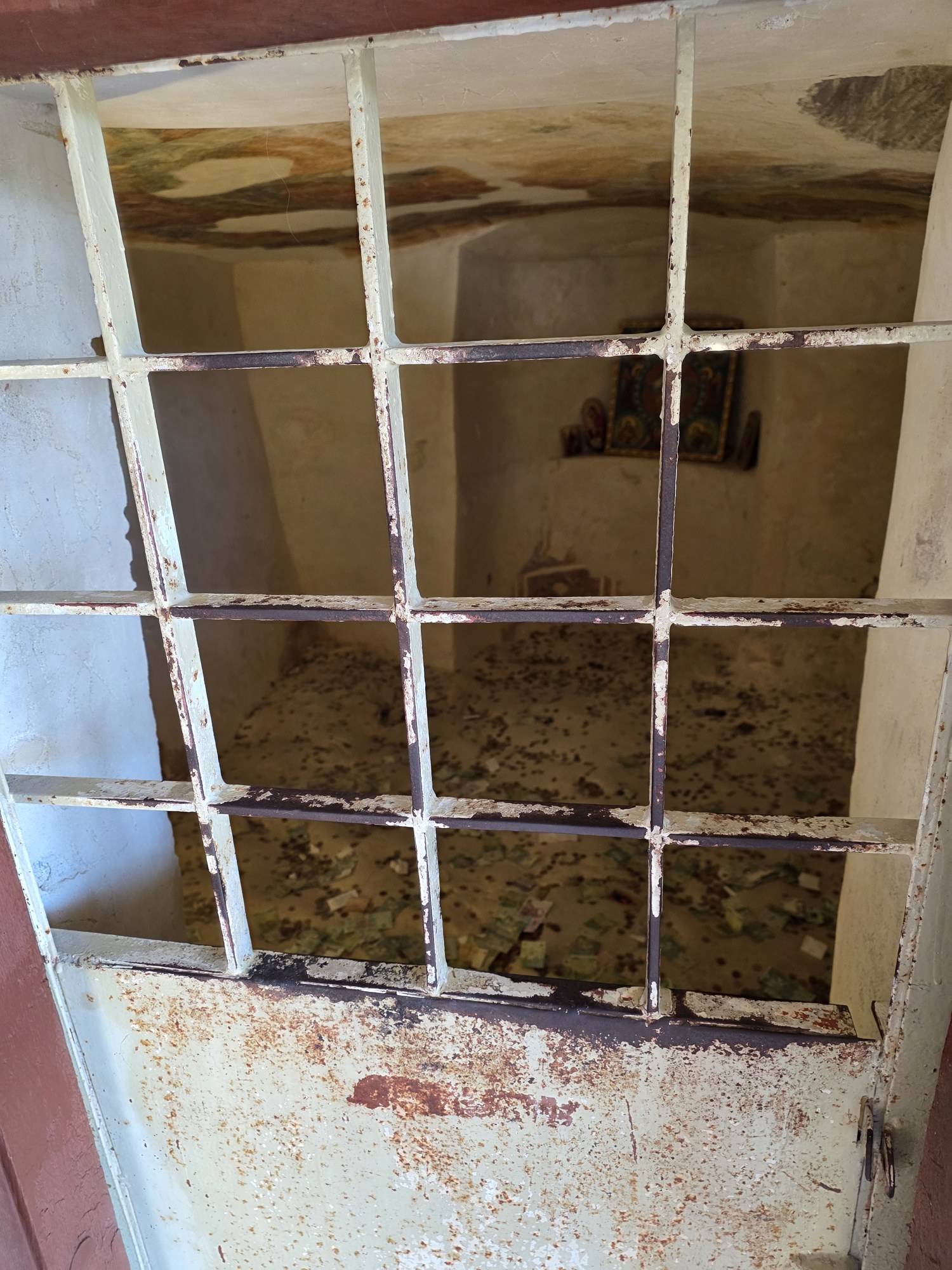
The Catacombs themselves are a cluster of caves with iron grilles across the openings. Inside you can see graves cut into the stone and chambers with an opening in the floor. The pottery, coins and graffiti found here date the occupation to the 5th – 6th century — so this is the older half of the story, not an annex to the monastery. Only in the 13th – 14th century did the two become parts of one monastic complex.
The rock monastery, on two levels
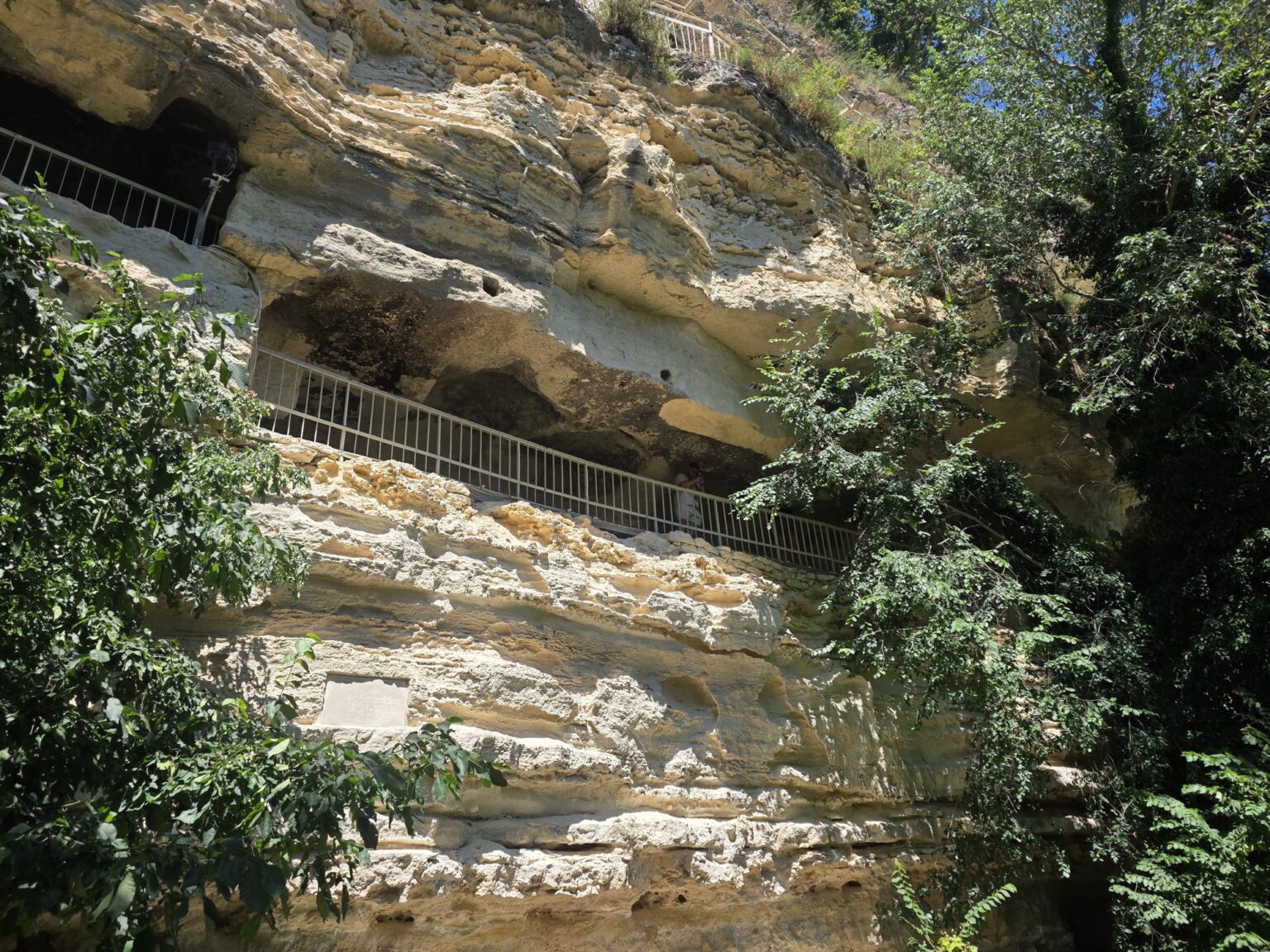
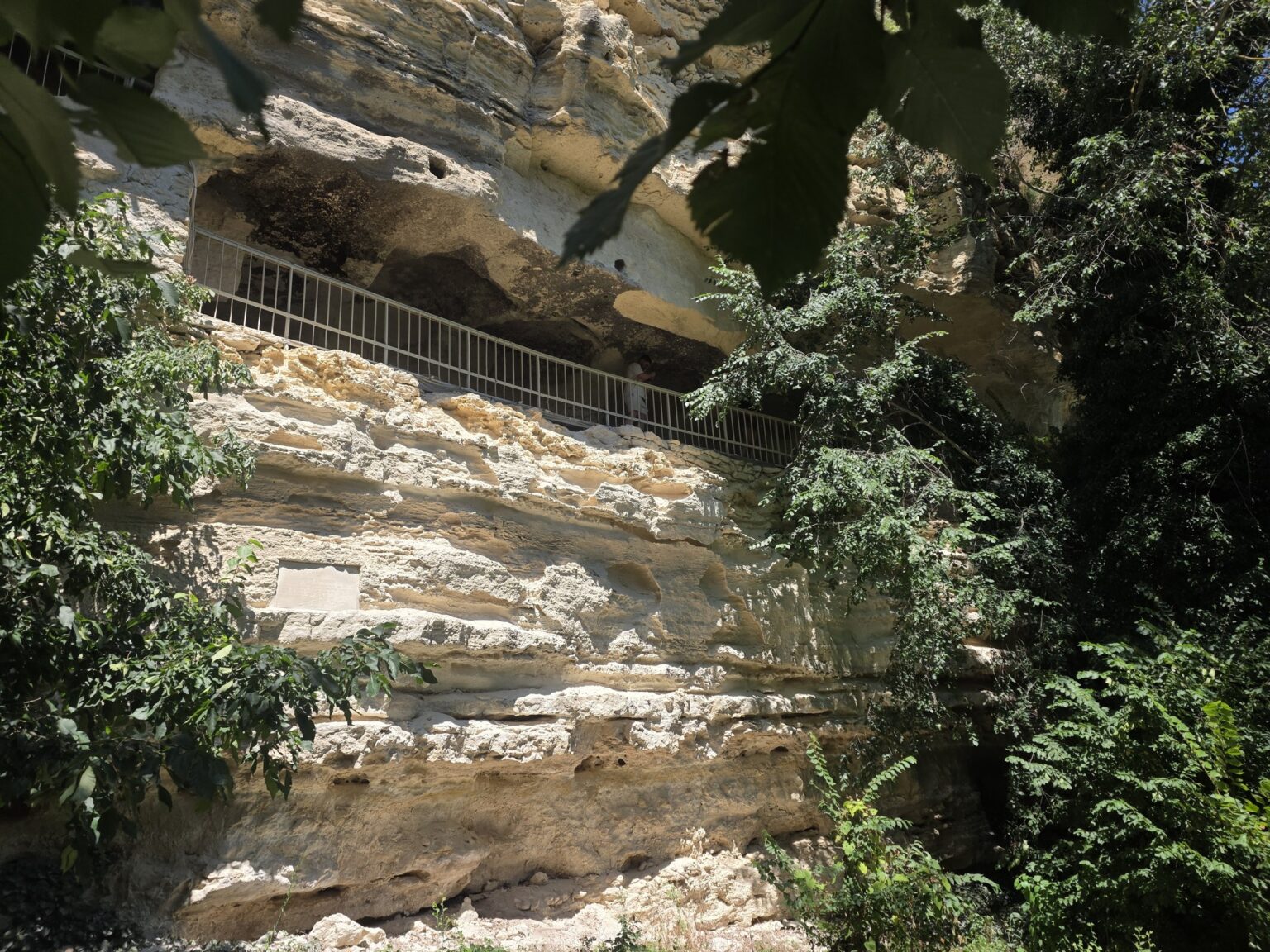
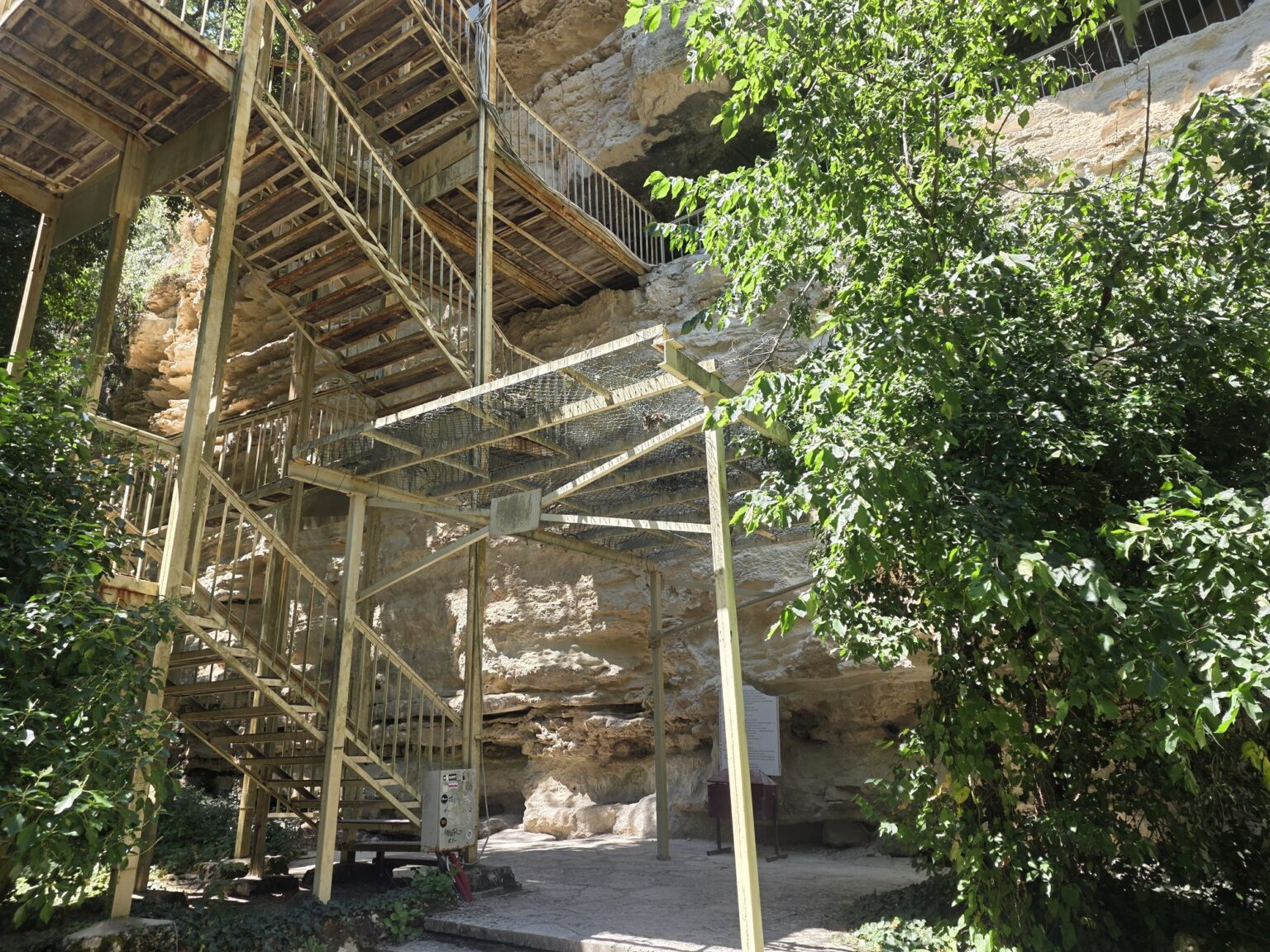
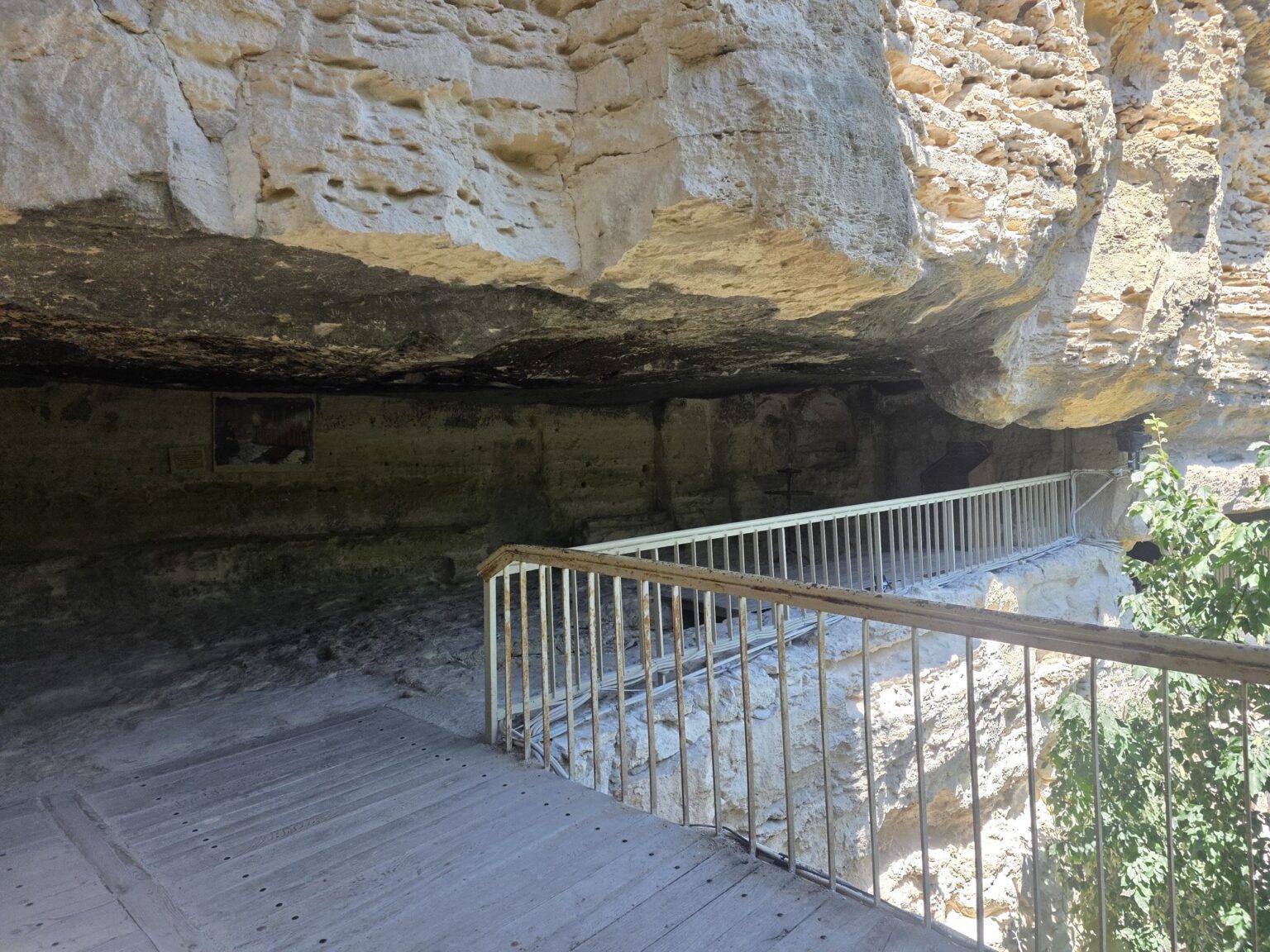
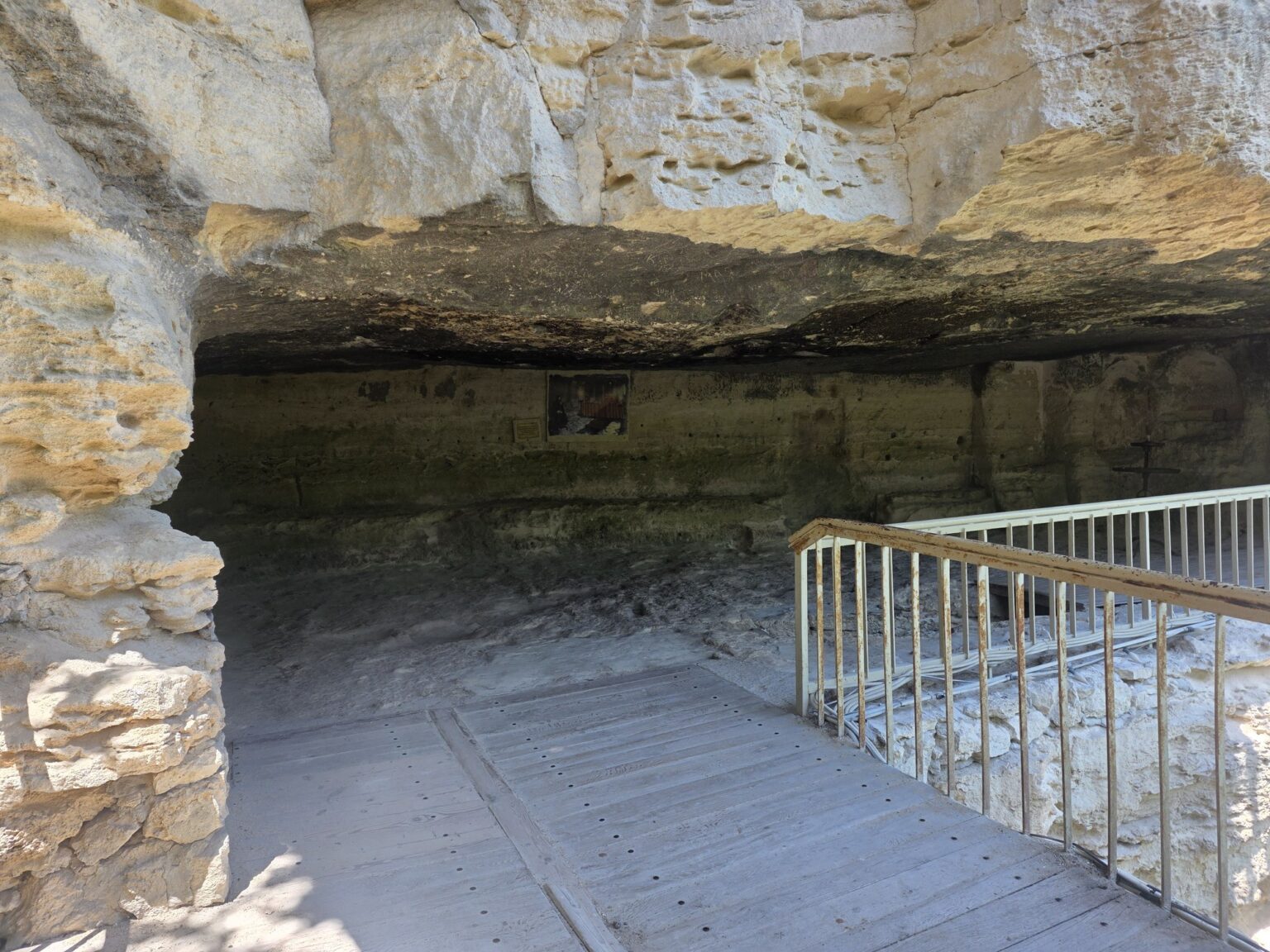
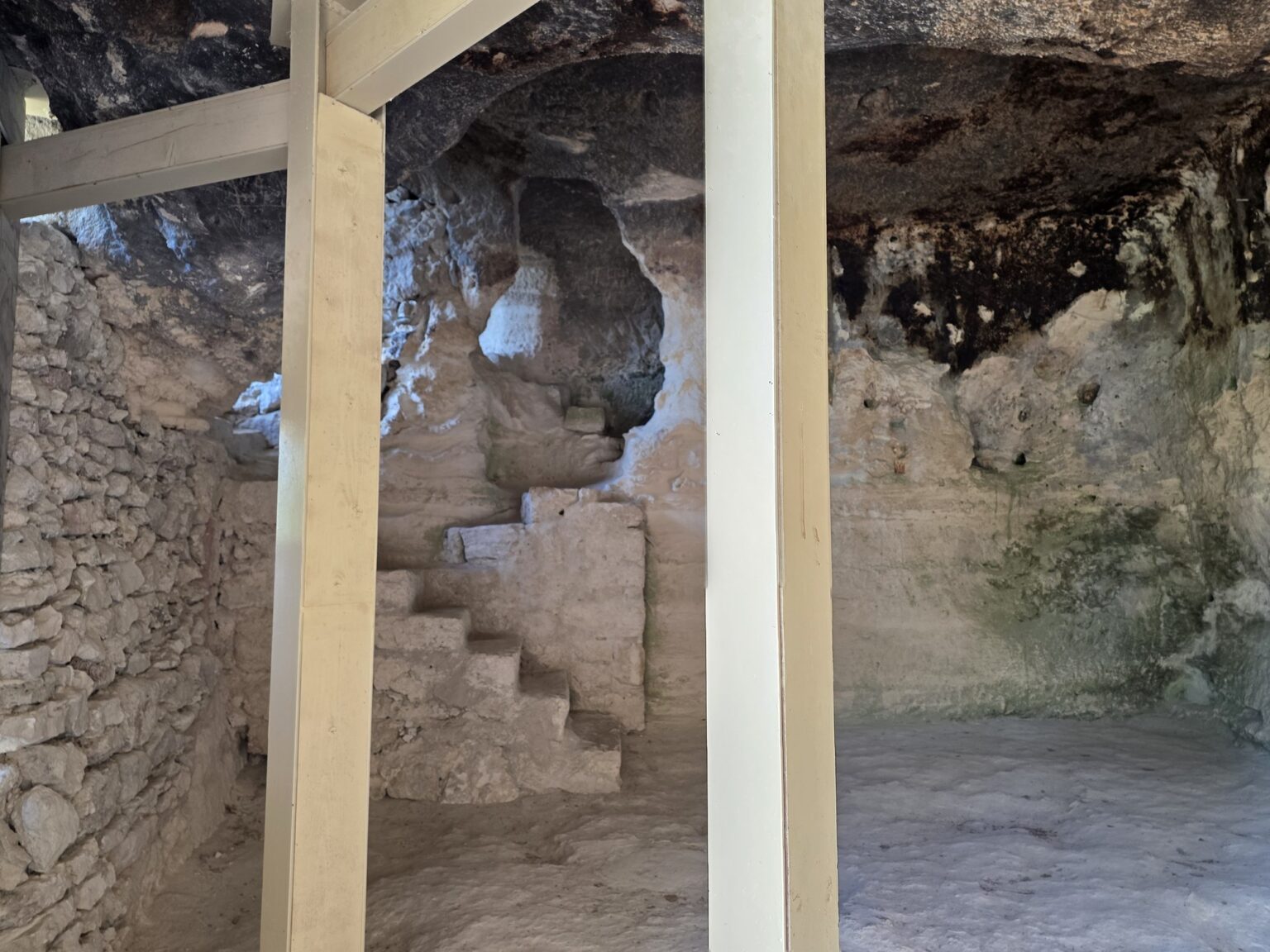
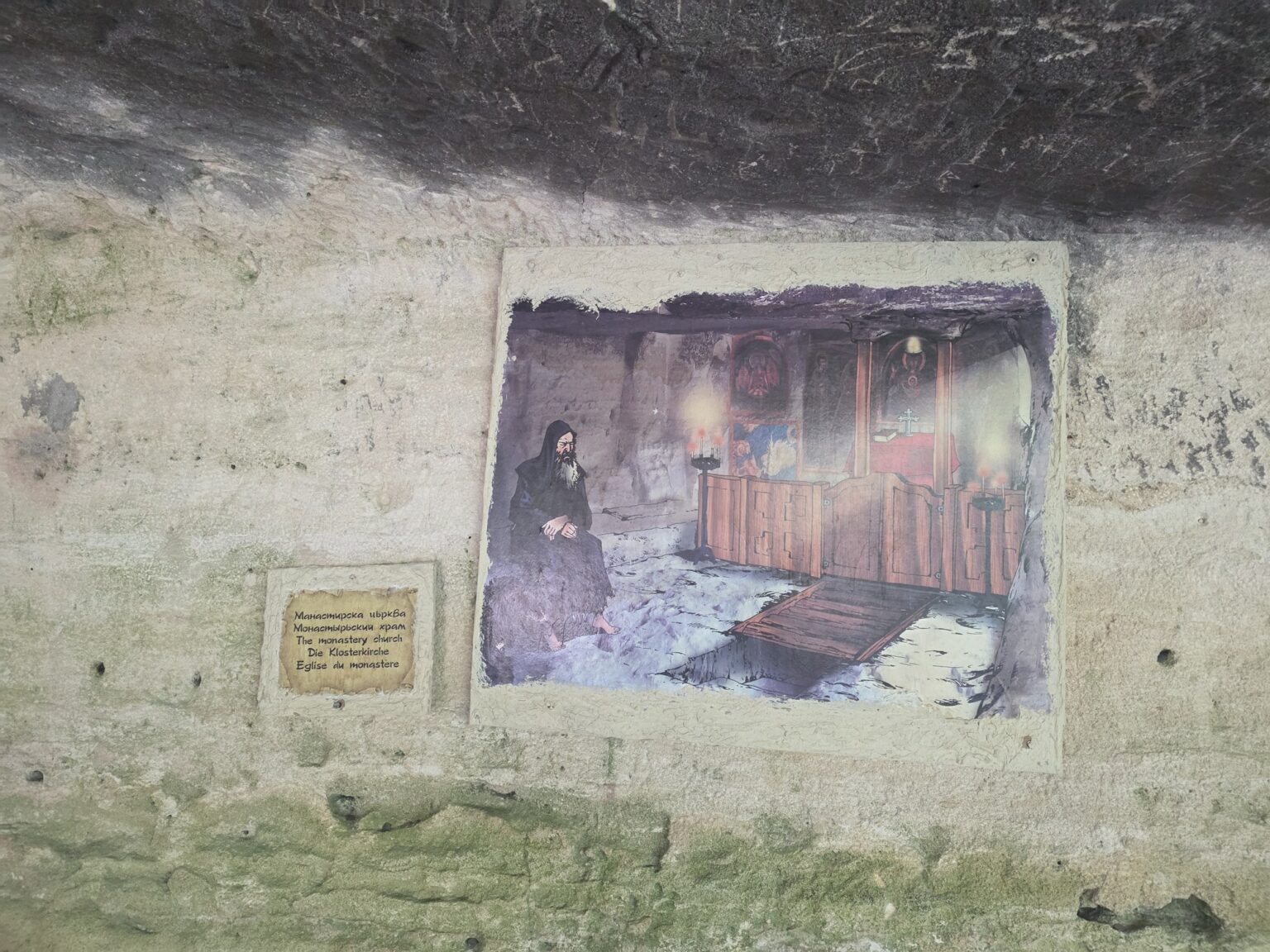
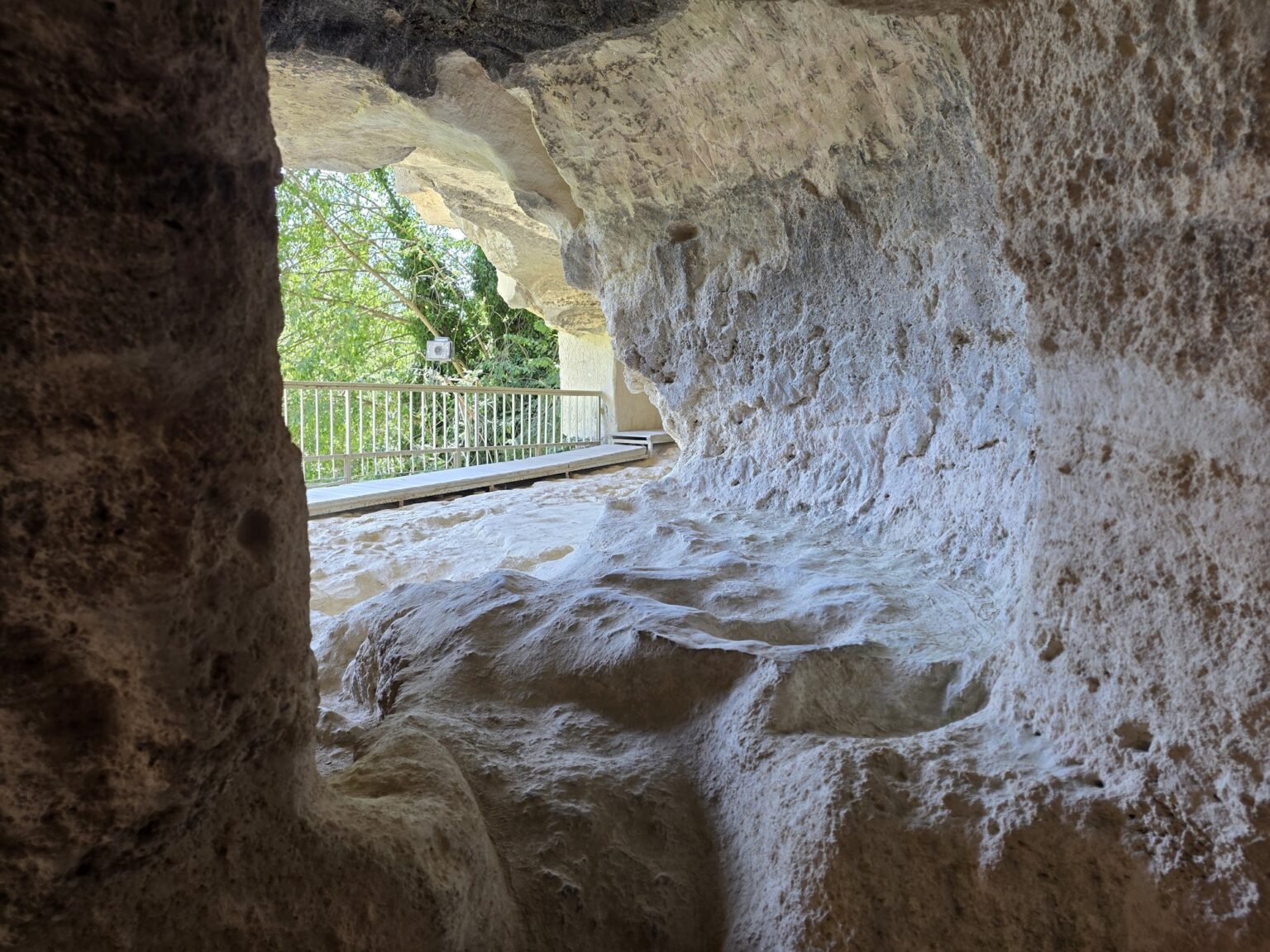
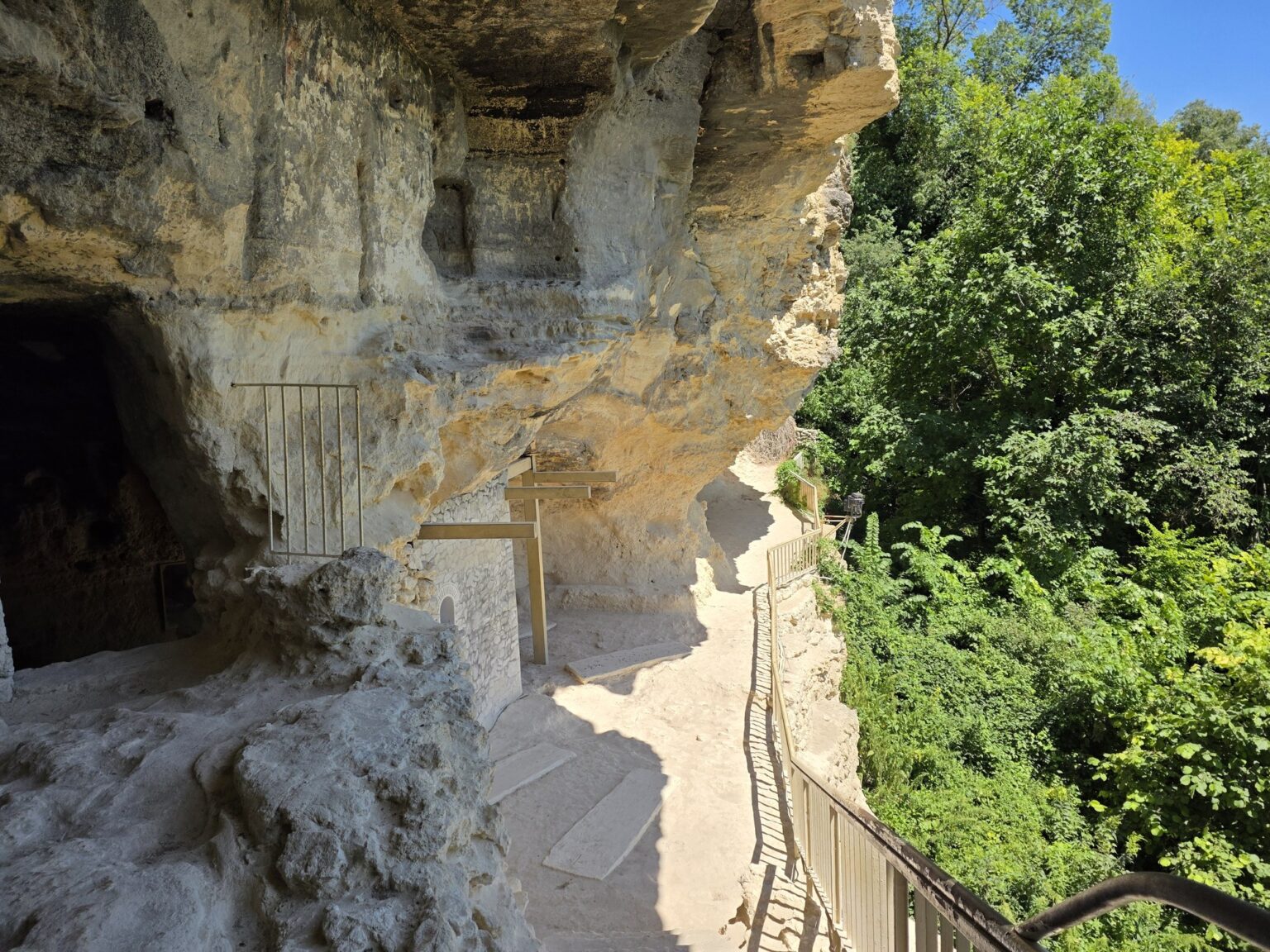
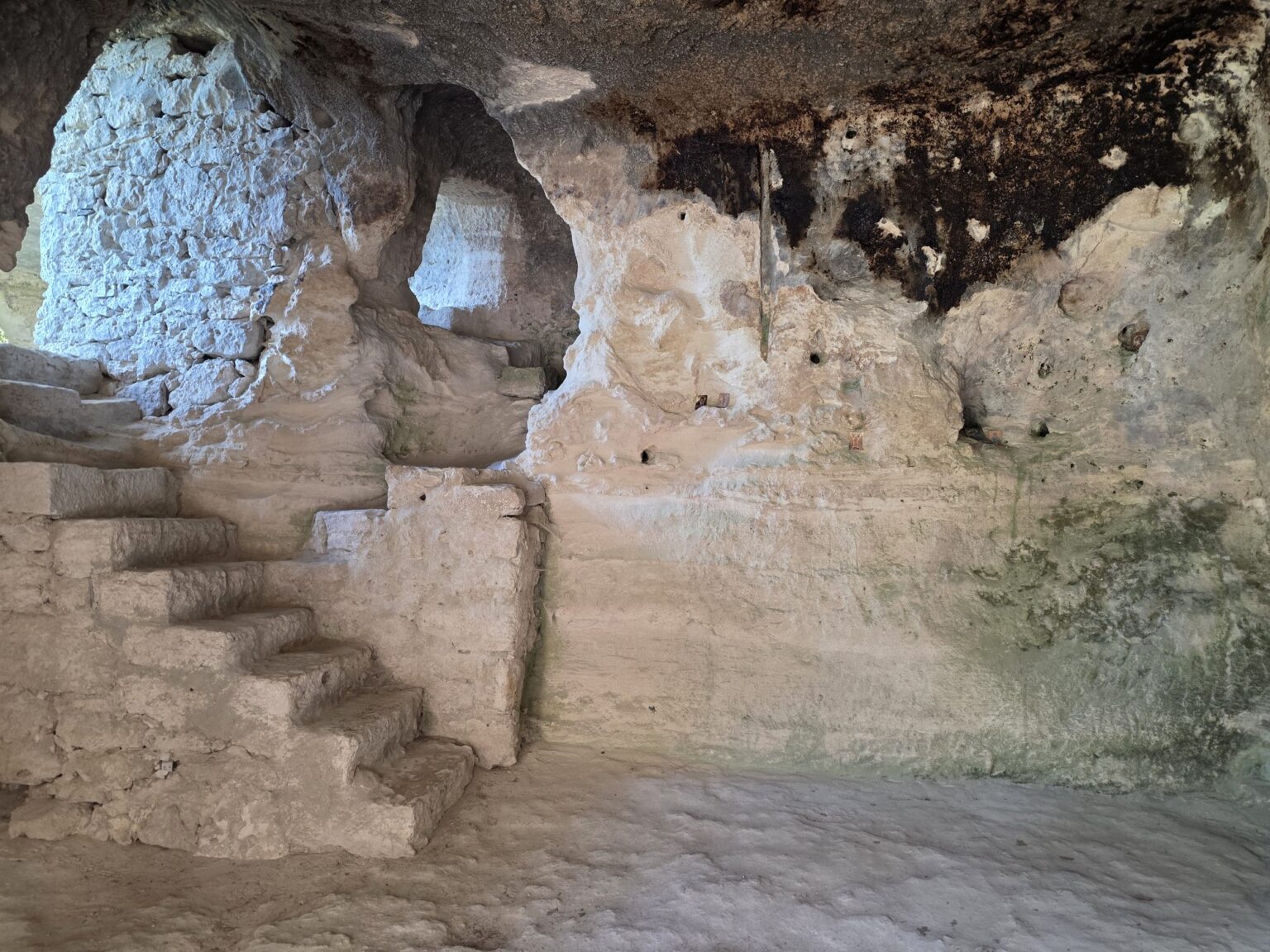
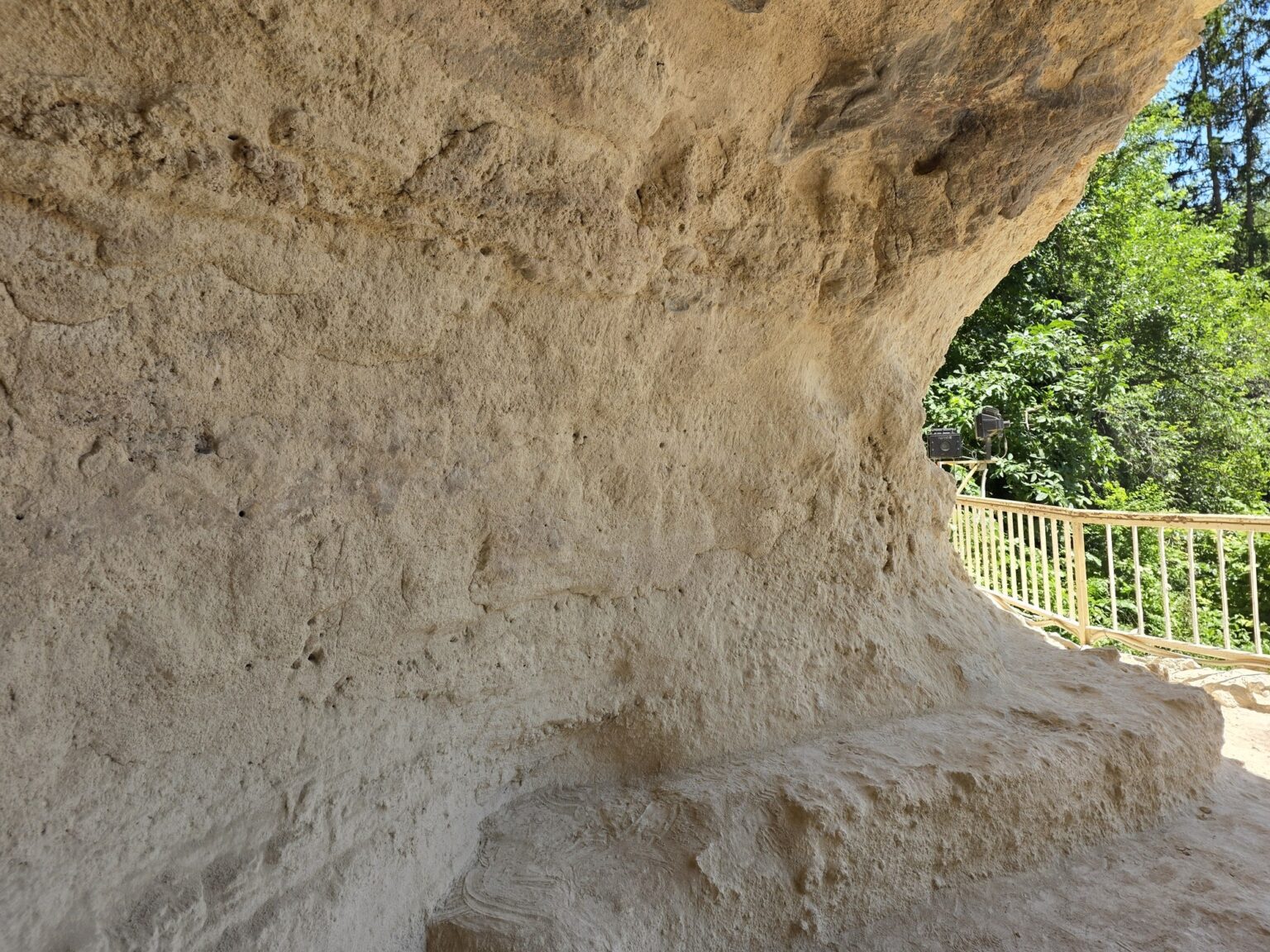
From the ticket desk you head the other way, up a flight of stone steps, and there it is: a limestone wall almost 40 metres high with everything cut into it on two levels. The lower one is the working monastery — the church, the monks’ cells, the refectory and kitchen, a small cemetery church and the ossuary. You move along metal railings and wooden walkways bolted to the cliff.
The ceilings are low and in places you genuinely do have to duck. The hermit monks of the 13th – 14th century were either smaller than us or simply weren’t thinking about tourists in walking boots. Our theory is that the battery on their Parkside hammer drill died right before they could widen the levels to modern European standards. 😀
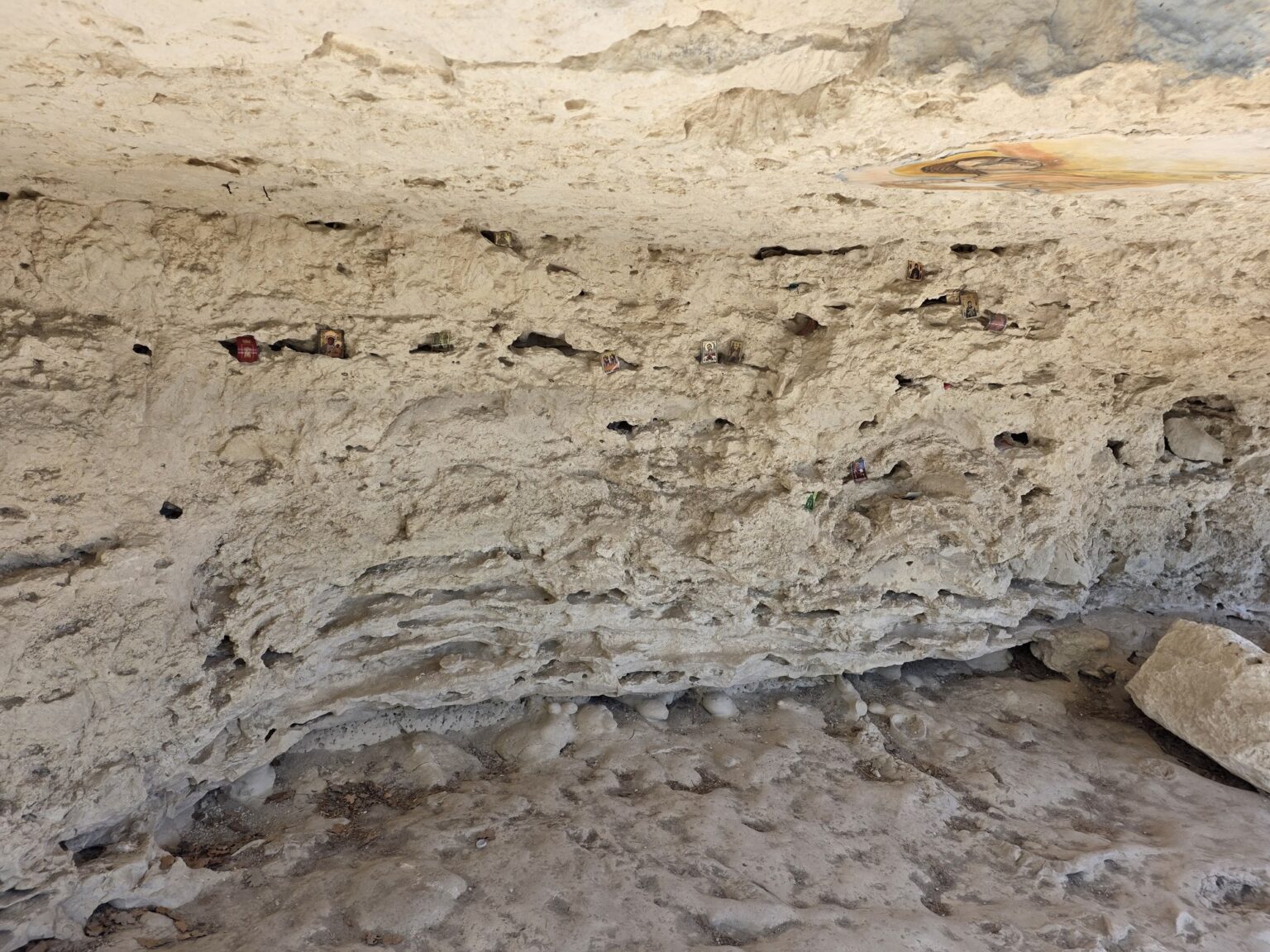
Individual chambers hold icons, candlesticks and the occasional small table — the place is still treated as sacred, even though the community was abandoned by the 15th – 16th century after the Ottoman conquest. Systematic study began in the late 19th century with the brothers Karel and Hermann Škorpil; 1927 brought protected status, and 1968 recognition as a cultural monument of national importance.
The upper level and the sea through the trees
You climb to the top on a metal staircase fixed to the outside of the limestone. The second level isn’t carved at all — it’s a natural rock niche, with the chapel at its eastern end and, on the chapel ceiling, the only surviving frescoes in the complex, showing the Ascension. That subject is exactly the argument for the name “St Spas”: in Bulgaria the Ascension feast is Spasovden.
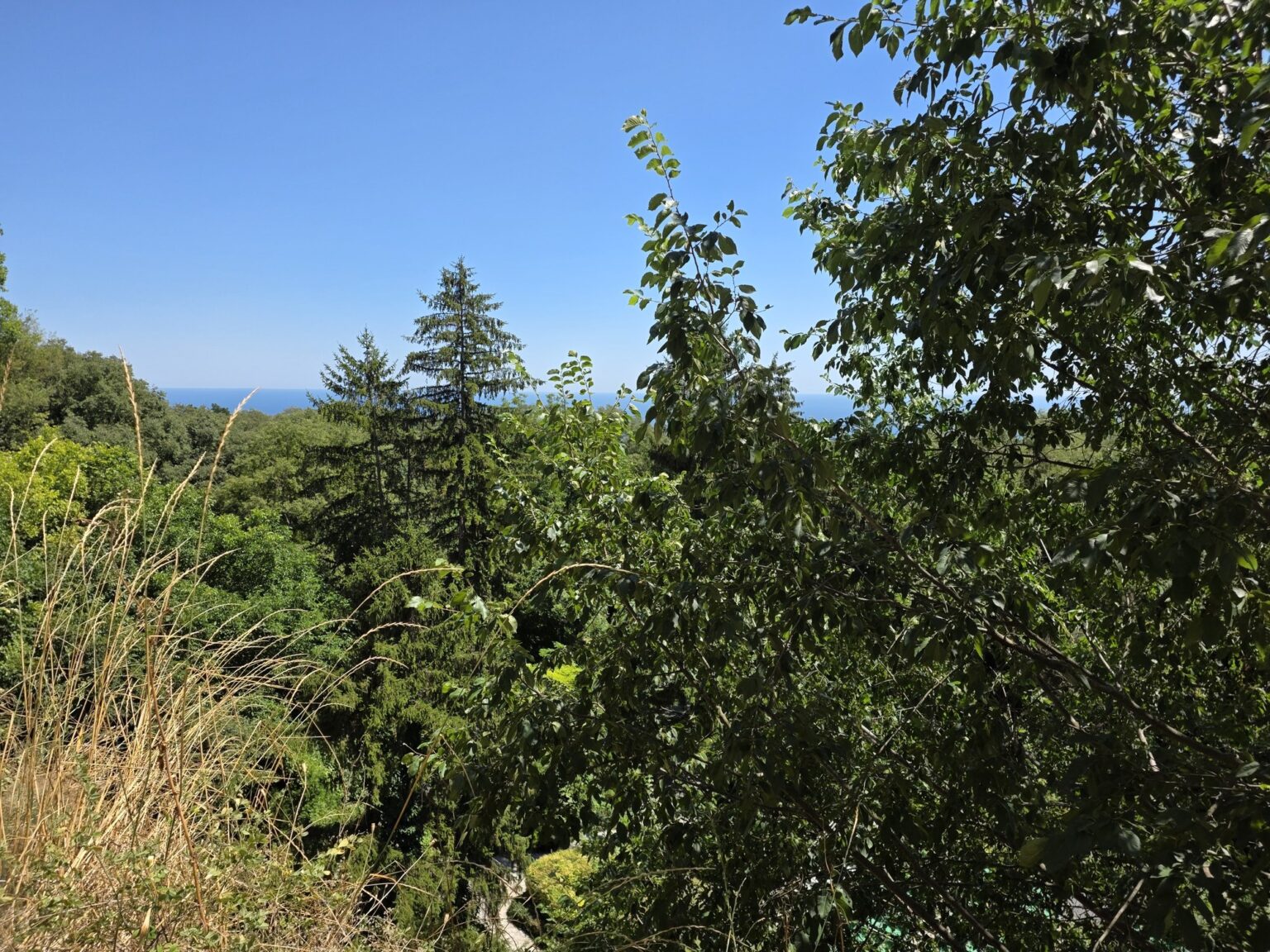
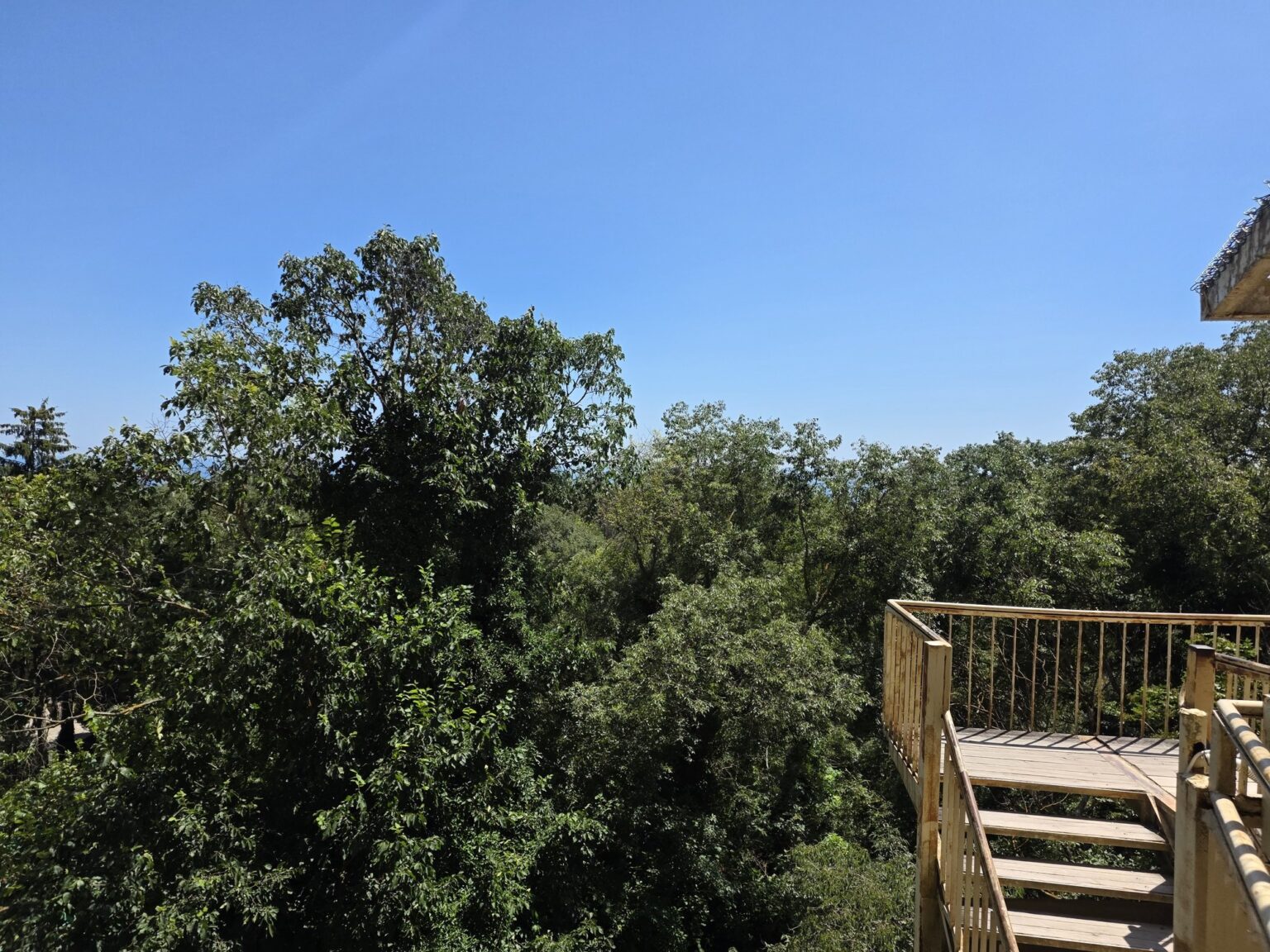
From the upper level, and from the wooden viewing deck below it, you can see the sea through the treetops — not a panorama, just a thin blue strip between the green. A surprisingly decent return on all those steps. From here it’s downhill, and ten minutes later you’re back at the car.
Worth it — for the combination, not for any single building. €5 buys you a rock monastery, a museum, a forest walk and caves with carved graves, all on one ticket and inside two hours. If you’re touring the northern coast, Cape Kaliakra is the logical next stop going north, and Pobiti Kamani lies half an hour west of Varna. If you get to choose, come early.
Related video: Aladzha Monastery is one of three sites in the episode Bulgaria From Above: Stone Wonders — alongside the Madara Rider and the stone columns of Pobiti Kamani, filmed by drone in 4K. It also appears in Top 5 places to visit in Varna and in Top 10 things to do in Golden Sands.