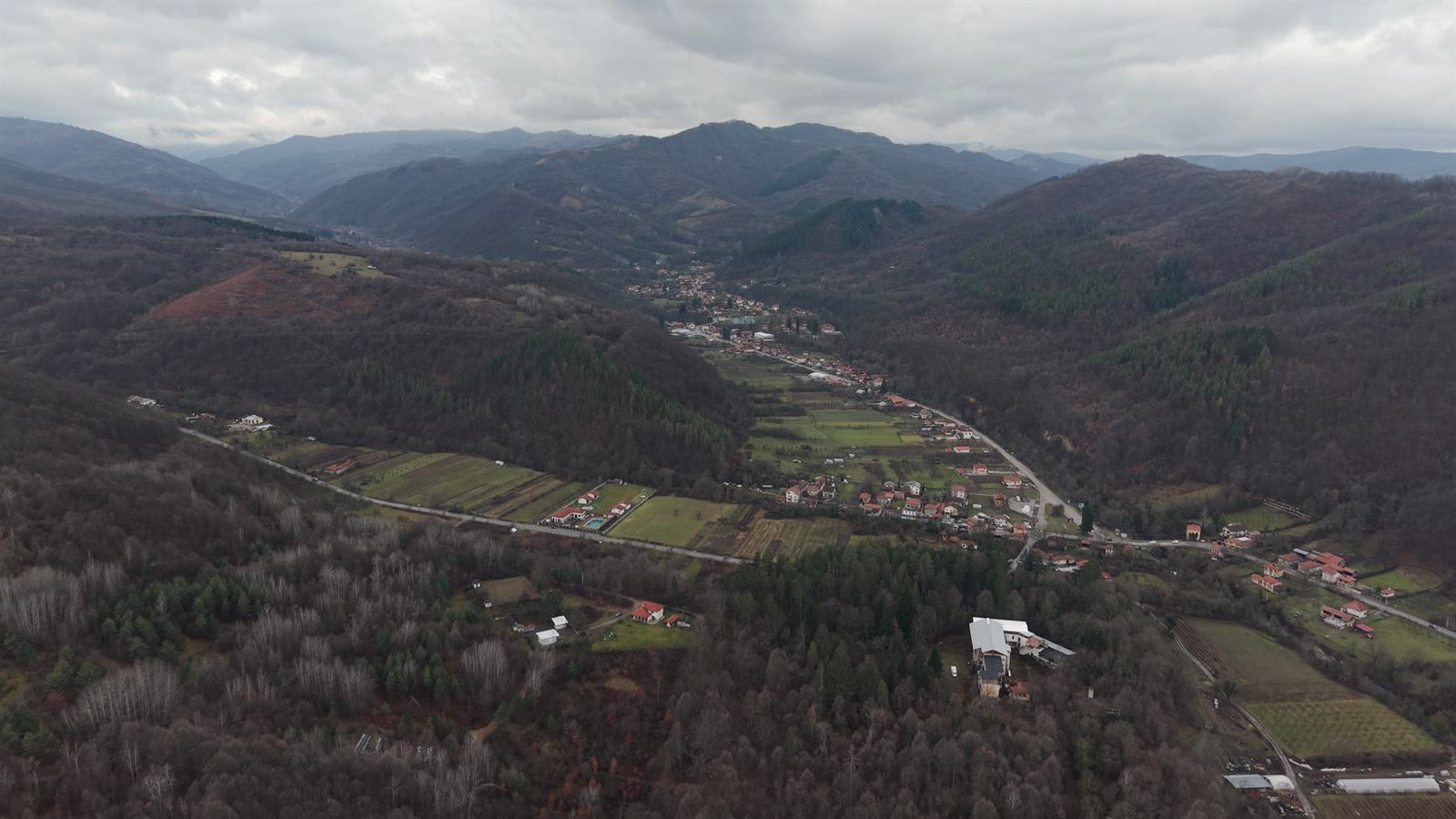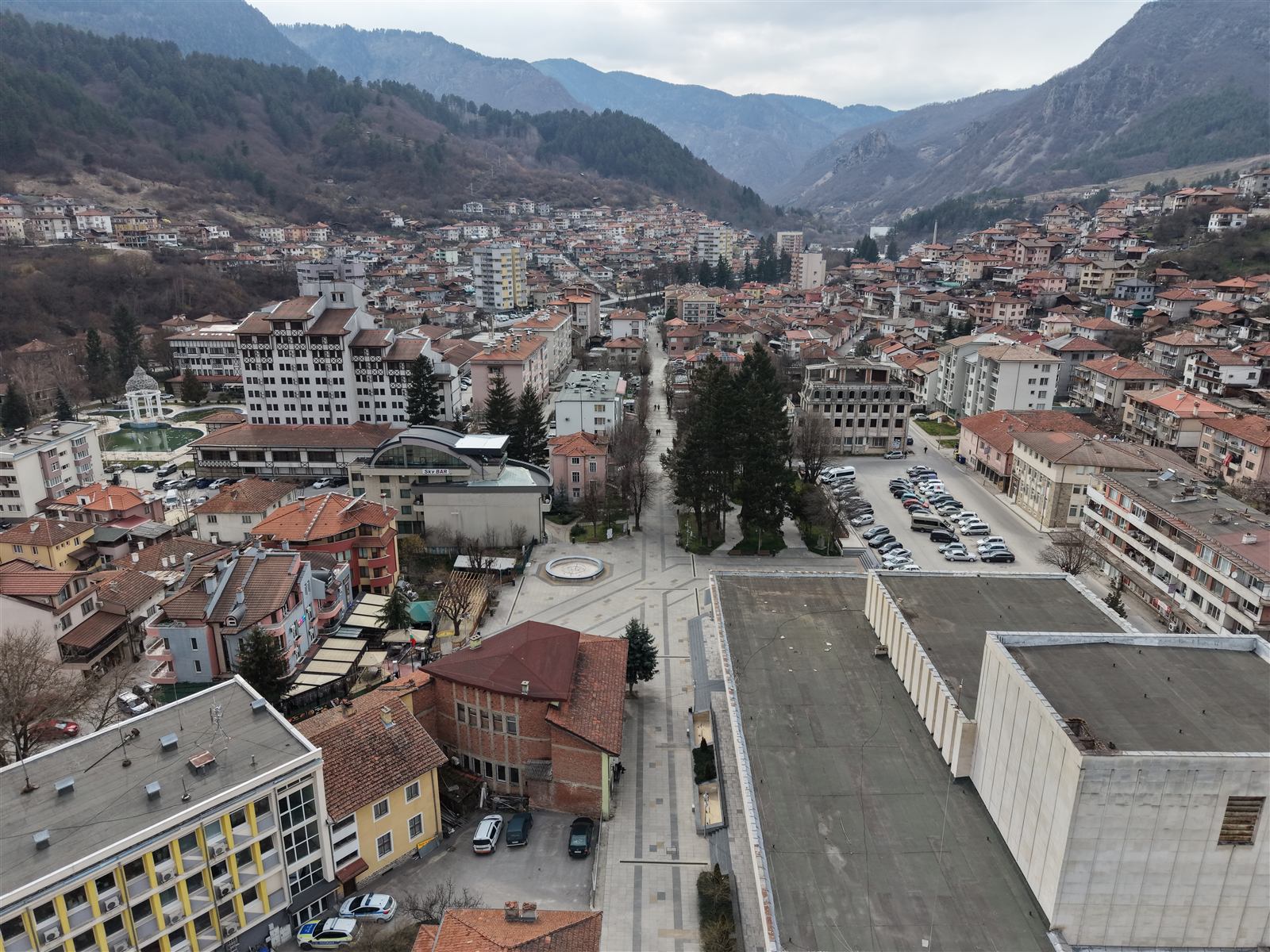
Troyan lies in the valley of the Osam River, at the point where the road starts to climb towards the Troyan Pass. The town is small and orderly, with a wide pedestrian centre, a lot of greenery and water you can hear from almost anywhere in it. It is known for three things — pottery, plums and the monastery — but what stays with you is the scale: a centre you can walk in an hour, with the mountain standing immediately behind it.
| Where | Northern Bulgaria, Lovech province, in the Osam valley at the foot of the Troyan Balkan |
| Getting there | by car from Lovech (about 35 km) or over the Troyan Pass from Karlovo; buses from Lovech, Pleven and Sofia. There is no passenger rail service to the town. |
| How long | 2–3 hours for the centre and the museum; a full day if you add the monastery and Oreshak |
| Museum of Crafts | 1 Vazrazhdane Square. April – October daily 9:00 – 17:00; November – March Monday – Friday 9:00 – 17:00, Saturday 10:00 – 15:00, closed Sunday. Entry: adults €5.00, pupils, students and pensioners €3.00, children under 7 free, visitors with disabilities €1.00, family ticket €10.00; short guided talk €5.00. Check current details on the museum’s official page (Bulgarian only). |
| Troyan Monastery | about 10 km from town, near the village of Oreshak; the courtyard and church are freely accessible, the museum collection has a separate ticket. Check visiting arrangements on the monastery’s website. |
| When to go | late spring and early autumn; the Bulgarian Plum Festival is held in the last week of September |
| Parking | on the streets around Vazrazhdane Square and along the river; the monastery has its own car park |
Pottery and the memory of a craft town
Troyan pottery is the town’s most recognisable product — warm yellow-brown glazes and that running droplet pattern formed while the vessel spins on the wheel. The craft never retreated into souvenir stalls: workshops still operate here, and the Museum of Folk Crafts and Applied Arts is the only one in the country that shows not just the finished objects but the tools and techniques behind them. It occupies the first public building raised in Troyan after the Liberation — built in 1881 by the Tryavna master Usta Gencho Kanev, first a school, later the town hall.
Ten rooms cover pottery, woodturning, carving, blacksmithing, coppersmithing, weaving and several other trades that fed the Troyan region. Across the way, in the restored Ottoman konak of 1868, sits the National Revival exhibition, with the Troyan Painters collection on the floor above. The museum won Museum of the Year in 2018 and has since added QR-guided content and a virtual walk through the old Troyan craft bazaar. The other big address for crafts is the National Exhibition in the village of Oreshak, on the road to the monastery.
The centre: square, walkway and mural
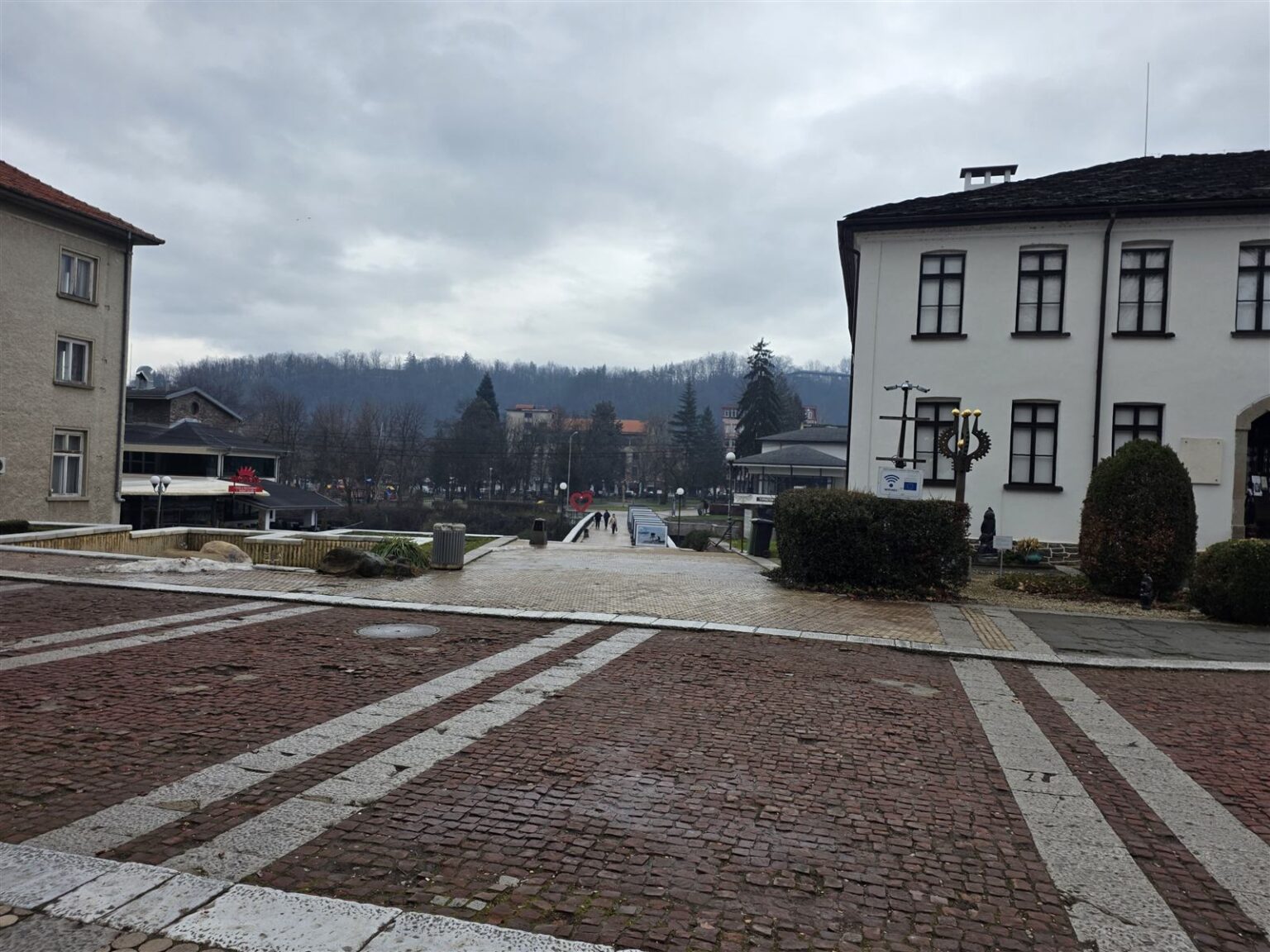
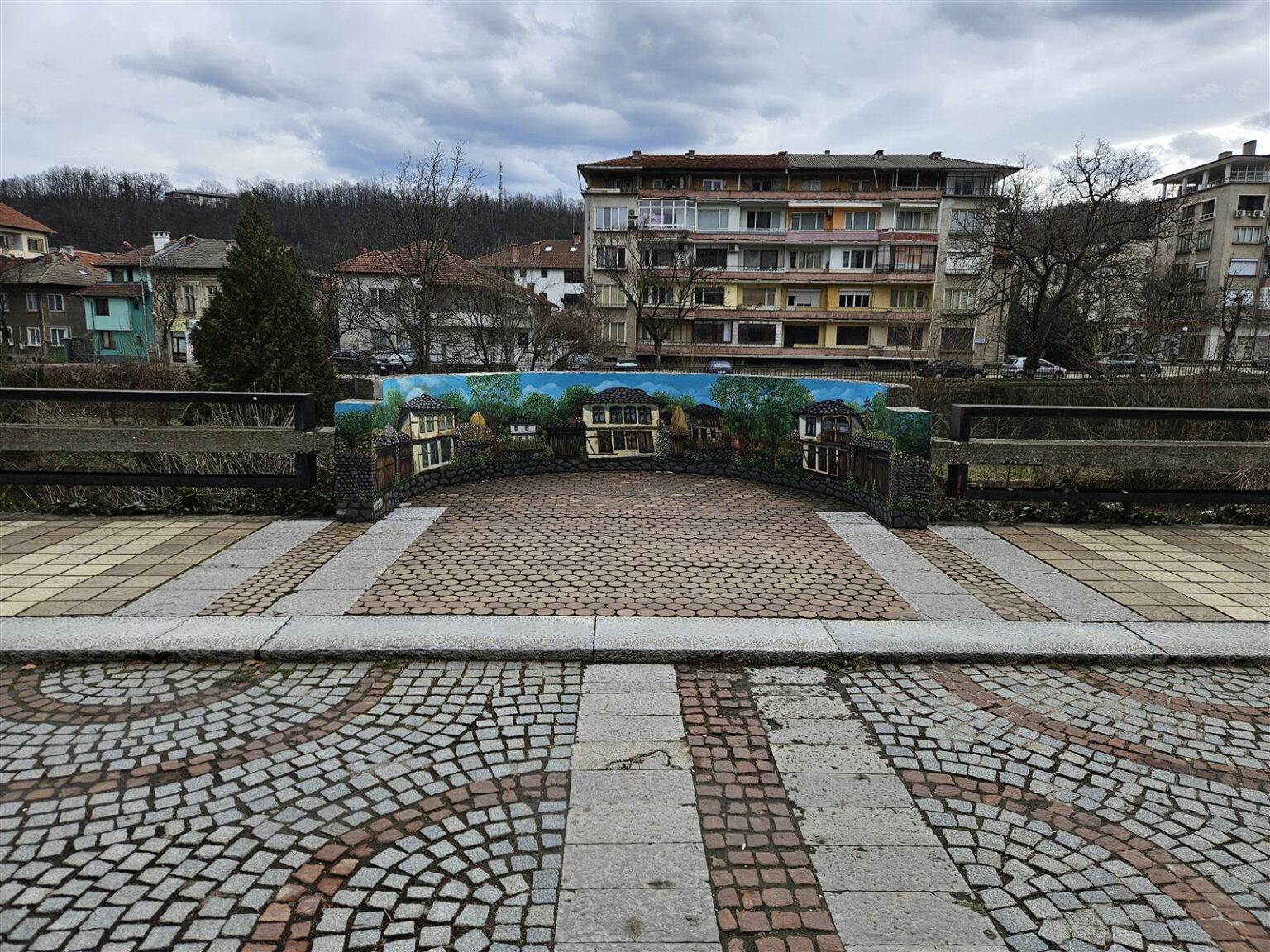
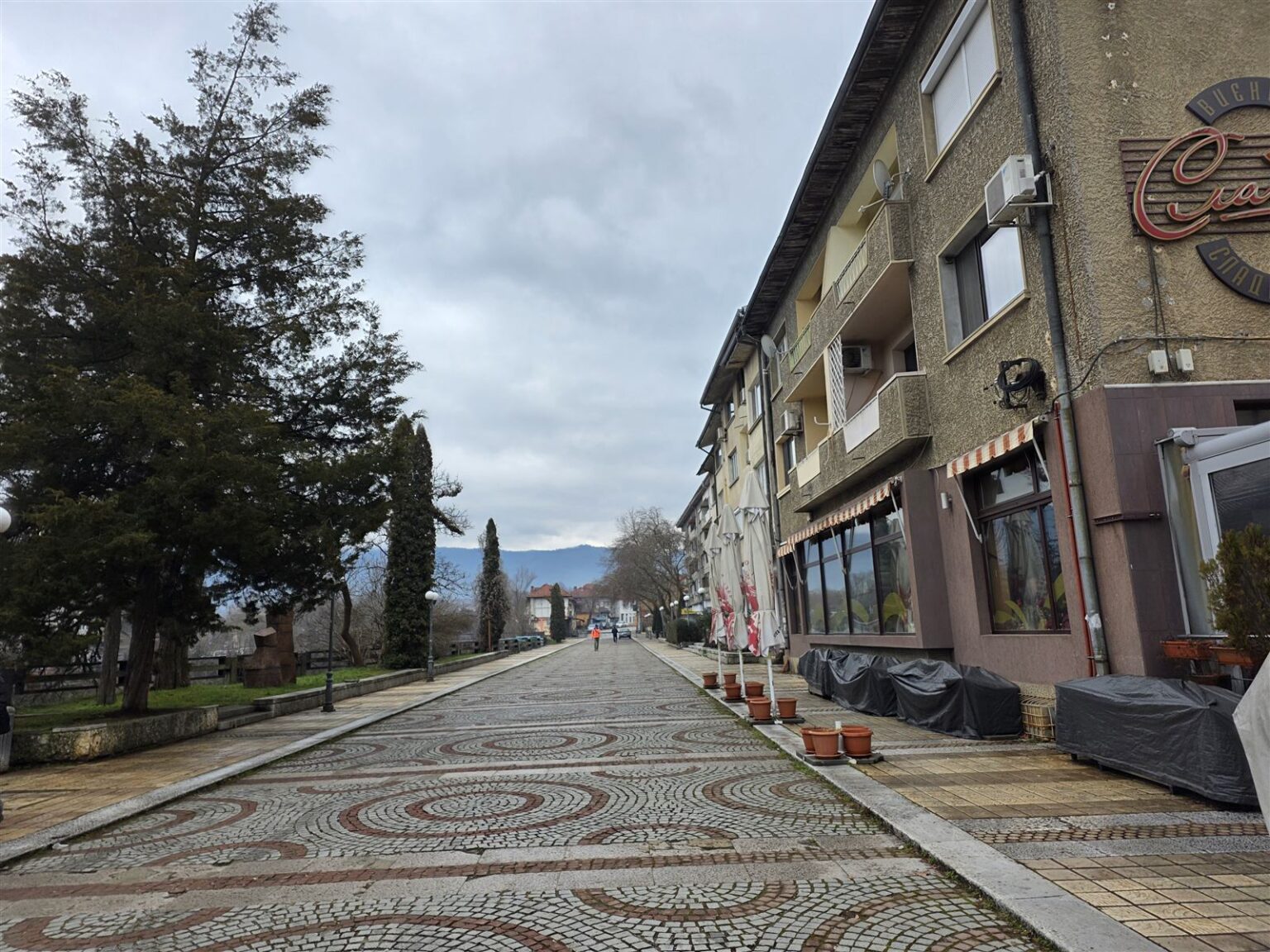
The central area has been relaid, and you recognise it by the surface — patterned geometric paving that starts at the square and runs the length of the pedestrian street. The public buildings stand low and close to the walkway, so the space never scatters; benches and a handful of shops sit between them, and on a weekday morning you cross it unhurried. On one of the cobbled side spaces there is a mural of a traditional National Revival house — oriel window, wooden verandas, tiled roof — painted onto the blank end wall of a neighbouring block. It is the shortest explanation of how Troyan treats its past: not restored everywhere, but kept in plain sight.
The Osam, the park and the water
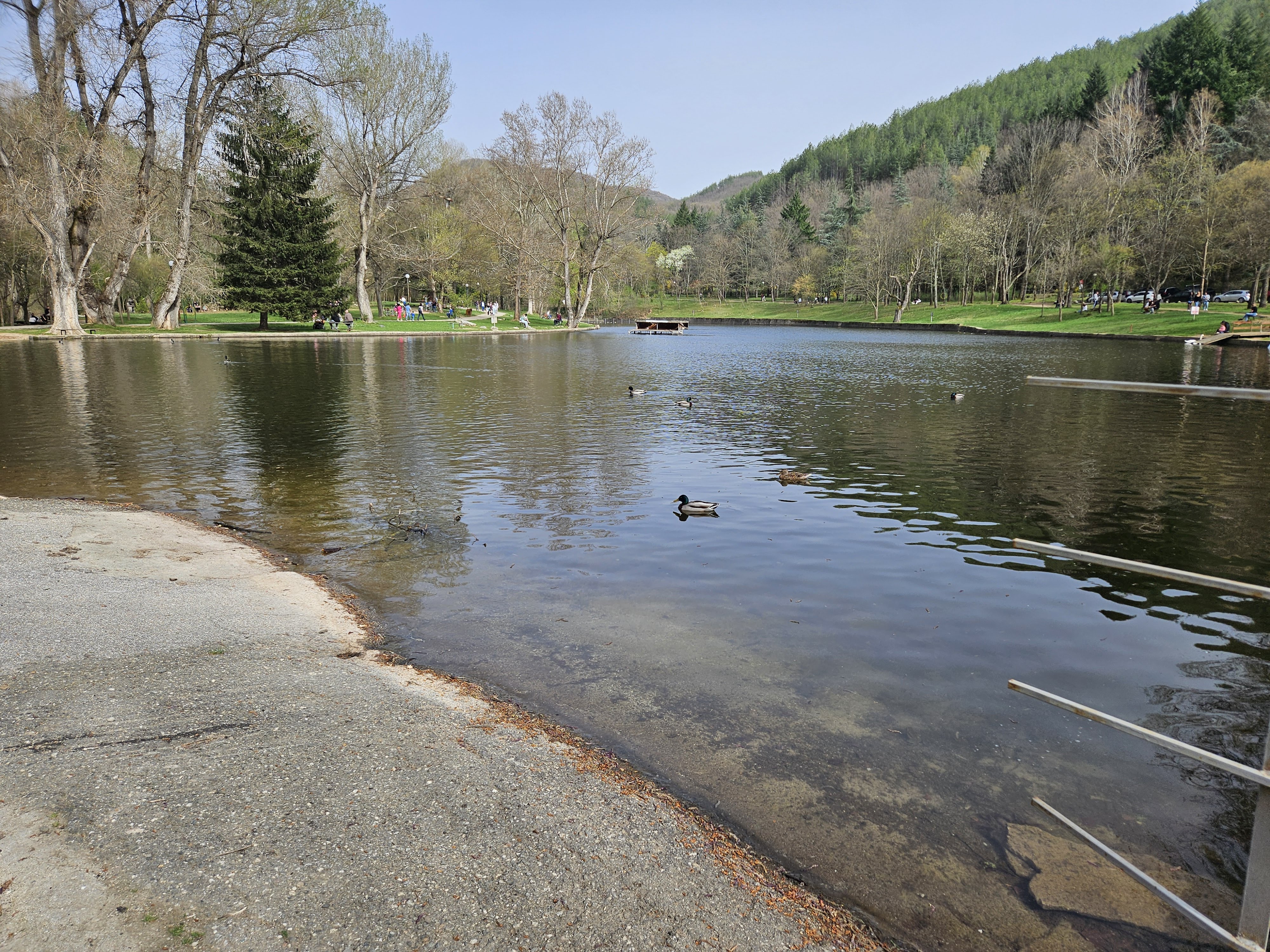
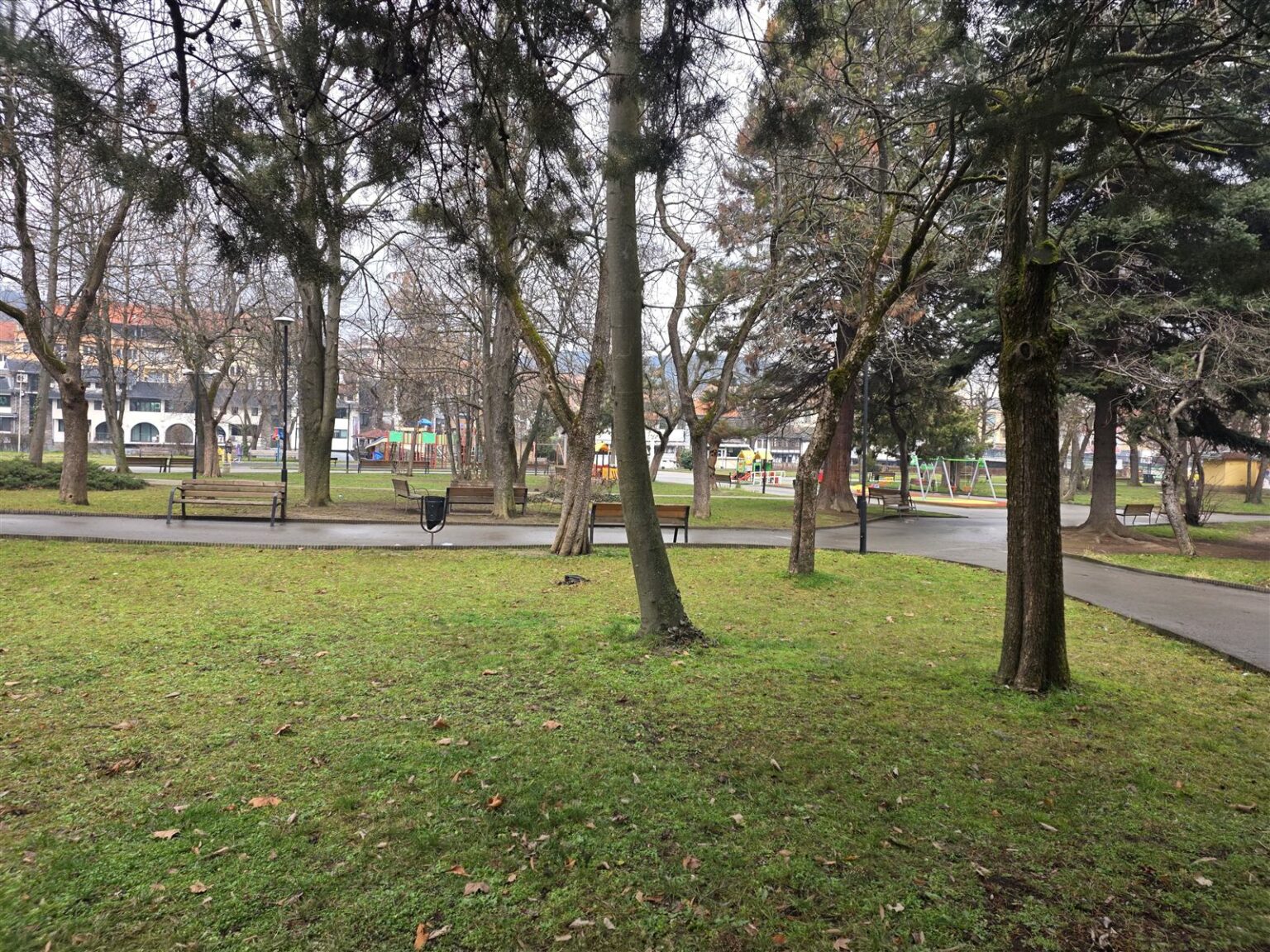
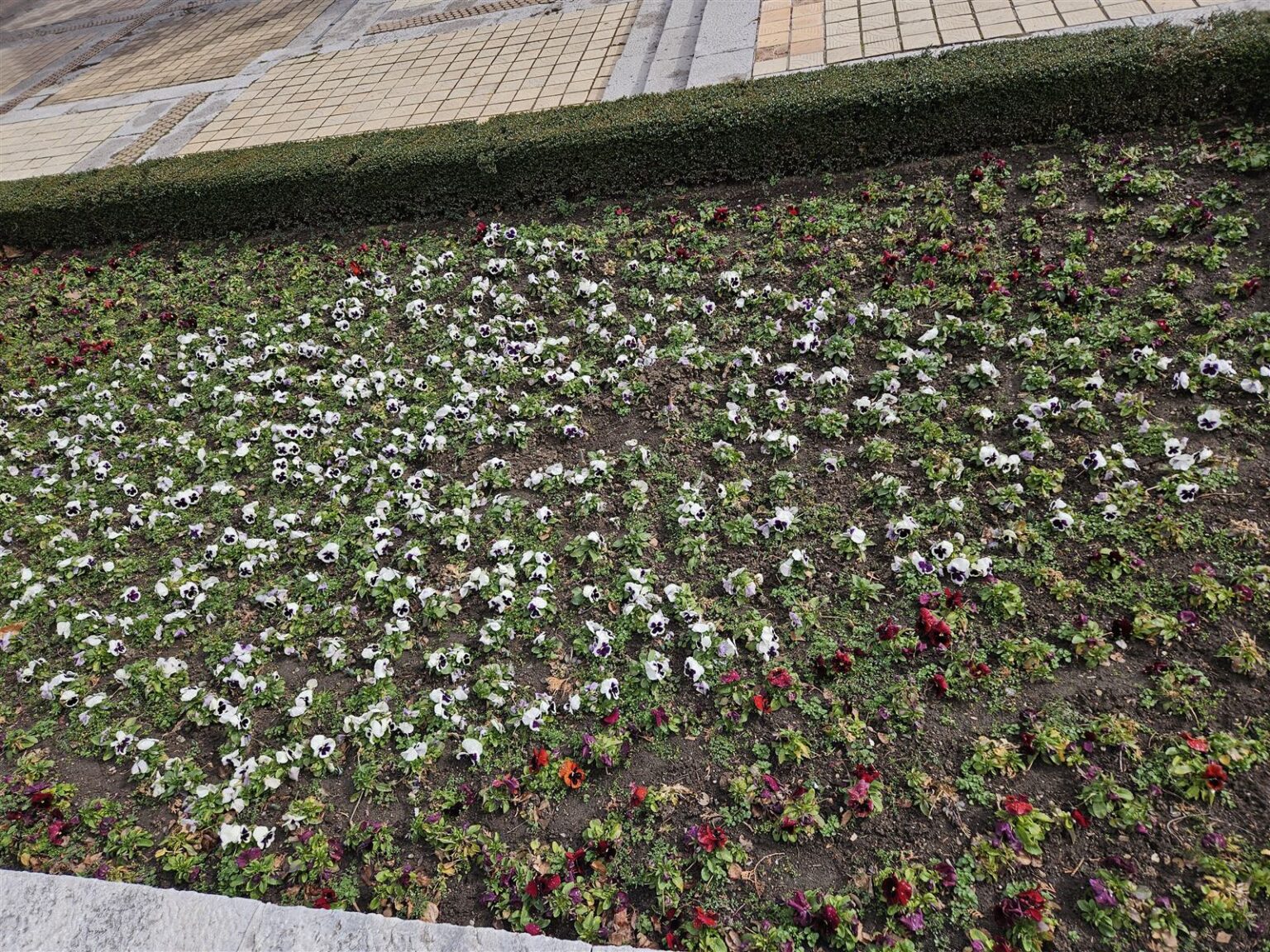
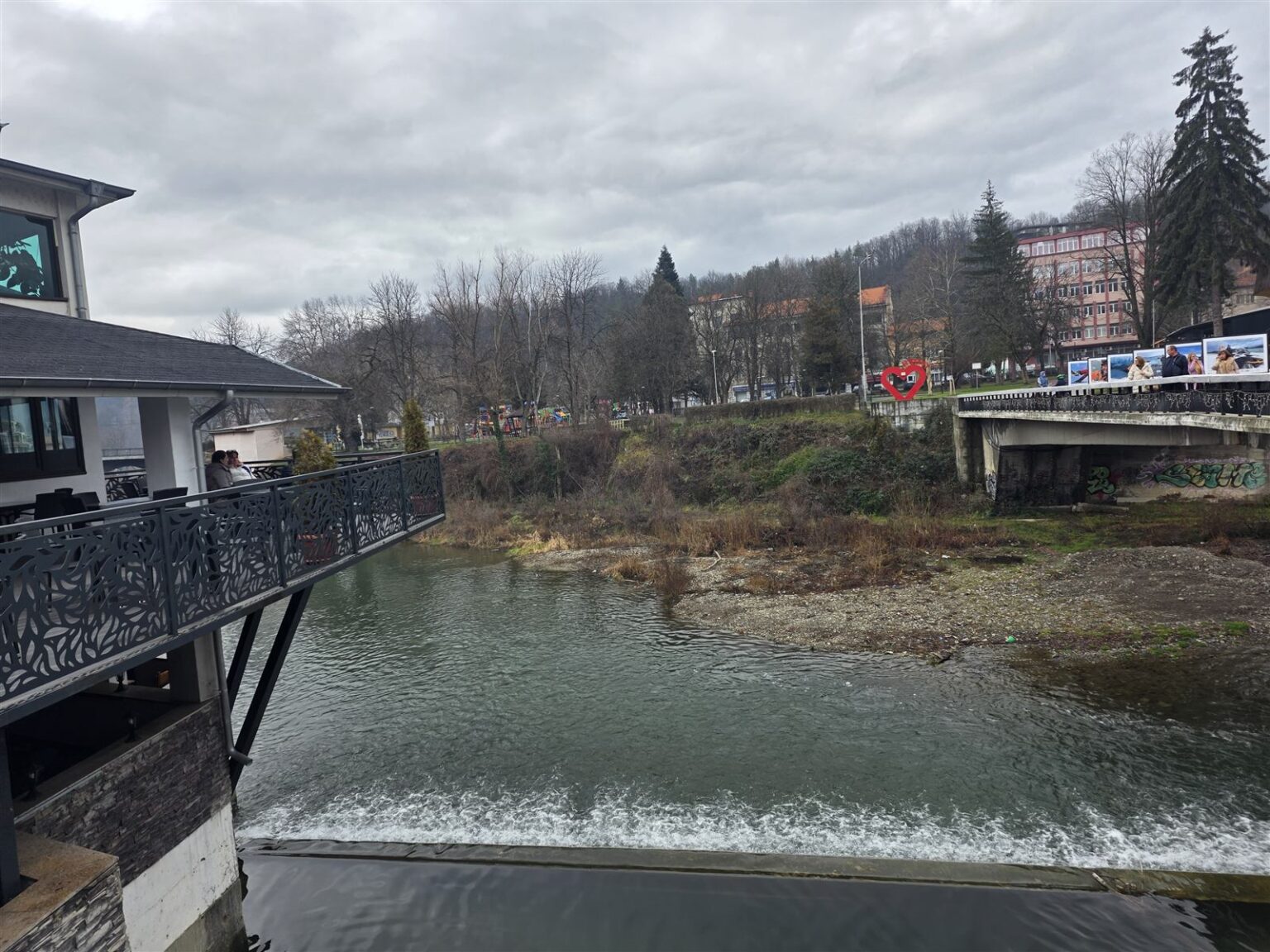
The river runs through the centre itself and forms part of the walk rather than a backdrop to it. The channel is reinforced, and at one point a small weir spills across its full width — you hear it from the walkway, and it is the first hint of how close the mountain is. Running parallel is the town garden: laid-out flower beds, tall trees, benches beneath them and blocks of colour that are at their strongest in early summer. Troyan is one of the few Bulgarian towns where the greenery is not confined to one district but runs alongside the centre.
The monastery, the pass and the plum
Ten kilometres up the Cherni Osam, beside the village of Oreshak, stands the Troyan Monastery of the Dormition — the third largest in Bulgaria and stauropegial since 1830. Its main church was painted in 1847 by Zahari Zograf, who left a self-portrait among the frescoes. From there the road climbs on towards the pass and the ridge, past the Sostra fortress and the network of marked trails in the Central Balkan. The first village along that road is Balkanets, and downstream along the Osam, about 35 km away, is Lovech.
The other thing that keeps Troyan on the map grows on the surrounding slopes. Plums here are a livelihood rather than decoration — they produce Troyan plum rakia, and the Bulgarian Plum Festival in the last week of September is the busiest day of the year for the town. The museum even keeps a permanent open-air exhibition devoted to plum growing. If you are coming in September, book a room well in advance.
Related video: the town, the Osam valley and the road to the pass are best seen from the air in the episode Bulgaria From Above: Central Balkan – Troyan, Lovech, Balkanets and Fortress Sostra, part of the Bulgaria From Above series.