We have just spent three days at the anti-slimming retreat known as Grand Hotel Bansko, a long-standing favourite of ours. We have seen the Nameless Town, but that is nowhere near enough calories to offset three days of solid feasting. Time for something a little more serious. From a holiday, we move on to an expedition! Where to, you ask? Well, where else? While everyone else is in Saint-Tropez and the rest are in the Maldives, we are off to the island of Thassos in Greece.
Action awaits: a boat cruise, beaches, a spa, massages, a few climbs and who knows what else. We cannot wait.*
*This one is written a touch more densely than usual, because there is far too much to tell.
Day 1: Gotse Delchev, the ferry, checking in near Limenaria
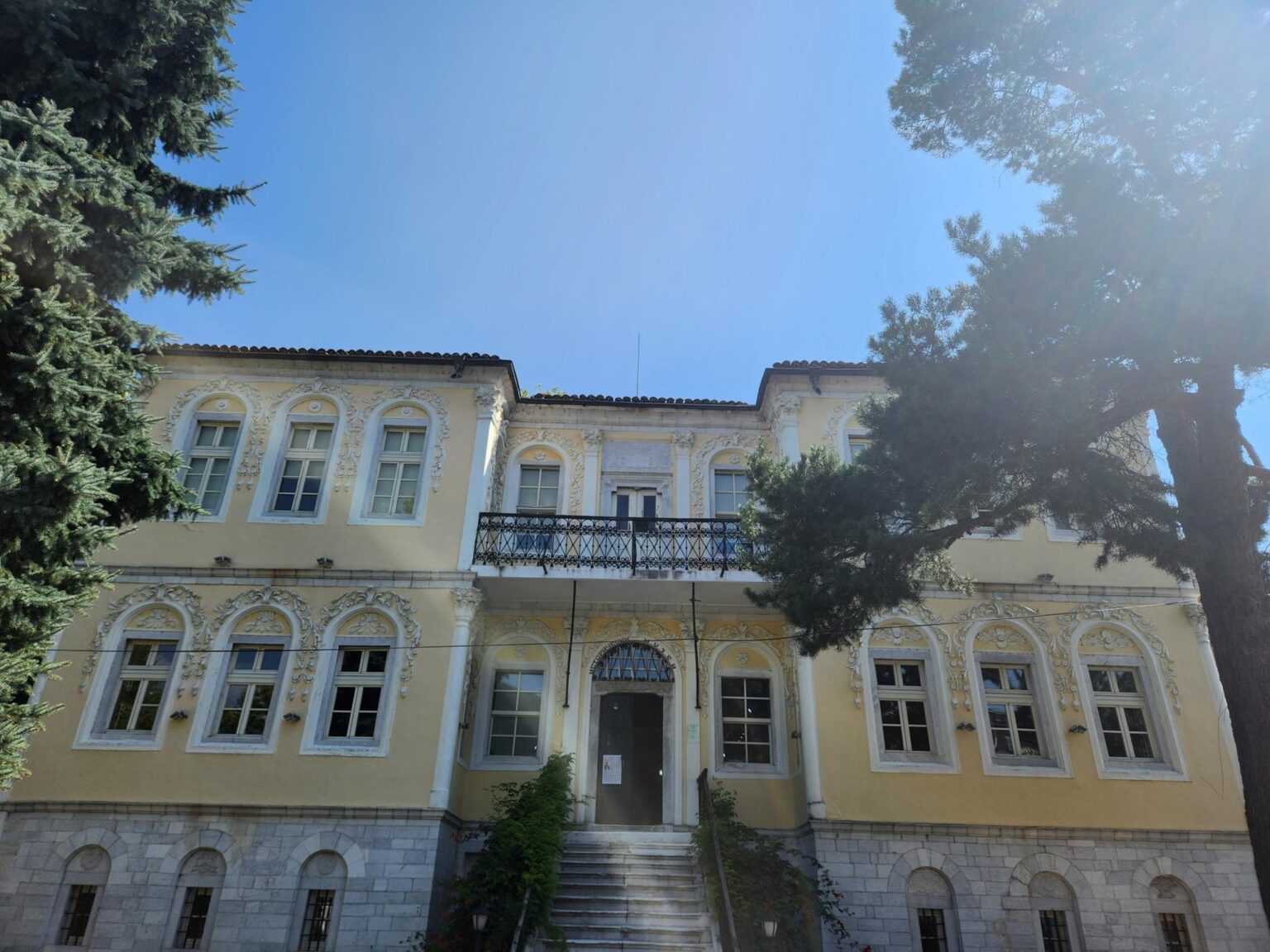
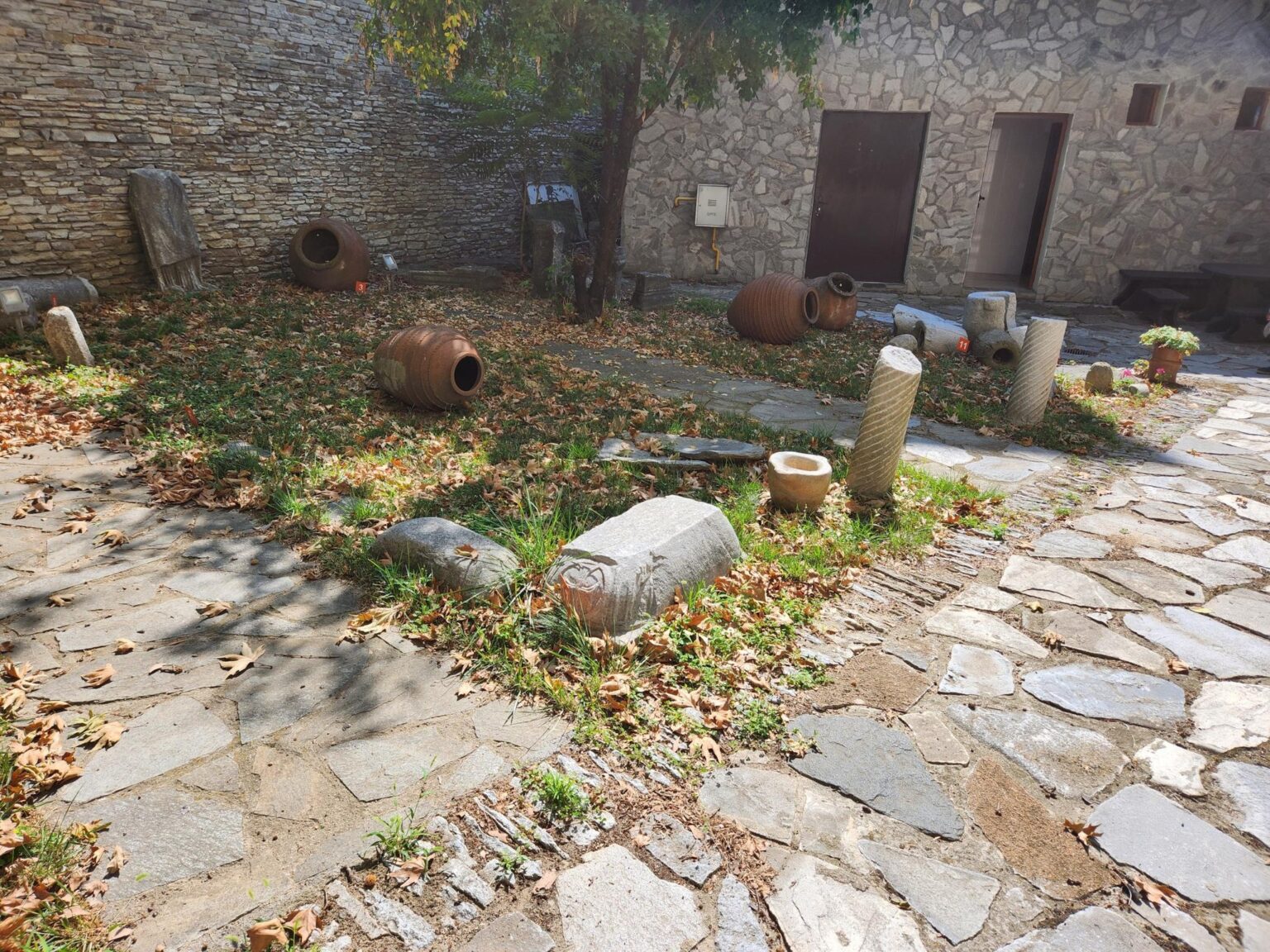
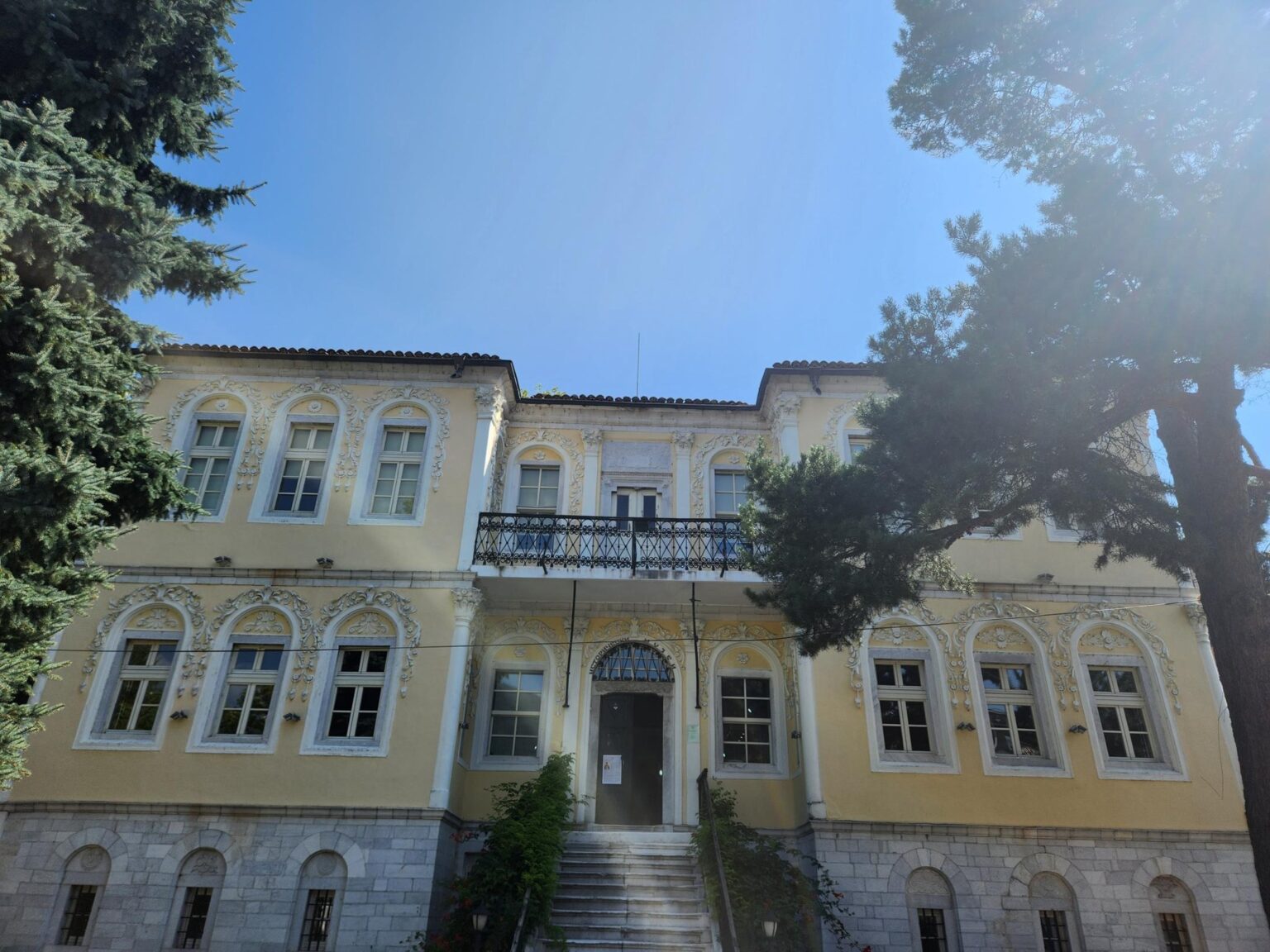
We set off from Bansko after a breakfast of unreasonable proportions. The smarter option is to cross at the Ilinden–Exochi border point. Ahead of us are 260 kilometres and five hours according to the navigation. We know from years back that fuel in Greece is more expensive, although by mid-August 2022 that is not quite the case any more. We fill up to the brim anyway. It is 10:00, there is time, and it gets dark late. Shall we collect a stamp or two along the way? Why not. We squeeze in the Municipal Historical Museum in Gotse Delchev (stamp 59b of the 100 National Tourist Sites). On the way we also spot a billboard for a small zoo in Hadzhidimovo, and we adore small zoos. Into the bucket list for another time; the timing is too tight today. A ferry is waiting for us, our first ever, which means fear, shock and panic, and we would much rather have time to spare.
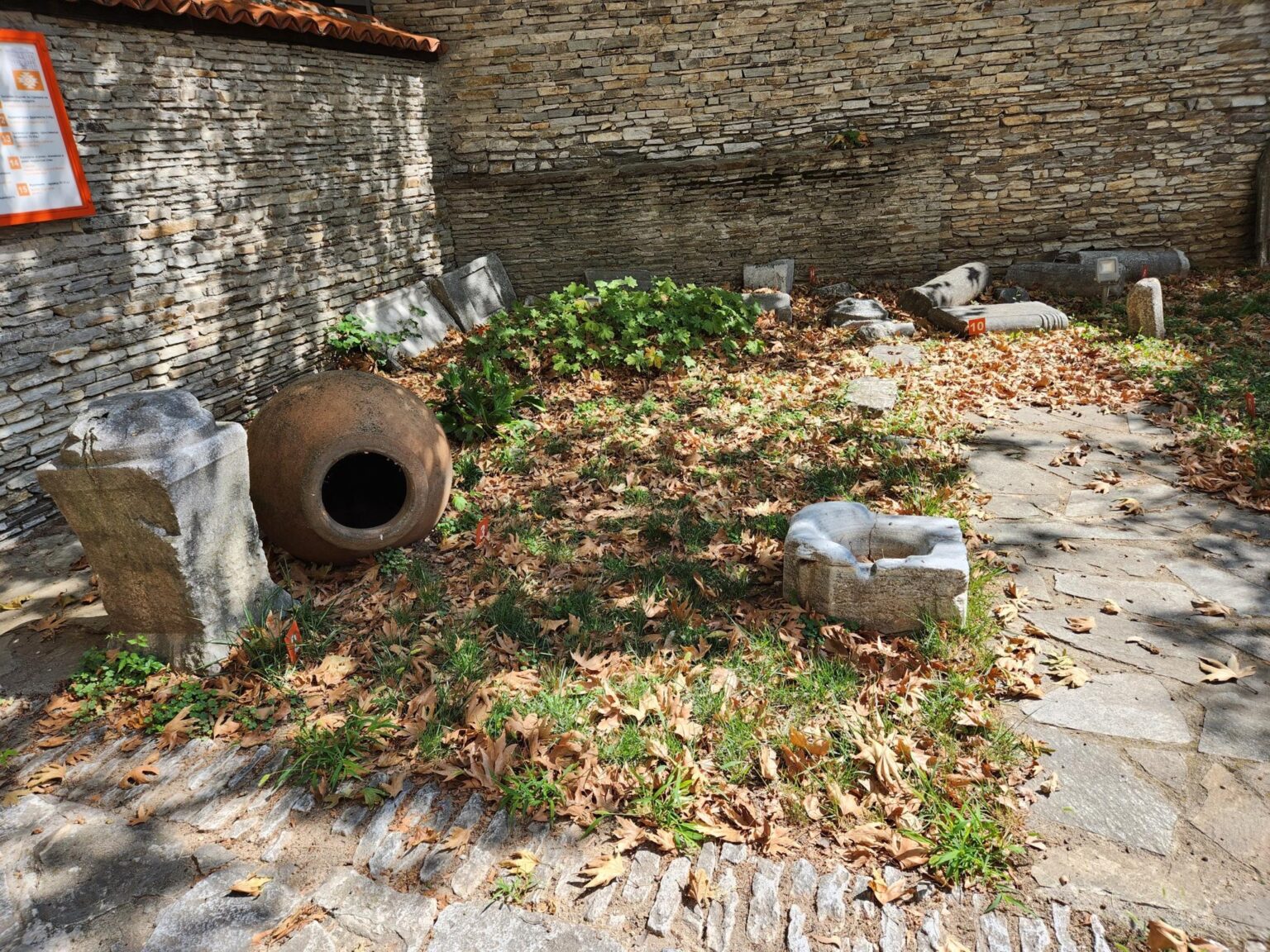
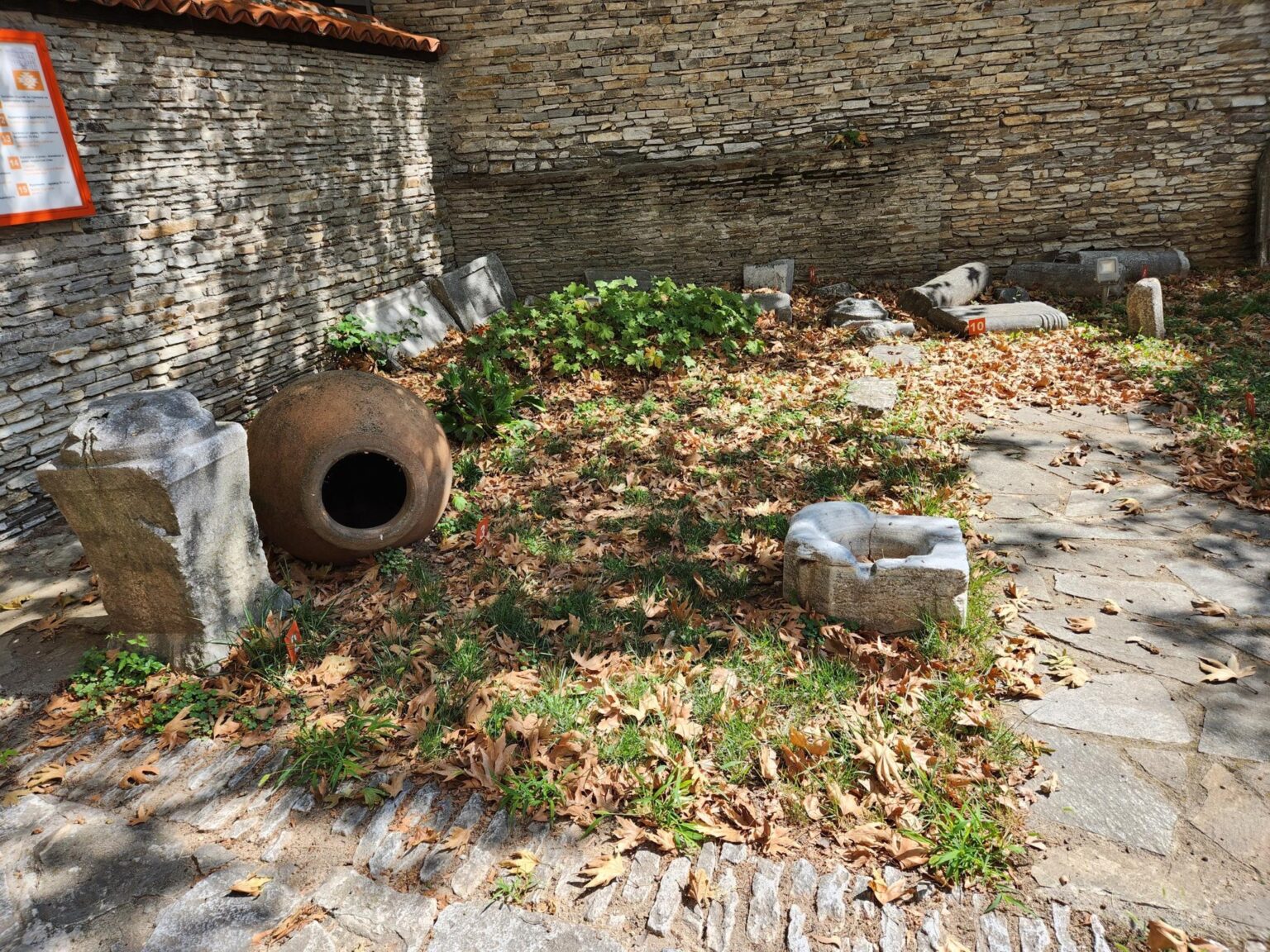
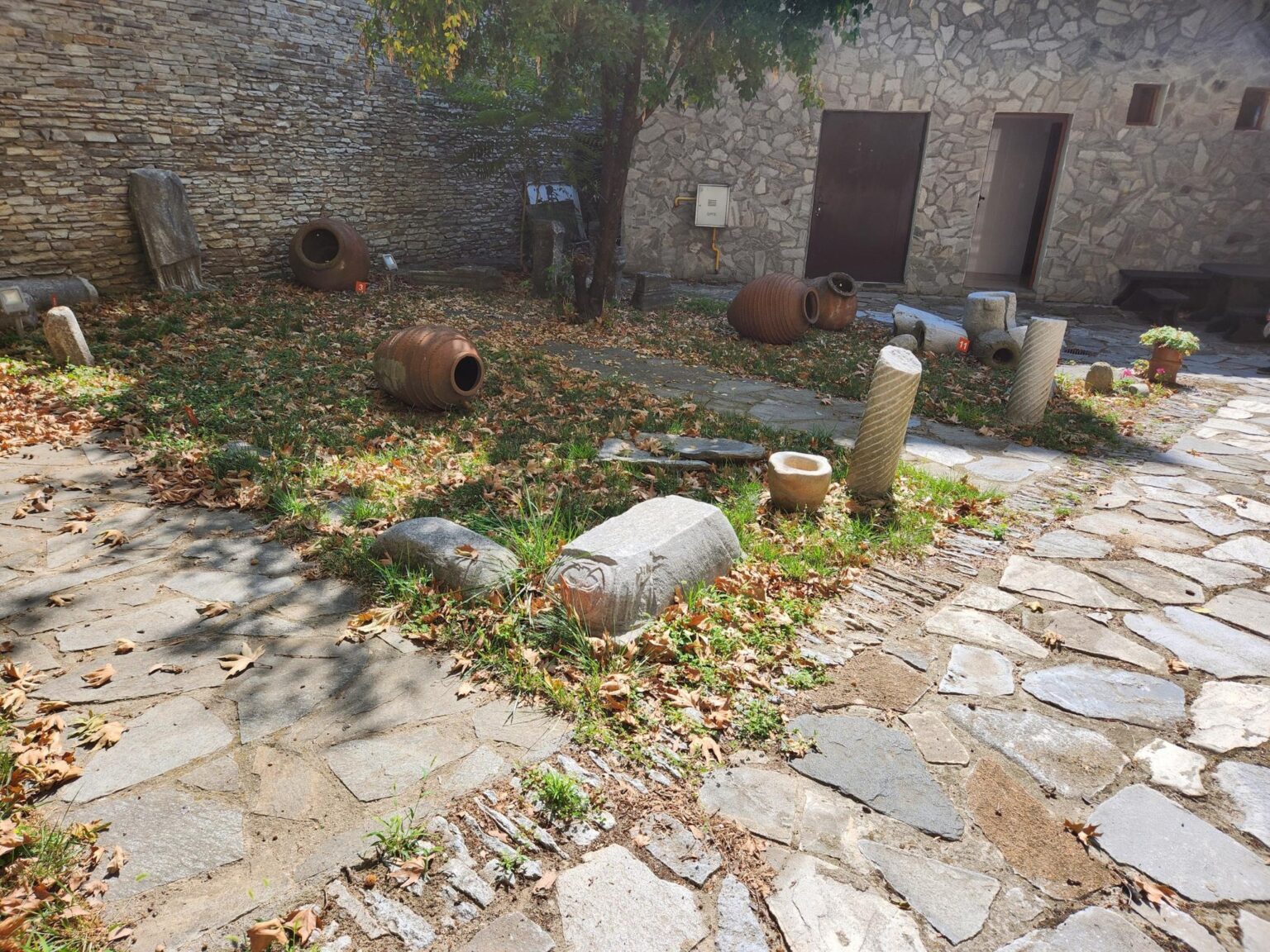
Hairpins, a descent from 900-plus metres down to 500. The car is delighted and burns half of what it normally does. We reach Gotse Delchev, a hidden little gem ringed by mountains, tucked away out of the wind. It is big enough to have paid parking in the form of a blue zone, at roughly €0.50 an hour. (Bulgaria was still using the lev in 2022; all Bulgarian figures here are converted at the fixed rate of 1.95583 leva to the euro.) We park near the centre for peace of mind, and even nearer to the museum. Admission is insultingly cheap at about €1 per adult. The museum holds a surprising amount of history, and the lady at the ticket desk is exceptionally kind and talkative. She runs us through the highlights we should not miss.
The most memorable thing by far is an interrogation room used around the Second World War. You stand on one particular spot and start talking. There is nothing magical about it, nothing paranormal. There is acoustics, and it drives you slowly insane. It is exactly like hearing your own voice played back from a voice message, so you want to puncture your own eardrums and refuse to believe that this is how you sound to everyone else 😀 You say a few sentences, your pulse noticeably picks up, you can hear your own heart, and you are hit with a cocktail of fear, panic, euphoria and unease. It is as unpleasant as it is fascinating. There is very little written about the phenomenon online; you have to stand there yourself to feel it.
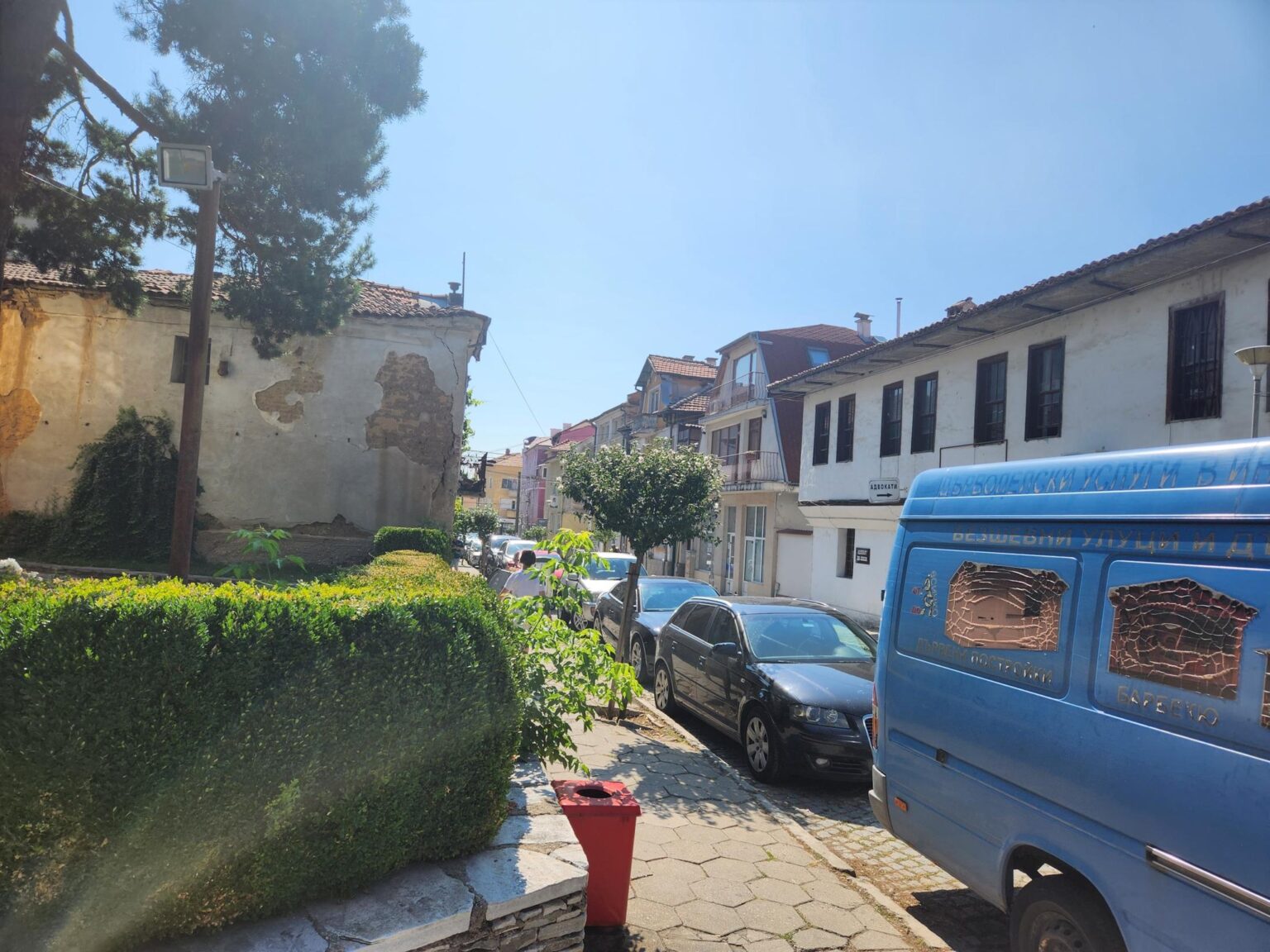
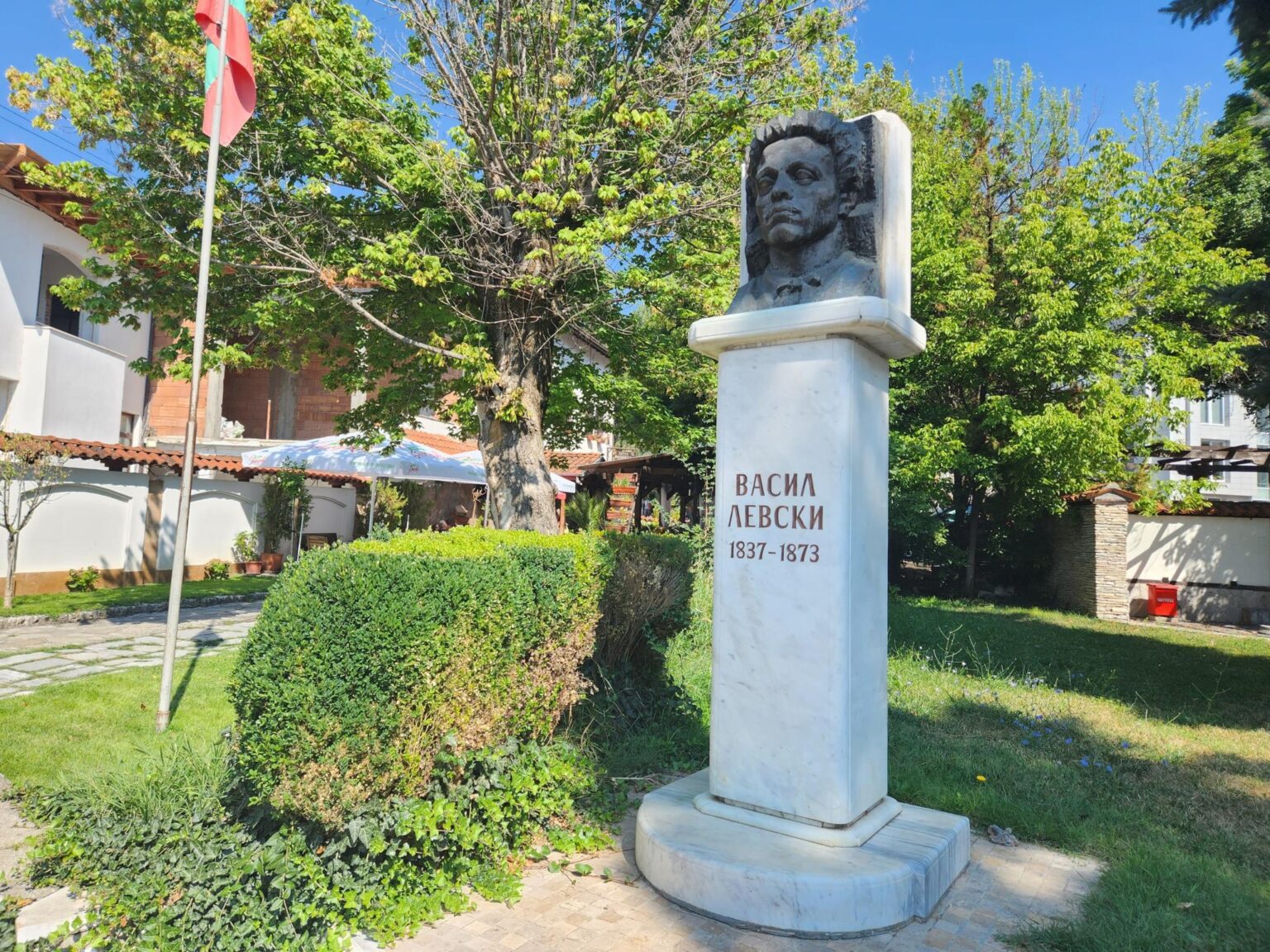
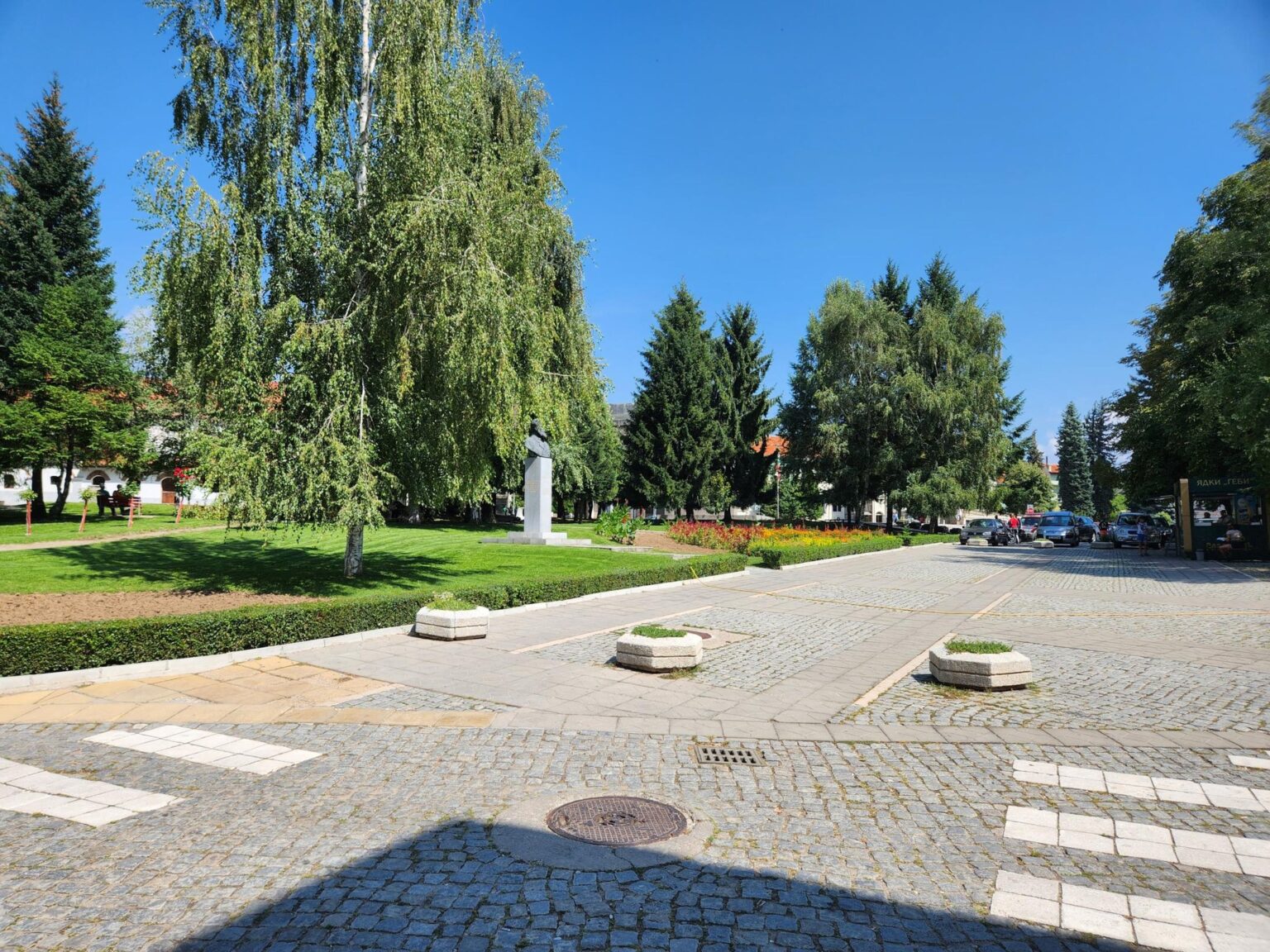
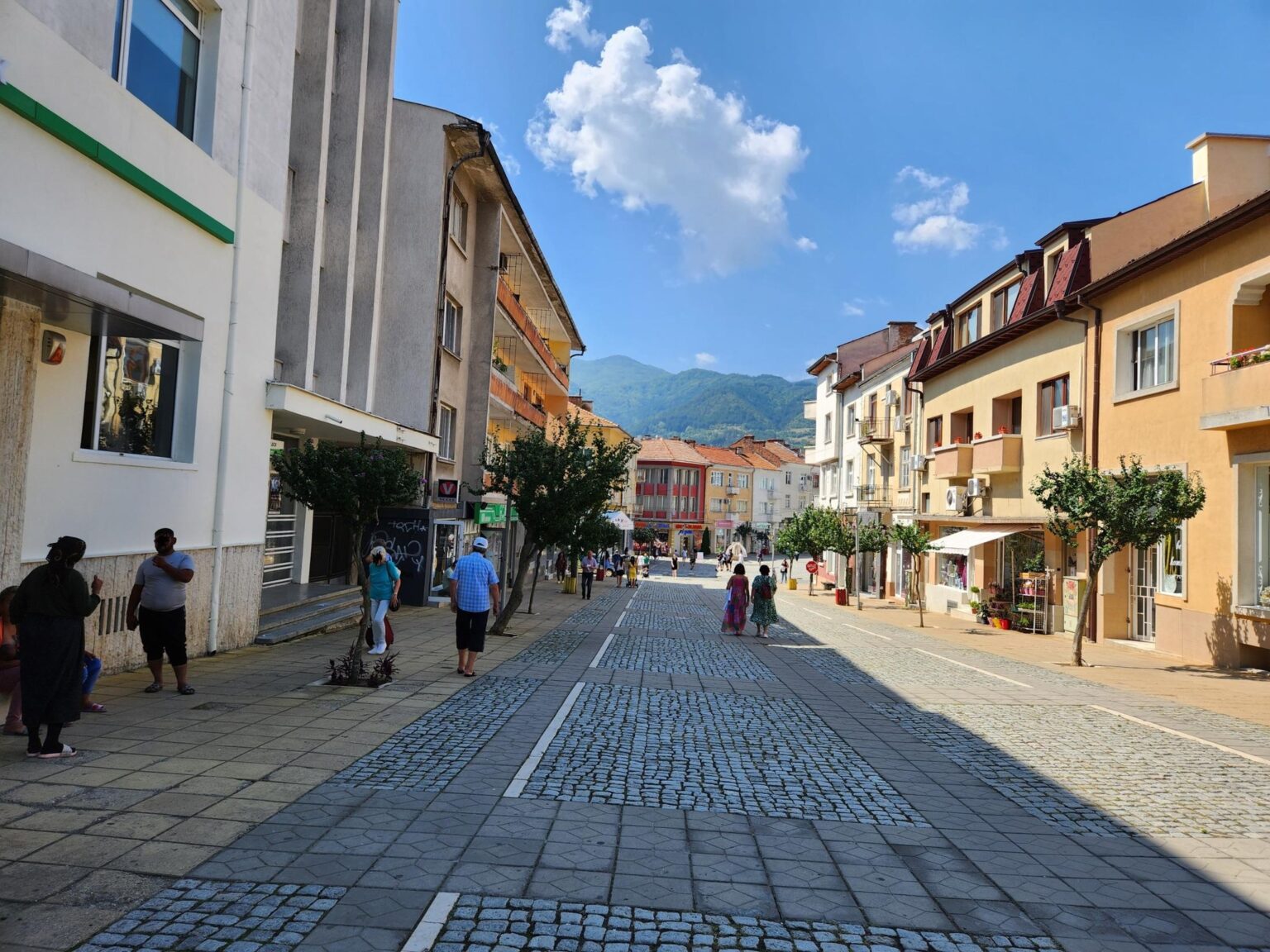
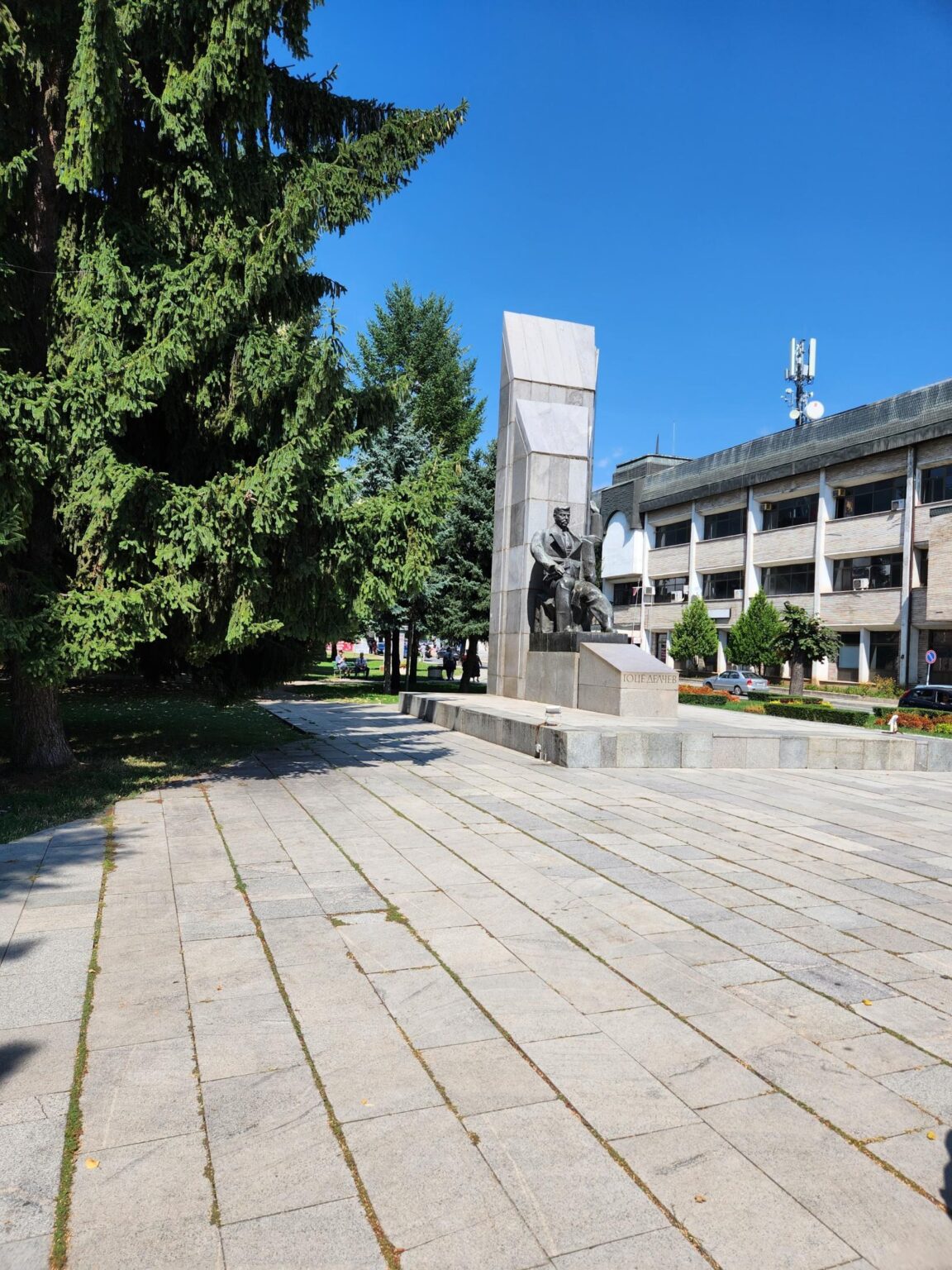
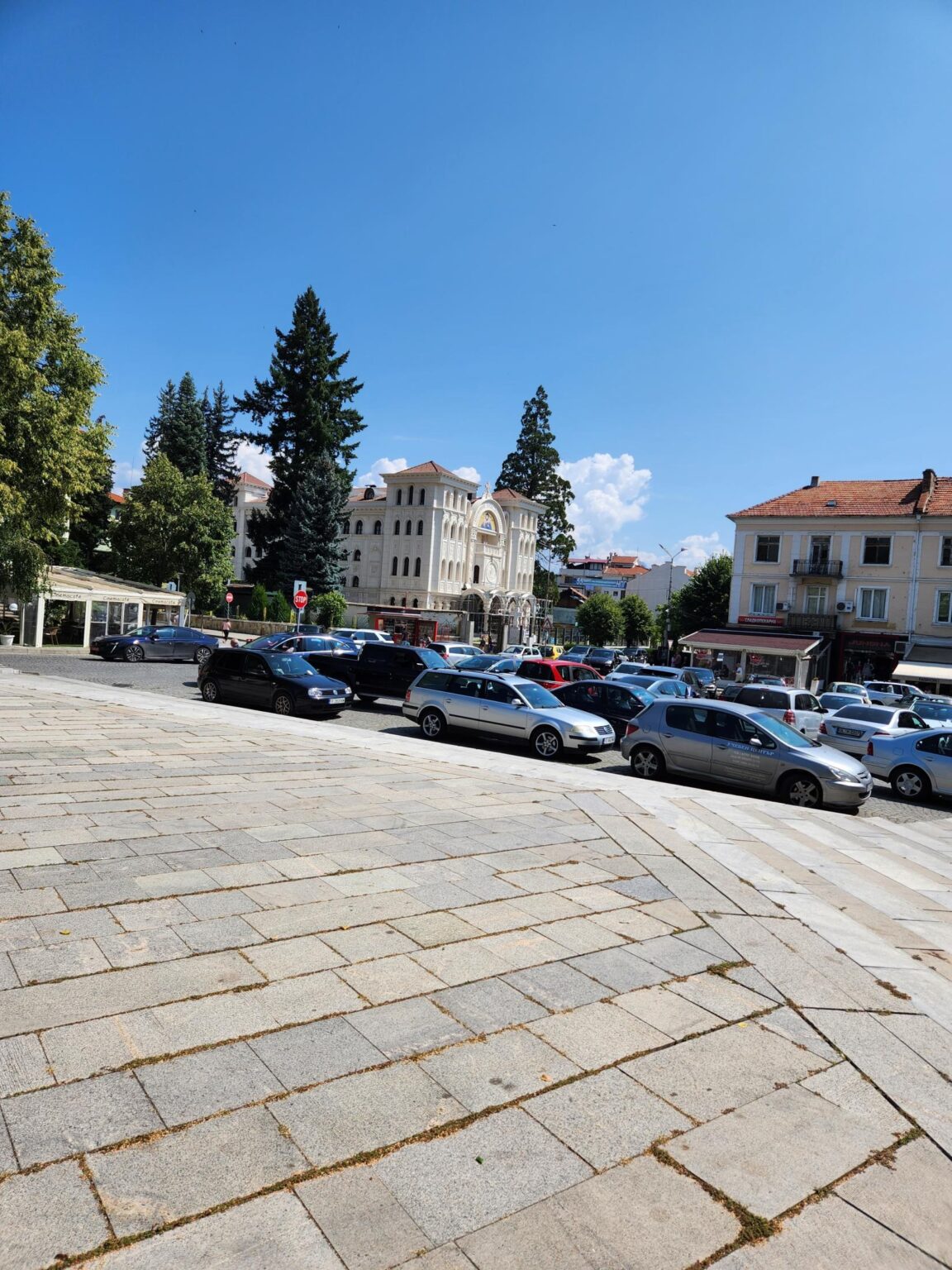
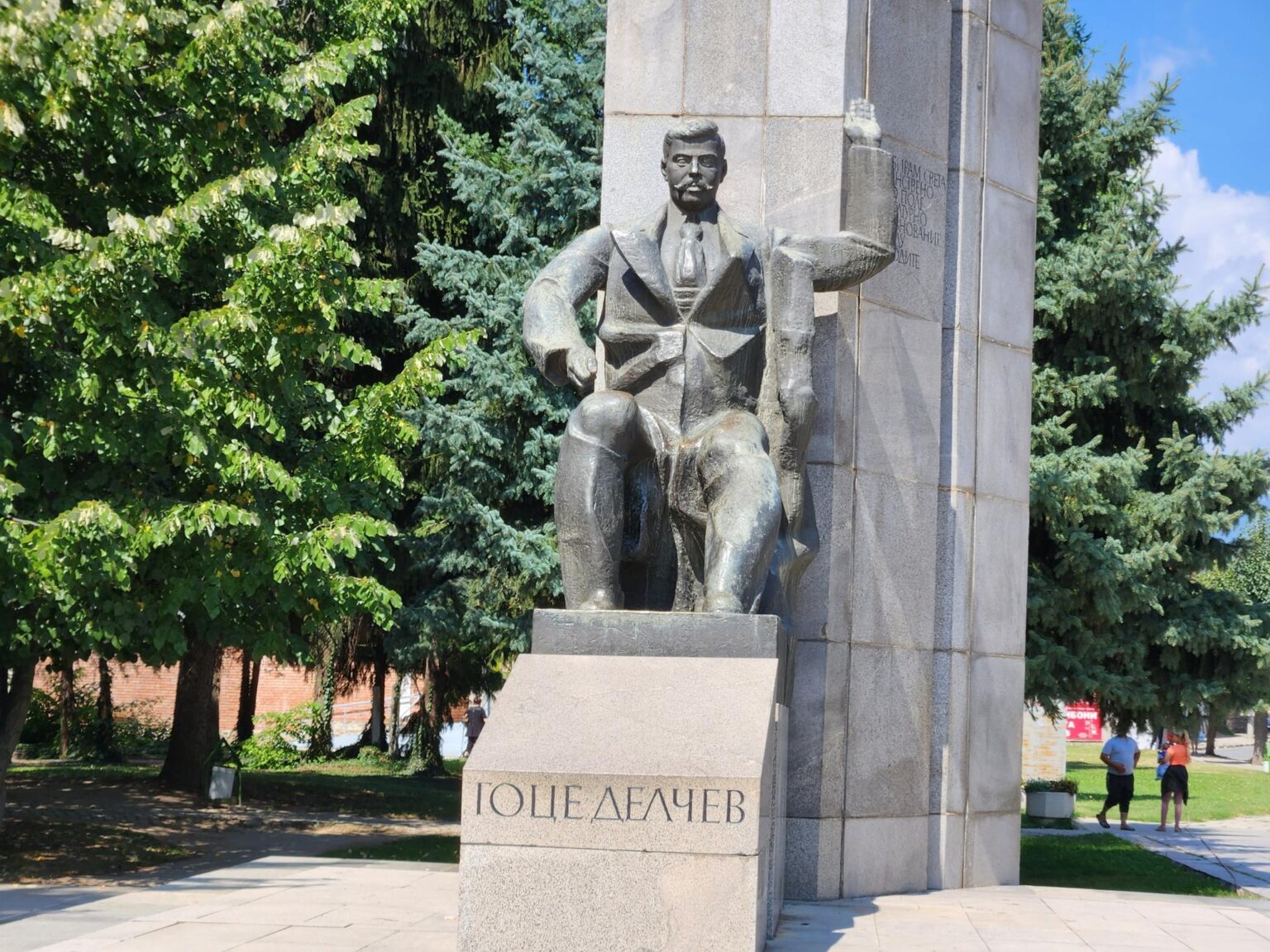
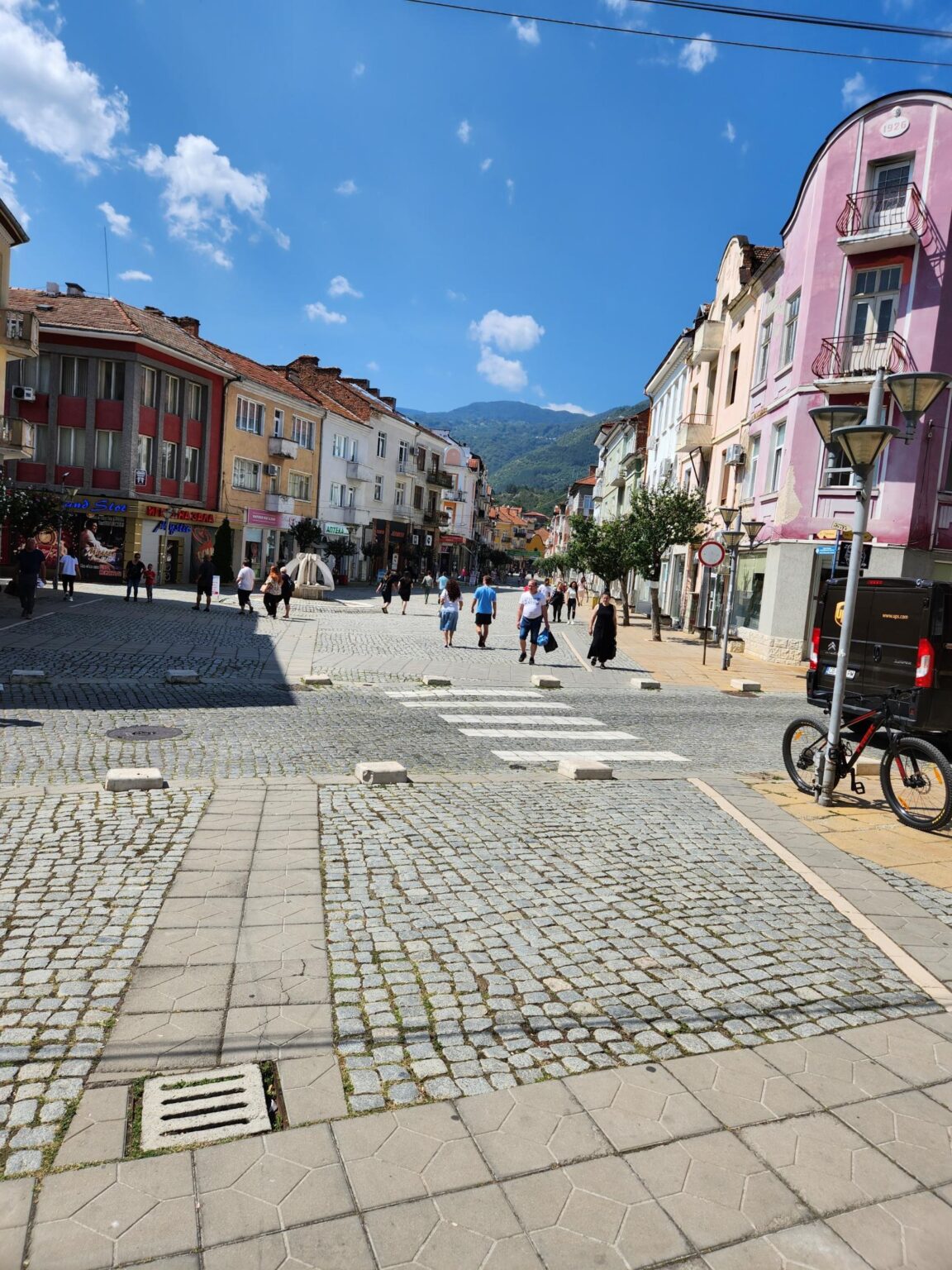
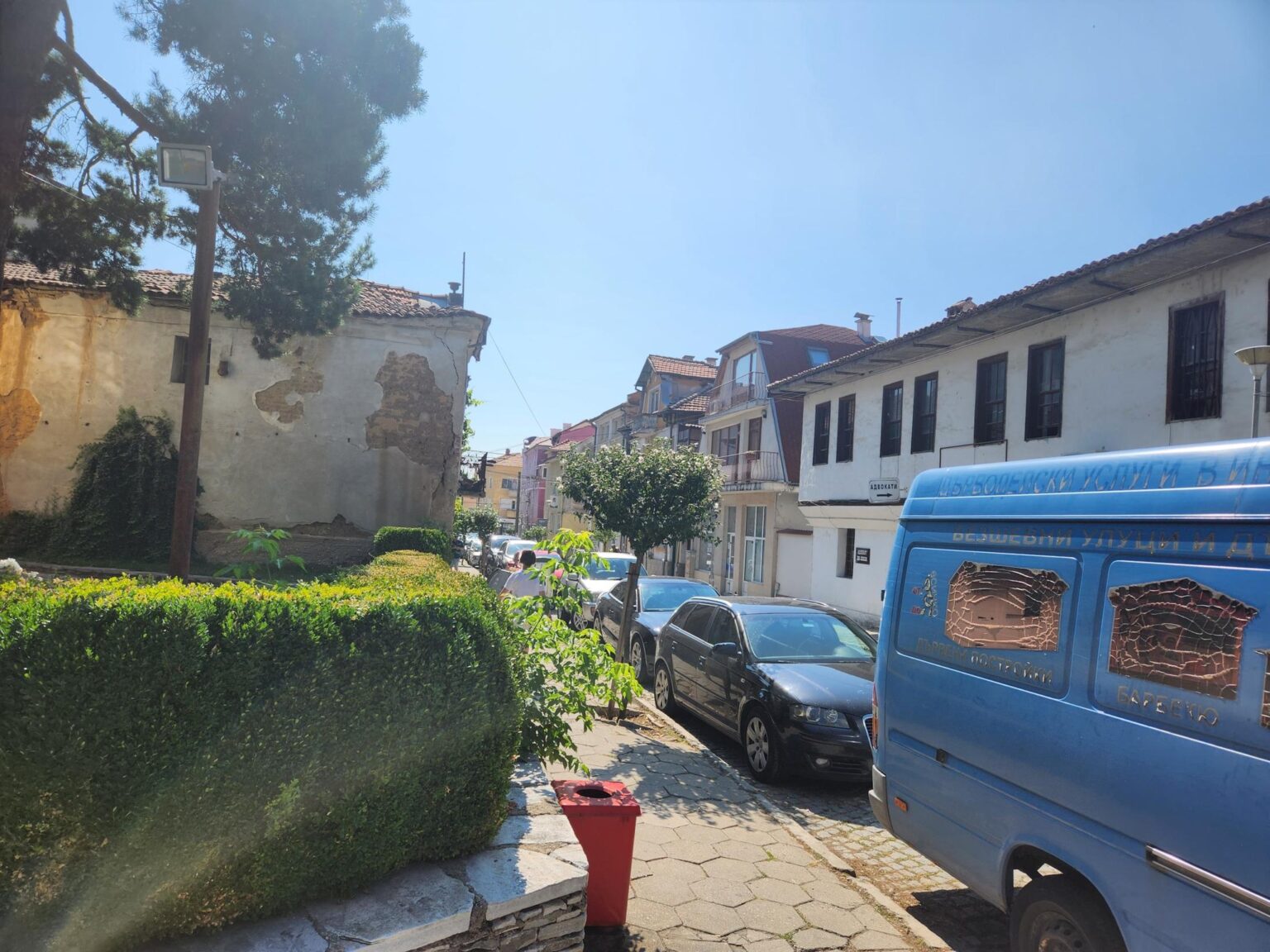
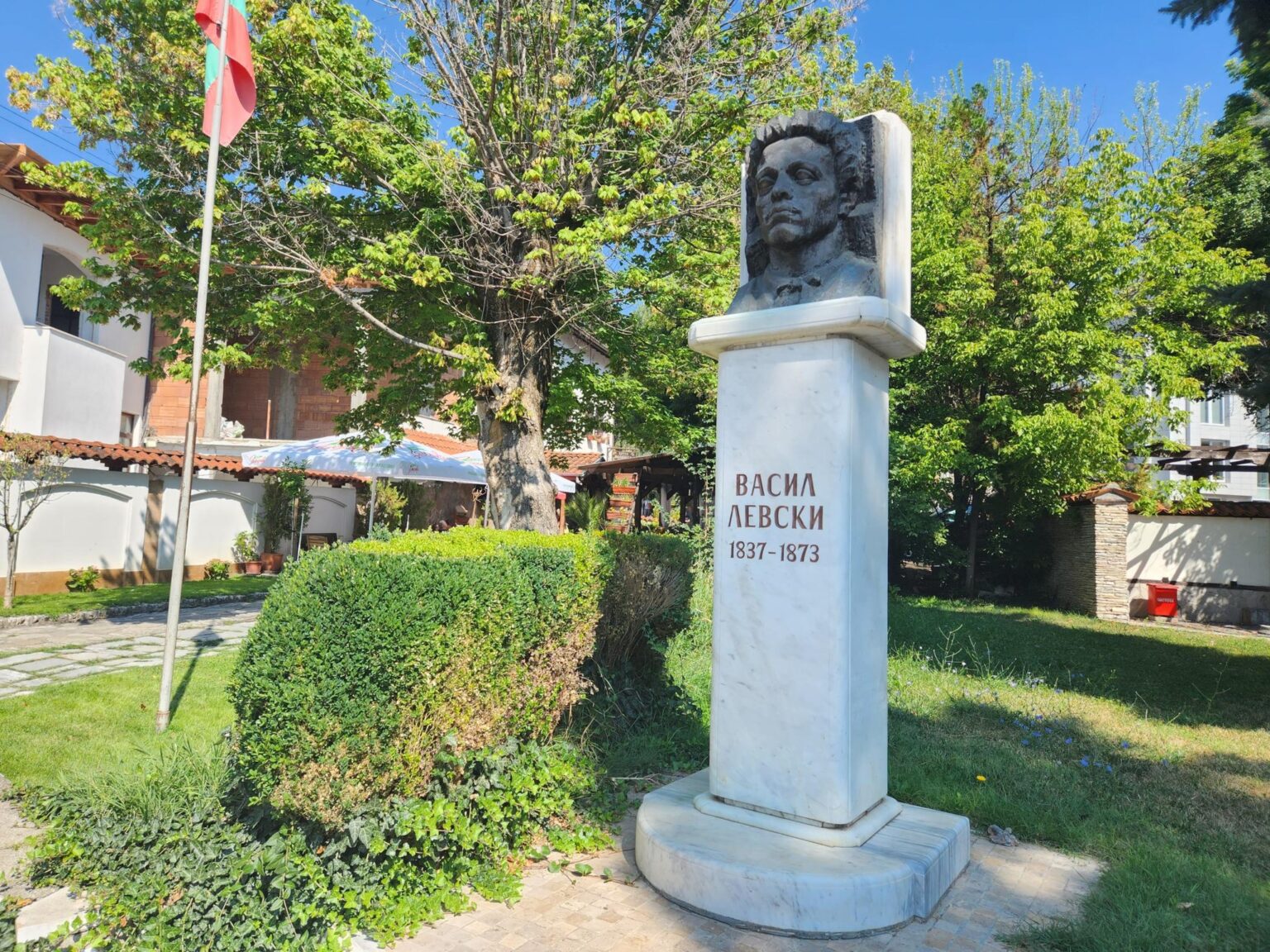
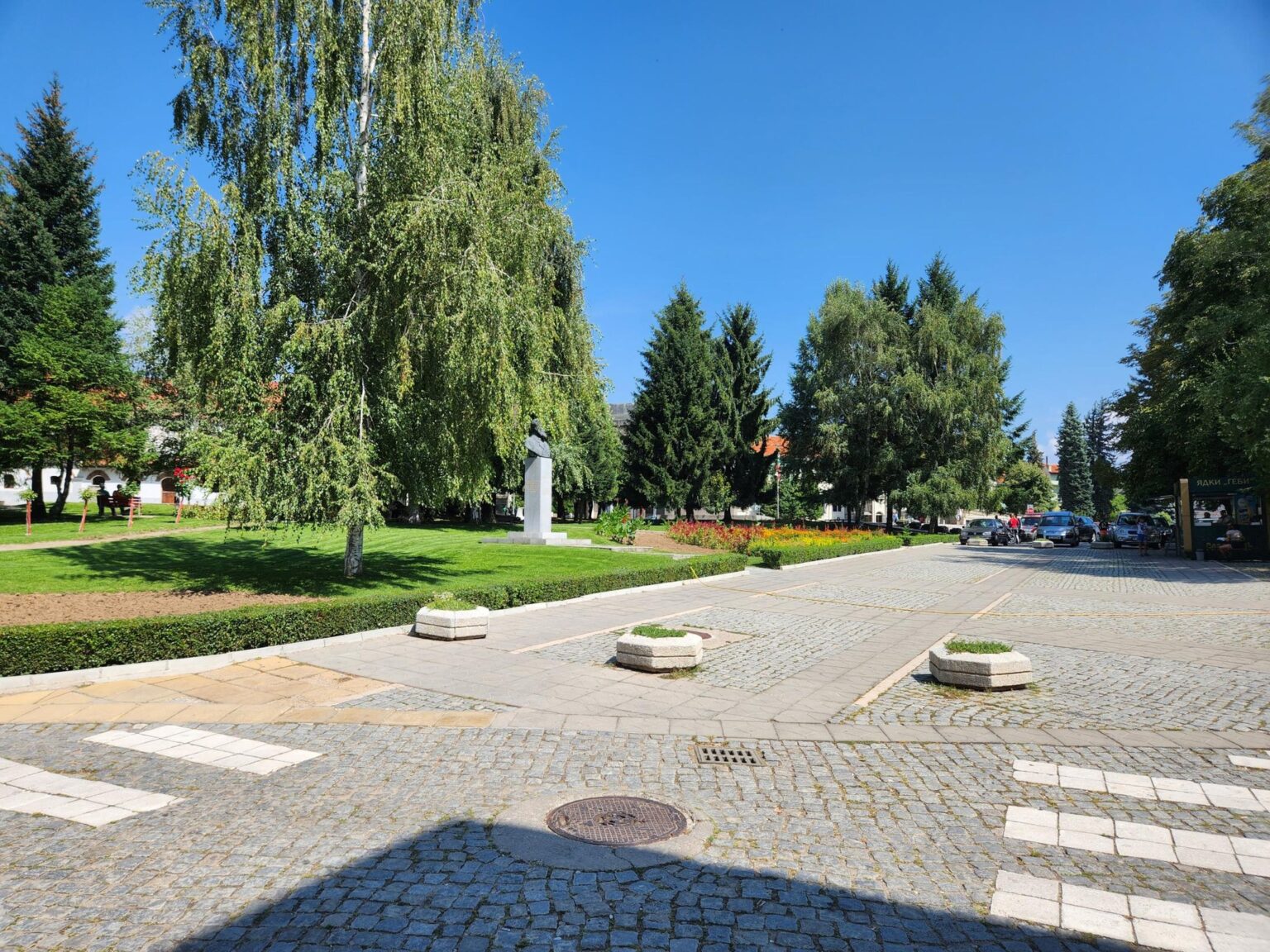
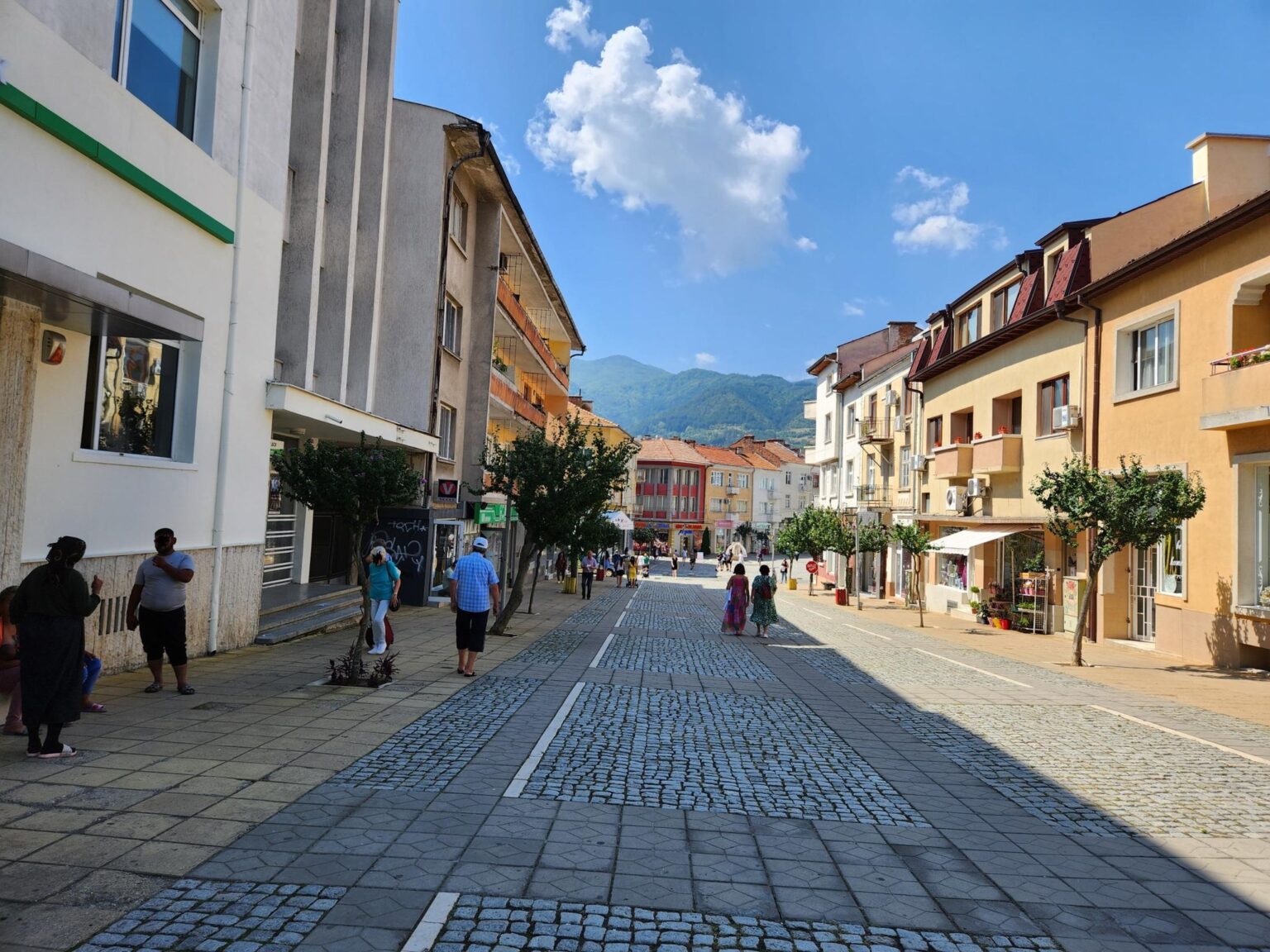
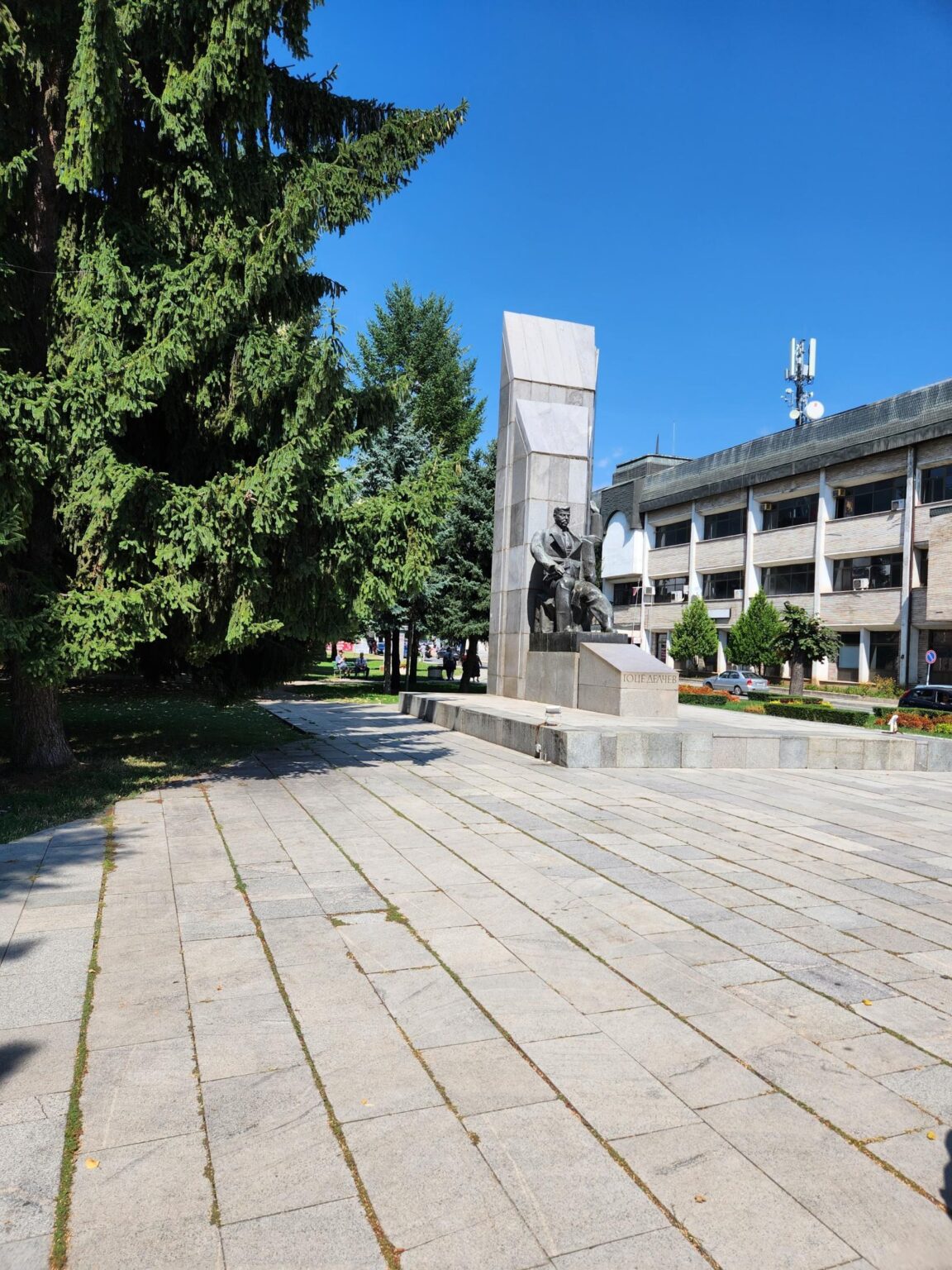
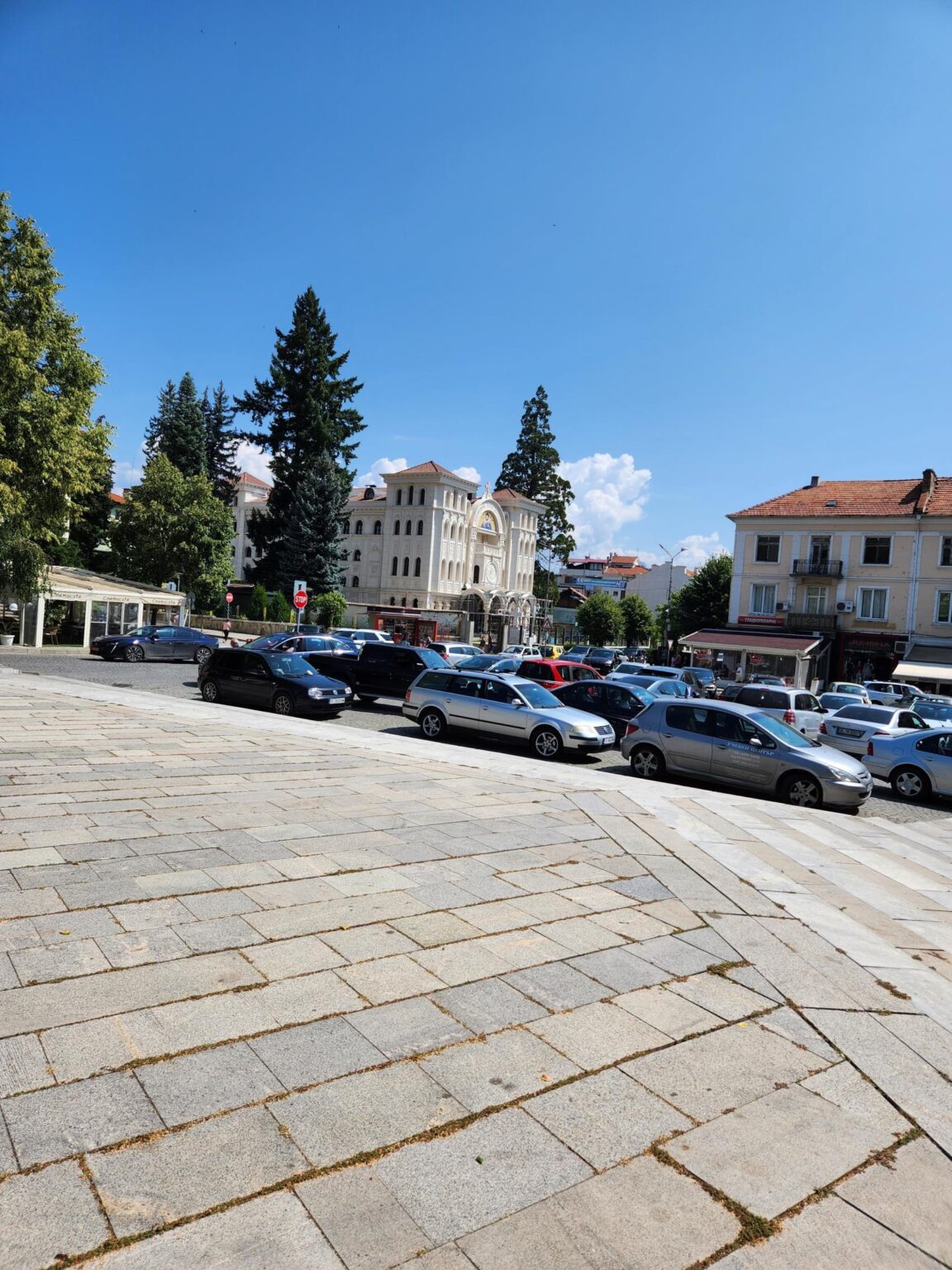
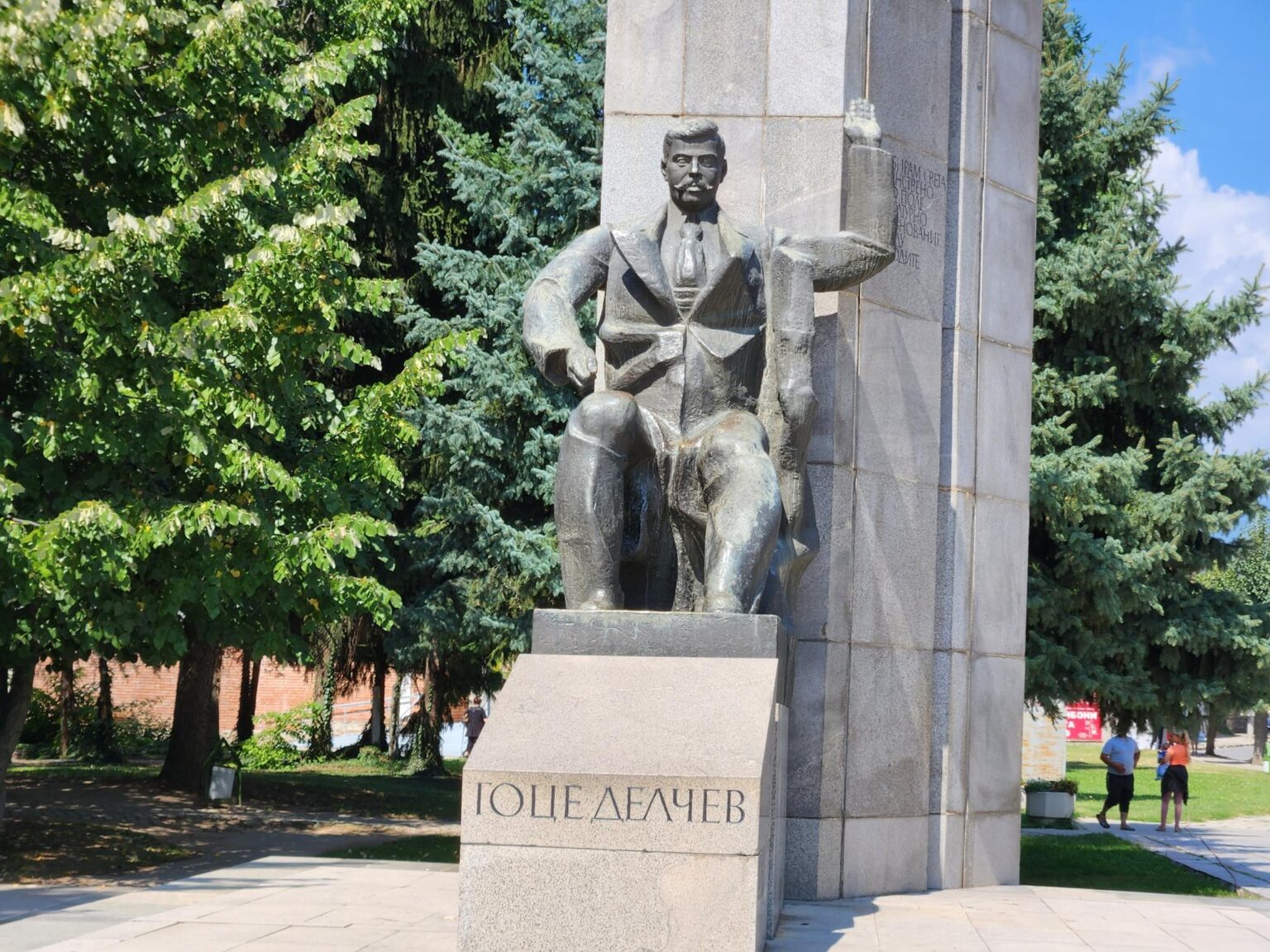
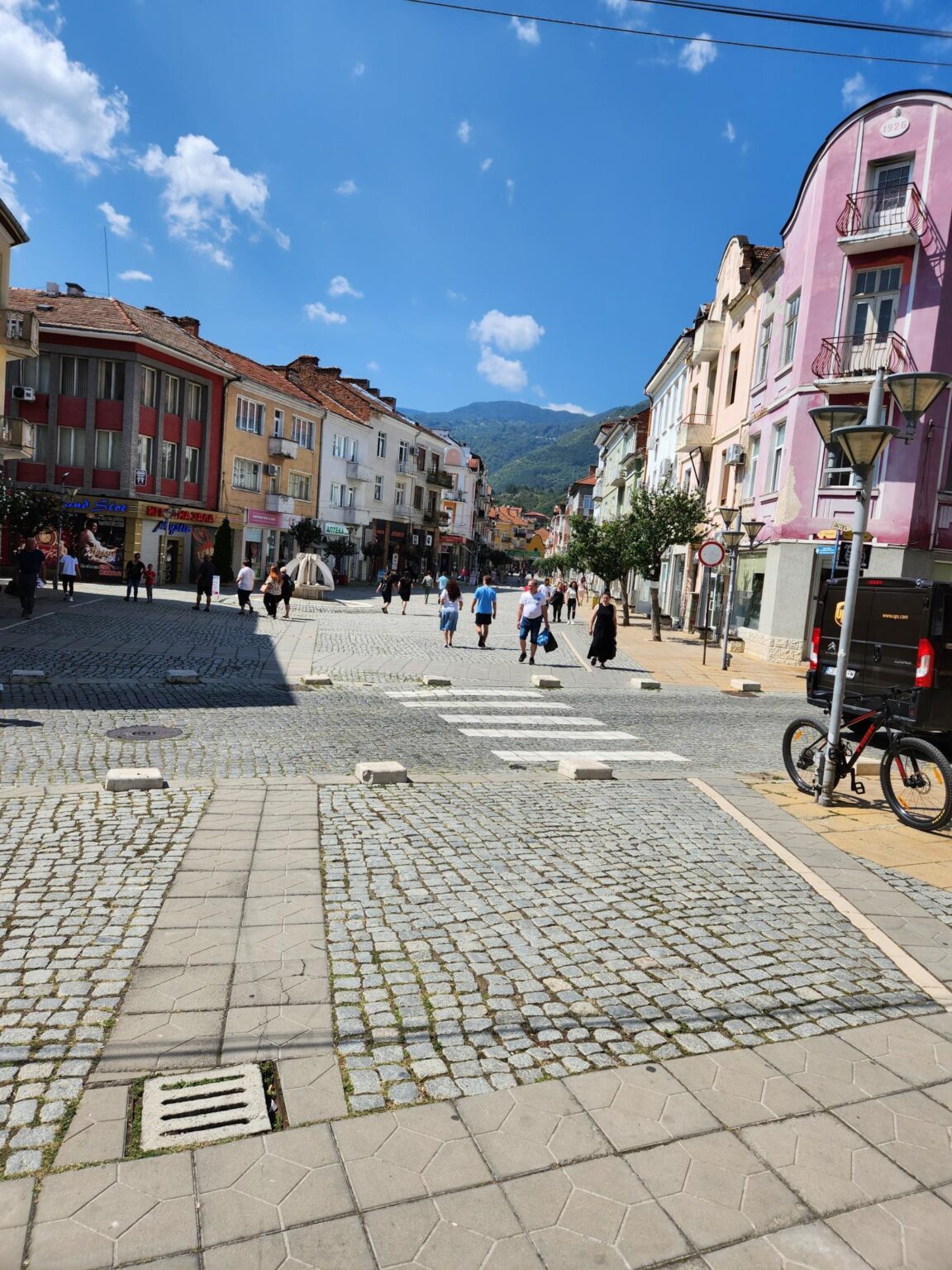
Stamp collected, and time for a lap or two of the main street. Excellent. Another unpretentious Bulgarian town that is several times cleaner than its Italian counterparts. A point to Gotse Delchev. The main street is pleasant and can be walked end to end in 10 to 15 minutes, and it has everything: squares, monuments, statues, greenery, benches. Clean and new. Lunch in a relatively polished café-restaurant on the square. Caesar salad around €4, coffee €0.80.
Two hours for the museum and the centre, and it is time to drive.
The practical part
If you already know the route and the island and just want the story, skip ahead to Day 2.
One important warning before we go any further: every price in this article is what we actually paid in August 2022. Ferry fares, fuel, restaurant bills, entry tickets and parking have all moved since. Where we know the current figure, we say so and link the source; treat everything else as an order of magnitude rather than a quote.
The border
The border is a pleasure. We have crossed at Kulata–Promachonas before and we know it is a lottery. Either you are through in 10 minutes or you sit there for four hours. There is no logic to it. The phenomenon obeys neither day of the week, nor hour of the day, nor month of the year.
This is our first time at Ilinden–Exochi. It is peak season. There is traffic, but nothing serious. Thirty minutes, and the checks are the same as at Kulata: ID cards, vehicle documents. On that date no special paperwork was needed, Covid notwithstanding. We cross with the small registration certificate, issued in 2015, which is a single page and does not fold in half. We had prepared ourselves for them asking for the large certificate. They did not. Still, if you are travelling with a small, non-folding certificate, be ready and carry a photocopy of the large one. There is a chance they will ask for it, and you may well need it inside Greece too if you are stopped. And do not forget your green card for the third-party liability insurance.
It is already close to 14:00. We are pushing through in transit rather than sightseeing. One funny story that deserves its own article one day: do not keep a police baton in your boot, or they will take your plates off and things get complicated. A colleague’s story, not ours 😀
The ferries
Freedom of choice is a spiteful little phenomenon that practically begs for several pages of philosophising. On the one hand you get the feeling that you are free; on the other, doubt creeps in and you spend the rest of the trip wondering whether you made the right call. The Greeks and Google Maps do their best to keep you in the dark and quietly take that right away from you.
There are two ways to reach Thassos by ferry if you are driving your own vehicle. We decide to take one route out and the other back. Everything has to be tried once, right? Option one is the ferry from Kavala, which lands on the western side of the island at Skala Prinos. Option two is the ferry from Keramoti, which lands on the eastern side at Limenas, the island’s micro-capital, if we can call it that.
Prices are broadly comparable on both routes, with a difference of one to five euros at most. You pay:
- A fee for the car itself, based on length. In 2022 this was €20 to €25 (budget €25; the €20 band is for cars under four metres, the Corsa and VW up class), and more for caravans, vans and the like.
- A fee per person: €6 from Kavala, €5 from Keramoti.
Now, there are a lot of scenarios here. A small comparison table:
| Kavala – Skala Prinos | Keramoti – Limenas | |
|---|---|---|
| Price | €25 + €6 per person | €25 + €5 per person |
| Ferry frequency | every 1–2 hours* | every 30 minutes* |
| Crossing time | 90 minutes | 50 minutes |
| Parking, queueing and boarding | 10 minutes | 50 minutes |
| Total, measured from Kavala | 100 minutes | 100 minutes |
*The most accurate source for schedules and, crucially, cancelled departures is go-thassos.gr. Check it before you drive.
For 2026 the picture has shifted a little: the passenger fare is €6, cars up to 4.25 m are €12–22 and cars over 4.25 m are €17–27, depending on length. Keramoti–Limenas now runs roughly 38 departures a day in summer with a crossing of 35 to 40 minutes, while Kavala–Skala Prinos is down to about five departures a day with a crossing of around 75 minutes. There is no online booking on either route; tickets are sold at the port booths and boarding follows arrival order, so allow 45 to 60 minutes in high season if you have a car with you.
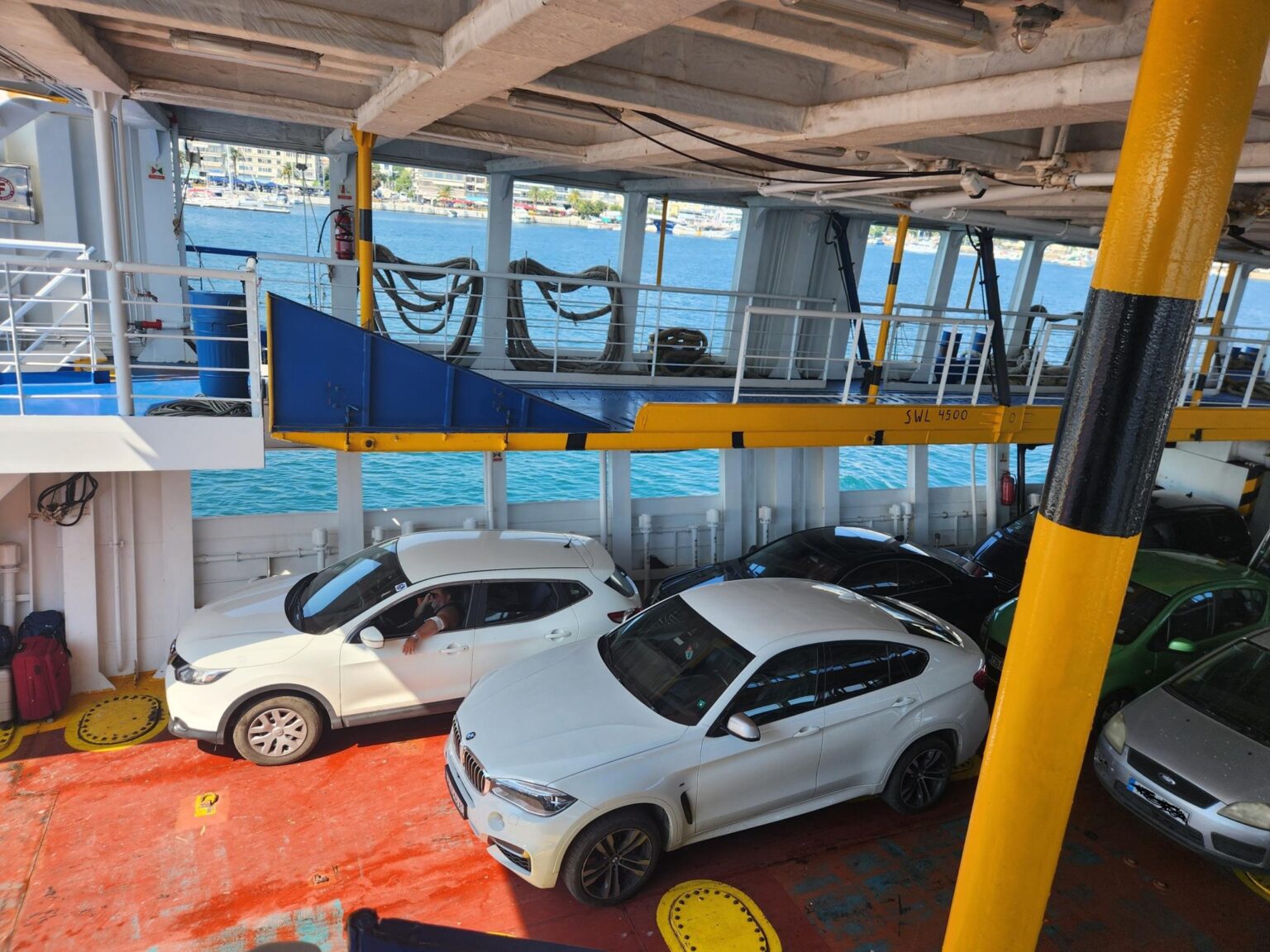
This is the first time we have driven our own car onto a ferry. We have travelled on ferries before, but this time “the precious” is at stake. What if there is a swell and it nudges someone else’s precious? We are not religious, but God forbid 😀 Friends who have done the crossing all reassure us, and they are right:
Loading your car onto a ferry is exactly like parking at a big supermarket chain. Except that if some inconsiderate soul does not park right up against you of their own accord, the loading crew will personally see to it.
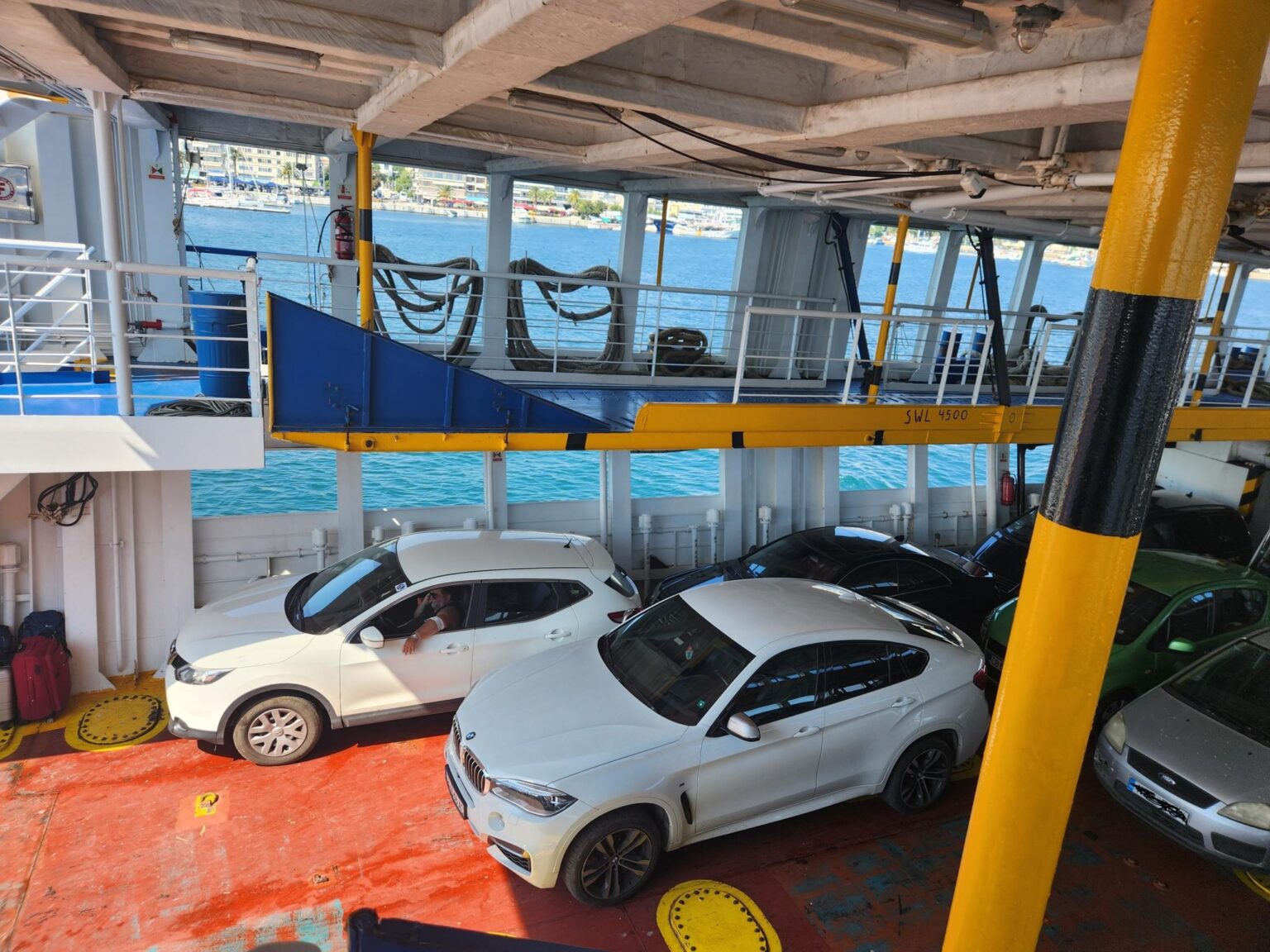
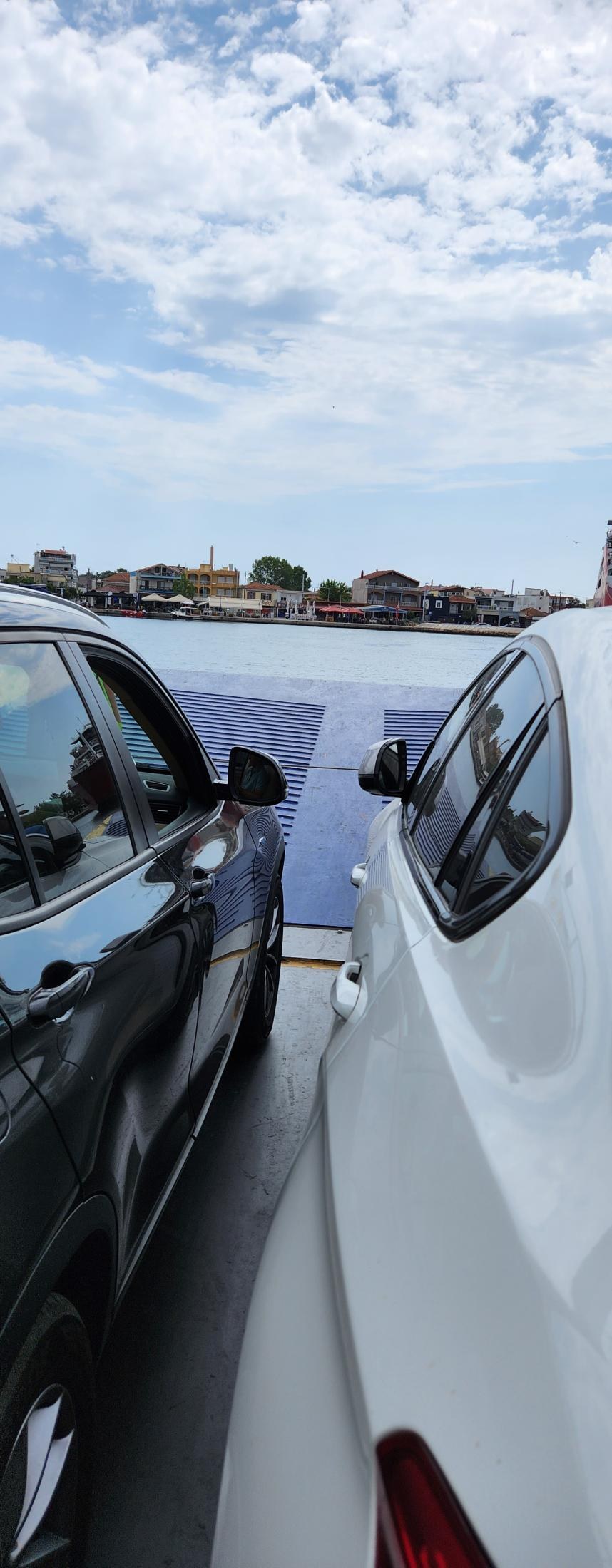
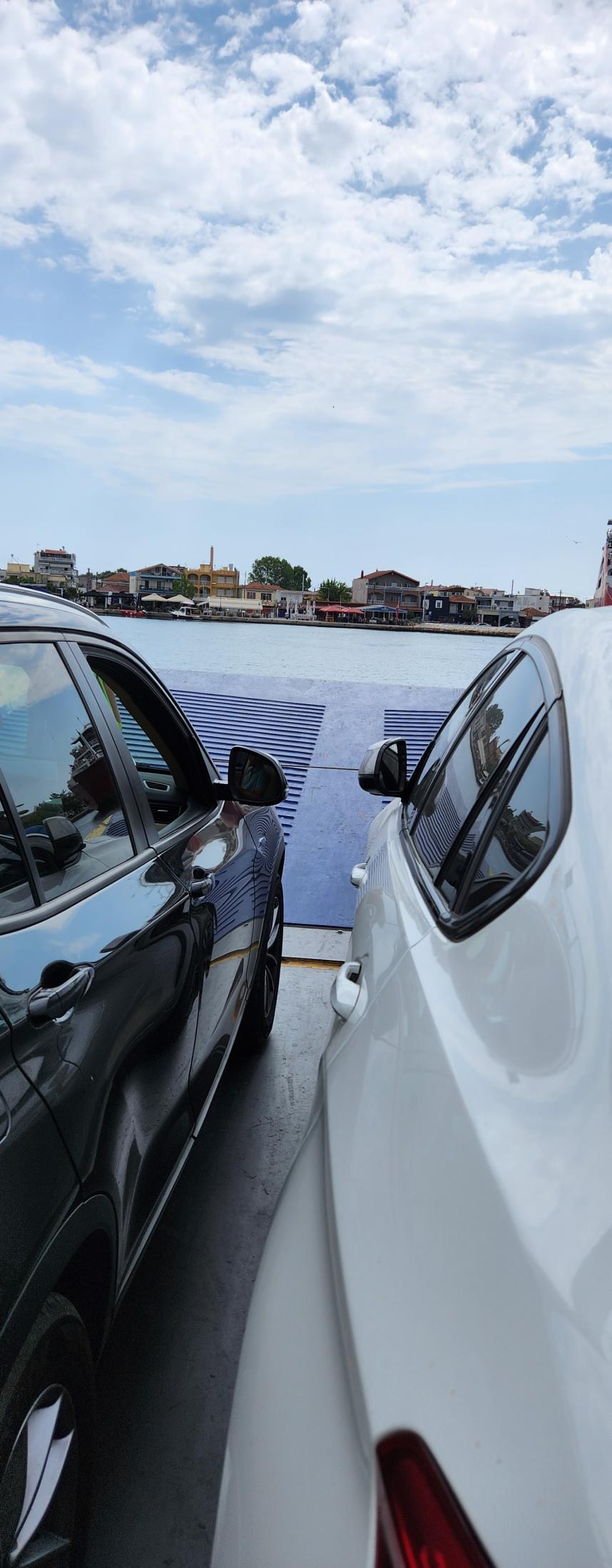
At Kavala you can pay on the ferry itself. At Keramoti you have to join a kilometre-long queue and pay at a booth. Kavala also has far, far less traffic. That said, the Greeks still gesture with great enthusiasm while stitching the cars together 10 centimetres apart. This is the part we do not understand. Fine, the ferry is full, pack them in. But you have 15 cars on a ferry built for 50. Why not spread them out a bit, say a metre apart, for everyone’s peace of mind? No. The cars are arranged by a Tetris professional, and we are not joking, watch it for a while, it is oddly addictive. In practice the cars shift by about a centimetre with the rocking. We assume the Tetris logic runs: “If the car is going to move more than five centimetres, then that is the least of our problems, because at that point we are probably sinking.”
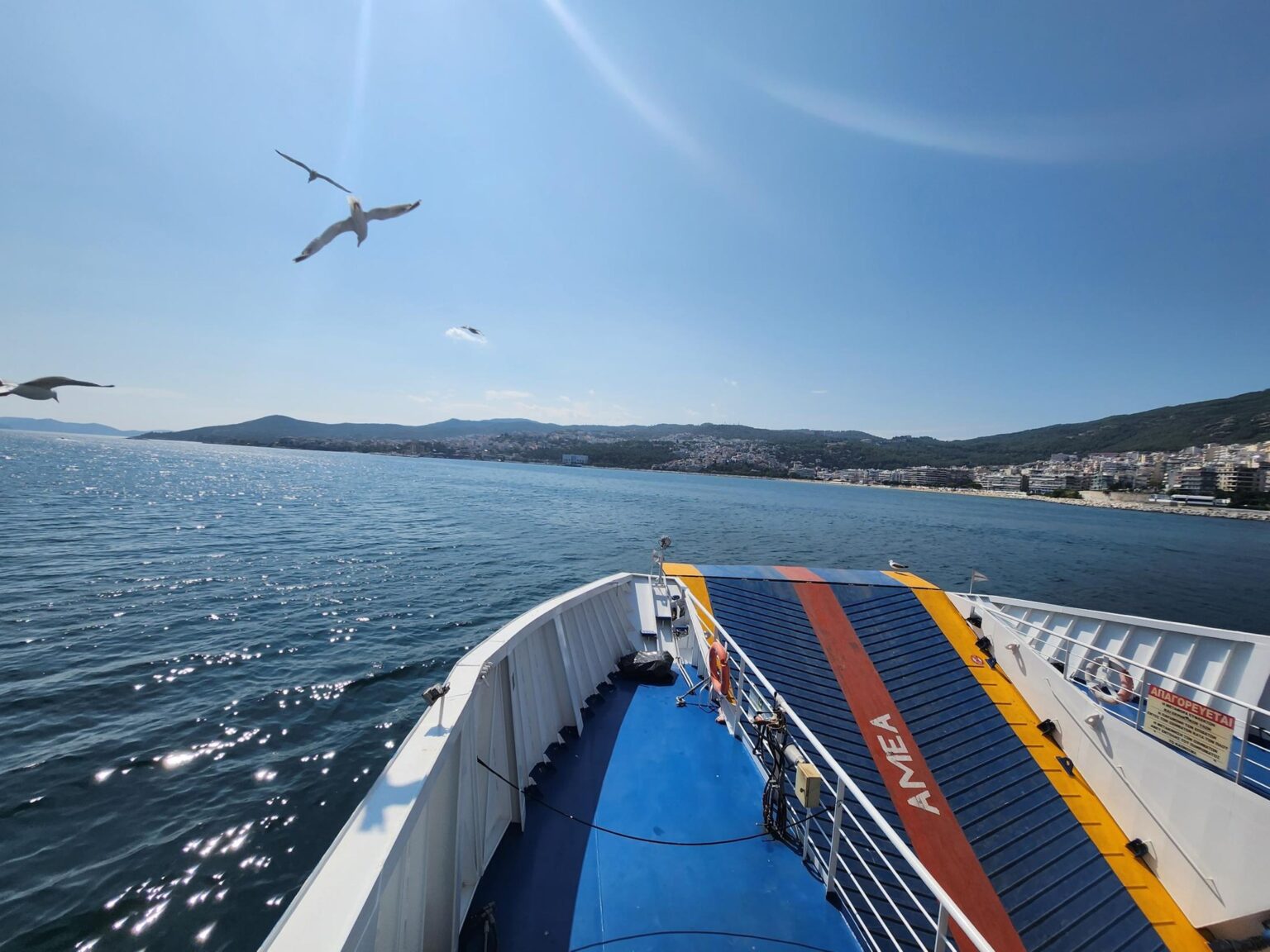
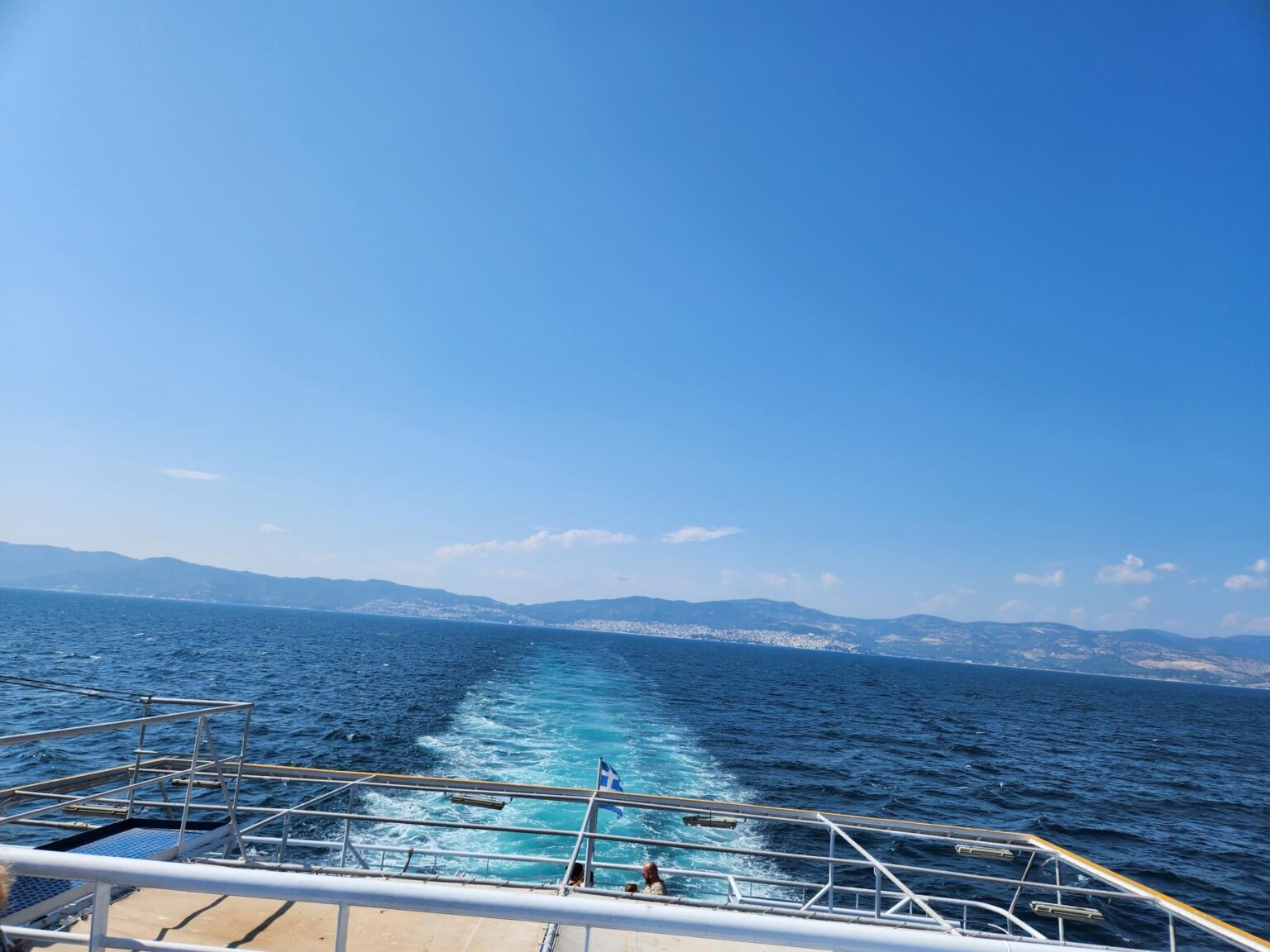
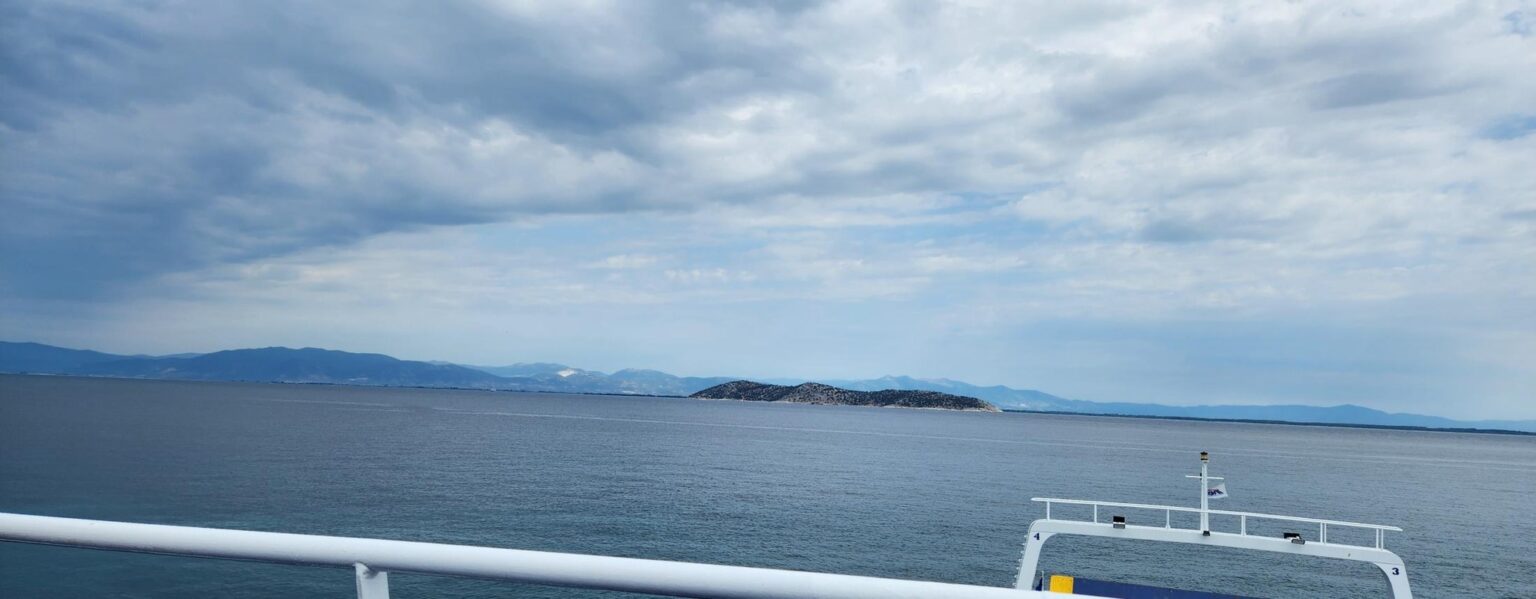
The ferry itself is thoroughly civilised and pleasant, spread over several decks. There are panoramic seats outside where you can watch your beloved Balkan peninsula receding and your destination approaching. If you do not travel well on water, there is seating inside, where you barely feel the crossing at all. You can keep an eye on your car and go down to it if you have forgotten something, no problem. There are toilets, coffee, water and snacks.
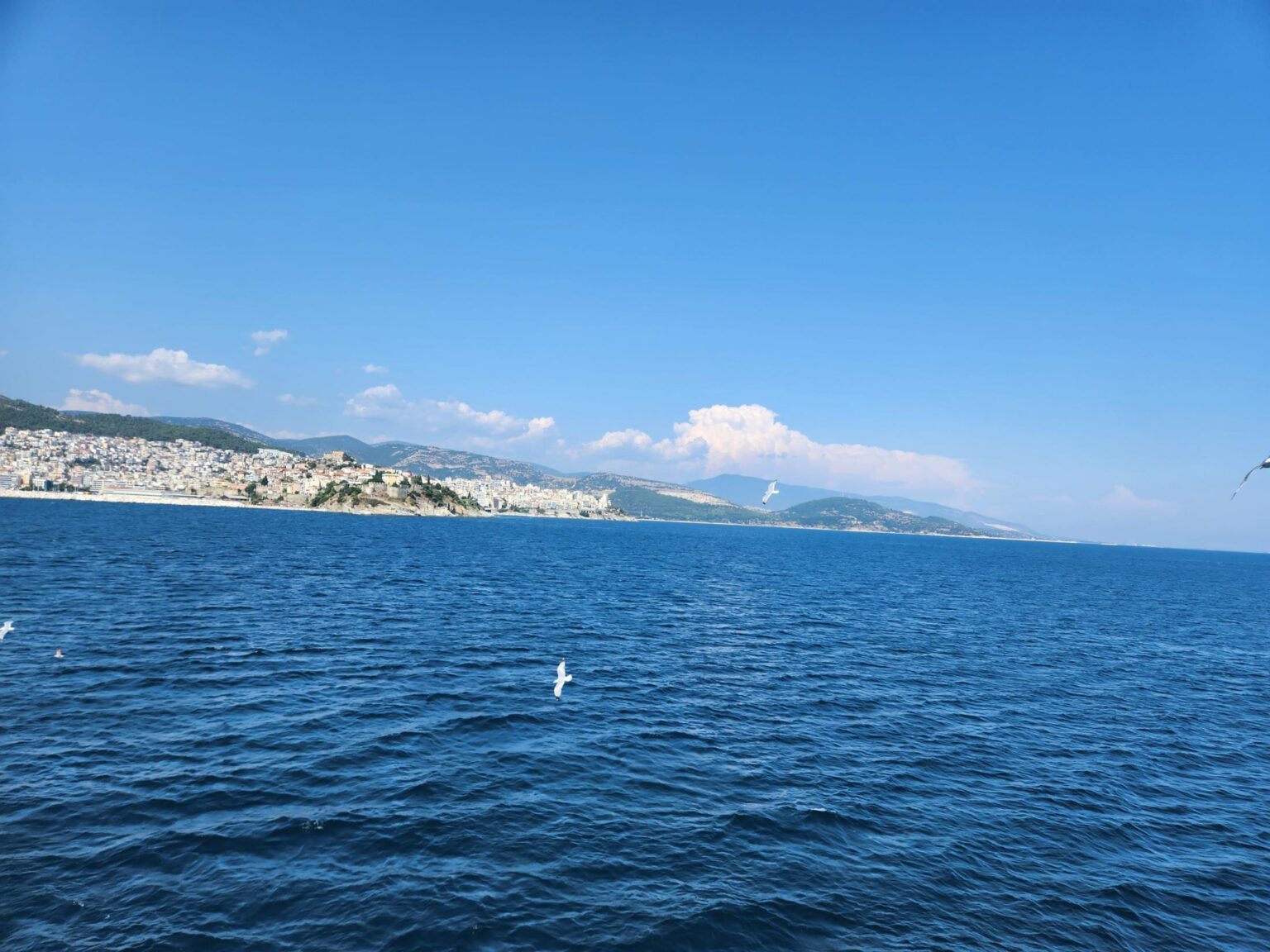
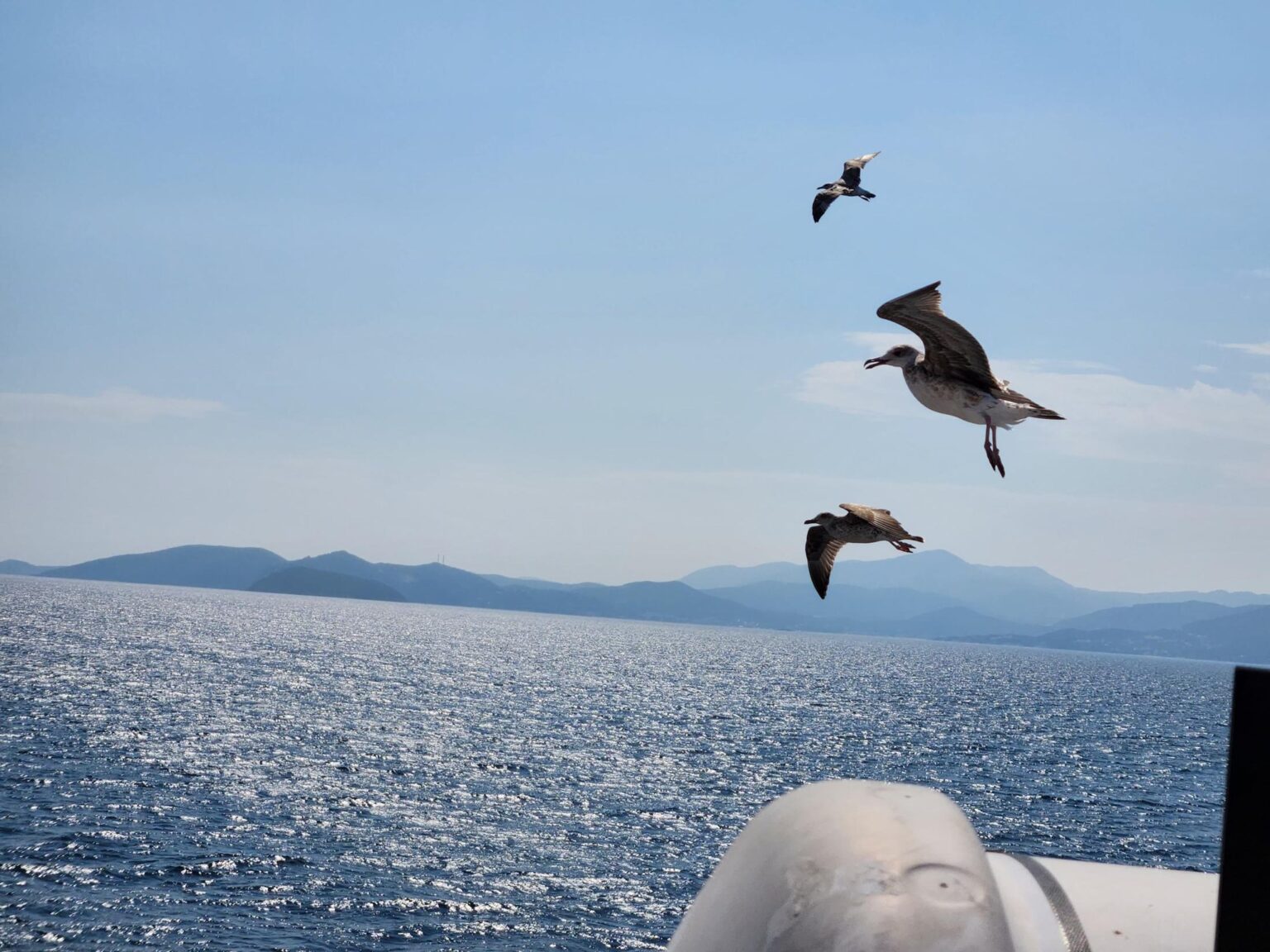
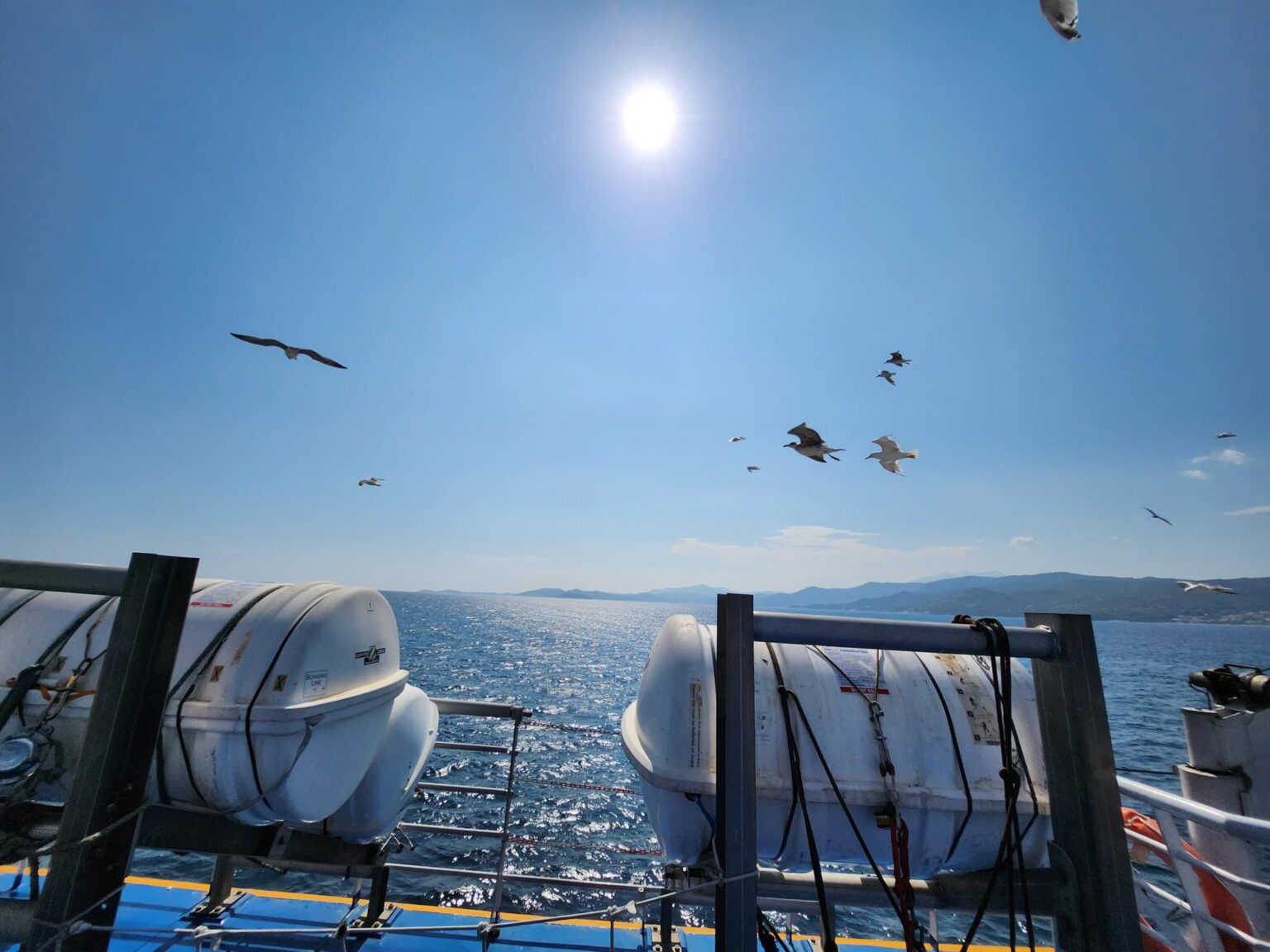
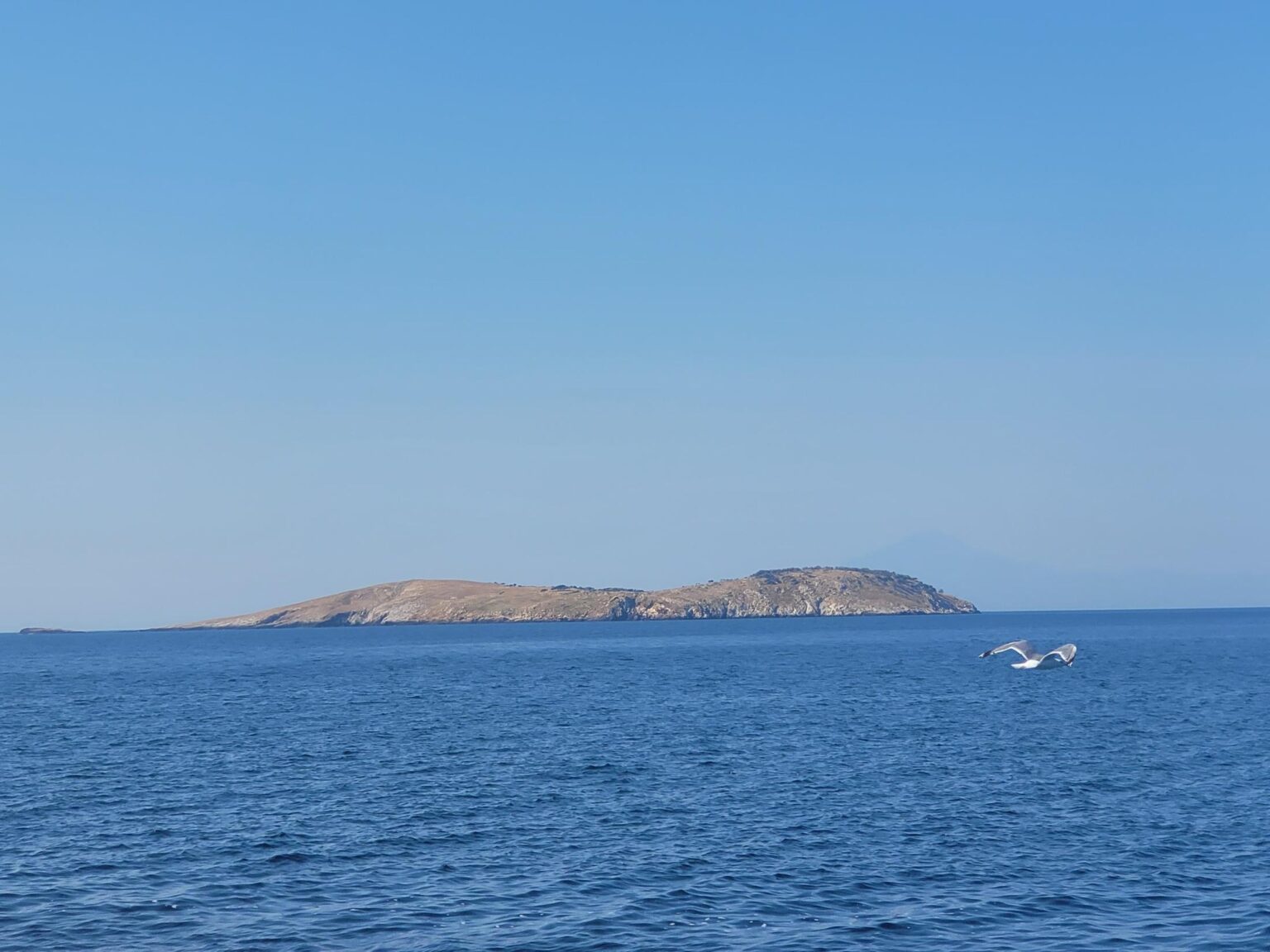
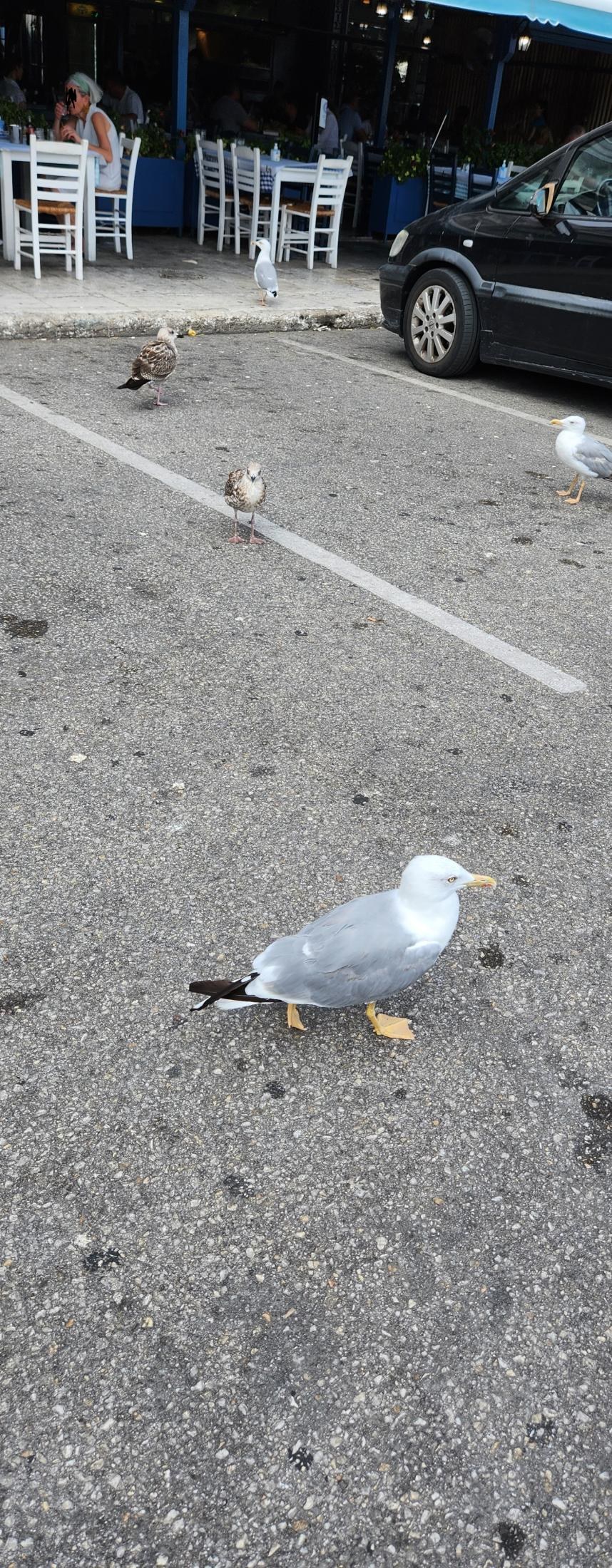
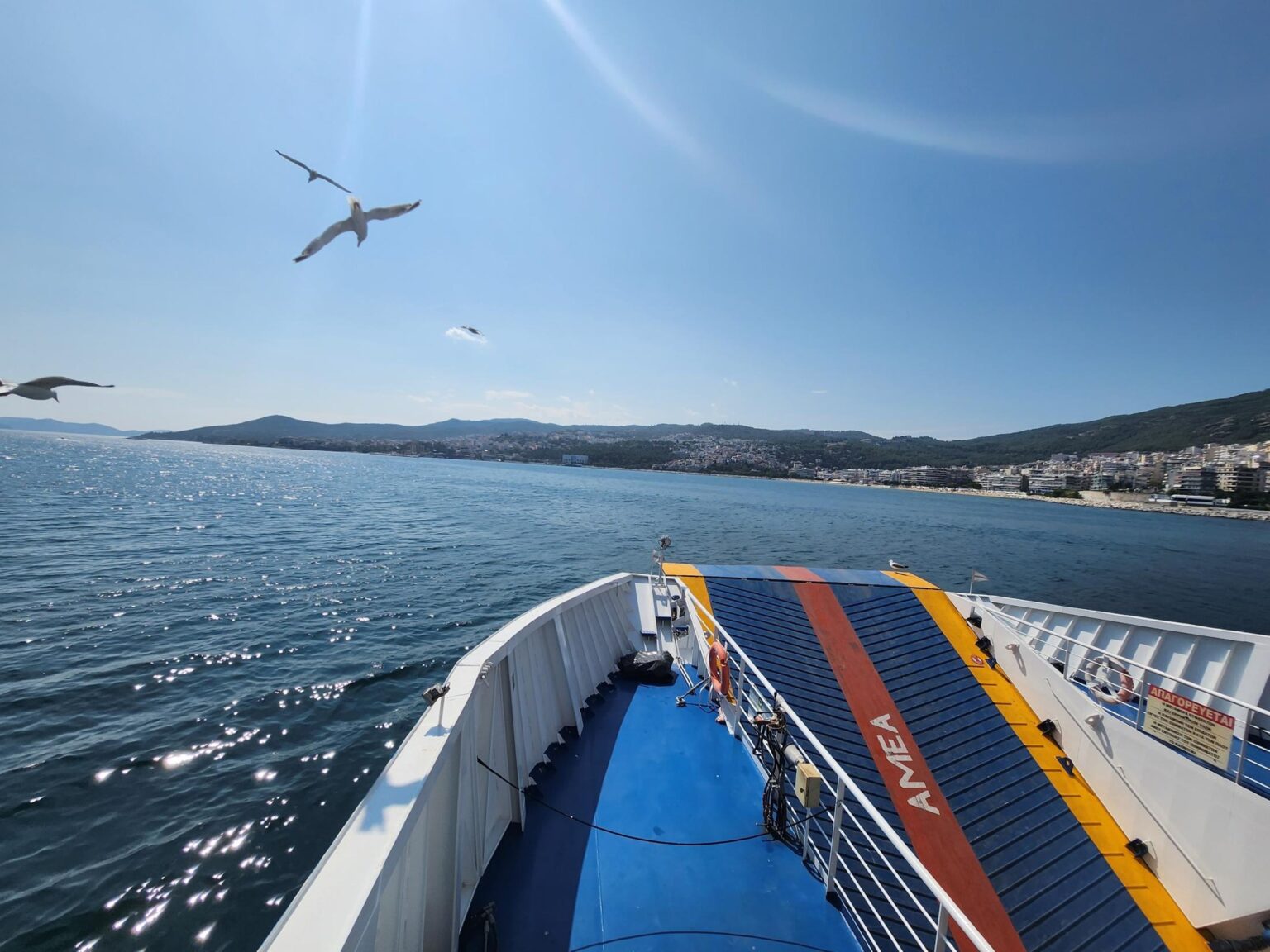
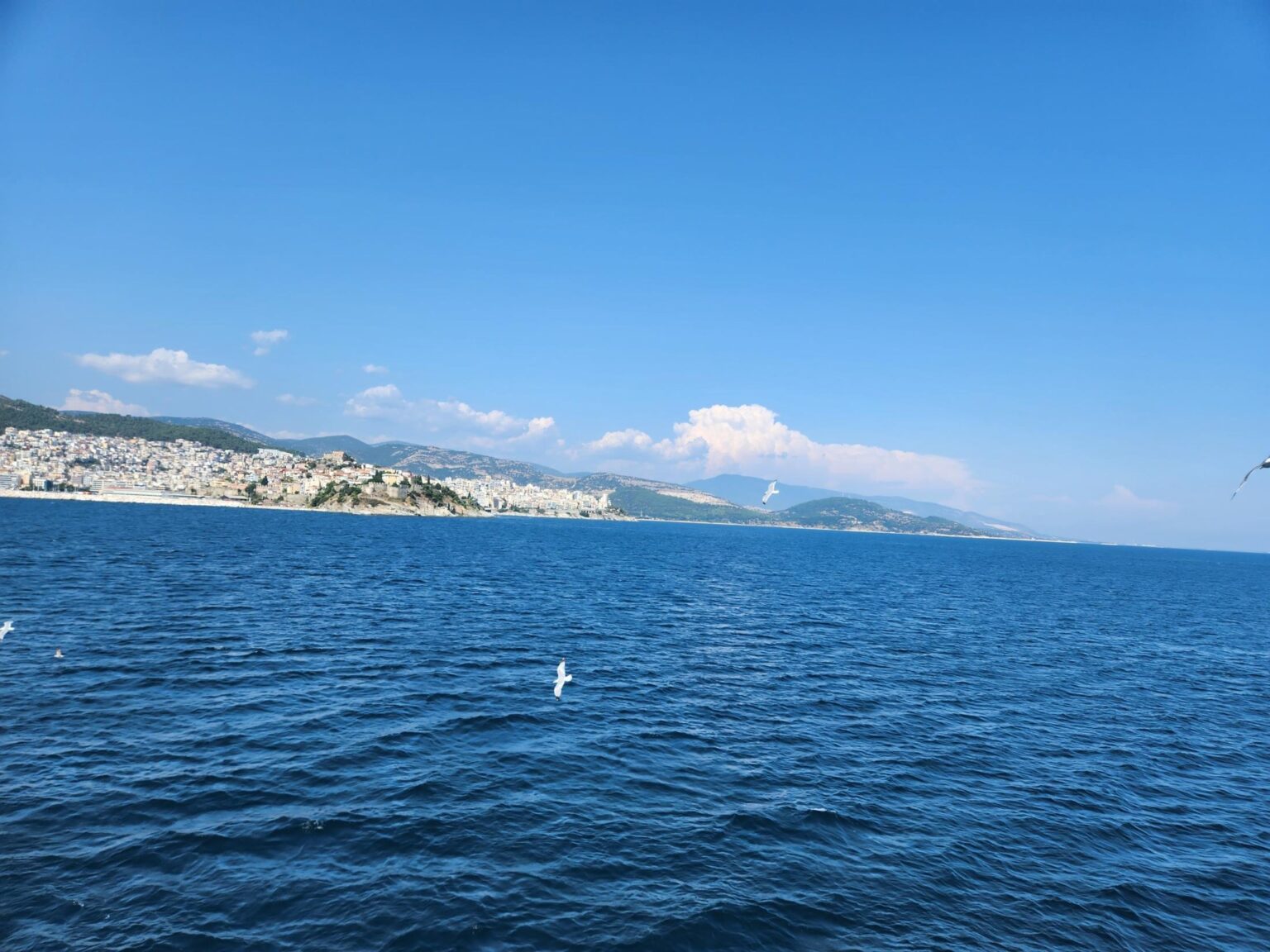
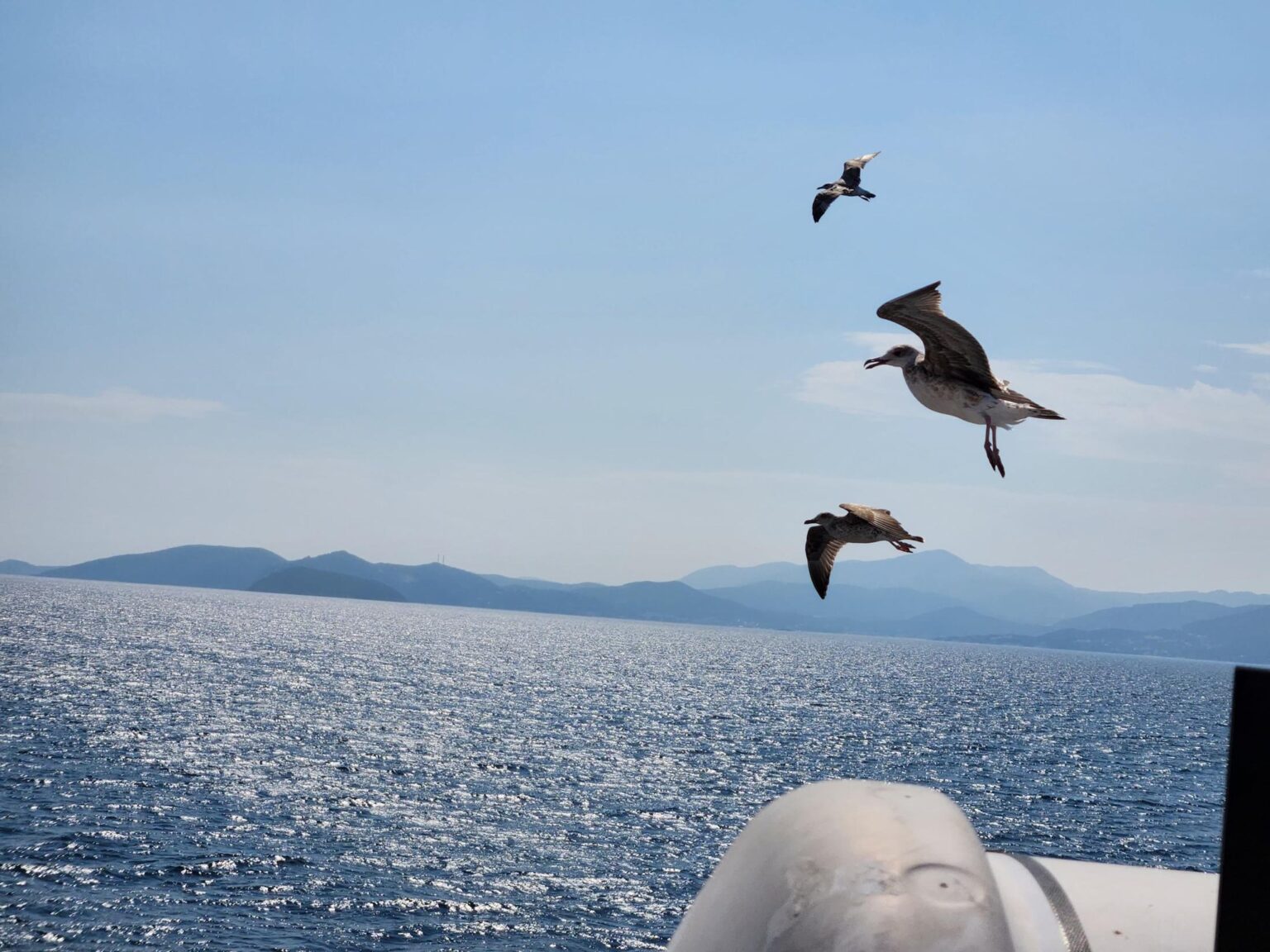
Important: bring food for the seagulls, meaning bread, crackers, breadsticks. The seagulls escort us the whole way. They fly at exactly our speed, clearly long accustomed to this boat business, make their seagull noises, and eat anything that looks remotely edible.
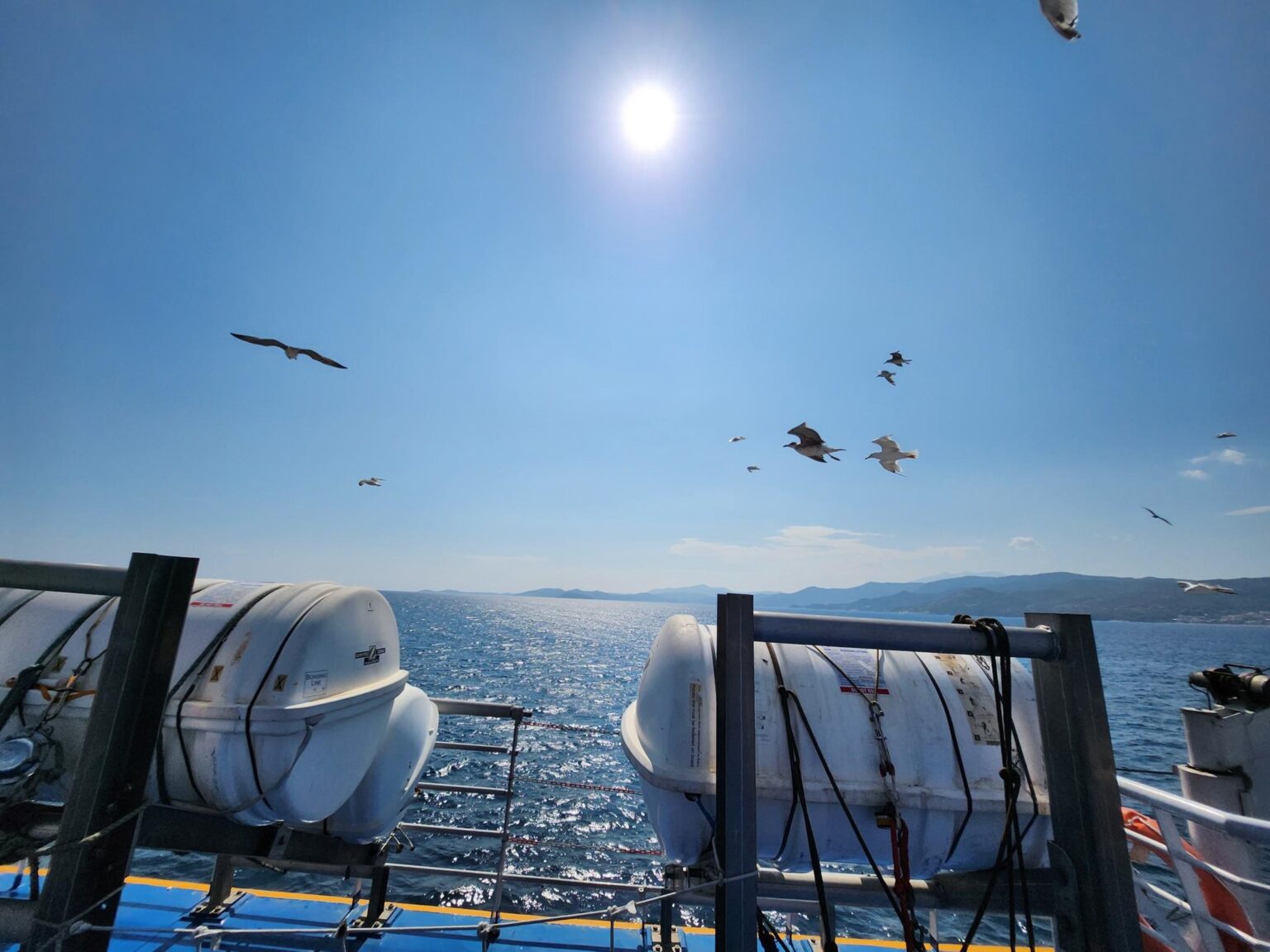
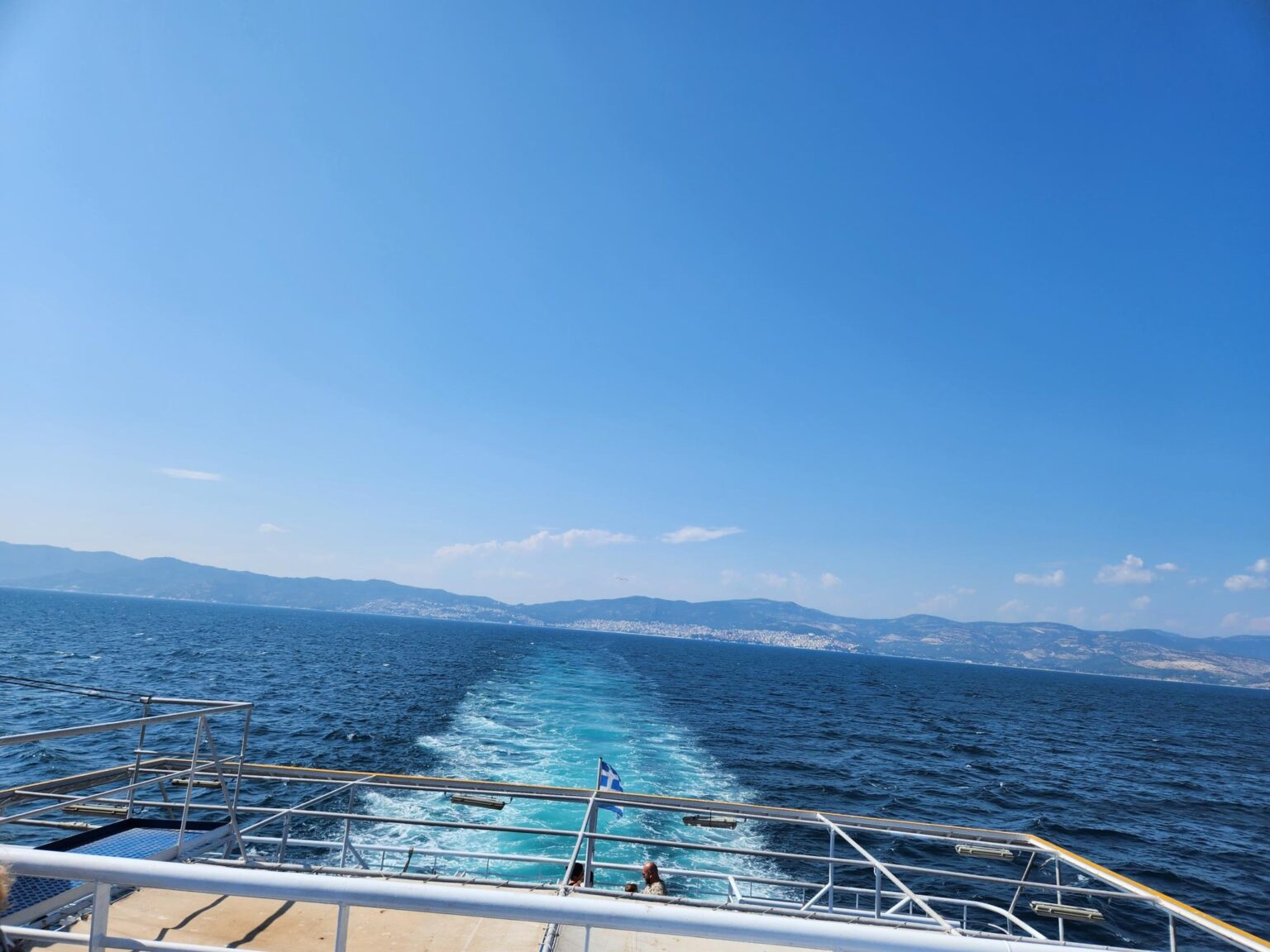
Where the Kavala experience can be summed up in a single word, calm, Keramoti is a different story. Bedlam. The ferry is ten times larger, genuinely impressive, a floating town. A kilometre of cars queueing and about the same for the ticket booths. Ticket control is extraordinarily loose and we have no idea how they collect their money; there are clearly ways to board without paying. Five lanes of cars feeding two ferries moored side by side. Traffic police and ferry staff shout and wave, one of them yells “this way”, the one standing two metres from him tells you off for going that way. One shouts “go”, the one two metres away asks you why on earth you are going. They are magnificent 😀 It is not easy for them either. Here the cars are parked nine centimetres apart.
In practice the transfer from Kavala to the island takes two hours whichever way you slice it. Both ferries work out the same. If Kavala is where you need to be and you set off from Keramoti, the shorter time on the water is cancelled out on land. It depends where you are coming from and where you are staying on the island. Kavala to Keramoti is 40 kilometres and takes a little over half an hour, on a dull road with nothing of interest apart from furious Greek drivers. You can take the toll road or go through the villages toll-free. Limenas to Skala Prinos, on the island, is 15 kilometres and takes 15 minutes.
If you are crossing at one of the two western Bulgarian border points, Kulata–Promachonas or Ilinden–Exochi, you most likely want the ferry from Kavala. If you are coming from the eastern ones, Keramoti. Illustrated:
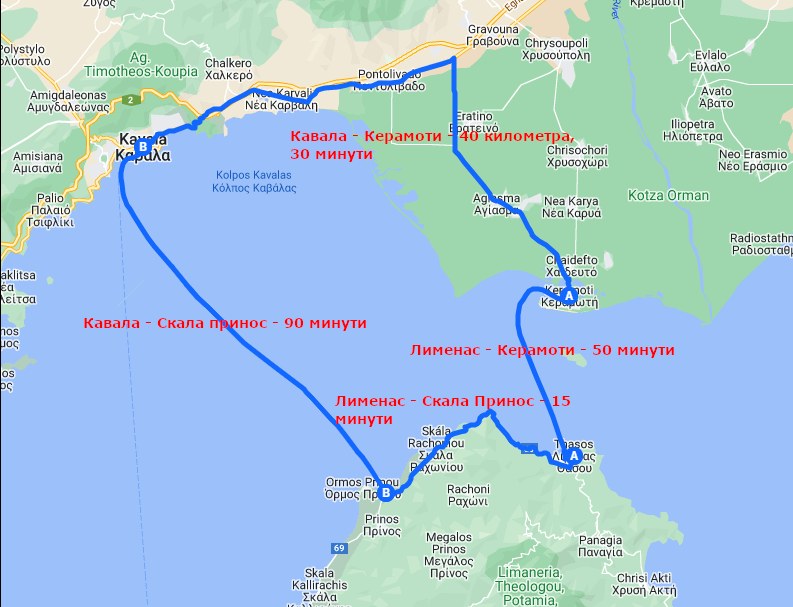
Our best guess as to why Keramoti is several times busier is that Google Maps offers it as the default route.
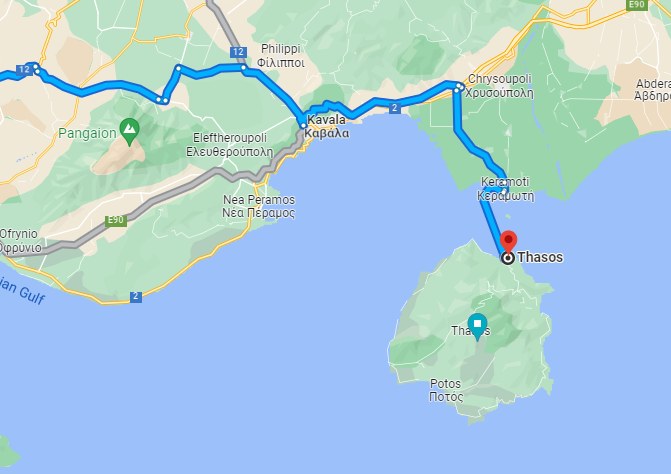
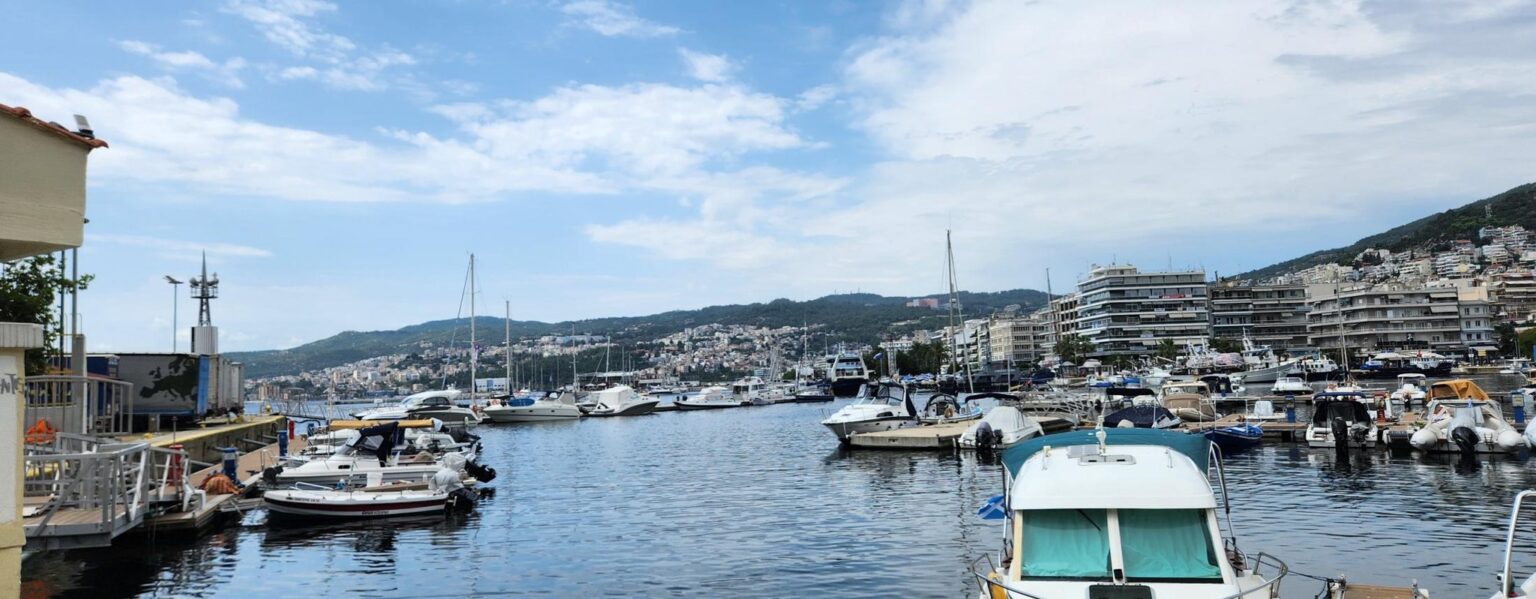
In our view the better option is to plan your ferry around Kavala. There is a car park right next to the terminal, €2 for four hours in 2022, and it also happens to sit next to a stretch of town that is worth walking. You can fit in a stroll around Kavala on the way out, on the way back, or both, as we did on our final day.
Thassos island
What is Thassos, in our understanding, you might ask? Nobody is going to ask, which is handy, because this article is a monologue. The island has strongly pronounced beach characteristics at zero metres above sea level, but it also tops out above 1,200 metres, which is quite enough for us to say it has a mountain side too.
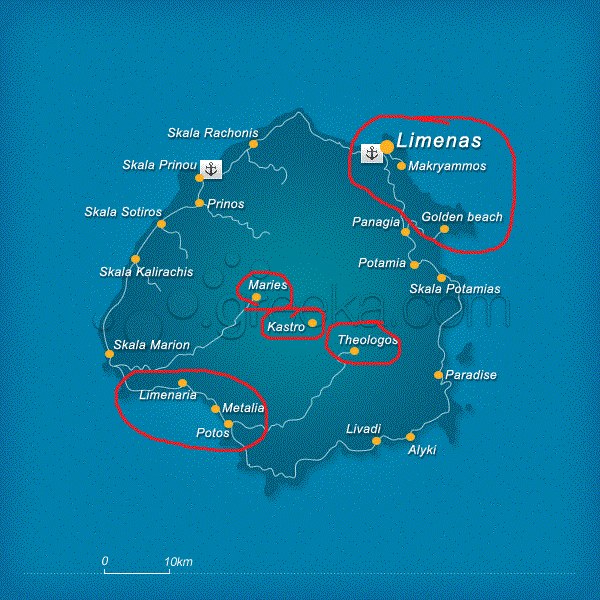
The north-eastern corner, top right on the map, holds the micro-capital we mentioned, Limenas. It has a Lidl and a large port. We would say it is roughly the size of Kiten. There are some very smart beaches in the area, and it still rankles that we never made it to Marble Beach (Saliara).
The south-western part is where the more touristy side of the island seems to be concentrated, around Limenaria and Potos. Those two are more like Sozopol and Sunny Beach, noticeably smaller than our own Black Sea “pearls” but very lively. There are beaches and small towns everywhere, of course, but these are the island’s larger clusters. On the mountain side we have Theologos, Kastro and Maries. The mountain villages are genuinely interesting, as we will see later. They are different from one another, each with notes of a different culture in it.
There are plenty of ready-made maps online. We will borrow one and concentrate on the more interesting spots, in case you are short on time and cannot possibly see everything:
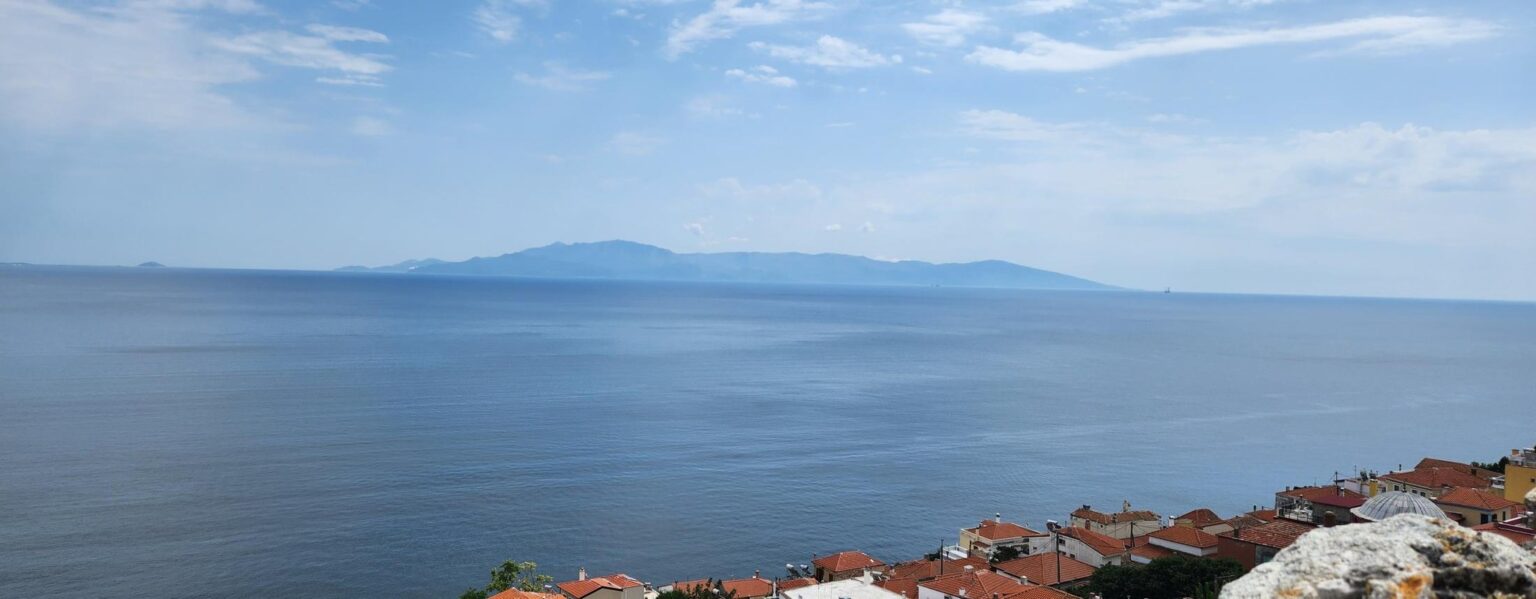
We land at Skala Prinos. Stepping off the ferry, the island feeling evaporates immediately. It is as though you are still on the mainland, nothing out of the ordinary, and let us hope there are no wildfires, although there had been one two days earlier. One or two kilometres from Prinos there is a Latsouris supermarket, a typically Greek shop aimed more at the locals than at tourists. Prices are a touch above Bulgarian ones, but nothing outrageous. Perfect. Basic ammunition acquired, water and crackers, then check-in and the hunt for a restaurant.
Day 2: Tripiti Beach, Theologos
We have slept on the previous evening and digested both the good news and the bad. The hotel is running an interesting campaign: cancel your Booking reservation and receive a spa voucher worth €100 per person. Good news.
The tavernas, including the low-to-mid range ones, are painful. Typical prices at entirely unambitious places, whether they are on the beachfront or two streets back: coffee, frappé or cappuccino, €3–4. A gyros, the equivalent of a medium or large döner and in no sense an XXL, €7–10. Salads and mains, €15–25. A small pizza, €10–15. Wine, €5–10 a glass. Beer, their own Mythos, €4–5 a can. We do not know whether this was purely the peak of the season, but a normal dinner without overeating or ordering octopus and oysters, just a salad, a steak and a glass of wine, works out at around €40 per person. Bad news.
And we are talking about the sort of taverna that is still using last season’s oil in the fryer, not a top restaurant you cannot get a table at for two weeks. Those prices are approaching destinations that trade on quality, luxury and, at the very least, a Michelin star or two. The contrast is frankly frightening. For only slightly more money we are staying in a four-star hotel with its own beach and golf buggies ferrying us around the complex, with a rather good and generous buffet breakfast included. It becomes very clear why practically every second hotel offers a room with a fridge and a small kitchenette. It also explains why the supermarkets have as many customers as the tavernas do 😀
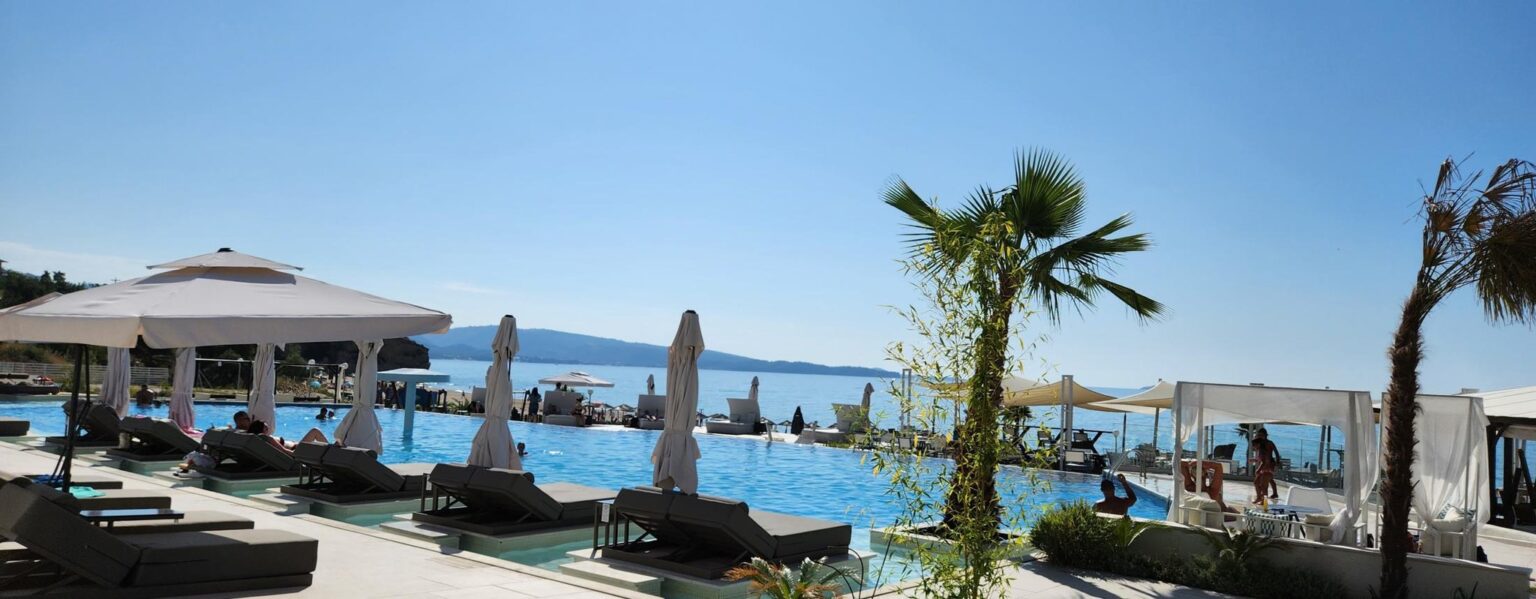
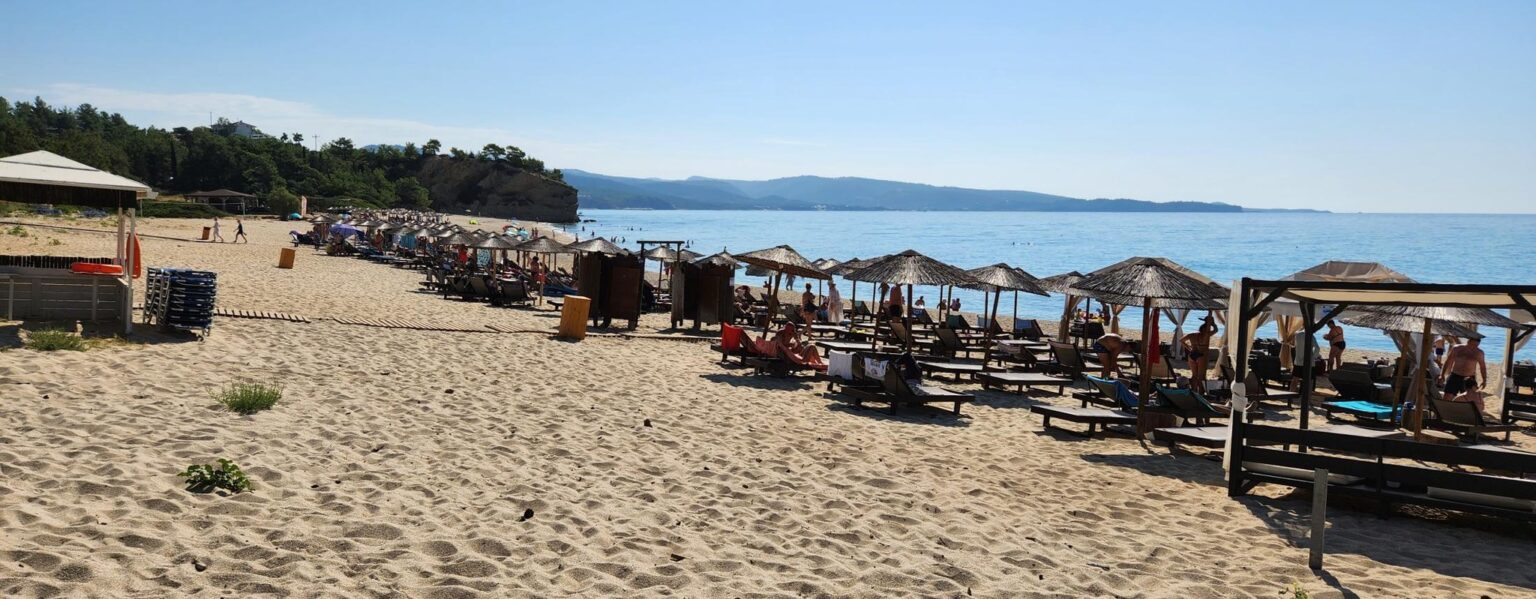
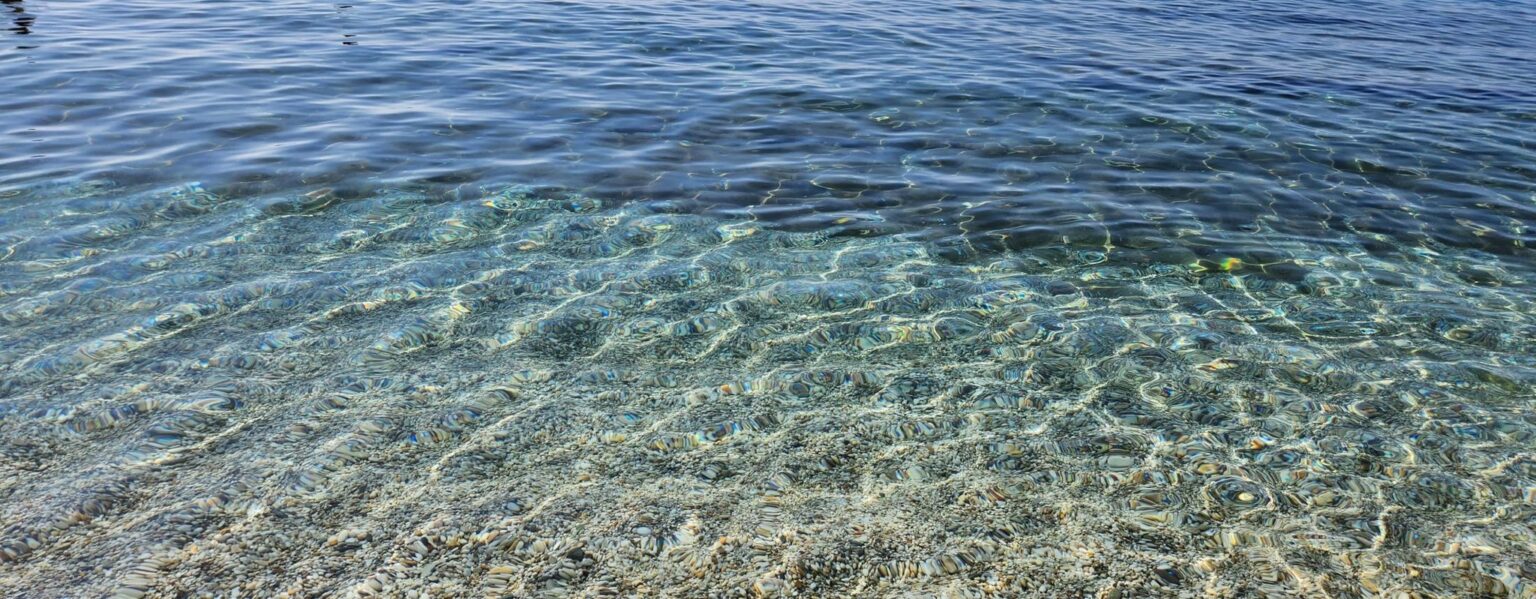
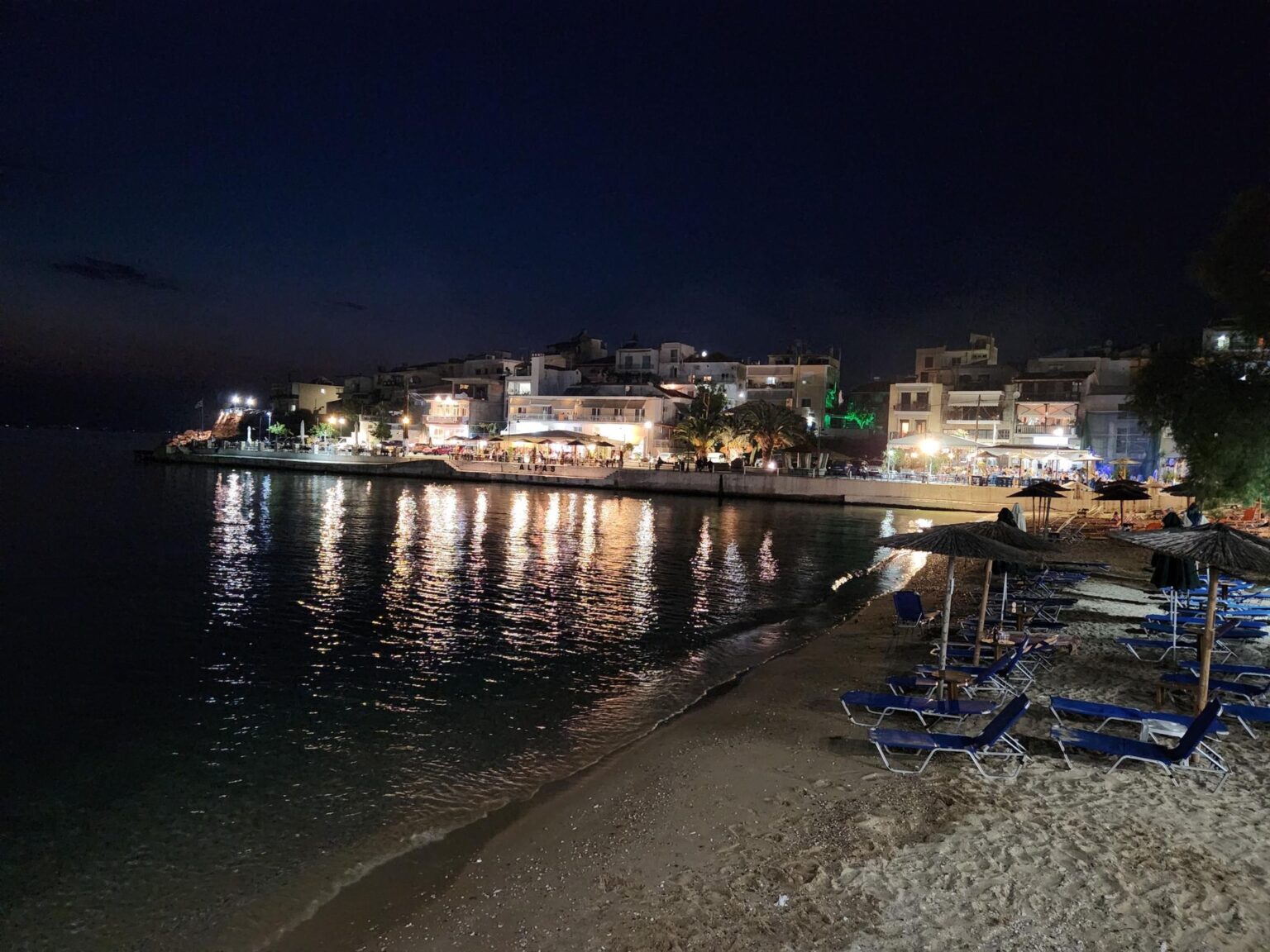
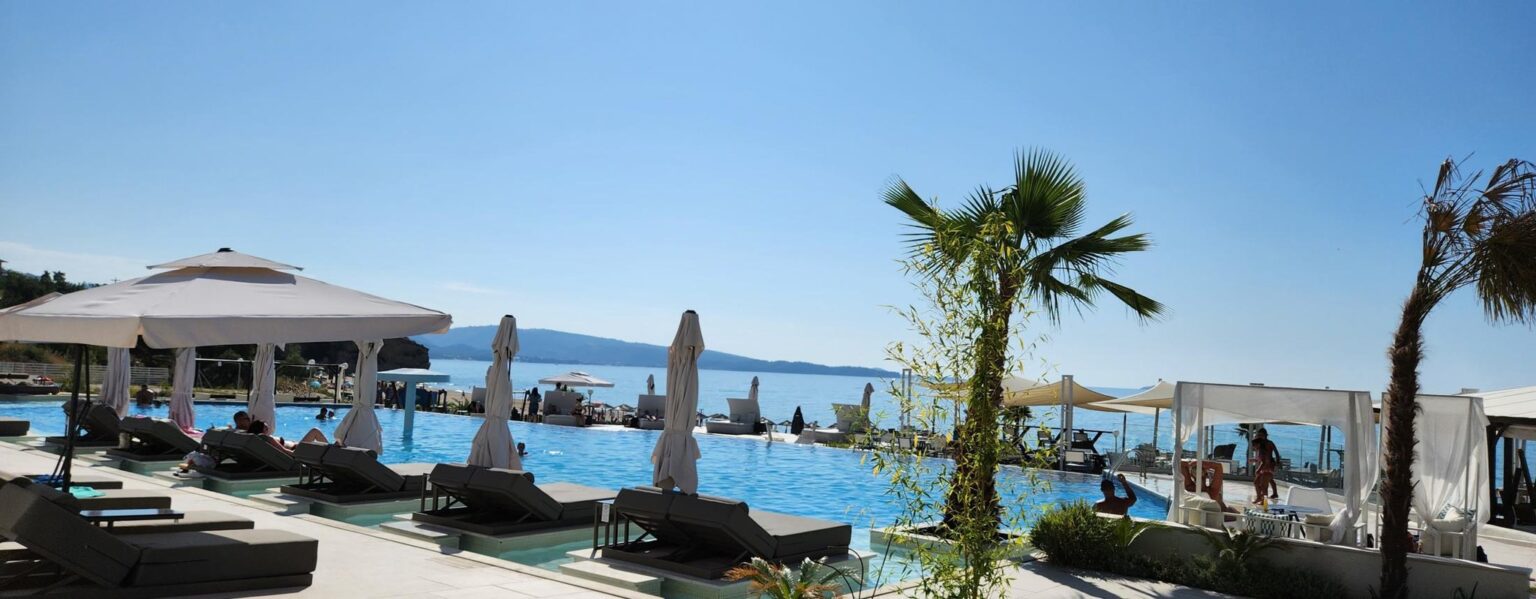
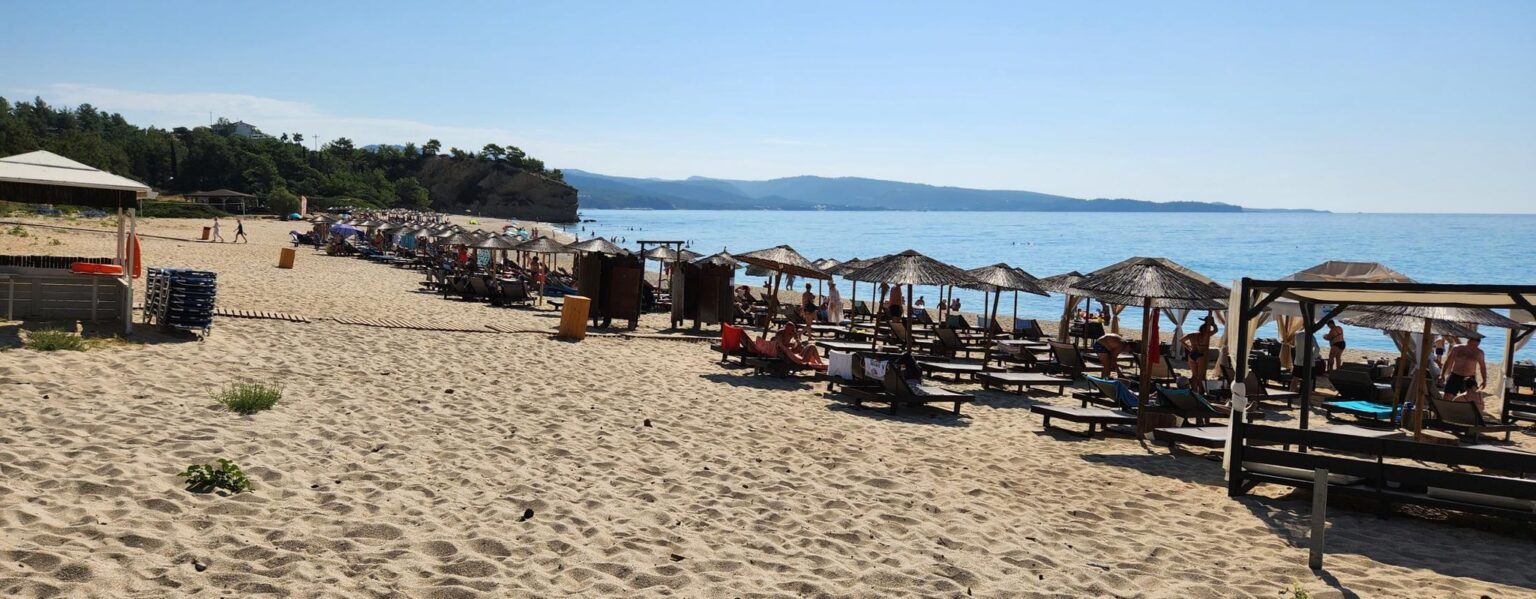
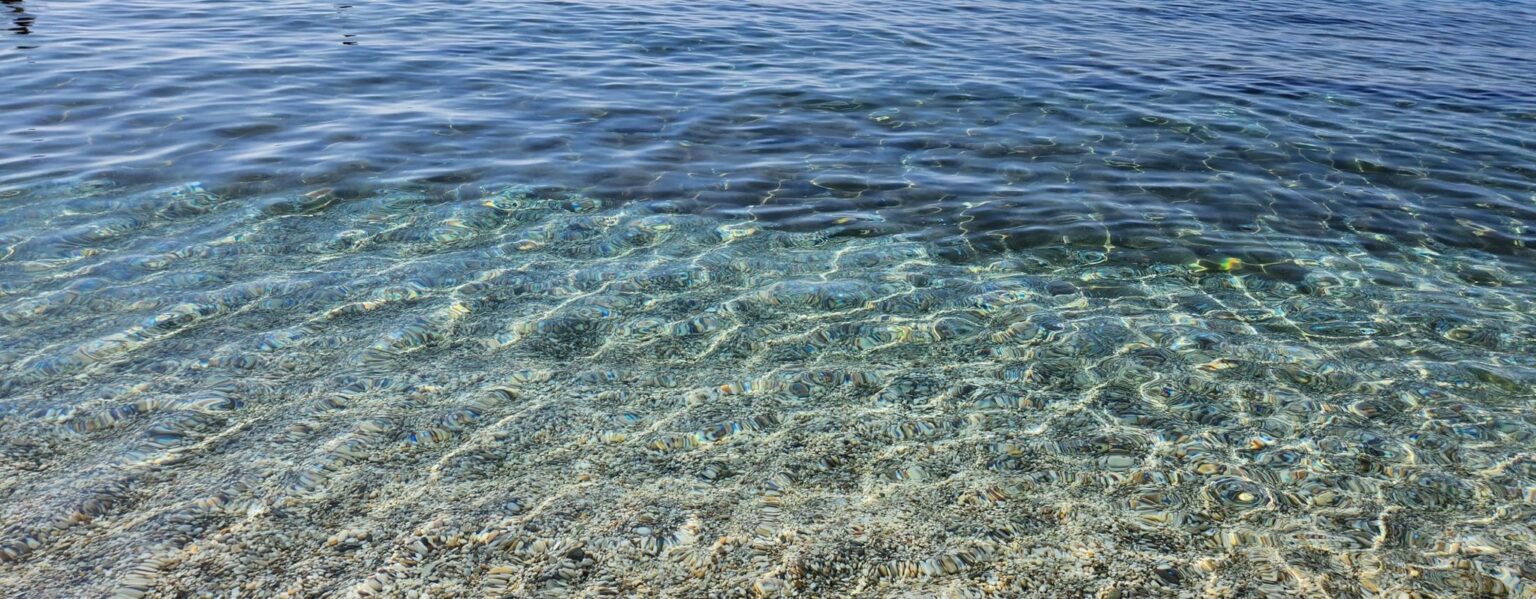
Our hotel’s beach is Tripiti. It is rather good. Bulgarians make up roughly half the guests, with a strong Romanian contingent as well. The water is crystal clear and you can see everything. Everything. The good and the bad 😀
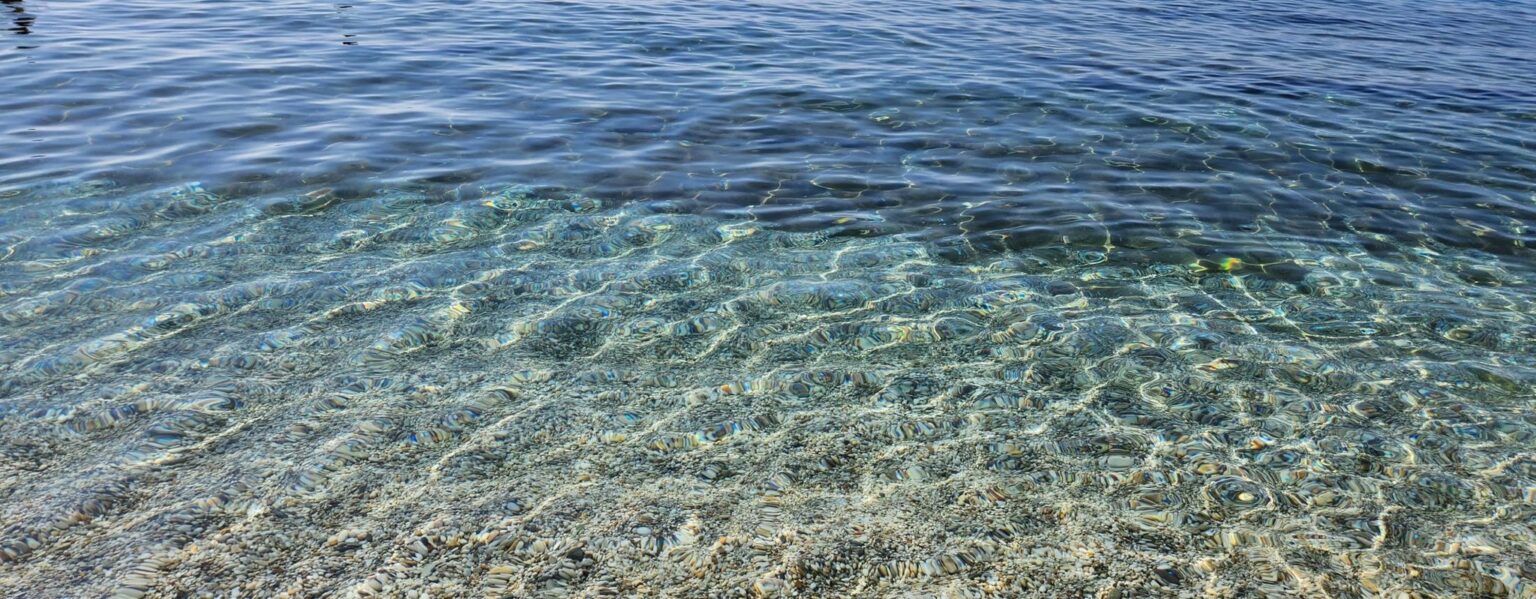
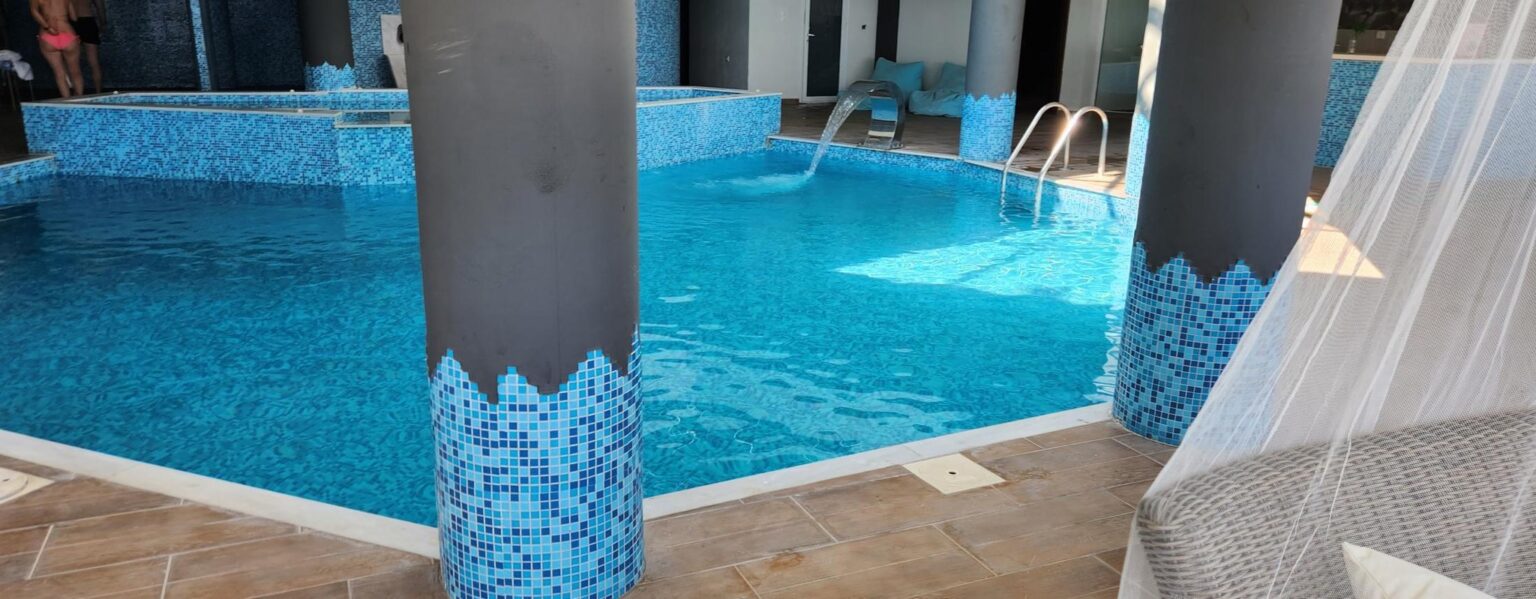
The sunbeds and umbrellas are good and the beach is clean. If you are not a hotel guest, a €3.50 frappé buys you the use of the beds plus the showers and toilets at the hotel’s bars. That beats every offer back home, from the minimum-spend rules on the Sozopol beaches to the €25 for two at Zlatni Pyasatsi. We have never been beach people, it is not our thing, and we cannot write about sand with any passion. The hotel pools, on the other hand, are a dream. You need nothing more. But there is not a great deal to tell here either. Everyone is lying about, roasting, resting. Slackers!
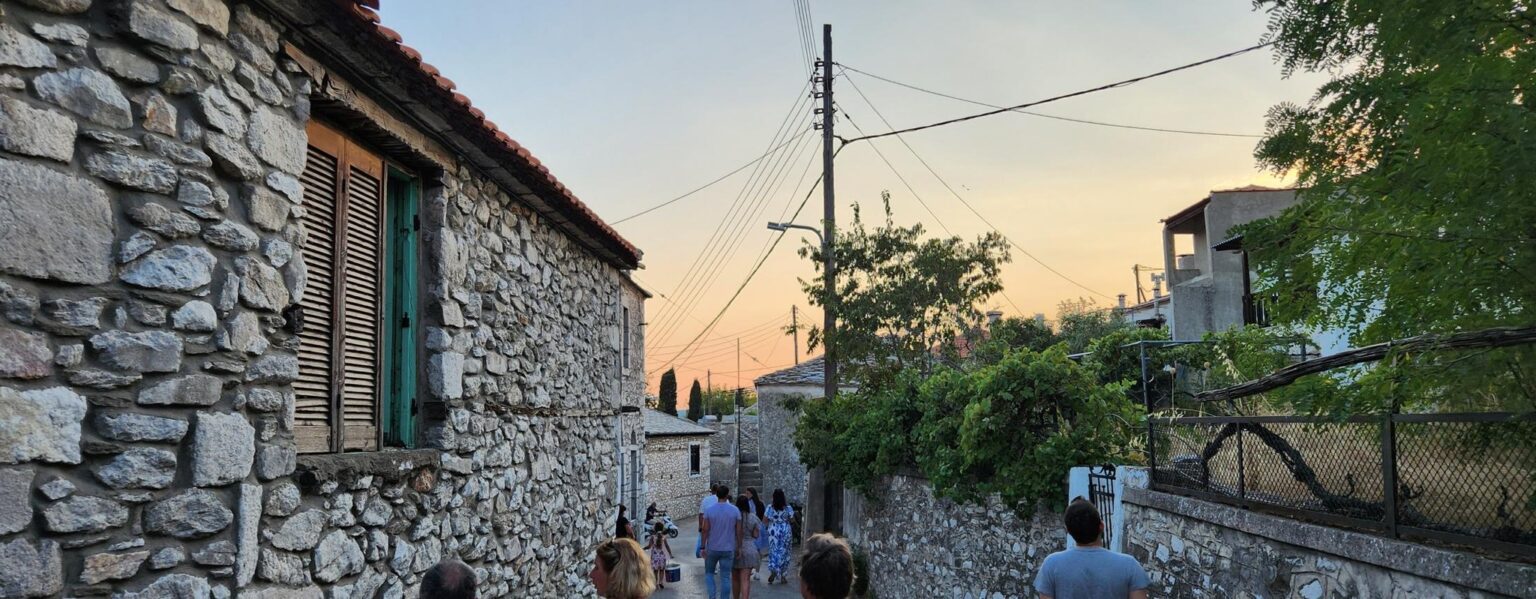
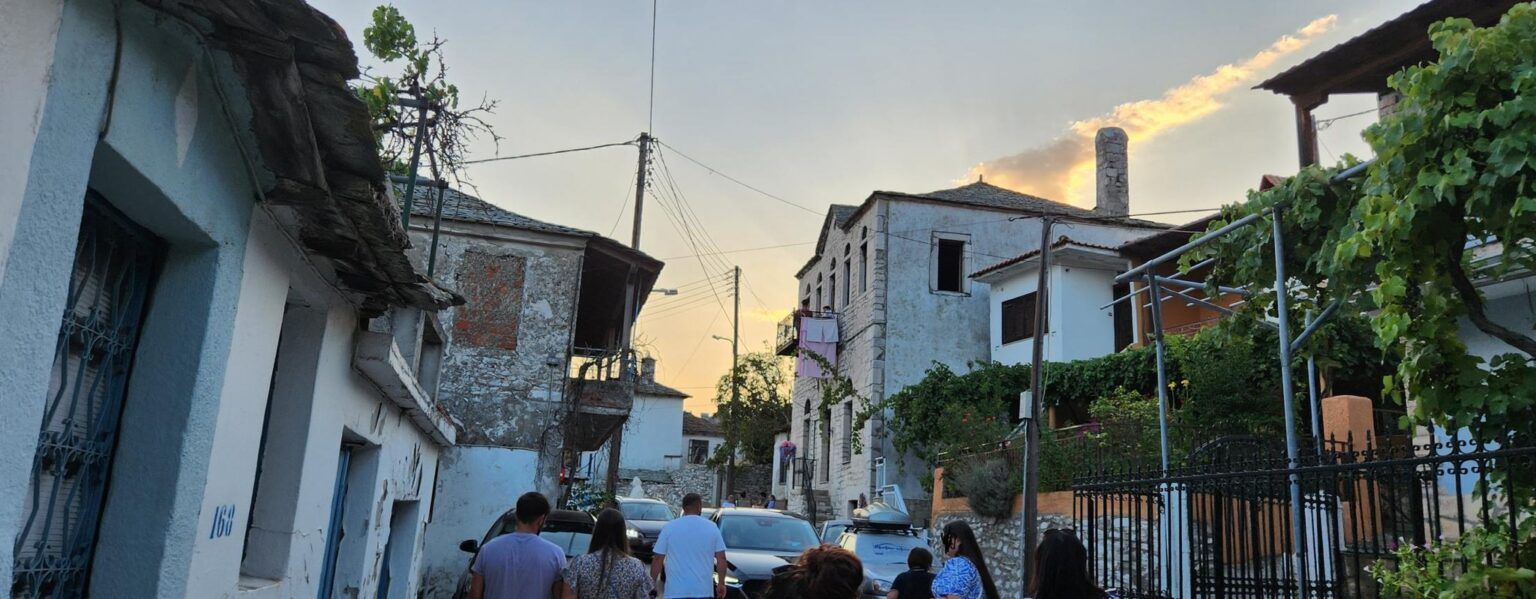
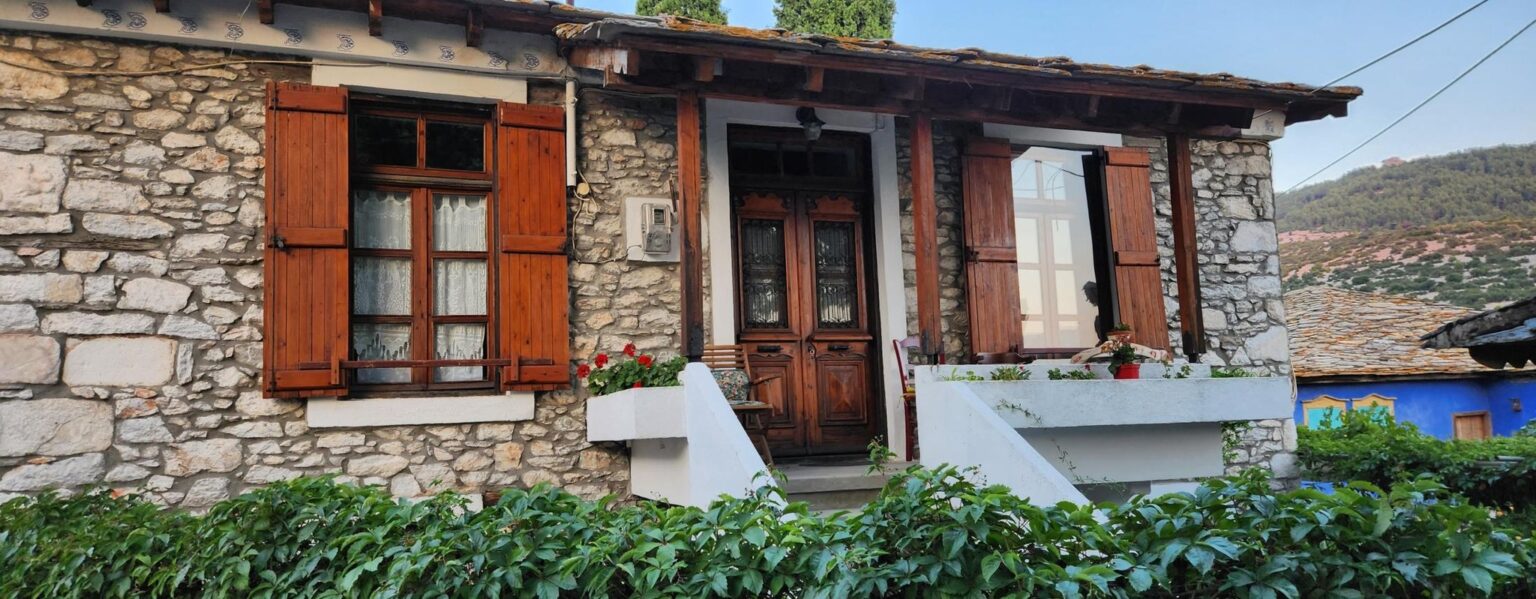
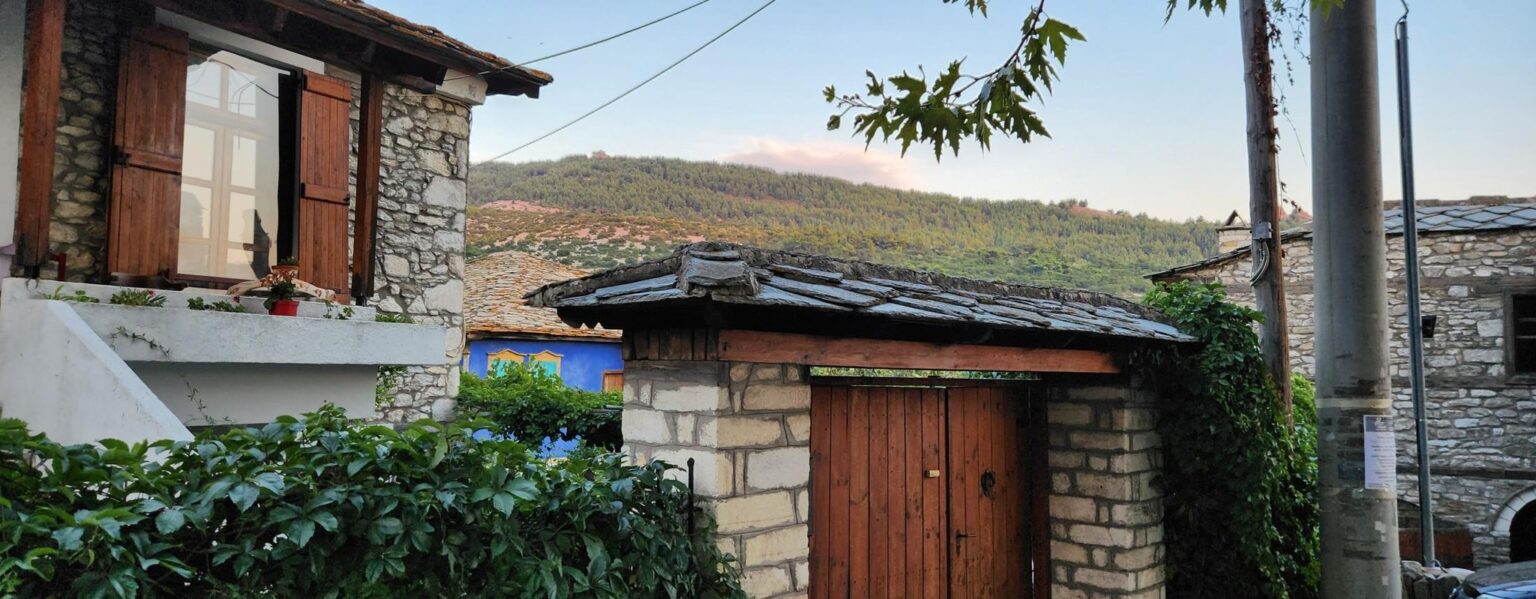
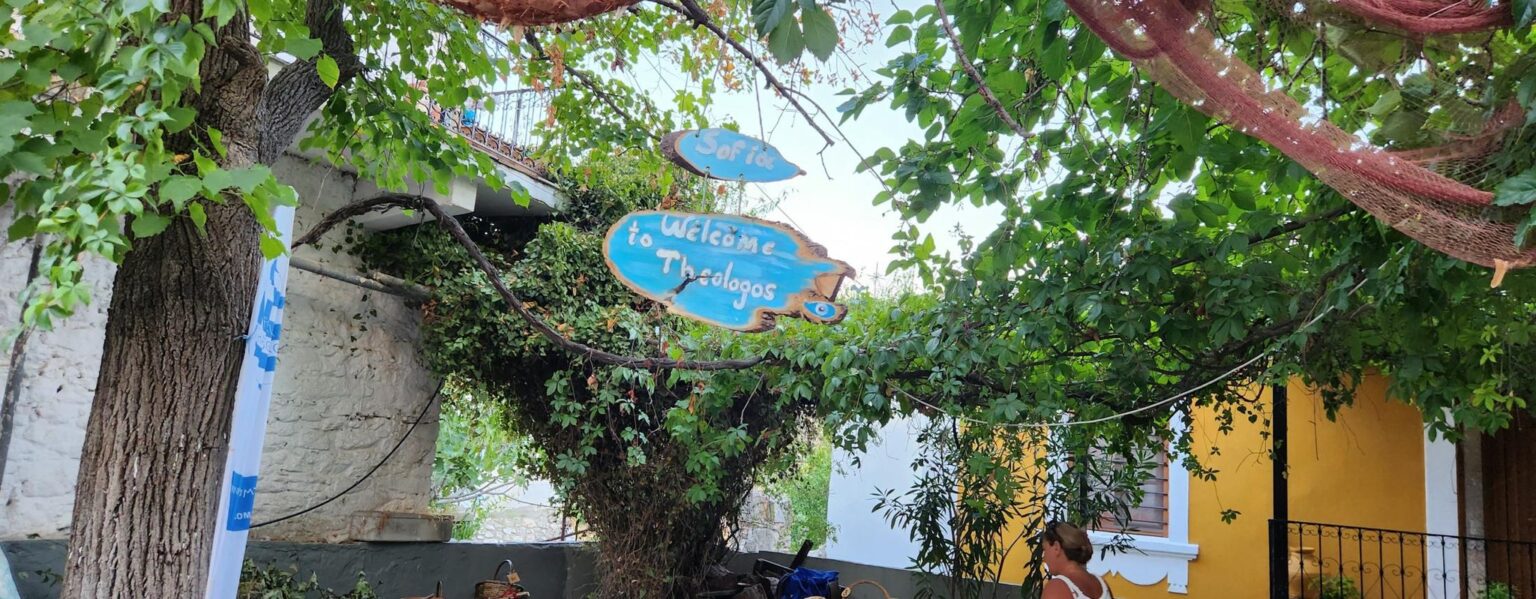
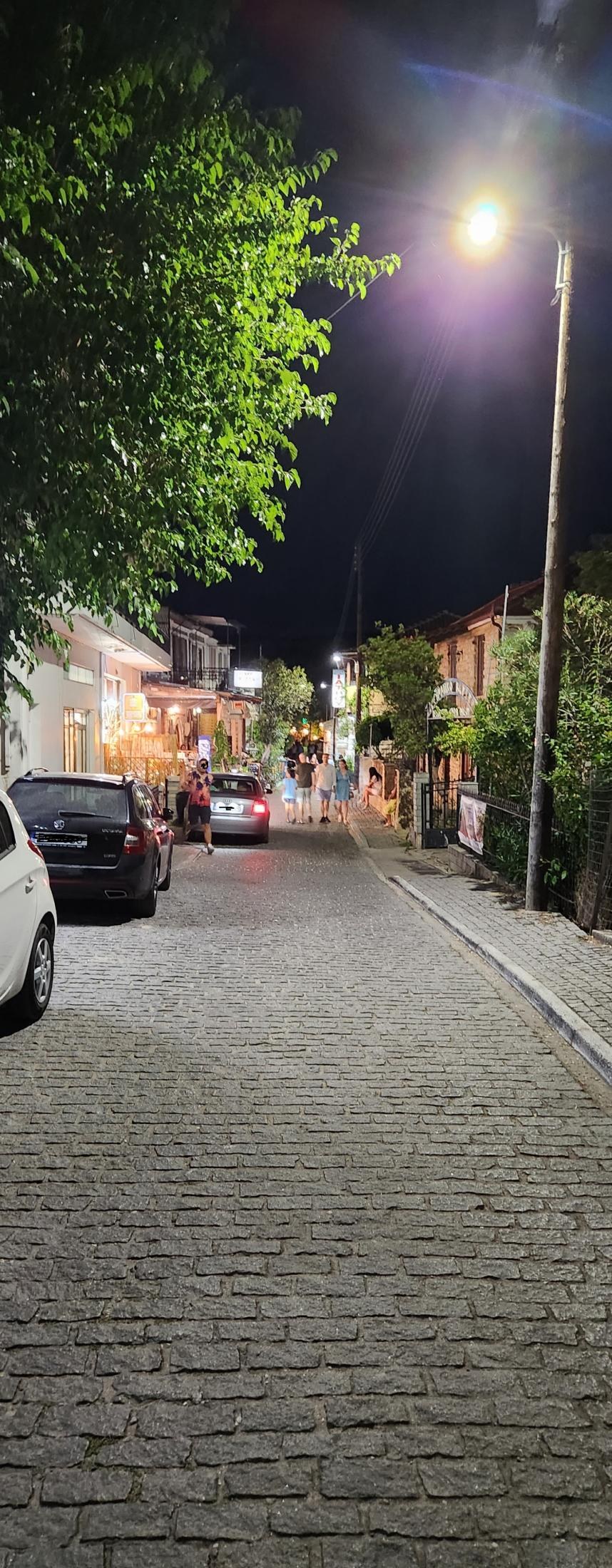
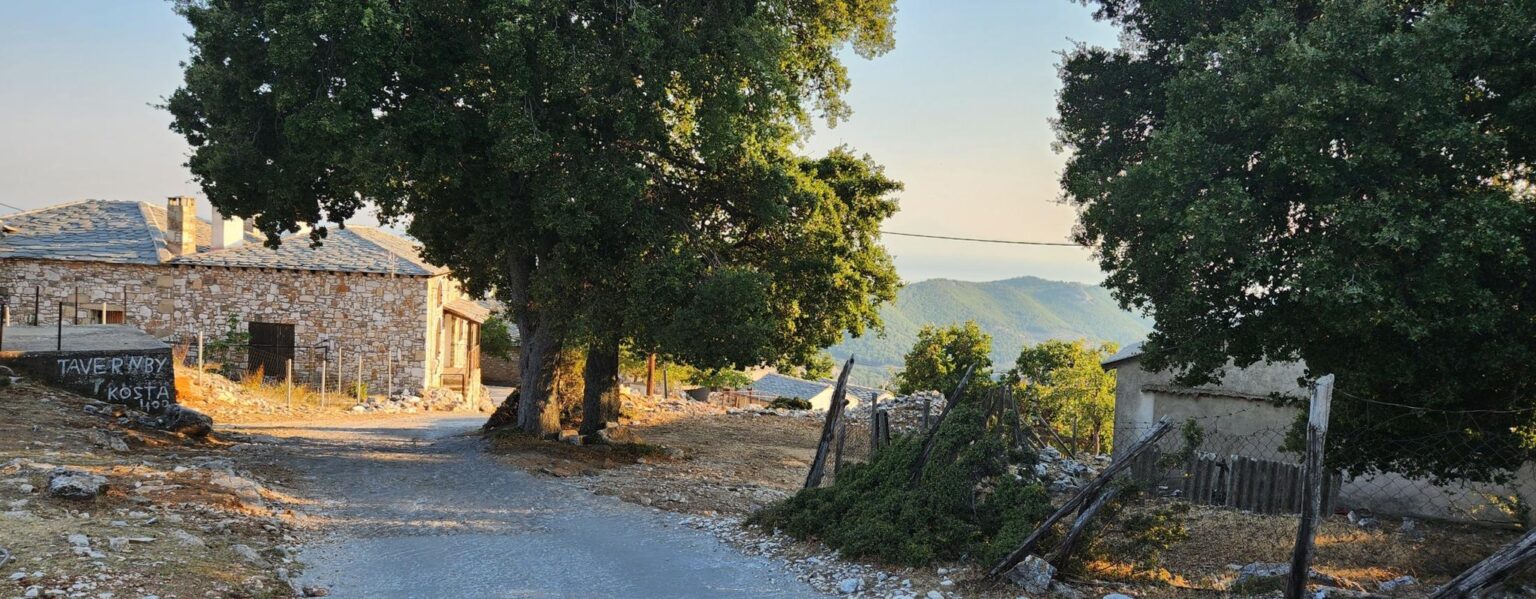
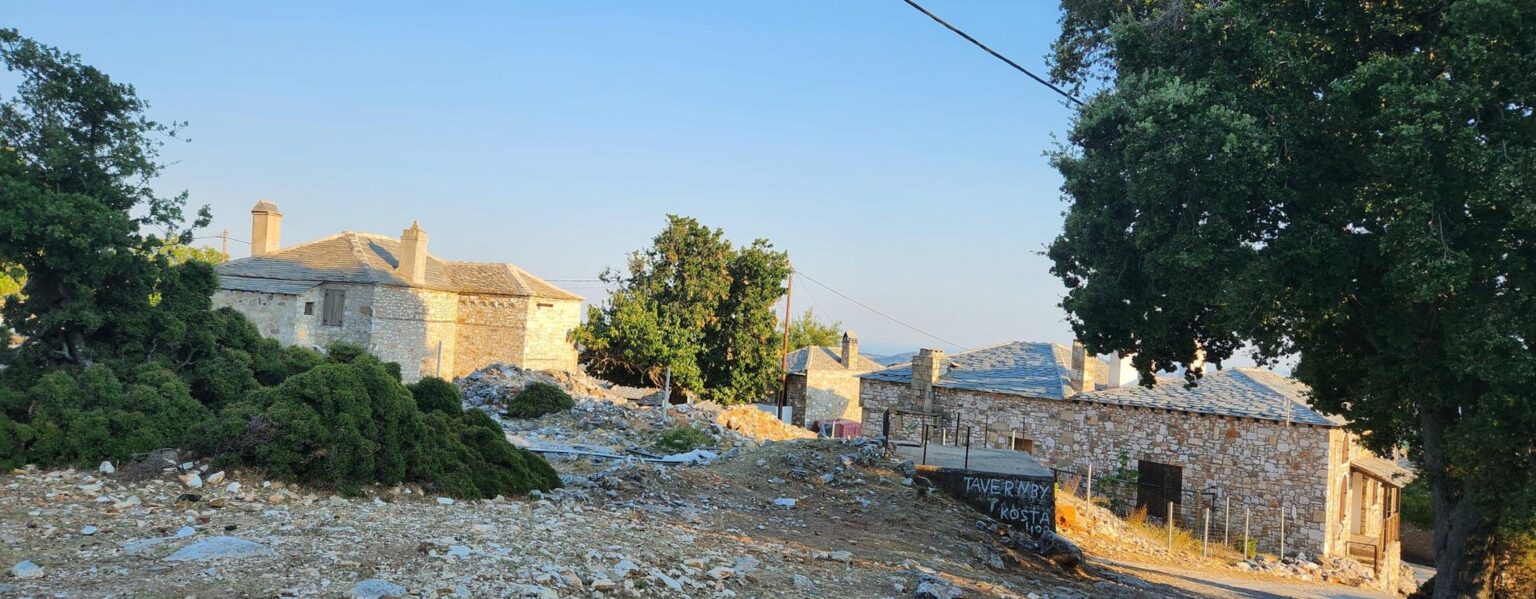
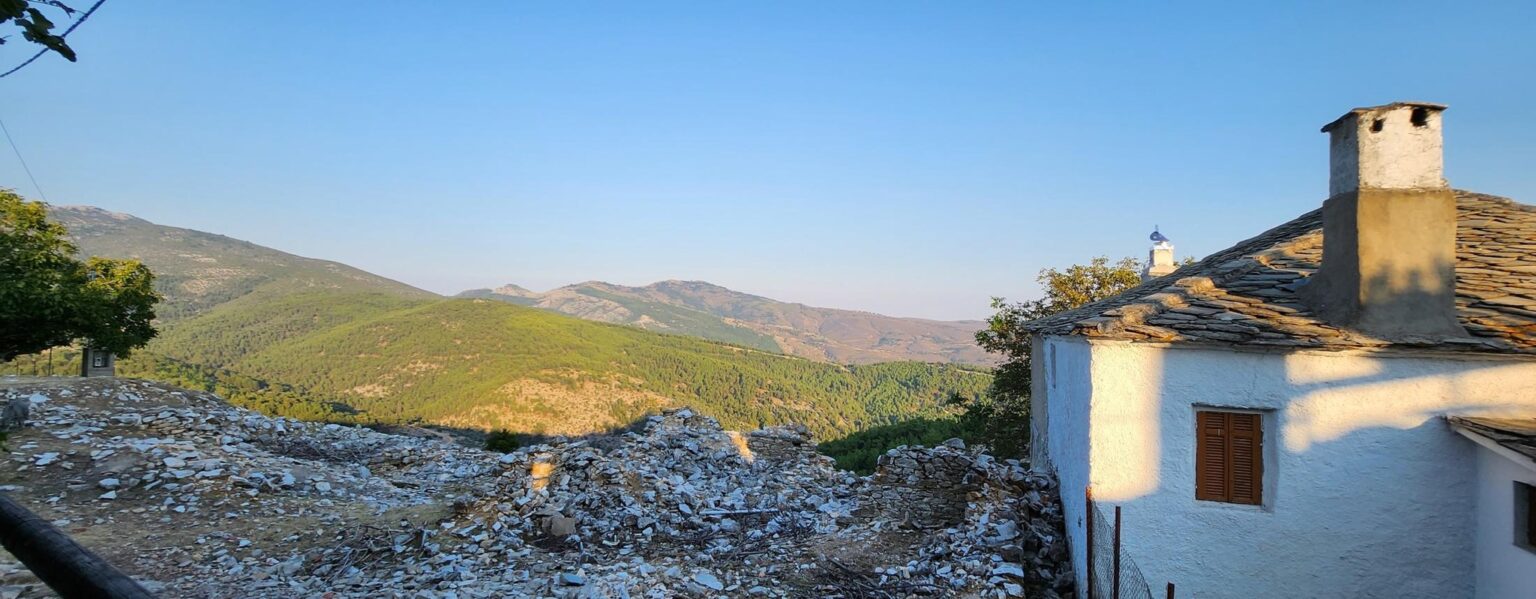
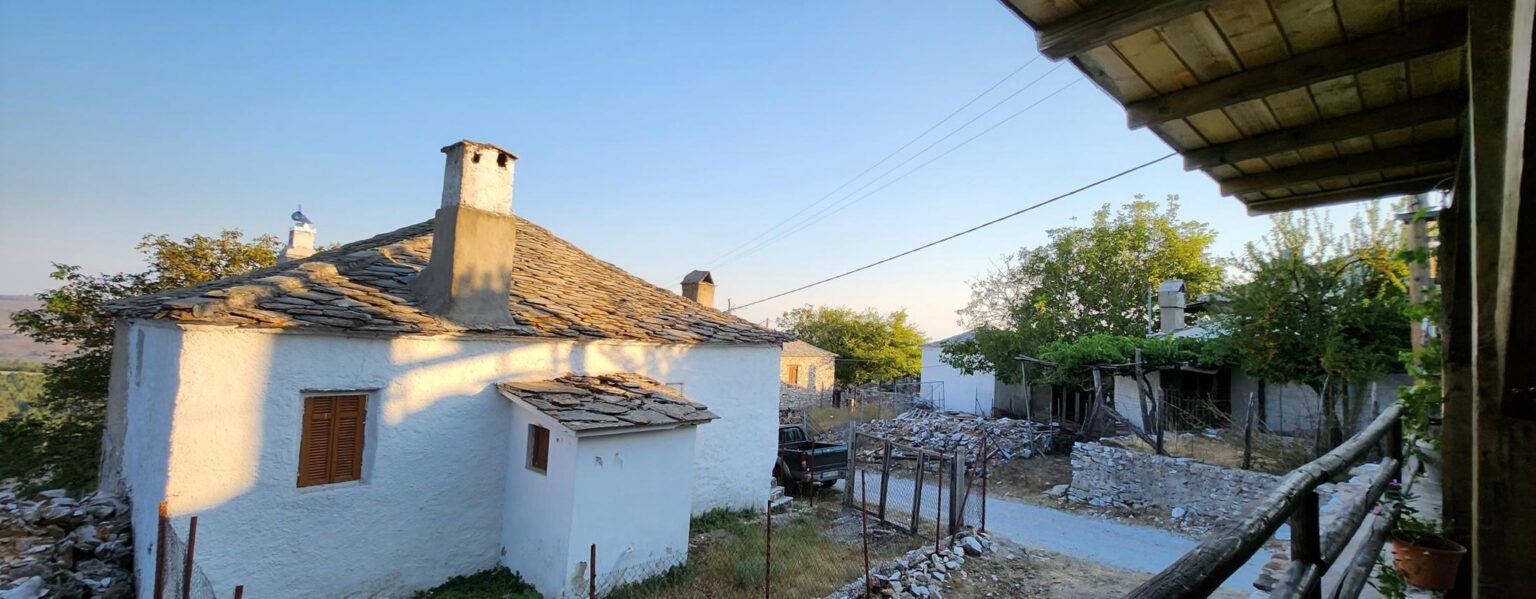
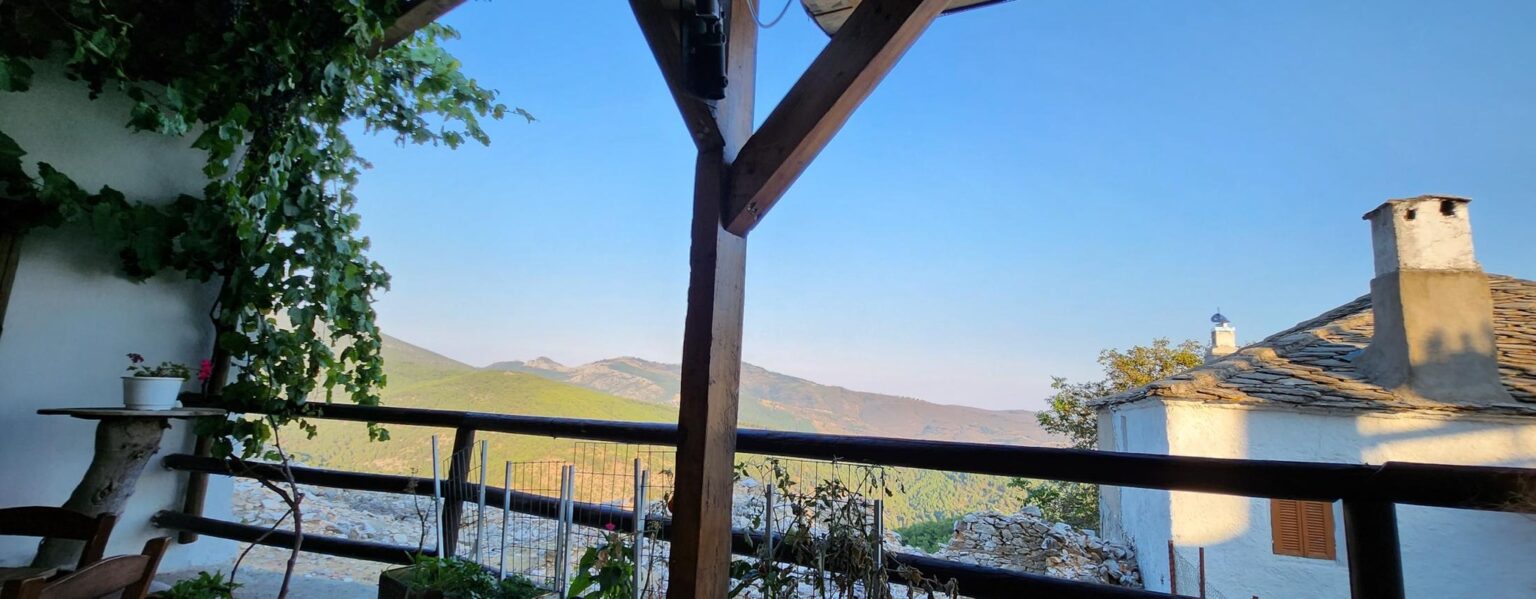
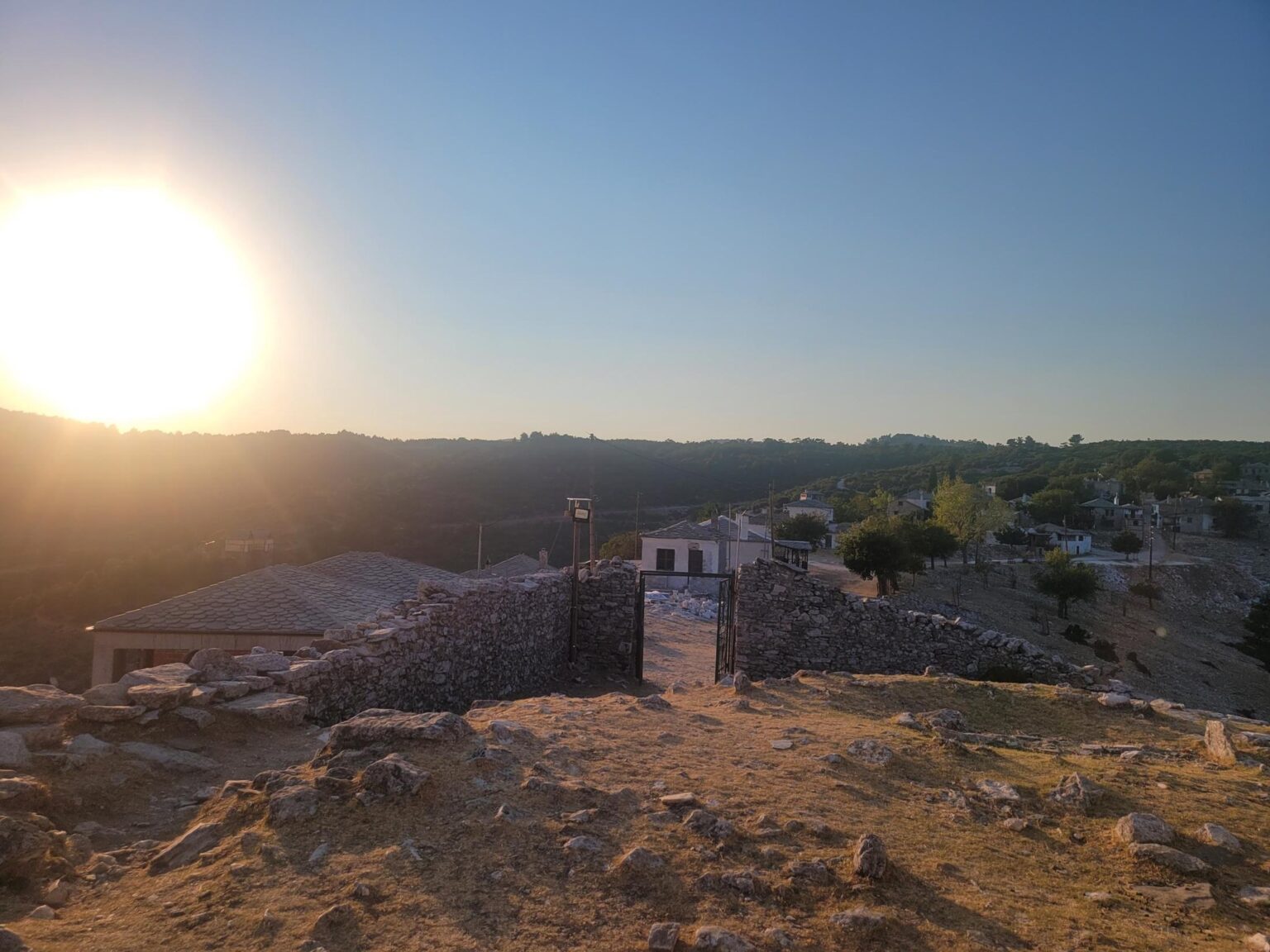
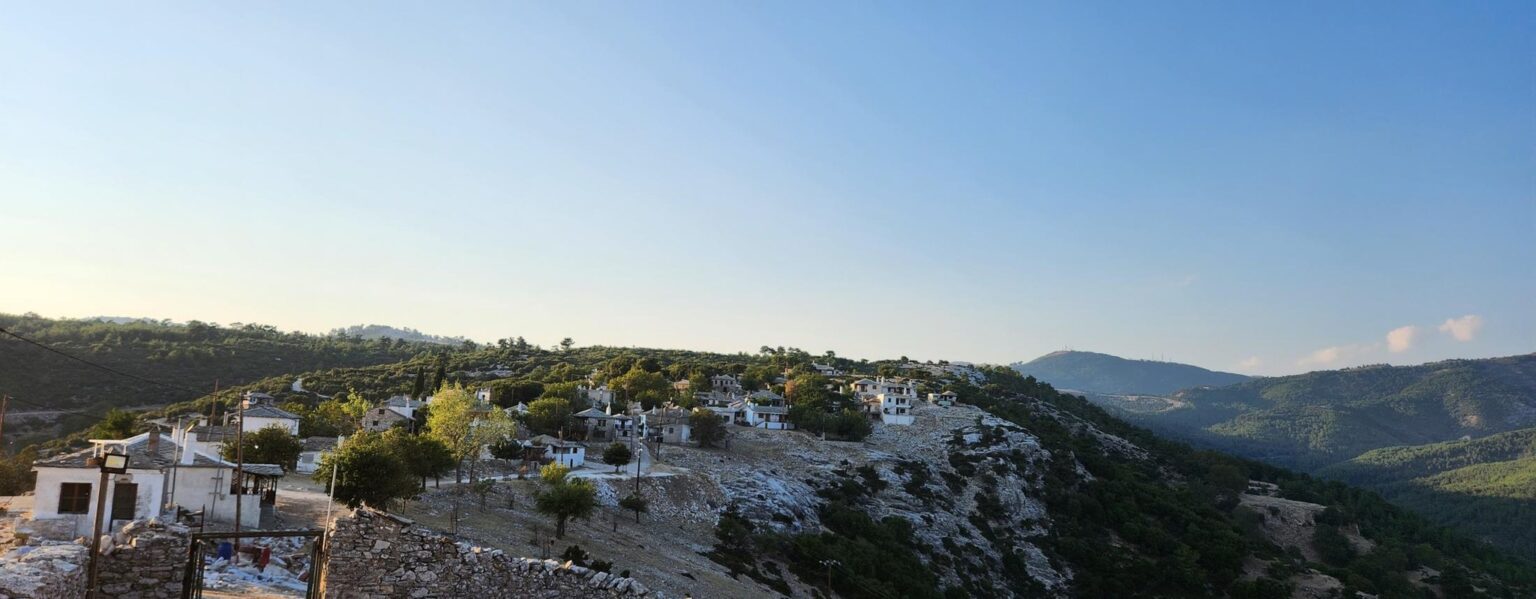
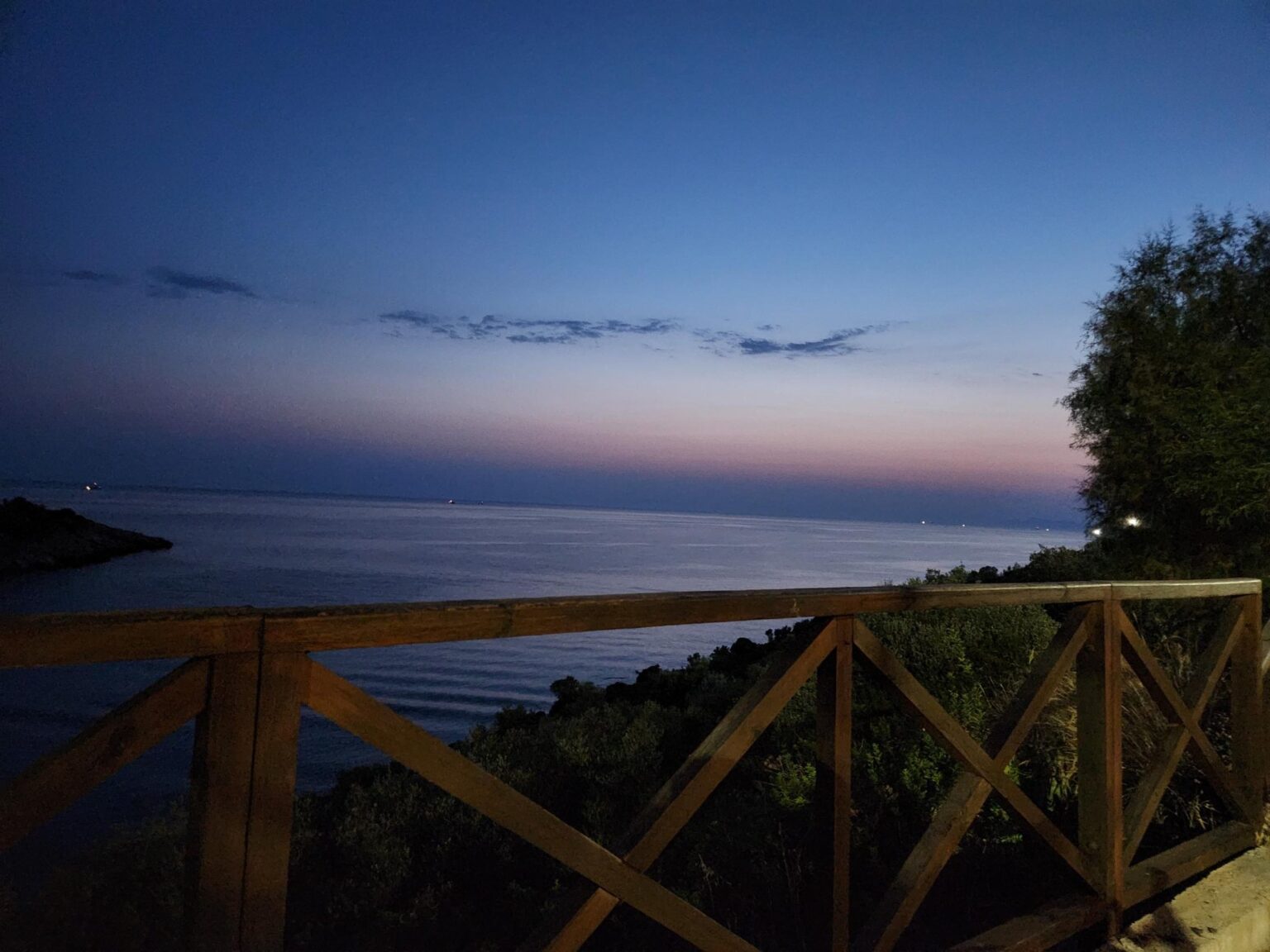
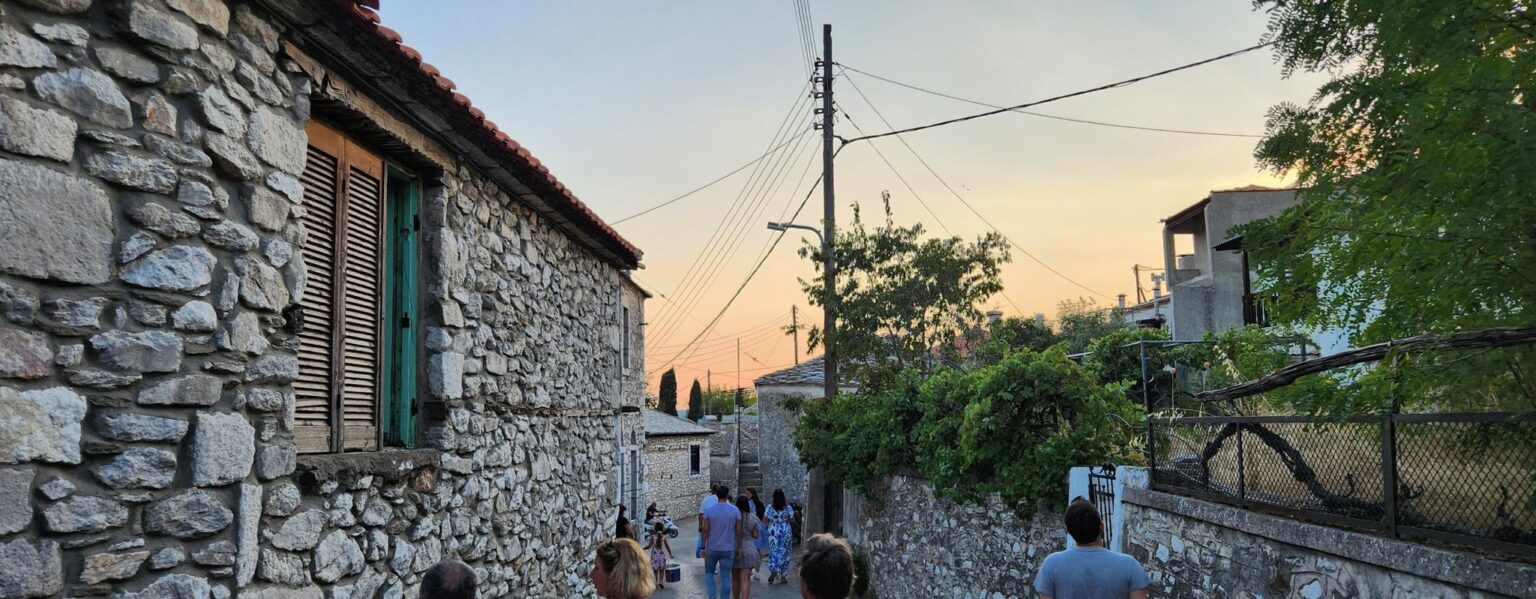
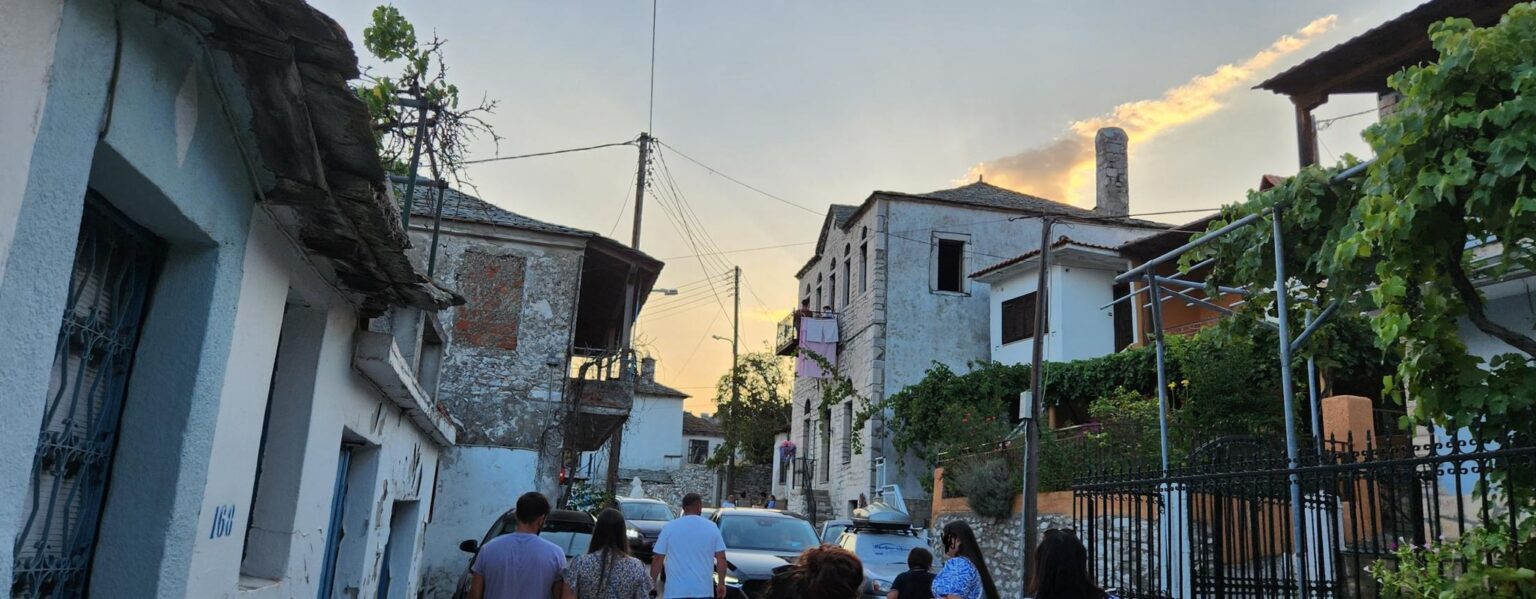
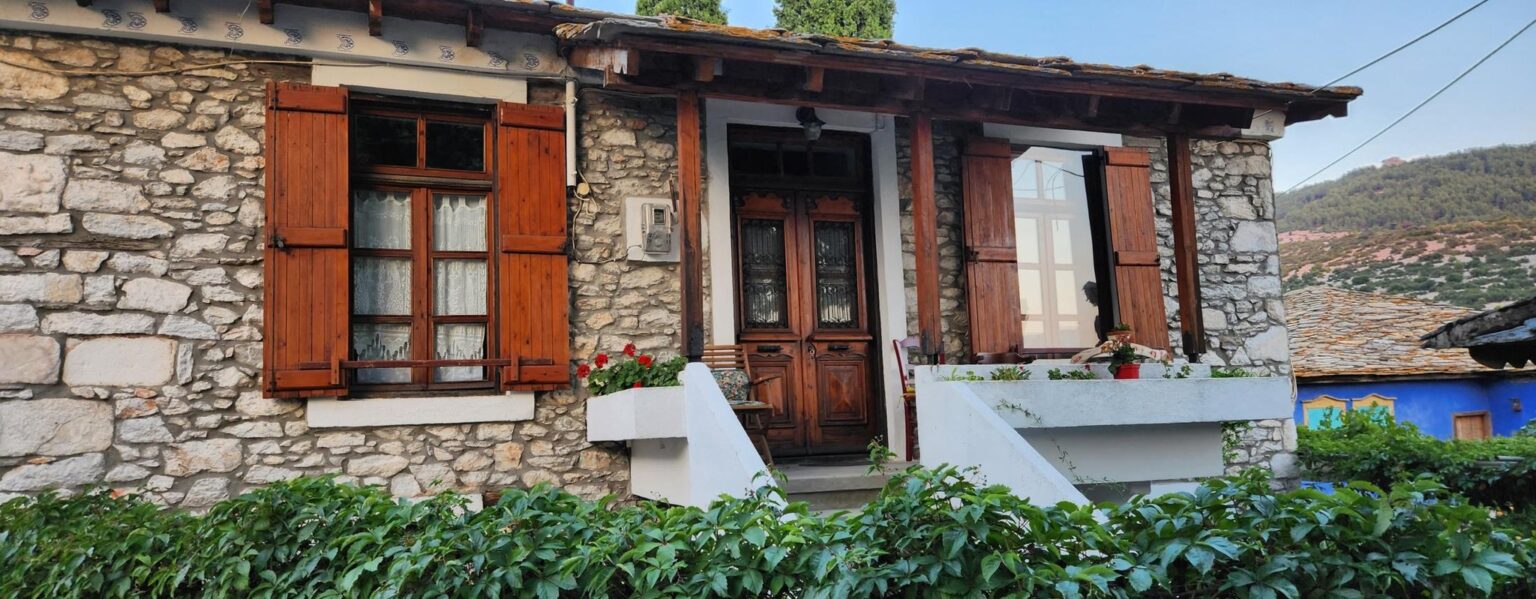
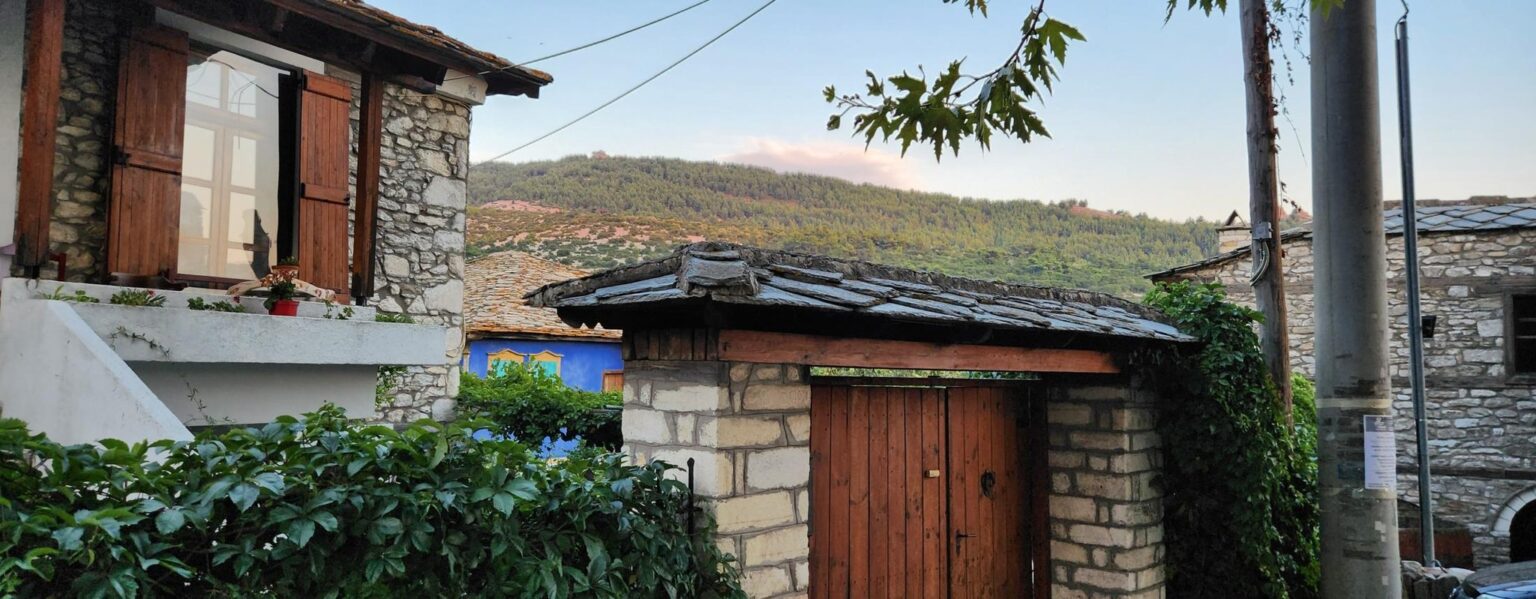
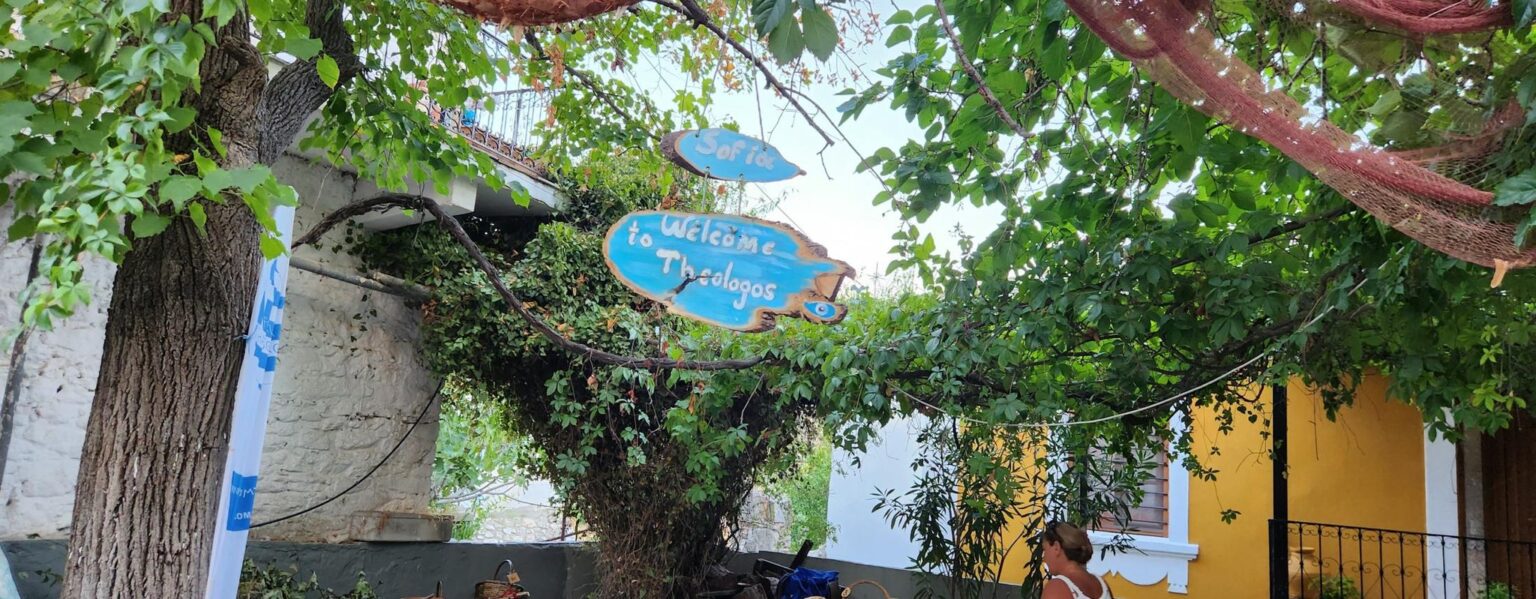
It is getting dark and it is time for something for the soul. Twenty-four hours have passed, we have found our feet, we may as well have grown up on Thassos, and it is time for a walk. The nearest spot is Theologos. To our eyes it is a village with somehow Balkan, or perhaps Turkish, origins. Walking from one end to the other takes about twenty minutes along a single narrow street, which cars also use, naturally. At sunset it is very pleasant and relaxing, with no serious climbing.
There are two interesting things here. At the entrance to the village sits Taverna Augoustos, which caters to people like us, except that reservations really are a week ahead, and we are not exaggerating. For €25 per person you get à la carte all you can eat, meaning you order from the menu without limit, alcohol included. They throw a proper party, with dancing around the fire and live music, running from 20:00 until after 02:00. How do we know this without ever getting a table? Easy. We loitered until 22:00 hoping somebody would leave so we could slip in without a reservation. Nobody left. They have paid through to 02:00, so they stay until 02:00 😀
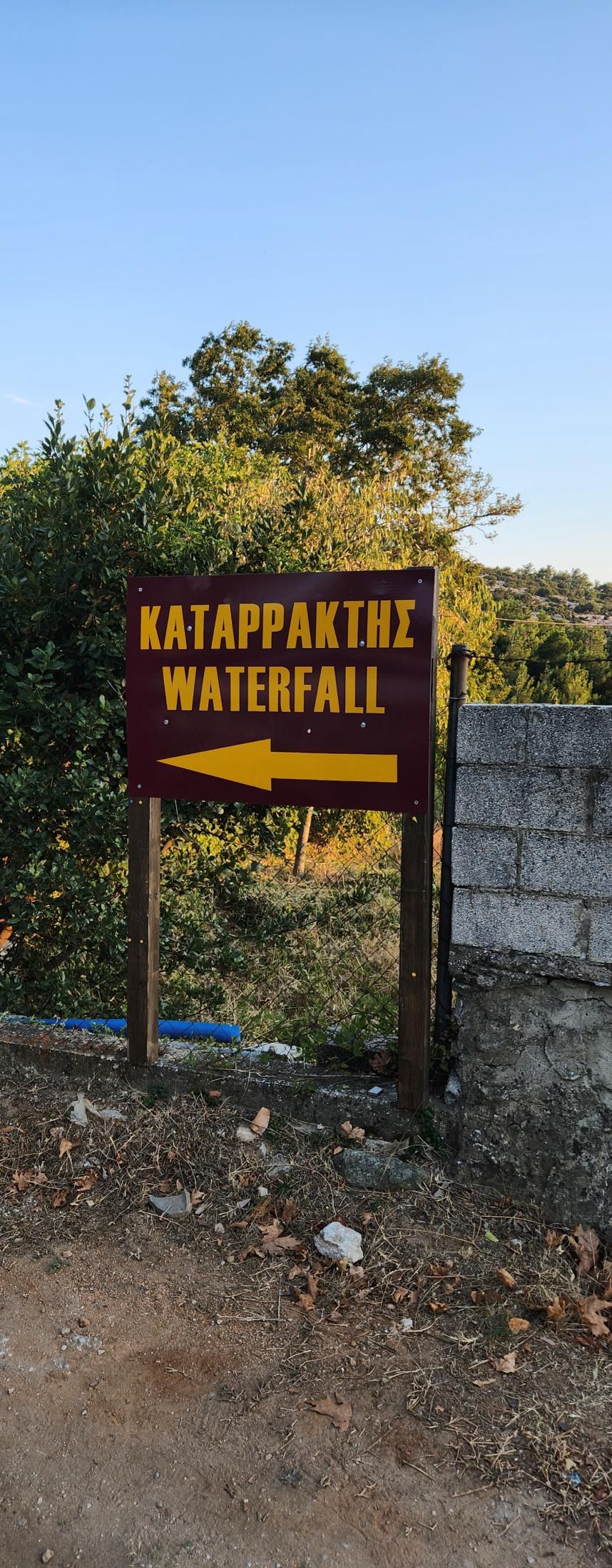
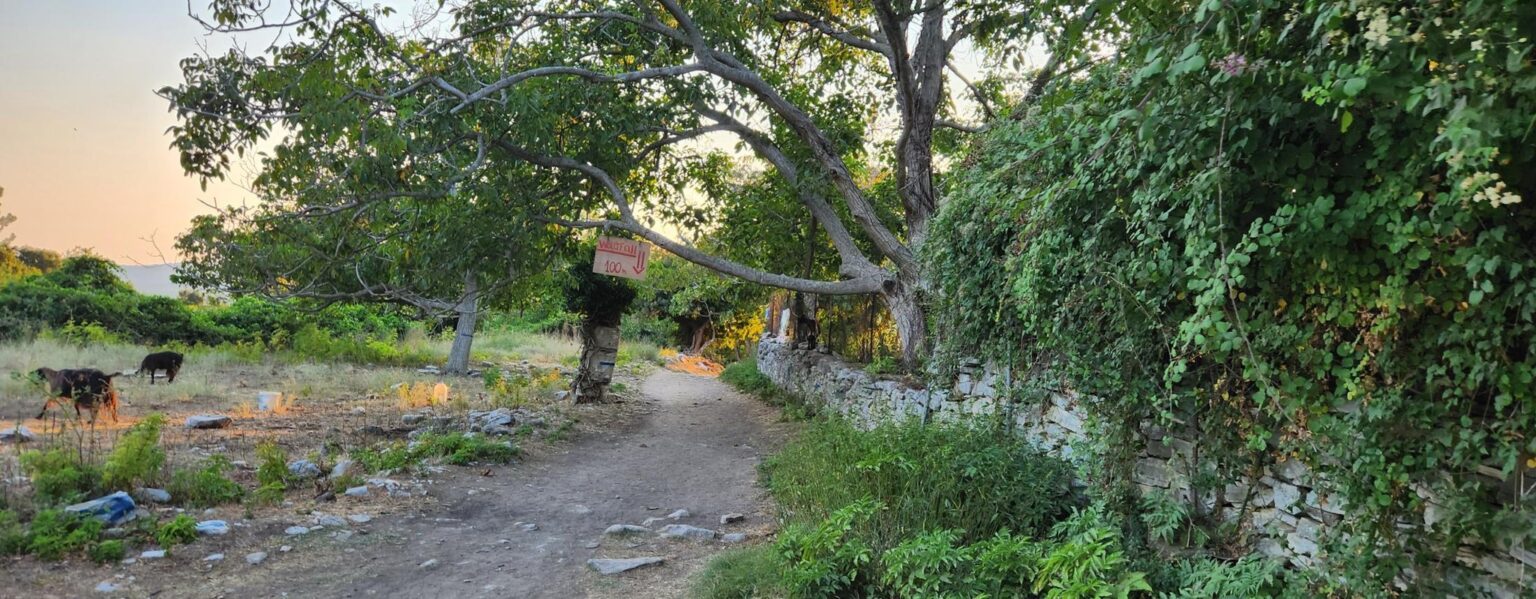
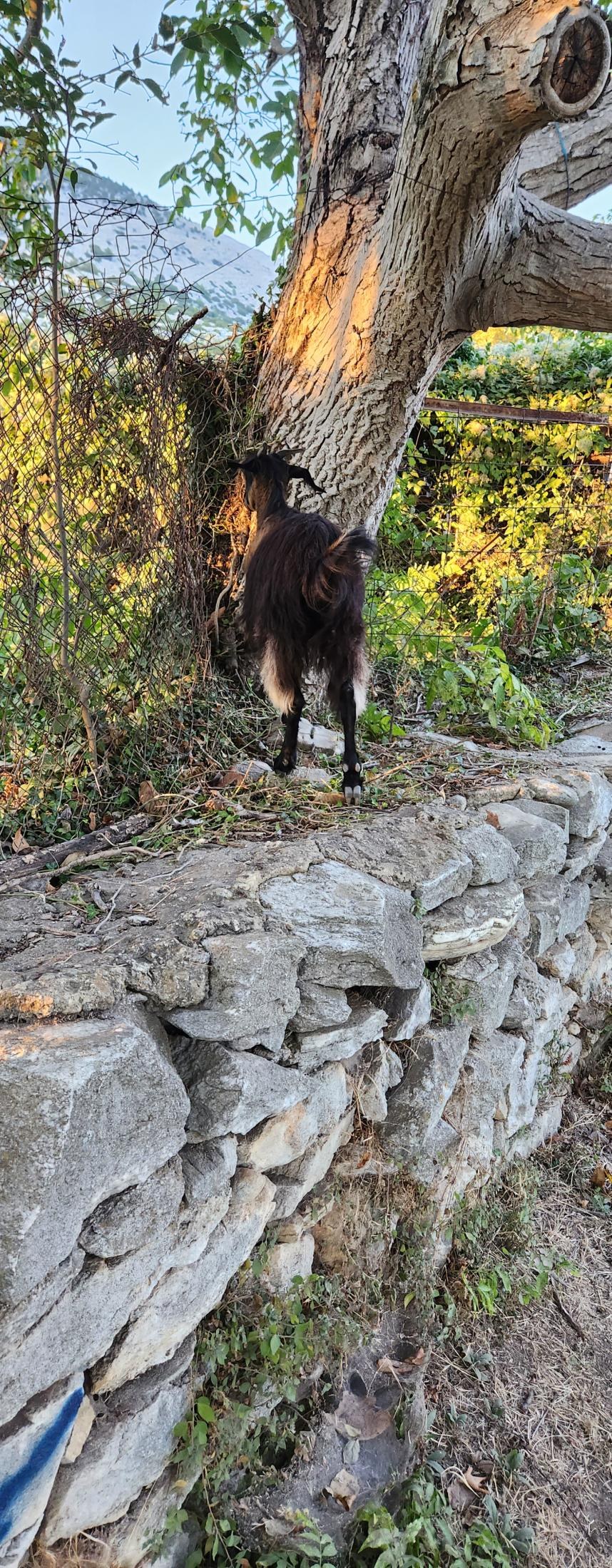
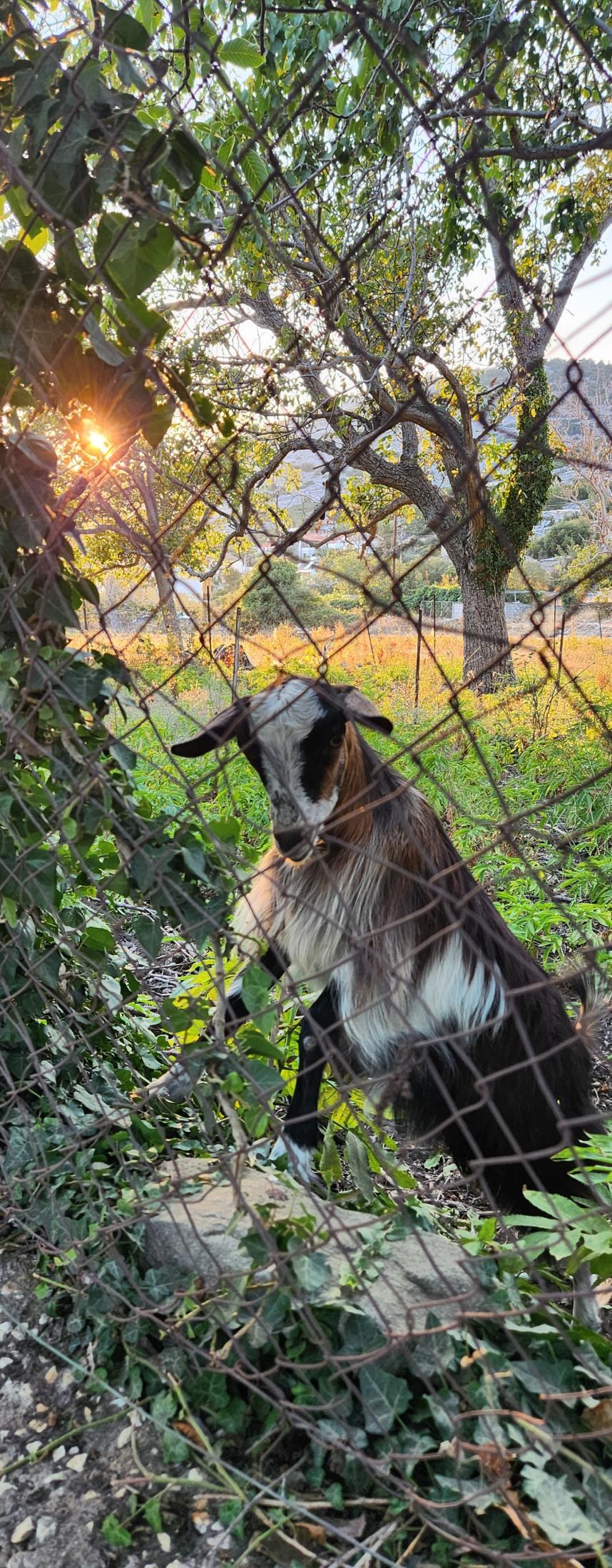
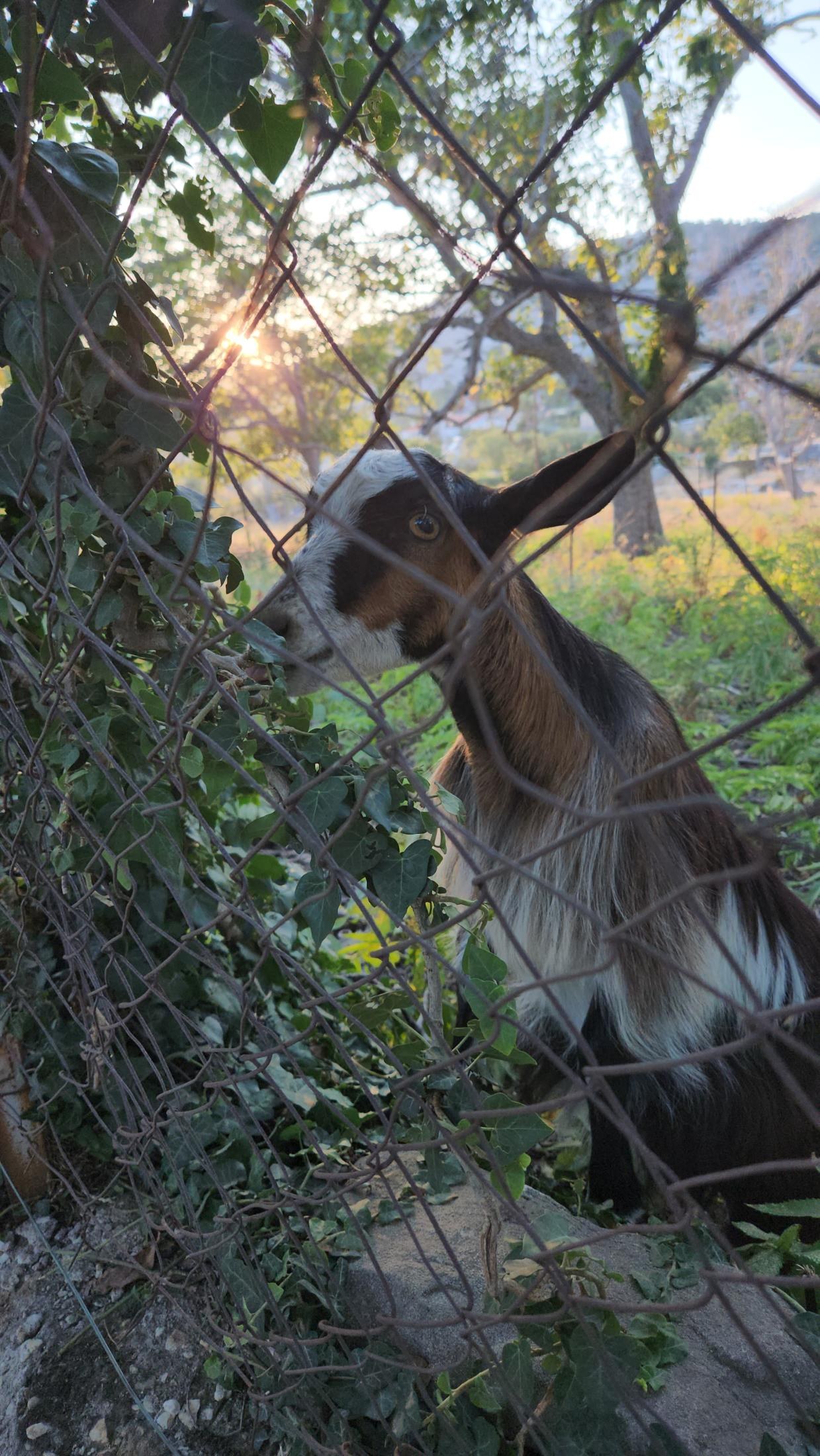
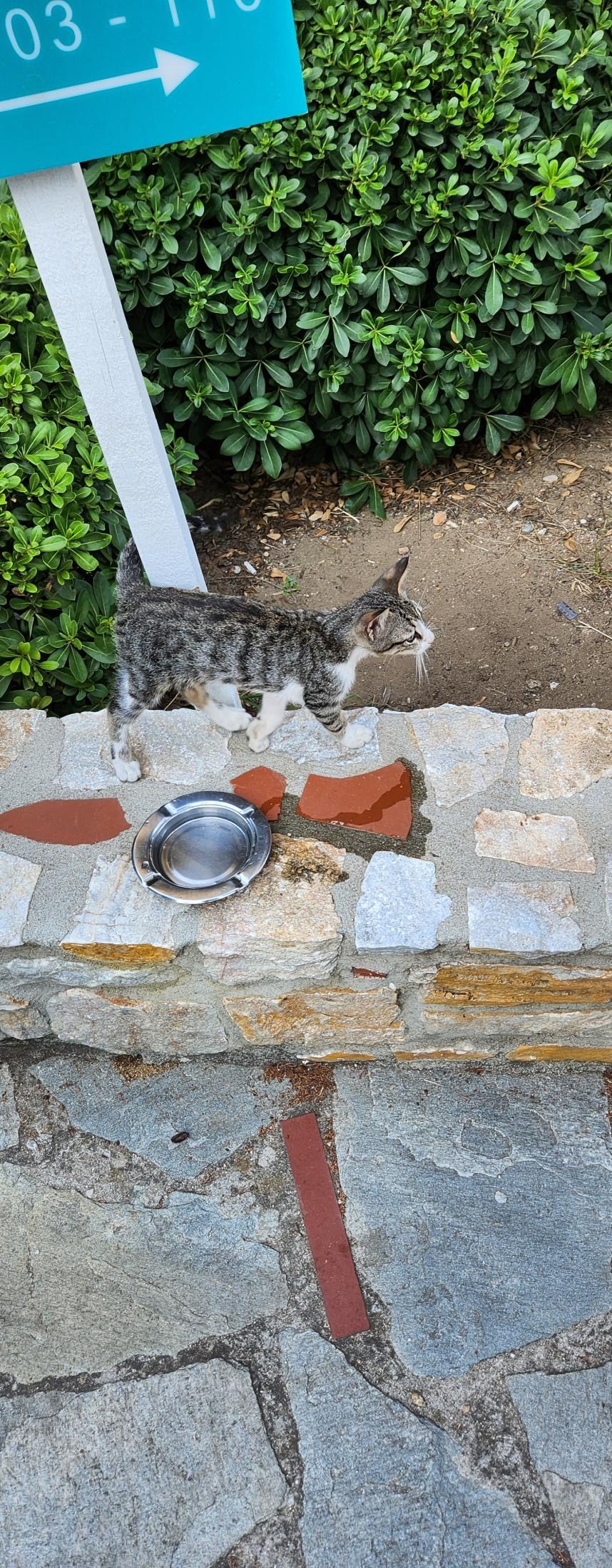
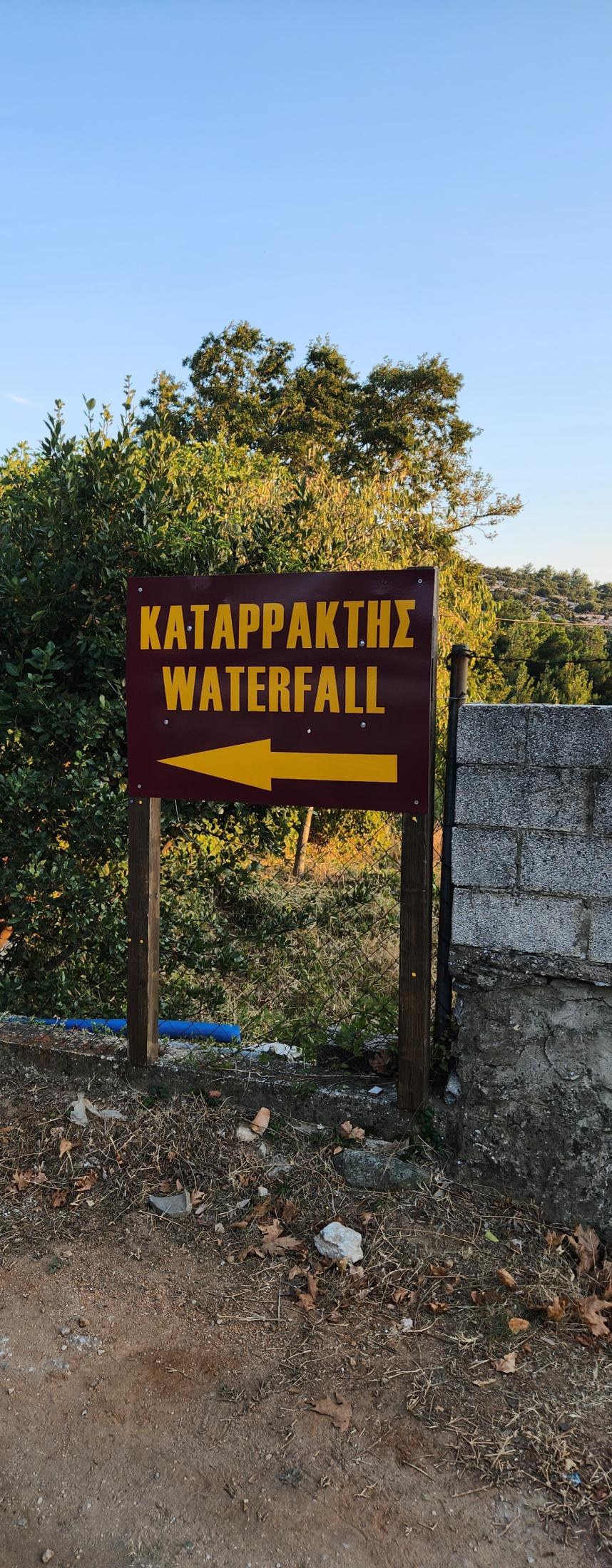
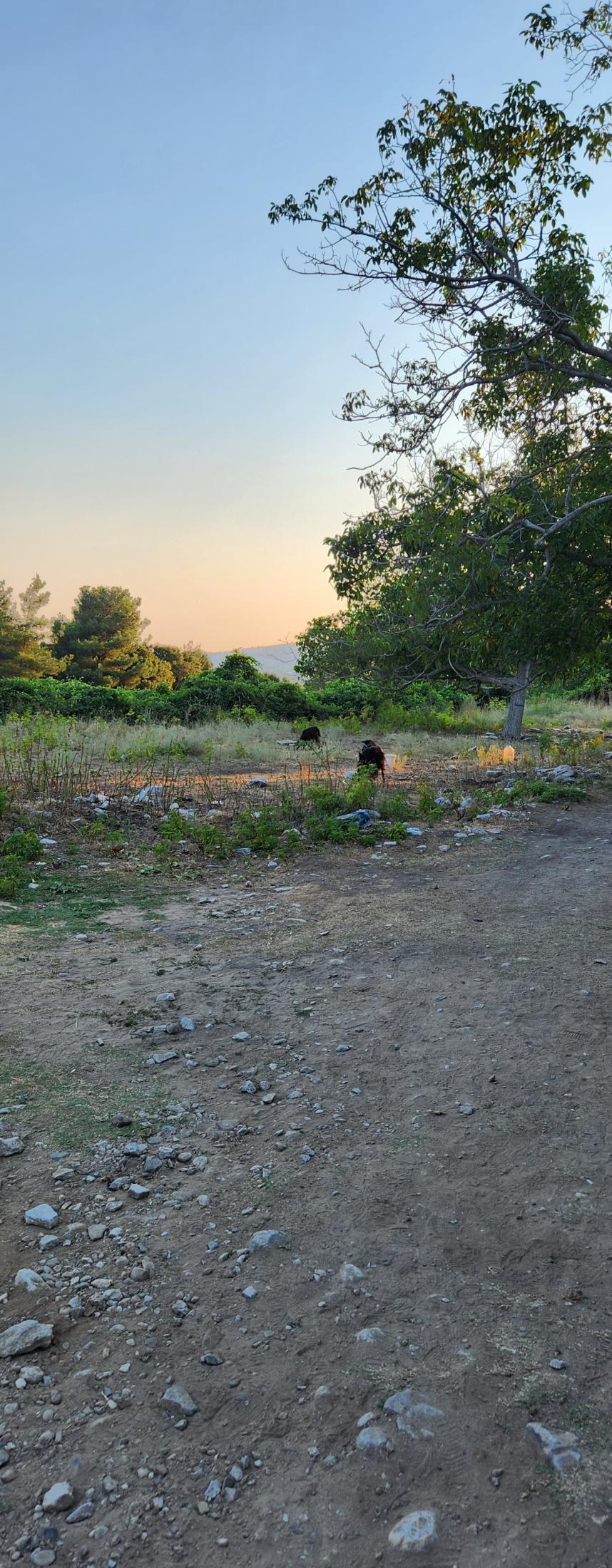
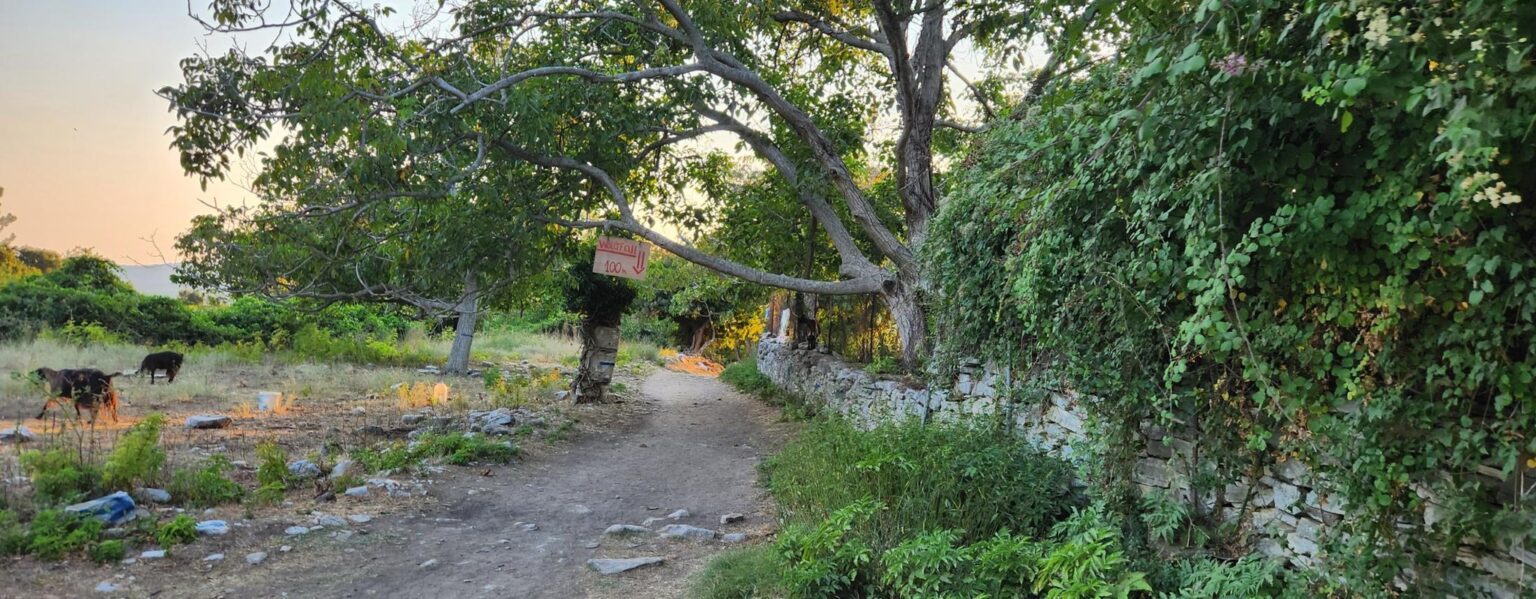
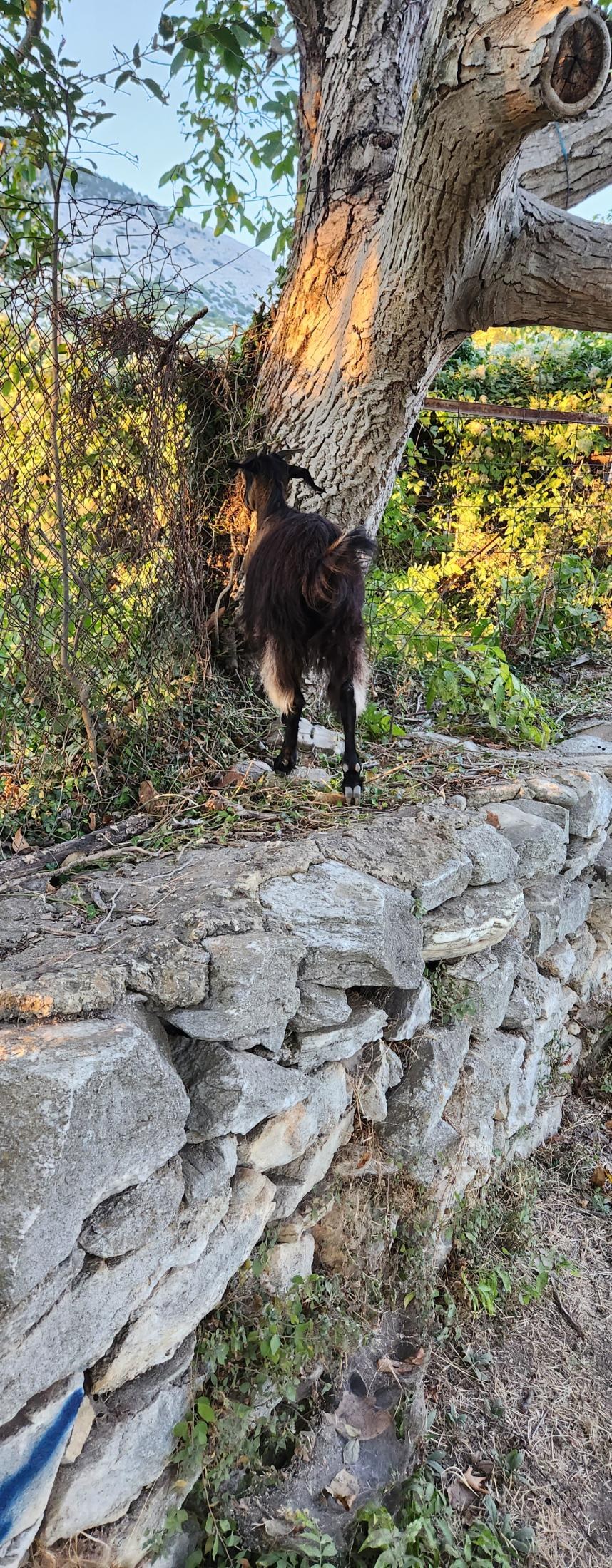
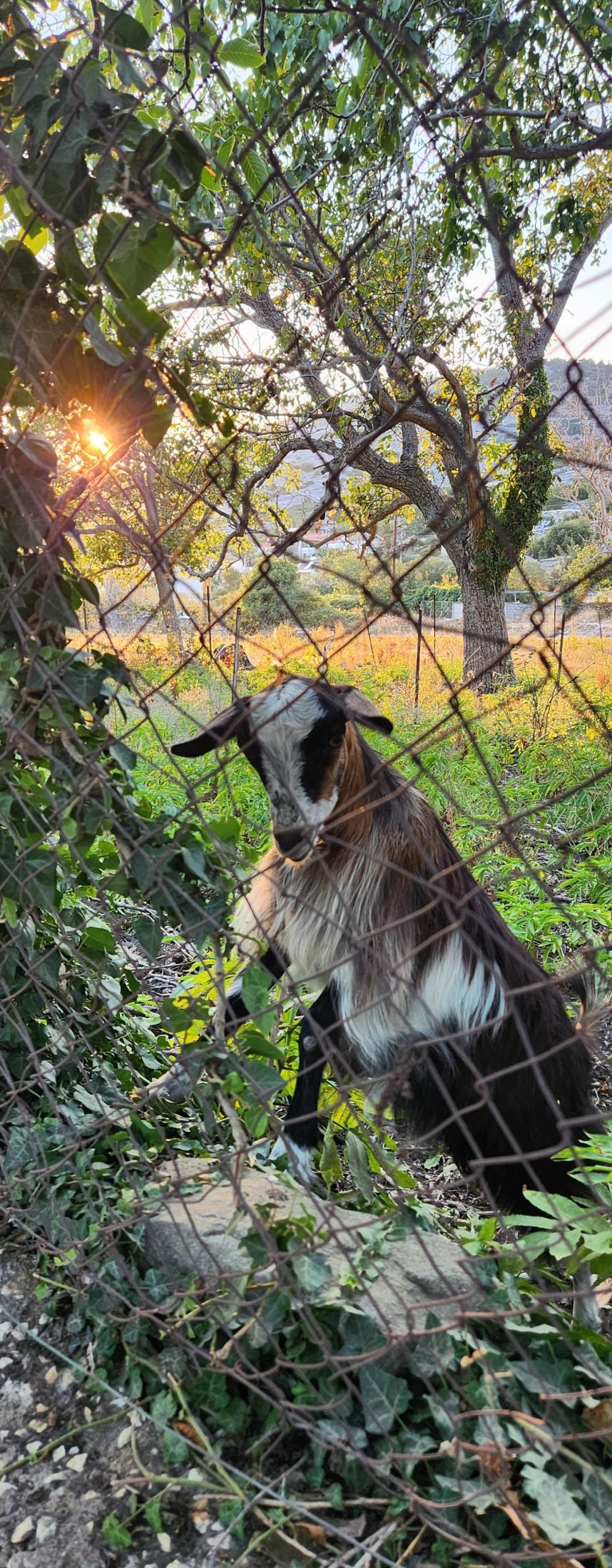
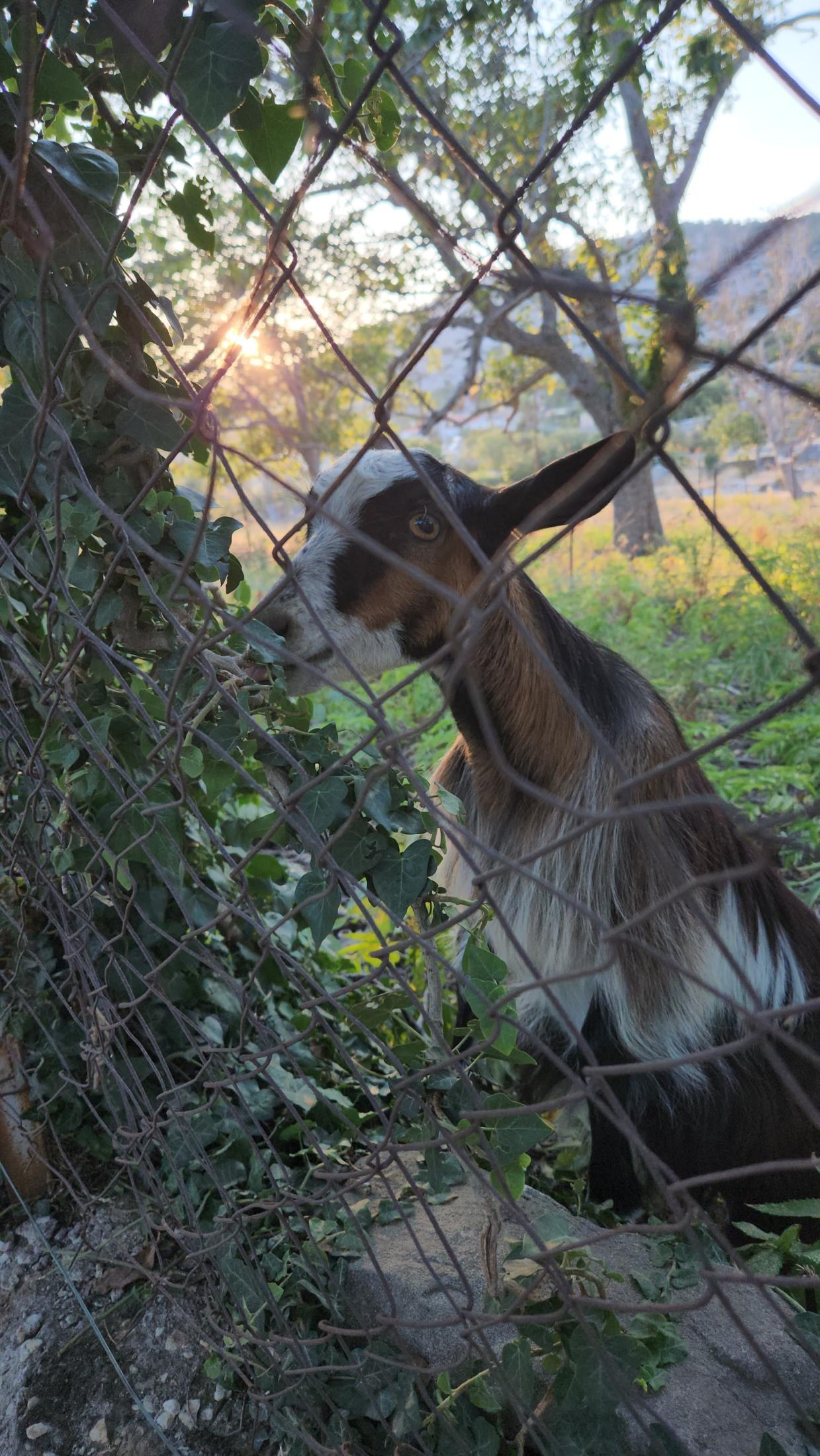
At the other end of the village there is a waterfall reached by an easy path. On the way a small horned beast of the visibly goat persuasion is feeding with tremendous charm and earns itself an honorary place in this article:
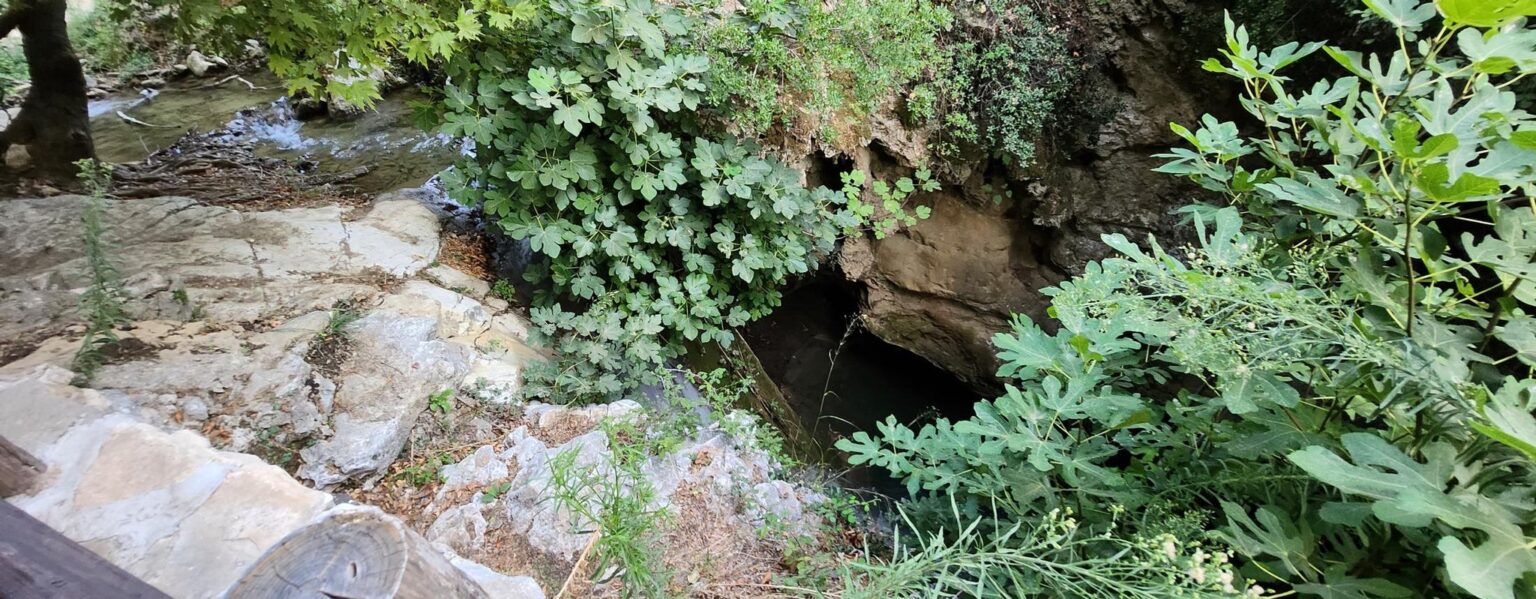
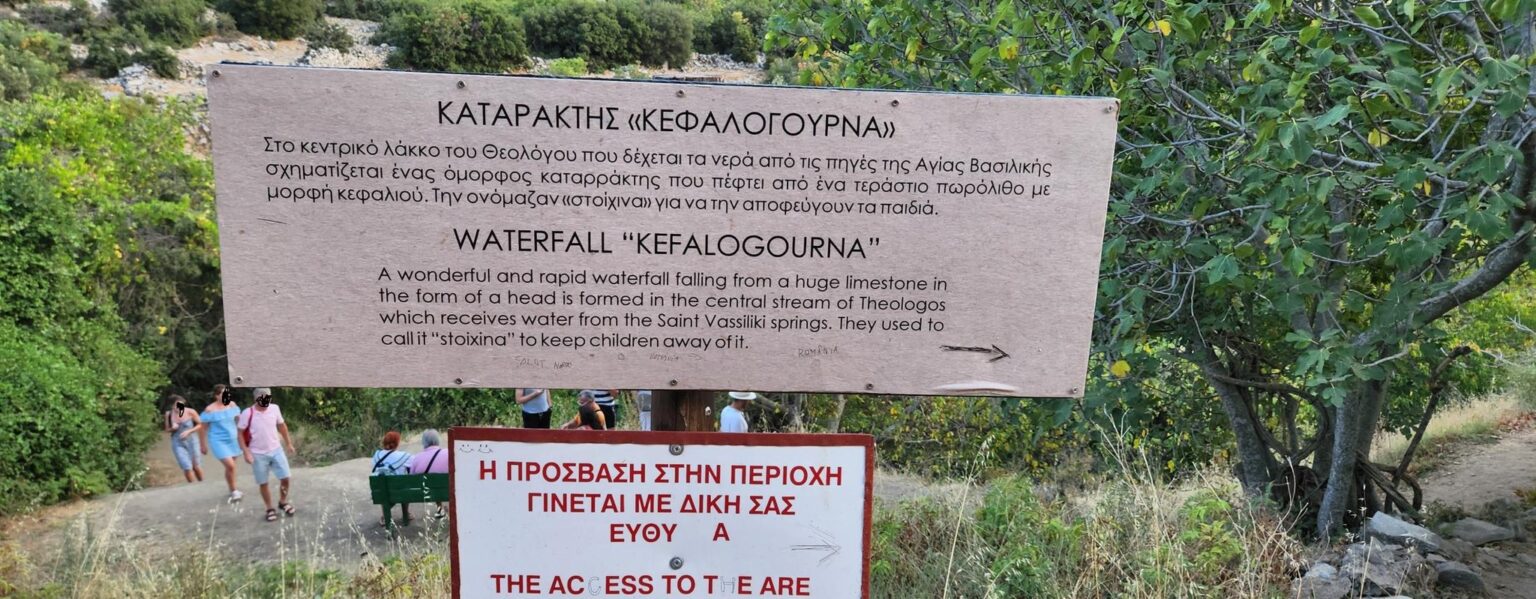
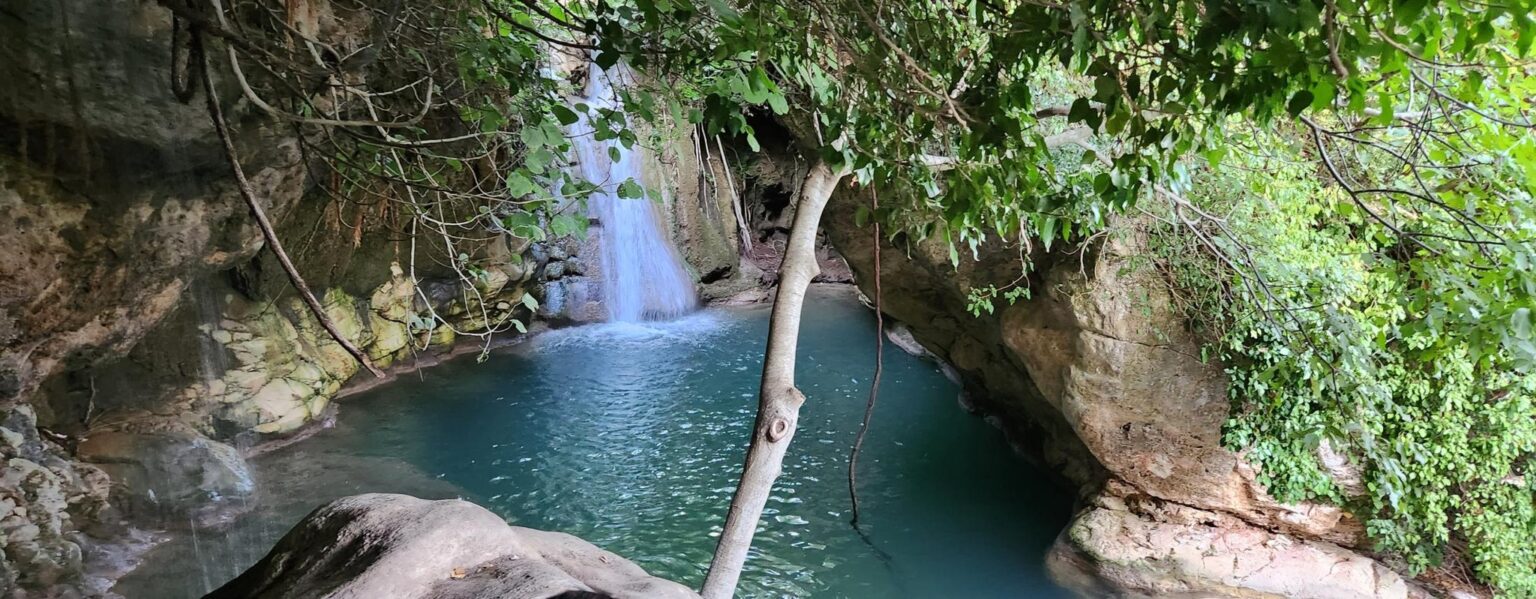
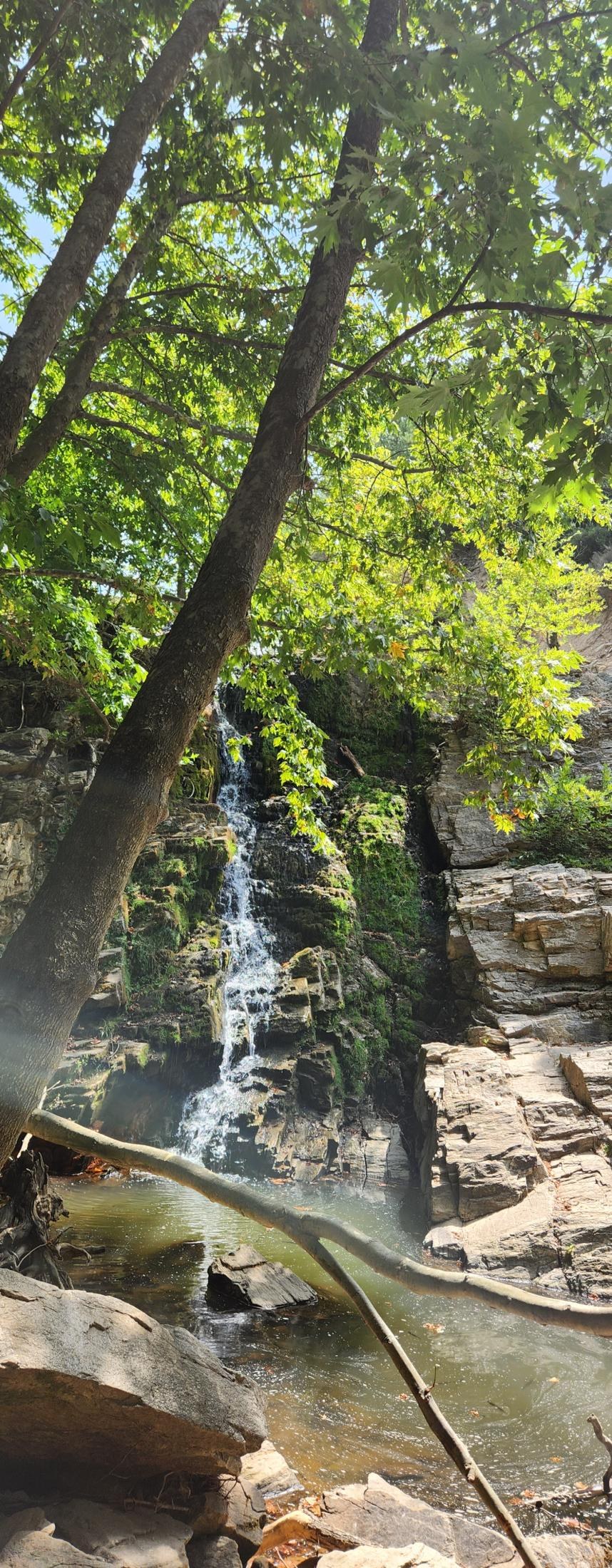
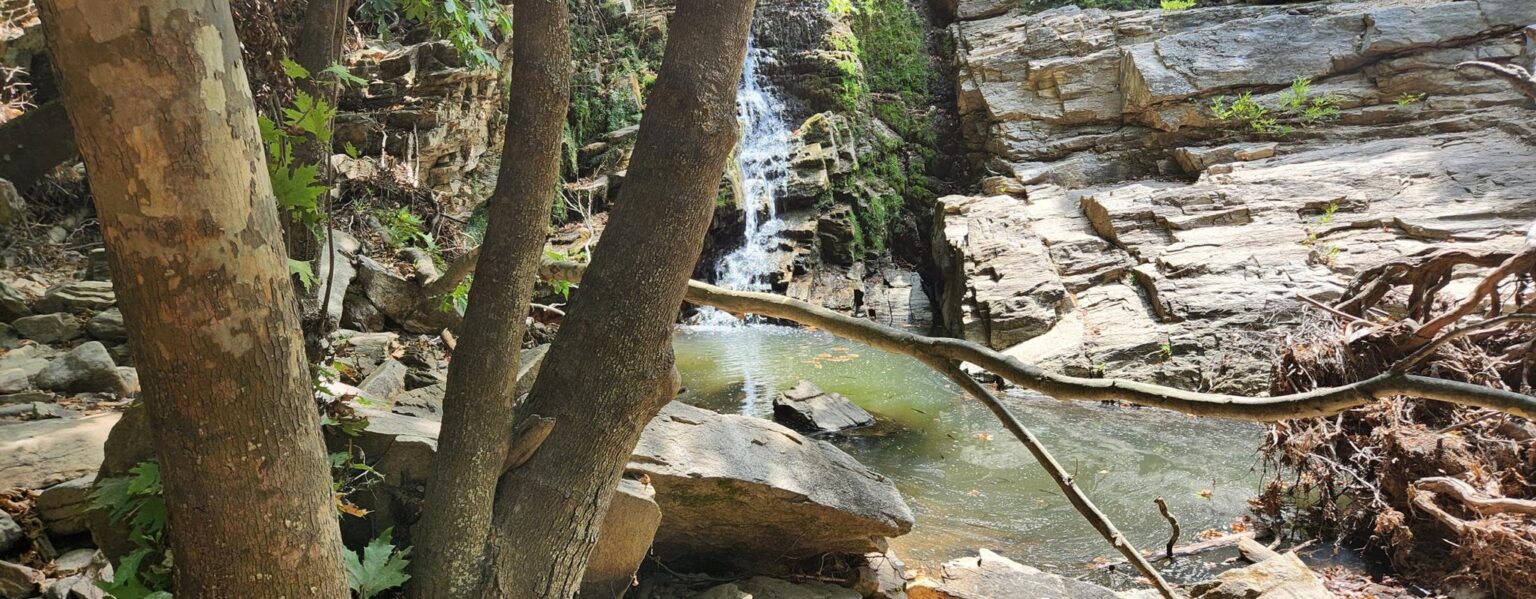
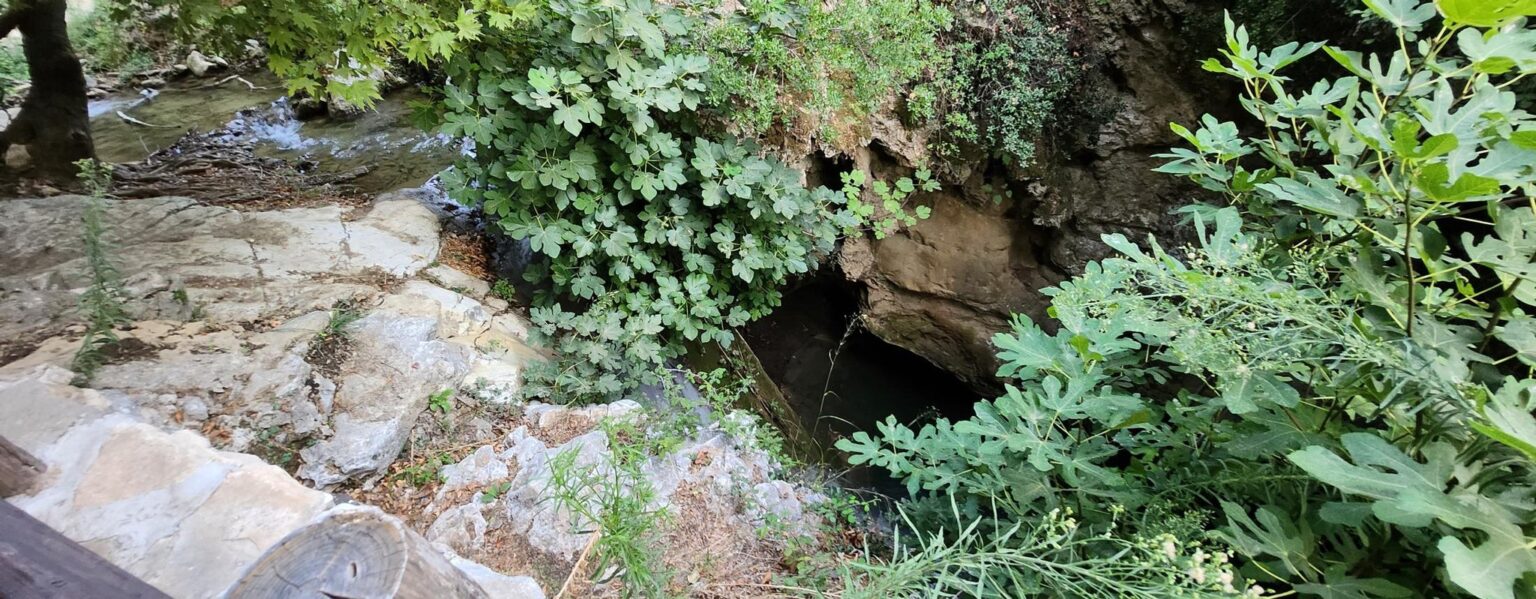
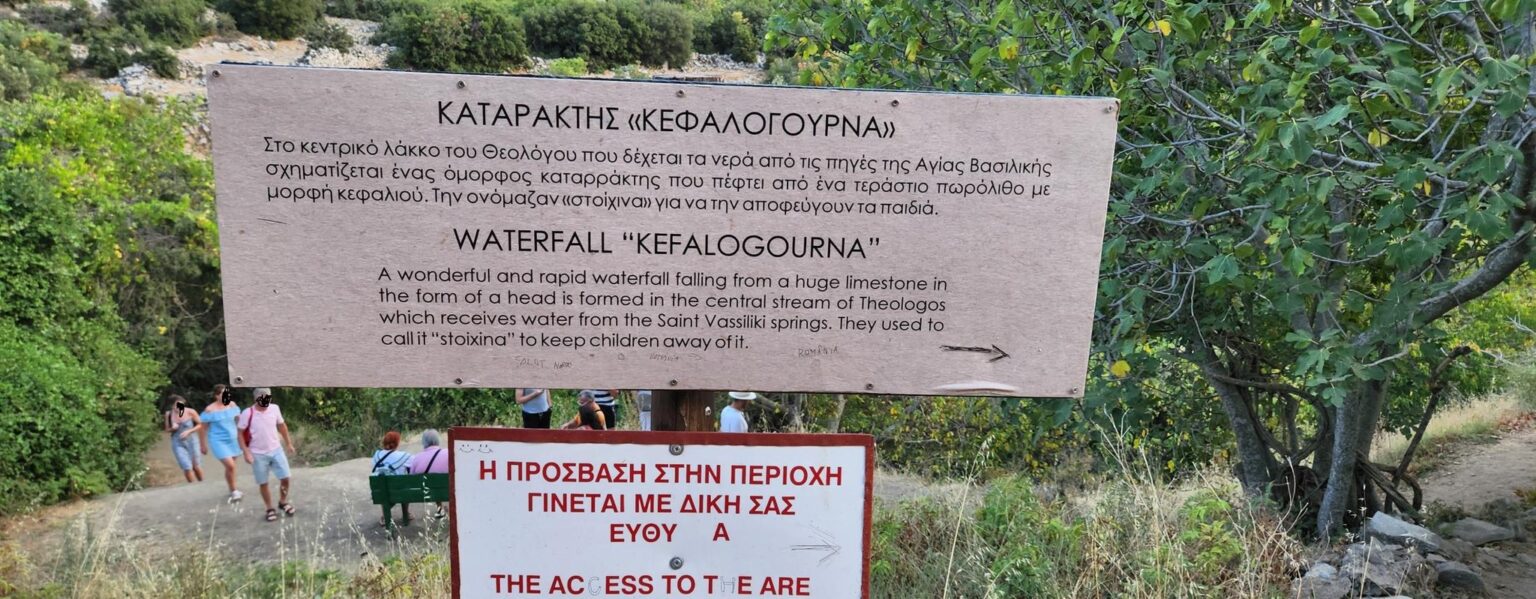
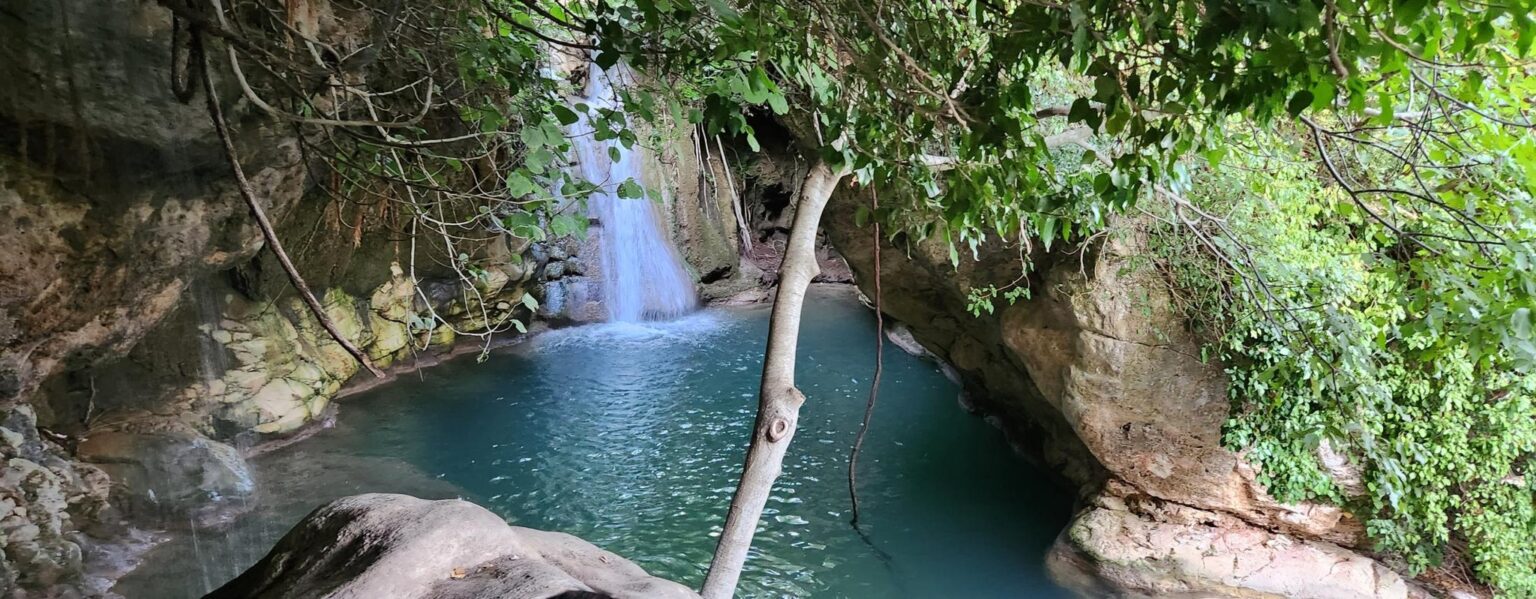
After that brief lyrical detour and a rest, we continue towards the target. The waterfall has the easy-to-remember name Kefalogourna. The walk is 10 to 15 minutes from the main road. To our astonishment, people were bathing in it. You have all the sea in the world around you, literally. On every side there is sea with one beach more interesting than the next, and yet you plant yourself in the least likely swimming spot on the island in front of dozens of tourists 😀
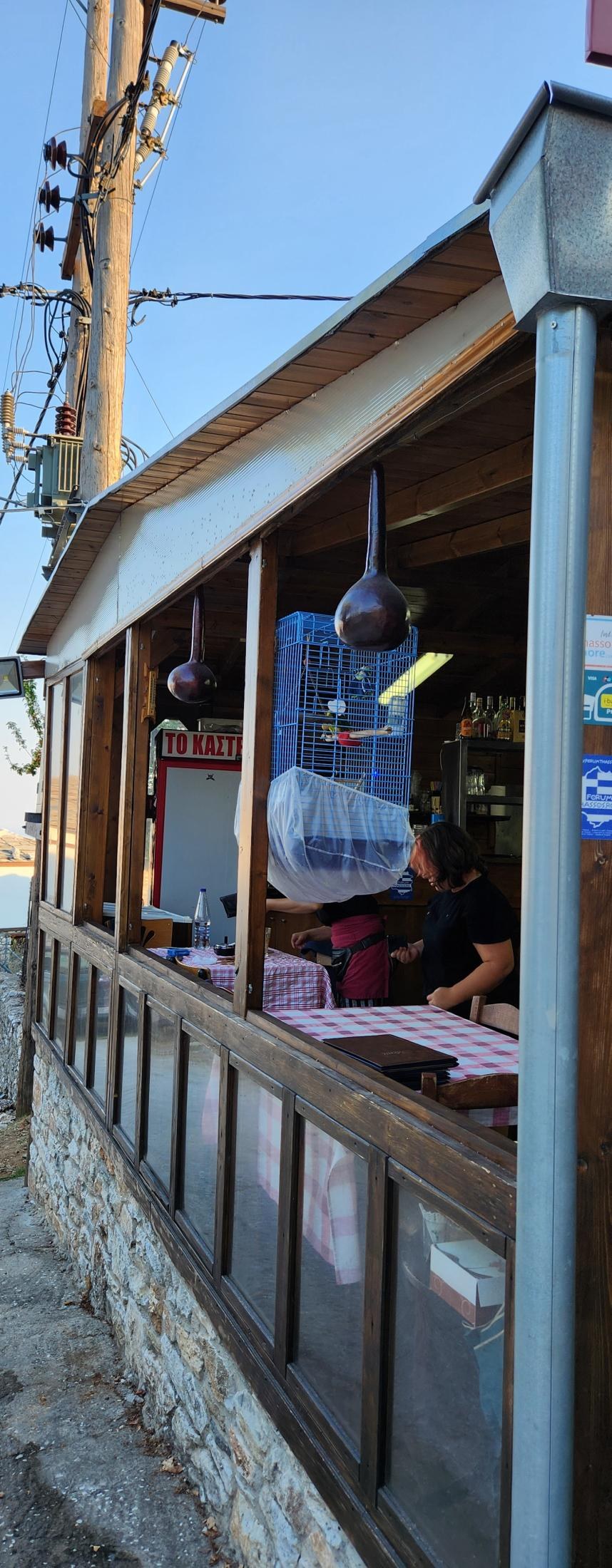
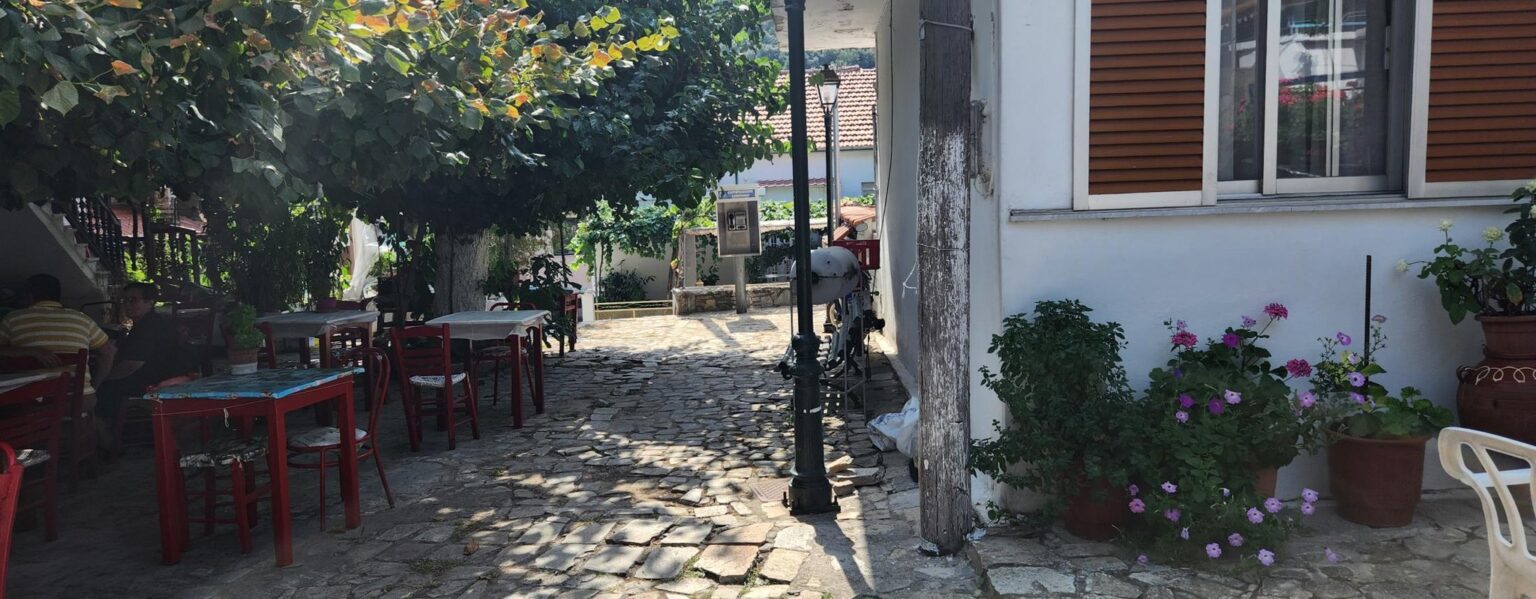
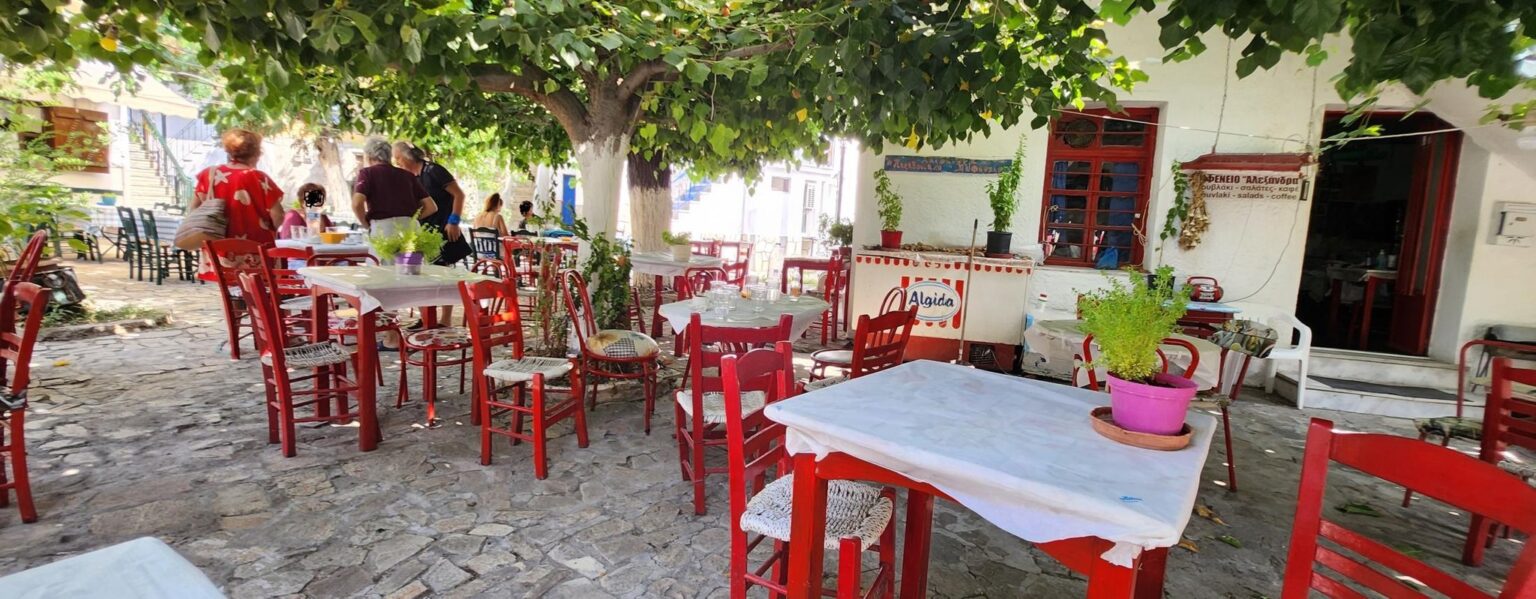
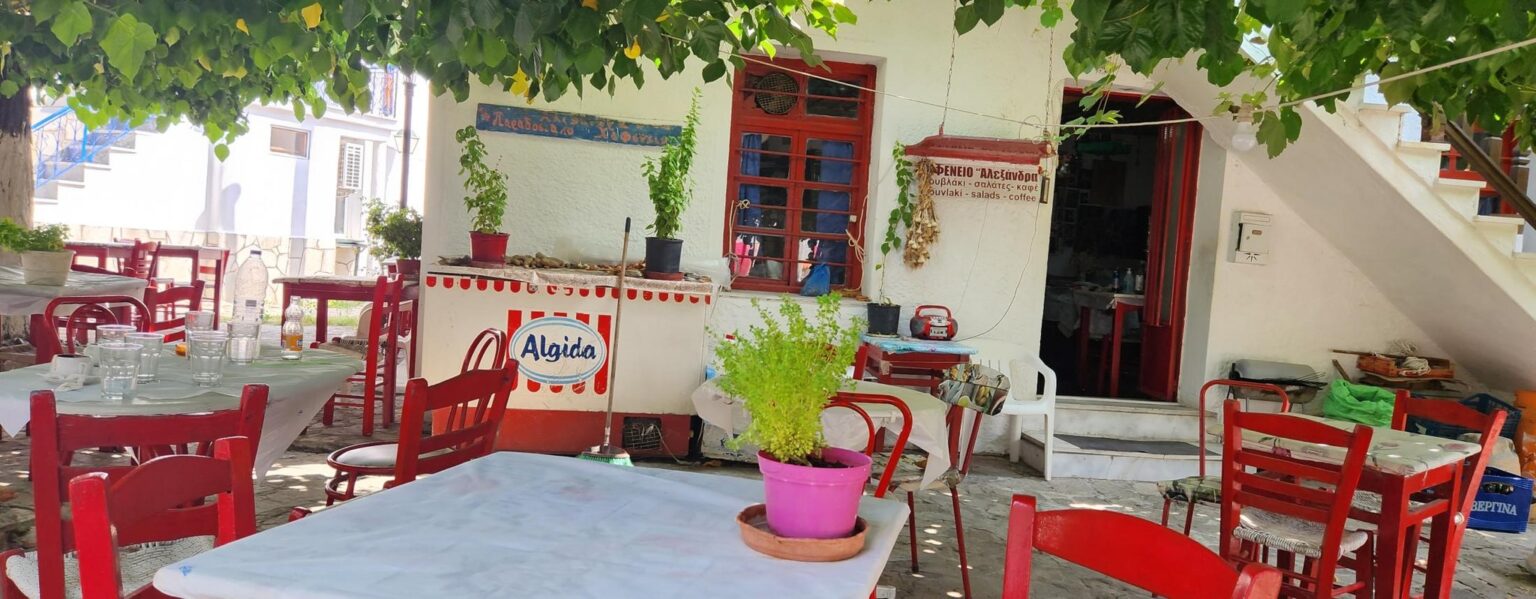
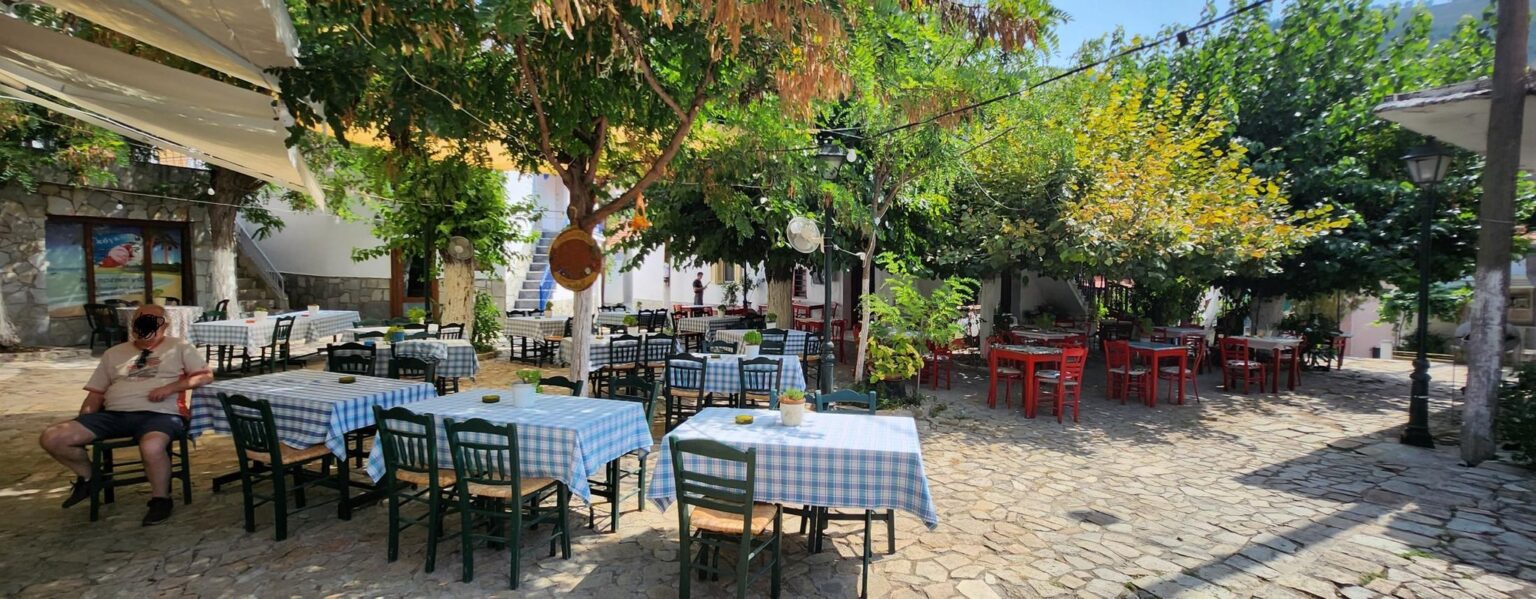
Halfway along the main street there are cafés and more tavernas. The one that stands out is the Old Museum Cafe Bar, which has a very pleasant courtyard and is decorated with real care. Coffees run €3–5, from espresso through Americano, cappuccino and frappé, but they keep bringing you water for free.
If you do not travel abroad much and, like us, you are used to drinking a long coffee from a vessel resembling a beer stein, memorise the words “Americano coffee”. If you try to explain to Greeks and Italians that you want a long, double or lungo coffee, you will receive about ten drops instead of five, in a miniature shot glass. Americano is the standard long coffee. A short recap of the day:
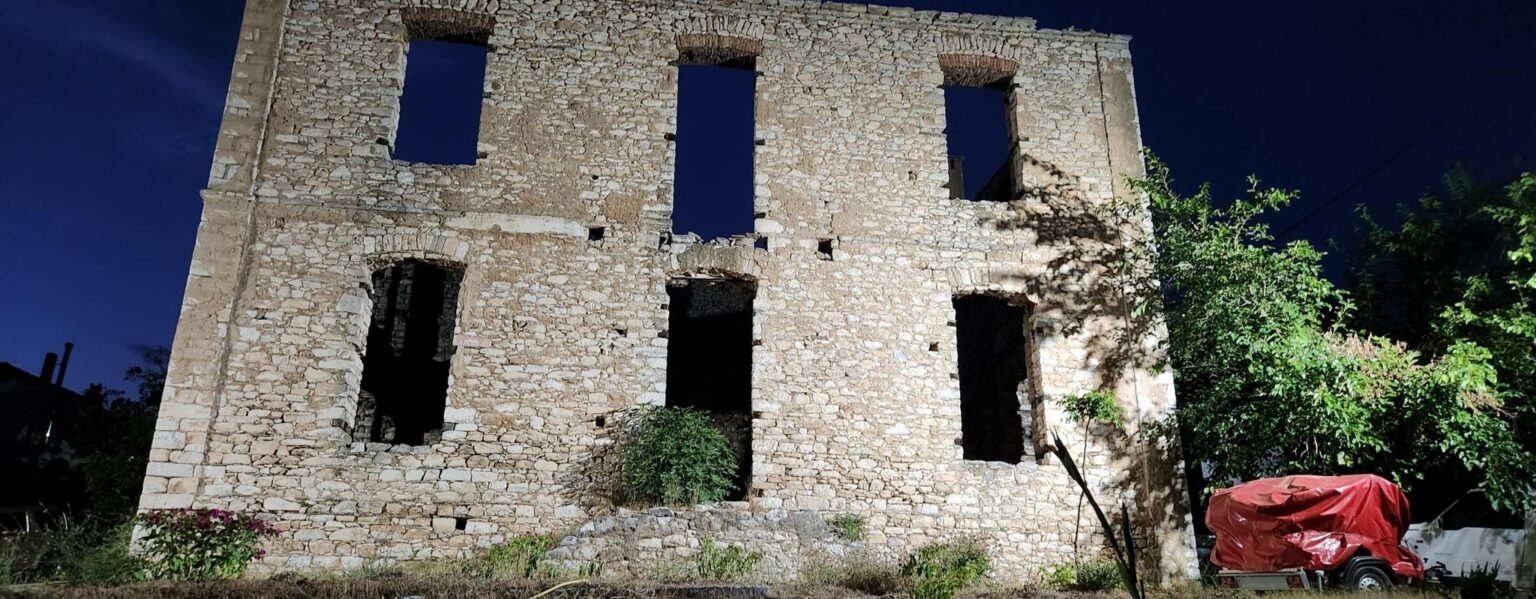
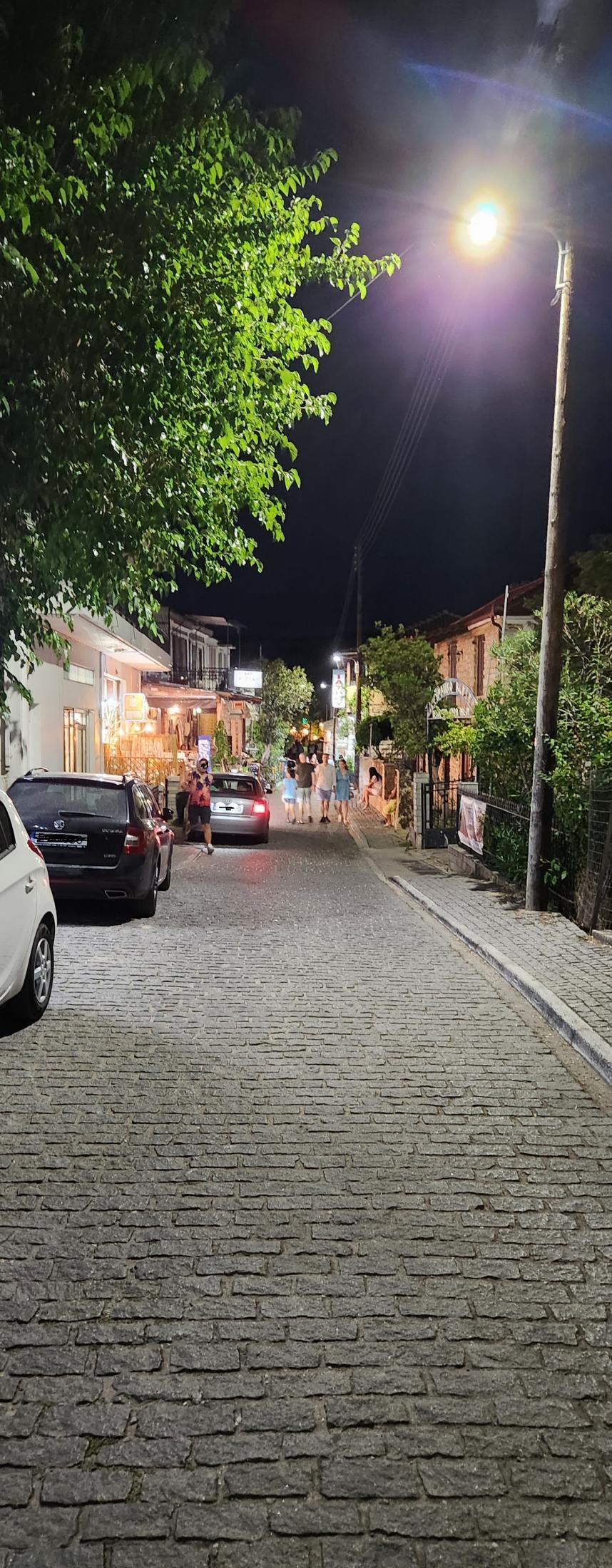
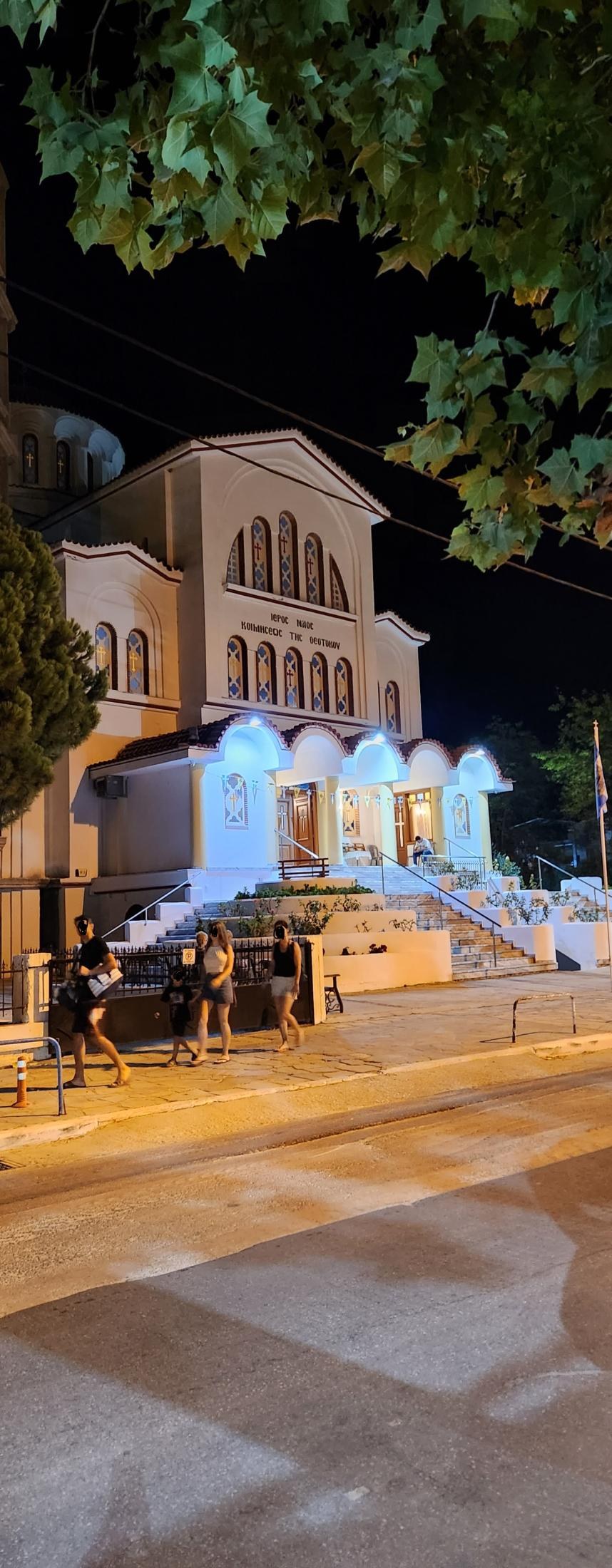
Day 3: Spa, Kastro and Potos
This is a holiday-slash-expedition. The day starts with a light stint on the beach. Then we cash in our spa and massage vouchers. We will not lie to you: the spa in Bulgaria is noticeably better. We are judging by hotel class and price bracket. Back home, at half the price of a night’s stay, we get a spa that is out of this world by those criteria. Here it is €80 for a 30-minute massage and €20 entry to a spa consisting of a portable infrared sauna and a cold plunge pool. This is not their strong suit. As a freebie for the good of your health, courtesy of Booking, it is fine and a pleasant addition.
The afternoon is more interesting. Kastro. It sits at 500 metres above sea level and is one of the higher spots reachable relatively easily by car. A narrow road, reasonably well repaired, with hairpins. From the Limenaria–Potos square it takes about twenty minutes by car. What is interesting there is the Apostolus Waterfall, a church, two tavernas and the Perekklesi chapel.
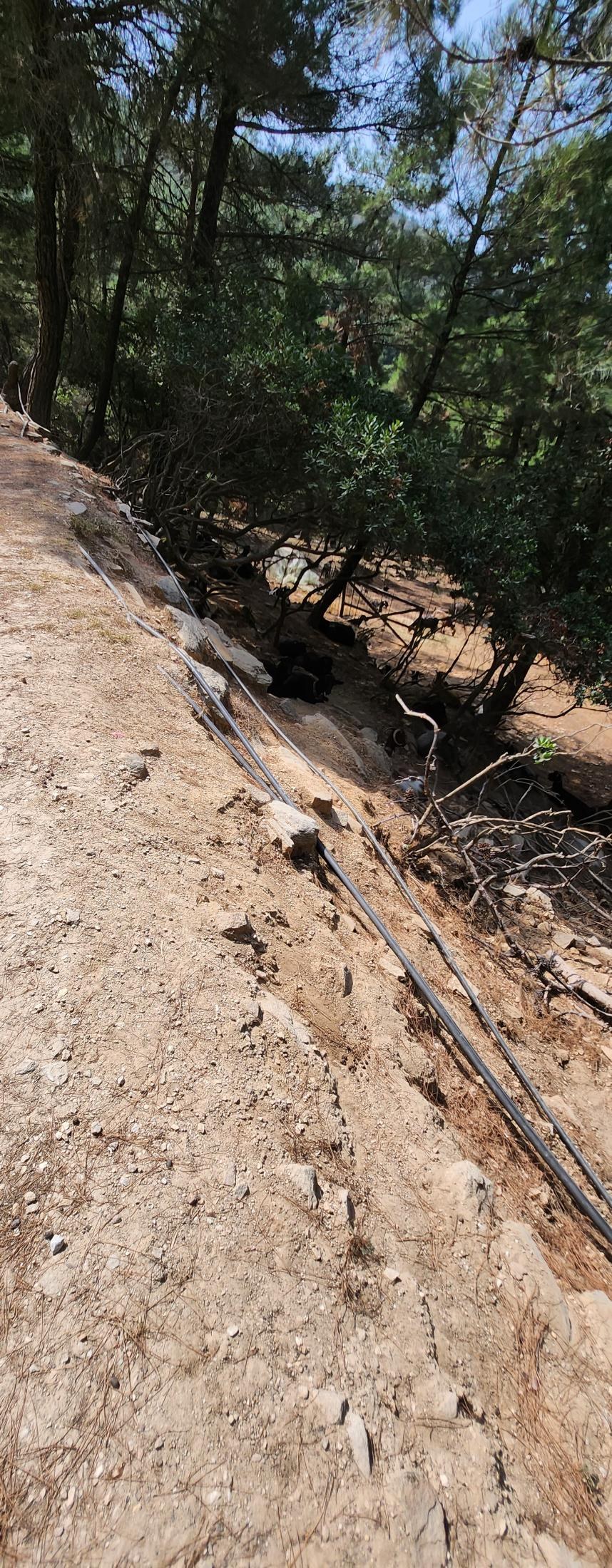
The waterfall is a 40 to 50 minute walk along a difficult path frequented by wild goats and sheep. There are beehives laid out literally on the trail. You need to walk with real care. The elevation change is significant, something like 200 to 250 metres. This one asks for preparation; flip-flops will not do.
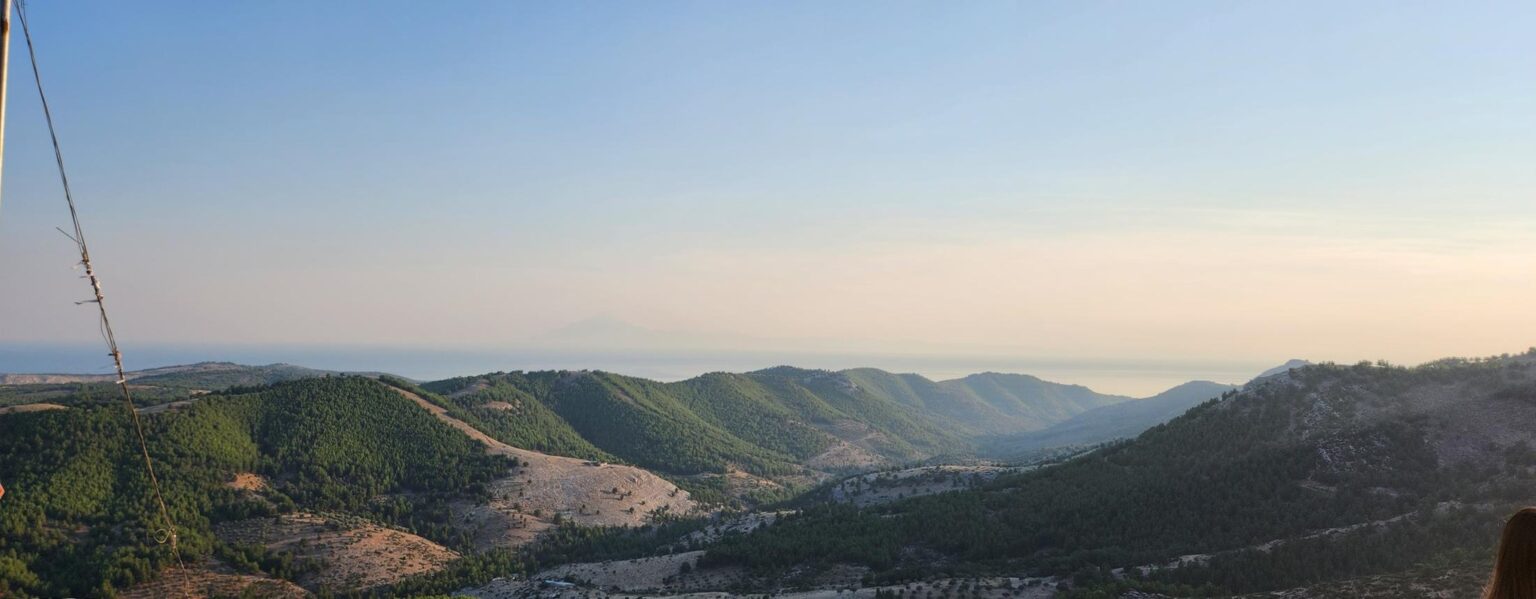
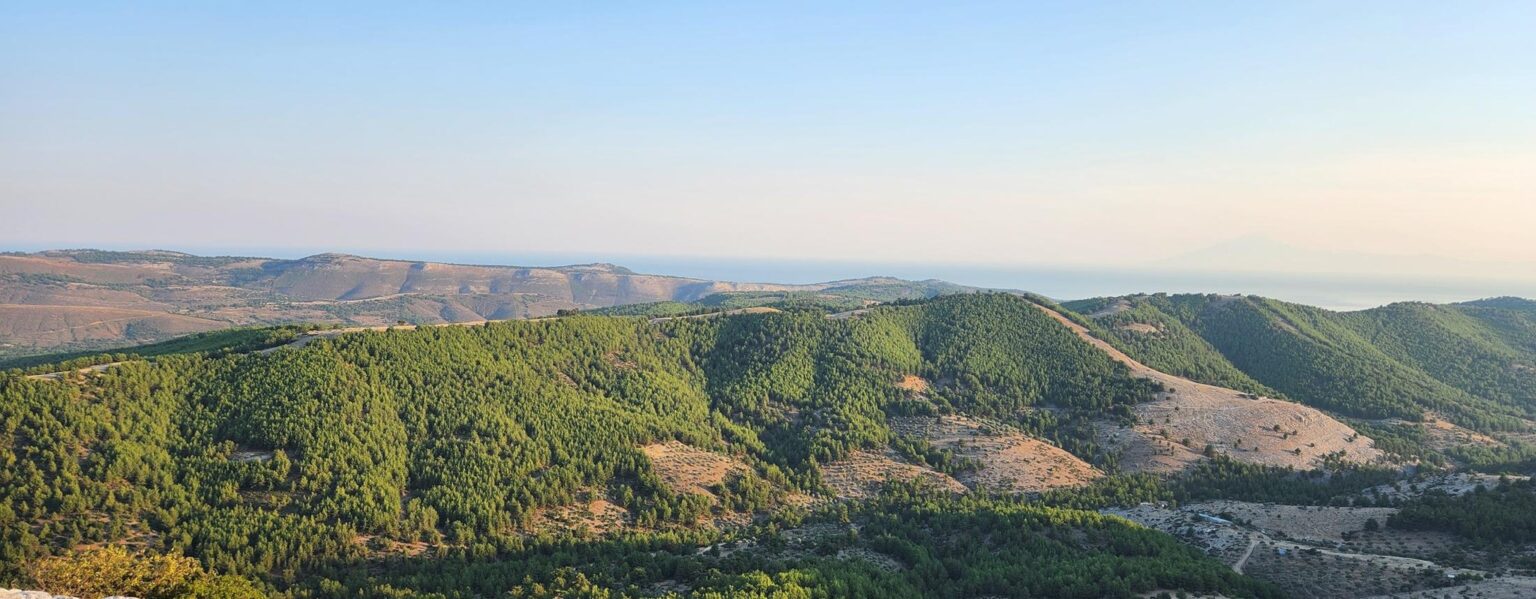
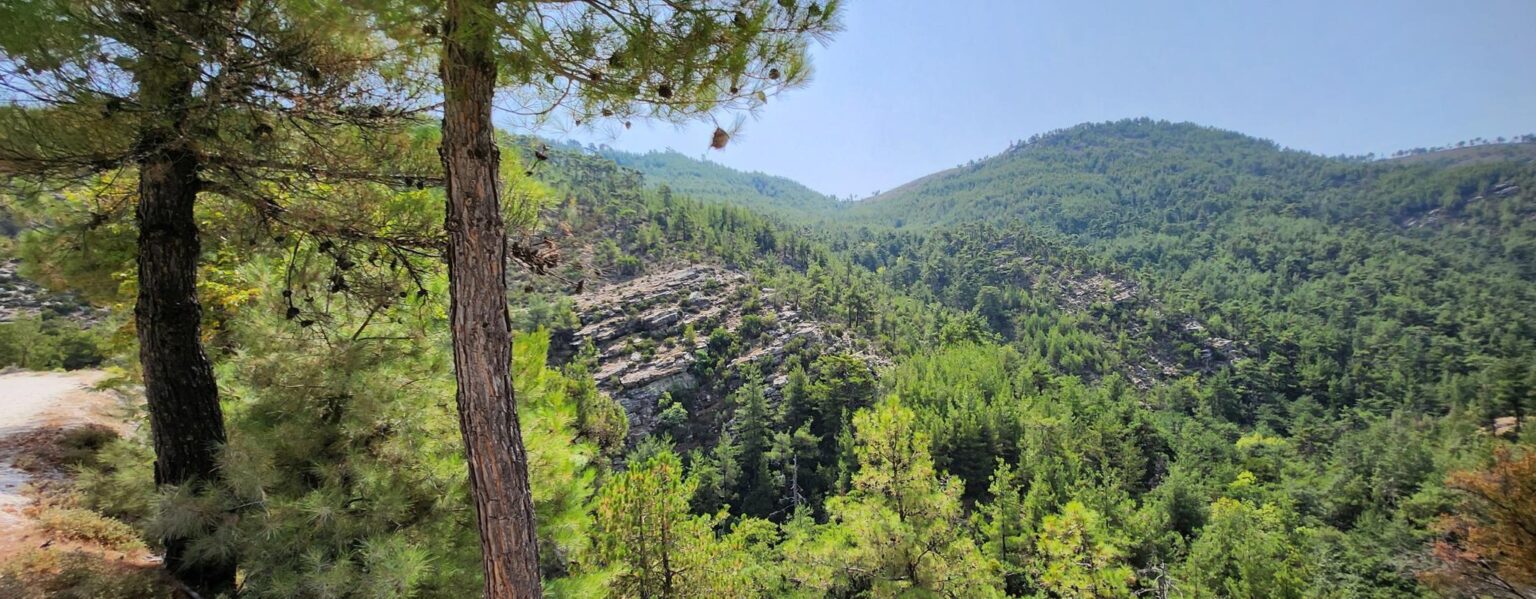
The chapel is the more entertaining option. A five-minute walk gets you there, and superb panoramas open up in every direction. Just before it there are benches, ideal for resting and staring into the endless expanse of sea and horizon.
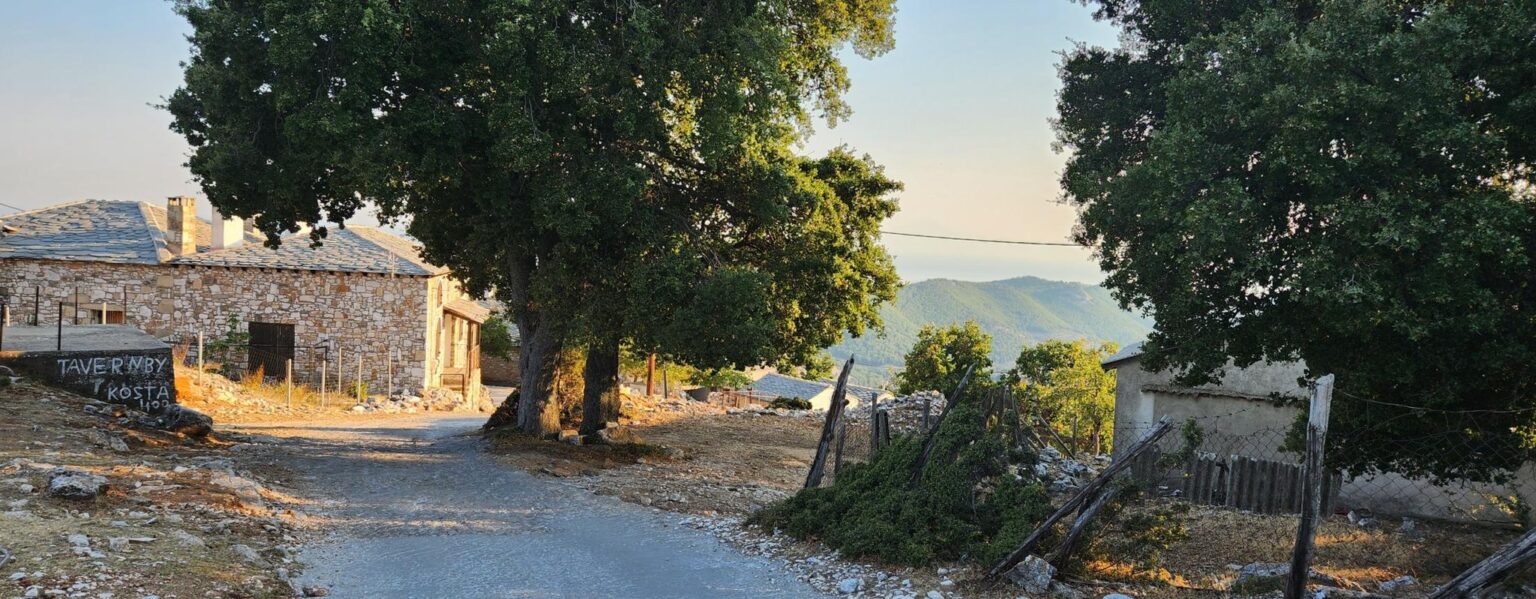
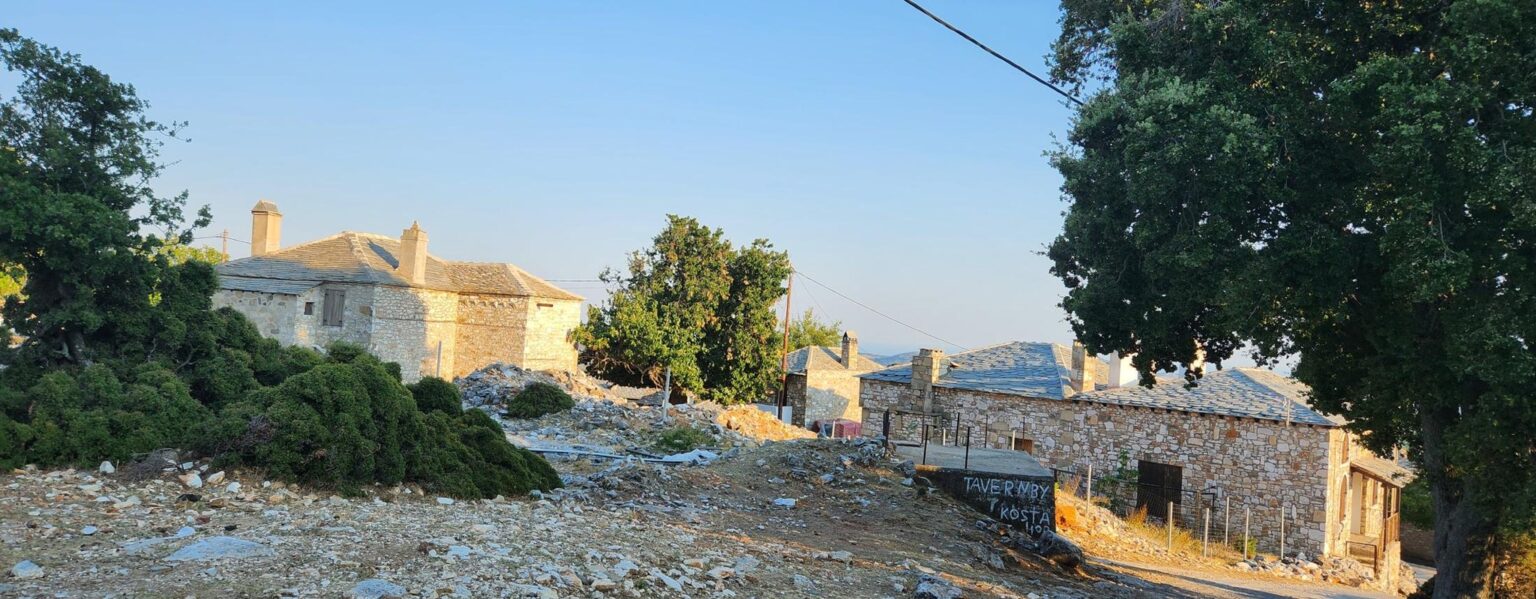
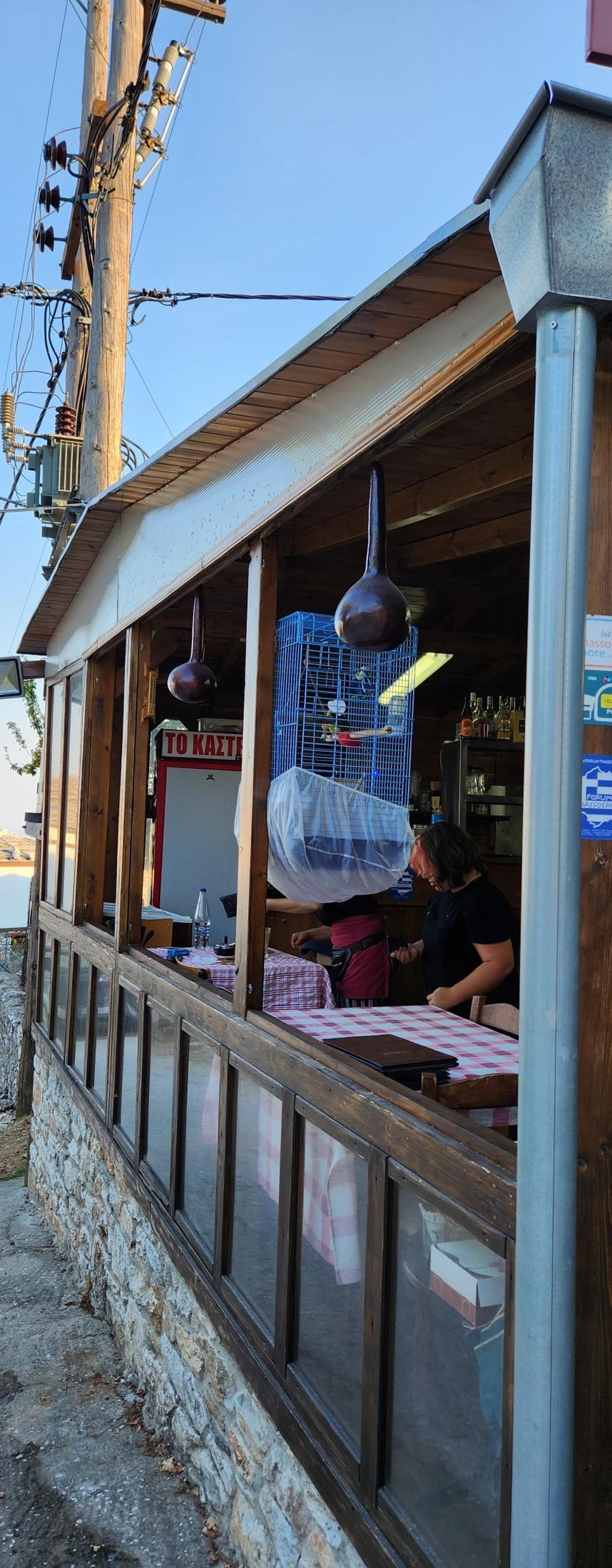
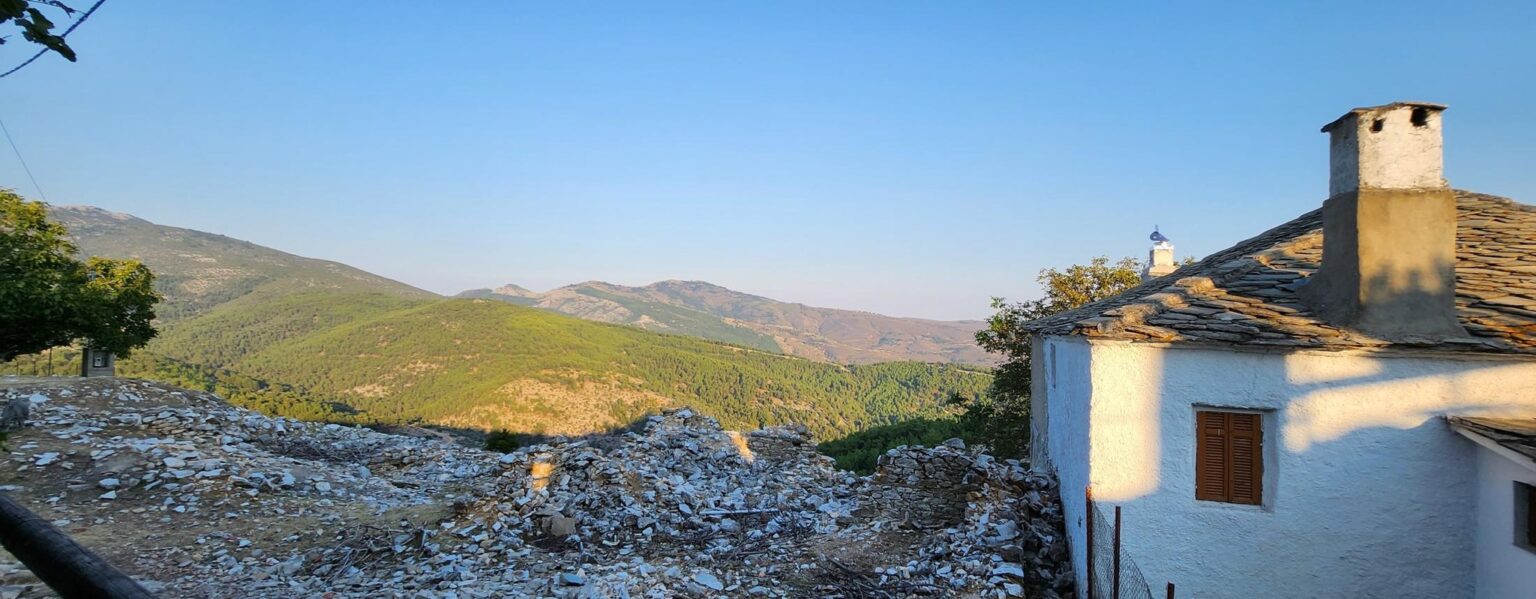
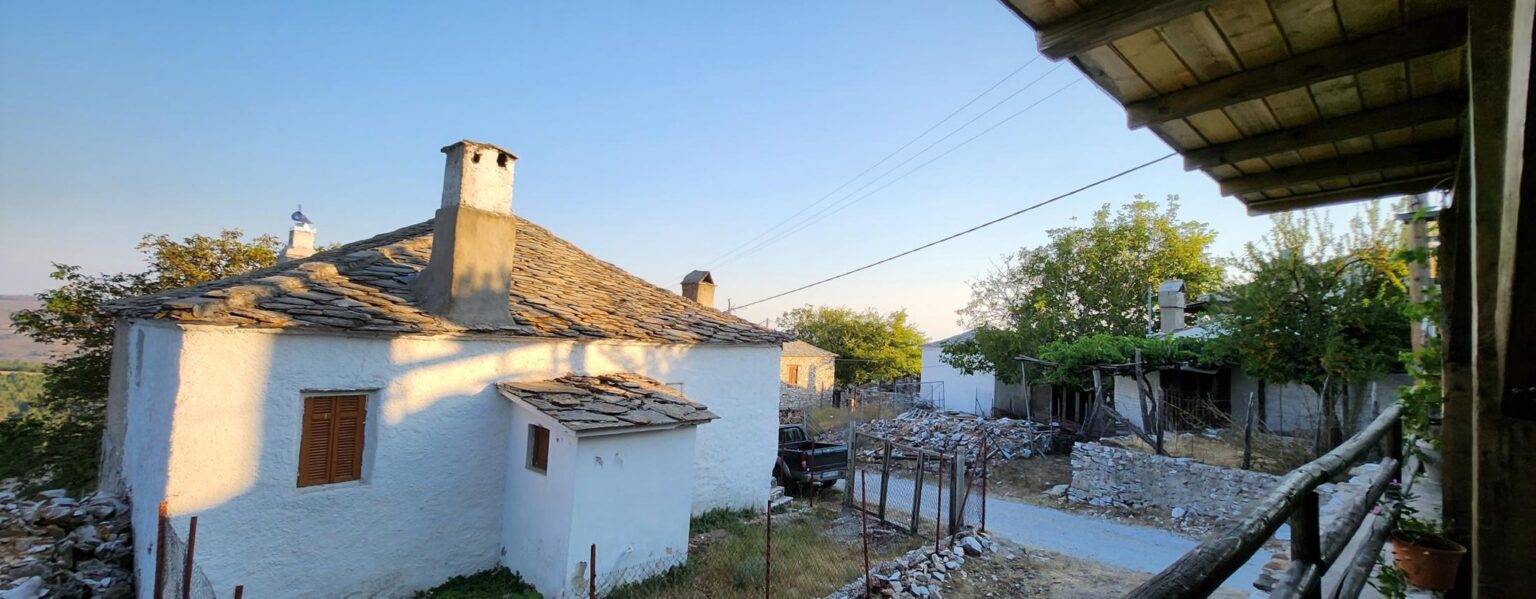
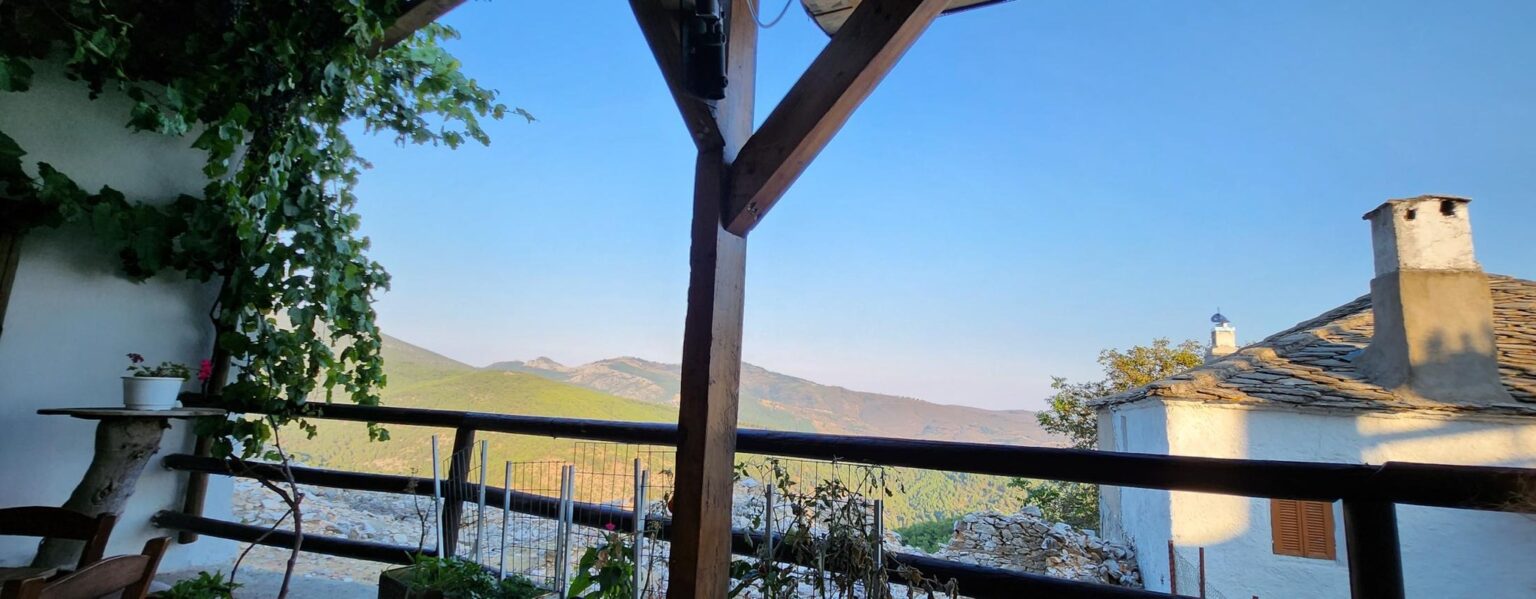
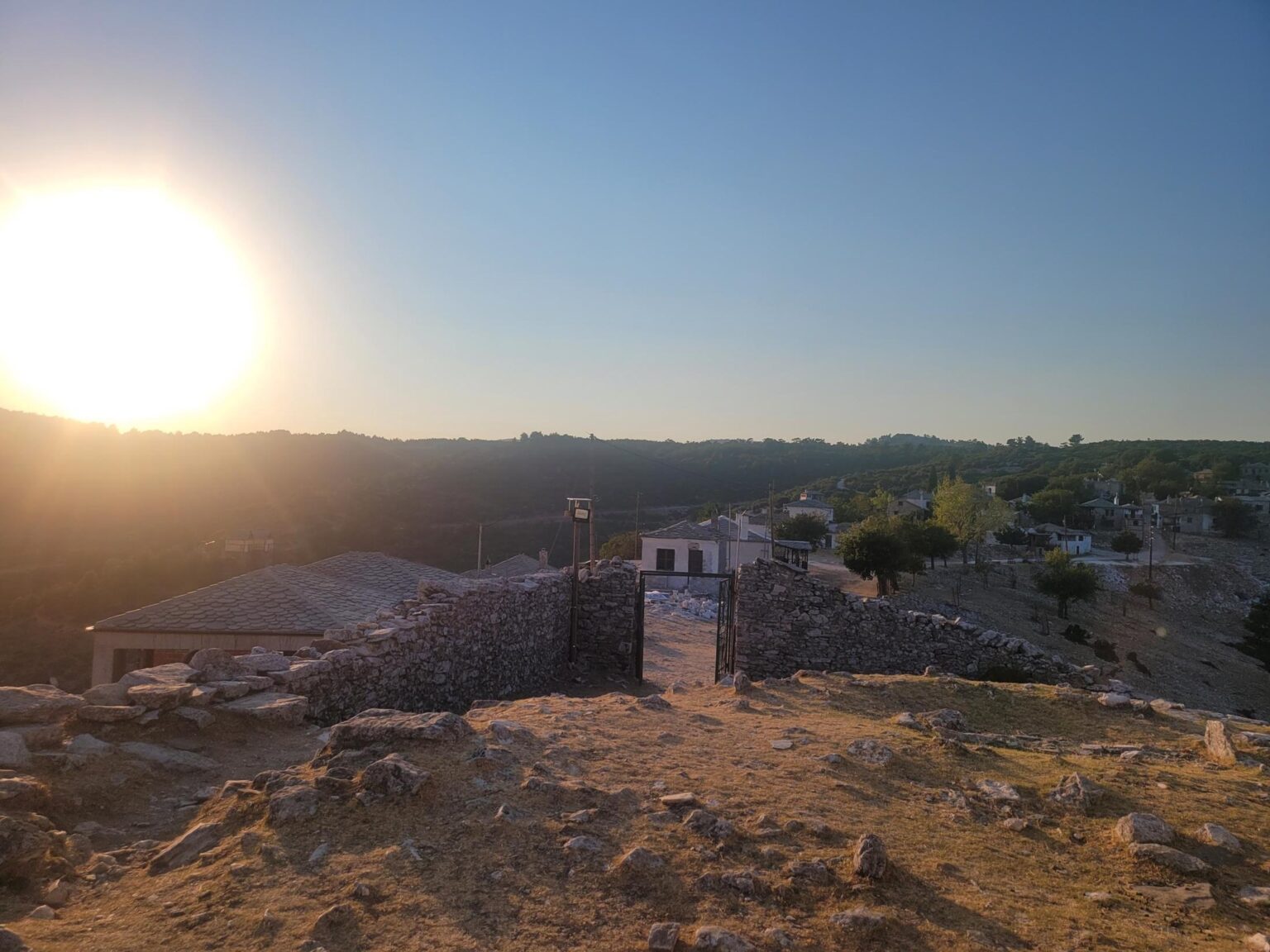
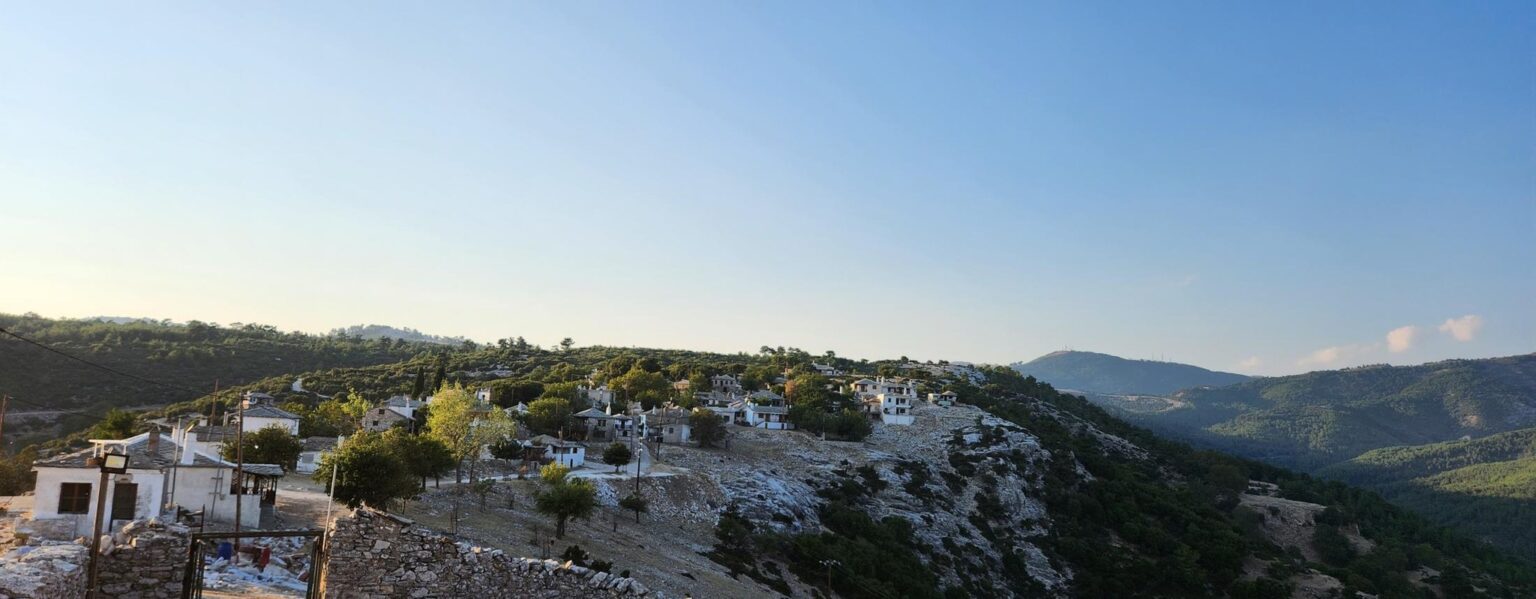
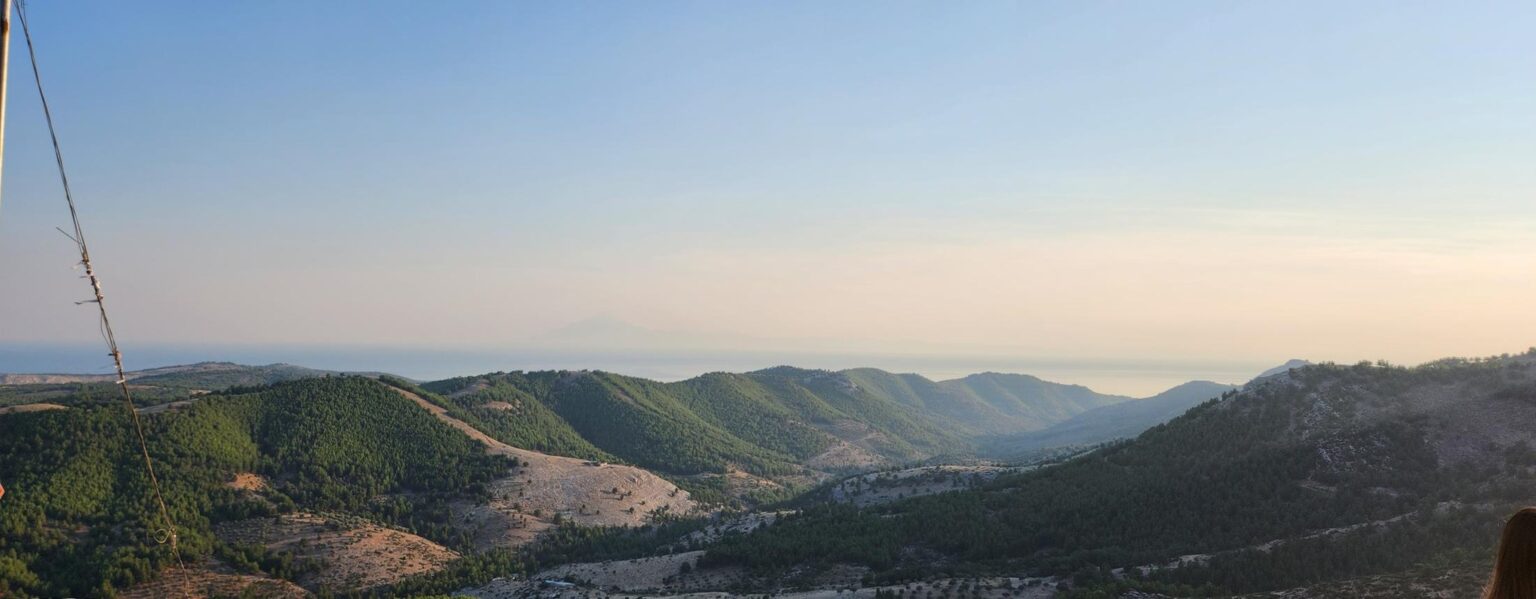
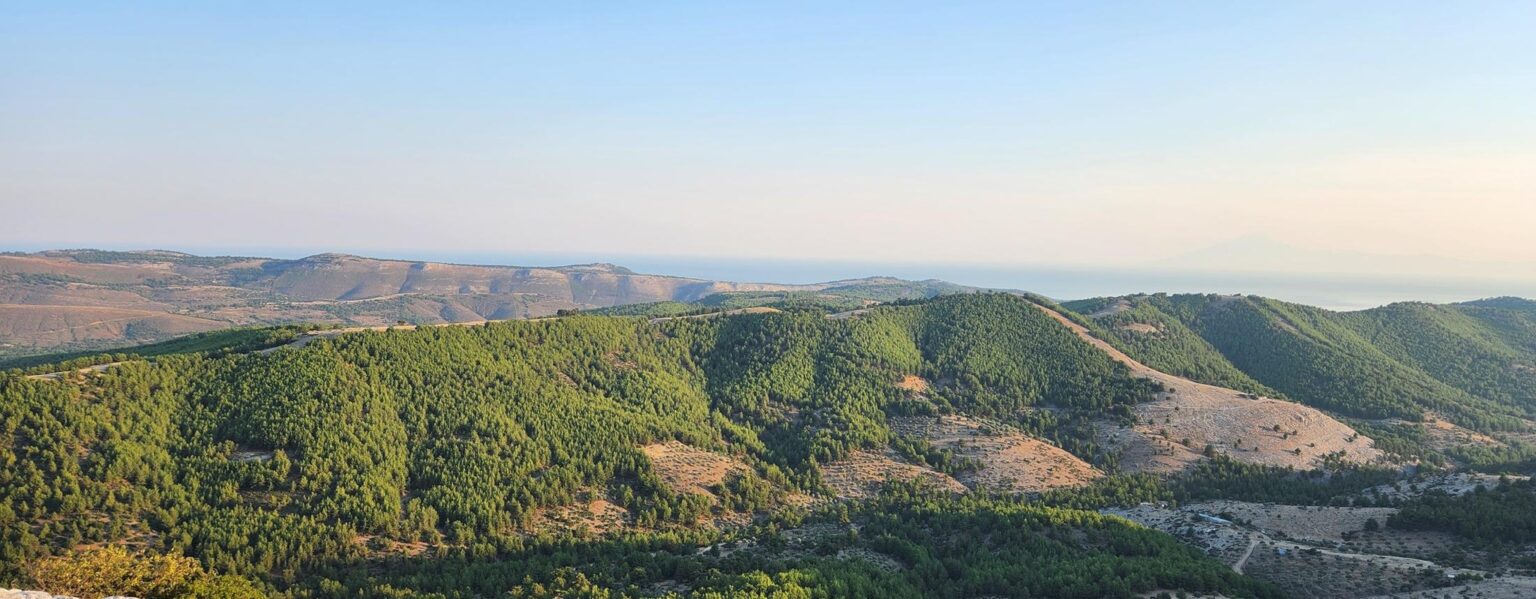
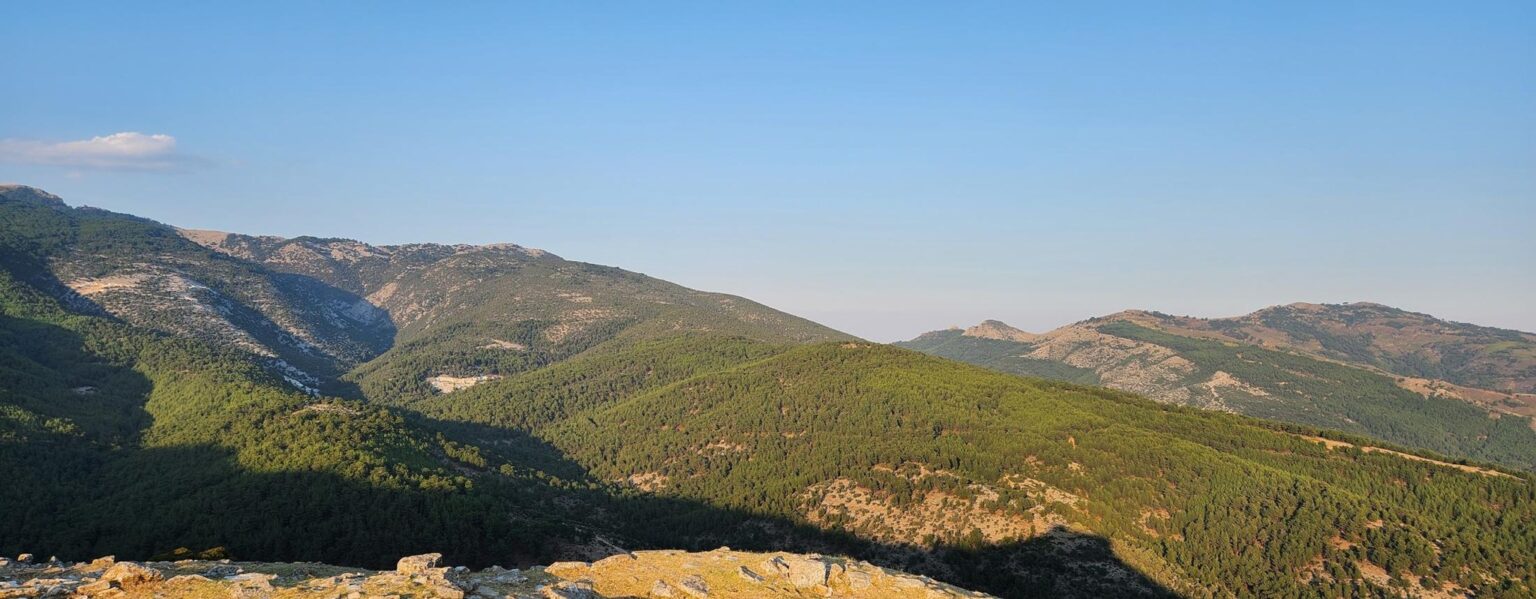
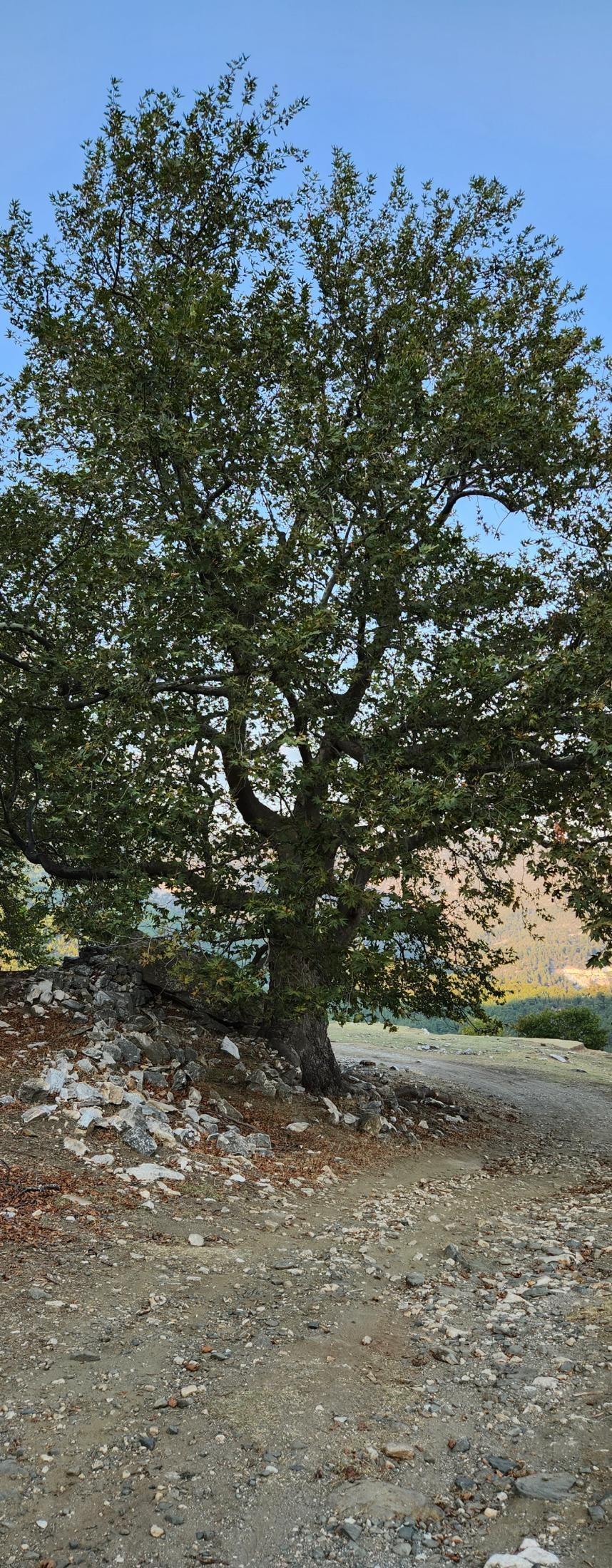
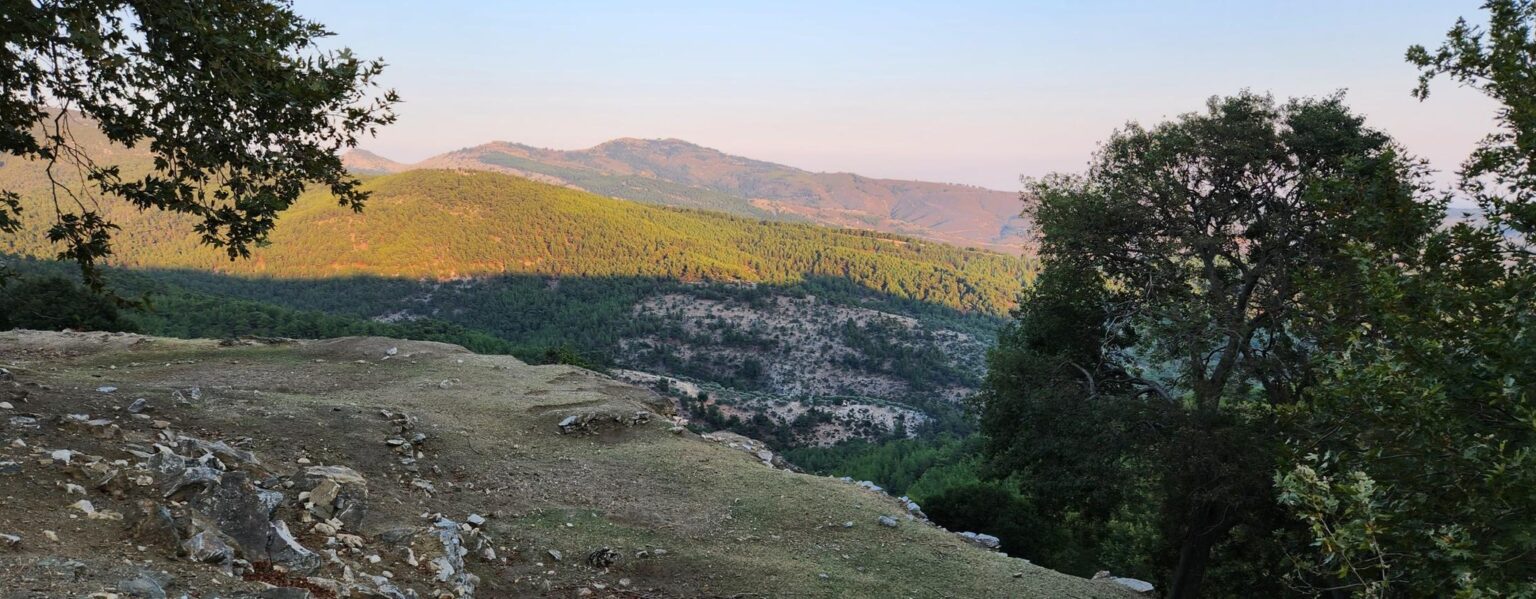
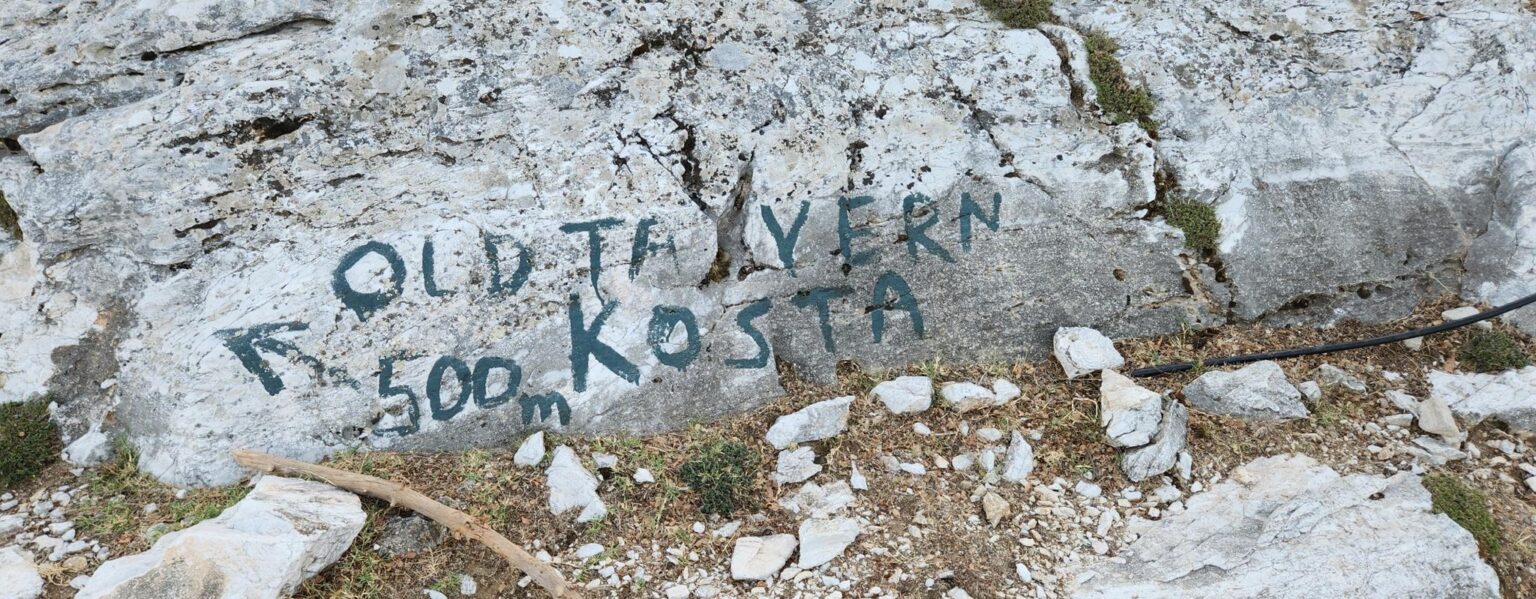
At “Kastro” Taverna-Cafe they serve a slightly more interesting coffee called French press. It is long. Bliss.
Enough climbing, time for our favourite part. A colourful main street with trinkets, little shops and indulgences. The true essence of the seaside, as far as we are concerned. And really, what greater pleasure is there than having your hair braided, never mind that you are a number-zero buzz cut, or buying a grain of rice with your name written on it?
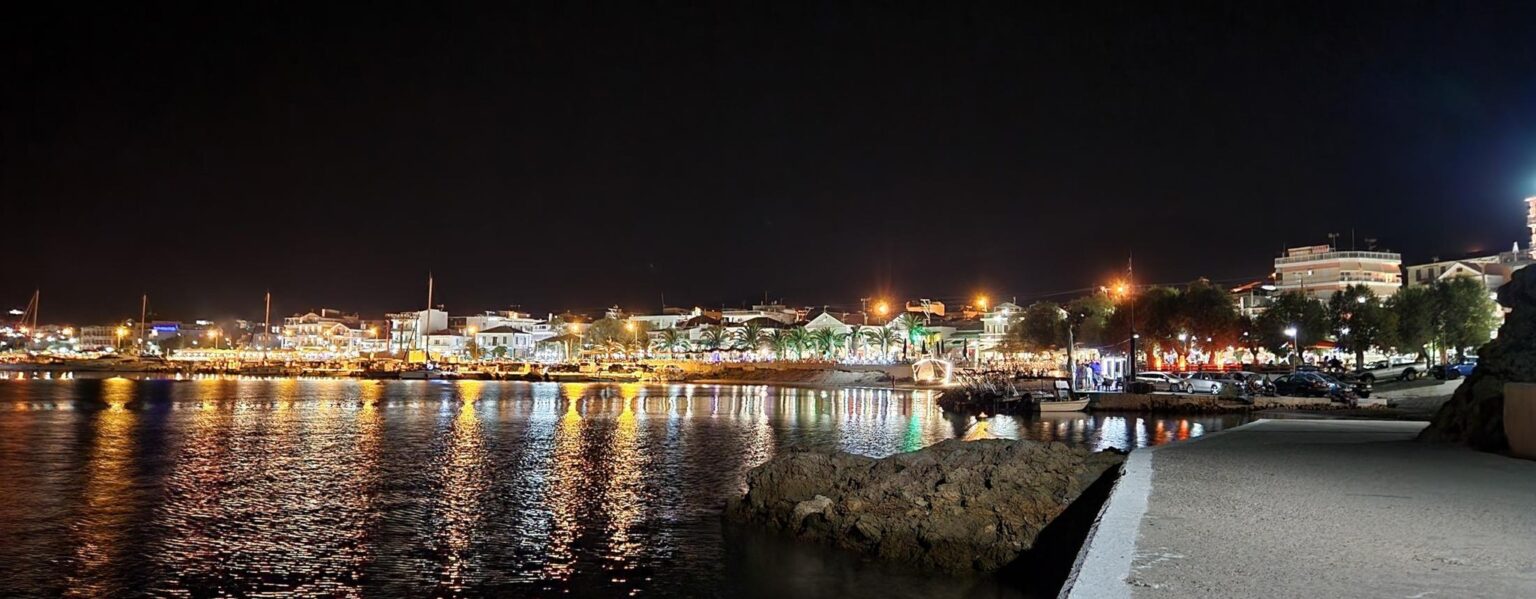
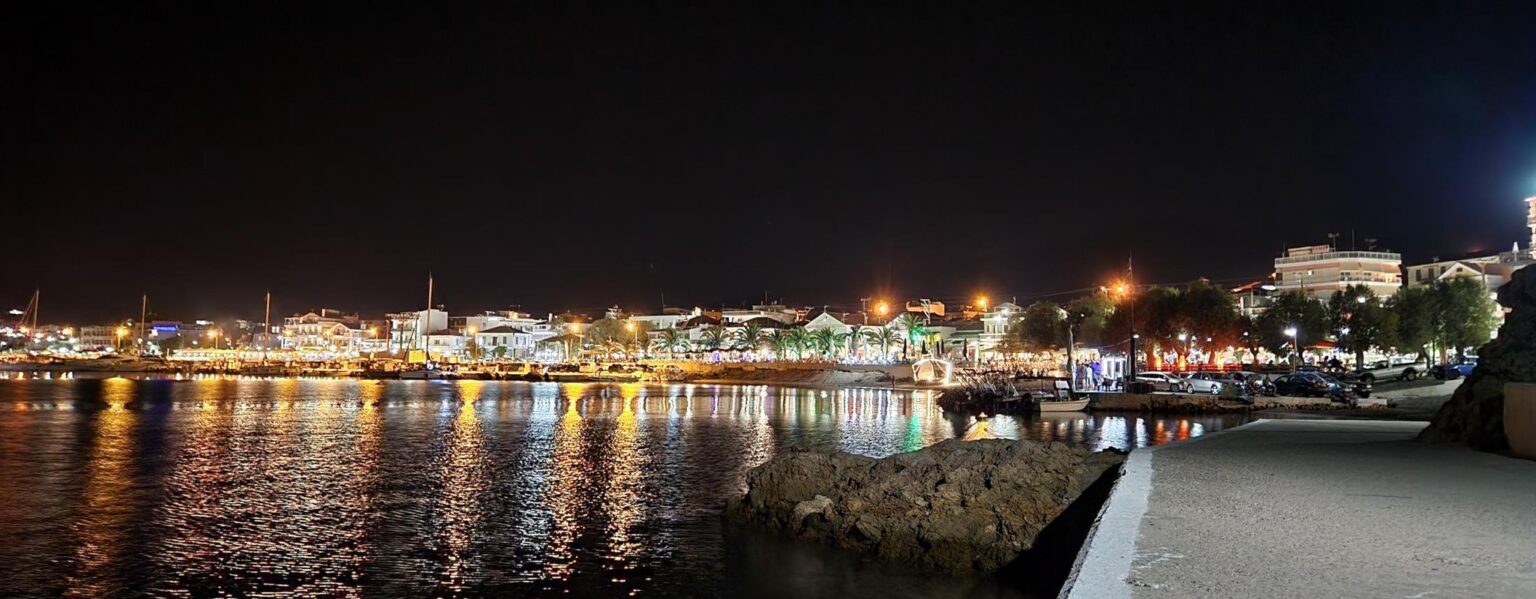
Potos is relatively small, with maybe 200 metres of main street. If we had to compare it to something, it is the size of Sinemorets with the buzz of Sunny Beach. The feeling is much like our own Black Sea coast, with one small difference. Parking is free everywhere, provided there are no signs. They have worked this out far better than we have. In recent years parking has been our main problem along the Bulgarian coast. Either we are on edge about the car being towed, or it is expensive, or we are worried about being fleeced while manoeuvring. Tsarevo, 2022: a blue zone at about €2 an hour. Here you get a giant car park, effectively on the quay, you park, you step out and you are on the main street. Peace of mind.
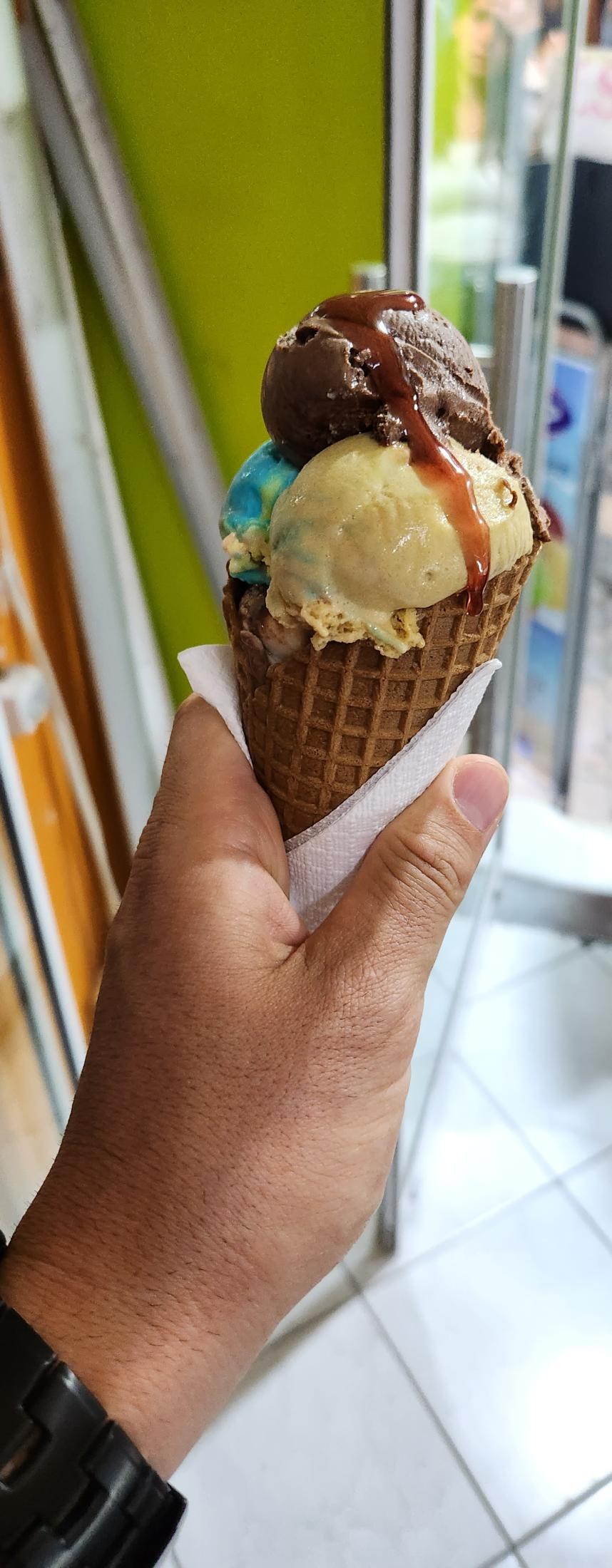
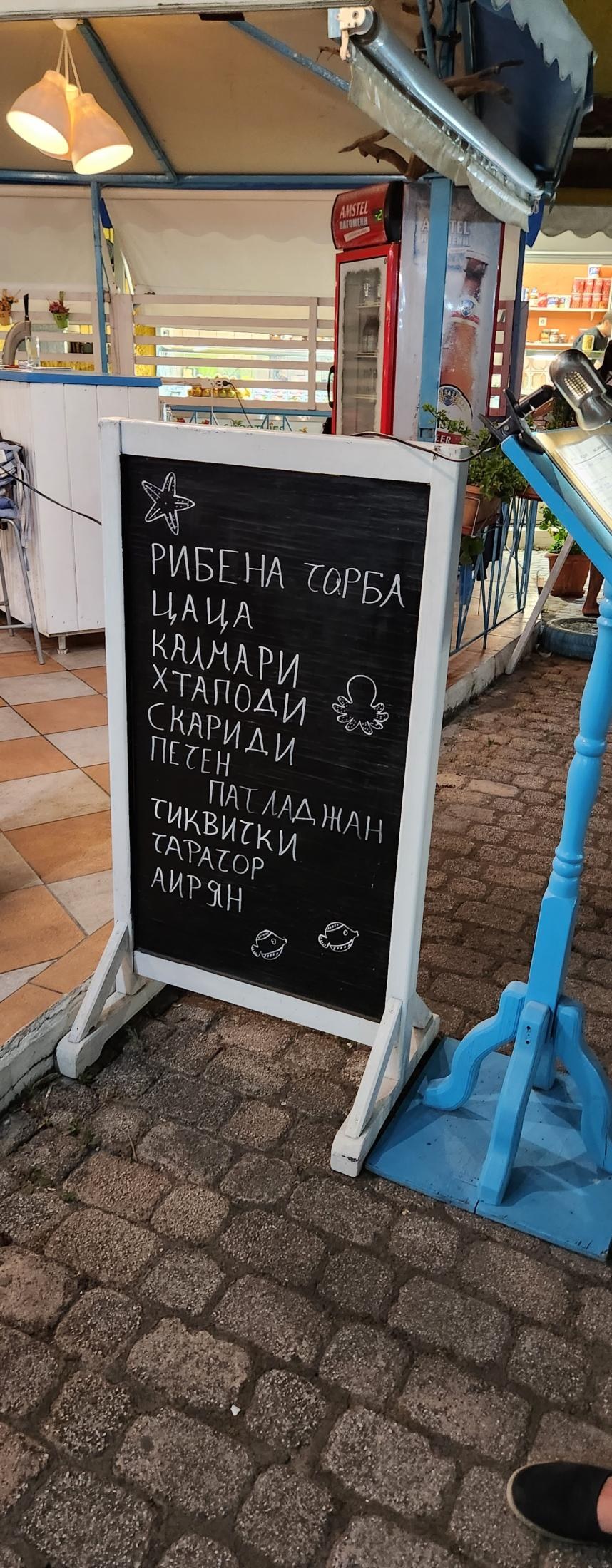
The place is full of Bulgarians. Half the establishments have menus in Bulgarian out front. A bug in the system on the main street: a large ice cream for €2! We will indulge. Sadly, as colourful and lively as it is, it is equally small. Twenty minutes of determined walking is enough to cover the whole centre. Dinner, and that is enough for today.
Day 4: A full-day boat cruise along the south of the island
The previous evening we researched how the sea entertainment works. There are several main tourist options, half-day or full-day:
- ATVs and scooters. Prices are lower than back home, €40–60 a day for 250–500cc, but with some restrictions. The ATVs come on road tyres and it turns out they cannot be taken off-road. In fact, to put it mildly, it is forbidden, and fines start at €500. Even so, they are very convenient and well suited to touring the higher villages with their narrow roads. You refuel them at the petrol station, where fuel is roughly €0.10–0.20 more expensive on the island than on the Greek mainland. You also need a helmet or must hire one, at €10 a day.
- Diving, both snorkelling and scuba. We have done this a few times already this year and it is not a priority given our limited window. Still, after some checking, prices sit a touch above Bulgarian voucher-site rates and are quite reasonable considering the clearer water and the far better underwater views. If the mass-market price back home is around €30–40, on Thassos it is around €50–60. We would advise against making Thassos your first ever dive. Go to the Bulgarian Black Sea first, see what it is like and get your explanations and preparation there. For a first scuba dive you want time and calm. On Thassos they will speak moderately good Greek-English and it will be stressful.
- Motorboat hire. This is a fun one, and something we either do not have in Bulgaria or we have never found. Unfortunately, once you draw the line, it is a relatively expensive pleasure. It is not worth it for two people. The pricing works like this: the boats are 70 to 200cc, meaning weak, single-digit horsepower. Hire runs from €80 to €150 depending on the boat, between 5 and 10 hp, and the hours. All of them take a maximum of six people. So far that does not sound bad: a weak boat for a full day, 10:00 to 18:00, is €100, or half a day, four hours at any time after 10:00, is €80. That is fine, but then there is the fuel. The boats run on nasty and theoretically cheap A87 (we run A95, A98 and A100 in our cars), which means they drink enormously. One hour of gentle, slow cruising is five litres of A87. At full throttle the figure comfortably reaches 20 litres. For a normal outing along the coast, and going by conversations with people who have done it, a few kilometres in each direction burns around 30 to 40 litres. That fuel is then sold at an inflated €2.50–3.00 per litre depending on who you hire from. All in, a boat trip works out at around €200 on average. For two people that is rather a lot. You also have to bear in mind that these boats are not exactly greyhounds; they are slow and, frankly, dull. For four to six people it starts to make sense.
- A half-day or full-day trip on a boat, which they call a cruise. If you have no experience of the area and are wondering what to do with a day, by process of elimination this is probably the most sensible option. Prices range from €10 to €40. There are short evening outings at dusk, as well as half and full-day trips with lunch included on the two competing operators. Both companies offering the service have identical terms: two routes, the southern part of the island or the western part, running either 09:30–16:00 or 09:30–19:00.
A boat it is. It will take us to the more important and notable spots and beaches without us having to research and read our way around them.
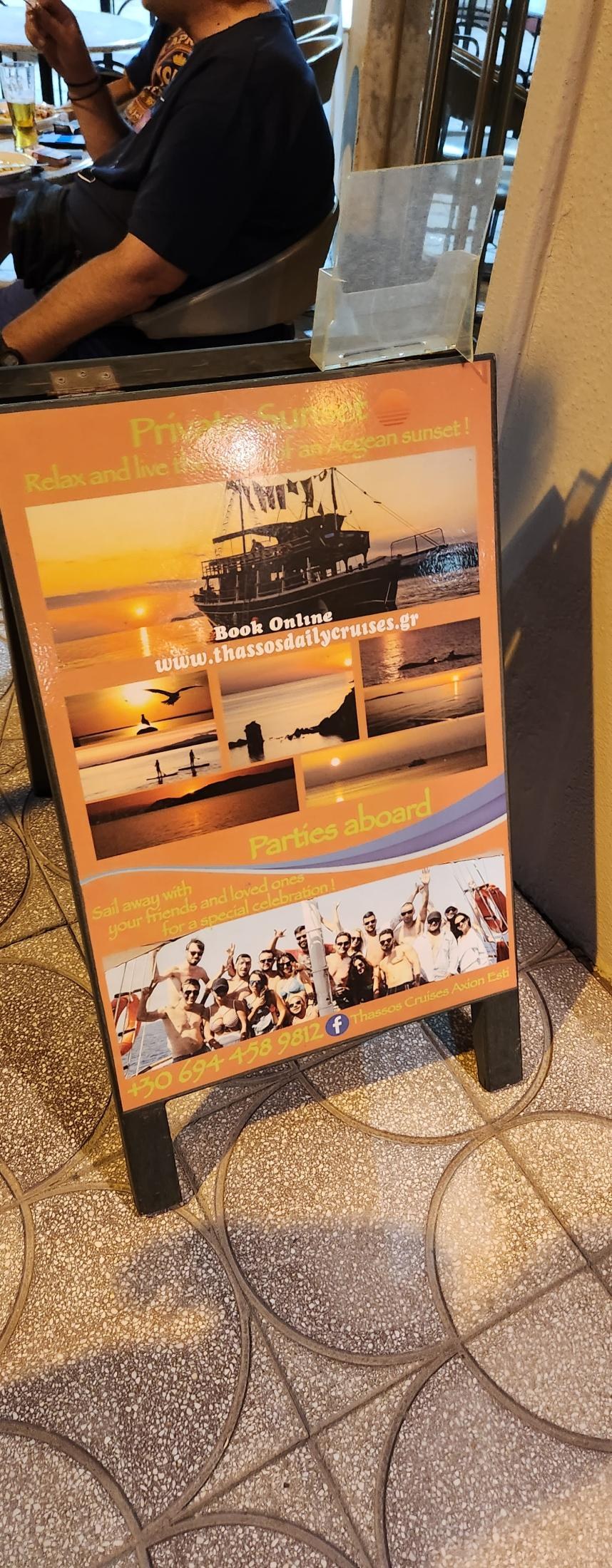
Having done it, we would say the better option is 09:30–16:00. It gets extremely hot during the day, even with the shade on offer. The main operators are Blue Sky Cruises and Axion Cruises. As chance would have it, Blue Sky gets the test.
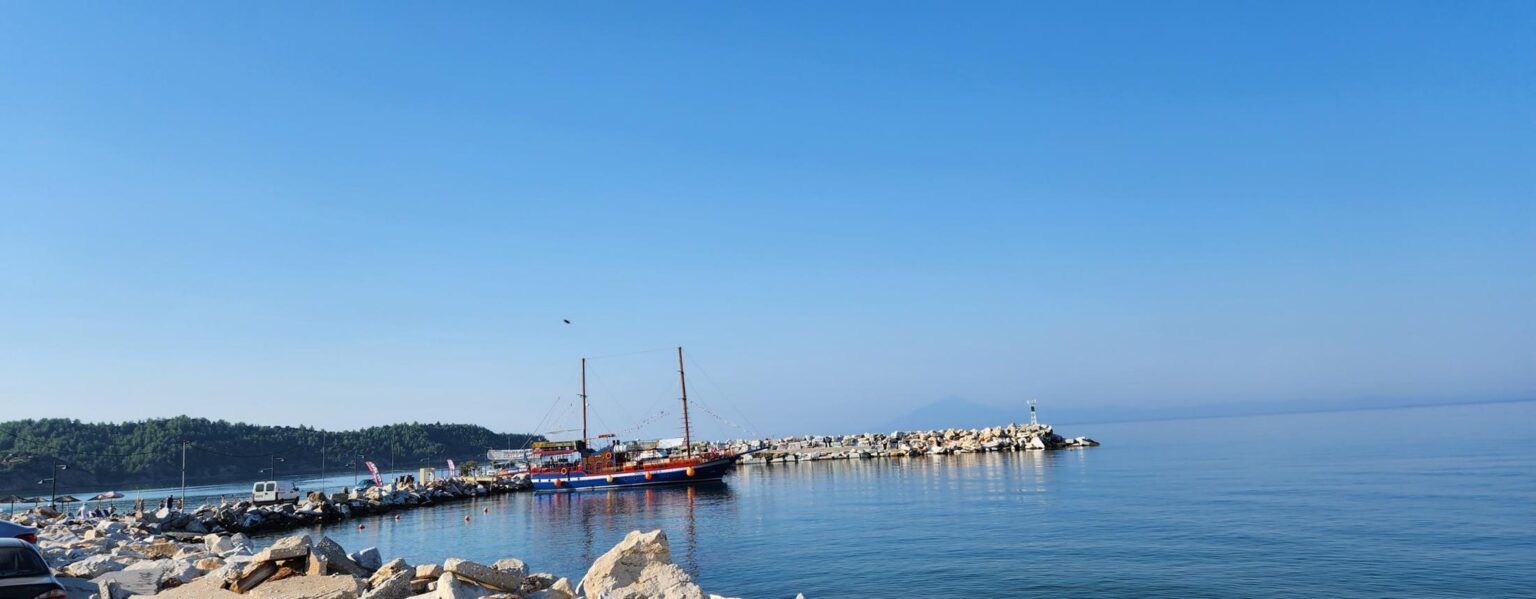
Parking on the quay is easy and stress-free, with spaces to spare. At 09:15 in the morning there is not a living soul in front of the boat. At 09:27 there is a queue. How did that happen 😀 The boat is big enough and there are plenty of seats both in the shade and in the sun. There is gentle music, and prices match the tavernas: beer at €4 or €5 for a 330 or 500 ml can. There are breadsticks and croissants for genuine emergencies. Bring sun cream, without fail.
It is still cool, the weather is behaving, and the boat is doing 20 km/h according to the navigation on our watch. (No, we are not bored, we are taking everything in, and we certainly did not check that out of sheer idleness 😀)
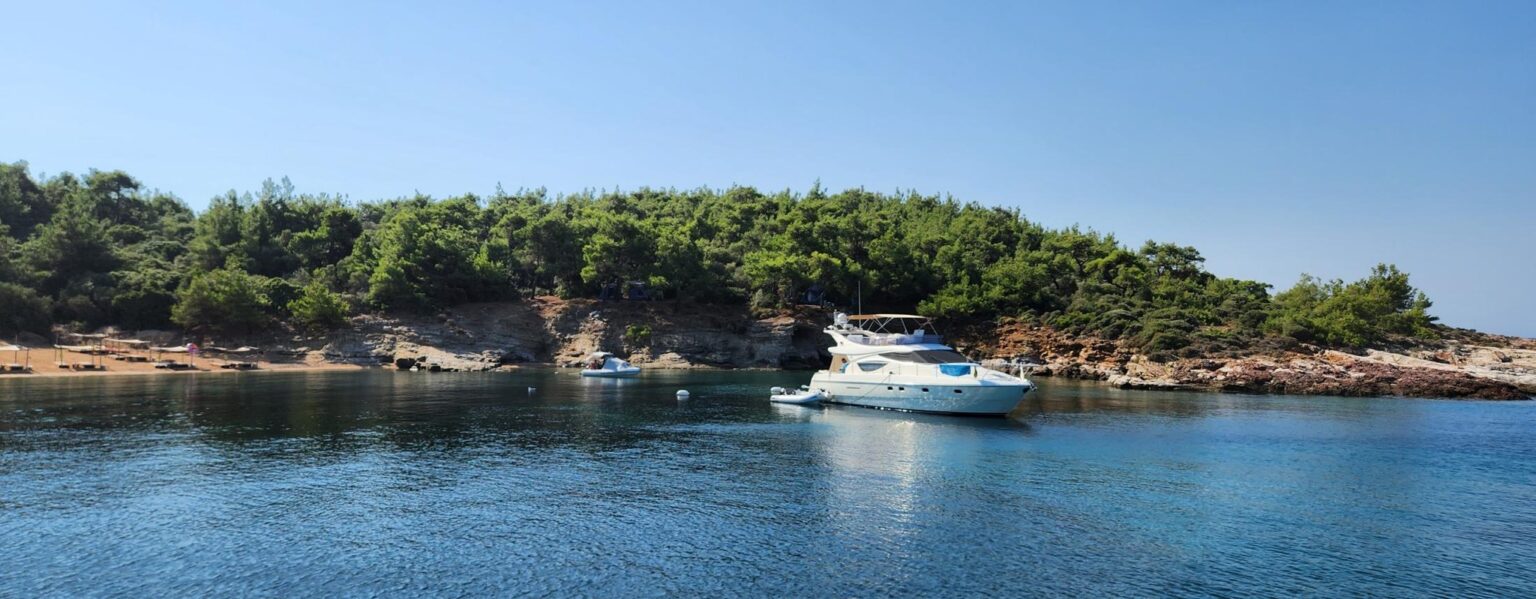
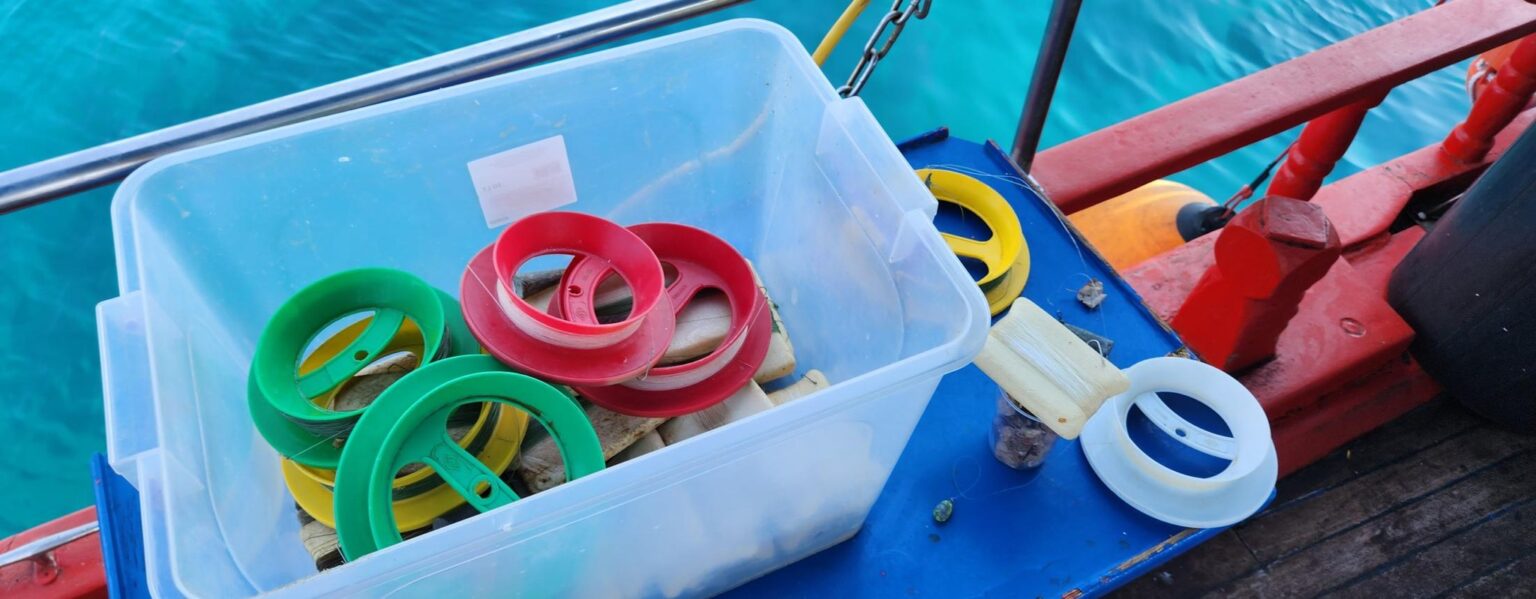
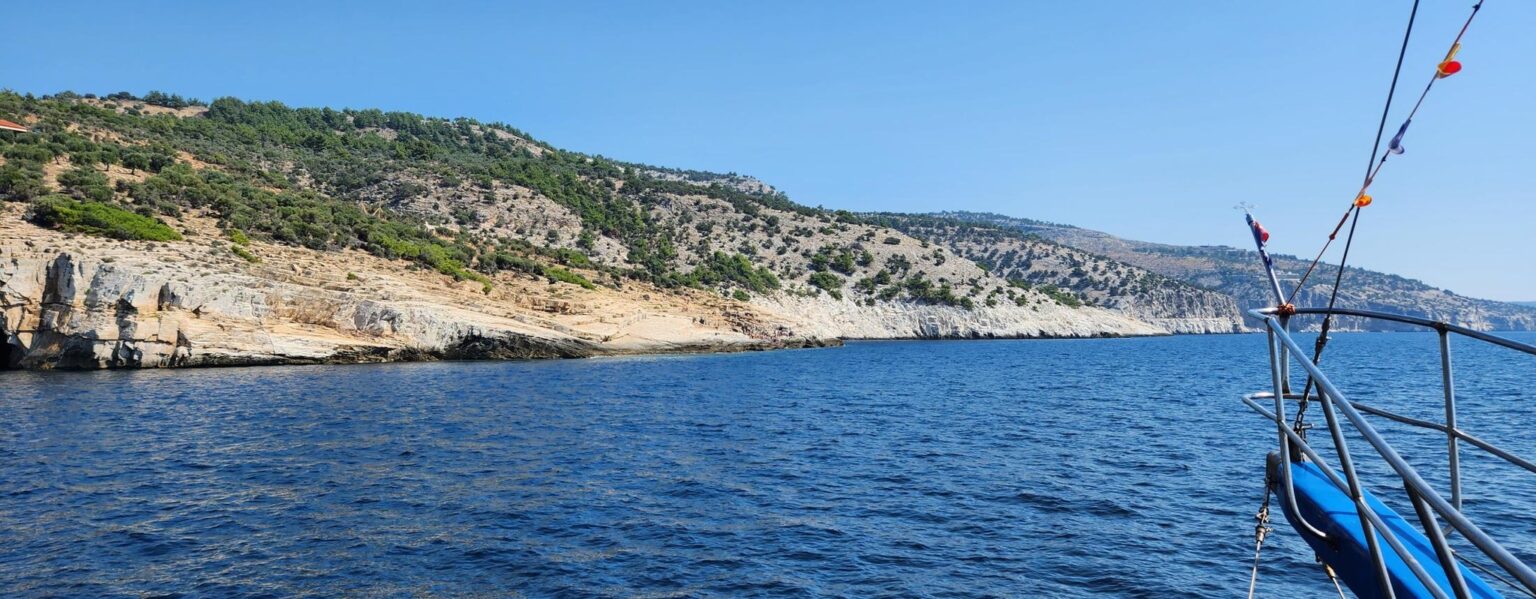
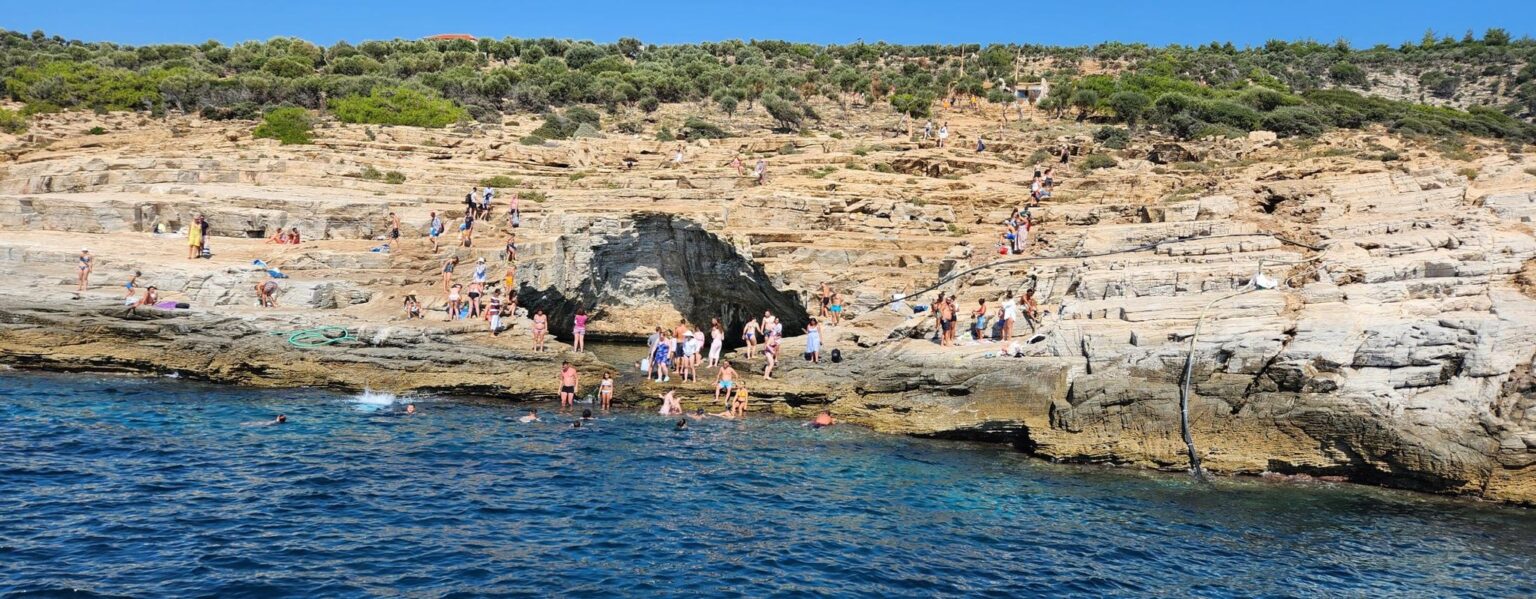
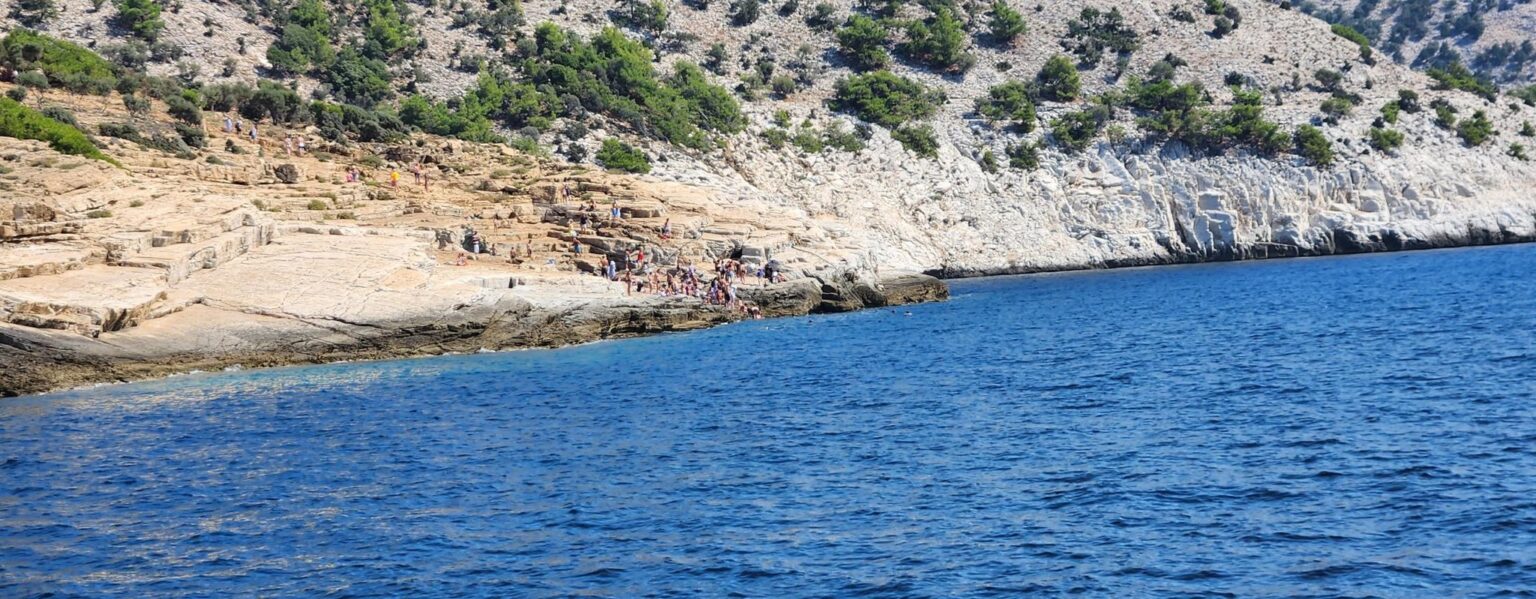
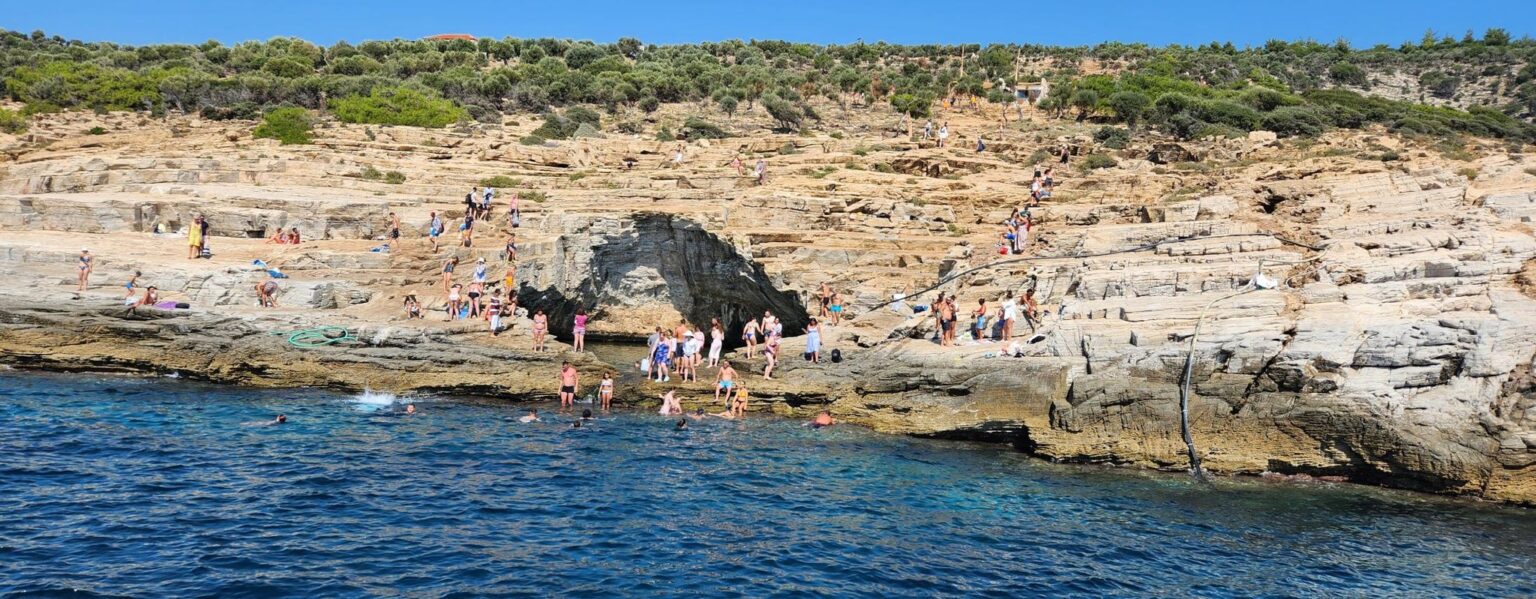
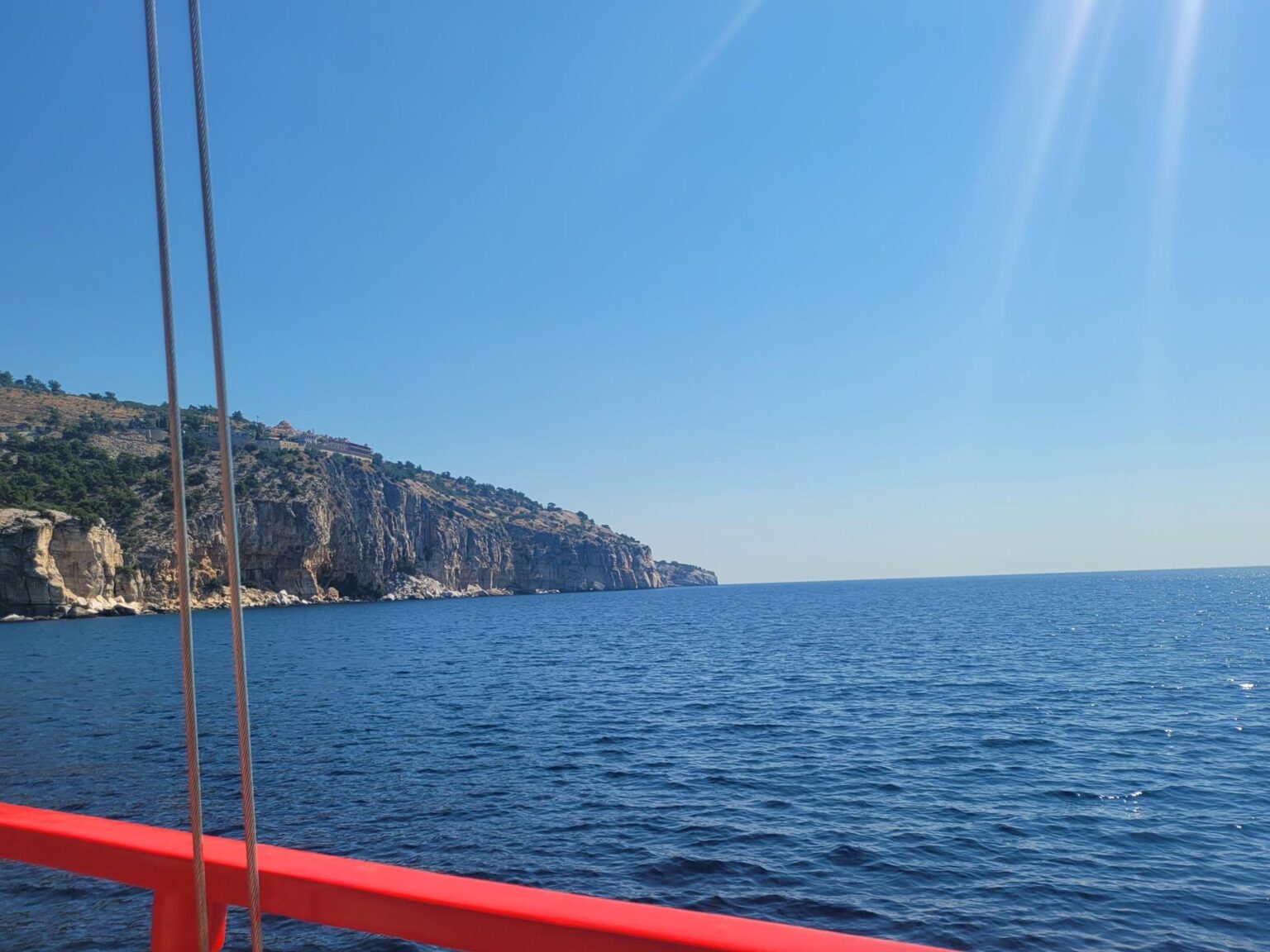
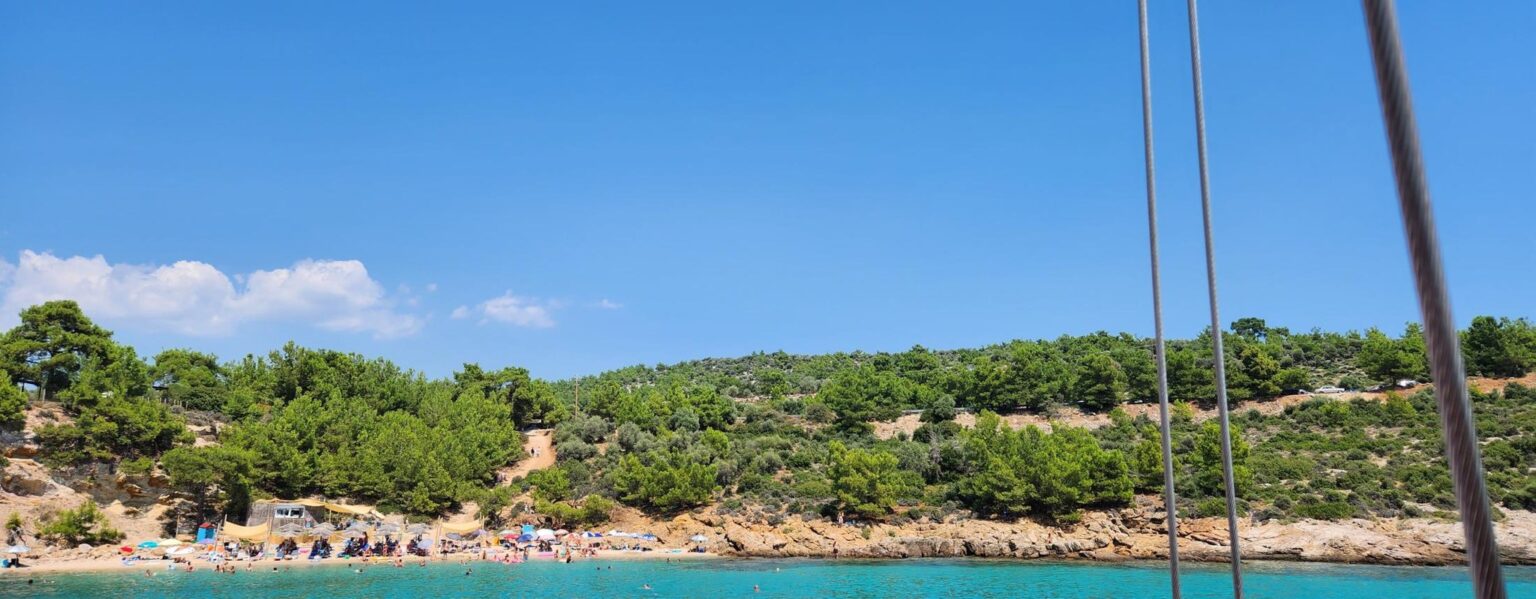
They take us around the southern part of the island and it is genuinely pleasant and useful. They stop at secluded beaches, drop anchor for 30 to 45 minutes and actively encourage us to swim, handing out life jackets to the more nervous. The depth is five metres. How do we know it is five metres? A funny story. Two ways. First, they tell us. Second, we dropped our sunglasses, whoops, and the trip budget went up.
It turns out that sinking to five metres without equipment is not easy. Frankly, sinking to two metres is not easy either. A Bulgarian with a snorkel and fins, a one-in-a-million stroke of luck: “Oh look, glasses on the bottom.” One movement, a jump, a somersault, a push off the boat with the fins. Like something out of a film. He retrieved them. Respect. He received a €5 beer, the kind we had spotted him drinking.
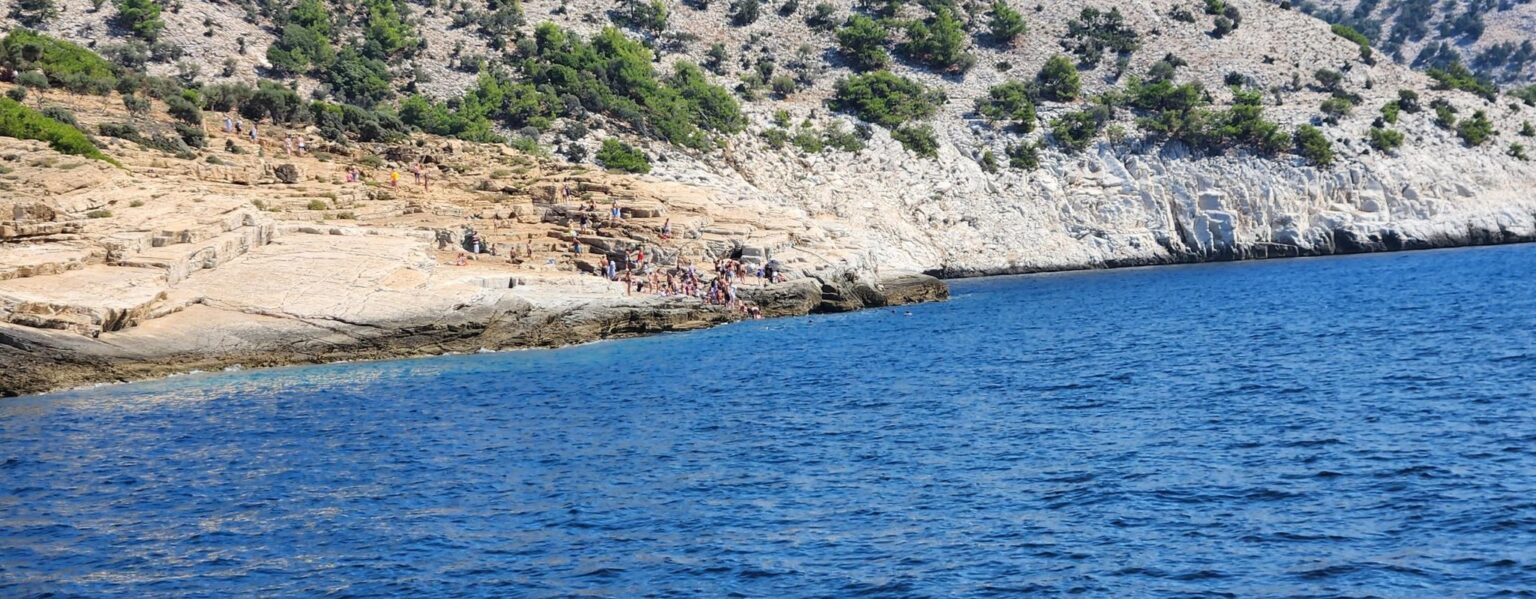
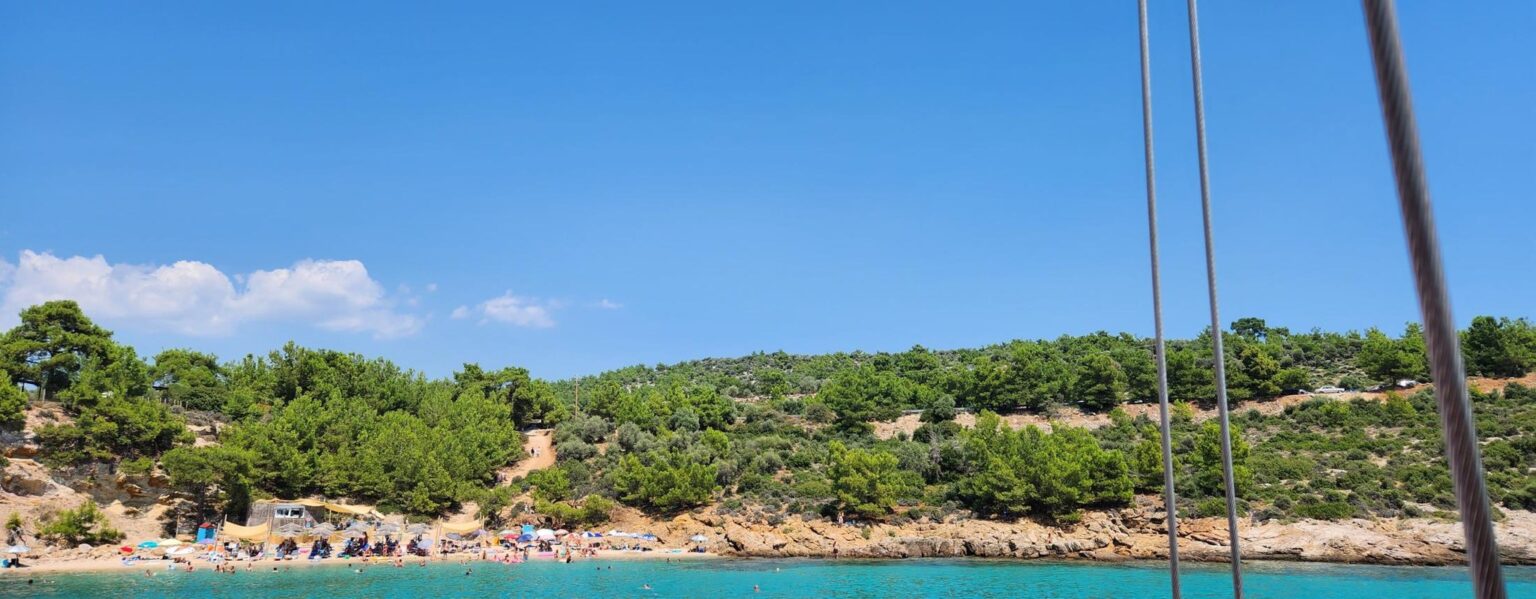
Anyway, there were emotions; back to the trip. So they stop at the more secluded, hard-to-reach beaches and narrate over the loudspeakers. It is quite something to see a perfectly arranged beach, complete with cabana-style huts, sunbeds and umbrellas, with no entry fee and no bars. We later found it on the map: there is a dirt track. In practice you have to stop about half a kilometre away officially and walk, but it is worth it. This is Salonikios Beach.
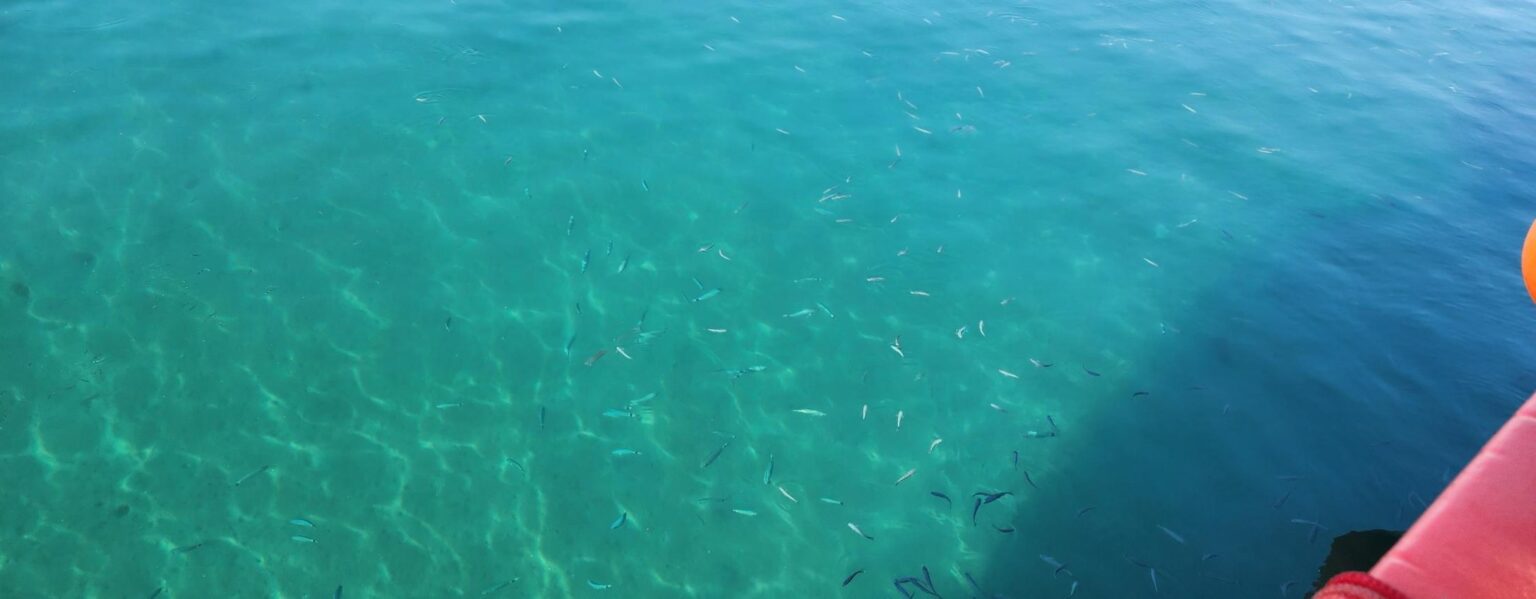
The boat stops at five or six beaches, 30 to 50 metres offshore. You can swim to the beach and back if you want. The sea is superb and clean. You can see the fish. We discover a pastime: throw in a scrap of food and watch the fish show. Two minutes later everyone is throwing scraps of food and watching the fish show 😀 The sound is muted, because far too many voices are audible.
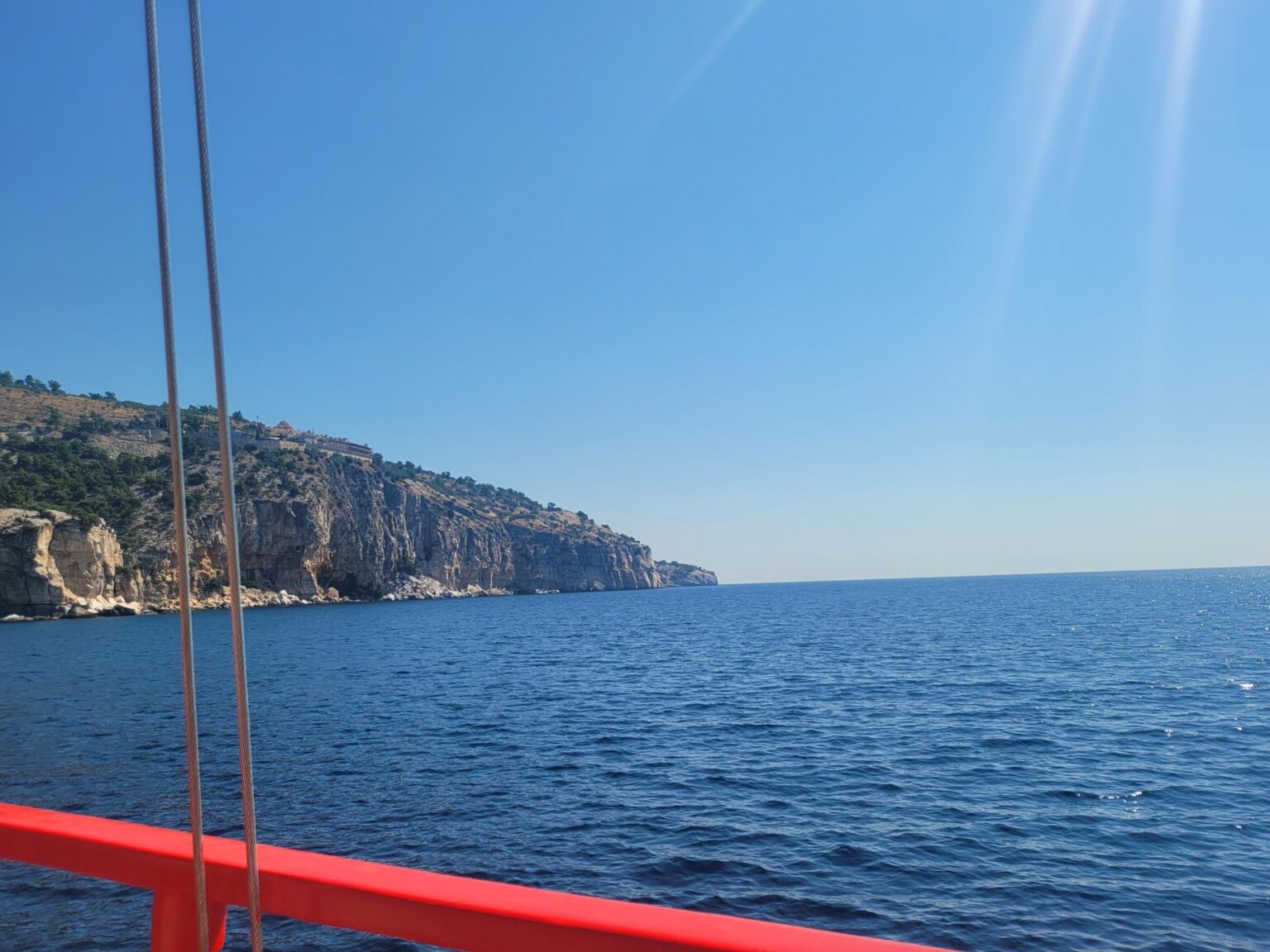
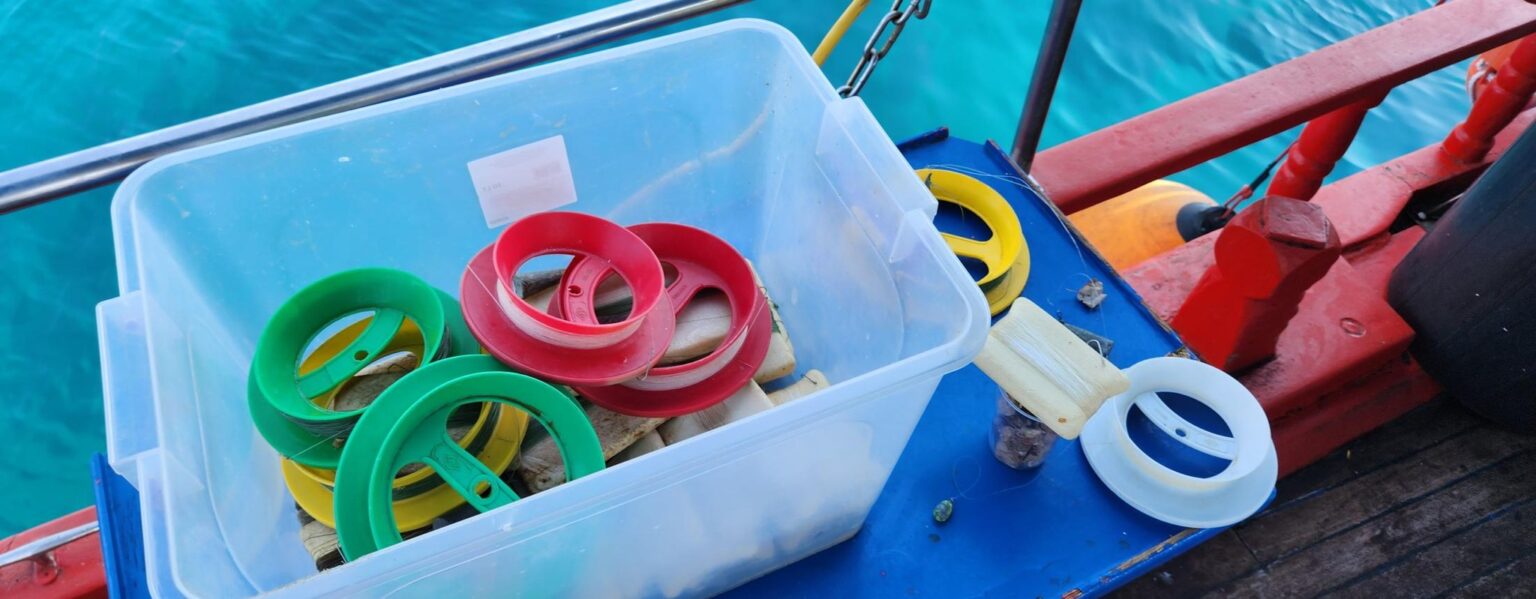
The day is half done. We have been introduced to Giola, which does not even need translating, a natural rock jacuzzi bursting at the seams with people; several different beaches for splashing about; the Holy Monastery of the Archangel Michael; and two or three less remarkable landmarks. They hand out miniature fishing rods, which is sweet, and there are takers, although nobody catches anything. Slackers!
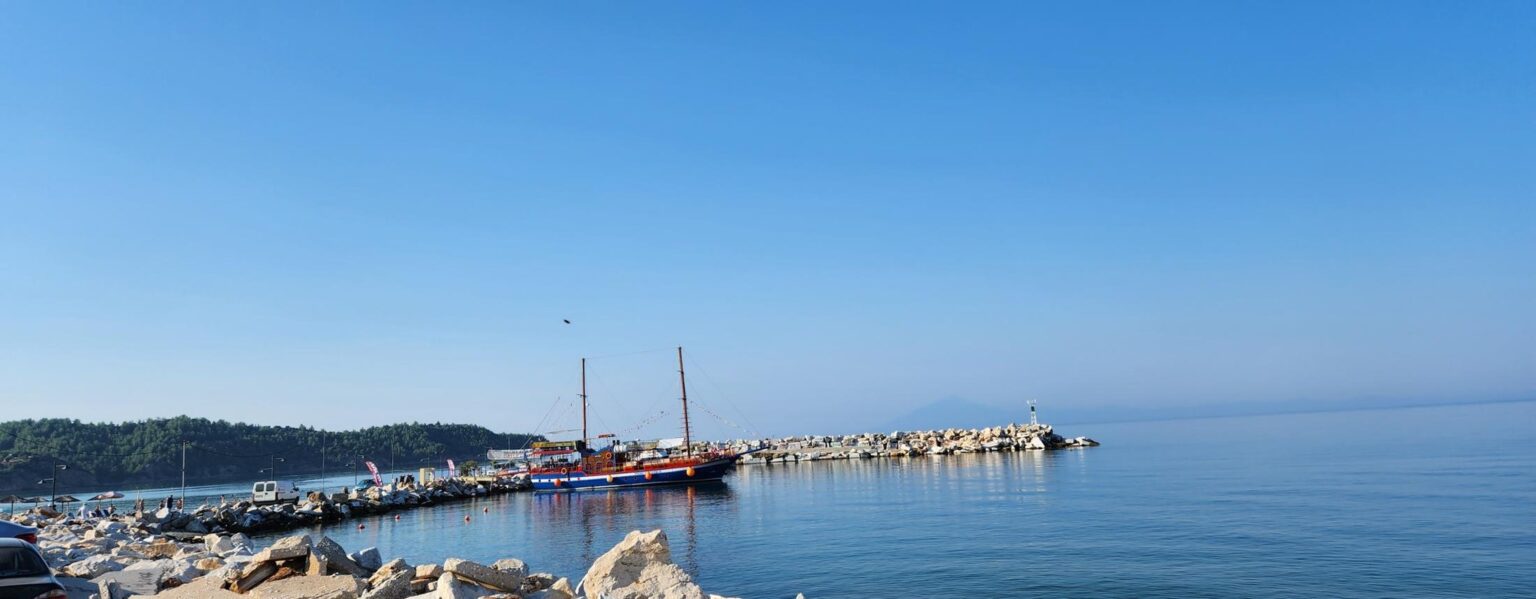
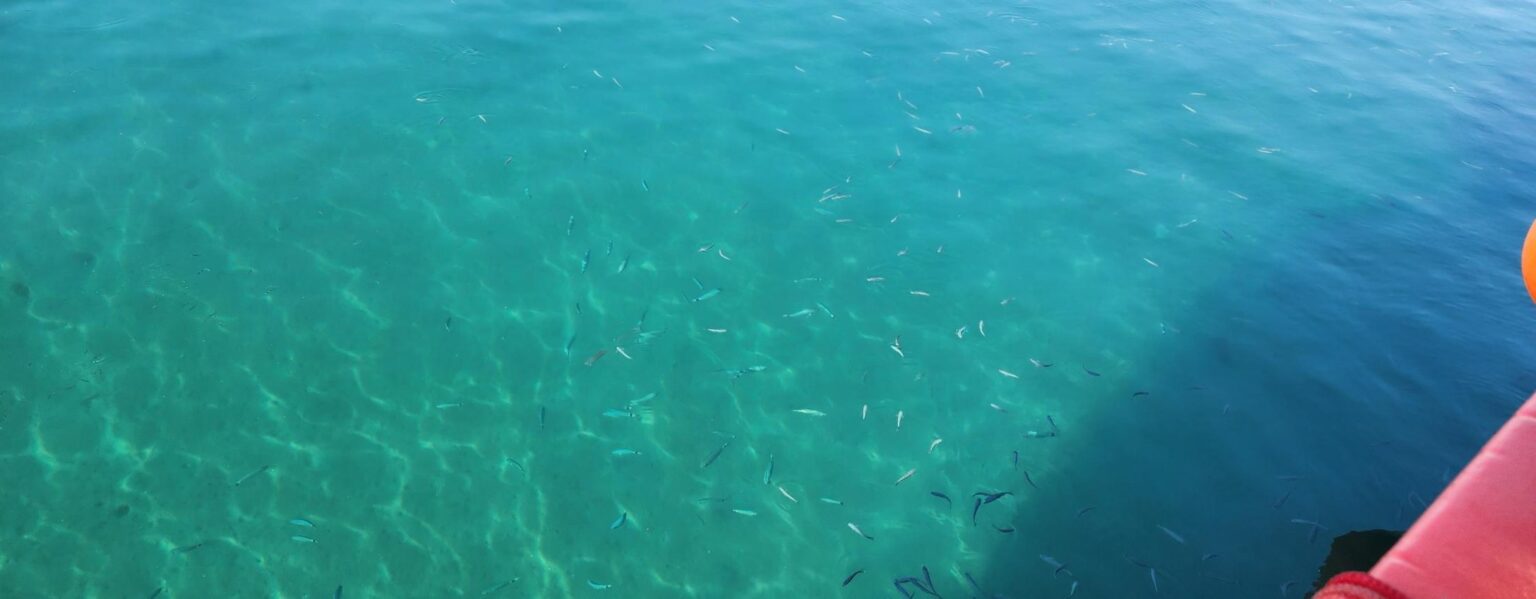
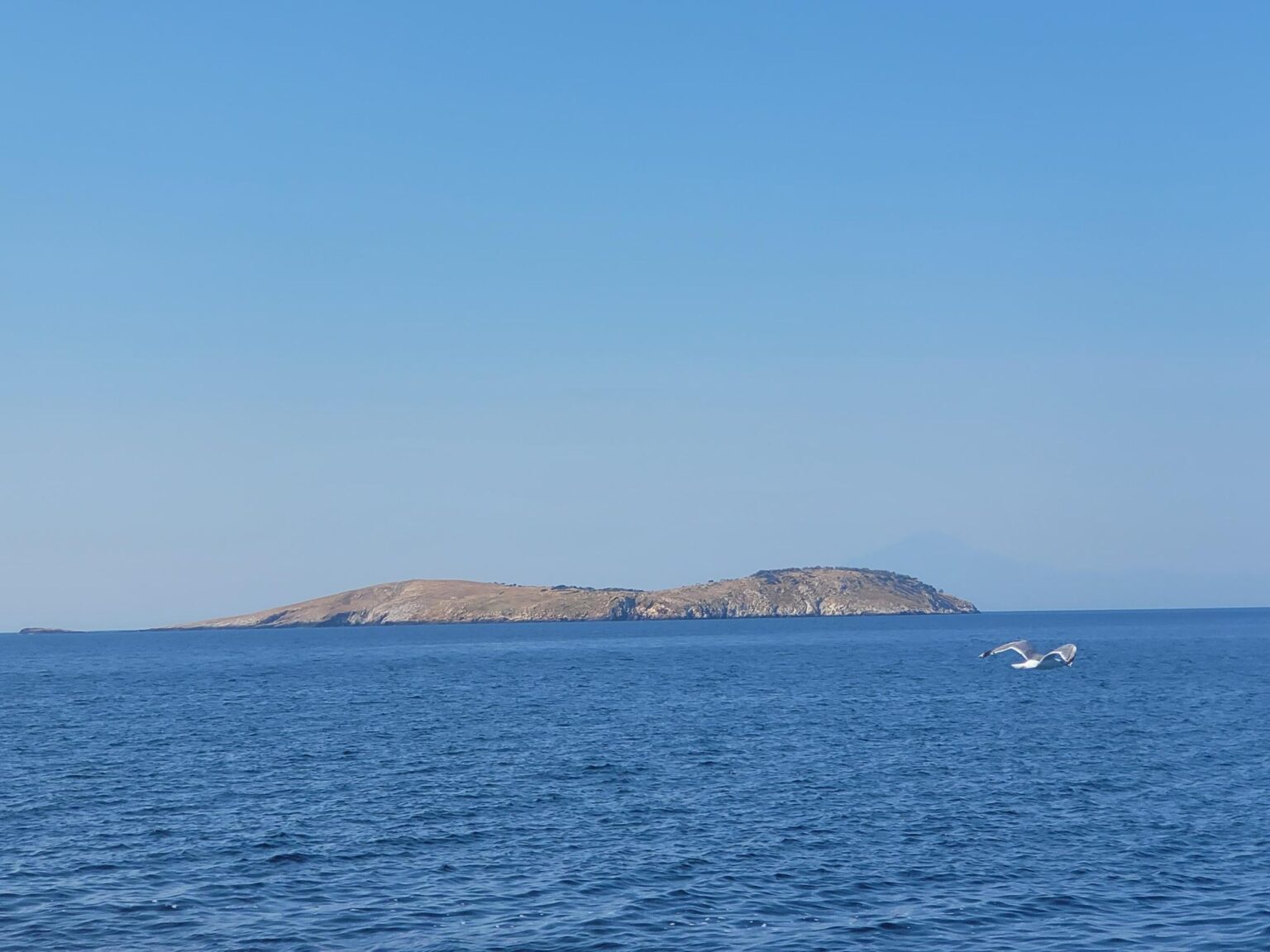
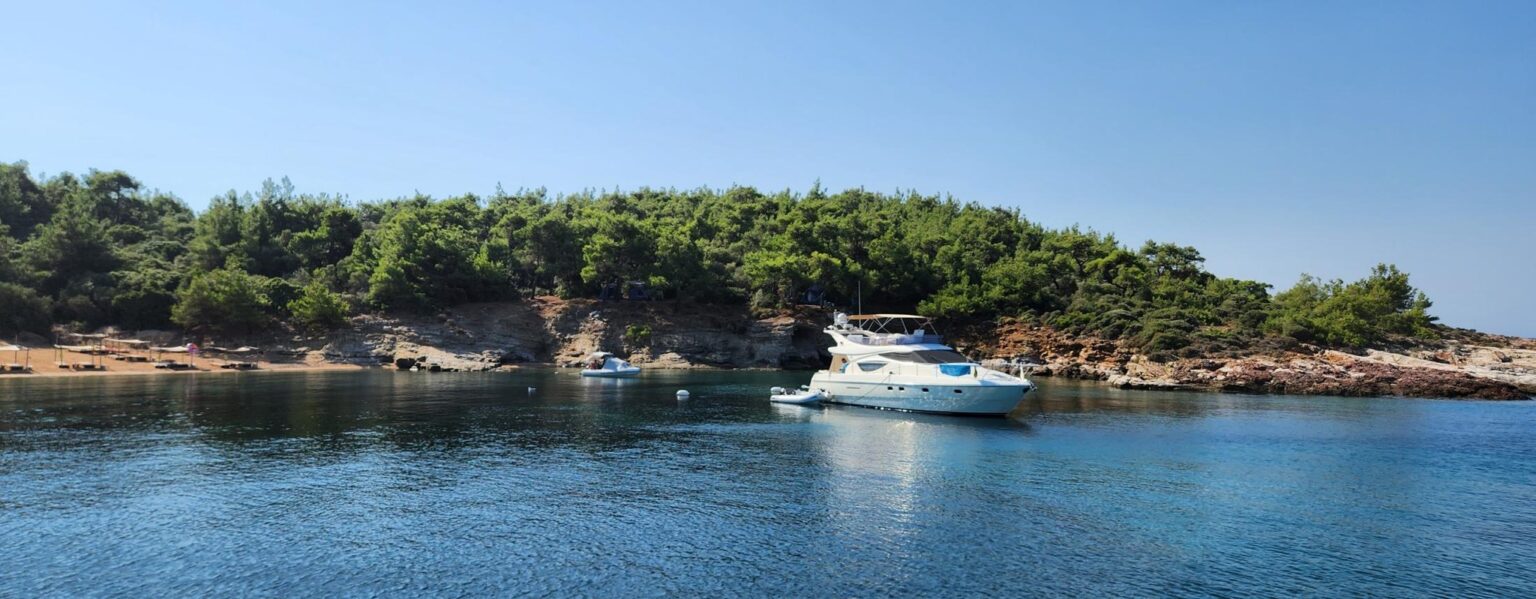
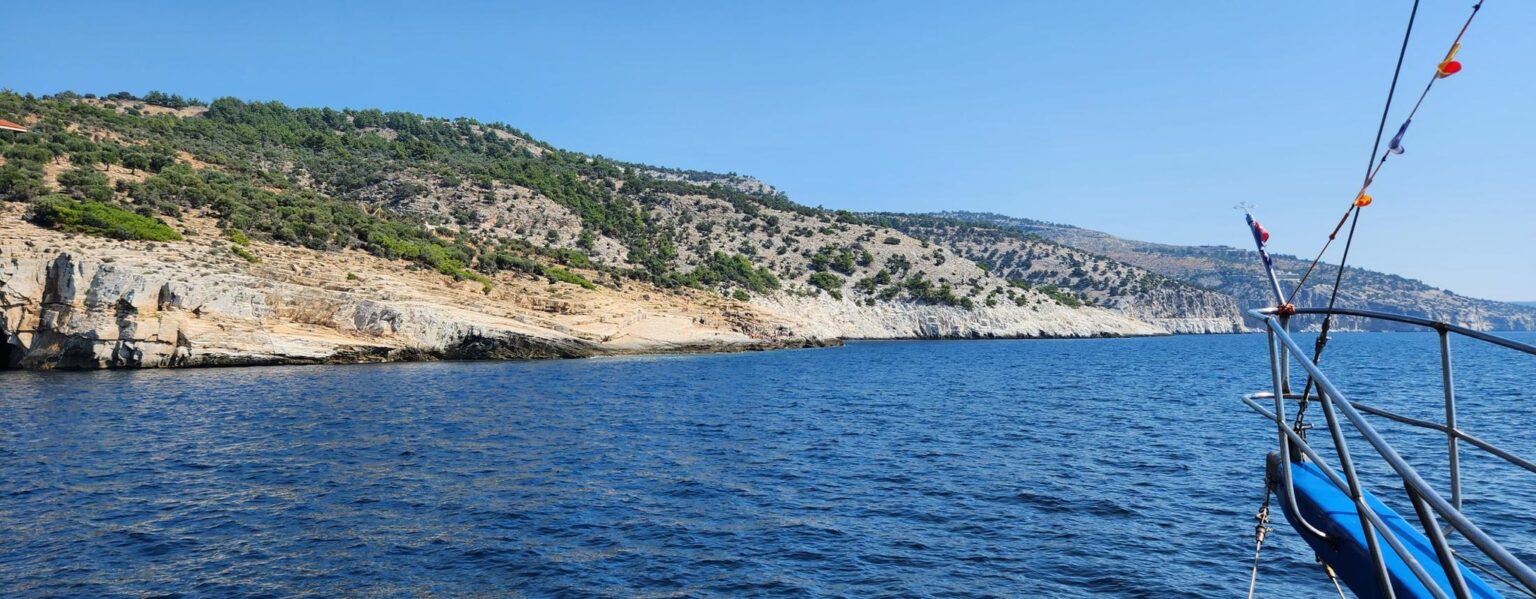
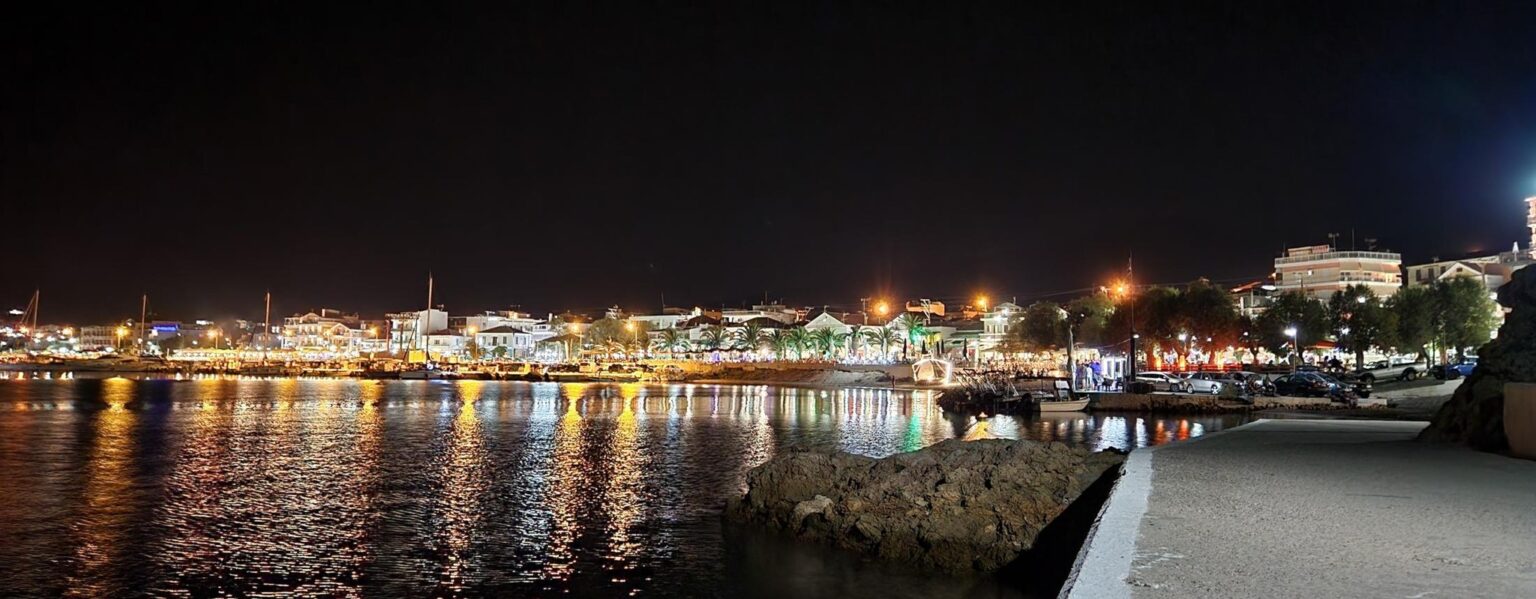
Early afternoon, and the heat is murderously tiring even in the shade. Time for air conditioning and a recharge. In the evening we squeeze in Skala Marion. An extremely small resort, two or three tavernas in the centre and one or two shops. You can walk it in five to ten minutes. It does not warrant a gallery of its own.
Day 5: Maries and its waterfall
We find our way to Maries. The road there is easy on the car and the village is not especially high, despite sitting in the middle of the island. It is extremely small, with one grocery shop and two tavernas on the central square. Parking is free, but there are not many spaces and it takes a little while.
In practice there is only one square to look at, and stepping onto it stirs a strange feeling of familiarity. Good grief! Why are we thinking of René Artois from the cult series ‘Allo ‘Allo? Well, yes. The square, the paving, the restaurant, they somehow remind us of him. There are two tavernas with tables that border each other, and two metres from those tables the residents are hanging out their washing. Strange and cosy at the same time. Fascinating.
Generally speaking, mobile internet coverage has been dreadful up to now, and it has already landed us in some interesting situations involving fixing trifles at the office remotely. Here there is no coverage at all, despite the fact that people live here permanently. It looks different. The way of life is radically different from the one a few kilometres, or a few minutes by car, away. It is more hermit-like here.
A record: a frappé for €2.50! Against the backdrop of the last fifteen frappés at around €4 each, this is a delightful surprise. It is lunchtime and there are five or six people in total across thirty or forty tables.
A kind elderly man of questionable hygiene, bearing a striking resemblance to Monsieur Leclerc from the aforementioned series, serves us. He turns out to be a tremendous character. He tried to establish communication with us in many different languages, sadly all the wrong ones as far as we could tell. There was French, German, Greek, Spanish. The only two he did not attempt were English and Bulgarian. It was fascinating, and from his rather unusual speech we deduce that he had been a hairdresser in France, had a wife from Sofia, and used to import hairdressing cosmetics from Sofia and Turkey into Greece. It is entirely possible that he was buying cosmetics in Greece so he could go and get his hair cut in Turkey, but our first version is the more logical one. It was an interesting experience and different from everything else so far.
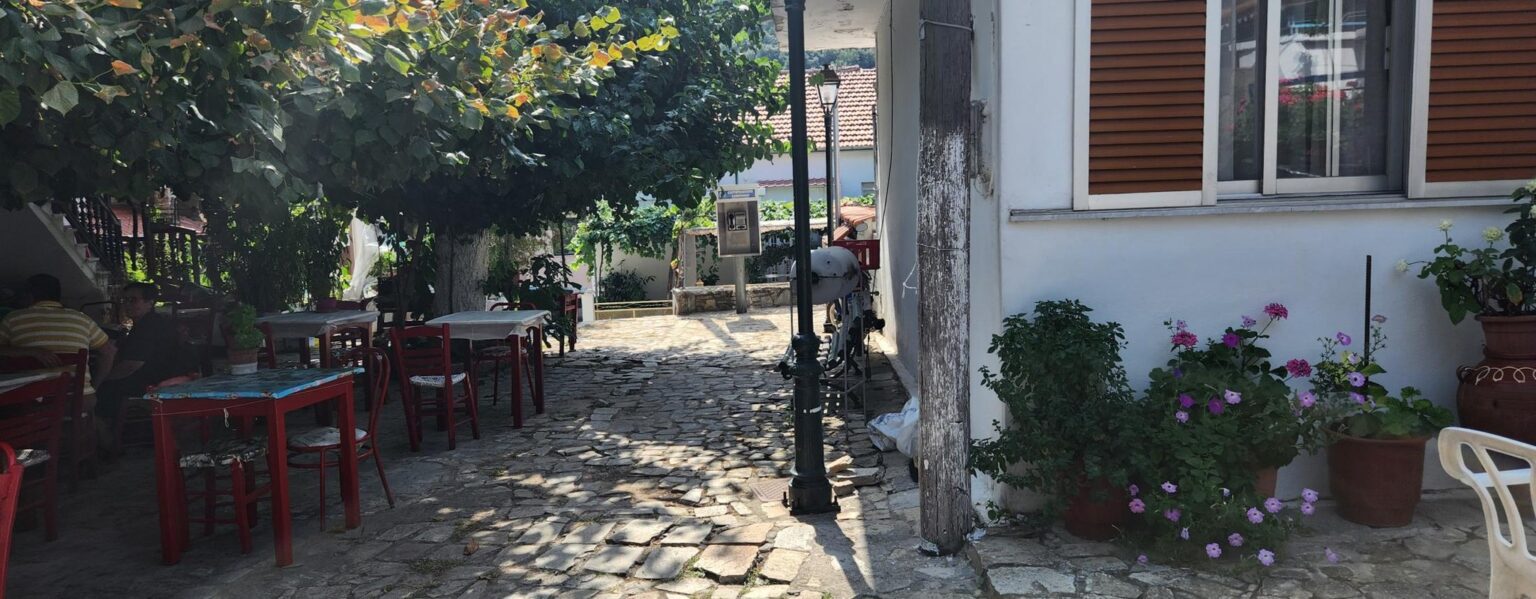
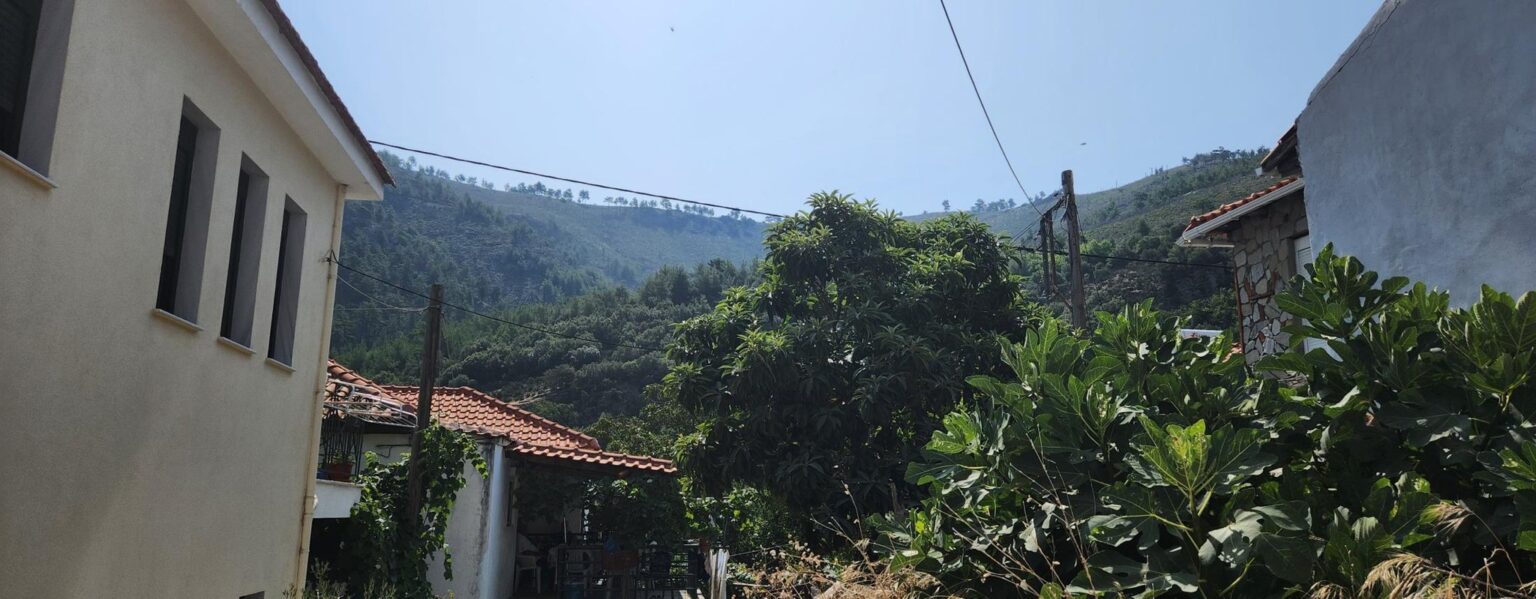
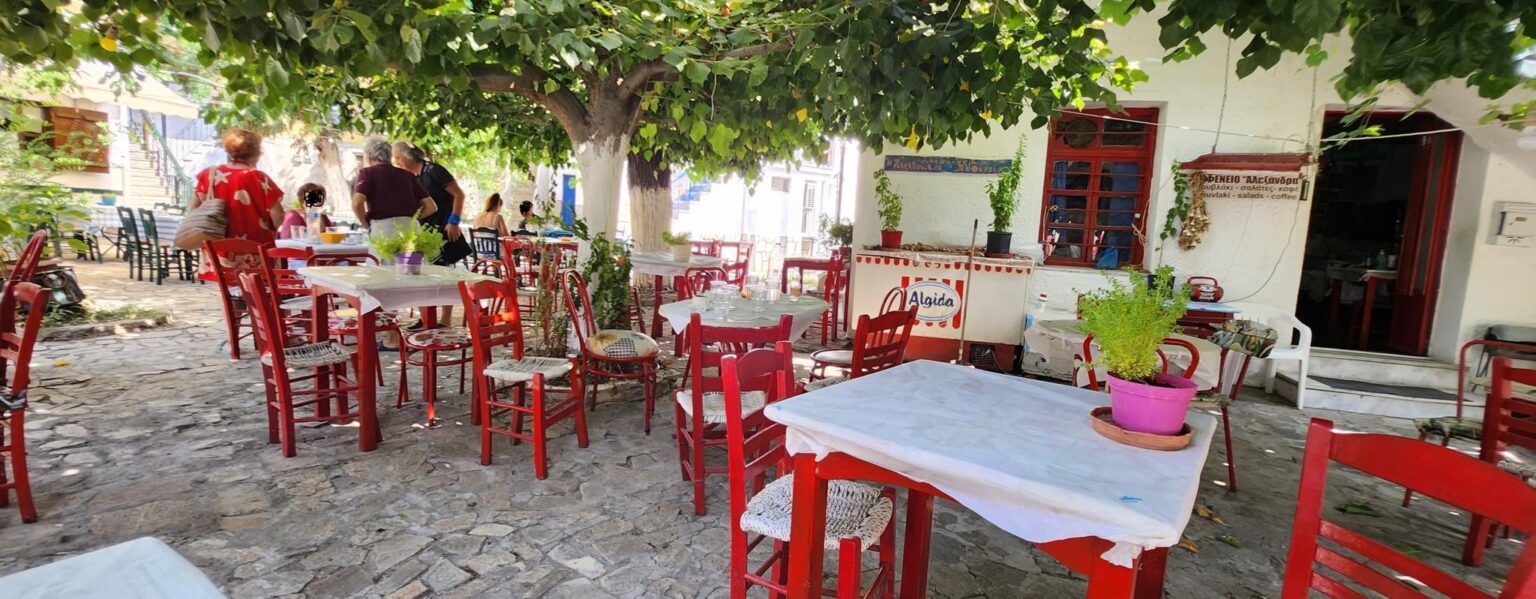
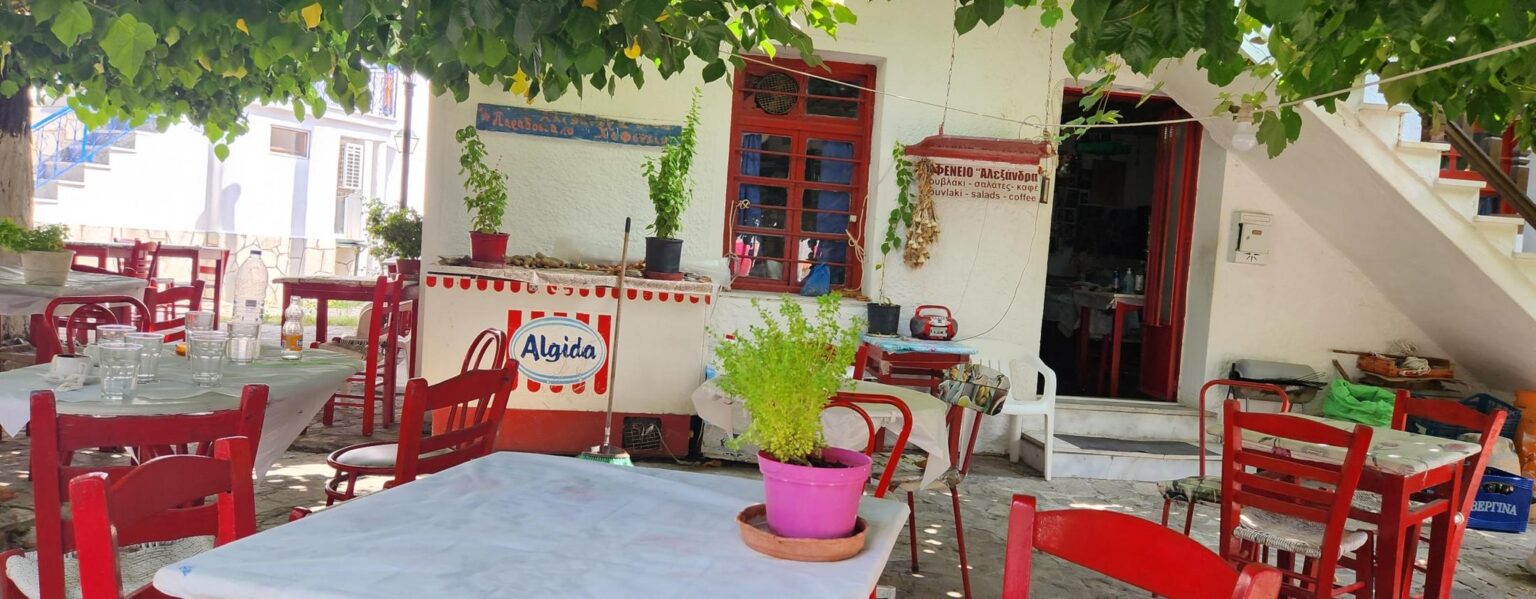
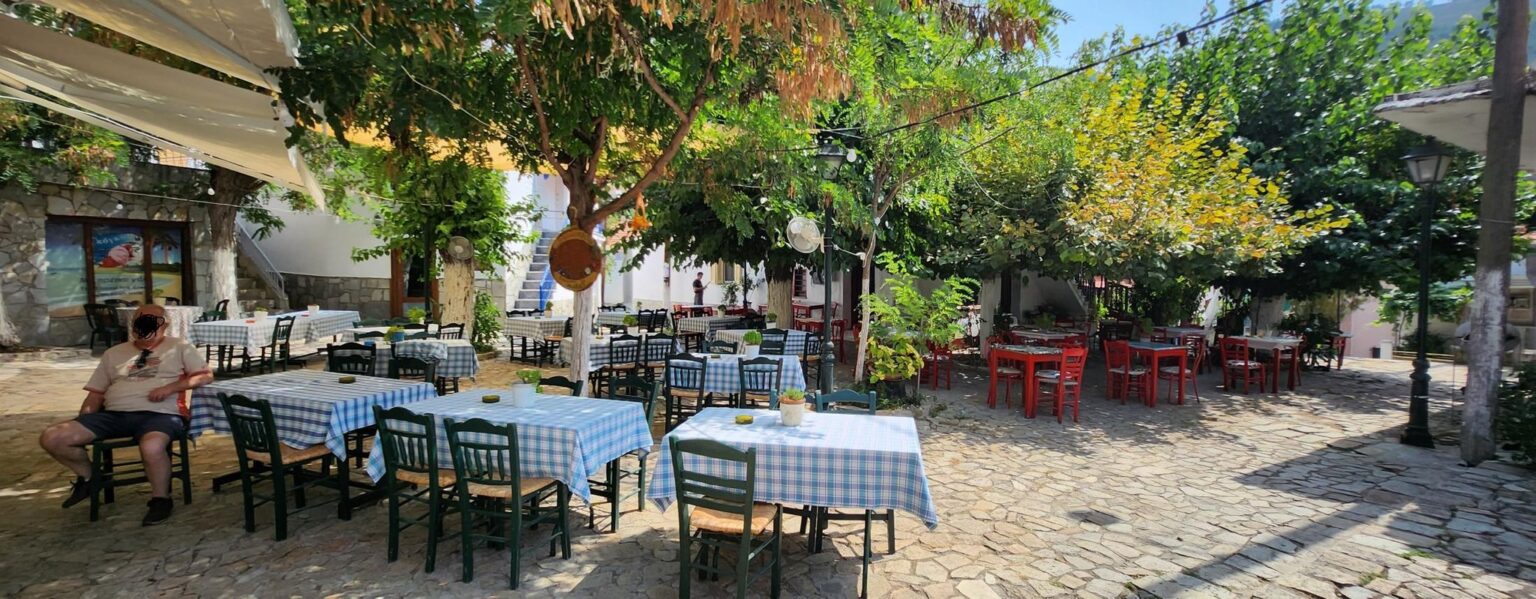
Looking back at our own photographs, we have no idea why the place reminds us of ‘Allo ‘Allo, but there is something. Go and feel it for yourselves.
The interesting thing in the area is, surprise, another waterfall. Whoever was in charge of naming things had clearly run out of ideas by this point, because the waterfall is called, guess what? Correct. Waterfall Maries.
From Maries to Maries (the waterfall) you can go by car or on foot. On foot it takes 40 to 50 minutes along an “official” unpaved road, entirely made of dust. By car it takes about 10 to 15 minutes, three kilometres, because it is effectively off-road driving.
On foot it is an ideal walk, because pleasant panoramas keep opening up. On foot it is not an ideal walk, because not everyone has come here for exercise and they tear past in their cars. Enormous quantities of dust are thrown up and it is genuinely unpleasant. We worked that out too late and paid for it with a lungful of dust.
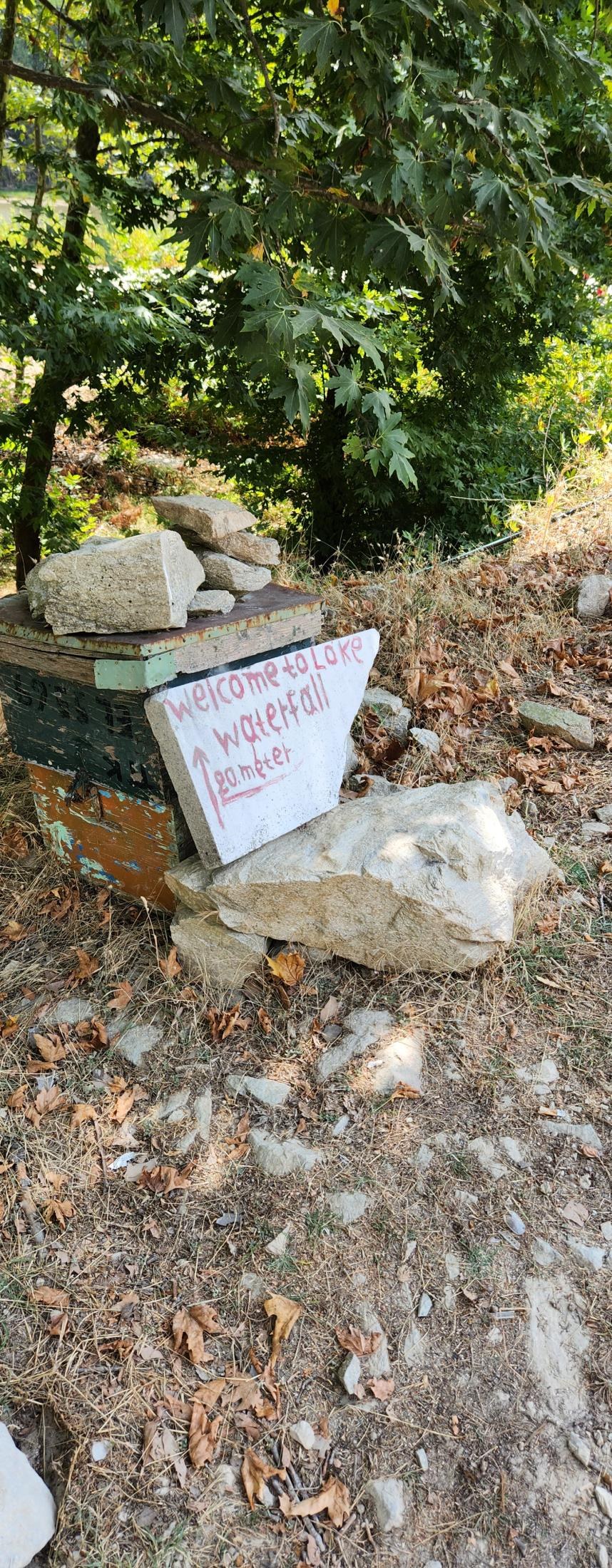
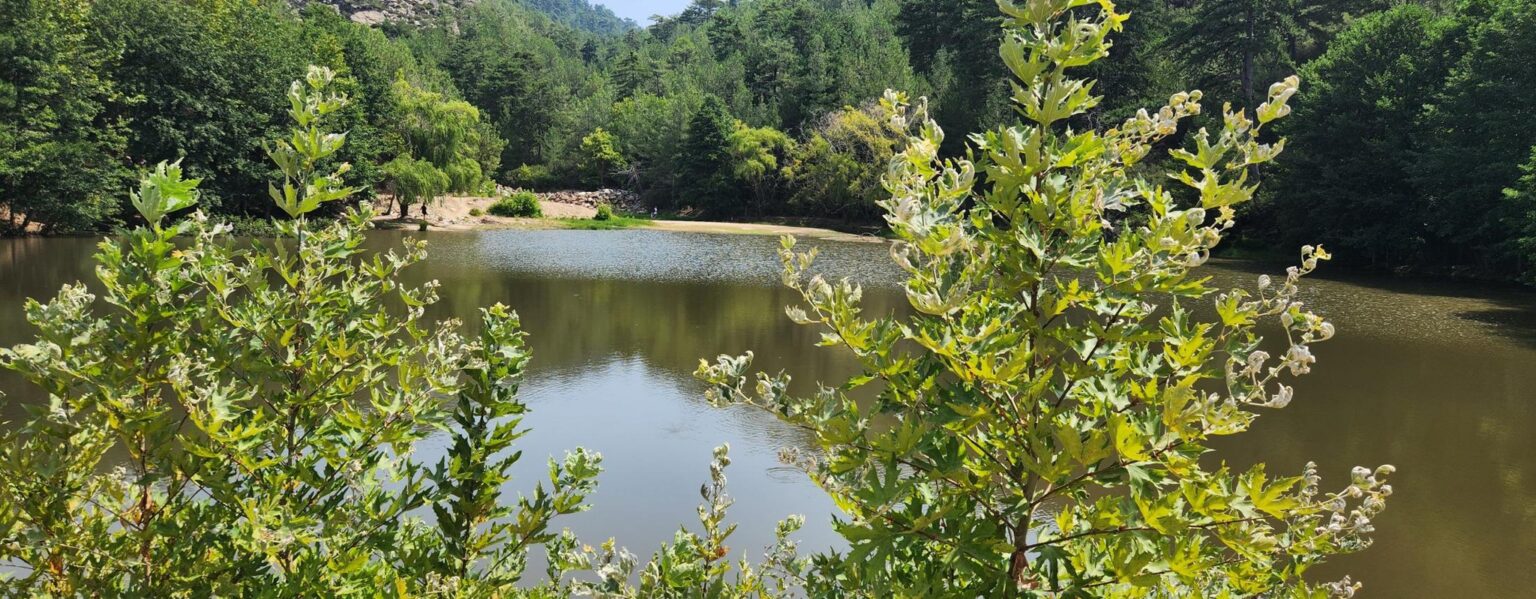
Around the waterfall itself it is calm, despite the 30 or 40 cars that flew past on the road; they are evidently heading elsewhere, crossing the whole island diagonally towards the “capital” or towards the highest peak, Ipsario. From the road the waterfall is about ten minutes away along a not especially difficult route, meaning flip-flops or sandals will do. It is cool there. Bliss.
Take food and water without fail if you are walking, because there is nothing along the way. The adventure from Maries the village to the waterfall takes two hours. In the middle of the day the heat is murderous. It is not something incredible or life-changing, but it is a pleasant walk and a change from the pool and the beach.
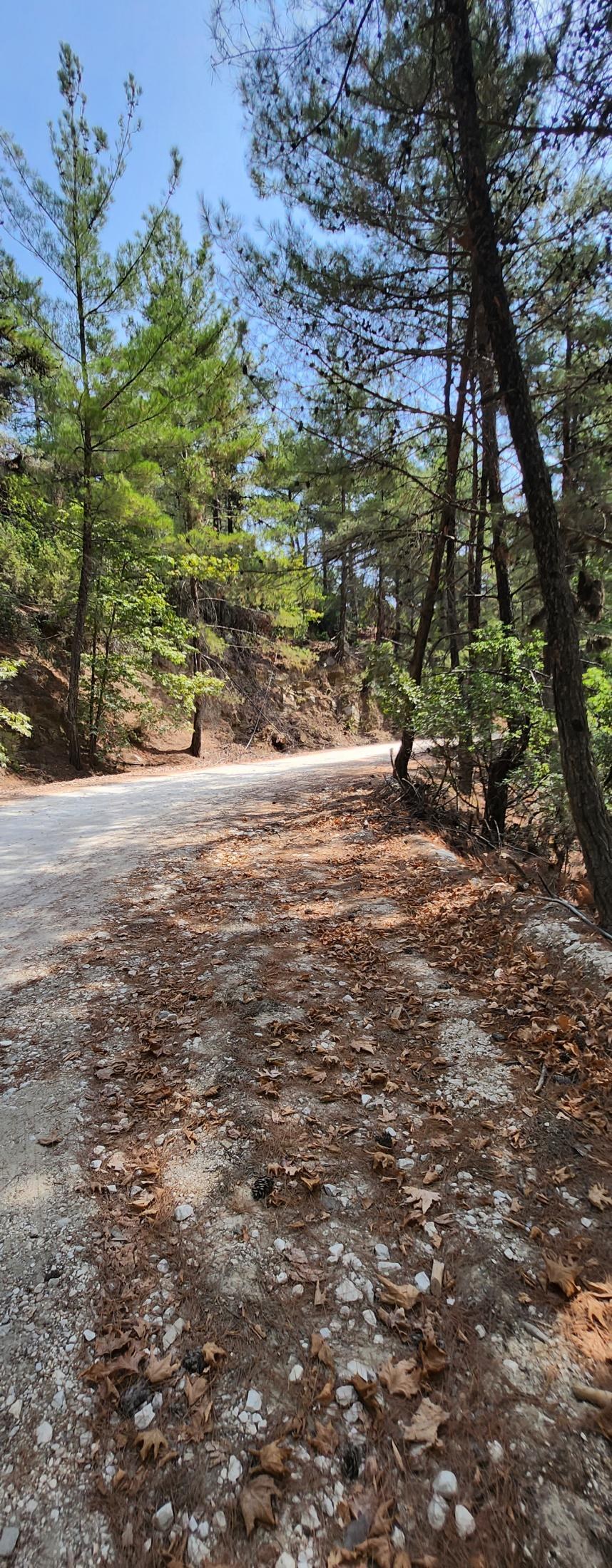
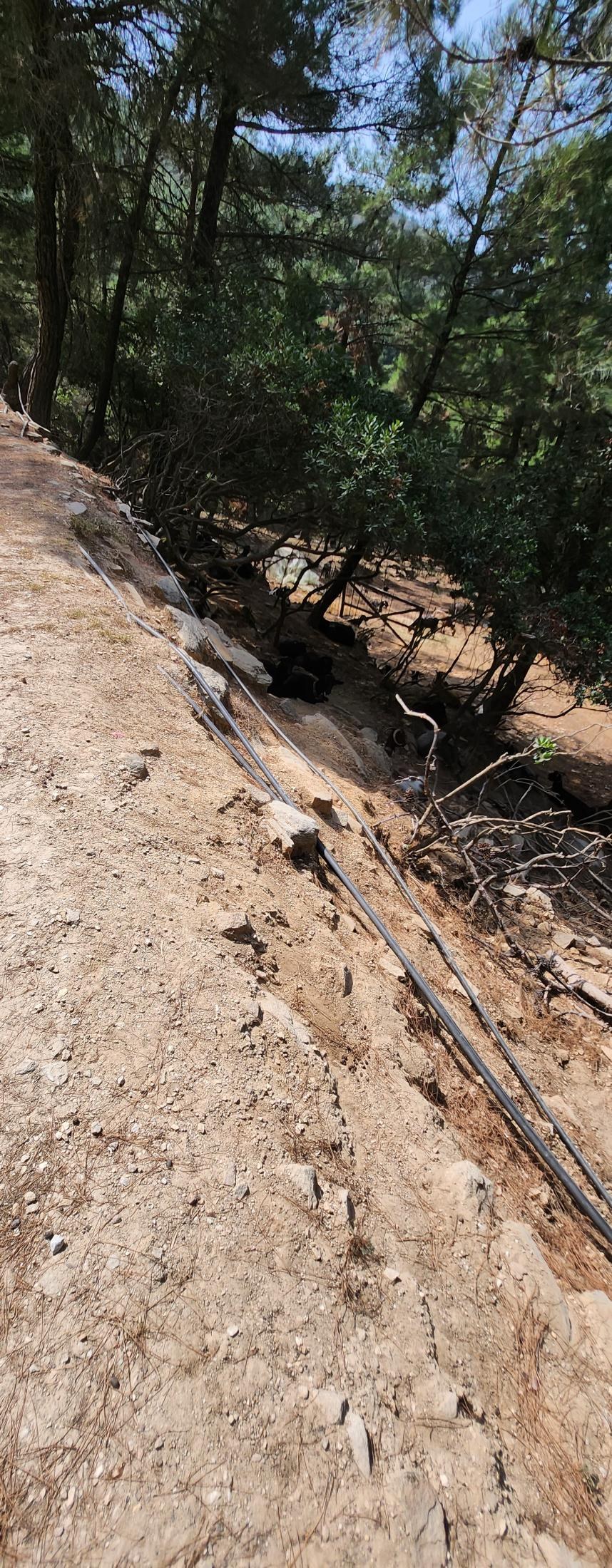
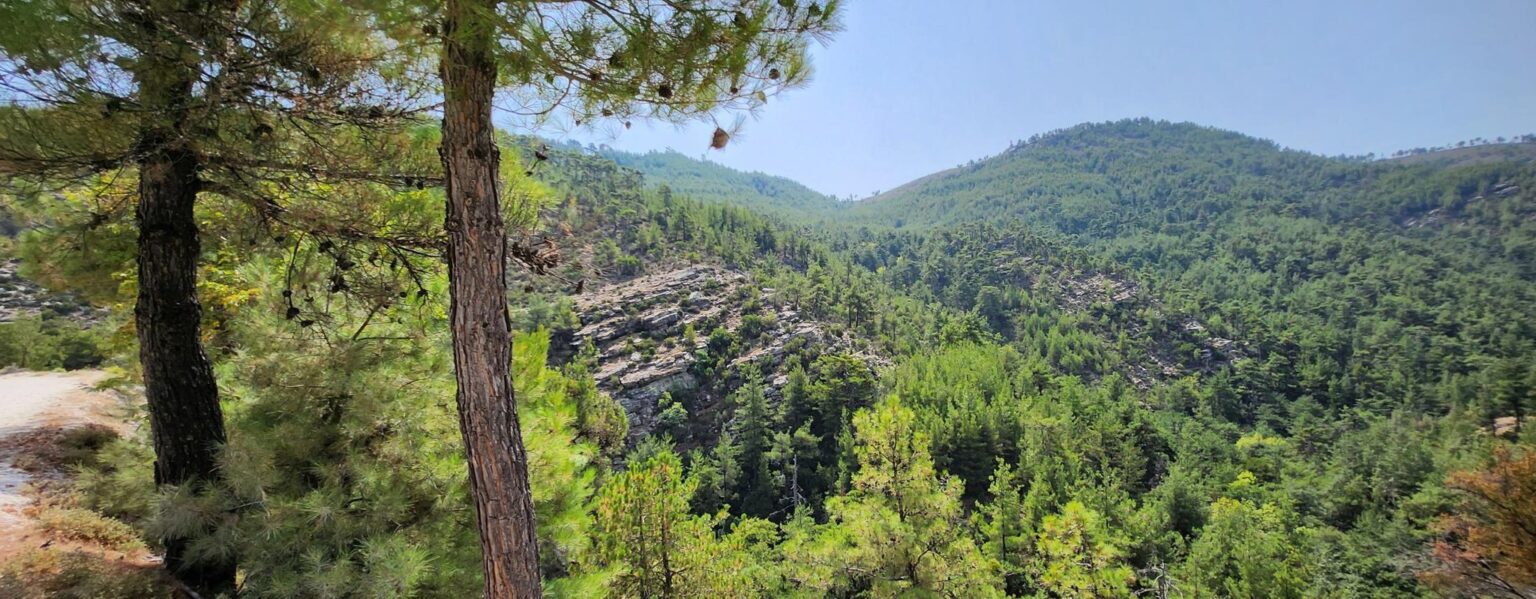
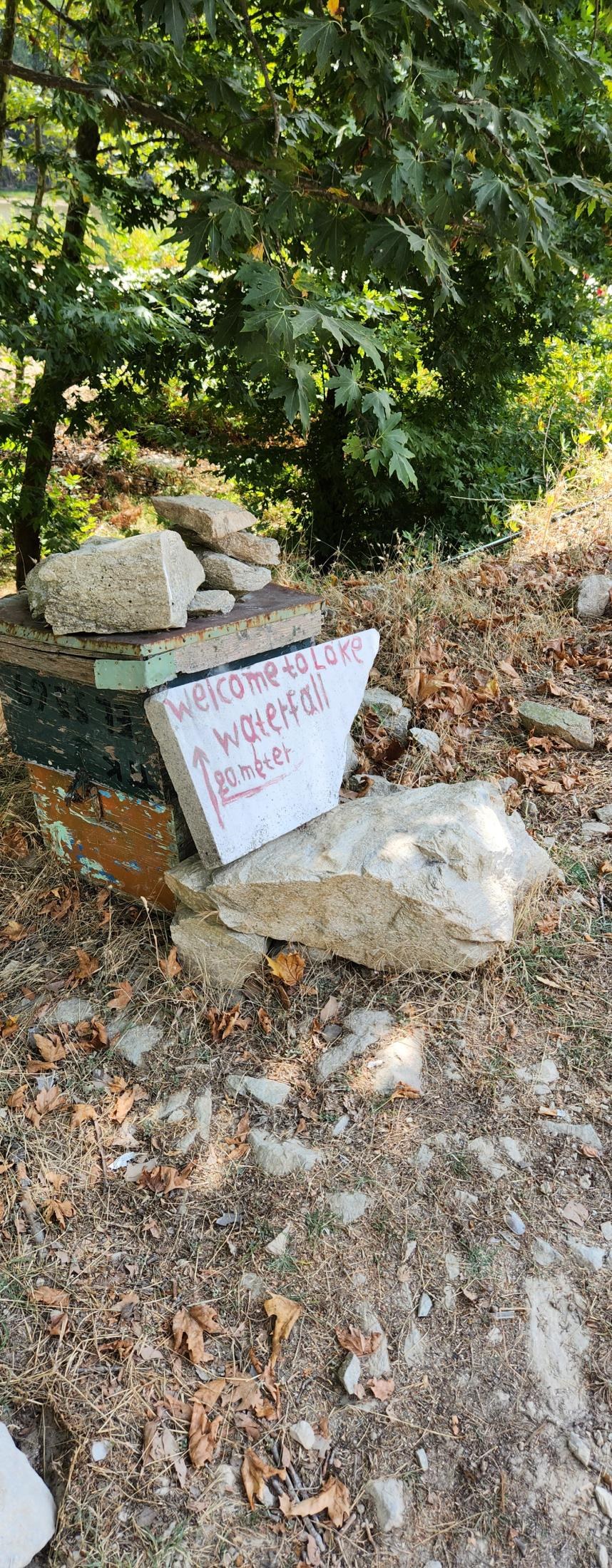
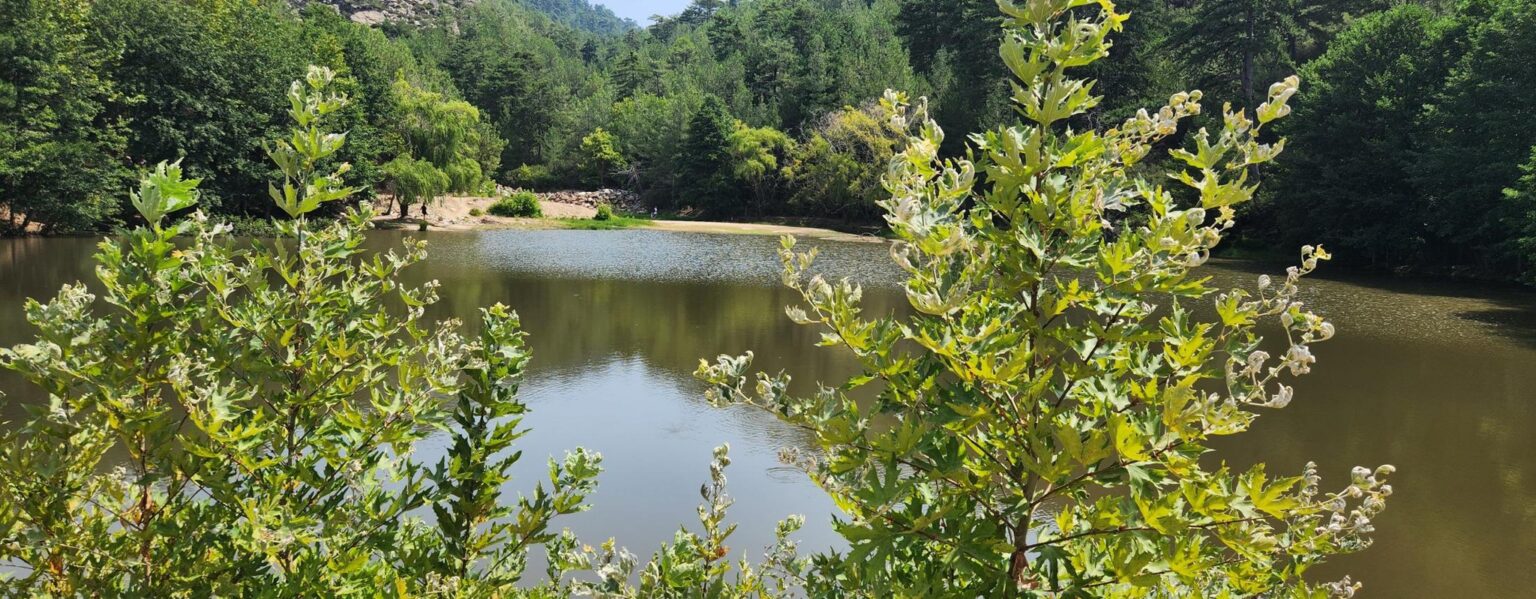
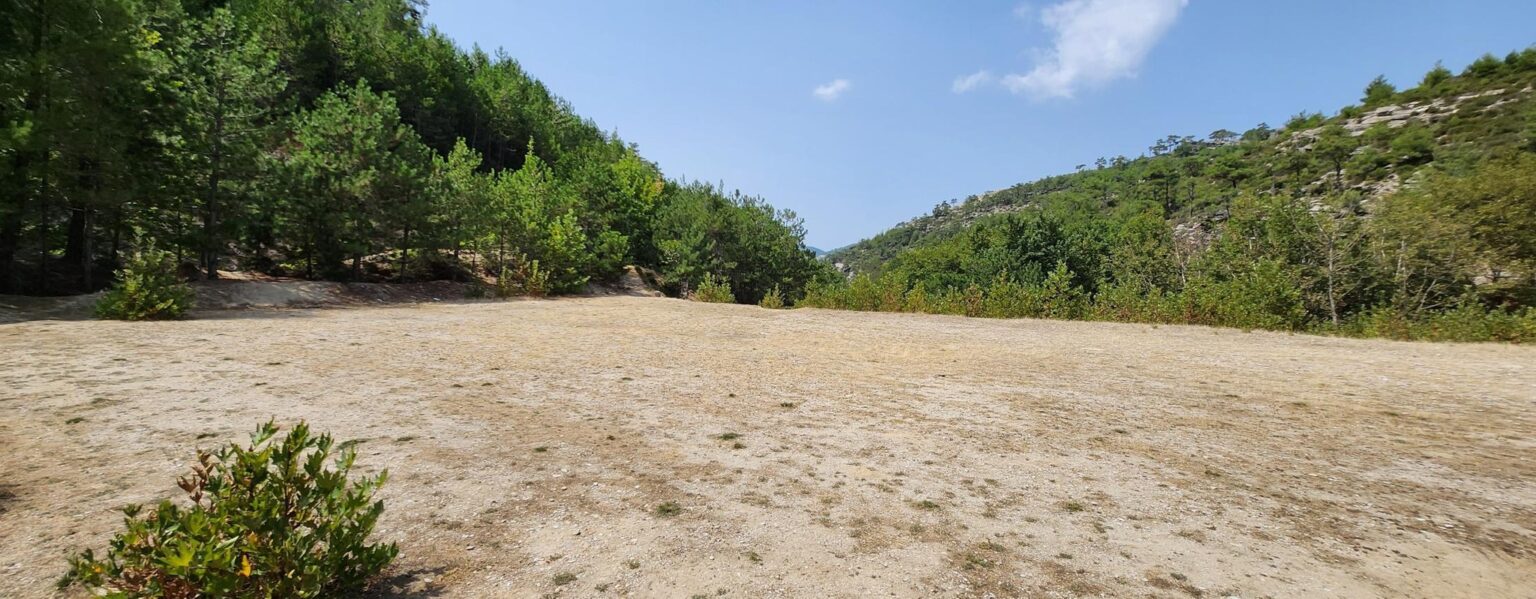
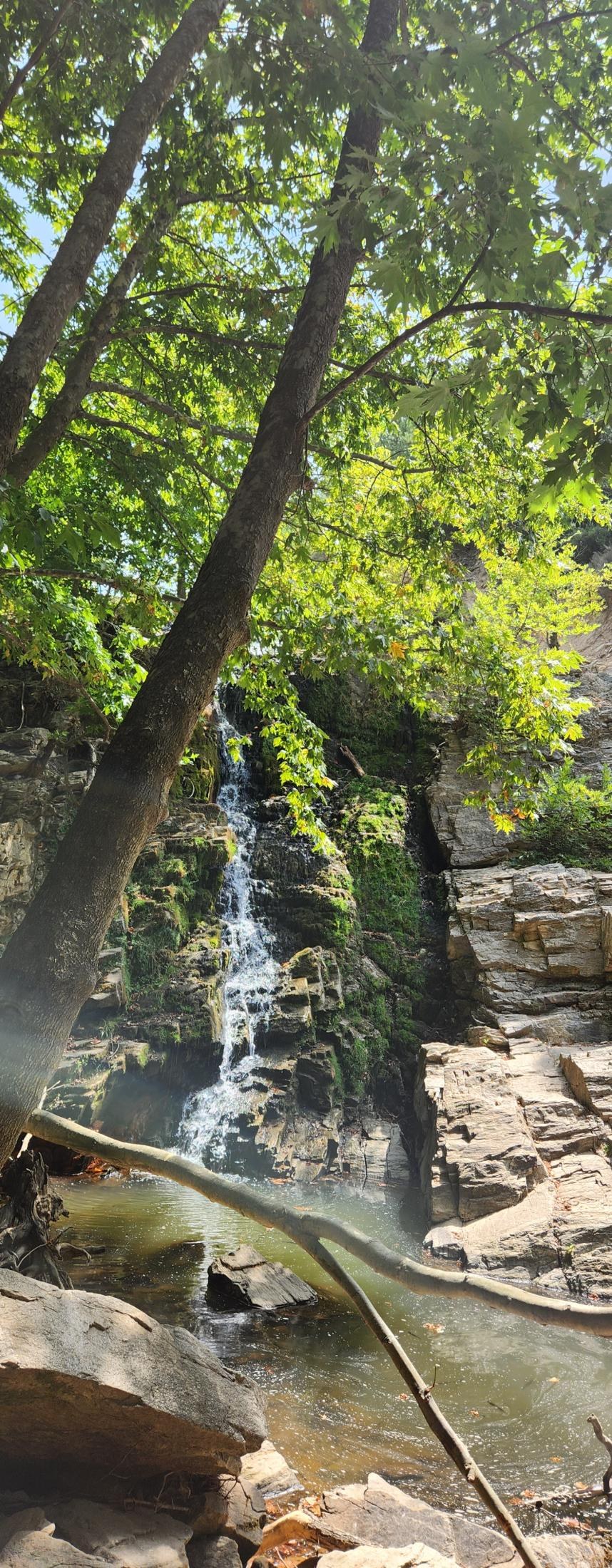
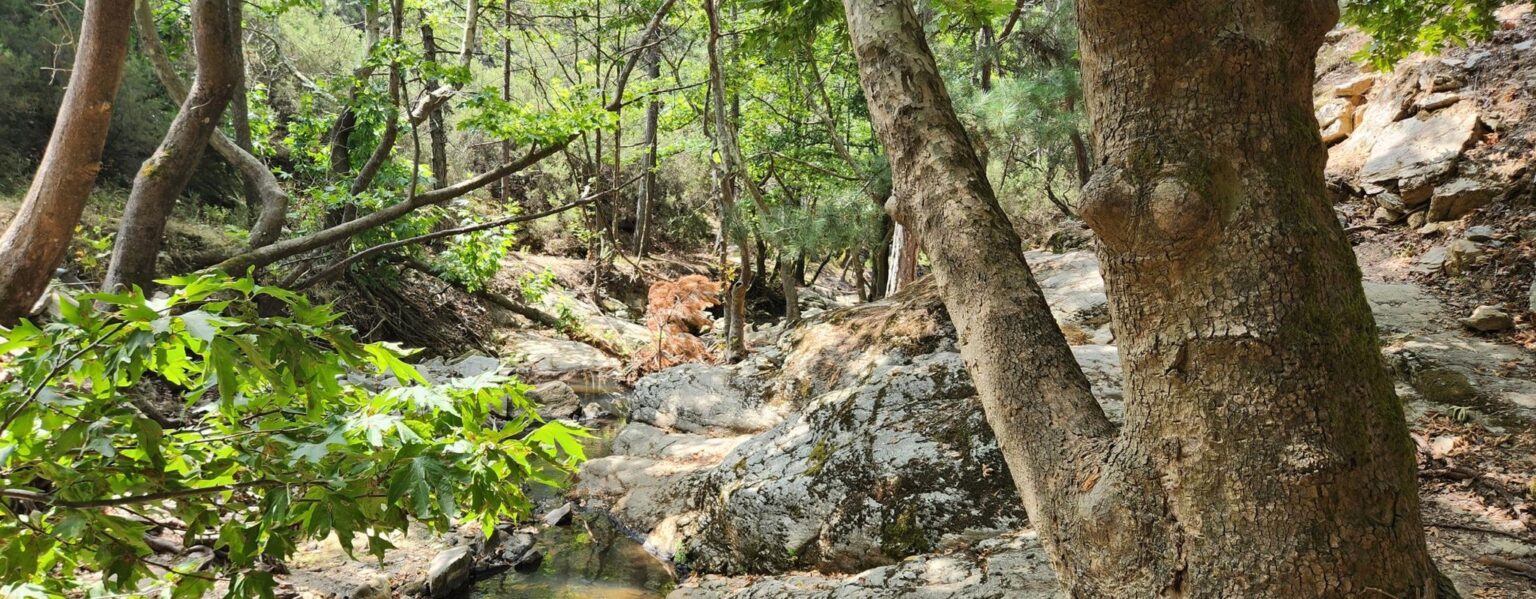
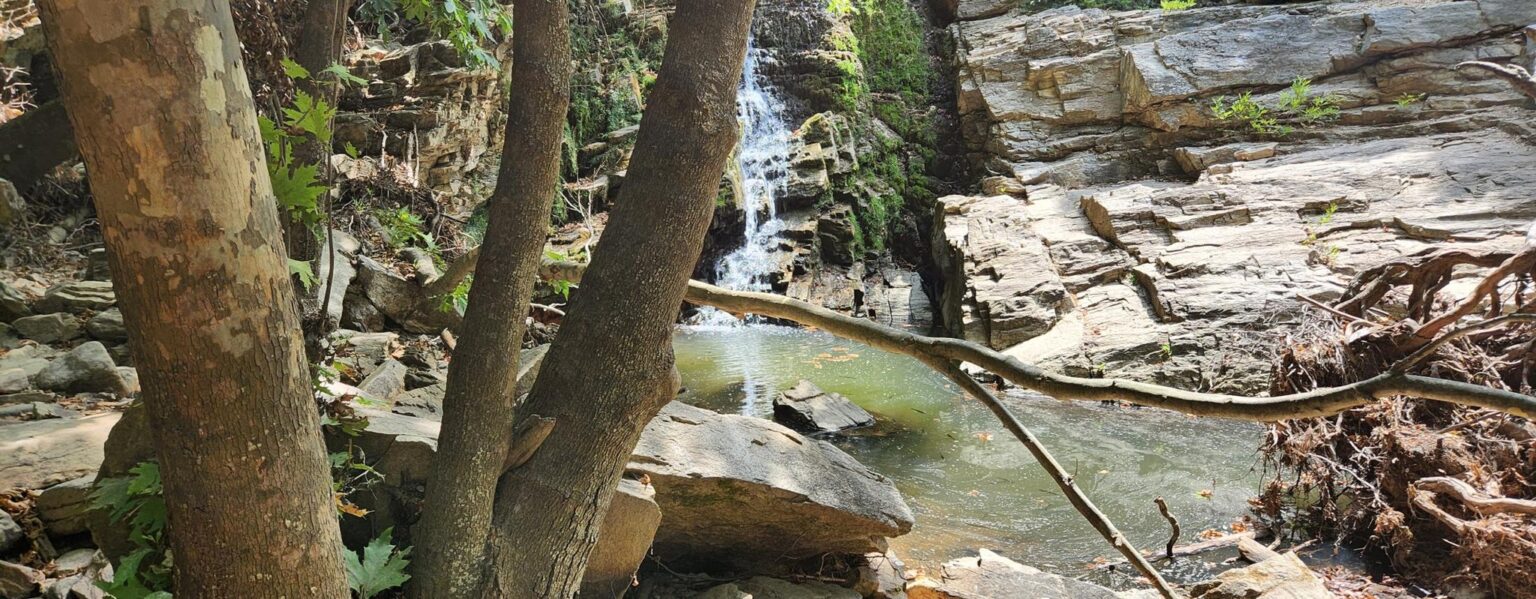
On the way back we try our luck at Taverna Augoustos in Theologos again. Nope, nobody is letting us in. Everything is reserved and everyone is staying put. Shame.
Day 6: Kavala and the drive home
The ferry from Limenas to Keramoti, furious Greek drivers, and then Kavala.
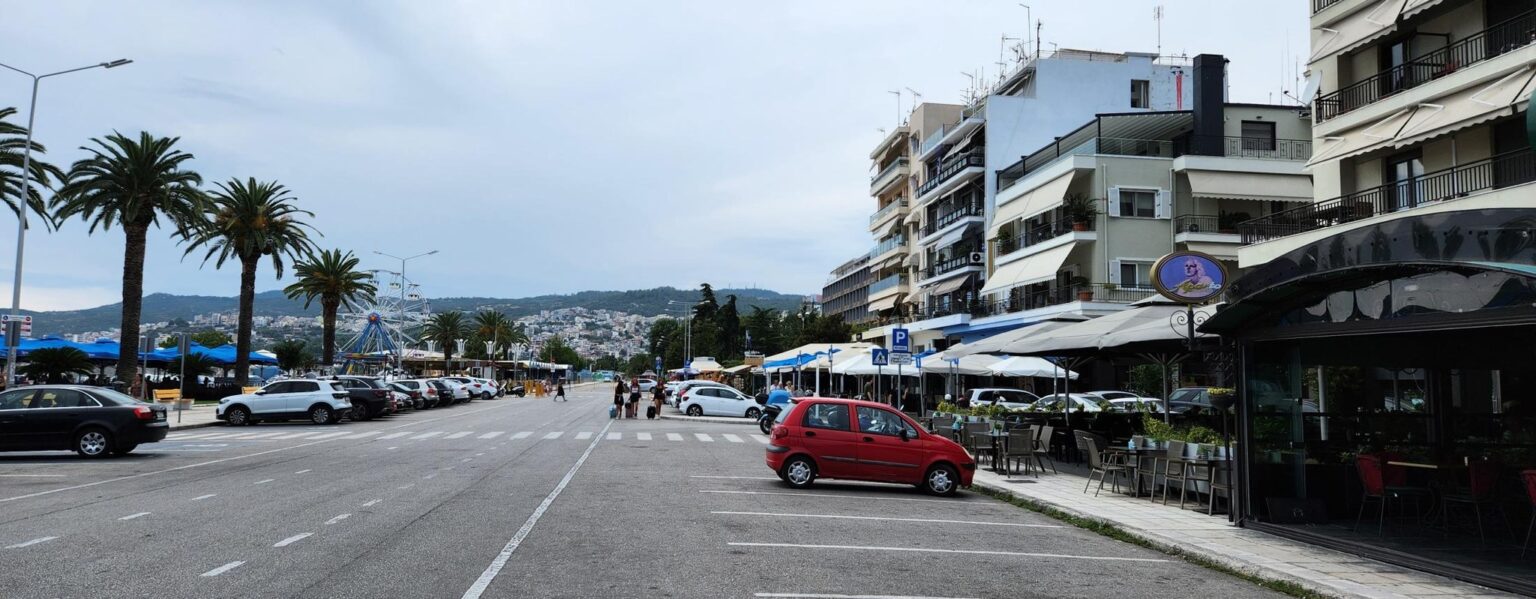
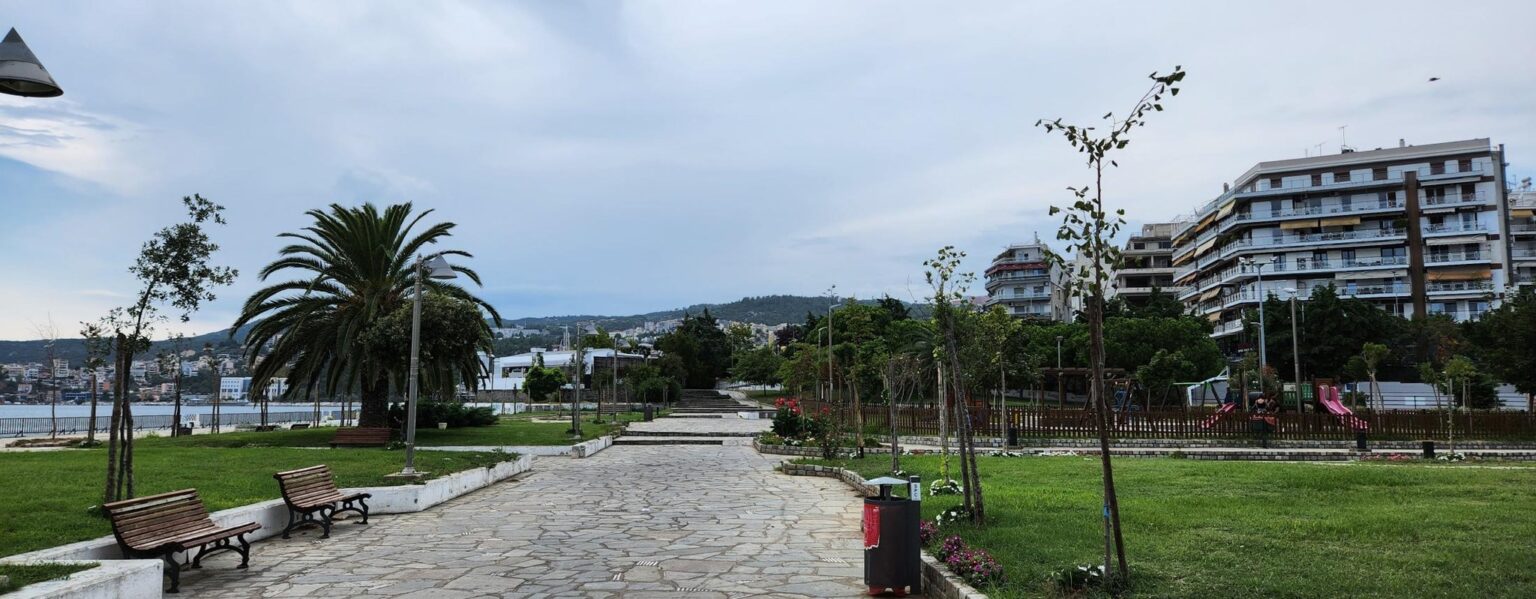
What a pleasant surprise. We had never been. After nearly a week of €4 frappés, a moment of rebirth is approaching.
Next to the quay there is a public car park with a peculiar attendant, apparently placed there to confuse you. We manage to fight our way past him and his explanations about how those forty empty spaces are currently occupied by cars we cannot see. At the time the car park was €2 for six hours.
One thing hits you immediately: roughly 80% of the cars are Bulgarian. Five cars parked while we walked to the exit, and all five were Bulgarian. On the street, every scrap of background noise is in Bulgarian.
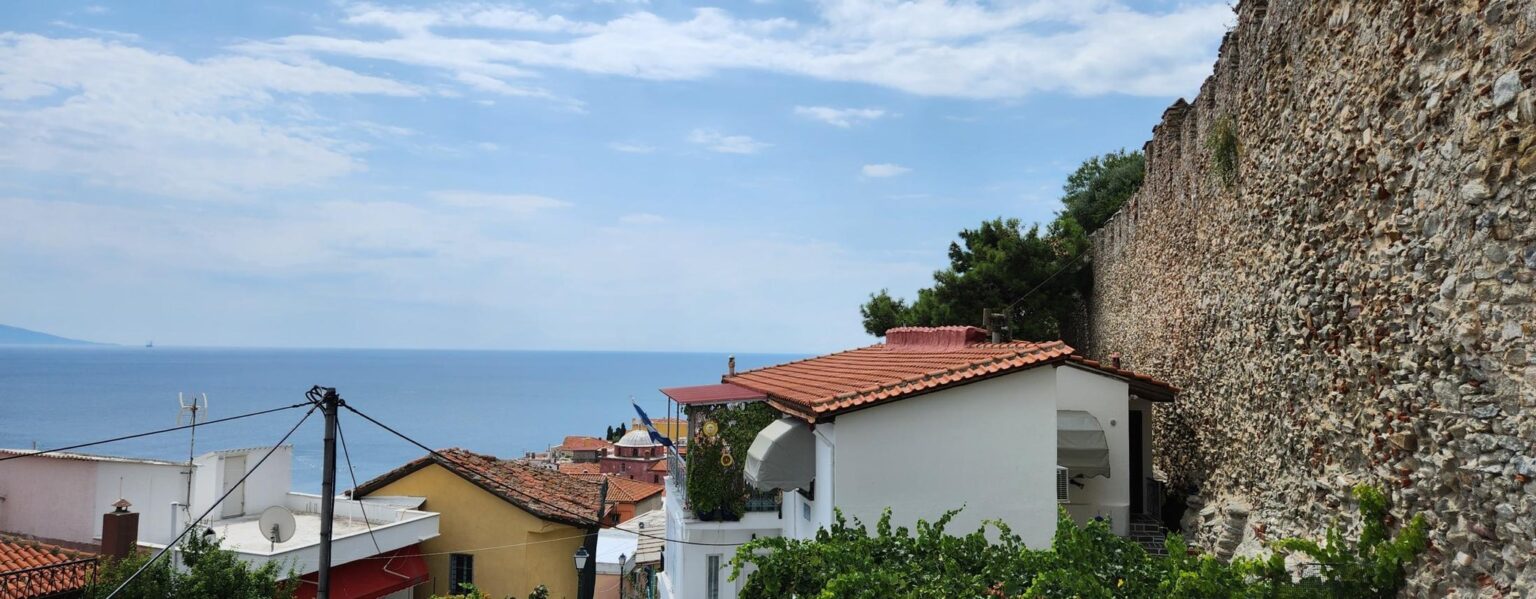
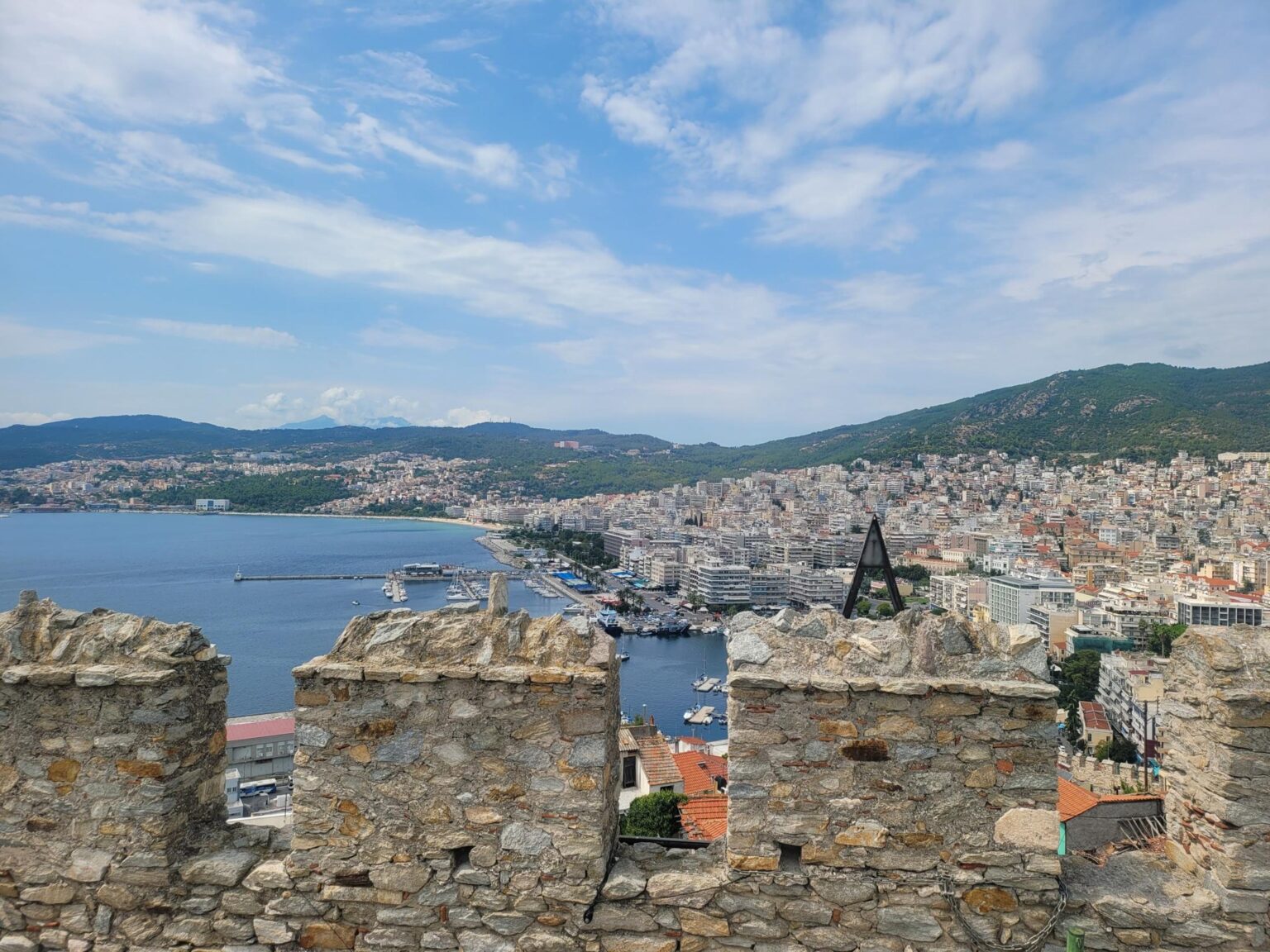
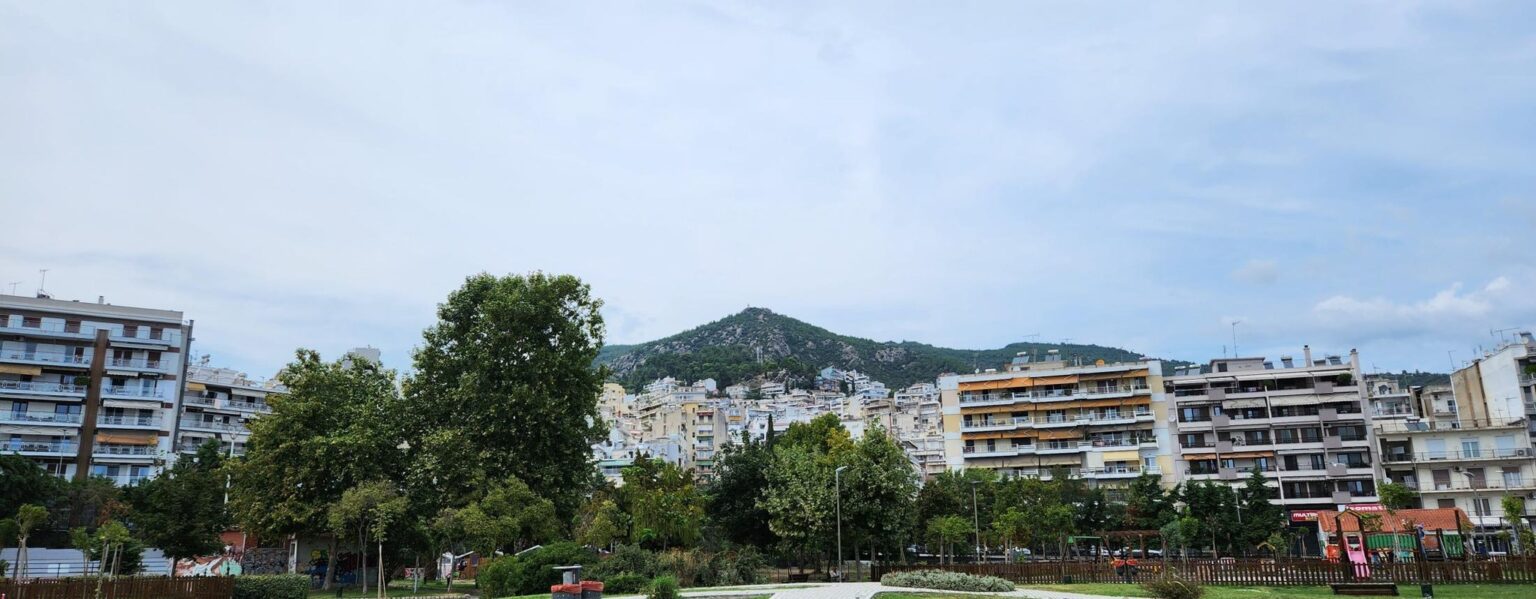
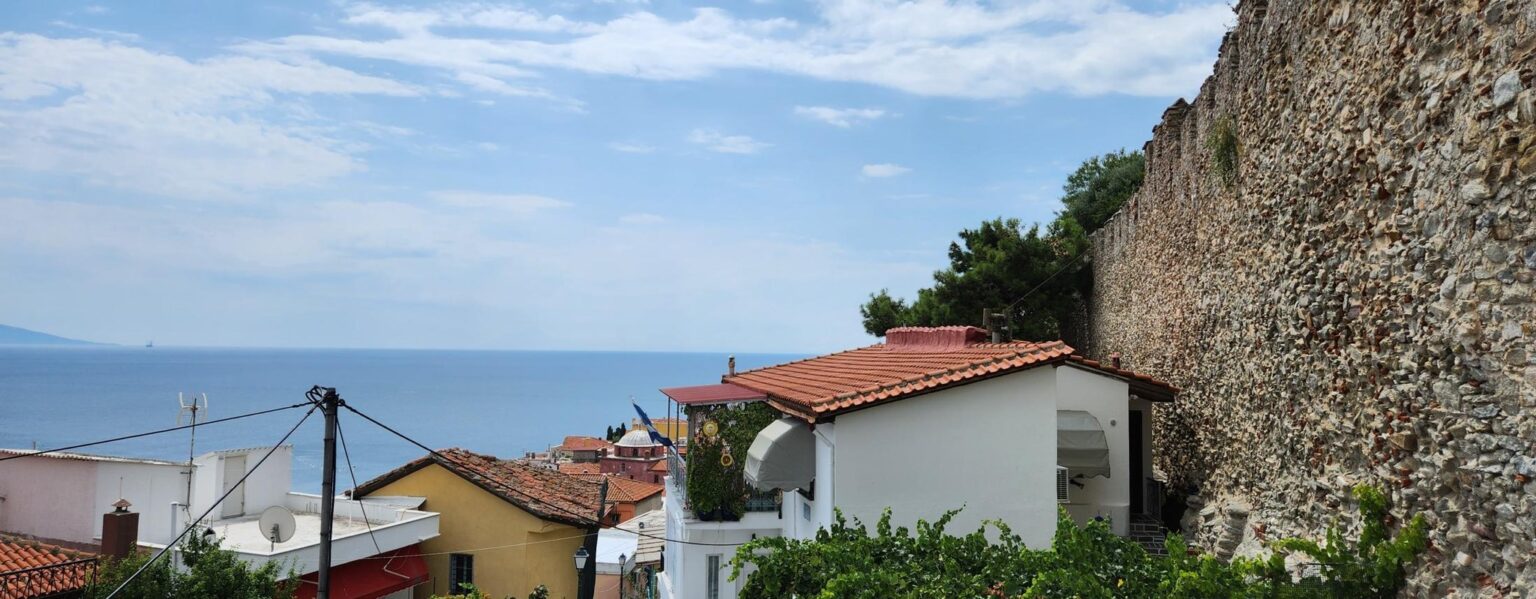
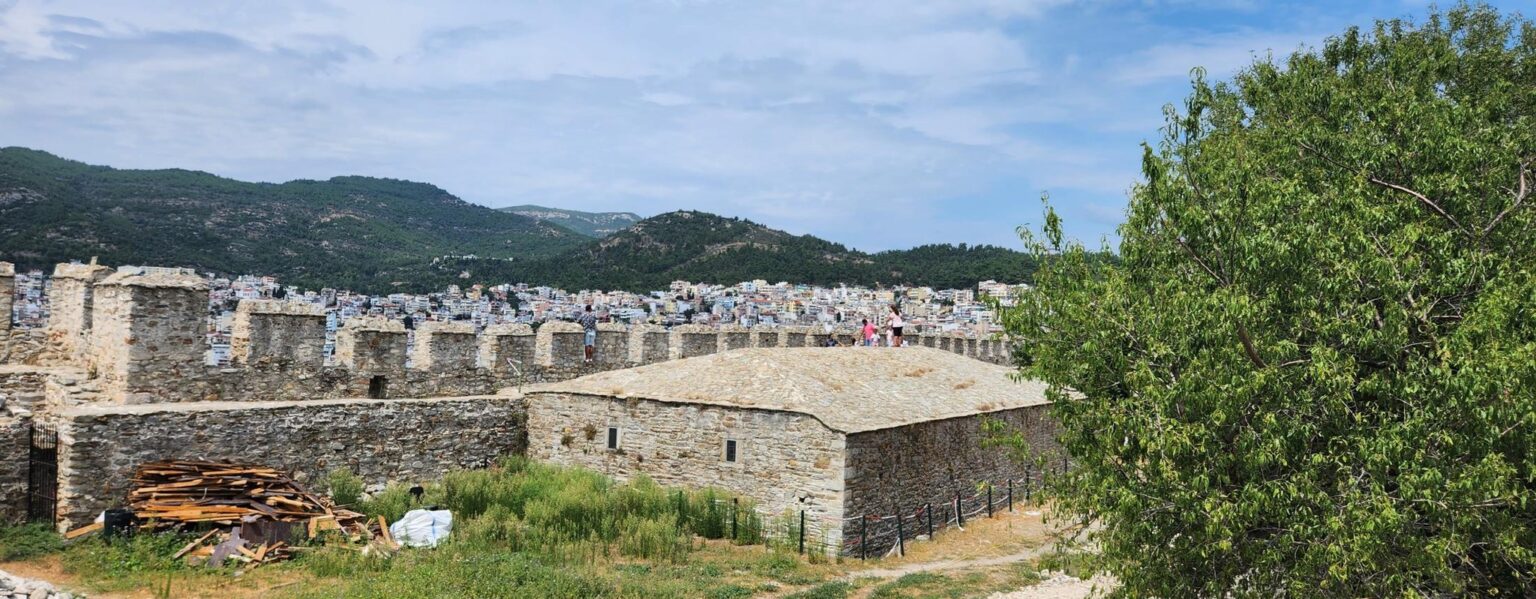
The main attraction in the area is the Kavala fortress. From the car park it takes about 15 to 20 minutes, with a climb that is not entirely painless under the blazing heat. You pass through a somewhat more secluded, old-fashioned quarter of mostly houses, while apartment blocks stand out clearly in the distance.
Entry was €4.50 in August 2022; check the current tariff before you go, as the published figures vary. They were supposedly observing Covid measures, waiting for some visitors to leave before letting others in. It was rather clumsy and rather pointless, given that thirty of us were waiting huddled together on a one-way staircase.
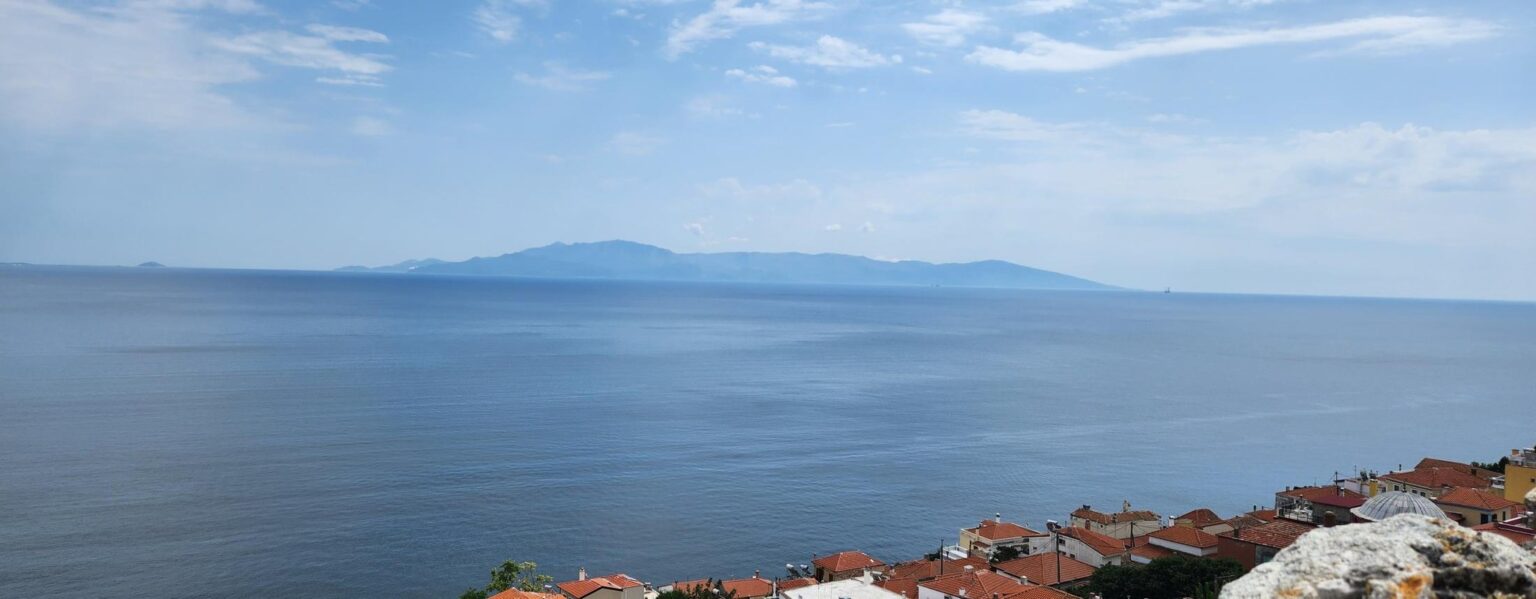
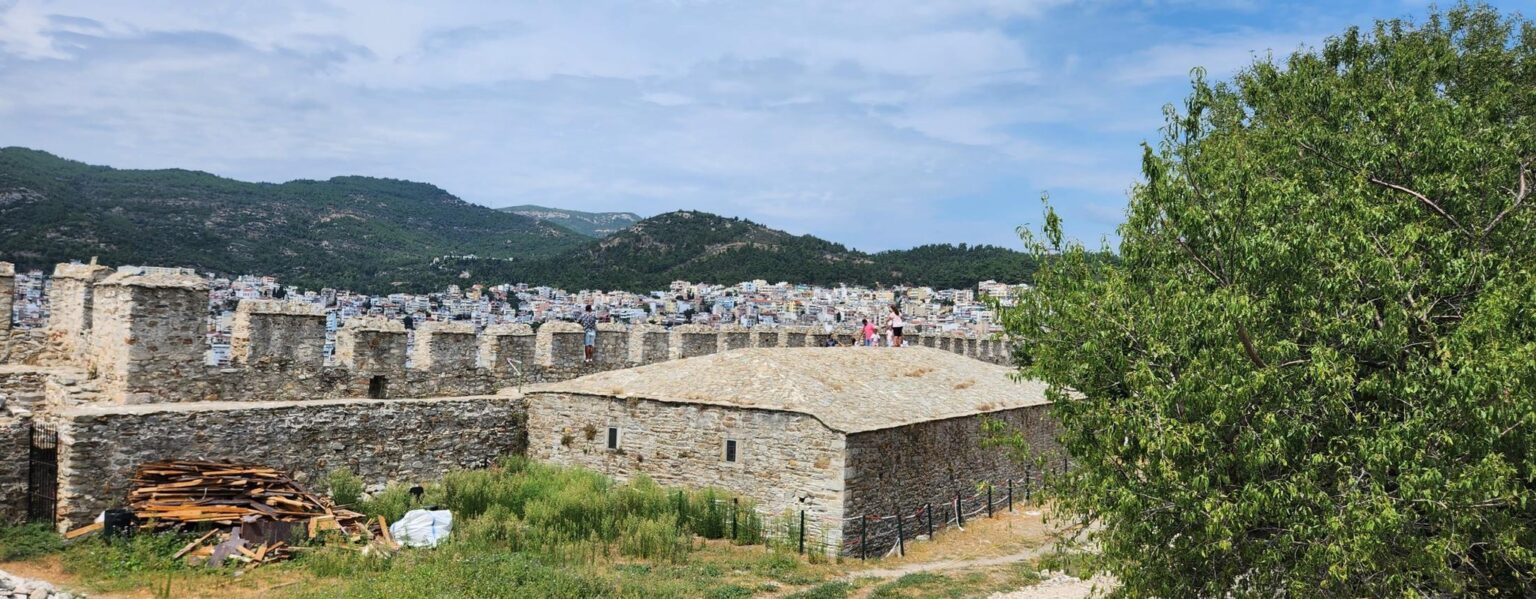
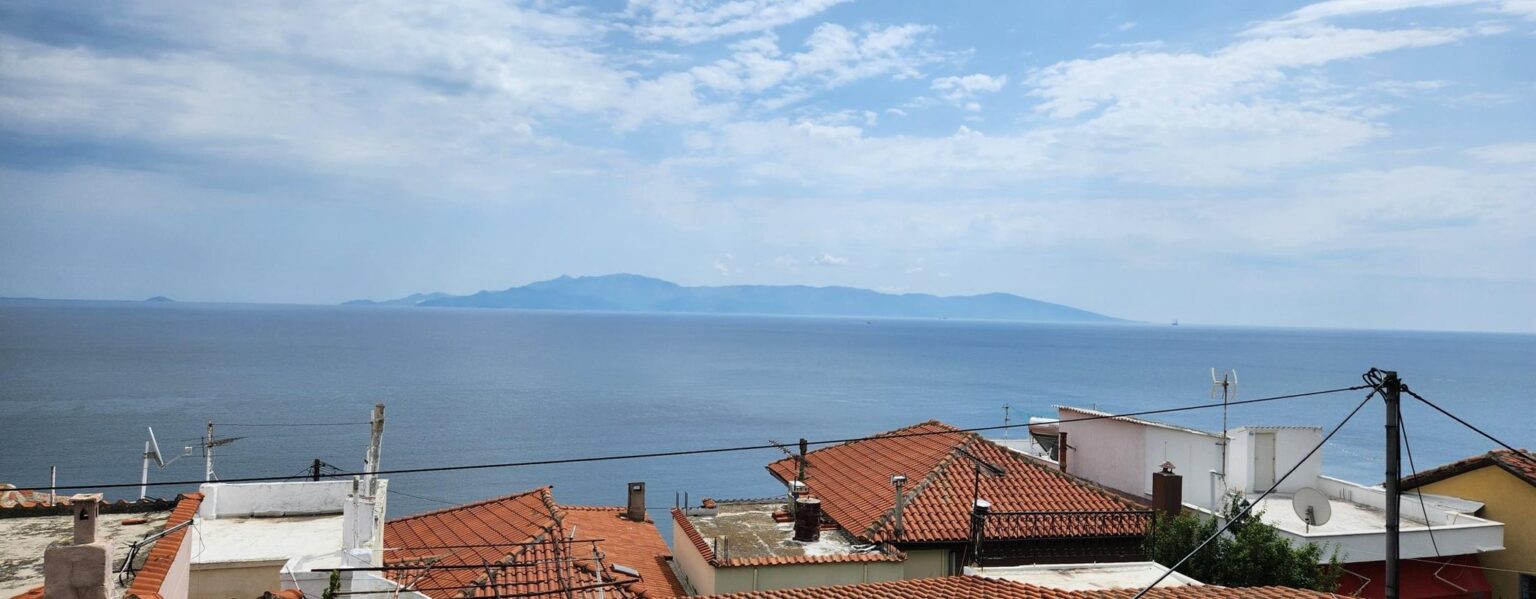
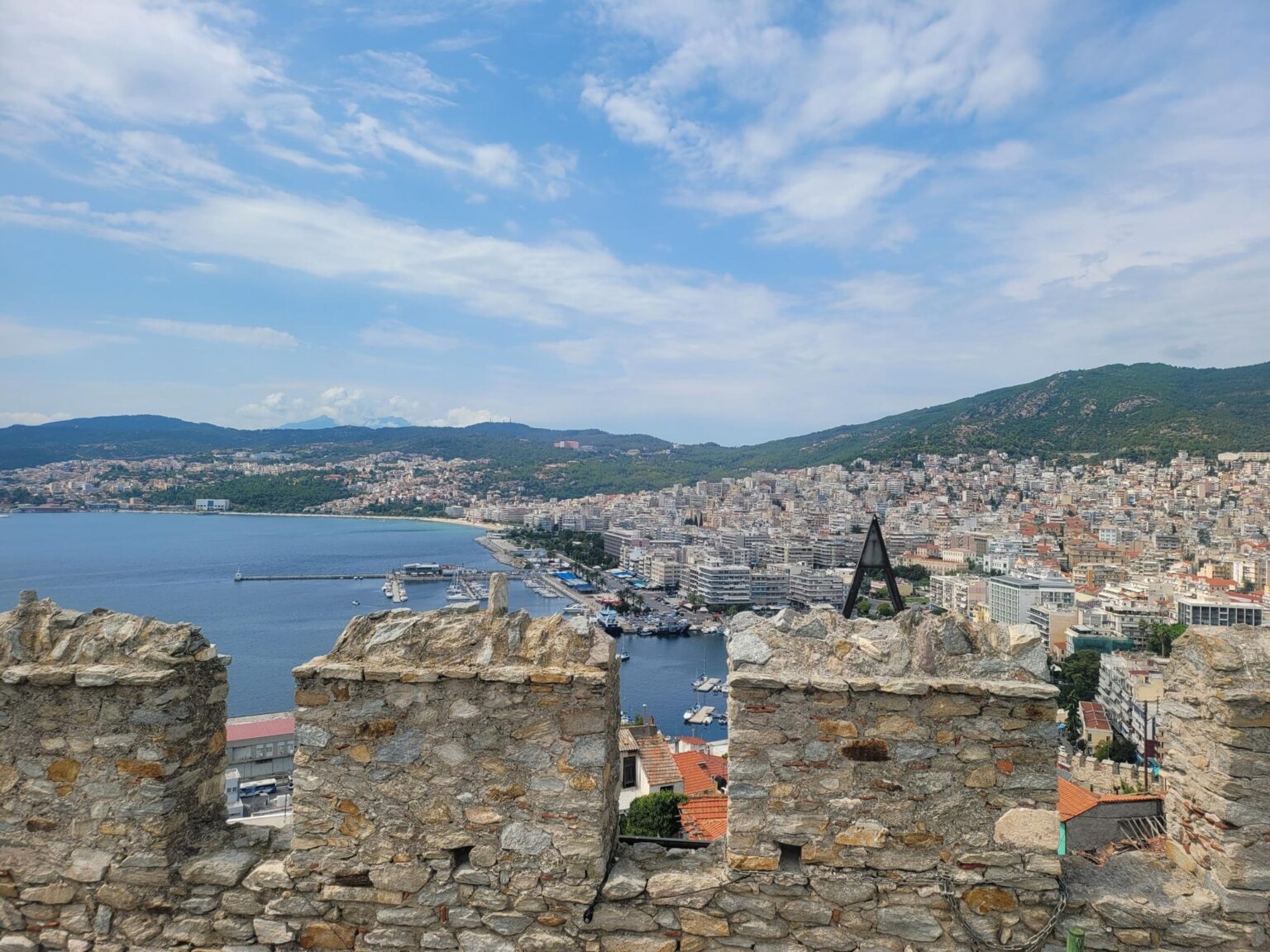
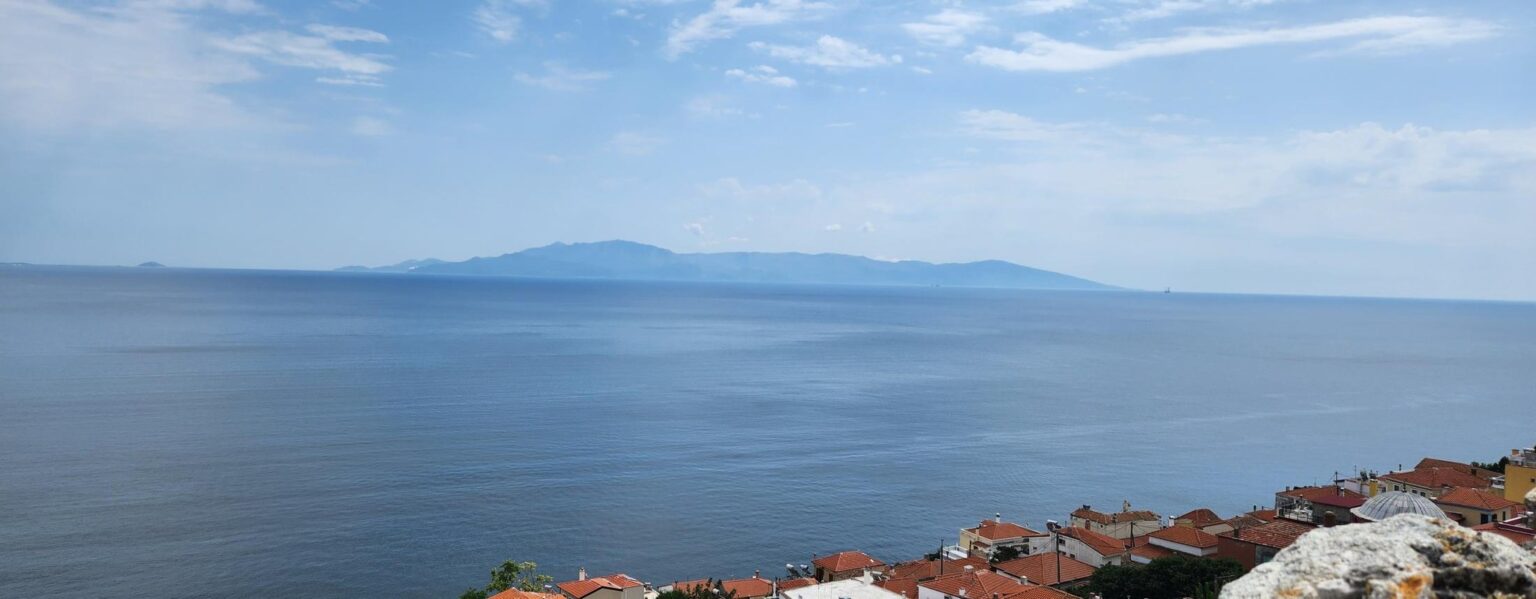
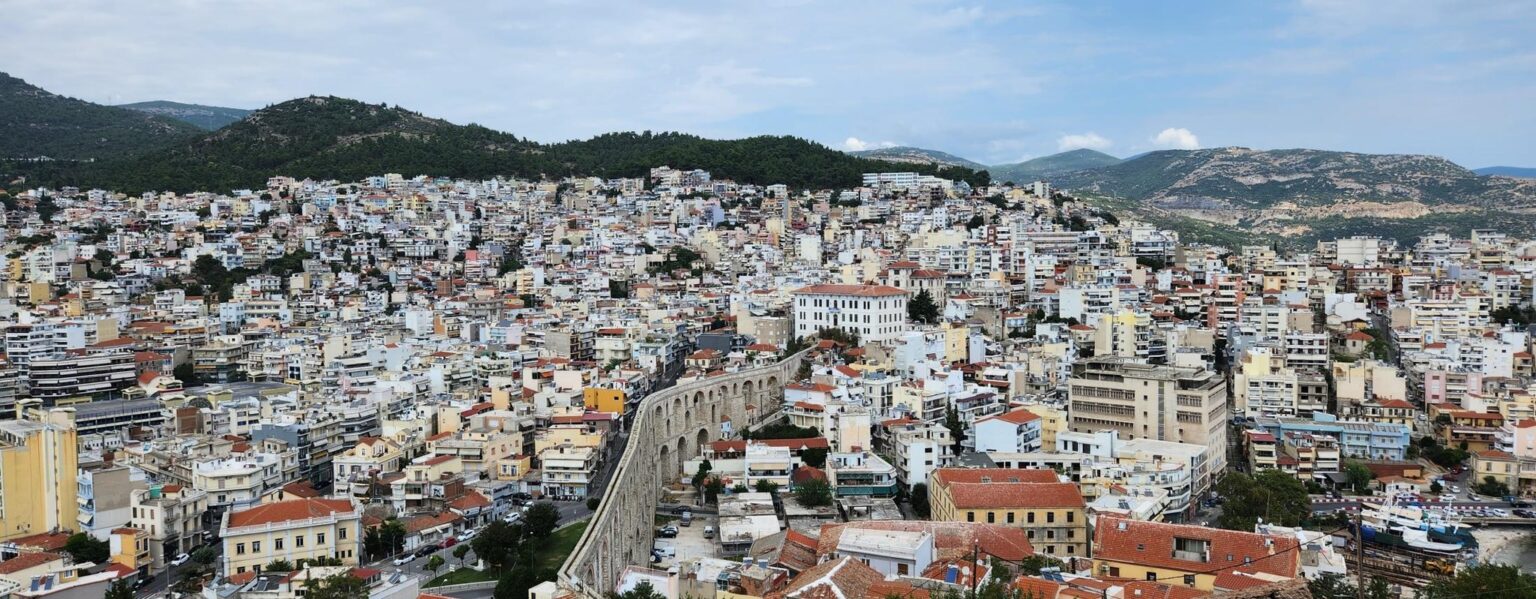
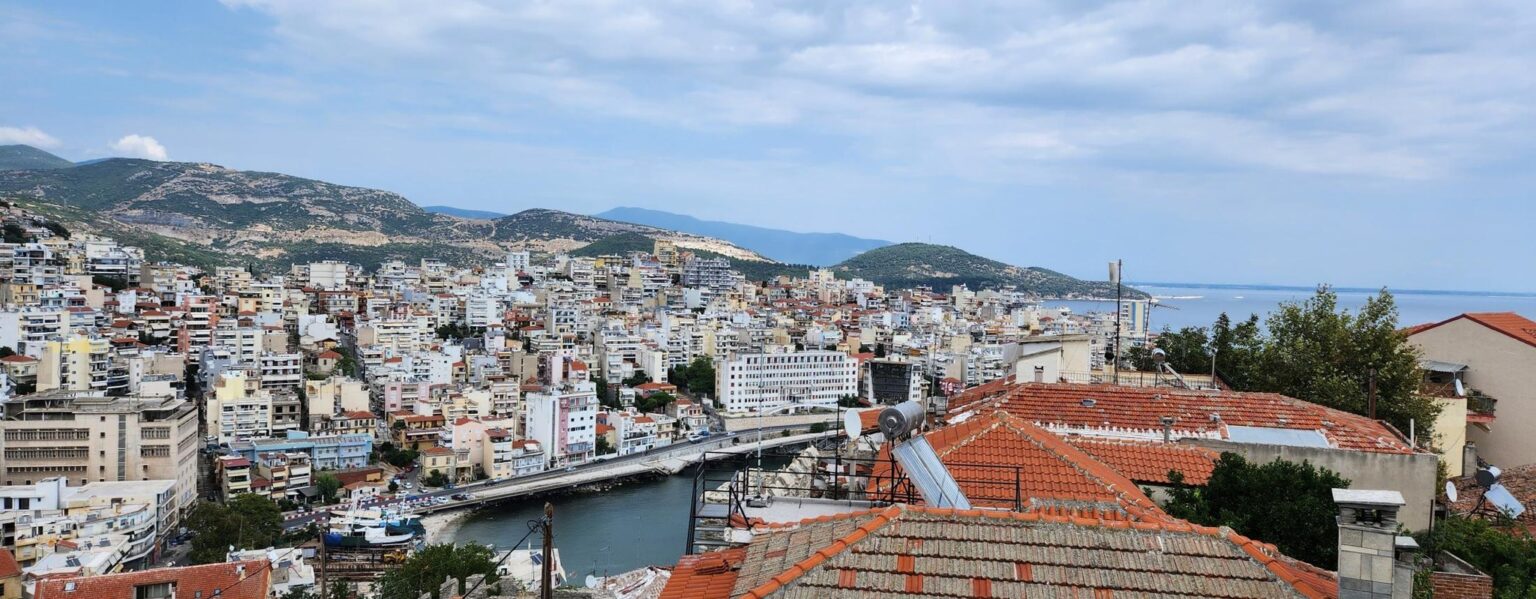
In any case, the fortress takes about an hour to walk around with all its rooms, and once again panoramas open up in every direction. There is a good deal of well-structured information in English and Greek. You can also see the ferries and, if your phone has more than 10x zoom, even how tightly the cars have been crammed in 😀
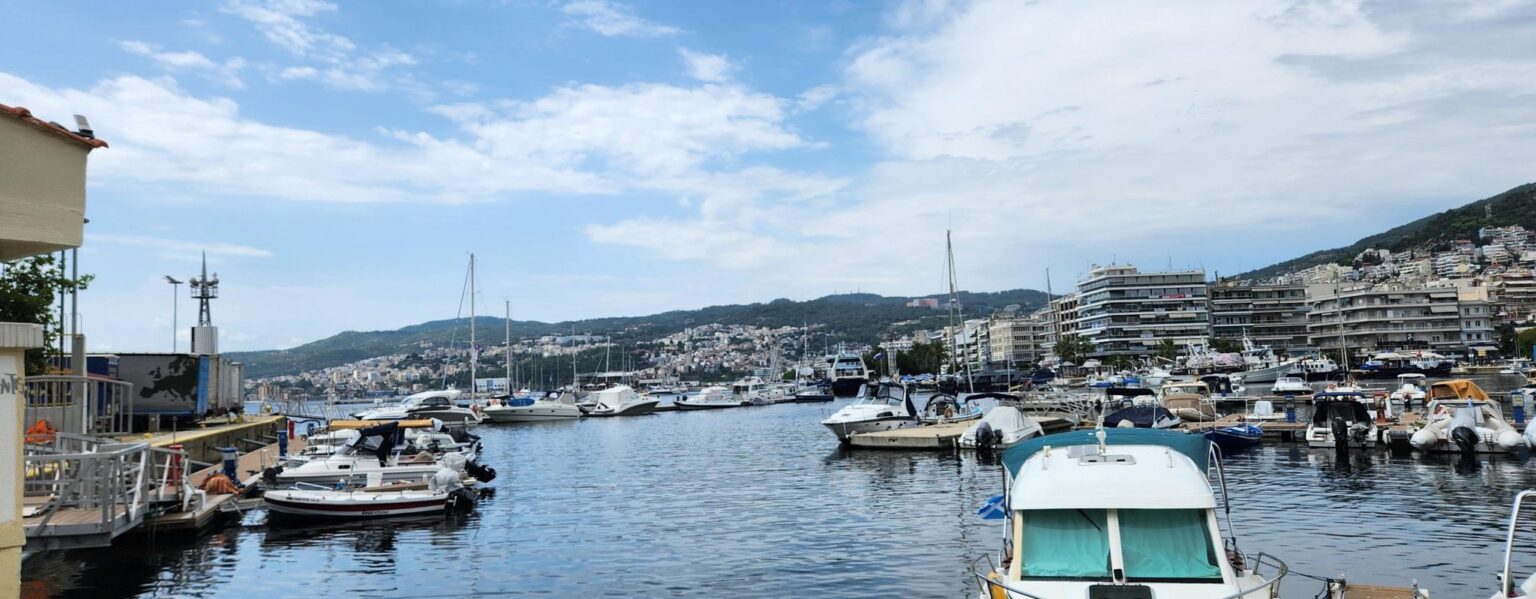
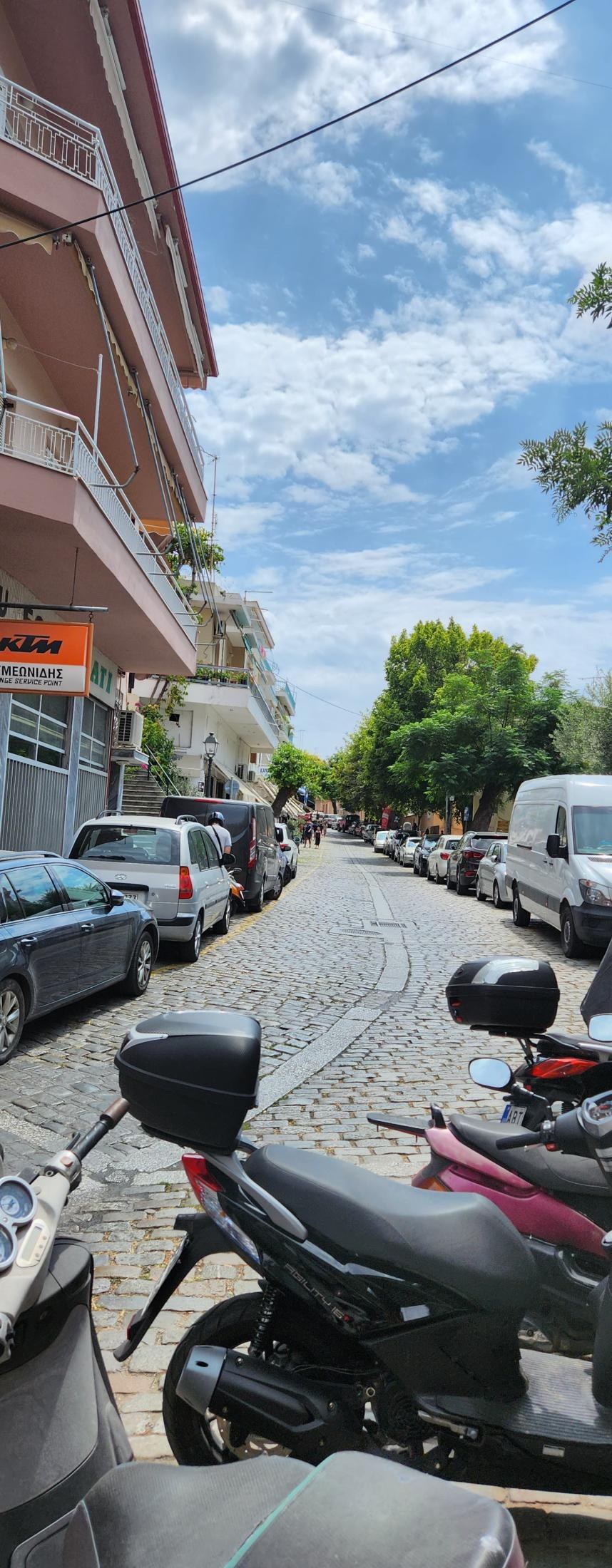
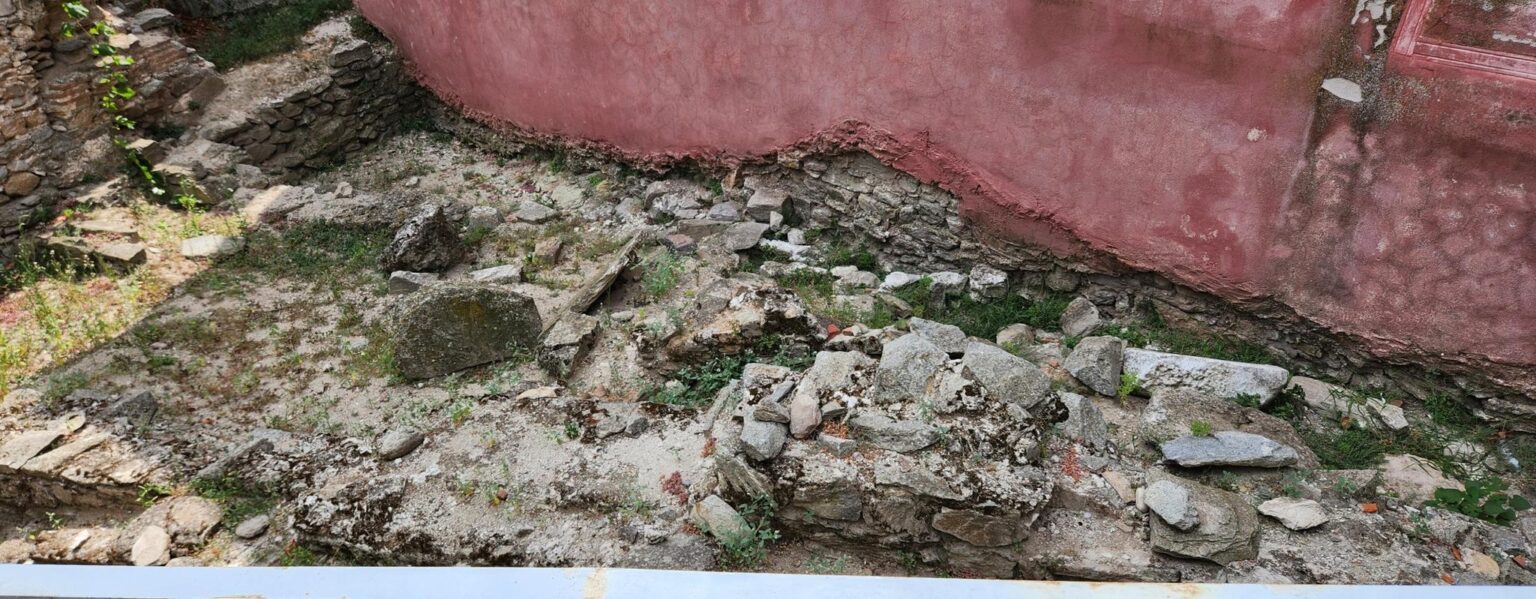
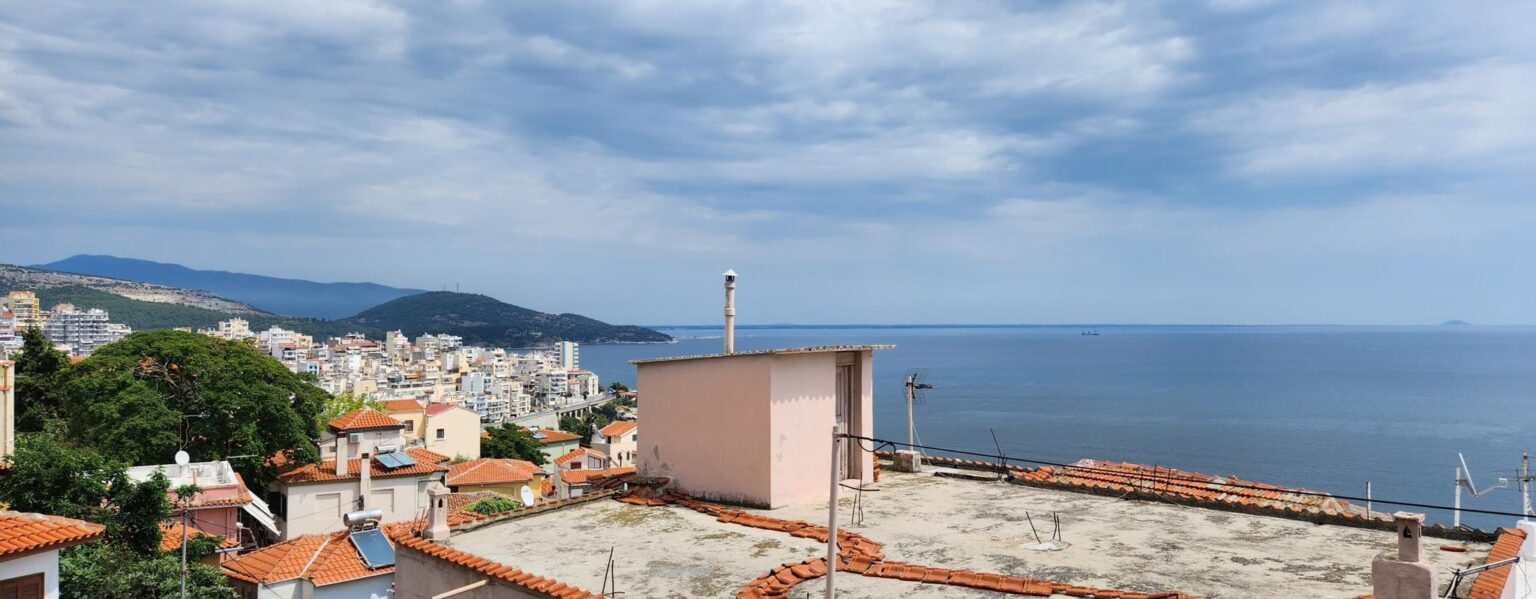
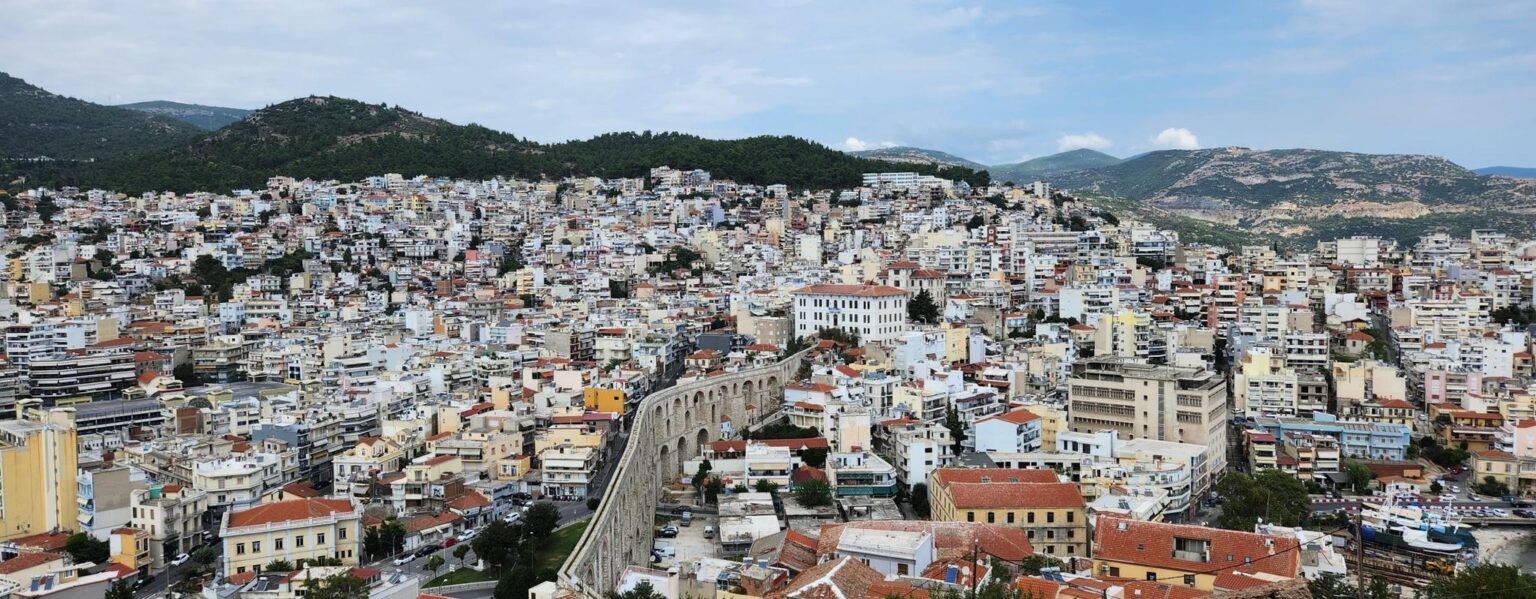
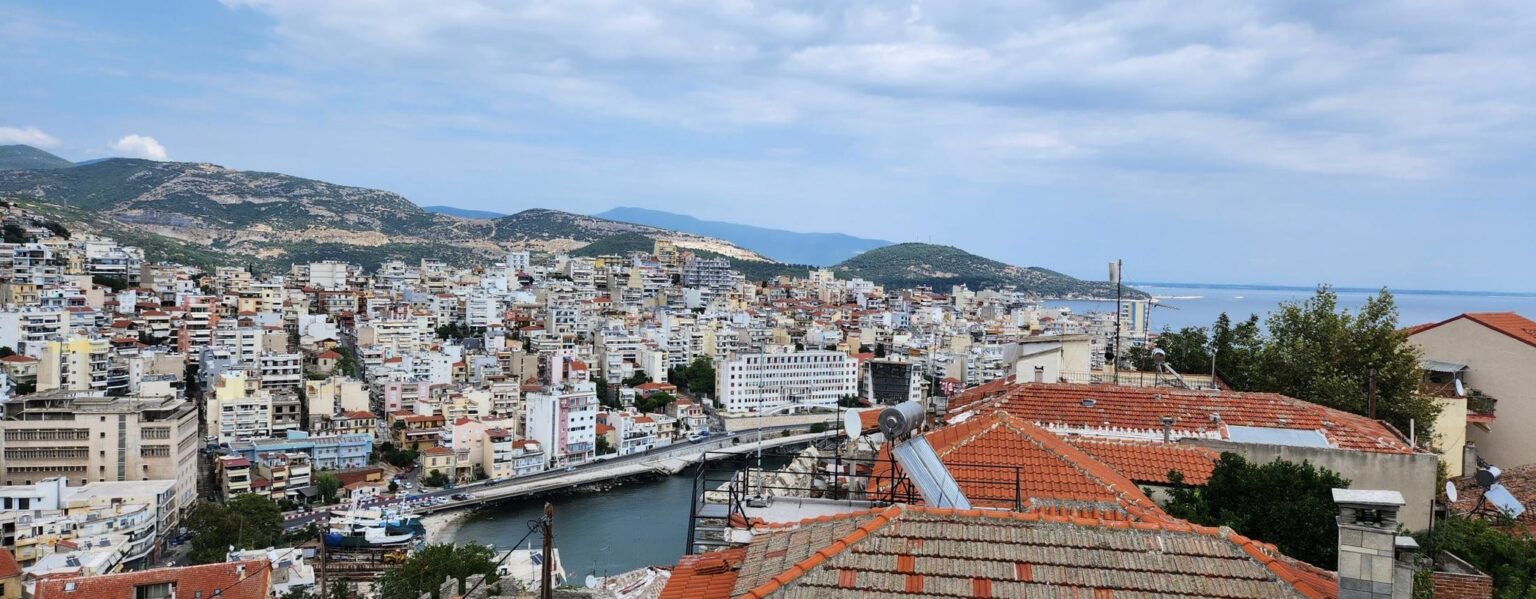
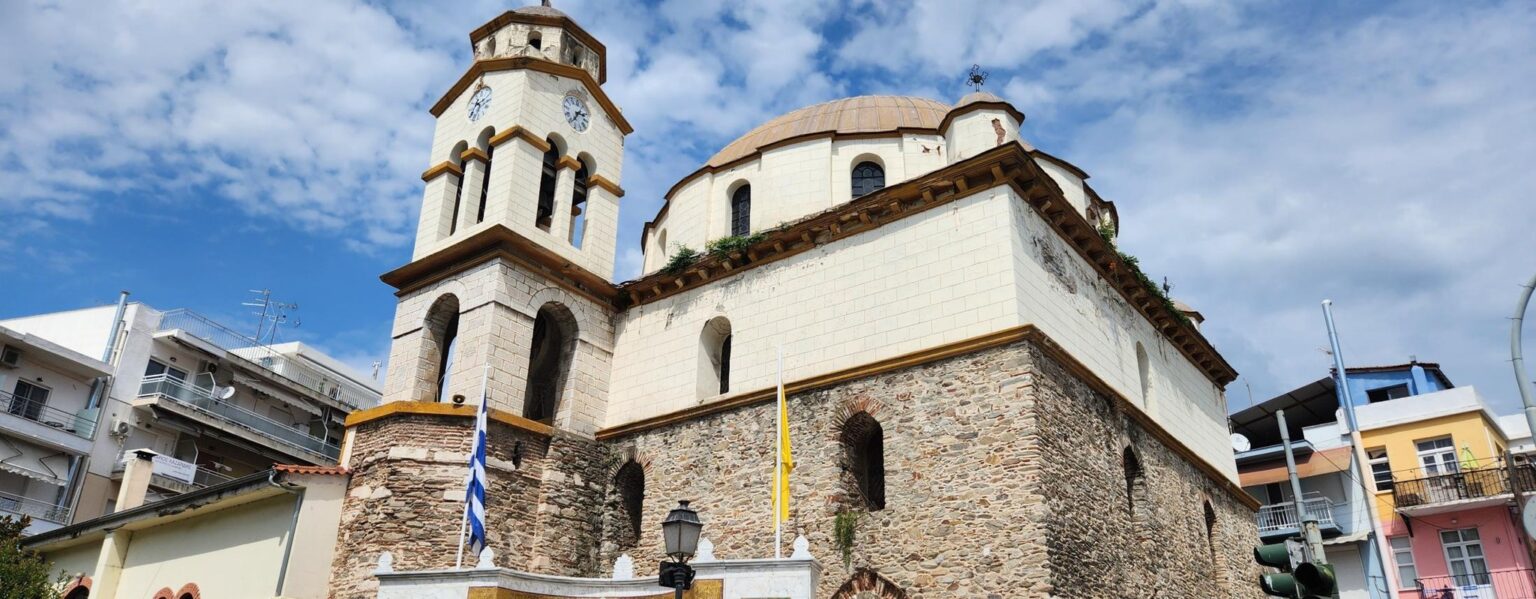
14:00, and there is another hour or two to play with. Monday is coming and it would be sensible to get home and revive the flat, and at the same time we do not want to go home at all. Decided: a walk around Kavala itself.
And here comes the rebirth mentioned above. Everything is at half or a third of Thassos prices. A salad €5–7, a main €5–10, gyros €2.50–4, a frappé €1.20–1.50, in entirely normal tavernas on the main street. Against the Thassos benchmark they feel positively luxurious.
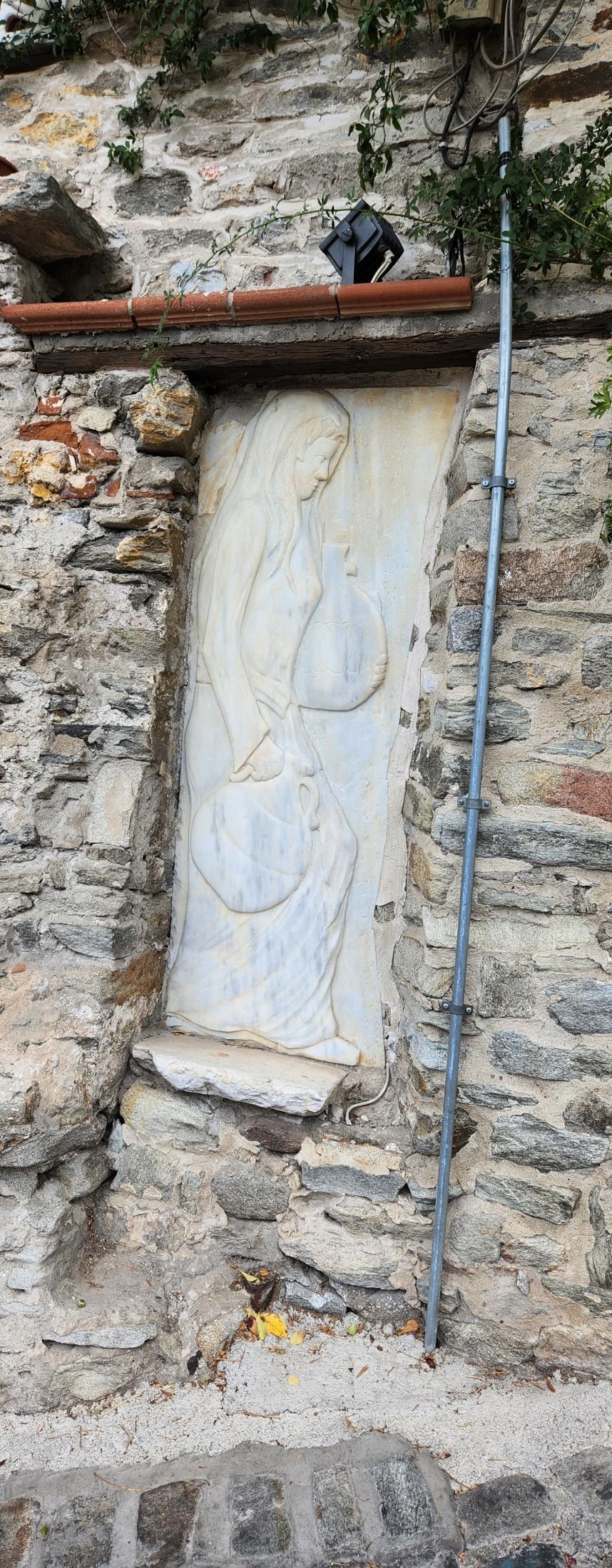
So there it is. You want to have been on an island and to tell the story? You pay for it. Kavala is not small, there is a lot to walk, several museums, and an hour or two on foot is enough to catch the essence, but it will most likely be the subject of a longer, more thorough visit. Still, to give you the idea:
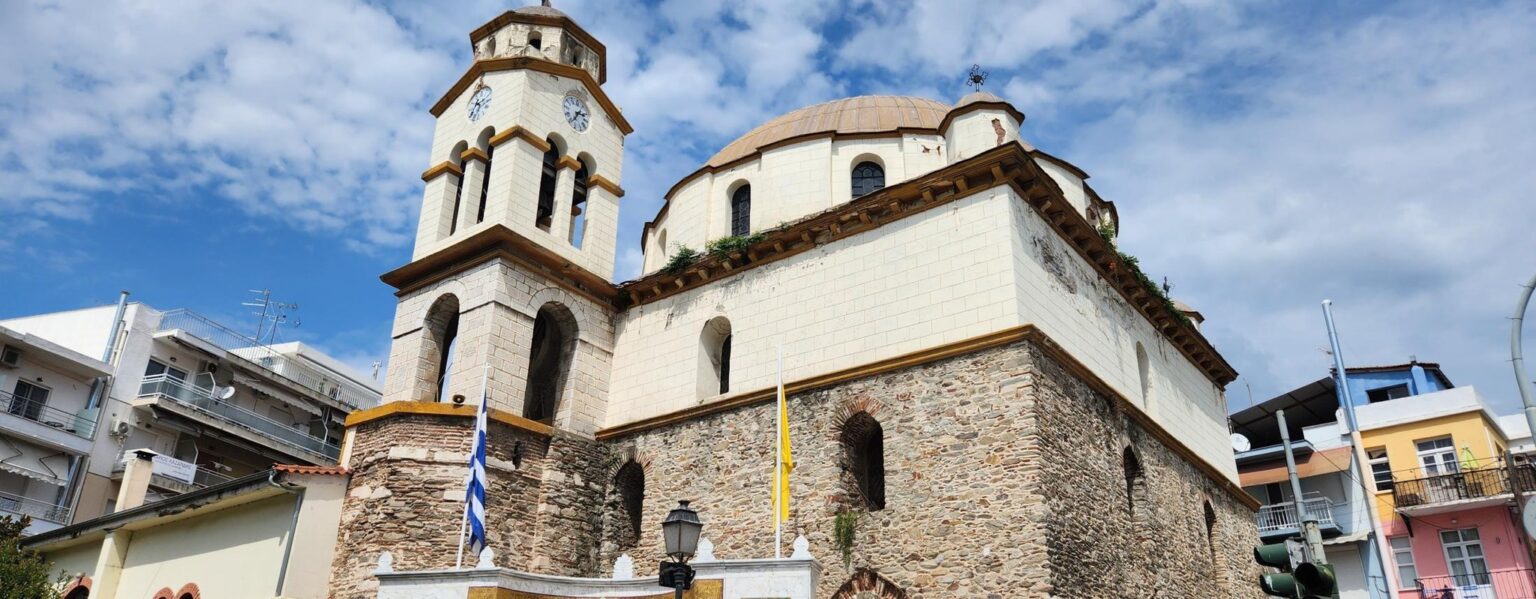
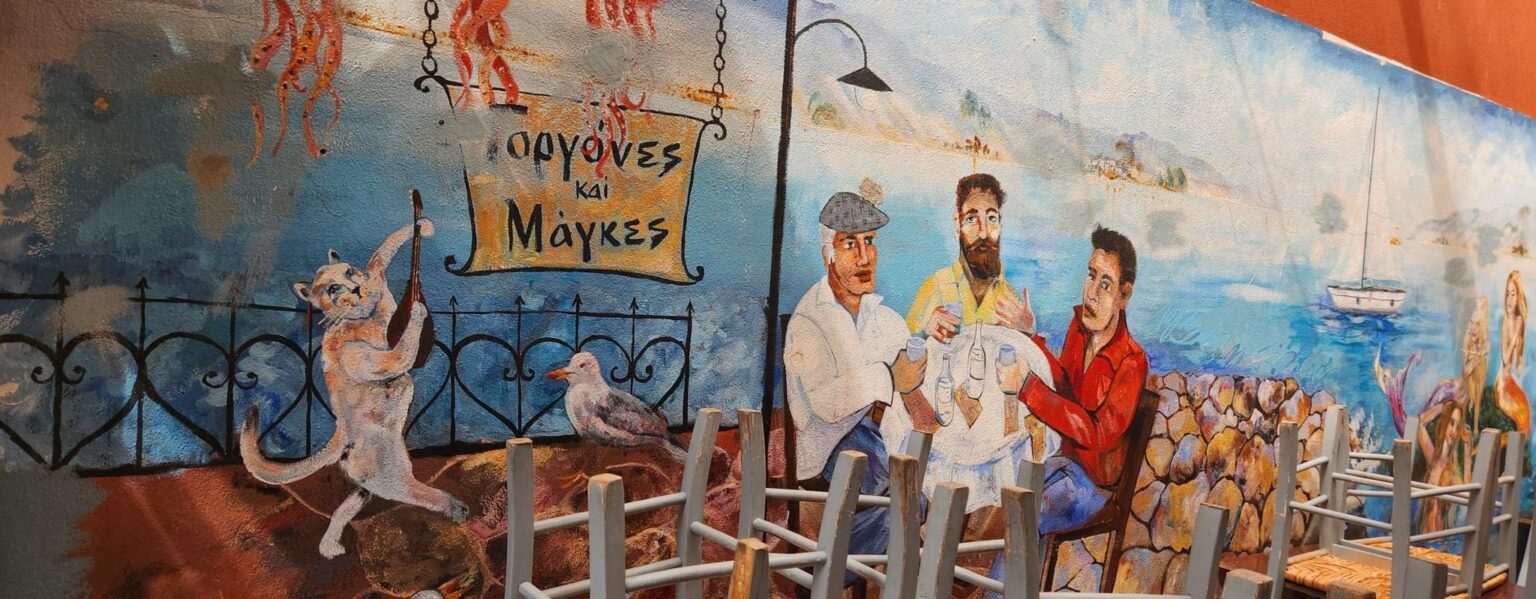
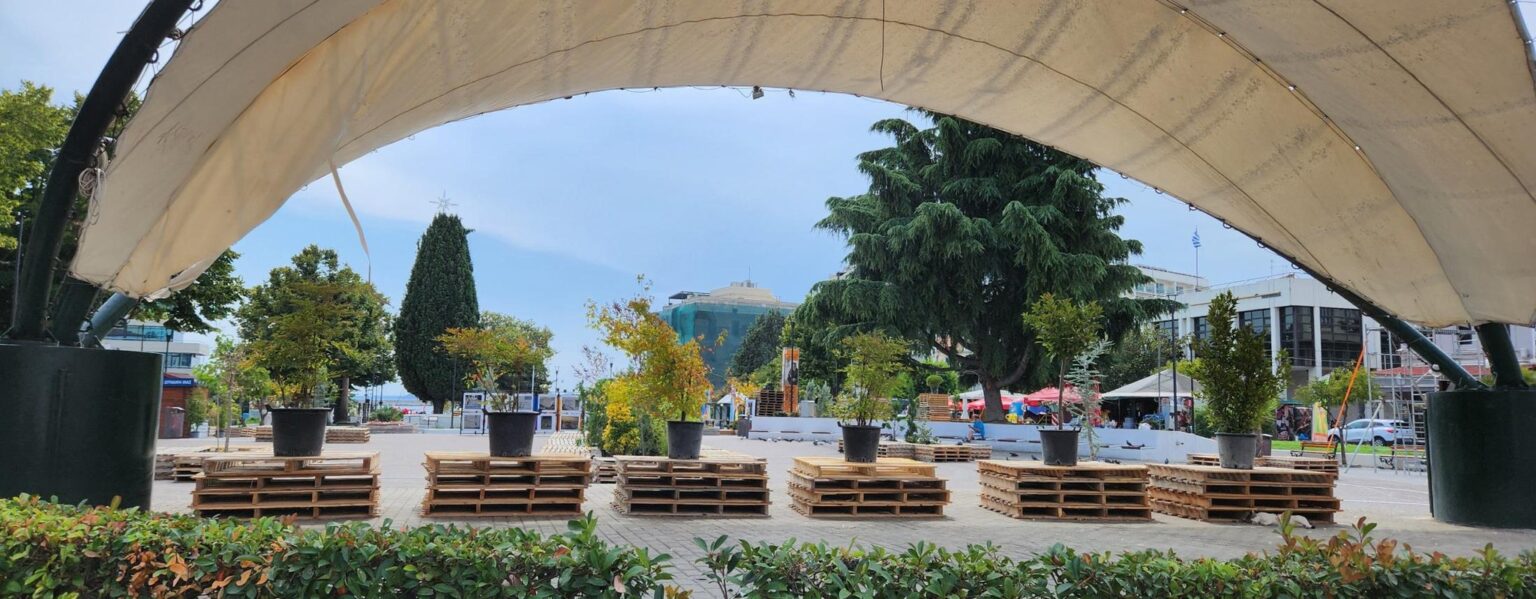
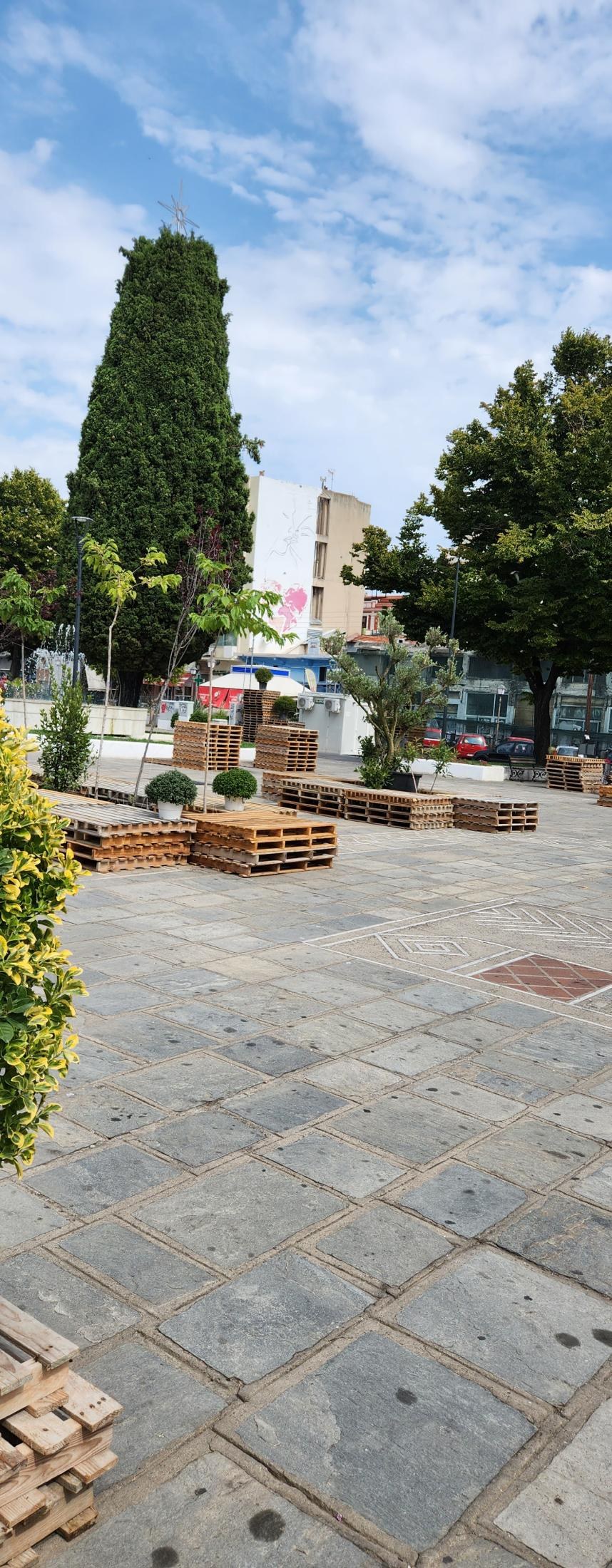
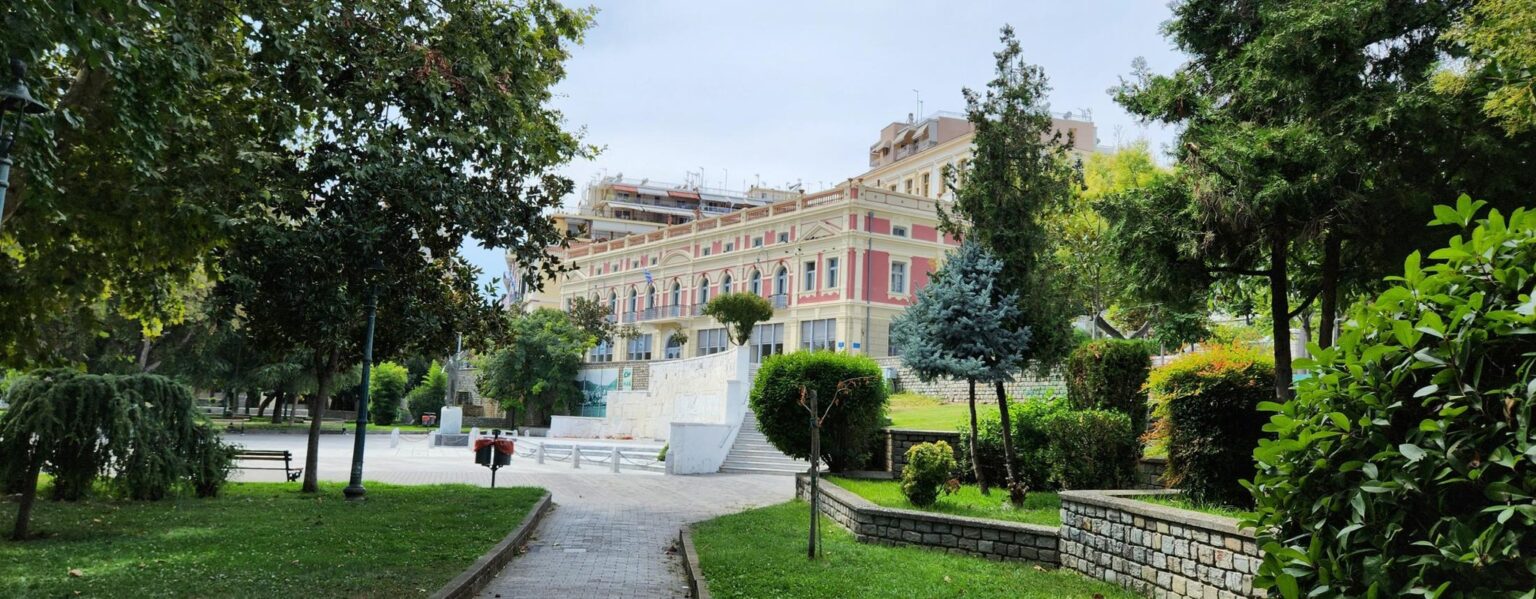
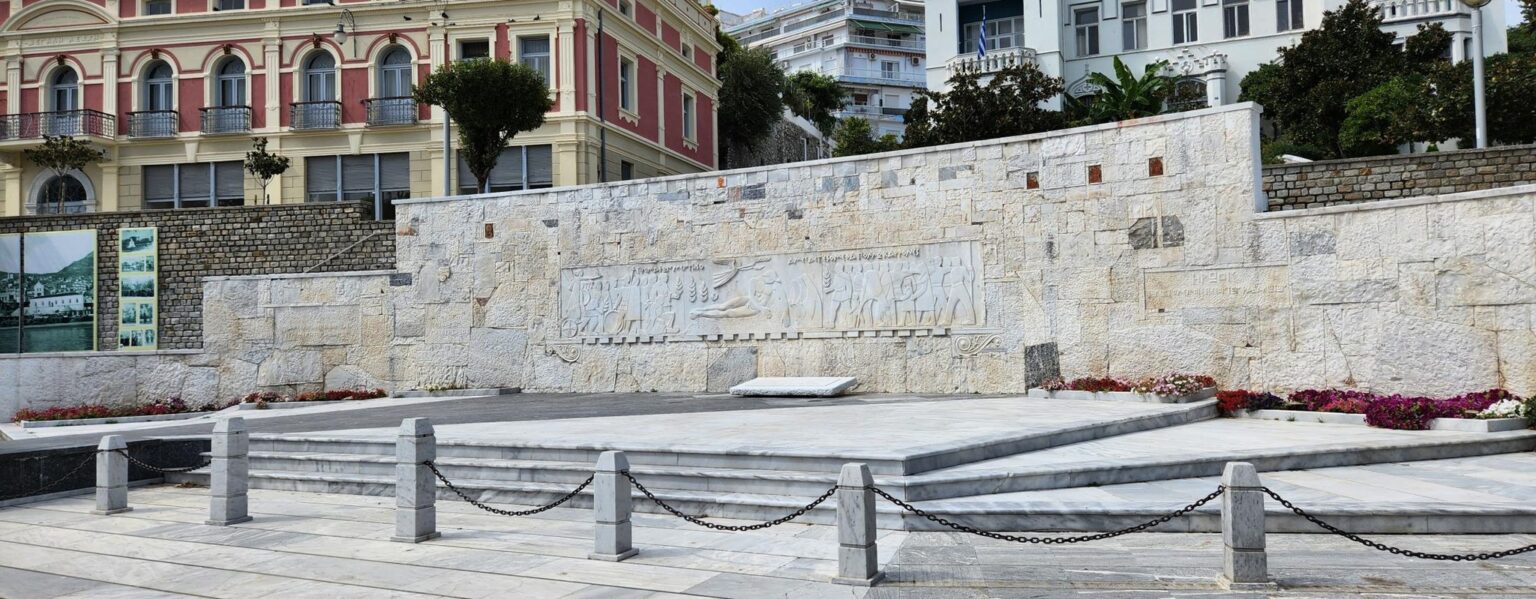
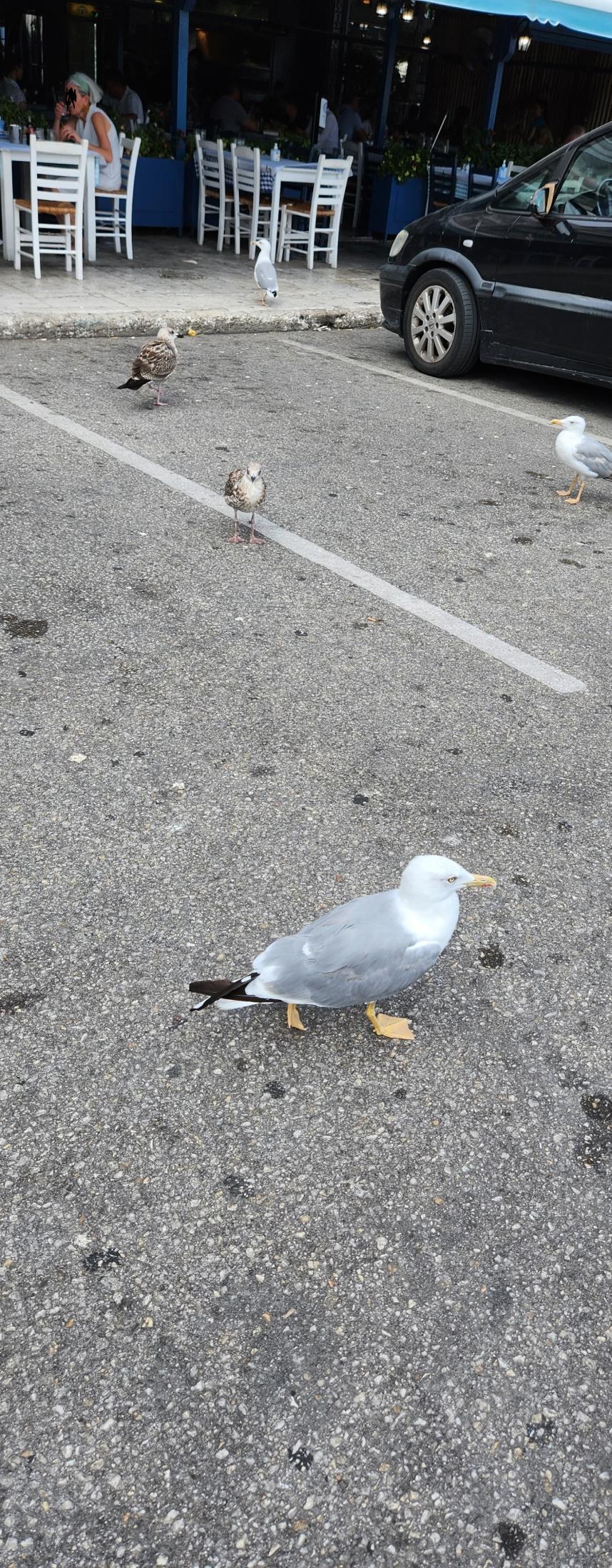
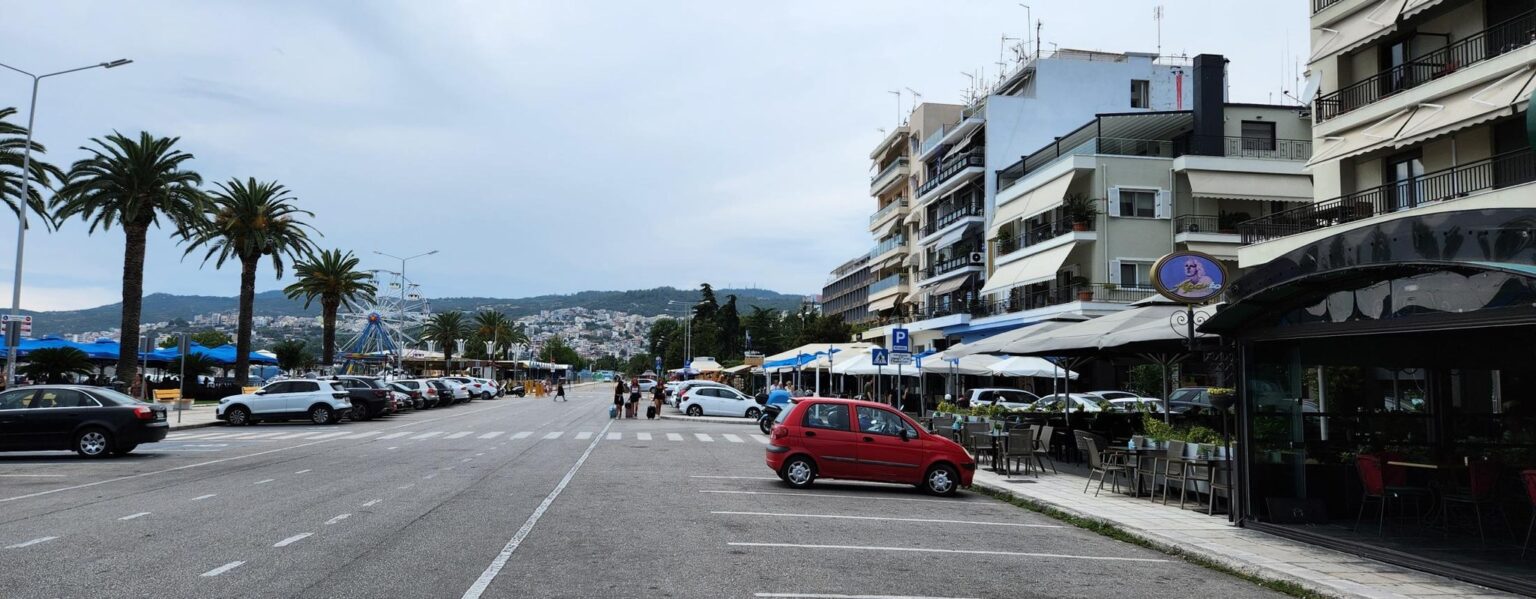
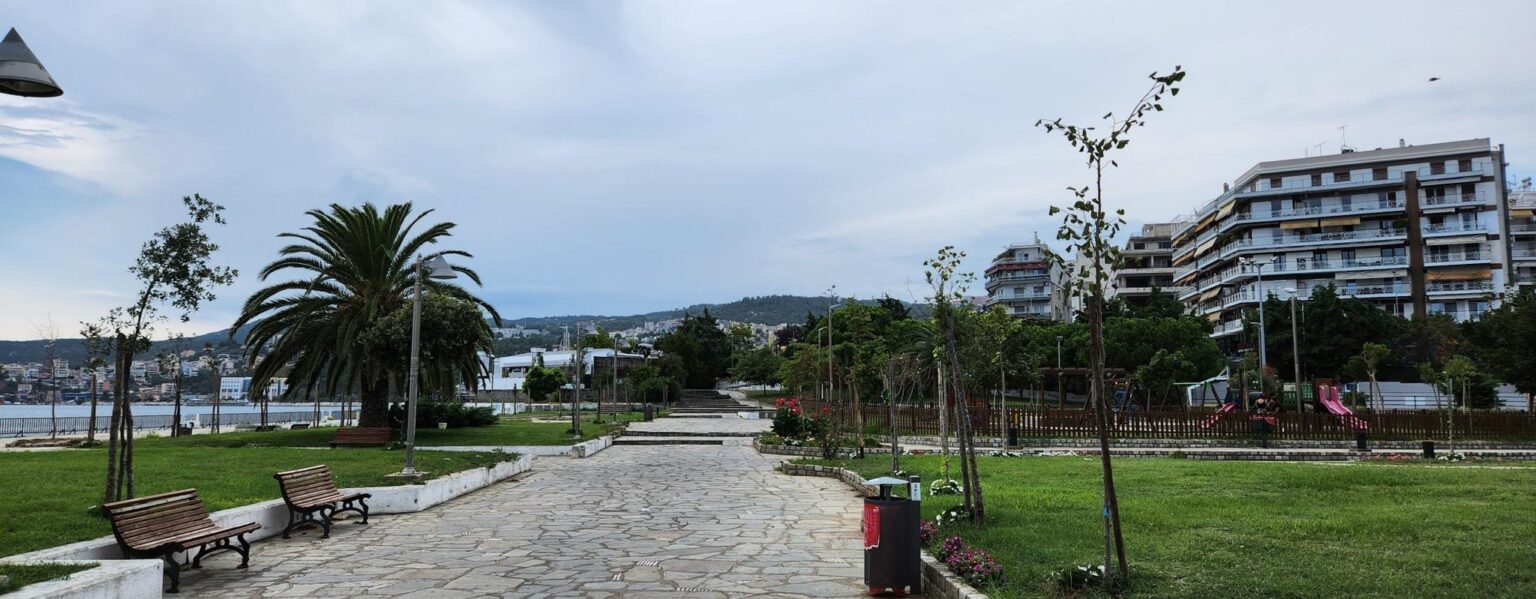
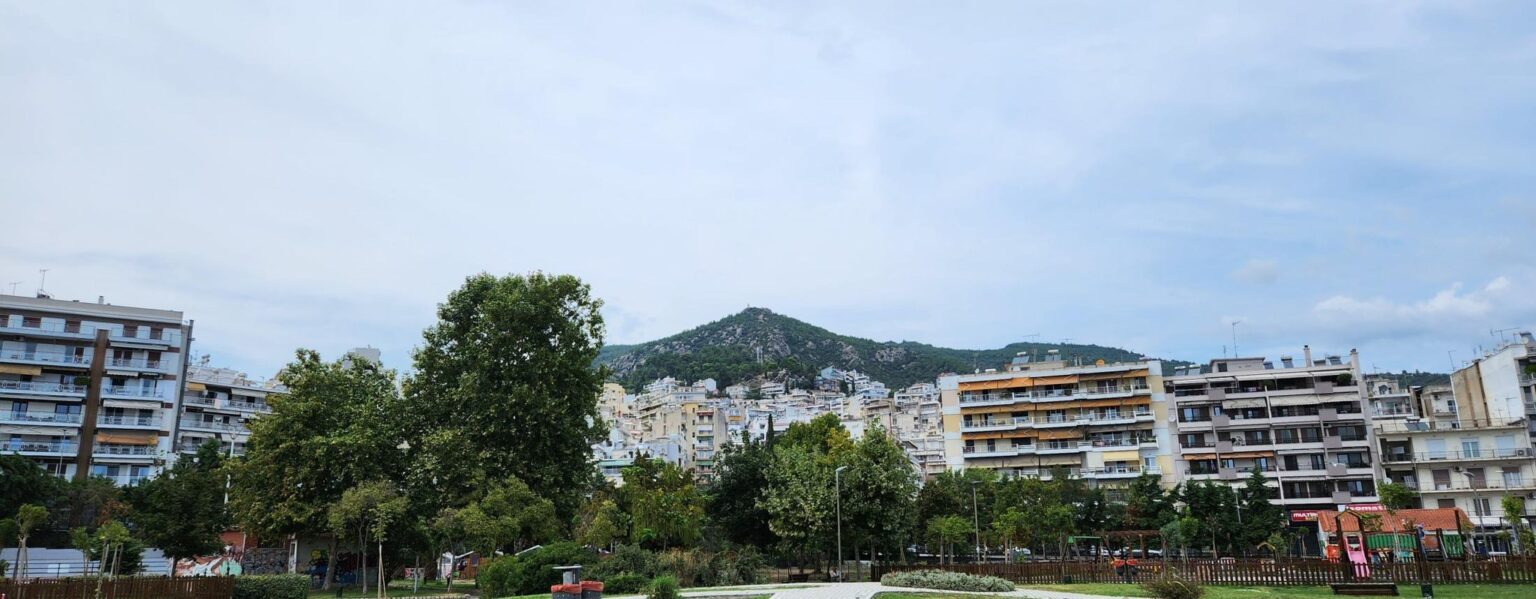
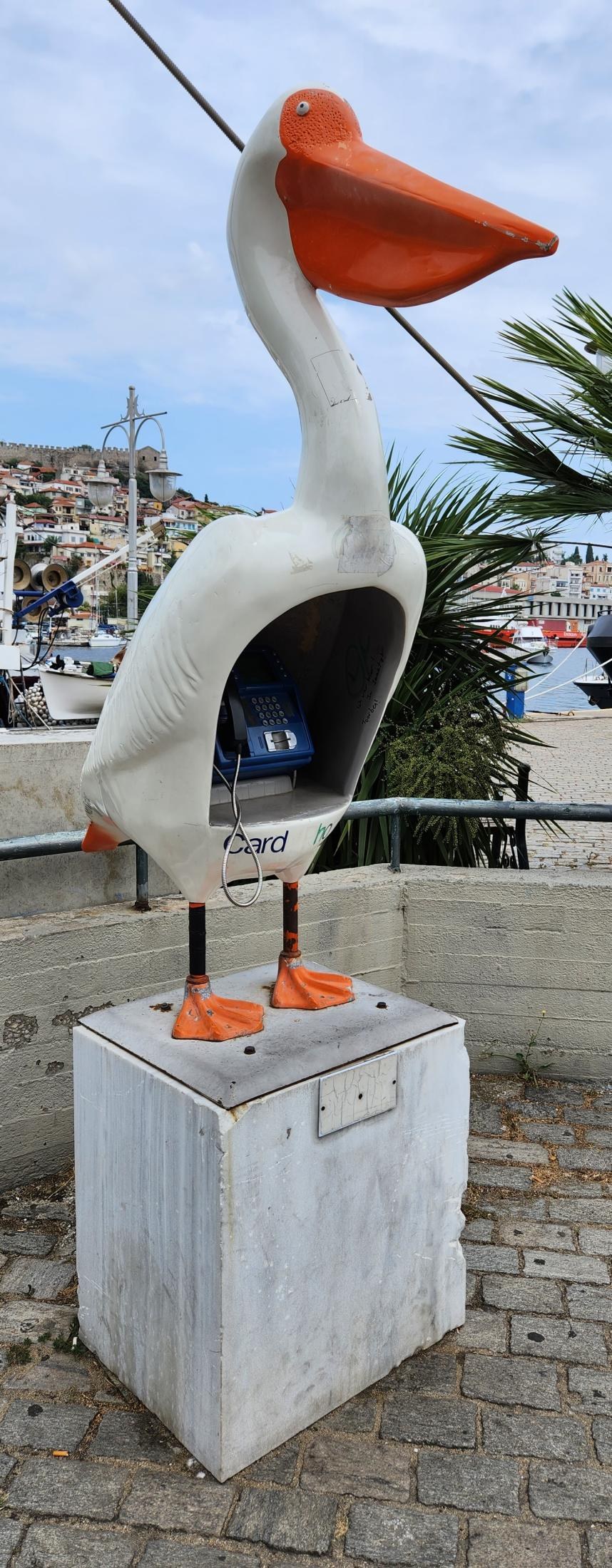
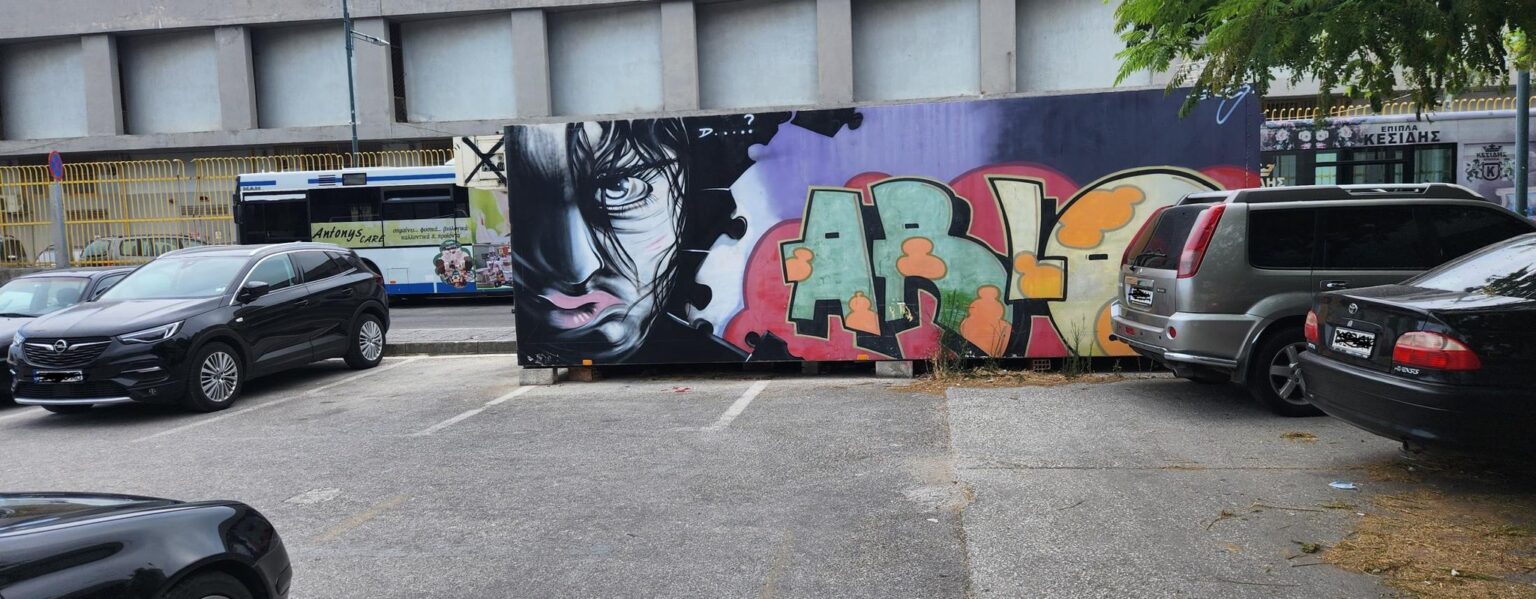
Tiredness is making itself felt, and there are four to five hours of driving back to Sofia. Time to go home.
Budget
It really does float. With your own car, including the ferry, fuel and accommodation, the minimum budget is around €65–75 per day if you want a well-rated hotel and the peace of mind of having someone to turn to if something goes wrong. But that really is the bare minimum: accommodation, fuel and food from supermarkets only.
For a normal experience, with a taste of the local goods, the budget is more like €100 per day, and that assumes eating in restaurants and tavernas about half the time. That figure can comfortably double with a more expensive hotel and eating out exclusively. All of this is August 2022 money, so treat it as a shape rather than a quote.
Difficulty
On this route the only meaningful climb is up to the fortress in Kavala, and that is within 15 minutes. Everywhere else the ground is flat. The heat, on the other hand, should not be underestimated.
Ferries, paying fees, parking and driving are all normal, and in fact easy.
Things to keep in mind
- Heat, heat, heat. Plan around it. If you struggle with heat and sun, schedule anything outside the luxury of the room’s air conditioning for the earlier or later hours. During the day temperatures sit in the 25–30°C range.
- Sun cream is extremely important.
- Restaurant food on Thassos is strikingly expensive. If you can, look for hotels with dinner included. That usually works out at around €15–20 per night. Eating in the tavernas turns the same meal into €40–50, which is largely unnecessary.
- If you are driving, check the ferry schedules. There is no sense in idling away several hours waiting. Arriving 15 to 20 minutes before departure gives you the time you need to get your bearings; in high season, with a car, allow considerably more.
- Mobile coverage and internet are exceptionally poor. From our own experience with Vivacom and Yettel: very weak. 3G/H frequently, 4G rarely, 5G practically never. Wi-Fi in hotels and restaurants is sporadic. Bear that in mind and do not let anyone depend on you for remote access.
Conclusion
We spent nearly a week on an island! There, we said it. It is an adventure, and a box on the list has been ticked. The feeling is nothing like being on an island, though. You step off the ferry and you are already somewhere familiar.
It is interesting and it should be seen, but it really does depend on your holiday budget. For the same money you could spend twice or even three times as long somewhere no worse, still in Greece. The sea will be the same sea, after all.
If you are going for the sightseeing, the options are limited and with good planning the island can be covered in two days. In our view the ideal approach is this: if you are going for the beach, find a hotel and book it two or three months ahead with dinner included at a competitive price.
Gallery
Everything in one place: