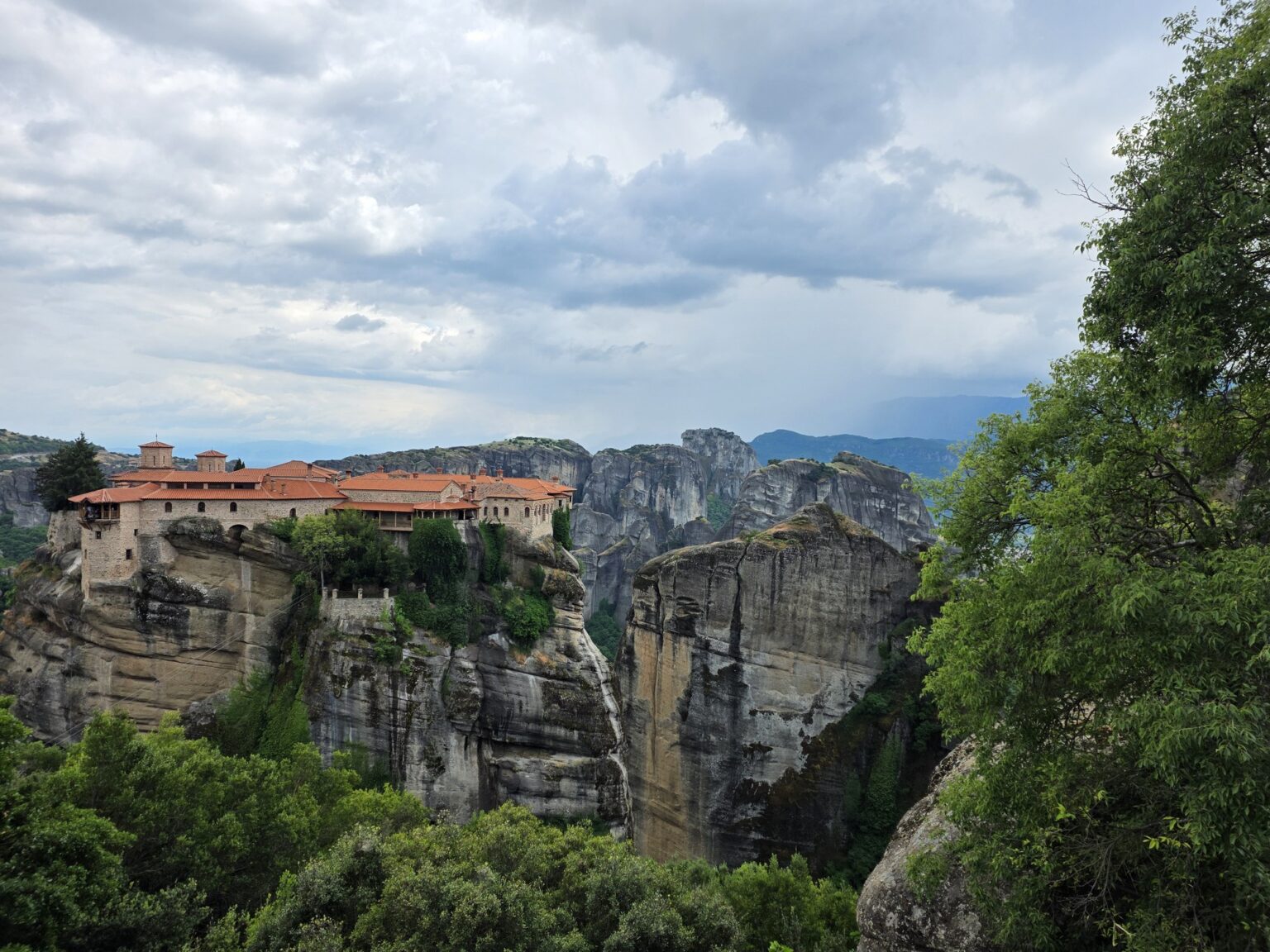
Pieria, the strip of mainland Greece that sits under Mount Olympus, does two very different things at once and gets away with both. On one side there is Paralia — a small, tidy seaside village with a wide beach, tavernas and prices that have not lost their minds yet. On the other, about 150 km inland, are the Meteora — monasteries perched on top of sandstone pillars, which photographs genuinely fail to prepare you for. In between sits Katerini, the regional capital that most people drive straight past on their way to the sea.
Here is the conclusion up front, so you do not have to scroll for it: three days is enough. One to arrive, one for Meteora, one for Katerini. The fourth day in our own trip was napping, tavernas and a second coffee — it has nothing to do with sightseeing and everything to do with Greek food and Greek weather. The recommendation is a warm one. 🙂
| Where it is | Paralia, in the Pieria regional unit of northern Greece, 8 km from Katerini on the Thermaic Gulf; Google Maps |
| Getting there | by car from the Bulgarian border at Kulata / Promachonas along the A25 past Thessaloniki, then the A1 south; just under 200 km, motorway the whole way |
| How many days | 3 days covers everything worth seeing; a 4th only if you want a day of doing nothing |
| Motorway tolls | around €9 each way for a car, across five barriers. Check current rates with Nea Egnatia Odos and Aegean Motorway. |
| Meteora | 6 working monasteries, about 150 km from Paralia; admission €5 per monastery, cash, paid separately at every gate; under-12s free |
| Opening hours | different at every monastery. Great Meteoron: 1 Apr – 31 Oct — 9:30 – 15:00, closed Tuesdays; 1 Nov – 31 Mar — 9:30 – 14:00, closed Tuesday, Wednesday and Thursday. Check the current timetable on the monastery’s official page. |
| Parking | free almost everywhere in Paralia, with a few small exceptions; in Katerini, free once you are about ten minutes’ walk out from the centre |
| When to go | April to October — summer timetables at the monasteries, and most of them open every day except Tuesday |
The drive down, and what the tolls cost
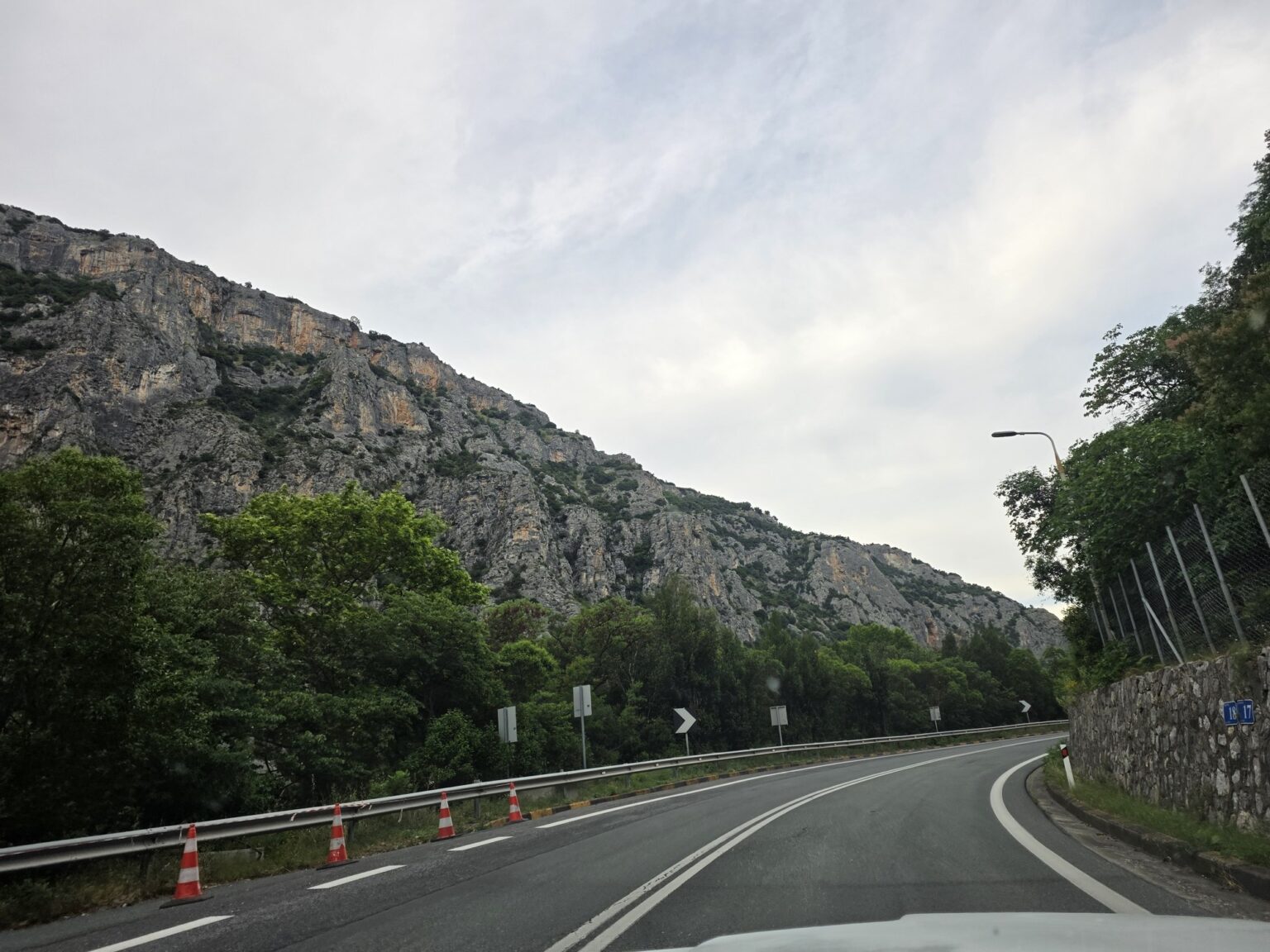
We cross at Promachonas, the main Bulgaria–Greece border post, and from there it is motorway all the way to the Paralia turn-off. The road is fast and boring in the best possible way — tarmac, crash barriers, rocky hills off to the side and almost nothing to distract you. Exactly what we want before a holiday.
Greece charges at fixed barriers rather than by distance, so you pay a set amount as you pass each one. On this route there are five: Promachonas and Strymoniko at €2.35 each, Thessaloniki at €0.65, Malgara at €1.15, and Kleidi at €2.60. That comes to around €9 each way, or under €20 there and back, at 2026 rates for a standard car. The first four belong to Nea Egnatia Odos and the last to Aegean Motorway. Cash and cards work at every staffed lane; you do not need an electronic tag.
There is a second option. A good share of this route can be driven on toll-free roads, and they are in perfectly decent shape — in places, honestly, better than the motorway. But that is a move for someone who has already driven in Greece and is not caught out by the local habits behind the wheel. On a first trip, stay on the motorway: it is straight, predictable and saves you navigating at exactly the moment you would rather not. Judging by the patchwork, the same crews have clearly been at work on the Bulgarian and the Greek roads. 😀
Day 1: Paralia
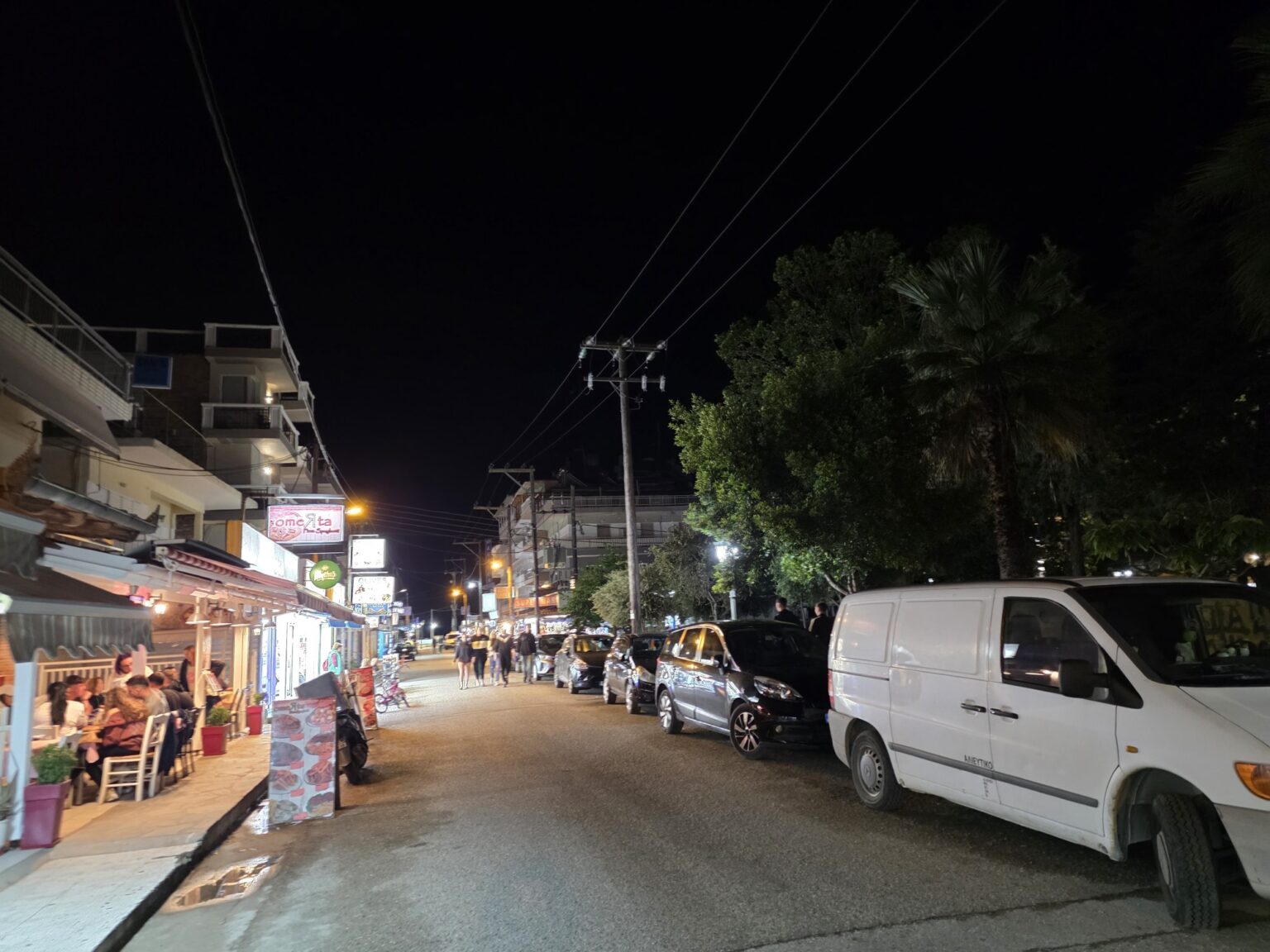
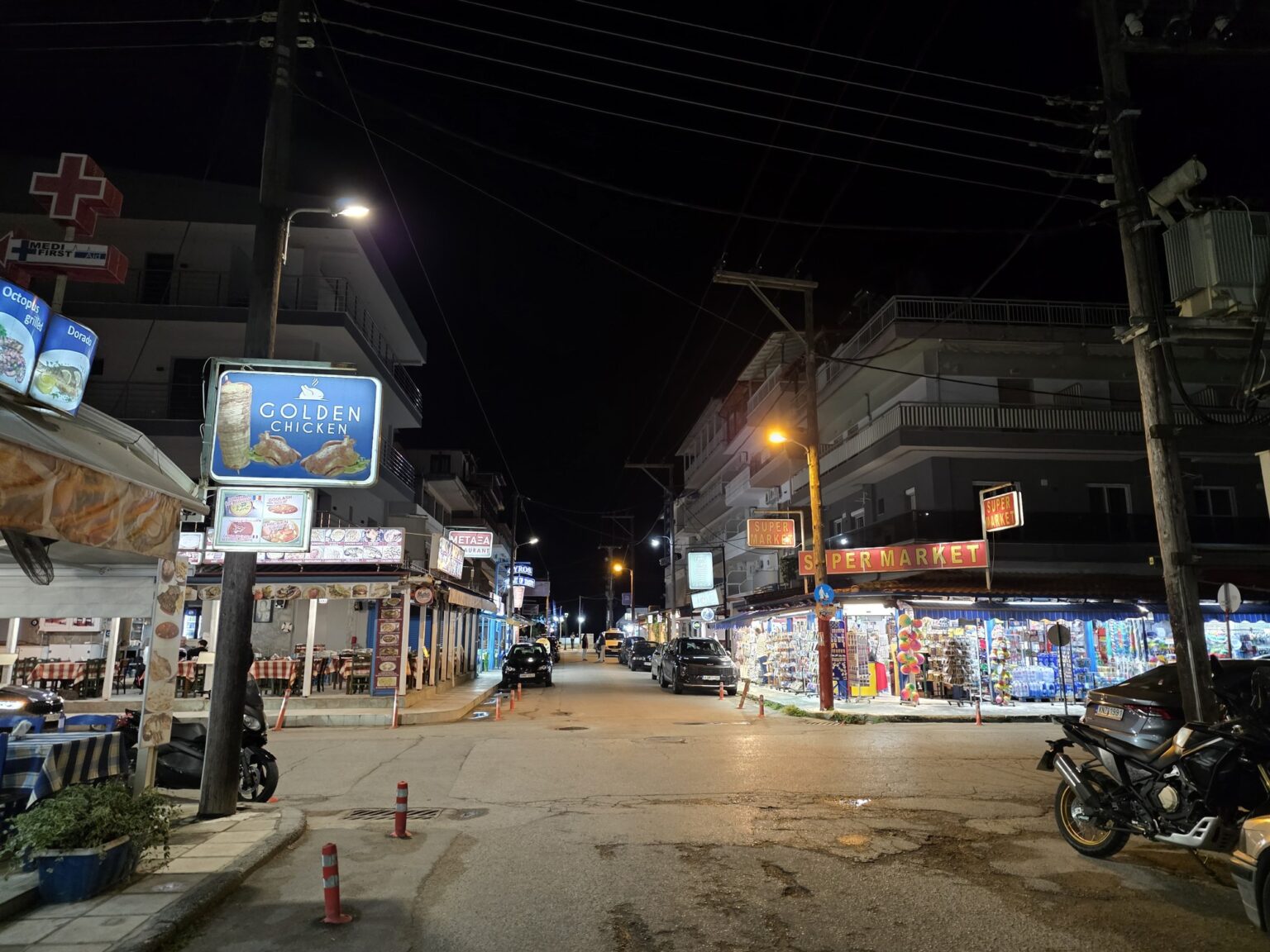
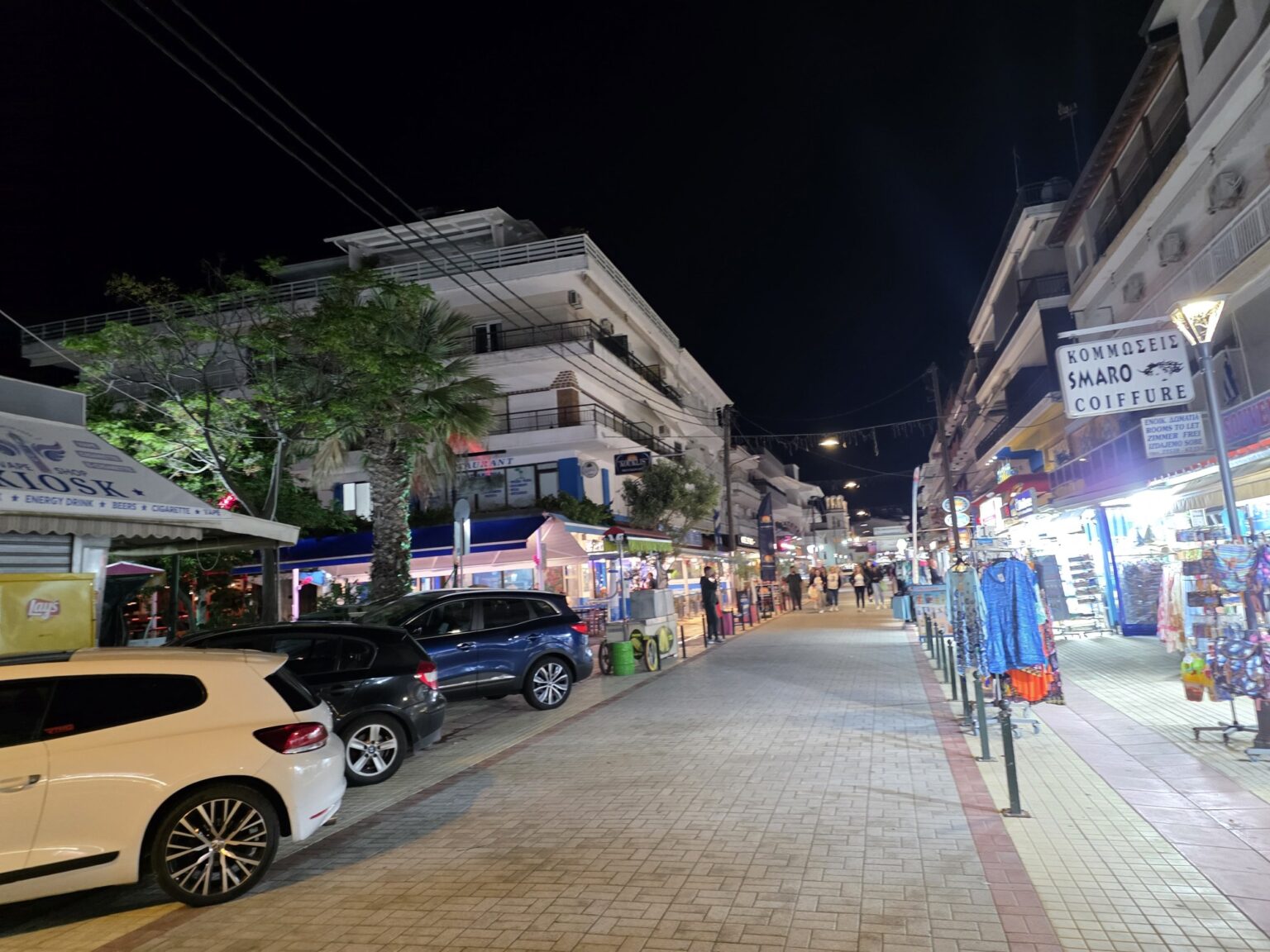
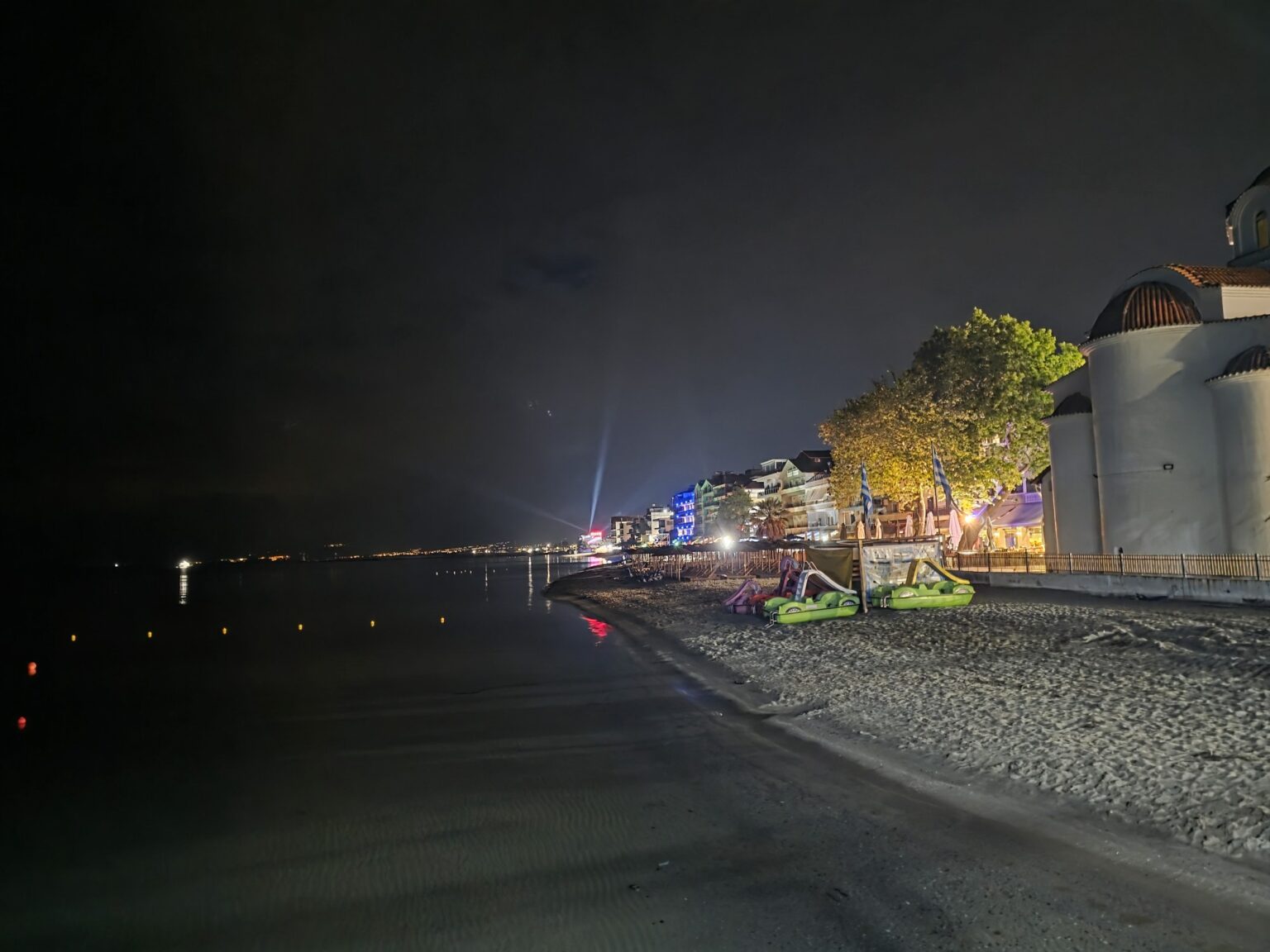
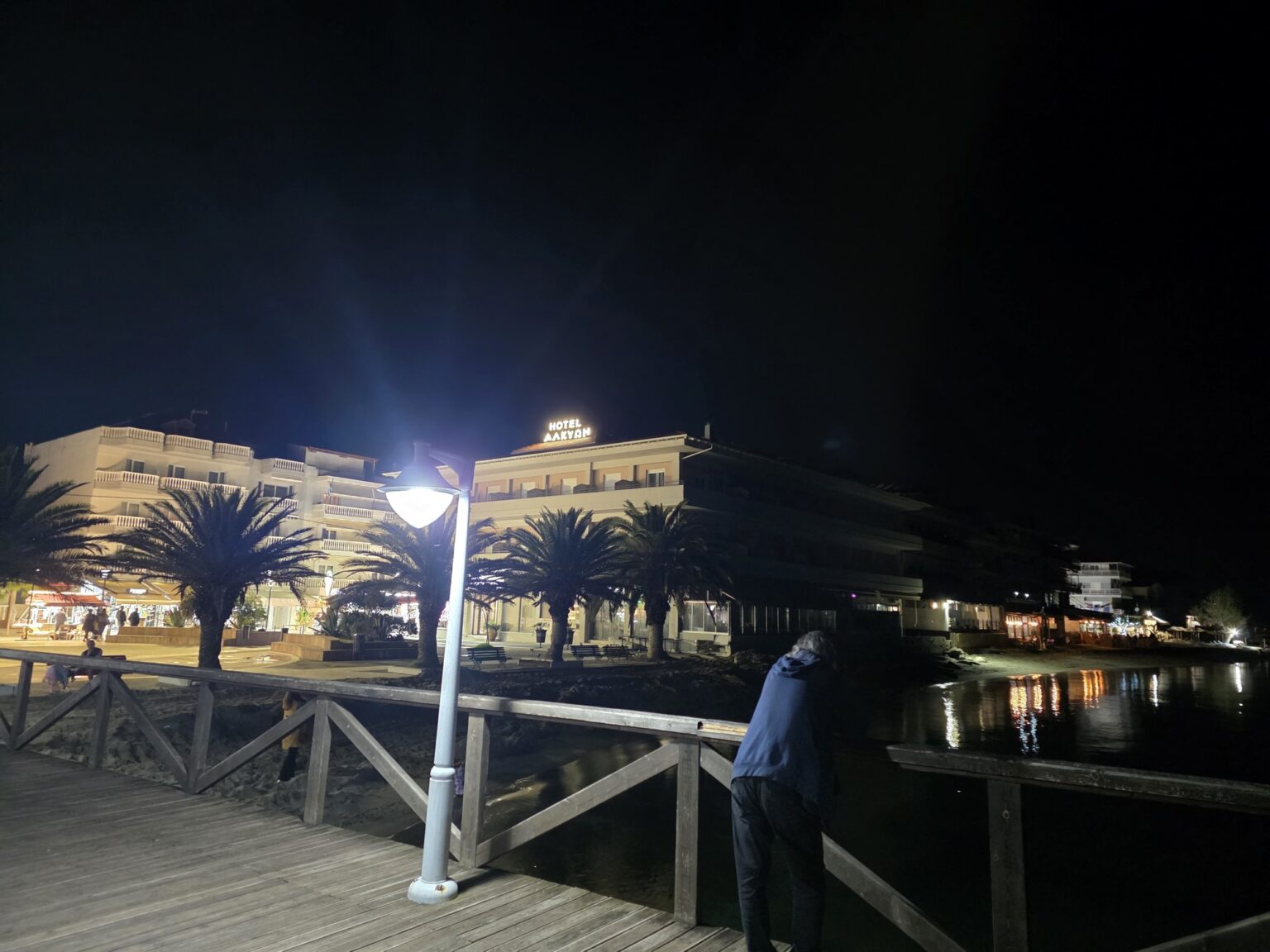
Paralia is small. You can walk the whole of it in about an hour, and that is part of the appeal — 1,476 residents, 8 km from Katerini, wedged between farmland and the Thermaic Gulf. The first thing we notice is the parking: free, no barrier, no ticket, nobody waving you into a space for a fee. The exceptions are few and clearly marked. The second is the taverna prices — reasonable, with no surprises when the bill lands.
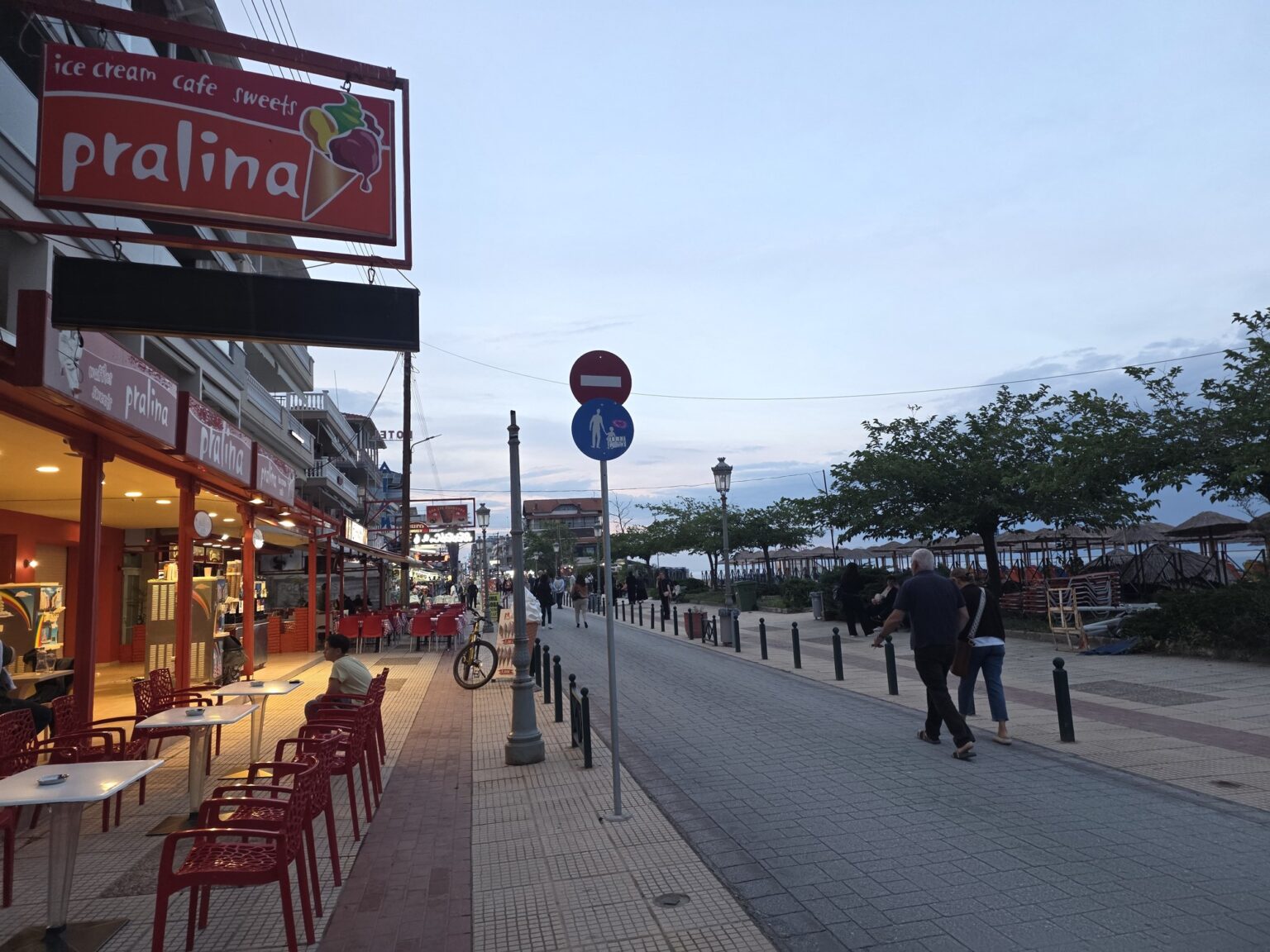
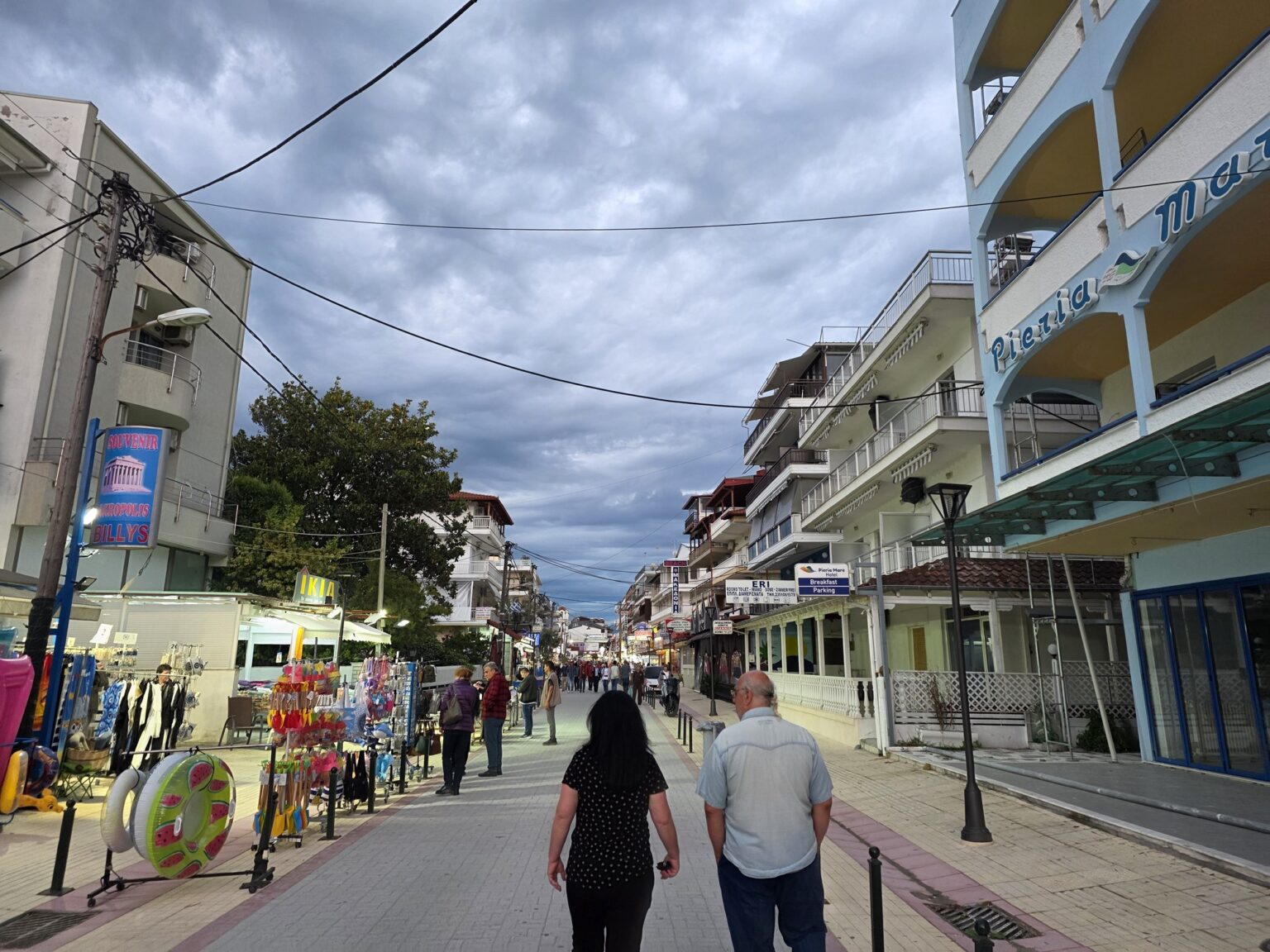
In the evening the village switches on and becomes one long pedestrian street of shops, outdoor tables and people in no hurry whatsoever.
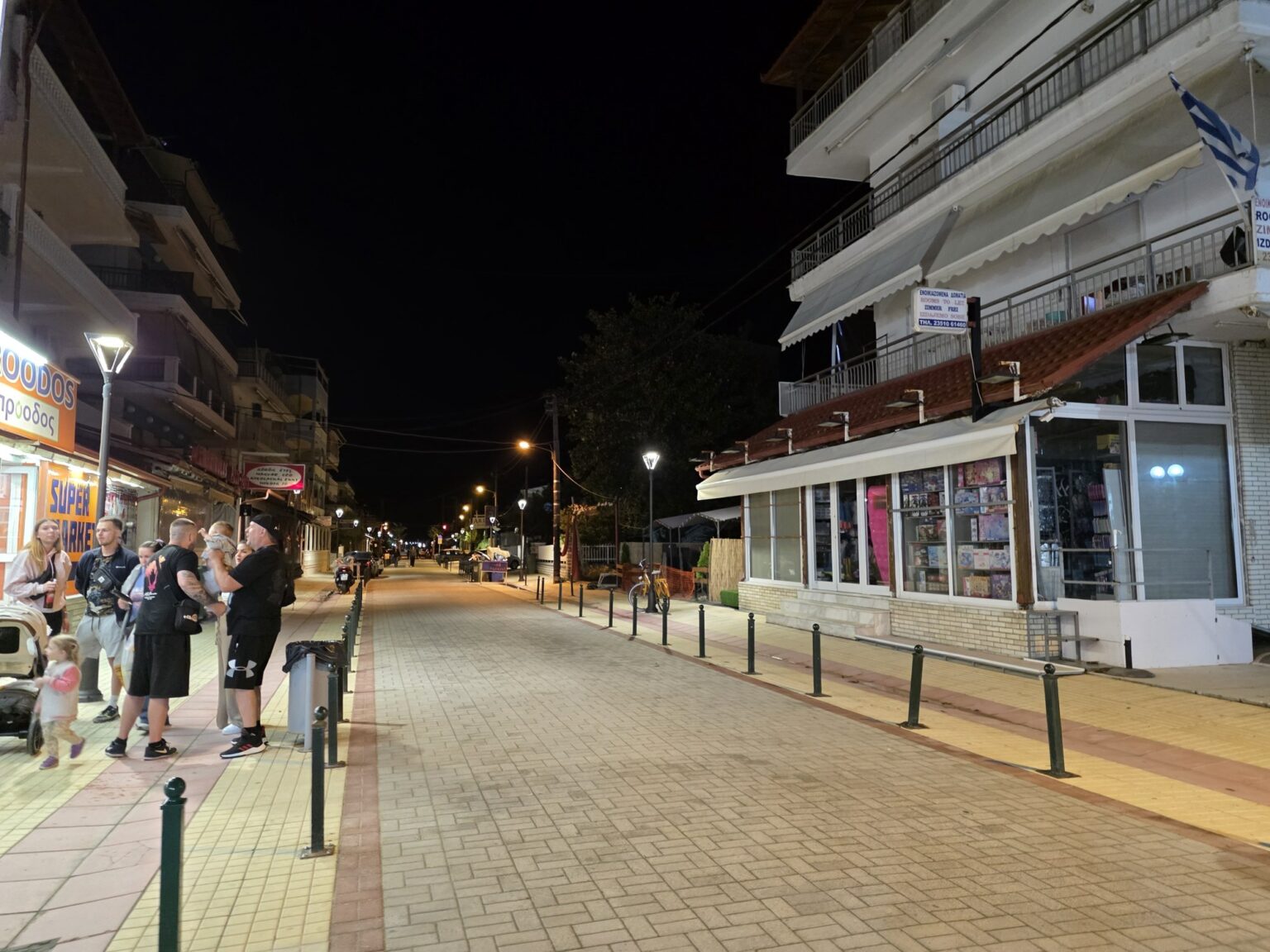
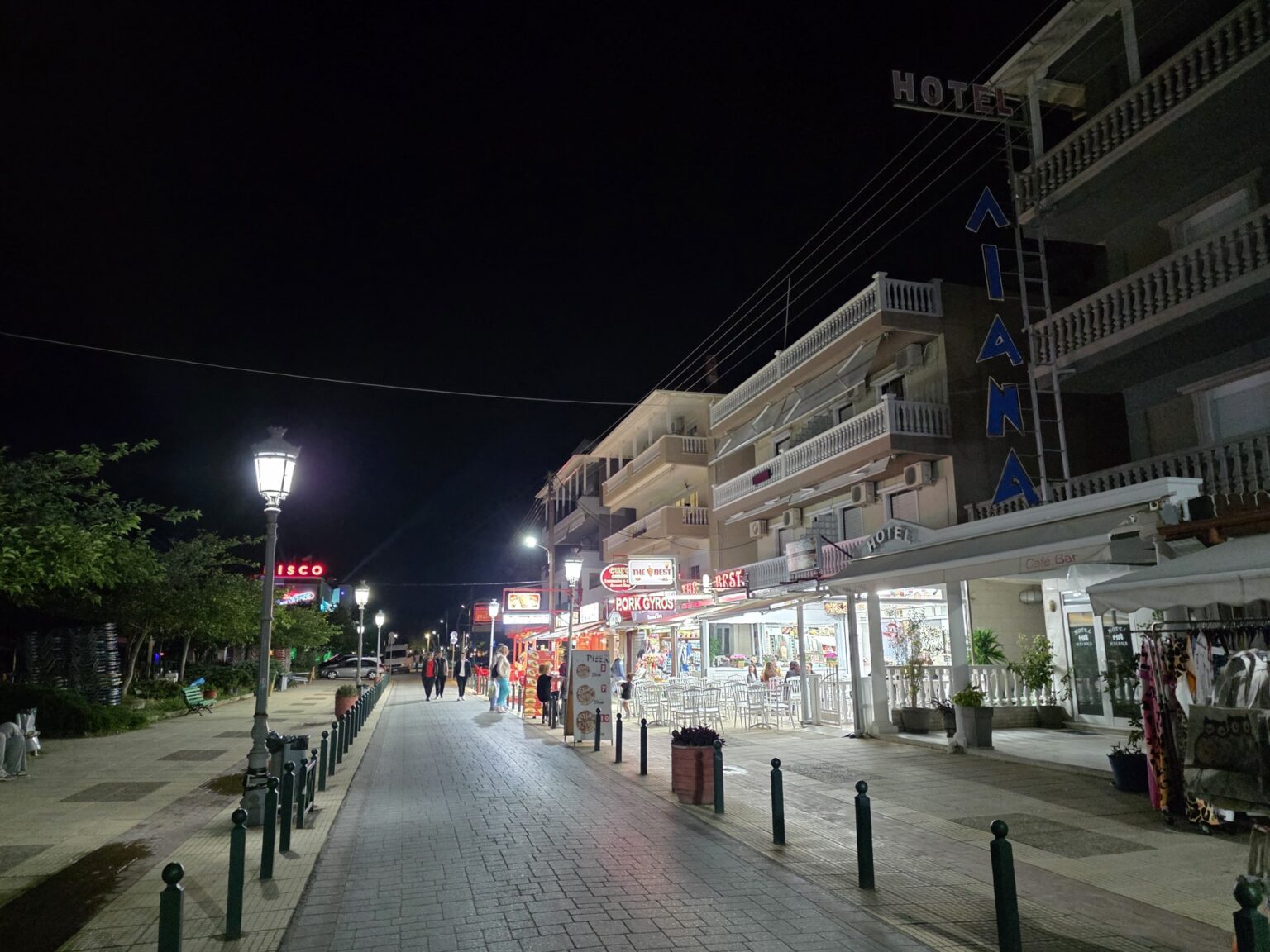
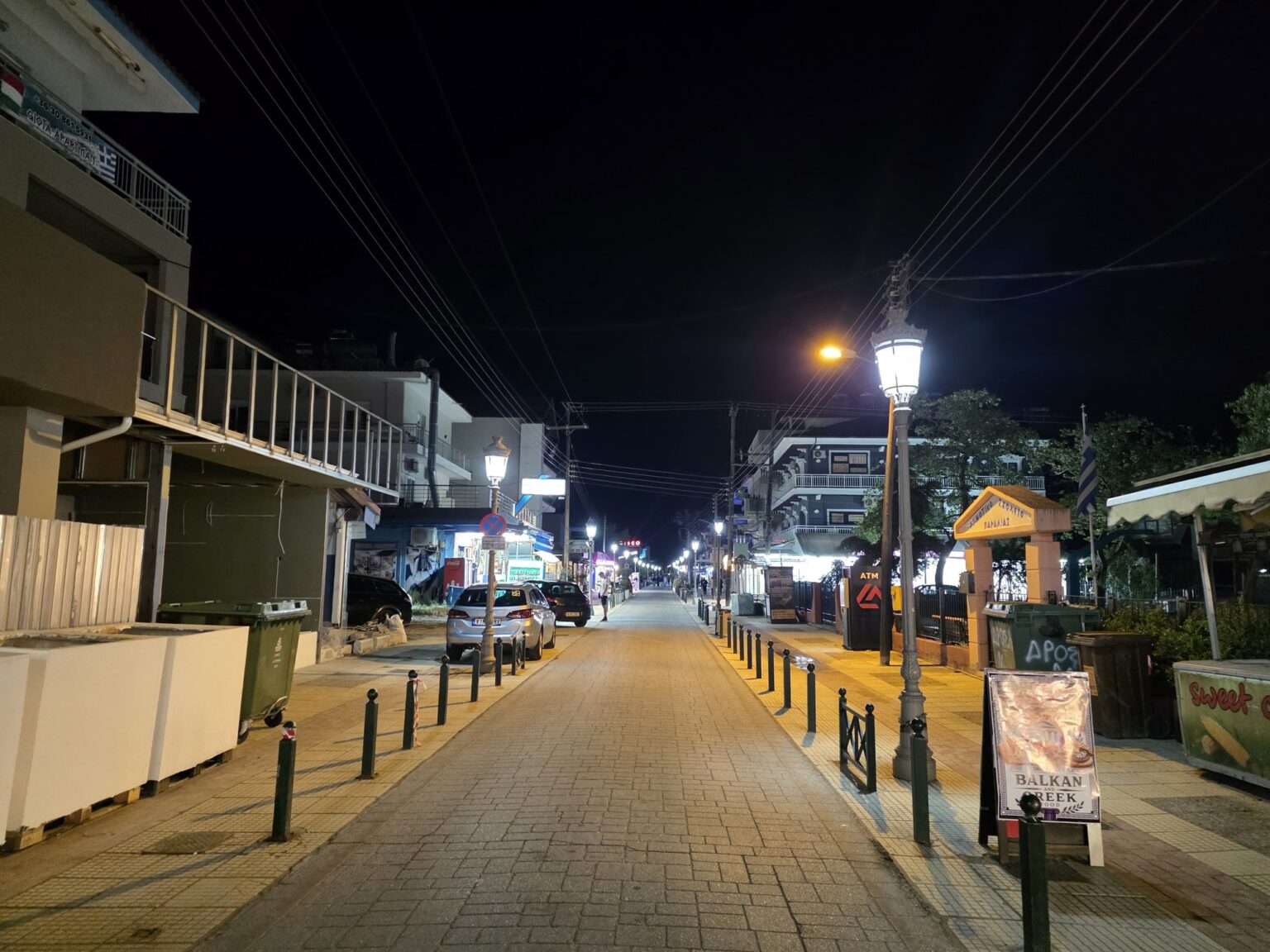
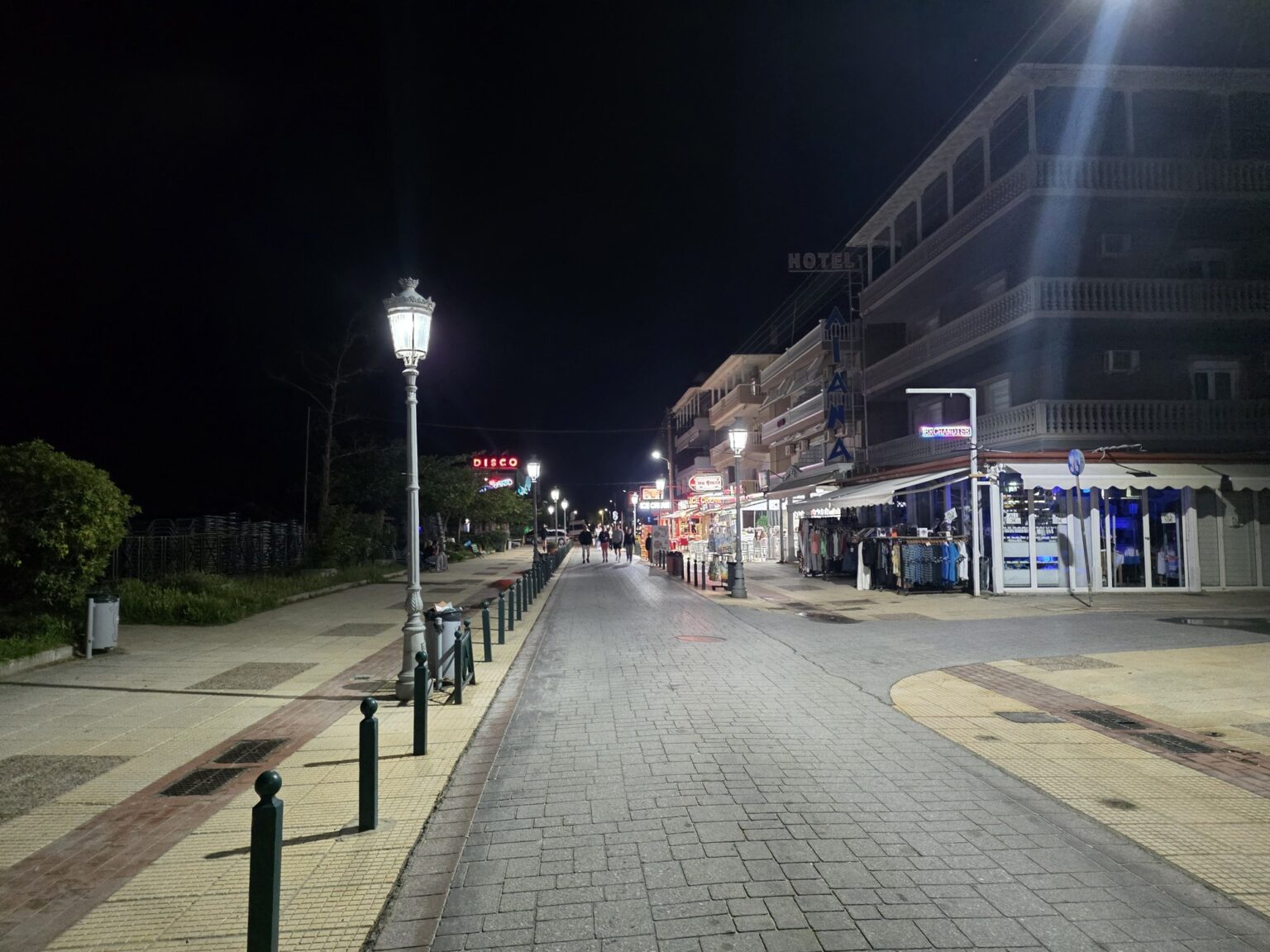
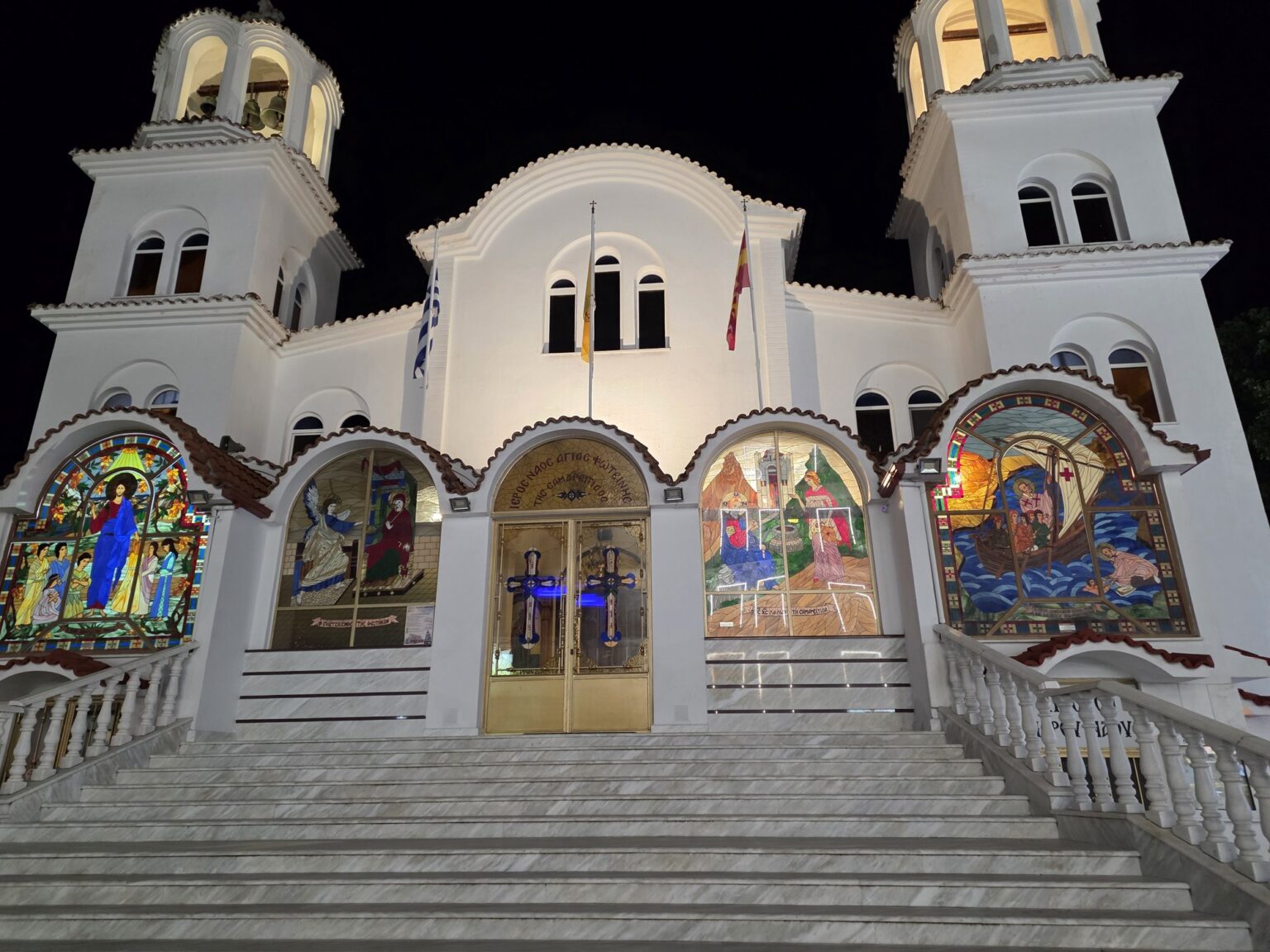
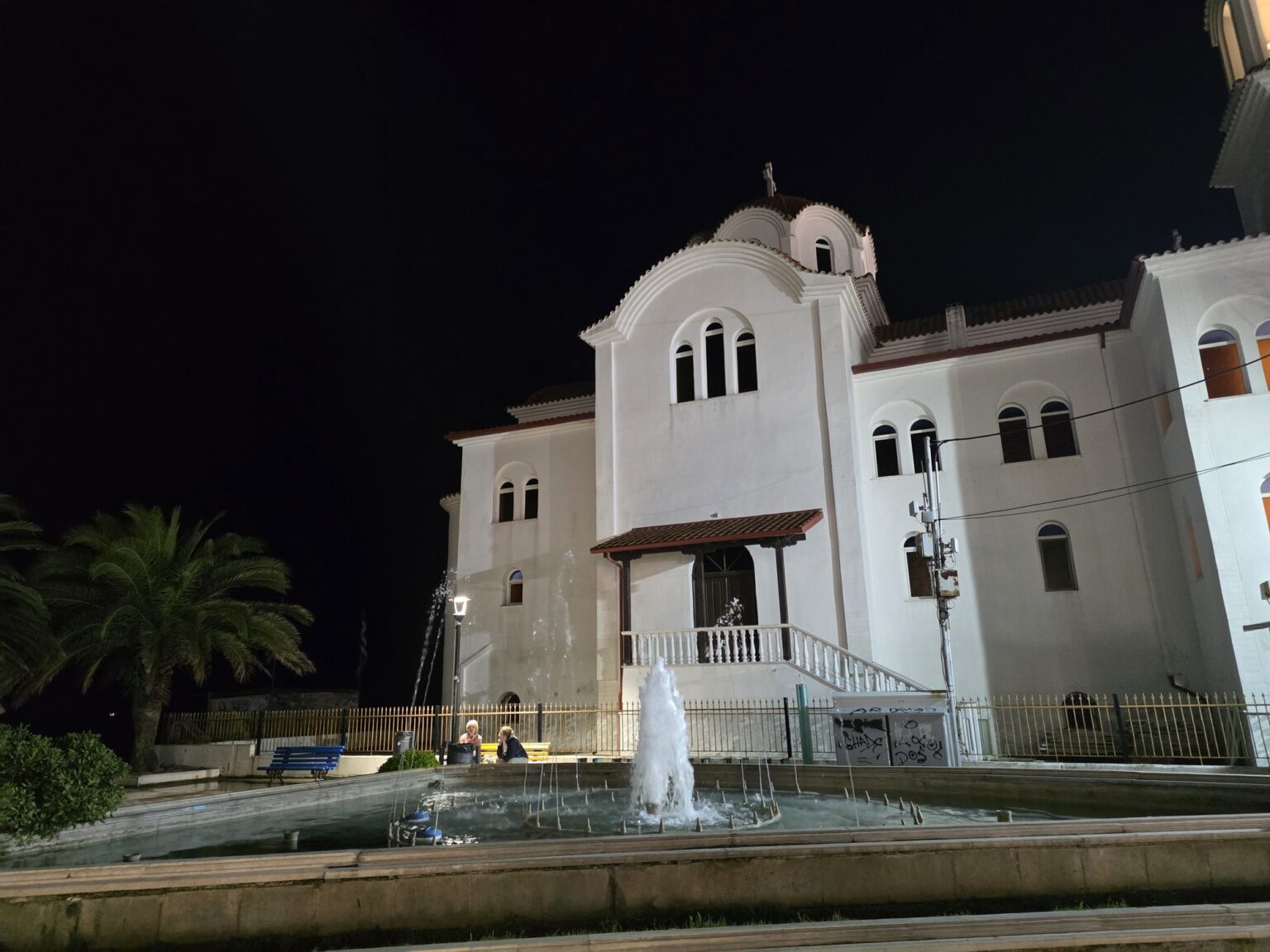
In the middle of the village stands a white church with mosaics across its facade and a fountain in front of it. Lit up at night, it becomes the most photographed corner in Paralia. According to the Municipality of Katerini, the village’s main church is dedicated to Saint Photini.
Day 2: Meteora
This is the full-day part and there is no half-measure version of it. Around 150 km each way via Larissa and Trikala, two to two and a half hours behind the wheel. We leave early: the monasteries open at about 9:30 and shut in the early afternoon, so the morning is the entire window. Different route-planners give anything from 150 to 180 km depending on which way you go — budget for the upper end.
Where the name comes from
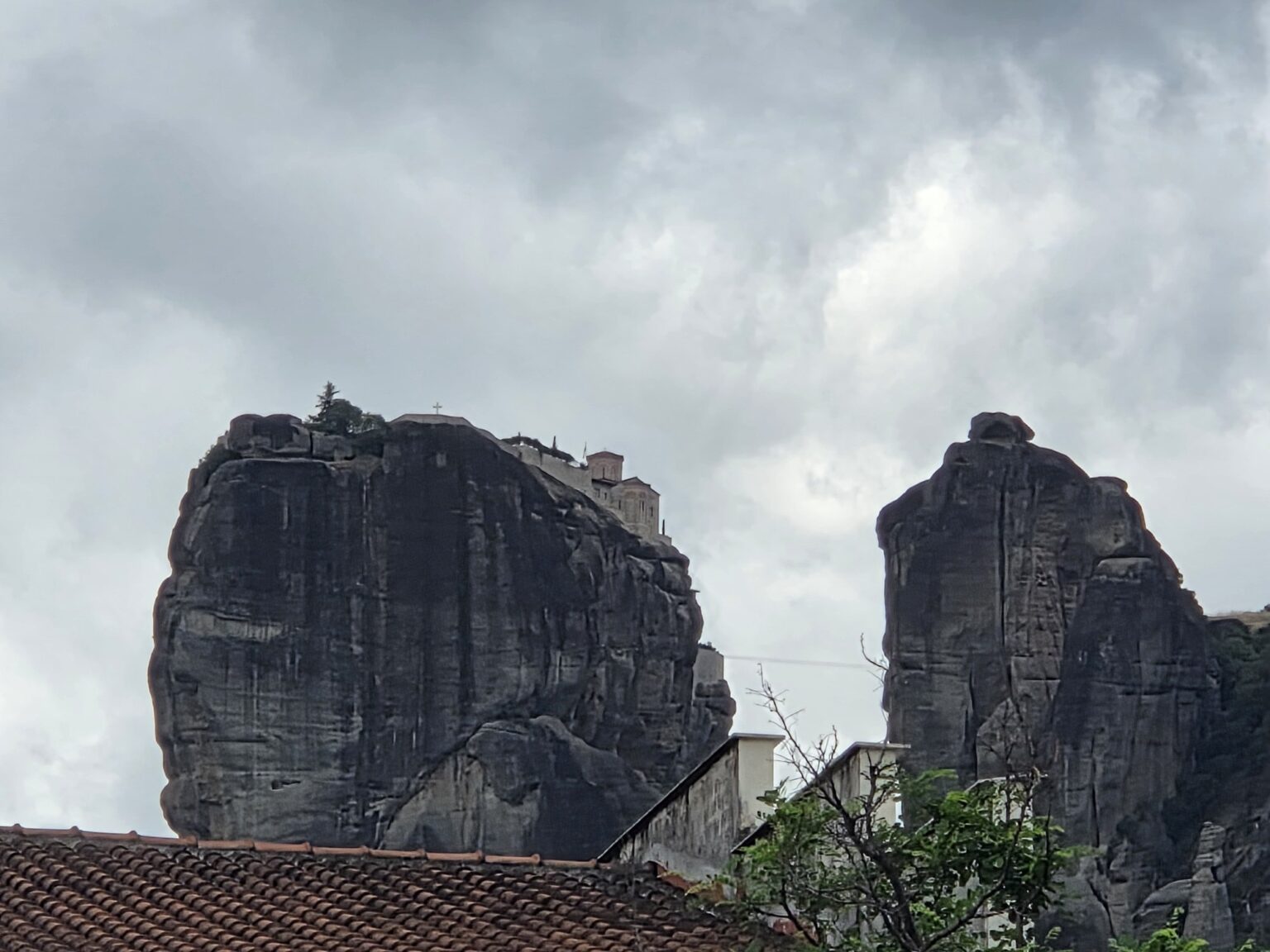
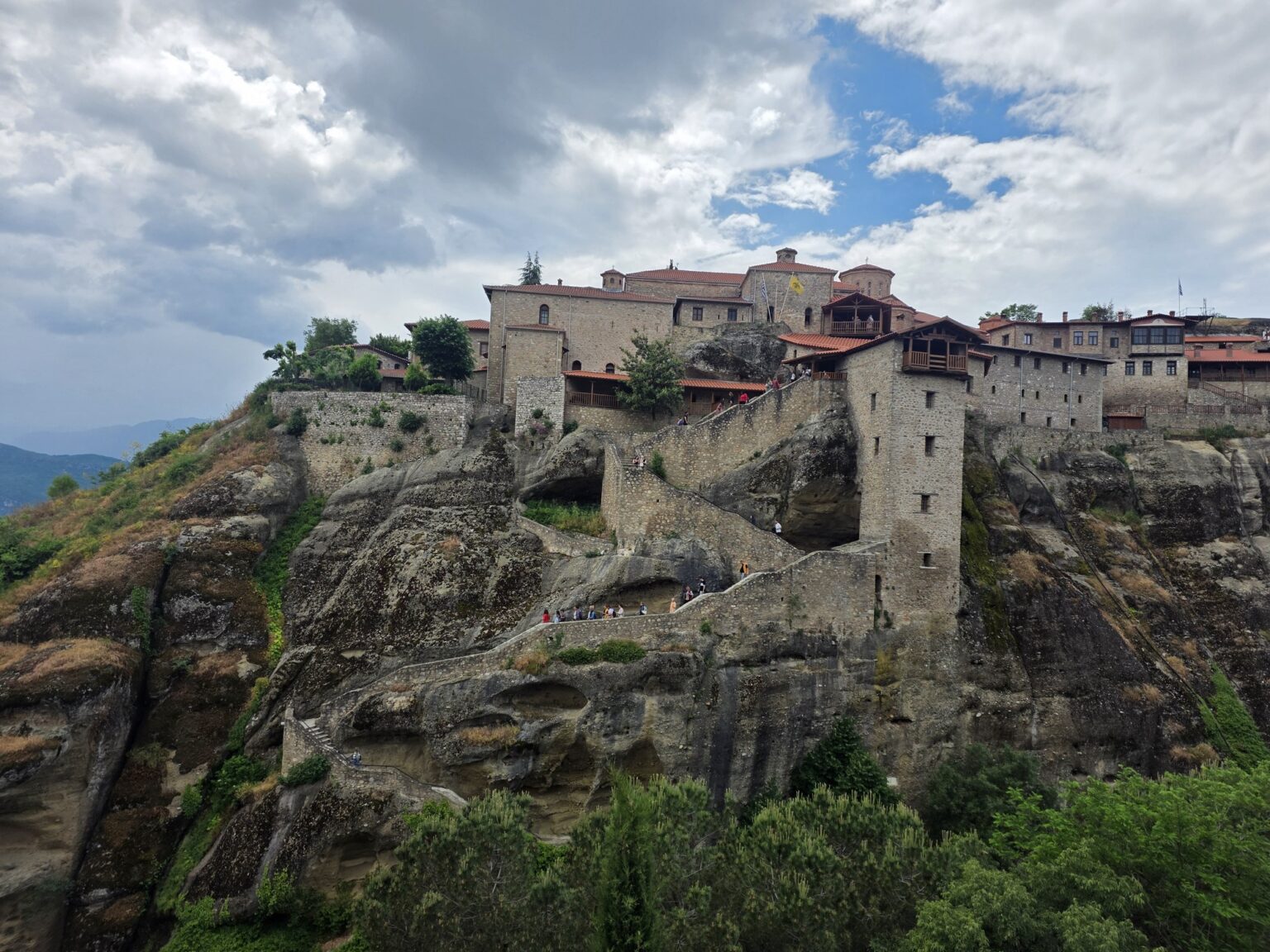
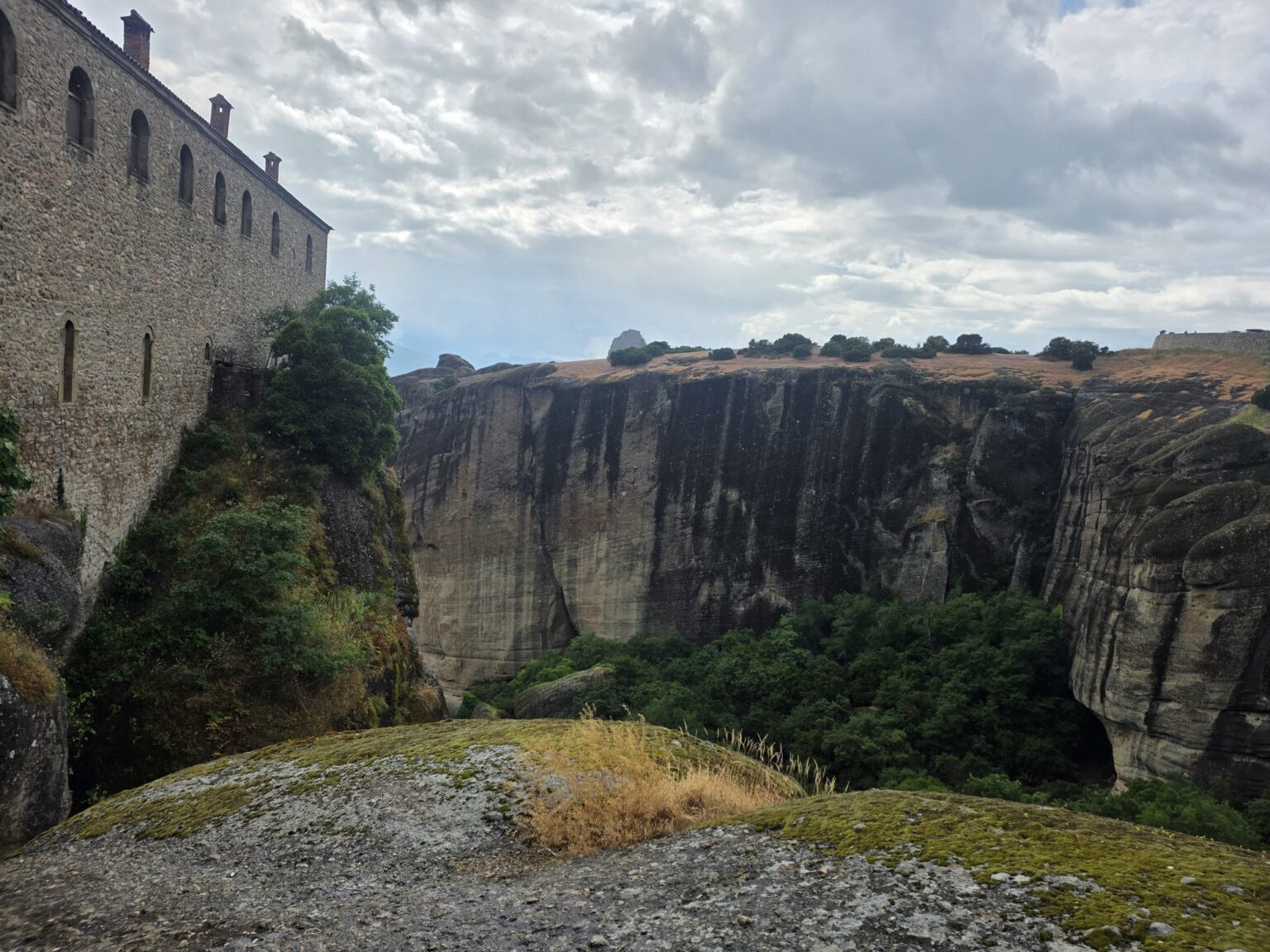
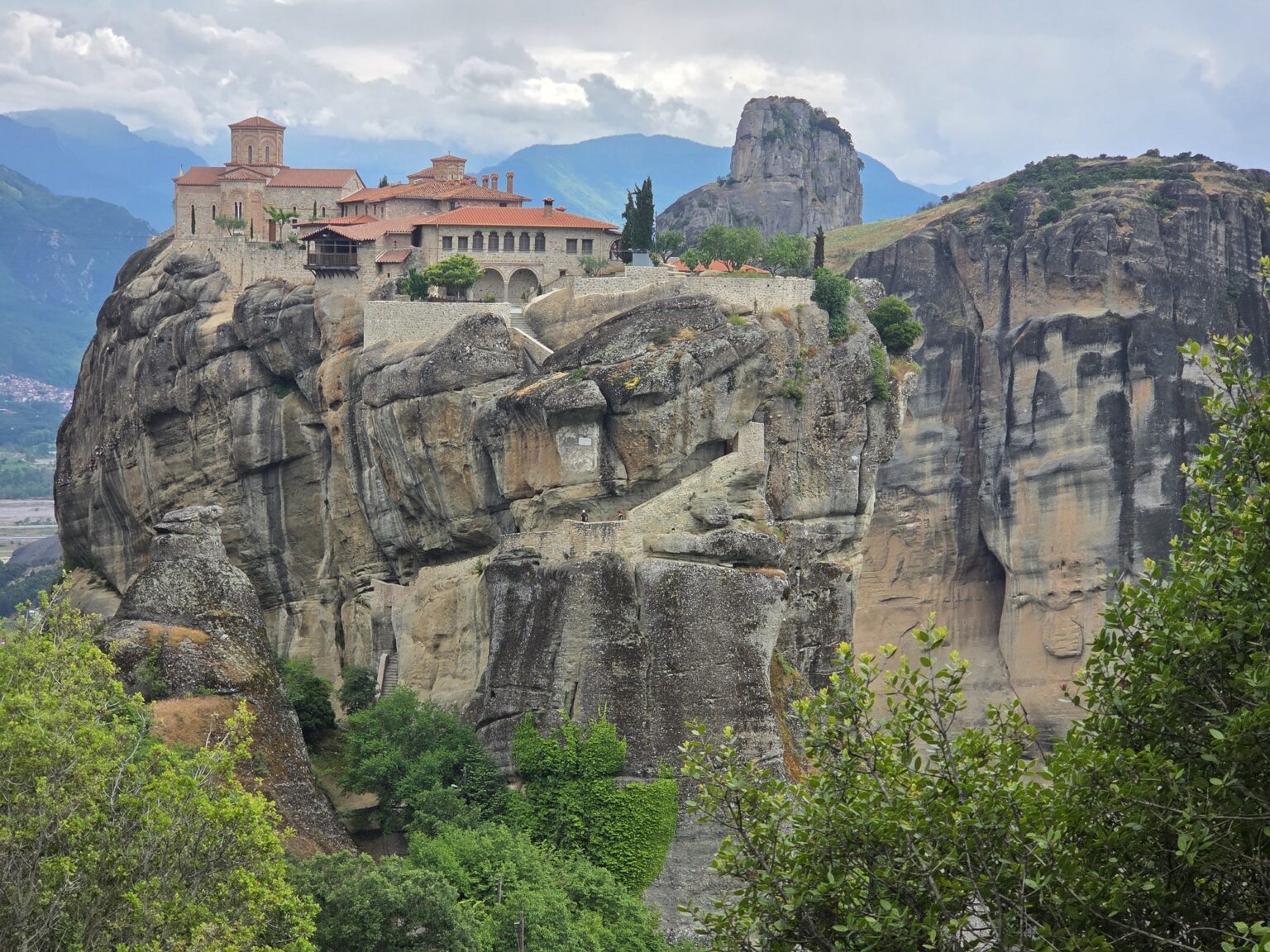
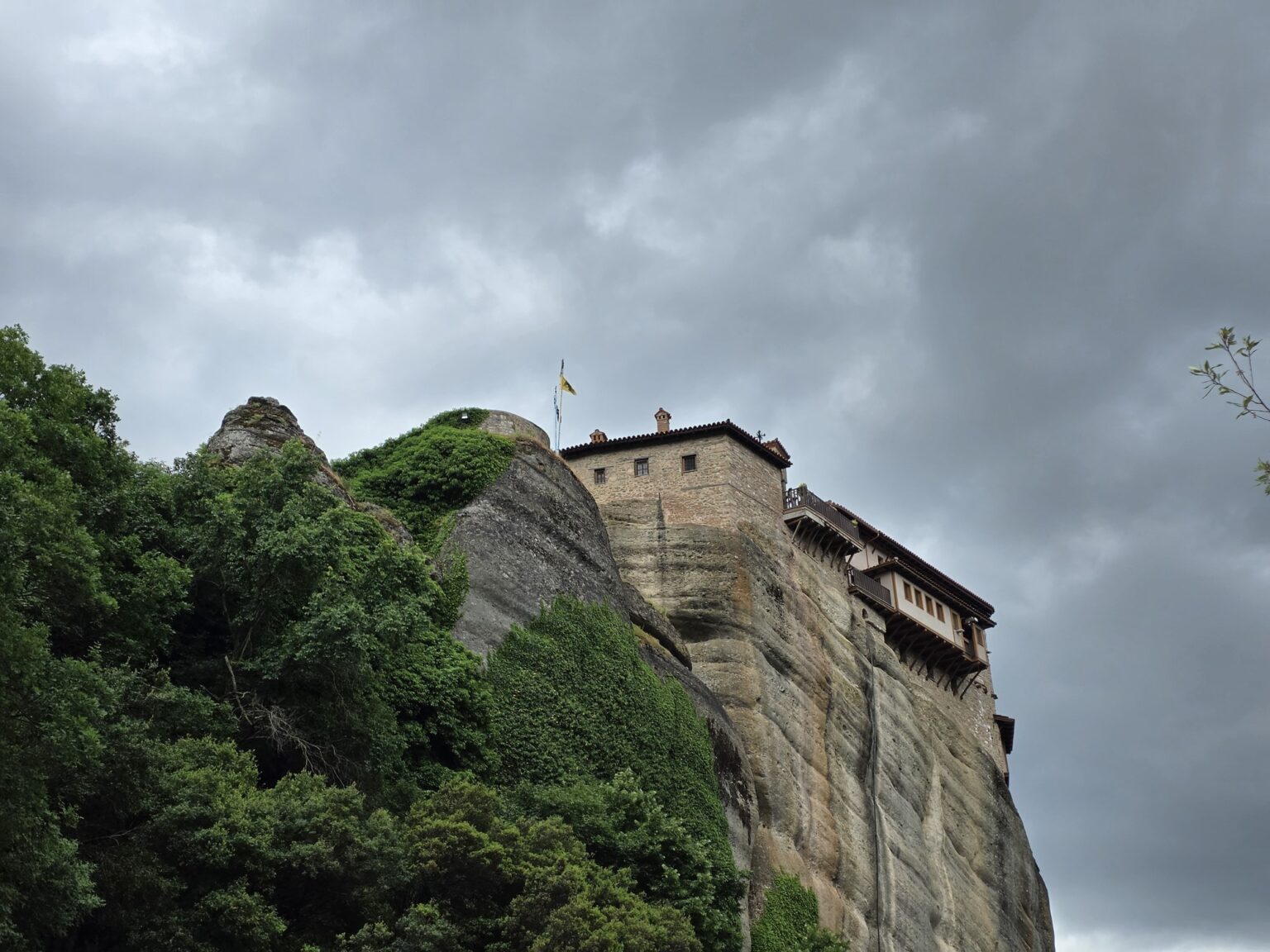
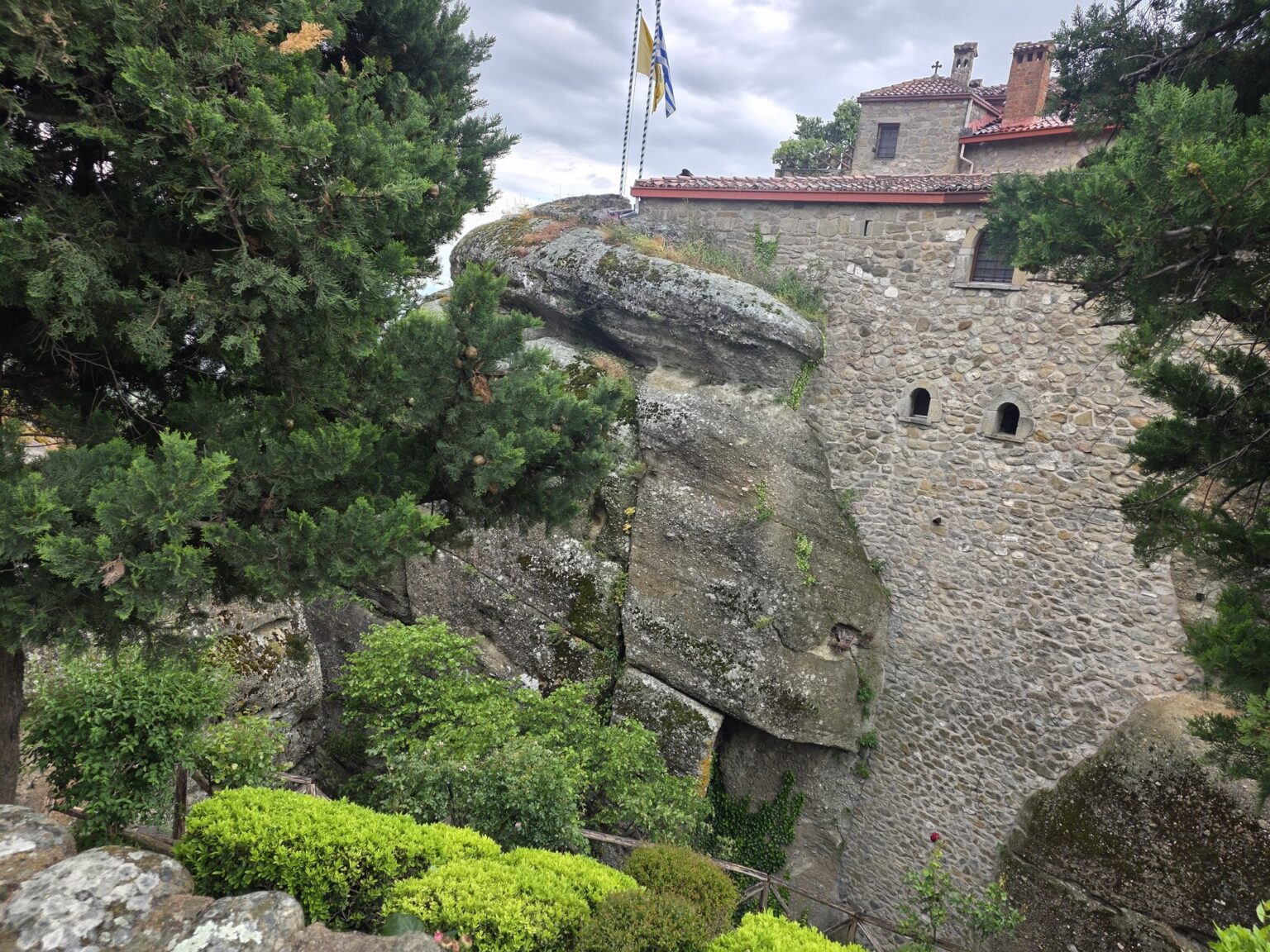
The first people to live on these rocks were hermit monks in cave dwellings, reached by rope ladders. Around 1340, Saint Athanasios settled on the pillar known as Platys Lithos — the Broad Rock. He gave it a new name: Meteoron, the rock suspended between heaven and earth.
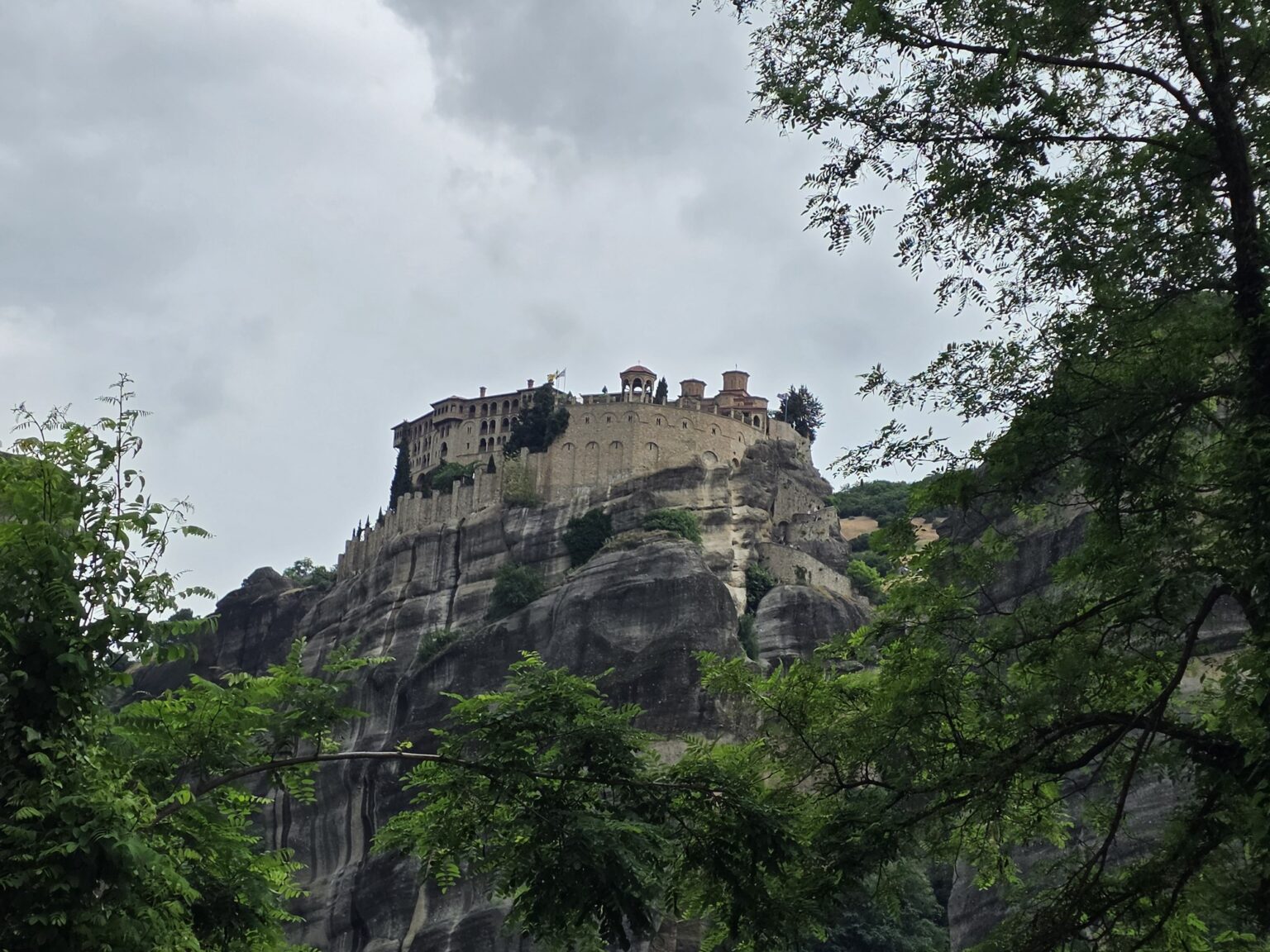
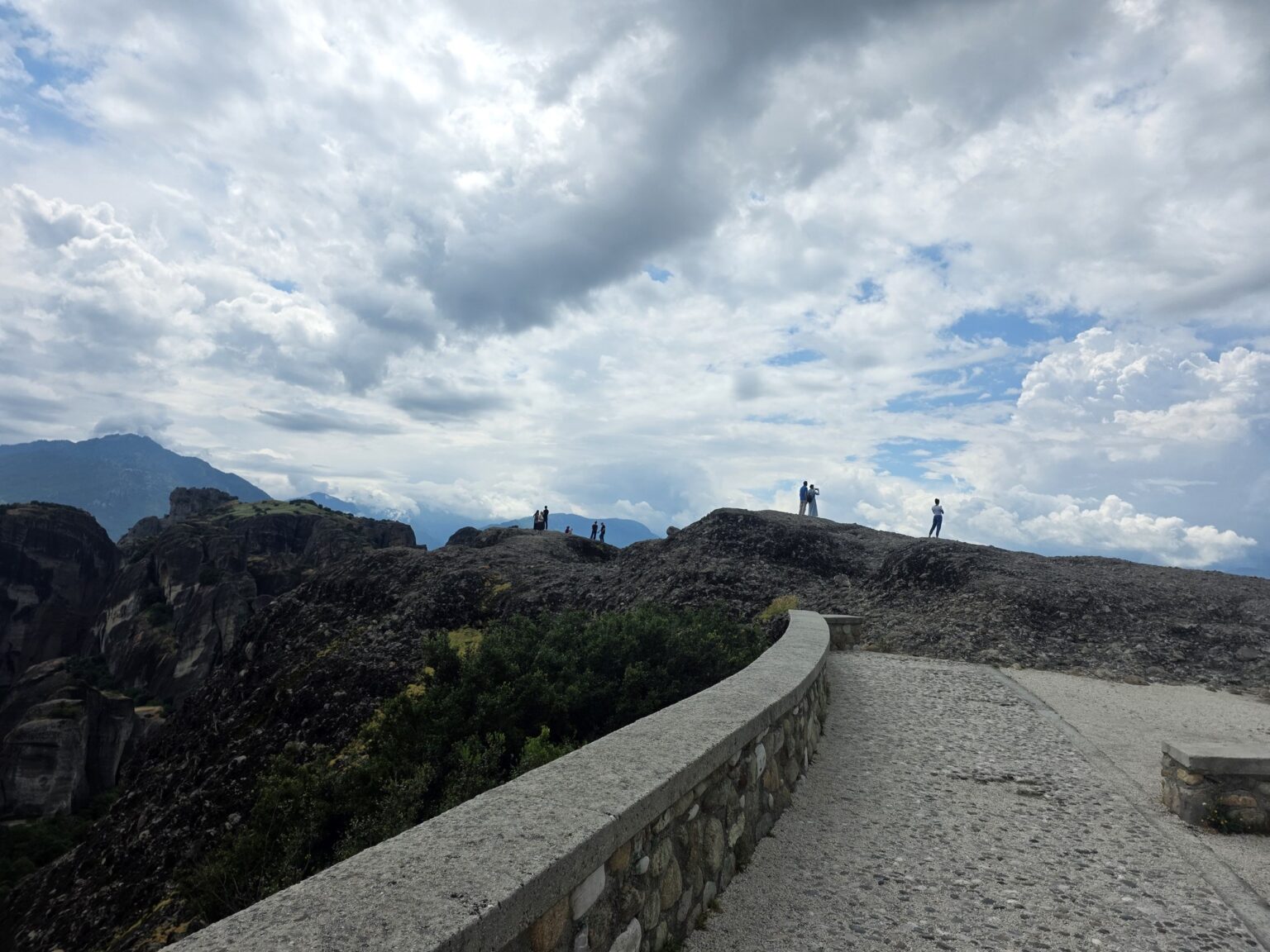
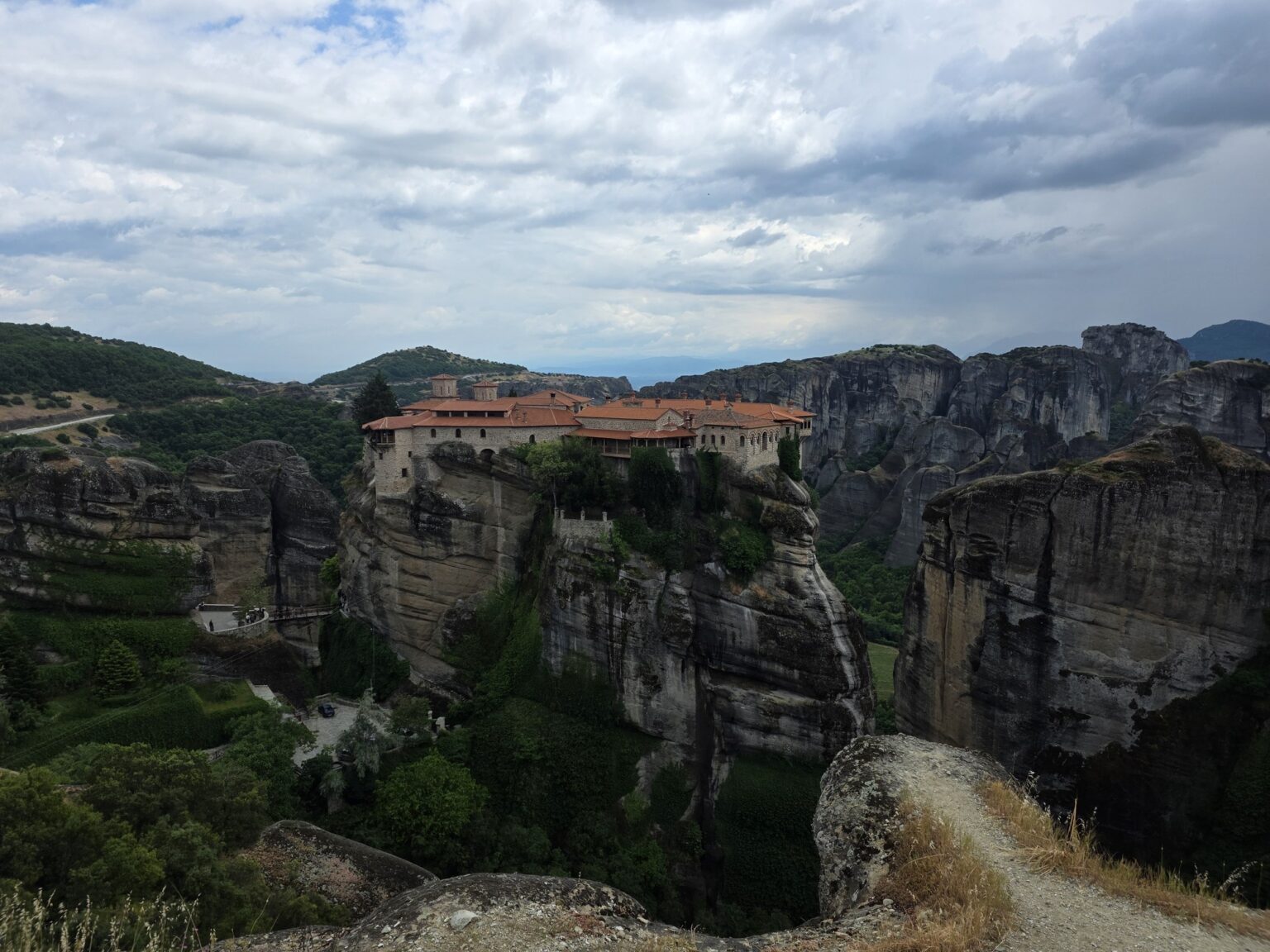
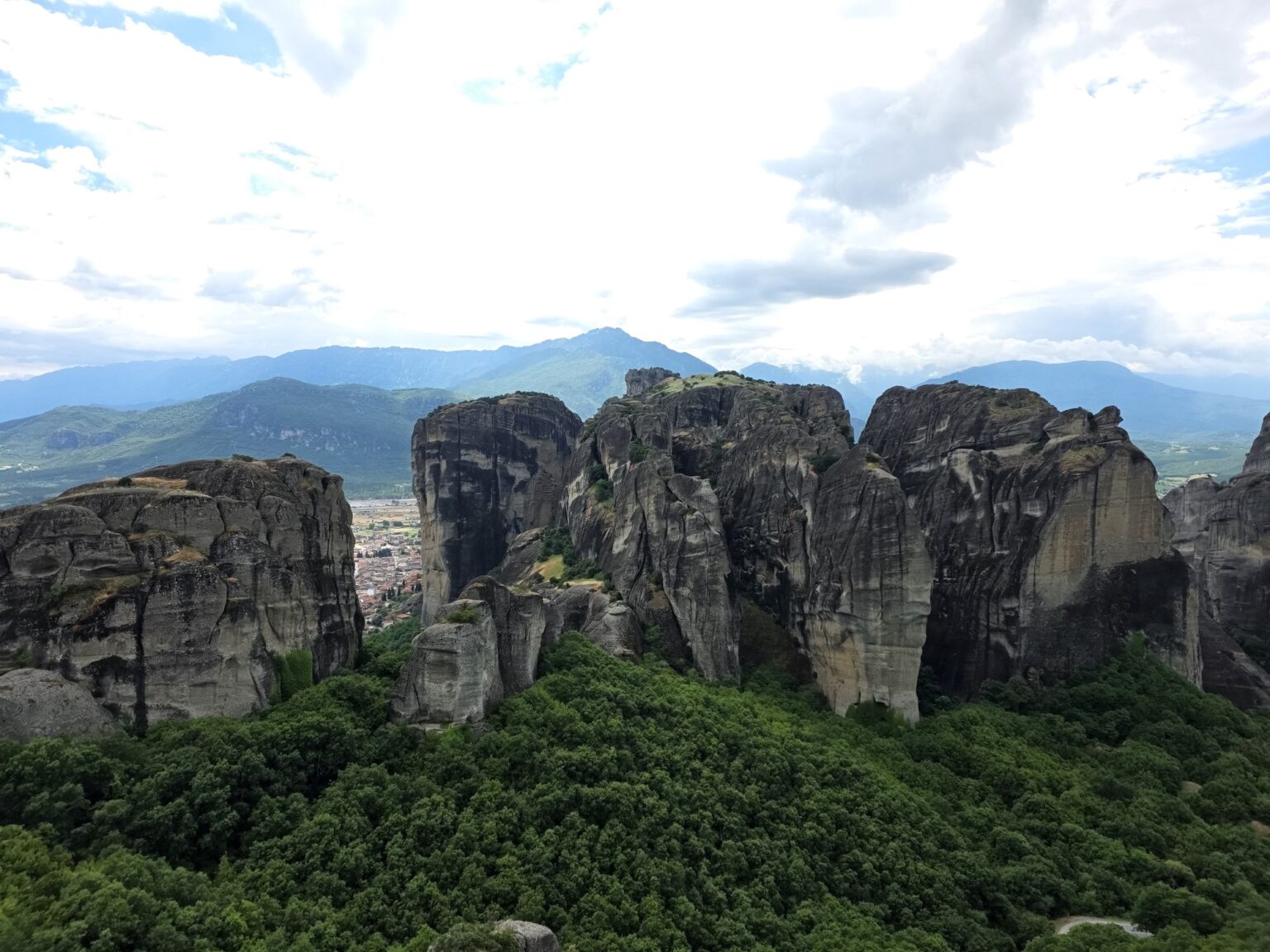
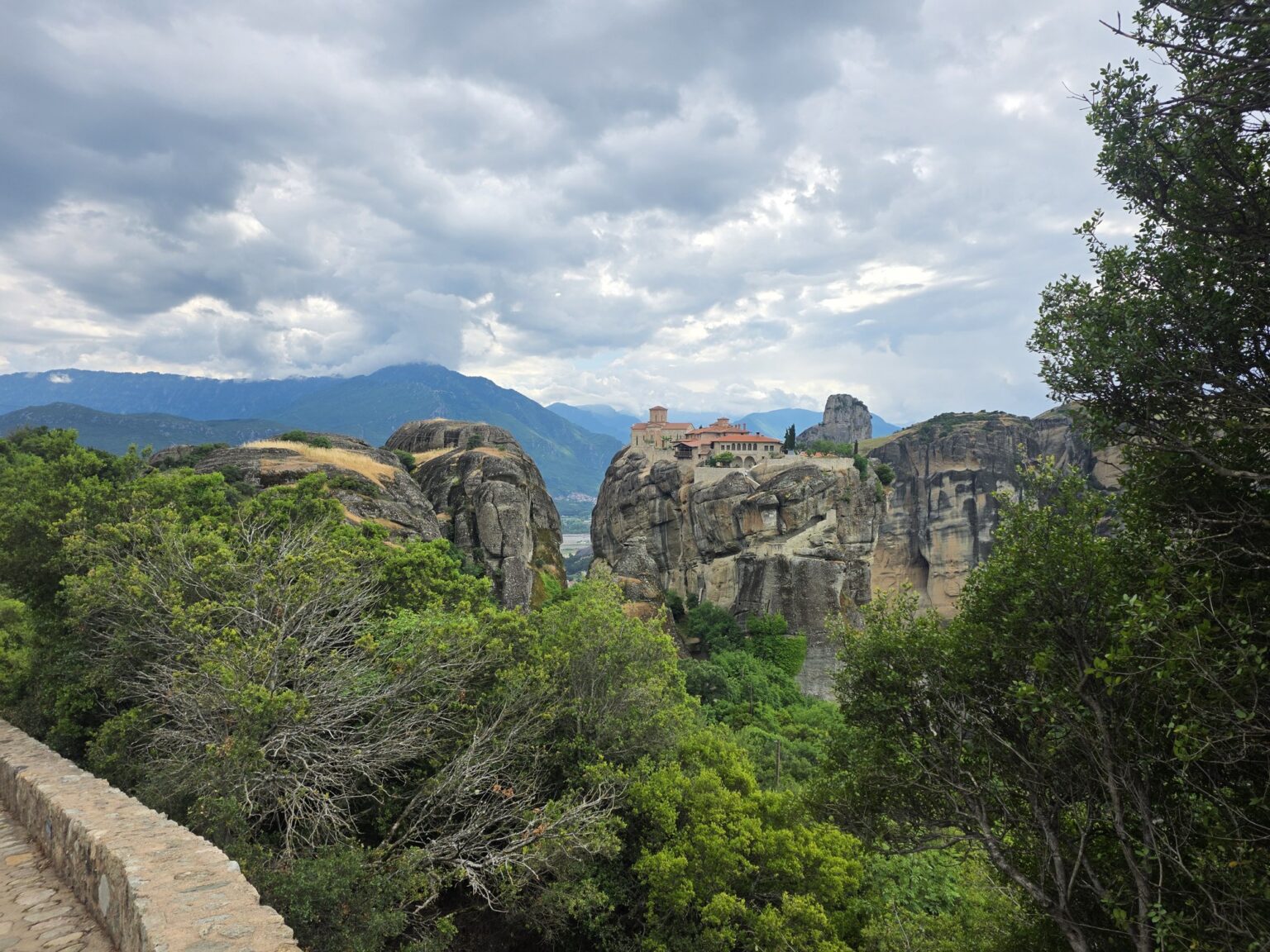
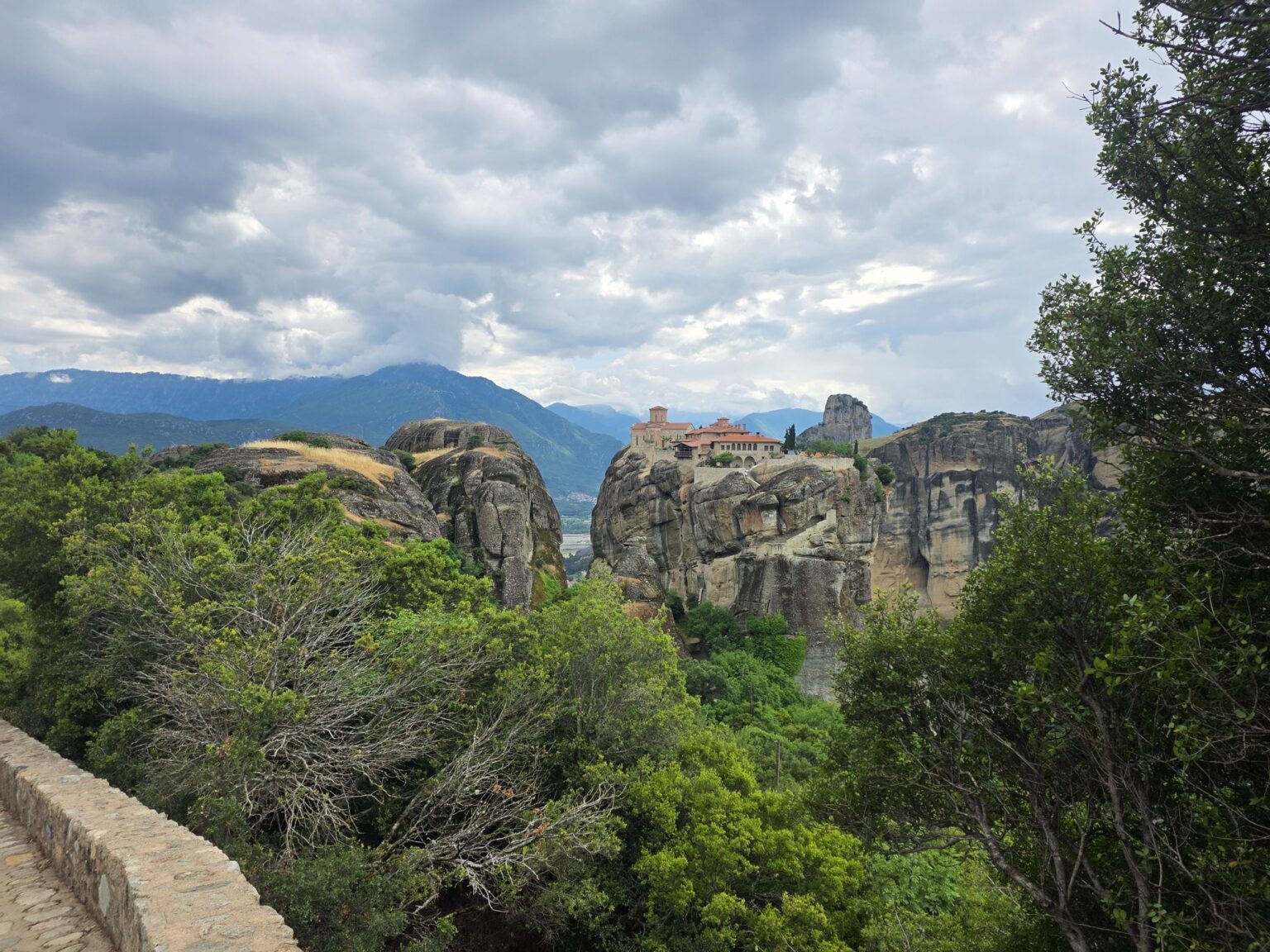
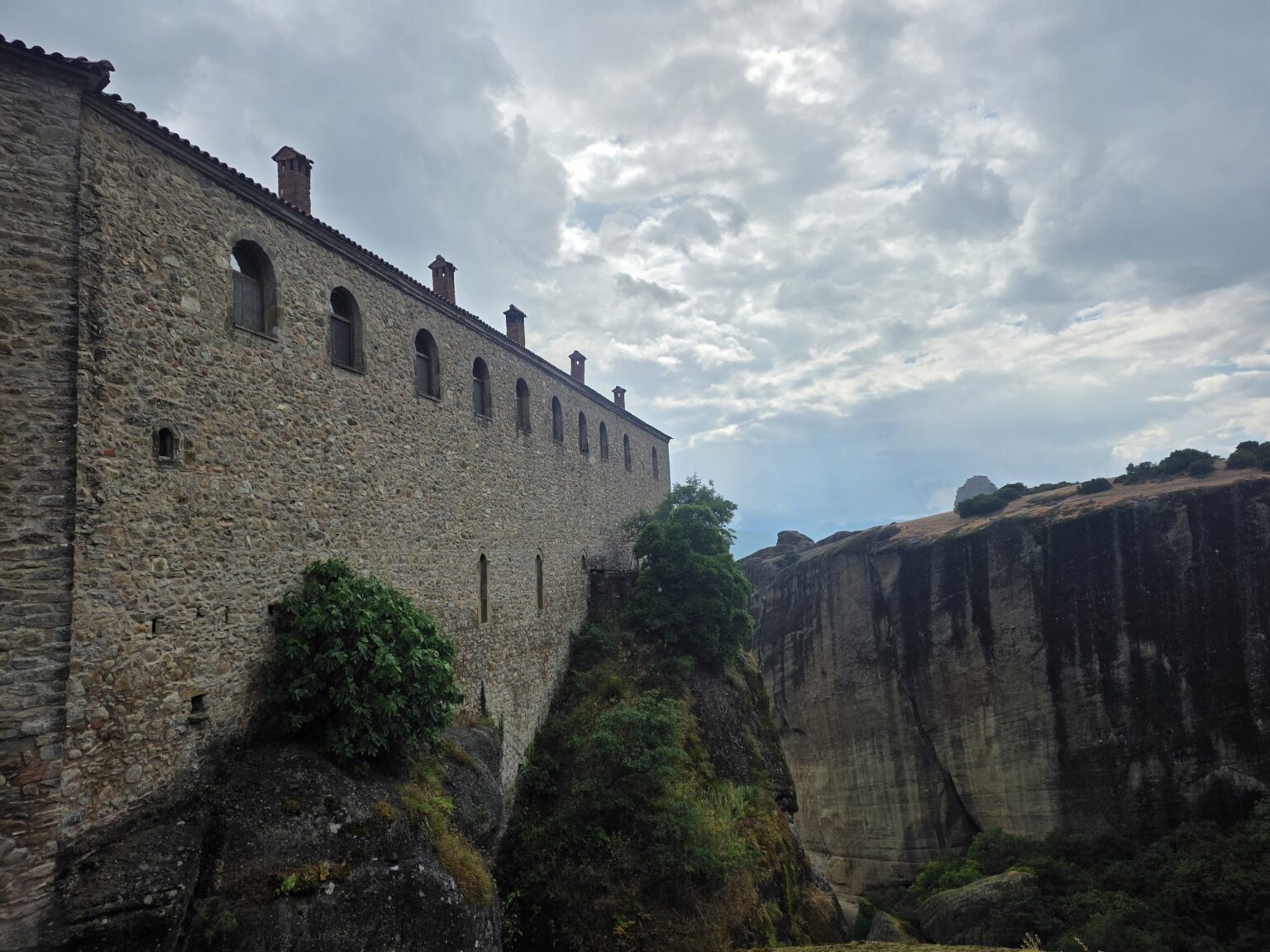
That is where the plural Meteora comes from — the whole cluster of pillars and the communities built on them. Six monasteries are still working today, and a narrow tarmac road threads between them with viewpoints that ask no effort of you at all.
Tickets, hours and the dress code
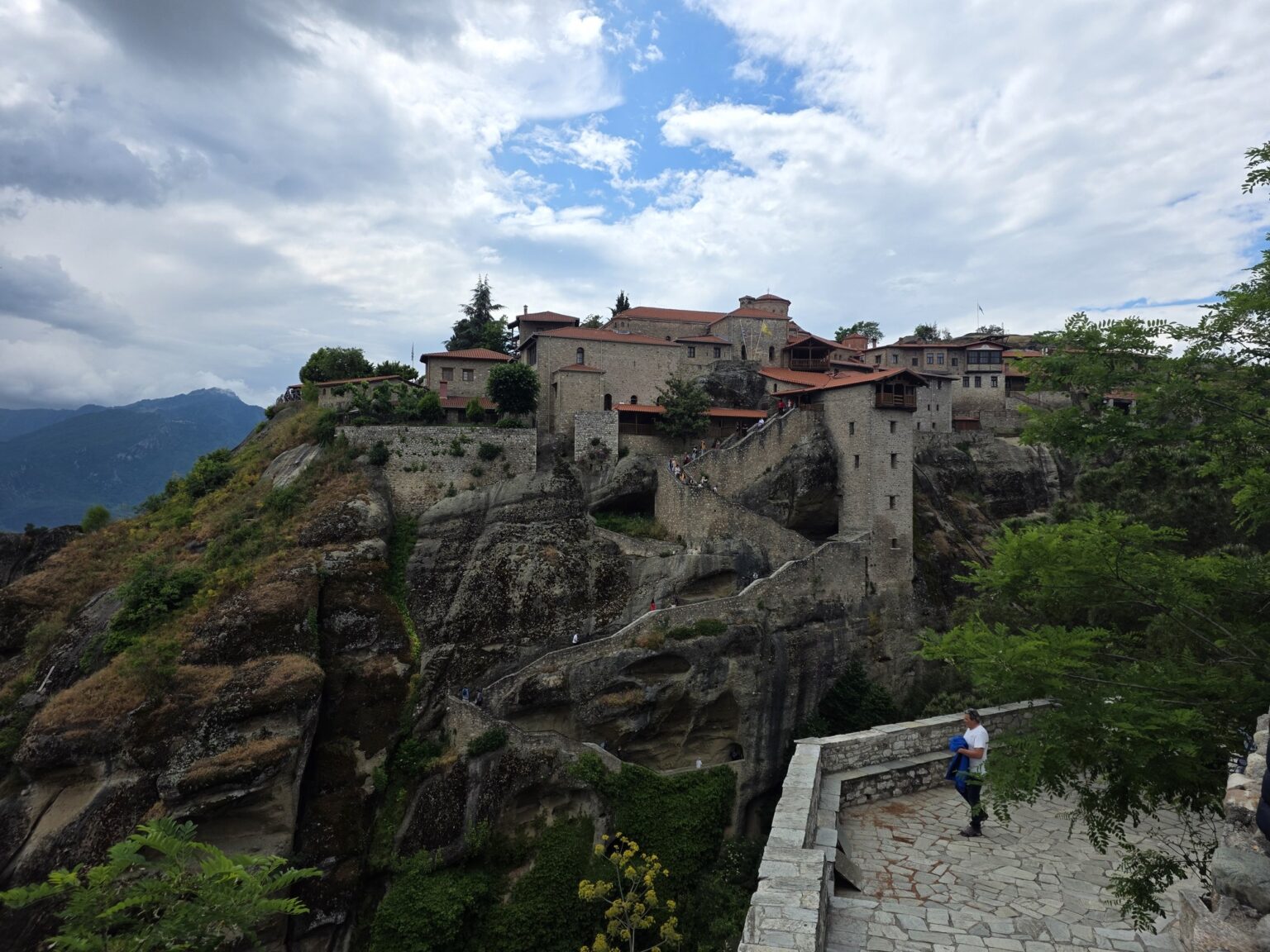
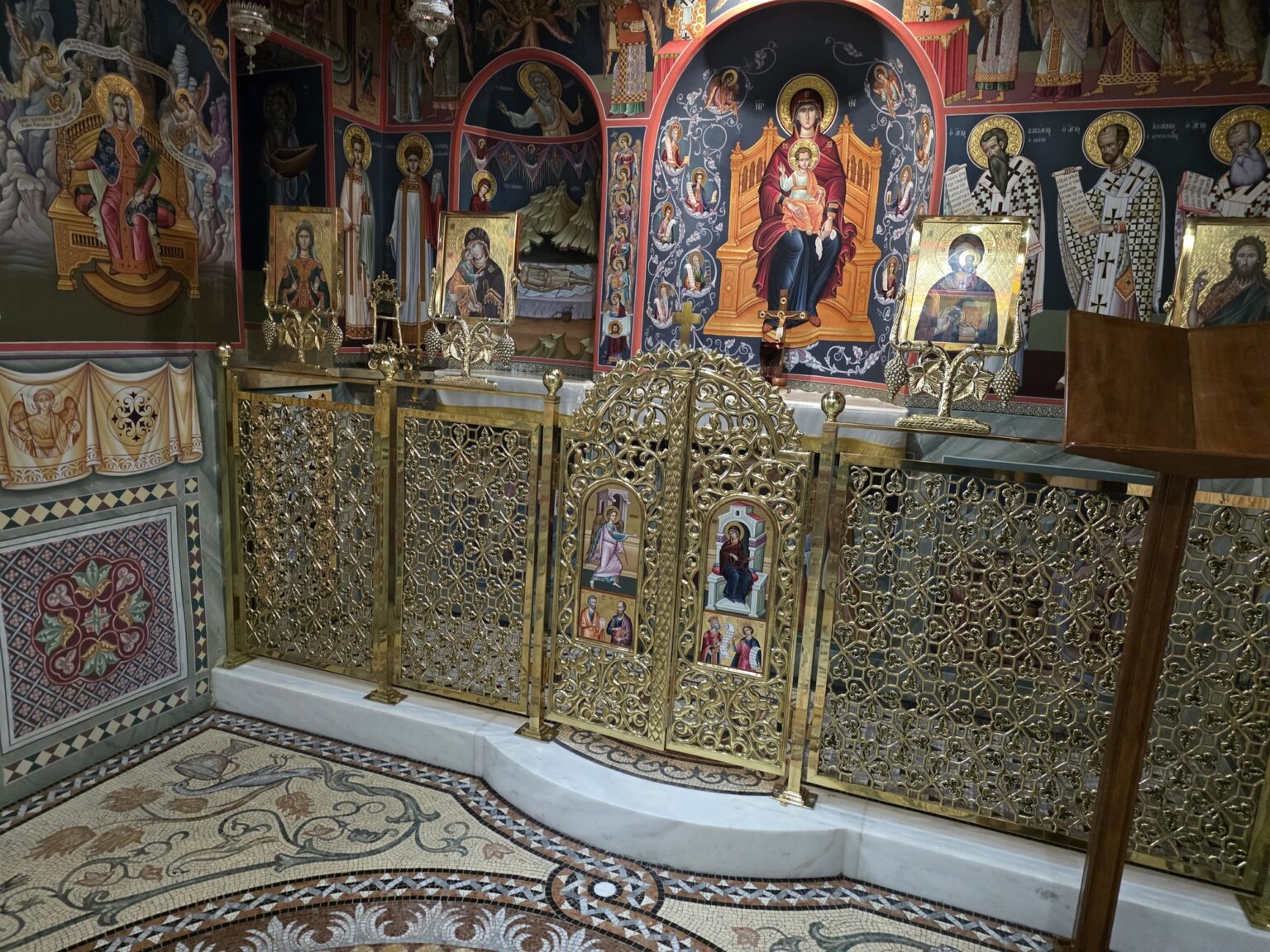
Here is the bit a lot of people only learn on arrival: each monastery is a separate site with its own ticket desk. There is no combined pass. You go in, pay €5, come out, drive to the next pillar and pay again. Children under 12 go free. Bring cash — do not count on a card reader. And yes, inflation is not being gentle here either: the same ticket was €3 a few years ago. Three monasteries now works out at €15 a head, which is no longer loose change. Each one also has its own closing day, so this needs planning — otherwise you drive up to a locked gate.
The dress code is enforced, not suggested: long trousers for men, covered shoulders for everyone, and for women a skirt below the knee — trousers are not accepted, long or otherwise. Most gates lend out a wrap-around skirt, but do not build your plan around one being available. The steps are serious too: the climb to Great Meteoron runs to roughly 300 of them.
The viewpoints and the detour to Vlachava
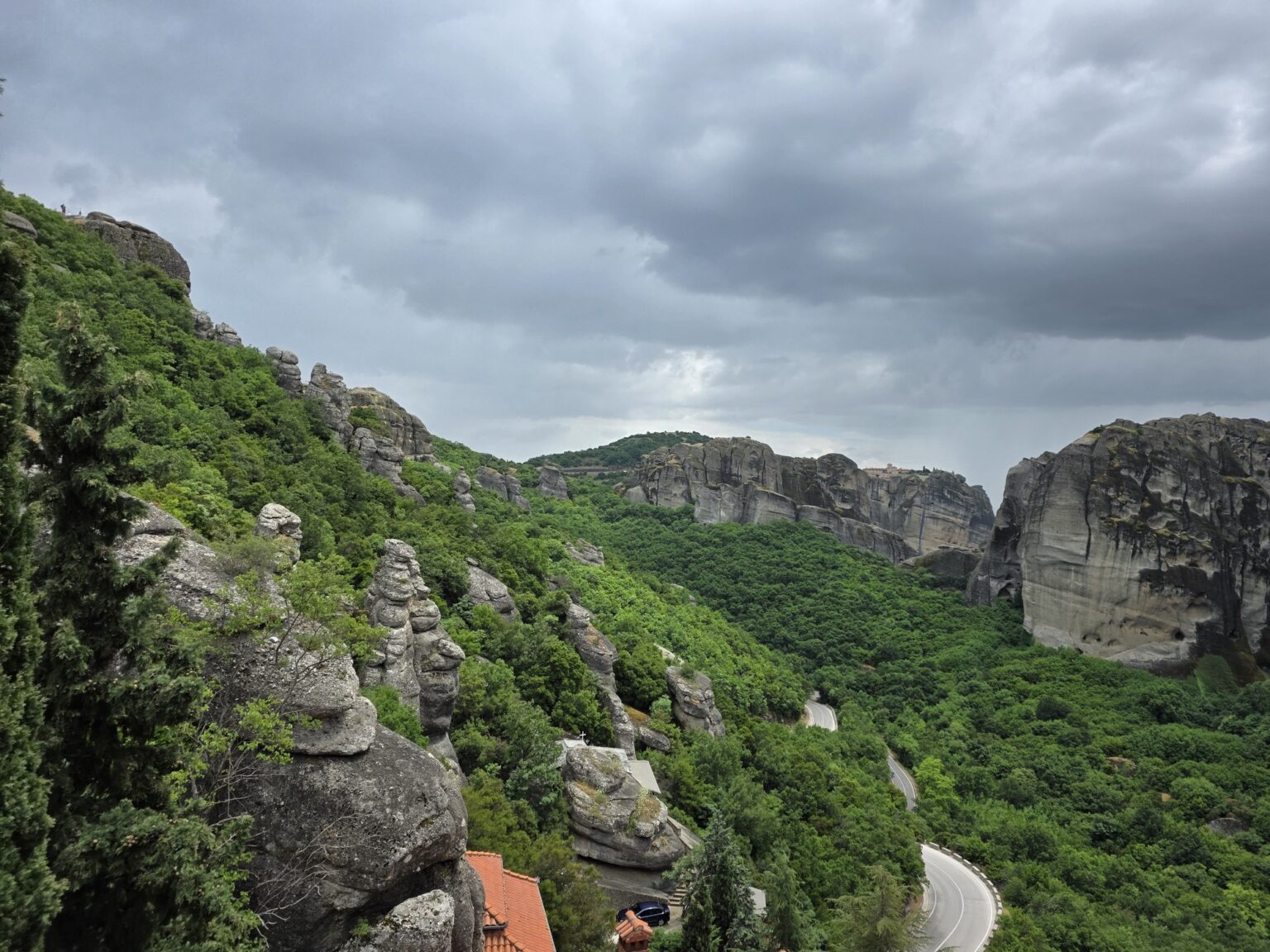
Half the experience is the road itself. The tarmac winds between the pillars, every bend has a pull-off, and every pull-off has three cars and ten people holding phones. We stop at several and regret none of them.
If you are wondering how to fill the rest of the day: head north towards Vlachava. There are places to eat up there with a view straight onto the rocks, and it adds an hour to an hour and a half to the plan — just enough that you do not arrive back in Paralia in the early afternoon feeling you left something behind. The view also goes down better with lunch than with a car park. 😀
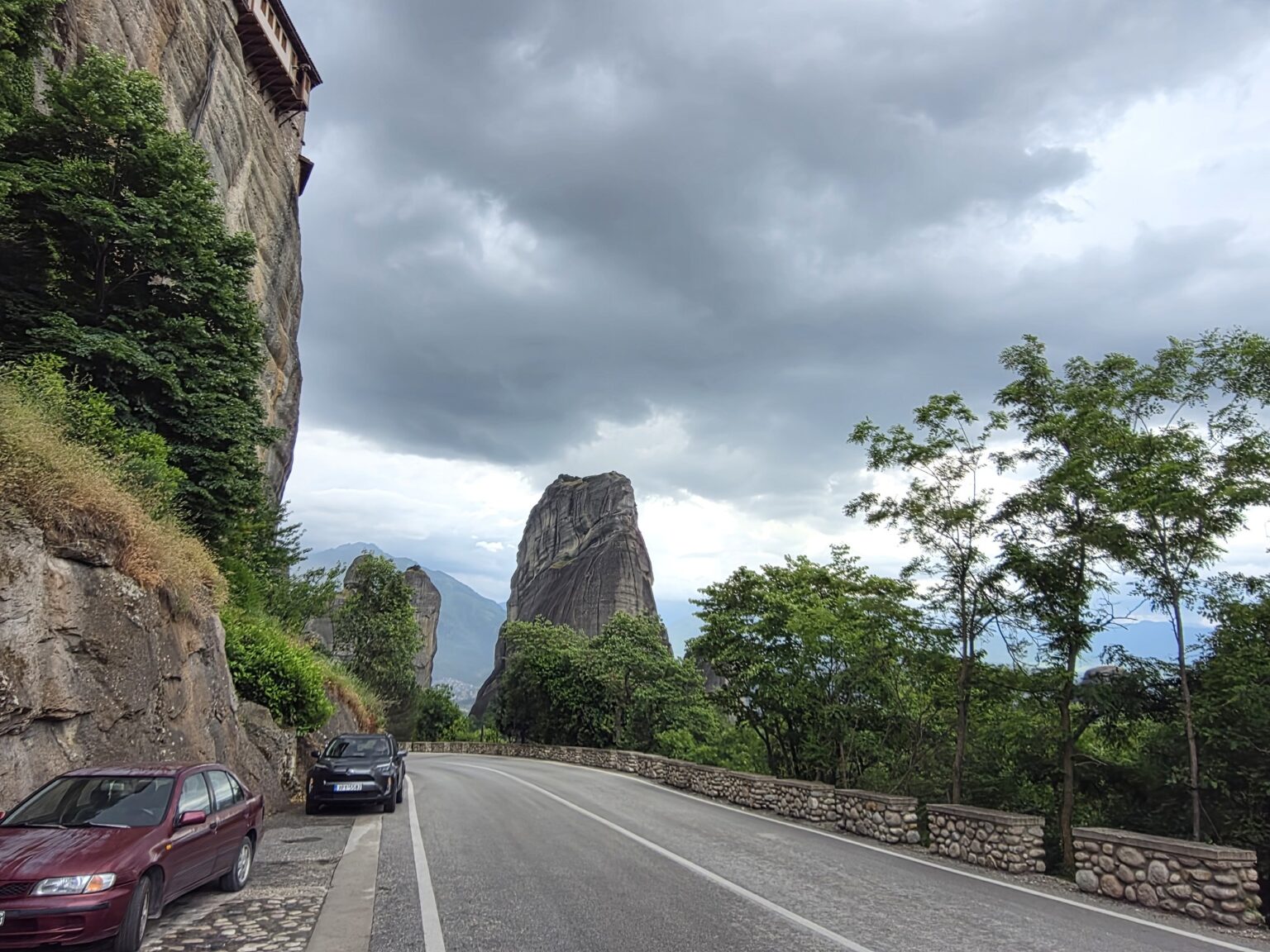
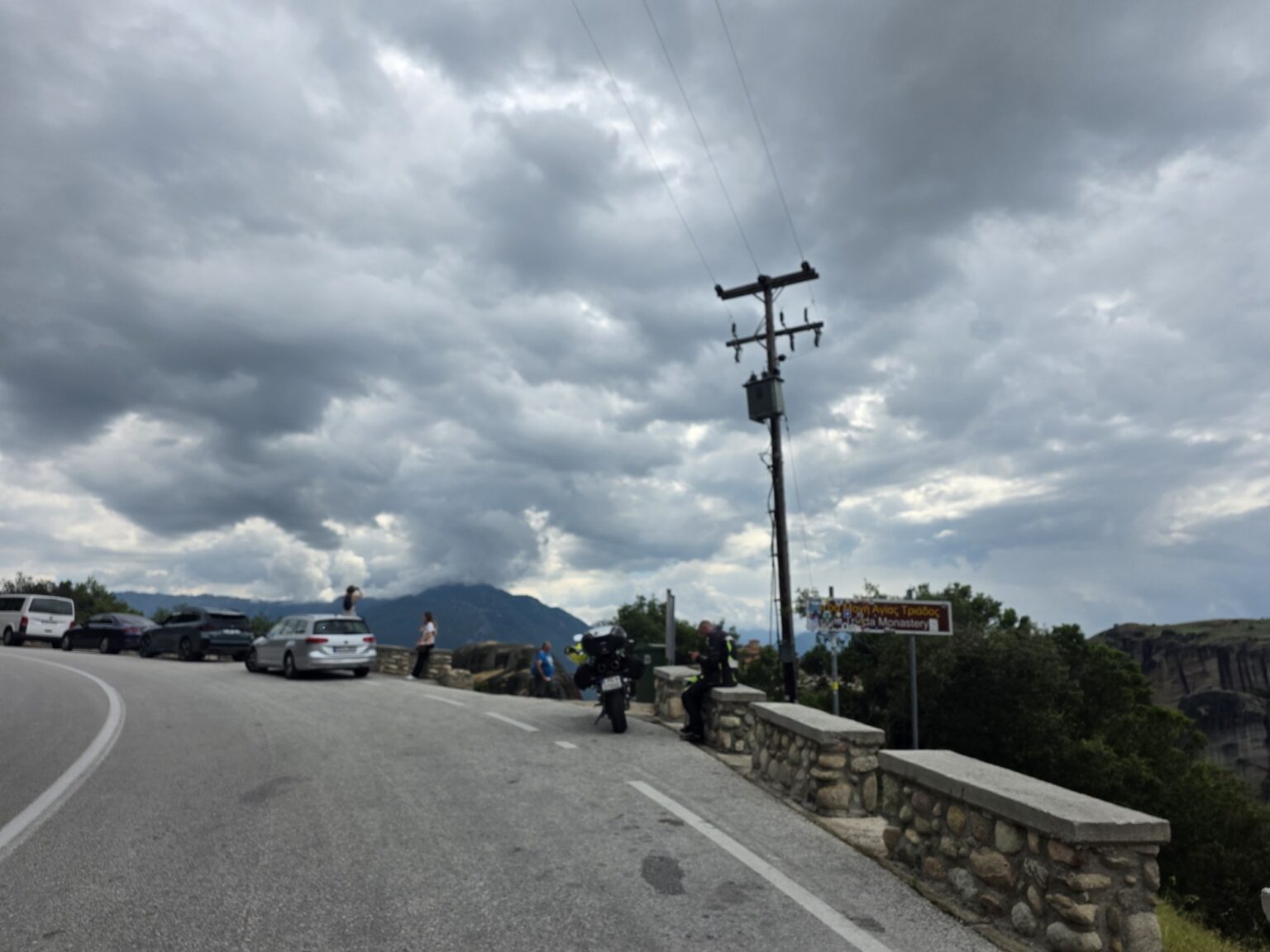
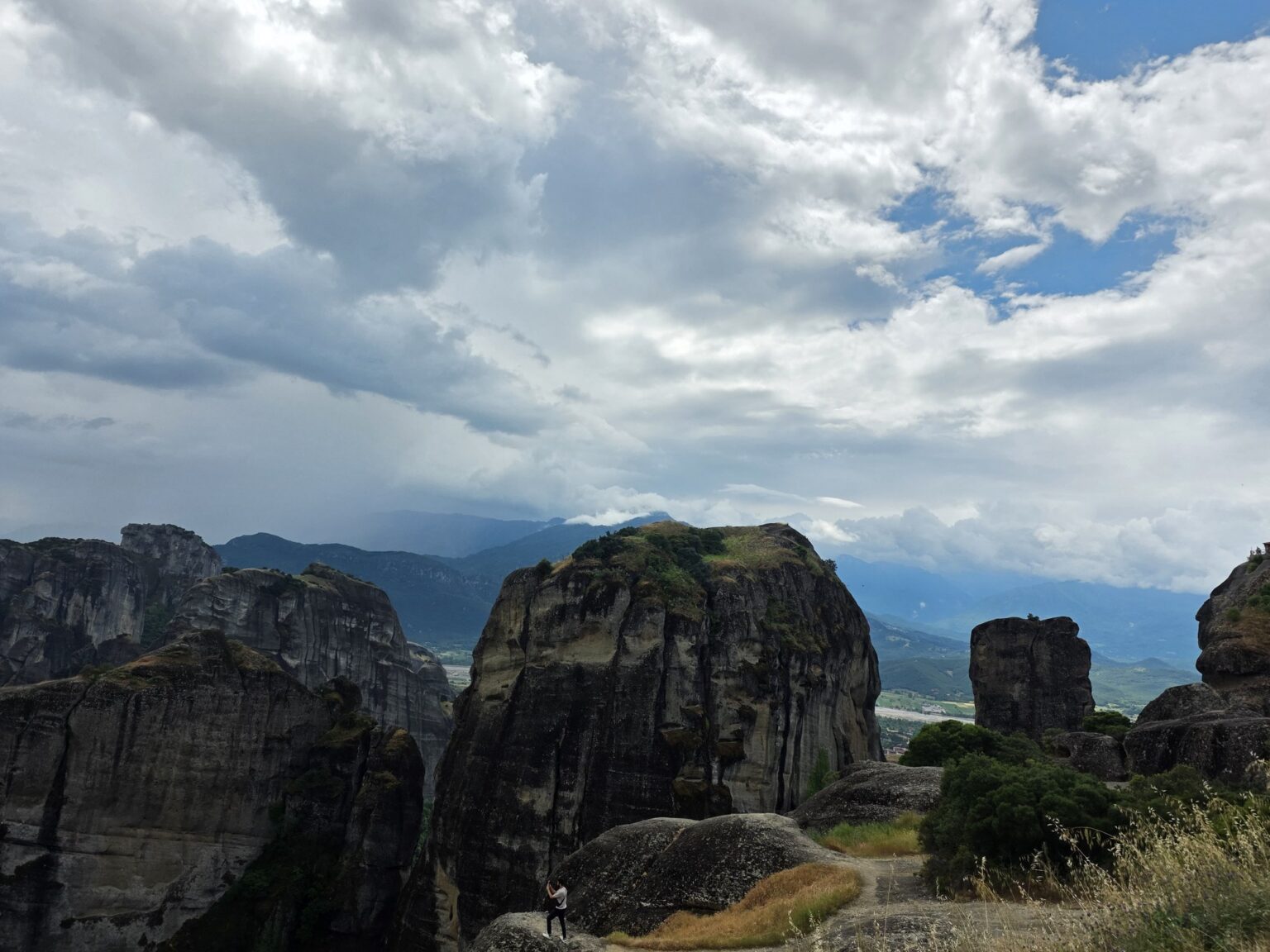
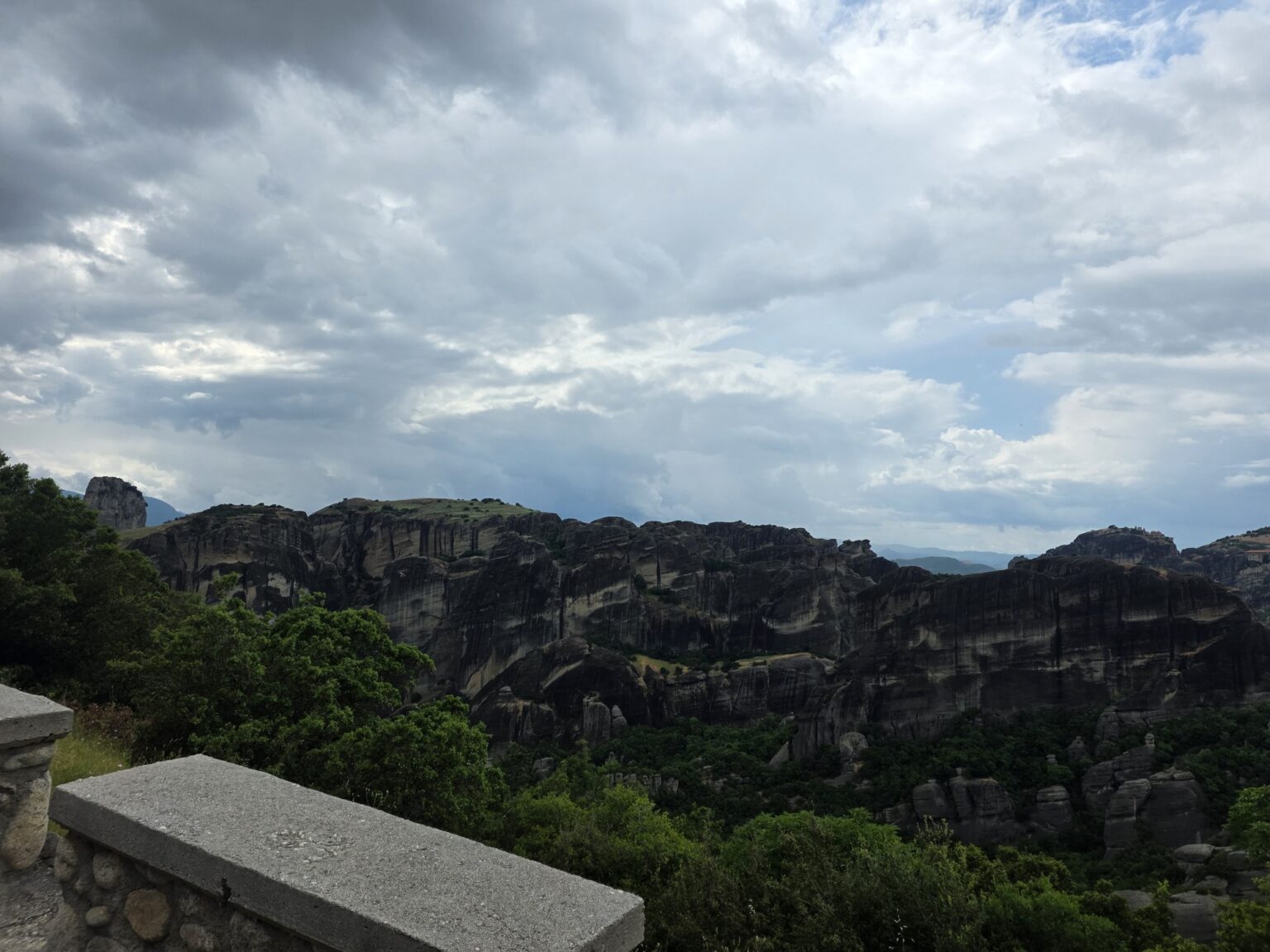
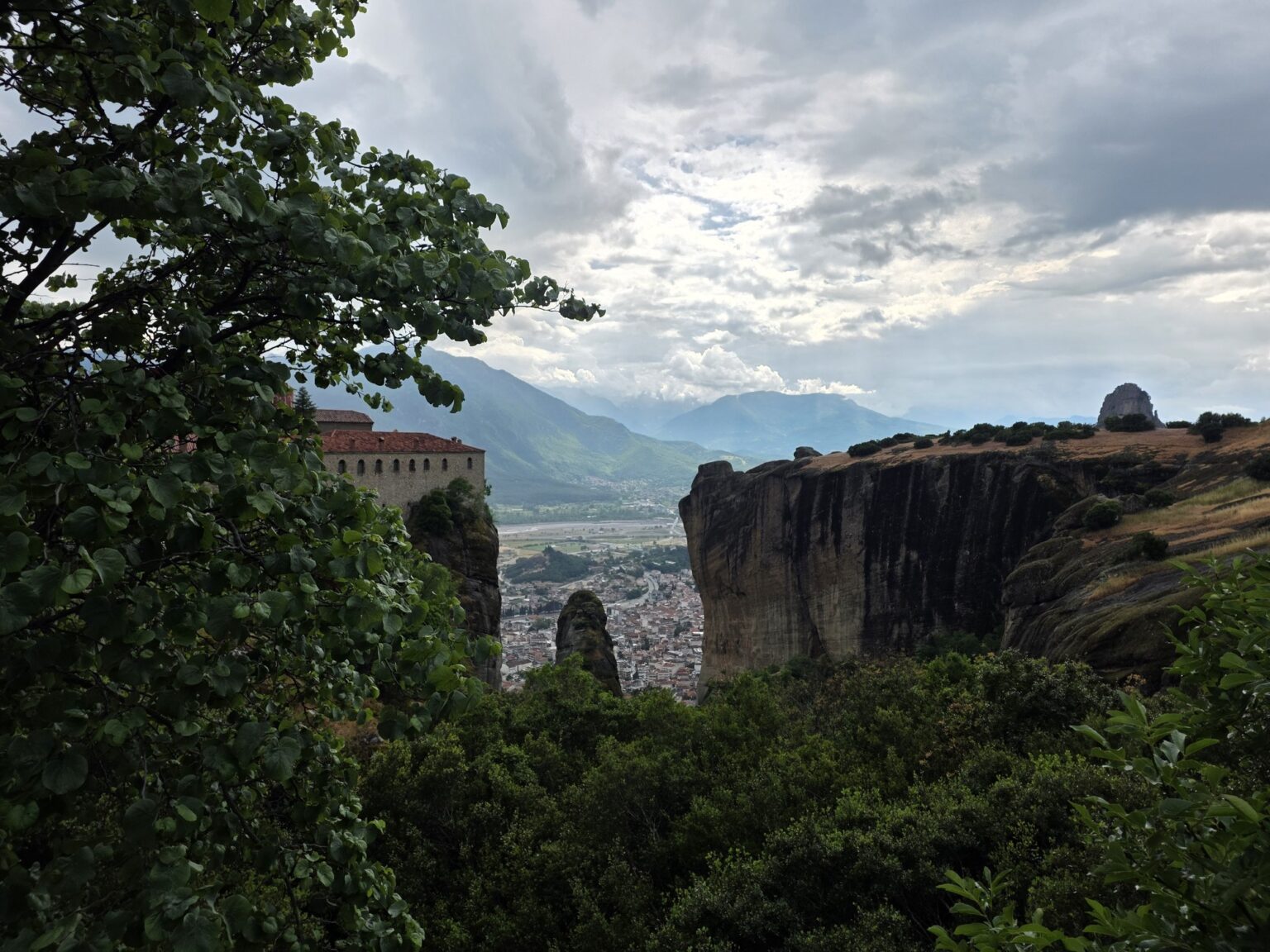
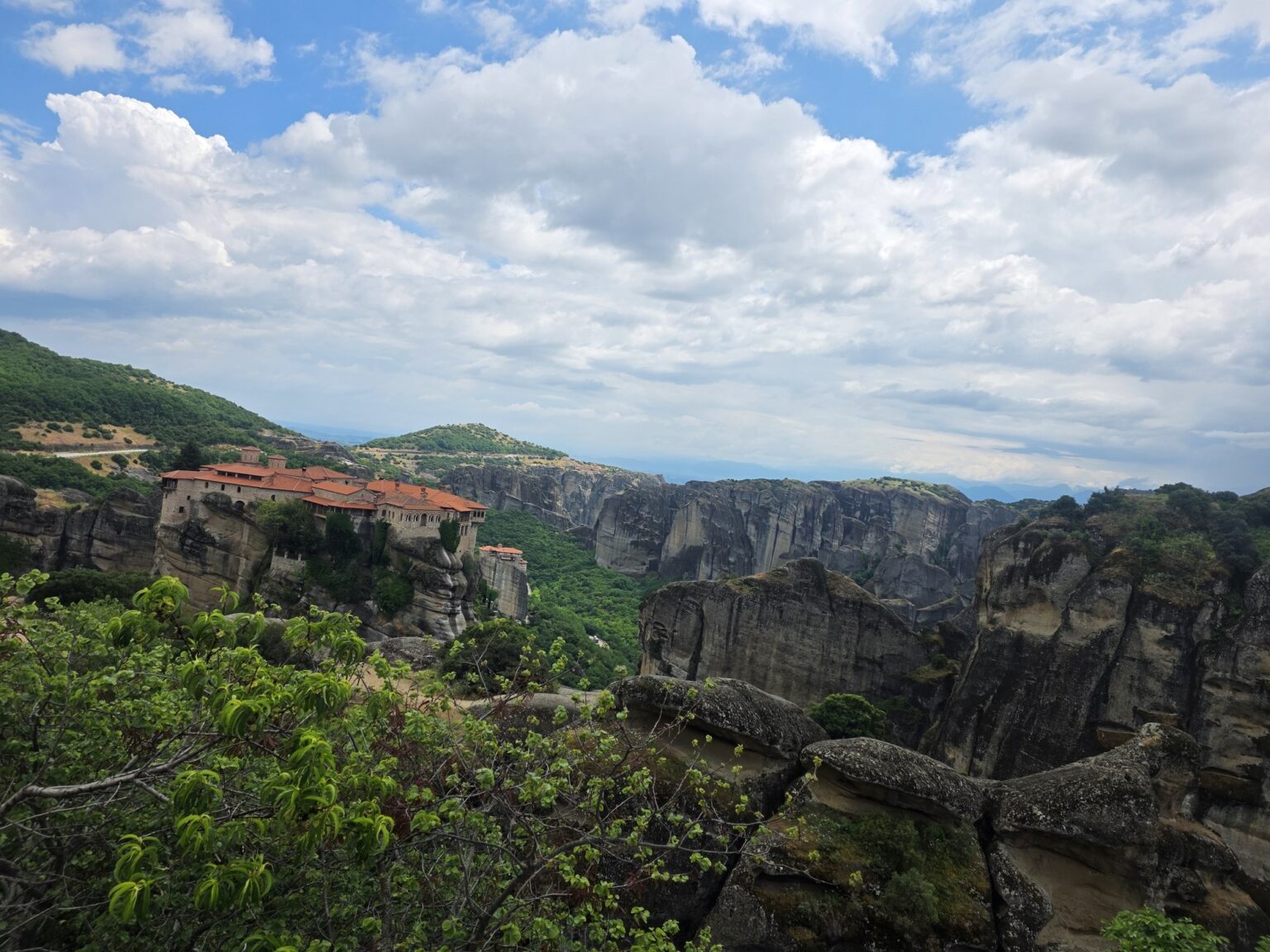
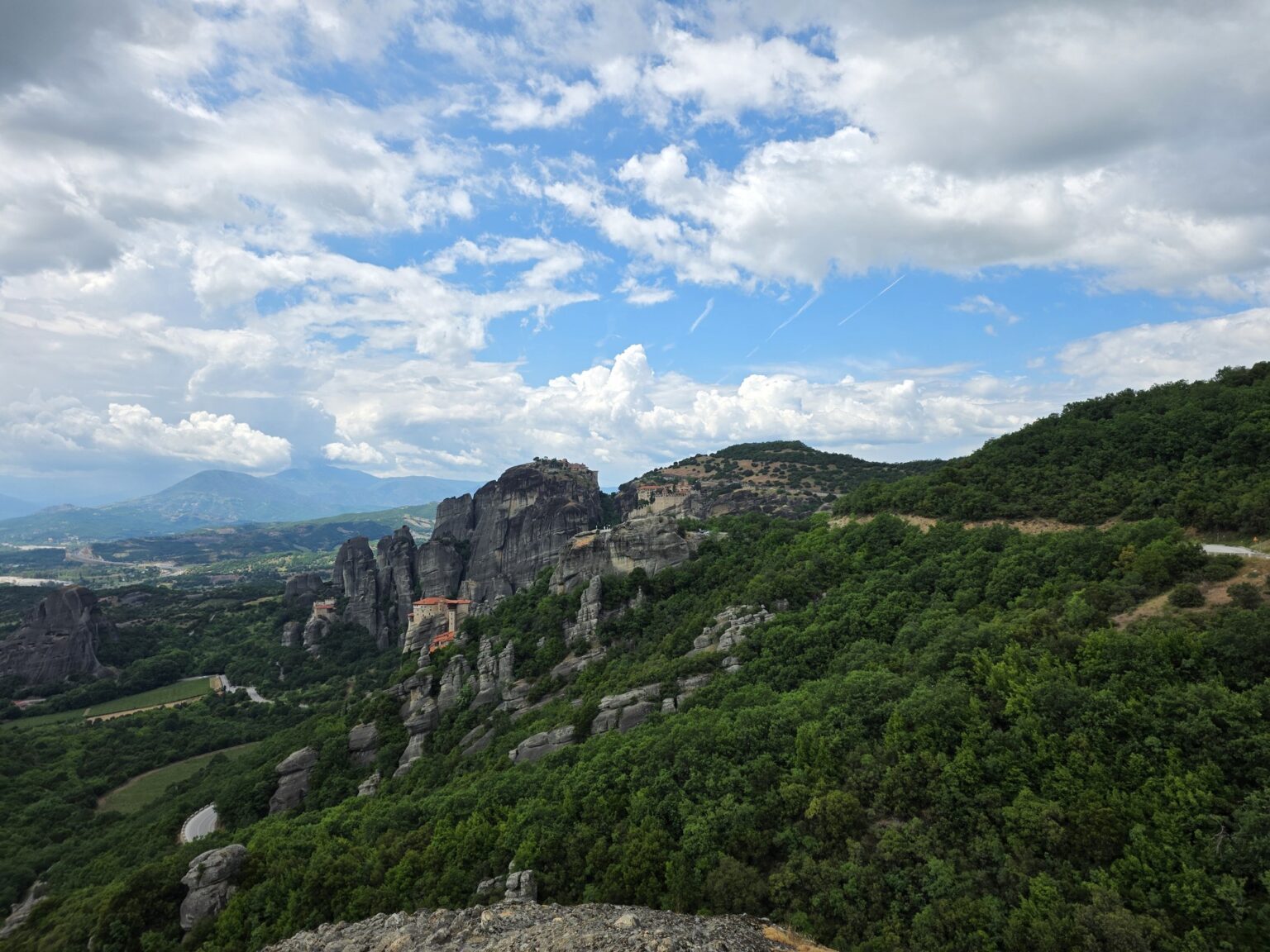
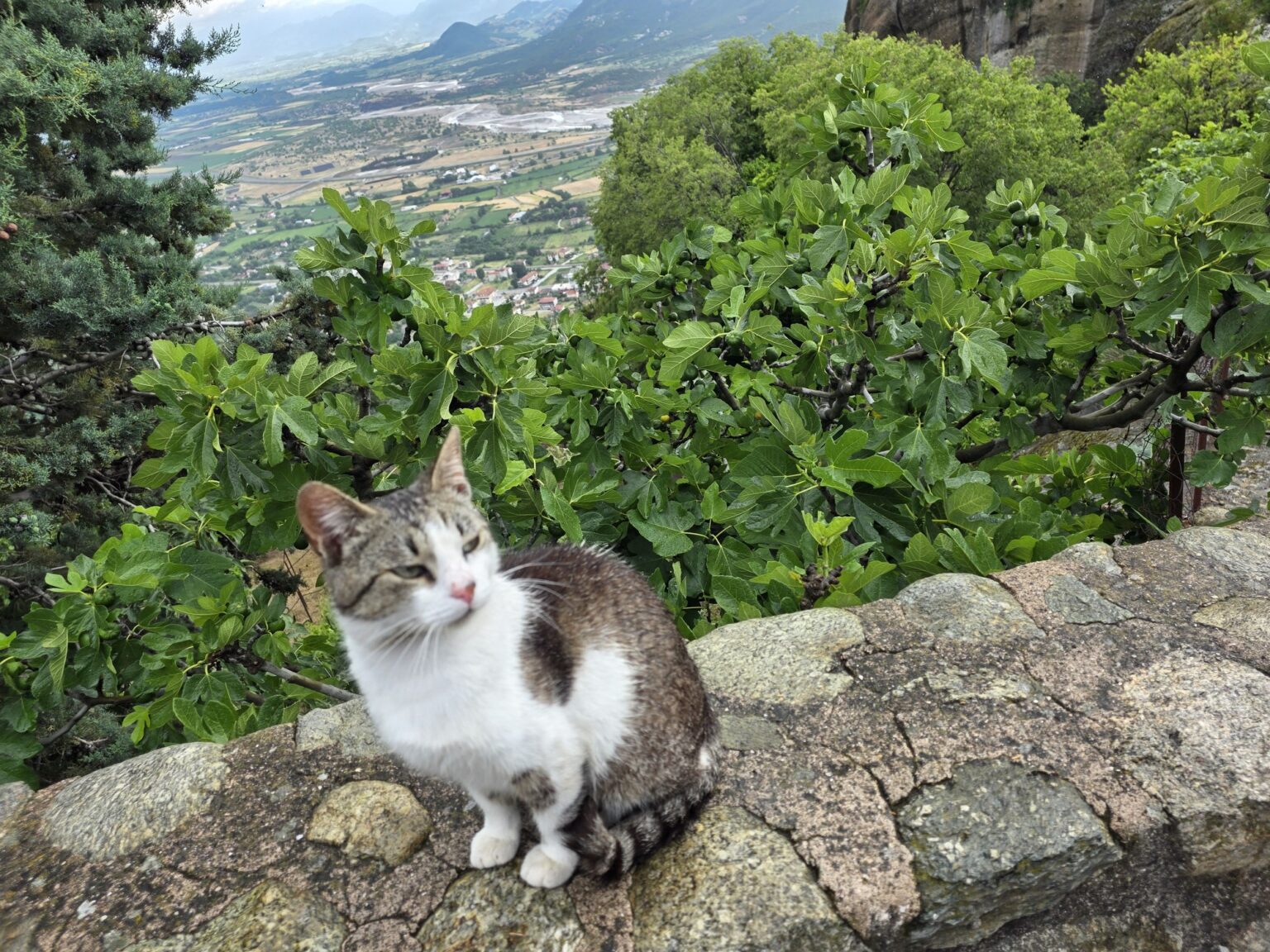
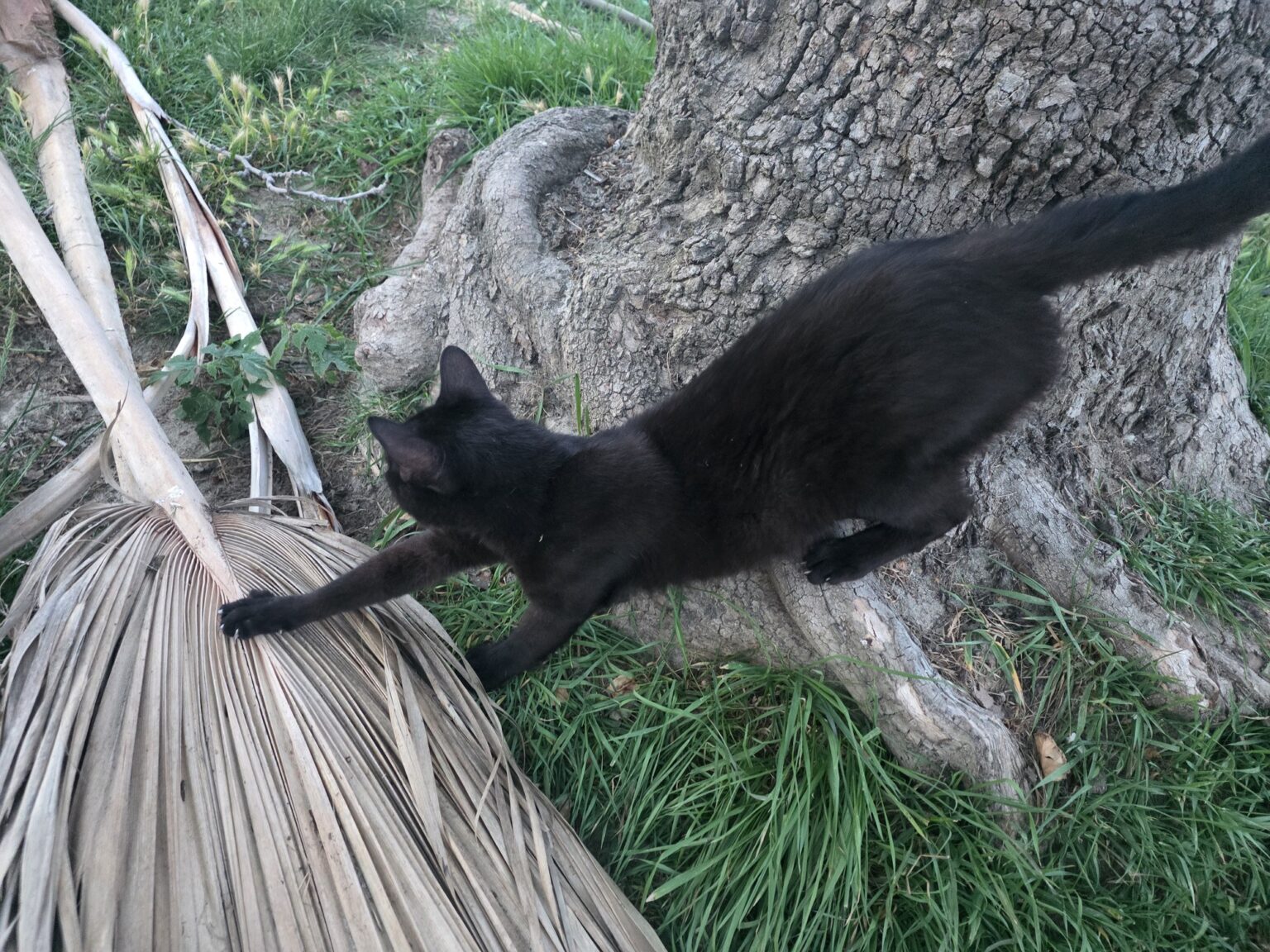
How many monasteries should you actually enter? Two or three is plenty for one day. With the driving, the steps and the queues, six is a route march rather than a visit. The rest you look at from outside, which is often the better photograph anyway. The cats, naturally, are everywhere and pay no admission, though they do look thoroughly unimpressed about it.
Day 3: napping and tavernas
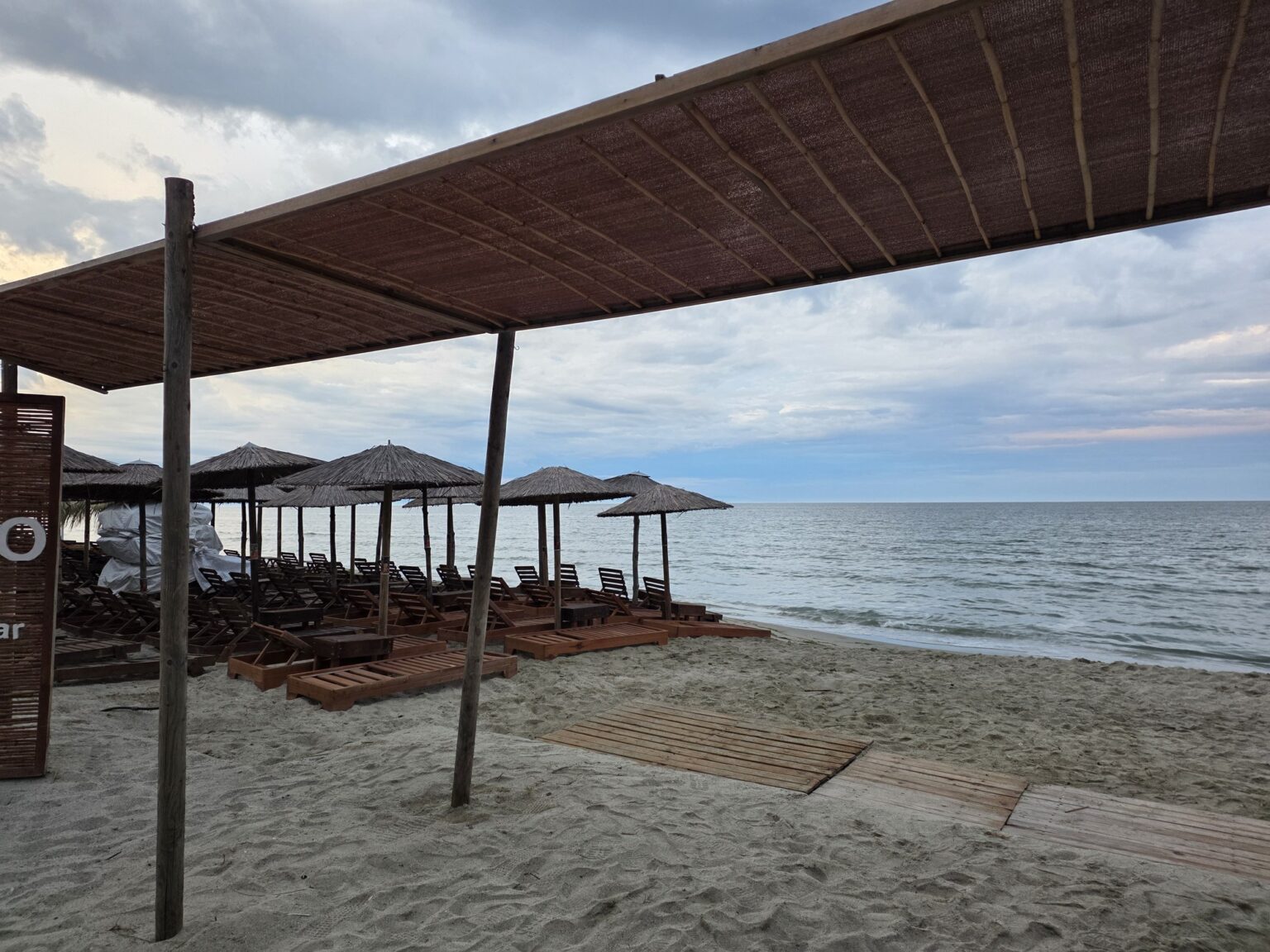
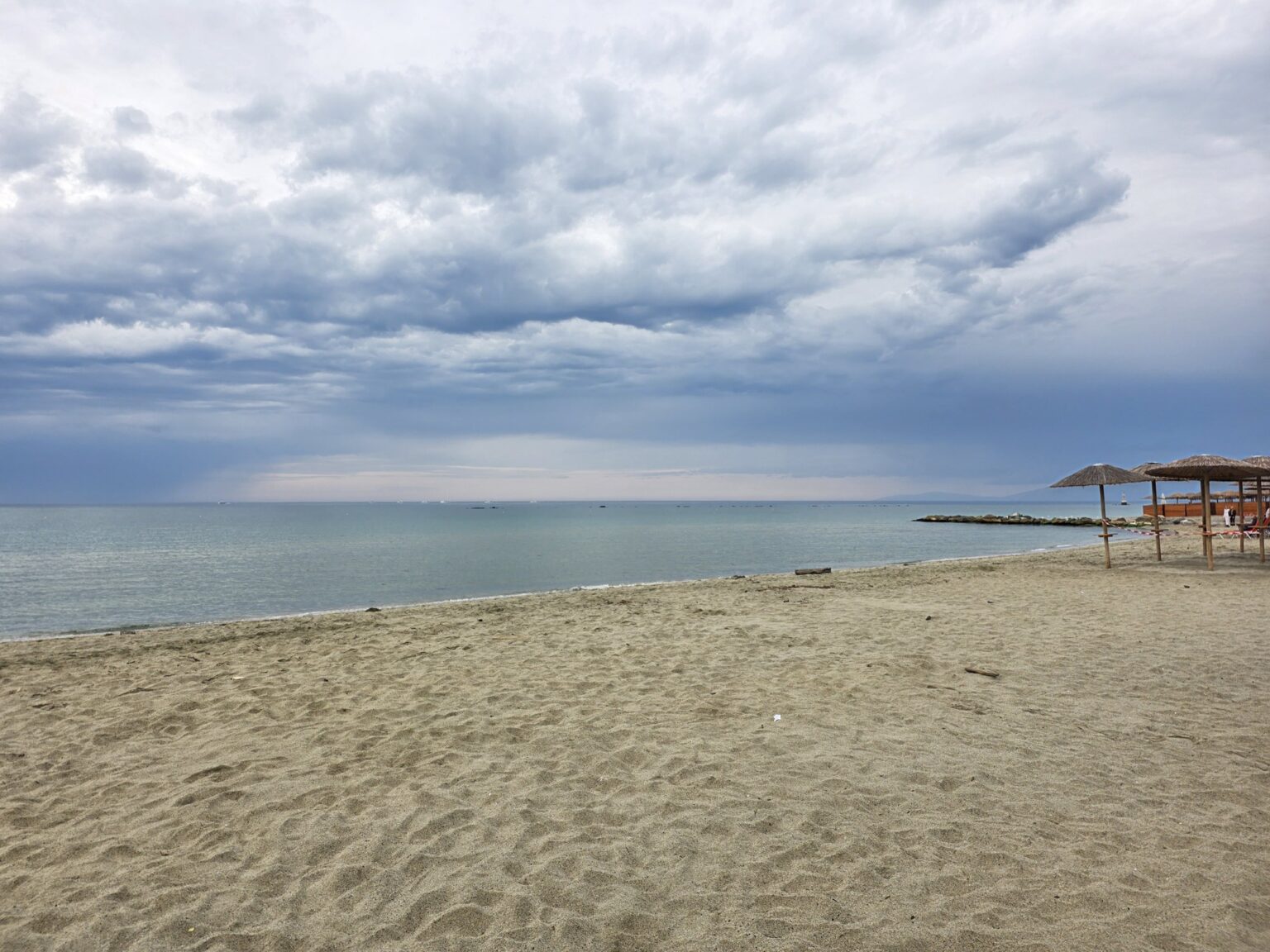
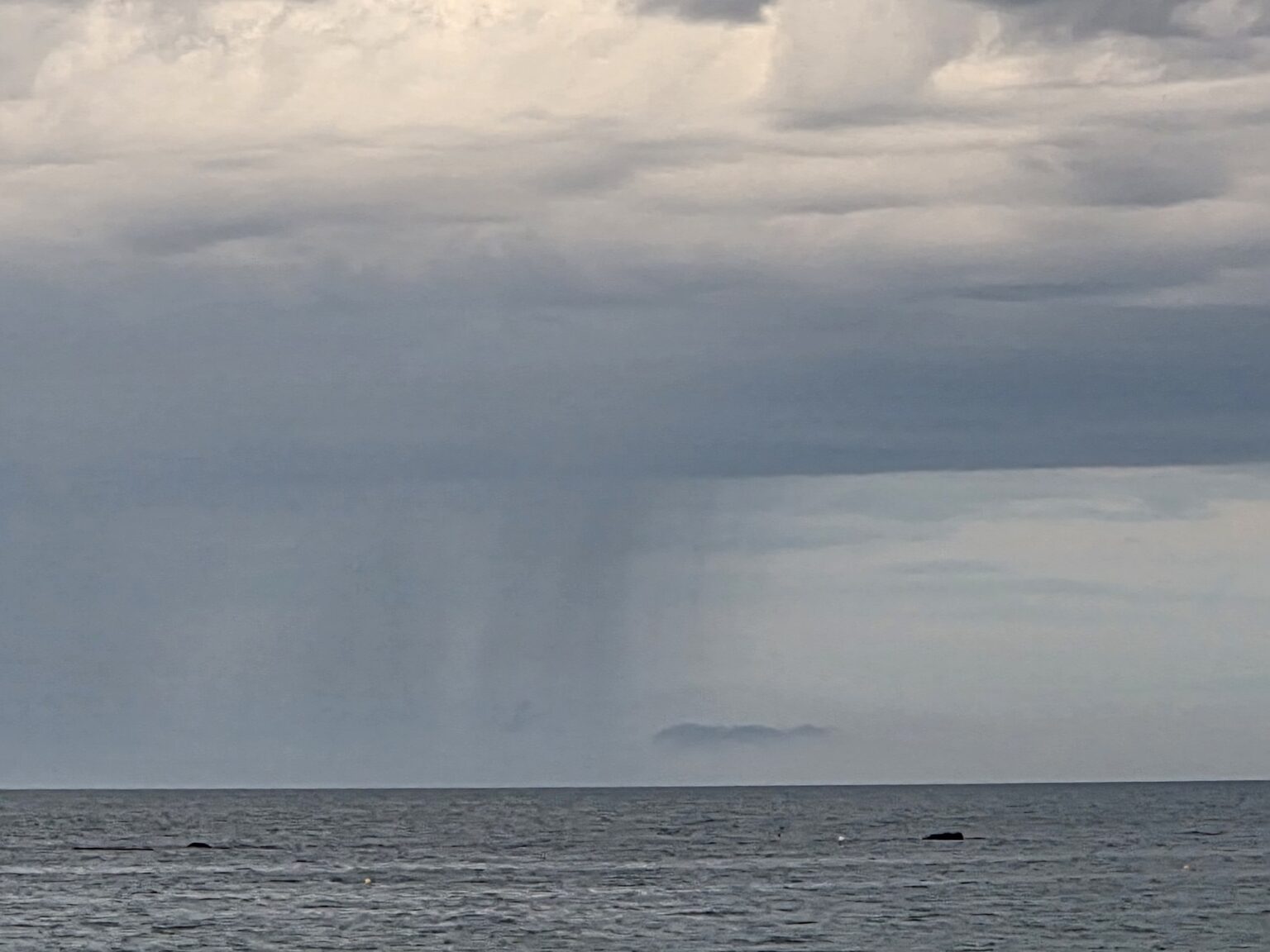
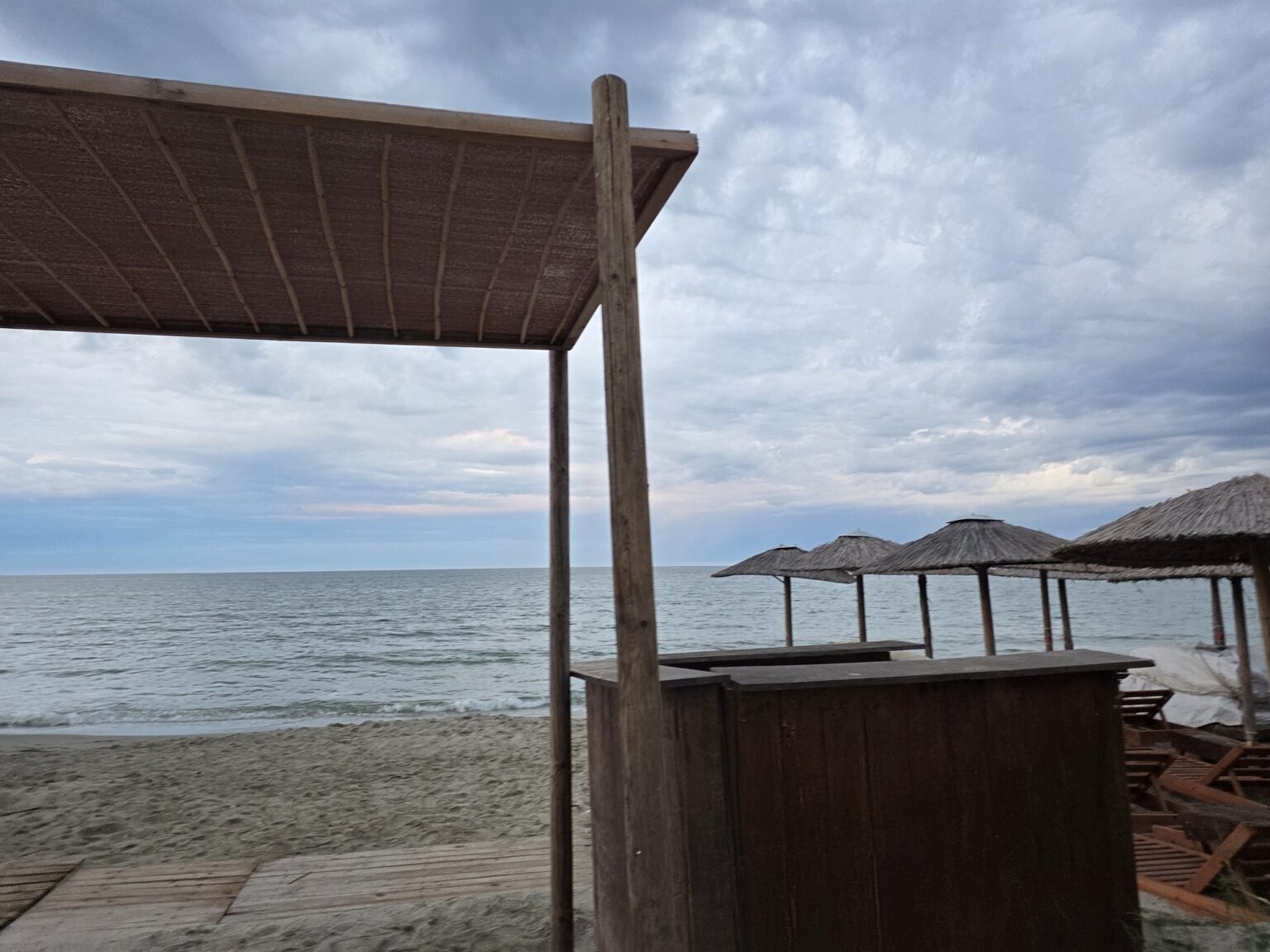
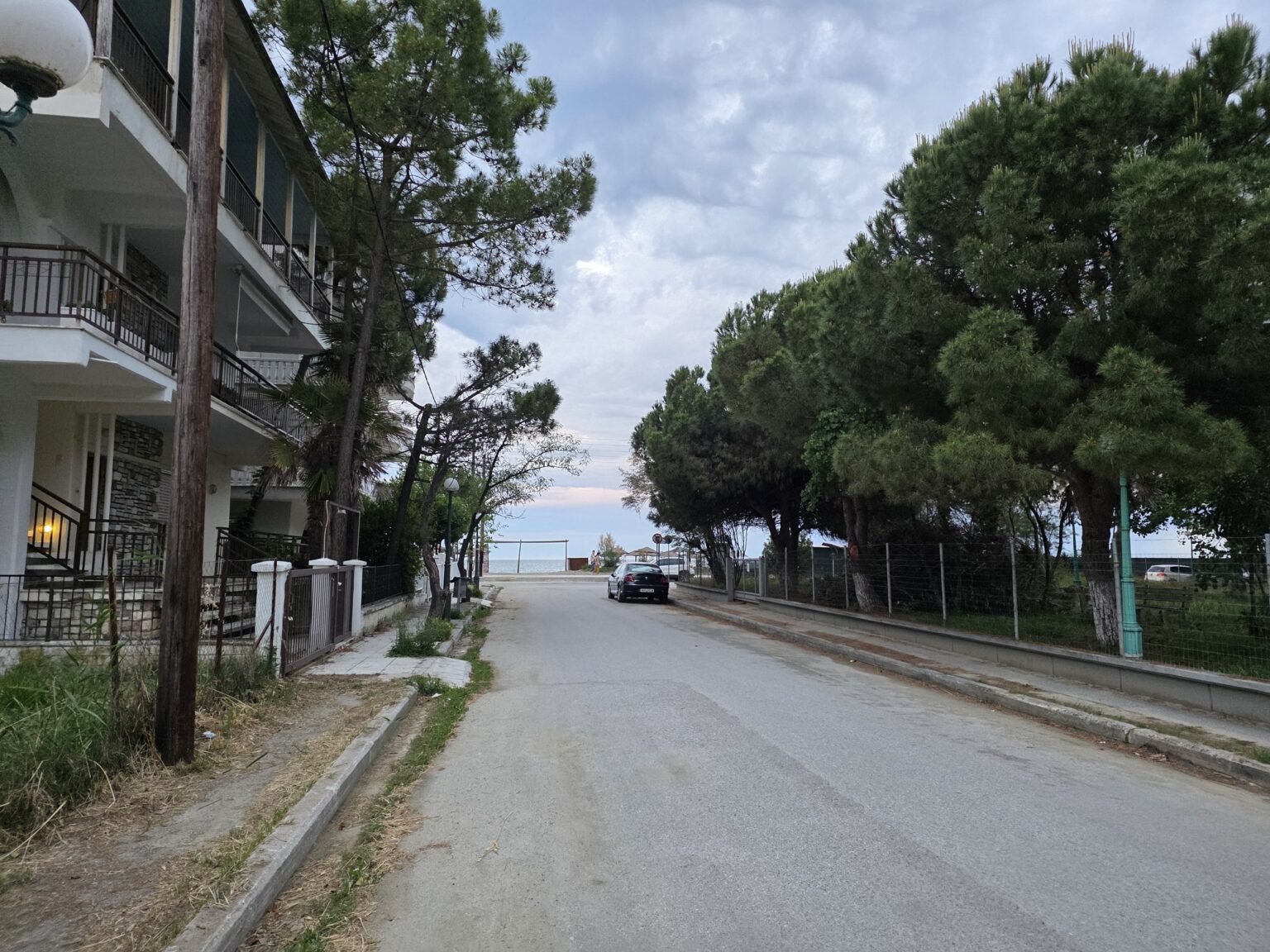
This day has no programme, and that is the programme. After Meteora your legs want a rest and the beach is two streets away. The sand is wide, the shelters are wooden, and the weather does as it pleases — curtains of rain drift across the gulf looking thoroughly ominous and are gone in ten minutes.
The rest is eating. If we are honest, this was the day that would bring us back. If you are short on time, though, this is the day to cut — which is exactly how the maths gets you to three.
Day 4: Katerini, then home
Katerini is the capital of the Pieria regional unit — close to 60,000 people in the town itself, sitting at 14 m above sea level between Mount Olympus and the gulf. It is not a tourist town, and that is precisely why it works: people here are getting on with their lives and you walk around among them.
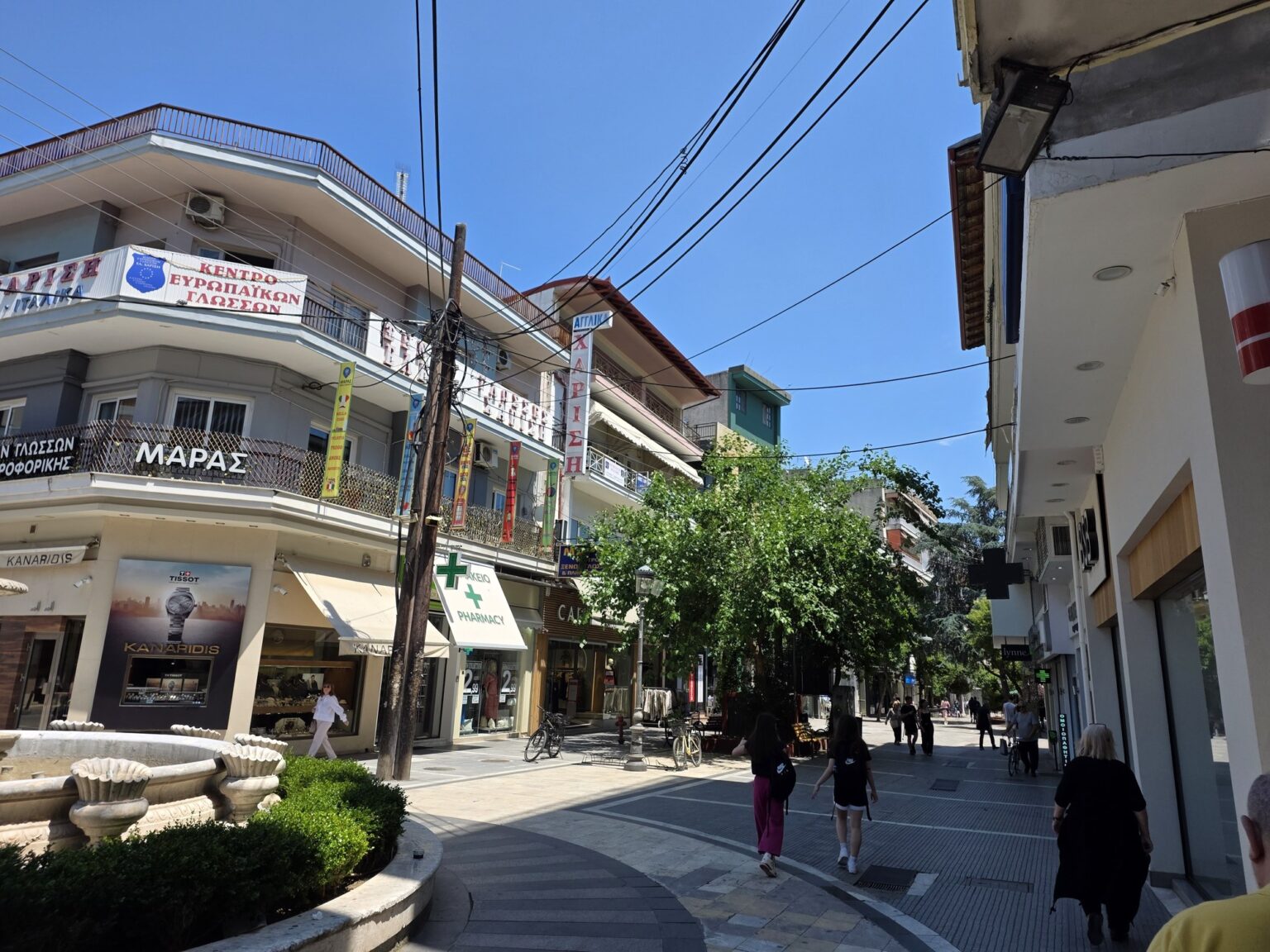
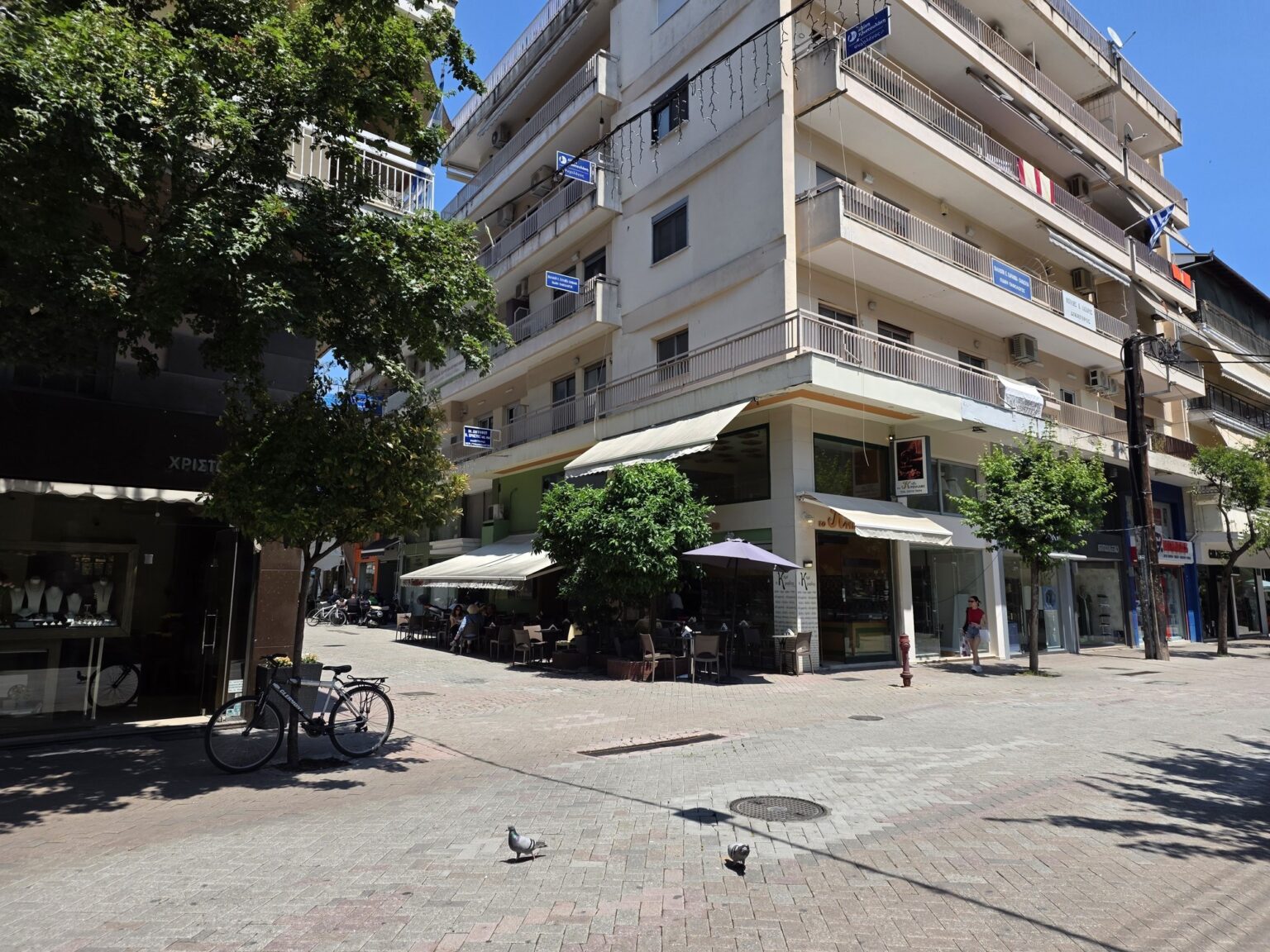
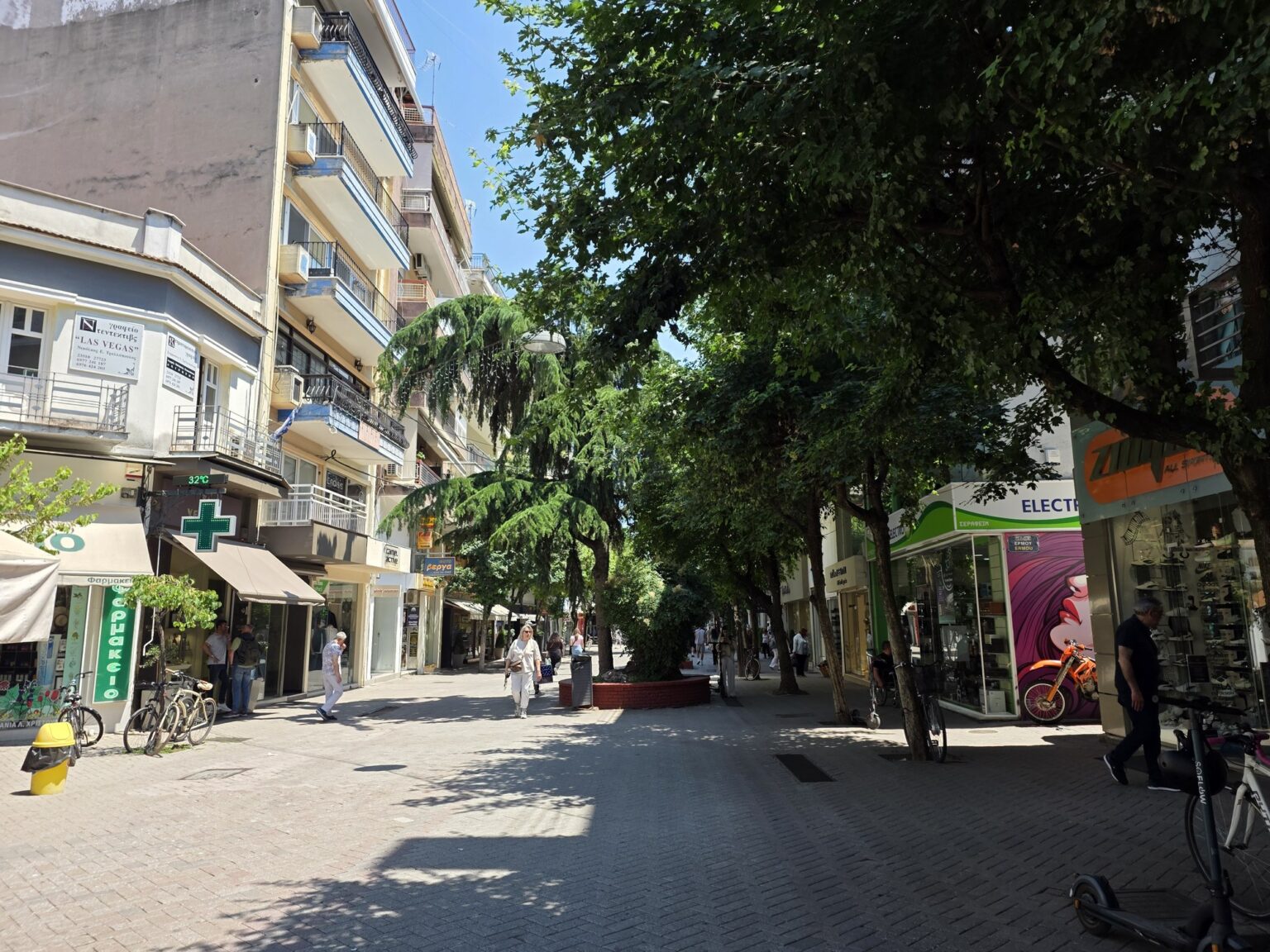
The practical bit first: walk ten minutes out from the centre and the parking is free again. From there you pick up the main pedestrian street — shops, shade trees, older buildings with ornamented facades and a calm that the coast simply does not have.
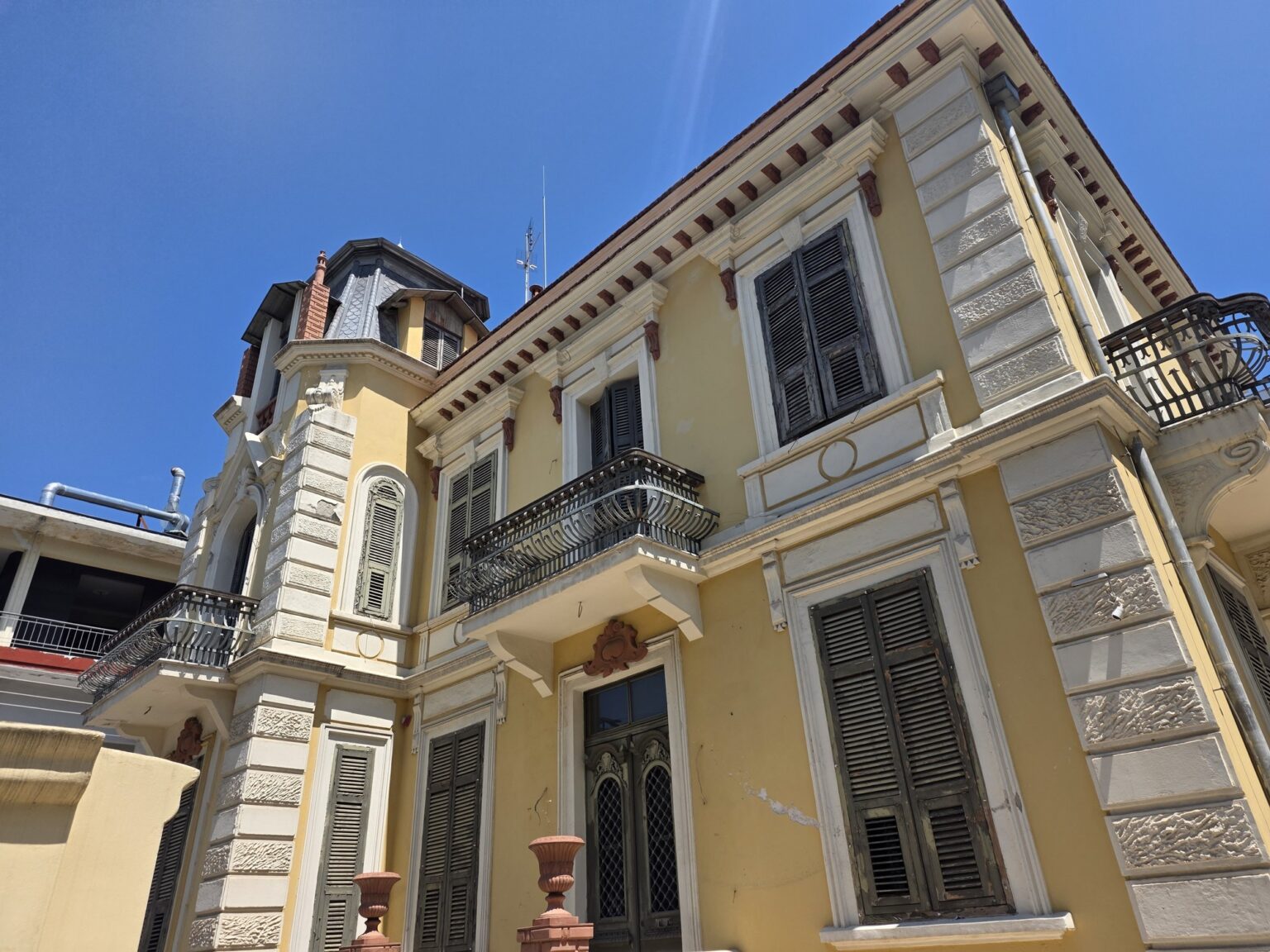
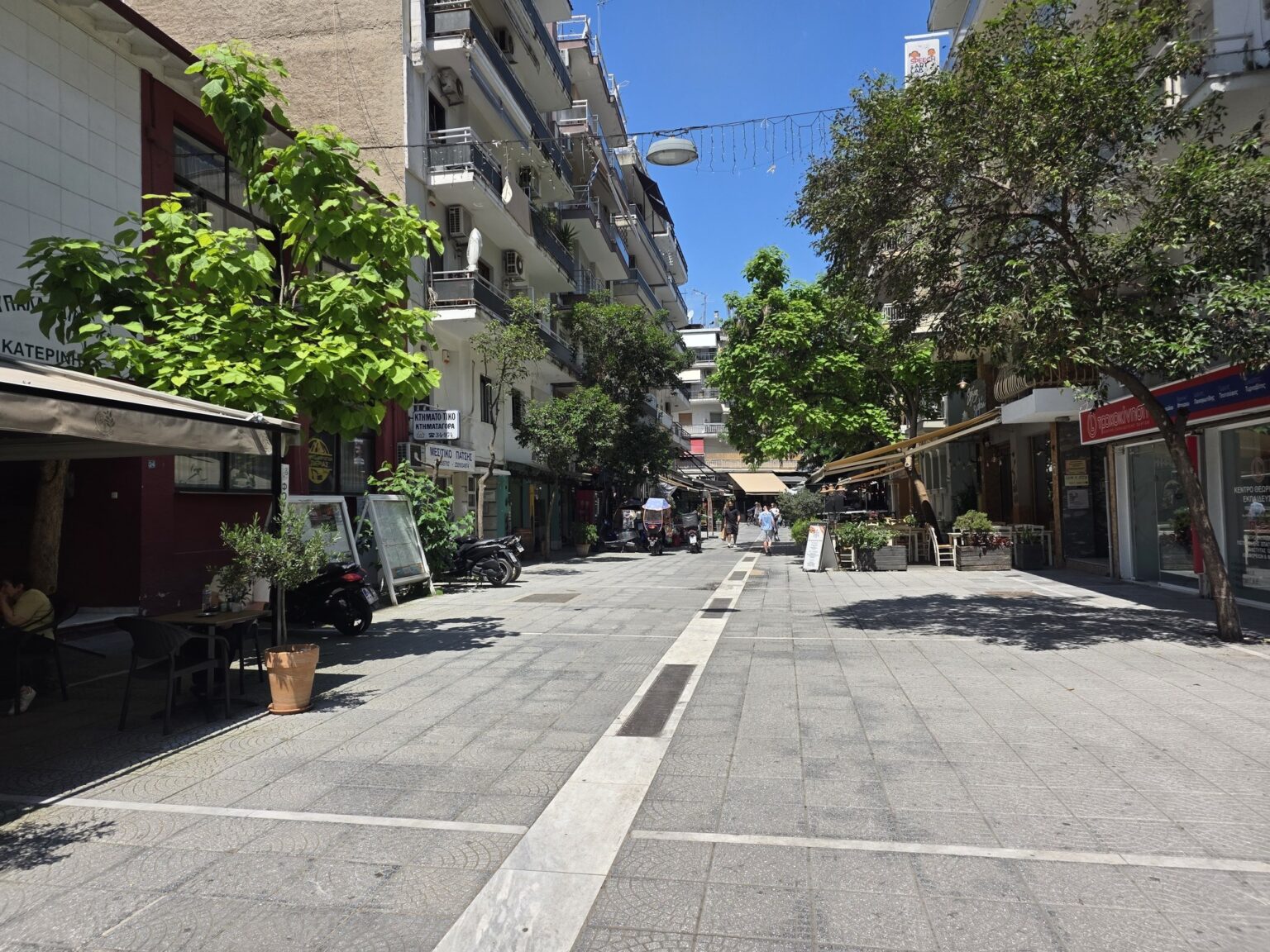
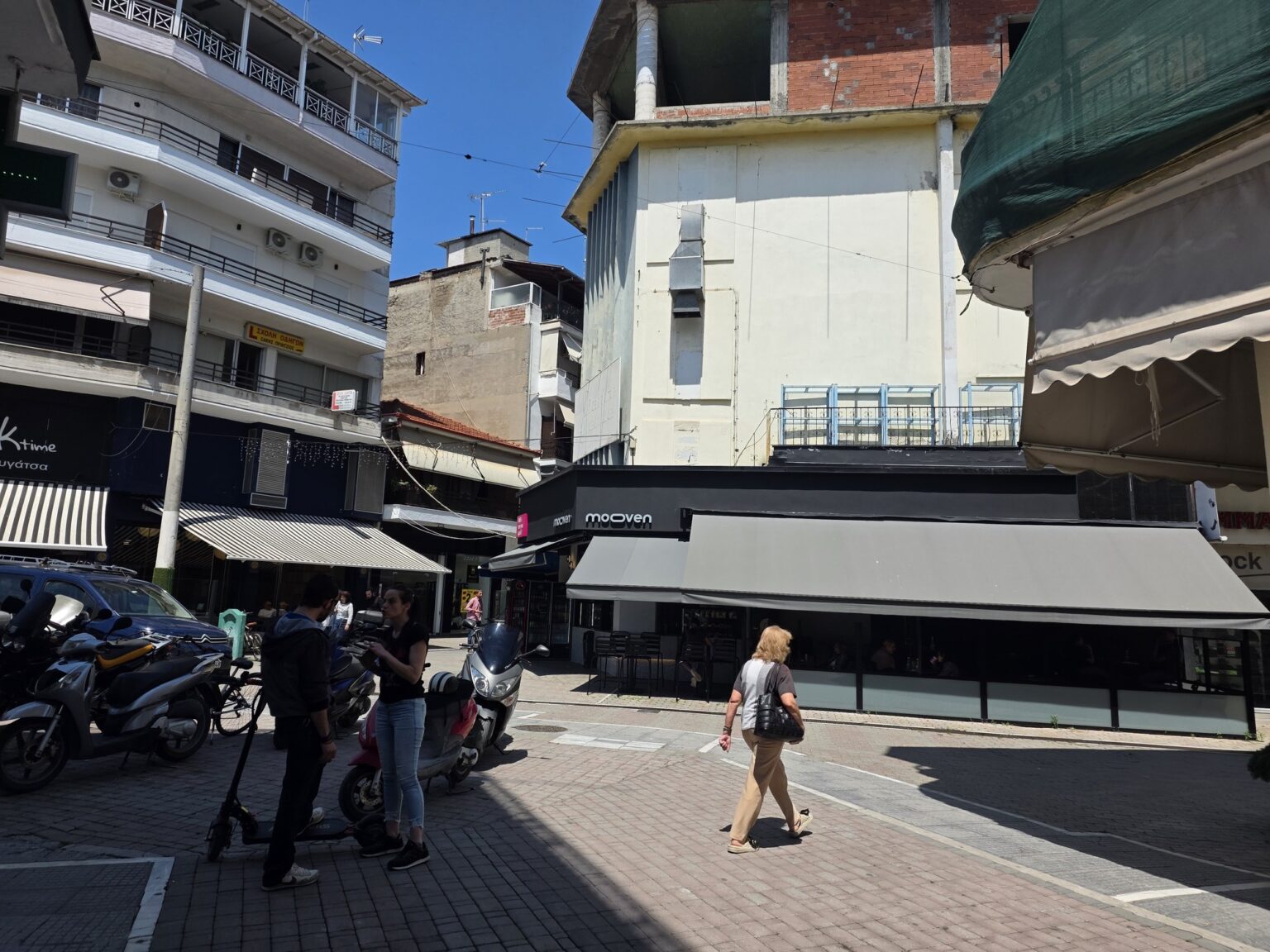
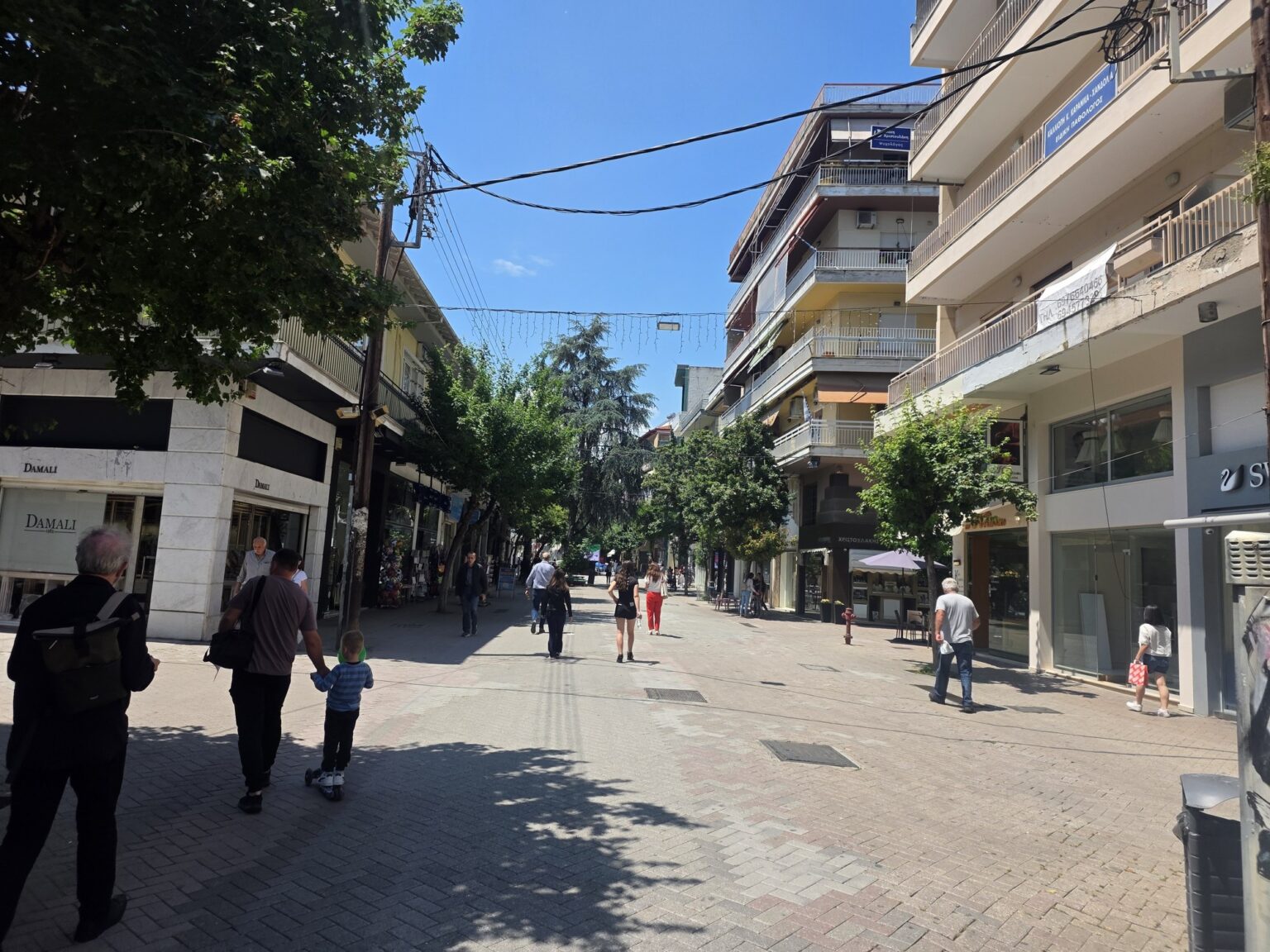
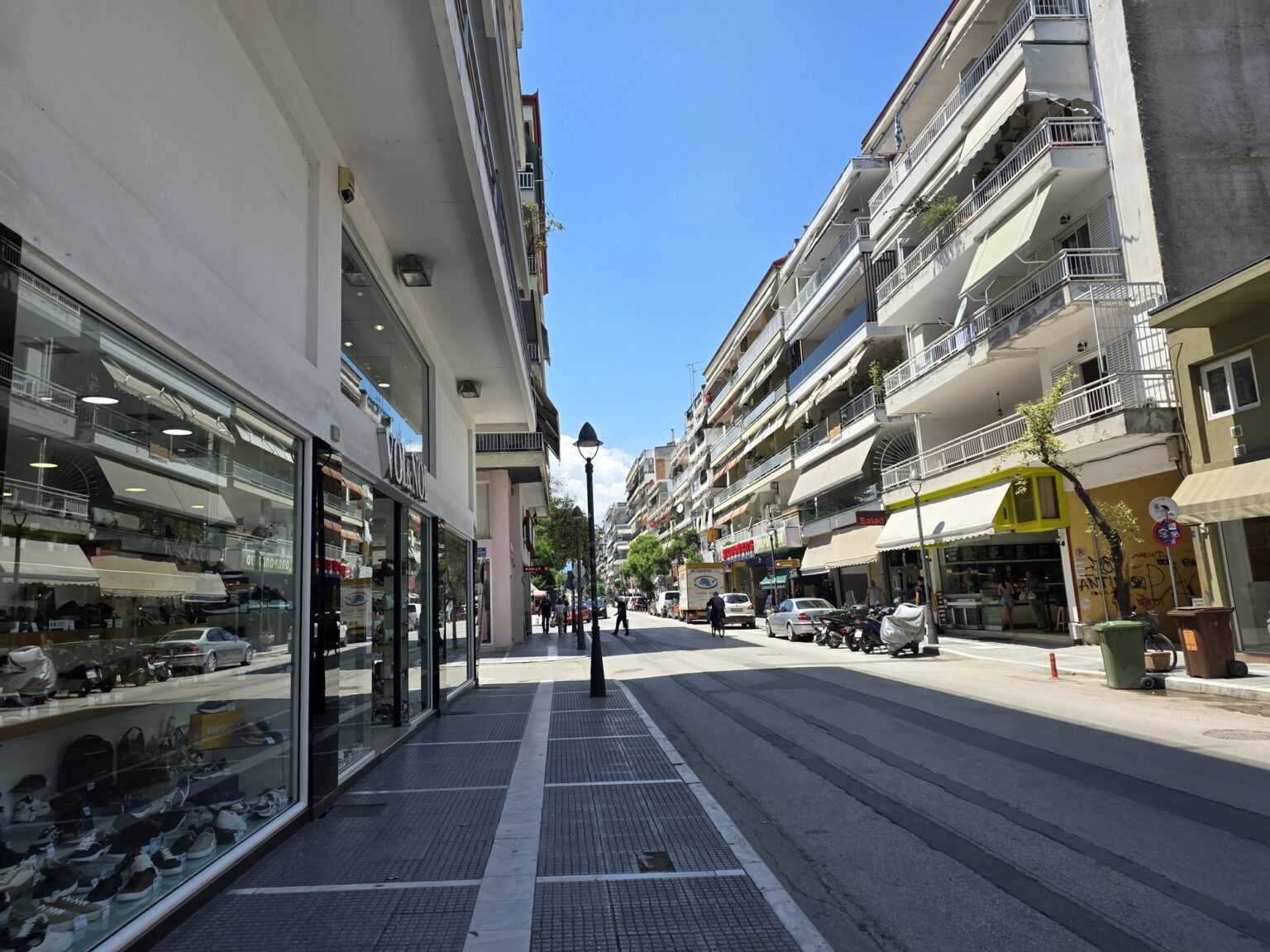
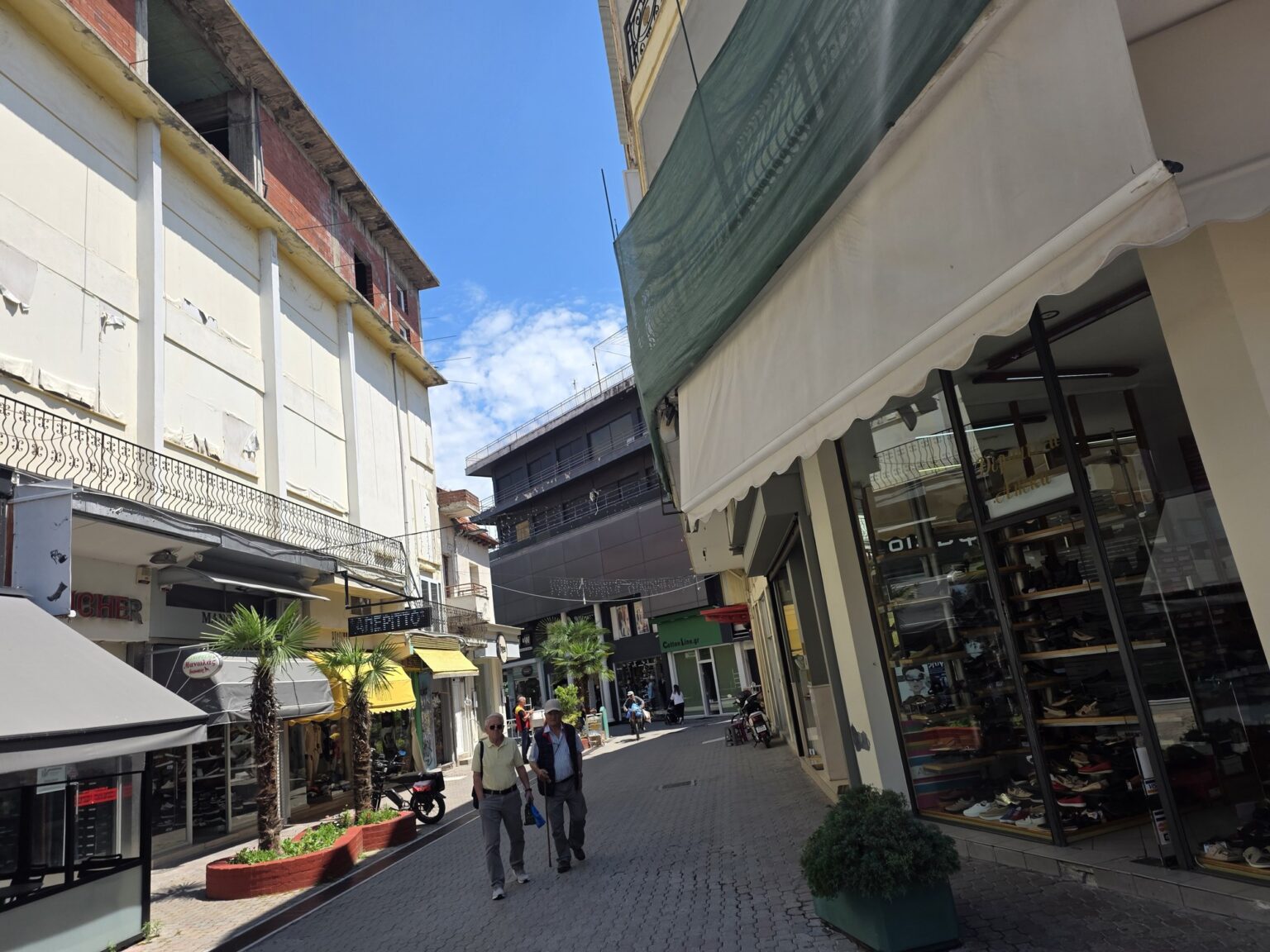
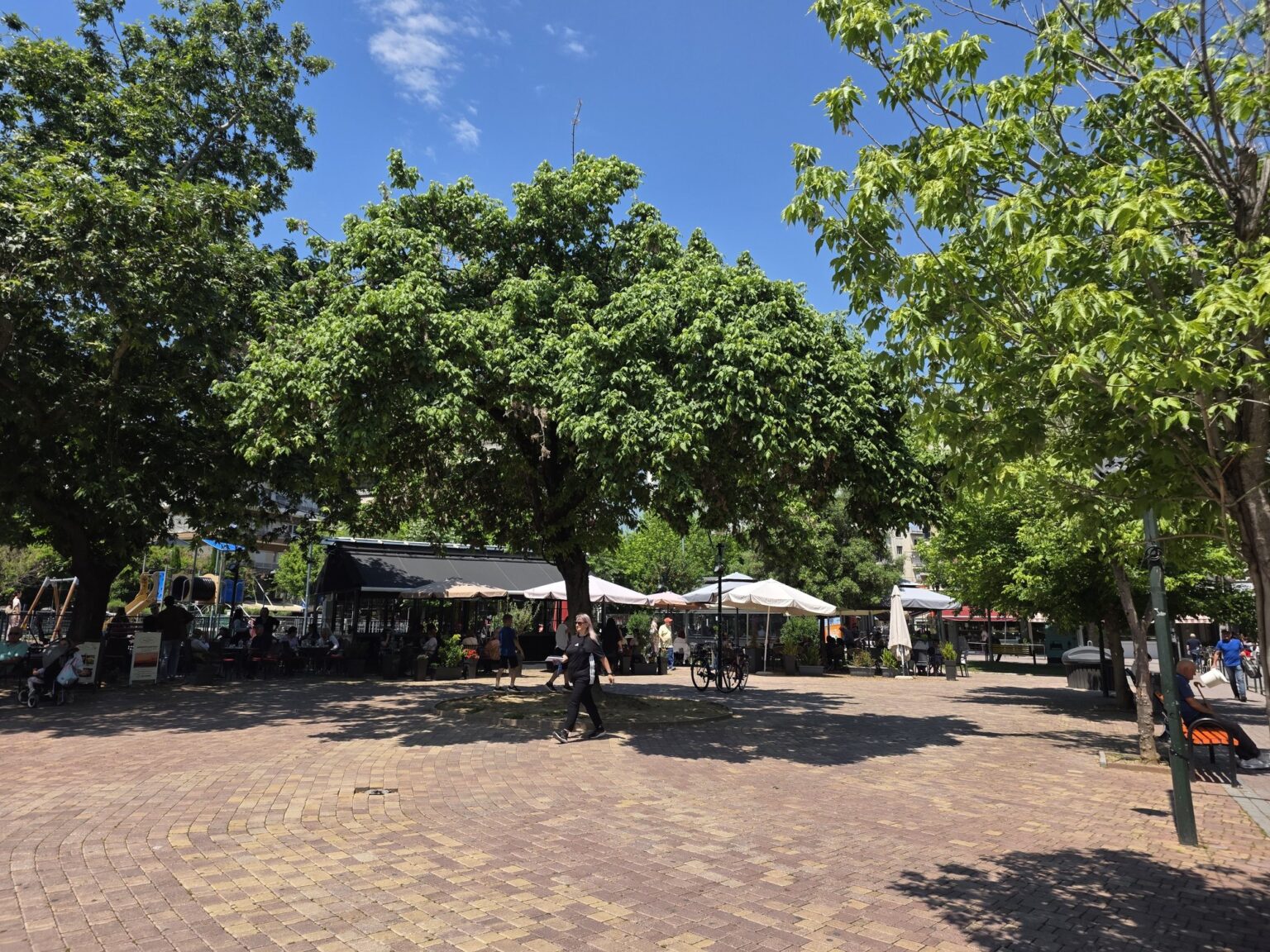
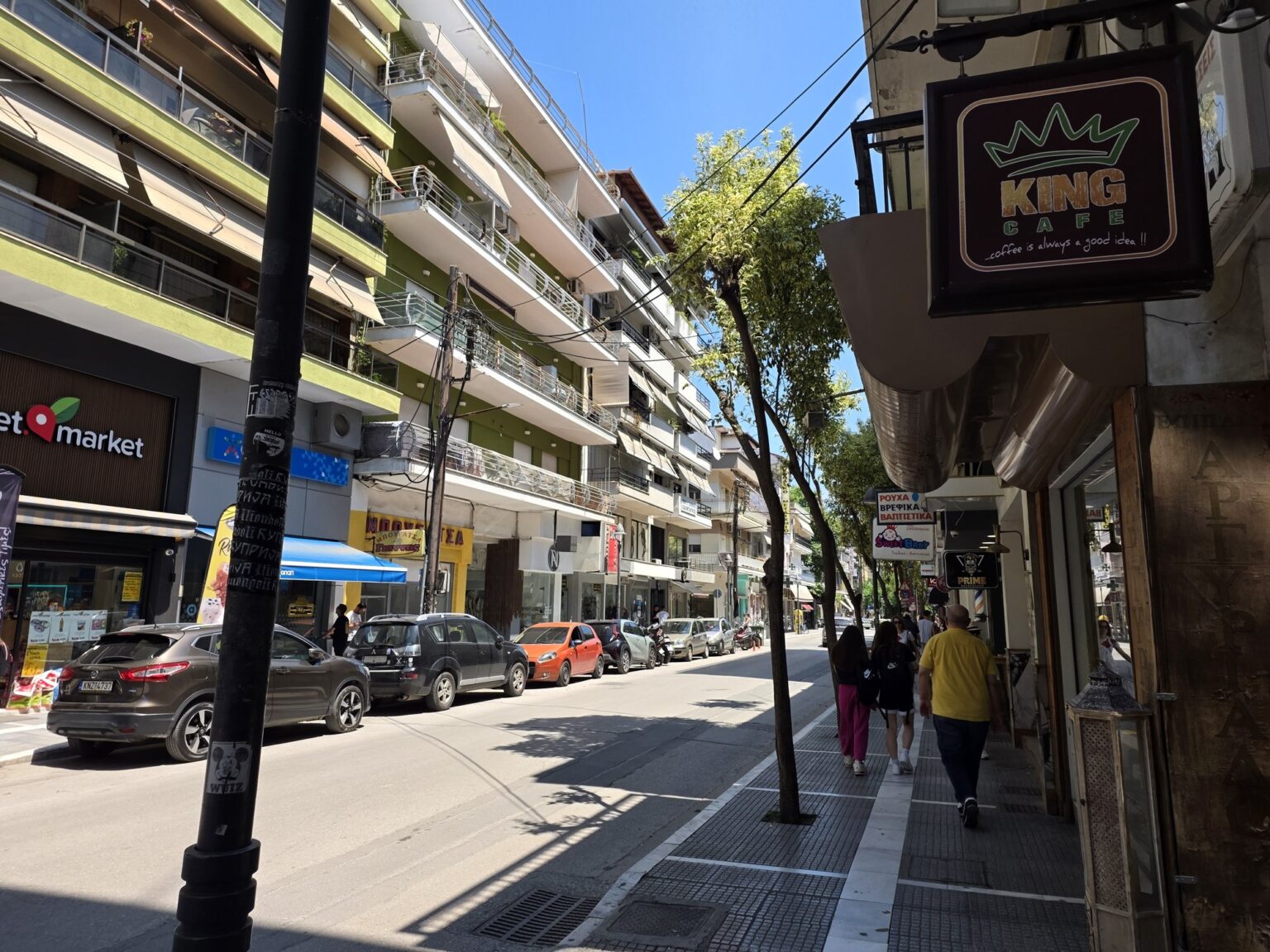
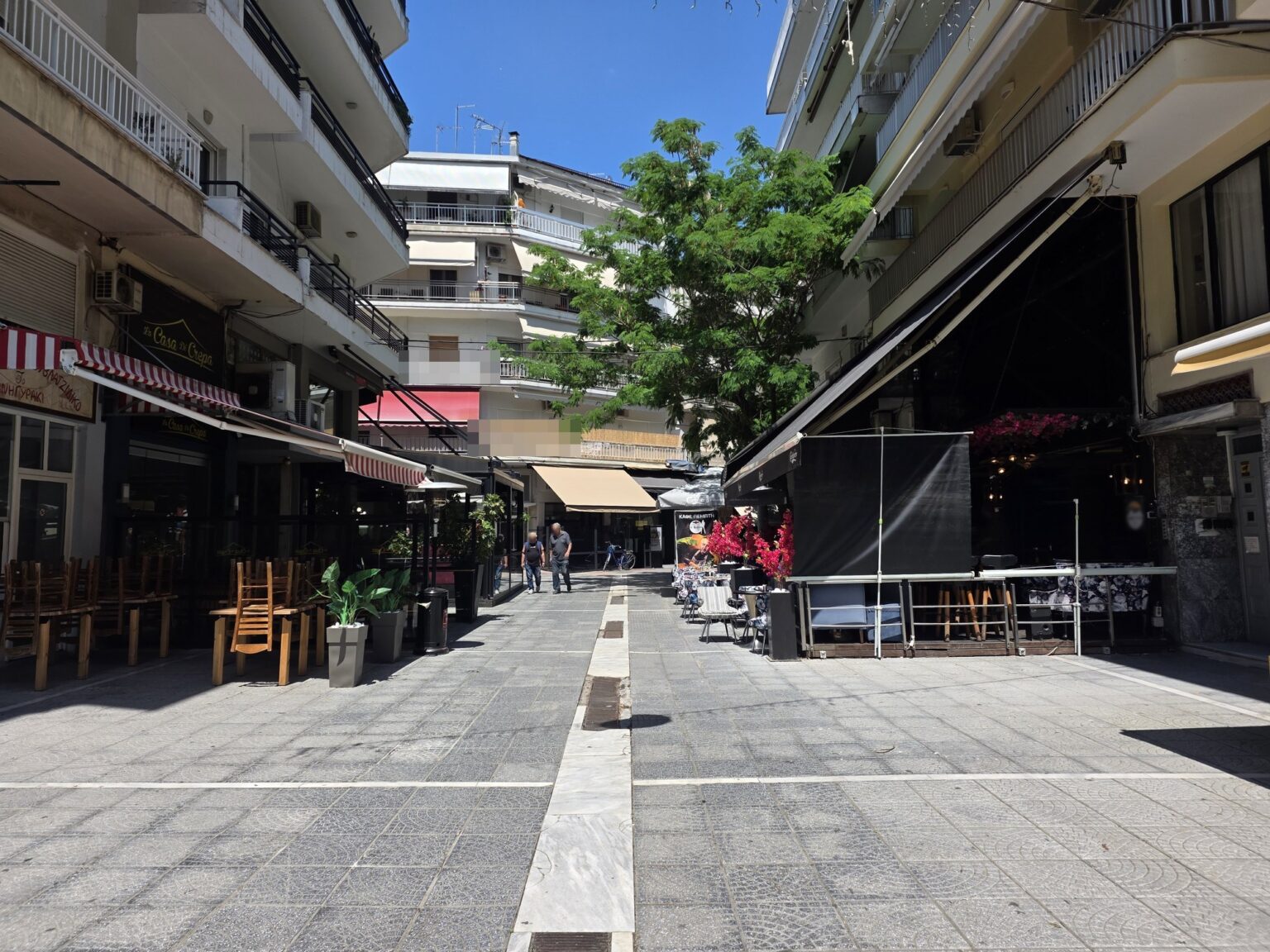
Along the street you can count cafés, a small fountain, squares, and all the mildly dull business of a town centre.
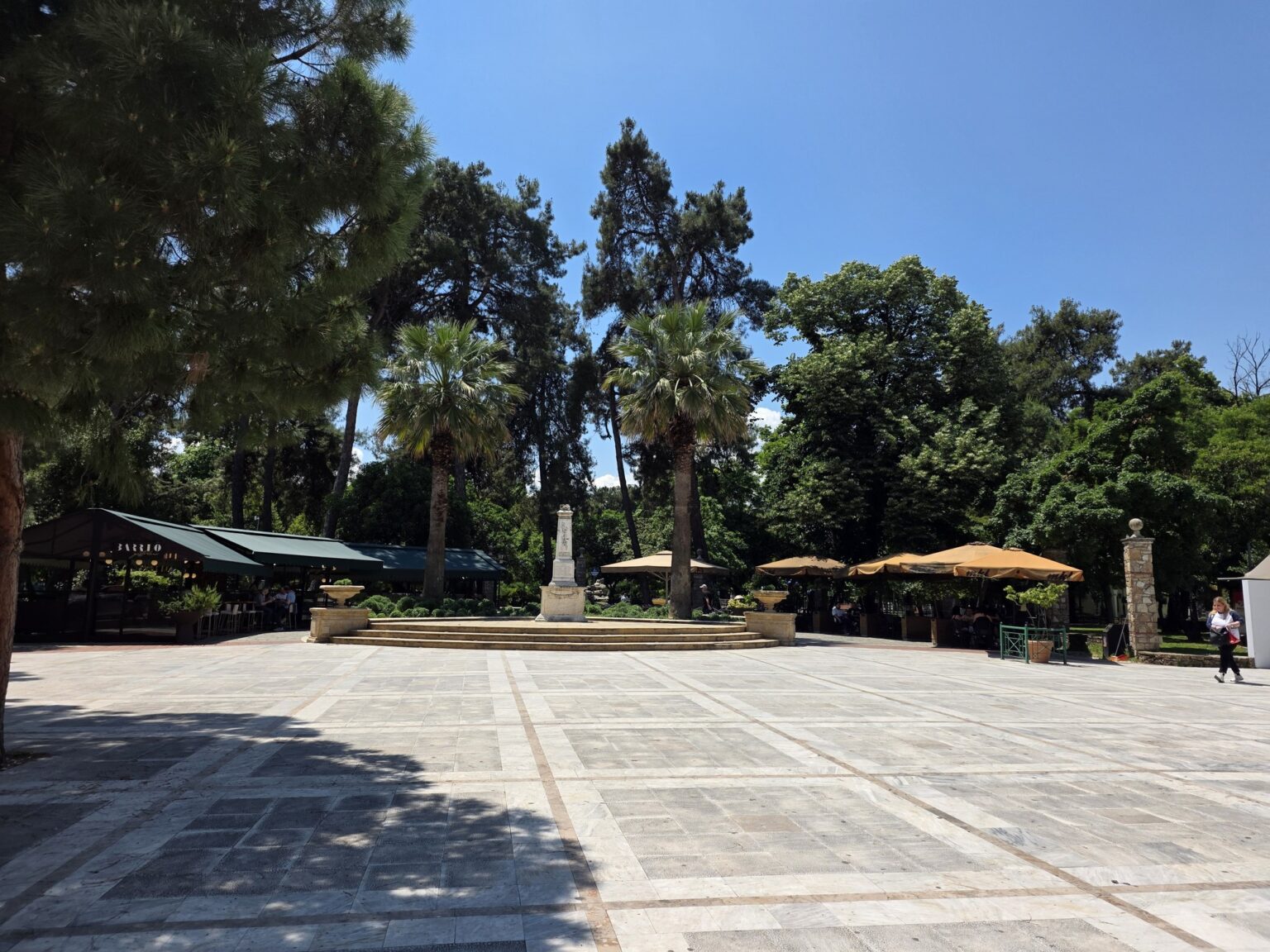
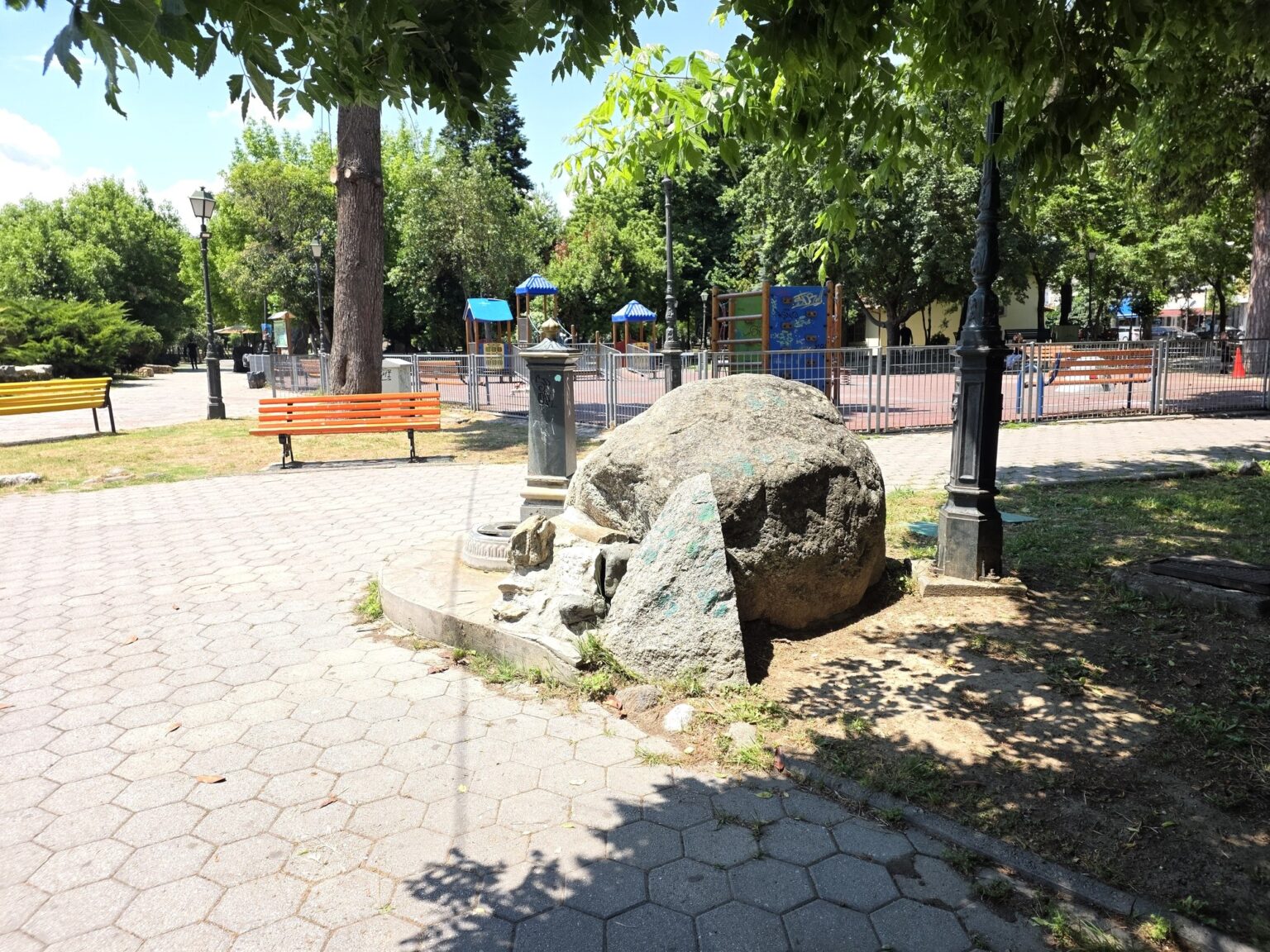
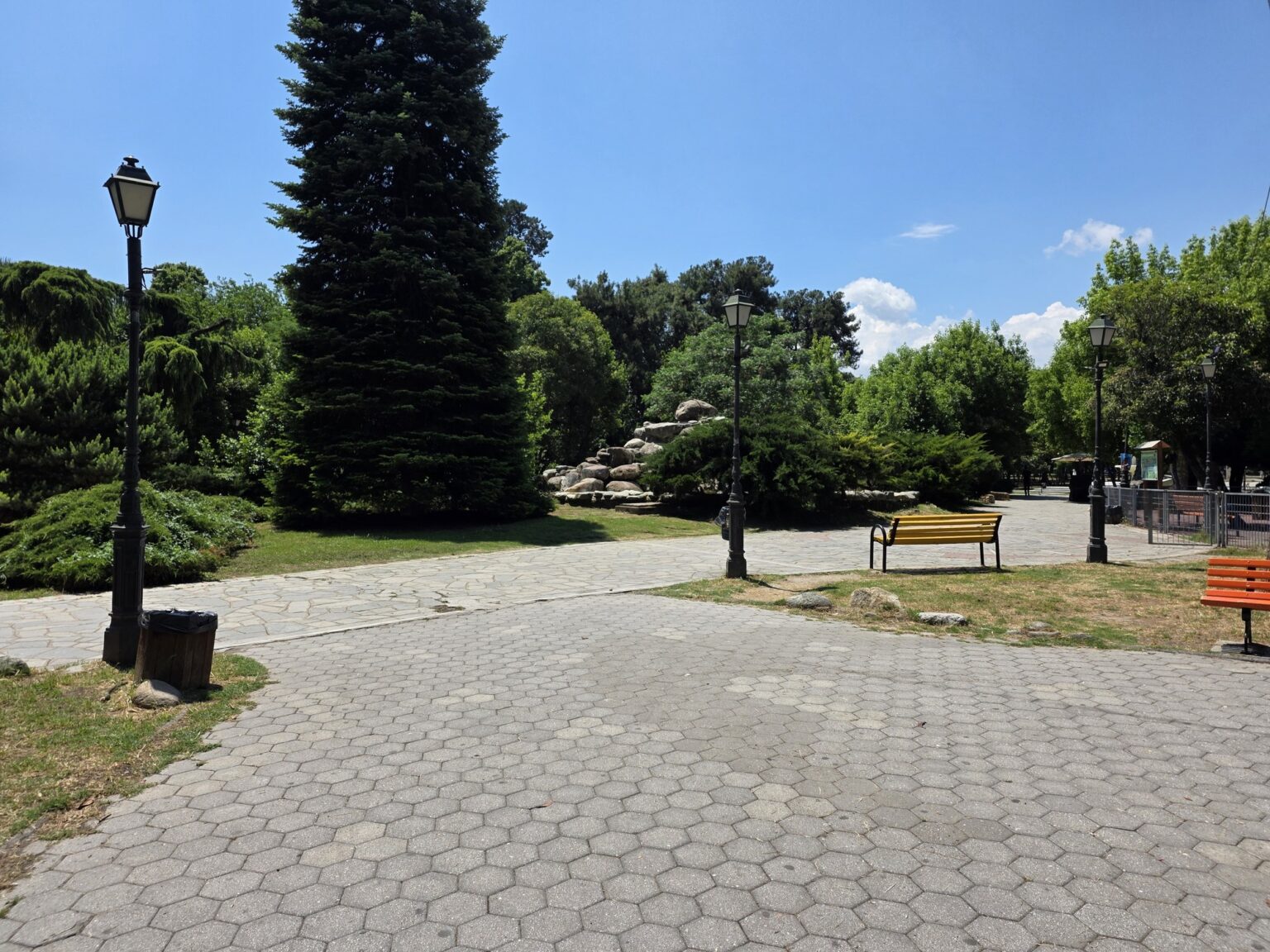
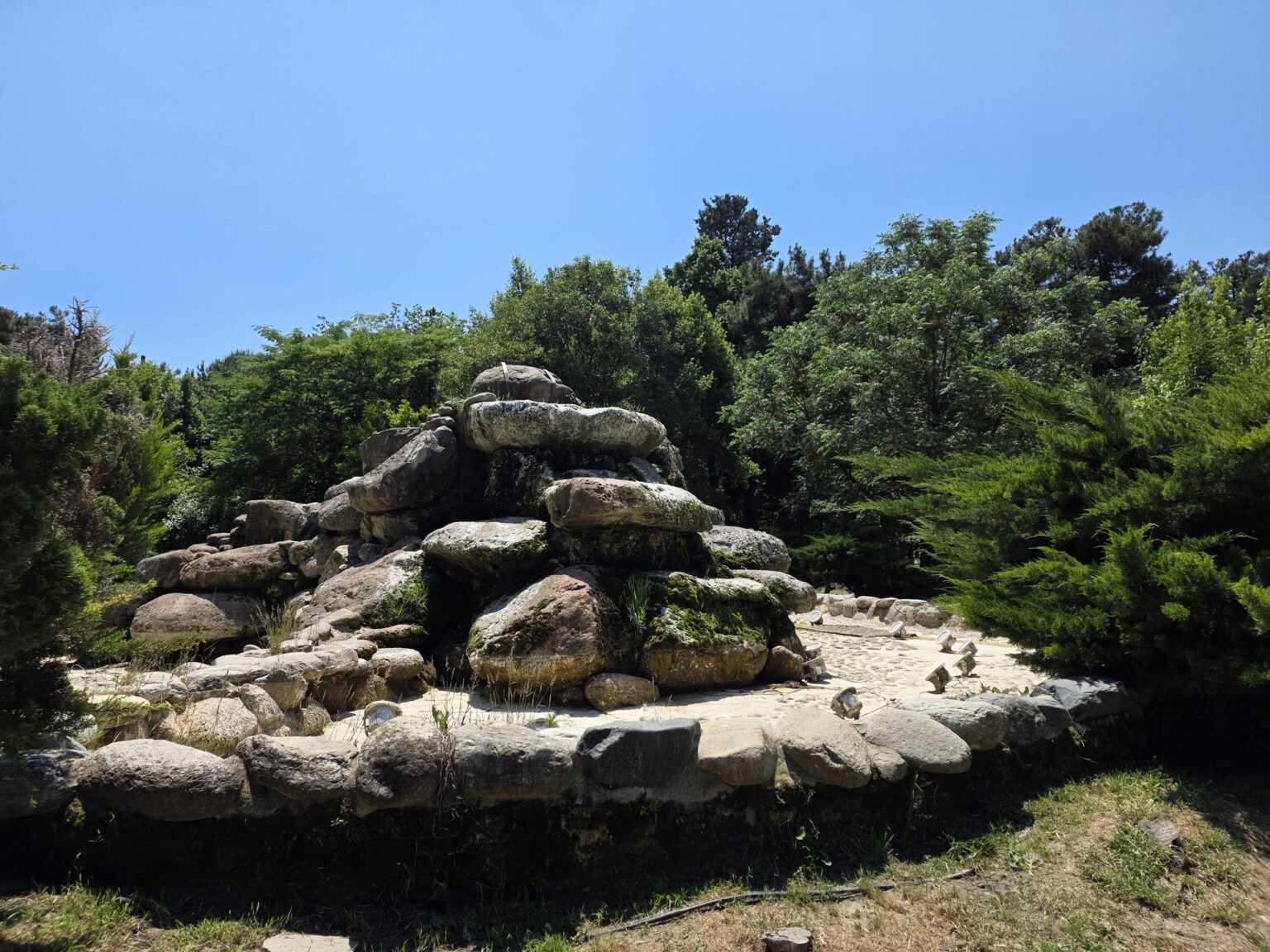
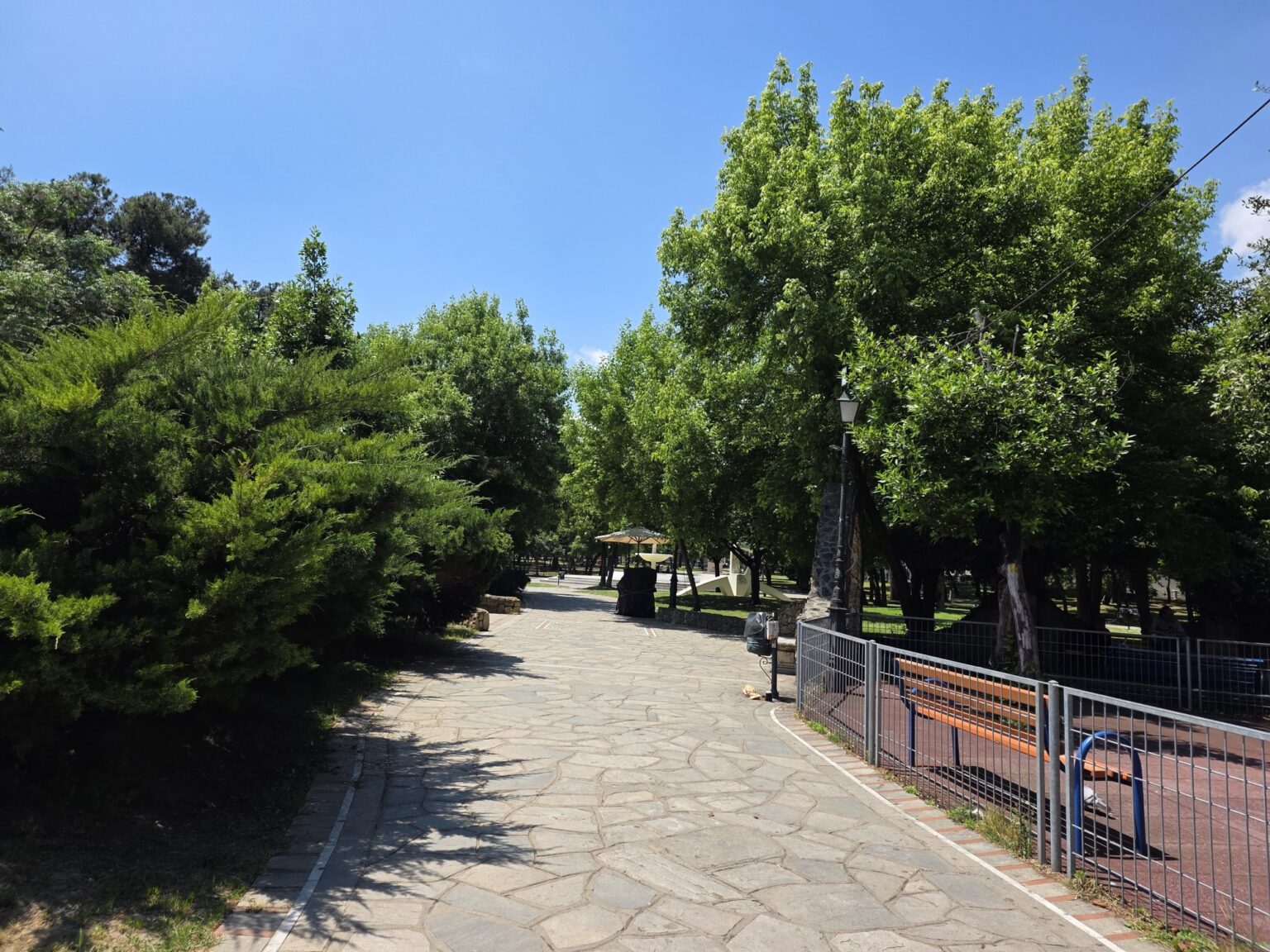
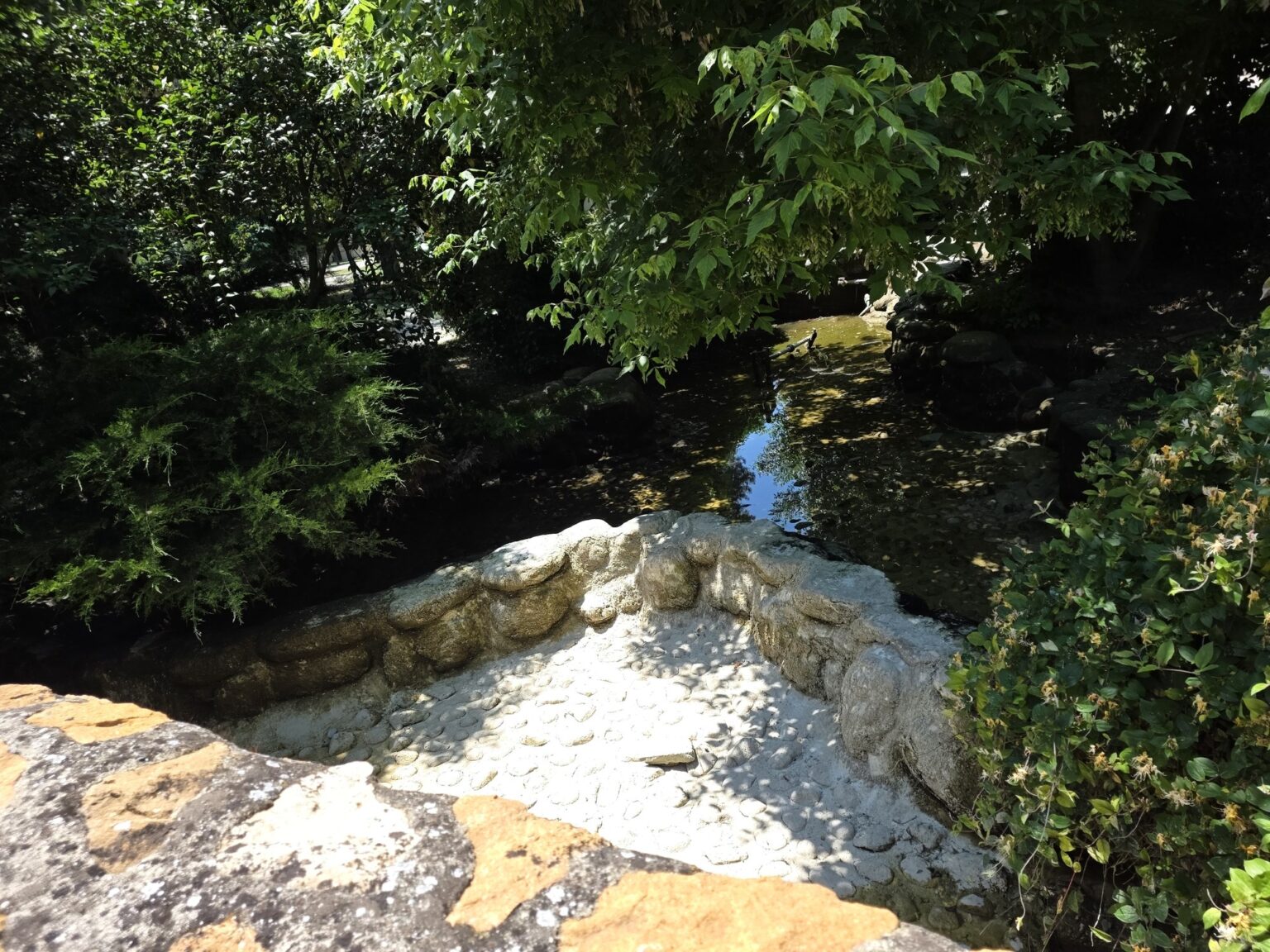
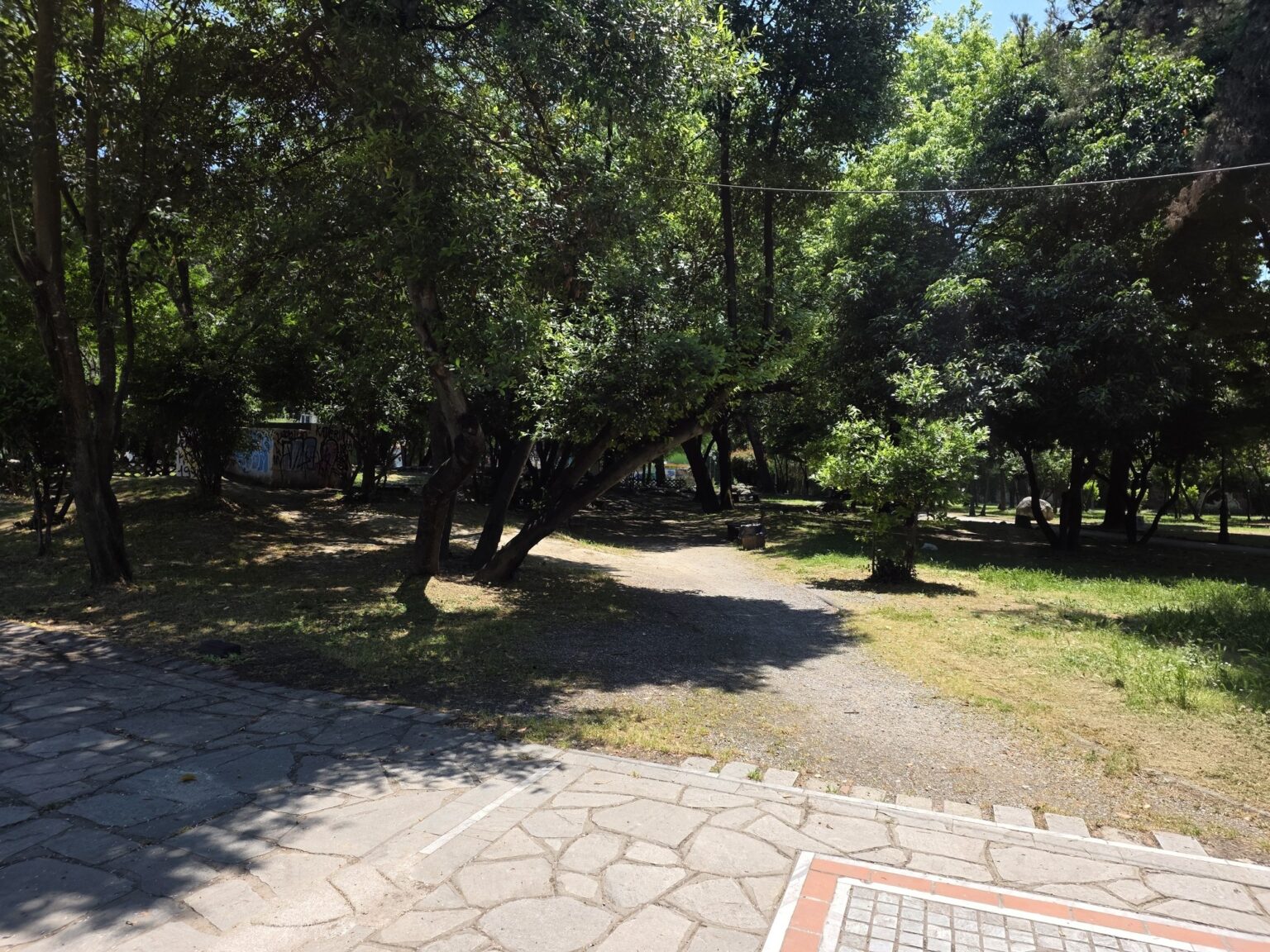
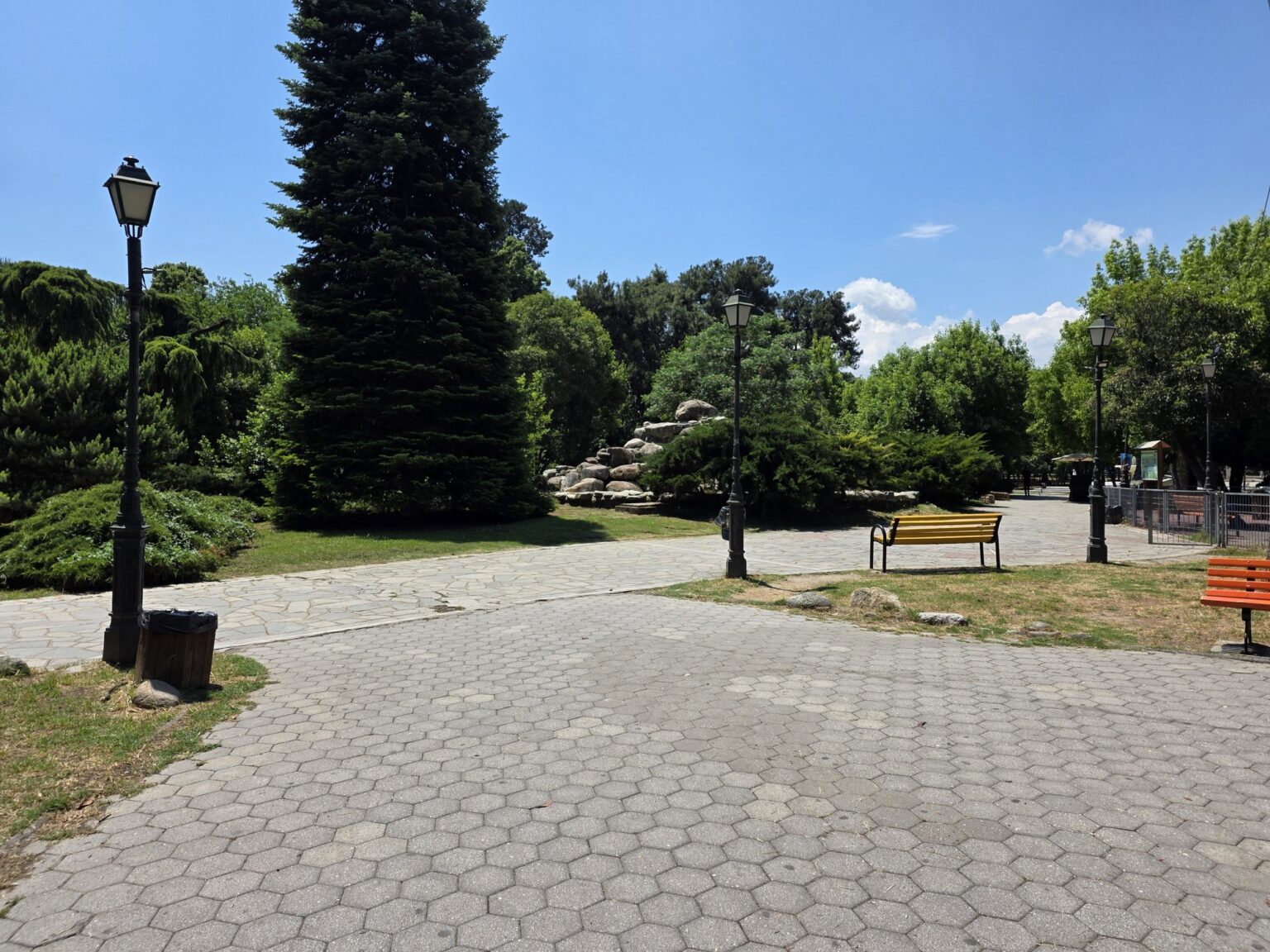
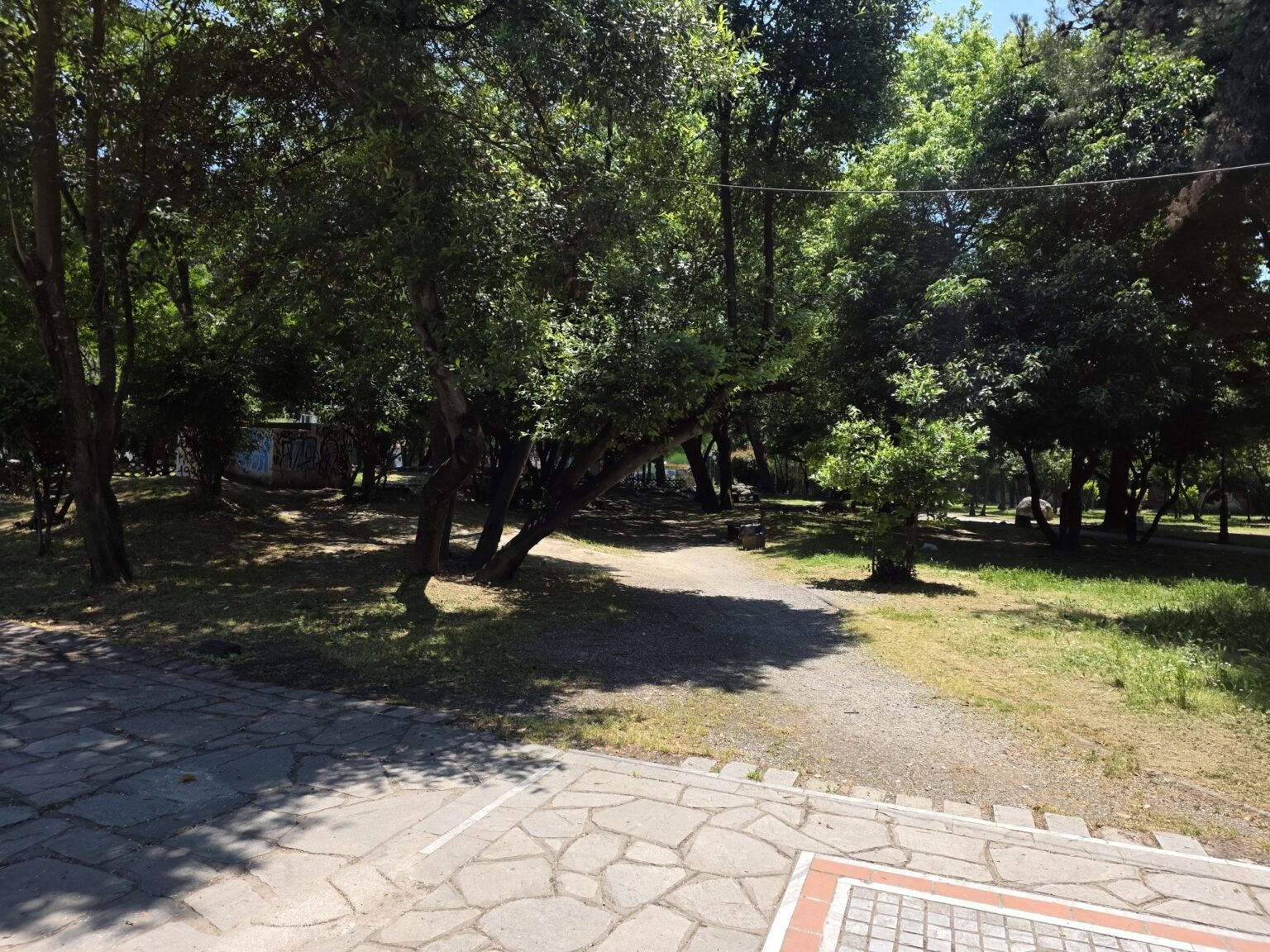
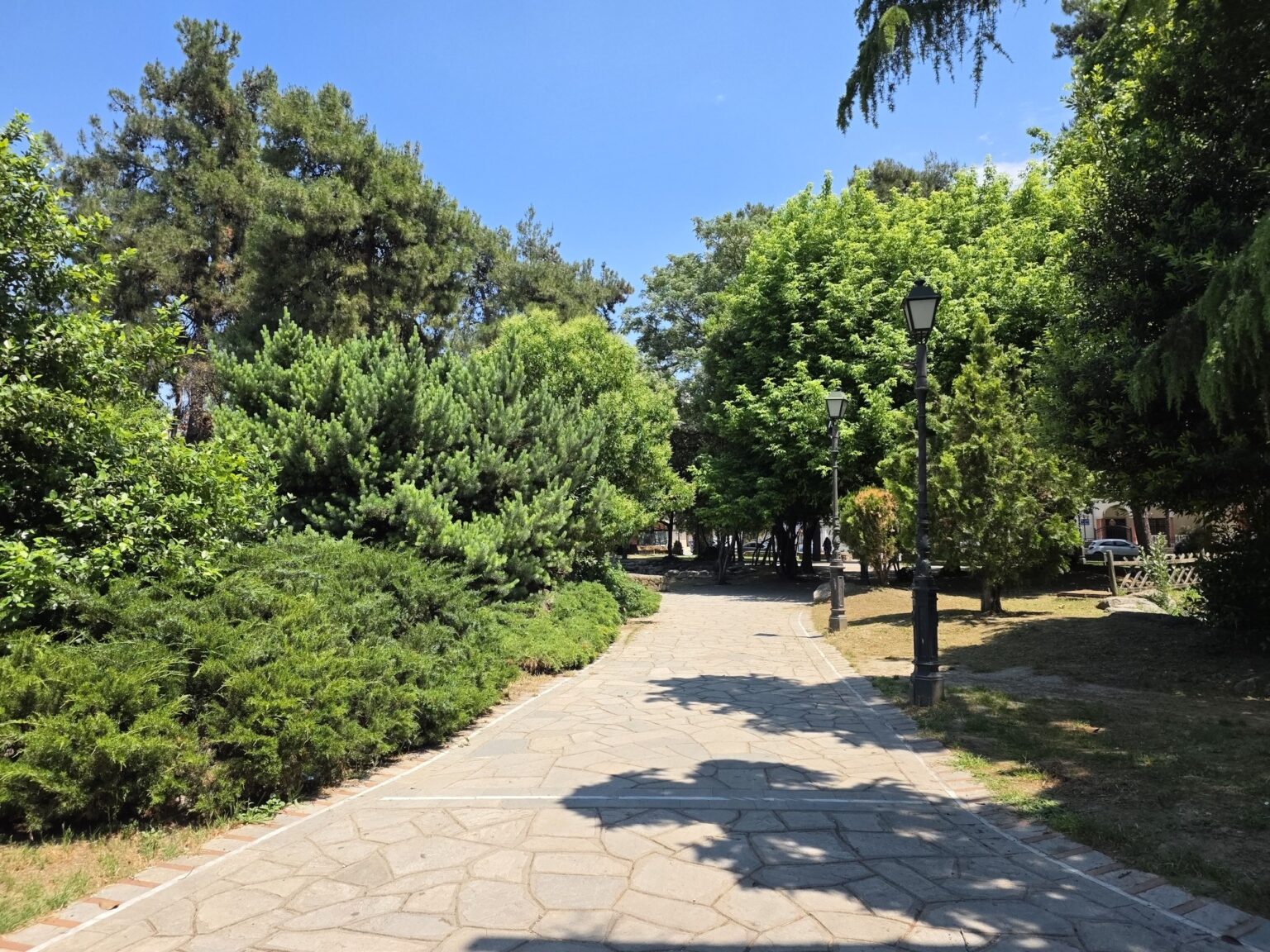
And at the end of the street the Municipal Park begins — roughly five hectares of green in the middle of town, with paths, benches, stone fountains and water features. The Municipality of Katerini reckons its boundaries were probably laid out as far back as the 18th century. A loop takes about half an hour.
If Meteora is the whole point
Then do not do it from the coast. The day trip works when you are already in Paralia for other reasons, but it is a poor standalone plan — five hours of driving for four hours of looking.
There are two small towns at the foot of the rocks: Kalambaka and Kastraki. Both are pleasant, and both are under fifteen minutes from any of the monasteries. One night is enough. You arrive in the afternoon, watch the pillars change colour at sunset, sleep, set off at 8:30 and reach the first gate ahead of the coaches. The difference against a day trip is enormous, and it costs you one dinner and one bed.
The budget
Fixed costs for two people, leaving out beds and food:
Motorway tolls — about €9 each way, under €20 there and back. Meteora — €5 per person per monastery; three monasteries for two people is €30. The Meteora round trip — roughly 300 km of driving plus a few more euros in tolls. Parking — €0 in both Paralia and Katerini, unless you insist on stopping directly outside the restaurant door.
Worth it — and it works best in exactly this combination. Meteora on its own is a day-long blow to the head, but three days of it would be too many; Paralia on its own is pleasant, but not a reason to drive 200 km. Together they make a holiday you can still talk about after you have left. We would go back — except next time we are sleeping one night in Kalambaka and sparing ourselves two hours of driving on an empty stomach. 😀
Related reading: for more of the Greek coastline, see Top 5 Beaches to visit in Greece and Top 5 islands to visit in Greece.