Veliko Tarnovo is built on hills and on the loops of the Yantra river, with houses stacked up the slopes so closely that one roof sits at the level of the next one’s yard. Between 1185 and 1393 this was the capital of the Second Bulgarian Empire, and the fortress hill of Tsarevets still stands directly above the centre. For a visitor it is an unusually compact place: medieval walls, eighteenth-century houses with their build year painted on the façade, and a modern town on the far side of a wooded gorge, all within a short walk.
| Where | Northern Bulgaria, hill above the centre of Veliko Tarnovo, Tsar Ivan Asen II Square |
| Getting there | by bus from Sofia – about 3 hours; by car via the Hemus motorway and road I-4 – about 230 km; in town, city bus lines 20, 40, 50 and 110 stop near the entrance |
| How long | 1.5–2 hours for the fortress alone; half a day with the old town |
| Tsarevets | April–September 8:00–20:00 (last entry one hour before closing); October 9:00–18:00; November–March 9:00–17:00. Entry: adults €7.67, students €3.07, over 60 €3.58, family ticket €10.23, children under 7 free. Check current details on the museum’s official site. |
| Sound and Light | evening audio-visual show over the fortress, year-round; free on national and town holidays, otherwise by booking and ticket |
| When to go | early morning for the quiet old-town streets; dusk for the show over Tsarevets |
| Parking | paid parking in the centre and along Nikola Pikolo Street near the Tsarevets entrance |
The hill of Tsarevets
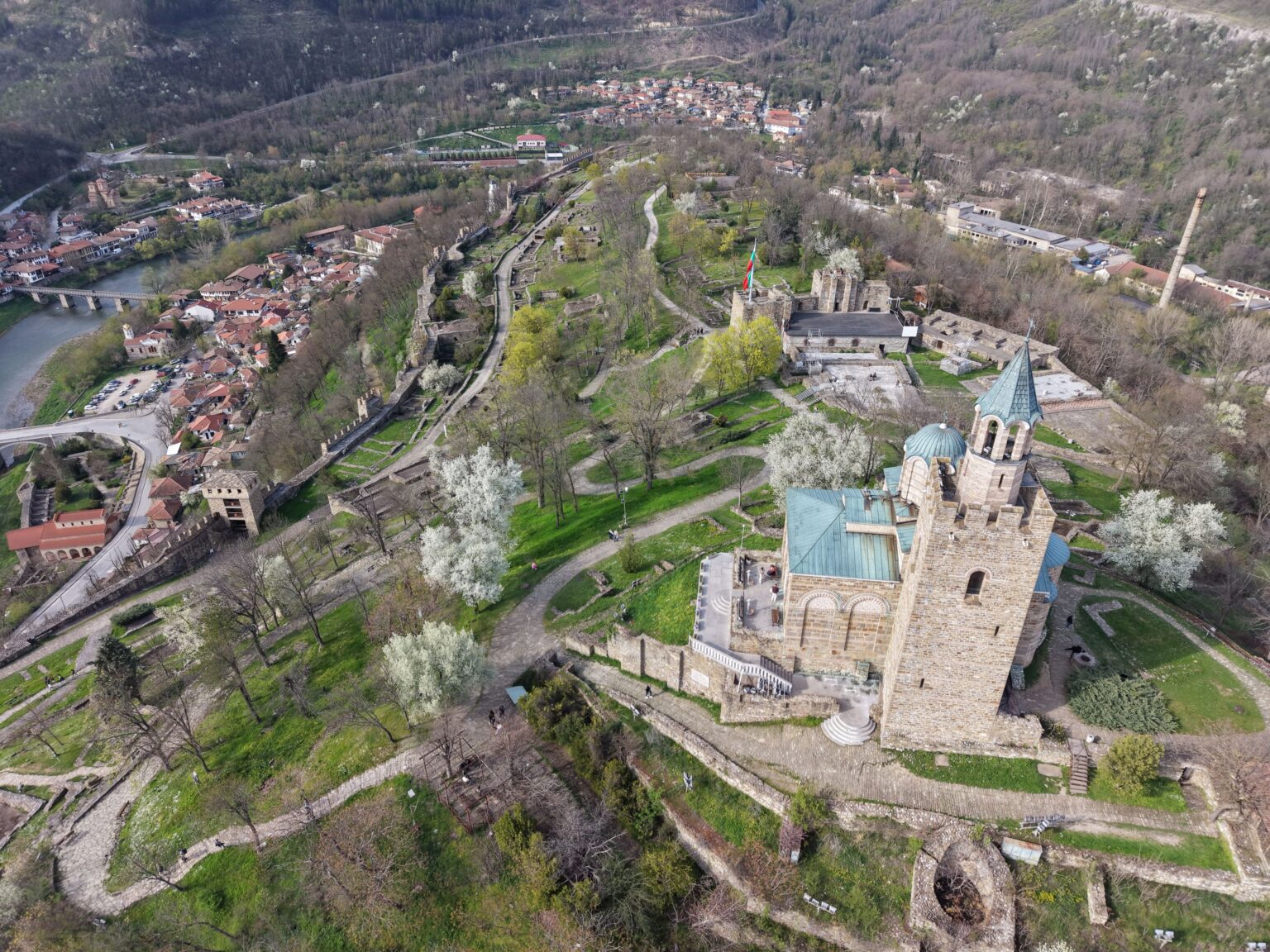
Tsarevets rises above the town like a separate world. The approach starts from a wide paved square at the foot of the hill, from where you can see the whole ridge with its fortress walls and, on the summit, the patriarchal church with its tall bell tower. In between, the foundations of buildings, footpaths and gates run across the grass, and the Bulgarian flag flies from the tower.
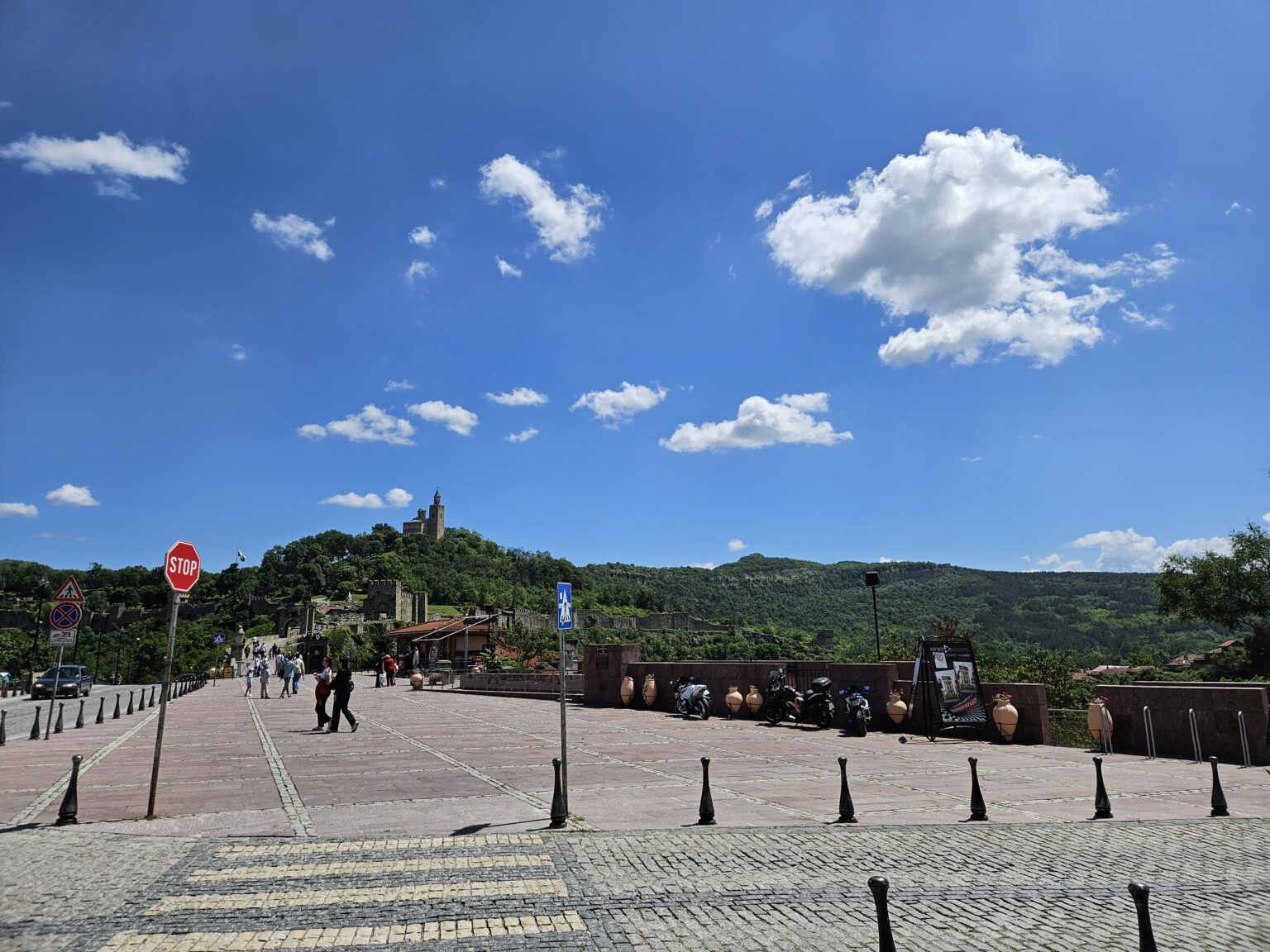
This was the royal and church centre of the medieval capital until the town fell to the Ottomans in 1393. The patriarchal church of the Ascension was rebuilt in the twentieth century and painted with modern murals rather than traditional icons. On summer evenings an audio-visual sound-and-light show is staged over the fortress and can be watched from the slopes opposite.
The steep streets of the old town
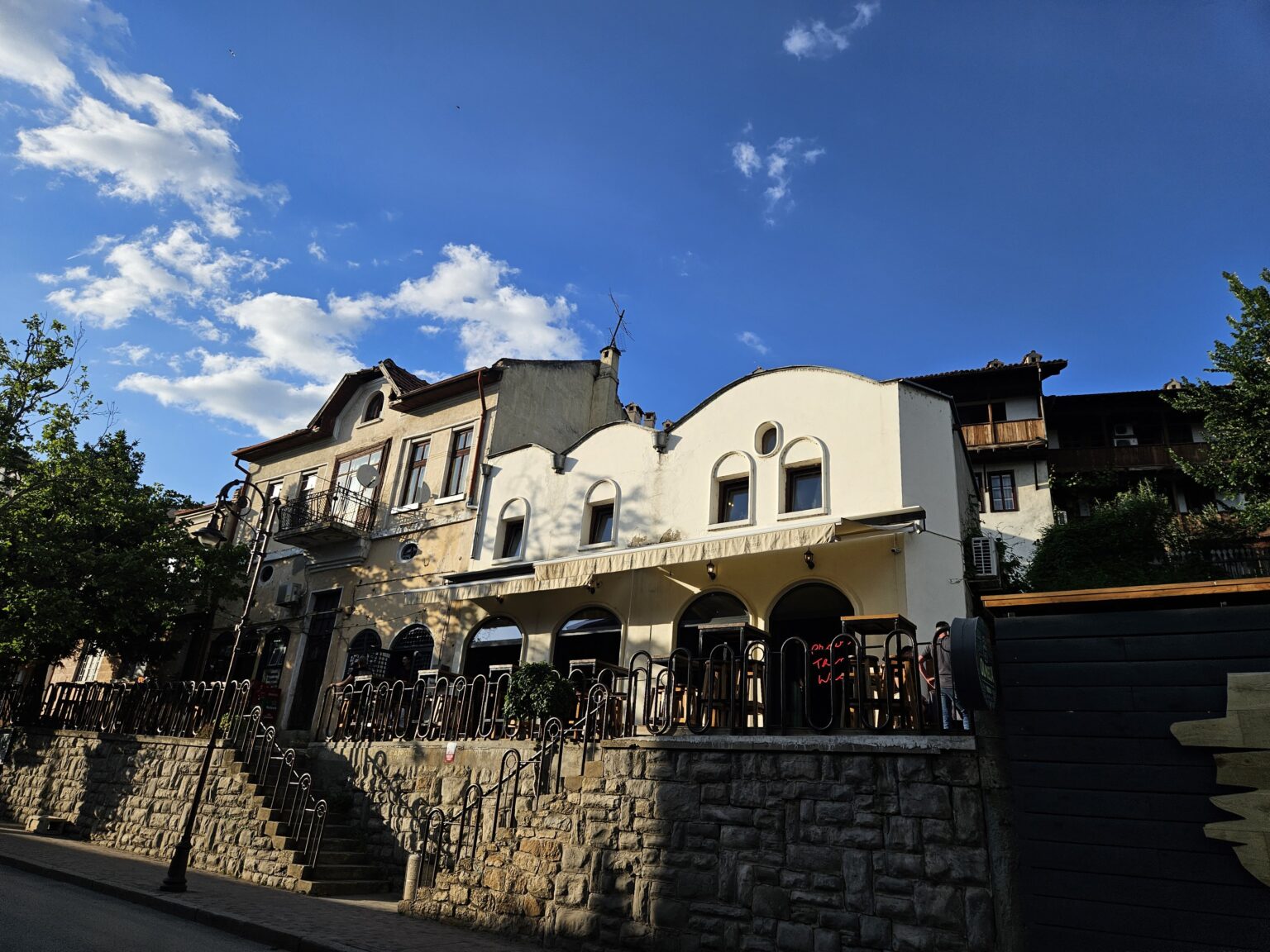
The old town is a tangle of narrow lanes across the slope, tied together by stairways squeezed between the buildings. Dates are painted on the façades: two neighbouring houses here are marked 1769 and 1776, a stone ground floor carrying a timber upper storey that overhangs the street. Craft workshops and small shops line the lanes, and carved wooden figures stand on the pavement as street decoration.
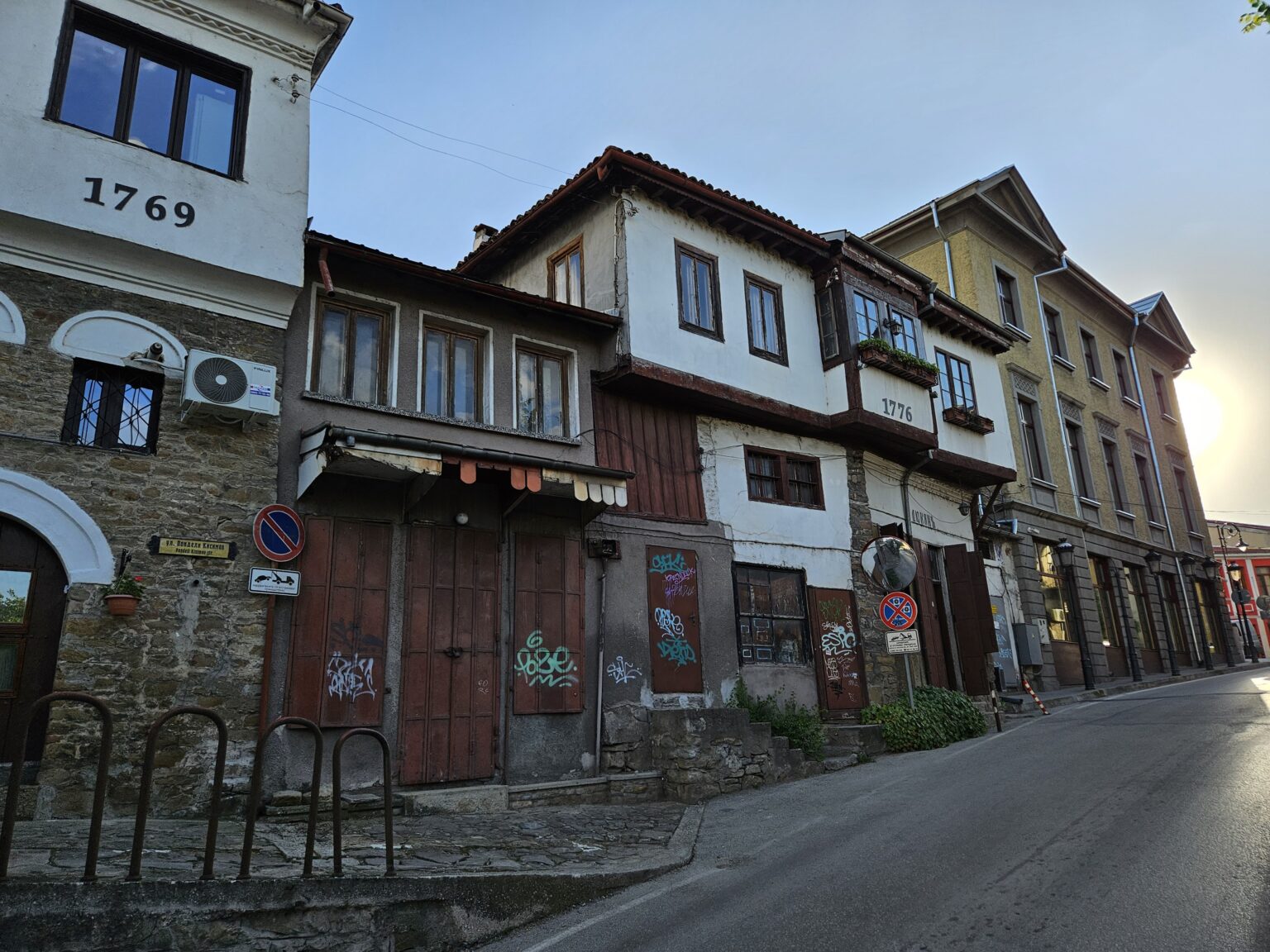
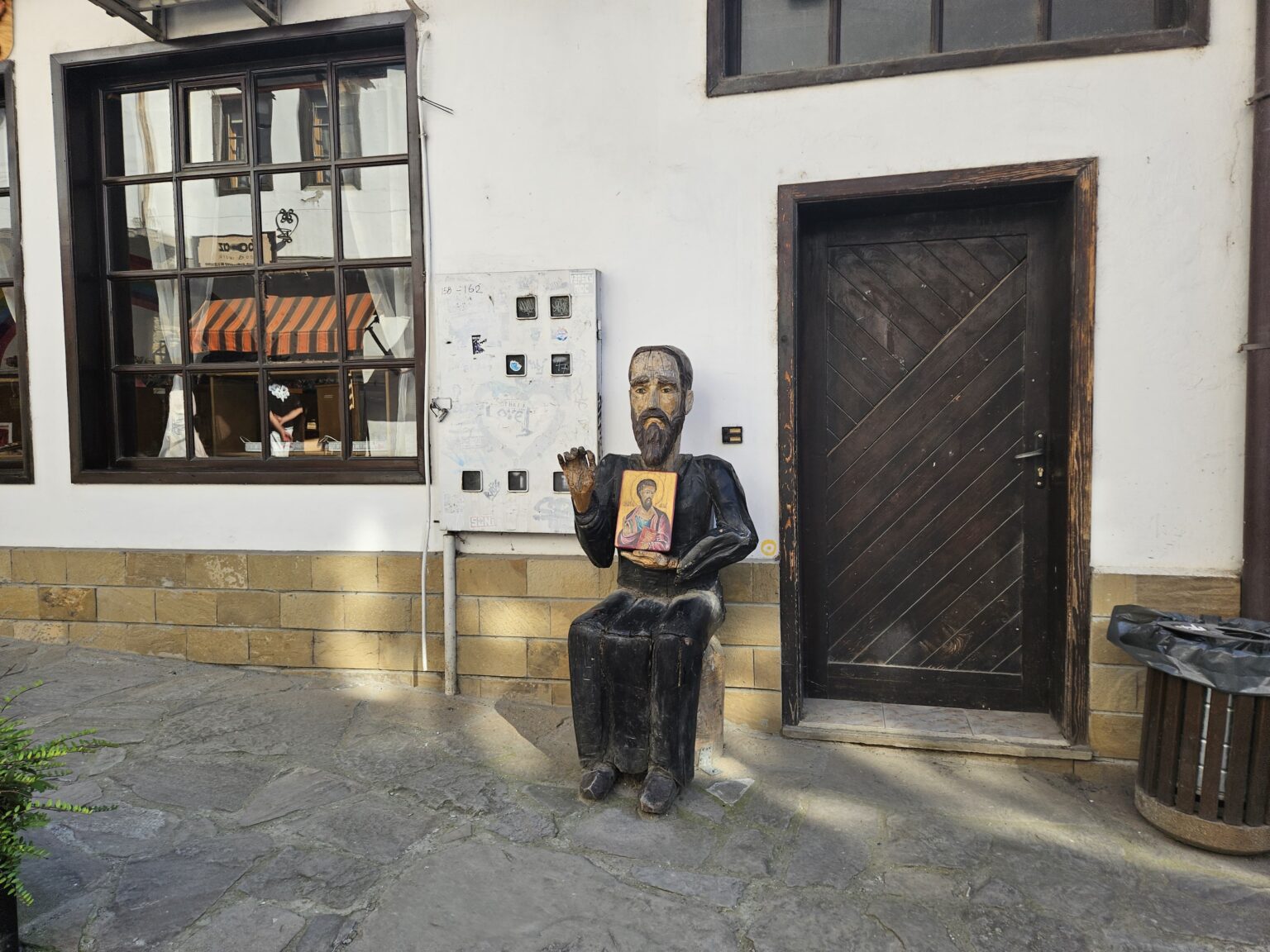
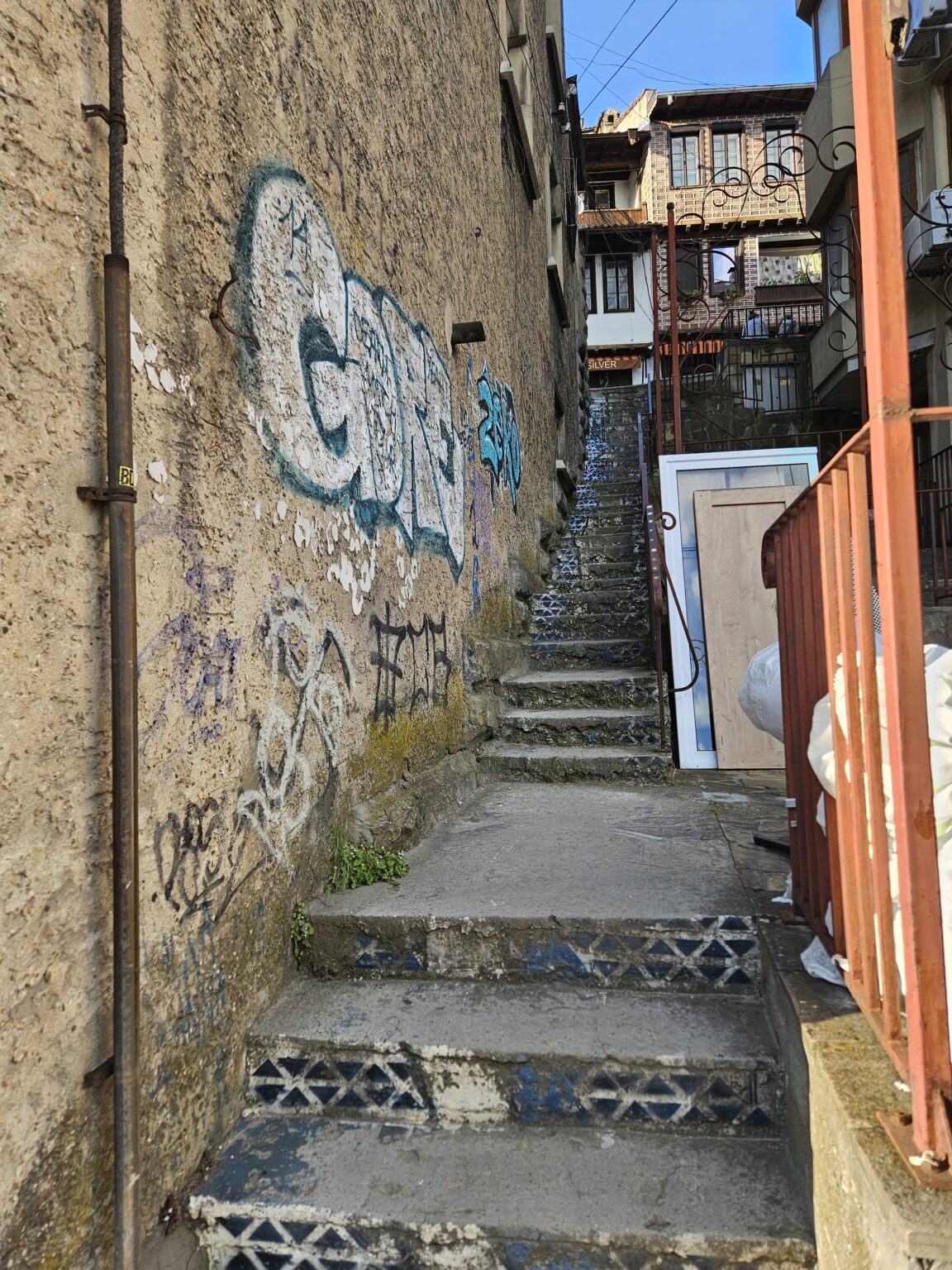
Cafés occupy the arcades of the ground floors and the terraces built on top of the retaining walls, and early in the morning the streets are completely empty, which is when you notice just how tightly the houses are packed. If this atmosphere appeals to you, the same stepped National Revival building style appears in the Varosha quarter of Lovech, where the slope drops towards the Osam river instead.
The town around the bend of the Yantra
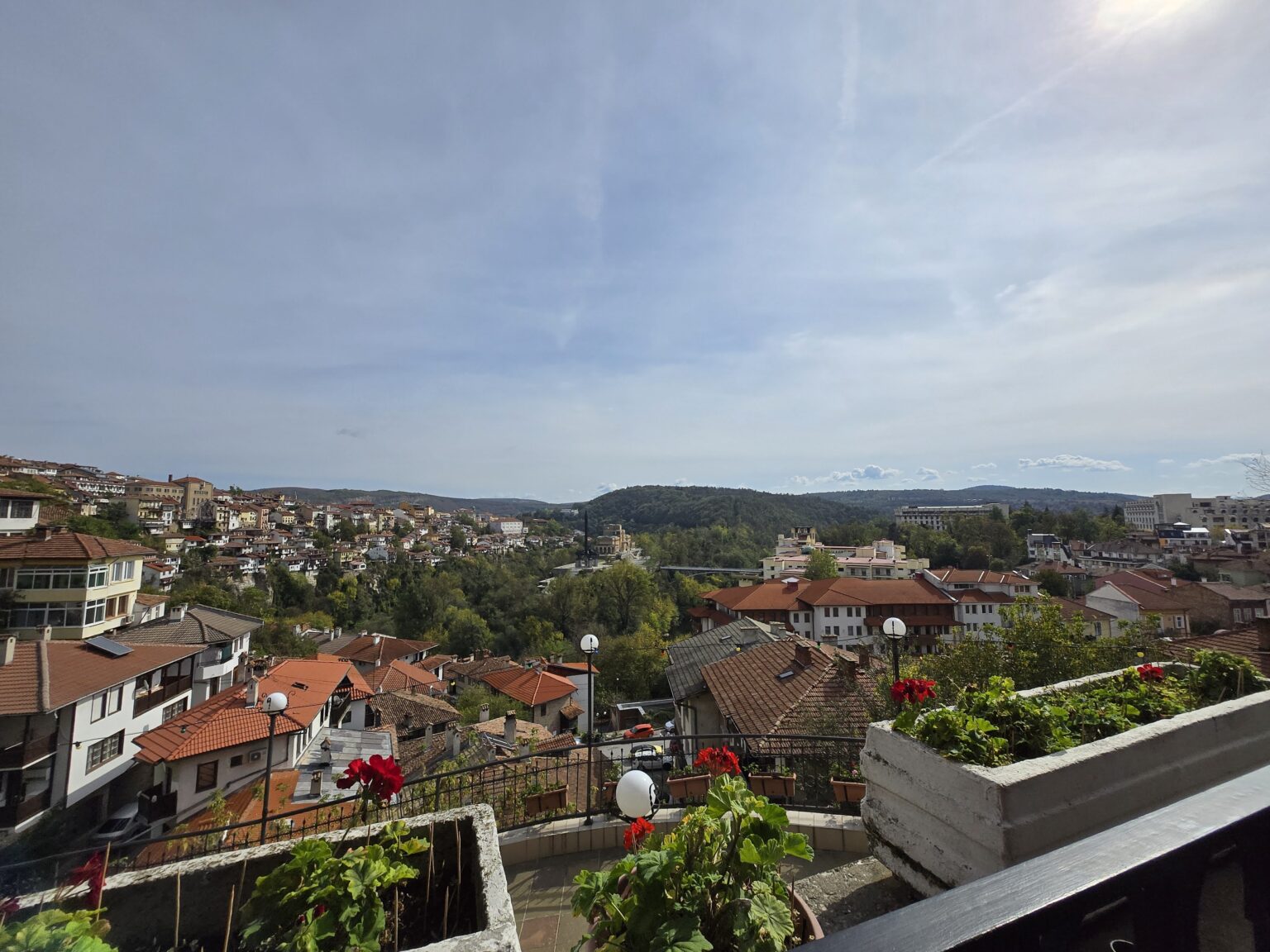
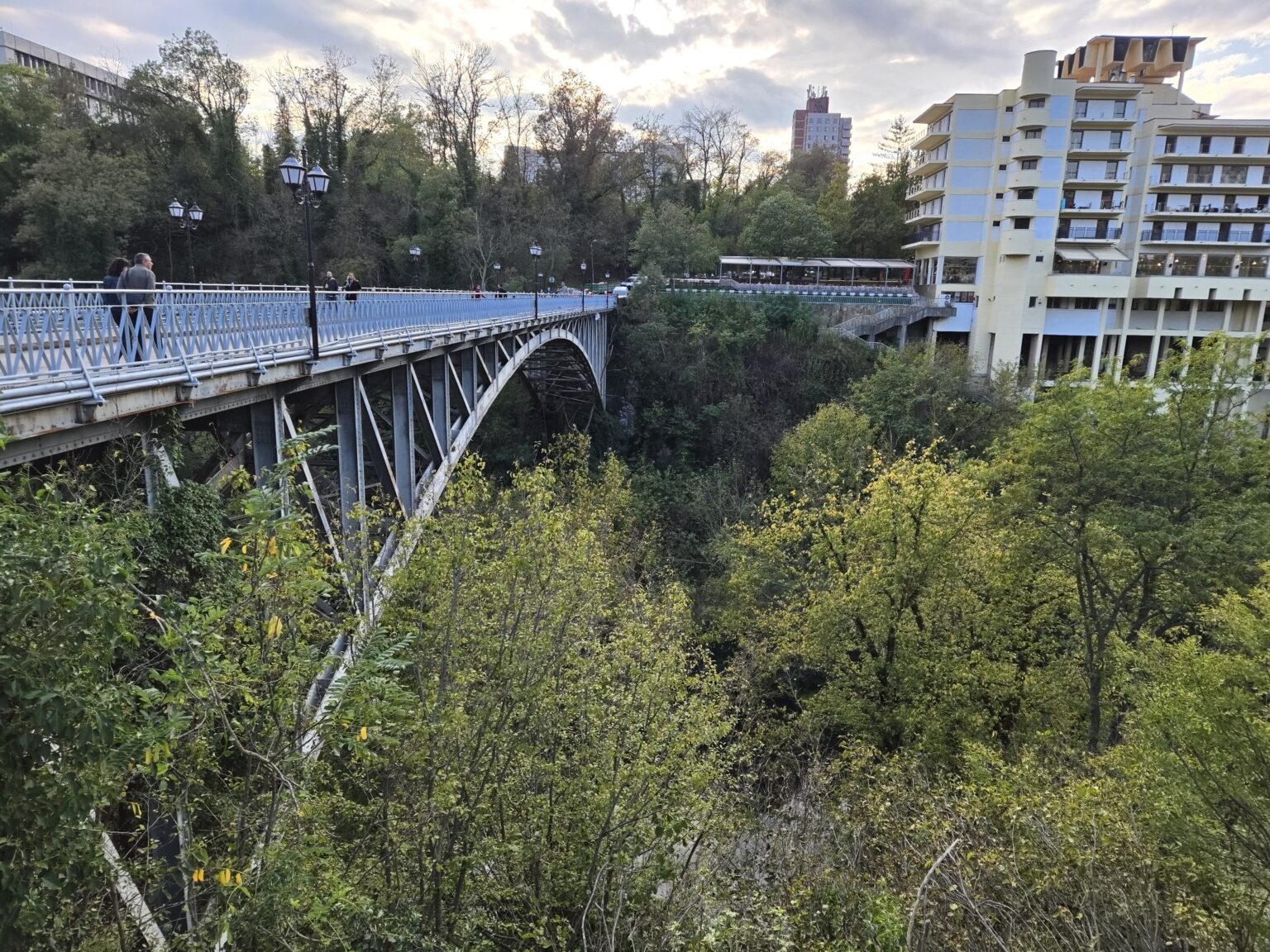
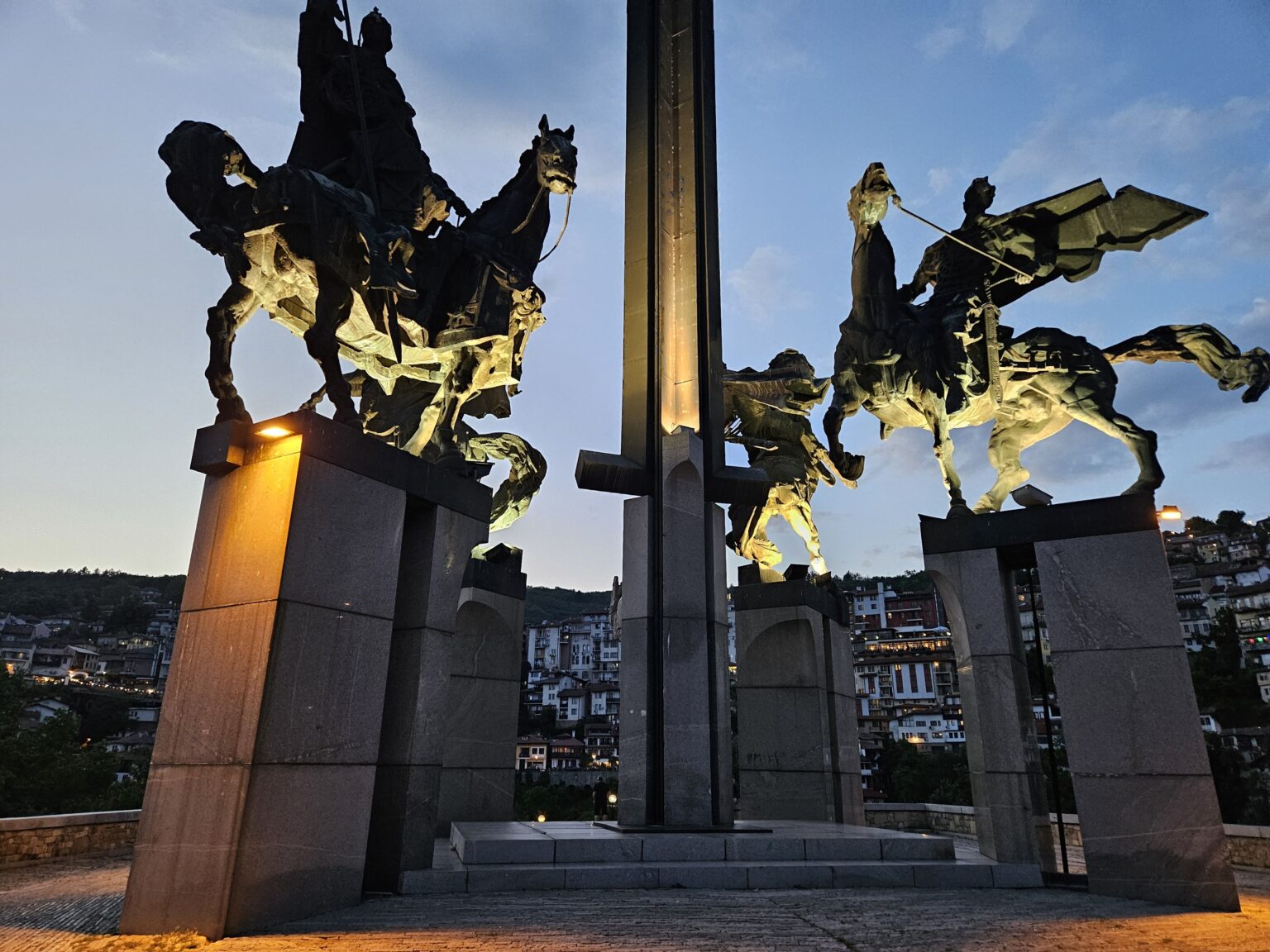
The Yantra has cut a deep, wooded ravine straight through the town, and the bridges cross high above the treetops. Terraces above the old quarter open onto panoramas of tiled roofs and the hills beyond, and at dusk the Asenevtsi Monument lights up — bronze horsemen around a tall sword-shaped obelisk, raised in 1985 to mark 800 years since the uprising of Asen and Petar.
Below the fortress lies the Asenova quarter and the church of the Forty Holy Martyrs, where Bulgaria’s independence was proclaimed in 1908; the country’s first constitution, the Tarnovo Constitution, was adopted in this town in 1879. Veliko Tarnovo is also a university town, which is obvious in the cafés during term time. From here the road north runs down to the Danube and to Ruse, and about ten kilometres east is the railway junction of Gorna Oryahovitsa.
Related video: the fortress, the Yantra ravine and the surrounding towns are best seen from the air in the episode Bulgaria From Above: Veliko Tarnovo, Arbanasi, Gorna Oryahovitsa & Lyaskovets, part of the Bulgaria From Above series.