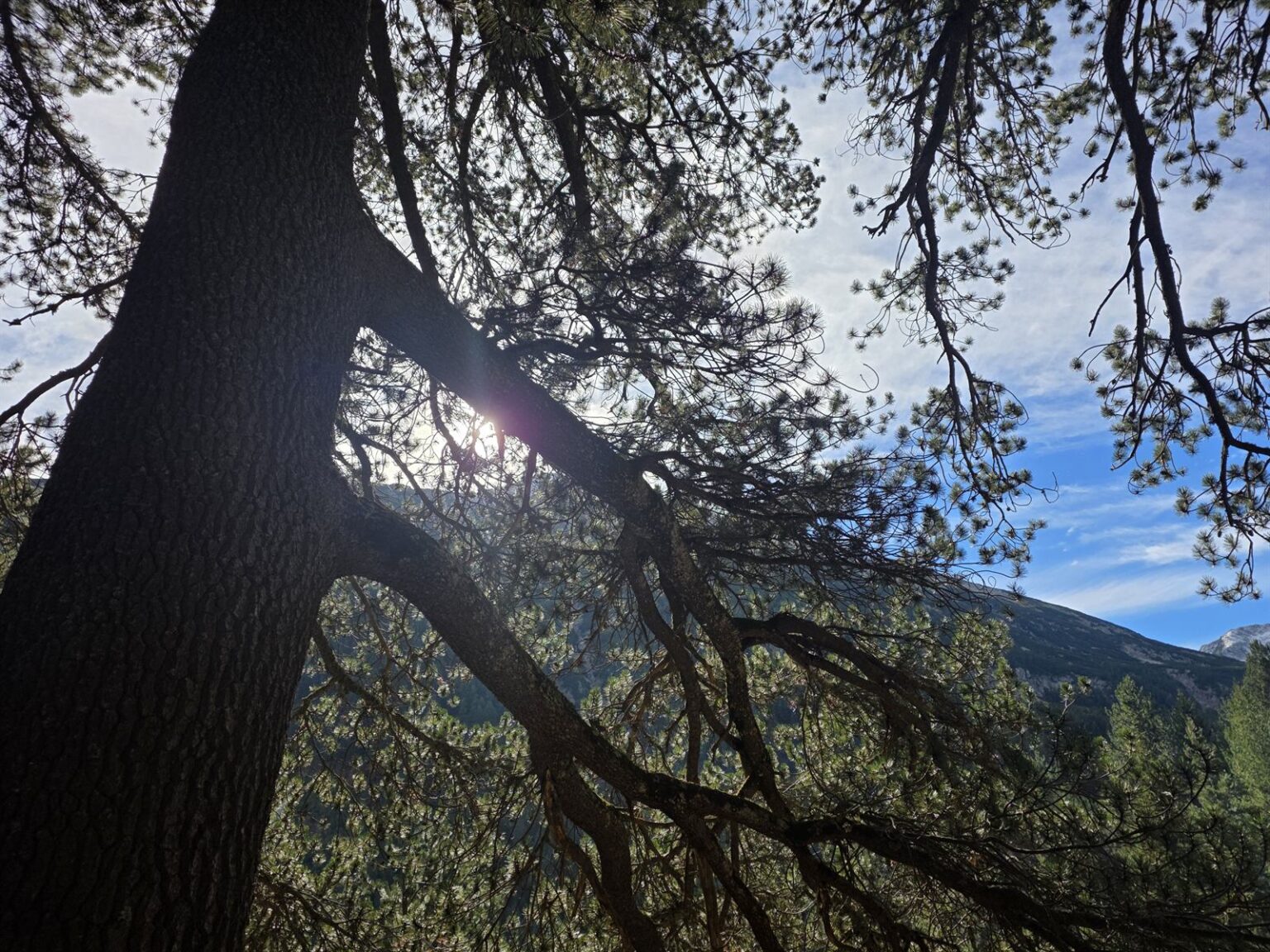
Baykusheva Mura is one of the few places in Pirin where age is something you can feel physically. The tree grows at 1,930 metres above sea level, a few hundred metres above Banderitsa hut, and is considered the oldest conifer in Bulgaria. It is often called a pine in the loose sense, but the species is Bosnian pine (Pinus heldreichii) — a tree of stony slopes that holds on where the soil is thin and the winter long.
| Where | Pirin National Park, about 300 m above Banderitsa hut, at 1,930 m altitude |
| Getting there | Roughly 15 km of paved road from Bansko towards Vihren hut; the turn-off is on the right, marked with signs |
| How long | 10–15 minutes on foot from the road; half a day if you add a walk around the huts |
| When to go | June to October for the easiest access; in winter both road and trail call for proper gear |
| Summer traffic rules | From 10 July to 15 September the road to Vihren hut is closed to cars daily between 08:00 and 16:00; the bus from Bansko and licensed taxis still run |
| Parking | A handful of spaces in the widened stretch of road by the signs; a larger car park sits at Vihren hut |
| Entry | Free — the park charges no entry fee. Visitor rules are published by the Pirin National Park Directorate; check the current ones before you set off |
| The tree | A Bosnian pine over 1,300 years old, 26 m tall with a girth of 7.80 m |
A tree with a discovery date
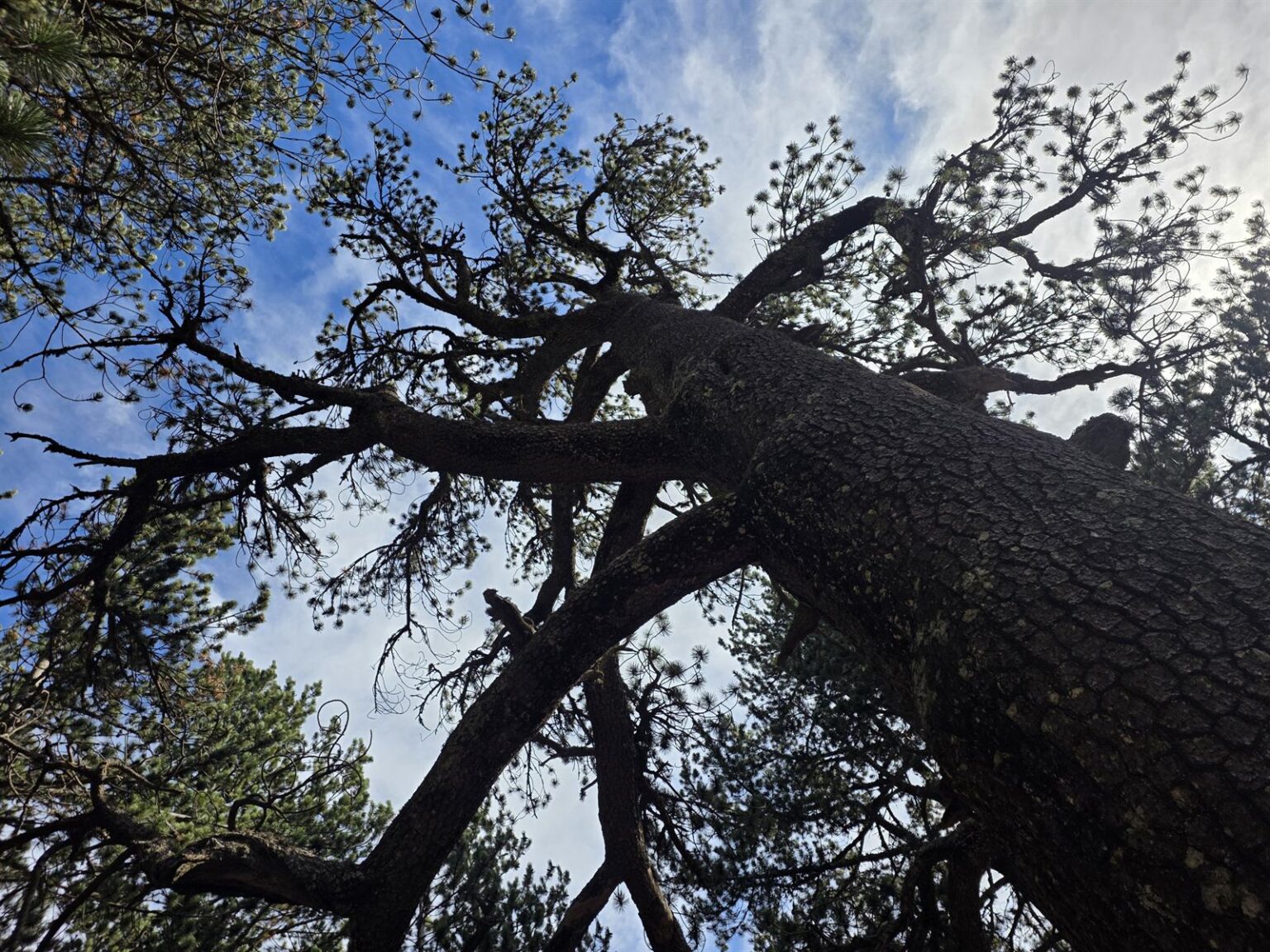
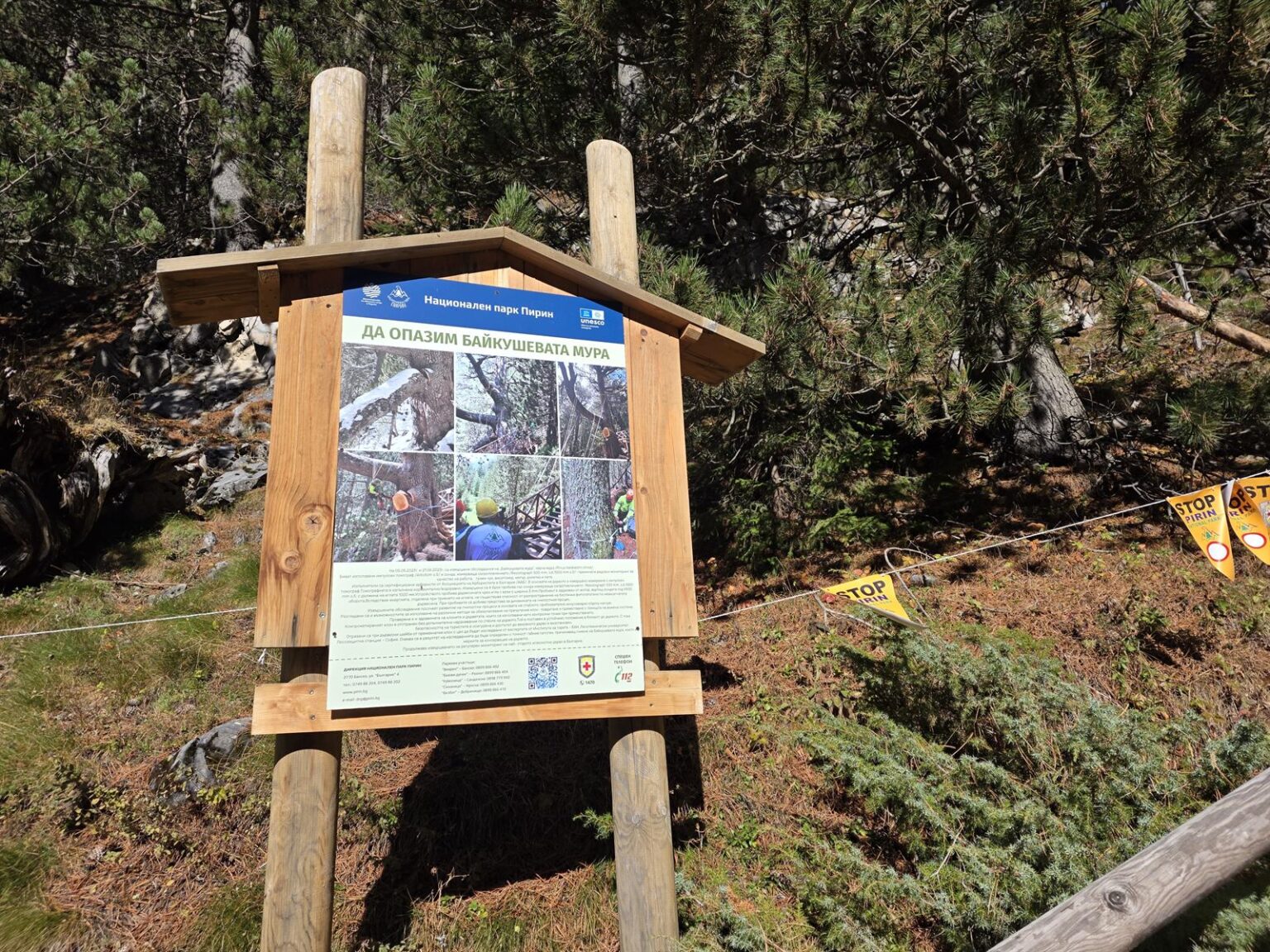
The tree is named after the forester Kostadin Baykushev, who found and described this specimen in 1897. Its age is estimated at more than 1,300 years — almost as old as the Bulgarian state — which makes it second only to the oak in the village of Granit. The accepted measurements give a height of 26 metres, a trunk diameter of 2.48 metres and a girth of 7.80 metres. The information board on site quotes more modest figures, 18.8 metres and 7.24 metres, the gap coming from different surveys taken over the years.
Getting there
The starting point is Bansko, from where the paved road to Vihren hut climbs through the forest, passes Banderishka Polyana and reaches Banderitsa hut after some 15 kilometres. The tree stands a few hundred metres further up, on the right-hand side, where the road widens and the signs appear.
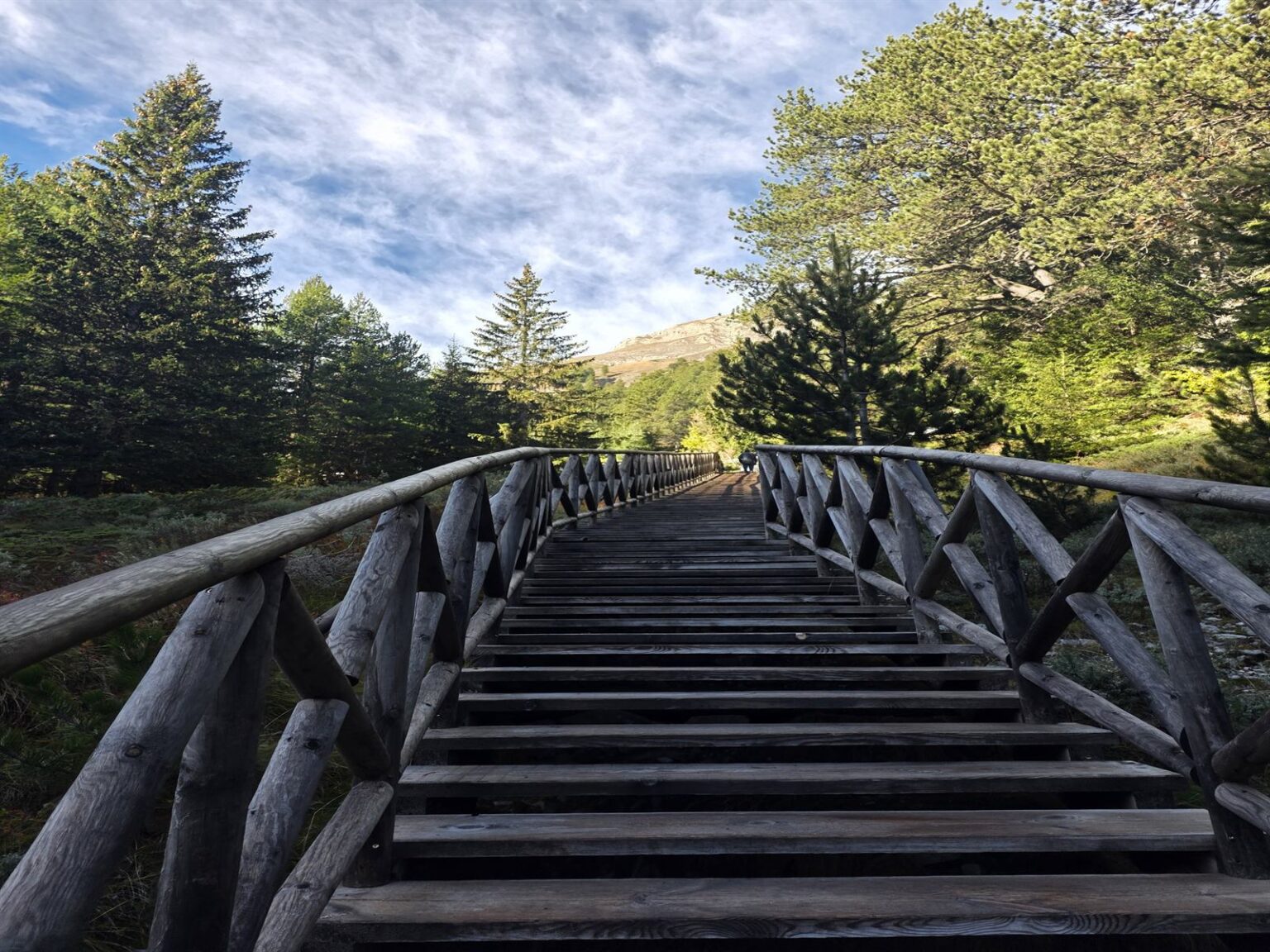
A short cut leaves the campsite below the hut and follows wooden structures over the damp ground, saving you the hairpin bend on the road. The walk is brief — ten unhurried minutes — though the ground stays muddy early in the season. Under the summer traffic rules cars are kept off the road in the middle of the day, so an early or late drive up saves waiting.
The tree in the Pirin landscape
Dense conifer forest surrounds the site, and above it rise the granite ridges of northern Pirin crowned by Vihren. That combination — altitude, stony ground and the steady water of the Banderitsa — is what allowed the tree to last so long. From the path it reads against the skyline, and a few steps aside open the wider view down the valley.
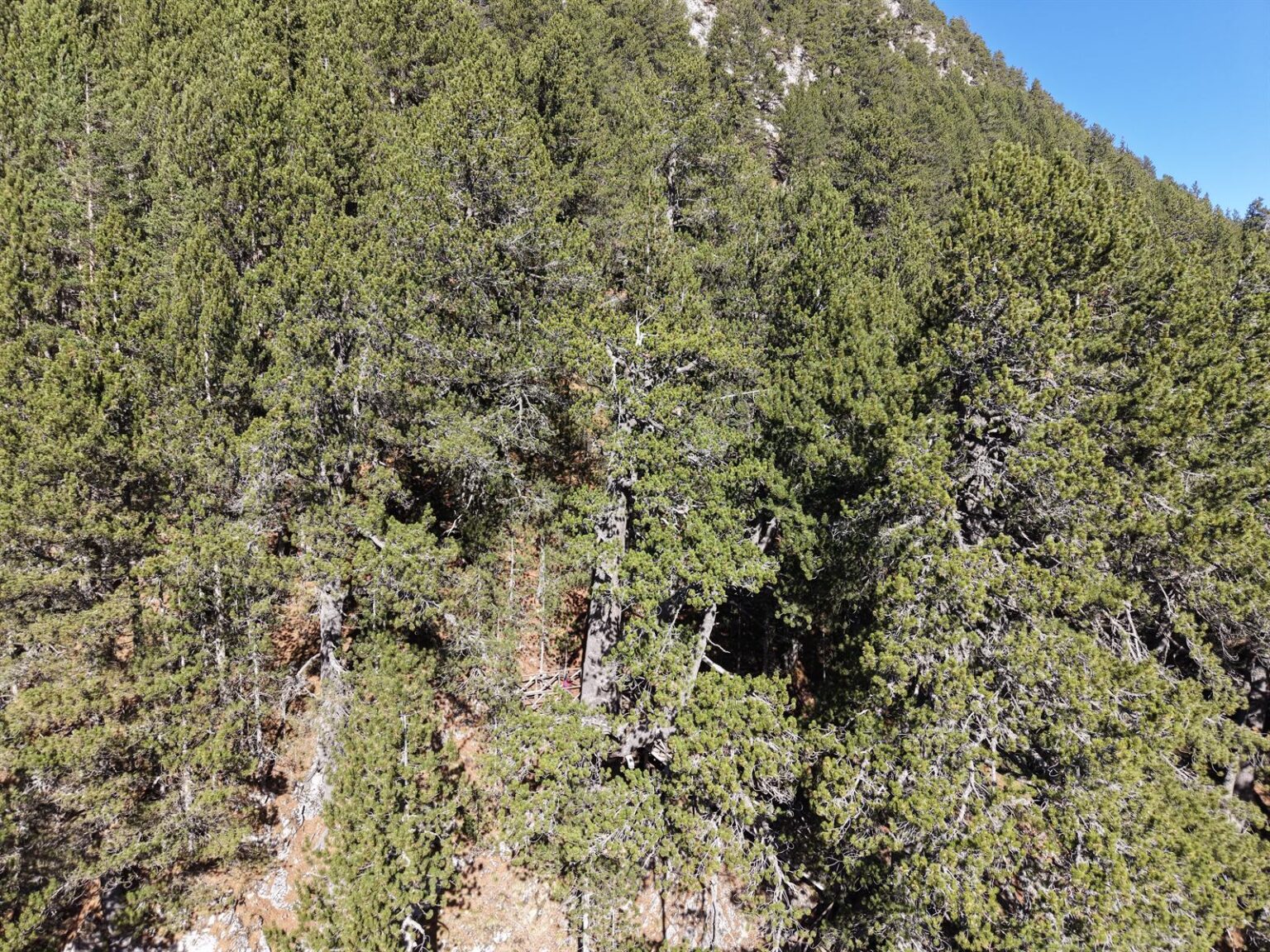
In 2023 one of the large branches partly broke, and the Pirin National Park Directorate adopted a protection plan drawn up with forest researchers and arborists. The low fence and the signs are there for a reason: do not climb, do not touch the bark, and keep off the soil around the roots. If you are making a wider loop through the valley, Razlog is close by.
Related video: watch the episode on Baykusheva Mura and Banderishka Polyana from the From Above series.