Pobiti Kamani is suspiciously easy to reach. It sits 18 kilometres west of Varna, just off the old road to Devnya, a minute in from the turning — and you are at the car park. No climb, no forest trail, no steps. You get out of the car, pay at the desk, and thirty seconds later you are walking on sand between limestone columns that are 50 million years old. For a natural wonder, that is unheard-of convenience.
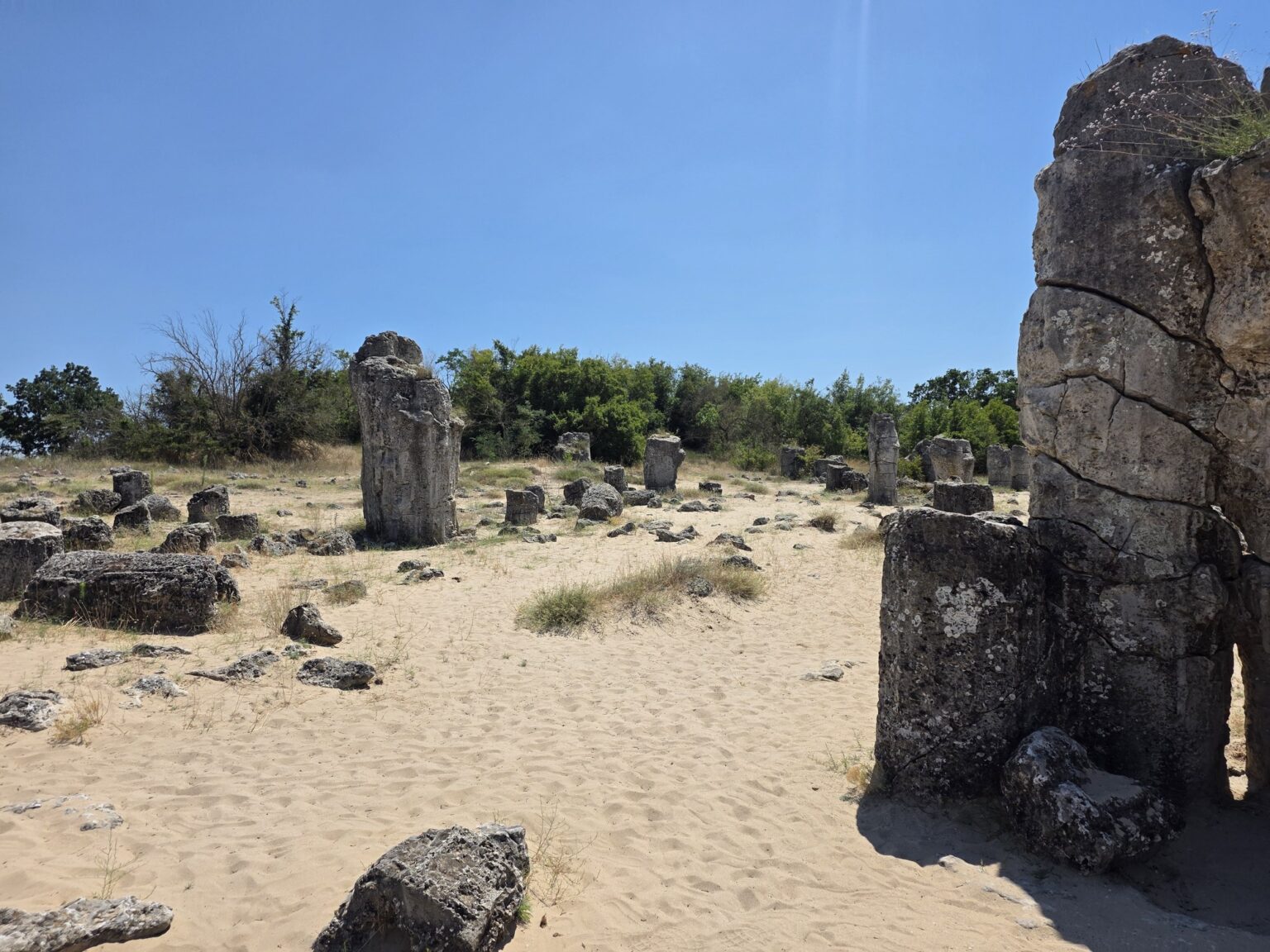
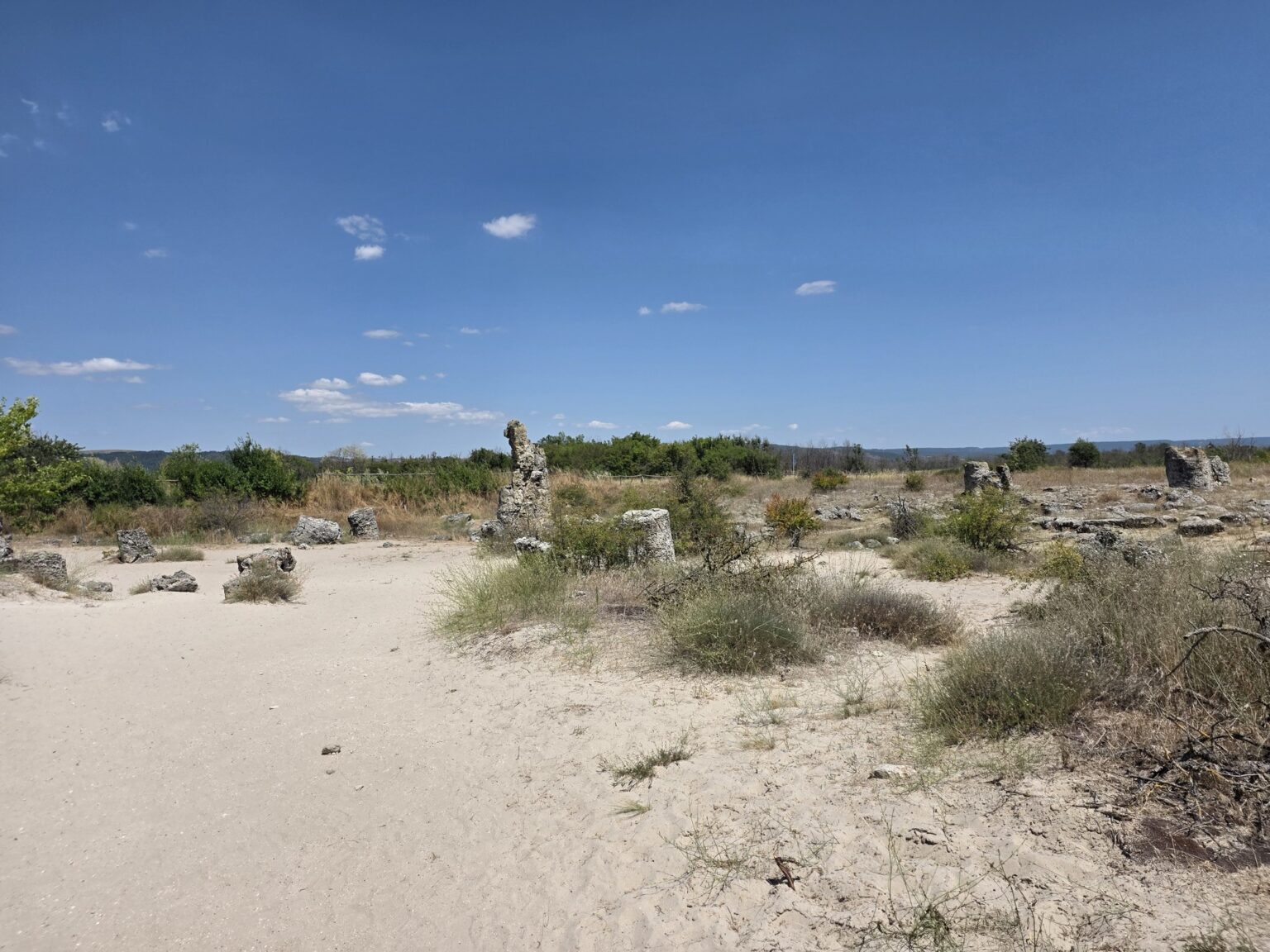
We go just after midday in late July, and that is the one mistake of the day. There is not a single tree here. The sand is pale and throws the light back at you, and the columns cast shade exactly as wide as they are — which is to say almost none when the sun is overhead. Walking the “Centre–South” group takes us about half an hour; go slowly, sit down, take photos, and it comfortably becomes an hour. Hat and water are not up for negotiation. 🥵
| Where it is | North-eastern Bulgaria, Aksakovo municipality, 18 km west of Varna between the villages of Slanchevo and the town of Beloslav, beside the old Varna – Devnya road; Google Maps |
| Getting there | by car from the old Devnya road; by public transport, Varna city bus no. 43 to the “Razklon Banovo” stop in Slanchevo village, then on foot. A taxi from central Varna is the simplest option if you are not driving |
| How long | half an hour to an hour for the whole accessible part; the route is under half a kilometre one way, flat, entirely on sand |
| Opening hours | May – October 10:00 – 19:30, closed Monday and Tuesday; November 10:00 – 17:00, closed Monday and Tuesday; January – April 10:00 – 18:00, closed Sunday and Monday; December by prior arrangement only. Check the current times on the official page of the Regional Museum of History – Varna. |
| Entry | €3 adults, €2 students, children under 7 free; groups of more than 15 pay €2 per adult. A guided talk costs €10 extra for a group of up to 50. Tickets are sold at the on-site desk only — the museum runs no online sales, so ignore any site that offers them. Varna Municipality’s tourism portal lists the same adult ticket at €2.50, so bring change for either. Check the current prices on the museum price list. |
| Parking | on the open ground in front of the entrance, free, about 50 metres from the ticket desk. The man at the desk warned us plainly: cars parked here do get broken into — leave nothing visible |
| When to go | the first hours after opening or near closing time — there is no shade at all and summer middays are punishing; spring and early autumn are the best seasons |
| Phone | +359 888 544 506 (Regional Museum of History – Varna) |
“Dikilitash” — the name, and an argument that is still running
Until 29 June 1942 the place was officially called Dikilitash, from the Turkish of the Ottoman period: dikili means “driven upright” and taş means “stone”. The Bulgarian name that replaced it, Pobiti Kamani, means precisely the same thing — stones driven into the ground. So this was not a renaming at all, just a translation, word for word. Refreshingly honest, as these things go. The other name you will hear locally is the Stone Forest.
How the columns got here is still unsettled. The hypotheses fall into two camps. The inorganic one says they were shaped by erosion, weathering, surf or groundwater, or that they are sand-and-limestone concretions. The organic one says they are the remains of coral reefs, petrified gas seeps, algal build-ups, or even a fossilised forest. Stratigraphically the formations sit in the Lower Eocene, somewhere between 48 and 53 million years ago. The one thing every camp agrees on is that no human made these, however arranged they look from a distance.
Humans were here, though. This area holds the only evidence of Mesolithic human occupation found anywhere in Bulgaria. Which means the columns already looked odd to people who had not yet invented the wheel.
Past the ticket desk
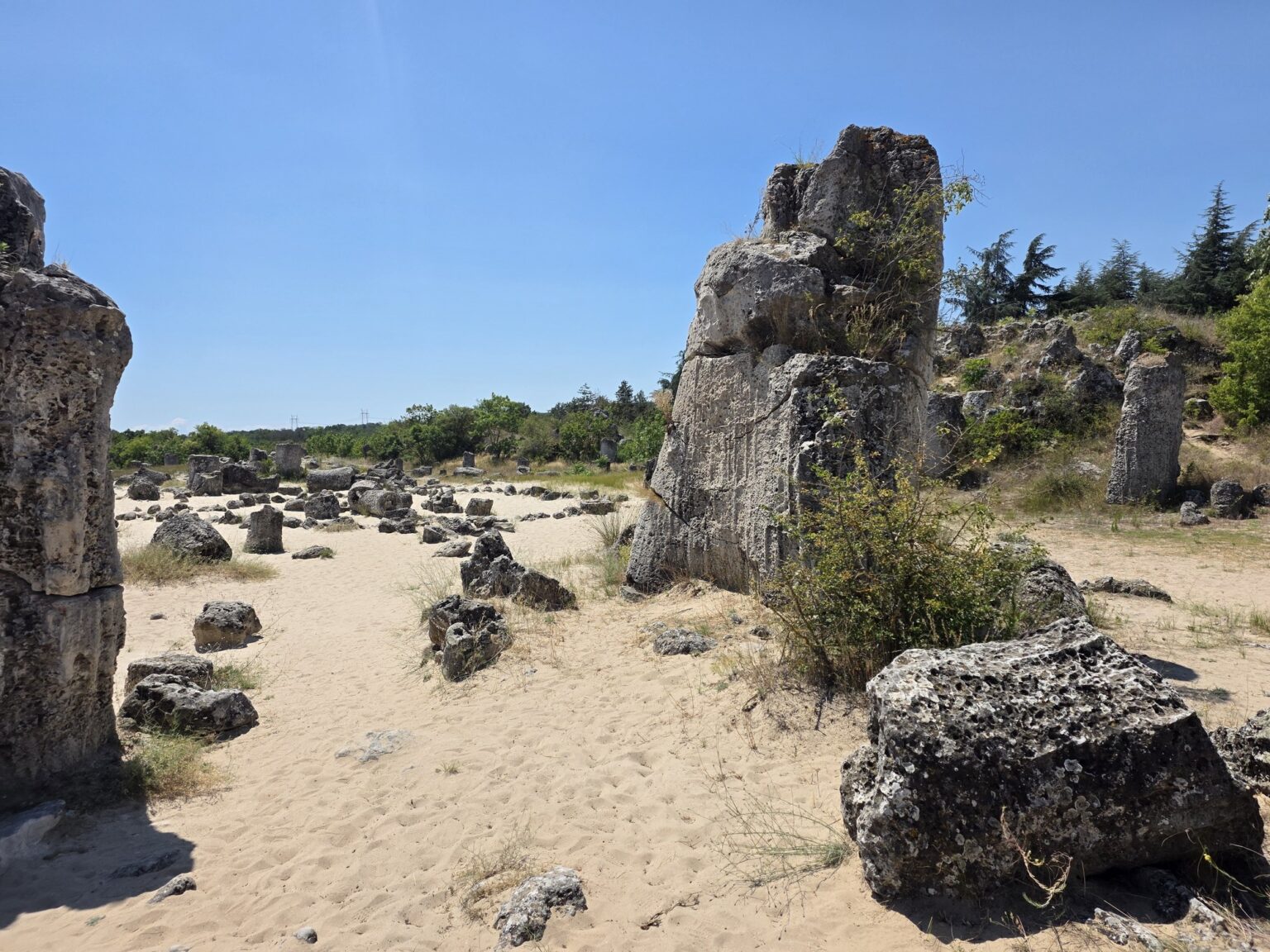
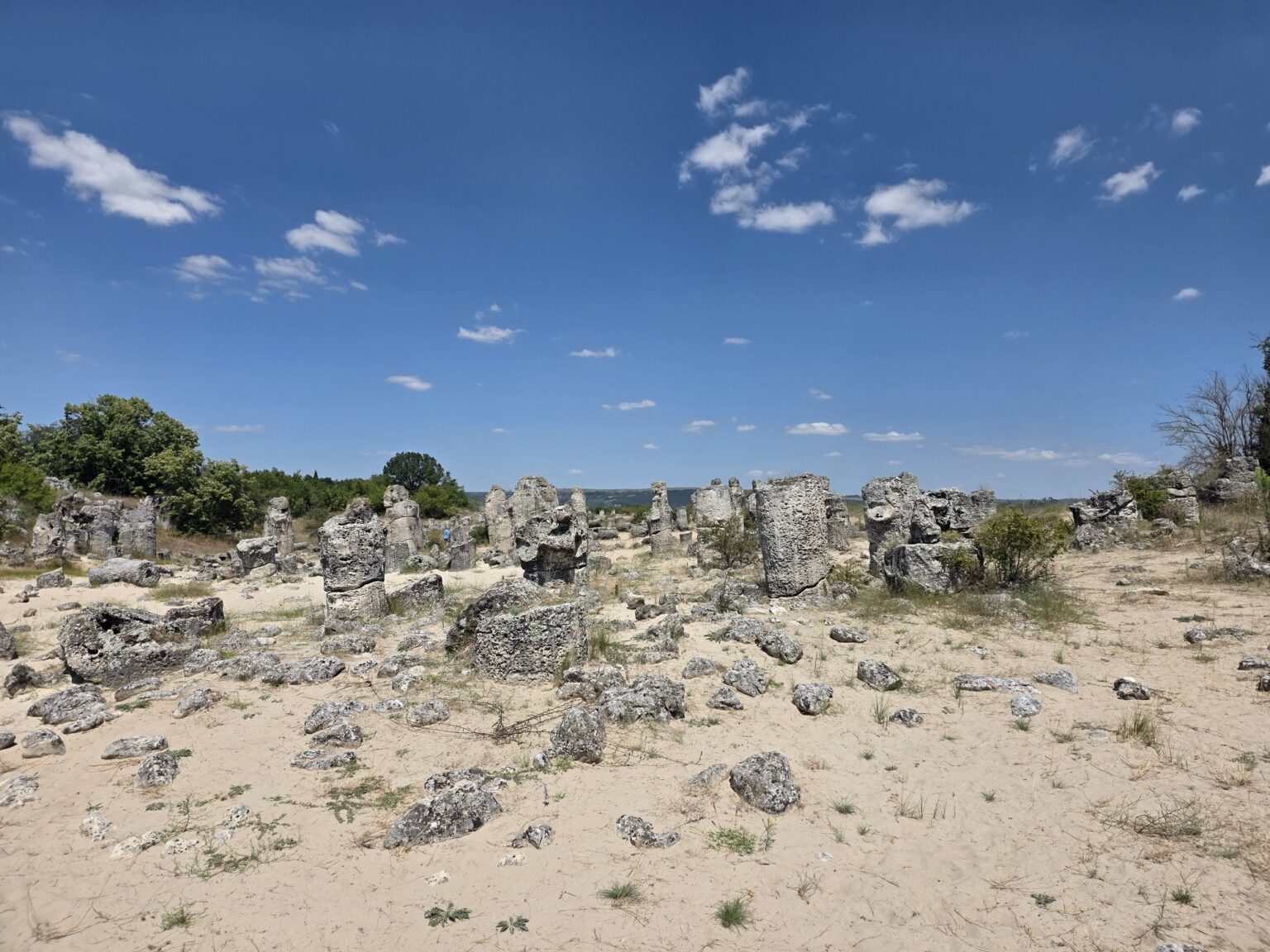
The first surprise is that nothing is fenced off. You walk in and you are straight in among them, on the same sand. No railings, no raised walkways, no arrows — just tracks other people have trodden, which everyone then follows out of habit.
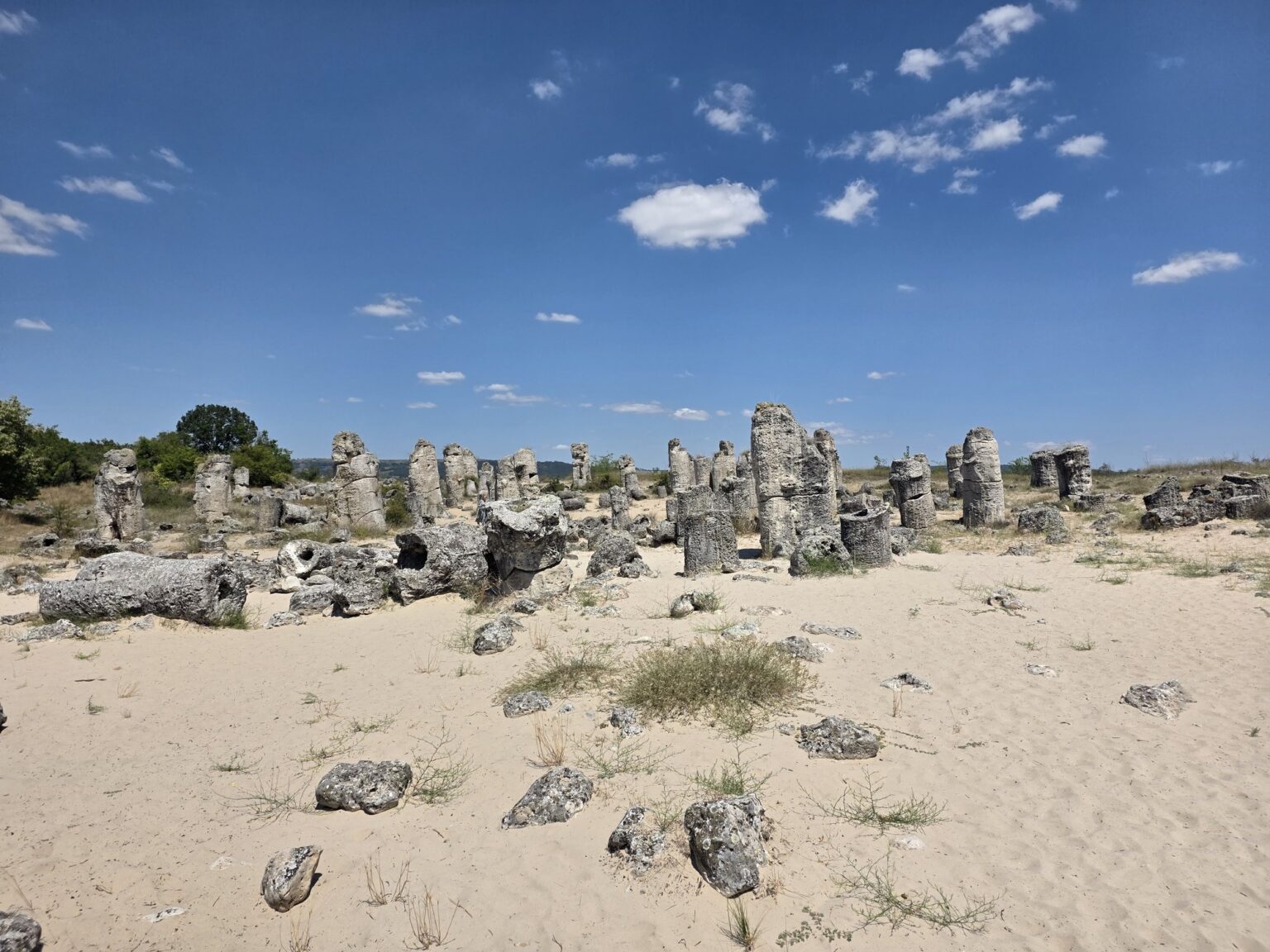
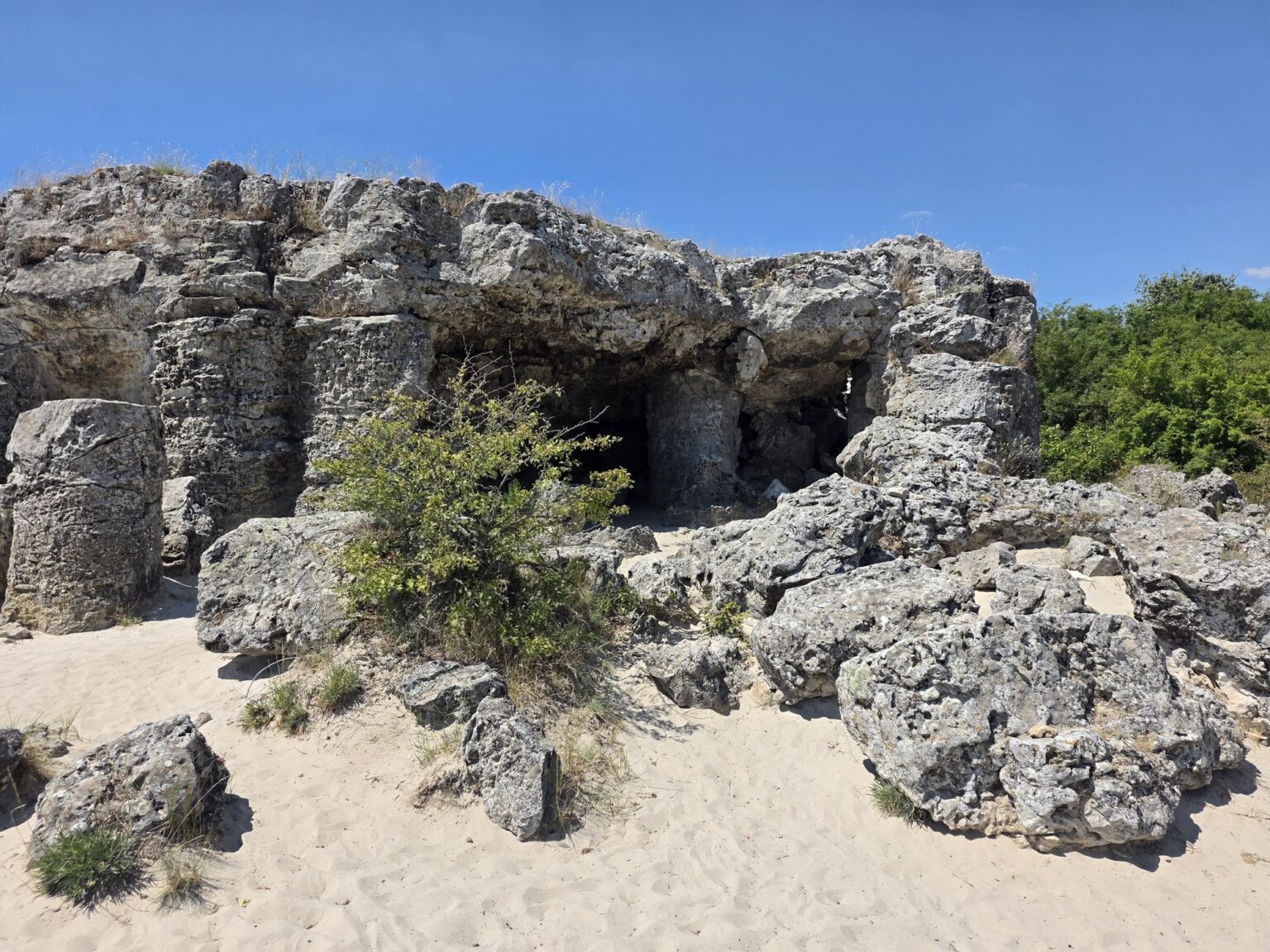
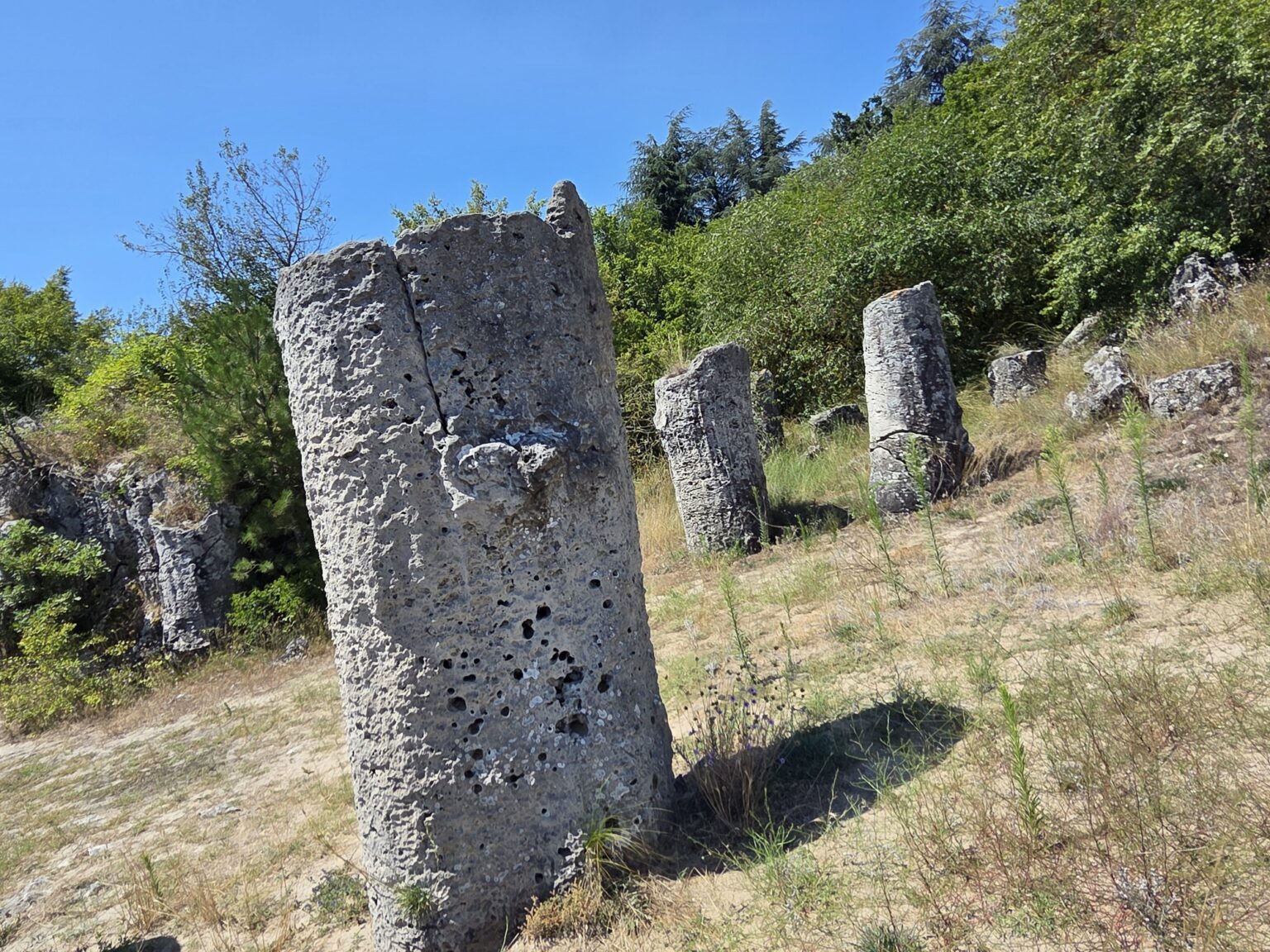
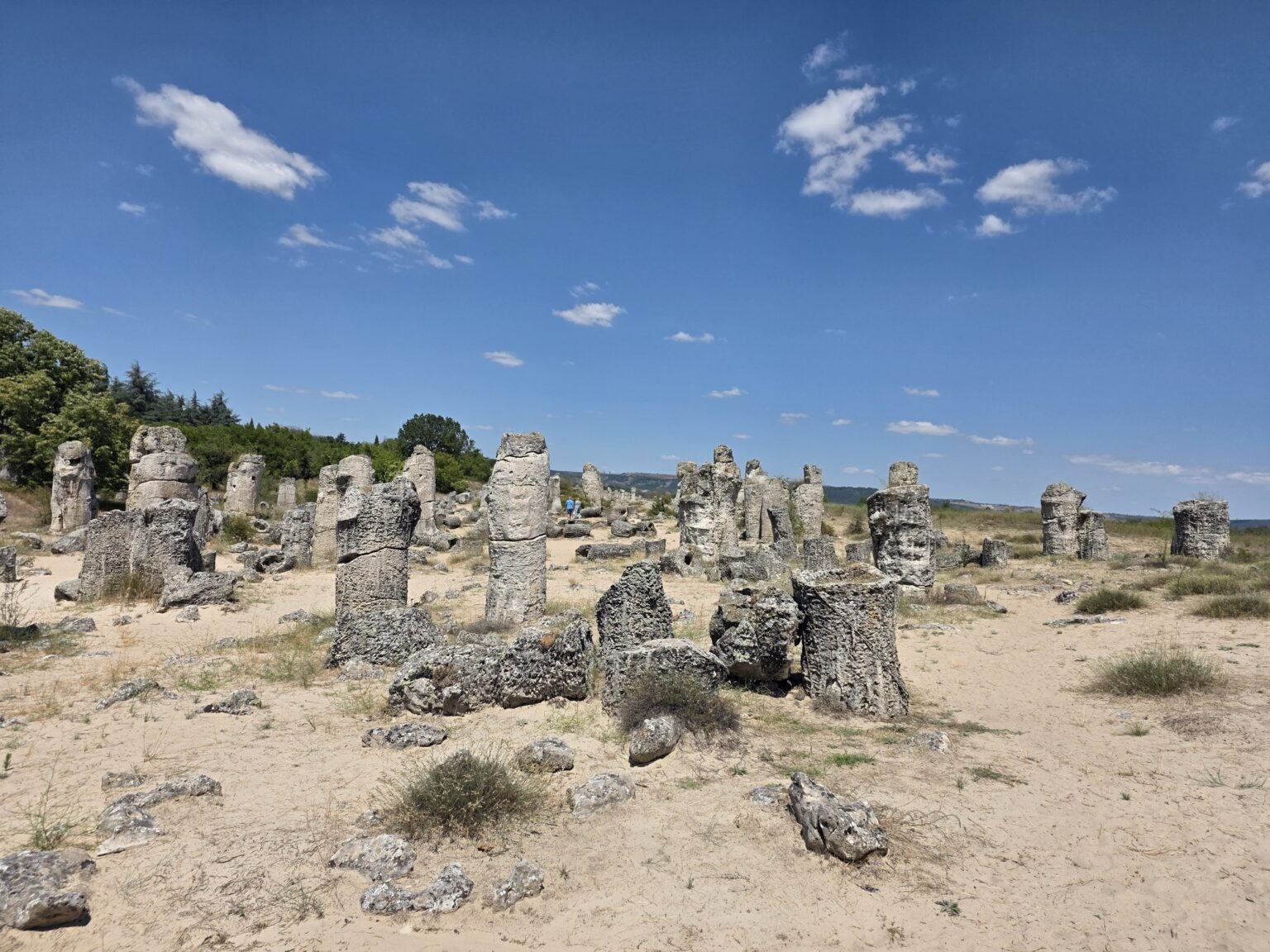
The second is the scale. From the road they read as scattered rocks. Up close the tallest are the height of a two-storey house — up to 6 metres in this group, and as much as 3 metres thick. The “Centre–South” group alone counts around 300 columns, large and small.
The path south
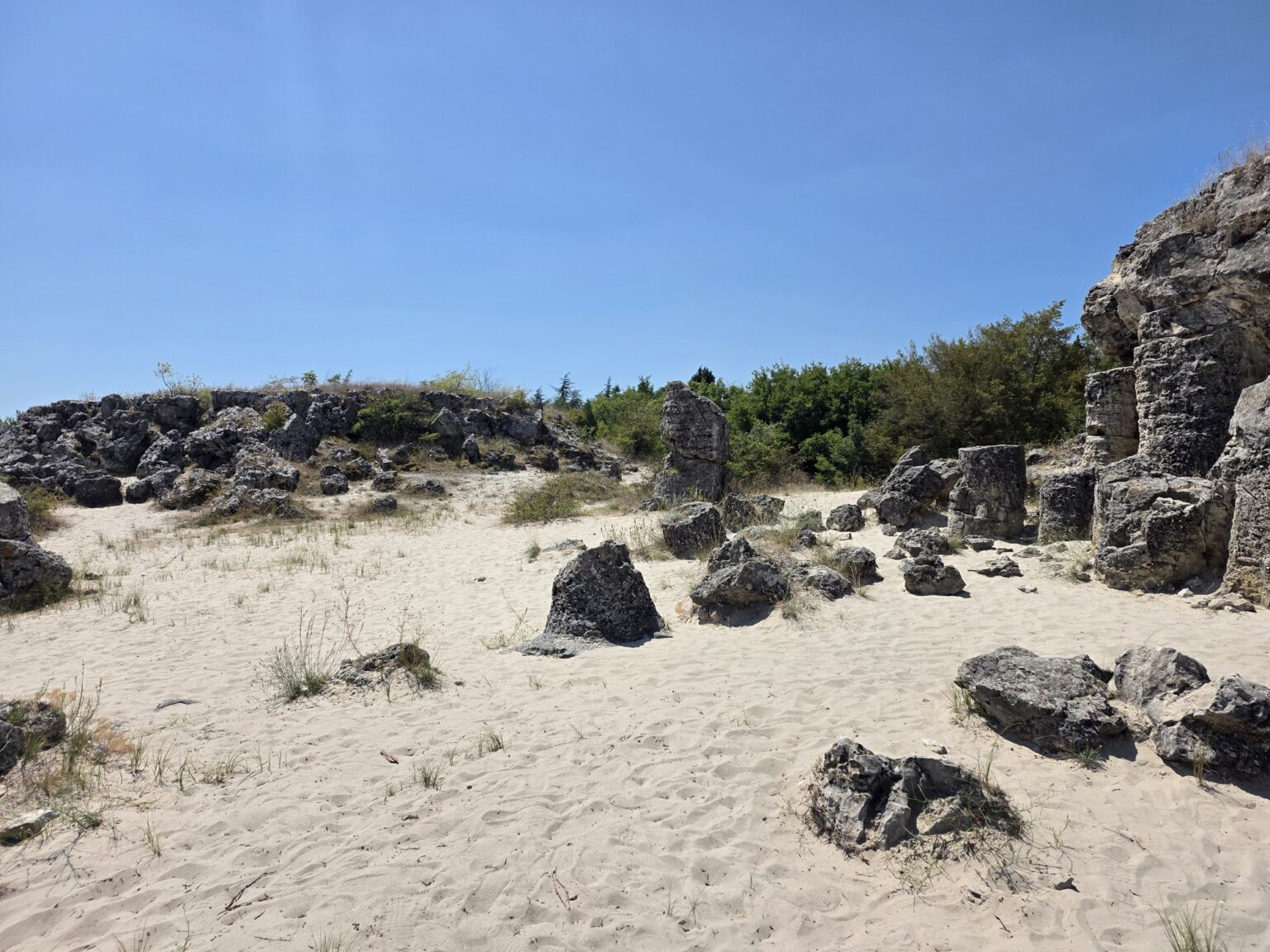
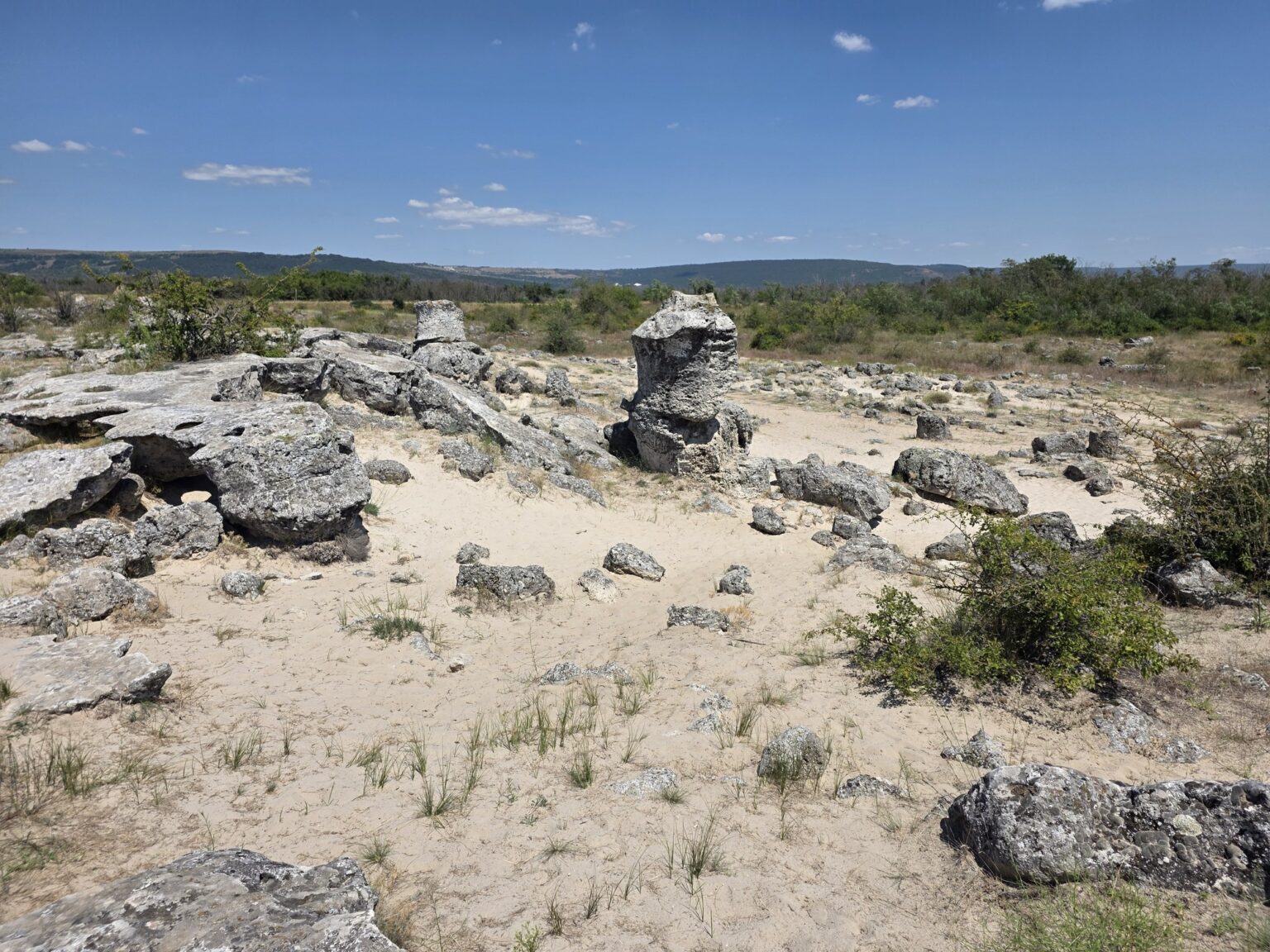
Head south and the ground changes every fifty metres — clean pale sand, then low dry grass, then scattered broken stone. This is the largest inland sand habitat in Bulgaria, which is why the whole area is a Natura 2000 site. The plant life is low, tough and clearly used to the conditions.
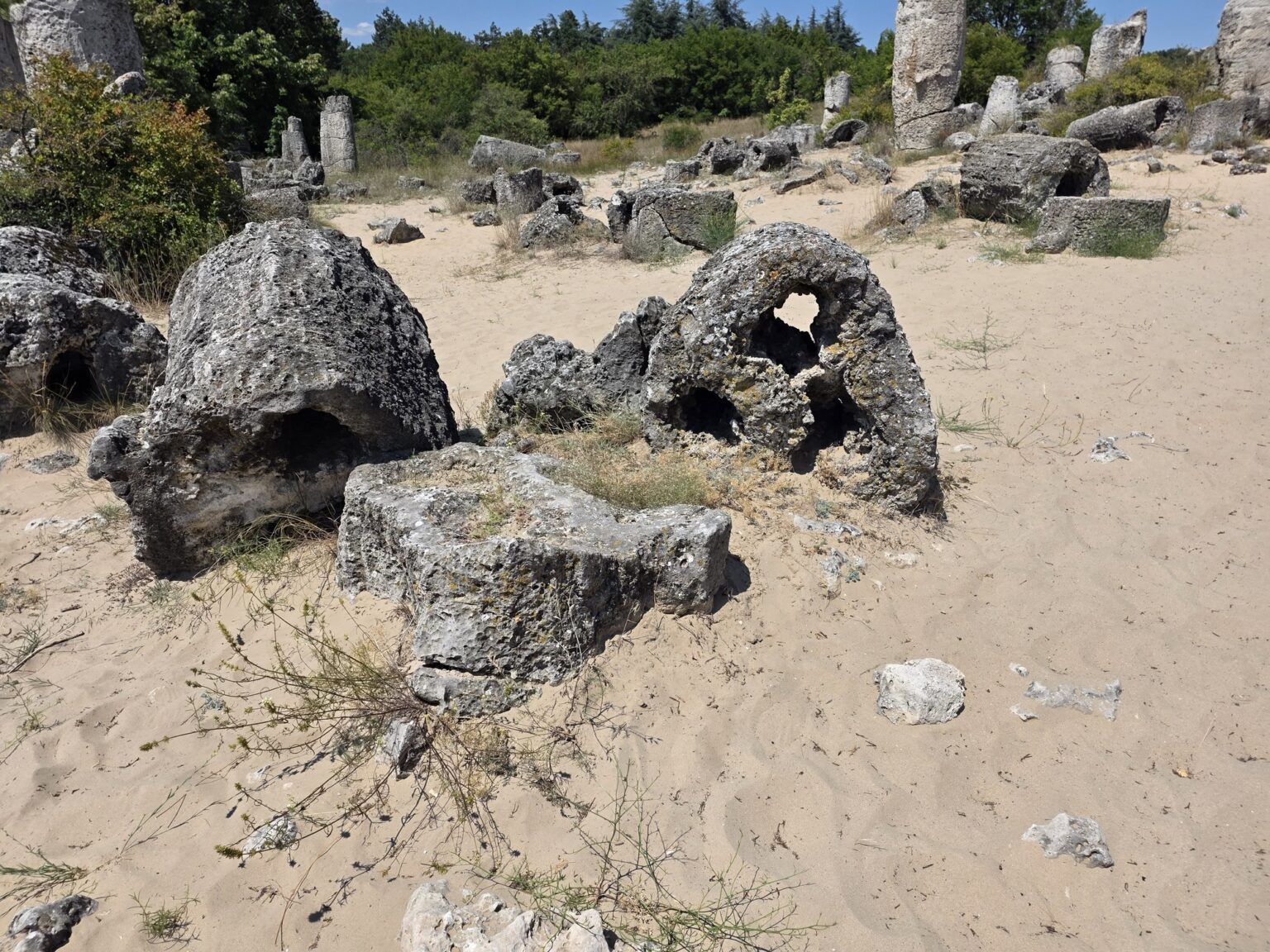
Close up you notice the strangest thing about the place: the columns have no foundations. They do not rise out of bedrock, they are simply stuck into the sand — which is exactly what the name says. A lot of them are hollow, filled with the same sand that surrounds them. Pipes, not pillars. If anyone tells you they know precisely how it happened, they are reciting one of about fifteen competing theories.
The south end and the fallen columns
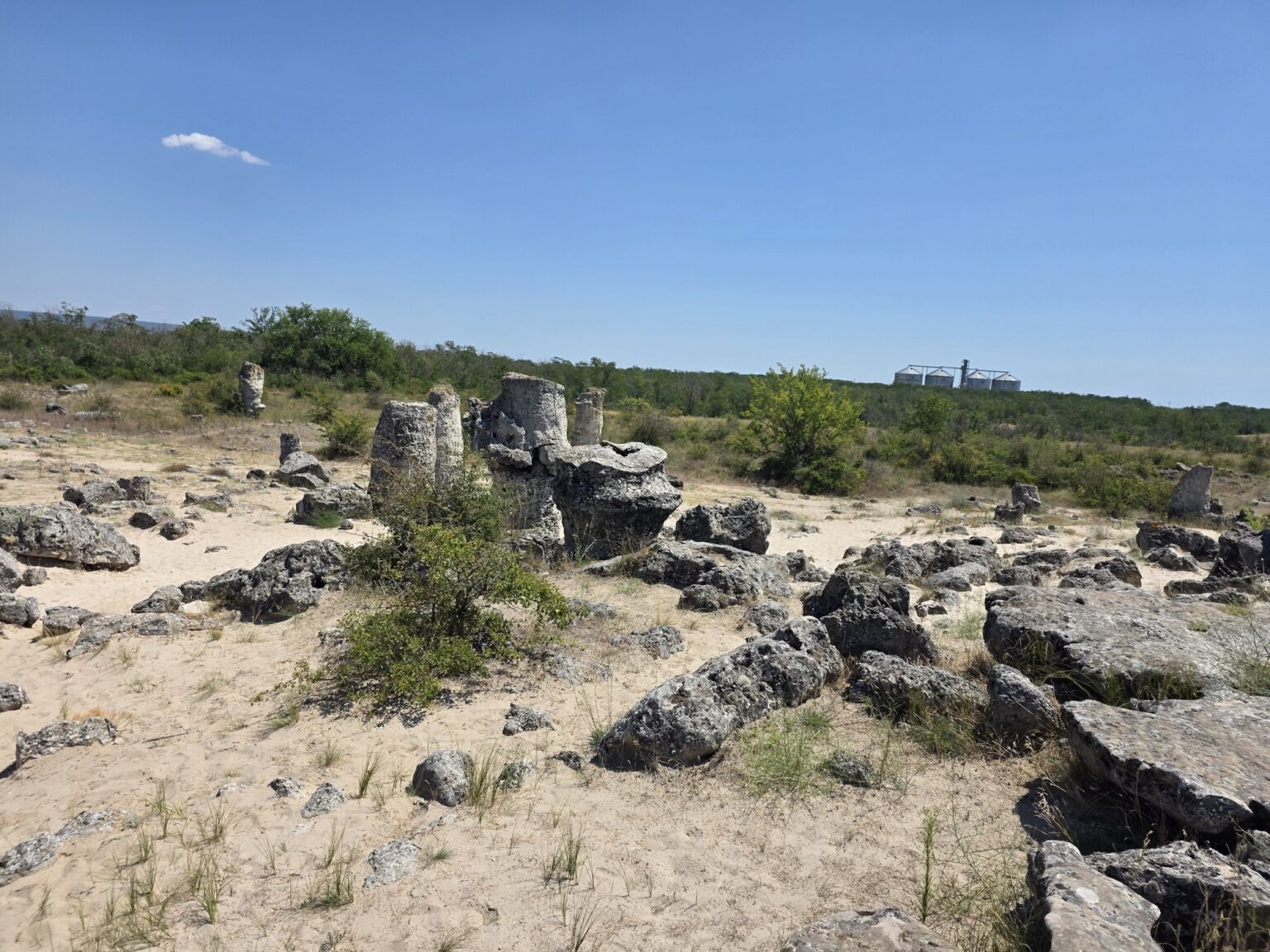
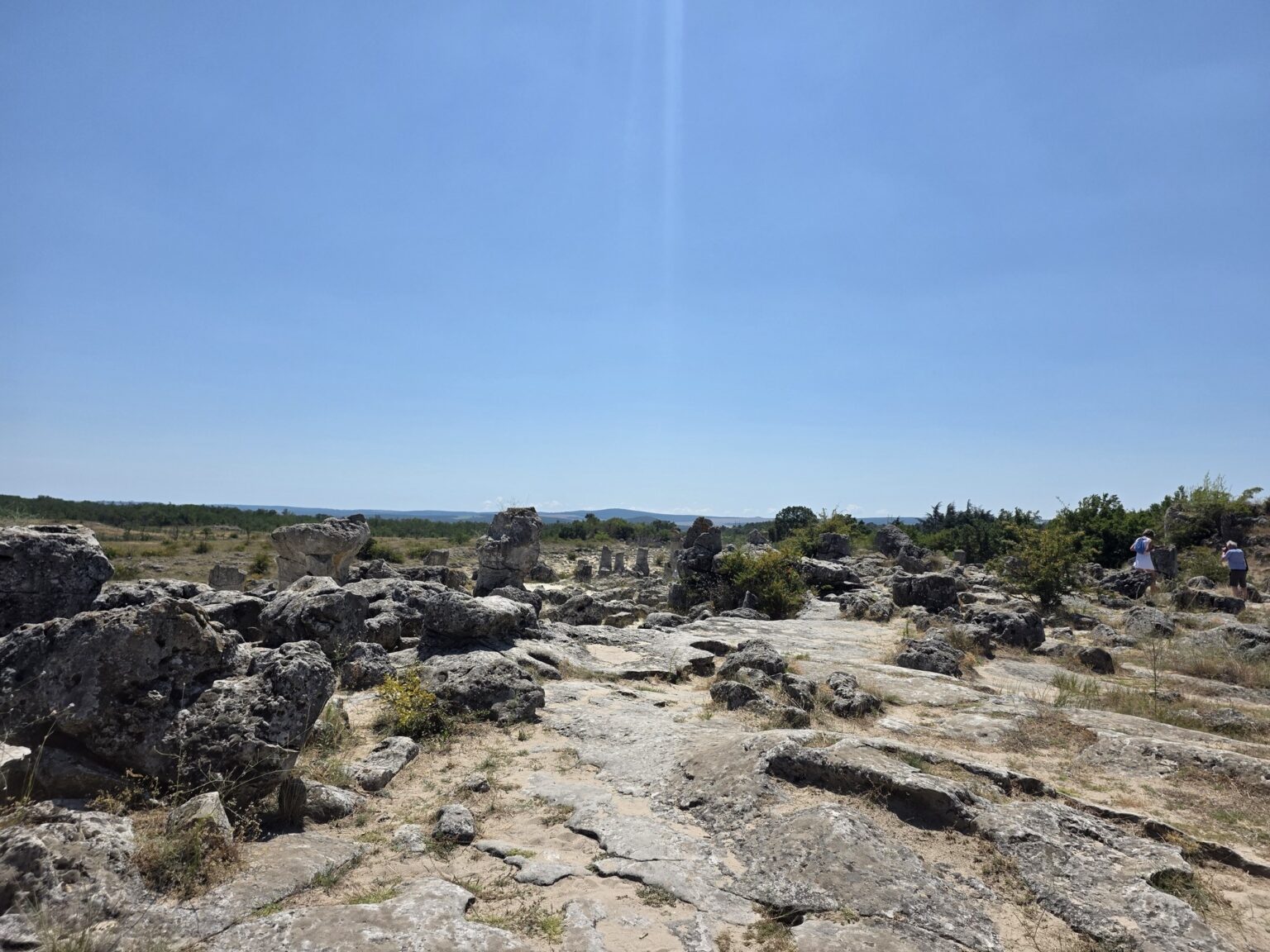
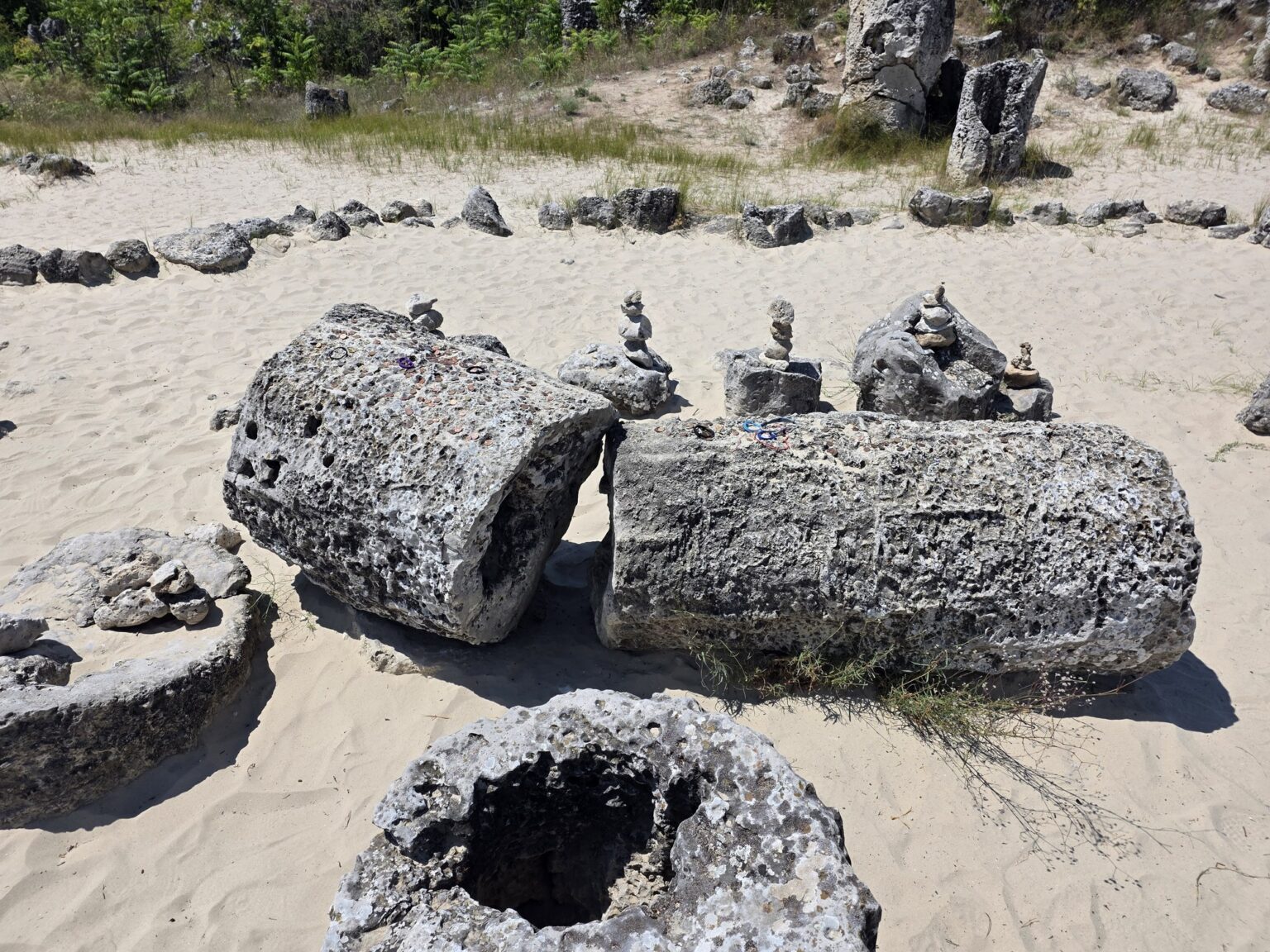
The densest cluster is at the southern end. Here the columns stand in groups of five or six, some leaning, some narrowed at the base in a way that suggests they are considering their options. Several have already made the decision — whole columns lie flat on the sand, snapped into sections like a dropped chimney.
The fallen ones are the most useful to look at, because you can see the cross-section: a cavity down the middle, thick limestone walls, sand packed inside. This is where we spend the longest — the photos show us circling the same cluster from four or five angles. Worth it if you like geology. Also worth it if you do not. 😀
Back to the entrance — and that thing about the car park
The walk back is over the same sand and goes quickly. On the return you pick up the low formations you walked past on the way in — flat blocks riddled with cavities, looking more like eaten-away bedrock than columns. What you can visit is only a fraction of the whole: 14 groups across the area are under protection, and the tourist site is one of them.
And now the part that has to be said. The man at the ticket desk told us to keep an eye on the car — vehicles in the car park do get broken into. Consider how absurd that is: this is open country with no passing foot traffic, the site is state-owned and run by a museum, everyone knows who the culprits are, the authorities have been told. And there it is. Take your bag with you rather than trusting the boot.
Worth going — with the right expectations. This is not a half-day attraction, it is half an hour that has no equivalent anywhere else. The most striking groups were among the first protected areas ever declared in Bulgaria, back in the late 1930s, and since 2002 the whole thing has been a protected locality. If you are in the region, the obvious neighbours are Aladzha Monastery above Golden Sands and Varna itself, both under half an hour away by car. Just not at midday in August. 🙂
Related video: Pobiti Kamani is one of the three sites in the episode Bulgaria From Above: Stone Wonders — alongside the Madara Rider and Aladzha Monastery, filmed by drone in 4K.