Gorna Oryahovitsa sits on the plain north of Veliko Tarnovo, about ten kilometres from the old capital. You arrive to a very wide paved centre, apartment blocks from the 1970s and 80s, and empty squares on a weekday morning — a town that looks like dozens of others. That first impression is misleading. One of the busiest railway crossroads in the country runs through it, and at the end of every longer street a wooded hill appears, topped with a Thracian sanctuary and a medieval fortress. Between those two — the station and the hill — sits almost the whole of its history.
| Where | Northern Bulgaria, about 10 km from Veliko Tarnovo, at the foot of the Arbanasi plateau |
| Getting there | by train – the town is on the main Sofia–Varna line and almost everything stops here; by car via road I-4 / the Hemus motorway |
| How long | 2–3 hours for the centre and the museum; half a day if you add Kamaka hill |
| History Museum | Monday – Friday 8:30 – 17:00; in summer (1 June – 30 September) Monday – Saturday 9:00 – 18:00. Entry: adults €2.56, students and pensioners €1.02, children under 7 and visitors with disabilities free; guided talk €5.11. Check current details on the museum’s official page (Bulgarian only). |
| Kamaka and Ryahovets | about 2 km from the centre, reached by an eco-trail, free access; the fortress is a national monument and is excavated regularly |
| When to go | spring, when the orchards on the slopes are in blossom; the sudzhuk festival is held in June |
| Parking | on the streets around the centre; paid blue zone in the central part |
The station, the rails and the sugar factory
Gorna Oryahovitsa is the largest railway junction in northern Bulgaria. The main Sofia–Varna line passes through it, with secondary connections running to Ruse and to Veliko Tarnovo. The depot, the repair workshops and the freight yard take up the entire northern part of town, and at one point around twenty per cent of the working population was employed on the railways. That is why many people remember Gorna Oryahovitsa not from its streets but from a train window, while waiting on the platform for a connection.
The rails brought industry with them. The sugar factory, built in the early twentieth century, was for a long time among the best known in the country, and while it was under construction Czech and Italian workers lived for several years in the neighbourhoods around the station. Gorna Oryahovitsa airport is close by — another reason the town works more like a transport hub than a typical regional centre. Its administrative role, meanwhile, was long ago taken over by Veliko Tarnovo on the other side of the hills.
The centre on a weekday morning
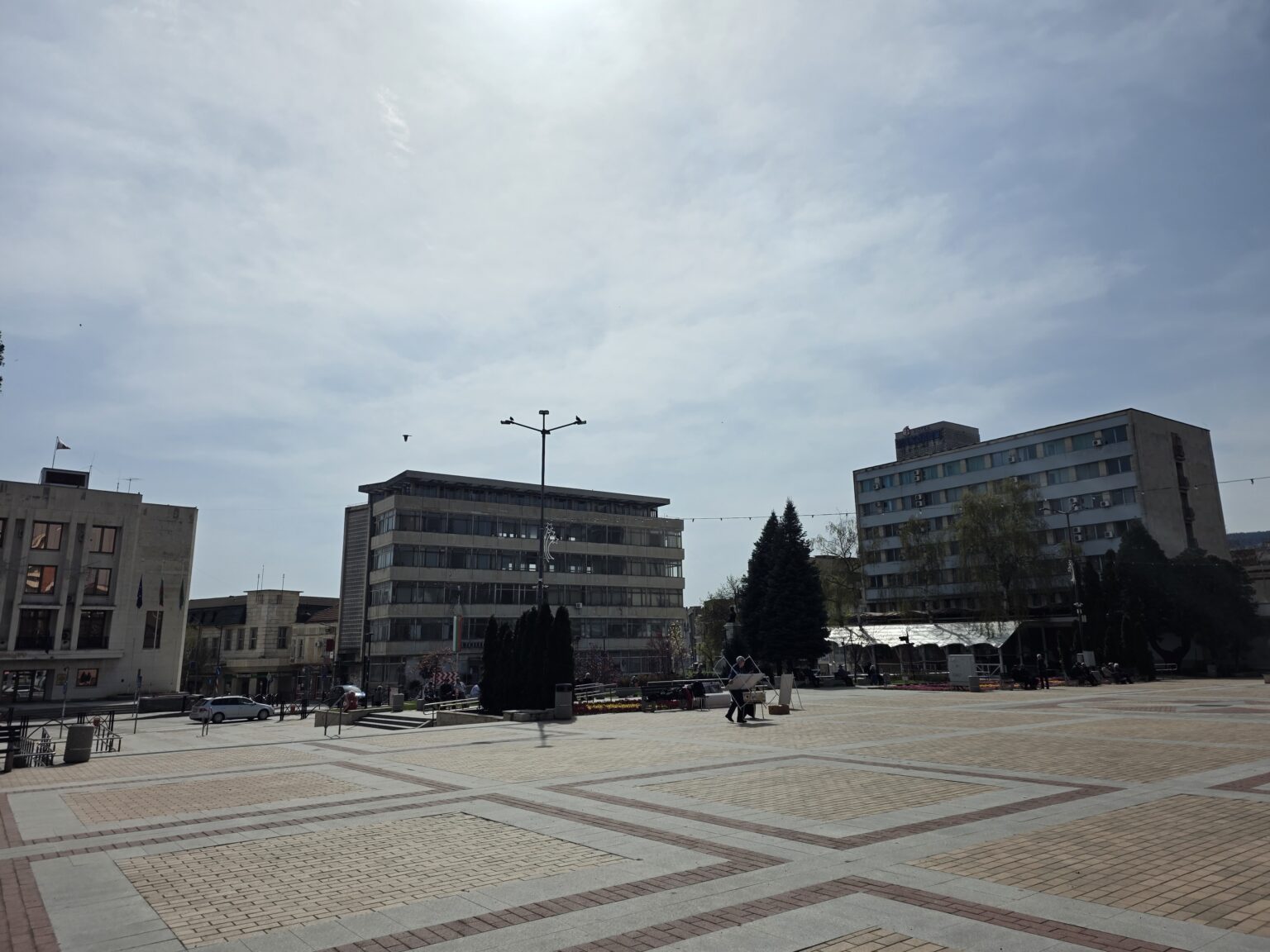
The main square is enormous — one of those Bulgarian squares relaid over the past decade with geometric paving in beige, ochre and dark red. The space is so large that the buildings around it seem to step back from it: a low administrative block with flags on one side, a glazed office building from the 1970s in the middle, a tall hotel on the other. At eleven on a weekday morning perhaps fifteen people cross it. A few benches are taken, tulips are planted along the steps, and a man drags an easel and a stack of paintings halfway across the square to set them up. There are no cafés around the edge and no noise — this square is for walking through, not for sitting in.
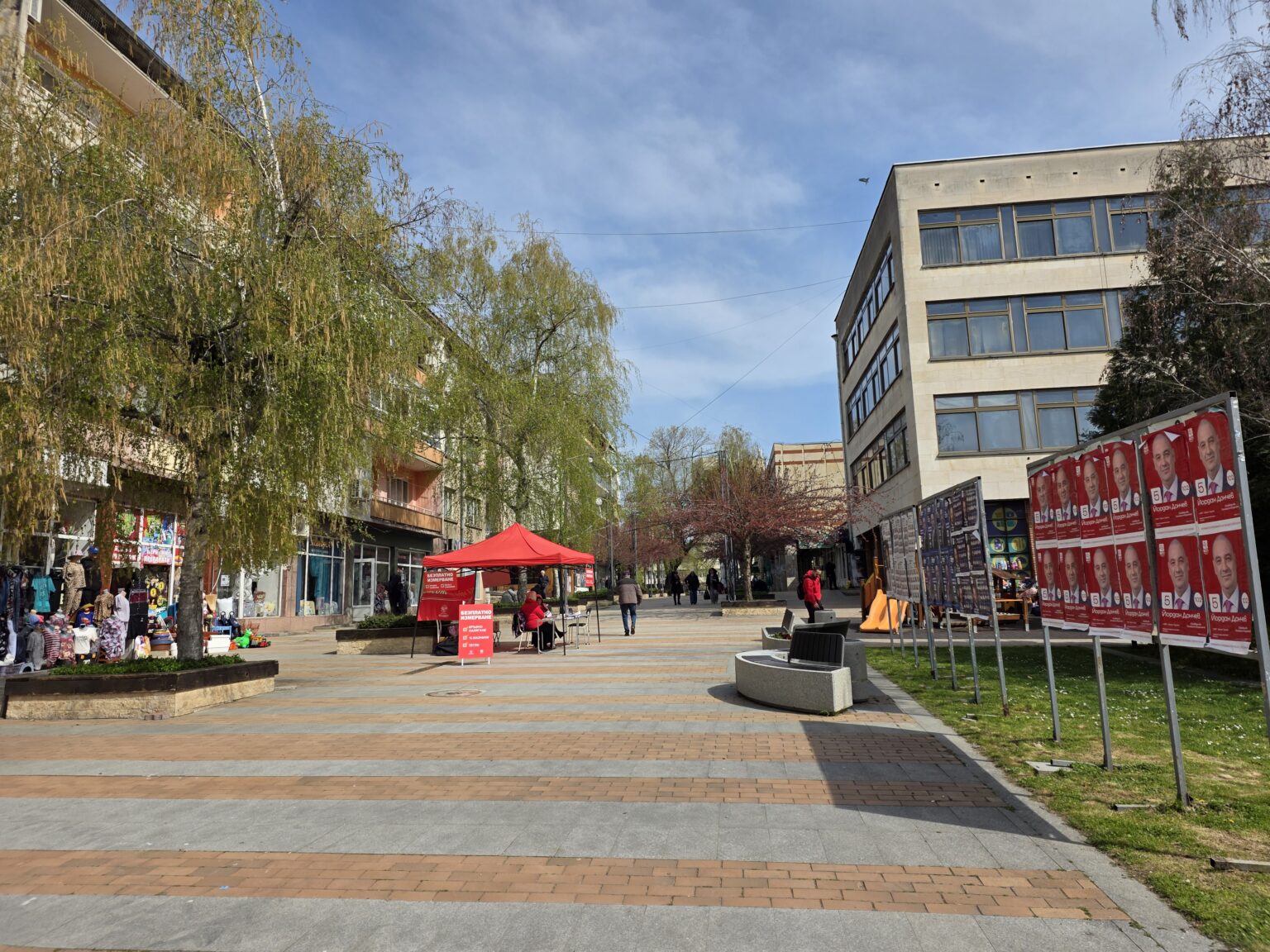
The life is one block further, in the pedestrian zone. The willows are just coming into leaf, and beneath them small shops selling children’s clothes and toys spill their stock onto the pavement. In the middle of the walkway a red gazebo offers free blood pressure, weight and body-fat checks; two people sit at a folding table waiting for customers. Opposite, on the grass in front of a stone-clad modernist building, a row of campaign boards carries the same face over and over — a reminder that Bulgaria holds elections often. A little further along there is a children’s slide and a set of stone benches. Here, at last, you pass other people.
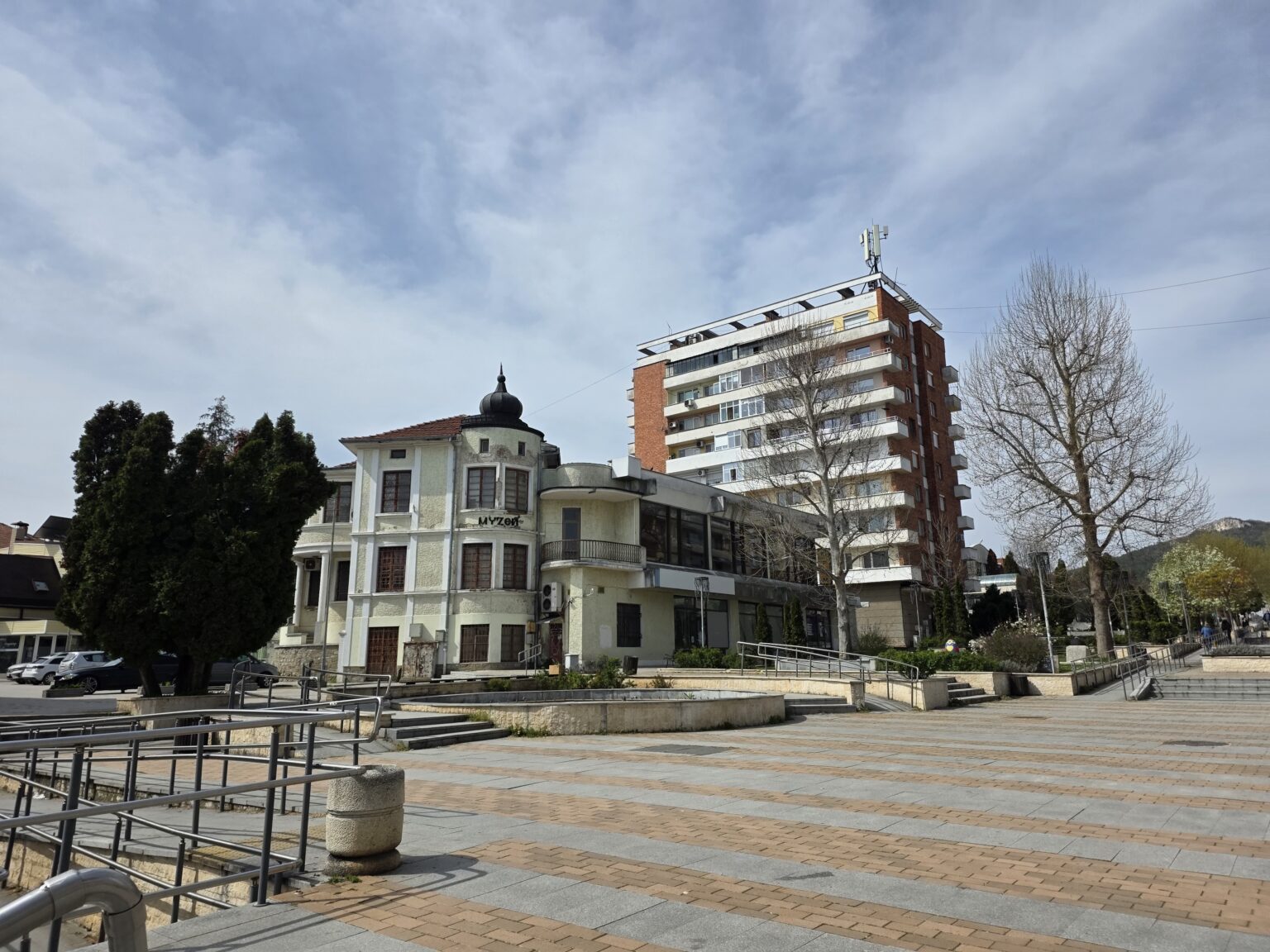
Just off to one side stands the History Museum — a corner building with a tower and an onion dome, attached to a modern glazed extension. Up close its age shows: flaking render, shutters down on the ground floor. The collection inside is better than the façade suggests — archaeology from the two Neolithic settlements near the town, from the Ryahovets fortress and from the necropolises near the village of Yantra, plus ethnography, a National Revival section, and an emphasis on the town’s role as the capital of the First Revolutionary District during the April Uprising of 1876. Opening hours and entry fees are in the box above.
Kamaka, Ryahovets and the sudzhuk
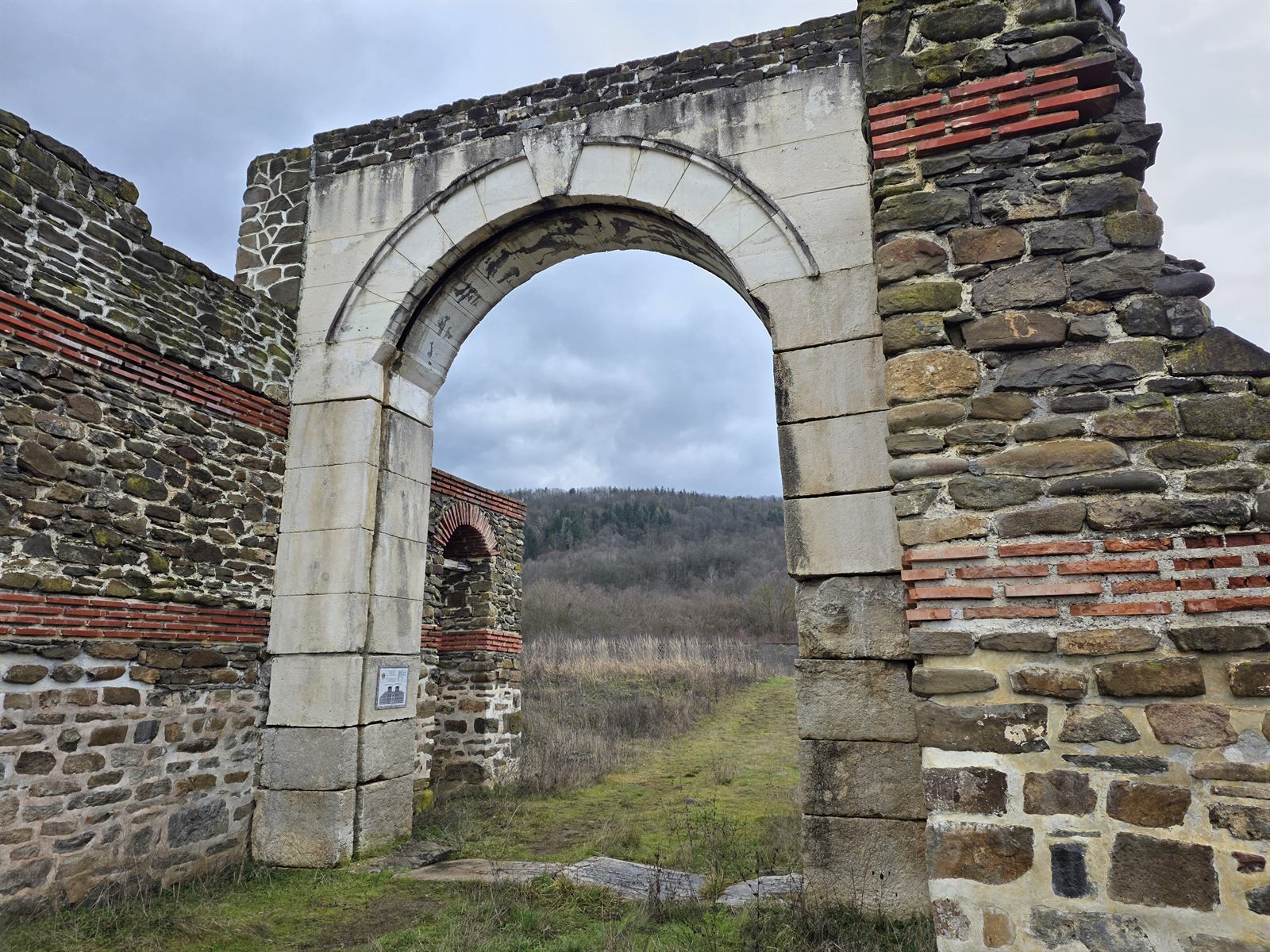
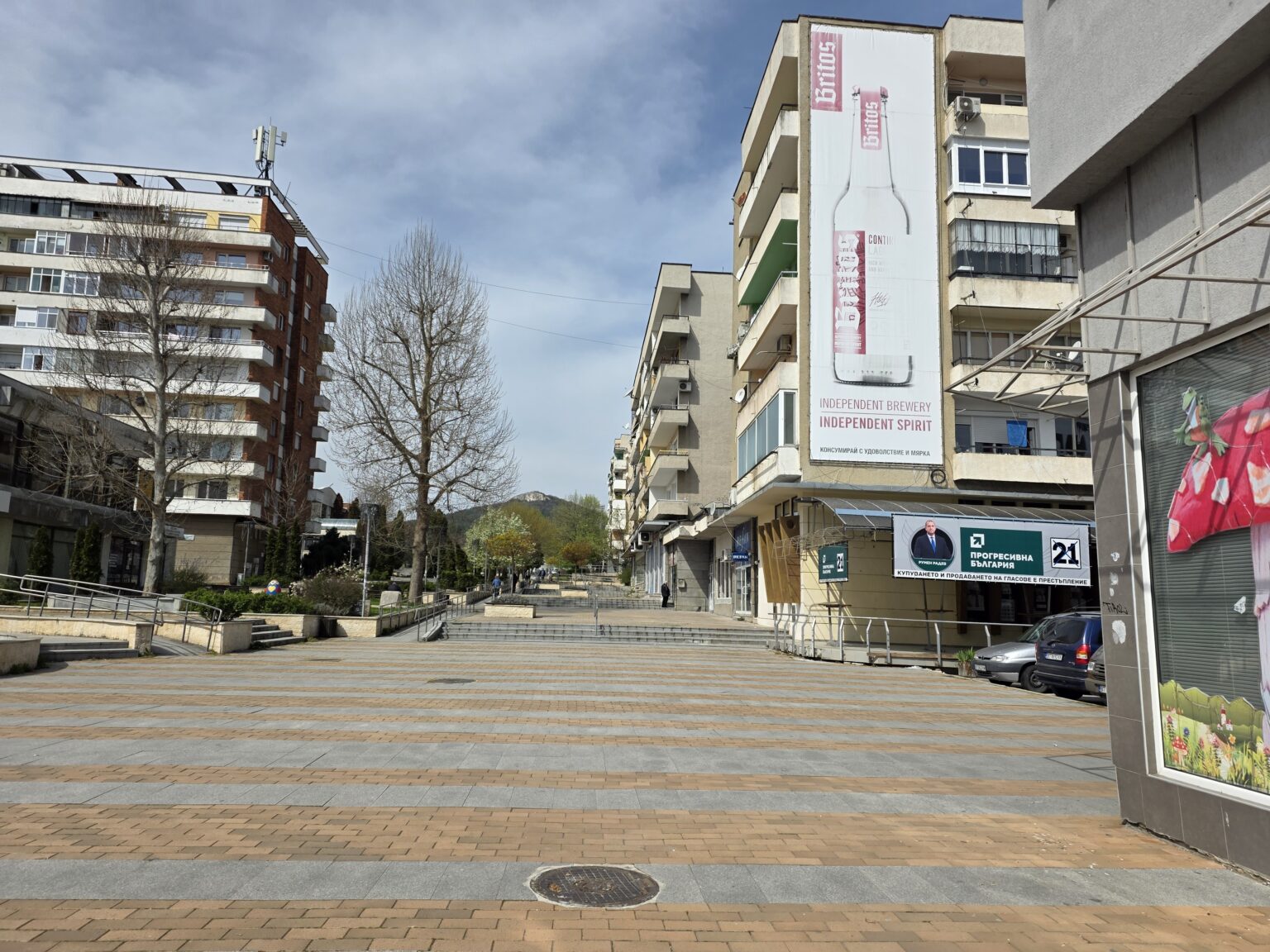
The pedestrian zone widens into a broad boulevard between the apartment blocks, drops down a flight of steps, and there the view closes on something you do not expect in the middle of a housing estate: a wooded hill with a bare rocky crown. This is Kamaka, about two kilometres from the centre and reached by an eco-trail. There was a Thracian sanctuary here, later a settlement with a stronghold, and in the Middle Ages the fortress of Ryahovets stood on the rocks — one of the defensive points protecting Tarnovgrad during the Second Bulgarian Empire, destroyed in 1444. Since 2015 it has held national monument status and is excavated regularly; parts of the uncovered sectors are already open to visitors. The same arrangement of a medieval fortress hill directly above the town appears in Lovech, an hour and a half to the west.
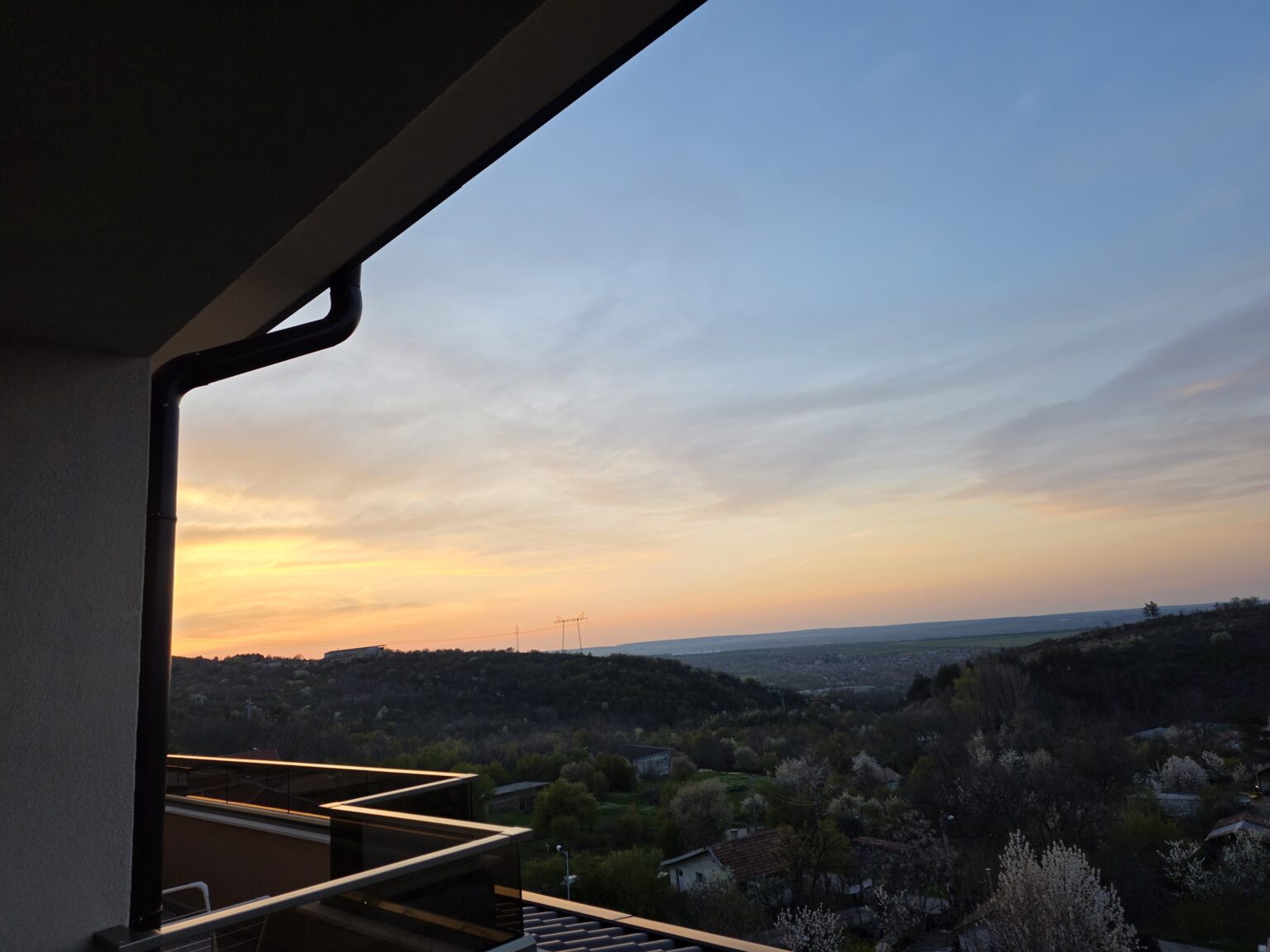
The upper neighbourhoods climb the slope, and from the terraces up there the whole northern plain is visible — in April the slopes are white with plum and wild cherry blossom, and in the evening the sun drops straight behind the ridge. Nearby are the Bozhur meadow and the Bozhur hut, where wild peonies flower every spring. And then there is the thing the town is known for across Bulgaria, which happens to be edible: Gorna Oryahovitsa sudzhuk, a flat, dry-cured beef sausage, was the first Bulgarian food product entered in the European register as a protected geographical indication, and a festival is held for it here every June. If you are touring the region, the town is most often the stop between the old capital and Ruse — but it is worth getting off the train for an hour.
Related video: the town, the rail junction and the surrounding places are best seen from the air in the episode Bulgaria From Above: Veliko Tarnovo, Arbanasi, Gorna Oryahovitsa & Lyaskovets, part of the Bulgaria From Above series.